Linda's Literary Home

Tag: nature

  • Robert Frost’s “Birches”

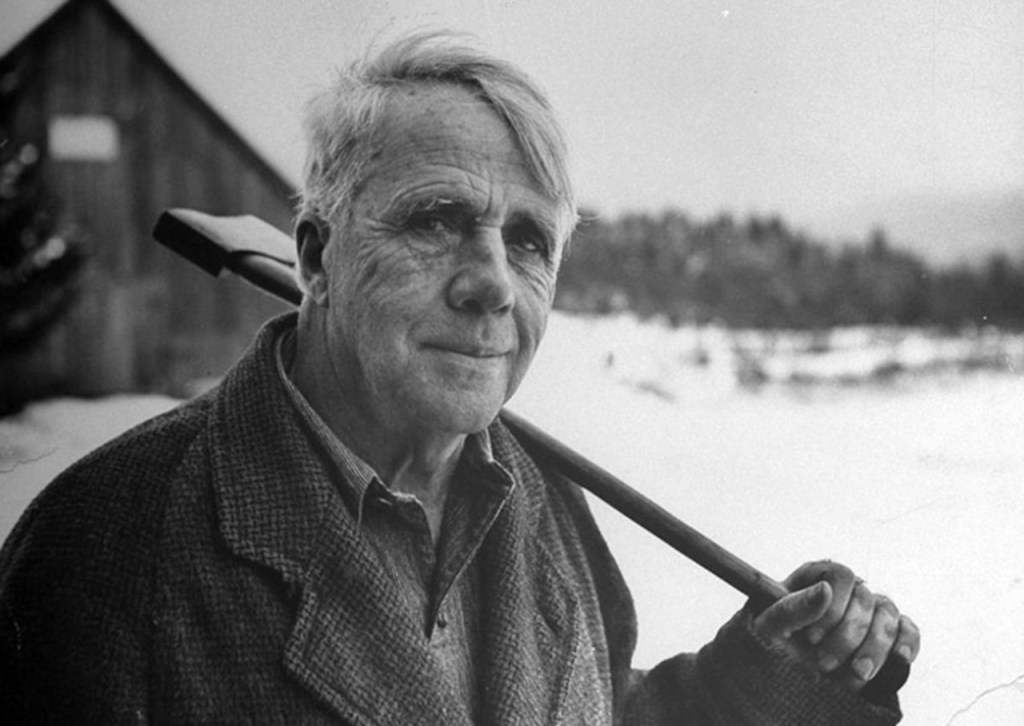
    Image: Robert Frost in 1943. (Eric Schaal/The LIFE Picture Collection/Getty Images)

    Robert Frost’s “Birches”

    RobertFrost’s “Birches” is one of his most famous poems.  It features a speaker looking back on a boyhood experience that he cherishes and would like to do again. Unfortunately, this “tricky poem” has suffered ludicrous readings that insert onanism into its innocent nostalgia.

    Introduction and Text of “Birches”

    The speaker in Robert Frost’s “Birches” is musing on a boyhood activity that he enjoyed.  As a “swinger of birches,” he rode trees and felt the same euphoria that children feel who experience carnival rides such as ferris wheels or tilt-a-whirls. 

    The speaker also gives a rather thorough description of birch trees after an ice-storm.  In addition, he makes a remarkable statement that hints at the yogic concept of reincarnation:  “I’d like to get away from earth awhile / And then come back to it and begin over.”  However, after making that striking remark, he backtracks perhaps thinking such a foolish thought might disqualify him from rational thought.  

    That remark however demonstrates that as human beings our deepest desires correspond to truth in ways that our culture in the Western world has plastered over through centuries of materialistic emphasis on the physical level of existence.   The soul knows the truth and once in a blue moon a poet will stumble across it, even if he does not have the ability to fully recognize it.

    Birches

    When I see birches bend to left and right
    Across the lines of straighter darker trees,
    I like to think some boy’s been swinging them.
    But swinging doesn’t bend them down to stay
    As ice-storms do. Often you must have seen them
    Loaded with ice a sunny winter morning
    After a rain. They click upon themselves
    As the breeze rises, and turn many-colored
    As the stir cracks and crazes their enamel.
    Soon the sun’s warmth makes them shed crystal shells
    Shattering and avalanching on the snow-crust—
    Such heaps of broken glass to sweep away
    You’d think the inner dome of heaven had fallen.
    They are dragged to the withered bracken by the load,
    And they seem not to break; though once they are bowed
    So low for long, they never right themselves:
    You may see their trunks arching in the woods
    Years afterwards, trailing their leaves on the ground
    Like girls on hands and knees that throw their hair
    Before them over their heads to dry in the sun.
    But I was going to say when Truth broke in
    With all her matter-of-fact about the ice-storm
    I should prefer to have some boy bend them
    As he went out and in to fetch the cows—
    Some boy too far from town to learn baseball,
    Whose only play was what he found himself,
    Summer or winter, and could play alone.
    One by one he subdued his father’s trees
    By riding them down over and over again
    Until he took the stiffness out of them,
    And not one but hung limp, not one was left
    For him to conquer. He learned all there was
    To learn about not launching out too soon
    And so not carrying the tree away
    Clear to the ground. He always kept his poise
    To the top branches, climbing carefully
    With the same pains you use to fill a cup
    Up to the brim, and even above the brim.
    Then he flung outward, feet first, with a swish,
    Kicking his way down through the air to the ground. 
    So was I once myself a swinger of birches.
    And so I dream of going back to be.
    It’s when I’m weary of considerations,
    And life is too much like a pathless wood
    Where your face burns and tickles with the cobwebs
    Broken across it, and one eye is weeping
    From a twig’s having lashed across it open.
    So was I once myself a swinger of birches.
    And so I dream of going back to be.
    It’s when I’m weary of considerations,
    And life is too much like a pathless wood
    Where your face burns and tickles with the cobwebs
    Broken across it, and one eye is weeping
    From a twig’s having lashed across it open.
    I’d like to get away from earth awhile
    And then come back to it and begin over.
    May no fate willfully misunderstand me
    And half grant what I wish and snatch me away
    Not to return. Earth’s the right place for love:
    I don’t know where it’s likely to go better.
    I’d like to go by climbing a birch tree,
    And climb black branches up a snow-white trunk
    Toward heaven, till the tree could bear no more,
    But dipped its top and set me down again.
    That would be good both going and coming back.
    One could do worse than be a swinger of birches.

    Reading

    Commentary on “Birches”

    Robert Frost’s “Birches” is one of the poet’s most famous and widely anthologized poems.  And similar to his famous poem “The Road Not Taken,” “Birches” is also a very tricky poem, especially for certain onanistic mindsets.

    First Movement:  A View of Arching Birch Trees

    When I see birches bend to left and right
    Across the lines of straighter darker trees,
    I like to think some boy’s been swinging them.
    But swinging doesn’t bend them down to stay
    As ice-storms do. Often you must have seen them
    Loaded with ice a sunny winter morning
    After a rain. They click upon themselves
    As the breeze rises, and turn many-colored
    As the stir cracks and crazes their enamel.

    The speaker begins by painting a scene wherein birch trees are arching either “left or right” and contrasting their stance with “straighter darker tree.”  He asserts his wish that some young lad has been riding those trees to bend them that way.

    Then the speaker explains that some boy swinging on those trees, however, would not bend them permanently “[a]s ice-storms do.”    After an ice-storm they become heavy with the ice that begins making clicking sounds.  In the sunlight, they “turn many-colored” and they move until the motion “cracks and crazes their enamel.”

    Second Movement:   Ice Sliding off Trees

    Soon the sun’s warmth makes them shed crystal shells
    Shattering and avalanching on the snow-crust—
    Such heaps of broken glass to sweep away
    You’d think the inner dome of heaven had fallen.
    They are dragged to the withered bracken by the load,
    And they seem not to break; though once they are bowed
    So low for long, they never right themselves:
    You may see their trunks arching in the woods
    Years afterwards, trailing their leaves on the ground
    Like girls on hands and knees that throw their hair
    Before them over their heads to dry in the sun. 

    The sun then causes the crazy ice to slide off the trees as it “shatter[s] and avalanch[es]” on to the snow.  Having fallen from the trees, the ice looks like big piles of glass, and the wind comes along and brushes the piles into the ferns growing along the road.

    The ice has caused the trees to remain bent for years as they continue to “trail their leaves on the ground.”  Seeing the arched birches puts the speaker in mind of girls tossing their hair “over the heads to dry in the sun.”

    Third Movement:   Off on a Tangent

    Before them over their heads to dry in the sun.
    But I was going to say when Truth broke in
    With all her matter-of-fact about the ice-storm
    I should prefer to have some boy bend them
    As he went out and in to fetch the cows—
    Some boy too far from town to learn baseball,
    Whose only play was what he found himself,
    Summer or winter, and could play alone.
    One by one he subdued his father’s trees
    By riding them down over and over again
    Until he took the stiffness out of them,
    And not one but hung limp, not one was left
    For him to conquer. He learned all there was
    To learn about not launching out too soon
    And so not carrying the tree away
    Clear to the ground. He always kept his poise
    To the top branches, climbing carefully
    With the same pains you use to fill a cup
    Up to the brim, and even above the brim.
    Then he flung outward, feet first, with a swish,
    Kicking his way down through the air to the ground.  

    At this point, the speaker realizes that he has gone off on a tangent with his description of how birches get bent by ice-storms.  His real purpose he wants the reader/listener to know lies in another direction. That the speaker labels his aside about the ice-storm bending the birch tree “Truth” is somewhat bizarre.  While his colorful description of the trees might be a true one, it hardly qualifies as “truth” and with a capital “T” no less.

    “Truth” involves issues that relate to eternal verities, especially of a metaphysical or spiritual nature—not how ice-storms bend birch trees or any purely physical detail or activity. The speaker’s central wish in this discourse is to reminisce about this own experience of what he calls riding trees as a “swinger of birches.”  Thus he describes the kind of boy who would have engaged in such an activity.

    The boy lives so far from other people and neighbors that he must make his own entertainment; he is a farm boy whose time is primarily taken up farm work and likely some homework for school.  He has little time, money, inclination for much of a social life, such as playing baseball or attending other sports games. 

    Of course, he lives far from the nearest town. The boy is inventive, however, and discovers that swinging on birch trees is a fun activity that offers him entertainment as well as the acquisition of a skill.  He had to learn to climb the tree to the exact point where he can then “launch” his ride.

    The boy has to take note of the point and time to swing out so as not to bend the tree all the way to ground.  After attaining just the right position on the tree and beginning the swing downward, he can then let go of the tree and fling himself “outward, feet first.”  And “with a swish,” he can begin kicking his feet as he soars through the air and lands on the ground.

    Fourth Movement:   The Speaker as a Boy

    So was I once myself a swinger of birches.
    And so I dream of going back to be.
    It’s when I’m weary of considerations,
    And life is too much like a pathless wood
    Where your face burns and tickles with the cobwebs
    Broken across it, and one eye is weeping
    From a twig’s having lashed across it open.
    So was I once myself a swinger of birches.
    And so I dream of going back to be.
    It’s when I’m weary of considerations,
    And life is too much like a pathless wood
    Where your face burns and tickles with the cobwebs
    Broken across it, and one eye is weeping
    From a twig’s having lashed across it open. 

    Now the speaker reveals that he himself once engaged in the pastime of swinging on birches.  That is how he knows so much about the difference it makes of a boy swinging on the trees and ice-storms for the arch of the trees.  And also that he was once a “swinger of birches” explains how he knows the details of just how some boy would negotiate the trees as he swung on them.

    The speaker then reveals that he would like to revisit that birch-swinging activity.  Especially when he is tired  of modern-day life, running the rat-race, facing all that the adult male has to contend with in the workday world, he day-dreams about this carefree days of swinging on birch trees.

    Fifth Movement:   Getting off the Ground

    I’d like to get away from earth awhile
    And then come back to it and begin over.
    May no fate willfully misunderstand me
    And half grant what I wish and snatch me away
    Not to return. Earth’s the right place for love:
    I don’t know where it’s likely to go better.
    I’d like to go by climbing a birch tree,
    And climb black branches up a snow-white trunk
    Toward heaven, till the tree could bear no more,
    But dipped its top and set me down again.
    That would be good both going and coming back.
    One could do worse than be a swinger of birches.

    The speaker then asserts his wish to leave earth and come back again.  Likely this speaker uses the get-away-from-earth notion to refer to the climbing of the birch tree, an act that would literally get him up off the ground away from earth. But he quickly asks that “no fate willfully misunderstand” him and snatch him away from the earth through death—he “knows” that such a snatch would not allow him to return.  

    The speaker then philosophizes that earth is “the right place for love” because he has no idea that there is any other place it could “go better.” So now he clarifies that he simply would like to climb back up a birch tree and swing out as he did when a boy: that way he would leave earth for the top of the tree and then return to earth after riding it down and swinging out from the tree. Finally, he offers a summing up of the whole experience that being swinger of birches—well, “one could do worse.”  
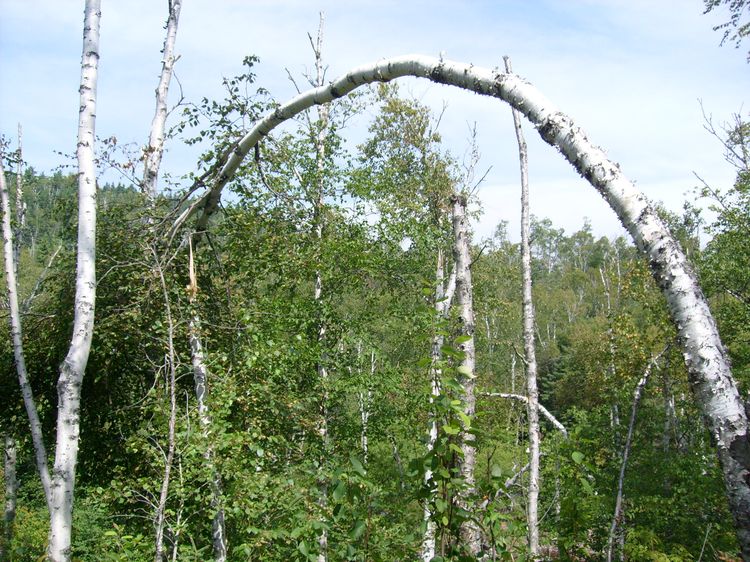
    Image: Bent Birch– hotographer: Dale L. Hugo – Universities Space Research Association

    Tricked by Robert Frost’s “Birches”

    Robert Frost claimed that his poem, “The Road Not Taken,” was a very tricky poem.  He was correct, but other poems written by Frost have proved to be tricky as well. This poem is clearly and unequivocally a nostalgic piece by a speaker looking back at a boyhood pastimes that he cherishes.  Some readers have fashioned an interpretation of masturbatory activity from this poem.

    Robert Frost’s second most widely known poem “Birches” has suffered an faulty interpretation that equals the inaccurate call-to-nonconformity so often foisted onto “The Road Not Taken.”  At times when readers misinterpret poems, they demonstrate more about themselves than they do about the poem. They are guilty of “reading into a poem” that which is not there on the page but is, in fact, in their own minds.

    Readers Tricked by “Birches”

    Robert Frost claimed that his poem “The Road Not Taken” was a tricky poem, but he must have known that any one of his poems was likely to trick the over-interpreter or the immature, self-involved reader.  The following lines from Robert Frost’s “Birches” have been interpreted as referring to a young boy learning the pleasures of self-gratification:

    One by one he subdued his father’s trees
    By riding them down over and over again
    Until he took the stiffness out of them,
    And not one but hung limp, not one was left
    For him to conquer. He learned all there was
    To learn about not launching out too soon

    About those lines, Elizabeth Gregory, who used to post on the now defunct site Suite101, once claimed: “The lexical choices used to describe the boy’s activities are unmistakably sexual and indicate that he is discovering more than a love of nature.”

    Indeed, one could accurately interpret that the boy is discovering something “more than the love of nature,” but what he is discovering (or has discovered actually since the poem is one of nostalgic looking back) is the spiritual pull of the soul upward toward heaven, not the downward sinking of the mind into sexual dalliance.

    In the Mind of the Beholder, Not on the Page

    Gregory’s interpretation of  sexuality from these lines simply shows the interpretive fallacy of “reading into” a poem that which is not there, and that reader’s proposition that “the boy’s activities are unmistakably  sexual” exhausts reason or even common sense. 

    The “lexical choices” that have tricked this reader are, no doubt, the terms “riding,” “stiffness,” “hung limp,” and “launching out too soon.” Thus that reader believes that Robert Frost wants his audience to envision a tall birch tree as a metaphor for a penis: at first the “tree (male member)” is “stiff (ready for employment),” and after the boy “rides them (has his way with them),” they hang “limp (are satiated).” 

    And from riding the birches, the boy learns to inhibit “launching out too soon (premature release).” It should be obvious that this is a ludicrous interpretation that borders on the obscene. 

    But because all of these terms refer quite specifically to the trees, not to the male genitalia or  sexual activity, and because there is nothing else in the poem to make the reader understand them to be metaphorical, the thinker who applies a  sexual interpretation is quite simply guilty of reading into the poem that which is not in the poem but quite obviously is in the thinker’s mind.

    Some beginning readers of poems believe that a poem always has to mean something other than what is stated.  They mistakenly think that nothing in a poem can be taken literally, but everything must be a metaphor, symbol, or image that stands in place of something else. And they often strain credulity grasping at the unutterably false notion of a “hidden meaning” behind the poem.

    That Unfortunate Reader Not Alone

    Gregory is not the only uncritical thinker to be tricked by Frost’s “Birches.” Distinguished critic and professor emeritus of Brown University, George Monteiro, once scribbled: “To what sort of boyhood pleasure would the adult poet like to return? Quite simply; it is the pleasure of onanism.”   Balderdash!  The adult male remains completely capable of self-gratification; he need not engage boyhood memories to commit that act. 

    One is coaxed to advise Professor Monteiro—and all of those who fantasize self-gratification in “Birches”—to keep their minds above their waists while engaging in literary criticism and commentary.

  • Emily Dickinson’s “A Bird came down the Walk”

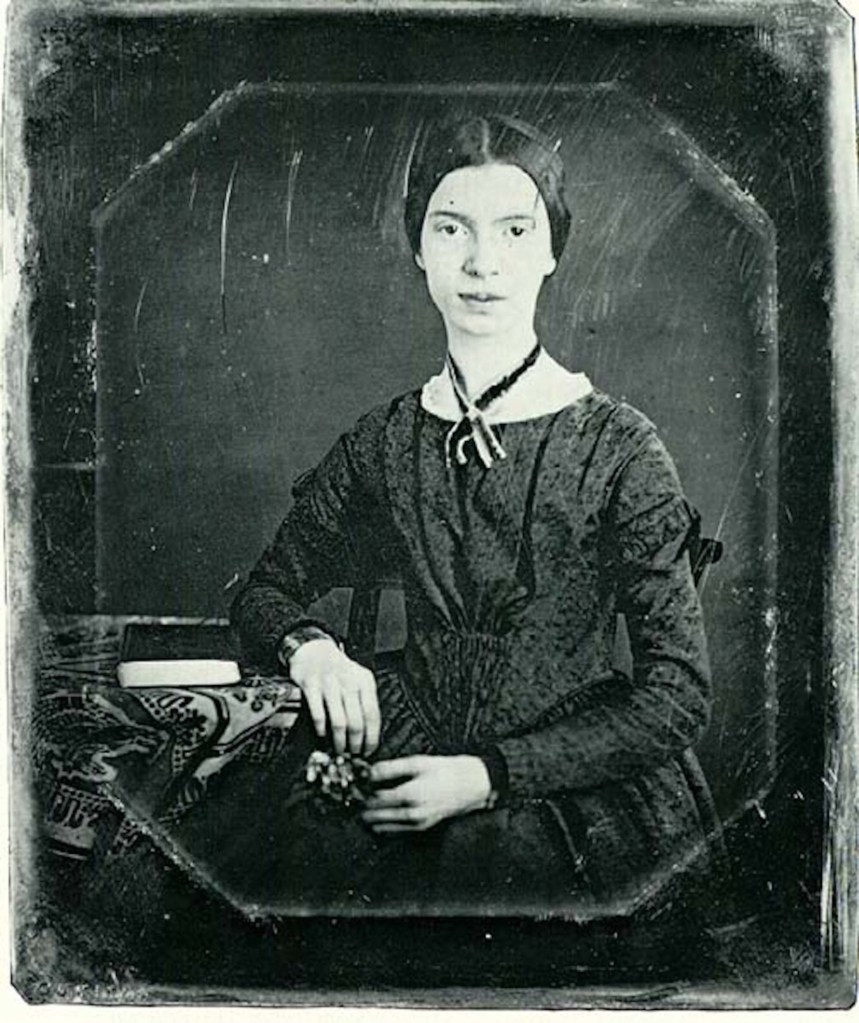
    Image: Emily Dickinson – Amherst College – Daguerrotype of the poet at age 17, circa 1847 – likely the only authentic, extant likeness of the poet

    Emily Dickinson’s “A Bird came down the Walk”

    Emily Dickinson’s “A Bird came down the Walk” using clever plays on words offers a keen observation, reminding listeners and readers of images which they can likely recognize.

    Introduction with Text of “A Bird came down the Walk”

    Emily Dickinson’s “A Bird came down the Walk” is one of the poet’s many fun poems loaded with clever word plays—a technique that creates a drama based on keen observation.

    The little drama functions to remind readers and listeners of images stored in memory and scenes that they have also experienced in their lifetimes.  In other words, the little fun poem is performing the primary function of any genuine poem. This Dickinson poem (#328 in Thomas H. Johnson’s Complete Poems) is one of the poet’s most anthologized poems. 

    The poem displays in five quatrains, employing a loose rime scheme in which the second and fourth lines sound out in either perfect (saw-raw) or slant (around-Head) rimes. Thomas H. Johnson’s Complete Poems offers the version that most closely represents the  Dickinson manuscript, in which the line is “That hurried all around.”  

    Some editors have tried to improve or correct the poet’s rime scheme by changing “around” to “abroad.”  The notion is that “abroad” is a better rime with “head” than “around.” But, as is nearly always the case, the poet’s subtle meanings are lost with these unfortunate editorial “corrections.”

    For example, “abroad” suggests a much farther distance than “around.”  The bird simply moved its head in such a way as to glimpse its immediate surroundings. The bird did not attempt to look searching into areas as far from it as in another country, as the term “abroad” suggests.

    A Bird came down the Walk

    A Bird came down the Walk –
    He did not know I saw –
    He bit an Angleworm in halves
    And ate the fellow, raw,

    And then he drank a Dew
    From a convenient Grass –
    And then hopped sidewise to the Wall
    To let a Beetle pass –

    He glanced with rapid eyes
    That hurried all around –
    They looked like frightened Beads, I thought –
    He stirred his Velvet Head

    Like one in danger, Cautious,
    I offered him a Crumb
    And he unrolled his feathers
    And rowed him softer home –

    Than Oars divide the Ocean,
    Too silver for a seam –
    Or Butterflies, off Banks of Noon
    Leap, plashless as they swim.

    Reading 

    Commentary on “A Bird came down the Walk”

    Emily Dickinson’s poem “A Bird came down the Walk” is one of the poet’s many fun poems filled  with entertaining plays on words.  The little drama originates from the poet’s keen observation, and it functions as do all genuine poems to engage the reader’s own lived experience.

    First Quatrain:  Human Eyes Observe a Bird

    A Bird came down the Walk –
    He did not know I saw –
    He bit an Angleworm in halves
    And ate the fellow, raw,

    In the first quatrain, the speaker states simply that “A Bird came down the Walk.” Then she reports what happened next after assuring her audience that the bird remained unaware that it was being closely observed by a pair of inquisitive human eyes.

    The bird grasps a worm, clips the worm in two pieces, and then swallows the unlucky creature.   The bird does not bother to cook the worm—just gobbles it up “raw.” Dickinson seems to enjoy inserting some fun into her poems, and this one put on displays her sense of hilarity.

    Second Quatrain:  Clever and Playful Use of Terms

    And then he drank a Dew
    From a convenient Grass –
    And then hopped sidewise to the Wall
    To let a Beetle pass –

    The speaker then continues to report to her audience what she sees next: the bird sips some water from a blade of grass and then jumps out of the way so a beetle could crawl by.  The poet must have enjoyed the cleverness of saying that the bird “drank a Dew / From a convenient Grass.”

    The term “grass” clearly will remind the reader of the term “glass” from which the human beings are accustomed to drinking. While having the bird take a sip of the dew off a piece of grass is perfectly natural, it is equally convenient that the words so seemingly accidentally align with human experience.   

    After imbibing his sip of dew, the polite avian steps aside allowing another creature of nature to continue on with his journey.  The speaker is portraying little acts of civility a she describes the antics of nature which she has so keenly observed.

    Third Quatrain:  Fidgeting, Frightened Eyes

    He glanced with rapid eyes
    That hurried all around –
    They looked like frightened Beads, I thought –
    He stirred his Velvet Head

    The speaker then reports the details regarding  the eyes of the bird. This report seems to suggest the speaker was quite close to the bird.  She was able to detect that his eyes moved quickly as they glimpsed “all around.”  She also noticed that they resembled “frightened Beads.”

    The absurdity of beads having the sensibility to become frightened simply strikes the consciousness as an appropriate use of exaggeration.  No one would be confused and think that the speaker actually believes beads can experience emotion—especially since the speaker employs a simile and then inserts the claim “I thought.”

    Also, it is likely that somewhere in the reader’s memory is the same sight—having seen a bird’s rapid eye movement.  Thus, in this poem, the poet’s dramatic re-creation gives the reader back that image stored in memory.   The observation, the image, the memory, and the experience all coming to support the fact that the claim is absolutely accurate.

    It is, in fact, a perfectly accurate observation:  those little black avian eyes “looked like frightened Beads.”   And then the bird’s head begins to move: “He stirred his Velvet Head.”

    Fourth Quatrain:   Fear of Feeding

    Like one in danger, Cautious,
    I offered him a Crumb
    And he unrolled his feathers
    And rowed him softer home –

    The speaker understands exactly why the bird seemed suddenly to experience frightened eyes.  And the bird begins to move his head because he has become fearful that the speaker has approached so close to the bird—close enough to attempt to bestow on him a morsel of food.  The speaker says she offered him “a Crumb.” 

    Immediately after she offers him a bit of food, he does not stick around to accept that crumb—he flies off.   The speaker then dramatizes that avian exit: “he unrolled his feathers / And rowed him softer home.”

    Fifth Quatrain:  Seamless Rowing

    Than Oars divide the Ocean,
    Too silver for a seam –
    Or Butterflies, off Banks of Noon
    Leap, plashless as they swim.

    In the final quatrain, the speaker fashions her vitally important re-creation of the velvety smoothness of the bird’s flight.  At the end of the fourth quatrain, the speaker had begun a comparison, stating that “he rowed him softer home.  

    She then continues and concludes that comparison in the first line of the final quatrain with “Than oars divide the Ocean.”   The bird’s flight through the air remains invisible, as one does not see the air parting as the bird’s wings cut through it.

    Thus, the bird flight is much softer in sight and sound than when one rows a boat through water using oars.  The bird’s “rowing” was “Too silver for a seam.”  And not only was it softer and seamless compared to rowing a boat on water, the bird’s flight was even smoother than the flight of butterflies jumping into the rivers of “Noon” swimming and splashing about.  

    The line “off Banks of Noon” likely encouraged another smile of satisfaction to poet’s face as she swam around in her own drama of cleverness.  After all, she had created those immortal images that will reawaken the dormant memories in readers and listeners years and years hence.

    🕉

    You are welcome to join me on the following social media:
    TruthSocial, Locals, Gettr, X, Bluesky, Facebook, Pinterest 

    🕉

    Share

  • Emily Dickinson’s “It did not surprise me”

    Image: Emily Dickinson – Amherst College – This daguerrotype circa 1847 at age 17 is likely the only authentic, extant image of the poet.

    Emily Dickinson’s “It did not surprise me”

    In Emily Dickinson’s “It did not surprise me,” the speaker has created a bird metaphor as she begins to muse on the unlikely event that she may lose her intuitive ability to perceive beyond sense awareness.

    Introduction with Text of “It did not surprise me”

    With a similar motivational purpose of her riddle-poem “I have a Bird in spring,” Emily Dickinson’s speaker in “It did not surprise me” employs a bird metaphor to contemplate the notion that her special intuitive ability to perceive events, ideas, and entities beyond sense awareness might abandon her.

    The bird metaphor remains a useful poetic device for Emily Dickinson‘s speakers as they bestow flight on their ability to create poetic dramas. Also, similar to her riddle-poem “I have a Bird in spring” in this little drama, the speaker is unveiling the metaphorical bird as a mystical muse, as the speaker ruminates on the idea that if that little birdling were to fly away from her, she would become heartbroken.

    However, unlike the riddle aspect in “I have a Bird in spring,” the poet allows her speaker to report first as if she is merely describing a literal bird. The speaker then moves into a questioning format which shines a light on the possibility that her muse might just up and fly off as any real bird might do.

    The speaker is obliged, however, to leave the issue without answering it, because she will keep that question as long as she continues in her mission of poetry creation. Ultimately, no creative artist can ever know in advance, if or when inspiration will vanish and possibly never return.

    Despite temporary flights into the clairvoyance of certain noumena, as long as the poet remains earth bound, she remains dependent to a certain extent on ordinary sense awareness.

    It did not surprise me

    It did not surprise me –
    So I said – or thought –
    She will stir her pinions
    And the nest forgot,

    Traverse broader forests –
    Build in gayer boughs,
    Breathe in Ear more modern
    God’s old fashioned vows – 

    This was but a Birdling –
    What and if it be
    One within my bosom
    Had departed me?

    This was but a story –
    What and if indeed
    There were just such coffin
    In the heart instead?

    Reading of “It did not surprise me”  

    Commentary on “It did not surprise me”

    Dickinson’s speaker metaphorically likens her muse—which she knows is bound to her mystical insight—to a bird, as she contemplates the possibility of losing the blessing provided by her innate, God-given talent and mystical ability.

    First Stanza:  A Thought Awakening

    It did not surprise me –
    So I said  –  or thought –
    She will stir her pinions
    And the nest forgot,

    The speaker begins her soliloquy by admitting that her lack of “surprise” at some event has been prompted by the thought of a bird stirring and flying off from its nest.  Between her opening statement and the bird’s first movement, the speaker asserts that upon realizing her lack of surprise, she spoke out but then changed her claim to the fact that she merely thought about the coming event without actually giving it voice.

    The final two lines of the stanza express the possibility of an activity as she states that this particular bird will start fluttering its wings, readying itself for flight and then fly off from its nest.  Such an avian forsaking its nest will then likely not even recall that it had ever stayed there.

    That status is simply the essential nature of natural creatures, as well as specific metaphorical birds that may be likened to the muse.  If this style of muse abandons its target permanently, it will likely not recall that it had ever inspired any such soul.

    Interestingly, Dickinson has her speaker employ the past tense “forgot” but clearly the actual meaning is present tense “forget.”  She possibly employed the past tense because it stands in as a closer rime to “thought.”  

    However, a different interpretation of the meaning may call for the term “forgot” to be understood as the shortened form of the past participle, as in the nest will be “forgotten.”  Through her widespread employment of minimalism and ellipsis, the poet has her speaker leave out “nest will be,” requiring the phrase to be understood and, therefore, supplied by the reader’s mind.

    Second Stanza:  Ranging to New Territories

    Traverse broader forests –
    Build in gayer boughs,
    Breathe in Ear more modern
    God’s old fashioned vows –

    After rousing its pinions and flying from its nest, this bird will roam in new territories or through “broader forests.”  It may reconstruct a new nest in a place deemed happier for its circumstances, that is, “gayer boughs.”  The bird will listen to fresh sounds, as it enjoys the many blessings of its Divine Creator, Who has promised to guard and guide all of His creatures.

    At this point, the bird has taken on only a few metaphorical qualities.  The message could thus be that of merely dramatizing what any young bird might do, after awakening to the marvelous reality of possessing the delicious ability to fly and range wide from its original location.

    Third Stanza:  Bird in the Heart

    This was but a Birdling –
    What and if it be
    One within my bosom
    Had departed me?

    The speaker now admits that the little flying creature she has been describing was, in actuality, a simple little bird, or “Birdling.”  But then she changes her focus to the “One” that lives in her heart, asking the basic question—what if my little bird-muse leaves me?

    In her poem “I have a Bird in spring,” the poet also had her speaker describe her mystical muse as a bird.   That poem also plays out as one of her numerous riddle-poems, as she seems to be describing some impossible entity that can fly from her but then return to her and  bring her gifts from beyond the sea.  

    That special metaphorical bird has the power to calm her in times of stress.  Similar to “I have a Bird in spring,” which is one of her most profound poems, this one, “It did not surprise me,” remains on the exact same consistent plane of mystical perception.  

    Unquestionably, the natural creature known as a “bird” as a metaphorical vehicle for the soul (muse or mystically creative spirit) remains quite appropriate, as poet Paul Laurence Dunbar has also demonstrated in his classic masterpiece “Sympathy.”

    Fourth Stanza:  A Intriguing Inquiry

    This was but a story –
    What and if indeed
    There were just such coffin
    In the heart instead?

    The speaker offers another admission that up to this point she has been merely speculating about her bird/muse flying off from its nest in her heart/mind/soul.  She crafts another inquiry, repeating the curious phrase “[w]hat and if” before her question.

    This poignant question employs the term “coffin” indicating the drastic and deadly situation that would exist in her mind/heart/soul, if her bird/muse did actually fly off from her to explore more extensive forests and build nests on more joyful boughs.  The speaker affirms her belief that such a loss to her heart and mind would materialize that “coffin,” if such an event ever transpired.

    🕉

    You are welcome to join me on the following social media:
    TruthSocial, Locals, Gettr, X, Bluesky, Facebook, Pinterest 

    🕉

    Share

  • Emily Dickinson’s “I have a Bird in spring”

    Image: Emily Dickinson – Amherst College – This daguerrotype circa 1847 at age 17 is likely the only authentic, extant image of the poet.

    Emily Dickinson’s “I have a Bird in spring”

    Emily Dickinson’s riddle-poem “I have a Bird in spring” features the speaker’s musing on her ability to sense existence beyond the earthly, material level of physical reality. She also expresses her confidence that the “Bird” she possesses is not one that she could ever lose.

    Introduction with Text of “I have a Bird in spring”

    Emily Dickinson’s “I have a Bird in spring” exemplifies the poet’s oft-employed strategy of creating little dramas that not only function as poems, but they also work well as fascinating riddles.

    The speaker never states the name of this strange bird that can fly away from her and then return bringing her new melodies from far beyond the sea.  

    This metaphoric avian winging its way beyond a metaphoric sea possesses the delicious power to calm any doubts and fears that might molest the speaker. That a mere bird could retain such seemingly magical powers renders this Dickinsonian riddle one of her most profound and most captivating little dramas.

    I have a Bird in spring

    I have a Bird in spring
    Which for myself doth sing  –
    The spring decoys.
    And as the summer nears  –
    And as the Rose appears,
    Robin is gone.

    Yet do I not repine
    Knowing that Bird of mine
    Though flown  –
    Learneth beyond the sea
    Melody new for me
    And will return.

    Fast in safer hand
    Held in a truer Land
    Are mine  –
    And though they now depart,
    Tell I my doubting heart
    They’re thine.

    In a serener Bright,
    In a more golden light
    I see
    Each little doubt and fear,
    Each little discord here
    Removed.

    Then will I not repine,
    Knowing that Bird of mine
    Though flown
    Shall in distant tree
    Bright melody for me
    Return.

    Reading of “I have a Bird in spring”  

    Commentary on “I have a Bird in spring”

    The speaker muses on and dramatizes the activity of a metaphoric bird that can bring to her wonderful bits of information from beyond the material level of existence.

    First Stanza:  A Strange Bird

    I have a Bird in spring
    Which for myself doth sing  –
    The spring decoys.
    And as the summer nears  –
    And as the Rose appears,
    Robin is gone.

    The speaker begins employing a rather straight forward claim that becomes ever more mysterious as she continues.  She reports that she is in possession of “a Bird in spring.” However, that “Bird” sings for her alone.  Such a statement remains intriguing because it seems obvious that birds sing for everyone, or rather perhaps they sing for no one but themselves and likely other birds.  

    Even if this speaker is creating her little ditty about a pet bird that she keeps in a cage, that bird likely would not sing simply for his care-taker.  Paul Laurence Dunbar’s speaker has averred in his poem “Sympathy” that he “knows why the caged bird sings,” and the bird does not sing only for the one who has caged him.

    Thus, the puzzle continues to plays out. Why is this “Bird” singing only for his owner/care-taker?  Thus, the speaker then asserts that as spring moves on, the season lures her away from her “Bird.” But then as she moves into summer, she becomes attracted by the beauty of “the Rose,” but then her “Bird,” whom she now calls “Robin” has flown away.

    The first stanza leaves the audience cogitating on such a mystifying conundrum:  an unusual bird that seems to belong to a person, simply up and disappears as the season of spring with all of its lushness has captured the individual’s attention and as roses are starting to blow forth for summer.

    Second Stanza:  Not a “bird”  – but a “Bird”

    Yet do I not repine
    Knowing that Bird of mine
    Though flown  –
    Learneth beyond the sea
    Melody new for me
    And will return.

    The speaker then offers yet another surprising claim.  She reports that she does not worry that the bird has vanished.  She remains confident that this special “Bird” has simply winged its way “beyond the sea” where he will accrue some new melodies. 

    The bird with his newly learned repertoire will then return to her.  Once again, the speaker has offered an even more puzzling event for the audience to ponder.  Her rare bird has apparently flown away, but the avian’s owner/care-taker seems to remain convinced that he will fly back to her.  The likelihood of any person recognizing the same bird that had flown far way from her remains next to nil.  

    As thousands of birds appear and fly away chirping throughout the land or landing in trees, the ability to distinguish the same bird as the exact one that flew away and then returned would be a stunning feat.

    The speaker’s claim seems ridiculous—however,  it may not be ridiculous because that “Bird” that she owns is not a “bird.” Instead the avian referred to by the speaker is, in fact, a “Bird.”  It is thus a metaphorical bird.  And because he is a metaphoric not a literal bird, the audience has to rethink all those claims that seemed so terribly unusual. 

    In order to take this confusing discourse seriously, the reader must interpret a metaphorical bird. How can a bird be metaphorical?   The speaker is calling a bird a “Bird,” and that figurative “Bird”  is not a literal bird.

    Third Stanza:  Divine Creator as Muse

    Fast in safer hand
    Held in a truer Land
    Are mine  –
    And though they now depart,
    Tell I my doubting heart
    They’re thine.

    The speaker then makes it clear that this metaphorical “Bird” is her muse.  Her muse thus retains the qualities, features, and aspects of her soul.  Those soul qualities and functions permit her to fashion a new creation, such as her magnificent other “sky,” which includes her marvelously perpetual “garden” of poetry.  Thus, the speaker creates her garden of verse, where she can spend her time, her effort, and her love.  In this metaphysical world, she can continue to  fashion a different world.  

    Even as she lives in the world of physical, material, earthly existence, because she communes with her inner being—her soul which is a spark of the Ultimate Creator (God)—she can create just the Creator does.

    Her soul—through the instrumentality of her metaphysical “Bird”— bestows on her the ability to comprehend that fact that she along with her talent remains secure in the presence of the Divine Creator.  

    The speaker, her soul, her muse, and her talent are all “Held in a truer Land”—a metaphorical, cosmic location that remains more real because it is ever existing as well as eternally present, unlike the planet called Earth, on which immortality and eternity do not exist.  

    Aging, fading, destruction, and death obtain on the physical level of existence, for example, on such place as the Earth planet.  The speaker’s compendium of joy includes her mental abilities, her writing talent, and her love and appreciation of beauty, poetry, and the arts and science.

    This compendium the speaker has fashioned into  a metaphorical, metaphysical “Bird” is secured “fast” by a “safer hand.”   The speaker’s Heavenly Father, Divine Creator (God) guides and guards her in myriad mystery-making ways.  She remains aware, however, that she follows that guidance through faith because she continues to work and ponder with a “doubting heart.”  

    However, she informs her doubting heart that the compendium of joyous qualities, metaphorically fashioned into her “Bird,” still belong to her.  Though at times they may seem to move beyond her sight, her strong faith keeps her mind convinced that immortality and eternity belong to her.

    As the Shakespearean sonneteer, who often complains about periods of creative dryness that afflict him, this speaker confesses that certain entities and events of spring and summer may distract her, allowing her “Bird” to seem to fly off and disappear for long whiles.   Nevertheless, she finds relief through the understanding that her talent is merely resting and likely experiencing further development somewhere out of her vision.

    Her “Bird” is just off somewhere learning new melodies for her to sing and fashion into new dramas.  Even more important is that she need not entertain doubts about the return of that special bird.  They will return to her because “They’re [hers].”  What belongs to her, she cannot lose.

    Fourth Stanza:  Seeing through Mystic Eyes

    In a serener Bright,
    In a more golden light
    I see
    Each little doubt and fear,
    Each little discord here
    Removed.

    The speaker moves on detailing the reasoning that allows her to be sure that her “Bird” will return to her.   During her periods of clear sight which she at times experiences even with the absence of her “Bird,” she can sense in a “more golden light” that all her doubts, worries, fears, and discordant thoughts “here” can be removed.  

    As she remains living upon this Earth planet, she acknowledges that her fears will likely persist in attacking her. However, because of her assurance of her own divinity through her the power of her soul—that spark of the Divine Creator—she remains capable of realizing that those trials and tribulations brought on by the dualities and pairs of opposites of Earth life are time-stamped.

    In opposition to the temporal, her soul power is permanent without any limitation or stamp of time.  The speaker possesses to ability to perceive through mystic eyes in a “serener Bright” and “golden light.”   These cosmic lights bestow upon her the ability to quiet her doubting heart.

    She possesses the awareness that Eternity and Immortality are hers.  Her capacity to continue creating her own “sky” and “garden” remains absolute—the knowledge of the Absolute has the power to quiet and even eliminate fears and doubts.

    Fifth Stanza:  The Virtue of Patience

    Then will I not repine,
    Knowing that Bird of mine
    Though flown
    Shall in distant tree
    Bright melody for me
    Return.

    The speaker can finally report that she will no longer fuss and fret if her “Bird” remains away from her for extended periods.  She will remain confident that he will return to her and bring with him beautiful, glowing melodies.  

    Even though that “Bird of [hers]” may retain a inclination for disappearing from her sight, she is sure that her own consciousness is simply being distracted by other entities and events of “spring” and “summer.”   Those warm seasonal activities just permit her “Bird” to flutter deep into the darkened areas of her mental sphere.

    The speaker experiences great joy in creating her little dramatic pieces, and also once again similar to the Shakespearean sonneteer, she possesses the great ability to create her dramas even as she appears to be experiencing a blockage in the flowing of her words.  

    Incubation and Writing

    Writing teachers and rhetoricians explain the concept of incubation as a stage of the writing process, a period of time when the writer seems not to be thinking directly about his writing project but to be allowing his thoughts to quietly proliferate, even as he goes about performing other activities. 

    Dickinson and the Shakespearean sonneteer, as creative writers, were able to use that concept for creating their little dramas, even as they, no doubt, chafed under their seeming inability to create.

    Dickinson’s mystic sight afforded her an even stronger talent for delivering her mind to performance because she knew her soul to be immortal, and she was able to see mystically beyond the physical, Earth-level of being.   The Shakespeare writer’s faith was strong enough to render him nearly as capable as Dickinson, as his “Muse” sonnet sequence (Part 1 and Part 2) testifies.

  • Two Winter Poems: Emily Dickinson’s “Winter is good – his Hoar Delights” and “Like Brooms of Steel”

    Image: Emily Dickinson – Amherst College  – This daguerrotype of the poet at age 17 is likely the only extant authentic image of Emily Dickinson.

    Two Winter Poems: Emily Dickinson’s “Winter is good – his Hoar Delights” and “Like Brooms of Steel”

    For Emily Dickinson, the seasons offered ample opportunities for verse creation, and her love for all of the seasons is quite evident in her poems.  However, her poetic dramas become especially deep and profound in her winter poems.

    First Winter Poem: “Winter is good – his Hoar Delights”

    Emily Dickinson creates speakers who are every bit as a tricky as Robert Frost’s tricky speakers. Her two-stanza, eight-line lyric announcing, “Winter is good” attests to the poet’s skill of seemingly praising while showing disdain in the same breath.

    The rime scheme of “Winter is good – his Hoar Delights” enforces the slant rime predilection with the ABAB approximation in each stanza.  All of the rimes are near or  slant in the first stanza, while the second boasts a perfect rime in Rose/goes.

    Winter is good – his Hoar Delights

    Winter is good – his Hoar Delights
    Italic flavor yield –
    To Intellects inebriate
    With Summer, or the World –

    Generic as a Quarry
    And hearty – as a Rose –
    Invited with Asperity
    But welcome when he goes.

    Commentary on “Winter is good – his Hoar Delights”

    Emily Dickinson loved all of the seasons, and she found them inspiringly colorful in their many differing attributes.  These seasonal characteristics gave this observant poet much material for her creative little dramas.

    First Stanza: Winter’s Buried Charms

    Winter is good – his Hoar Delights
    Italic flavor yield –
    To Intellects inebriate
    With Summer, or the World –

    The speaker claims rather blandly that “Winter is good” but quickly adds not so plainly that his frost is delightful. That winter’s frost would delight one, however, depends on the individual’s ability to achieve a level of drunkenness with “Summer” or “the World.” 

    For those who fancy summer and become “inebriat[ed]” with the warm season’s charms, winter takes some digging to unearth its buried charm.  And the speaker knows that most folks will never bother to attempt to find anything charming about the season they least favor.

    But those frozen frosts will “yield” their “Italic flavor” to those who are perceptive and desirous enough to pursue any “Delights” that may be held there.  The warmth of the Italian climate renders the summer flavors a madness held in check by an other-worldliness provided by the northern climes.

    The speaker’s knowledge of the climate of Italy need be only superficial to assist in making the implications this speaker makes.  Becoming drunk with winter, therefore, is a very different sport from finding oneself inebriated with summer, which can be, especially with Dickinson, akin to spiritual intoxication.

    Second Stanza: Repository of Fine Qualities

    Generic as a Quarry
    And hearty – as a Rose –
    Invited with Asperity
    But welcome when he goes.

    Nevertheless, the speaker, before her hard-hitting yet softly-applied critique, makes it clear that winter holds much to be honored; after all, the season is “Generic as a Quarry / And hearty – as a Rose.”  It generates enough genuine qualities to be considered a repository like a stone quarry that can be mined for all types of valuable rocks, gems, and granite.

    The season is “hearty” in the same manner that a lovely flower is “hearty.” The rose, although it can be a fickle and finicky plant to cultivate, provides a strength of beauty that rivals other blossoms.    That the freezing season is replete with beauty and its motivating natural elements render it a fertile time for the fertile mind of the poet.

    But despite the useful and luxuriant possibilities of winter, even the mind that is perceptive enough to appreciate its magnanimity has to be relieved when that frozen season leaves the premises or as the speaker so refreshingly puts it, he is “welcome when he goes.” The paradox of being “welcome” when “he goes” offers an apt conclusion to this tongue-in-cheek, left-handed praise of the coldest season.  

    The speaker leaves the reader assured that although she recognizes and even loves winter, she can well do without his more stark realities as she welcomes spring and welcomes saying good-bye to the winter months.

    Second Winter Poem: “Like Brooms of Steel”

    Emily Dickinson’s “Like Brooms of Steel” features the riddle-like metaphoric usage that the poet so often employs.  She playfully turns the natural elements of snow and wind into brooms made of steel and allows them to sweep the streets, while the coldness draws stillness through the landscape.

    Like Brooms of Steel

    Like Brooms of Steel
    The Snow and Wind
    Had swept the Winter Street –
    The House was hooked
    The Sun sent out
    Faint Deputies of Heat —
    Where rode the Bird
    The Silence tied
    His ample — plodding Steed
    The Apple in the Cellar snug
    Was all the one that played.

    Commentary  on “Like Brooms of Steel”

    For Emily Dickinson the seasons offered ample opportunities for verse creation, and her love for all of the seasons is quite evident in her poems.  However, her poetic dramas become especially deep and profound in her winter poems.

    First Movement:   The Nature of Things in Winter

    Like Brooms of Steel
    The Snow and Wind
    Had swept the Winter Street —

    The speaker has been observing and musing on the nature of things in winter. She finally speaks and makes the remarkable claim that the “Winter Street” looks as if it has been swept by “Brooms of Steel.” The “Snow and Wind” are the agencies that have behaved like those hard, industrial brooms.  In Dickinson’s time were decidedly absent those big plows we have today that come rumbling down the streets, county roads, and interstates.

    But those simple natural elements of snow and wind have moved the snow down the street in such a way that it looks as if it has been swept with a broom. And not just a straw broom would do, but it had to be a steel broom, an anomaly even in Dickinson’s century.

    Second Movement:  House as Big Warm Rug

    The House was hooked
    The Sun sent out
    Faint Deputies of Heat –

    The speaker then remarks about “the House,” which looked as if it had been, “hooked.” She is referring to the process of creating a rug with a loom that employs a hook.  The house is like a big warm rug as “The Sun sent out / Faint Deputies of Heat.” Of course, the sun will always be sending out heat, but this speaker looks upon those dribbles of warmth as mere “Deputies.”  They are sent in place of the sheriff, who will not appear until summer, or late spring at the most.

    Third Movement:  A Tree Steed

    Where rode the Bird
    The Silence tied
    His ample – plodding Steed

    The speaker then spies a bird, who seems to have ridden in on a “plodding Steed.” But the steed has been stilled by “silence”—denoting that the steed was indeed a tall tree. The tree is silenced by fall having blown away all of his leaves. He no longer rustles in the wind, but he does serve as a useful vehicle for both bird and poet.

    Fourth Movement:   Silent, Frozen

    The Apple in the Cellar snug
    Was all the one that played.

    The winter scene is filled with things that are still, silent, frozen in place by those agents of cold. The still bird sits in the still tree, silent, waiting in the frozen atmosphere. The musing speaker detects both silence and stillness and makes them vibrant with an inner, spiritual movement.

    Yet, the speaker has to confess that the only real movement, things that might be said to have “played” that cold day, belongs to the “Apple in the Cellar.” The apple is “snug,” wrapped in tissue paper, preserved for the long winter months. 

    Or perhaps even some apple wine is “snug” in its bottle, and might even be a better candidate for playing.  But they differ greatly from those outdoor creatures; those apples possess a level of warmth that allows them to play, although the irony of such playing might intrigue and tickle the fancy of the musing mind that deigns to contemplate the icy bitterness of winter.

    Misplaced Line Alters Meaning

    A number of sites that offer this poem—for example, bartleby.com—misplace the line, “The Apple in the Cellar snug,” relocating it after “Faint Deputies of Heat.”

    This alteration changes the meaning of the poem:  Dickinson’s poem makes it clear that it is the “apple” that is the only one who played.  While it might seem more sensible to say a horse played instead of an apple, that is not what the original poem states.   And, in actuality, the apple does, in fact, do some moving as it will begin to decay even though it is securely wrapped for winter and stored in the cellar.

    The problem is, however, that the speaker has said that silence has “tied” or stilled the steed; he is not moving, which means that the bird is not moving. So to claim that the steed is playing gives motion to the bird, which the speaker claims is still.

    The only thing that makes sense is that the speaker is exaggerating the stillness by saying that the snug apple is playing. The irony of a playing apple does not contradict the stillness that the speaker is painting, while the playing steed would violate and confuse that meaning.

    Full daguerrotype image of Dickinson at age 17

    🕉

    You are welcome to join me on the following social media:
    TruthSocial, Locals, Gettr, X, Bluesky, Facebook, Pinterest 

    🕉

    Share

  • Emily Dickinson’s “Nature – the Gentlest Mother is”

    Image: Emily Dickinson – Amherst College – Daguerrotype of the poet at age 17, circa 1847 – likely the only authentic, extant likeness of the poet

    Emily Dickinson’s “Nature – the Gentlest Mother is”

    In a unique mystical voice, Emily Dickinson’s speaker is dramatizing a number of the many ways in which Mother Nature takes care of her children.  Dickinson’s keep observation and knowledge of science allowed her the ability to skillfully create her little dramas about her surroundings.

    Introduction with Text of “Nature – the Gentlest Mother is”

    Emily Dickinson’s love of nature was deep and abiding.  Along with her intense study of and research in the sciences, she observed her surroundings keenly and those activities bestowed on her the ability to render into art her amazingly beautiful and accurate statements regarding how nature functions.

    Dickinson discovered the careful nurturing as well as the softly discipling forces of nature, and she observed those qualities in both the animal and plant kingdoms.  Those natural qualities motivated a deep affection for the workings of all of God’s creation.

    This poem contrasts greatly with her riddle-poems, for it states explicitly the target of her observation—nature.  After he clear statement of focus, she demonstrates how keen were her powers of observation and then how skillful she was in transforming those observations into art.

    Nature – the Gentlest Mother is

    Nature – the Gentlest Mother is,
    Impatient of no Child –
    The feeblest – or the waywardest –
    Her Admonition mild –

    In Forest – and the Hill –
    By Traveller – be heard –
    Restraining Rampant Squirrel –
    Or too impetuous Bird –

    How fair Her Conversation –
    A Summer Afternoon –
    Her Household – Her Assembly –
    And when the Sun go down –

    Her Voice among the Aisles
    Incite the timid prayer
    Of the minutest Cricket –
    The most unworthy Flower –

    When all the Children sleep –
    She turns as long away
    As will suffice to light Her lamps –
    Then bending from the Sky –

    With infinite Affection –
    And infiniter Care –
    Her Golden finger on Her lip –
    Wills Silence – Everywhere –

    Commentary on “Nature – the Gentlest Mother is”

    Emily Dickinson’s speaker is employing her unique mystical voice as she dramatizes a catalogue of the myriad ways in which Mother Nature nurtures the beings under her care.  She has determined that the Mother that mothers nature uses the softest touch, thus earning the title of “Gentlest Mother.”

    First Stanza:  The Mothering from Mother Nature

    Nature – the Gentlest Mother is,
    Impatient of no Child –
    The feeblest – or the waywardest –
    Her Admonition mild –

    The speaker in Emily Dickinson’s “Nature – the Gentlest Mother is assigns to Mother Nature the superb quality of “Gentlest Mother.”

    The speaker is also reporting to her audience that this gentlest of mothers has abundant patience in dealing with her charges.

    Mother Nature, this gentlest mother, guides in an even tempered way those who are the weakest.  And she addresses and corrects in a “mild” manner those who are the most recalcitrant.

    Second Stanza:  Disciplining Methods

    In Forest – and the Hill –
    By Traveller – be heard –
    Restraining Rampant Squirrel –
    Or too impetuous Bird

    As Mother Nature’s human progeny moves over the hills and go riding through the woodlands, they are apt to hear that Gentlest Mother as she restrains an excited “Squirrel,” or as she tones down a very tempestuous bird.

    The speaker expresses the natural behavior of animals in terms of the disciplining methods used by the “Gentlest Mother.”

    Animal behavior quite often requires that a higher force guide them in their impetuousness.  And thus the gentlest mother deals with them as they require.  In her tenderness, they are permitted to flourish and to grow.  In their life span, they remain in the embrace of the mother’s caring, tender arms.

    Third Stanza:  Measured Ways

    How fair Her Conversation –
    A Summer Afternoon –
    Her Household – Her Assembly –
    And when the Sun go down –

    The speaker observes that this gentlest mother’s discussions with her charges always remains completely balanced.

    The speaker relates how on a beautifully peaceful summer afternoon this perfect mother maintained her “Household,” while gathering together all the fine qualities of her very being, and those of her little family.

    The speaker then commences her next idea in this stanza but leaves it conclusion in the fourth stanza.  The skillful placement of this statement permits the action taken in “And when the Sun do down” to become finalized; then, she moves on the remainder of the thought.

    Fourth Stanza:  Bringing Forth Prayer

    Her Voice among the Aisles
    Incite the timid prayer
    Of the minutest Cricket –
    The most unworthy Flower –

    The speaker places this gentlest Mother “among the Aisles” from where she can bring forth from the attendees their “timid prayer.”

    In an earlier poem, the poet has reported that her “church” remains where the creatures of nature abide; they luckily appear nearby her home which serves her as her cloister:

    Some keep the Sabbath going to Church –
    I keep it, staying at Home –
    With a Bobolink for a Chorister –
    And an Orchard, for a Dome

    Therefore, in this fourth stanza of “Nature – the Gentlest Mother is,” her speaker can assert that this gentlest Mother may be found bringing forth a prayer from the smallest “Cricket” and “The most unworthy Flower.”

    Naturally, the human notion of “unworthy” cannot be not applied to the evaluation by this  gentlest mother, because she accepts all prayers equally.  She applies the same level of justice to all of her children.

    Fifth Stanza:  Dousing the Lights for Sleep

    When all the Children sleep –
    She turns as long away
    As will suffice to light Her lamps –
    Then bending from the Sky –

    As the day progresses to its end—”when all the Children sleep”—this gentlest mother quietly moves to put one her lamps. And of course those lamps are the moon and stars.

    Here again in this stanza, the speaker begins an idea, but then again puts off its conclusion to the next stanza.

    The speaker has begun the thought of the mother “bending” from her perch in the heavens. She thus travels very far to light her lamps, and then she must return to her children.

    Sixth Stanza:  Hushing for Slumber

    With infinite Affection –
    And infiniter Care –
    Her Golden finger on Her lip –
    Wills Silence – Everywhere –

    It is with great affection and tender care that this gentlest mother moves her “Golden finger” to her lips, signaling for “silence.”  Night is now embracing her children who are spread far and wide.

    The mother now calls for silence so that her charges may peacefully slumber.  The mother bestows on them a great stillness that is night time, so that they may rest from the day’s activities. And so that they they recharge for the coming events of the coming day.

    (Note:  To see a Dickinson hand-written version of this poem, please visit “Nature – the Gentlest Mother is“)

  • Gerard Manley Hopkins’ “Pied Beauty”

    Gerard Manley Hopkins – National Portrait Gallery, London

    Gerard Manley Hopkins’ “Pied Beauty”

    Gerard Manley  Hopkins’ “Pied Beauty” is an eleven-line curtal sonnet, dedicated to honoring and praising God for the special beauty of His creation.  Father Hopkins coined the term “curtal” to label his eleven-line sonnets.

    Introduction and Text of “Pied Beauty”

    The speaker in Gerard Manley Hopkins’ poem/hymn “Pied Beauty” offers a tribute to the Creator for all things natural and human inspired, with special emphasis on things that are multi-colored, dotted, striped, or patterned in ingenious ways.  The poem employs Father Hopkins’ famed sprung rhythm and unique rime scheme: ABCABCDBCDC.  

    The poem is an eleven-line sonnet called a curtal, a term which Father Hopkins coined to describe the form he employed in certain of his poems, including “Pied Beauty.”  While the speaker emphasizes beauty by contrasting things that are widely touted as unpleasant yet possess a certain aura of unique loveliness, he ultimately is affirming that God has made all of creation to reflect various styles of beauty.

    Thus, the speaker begins by giving all “glory” to God for all these created things, and he concludes by insisting that God be praised for giving humankind these many patterned objects of beauty.   

    God and beauty are being weighed in special terms as the speaker creates in his hymn a drama of oppositional tension that results in the creation of balance and harmony.    Through appreciation and praise of God for His gifts, humankind learns that balance and harmony in order to complete life’s goals and purposes. 

    Pied Beauty

    Glory be to God for dappled things –
       For skies of couple-colour as a brinded cow;
          For rose-moles all in stipple upon trout that swim;
    Fresh-firecoal chestnut-falls; finches’ wings;
       Landscape plotted and pieced – fold, fallow, and plough;
          And áll trádes, their gear and tackle and trim. 

    All things counter, original, spare, strange;
       Whatever is fickle, freckled (who knows how?)
          With swift, slow; sweet, sour; adazzle, dim;
    He fathers-forth whose beauty is past change:
                                    Praise him.

    Recitation of “Pied Beauty”

    Commentary on “Pied Beauty”

    Father Hopkins’ poem remarkably enlists several synonyms for the important title term “pied.”  Those synonyms are dappled, couple-colour, brinded (archaic form of brindled), stipple, and freckled.   All of those terms refer to multi-color or dotted patterns that so often appear in nature, that this observant human heart finds divinely inspired.

    The poem is, therefore, a hymn honoring the Supreme Creator of all that exists.  The piece offers gratitude that the Heavenly Father-Creator has fashioned His world to provide delight for His children.

    First Movement:  A Pattern of Gratitude

    Glory be to God for dappled things –

    The speaker begins by glorifying Creator-God for having effected His world to include objects that are multi-spotted and multi-colored.  While the speaker undoubtedly offers God all glory to everything in creation, he also glorifies his Creator for not only things but also events.  The act of creation remains of particular interest.

    The speaker appears to be concentrating on a certain style and pattern that the Almighty has chosen to bestow on certain of His creatures and things.  And this devout speaker remains most appreciative of those patterns.  Thus, the glory, the honor, and the achievement of God have infused this speaker’s heart and mind to express gratitude.

    Second Movement:  Examples of All Things Dappled

    For skies of couple-colour as a brinded cow;
          For rose-moles all in stipple upon trout that swim;
    Fresh-firecoal chestnut-falls; finches’ wings;
       Landscape plotted and pieced – fold, fallow, and plough;
          And áll trádes, their gear and tackle and trim.

    The speaker then offers examples of those “dappled” things for which he is offering glory to God. He appreciates the sky that ofttimes appears as multi-colored as a spotted bovine.  The speaker is thankful also for the patterns that are dotted over the bodies of “trout that swim.”  These stippling patterns resemble small mole-like roses as they decorate the skin of those fish.

    This observant, devout speaker also adores the beauty of fallen chestnuts that resemble freshly set-ablaze fire coals on a grate or in a stove.   He also uses the “finches’ wings” to exemplify his appreciation for things “dappled.”  The wings of finches are often layered strips.  The speaker then widens his example to include even the “[l]andscape” or the farmers’ fields that the farmer has “plotted and pieced” in order to plough and “fold” or allow to lie “fallow.”  

    He finds those patterns to be offering the glory that all “dappled” things offer; thus, he honors them by mentioning them as an example. In fact, every commercial endeavor deserves a nod along with the instruments, their tools, which he refers to as “gear,” “tackle,” and “trim.”

    Third Movement:  The Spice of Variety

     All things counter, original, spare, strange;

    In the second stanza, beginning with the third movement, the speaker shifts from simple  spotted, multi-colored things to everything remaining that runs against expectation, or that is original and unique, or things that seem simple, and things that appear odd.

    Because creation seems to offer an infinite number of styles, patterns, and ways of being, the speaker now wishes to praise God and glorify the Divine Maker by recognizing the Creator’s penchant for variety. 

    If the old adage “variety is the spice of life” possesses any truth, then certainly the Heavenly Father-God is responsible for the creation of those spices.  This speaker thus widens his scope for gratitude.

    Fourth Movement:  Things That Change

     Whatever is fickle, freckled (who knows how?)
          With swift, slow; sweet, sour; adazzle, dim; 

    The speaker then offers further elucidation for the other components that make up his glossary of things that deserve attention and appreciation because of their having been offered to humankind by the Ultimate Reality, the Supreme Creator of the cosmos.

    So the speaker reports that all things, beings, creatures that possess the quality of fickleness or changeability belong to his list of things that honor and give glory to God.  Even “freckled” things, of which no one can define the origin, belong to this category.

    Those “fickle” and “freckled” things all have several qualities in common; thus, they may exist and behave with speed or move measuredly.   They may possess the opposite flavors of sweetness or sourness.  Some may also reflect light blazingly while others remain muted and subdued.

    Regardless of the unique qualities, they are all part of the Blessèd Creator’s offerings to His children for their pleasure or for their edification or to light whatever pathway they are destined to follow.

    Fifth Movement:  That Which Does not Change

    He fathers-forth whose beauty is past change:
                                    Praise him.

    The speaker then concludes with a command—”Praise him.”  In the beginning, he made it clear that he was offering all glory to God for the things He has given through creation. Now he offers his stern command, but before that command, he offers the reason that such praise is due Him. 

    The Father of all this beauty continues, and although He Himself is “past change” or without the necessity to change Himself, He continues to offer through creation a beauty that is many faceted, multi-colored, multi-stippled, and brindled. And all things remain on a spectrum that humankind cannot duplicate but is surely obligated to honor, appreciate, and glorify in the name of Father God.

  • Original Song:  “River Spirit” and Prose Commentary

    Image: “Whitewater River Songs – Album Cover” Photo by Ron W. G.

    Original Song:  “River Spirit” and Prose Commentary

    I wrote “River Spirit” circa 1980 then made a homemade recording of it around 20 around 2004.  In 2023, my husband Ron—whom I call “My Sweet Ron”—created the video featuring his own photos and videos selections along with the song.  

    Introduction to and Lyric of “River Spirit”

    The lyric of “River Spirit” plays out in four stanzas of tercets, with one couplet appearing as the second stanza.  It sports no traditional rime-scheme but does offer one set of perfect rime in “hand/sand” in the second and third lines.  Other slant—or more accurately ghost rimes—appear in “water/before” in the couplet.

    Ghost rimes also make an appearance with “bed/edge” and “changes/images.”  The time frame begins in spring, as the singer begins to report what she sees along the river after the cold hard season of winter has given way to the warmth of spring.

    The theme of the song is the mystery the singer feels at seeing that the landscape along the river has been radically transformed from what she had observed during the summer before this transforming winter had its sway.  The singer poses questions about how the trees got uprooted and the path along the river has shifted, as even the stones are taking on new patterns.

    The singer then announces what she had thought to be the agent of the transformations; however, she is ultimately revealing—in the title—that what she “guessed” back in the day, she now knows to be the work of the Divine Reality, the “River Spirit”—or God (see “Names for the Ineffable God”).

    (Please note:  Dr. Samuel Johnson introduced the form “rhyme” into English in the 18th century, mistakenly thinking that the term was a Greek derivative of “rythmos.”  Thus “rhyme” is an etymological error. For my explanation for using only the original form “rime,” please see “Rime vs Rhyme: Dr. Samuel Johnson’s Error.”)

    River Spirit

    Every spring along the Whitewater River
    I saw that some mysterious hand
    Had rearranged the rocks and sand.

    The path I followed the summer before
    Was slipping off into the water.
    I could not figure out whose force
    Could drive that water among the reeds
    & shift the river in its bed

    Whose muscles uprooted those trees?
    Whose fingers patterned those stones
    Along the edge?  

    I guessed only that the spring thaw
    Conjured up the changes
    In those sleeping river images.

    Commentary on “River Spirit”

    The time frame is spring, as the singer begins to muse on what she observes along the river after the cold, hard season of winter has given way to the warmth of spring.  Her earlier guess about that riverbank rearrangement has now become an article of faith, and she proclaims in the title the answer to her earlier inquiry.

    First Movement:  The Hand of Mystery

    Every spring along the Whitewater River
    I saw that some mysterious hand
    Had rearranged the rocks and sand.

    The singing narrator launches right into her story by making the claim that she observed a change in the pattern of stones and sand along the river’s edge, and she make this observation “every spring.”  She had thus a recollection of having experiences these changes many times.

    She colorfully attributes those rearrangements to “some mysterious hand.”  At this point, it may sound a bit odd that a river walker would think a hand had been involved in what went on along the riverbank in her absence.

    Second Movement:  River Features Shifting

    The path I followed the summer before
    Was slipping off into the water.

    After setting the stage for mystery and rearrangement of river features, the singer offers a very specific change.  She had walk along a path during the preceding summer, and now that path simply veered off into the river water.  Such a change would likely be quite jarring for the hiker, who would necessarily be obliged to alter her walking pattern.

    Third Movement:  Puzzling over the Changes 

    I could not figure out whose force
    Could drive that water among the reeds
    & shift the river in its bed

    The singer now inserts her puzzlement.  She becomes curious as to how such changes could have occurred.  She sees that the river has now shifted its course, plunging into the reeds along the bank.

    The mere fact of the river shifting “in its bed” seems Herculean in prospect.  The river is such a large body of moving water that the notion of it shifting surely requires a force that strikes the singer an unimaginable at this point.

    Fourth Movement:  Who Made Those Changes?

    Whose muscles uprooted those trees?
    Whose fingers patterned those stones
    Along the edge?  

    The singer then again adds more specificity to her inquiry.  She sees that trees have been “uprooted,” and she observes that the stones along the river’s edge have been rearranged in a different pattern from the summer before.

    Again, she colorfully attributes those “changes” to a seemingly human agency of “muscles” and “fingers.”  But behind those specific agents must lie some metaphysical force that at this point the singer cannot name, cannot even offer a guess about.

    Fifth Movement:  Guessing at the Conjuring

    I guessed only that the spring thaw
    Conjured up the changes
    In those sleeping river images.

    Now the singer offers what she thought to be an answer to her inquiry: Well, it was likely that not any hands, muscles, or fingers enforced all of these changes; it was simply the process of thawing out from the ice during the warming movements brought on by spring.

    Sure, that’s it: the spring movements of thawing influenced those inert river features to alter themselves into differing patterns from the summer before.  What else could it be?  But the singer is understating what she really believes now.  She “guessed” about the “spring thaw”—but that was then, this is now.

    Thus the singer through anthropomorphic images of hands, muscles, fingers has proclaimed that a humanlike power has, in fact, mades these changes.  Not an actual human being on its own however.  But some power that retains in its Being the image of the human form, power,  and ingenuity.

    Simply, the title of the lyric has already stated what the singer pretends to guess about as she unfurls the song:  God (as the “River Spirit”) has performed His magic on these “sleeping river images.” God has “conjured up” those alterations in those river images as they moved from a frozen, winter sleep to vital spring time awakening.

  • Original Song:  “I Wonder if You Ever Think of Me” and Commentary

    Image:  “Winter Melancholy” Irca & Jacky K.

    Original Song:  “I Wonder if You Ever Think of Me” and Commentary

    I wrote this song about 40 years ago, made a homemade studio recording of it about 20 years ago.  Recently, my husband Ron created a video using his own photos and videos selections featuring the song.  

    Introduction, the Lyric, and the Video

    The lyric of “I Wonder if You Ever Think of Me” displays in four cinquains and one single line, which concludes the lyric by repeating the chorus-like line, transforming the title from wondering to knowing.  The time frame runs from winter to the beginning of spring, with the singer signaling “snow” in the opening line and concluding with winter having turned to spring.

    The song follows a lost-love theme, which therefore relies on melancholic images such as “gray sky” in the opening cinquain, “bare branch” in the second, “wind is blowing cold” in the third, “empty house” in the final stanza.  Despite the theme of melancholy and the lost-love subject, the rendition maintains a rather fast paced rhythm, which allows room for interpretation regarding the depth of the sorrow that appears to be elucidated.

    I Wonder if You Ever Think of Me

    Now the snow is on the ground.
    I walk through the yard.
    Your footsteps I can’t find.
    Gray sky is pressing me down,
    And I wonder if you ever think of me.

    Light through my window comes late.
    I stand and I watch
    Bare branch against the sky.
    I take a walk down by the bridge,
    And I wonder if you ever think of me.

    Outside the wind is blowing cold.
    My heart beats fast
    To think you may be near.
    I walk back to my bed,
    And I wonder if you ever think of me.

    Night turns to day, winter to spring.
    I walk down the road,
    My dog my only friend.
    I walk back to the empty house,
    And I guess I know you never think of me.

    I guess I know you never think of me.

    Commentary on “I Wonder if You Ever Think of Me”

    What may at first blush seem to be a “lost-love” theme filled with sorrow and foreboding can be understood in actuality as quite the opposite—an affirmation of the efficacy of musing, ruminating, and clear-eyed observation.

    First Cinquain:  Beginning a Winter Tale 

    Now the snow is on the ground.
    I walk through the yard.
    Your footsteps I can’t find.
    Gray sky is pressing me down,
    And I wonder if you ever think of me.

    The singer begins to set the stage by revealing the season of the year in which she is making her musing.  “Snow” likely says, it is winter time.  A cold beginning foreshadows the mood of the piece as the singer wonders if the addressee ever thinks of her. Before revealing what she is wondering, she adds two details that set her glum mood. 

    The sky is gray and causing her mood to be low and likely sad, but more likely the detail responsible for her mood is that she cannot see the footprints of the addressee in the snow. That a natural phenomenon of the gray sky accompanying the lack of footprints of a likely lost loved one is wholly understandable.  Human emotion often tinges the nature of  things surrounding it.

    Second Cinquain: Bare Branch and Gray Sky Compound the Melancholy

    Light through my window comes late.
    I stand and I watch
    Bare branch against the sky.
    I take a walk down by the bridge,
    And I wonder if you ever think of me.

    The singer then reveals that she is looking out a window and the sun seems to have delayed its arrival that morning, as it is coming late.  She continues to stand at the window looking out at the winter branches on the trees; they are, of course, bare, having experienced the autumn season that preceded the current time frame.  The “bare branch” is set “against the sky,” revealing another detail of the melancholy which the singer is experiencing.  Bare branches are not considered to be as beautiful as branches full of leaves as in spring and summer.  

    It has already been revealed that the sky is “gray,” and thus the coupling a gray sky and bare branch work together the compound the melancholy mood of the singer.  The singer is then on the move; she walks down to the bridge.  She then repeats the chant-like refrain of wondering if the addressee thinks of her.  Likely the walk was intended to mitigate the melancholy of her wondering, but it has not helped thus she repeats her refrain.

    Third Cinquain:  A Fantastic Interlude

    Outside the wind is blowing cold.
    My heart beats fast
    To think you may be near.
    I walk back to my bed,
    And I wonder if you ever think of me.

    Instead of supplying any detail of the walk back to her house, the singer just suddenly places herself there as she notices that a cold wind is rustling “outside.”  The singer’s continued attempt to mitigate her painful wondering causes her mind to become jerked about, leaving out details that her listeners might want to have as they try to follow her narrative. 

    Again, the speaker adds an important detail that remains otherworldly; her heart begins to beat fast because the thought has arisen that, in fact, the addressee may actually “be near”—not just in her thought but in physical reality.  But instead of rushing to window to look to see if that nearness is likely, she simply “walk[s] back to [her] bed.”  Again, her refrain becomes dominant as she “wonder[s] if [the addressee] ever thinks of [her].”

    Fourth Cinquain:  Winter Bleeds into Spring

    Night turns to day, winter to spring.
    I walk down the road,
    My dog my only friend.
    I walk back to the empty house,
    And I guess I know you never think of me.

    Quite a bit of time has passed from the time frame of the first three cinquains; it is now spring.  But the singer conflates the changing of the season with nighttime turning to daytime.  Her mind is on the passage of time.  Time is supposed to possess a healing power.  Observing the changing of temporal phenomena may become part of the healing process.   

    But now the singer reveals that she is on the move again; this time she is simply taking a walk “down the road” and she is accompanied by her dog.  She confides that her dog is her “only friend.”  Thus her listener can be assured that she is still alone, still missing the addressee, even before she reveals that her house is still empty.  Again, the refrain of wondering if the addressee thinks of her becomes a final or near final expression.  She has continued to wonder as she wandered from winter to spring, as night becomes day, as she strolls about with or without her dog friend, and as she has continued to observe the things around her.

    Final Single Line:  The Return of Harmony and Balance

    I guess I know you never think of me.

    The final single line reveals that the singer has reached a conclusion.  She now knows that the addressee does not ever think of her.  She does not reveal explicitly how she knows that, but she has made it clear the she has cogitated on the issue for at least a whole season.  She began in winter time observing the absence of the addresses by the absence of footprints in the snow. She strolled through the yard, she strolled down the bridge, and she stood at her window watching as night turned to day and one season bled into another.

    The listener can then easily assume that as the singer did all of these things, she was musing, turning over in her mind details about the relationship with the addressee.  Thus with all of this musing and cogitation, she has reached the conclusive answer to the question, and it is no, the addressee never thinks of her. 

    The fast pace of the song reveals a certain mood of affirmation despite the melancholy that many of the images impart.  The singer has therefore not composed a dirge but a hymn to the importance of musing, cogitation, and observation.  The human heart may be persuaded to lighten if the mind of the observer remains focused on achieving balance and harmony.