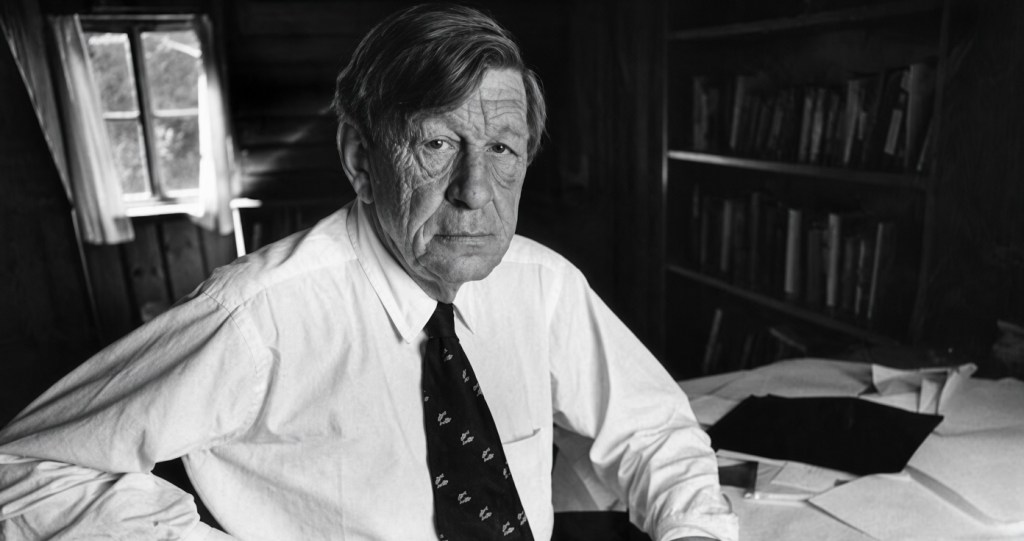
W. H. Auden’s “Musée des Beaux Arts”
W. H. Auden’s “Musée des Beaux Arts” takes as its focus the insignificance of events that do not directly affect those in the vicinity. Auden’s speaker elaborates his thoughts in two full versagraphs.
Musée des Beaux Arts
About suffering they were never wrong,
The old Masters: how well they understood
Its human position: how it takes place
While someone else is eating or opening a window or just walking dully along;
How, when the aged are reverently, passionately waiting
For the miraculous birth, there always must be
Children who did not specially want it to happen, skating
On a pond at the edge of the wood:
They never forgot
That even the dreadful martyrdom must run its course
Anyhow in a corner, some untidy spot
Where the dogs go on with their doggy life and the torturer’s horse
Scratches its innocent behind on a tree.
In Breughel’s Icarus, for instance: how everything turns away
Quite leisurely from the disaster; the ploughman may
Have heard the splash, the forsaken cry,
But for him it was not an important failure; the sun shone
As it had to on the white legs disappearing into the green
Water, and the expensive delicate ship that must have seen
Something amazing, a boy falling out of the sky,
Had somewhere to get to and sailed calmly on.
Auden reads
Commentary on “Musée des Beaux Arts”
The speaker is asserting that the “Old Masters” comprehended the fact that suffering affects deeply only the sufferer.
First Versagraph: What the Old Masters Understood
About suffering they were never wrong,
The old Masters: how well they understood
Its human position: how it takes place
While someone else is eating or opening a window or just walking dully along;
How, when the aged are reverently, passionately waiting
For the miraculous birth, there always must be
Children who did not specially want it to happen, skating
On a pond at the edge of the wood:
They never forgot
That even the dreadful martyrdom must run its course
Anyhow in a corner, some untidy spot
Where the dogs go on with their doggy life and the torturer’s horse
Scratches its innocent behind on a tree.
The first versagraph offers many details that “the Old Masters” understood the nature of human suffering; they were aware that suffering occurred randomly and to others. It happened while the majority of society is engaged with daily, ordinary affairs. The inspiration for this poem came to the poet W. H. Auden after he had visited an art museum in Brussels where Pieter Brueghel’s painting is housed.
As the first versagraph continues, the speaker points out additional situations that human beings consider to be major events, such as older people who eagerly anticipate the birth of a child while children nonchalantly go about whatever innocent activity they are enjoying; the children are not particularly interested in the same events which attract adults.
And also the Old Masters continued to remain aware of long periods of suffering that had to be endured instead cured. The Old Masters remained aware of even insignificant events such as dogs going on with the “doggy” lives, and the torturers whose horses scratched their “innocent” rumps on a tree. The speaker is painting colorful images to remind his audience of events and how they often play out.
Although everyday individuals have the leisure of failing to observe certain dire happenings, the Old Masters, nevertheless, actually concentrated on them and dramatized the details in their art works; thus the Old Masters did not forget what they observed. As the ordinary individual maintains the luxury of dismissing these events, the Old Masters will remind their fellows of them later.
Second Versagraph: For Example, There’s Icarus Drowning
In Breughel’s Icarus, for instance: how everything turns away
Quite leisurely from the disaster; the ploughman may
Have heard the splash, the forsaken cry,
But for him it was not an important failure; the sun shone
As it had to on the white legs disappearing into the green
Water, and the expensive delicate ship that must have seen
Something amazing, a boy falling out of the sky,
Had somewhere to get to and sailed calmly on.
In the second versagraph of “Musée des Beaux Arts,” the speaker points out Brueghel’s Icarus as the example of his claims made in the first versagraph: “In Brueghel’s Icarus, for instance: how everything turns away / Quite leisurely from the disaster.”
The farmer, ploughing his field, might have heard the splash, but it was not important enough for him to stop his work. For the ploughman, this extraneous event was not even significant enough to arouse his curiosity.
And the people traveling in a luxury liner surely must have seen and heard the boy falling out of the sky and then splashing into the water, but those travelers obviously were not able to do anything about it, and also they had a distinction to reach and so they sailed on.
But the Old Masters did not remain so oblivious; instead, the Old Masters through their works recall those forgotten, historic events for the poets, and the poets then recall them for others, who have the mental capacity to pay attention to their observations.

