Lenore’s most dreaded chore was picking up pop bottles. She had to tote a heavy pop crate while collecting the pop bottles from around the ponds. She trembled in fear while negotiating the sloping side of the pond because she could not swim . . .
Fiction Alert! This story is fiction. It does not depict any real person or actual event.
Lenore’s Dreaded Chore
Lenore Ellen Thompson spent her childhood at end of a long dirt road, where her family owned and operated pay fishing lakes—Thompson’s Ponds, later renamed Heavenly Lakes. The fellows who came fishing would get mighty thirsty, so the Thompson’s sold soda pop and other snacks in their concession stand that they nicknamed “The Shanty.”
Back then in the late 1950s and early 1960s, the pop was sold in 12 ounce returnable bottles, but the fishers would not bring back their bottles to “The Shanty.” Instead they simply threw them on the ground around the ponds, and Lenore would have to go out and gather them up, so they could return them to the Pop Man, who came every Saturday to deliver fresh bottles of pop from his big pop truck.
To gather up the pop bottles, Lenore would carry a pop crate that held about 20 or so bottles. She was always fearful when negotiating the sloping side of the ponds because she could not swim, and her inability to swim accounted for the reason that she feared picking up bottles on the sloping sides of the lakes. Sometimes she would pick them up around the level sides and just not bother with the sloping side.
But when she did that, her father would tell her she was lazy for not finishing her task, so to avoid being upbraided by her father, she determined to finish her task regardless of her safety. After a weekend of fairly heavy business, the Monday, June 17, 1957, at approximately 9 a.m., Lenore was hauling the pop crate along the sloping side of the Big Pond, as the family referred to the bigger pond back then. The other one was the Little Pond, naturally.
It had rained the night before and the ground was slippery with mud. There was only one person fishing in the lake, a very thin woman who was casting her line out and reeling in and casting out and reeling in, more as if she were practicing than fishing. As Lenore stepped down and reached out to retrieve a bottle from near the edge of the water, she slipped and went tumbling into the water. The pop crate tumbled in after her hitting her on the leg. She panicked, she could not feel the bottom of the lake under her feet, so she panicked some more.
Suddenly, her lungs felt as though they were going to burst. All at once, she realized that she was breathing under water, and she was shocked! She wondered how she would tell her mom and dad that she could breathe under water.
A Bizarre Thing Happened
But then a most bizarre thing happened. She lunged up out of the water, hovered over it, and then looked around for what to do next. She saw the woman, who was sitting in an odd position, cross-legged, on the hard ground, not moving, just staring off into space. It seemed that Lenore saw the woman open her brain and ask Lenore to enter it.
She did what the thin woman requested, and then after what must have been only seconds, Lenore realized that she no longer had the body of an eleven-year-old, but that of a woman who must have been in her thirties. Lenore got up and walked into a clump of trees up the sloping side of the pond. She sat down to decide what to do. She closed her eyes and began to pray.
Although she had never really prayed before, she couldn’t think of anything else to do, so she prayed for God or Someone or Something to tell her what to do. She knew she could not live as this woman—Lenore was still only eleven-years-old. What could she do? Lenore was guided to think hard about what she used to look like, and so she did that thinking for several minutes as hard as she could. Slowly, she could feel her body changing. She looked down at the hands; they were her hands.
The legs were her legs, and the arms her arms. She wondered if the face was her face, so she went down to the water’s edge and looked in and saw that, indeed, it was the face of eleven-year-old Lenore Ellen Thompson.
And she saw something that stunned her more than she had ever been stunned before: she saw her former body in the water. She was starting to panic again—this time not because of not being able to swim, because she knew that if she fell into the water now, she would be able to swim.
What if They Find the Body?
Lenore tried to figure what she would do when people find that body. Everybody knows that she is not twins. She searched for a long tree branch and shoved the body deeper into the water. Luckily, it finally disappeared so no one could see it from the bank, and she reasoned that because she was very much alive, no one would ever bother to look. She sat for a few moments trying to calm herself and figure what to do next.
She had been gone for what seemed a long time, and she knew her mother would begin to worry if she didn’t get back to the house soon. Then it hit her that she had that woman’s clothes on. They were so tight that she could barely breathe.
The woman, whose body she now inhabited, had been a very thin woman, and Lenore was a rather chubby girl. And she realized that her mother would know that those clothes were not Lenore’s shorts and top. She had to get into the house without her mother seeing her and get some of her own clothes.
So she sneaked up the hillside and waited until her mother came outside. Fortunately, her mother came out and went to the garden to pull weeds. Lenore ran as fast as she could, bounded into the house, changed her clothes, bundled up the thin woman’s clothes and then started to panic again.
What could she do with those clothes? Her mother would know that these were not hers. She looked out the window and saw that her mother had moved to the very far end of the garden, and thus could not see Lenore if she went outside.
Lenore thought at first that she could burn the clothes in a trash barrel drum that they were using to burn trash. But then she would have to account for the fire. The trash barrel was just a few yards away from their outdoor john, (they still had no indoor plumbing back then), and she got the idea to just toss them in the john, and that’s what she did.
It didn’t occur to her that anyone would look down into the excrement hard enough to recognize a pair of shorts and a blouse. But later that night, her father started complaining about the fishermen using their private toilet. He said somebody had put some clothes down in it. That’s all though. He and Lenore’s mother just thought that some fisherman had tossed those clothes down there. Luck was on Lenore’s side again.
Who Was That Woman?
Things settled down for Lenore Ellen Thompson over the next few days, months, years—at times, she wondered if that body would ever be discovered. But what bothered her most was, who was that woman who gave up her body for Lenore? Every time Lenore would hear of a woman missing, she wondered if it were that thin woman until she’d find out some fact that made it impossible.
For example, a woman in Eaton, Ohio, went missing, but they found her body later in Dayton in a hotel room, where she had committed suicide. Over the years, this fear finally faded. After earning her culinary certificate in Cooking Arts at the Culinary Institute in Rhode Island, Lenore married the chef Christopher Evanston.
They worked together in vegetarian restaurants in Chicago, Miami, and finally Encinitas, where they settled down to raise their two sons, Eliot and William. In her early thirties, Lenore encountered the teachings of Vedanta from which she learned some astounding concepts which gave her great comfort—like reincarnation and karma and how each human being is responsible for his/her own salvation.
According to those teachings, if we have led a life that has caused us great pain, we can change it, and follow a pathway that leads us to happiness in the future. And the heart of these teaching is meditation, which calms the body and mind, allowing the soul to find itself.
Discovering that each human body has a soul was a defining moment in the life of Lenore Ellen Thompson because she could now understand that it was her soul that left that body that day and entered the body of the thin woman. Who was the thin woman? Lenore still did not know.
But she thought that the woman was just an astral being used by the Divine Creator to allow Lenore to continue to live out her life. Also what the woman did for Lenore give her an experience base that would allow her to identify with the teachings of Vedanta—no one else in her family ever had such an experience base.
No one ever turned up missing who fit the thin woman’s description. And no one had bought a ticket to fish that morning that Lenore drowned while picking up pop bottles. No one saw the thin woman except Lenore.
Strange Teachings
Vedanta explains that vagrant souls exist and try to enter bodies of people who allow their minds to remain blank. At some point during Lenore’s death state, she became something like a vagrant soul. And the thin woman was waiting for Lenore to take over her body. Lenore comforted herself knowing that the thin woman invited her to do that; Lenore did not merely abscond with the woman’s physical encasement.
Lenore didn’t even know how she did it. It was as if forces were moving her and connecting her without much of her awareness. Lenore was guided to place her attention between her eyes and let the forces do the rest. Vedanta also explains that intense prayer can change the physical body. And at the time of her death and entry into that woman’s body, Lenore prayed with an intensity that she had never before or after experienced.
The Thin Woman Revisits
Despite her bizarre drowning death and rebirth, Lenore lived a fairly ordinary life. She was content in her marriage, motherhood, and loved working with her husband cooking in vegetarian restaurants. Both sons entered monastic life in the ashrams of Paramahansa Yogananda, and Lenore whole-heartedly approved of her sons’ life choices.
Lenore’s soul left its body with finality June 17, 2057, at 9:00 a.m.—exactly one hundred years after the bizarre drowning. Both sons were at her side as she slipped out of her physical encasement. Her belovèd husband had passed only days before. As she was entering the astral realm, Lenore was permitted a brief visitation with her belovèd husband and with several friends from her meditation group.
Then she saw a brilliant light that slowly formed itself into the image of the thin woman, who had offered Lenore her body that day by the Big Pond. The thin woman then welcomed Lenore’s soul to the astral world, where she continues on her journey back to the Infinite.
The speaker in Phillis Wheatley’s “On Virtue” is describing the characteristics of that quality, as she supplicates to the heavenly realms to enrich and enliven her creative ability to produce useful, genuine, and delightful poems.
Introduction and Text of “On Virtue”
Phillis Wheatley’s “On Virtue” creates a speaker who is paying tribute to the coveted life goal of virtue or the characteristic that results from righteousness, integrity, and dedication to the truth. Virtue takes its substance from behavior, that is, right behavior.
The virtuous are those who conduct their life in ways that contribute to freedom, prosperity, peace, and calmness of community. Without a plurality of virtuous folks, a community breaks down, becomes unlivable, causing the virtuous to flee.
The speaker is personifying the quality of virtue, invoking its essential quality to lend its powers to her, and especially to her ability to create her art: she wishes to create “a nobler lay.” Thus, after offering a colorful description of the behavior of “virtue,” the speaker offers a supplication, almost a prayer, that virtue visit her and direct her abilities.
On Virtue
O Thou bright jewel in my aim I strive To comprehend thee. Thine own words declare Wisdom is higher than a fool can reach. I cease to wonder, and no more attempt Thine height t’explore, or fathom thy profound. But, O my soul, sink not into despair, Virtue is near thee, and with gentle hand Would now embrace thee, hovers o’er thine head. Fain would the heav’n-born soul with her converse, Then seek, then court her for her promis’d bliss.
Auspicious queen, thine heav’nly pinions spread, And lead celestial Chastity along; Lo! now her sacred retinue descends, Array’d in glory from the orbs above. Attend me, Virtue, thro’ my youthful years! O leave me not to the false joys of time! But guide my steps to endless life and bliss. Greatness, or Goodness, say what I shall call thee, To give an higher appellation still, Teach me a better strain, a nobler lay, O thou, enthron’d with Cherubs in the realms of day!
Commentary on “On Virtue”
The speaker is Phillis Wheatley’s “On Virtue” is describing the qualities of virtue. As she muses upon the nature of that outstanding quality, she hopes not only to understand it better but also that it will assist her in creating her poems and songs.
First Stanza: A Valued Quality
O Thou bright jewel in my aim I strive To comprehend thee. Thine own words declare Wisdom is higher than a fool can reach. I cease to wonder, and no more attempt Thine height t’explore, or fathom thy profound. But, O my soul, sink not into despair, Virtue is near thee, and with gentle hand Would now embrace thee, hovers o’er thine head. Fain would the heav’n-born soul with her converse, Then seek, then court her for her promis’d bliss
The speaker begins by addressing her subject as “bright jewel.” This appellation demonstrates the value that the speaker is placing on her subject, virtue. To her, virtue is like a precious stone that is bright, thus, cheerful. She expresses the wish to understand exactly what “virtue” is. Virtue’s own synonyms demonstrate that the status of “wisdom” remains out of reach for the “fool.”
The speaker then confesses that she will stop musing and trying to examine a quality that remains at such a height and depth that it seems impossible for her to attain. Then the prospect that her soul might sink into despair at abandoning that quality gives rise to her command to her soul not to “sink . . . into despair.”
While she may not become one with virtue, that quality remains “near” her. Also, the “gentle hand” of that quality will continue to “embrace” the speaker. And it will continue to protect her as it “hovers o’er thine head.”
The soul gladly seeks to attain virtue, for that force is “heav’n-born.” The soul wishes to hold court with virtue, and it will seek to do so. And the soul will continue to pursue that quality in order to reach its goal of “bliss”—promised by all great spiritual leaders and avatars.
Second Stanza: A Supplication for Guidance
Auspicious queen, thine heav’nly pinions spread, And lead celestial Chastity along; Lo! now her sacred retinue descends, Array’’d in glory from the orbs above. Attend me, Virtue, thro’ my youthful years! O leave me not to the false joys of time! But guide my steps to endless life and bliss. Greatness, or Goodness, say what I shall call thee, To give an higher appellation still, Teach me a better strain, a nobler lay, O thou, enthron’d with Cherubs in the realms of day!
The speaker then addresses the quality of virtue as “[a]uspicious queen,” again sending the status of that quality into the higher realms, such as royalty. But this special queen possesses wings like an angel, and those wings not only fan out but also motivate the quality of “Chastity,” the state of purity that those seeking virtue gladly embrace.
The speaker begins describing the movement of that “auspicious queen,” as her “retinue” moves downward dressed in “glory” that belongs to the heavenly realm above it. She then commands “Virtue” to listen to her cries for guidance for her young soul during her maturing years.
She then requests that virtue not allow her to remain in the “false joys of time”—a supplication reminiscent of “lead us not into temptation but deliver us from evil” (Matthew 6:5-15 KJV). She is seeking the genuine that she knows her soul requires and craves.
She asks to be guided to a life of eternal bliss—the very desire that yoga avatars, such as Paramahansa Yogananda, insist remains inherent in every human soul that incarnates upon Mother Earth. The speaker then describes the quality of virtue as containing greatness and goodness, as she seeks an even “an high appellation” for the name of the quality.
Finally, the speaker supplicates for this blessed, high-moral quality to instruct her so that she may create “a nobler lay.” She reminds that quality—as a way of reminding herself—that virtue retains a celestial, mystic power because it is encircled by “Cherubs” even as the daylight hours grace the atmosphere.
Original Song: “Astral Mother” with Prose Commentary
This song is dedicated to my beautiful mother, Helen Richardson, whose soul left the physical planet Earth at the age of 58 and now resides in the astral world. By faith and deep love, I visit her there from time to time.
Introduction with Text of “Astral Mother”
My original song, “Astral Mother,” plays out in three verse-movements and two chorus-movements. A traditional verse is a unified set of lines—often four but through innovation the number is not consistent.
Thus, a verse-movement may be any number of lines or stanzas because the emphasis in on the theme of the movement. A movement depends upon theme rather than number of lines or stanzas.
On the astral plane, souls have shed their bodies of chemicals and dust and reside in bodies of light. Although the physical body is also made fundamentally of light, the astral body is perceived as light more easily than the “mud” covering the soul on the earthly plane.
After visiting my mother on the astral plane, I bring back images, ideas, and thoughts that I dedicate to her in poems and songs. The text of the song follows, and you are welcome to listen to the song on SoundCloud.
Astral Mother
In memoriam: Helen Richardson June 27, 1923 — September 5, 1981
for your beautiful soul
You are waiting now . . . A bright star light In the astral world
You have shed the mud That covers the soul On the earthly plane . . . —
Where you were my mother, and I was your child You were my mother, and I was your child . . .
You are watching for me . . . To catch my beam In the astral world
We will live again The love we lived On the earthly plane . . . —
Where you were my mother, and I was your child You were my mother, and I was your child . . .
We will understand the Spirit-made plan . . . That kept us a while . . . In this earthly world . . . —
Where you were my mother, and I was your child You were my mother, and I was your child . . .
O, my Divine Mother, make me Thy Divine Child! O, my Divine Mother, make me Thy Divine Child!
Commentary on “Astral Mother”
A daughter addresses her mother who has departed the earth and now resides in the astral world. Through faith and divine guidance, the daughter visits the mother and creates a tribute to her mother’s beautiful soul of light
First Verse-Movement: Living as Light in the Astral World
You are waiting now . . . A bright star light In the astral world
You have shed the mud That covers the soul On the earthly plane . . . —
From the earthly plane of existence, the singer/narrator is addressing a loved one who is residing on the astral plane of existence.
The soul of the departed loved one is now existing in her astral/causal bodies—where the soul continues without its physical encasement. Paramahansa Yogananda explains this phenomenon:
astral body. Man’s subtle body of light, prana or lifetrons; the second of three sheaths that successively encase the soul: the causal body (q.v.), the astral body, and the physical body. The powers of the astral body enliven the physical body, much as electricity illumines a bulb.
The astral body has nineteen elements: intelligence, ego, feeling, mind (sense consciousness); five instruments of knowledge (the sensory powers within the physical organs of sight, hearing, smell, taste, and touch); five instruments of action (the executive powers in the physical instruments of procreation, excretion, speech, locomotion, and the exercise of manual skill); and five instruments of life force that perform the functions of circulation, metabolization, assimilation, crystallization, and elimination.
The singer/narrator affirms that her loved one—her belovèd mother—is now “waiting” in her body of light as it exists on the astral plane. The singer/narrator in the second part of the movement refers to the physical body as “mud” which the astral mother has now “shed.” The physical body encases the soul on the earthly plane of existence.
The physical body may be metaphorically referred to as “mud” after the Biblical description of the human body:
In the sweat of thy face shalt thou eat bread, till thou return unto the ground; for out of it wast thou taken: for dust thou art, and unto dust shalt thou return. (KJV Genesis 3:19)
But after the soul leaves that physical encasement, it continues its existence in the two other bodies—astral and causal—on the astral plane where it is perceived only as light. Thus, the daughter/speaker has perceived her mother as a body of light, which she designates metaphorically as “a bright star light.”
Second Verse-Movement: Waiting to Spot a Familiar Dot of Light
You are watching for me . . . To catch my beam In the astral world
We will live again The love we lived On the earthly plane . . . —
The singer/narrator then affirms that the astral mother is waiting for her daughter to join her on the astral plane. The daughter will become a “beam” of light after she leaves her own physical encasement, entering the “astral world.”
The singer/narrator then affirms that the mother and daughter will experience that same love that they shared when they were both on the earth together. The “lived” love and they continue to live that love, but after they both are in the same level of existence, they are likely to recognize and have a deeper level of awareness of that love.
Third Verse-Movement: Understanding and Appreciating Love and Light
We will understand the Spirit-made plan . . . That kept us a while . . . In this earthly world . . . —
The singer/narrator finally affirms that after the mother and daughter are reunited, for however briefly that reunion might exist, they will understand more about the divine plan that God has for them.
They were both maintained on the earth planet for while; they no doubt had questions about the meaning of life and all of its vicissitudes. The singer/narrator predicts that after entering the astral plane, both she and her mother will understand more about meaning and purpose then they had before.
Experience is great teacher; and God puts His children in positions from which they may learn what they need in order to meet their karmic demands. The singer/narrator holds great faith that she and her mother on the path that leads to the ultimate enlightenment of union with the Divine.
Chorus-Movement 1: A Simple Statement of Fact
Where you were my mother, and I was your child You were my mother, and I was your child . . .
In the first chorus, the singer/narrator simply states the fact that the addressee in the song was the singer’s mother, and the singer was the child of the mother. On the earth plane, they were mother and daughter.
The simplicity of the statement may be misleading. This simple fact is, however, very important. On the earth plane, they were mother and daughter, but on the astral plane they are only two individual souls that are children of the One Father-Mother-God.
The mother/daughter relationship on earth is likely quite a different one from that relationship as two individual souls on the astral plane. Despite that obvious fact, the important fact to remember is that love exists between the two; it existed on earth and it will exist in the astral world.
Chorus-Movement 2: A Prayer-Chant to the Divine Mother
O, my Divine Mother, make me Thy Divine Child! O, my Divine Mother, make me Thy Divine Child!
The momentousness of the shift from the earth relationship of mother/daughter to Divine Mother/Divine Child cannot be overstated.
By ending with a chant-like prayer, the singer/narrator affirms that through the love relationship between earth mother and daughter, she has come to understand that both mother and daughter are children of the Divine Reality (God).
And the singer/narrator then supplicates to God as Divine Mother to help her realize her soul as that “Divine Child” that she is. The same supplication is offered on behalf of the astral mother, whom the singer/narrator has been addressing.
Both former earth mother and earth daughter are children of the Divine, and they both must one day come to realize that relationship to the Divine—and the singer/narrator prays for that to happen.
Commentaries on Paramahansa Yogananda’s Songs of the Soul
Each time my father, mother, friends Do loudly claim they did me tend, I wake from sleep to sweetly hear That Thou alone didst help me here. —from Paramahansa Yogananda’s “One Friend”
for Ron Grimes, my soul mate with whom I travel the spiritual path
This collection of personal commentaries is a companion to the book of spiritual poems, Songs of the Soul, written by Paramahansa Yogananda, the “Father of Yoga in the West.” While these commentaries offer elucidation of each poem, they cannot offer the beauty and majesty experienced by reading the poems themselves.
I have included only an excerpt from each poem preceding each commentary. I, therefore, humbly suggest that you acquire a copy of the great guru’s poems to experience them for yourself, along with my commentaries.
Paramahansa Yogananda’s Songs of the Soul is available at the Self-Realization Fellowship bookstore, Amazon, Barnes & Noble, and other online outlets, as well as in bookstores everywhere.
These commentaries are my personal responses to the poems in Paramahansa Yogananda’s Songs of the Soul. If they assist any reader in understanding the poetic language on a deeper level, then that is a bonus, for my only purpose is to offer my own personal, humble reading.
Brief Publishing History of Songs of the Soul
The first version of Paramahansa Yogananda’s Songs of the Soul appeared in 1923. He continued to revise the poems during the 1920s and 1930s, and the definitive revision that was authorized by the great guru was published in 1983, featuring many restored lines that had been excised from the first publication of the text.
The 1923 version of the collection of poems appears online at Internet Archive. For my commentaries, I rely on the printed text of the 1983 version; the current printing year for that version is 2014.The 1983 printing offers the final approved versions of these poems.
Special Purpose of the Poems in Songs of the Soul
The poems in Songs of the Soul come to the world not as mere literary pieces that elucidate and share common human experiences as most ordinary successful poems do, but these mystical poems also serve as inspirational guidance to enhance the study of the yoga techniques disseminated by the great guru, Paramahansa Yogananda.
He came to the West, specifically to Boston, Massachusetts, in the United States of America, to share his deep knowledge of yoga through techniques that lead the mind to conscious awareness of God, a phenomenon that he called “self-realization.”
The great guru published a series of lessons that contain the essence of his teaching as well as practical techniques of Kriya Yoga. His organization, Self-Realization Fellowship, has continued to publish collections of his talks in both print and audio format that he gave nationwide during the 1920s, 1930s, 1940s, and 1950s.
In addition to Songs of the Soul, the great guru/poet offers mystical poetic expressions in two other publications, Whispers from Eternity and Metaphysical Meditations, both of which serve in the same capacity that Songs of the Soul does, to assist the spiritual aspirant on the journey along the spiritual path.
This section features the commentaries, one for each of the 101 poems in Songs of the Soul. Each commentary is preceded by a brief introduction and excerpt from the poem. Here I am offering the first commentaries, each with an excerpt from the poem.
1. “Consecration”
In the opening poem, titled “Consecration,” the speaker humbly offers his works to his Creator. He offers the love from his soul to the One Who gives him his life and his creative ability, as he dedicates his poems to the Divine Reality or God.
Introduction and Excerpt from “Consecration”
Paramahansa Yogananda, the great guru/poet and founder of Self-Realization Fellowship, known as the “Father of Yoga in the West,” dedicates his book of mystical poems, Songs of the Soul, to his earthly father and consecrates it by offering it to his Heavenly Father (God—the Divine Creator). In dedicating his collection to his earthly father, the great guru writes,
Dedicated to my earthly father, who has helped me in all my spiritual work in India and America
The first poem appearing in the great yogi-poet’s book of spiritual poems is an American (innovative) sonnet, featuring two sestets and a couplet with the rime scheme AABBCC DDEFGGHH.
The first sestet is composed of three rimed couplets; the second sestet features two rimed couplets and one unrimed couplet that occupies the middle of the sestet.
This innovative form of the sonnet is perfectly fitted to the subject matter and purpose of the Indian yogi, who has come to America to minister to the waiting souls, yearning for the benefits of the ancient yogic techniques in which the great guru will instruct them.
The ancient Hindu yogic concepts offer assistance to Westerners in understanding their own spiritual traditions, including the dominant Christianity of which many are already devotees.
Excerpt from “Consecration”
At Thy feet I come to shower All my full heart’s rhyming* flower: Of Thy breath born, By Thy love grown, Through my lonely seeking found, By hands Thou gavest plucked and bound . . .
*The spelling, “rhyme,” was introduced into English by Dr. Samuel Johnson through an etymological error. As most editors require the Johnson-altered spelling of this poetic device, the text of Songs of the Soul also adheres to that requirement featuring the spelling, “rhyming.” However, when I employ that term in my commentaries, I use the original spelling, “rime.”
Commentary
These spiritual poems begin with their consecration, a special dedication that offers them not only to the world but to God, the Ultimate Reality and Cosmic Father, Mother, Friend, Creator of all that is created.
First Sestet: Dedication of Poetic Effort
The speaker proclaims that he has come to allow his power of poetry to fall at the feet of his Divine Belovèd Creator. He then avers that the poems as well as the poet himself are from God Himself.
The Divine Belovèd has breathed life into the poems that have grown out of the speaker’s love for the Divine. The speaker has suffered great loneliness in his life before uniting with his Divine Belovèd.
The spiritually striving speaker, however, has earnestly searched for and worked to strengthen his ability to unite with the Divine Creator, and he has been successful in attaining that great blessing.
The speaker/devotee is now offering that success to his Divine Friend because he knows that God is the ultimate reason for his capabilities to accomplish all of his worthwhile goals. As he feels, works, and creates as a devotee, he gives all to God, without Whom nothing that is would ever be.
Second Sestet: Poems for the Divine
In the second sestet, the speaker asserts that he has composed these poems for the Belovèd Creator. The collection of inspirational poetic works placed in these pages contains the essence of the guru-poet’s life and accomplishments made possible by the Supreme Spirit.
The writer asserts that from his life he has chosen the most pertinent events and experiences which will illuminate and inform the purpose of these poems.
The speaker is metaphorically spreading wide the petals of his soul-flowers to allow “their humble perfume” to waft generously.
He is offering these works not merely as personal effusions of shared experience for the purpose of entertainment or self-expression but for the upliftment and soul guidance of others, especially for his own devoted followers.
His intended audience remains the followers of his teachings, for he knows they will continue to require his guidance as they advance on their spiritual paths.
The Couplet: Humbly Returning a Gift
The speaker then with prayer-folded hands addresses the Divine directly, averring that he is in reality only returning to his Divine Belovèd that which already belongs to that Belovèd. He knows that as a writer he is only the instrument that the Great Poet has used to create these poems.
As the humble writer, he takes no credit for his works but gives it all to the Prime Creator. This humble poet/speaker then gives a stern command to his Heavenly Father, “Receive!”
As a spark of the Divine Father himself, this mystically advanced speaker/poet discerns that he has the familial right to command his Great Father Poet to accept the gift that the devotee has created through the assistance of the Divine Poet.
2. “The Garden of the New Year”
In “The Garden of the New Year,” the speaker celebrates the prospect of looking forward with enthusiastic preparation to live “life ideally!”
Introduction and Excerpt from “The Garden of the New Year”
The ancient tradition of creating New Year’s resolutions has situated itself in much of Western culture, as well as Eastern culture. As a matter of fact, world culture participates in this subtle ritual either directly or indirectly. This tradition demonstrates that hope is ever present in the human heart.
Humanity is always searching for a better way, a better life that offers prosperity, peace, and solace. Although every human heart craves those comforts, each culture has fashioned its own way of achieving them. And by extension, each individual mind and heart follows its own way through life’s vicissitudes.
The second poem is titled “The Garden of the New Year.” This poem dramatizes the theme of welcoming the New Year, using the metaphor of the garden where the devotee is instructed to pull out “weeds of old worries” and plant “only seeds of joys and achievements.”
The pulling out of weeds from the garden of life is a perfect metaphor for the concept of a New Year’s resolution. We make those resolutions for improvement and to improve we often find that we must eliminate certain behaviors in order to instill better ones.
The poem features five unrimed versagraphs*, of which the final two are excerpted.
Excerpt from “The Garden of the New Year”
. . . The New Year whispers: “Awaken your habit-dulled spirit To zestful new effort. Rest not till th’ eternal freedom is won And ever-pursuing karma outwitted!”
With joy-enlivened, unendingly united mind Let us all dance forward, hand in hand, To reach the Halcyon Home Whence we shall wander no more . . .
*The term, “versagraph,” is a conflation of “verse paragraph,” the traditional unit of lines for free verse poetry. I coined the term for use in my poem commentaries.
Commentary
This poem is celebrating living life “ideally,” through changing behavior that has limited that ability in the past.
First Versagraph: Out with the Old and in with the New
The speaker is addressing his listeners/readers as he asserts that the old year has left us, while the New Year is arriving. The old year did spread its “sorrow and laughter,” yet the New Year holds promises of brighter encouragement and hope.
The New Year’s “song-voice” offers grace to the senses, while commanding, “Refashion life ideally!”
This notion is universally played out as many people fashion New Year’s resolutions, hoping to improve their lives in the coming year. Because most people are always seeking to improve their situations, they determine how to do so and resolve that they will follow a new path that will lead to a better place.
Second Versagraph: Abandoning the Weed to Plant New Seeds
In the second versagraph, the speaker employs the garden metaphor to liken the old problematic ways to weeds that must be plucked out so that the new ways can be planted and grow.
The speaker instructs the metaphoric gardener to pull out the weeds of “old worries” and in their place plant “seeds of joys and achievements.” Instead of allowing the weeds of doubt and wrong actions to continue growing, the spiritual gardener must plant seeds of “good actions and thoughts, all noble desires.”
Third Versagraph: The Garden Metaphor
Continuing the garden metaphor, the speaker advises the spiritual aspirant to “sow in the fresh soil of each new day / Those valiant seeds.” After having sown those worthy seeds, the spiritual gardener must “water and tend them.”
The perfect metaphor for one’s life is the garden with its life-giving entities as well as its weeds. As one tends a garden, one must tend one’s life as well to make them both the best environment for life to thrive. By careful attention to the worthy, good seeds of attitudes and habits, the devotee’s life will become “fragrant / With rare flowering qualities.”
Fourth Versagraph: New Year as Spiritual Guide
The speaker then personifies the New Year as a spiritual guide who gives sage advice through whispers, admonishing the devotees to employ real effort to wake up their sleeping spirit that has become “habit-dulled.” This new spiritual guide advises the spiritual aspirant to continue struggling until their “eternal freedom” is gained.
The spiritual searchers must work, revise their lives, and continue their study until they have “outwitted” karma, the result of cause and effect that has kept them earth-bound and restless for aeons.
The beckoning New Year always promises a new chance to change old ways. But the seekers must do their part. They must cling to their spiritual path, and as soon as they veer off, they must return again and again until they have reached their goal.
Fifth Versagraph: A Benediction of Encouragement
The speaker then offers a benediction of encouragement, giving the uplifting nudge to all those spiritual aspirants who wish to improve their lives, especially their ability to follow their spiritual paths. The speaker invites all devotees to “dance forward” together “With joy-enlivened, unendingly united mind.”
The speaker reminds his listeners that their goal is to unite their souls with their Divine Beloved Who awaits them in their “Halcyon Home.” And once they achieve that Union, they will need no long venture out into the uncertainty and dangers as they exist on the physical plane.
The New Year always holds the promise, but the spiritual aspirant must do the heavy lifting to achieve the lofty goal of self-realization.
3. “My Soul Is Marching On”
This amazing poem, “My Soul Is Marching On,” offers a refrain which devotees can chant and feel uplifted in times of lagging interest and seeming spiritual dryness.
Introduction and Excerpt from “My Soul Is Marching On”
The poem, “My Soul Is Marching On,” offers five stanzas, each with the refrain, “But still my soul is marching on!” The poem demonstrates the soul’s power in contrast with the weaker powers of entities from nature. For example, as strong as the light of the sun may be, it vanishes at night, and will eventually be extinguished altogether in the long, long run of aeons of time.
Unlike those seemingly forceful, yet ultimately, much weaker physical, natural creatures, the soul of each individual human being remains a strong, vital, eternal, immortal force that will keep marching on throughout all time—throughout all of Eternity.
Devotees who have chosen the path toward self-realization may sometimes feel discouraged as they tread the path, feeling that they do not seem to be making any progress. But Paramahansa Yogananda’s poetic power comes to rescue them, giving in his poem a marvelous repeated line that the devotee can keep in mind and repeat when those pesky times of discouragement float across the mind.
Included here are the epigram and first two stanza of the poem, “My Soul Is Marching On.”
Excerpt from “My Soul Is Marching On”
Never be discouraged by this motion picture of life. Salvation is for all. Just remember that no matter what happens to you, still your soul is marching on. No matter where you go, your wandering footsteps will lead you back to God. There is no other way to go.
The shining stars are sunk in darkness deep, The weary sun is dead at night, The moon’s soft smile doth fade anon; But still my soul is marching on!
The grinding wheel of time hath crushed Full many a life of moon and star, And many a brightly smiling morn; But still my soul is marching on! . . .
Commentary
Before beginning his encouraging drama of renewal, Paramahansa Yogananda offers an epigram that prefaces the poem by stating forthrightly its intended purpose. In case the reader may fail to grasp the drama of the poetic performance, the epigram will leave no one in doubt.
The Epigram: A Balm to the Marching Soul
The great guru avers that there is no other reality but the soul’s forward march. Despite all circumstance to the contrary, the soul will, in fact, continue its march.
The devotee simply has to come to realize that fact that all “wandering footsteps” return to their home in the Divine. The guru then states unequivocally, “There is no other way to go.”
This amazing, inspiring statement culminates in the refrain that allows the devotee to take into mind a chant for upliftment anytime, anywhere it is needed.
First Stanza: The Soul Marches on in Darkness
The speaker begins by asserting that the bright bodies of the stars, sun, and moon are often hidden. The stars seem to sink into the black backdrop of the sky, or even remain hidden by day, as if never to be seen again, yet other times, they are completely invisible.
The largest dominant star of all—the sun—also seems to completely vanish from the sight of world-weary inhabitants of planet Earth. The sun seems to be “weary” as it has crossed the diurnal sky and then sinks out of sight.
The moon whose glow remains less bright compared to the sun, nevertheless, also fades out of sight. All of these bright orbs of such tremendous magnitude glow and fade, for they are mere physical beings.
The speaker then adds his marvelous, encouraging claim that becomes his refrain—”But still my soul is marching on!” The speaker will continue repeating this vital assertion as he dramatizes his poem to encourage and uplift devotees whose spirits may from time-to-time lag.
This refrain will then ring in their souls and urge them to keep marching because their souls are already continuing that march.
Second Stanza: Nothing Physical Can Halt the Spiritual
The speaker then reports that time has already smashed moons and stars and obliterated them from existence. Many cycles of creation and recreation have come and gone from the annals of eternity.
That eventuality remains the nature of physical creation: it emerges from the depths of the body of the Divine Creator and then later is taken back into that Divine Body, disappearing as if they had never been.
But regardless of what happens on the physical level, the soul remains an existing Entity throughout Eternity. The soul of each individual continues its journey. It makes no difference on which planet it may appear; it may continue from planet to planet, if necessary, as it marches back to its Creator.
That soul will continue its march to the Divine, despite all cosmic activity. Nothing can prevent the soul’s forward march, nothing can stop the marching soul, and nothing can hinder that march. The refrain shall again and again ring in the mind of the devotee who has begun this march to self-realization.
Third Stanza: The Evanescence of Nature
The speaker then reports on other natural phenomena. Marvelous, beautiful flowers have offered their colorful blooms to the eyes of humankind, but then they invariably fade and shrivel up to nothingness. The evanescence of beauty remains a conundrum for the mind of humankind.
Like the beauty yielding flowers, the gigantic trees offer their “bounty” for only a while, and then they too sink into nothingness. The naturally appearing entities that feed the human mind as well as the human body all mysteriously come under ” time’s scythe,” appearing and disappearing again and again.
But the soul again remains in contrast to these wonderful natural entities. The soul continues its eternal march, unlike the outer physical realities of flowers and trees.
The human soul will continue its march, as will the invisible souls of those seemingly vanishing nature’s living beings. The refrain must take hold in the mind of the devotee, who in times of lagging interest and self-doubt will chant its truth and become re-invigorated.
Fourth Stanza: As Physical Life Fades, The Soul Continues Unabated
All of the great emissaries sent by the Divine Creator continue to speed by. Vast swaths of time also speed by as creation seems to remain on a collision course with ultimate disaster.
The human being must remain in a perpetually vigilant state of mind just to remain alive in this dangerous and pestilent-filled world. Even human against human remains a continued concern as “man’s inhumanity to man” prevails in very age in every nation of planet Earth.
But the speaker is not only referring to the small planet at a short period of time; he is speaking cosmically of the entire history of all Creation. He is averring that being born a human being at any time in history brings that individual soul into the same arena of struggle.
As each human being lets fling his arrows in battle, the individual finds that all of his “arrows” have been used up. He finds his life ebbing away.
But again, while the physical body remains the battle ground of trials and tribulations, the soul is unaffected. It will continue on its path back to its Divine Haven, where it will no longer need those arrows. The devotee will continue to chant this truth again and again to spark his march to greater heights.
Fifth Stanza: The Refrain Must Remain
The speaker has observed that his fight with nature has been a fierce one. Failures have blocked his way. He has experienced the ravages of death’s destruction. He has had to face obstructions blocking “his path.”
All of nature has conspired to “block [his] path.” Nature has always been a challenging force, but the human being who has determined to overcome the ravages of nature will find that his “fight” is stronger than that of nature, despite the fact that nature remains a “jealous” power.
The soul continues to march to its home in God, where it will never again have to face the fading of beautiful light, the vanishing of colorful flowers, the failures that obstruct and slow one’s pace.
The soul will continue to march, to study, to practice, to meditate, and to pray until it at last experiences success, until it as last finds itself totally awake in the arms of the Blessed Divine Over-Soul, from which it has come. The devotee will continue to hear that amazingly uplifting line and continue to know that his/her “soul is marching on!”
To Thee I humbly offer my songs That Thou hast given me
Introduction
These poems grow out of my experience serving as harmonium player/chant leader for our Nashville Self-Realization Fellowship Sunday Readings Service.
I title this collection Command Performance for I have attempted to retire from the chant leader position, offering it to other devotees, but no one thus far wishes to take it from me.
And often I have come to the chapel Readings Service, thinking I would merely be attending, only to find that the scheduled chant leader was unavailable and so the service leader would prevail upon me to fill the void; thus, another “command performance.”
I reason that Guruji Paramahansa Yogananda is commanding me to continue performing this function, as long as I am capable.
Poems from Chants
These original poem were all inspired by the chant, whose title is offered following the poem title.
Who says, She is Dark?
—after “Thousands of Suns and Moons”
Her smile beams With the rays Of a millions suns.
Her skin glows With the light Of a million moons.
Who says, She is dark?
Only those who refuse To open their eye To her light.
Joy, Joy, Joy!
—after “Ever New Joy”
Joy, joy, joy— Morning has broken in joy. Light of starlight, hiding Behind the sun.
Joy, joy, joy— Evening calls the faithful To rest from a full day’s labor Practiced by Divine decree.
Joy, joy, joy— Night covers maya’s delusion So the spiritual eye May bound in brilliance.
Thou art That
—after “Hymn to Brahma”
Beyond my thoughts, Beyond my ideas, Beyond my knowledge, Far beyond my wisdom— Thou are That.
Beyond my body, Beyond my mind, Beyond my energy, One with my soul— Thou art That.
Drowning in Glory
—after “I Am the Bubble, Make Me the Sea”
You wake my senses to clear sight, glorious sound, Intelligent touch, pure fragrance, tempered taste. You wake my senses by drowning them in Glory Inundating them in the silence of Your vastness, Spilling on them the majestic light show Of Your body, bound by boundlessness.
In the ocean of Your love, my bubble heart Contracts and expands to eternity. My restless brain shrinks and extends Its reach to unknown realms of wisdom. My soul knows itself in the crash of breaking worlds Where it stands unshaken hand in hand with You. As You do, so I wish to do forever, Drowning in the Glory of Your sacred presence.
William Butler Yeats’ “The Second Coming” remains one of the most widely misunderstood poems of the 20th century. Many scholars and critics have failed to criticize the exaggeration in the first stanza and the absurd metaphor in the second stanza, which render a potentially fine poem a critical failure.
Introduction with Text of “The Second Coming”
Poems, in order to communicate, must be as logical as the purpose and content require. For example, if the poet wishes to comment on or criticize an issue, he must adhere to physical facts in his poetic drama. If the poet wishes to emote, equivocate, or demonstrate the chaotic nature of his cosmic thinking, he may legitimately do so without much seeming sense.
For example, Robert Bly’s lines—”Sometimes a man walks by a pond, and a hand / Reaches out and pulls him in” / / “The pond was lonely, or needed / Calcium, bones would do,”—are ludicrous [1] on every level. Even if one explicates the speaker’s personifying the pond, the lines remain absurd, at least in part because if a person needs calcium, grabbing the bones of another human being will not take care of that deficiency.
The absurdity of a lake needing “calcium” should be abundantly clear on its face. Nevertheless, the image of the lake grabbing a man may ultimately be accepted as the funny nonsense that it is. William Butler Yeats’ “The Second Coming” cannot be dismissed so easily; while the Yeats poem does not depict the universe as totally chaotic, it does bemoan that fact that events seem to be leading society to armageddon.
The absurdity surrounding the metaphor of the “rough beast” in the Yeats poem renders the musing on world events without practical substance.
The Second Coming
Turning and turning in the widening gyre The falcon cannot hear the falconer; Things fall apart; the centre cannot hold; Mere anarchy is loosed upon the world, The blood-dimmed tide is loosed, and everywhere The ceremony of innocence is drowned; The best lack all conviction, while the worst Are full of passionate intensity.
Surely some revelation is at hand; Surely the Second Coming is at hand. The Second Coming! Hardly are those words out When a vast image out of Spiritus Mundi Troubles my sight: somewhere in sands of the desert A shape with lion body and the head of a man, A gaze blank and pitiless as the sun, Is moving its slow thighs, while all about it Reel shadows of the indignant desert birds. The darkness drops again; but now I know That twenty centuries of stony sleep Were vexed to nightmare by a rocking cradle, And what rough beast, its hour come round at last, Slouches towards Bethlehem to be born?
Commentary on “The Second Coming”
William Butler Yeats’ “The Second Coming” remains one of the most widely anthologized poems in world literature. Yet its hyperbole in the first stanza and ludicrous “rough beast” metaphor in the second stanza result in a blur of unworkable speculation.
First Stanza: Sorrowful over Chaos
Turning and turning in the widening gyre The falcon cannot hear the falconer; Things fall apart; the centre cannot hold; Mere anarchy is loosed upon the world, The blood-dimmed tide is loosed, and everywhere The ceremony of innocence is drowned; The best lack all conviction, while the worst Are full of passionate intensity.
The speaker is sorrowing over the chaos of world events that have left in their wake many dead people. Clashes of groups of ideologues have wreaked havoc, and much blood shed has smeared the tranquil lives of innocent people who wish to live quiet, productive lives.
The speaker likens the seemingly out of control situation of society to a falconer losing control of the falcon as he attempts to tame it. Everyday life has become chaotic as corrupt governments have spurred revolutions. Lack of respect for leadership has left a vacuum which is filled with force and violence.
The overstated claim that “The best lack all conviction, while the worst / Are full of passionate intensity” should have alerted the poet that he needed to rinse out the generic hyperbole in favor of more accuracy on the world stage.
Such a blanket, unqualified statement, especially in a poem, lacks the ring of truth: it simply cannot be true that the “best lack all conviction.” Surely, some the best still retain some level of conviction, or else improvement could never be expected.
It also cannot be true that all the worst are passionate; some of the worst are likely not passionate at all but remain sycophantic, indifferent followers. Any reader should be wary of such all-inclusive, absolutist statements in both prose and poetry.
Anytime a writer subsumes an entirety with the terms “all,” “none,” “everything,” “everyone,” “always,” or “never,” the reader should question the statement for its accuracy. All too often such terms are signals for stereotypes, which produce the same inaccuracy as groupthink.
Second Stanza: What Revelation?
Surely some revelation is at hand; Surely the Second Coming is at hand. The Second Coming! Hardly are those words out When a vast image out of Spiritus Mundi Troubles my sight: somewhere in sands of the desert A shape with lion body and the head of a man, A gaze blank and pitiless as the sun, Is moving its slow thighs, while all about it Reel shadows of the indignant desert birds. The darkness drops again; but now I know That twenty centuries of stony sleep Were vexed to nightmare by a rocking cradle, And what rough beast, its hour come round at last, Slouches towards Bethlehem to be born?
The idea of “some revelation” leads the speaker to the mythological second coming of Christ. So he speculates on what a second coming might entail. However, instead of “Christ,” the speaker conjures the notion that an Egyptian-Sphinx-like character with ill-intent might arrive instead.
Therefore, in place of a second coming of godliness and virtue, as is the purpose of the original second coming, the speaker wonders: what if the actual second coming will be more like an Anti-Christ? What if all this chaos of bloodshed and disarray has been brought on by the opposite of Christian virtue?
Postmodern Absurdity and the “Rough Beast”
The “rough beast” in Yeats’ “The Second Coming” is an aberration of imagination, not a viable symbol for what Yeats’ speaker thought he was achieving in his critique of culture. If, as the postmodernists contend, there is no order [2] in the universe and nothing really makes any sense anyway, then it becomes perfectly fine to write nonsense.
Because this poet is a contemporary of modernism but not postmodernism [3], William Butler Yeats’ poetry and poetics do not quite devolve to the level of postmodern angst that blankets everything with the nonsensical. Yet, his manifesto titled A Vision is, undoubtedly, one of the contributing factors to that line of meretricious ideology.
Hazarding a Guess Can Be Hazardous
The first stanza of Yeats’ “The Second Coming” begins by metaphorically comparing a falconer losing control of the falcon to nations and governments losing control because of the current world disorder, in which “[t]hings fall apart; the centre cannot hold.”
Political factions employ these lines against their opposition during the time in which their opposition is in power, as they spew forth praise for their own order that somehow magically appears with their taking the seat of power.
The poem has been co-opted by the political class so often that Dorian Lynskey, overviewing the poem in his essay, “‘Things fall apart’: the Apocalyptic Appeal of WB Yeats’s The Second Coming,” writes, “There was apparently no geopolitical drama to which it could not be applied” [4].
The second stanza dramatizes the speaker’s musing about a revelation that has popped into his head, and he likens that revelation to the second coming of Christ; however, this time the coming, he speculates, may be something much different.
The speaker does not know what the second coming will herald, but he does not mind hazarding a dramatic guess about the possibility. Thus, he guesses that the entity of a new “second coming” would likely be something that resembles the Egyptian sphinx; it would not be the return of the Christ with the return of virtue but perhaps its opposite—vice.
The speaker concludes his guess with an allusion to the birth of such an entity as he likens the Blessed Virgin Mother to the “rough beast.” The Blessèd Virgin Mother, as a newfangled, postmodern creature, will be “slouching toward Bethlehem” because that is the location to which the first coming came.
The allusion to “Bethlehem” functions solely as a vague juxtaposition to the phrase “second coming” in hopes that the reader will make the connection that the first coming and the second coming may have something in common. The speaker speculates that at this very moment wherein the speaker is doing his speculation some “rough beast” might be pregnant with the creature of the “second coming.”
And as the time arrives for the creature to be born, the rough beast will go “slouching” towards its lair to give birth to this “second coming” creature: “its hour come round at last” refers to the rough beast being in labor.
The Flaw of Yeats’ “The Second Coming”
The speaker then poses the nonsensical question: “And what rough beast, its hour come round at last, / Slouches towards Bethlehem to be born?” In order to make the case that the speaker wishes to make, these last two lines should be restructured in one of two ways:
And what rough beast, its hour come round at last, Slouches towards Bethlehem to give birth?
or
And what rough beast’s babe, its time come at last, Is in transport to Bethlehem to be born?
An unborn being cannot “slouch” toward a destination. The pregnant mother of the unborn being can “slouch” toward a destination. But the speaker is not contemplating the nature of the rough beast’s mother; he is contemplating the nature of the rough beast itself.
The speaker does not suggest that the literal Sphinx will travel to Bethlehem. He is merely implying that a Sphinx-like creature might resemble the creature of the second coming. Once an individual has discounted the return of Jesus the Christ as a literal or even spiritual fact, one might offer personal speculation about just what a second coming would look like.
It is doubtful that anyone would argue that the poem is dramatizing a literal birth, rather than a spiritual or metaphorical one. It is also unreasonable to argue that the speaker of this poem—or Yeats for that matter—thought that the second coming actually referred to the Sphinx. A ridiculous image develops from the fabrication of the Sphinx moving toward Bethlehem. Yeats was more prudent than that.
Exaggerated Importance of Poem
William Butler Yeats composed a manifesto to display his worldview and poetics titled A Vision, in which he set down certain tenets of his thoughts on poetry, creativity, and world history. Although seemingly taken quite seriously by some Yeatsian scholars, A Vision is of little value in understanding either meaning in poetry or the meaning of the world, particularly in terms of historical events.
An important example of Yeats’ misunderstanding of world cycles is his explanation of the cyclical nature of history, exemplified with what he called “gyres” (pronounced with a hard “g.”) Two particular points in the Yeatsian explanation demonstrate the fallacy of his thinking:
In his diagram, Yeats set the position of the gyres inaccurately; they should not be intersecting but instead one should rest one on top of the other: cycles shrink and enlarge in scope; they do not overlap, as they would have to do if the Yeatsian model were accurate.
Image : Gyres – Inaccurate Configuration from A Vision
Image: Gyres – Accurate Configuration
2. In the traditional Second Coming, Christ is figured to come again but as an adult, not as in infant as is implied in Yeats’ poem “The Second Coming.”
Of great significance in Yeats’ poem is the “rough beast,” apparently the Anti-Christ, who has not been born yet. And most problematic is that the rough beast is “slouch[ing] towards Bethlehem to be born.” The question is, how can such a creature be slouching if it has not yet been born? There is no indication the speaker wishes to attribute this second coming fiasco to the mother of the rough beast.
This illogical event is never mentioned by critics who seem to accept the slouching as a possible occurrence. On this score, it seems critics and scholars have lent the poem an unusually wide and encompassing poetic license.
The Accurate Meaning of the Second Coming
Paramahansa Yogananda has explained in depth the original, spiritual meaning of the phrase “the second coming”[5] which does not signify the literal coming again of Jesus the Christ, but the spiritual awakening of each individual soul to its Divine Nature through the Christ Consciousness.
Paramahansa Yogananda summarizes his two volume work The Second Coming of Christ: The Resurrection of the Christ Within You:
In titling this work The Second Coming of Christ, I am not referring to a literal return of Jesus to earth . . .
A thousand Christs sent to earth would not redeem its people unless they themselves become Christlike by purifying and expanding their individual consciousness to receive therein the second coming of the Christ Consciousness, as was manifested in Jesus . . .
Contact with this Consciousness, experienced in the ever new joy of meditation, will be the real second coming of Christ—and it will take place right in the devotee’s own consciousness. (my emphasis added)
Interestingly, knowledge of the meaning of that phrase “the second coming” as explained by Paramahansa Yogananda renders unnecessary the musings of Yeats’ poem “The Second Coming”and most other speculation about the subject. Still, the poem as an artifact of 20th century thinking remains an important object for study.
Image: Open AI created inspired by the lines “Noise blossoms in the mind / Bursting into a riot of sound color”
Quotations
Paramahansa Yogananda: People interested in developing their memory should avoid the regular use of stimulants such as coffee, tea, and tobacco, which contain caffeine, theine, and nicotine, respectively.* Strictly avoid using strong stimulants such as liquor and drugs. Such substances intoxicate, drug, and deteriorate the intelligence and memory cells of the brain, preventing them from recording noble ideas and sense impressions in general. Memory cells that are constantly anesthetized by intoxicants lose their retentive power, and become lazy and inert. Intoxication obliterates the functions of the conscious mind by harmful chemicals, hence injures the cerebral memory-organ. When the brain is affected the memory is impaired. — SRF Lesson 51: “Yoga Methods for Developing Memory” (*Editor’s Note: Some modern research indicates that light to moderate use of caffeine improves short-term memory for brief periods. Yogis, however, assert that continuous use over a long period erodes rather than enhances the capacity of this divine faculty.)
Paramahansa Yogananda: In the natural course of evolution through reincarnation, souls are automatically reincarnated by cosmic law in a higher form or species in each incarnation. The soul is never reborn in the same animal species: a dog is never a dog again. — SRF Lesson 78: “Conscious Evolution”
Paramahansa Yogananda: There is nothing more powerful than will. Everything in this universe is produced by will. Physiological changes may even be made to occur in the body by will power. There is no time element involved; place a thought in the mind and hold it there, and think that the thing is done and your whole body and mind will respond to it. Nor does it take time to acquire or discard a habit if you exercise sufficient will power. It is all in your mind. —SRF Lesson S-4 P-79
Paramahansa Yogananda: Remember that when you are unhappy it is generally because you do not visualize strongly enough the great things that you definitely want to accomplish in life, nor do you employ steadfastly enough your will power, your creative ability, and your patience until your dreams are materialized. —SRF Lessons and Spiritual Diary, April 22 – Will Power, Creative Ability, & Patience
Paramahansa Yogananda: The Sanskrit word for ‘musician’ is bhagavathar, “he who sings the praises of God.” —Autobiography of a Yogi
Sri Yukteswar: Forget the past. The vanished lives of all men are dark with many shames. Human conduct is ever unreliable until man is anchored in the Divine. Everything in future will improve if you are making a spiritual effort now. —Autobiography of a Yogi
Sri Yukteswar: “How can sense slaves enjoy the world? Its subtle flavors escape them while they grovel in primal mud. All nice discriminations are lost to the man of elemental lusts.” —Autobiography of a Yogi
Sri Yukteswar: Sri Yukteswar’s interpretation of the Adam and Eve creation story in Genesis—from Autobiography of a Yogi, pages 169-171, Twelfth Edition, First quality paperback printing 1994:
Genesis is deeply symbolic, and cannot be grasped by a literal interpretation; its “tree of life” is the human body. The spinal cord is like an upturned tree, with man’s hair as its roots, and afferent and efferent nerves as branches. The tree of the nervous system bears many enjoyable fruits, or sensations of sight, sound, smell, taste, and touch. In these, man may rightfully indulge; but he was forbidden the experience of sex, the “apple” at the center of the body (“in the midst of the garden”). (my emphasis)
The “serpent” represents the coiled-up spinal energy that stimulates the sex nerves. “Adam” is reason, and “Eve” is feeling. When the emotion or Eve-consciousness in any human being is overpowered by the sex impulse, his reason or Adam also succumbs.
God created the human species by materializing the bodies of man and woman through the force of His will; He endowed the new species with the power to create children in a similar “immaculate” or divine manner. Because His manifestation in the individualized soul had hitherto been limited to animals, instinct-bound and lacking the potentialities of full reason, God made the first human bodies, symbolically called Adam and Eve. To these, for advantageous upward evolution, He transferred the souls or divine essence of two animals. In Adam or man, reason predominated; in Eve or woman, feeling was ascendant. Thus was expressed the duality or polarity that underlies the phenomenal worlds. Reason and feeling remain in the heaven of cooperative joy so long as the human mind is not tricked by the serpentine energy of animal propensities.
The human body was therefore not solely a result of evolution from beasts, but was produced through an act of special creation by God. The animal forms were too crude to express full divinity; man was uniquely given the potentially omniscient “thousand-petaled lotus” in the brain, as well as acutely awakened occult centers in the spine.
God, or the Divine Consciousness present within the first created pair, counseled them to enjoy all human sensibilities, with one exception: sex sensations. These were banned, lest humanity enmesh itself in the inferior animal method of propagation. (my emphasis) The warning not to revive subconsciously present bestial memories was unheeded. Resuming the way of brute procreation, Adam and Eve fell from the state of heavenly joy natural to the original perfect man. When “they knew they were naked,” their consciousness of immortality was lost, even as God had warned them; they had placed themselves under the physical law by which bodily birth must be followed by bodily death.
The knowledge of “good and evil,” promised Eve by the “serpent,” refers to the dualistic and oppositional experiences that mortals under maya must undergo. Falling into delusion through misuse of his feeling and reason, or Eve- and Adam-consciousness, man relinquishes his right to enter the heavenly garden of divine self-sufficiency. The personal responsibility of every human being is to restore his “parents” or dual nature to a unified harmony or Eden.
Alexander Pope: Hope springs eternal in the human breast. —An Essay on Man: “Epistle 1”
Alexander Pope: All are but parts of one stupendous whole, / Whose body Nature is, and God the soul. —An Essay on Man: “Epistle 1”
Alexander Pope: And, spite of pride, in erring reason’s spite, / One truth is clear, Whatever is, is right. —An Essay on Man: “Epistle 1”
Alexander Pope: Know then thyself, presume not God to scan; / The proper study of mankind is man. —An Essay on Man: “Epistle 2”
Alexander Pope: What Reason weaves, by Passion is undone. —An Essay on Man: “Epistle 2”
T. S. Eliot: Man is man because he can recognize supernatural realities, not because he can invent them.
Evan Sayet: “The modern liberal will invariably side with evil over good, wrong over right, and the behaviors that lead to failure over those that lead to success.”
Image: SRF Mother Center Lotus – Photo by Ron W. G.
My Spiritual Sanctuary
My spiritual journey began in earnest in 1978, when I became a devotee of Paramahansa Yogananda’s teachings and a member of his organization Self-Realization Fellowship. As a Kriyaban since 1979, I have completed the four Kriya Initiations, and I continue to study the teachings and practice the yoga techniques as taught by the great spiritual leader, who is considered to be the “Father of Yoga in the West.”
I practice the chants taught by the great guru accompanying myself on the harmonium and serve at the local SRF Meditation Group as one of the chant leaders.
“By ignoble whips of pain, man is driven at last into the Infinite Presence, whose beauty alone should lure him.” –a wandering sadhu, quoted in Autobiography of a Yogi by Paramahansa Yogananda
Salvation Is a Personal Responsibility
I am a Self-Realization Yogi because the teachings of Paramahansa Yogananda, who in 1920 founded Self-Realization Fellowship, make sense to me. Paramahansa Yogananda teaches that we are immortal souls, already connected to the Divine Reality, but we have to “realize” that divine connection.
Knowing the Great Spirit (God) is not dependent upon merely claiming to believe in a divine personage, or even merely following the precepts of a religion such as the Ten Commandments.
Knowing the Creator is dependent upon “realizing” that the soul is united with that Creator. To achieve that realization we have to develop our physical, mental, and spiritual bodies through exercise, scientific techniques, and meditation.
There are many good theorists who can help us understand why proper behavior is important for our lives and society, but Paramahansa Yogananda’s teachings offer definite, scientific techniques that we practice in order to realize our oneness with the Divine Power or God.
It makes sense to me that my salvation should be primarily my own responsibility.
No Religious Tradition
I did not grow up with a religious tradition. My mother was a Baptist, who claimed that at one time she felt she was saved, but then she backslid. I learned some hymns from my mother. But she never connected behavior with religion.
My father was forced to attend church when he was young, and he complained that his church clothes were uncomfortable as was sitting on the hard pews.
My father disbelieved in the miracles of Jesus, and he poked fun at people who claimed to have seen Jesus “in the bean rows.” My mother would not have doubted that a person might see Jesus, because she saw her father after he had died.
My mother characterized my father as agnostic, and she lived like an agnostic, but deep down I think she was a believer after the Baptist faith.
Here’s a little story that demonstrates how ignorant about religion I was as a child: When I was in first or second grade, I had a friend. At recess one day at the swings, she wanted to confide something to me, and she wanted me to keep it secret.
She said I probably wouldn’t believe it, but she still wanted to tell me. I encouraged her to tell me; it seemed exciting to be getting some kind of secret information. So she whispered in my ear, “I am a Quaker.”
I had no idea what that was. I thought she was saying she was magic like a fairy or an elf or something. So I said, “Well, do something to prove it.” It was my friend’s turn to be confused then.
She just looked very solemn. So I asked her to do something else to prove it. I can’t remember the rest of this, but the point is that I was so ignorant about religion.
The Void in My Life and My First Trauma
Looking back on my life as a child, teenager, young adult, and adult up to the age of 32, I realize that the lack of a religious tradition left a great void in my life. Although my father was on the fence regarding religion, he would listen to Billy Graham preach on TV.
I hated it whenever Billy Graham was preaching on TV. His message scared me. Something like the way I felt when my father’s mother would come and visit us, and when my father would let out a “Goddam” or other such swear word, Granny would say he was going to hell for talking that way.
I was afraid for my father. And Billy Graham made me afraid for myself and all of us because we did not attend church. I never believed that things like swearing and masturbation could send a soul to hell. But then back then I had no concept of “soul” or “hell.” I believed it was wrong to kill, steal, and to lie. But I’m not sure how these proscripts were taught to me.
I guess by example. It seems that I had no real need for God and spirituality until I was around thirty years old.
My life went fairly smoothly except for two major traumas before age thirty. The first trauma was experiencing a broken heart at age eighteen and then undergoing a failed marriage, after which I thought I would never find a mate to love me. But I did meet a wonderful soulmate when I was 27.
Heretofore I had thought finding the proper marriage partner would solve all my problems, but I learned that my difficulties were very personal and at the level where we are all totally alone, despite any outward relationships.
The Second Trauma
A second trauma that added to my confusion was being fired twice from the same job at ages 22 and 27. By age 27 things started to make no sense. And it started to bother me intensely that things made no sense.
I had always been a good student in grade school and high school, and I was fairly good in college, graduating from Miami University with a 3.0 average. That grade point average bothered me because I thought I was better than that, but I guess I was wrong.
But then not being able to keep my teaching job and not being able to find another one after I had lost it very much confused me. It seemed that I had lost touch with the world. School had been my world, and my teachers and professors had expected great things from me. But there I was at age 27 and couldn’t get connected to school again.
Feminism and Zen
I began reading feminist literature starting with Betty Friedan’s Feminine Mystique, continuing with Ms. Magazine, and many others. The result of taking in the feminist creed led me to believe that I had someone to blame for my failure—men; men had caused the world to be arranged so that women cannot succeed outside the home.
I began writing again, an endeavor I have sporadically engaged in most of my life from about age sixteen.
I decided to apply for a graduate assistantship in English at Ball State University, feeling that I was ready to get out in the man’s world and show it what a woman could do. I felt confident that I could succeed now that I knew what the problem was. But that didn’t work out either.
I finished the year without a master’s degree in English, and then there I was, confused again, and still searching for something that made sense.
I had heard about the Eastern philosophy known as “Zen” at Ball State, and I started reading a lot about that philosophy. Zen helped me realize that men were not the problem, attitude was. I kept on writing, accumulating many poems, some of which I still admire.
And I kept reading Zen, especially Alan Watts, but after a while the same ideas just kept reappearing with no real resolution, that is, even though the Zen philosophy did help me understand the world better, it was not really enough. I got the sense that only I could control my life, but just how to control it was still pretty much a mystery.
Autobiography of a Yogi
In 1977, my husband Ron and I went on one of our book shopping trips. I spied a book, Paramahansa Yogananda’s “Autobiography of a Yogi,” and I recommended it to Ron because he liked biographies. Strangely, I said to him about the man on the cover: “He’s a good guy!” Strange, because I had no idea if the individual was a good guy or not, being the first time I ever saw him. So, we purchased poetry books, and we also purchased the autobiography for him.
Ron did not get around to reading it right away, but I did, and I was totally amazed at what I read. It all made sense to me; it was such a scholarly book, clear and compelling. There was not one claim made in the entire 500 plus pages that made me say “what?” or even feel any uncertainty that this writer knew exactly whereof he spoke.
Paramahansa Yogananda was speaking directly to me, at my level, where I was in my life, and he was connecting with my mind in a way that no writer had ever done. For example, the book offers copious notes, references, and scientific evidence that academics will recognize as thorough research.
This period of time was before I had written a PhD dissertation, but all of my years of schooling including the writing of many academic papers for college classes had taught me that making claims and backing them up with explanation, analysis, evidence, and authoritative sources were necessary for competent, persuasive, and legitimate exposition.
Paramahansa Yogananda’s autobiography contained all that could appeal to an academic and much more because of the topic he was addressing. As the great spiritual leader recounted his own journey to self-realization, he was able to elucidate the meanings of ancient texts whose ideas have remained misunderstood for many decades and even centuries.
The book contained a postcard that invited the reader to send for lessons that teach the techniques for becoming self-realized. I sent for them, studied them, and I have been practicing them since 1978. They do, indeed, hold the answer to every human problem.
I know it is difficult for most educated people to believe that all human problems can be solved, but that’s because they get stuck in the thought that they cannot.
If you believe that you can never really know something, then you can’t, because if you believe that you can never really know something, you won’t try to know it.
Yogananda gives a map with directions to reaching God, and realizing that one’s soul is united with God brings about the end of all sorrow and the beginning of all joy.
Just knowing the precepts intellectually does not cause this realization, but it goes a long way toward eliminating much suffering.
The faith that we can overcome all suffering is a great comfort, even if we are not there yet. I realize that God is knowable, but most important is that I know I am the only one who can connect my soul to God—and that is the spiritual journey I am now on.




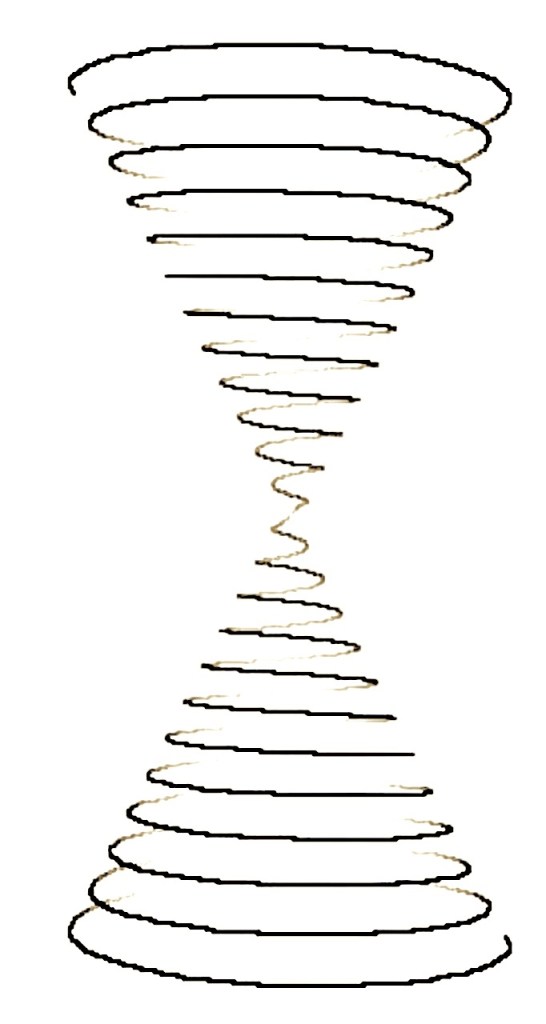


 Linda's Literary Home