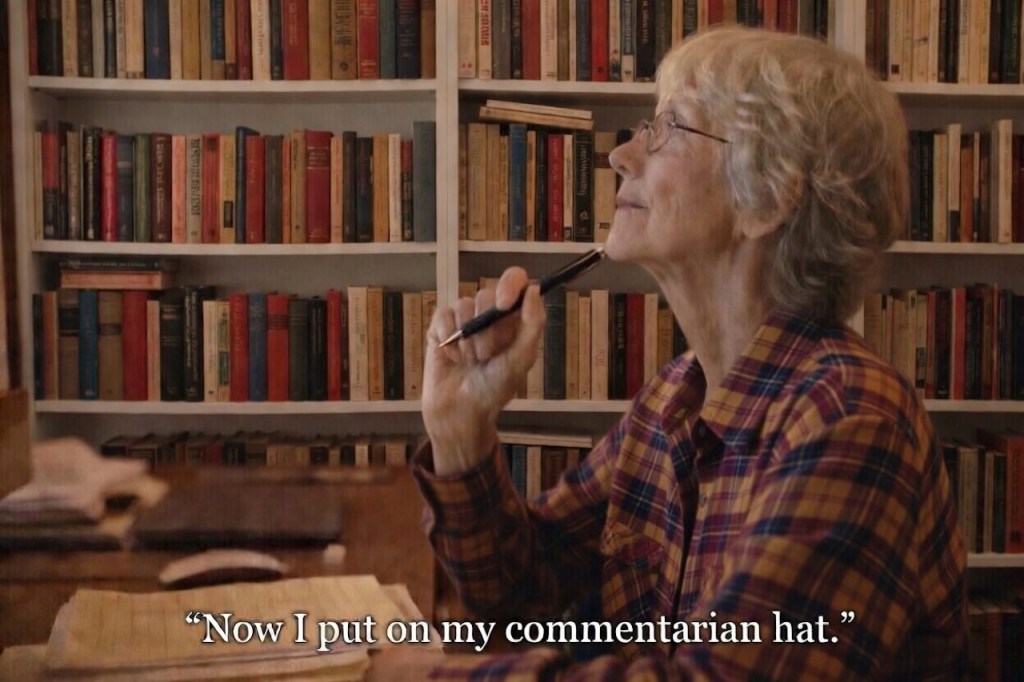
Similar to a caffeine buzz But instead of propelling to more movement Instills urge to more calm, more stillness— Until you zoom into the Star!
Image: Original photo by Linda Sue Grimes, text added by Grok
A Prose Commentary on My Original Poem “Soul Buzz”
In my little poemette “Soul Buzz,” my speaker reveals a form of heightened awareness that differs existentially from ordinary physical excitement. The opening comparison to a “caffeine buzz” refers to a familiar sensation of stimulation, alertness, and energy. But the poem immediately distinguishes the two experiences: whereas caffeine propels the body and mind toward greater activity, the soul’s distinctive “buzz” instills the motivation to achieve quietude, calmness, tranquility, stillness (Be still, and know that I am God . . . KJV Psalm 46:10).
This contrast establishes spiritual awakening as an inward experience in which consciousness turns away from external distraction and toward the deep perception of the soul. The repetition of “more” emphasizes the progressive deepening of this inward movement. Calmness and stillness remain the essential, yogic conditions for meditation and spiritual realization.
The great guru Paramahansa Yogananda teaches that this stillness prepares consciousness to envision the spiritual eye, whose luminous center contains a brilliant, silver-white, five-pointed star. The verb “zoom” conveys the exhilarating intensity of focused consciousness penetrating the spiritual eye. Ultimately, the poemette presents stillness as a dynamic spiritual experience culminating in the vision of the Star and the soul’s movement toward divine consciousness.
The concluding phrase, “Until you zoom into the Star!” directly evokes this spiritual vision, transforming the poem’s apparent paradox into a steady movement from inner quietude to transcendent, divine perception, or samadhi.
Image: Emily Dickinson – Amherst College – Daguerrotype of the poet at age 17, circa 1847 – likely the only authentic, extant likeness of the poet
Emily Dickinson’s “Low at my problem bending”
The speaker muses over a personal problem only to encounter a larger, calmer one that displaces all earthly calculation.
Introduction and Text of “Low at my problem bending”
In Emily Dickinson’s “Low at my problem bending,” the speaker bends intently over a private concern when a greater problem arrives. This new problem proves larger and serener, involving higher sums that dwarf the original figures.
The speaker then sets aside the “busy pencil” and lets the figures slip away. The “baffled fingers” question their own befuddlement in the face of this elevated demand. On the literal level the speaker appears engaged in arithmetic or accounting. Yet the intrusion of a calmer problem signals a shift from worldly sums to matters of the soul.
Low at my problem bending
Low at my problem bending, Another problem comes – Larger than mine – Serener – Involving statelier sums.
I check my busy pencil, My figures file away. Wherefore, my baffled fingers Thy perplexity?
Commentary on “Low at my problem bending”
Emily Dickinson’s “Low at my problem bending” dramatizes the speaker’s sudden elevation from a personal calculation to a higher, calmer demand that silences all earthly tools.
First Stanza: “Low at my problem bending”
Low at my problem bending, Another problem comes – Larger than mine – Serener – Involving statelier sums.
The speaker begins bending low over a private problem. At once another problem arrives, one larger than the original and marked by greater serenity. This new concern involves more important sums. The speaker senses that ordinary arithmetic cannot address the elevated scale now presented.
In my earlier essays on Dickinsonian poems, I have discussed the speaker’s habit of preferring inner information over outer, material level evidence. Here that same habit appears as the speaker recognizes the superior claim of the more placid problem.
Paramahansa Yogananda explains that the vastness is your real Self. The speaker, confronted by the larger problem, begins to sense that same vastness beyond finite sums. The contrast between the low bending posture and the calm elevation of the new problem suggests a movement from earthly worry to meditation on the eternal.
Second Stanza: “I check my busy pencil”
I check my busy pencil, My figures file away. Wherefore, my baffled fingers Thy perplexity?
The speaker immediately checks the “busy pencil.” All the carefully ordered figures are filed away as if dismissed by a higher authority. The confused fingers then address their own confusion. They wonder why their former skill proves useless before the statelier demand. The speaker’s tools of calculation prove inadequate once the larger problem appears.
Ordinary sums give way before the serene scale of the soul’s true concern. Paramahansa Yogananda explains that one must change consciousness from that of a mortal to a divine being. The speaker’s “baffled fingers” enact that very change as earthly figures vanish.
In my earlier essays on Dickinsonian poems, I have discussed the speaker’s reliance on mystical intuition to resolve riddles of existence. That same intuition now silences the pencil and leaves the fingers questioning their former busy work.
The final question hangs in the air, inviting the reader into the same contemplative musing that has lifted the speaker beyond finite problems to the calmer, cooler realm of the Infinite.
Emily Dickinson’s “Some Rainbow – coming from the Fair!”
Emily Dickinson’s “Some Rainbow – coming from the Fair!” reveals the speaker’s rapturous response to the sudden return of spring. Nature appears as an exotic, magnificent procession whose colors, sounds, creatures, and vegetation restore the earth after winter’s apparent emptiness.
Introduction and Text of “Some Rainbow – coming from the Fair!”
In Emily Dickinson’s “Some Rainbow – coming from the Fair!,” the speaker beholds an ordinary seasonal transformation and renders it extraordinary. The landscape seems to arrive from an Eastern fairyland, bearing brilliant color, activity, and mystery.
The speaker does not attempt a botanical report. Instead, she permits imagination and intuition to enlarge the natural scene until birds, bees, flowers, woods, hills, and waters become a vast spectacle of renewal.
In my earlier essays on Dickinsonian poems, I have discussed the speaker’s close attention to natural details and her ability to discover spiritual suggestion in familiar scenes. The poet’s life sketch observes that her speakers frequently make flowers, birds, and changing seasons vehicles for deeper contemplative musing.
Some Rainbow – coming from the Fair!
Some Rainbow – coming from the Fair! Some Vision of the World Cashmere – I confidently see! Or else a Peacock’s purple Train Feather by feather – on the plain Fritters itself away!
The dreamy Butterflies bestir! Lethargic pools resume the whir Of last year’s sundered tune! From some old Fortress on the sun Baronial Bees – march – one by one – In murmuring platoon!
The Robins stand as thick today As flakes of snow stood yesterday – On fence – and Roof – and Twig! The Orchis binds her feather on For her old lover – Don the Sun! Revisiting the Bog!
Without Commander! Countless! Still! The Regiments of Wood and Hill In bright detachment stand! Behold! Whose Multitudes are these? The children of whose turbaned seas – Or what Circassian Land?
Commentary on “Some Rainbow – coming from the Fair!”
The speaker encounters spring as an astonishing pageant, not as a merely predictable change in weather. Every element of the newly awakened landscape seems to have traveled from a realm of splendor beyond ordinary experience.
First Stanza: “Some Rainbow – coming from the Fair!”
Some Rainbow – coming from the Fair! Some Vision of the World Cashmere – I confidently see! Or else a Peacock’s purple Train Feather by feather – on the plain Fritters itself away!
The opening exclamation catches the speaker at the moment of perception. She sees “Some Rainbow,” but the tentative “Some” does not communicate uncertainty so much as wonder. The vision exceeds her ability to name it precisely.
The rainbow seems to be “coming from the Fair,” as though spring has emerged from a lavish festival. The word “Fair” suggests beauty, brightness, and a festive gathering. The speaker’s landscape is not bleak or passive; it is freshly adorned.
She then calls the scene “Some Vision of the World Cashmere.” Cashmere becomes a figure for remote loveliness, jeweled color, luxurious fabric, and an almost legendary richness. The speaker looks at her familiar American plain, yet her imagination permits it to become a distant and enchanted country.
The exclamation—“I confidently see!”—is deliciously emphatic. The speaker makes no apology for her imaginative sight. She does not diminish the vision by calling it fanciful. Instead, she confidently affirms that the world before her possesses a beauty adequate to her startling comparisons.
The alternative image is equally colorful. The plain seems to receive the “purple Train” of a peacock. The bird’s splendid tail does not simply rest upon the ground; it “Fritters itself away,” feather by feather, across the field.
The term “Fritters” suggests scattering in small fragments. Purple blossoms, shifting shadows, or the variegated colors of spring may seem to distribute themselves over the plain like detached peacock feathers. The speaker perceives nature’s beauty as lavishly spent rather than carefully rationed.
The stanza demonstrates a mind delighted by abundance. Rather than reducing the scene to a single explanation, the speaker offers rainbow, Cashmere, and peacock imagery. Each figure intensifies the others and keeps the reader within the bright movement of contemplative musing.
Paramahansa Yogananda explains that divine beauty may be perceived through creation, describing nature as an art gallery of the Divine. The speaker’s ecstatic vision of color and form accords with such an awareness: the visible world becomes an occasion for glimpsing an inexhaustible beauty beyond the merely practical.
Second Stanza: “The dreamy Butterflies bestir!”
The dreamy Butterflies bestir! Lethargic pools resume the whir Of last year’s sundered tune! From some old Fortress on the sun Baronial Bees – march – one by one – In murmuring platoon!
The second stanza turns from broad color to the newly awakened motion and sound of spring. The effusion—“The dreamy Butterflies bestir!”—captures creatures moving from inactivity toward delicate animation. The butterflies are “dreamy” because their flight retains softness and unreality even as it begins.
The speaker’s choice of “bestir” makes the awakening seem purposeful. Winter’s stillness has held the landscape in a kind of sleep, but the return of warmth calls each creature back into its characteristic activity.
The phrase “Lethargic pools” likewise signifies entities that are recovering their life. The pools were not merely quiet; they have been lethargic, exhausted, and slow. Their resumption of “the whir / Of last year’s sundered tune” suggests that spring restores a music interrupted by winter.
The phrase “last year’s sundered tune” is especially revealing. The tune was not destroyed; it was separated or broken off for a season. The speaker recognizes recurrence in nature. What had seemed absent returns with its former identity and sound.
The bees then become noble figures. They march “From some old Fortress on the sun,” an image that turns their golden origin into a splendid solar citadel. Their home seems ancient, secure, and bright, as though the sun itself has dispatched them.
Calling the bees “Baronial” grants them aristocratic dignity. These tiny workers become lords emerging from a fortress. Their movements are measured, orderly, and ceremonial, even while their humming remains natural and familiar.
The phrase “murmuring platoon” combines military order with musical sound. The bees advance “one by one,” but their collective hum merges into a gentle murmur. The speaker notices that individual creatures can form a larger, harmonious body without losing their particular liveliness.
In my earlier essays on Dickinsonian poems, I have revealed the speaker’s habit of transforming small natural beings into bearers of large imaginative significance. Here, butterflies and bees are not reduced to decoration; they become evidence that life has resumed its hidden but dependable order.
Paramahansa Yogananda explains that lasting joy is found through conscious relationship with the Divine, whose presence shines through all creation. The speaker’s delight in revived water, insects, sound, and sunlight shows a consciousness receptive to that renewing presence.
Third Stanza: “The Robins stand as thick today”
The Robins stand as thick today As flakes of snow stood yesterday – On fence – and Roof – and Twig! The Orchis binds her feather on For her old lover – Don the Sun! Revisiting the Bog!
The third stanza offers the poem’s most vivid contrast between winter and spring. Robins now gather “as thick” as snowflakes had gathered “yesterday.” The exaggerated nearness of “today” and “yesterday” heightens the suddenness with which the seasonal landscape has changed.
Snow had covered “fence – and Roof – and Twig,” making the common structures of the outdoor world appear white, cold, and uniform. Now robins occupy the same surfaces, replacing whiteness and silence with red breasts, movement, and song.
The comparison does not deny winter; it transforms winter’s former image. The snowflakes and robins both appear in great numbers, but they carry opposite emotional suggestions. Snow quiets and covers, while robins announce warmth, sound, and reviving life.
The speaker thus discovers balance in the sequence of seasons. The snow’s abundance has given way to the birds’ abundance. Nature does not remain fixed, yet each transformation possesses its own impressive completeness.
The “Orchis” then enters as a personified flower preparing herself for reunion. She “binds her feather on,” suggesting the delicate shape, color, or ornamental beauty of an orchid-like blossom. The flower dresses herself as one preparing to greet a beloved visitor.
Her “old lover” is “Don the Sun.” “Don” lends gallant, courtly dignity to the sun, who returns to the bog as a noble suitor. The speaker treats sunlight not as an impersonal physical force but as an intimate presence welcomed by the flower.
The bog is a particularly striking setting for this delicate romance. A bog may appear lowly, wet, or unremarkable, but the speaker finds there a flower able to receive the sun with elegance. Beauty need not depend upon grand scenery.
The phrase “Revisiting the Bog!” also underscores recurrence. The sun is an “old lover” because this meeting has occurred before. Yet the speaker experiences it with fresh pleasure, as though the repeated relationship of flower and sun remains endlessly worthy of astonishment.
In my earlier essays on Dickinsonian poems, I have discussed the speaker’s confidence that ordinary natural objects can disclose a more elevated reality. The robin, fence, twig, orchid, sun, and bog become participants in a little drama of return, recognition, and renewal.
Paramahansa Yogananda explains that one may find divine companionship in the beauty of the natural world. The speaker’s “old lover – Don the Sun!” presents a similar intuition: the returning light is not merely seen but welcomed as a beloved and life-
Without Commander! Countless! Still! The Regiments of Wood and Hill In bright detachment stand! Behold! Whose Multitudes are these? The children of whose turbaned seas –
Or what Circassian Land?
The final stanza broadens the speaker’s gaze until the entire landscape appears to be an immense military and geographical spectacle. Woods and hills form “Regiments,” but unlike human armies, they stand “Without Commander!” Their order arises naturally.
The exclamation—“Countless! Still!”—captures the paradox of the scene. The regiments are innumerable, yet they remain motionless. Trees and hills do not march, but their arrangement across the landscape suggests disciplined ranks standing at attention beneath the spring light.
The phrase “bright detachment” gives the landscape both separation and unity. Each hill, tree, and patch of wood remains distinct, like an individual troop. Yet the whole scene is also perceived as one great gathering, glowing in a shared brilliance.
The speaker’s command “Behold!” directs attention outward with renewed amazement. The exclamation does not demand a literal answer. Instead, it dramatizes the mind’s joyful inability to contain the magnitude and strangeness of what it sees.
The inquiry—“Whose Multitudes are these?”—becomes a riddle. The speaker sees no ordinary Tennessee, Massachusetts, or New England landscape. Her imagination again translates the natural world into a distant, exotic procession of “turbaned seas” and “Circassian Land.”
The references to “turbaned” seas and “Circassian Land” continue the poem’s Eastern and legendary atmosphere. The speaker’s comparisons must be read as imaginative nineteenth-century figures, not as geographical description. She is attempting to find language expansive enough for the unfamiliar splendor of spring.
The question also suggests that the natural world belongs to a larger order than human possession. Woods and hills do not require a commander because their law is not political or military. Their disciplined beauty seems to arise from a deeper source.
Paramahansa Yogananda explains that the Creator’s intelligence operates throughout the universe. The speaker’s commanderless regiments of “Wood and Hill” imply a similar intuition: visible forms stand in an order that does not depend upon human direction.
The poem concludes without resolving its riddle because resolution would lessen the speaker’s wonder. She does not need to identify the exact country from which the radiant multitude seems to come. The experience of beholding it has already enlarged her world.
The speaker’s imaginative comparisons render spring a revelation. Rainbow, peacock, fortress, platoon, snowflakes, lover, regiments, and distant lands all become parts of one exuberant perception: nature has awakened, and its beauty appears almost too abundant for ordinary speech.
Image: Emily Dickinson – Amherst College – Daguerrotype of the poet at age 17, circa 1847 – likely the only authentic, extant likeness of the poet
Emily Dickinson’s “If pain for peace prepares”
Emily Dickinson’s “If pain for peace prepares” reveals the speaker’s exhilarating intuition that the temporary trials of earthly existence prepare the soul for an abundance of peace, beauty, and spiritual illumination.
Introduction and Text of “If pain for peace prepares”
In “If pain for peace prepares,” the speaker reasons from the familiar cycles of winter and night toward a more exalted spiritual possibility. Pain, darkness, and deprivation may seem severe while they are being endured, but the speaker perceives them as preparatory conditions for peace, springtime, and a blaze of celestial light.
The little drama moves from conditional questions to an ecstatic final vision. The speaker’s confidence grows as each natural image becomes a figure for the soul’s progress from limitation toward an awakened consciousness.
In my earlier essays on Dickinsonian poems, I have discussed the speaker’s reliance on intuition to discover realities that physical sight alone cannot verify. Her speakers’ reliance on spirituality informs most of Emily Dickinson’s minimalist poetry.
If pain for peace prepares
If pain for peace prepares L0, what “Augustan” years Our feet awaIt!
If springs from winter rise, Can the Anemones Be reckoned up?
If night stands first – then noon To gird us for the sun, What gaze!
When from a thousand skies On our developed eyes Noons blaze!
Commentary on “If pain for peace prepares”
The speaker transforms pain from a merely negative experience into a possible preparation for a richer awareness. Her repeated “If” does not express empty doubt; it creates a chain of intuitively perceived correspondences between sorrow and peace, winter and spring, darkness and spiritual light.
First Stanza: “‘If pain for peace prepares”
If pain for peace prepares L0, what “Augustan” years Our feet awaIt!
The speaker begins with a daring supposition: “If pain for peace prepares.” Pain is not praised for its own sake, nor does the speaker pretend that suffering is pleasant. Instead, she wonders whether pain may serve as preparation for a peace so profound that the preceding hardship becomes understandable.
The word “prepares” is especially significant. Preparation implies movement toward something not yet fully possessed. A student prepares for knowledge, a field prepares for harvest, and the human heart may prepare through trial for a more permanent tranquility. The speaker thus shifts the reader’s attention away from present discomfort toward its possible spiritual consequence.
Her exclamation, “Lo,” announces a sudden vision. If pain indeed leads toward peace, then the future contains “Augustan” years. “Augustan” suggests not merely the month of August but a season of fullness, ripeness, warmth, and dignified abundance. The speaker sees life’s ultimate destination as a long summer of fulfillment.
The phrase “Our feet await!” makes the vision bodily and immediate. Feet represent the human journey through the earthly world. They have walked through difficult terrain, yet they are poised before a more favorable country. The speaker does not claim that peace has already arrived; she feels the soul standing on the threshold of it.
Paramahansa Yogananda asserts that “Pain is a prod to remembrance.” The statement closely resembles the Dickinsonian speaker’s intuition that pain can awaken an individual from forgetfulness and direct consciousness toward a deeper peace. Pain may jar the mind away from dependence upon changing circumstances and toward the enduring source of joy.
In my earlier essays on Dickinsonian poems, I have discussed the speaker’s conviction that the visible world contains hints of a more permanent metaphysical reality. The “Augustan” years suggest just such a reality: a condition of ripened joy that temporary earthly hardship cannot finally prevent.
The speaker’s three brief lines retain an energetic optimism. She does not linger over the nature of pain; she quickly imagines the peace for which it may prepare. Her gaze remains fixed upon the soul’s future enlargement rather than upon the passing difficulty.
Second Stanza: “If springs from winter rise”
If springs from winter rise, Can the Anemones Be reckoned up?
The speaker next turns to nature for an illustration of her spiritual premise. Winter appears barren, cold, and lifeless, but it does not possess the final word. Spring rises after winter, bringing renewed color, fragrance, and growth. The natural process offers the speaker a visible example of restoration.
The verb “rise” conveys more than an ordinary seasonal change. Spring does not merely follow winter in a mechanical sequence; it rises out of it. The word implies lifting, awakening, and overcoming. The speaker finds in the annual rebirth of nature a figure for the soul’s emergence from difficulty.
She then asks, “Can the Anemones / Be reckoned up?” Anemones are delicate spring flowers, and their appearance represents the uncountable wealth of beauty that follows the wintry season. The speaker’s question requires no numerical answer. The blossoms are too numerous, too various, and too delightful to be reduced to calculation.
The image of flowers also deepens the contrast between pain and peace. Winter’s bleakness can make the return of flowers more vivid. The speaker seems to suggest that the soul, having known deprivation, may recognize and cherish beauty with a greater intensity. What had seemed an ending becomes a condition preceding renewal.
Paramahansa Yogananda teaches that lasting happiness cannot be expected from ever-changing material conditions; he identifies real peace and contentment with “the bliss of God.” The speaker’s spring is therefore more than a pleasant season. It may be contemplated as an emblem of that inner joy which outlasts the alternating conditions of life.
In my earlier essays on Dickinsonian poems, I have discussed the speaker’s close attention to natural details as vehicles for larger spiritual intuitions. Here, the small anemones become evidence that apparent barrenness can conceal a coming abundance.
The questioning tone is not skeptical. It is delighted. The speaker’s mind encounters a beauty too plentiful to inventory, and the inability to “reckon” the flowers becomes a measure of their overflowing generosity. Spring offers a quiet answer to the first stanza’s question about pain and peace.
Third Stanza: “If night stands first – then noon”
If night stands first – then noon To gird us for the sun, What gaze!
The third movement advances from winter and spring to the daily passage from night toward noon. Night “stands first,” occupying an initial position before the arrival of light. The speaker recognizes darkness as part of the sequence, but never as the ultimate condition.
The phrase “then noon” brings an abrupt reversal. Noon is the day’s fullest outward radiance, when the sun occupies its commanding height. The movement from night to noon is more dramatic than a simple transition from darkness to dawn. The speaker leaps directly toward a blaze of complete illumination.
The clause “To gird us for the sun” is complex and suggestive. “Gird” means to prepare, strengthen, or equip. Night, despite its obscurity, may strengthen the perceiver for an encounter with greater light. Just as the first stanza proposes pain as preparation for peace, this stanza proposes night as preparation for the sun.
The speaker does not assume that the unprepared eye can easily endure brilliance. Excessive light may overwhelm a person who has known only darkness. Thus the night becomes a period in which the soul gradually develops the capacity to receive a fuller revelation.
Her exclamation—“What gaze!”—records astonishment before that possibility. The word “gaze” indicates sustained looking rather than a passing glance. The speaker is imagining an inward vision equal to the light that it receives. Such vision requires more than physical sight; it requires awakened intuition.
Paramahansa Yogananda explains that the spiritual eye is “the single eye of intuition and omnipresent perception” and calls it an entryway into higher states of divine consciousness. His teaching offers a striking parallel to the speaker’s developing gaze, which is being strengthened for a light beyond ordinary sunlight.
In my earlier essays on Dickinsonian poems, I have discussed the speaker’s contemplative musing upon the powers of the mind and soul. This “gaze” demonstrates that same concern with an inner faculty capable of perceiving truths unavailable to the merely literal eye.
The speaker’s progression now becomes clear. Pain may prepare for peace; winter may prepare for flowers; night may prepare for noon. Each contrast teaches that an adverse condition can be temporary and can even contribute to the soul’s readiness for a higher condition.
Fourth Stanza: “When from a thousand skies”
When from a thousand skies On our developed eyes Noons blaze!
The final movement completes the speaker’s ascent into an overwhelming vision of light. The conditional “If” has now changed to “When.” That change is important. The earlier stanzas explore possibilities, but the concluding stanza speaks with the confidence of anticipated fulfillment.
The speaker no longer envisions one sky or one noon. She imagines “a thousand skies” from which “Noons blaze.” The plural forms enlarge the scene beyond ordinary experience. The image suggests that illumination will arrive from every direction, surrounding the soul with an inexhaustible radiance.
The word “developed” reveals that the eyes have not always been capable of this perception. They have grown through the earlier disciplines of pain, winter, and night. Development implies gradual maturation, much like the unfolding of a flower or the ripening of the “Augustan” years.
The eyes are also “our” eyes. The speaker’s spiritual hope is not confined to one isolated individual. Her vision embraces humanity, or at least all readers willing to undertake the contemplative musing required to recognize the poem’s spiritual correspondences.
“Noons blaze!” is the poem’s culminating exclamation. Noon, earlier anticipated after night, now becomes plural and immeasurable. The blazing light signifies a consciousness so illuminated that darkness no longer controls perception. The speaker arrives not at a modest consolation but at a lavish revelation.
Paramahansa Yogananda explains that seekers who develop sufficient concentration can penetrate the spiritual eye and “see God.” He also identifies the thousand-petaled lotus in the brain as the seat of cosmic consciousness. The speaker’s “thousand skies” and “developed eyes” harmonize suggestively with that teaching of expanded spiritual perception.
In my earlier essays on Dickinsonian poems, I have discussed the speaker’s mystical intuition and her interest in the relationship between the human mind and Ultimate Reality. The concluding blaze of noons portrays the mind not as imprisoned in darkness but as capable of receiving transcendent light.
The poem therefore leaves the reader with an exhilarating reversal. Pain, winter, and night are not denied, but they are placed within a larger sequence. The speaker intuits that the soul’s difficult passages leads toward peace, innumerable blossoms, strengthened vision, and a final flood of divine illumination.
In Emily Dickinson’s “Papa above!” the speaker petitions the Heavenly Father with a startlingly playful yet deeply serious request for eternal sanctuary. The speaker adopts a vulnerable persona to dramatize the soul’s fight for divine rescue from the mortal vicissitudes of earthly life.
Introduction and Text of “Papa above!”
In Emily Dickinson’s “Papa above!”, the speaker creates a bold spiritual petition asking for divine shelter from mortal destruction. The speaker adopts the perspective of a small, helpless creature to appeal directly to the Heavenly Father for safe passage into the spiritual realm.
Using animal imagery, the speaker contrasts the brutality of earthly survival with the peaceful eternity of heaven. The poem blends childlike innocence with profound spiritual yearning, urging the Divine to grant ultimate refuge to even the humblest life.
On a literal level, the speaker portrays a small rodent overtaken by a predator, transforming a scene of earthly peril into a plea for heavenly grace. The poem imagines a celestial paradise wherein eternal peace replaces the temporal struggles of physical existence.
In my earlier essays on Dickinsonian poems, I have discussed the speaker’s penchant for inner discovery over outward reward. Here, the speaker presents a private, contemplative musing on the soul’s journey beyond earthly suffering.
Papa above!
Papa above! Regard a Mouse O’erpowered by the Cat! Reserve within thy kingdom A “Mansion” for the Rat!
Snug in seraphic Cupboards To nibble all the day, While unsuspecting Cycles Wheel solemnly away!
Commentary on “Papa above!”
Emily Dickinson’s “Papa above!” presents a satirical yet poignant prayer asking the Divine Reality for eternal sanctuary beyond earthly trials and tribulations.
First Stanza: “Papa above!”
Papa above! Regard a Mouse O’erpowered by the Cat! Reserve within thy kingdom A “Mansion” for the Rat!
The speaker opens with a direct, familiar address to the Creator, calling upon Him as “Papa above!” This playful intimacy establishes a bold tone that bridges the finite creature with the infinite Father.
By framing the speaker as a “Mouse / O’erpowered by the Cat!,” the poem dramatizes the inherent vulnerability of mortal life. Earthly existence remains fraught with constant struggle against overwhelming predatory forces.
Paramahansa Yogananda explains, “All will come out right in the end, for God has hidden His goodness behind the superficiality of the paradoxes of mortal experiences”.
The speaker then requests a reserved “Mansion” for the lowly creature, asserting that even the humblest soul deserves celestial shelter. The term “Mansion” echoes biblical promises while cheekily elevating the lowly rodent.
In my earlier essays on Dickinsonian poems, I have discussed the speaker’s penchant for subverting traditional theological formality through bold wit. The speaker insists that divine mercy must extend to all earthly suffering.
Second Stanza: “Snug in seraphic Cupboards”
Snug in seraphic Cupboards To nibble all the day, While unsuspecting Cycles Wheel solemnly away!
The second stanza envisions a whimsical heavenly reward where the creature resides safely inside “seraphic Cupboards.” Here, perpetual abundance replaces the desperate struggle for survival found on the physical plane. To “nibble all the day” represents uninterrupted contentment and bliss. In this heavenly refuge, the soul enjoys freedom from fear and predatory destruction.
Paramahansa Yogananda has promised his devotees through his teachings, “You shall have safety forever, not only for yourself, but for all those loved ones who have been entrusted to your care by our Lord and Father.”
The final lines contrast this eternal comfort with the temporal world, where cosmic time passes as “unsuspecting Cycles / Wheel solemnly away!” Physical time rolls onward, but the saved creature rests untouched by mortality.
Through this contemplative musing, the speaker demonstrates that true salvation lies in transcending time’s relentless wheel to rest forever in the Divine Presence.
Image: Emily Dickinson – Amherst College – Daguerrotype of the poet at age 17, circa 1847 – likely the only authentic, extant likeness of the poet
Emily Dickinson’s “Delayed till she had ceased to know”
Emily Dickinson’s “Delayed till she had ceased to know” explores the tragic irony of fulfillment arriving only after the recipient has surrendered consciousness, while its spiritual implications echo Paramahansa Yogananda’s emphasis on inner realization, perseverance, and the danger of abandoning the search for divine fulfillment too soon.
Introduction and Text of “Delayed till she had ceased to know”
In my earlier essays on Dickinsonian poems, I have discussed the speaker’s tendency to privilege inward experience over outward appearances. In “Delayed till she had ceased to know,” the speaker turns that concern toward the painful consequences of mistimed fulfillment.
The poem presents a woman who dies only an hour before the arrival of some long-awaited joy or victory. The terrible irony is not merely that fulfillment comes too late, but that it comes so close to her death that the knowledge of its approach might have enabled her to continue living.
This idea has a meaningful parallel in the teachings of Paramahansa Yogananda, who repeatedly emphasizes that genuine fulfillment must ultimately be discovered within rather than dependent upon changing external circumstances.
From that perspective, the poem’s tragedy can be understood not simply as the loss of an earthly reward, but as the surrender of hope immediately before the possibility of fulfillment becomes apparent.
The speaker does not explicitly identify the anticipated “bliss” as divine realization, and the poem wisely leaves its nature uncertain. Nevertheless, Yogananda’s spiritual emphasis on perseverance and inner awareness provides a useful lens through which to consider the speaker’s haunting question: What if the defeated soul had known how near the victory really was?
Delayed till she had ceased to know
Delayed till she had ceased to know – Delayed till in its vest of snow Her loving bosom lay – An hour behind the fleeting breath – Later by just an hour than Death – Oh lagging Yesterday!
Could she have guessed that it would be – Could but a crier of the joy Have climbed the distant hill – Had not the bliss so slow a pace Who knows but this surrendered face Were undefeated still?
Oh if there may departing be Any forgot by Victory In her imperial round – Show them this meek appareled thing That could not stop to be a king – Doubtful if it be crowned!
Commentary on “Delayed till she had ceased to know”
Emily Dickinson’s “Delayed till she had ceased to know” examines the poignant consequences of a victory or blessing that arrives only after the person who longed for it has passed beyond the ability to receive it.
First Movement: “Delayed till she had ceased to know”
Delayed till she had ceased to know – Delayed till in its vest of snow Her loving bosom lay – An hour behind the fleeting breath – Later by just an hour than Death – Oh lagging Yesterday!
The speaker begins with the stark repetition of the word “Delayed.” The repetition immediately establishes the central grievance: something desirable was coming, but it came too late.
The woman has “ceased to know” before the anticipated joy arrives, suggesting that the tragedy involves not simply physical death but the loss of consciousness necessary to experience fulfillment.
The speaker then places the woman’s “loving bosom” within a “vest of snow.” The image of snow suggests both physical burial and emotional stillness. The warmth associated with the “loving bosom” has been overcome by the cold finality of death.
The contrast between love and snow emphasizes the gulf between the woman’s former vitality and her present condition. The precise measurement of time makes the tragedy especially painful: “An hour behind the fleeting breath – / Later by just an hour than Death –.”
The speaker could have described the reward as arriving long after the woman’s death, but instead the poem specifies “an hour.” The narrow interval intensifies the sense of missed possibility. The desired fulfillment was not impossibly distant; it was almost within reach. Death simply arrived first.
The closing apostrophe—“Oh lagging Yesterday!”—personifies the past as something capable of moving too slowly. Yesterday itself seems responsible for the delay. Time, rather than simply passing, has become an adversary that has failed the woman at the precise moment when she needed it to move differently.
From Yogananda’s perspective, the passage can also suggest the spiritual danger of allowing external circumstances to determine one’s inner state. Yogananda repeatedly taught that lasting peace and fulfillment are not ultimately dependent upon the changing conditions of the material world.
The woman, however, appears to have reached a point at which the external arrival of bliss matters desperately because she has no evidence that it is coming. The tragedy therefore lies partly in the absence of inward assurance.
If the soul could remain convinced of an approaching fulfillment even when outward circumstances offered no confirmation, surrender might be postponed. The first movement thus establishes the poem’s fundamental irony: fulfillment was not necessarily impossible; it was simply not known to be coming before death intervened.
Second Movement: “Could she have guessed that it would be”
Could she have guessed that it would be – Could but a crier of the joy Have climbed the distant hill – Had not the bliss so slow a pace Who knows but this surrendered face Were undefeated still?
The second movement shifts from certainty about death to speculation about what might have happened differently. The speaker asks whether the woman could have survived if she had somehow known that joy was approaching.
The image of a “crier of the joy” is especially significant. A crier is a herald, someone who announces important news before the event itself occurs. The speaker imagines such a messenger appearing on a distant hill, carrying evidence that fulfillment is approaching. The joy itself might still be far away, but knowledge of its arrival could have provided the hope necessary to endure.
The distance of the hill is important as well. The messenger is not yet at the woman’s side. The desired event remains separated from her by space and time. Nevertheless, even an announcement of its approach might have changed her decision to surrender.
This possibility resonates particularly strongly with Yogananda’s emphasis on perseverance in spiritual life. His teachings repeatedly encourage the seeker not to abandon the inward quest merely because the desired realization has not yet appeared.
Spiritual progress may remain invisible for a considerable period before its results become apparent. In that sense, the speaker’s “distant hill” can be read metaphorically as the place from which the first evidence of approaching fulfillment might appear.
Yet the speaker is more uncertain than a straightforward spiritual teaching would be. The poem does not say that the woman would certainly have survived. Instead, the speaker asks: “Who knows but this surrendered face / Were undefeated still?”
The phrase “Who knows” preserves the poem’s mystery. The speaker can imagine another outcome but cannot prove it. The woman’s surrender may have been premature, but the poem cannot determine whether knowledge of the approaching bliss would actually have saved her.
The word “surrendered” nevertheless connects physical death with spiritual defeat. The woman’s face has yielded because hope apparently arrived too late. Yogananda’s teachings provide an illuminating counterpoint here: the spiritual seeker must continue looking inward even when external circumstances seem to announce defeat. Inner awareness can sustain perseverance precisely when visible evidence is absent or contrary.
The tragedy, then, is not simply that the woman died. It is that the poem leaves readers wondering whether she died one hour before she needed to, because the knowledge of impending joy might have given her the strength to continue.
Third Movement: “Oh if there may departing be”
Oh if there may departing be Any forgot by Victory In her imperial round – Show them this meek appareled thing That could not stop to be a king – Doubtful if it be crowned!
In the final movement, the speaker broadens the poem from the fate of one woman to the larger question of those whom Victory overlooks. Victory is personified as a powerful imperial figure moving through the world in a triumphant procession: “Any forgot by Victory / In her imperial round –.”
The language of “imperial” introduces images of conquest, authority, and worldly power. Victory seems almost like a monarch distributing crowns to those who have succeeded.
Yet the speaker asks that, if Victory ever forgets anyone along her grand procession, she should be shown this particular woman. The contrast between imperial grandeur and personal humility becomes especially striking in: “Show them this meek appareled thing”
The woman is not dressed in the outward symbols of power. She is “meek,” apparently possessing none of the conventional magnificence associated with victory. Yet the speaker asks that Victory recognize her nonetheless. The next line deepens the irony “That could not stop to be a king –.”
The woman did not live long enough to claim the triumph that may have been approaching. The word “king” continues the poem’s imagery of crowns, imperial power, and worldly recognition.
Yet the speaker’s phrasing also makes conventional victory seem strangely inadequate. The woman who could not become a “king” may possess a worth that does not depend upon earthly status.
Here again, Yogananda’s distinction between external achievement and inward realization offers a useful parallel. The world’s definition of victory depends upon visible accomplishment, recognition, and the attainment of desired circumstances. Spiritual realization, by contrast, is inward. A person may appear externally defeated while possessing an inner consciousness that is untouched by worldly failure.
The woman occupies precisely this ambiguous position. Outwardly, she has lost. She has died before receiving the anticipated joy. She has not become a “king,” and she does not receive an obvious crown. Yet the speaker refuses to reduce her to defeat. That refusal becomes most powerful in the final line: “Doubtful if it be crowned!”
The speaker does not resolve the question by declaring that the woman ultimately receives a spiritual crown. Instead, the speaker leaves her status uncertain. The uncertainty is essential. The woman may have missed worldly victory, but perhaps worldly victory was never the highest measure of her worth.
Yogananda’s spiritual philosophy can therefore deepen, rather than settle, the poem’s ambiguity. If true fulfillment is inward, then the external delay of victory need not determine the ultimate condition of the soul.
Yet the speaker refuses to reveal whether such an inward victory was actually achieved. The final “Doubtful” keeps the poem suspended between tragedy and transcendence.
Ultimately, “Delayed till she had ceased to know” is a poem about the cruel importance of timing, but it is also a poem about the relationship between outward circumstances and inward endurance.
The speaker presents fulfillment as something that may exist only a moment beyond the reach of the person who desires it. The poem’s deepest tragedy is that the woman might have endured had she known how near the promised joy had become.
Read alongside Paramahansa Yogananda’s teachings, the poem acquires an additional spiritual dimension. Yogananda’s emphasis on inner realization suggests that the seeker should not measure ultimate fulfillment solely by external events or abandon the inward search because visible victory has been delayed.
The speaker, however, remains deliberately less certain. The poem does not assure us that the woman possessed such inward certainty, nor does it identify the delayed bliss as explicitly divine. Instead, the speaker leaves her audience with the haunting possibility that the woman surrendered at the very threshold of fulfillment.
By placing the “meek appareled thing” before the personified figure of Victory, the speaker finally questions whether conventional victory can adequately measure human worth. The woman may never have received her earthly crown, but perhaps the absence of that crown does not constitute the final truth about her.
In the space between surrender and victory, between death and delayed bliss, the speaker leaves readers to contemplate a question that Yogananda’s spiritual teachings likewise encourage us to consider: How can we know how close we may be to fulfillment when outward circumstances give us no evidence that it is near?
Image: Emily Dickinson – Amherst College – Daguerrotype of the poet at age 17, circa 1847 – likely the only authentic, extant likeness of the poet
Emily Dickinson’s “If I should die”
The speaker in Emily Dickinson’s “If I should die” is contemplating the ongoing, indifferent progression of world enterprise following mortal departure. The speaker finds quiet comfort in the uninterrupted continuation of earthly life.
Introduction and Text of “If I should die”
Emily Dickinson’s “If I should die” focuses on human mortality. The poem consists of four movements, utilizing Dickinson’s customary short lines and characteristic slant rime. The speaker considers the inevitable continuation of nature and human activity after individual physical presence ceases entirely.
This short work presents a calm acceptance of death. The speaker reflects on the fact that daily routines proceed without pause: the morning sun, seasonal bird activity, and economic transactions continue unabated. However, instead of expressing grief or dread, this speaker takes solace in knowing that earthly affairs remain active, orderly, and bright.
In my earlier essays on Dickinsonian poems, I have discussed the poet’s creation of speakers who view physical departure through calmness and detachment. By observing nature and business, the speaker comes to terms with personal transience while celebrating the enduring colorful vitality of the surrounding physical and social world.
If I should die
If I should die, And you should live – And time should gurgle on – And morn should beam – And noon should burn – As it has usual done – If Birds should build as early And Bees as bustling go – One might depart at option From enterprise below! ‘Tis sweet to know that stocks will stand When we with Daisies lie – That Commerce will continue – And Trades as briskly fly – It makes the parting tranquil And keeps the soul serene – That gentlemen so sprightly Conduct the pleasing scene!
Commentary on “If I should die”
The speaker in Emily Dickinson’s “If I should die” is exploring with tranquil acceptance the nature of mortality through the steady, ongoing operations of nature and society.
First Movement: “If I should die”
If I should die, And you should live – And time should gurgle on – And morn should beam – And noon should burn – As it has usual done –
In the opening lines, the speaker introduces a hypothetical situation involving personal death alongside the survival of others: time continues to flow without interruption, described with the word “gurgle.” Morning light shines and noon heat burns just as it always has on the earthly plane.
The speaker emphasizes that natural cycles remain completely indifferent to individual mortality. Morning and noon retain their established routines. This consistency shows that the physical world does not stop or mourn. The universe keeps its steady pace regardless of human absence, maintaining its ongoing, familiar rhythms.
Second Movement: “If Birds should build as early”
If Birds should build as early And Bees as bustling go – One might depart at option From enterprise below!
Continuing the conditional thought, the speaker observes that birds will still construct nests early in the day. Bees will continue their energetic gathering tasks. Nature’s industrious activity persists without pause, demonstrating that life’s fundamental forces carry on seamlessly even after an individual’s physical life has ended.
Because natural activity persists so reliably, departing from earthly work becomes a manageable choice. The word “enterprise” summarizes all human endeavor. The speaker recognizes that any one individual’s involvement is not required to sustain the world’s grand design, making personal departure feel far less disruptive or alarming.
Third Movement: “’Tis sweet to know that stocks will stand”
‘Tis sweet to know that stocks will stand When we with Daisies lie – That Commerce will continue – And Trades as briskly fly –
Moving into the third movement, the speaker shifts focus from natural phenomena to human society. It is comforting to realize that financial institutions remain stable. While humans lie beneath the flowers, economic markets and business transactions proceed with their customary energy and speed across the world.
The contrast between lying with flowers and active trade highlights human transience. Society’s institutions outlasts individual lives. The speaker gains comfort from this stability, recognizing that human civilization maintains its energetic flow and enterprise long after any single participant has departed from the physical world.
Fourth Movement: “It makes the parting tranquil”
It makes the parting tranquil And keeps the soul serene – That gentlemen so sprightly Conduct the pleasing scene!
In the final lines, the speaker highlights the soothing effect of this ongoing activity. Knowing that lively individuals continue to manage social and commercial affairs brings peace. The departure becomes quiet and smooth because the overall societal picture remains well-ordered, active, and thoroughly pleasing.
This assurance helps maintain inner stillness during life’s final transition. As Paramahansa Yogananda explains, an individual grounded in inner peace remains radiantly serene regardless of life’s shifting circumstances. He has colorfully described that attitude as standing “unshaken midst the crash of breaking worlds.” This speaker maintains this calm state while recognizing that earthly existence will flourish continuously.
Image: Emily Dickinson – Amherst College – Daguerrotype of the poet at age 17, circa 1847 – likely the only authentic, extant likeness of the poet
Emily Dickinson’s “Taken from – men this morning”
Emily Dickinson’s “Taken from – men this morning” dramatizes the soul’s transition from earthly life to a metaphysical kingdom, where the departed assume exalted, courtly roles.
Introduction and Text of “Taken from – men this morning”
The speaker in Emily Dickinson’s “Taken from – men this morning” narrates the sudden removal of a young girl from the human realm, portraying death not as an end but as a grand procession escorted by divine beings. In my earlier essays on Dickinsonian poems, I have discussed the poet’s intuitive grasp of the soul’s immortality, a theme central to this work.
Taken from – men this morning
Taken from men – this morning – Carried by men today – Met by the Gods with banners – Who marshalled her away –
One little maid – from playmates – One little mind from school – There must be guests in Eden – All the rooms are full –
Far – as the East from Even – Dim – as the border star – Courtiers quaint, in Kingdoms Our departed are.
Commentary on “Taken from – men this morning”
The speaker presents death as a ceremonial transition, where mortal hands relinquish the body to divine escorts who lead the soul onward.
First Stanza: “Taken from – men this morning”
Taken from men – this morning – Carried by men today – Met by the Gods with banners – Who marshalled her away –
In the first stanza, the speaker establishes a stark contrast between human agency and divine intervention. The repetition of “men” in the opening two lines emphasizes the physical, earthly handling of the deceased: taken and carried by human hands on the same morning. This literal action suggests the funeral procession, where mourners bear the body to its final resting place in the grave.
The phrase “this morning” imparts a sense of immediacy and suddenness, as if the transition occurred without warning, leaving the living to grapple with the swiftness of loss.
However, the tone shifts dramatically in the third line with the introduction of “the Gods with banners.” Here, the speaker introduces a mythic or metaphysical dimension, where divine beings arrive to claim the soul. The image of “banners” evokes a triumphant procession, not a somber burial.
The “Gods” do not come in mourning but in celebration, as if welcoming an honored guest into a higher realm. This portrayal aligns with the teachings of Paramahansa Yogananda, who explains that death is “temporary emancipation,” given when karma determines that the present body has served its purpose.
The verb “marshalled” further reinforces this sense of order and purpose. The “Gods” do not merely collect the soul; they escort it with dignity and direction, guiding it toward its current earned destination. The speaker thus reframes death not as a tragic cessation but as a dignified passage, where the soul is received by celestial hosts.
In my earlier essays on Dickinsonian poems, I have discussed the poet’s employment of riddling imagery to veil profound spiritual truths, inviting readers to contemplate the mystery of what lies beyond the veil.
This stanza also subtly challenges conventional mourning practices. By depicting the “Gods” as the true escorts, the speaker implies that human grief, while natural, may be misplaced. The departed are not lost but are being led to a grander existence.
Paramahansa Yogananda teaches that when a dear one dies, instead of grieving unreasonably, one should realize that he has gone on to a higher plane at the will of God, and rejoice that he is free. The speaker’s vision thus offers comfort, not through denial of loss, but through a reimagining of death as a glorious transition.
The brevity of the lines, with their alternating meter, creates a rhythmic cadence that mimics the steady march of a procession. The short, clipped phrases—”Taken from men,” “Carried by men,” “Met by the Gods”—build a sense of movement, as if the reader is witnessing the soul’s journey in real time. This structural choice enhances the poem’s dramatic effect, drawing the reader into the scene of departure and divine welcome.
Second Stanza: “One little maid – from playmates”
One little maid – from playmates – One little mind from school – There must be guests in Eden – All the rooms are full –
The second stanza narrows the focus to the identity of the departed: “One little maid” and “One little mind.” The repetition of “One” underscores the singularity and preciousness of this young life.
The speaker emphasizes the girl’s youth by referencing her “playmates” and “school,” evoking images of childhood innocence and the abrupt interruption of daily life. The phrase “from playmates” suggests a sudden separation from the joys and companionship of youth, while “from school” implies an early departure from the realm of learning and growth.
Yet, the speaker quickly pivots to a broader, more mystical assertion: “There must be guests in Eden – / All the rooms are full –.” Here, Eden is not depicted as a sparse or exclusive paradise but as a bustling, welcoming place, already filled with departed souls.
The image of “rooms” full of guests suggests a communal afterlife, where the departed are not isolated but are part of a vast, vibrant community. This vision resonates with Paramahansa Yogananda’s description of the astral world, where souls enjoy a freedom such as they never knew during their earthly life.
The phrase “All the rooms are full” also carries a note of gentle irony. On the one hand, it suggests that Eden is so populous that there is barely room for another guest. On the other hand, it implies that the arrival of each new soul is anticipated and welcomed, as if the house of eternity is always ready to receive its next inhabitant. The speaker’s tone is not one of alarm but of quiet assurance, as if the fullness of Eden is a natural and comforting state.
In my earlier essays on Dickinsonian poems, I have discussed the poet’s use of domestic imagery—houses, rooms, gardens—to convey metaphysical concepts. Here, Eden becomes a grand guesthouse, where the departed are honored visitors. This metaphor makes the abstract notion of the afterlife more tangible and relatable, especially for readers who may find comfort in the idea of a welcoming, populated heaven.
The stanza’s structure, with its alternating lines of tetrameter and trimeter, maintains the rhythmic momentum established in the first stanza. The short lines create a sense of intimacy, as if the speaker is confiding a secret truth about the nature of death and the afterlife. The near rime between “school” and “full” provides a subtle sonic link, reinforcing the connection between the girl’s earthly life and her new, eternal home.
Third Stanza: “Far – as the East from Even”
Far – as the East from Even – Dim – as the border star – Courtiers quaint, in Kingdoms Our departed are.
In the final stanza, the speaker shifts to a more abstract, cosmic perspective, describing the distance and mystery of the departed realm. The simile “Far – as the East from Even –” evokes an immense, almost unbridgeable gulf between the world of the living and the world of the dead.
The East, symbolizing dawn and beginnings, stands in stark contrast to Even (evening), representing closure and endings. This spatial metaphor suggests that the departed have moved beyond the cycle of day and night, into a timeless realm where such distinctions no longer apply.
The phrase “Dim – as the border star –” further emphasizes the elusive nature of this realm. The “border star” refers to a star on the edge of visibility, a faint light that marks the boundary between the known and the unknown.
This image captures the speaker’s acknowledgment that the afterlife remains partially veiled from human perception, accessible only through intuition and contemplative musing.
In my earlier essays on Dickinsonian poems, I have discussed the poet’s employment of such liminal imagery to convey the mystery of spiritual truths that lie just beyond the reach of ordinary understanding.
Yet, despite this distance and dimness, the speaker offers a striking vision of the departed: “Courtiers quaint, in Kingdoms / Our departed are.” The word “Courtiers” suggests that the dead assume roles of honor and service in their new existence, attending to the divine in celestial kingdoms.
The adjective “quaint” adds a touch of charm and antiquity, as if the departed have become part of a timeless, elegant order. This portrayal aligns with Paramahansa Yogananda’s teaching that souls in the astral region are clothed in gossamer light, free from the burdens of the physical body.
The speaker’s use of “Kingdoms” (plural) suggests a multiplicity of divine realms, each with its own court and order. This vision resonates with yogic teachings that describe the astral world as a land to which souls go at death, where they enjoy freedom such as they never knew during their earthly life.
Paramahansa Yogananda explains that in the Lord’s dream astral world, souls carry no frail, heavy frames that collide with other crude solids and break; after all, light, even in the material realm, remains indestructible.
The final two lines bring the poem to a close with a gentle, almost matter-of-fact assertion: “Our departed are.” The speaker does not speculate or plead; she simply states the truth as she intuits it.
The departed are not gone; they are present, alive, and active in their own realm. This assertion offers a profound comfort to the bereaved, suggesting that death is not a separation but a transformation, where loved ones continue to exist in a higher, more vibrant state.
The stanza’s structure, with its compact lines and rime between “star” and “are,” creates a sense of closure and resolution. The short, declarative phrases mirror the speaker’s confidence in her vision, as if she has peered beyond the veil and returned with a message of hope and assurance.
The poem thus ends not with a question or a lament, but with a quiet affirmation of the soul’s immortality and the enduring presence of the departed. Thus the speaker’s complete and abiding faith and assured confidence are clearly unveiled.
So many bubbles drift into view—then burst and fade away. They ripple by, play for a time, then pass on into the sea. I aspire to learn whence they come and whither they stray.
Raindrops fall and splash—then dissolve without delay As they rush like thoughts that flash but leave no memory. So many bubbles drift into view—then burst and fade away.
Night’s stars are bright but lose their shine upon dawning day. Cherished friends and loved ones dear—no longer here to stay. I aspire to learn whence they come and whither they stray.
Lilies come blooming; bees and birds all do in sunlight play. Then comes the hour that all remains is one bare, empty tree. So many bubbles drift into view—then burst and fade away.
The players sang their parts then slipped into another way— The cosmic screen whereon they moved hides what used to be. I aspire to learn whence they come and whither they stray.
I will use my time to discover the truths that do so heavily weigh— To unveil the Infinite Force that shines then dims through eternity. So many bubbles drift into view—then burst and fade away. I aspire to learn whence they come and whither they stray.
Image: Emily Dickinson – Amherst College – Daguerrotype of the poet at age 17, circa 1847 – likely the only authentic, extant likeness of the poet
Emily Dickinson’s “To lose one’s faith – surpass”
Emily Dickinson’s “To lose one’s faith – surpass” reveals the speaker’s vision of faith as a singular inward inheritance whose loss exceeds material loss.
Introduction and Text of “To lose one’s faith – surpass”
Emily Dickinson’s “To lose one’s faith – surpass” is an American-Innovative lyric featuring the Dickinsonian plethora of dashes, while remaining unrimed. The speaker contrasts spiritual loss with material loss.
The tone remains steady and reflective, allowing meaning to unfold through simple comparative statements rather than extended argument or narrative expansion. The speaker frames faith as something more interior than property or inheritance. The poem moves between material imagery and inward consequence.
To lose one’s faith – surpass –
To lose one’s faith – surpass – The loss of an Estate – Because Estates can be Replenished – faith cannot –
Inherited with Life – Belief – but once – can be – Annihilate a single clause – And Being’s – Beggary –
Commentary on “To lose one’s faith – surpass”
The speaker presents faith as an inner possession whose loss creates a deeper condition than material ruin. The poem moves toward inward deprivation rather than external loss.
First Stanza: Cannot Get Back
To lose one’s faith – surpass – The loss of an Estate – Because Estates can be Replenished – faith cannot –
The speaker begins with a quiet but firm comparison between faith and material inheritance. An estate represents something large, structured, and recoverable in worldly terms.
The speaker completes the contrast by establishing permanence in loss. An estate may return through circumstance or restoration, but faith does not follow that pattern of recovery.
The tone remains calm, almost observational, as if the speaker is stating a condition of reality rather than offering persuasion or argument. The word “surpass” suggests that spiritual loss rises above material loss in seriousness. The speaker sets a hierarchy of inward and outward value.
The estate functions as a symbol of continuity in earthly life, where loss can be repaired through time, labor, or inheritance. Faith, however, is treated as singular and non-repeatable. Once absent, it does not return in the same inward form.
The speaker’s phrasing suggests a quiet finality, where spiritual absence becomes a lasting condition rather than a temporary state. The simplicity of diction reinforces the seriousness of the claim, allowing the idea to feel inevitable rather than debated.
In earlier commentaries on Dickinsonian poems, I have discussed Dickinson’s creating metaphysical weight through plain comparison rather than rhetorical expansion. The speaker’s structure mirrors this method, placing two forms of loss side by side until their difference becomes unavoidable.
Paramahansa Yogananda explains that inward perception of spiritual reality requires sustained alignment, and when that alignment is broken, outer substitutes cannot fully replace it, as taught.
The speaker’s comparison therefore moves beyond economics into inward life itself, where restoration is not guaranteed. The stanza closes with a sense of irreversible distinction between what can be regained and what cannot.
Second Stanza: You, too, maybe!
Inherited with Life – Belief – but once – can be – Annihilate a single clause – And Being’s – Beggary –
The speaker shifts toward origin, suggesting that belief is not merely learned but carried within life itself as an initial endowment. The phrase “but once” introduces a sense of singularity, as if belief arrives in a form that does not naturally duplicate.
The speaker turns language itself into a structure of being. A disruption in understanding is presented as capable of total inward collapse. The “single clause” suggests that even a small fracture in comprehension can affect the whole structure of belief.
The tone remains restrained, yet the implication is severe, as though identity depends upon coherence of inward language. The speaker concludes with a stark image of existential deprivation. “Beggary” becomes a condition of being rather than a social state.
The loss described is not partial but total in inward effect, where existence continues but without spiritual fullness. The simplicity of the final phrase intensifies its meaning, leaving the impression of stripped interior life.
In other essays, I have noted that Dickinson often compresses entire states of existence into single concluding words that carry structural weight. Paramahansa Yogananda explains that when inner awareness of divine connection is obscured, life continues outwardly but loses its sustaining inner richness.
The speaker’s logic suggests that faith is not supplementary but foundational to inward coherence. The poem ends by presenting existence without faith as a condition of essential lack, where being remains but fullness and purpose are withdrawn.