Elizabeth Barrett Browning’s Sonnet 3 “Unlike are we, unlike, O princely Heart!”
The speaker in Elizabeth Barrett Browning’s sonnet 3 muses on how unlikely it seems that a plain individual such as herself would begin a relationship with a person who has attracted royalty.
Introduction and Text of Sonnet 3 “Unlike are we, unlike, O princely Heart!”
The speaker of Elizabeth Barrett Browning’s sonnet 3 from Sonnets from the Portuguese contemplates the differences between her belovèd and her humble self. She continues her study of unlikely love employing the use of the Petrarchan sonnet form for the sequence.
The speaker thus is dramatizing her musings as they focus on her relationship with her belovèd partner. She explores her many doubts and self-deprecation seeming to be looking for a reason to change her mind about what seems to be an impossible liaison.
Sonnet 3 “Unlike are we, unlike, O princely Heart!”
Unlike are we, unlike, O princely Heart! Unlike our uses and our destinies. Our ministering two angels look surprise On one another, as they strike athwart Their wings in passing. Thou, bethink thee, art A guest for queens to social pageantries, With gages from a hundred brighter eyes Than tears even can make mine, to play thy part Of chief musician. What hast thou to do With looking from the lattice-lights at me, A poor, tired, wandering singer, singing through The dark, and leaning up a cypress tree? The chrism is on thine head,—on mine, the dew,— And Death must dig the level where these agree.
Commentary on Sonnet 3: “Unlike are we, unlike, O princely Heart!”
The speaker in sonnet 3 is musing on how unlikely it seems that an unknown simple individual such as herself could attract and begin a relationship with a person who has attracted the attention and respect of royalty.
First Quatrain: Contemplating Differences
Unlike are we, unlike, O princely Heart! Unlike our uses and our destinies. Our ministering two angels look surprise On one another, as they strike athwart
The speaker begins with an excited utterance. The humble speaker and her newly formed romantic partner perform very different roles in life; thus, they would naturally be on the road to very different “destinies,” one would assume, as the speaker seems to do. The speaker then paints a fantastic image wherein a pair of angels look with surprise, “On one another, as they strike athwart / / Their wings in passing.”
This unusual pair of lovers possesses very different guardian angels, and those angels find themselves taken aback that such a couple with very differing stations in life should come together. Even more remarkable is that they seem to begin to flourish as they engaging in their new relationship. The angels’ wings begin fluttering, as they questioningly peer upon the unlikely couple.
Second Quatrain: A Guest of Royalty
Their wings in passing. Thou, bethink thee, art A guest for queens to social pageantries, With gages from a hundred brighter eyes Than tears even can make mine, to play thy part
The speaker reports that her new belovèd has often been the guest of royalty at their social events—something this speaker could never have accomplished. The speaker is only a shy and retiring individual; she thus offers the contrast between her own social station and skills to that of one who has shined so brightly as to attract the acceptance into the company of kings and queens.
The speaker assumes that the folks he surely meets at the spectacular affairs of royalty no doubt look at him with “a hundred brighter eyes” than her own. Even her tears cannot be enough to render her eyes as bright as what he must experience at such high level social affairs.
First Tercet: Her Lowly Self
Of chief musician. What hast thou to do With looking from the lattice-lights at me, A poor, tired, wandering singer, singing through
The speaker then contends that unlike her lowly self, her new found love has played the role of “chief musician” at those gatherings of royalty. She, therefore, must question the notion that he would even bother to give her a second thought, after encountering the glamor and glitz of upper class events.
The speaker then puts the question to her romantic partner in order to become informed as to why one such as he would be “looking from the lattice-lights” at one such as herself.
The speaker wants to know why one who can so easily attract and associate with royalty can at the same time seem to be like a commoner, as he “lean[s] up a cypress tree,” while peering up at her through her shaded-window.
She seems to harbor a suspicion that her new relationship might be based on some frivolous curiosity instead of genuine interest and affection. Thus, she continues to muse and examines all aspects of this new liaison, until she feels comfortable in allowing herself to enjoy the relationship.
Second Tercet: A Precious Oil
The dark, and leaning up a cypress tree? The chrism is on thine head,—on mine, the dew,— And Death must dig the level where these agree.
Finally, the speaker declaims that her loved one sustains “chrism” on his head, but she possesses only “dew.” The precious oil coming together with only plain dew boggles her mind; thus, she evokes the image, “Death must dig the level where these agree.”
On the earthly plane and in a definitely class based society, the speaker cannot reconcile the differences between herself and her beloved. She therefore suggests that she will just allow “Death” to establish the meaning and purpose of this seemingly bizarre, but happy, occurrence.
Elizabeth Barrett Browning’s Sonnet 5 from Sonnets from the Portuguese focuses on the speaker’s lack of confidence that her budding relationship will continue to grow.
Introduction with Text of Sonnet 5 “I lift my heavy heart up solemnly”
The speaker’s lack of confidence in her own value as a person and poet makes her doubt that budding relationship will continue to blossom.
Her little dramas continue to exude her lack of self esteem, while she also makes it known the she holds her beloved in the highest regard. Likely she feels unworthy of such an accomplished individual.
Sonnet 5 “I lift my heavy heart up solemnly”
I lift my heavy heart up solemnly, As once Electra her sepulchral urn, And, looking in thine eyes, I overturn The ashes at thy feet. Behold and see What a great heap of grief lay hid in me, And how the red wild sparkles dimly burn Through the ashen greyness. If thy foot in scorn Could tread them out to darkness utterly, It might be well perhaps. But if instead Thou wait beside me for the wind to blow The grey dust up,… those laurels on thine head, O My beloved, will not shield thee so, That none of all the fires shall scorch and shred The hair beneath. Stand further off then! Go.
Reading
Commentary on Sonnet 5 “I lift my heavy heart up solemnly”
The speaker in sonnet 5 focuses on her lack of confidence that her budding relationship will continue to grow.
First Quatrain: Dramatic Ashes
I lift my heavy heart up solemnly, As once Electra her sepulchral urn, And, looking in thine eyes, I overturn The ashes at thy feet. Behold and see
In the first quatrain of Sonnet 5 from Elizabeth Barrett Browning’s Sonnets from the Portuguese, the speaker likens her heart to the urn held by Electra, who thought she was holding the ashes of her dead brother Orestes in Sophocles’ tragic Greek play, Electra. The speaker is raising the “sepulchral urn” of her heart to her beloved, and then suddenly, she spills the ashes at his feet. She commands him to look at those ashes.
The speaker has established in her opening sonnets that not only is she but a humble poet shielded from the eyes of society, but she is also one who has suffered greatly from physical maladies as well as mental anguish. She has suffered thinking that she may never have the opportunity to love and be loved.
Second Quatrain: Dropping Grief
What a great heap of grief lay hid in me, And how the red wild sparkles dimly burn Through the ashen greyness. If thy foot in scorn Could tread them out to darkness utterly
The speaker continues the metaphor of her heart as filled with ashes by commanding her beloved to look and see, “What a great heap of grief lay hid in me.” She metaphorically compares the ashes held within the urn of her heart to her grief.
Now she has dropped those ashes of grief at the feet of her beloved. But she notices that there seem to be some live coals in the heap of ashes; her grief is still burning “through the ashen greyness.” She speculates that if her beloved could stomp out the remaining burning coals of her grief, that might be all well and good.
First Tercet: Burning Coals of Grief
It might be well perhaps. But if instead Thou wait beside me for the wind to blow The grey dust up,… those laurels on thine head,
If, however, he does not tread on those burning coals of grief and merely remains still beside her, the wind will stir up those ashes, and they may land on the head of the beloved, a head that is garlanded with laurels.
It will be remembered that the speaker has, in the two preceding sonnets, made it clear that her beloved has prestige and the attention of royalty. Thus, he is as one who is declared a winner with the reward of laurels.
Second Tercet: In the Throes of Sorrow
O My beloved, will not shield thee so, That none of all the fires shall scorch and shred The hair beneath. Stand further off then! Go.
The speaker avers that even those laurels will not be able to protect his hair from being singed, once the wind has blown those live coals upon his head. She therefore bids him, “Stand farther off then! go.”
In the throes of incredible sorrow, the speaker is awakening slowly to the possibility that she can be loved by someone whom she deems her superior in every way. Her head is bare, not garlanded with laurels as is his.
She must give him leave to forsake her because she believes that he will do so after he fully comprehends who she really is. Although she, of course, hopes he will protest and remain beside her, she does not want to deceive herself, falsely believing that he will, in fact, remain with her.
Elizabeth Barrett Browning’s Sonnet 2 “But only three in all God’s universe”
Elizabeth Barrett Browning’s second sonnet from Sonnets from the Portuguese reports that her relationship with her life-mate is granted by God, and thus, it cannot be broken or disavowed.
Introduction and Text of Sonnet 2 “But only three in all God’s universe”
Elizabeth Barrett Browning’s sonnet 2 focuses on her growing relationship with her beloved life partner, Robert Browning. In this sonnet, the poet creates a speaker who insists that the relationship is the destiny of this couple; it is karmically determined, and therefore, nothing in this world could have kept them apart once God had issued the decree for them to come together.
The speaker’s faith allows her to begin a healing process that had begun with the onset of the relationship that would result in permanent love and affection between the two. Still, she will continue to muse and ruminate on her lot; she will remain cautious until she can become totally enveloped in the notion that she is loved as much as she had longed for and hoped.
Sonnet 2 “But only three in all God’s universe”
But only three in all God’s universe Have heard this word thou hast said,—Himself, beside Thee speaking, and me listening! and replied One of us … that was God, … and laid the curse So darkly on my eyelids, as to amerce My sight from seeing thee,—that if I had died, The deathweights, placed there, would have signified Less absolute exclusion. “Nay” is worse From God than from all others, O my friend! Men could not part us with their worldly jars, Nor the seas change us, nor the tempests bend; Our hands would touch for all the mountain-bars: And, heaven being rolled between us at the end, We should but vow the faster for the stars.
Reading
Commentary on Sonnet 2 “But only three in all God’s universe”
In sonnet 2, the speaker reports that her relationship with her life-mate is granted by God, and thus, it cannot be broken or disavowed.
First Quatrain: A Private and Holy Trinity
But only three in all God’s universe Have heard this word thou hast said,—Himself, beside Thee speaking, and me listening! and replied One of us … that was God, … and laid the curse
The speaker avers that in the couple’s relationship, there are only three beings who have been privy to “this word thou hast said.” When her partner first told her that he loved her, she senses that God was speaking His own love for her as well.
As she excitedly but tenderly took in the meaning of the declaration of love, she realized what her lot might have become without this happy turn of events. She responds rather hesitantly, even awkwardly recalling her physical illnesses that she labels “the curse.”
Second Quatrain: The Curse of the Body
So darkly on my eyelids, as to amerce My sight from seeing thee,—that if I had died, The deathweights, placed there, would have signified Less absolute exclusion. “Nay” is worse
The speaker’s reference to the “curse” is an exaggeration of the earthly physical body’s many issues with the pain of having to exist in a physical body. Additionally, it might be helpful for readers to know that the poet did suffer much physical illness during her lifetime.
Thus, she can rightly allow her speaker to focus on the inharmonious circumstances that have disrupted but also informed the dramatic issues infusing her poetics. This particular “curse” that was put “[s]o darkly on [her] eyelids” might have hampered her ability to see her beloved. Even if she had died, her separation from him would have been no worse then her inability to see him in this life.
First Tercet: God’s No
From God than from all others, O my friend! Men could not part us with their worldly jars, Nor the seas change us, nor the tempests bend;
The speaker then truthfully responds that when God hands down a “no,” it has meaning beyond the kin of the human mind and heart, and regardless of what humanity thinks, what God assigns reigns.
If God’s answer to a mortal’s most ardent prayer is a resounding no, then that supplicant will suffer more than being turned down by a mere fellow mortal. The suffering is likely to continue until that deluded soul finally reaches emancipation, thereby understanding all. But by good fortune, God brought this pair together, and thus, nothing any person could do or say could alter that fact that God bestowed this love on this couple.
The speaker is echoing the marriage vow: “what God hath joined together, let no man put asunder.” Thus, the speaker is asserting that the bond that rendered her happiest on this earthly plane of being is the one with her beloved partner and future husband.
Second Tercet: Ordained by God
Our hands would touch for all the mountain-bars: And, heaven being rolled between us at the end, We should but vow the faster for the stars.
The speaker then reveals that she has confidence that the union with her beloved is ordained by God. With such assurance, she knows that even if “mountain-bars” tried to separate them, their “hands would touch.”
So completely confident is she that she can declare that even if after death, if heaven tried to disrupt in any way or intrude in their union, the couple’s bond would become even tighter, protecting the love that is blessing them. Not even the influence of astral movements could begin to intrude upon the God-given bond this couple has gained and nourished.
The first sonnet in Elizabeth Barrett Browning’s Sonnets from the Portuguese features a speaker who is expressing the futility of concentrating on death and the melancholy such musing too often may create.
Introduction with Text of Sonnet 1 “I thought once how Theocritus had sung”
Elizabeth Barrett Browning’s Sonnets from the Portuguese unveil a marvelous testimony to the love and respect that the poet fostered for her suitor and future husband Robert Browning. Robert Browning’s stature as a poet rendered him one of the most noted and respected poets of Western culture.
Robert Browning’s fame and influence in literary studies has spread over the globe, and his wife’s reputation has also been enhanced by his noteworthiness as well as her own mastercraftmanship as a sonneteer.
In the dramatic renderings of the sonnet sequence, as the relationship between the poets continues to flower, Elizabeth worries that it might not long endure. She thus has created a speaker who muses on and voices the insecurities experienced by the poet.
Sonnet 1 “I thought once how Theocritus had sung”
I thought once how Theocritus had sung Of the sweet years, the dear and wished for years, Who each one in a gracious hand appears To bear a gift for mortals, old or young: And, as I mused it in his antique tongue, I saw, in gradual vision through my tears, The sweet, sad years, the melancholy years, Those of my own life, who by turns had flung A shadow across me. Straightway I was ‘ware, So weeping, how a mystic Shape did move Behind me, and drew me backward by the hair, And a voice said in mastery, while I strove, … Guess now who holds thee?’—Death,’ I said. But there, The silver answer rang … Not Death, but Love.’
Reading
Commentary on Sonnet 1 “I thought once how Theocritus had sung”
Sonnet 1 “I thought once how Theocritus had sung” in Elizabeth Barrett Browning’s classic work, Sonnets from the Portuguese, opens as the speaker is musing on the pressure created by melancholy.
First Quatrain: The Bucolic Classical Poetry of Theocritus
I thought once how Theocritus had sung Of the sweet years, the dear and wished-for years, Who each one in a gracious hand appears To bear a gift for mortals, old or young:
The speaker begins the dramatization of her musing by reporting that she has perused the pastoral poetry of the ancient classical poet, Theocritus. She reveals that that classical Greek poet put into song the nature of the time of life when the young are full of hope and wishes—such desire renders those years sweet.
The speaker has garnered the notion from the poem’s insightful knowledge that every year bestows on each mortal “a gift”; the elderly and the youthful are both able to accept those magnificent and eternal blessings.
The speaker’s own melancholy and sadness have prompted her to seek out answers for questions that have troubled her, answers to important issue such as the very purpose of life on this planet.
The speaker appropriately and with gratitude has been turning to the ancient thinkers because she understand that they have bestowed wisdom and encouragement to each of the succeeding generations.
Second Quatrain: Finding Her Own Life in Poetry
And, as I mused it in his antique tongue, I saw, in gradual vision through my tears, The sweet, sad years, the melancholy years, Those of my own life, who by turns had flung
After a significant period of time spent in musing on the words of Theocritus, the speaker has come to comprehend the important ideas presented by those words, and their gravity brings tears to her eyes. It is, thus, through those emotional tears that the speaker seems to be able to view her “own life.”
She becomes well aware that her own years have not rendered to her any special kindness. Her own years have been filled with pain and sadness. Those gifts presented by time are not always useful or pleasant ones to the recipient. But that is how life is.
Each person’s individual karma remains responsible for the specific events that occur in each life. One can remain assured that one will always reap what one sows. But each individual is not required to be happy or even satisfied with the results; thus, one becomes motivated to strive to change former karmic patterns by improving one’s thoughts and behavior.
Barrett Browning’s ability to understand the original Greek text is critical in her ability to feel the profound emotional impact of those thoughts. Fraudulent “translators” such a Robert Bly, who was not fluent in the languages of the texts he supposedly translated, could not faithfully render emotion expressed in the original.
As poet Stephen Kessler has averred: “The major problem with [Robert Bly’s] translations (often from languages he didn’t know, by way of other English versions) was that he made every poet, from García Lorca to Mirabai, sound like Robert Bly.” But Barrett Browning was fluent in the languages which she read and studied, and thus she could translate accurately and render in her speaker unique, genuine emotion.
First Tercet: Life Beneath a Shadow
A shadow across me. Straightway I was ‘ware, So weeping, how a mystic Shape did move Behind me, and drew me backward by the hair,
The speaker then reveals that her own life has been passed under a “shadow.” A dark cloud has moved “across [her],” and she has suddenly become cognizant that she is weeping.
She feels as if she is being dragged backward by someone or something. Some being seems to be pulling her by the hair into some “mystic Shape.” Unfortunately, she remains unable to ascertain just what that strange creature is who seems to be tugging at her.
Second Tercet: A Correcting Voice
And a voice said in mastery, while I strove, … Guess now who holds thee?’—Death,’ I said. But there, The silver answer rang … Not Death, but Love.’
As she tries to right herself, she then becomes aware of what seems to be a voice—a “voice of mastery.” That strange voice poses a question to her; it asks her to take a guess regarding who “holds [her].” The speaker then suddenly responds fatalistically, “Death.” However, she is then relieved to hear a surprising retort, correcting her fatalism: “Not Death, but Love.”
An Inspiring Love Story
The love story of Robert and Elizabeth Barrett Browning has become and has remained a subject for research and exploration as well as admiration in the literary world, especially in the poetry branch of that world.
In her Sonnets from the Portuguese, Mrs. Browning crafts and portrays a speaker who dramatizes the poet’s moments of sorrow and melancholy as well as her painful doubt-filled hours.
Her speaker becomes elated at times that a man as accomplished and noteworthy as Robert Browning would take note of her and even desire to spend time with her. But then her mood will change, and she will grow doubtful that the relationship could ever blossom into a lasting, true love.
Readers who explore the sonnets will become pleasantly captivated by her amazing growth from skepticism and doubt to deep awareness and faith that the couple’s love is genuine and sustained by the Divine Belovèd Creator (God). Uniquely told in sonnets, the Brownings’ courtship leading to their marriage remains a truly inspiring love story.
Brief Life Sketch of Elizabeth Barrett Browning and Introduction to Sonnets from the Portuguese
Elizabeth Barrett Browning’s classic work Sonnets from the Portuguese is the poet’s most anthologized and widely published work, studied by students in secondary schools, colleges, and universities and appreciated by the general poetry lover.
Two Poets in Love
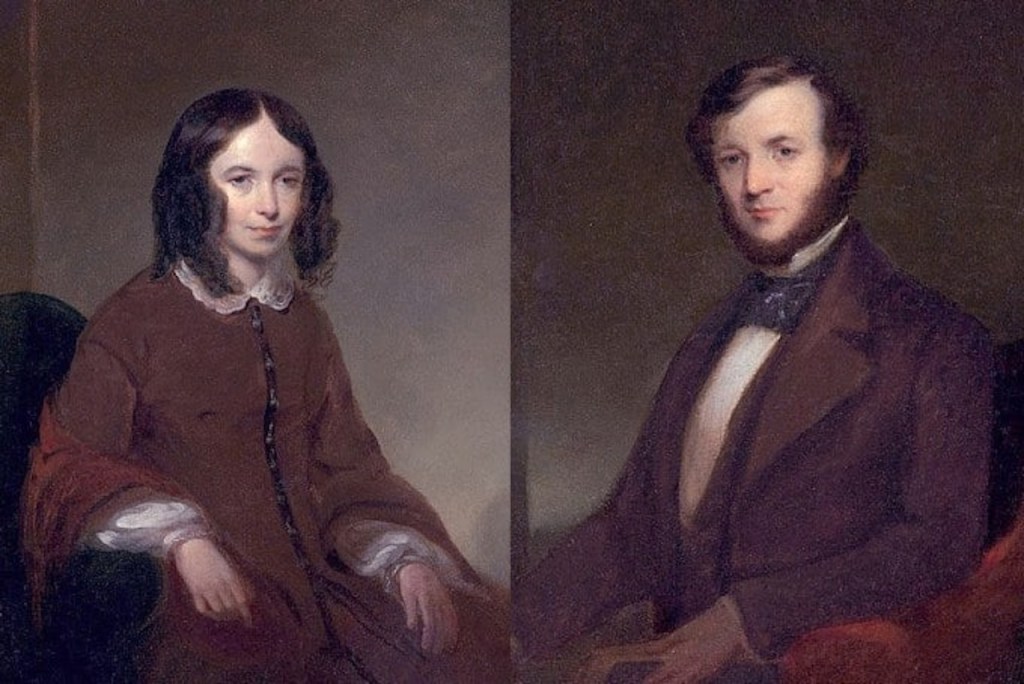
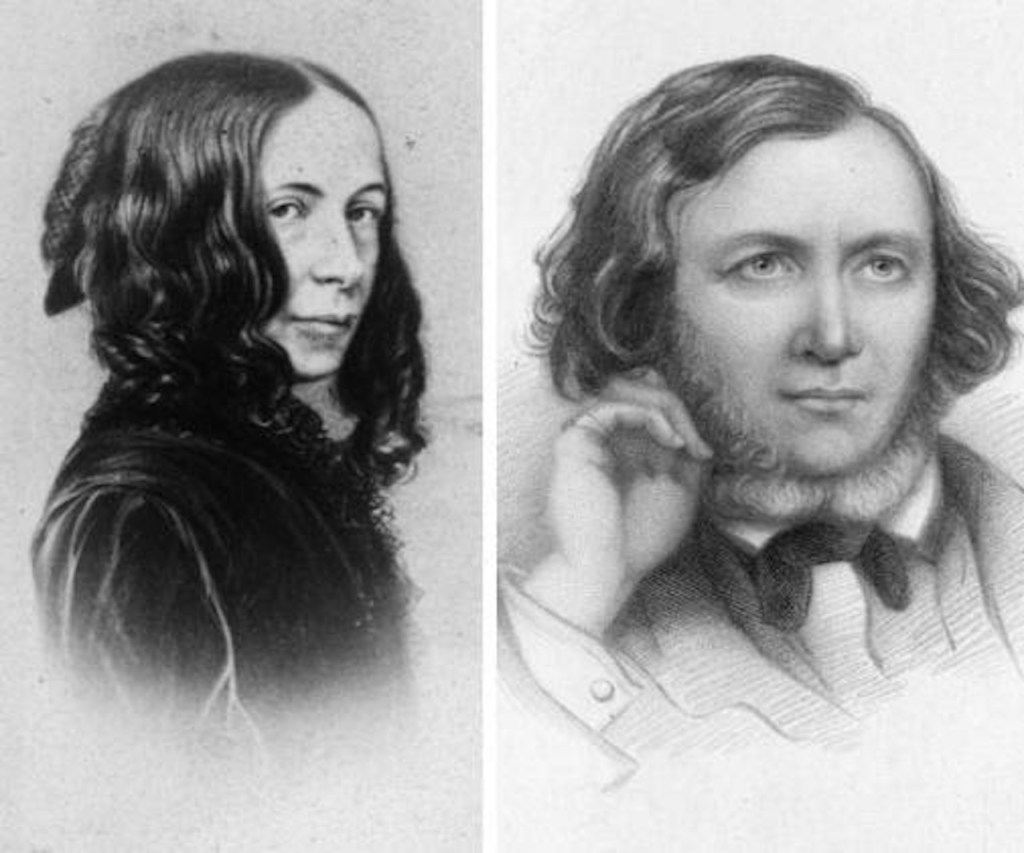
Robert Browning, while wooing Elizabeth Barrett, referred to his sweetheart lovingly by the nickname he had given her: “my little Portuguese” [1]. He chose that nickname for her because of her dark complexion. Elizabeth Barrett then quite consequentially titled her sonnet sequence Sonnets from the Portuguese.
Since its publication, Elizabeth Barrett Browning’s Sonnets from the Portuguese has become a beloved, often anthologized, and widely studied sonnet sequence. With this 44-sonnet sequence, Barrett Browning puts on display her mastery of the Petrarchan (Italian) sonnet form.
Throughout the sequence, Barrett Browning creates a speaker who develops the theme of the romantic relationship between Elizabeth Barrett and fellow poet, Robert Browning, the man whom she will ultimately marry.
As their relationship begins, the speaker is continually beset with deep doubts. She has little confidence that she can keep the affection of such an accomplished, world-renowned poet as Robert Browning [2].
The speaker, therefore, continues to dramatize her deep skepticism that the relationship will withstand their differences. The speaker is continually musing on her insecure nature and doubts as she even magnifies them. Her exploration and examination of her situation causes her much consternation. Likely, the poet’s prior experience with love relationships influences her hesitancy in engaging in a relationship with Robert Browning:
Much of E.B.B.’s hesitation came from knowing that love can bring injury as well as boon. She had suffered such injury. With great pain did she finally recognise that her father’s strangely heartless affection would have buried her sickroom, for how else could she interpret his squelching of her plan to travel south for health in 1846, when doctors practically ordered the journey to Italy as a last hope?
E.B.B. had had previous experience of one-sided affection, as we see in her diary of 1831-3, which concerns her relationship with the Greek scholar H.S. Boyd.For a year her entries calculate the bitter difference between his regard and her own, and she wonders if she can ever hope for reciprocation. In fact she finds her womanly capacity for feeling a liability and wishes she could feel less — “I am not of a cold nature, & cannot bear to be treated coldly. When cold water is thrown upon a hot iron, the iron hisses. I wish that water wd. make that iron as cold as self.” [3]
Elizabeth Barrett’s poor health is often emphasized in the many biographies of the poet. Few biographers have offered any speculations regarding the origin of the poet’s illness; nor have they attempted to name the disease from which the poet suffered.
However, Anne Buchanan, who is a research assistant in anthropology, has suggested that Elizabeth Barrett suffered from hypokalemic periodic paralysis (HKPP), a muscle disorder [4]. Buchanan’s daughter suffers from that same disease, which “causes blood levels of potassium to fall because potassium becomes trapped in muscle cells.”
Buchanan and her daughter Ellen Buchanan Weiss observed that the descriptions of Barrett Browning’s malady resembled closely those of the daughter. The Buchanans have thus suggested that a cold, moist climate often intensifies the pain associated with HKPP.
Throughout Barrett Browning’s lifetime, London’s cold, damp climate had exacerbated the poet’s health problems, and whatever the title of the disease, escaping the London’s weather was a Godsend to her.
Thus, her marriage to Robert Browning enhanced her health as well as her mental state because the coupled relocated to Italy, where they enjoyed the warm climate, which was amenable to Elizabeth’s health.
Because of Robert Browning, Elizabeth Barrett not only enjoyed a soulmate to love her, but she also found one who would protect her health and allow her live her remaining years more comfortably and productively.
The Petrarchan (Italian) Sonnet Form
The Petrarchan sonnet is named after the 14 century Italian poet, Francesco Petrarch [5]. It is also known as the Italian sonnet. The Petrarchan/Italian sonnet displays an eight-line octave and a six-line sestet. The octave contains two quatrains (four lines each), and the sestet contains two tercets (three lines each). The traditional rime scheme of the Petrarchan/Italian sonnet is ABBAABBA in the octave and CDCDCD in the sestet.
Poets, however, often display a variation on the sestet rime scheme, transforming it from CDCDCD to CDECDE. Many other poets vary the octave as well as create other schemes for the sestet. But Barrett Browning never varies the rime scheme; she retains the traditional rime scheme ABBAABBACDCDCD throughout the entire 44-sonnet sequence.
Following such a tight, restricted form that the poet chose to follow as she composed 44 sonnets magnifies her skill and her mastery of that sonnet form. The poet’s choice of the Petrarchan sonnet also reveals her deep affinity for the original Petrarchan theme, as she muses upon the relationship between herself and her belovèd as well as the relationship between the Divine Creator-Father and His human children.
According to Robert Stanley Martin, Petrarch “reimagined the conventions of love poetry in the most profound way: love for the idealized lady was the path towards learning how to properly love God . . .”:
[Petrarch’s] poems investigate the connection between love and chastity in the foreground of a political landscape, though many of them are also driven by emotion and sentimentality. Critic Robert Stanley Martin writes that Petrarch “reimagined the conventions of love poetry in the most profound way: love for the idealized lady was the path towards learning how to properly love God . . . .” [6]
Each sonnet in this sequence is displayed in only one stanza with its octave and sestet. However, engaging the sonnet’s quatrains and sestets separately allows the commentarian a clearer focus in concentrating on each line unit.
Elizabeth Barrett Browning’s sonnet sequence offered the poet a remarkably open field as well as the imaginative opportunity for discovery of her true feelings. The poet’s life had become steeped in melancholy, as a result of her poor health and her family’s inability to understand and appreciate her abilities and sensibilities. Especially problematic was her difficult relationship with her father.
As the poet through her speaker navigates through the sonnet sequence, she demonstrates a change of mood. The speaker of the sequence grows from an individual holding the desperate thought that only death would remain her consort to one who could finally experience joy.
After her doubts that she and such a man of the world as Robert Browning could have a true relationship are finally removed, she finds life to be very different from what she has earlier experienced.
The confident, sophisticated Robert Browning brought Miss Barrett a happiness that genuinely gave her life meaning. The two poets’ relationship had to struggle against a host of trials and tribulations, but their love story results in one that remains one for the ages. The world is more acquainted with these two lover-poets than it would have otherwise been without their loving relationship:
In addition to being celebrated for their literary talents, Elizabeth and Robert are remembered as people who were deeply in love. As Sir Frederic Kenyon wrote, Elizabeth and Robert “gave the most beautiful example of [love] in their own lives.” The marriage of Elizabeth Barrett Browning and Robert Browning required courage and sacrifice, and they were willing to do whatever it took to build a beautiful life together. [7]
Barrett Browning’s 44-sonnets sequence recounts the journey of a poet who begins with many doubts. But she examines and muses upon the origins of those doubts and then finally blossoms into a joyous, creative individual after she accepts and engages with the love that Robert Browning had so generously and genuinely offered her. The story of the love relationship between these two poets has a become one of most inspirational stories in the literary world—or, for that matter, in any world.
The Psychological Narrative within Elizabeth Barrett Browning’s Sonnets from the Portuguese
Elizabeth Barrett Browning’s 44 Petrarchan sonnets in Sonnets from the Portuguese suggest a subtle sequence within a psychological narrative framework.
Composed during her courtship with Robert Browning, the sequence presents an evolution from despair, low self-esteem, and self-doubt toward acceptance of love, reframing of self-awareness, and final, faithful and faith-based commitment. The sequence sections itself into the following emotional stages:
1. Musing on Despair and Resistance (Sonnets 1–8)
The sequence begins with a speaker who feels emotionally exhausted, physically fragile, convinced she could never marry, especially because her father had dictated that none of his children would ever be allowed to marry. Also her illness had enfeebled her so dramatically that she likely had little energy and strength for beginning and maintaining a loving relationship and family of her own.
The main themes of this segment of sonnets are memory of suffering, expectation of death rather than love, and suspicion that the new affection cannot last.
In the first sonnet, the speaker senses being drawn away from concentration on death by an unanticipated presence, which can only be interpreted as Robert Browning entering her life.
2. Exploring the Fear of Being Unworthy of Love (Sonnets 9–15)
The next group focuses on a persistent anxiety: she feels that her beloved deserves someone stronger and happier. She believes she is too weak, ill, and melancholy to respond as she should to his affection; she feels she is near death. He insists that he loves her deeply, and that they will have a future together.
The tension that drives this segment of sonnets creates a suggestion that she may be arguing against the relationship, even though it is quite clear that in her heart of hearts she is strongly wishing for it to success.
3. Examining the Strength of the Lover’s Devotion (Sonnets 16–24)
Here the tone changes. The speaker begins to examine the lover’s commitment more carefully. She wonders if he merely pities her, or if the love may be only temporary, or if he does in face love her for the right reasons.
She insists that love must not rest on changeable qualities such as her smile, her voice, or her appearance. She insists that love must remain constant even as those qualities dim with time.
4. Gradual Recognition of Genuine Love (Sonnets 25–36)
Gradually, the speaker is beginning to accept that the suitor’s devotion is real. The sonnets in this segment focus on memories of shared moments, reflections on spiritual companionship, and growing emotional trust. She is beginning to sense a mutual affection which is eroding the painful doubt that has plagued her.
5. Final Acceptance and Joy (Sonnets 37–44)
In the final segment, her resistance has largely disappeared. She now accepts her suitor’s love, sensing that it us utterly transformative and refreshingly life-giving. The tone has changed from ingrained doubt to joyous confidence, a healing gratitude, and spiritual cohesiveness.
The widely anthologized sonnet 43—“How do I love thee? Let me count the ways”—belongs to this final stage and expresses love in multiple dimensions: depth, breadth, height, and moral and spiritual devotion.
The final sonnet 44 “Belovèd, thou hast brought me many flowers” presents the couple’s love as an entity that will live on beyond death, as it testifies to a spiritual faith. Such a faith transcends all mortal doubt, affords the speaker a truly new Weltanschauung.



 Linda's Literary Home
