Elizabeth Barrett Browning’s Sonnet 7 “The face of all the world is changed, I think”
Elizabeth Barrett Browning’s sonnet 7, “The face of all the world is changed, I think,“ offers a tribute to the speaker’s lover, who has wrought deep and lasting important changes in the speaker’s life.
Introduction with Text of Sonnet 7 “The face of all the world is changed, I think”
Elizabeth Barrett Browning’s sonnet #7, “The face of all the world is changed, I think,” from Sonnets from the Portuguese expresses the speaker’s astonishment and delight at a new awareness she is sensing.
She has begun to notice that her situation is in the process of a unique transformation, and she, therefore, wishes to extend her gratitude to her belovèd suitor for these marvelous, soul-inspiring changes in her life.
Sonnet 7 “The face of all the world is changed, I think”
The face of all the world is changed, I think, Since first I heard the footsteps of thy soul Move still, oh, still, beside me, as they stole Betwixt me and the dreadful outer brink Of obvious death, where I, who thought to sink, Was caught up into love, and taught the whole Of life in a new rhythm. The cup of dole God gave for baptism, I am fain to drink, And praise its sweetness, Sweet, with thee anear. The names of country, heaven, are changed away For where thou art or shalt be, there or here; And this … this lute and song … loved yesterday, (The singing angels know) are only dear Because thy name moves right in what they say.
Reading
Commentary on Sonnet 7 “The face of all the world is changed, I think”
Elizabeth Barrett Browning’s sonnet 7, “The face of all the world is changed, I think,” focuses specifically on the tribute to the speaker’s belovèd partner in love, who has wrought deep and lasting important changes in her life.
In fact, the entire sonnet sequence performs the awe-inspiring task of recording the evolution of the poet’s life transformation after meeting and becoming the partner of her belovèd life mate.
First Quatrain: The Speaker’s Changing Environment
The face of all the world is changed, I think, Since first I heard the footsteps of thy soul Move still, oh, still, beside me, as they stole Betwixt me and the dreadful outer brink
The emotional speaker notes that all things in her environs have changed their appearance because of her new outlook after having become aware of her new love. Lovers traditionally begin to see the world through rose-colored glasses upon falling in love. The happiness in the heart spreads like a lovely, fragrant flower garden throughout the lover’s whole being.
Every ordinary object takes on a brilliant, rosy glow that flows like a gentle river from the happiness in the heart of the romantic lover.This deep-thinking speaker asserts that her lover has placed himself between her and the terrible “death.”
Heretofore, she had sensed that all she had to look forward to was more misery and ultimately the act of leaving her physical body. That mindset had continued to engulf her being her whole lifelong.
But now the “footsteps” of her belovèd suitor have been so gentle that they seemed to be the soft sounds of his soul approaching her. His meaning for her has become deep and abiding, spreading meaning and joy in her life.
Second Quatrain: Doomed Without Love
Of obvious death, where I, who thought to sink, Was caught up into love, and taught the whole Of life in a new rhythm. The cup of dole God gave for baptism, I am fain to drink,
The speaker had been convinced that without such a love to save her she would be doomed to “obvious death.” She finds herself suddenly transported to a new world, a new “life in a new rhythm” with the arrival of her belovèd suitor.
She has been so mired in sadness that it seemed that she was being “baptized” in that mindset, as one drowning in one’s own fears and tears.However, the melancholy speaker finds herself reluctant to allow herself complete immersion in her newfound happiness, but still she has to admit that her new status is overcoming her prior terror.She is beginning slowly to change her doubts to delightful possibilities.
First Tercet: A Universal Change
And praise its sweetness, Sweet, with thee anear. The names of country, heaven, are changed away For where thou art or shalt be, there or here;
The speaker must extol the “sweetness” that she receives from her new belovèd swain. Because he is beside her, she has changed in a universal way—”names of country, heaven, are changed away.”
Nothing is the same, even the ordinary names of things seem altered and in a good way; all of her old cheerless, dreary life is transforming utterly, and she finally seems to become able to enjoy and appreciate this transformation.The more confident speaker is now willing to entertain the notion that he will remain by her side to delight her life permanently, throughout time and space.
Second Tercet: The Singing of Angels
And this … this lute and song … loved yesterday, (The singing angels know) are only dear Because thy name moves right in what they say.
The glad speaker hears the angels singing in the voice of her belovèd suitor.Even as she loved his poems and music before this new awakening of love between the two, she has now become even more enamored with those art forms after only a brief period of time has passed. His very name motivates the speaker in a heavenly manner. As the angels sing and heavenly music delights her, she realizes that her belovèd has brought about her pleasant state of mind.
The thankful speaker wants to give him all the tribute he deserves. She feels that she cannot exaggerate the magnitude of his effect on her state of being and thinking.And everything she knows and feels now fills her heart and mind with new life.
Earlier in her life, she had become convinced that she could never experience the joy and fulfillment that she sees herself heading into now because of this special, accomplished man.
With such an important transformation, she now senses that she cannot say enough to express the value of such an vital act for her well-being and growth. She has only words of love to express her state of mind, and she works mightily to make those words the best, placed in the best order with as much emphasis as she can garner.
Image: Emily Dickinson – Amherst College – Daguerrotype of the poet at age 17, circa 1847 – likely the only authentic, extant likeness of the poet
The speaker in Emily Dickinson’s “I had a guinea golden” is expressing melancholy at the loss of a friend, whom she describes metaphorically in terms of three dear objects: a guinea, a robin, and a star.
Introduction with Text of “I had a guinea golden”
This fascinating Emily Dickinson poem of loss offers quite a tricky subversion of thought. The first three stanzas seem to explain the loss of three separate loved ones. Then the final stanza packs a wallop unloading on only one “missing friend,” who has caused the speaker to create this “mournful ditty” with tears in her eyes.
This poem demonstrates the depth of Dickinson’s education as she employs metaphors of the British coinage system and allusions to Greek mythology, which has been further employed by the science of astronomy to name stars.
Not only did Dickinson study widely in many subject areas, she possessed the ability to employ her learning in creative ways to fashion those beautiful flowers, allowing them to grow in her garden of verse.
I had a guinea golden
I had a guinea golden – I lost it in the sand – And tho’ the sum was simple And pounds were in the land – Still, had it such a value Unto my frugal eye – That when I could not find it – I sat me down to sigh.
I had a crimson Robin – Who sang full many a day But when the woods were painted, He, too, did fly away – Time brought me other Robins – Their ballads were the same – Still, for my missing Troubador I kept the “house at hame.”
I had a star in heaven – One “Pleiad” was its name – And when I was not heeding, It wandered from the same. And tho’ the skies are crowded – And all the night ashine – I do not care about it – Since none of them are mine.
My story has a moral – I have a missing friend – “Pleiad” its name, and Robin, And guinea in the sand. And when this mournful ditty Accompanied with tear – Shall meet the eye of traitor In country far from here – Grant that repentance solemn May seize upon his mind – And he no consolation Beneath the sun may find.
Reading
Commentary on “I had a guinea golden”
Each stanza builds to a magnificent crescendo of outrage that allows the speaker to lavish affection as well as harsh rebuke to the one leaving her in a state of melancholy.
First Stanza: The Value of Small Things
I had a guinea golden – I lost it in the sand – And tho’ the sum was simple And pounds were in the land – Still, had it such a value Unto my frugal eye – That when I could not find it – I sat me down to sigh.
The speaker begins by referring to the coin “guinea,” which was a British coin manufactured with the gold from the African nation of Guinea. The coin was worth 21 shillings and ceased circulating in 1813. The speaker maintains the British monetary metaphor by referring also to “pounds” in the fourth line of the poem.
Metaphorically, the speaker is calling her lost friend a “golden” coin, which she lost “in the sand.” She then admits that it was a small loss for much more valuable moneys—”pounds”—were all about her. Nevertheless, to her, because of her frugality, the value of the small coin was huge, and because it was lost to her, she just “sat down to sigh.”
Second Stanza: Missing the Music
I had a crimson Robin – Who sang full many a day But when the woods were painted, He, too, did fly away – Time brought me other Robins – Their ballads were the same – Still, for my missing Troubador I kept the “house at hame.”
The speaker then employs the metaphor of “crimson Robin.” This time she is likening her friend to the singing robin who “sang full many a day.” But when the autumn of the year came around, she loses this friend also.
Just as other moneys were abounding after the loss of a simple guinea, other robins presented themselves to the speaker after she lost her robin. But even though they sang the same songs as her lost robin, it just was not the same for the speaker. She continues to mourn the loss of her robin; thus she kept herself harnessed to her house, likely in case her own robin should show up again.
Third Stanza: The Mythology of Science
I had a star in heaven – One “Pleiad” was its name – And when I was not heeding, It wandered from the same. And tho’ the skies are crowded – And all the night ashine – I do not care about it – Since none of them are mine.
The speaker then finds herself once again mourning the loss of a loved one. This one she labels “Pleiad.” Pleiad is an allusion to Greek mythology but also a reference to astronomy.
In Greek mythology, the seven daughters of Atlas went into hiding up in the sky among the stars to escape being pursued by Orion. One the seven seems to disappear perhaps out of shame or grief.
In the science of astronomy, the constellation known as Taurus features a group of seven stars, but oddly enough only six can be seen, resulting in the same “Lost Pleiad” as exists in the Greek myth.
Dickinson, who studied widely the subjects of mythology, history, and science thus alludes to the myth of the “Lost Pleiad” to again elucidate the nature of her third lost beloved. She has now experienced the loss of money, a bird, and now a star–each more precious than the last.
The speaker loses the star as she was being heedless–not paying attention. In her negligent state, her star wanders away from her. Again, although the sky is full of other stars, they just don’t measure up because “none of them are mine.”
Fourth Stanza: Admonishing a Traitor
My story has a moral – I have a missing friend – “Pleiad” its name, and Robin, And guinea in the sand. And when this mournful ditty Accompanied with tear – Shall meet the eye of traitor In country far from here – Grant that repentance solemn May seize upon his mind – And he no consolation Beneath the sun may find.
While wildly famous for her riddles, Dickinson often breaks the riddle’s force by actually naming the object described. In the final stanza, she blatantly confesses that her little story “has a moral.” She then blurts out, “I have a missing friend.”
It is now that the reader understands the loss is not three different loved ones, but only one. She has thus been describing that “missing friend” using three different metaphoric images.
Now, however, she has a message for this friend whose description has revealed multiple times how much she misses the friend and laments the loss. After again rather baldly admitting her sorrow told in “this mournful ditty” and even “[a]ccompanied with tear,” she refers to that missing friend as a “traitor.”
If this friend who has betrayed her happens to see this “mournful ditty,” she hopes that it will grab that individual’s mind so that the person will experience “repentance solemn.” Furthermore, she wishes that the friend be unable to find any solace for the individual’s contrition no matter where that friend goes.
the sick cat in the clowder calls, (the little girl who loved her lost) wanders in the alley, falls and stiffens like a frozen coat; a powder of November palls on the despair of hunted dusks, a dumb husk of hares; that creature in the corner there sprawling in the drunken chair ringing silver on the table has no business being here and is in trouble.
TETSUMARO HAYASHI
When these feathered sing In fawdled magnolia It is truly spring.
GILLESPIE TOWERS
This winter sun again is centered Above Gillespie Towers where Each dawn discovers lights declaring Early risers there. Infirm and ill and some demented, Why do they rise in winder, staring When each in her cell might bask instead In summer dreams beneath the snows Of memory, secure and somnolent? The weak light rallies, and I know: A car awaits her who is newly dead. I must take leave of this, prepare my readings (Poems of death) for students, show Them the journey we must go.
VALEDICTORY
Not, if nothing else, a free Thing one spends his red time making, Fit words: between you and me (One’s self abides though every shaking Star whipsaw on any side) This talk wrought for all your taking, This song, one’s self abides. There are lives no need to move to laughter One’s debtors dying as alone, To ink one’s name is writ in water: The polished stanza is a stone.
Thus was this is, and this to be Horseman nor hearse in passing see, Or lovers in the quarreling world Read any but their now stones knurled; Nothing but poetry forgives Beauty for being so; we live Until we die, and die until, Rising like any spring a round us, God or godlessness unground us.
to be continued, check back for updates
Publication Status of Munseetown
Currently, no copies of Munseetown are available anywhere on the Internet. That status may change, and maybe even with some research, copies may be found. I will continue to search for copies.
The following poems are from Thomas Thornburg’s first published collection, Saturday Town & other poems, published in 1976 by Dragon’s Teeth Press.
INTRODUCTION
You, man or woman who hand this book Alive in this red world, looking To your own in your human heart The charged color of my high art, The word made flesh and the fleshed hoarding, Edged as one’s arm is, a supple knifing When knives come out and the thrust is in, Bone and blood is, kith and kinning, Hearth is and homeward, child and wiving Is this samethingness, blood and wording That is my labor, You are only my farthest neighbor.
SATURDAY TOWN
When I was a young stud heeling down The reebing streets of Saturday town The houses mewed and rafters rollicked, And who didn’t know me for a rounder? I played knick-knack while the sun fell, frolicked My heart like seven on the sawdust flooring Where the women boomed and the basses faddled I forked me a singular journey, saddled All the long moon where the dogstar diddled Till the cats closed shop for the dearth of dorking And the town turned over to see such sport; Oh, it was red money I spent indooring. One jig my heart snapped like a locket And I kissed it off to the fat and faring, Buckled my knees to the silver caring And hawsered my heart to an apron pocket. It’s luck I sing to the he and seeing, To the sidewalk shuffle of Saturday town (While the moon turns over and mountains scree) Where the owl and the pussycat buoy their drowning Ding-bat times in a stagging sea— Harts tine where the roe-bucked does are downing— And the Saturday man I used to be.
AS I WALKED OUT IN THUNDERING APRIL
As I walked out in thundering April And all the streets were runing And the day green-good went rilling for me, Freely I strolled in the curtained sunning; The world wave-wet, joyed and easily I nithing was, but not alone; There tulip and crocus and windy anemone Gayed in the giving rains, pleasing The very crows that the black wood cawed me, The trees in the rainy park applauded. As I youthed out in April, latching The careful door of my fathers’s house, A wind turned, catching my fellow slicker And the trafficking plash to market doused My sunday Pants; to the sexy dickering Town I puddled; it was time I forded, The pavement running seaward; There cunning I Brought fisted tulips to a boobing lady Who dawdled in her kinsman’s house; By back-alley ways where the lilac fawdled Rain-heavy blooms on my shoulder, purple; Sheer-bloused there in the corner-nook chair She sang an ancient turtling song, The morning ran over, the tall wood rooking. As I stepped into another April And capped my head, O, the winding day Carried the calling birds who circled In the peevish wet where the woods were graying; My hard-monied house stood still behind me Spelt home to children as they came hilling; It was a luffing wind my hart spilled, From the shrouding hangings of myself came, rilling Tulip and crocus and windy anemone To the hawser nithings, the port of onlies; It was not April ran my face But the figured sum of April tracing: Stood in that cycled hubbing weather Rounding my compassed heart until, My deaths aprilling my august knees, We walked the runing streets together
to be continued, check back for updates
Publication Status of Saturday Town
Currently, no copies of Saturday Town are available anywhere on the Internet. That status may change, and perhaps with some research, copies may be found. I will continue to search for copies.
In addition to poetry, James Weldon Johnson also composed many songs that have become popular. His bluesy poem/song “Sence You Went Away” features a southern dialect and captures the melancholy that surrounds the individual who has lost a loved one.
Introduction and Text “Sence You Went Away”
James Weldon Johnson’s “Sence You Went Away” creates a speaker/singer who bemoans the loss of a loved one. The poem/song consists of four stanzas, each with the rime scheme AAAB, wherein the final line constitutes the refrain in which the speaker reveals the reason for his melancholy.
The repetition of “seems lak to me” and “sence you went away” emphasizes the pain and sorrow the speaker is experiencing. The refrain becomes a chant-like repetition as he progresses through his report of all that is making him sad. And he is addressing his expressions of sorrow to the individual, who is now absent from his life.
As a poem this works quite well, and as a song it works even more nicely. The poem/song’s use of dialect gives it an authenticity that increases the communication of pain and sorrow. The speaker/singer incorporates and inflicts his sorrow on the world around him, while at the same time making it clear that these transformations are happening within himself.
Sence You Went Away
Seems lak to me de stars don’t shine so bright, Seems lak to me de sun done loss his light, Seems lak to me der’s nothin’ goin’ right, Sence you went away.
Seems lak to me de sky ain’t half so blue, Seems lak to me dat eve’ything wants you, Seems lak to me I don’t know what to do, Sence you went away.
Seems lak to me dat eve’ything is wrong, Seems lak to me de day’s jes twice ez long, Seems lak to me de bird’s forgot his song, Sence you went away.
Seems lak to me I jes can’t he’p but sigh, Seems lak to me ma th’oat keeps gittin’ dry, Seems lak to me a tear stays in ma eye, Sence you went away.
Commentary on “Sence You Went Away”
James Weldon Johnson, an accomplished poet, also composed many songs that have become quite popular. His bluesy “Sence You Went Away” features a southern dialect. Johnson was a Southerner, having been born in 1871 and raised in Jacksonville, Florida, only relocating to New York in 1901.
First Stanza: Expressing Sorrow
Seems lak to me de stars don’t shine so bright, Seems lak to me de sun done loss his light, Seems lak to me der’s nothin’ goin’ right, Sence you went away.
The speaker is addressing an individual, who is likely a former lover or very good friend. The speaker expresses his sorrow by reporting that both the sun and stars do not seem to be shedding light now because of the absence of the addressee. The reader/listener learns nothing about the person who has gone away, only that the speaker’s life has been adversely affected by the loved one’s absence.
Not only do the speaker’s eyes seem no longer to perceive light, but he also feels that nothing in his life is proceeding correctly. He makes it clear that he is not asserting that the world itself has changed; he is merely revealing how things “seem” to him as he repeats throughout the poem, “seems lak to me,” that is, “seems like to me.”
Second Stanza: Absence of Sun
Seems lak to me de sky ain’t half so blue, Seems lak to me dat eve’ything wants you, Seems lak to me I don’t know what to do, Sence you went away.
The absence of sun and starlight affect the shade of the blue sky, which is now presenting itself as only “half” its normal shade. Everything reminds him that he is missing his belovèd. It even appears that everything he sees and does yearns to have this individual back in its purview.
The speaker’s intense exaggeration emphasizes his desire for the return of his missing loved one. Everywhere he looks he sees merely an absence that causes him pain and suffering. He even confesses that he feels unable to decide what he should be doing, if anything at all.
Third Stanza: Nothing Is Right
Seems lak to me dat eve’ything is wrong, Seems lak to me de day’s jes twice ez long, Seems lak to me de bird’s forgot his song, Sence you went away.
Again, the speaker/singer asserts that nothing seems right for him anymore; thus, he feels that “ev’ything is wrong.” And he reveals that time seems to lag because of his sorrow. Pain and suffering cause the human mind and heart to feel time as an oppressor, and that kind of oppression makes minutes seem like hours and days like weeks.
Nature in the form of singing birds is lost on him, and he thus suggests that those birds have even forgotten to sings. His melancholy grays out all of his senses, especially seeing and hearing. Life has lost its luster, light has escaped him, and even pleasant sounds are no longer detectable. And still again, he repeats the reason for his feeling that everything is so wrong in his life.
Fourth Stanza: Fog of Sorrow
Seems lak to me I jes can’t he’p but sigh, Seems lak to me ma th’oat keeps gittin’ dry, Seems lak to me a tear stays in ma eye, Sence you went away.
Finally, the speaker reveals his own behavior has been influenced by the sad fact that the addressee has gone away. He cannot seem to stop sighing, and his throat dries up. He also continue to weep, as he endures the pain of loss.
His physical functions are out of kilter: what needs to be wet is dry, and what needs to be dry is wet. The speaker’s world has transformed into a melancholy fog of sorrow and disorientation—all because his belovèd has gone away.
Kris Delmhorst’s Musical Version of Johnson’s Lyric
There are extant several different musical versions of James Weldon Johnson’s lyric “Sence You Went Away.” I suggest that Kris Delmhorst’s rendition fits perfectly with the sentiment and atmosphere of that lyric. While the other versions are entertaining and well-done, Delmhorst’s version and her singing remain the best in accomplishing the task of capturing the exact feeling of Johnson’s lyric.
Kris Delmhorst singing her version of Johnson’s “Sense You Went Away”
The speaker in Robert Frost’s “And All We Call American” attempts to play down the Columbian heroic status by castigating the great explorer for not having the ability to predict the future.
Introduction and Text of “And All We Call American”
The speaker in Robert Frost’s poem “And All We Call American” attempts a retelling of the familiar story of Christopher Columbus. In so doing, he questions the legendary heroism of the explorer.
No one can deny that the miscalculation of landing on what is now the North American continent instead of the South Asian country of the exploration’s intent—India—opens itself to a certain level of scrutiny.
But the ultimate consequence of the discovery greatly outweighs the unintended nature of the discovery. The importance of the North American continent, particularly the United States of America, for the world remains undeniable. Despite the current failure to appreciate these Western values, those values continue to uplift cultures from the dire straits of physical and moral poverty.
Frostian Curmudgeonry
Even as he took on the reputation of a belovèd poet of nature and human feeling, Robert Frost remained a life-long contrarian and a specialized curmudgeon. Thus instead of celebrating the Columbian legendary figure who opened up the Old World to a New World, he has his speaker concentrate of the limitations of the explorer.
That Columbus was not capable of imagining what the United States of America, Canada, and Mexico would become is not a particularly egregious failure. Excepting clairvoyants, no one else of the time period would have been able to predict any better.
While Frost has attempted to produce a poem that is both historical and philosophical
by having his speaker employ the Columbian expedition, the poem’s cranky bitterness ultimately says more about the speaker/poet himself than about the objective nature of the significance of the voyage of Christopher Columbus.
And All We Call American
Columbus may have worked the wind A new and better way to Ind And also proved the world a ball, But how about the wherewithal? Not just for scientific news Had the queen backed him for a cruise.
Remember he had made the test Finding the East by sailing West. But had he found it ? Here he was Without one trinket from Ormuz To save the queen from family censure For her investment in his future.
There had been something strangely wrong With every coast he tried along. He could imagine nothing barrener. The trouble was with him the mariner. He wasn’t off a mere degree; His reckoning was off a sea.
And to intensify the drama Another mariner Da Gama Came just then sailing into port From the same general resort, But with the gold in hand to show for His claim it was another Ophir.
Had but Columbus known enough He might have boldly made the bluff That better than Da Gama’s gold He had been given to behold The race’s future trial place, A fresh start for the human race.
He might have fooled them in Madrid. I was deceived by what he did. If I had had my way when young I should have had Columbus sung As a god who had given us A more than Moses’ exodus.
But all he did was spread the room Of our enacting out the doom Of being in each other’s way, And so put off the weary day When we would have to put our mind On how to crowd but still be kind.
For these none too apparent gains He got no more than dungeon chains And such small posthumous renown (A country named for him, a town, A holiday) as where he is He may not recognize as his.
They say his flagship’s unlaid ghost Still probes and dents our rocky coast With animus approaching hate, And for not turning out a strait He has cursed every river mouth From fifty north to fifty south.
Some day our navy I predict Will take in tow this derelict And lock him through Culebra Cut, His eyes as good (or bad) as shut To all the modern works of man And all we call American.
America is hard to see. Less partial witnesses than he In book on book have testified They could not see it from outside — Or inside either for that matter. We know the literary chatter.
Columbus, as I say, will miss All he owes to the artifice Of tractor-plow and motor-drill. To naught but his own force of will Or at most some Andean quake Will he ascribe this lucky break.
High purpose makes the hero rude: He will not stop for gratitude. But let him show his haughty stern To what was never his concern Except as it denied him way To fortune-hunting in Cathay.
He will be starting pretty late. He’ll find that Asiatic state Is about tired of being looted While having its beliefs disputed. His can be no such easy raid As Cortez on the Aztecs made.
Commentary on Robert Frost’s “And All We Call American”
The speaker in Robert Frost’s “And All We Call American” attempts to play down the Columbian heroic status by castigating the great explorer for not having the ability to predict the future.
First Stanza: Promise vs Problem
Columbus may have worked the wind A new and better way to Ind And also proved the world a ball, But how about the wherewithal? Not just for scientific news Had the queen backed him for a cruise.
In the opening stanza, the speaker refers to the Columbian legendary mission that confirmed the scientific theory that Earth was round and that one could end up in the East by sailing West.
The speaker then throws shade at the feat by implying that not enough loot had been procured from the journey: after all, the queen was not especially interested in confirming a scientific theory; she wanted gold, spices, and other goods that usually took an arduous overland journey to reach her part of the world.
At this point, the speaker has introduced a conflict, placing bold discovery against material possession. Because that conflict is inherent in nearly every worldly endeavor, to complain about it, or even point it out, is somewhat naïve.
Second Stanza: Discovery vs Disappointment
Remember he had made the test Finding the East by sailing West. But had he found it ? Here he was Without one trinket from Ormuz To save the queen from family censure For her investment in his future.
In the second stanza, the speaker spotlights Columbus’ achievement of sailing west to get to the East. He then poses a question: what did the explorer really find? But then he jarringly shifts to the material possessions that the queen was expecting by claiming that the explorer brought back not even “one trinket from Ormuz.”
The Ormuz trinket becomes a symbol for the Eastern wealth that the queen had been counting on. The speaker implies that the queen’s family would not be happy with her for backing such an unprofitable “investment.”
Third Stanza: Columbus’ Miscalculation
There had been something strangely wrong With every coast he tried along. He could imagine nothing barrener. The trouble was with him the mariner. He wasn’t off a mere degree; His reckoning was off a sea.
The speaker now shows clear disdain for Columbus for not recognizing that he had not landed in India. The speaker imagines that the mariner searching the barren coasts for the Indian riches and not finding them simply remains perplexed.
The speaker emphasizes the fact that Columbus not only managed to be off by a degree or so, but that he was off by a whole ocean. The speaker seems to take glee in revealing such an error by such a brave man, who has in fact sailed over a whole ocean and has now discovered a heretofore unknown land. Thus the speaker’s lack of empathy and imagination are revealed more than the fact that the a brave sea-farer had failed to reach India.
Fourth Stanza: Da Gama’s Success
And to intensify the drama Another mariner Da Gama Came just then sailing into port From the same general resort, But with the gold in hand to show for His claim it was another Ophir.
The speaker now doubles down on his Columbian criticism. While Columbus returned home without riches in tow, the explorer Vasco da Gama came home with gold from Africa.
The speaker’s harsh tone furthers his grift against the brave Columbus. By concentrating on material wealth, he is sure he has a good case for humiliating the failed Columbus by playing up the success of da Gama.
But that comparison in hindsight levels the criticism to failure, for the voyage of Columbus is much more widely known than that of da Gama. The importance of da Gama’s gold pales in comparison to the importance of the Columbian discovery of a whole New World.
Fifth Stanza: The Absurdity of a Missed Bluff
Had but Columbus known enough He might have boldly made the bluff That better than Da Gama’s gold He had been given to behold The race’s future trial place, A fresh start for the human race.
The speaker now presents the ridiculous notion that if Columbus had been smart enough, if could have told the queen and any others dejected by lack of material riches that he had discovered a place where the future of humanity might reside.
Such a notion is patently absurd. The speaker is looking back about five centuries, castigating a man for not realizing that a place called the United States of America would provide a “fresh start for the human race.”
The line if “Columbus [had] known enough” demonstrates a level of ignorance that borders on the profane: In any endeavor, it is not necessarily the amount of knowing that is important; it is the nature of the knowledge. He is decrying Columbus for not being prescient, a seer, a clairvoyant.
To cover the fact that he is calling for Columbus to predict the future, the speaker positions the notion that the mariner could have used a “bluff” to suggest the future importance of his discovery. Such a notion remains petty and irresponsible and again shows more about the speaker/poet’s mind than it does the reality of history.
Sixth Stanza: A Youthful Misreading of Columbus
He might have fooled them in Madrid. I was deceived by what he did. If I had had my way when young I should have had Columbus sung As a god who had given us A more than Moses’ exodus
The speaker now inserts a phony self-deprecation. He admits that he once upon a time thought of Columbus as a hero, but now he recognizes that since Columbus was not able to predict the value of the New World he had discovered, then credit for his accomplishment of actually finding that New World should be withdrawn.
The speaker is attempting a bait and switch operation. By claiming that Columbus could have “fooled them in Madrid” the speaker is again referring to the “bluff” suggested in the preceding stanza.
But he then seems to be confessing to being deceived by the Columbus legend. The issue is not however that the speaker/poet was deceived; it is that now the speaker wishes to denigrate an Italian-American hero, and he is reaching beyond reality to form the basis for that derogatory image.
Seventh Stanza: Room and Doom
But all he did was spread the room Of our enacting out the doom Of being in each other’s way, And so put off the weary day When we would have to put our mind On how to crowd but still be kind.
The speaker now goes completely off the rails. Adding to Columbus’ inability to predict the future is the idea that even if he had bluffed his peers about the future of a New World, what he actually did was just give the world population more room to spread out and be mean.
Such a suggestion implies that if people had just remained in the Europe, Africa, and other reaches of the known world, they could have worked on learning to kind to one another as they continued to live in a “crowd.”
Again, such a suggestion is not only naïve, but it does not take into account that human nature remains the same whether humans are spread out or in a crowd. There is/was no such phenomenon that learning to be “kind” was postponed by the discovery of a New World. Did the folks who remained in Old World learn to be “kind”?
According to this line of thinking, they should have. But again the speaker has come up with a notion this is absurd, while exposing his real purpose of smearing 15th century explorer.
Eighth Stanza: Columbus’ Rewards
For these none too apparent gains He got no more than dungeon chains And such small posthumous renown (A country named for him, a town, A holiday) as where he is He may not recognize as his.
The speaker’s gross depiction of Columbus having been thrown in prison and receiving little attention crosses into the obscene. First, through instrumentality of the corrupt Francisco de Bobadilla, Columbus was sent back to Castile in “chains.”
But the Bobadilla’s abject lies about the explorer became immediately obvious, and Columbus was released and restored to his earlier prominence. And the claim of “small posthumous renown”—places named for him—is mind-numbing.
There are over 6000 places in the United States alone named after the explorer. Virtually every state in the USA has a town, city, park, or some landmark named after Christopher Columbus: some “small posthumous renown”!
Ninth Stanza: The Restless Ghost of Discovery
They say his flagship’s unlaid ghost Still probes and dents our rocky coast With animus approaching hate, And for not turning out a strait He has cursed every river mouth From fifty north to fifty south.
In this stanza, the speaker concocts sheer fantasy that would make today’s Columbus bashers proud. Every creative writer has the unleashed opportunity to foist onto historical figures their own proclivities.
The lame narrative in this stanza is immediately revealed with the vague “They say.” Who are they? How reliable are they? Well, “they” are the demons living in the imagination of the curmudgeon infested brain of the speaker/poet.
Tenth Stanza: Modern Discovery
Some day our navy I predict Will take in tow this derelict And lock him through Culebra Cut, His eyes as good (or bad) as shut To all the modern works of man And all we call American.
Here the speaker is not really predicting anything. He is merely setting up another pin to bowl down with his castigation of a fifteenth century man being unable to see into the future.
That Columbus could not image what the United States would look like in the 20th century is hardly an earthshaking discovery. But the speaker is no doubt self-congratulatory for implying that if Columbus has thought to sail through the Panama Canal he would have been on his way to discovering the real India.
Eleventh Stanza: Elusive America
America is hard to see. Less partial witnesses than he In book on book have testified They could not see it from outside — Or inside either for that matter. We know the literary chatter.
The speaker then takes a dramatic shift from beating up on Columbus to asserting the daft opinion that “America is hard to see.” Besides the flabby language, signifying less than nothing, it makes a brainless claim.
Because anything that extends for miles beyond human vision would be “hard to see,” one might as well say a railroad, New York, or the ocean— each is hard to see. But the speaker seems to be trying to say that America is not only a place but is also a political entity that continues in a mysterious vortex. Thus the “literary chatter” suggests that “America” cannot be expressed clearly in words.
Twelfth Stanza: Columbus’ View of America’s Advancement
Columbus, as I say, will miss All he owes to the artifice Of tractor-plow and motor-drill. To naught but his own force of will Or at most some Andean quake Will he ascribe this lucky break.
The speaker now makes a delusional claim that Columbus’ selfishness would blind him to the genuine causes of America’s development—that is, if the explorer were able to see America in its current iteration.
The speaker has no idea how Columbus would view the advances in the modern technological influence of “tractor-plow and motor-drill.” That he would impute such an attitude to the explorer is beyond damnable.
Thirteenth Stanza: A Speaker’s Obtuseness
High purpose makes the hero rude: He will not stop for gratitude. But let him show his haughty stern To what was never his concern Except as it denied him way To fortune-hunting in Cathay.
This stanza again is just another putrid display of a speaker whose own jealousy is out of control. Criticizing a historian figure through the lens of an contemporary set of scruples just does not work in a piece of discourse purporting to be a poem.
Fourteenth Stanza: The Futility of Defaming Hero
He will be starting pretty late. He’ll find that Asiatic state Is about tired of being looted While having its beliefs disputed. His can be no such easy raid As Cortez on the Aztecs made.
The final stanza serves as a monument to the failure of the speaker’s position so eloquently laid throughout this piece of drivel masquerading as a poem, for in this stanza the speaker is pretending to predict the future.
The future finds the explorer reaching Asia only to be rebuffed and rebuked because the Asias are tired being “looted” and “disrupted.” And lastly, Columbus will be humiliated that Cortez was so successful in conquering the Aztecs.
The sheer fantasy falls apart immediately because no such voyage was ever made by Christopher Columbus; therefore, he could not have been rebuffed and rebuked by people tired of being “looted” and “disrupted.”
In classical rhetoric such a concoction is called a straw man, fashioned solely for the purpose of burning it down. The speaker fancies an exploration that never existed simply to ridicule it for having failed. If an event is never begun, it cannot be considered to have failed, just as it cannot be deemed to have succeeded.
Robert Frost’s Worse Poem
Robert Frost’s “And All We Call American” is without a parallel; it is Frost’s absolute worst poem. The only quality that keeps this piece from being an contemptible piece of doggerel is the fact that it was composed one of the world’s most noted and beloved poets. Taking as his subject Christopher Columbus, Frost creates a speaker who reveals a deficiency of thought that seems remarkably reminiscent of adolescent self-absorption.
Instead of celebrating the remarkable discoveries of the great explorer, this speaker chooses to downplay achievement, offering in its place ignorant criticism that Columbus living in the fifteenth century was unable to know what would take place the 20th century.
When a fine, reputable poet throws out a stinker like this one, the only reason for studying such a piece is to understand the complex inconsistency of the human brain. If a student or novice poetry reader begins a study of Frost with this one, that individual has in store a shocking experience in discovering Frost’s later works such “The Road Not Taken,” “Birches,” “Bereft,” “The Gift Outright,” and “Stopping by Woods on a Snowy Evening.”
Robert Frost’s “The Freedom of the Moon” muses on the nature of the free will possessed by humankind, as the moon’s freedom foreshadows the greater freedom of humankind.
Introduction and Text of “The Freedom of the Moon”
Robert Frost’s versanelle*, “The Freedom of the Moon,” consists of two sestets, each with the rime scheme, ABABCC. The poem dramatizes the phases of the moon and makes a statement about human freedom.
The speaker in Frost poem demonstrates the complete freedom of humanity by dramatizing the ability of the human mind to use its physical body paradoxically to relocate the moon’s positions. The freedom of the moon heralds the greater freedom of humankind.
*A versanelle isa short lyric, usually 20 lines or fewer, that comments on human nature or behavior, and may employ any of the usual poetic devices (I coined this term specifically for use in my poetry commentaries.
The Freedom of the Moon
I’ve tried the new moon tilted in the air Above a hazy tree-and-farmhouse cluster As you might try a jewel in your hair. I’ve tried it fine with little breadth of luster, Alone, or in one ornament combining With one first-water start almost shining.
I put it shining anywhere I please. By walking slowly on some evening later, I’ve pulled it from a crate of crooked trees, And brought it over glossy water, greater, And dropped it in, and seen the image wallow, The color run, all sorts of wonder follow.
Commentary on “The Freedom of the Moon”
The important possession of free will extends to metaphor making by poets.
First Sestet, First Tercet: Ways of Contemplating the Moon
I’ve tried the new moon tilted in the air Above a hazy tree-and-farmhouse cluster As you might try a jewel in your hair.
Beginning his list of ways he has contemplated the moon, the speaker first asserts that he has “tried the new moon tilted in the air.” At that phase, the orb was hanging over a little clump of trees alongside a farmhouse. He compares his consideration of the moon at that point to his lady companion’s trying a “jewel in [her] hair.”
The oddity about the speaker’s claim is that he says he considered the “new moon” which is barely visible. And the moon was tilted in the air. It seems more likely that a crescent phase of the moon would lend itself more accurately to being “tilted.”
An explanation for this claim is simply that the particular phase was new to the speaker; he had been ignoring the moon and when finally he was motivated to observe it, the newness of it prompts him to call it “the new moon.”
First Sestet, Second Tercet: Probing the Nature of the Moon’s Freedom
I’ve tried it fine with little breadth of luster, Alone, or in one ornament combining With one first-water start almost shining.
The speaker has furthermore probed the nature of the moon’s freedom when it was even in a thinner crescent phase; it was “fine with little breadth of luster.” He has mused on that phase when he saw it without stars and also when he has seen it with one star, a configuration from which the Islamic religion takes its icon.
The moon at that phase looked like the first burst of water when one turns on a spigot. It was not exactly shining but only “almost shining.” The speaker seems to marvel at the unheavenly ways in which the moon at times may assert its freedom.
Second Sestet, First Tercet: Freeing a Captured Orb
I put it shining anywhere I please. By walking slowly on some evening later, I’ve pulled it from a crate of crooked trees,
The speaker then proclaims that he has placed the moon “anywhere” he pleased, but that placement always occurred while it was bright, allowing him the vitality to work with it.
He then cleverly asserts his true theme that he is focusing on human freedom, not moon freedom, when he avers that he was able to place the moon anywhere he wanted because he was able to ambulate. His ability to walk allowed him the freedom to wander “slowly on some evening later.” He was thus able to “pull[ ] [the moon] from a crate of crooked trees.”
The trees seemed to be containing the moon as a wooden box would hold onions or melons. But the speaker was able to walk from the tree-contained moon thus metaphorically freeing the captured orb from the tree box.
Second Sestet, Second Tercet: Carrying the Orb to a Lake
And brought it over glossy water, greater, And dropped it in, and seen the image wallow, The color run, all sorts of wonder follow.
After removing the moon from the tree-crate by simply continuing his evening walk, the speaker metaphorically carried the orb to a lake, in which he metaphorically “dropped it in.” He then watched awestruck by the “wallow[ing]” image; he observed that like a piece of cloth losing its dye in water, the colors of the moon ran leaching out into the lake water.
The speaker then commits what is usually a grave poetic error; he makes an open ended statement without a hint of support, “all sorts of wonder follow.” But this speaker can get by with the ordinarily unforgivable poetic sin because of the great and wide implications that all of his lines heretofore have gathered.
The speaker, because he has given the moon freedom and has also shown that humankind is blessed with an even more profound freedom, has thus declared that all those “sorts of wonder” that “follow” from the possession of that free will and freedom of expression are indeed blessed with a golden freedom. He has revealed the unmistakeable and eternal free will of humankind.
Robert Frost’s “War Thoughts at Home” is a collection of seven stanzas, which sounds more like a list of notes than a poem, as the title clearly reveals. It seems likely that Frost did not consider “War Thoughts at Home” to be a finished, polished poem. Clearly, it is a list of “thoughts” as the title states.
Introduction and Text of “War Thoughts at Home”
Robert Frost’s “War Thoughts at Home” consists of seven “notes,” with the rime scheme ABCCB in each.
A Sow’s Ear, not a Silk Purse
This piece seems to be most aware of itself as trying to be poetic. It is for this reason that critics and scholars should understand that it is not a poem at all, but merely a list of thoughts. And, in fact, Frost did not publish this piece as a poem. This “list of thoughts” was found among his archival materials, jotted down on a flyleaf of his book, North of Boston.
As a poem, this list is seriously flawed. Robert Frost would probably be embarrassed that people are fawning over it as an important Frostian find, or he might also get a belly laugh at the vacuity of contemporary people of letters.
It is merely a list that seems to wax profound trying to compare a bird fight to the war in France. But it is obviously not meant to be a finished poem; likely Frost’s trickster nature had him put the notes in rime, just to throw people off. Frost’s best works demonstrate how much better than this he was as a poet.
War Thoughts at Home
On the back side of the house Where it wears no paint to the weather And so shows most its age, Suddenly blue jays rage And flash in blue feather.
It is late in an afternoon More grey with snow to fall Than white with fallen snow When it is blue jay and crow Or no bird at all.
So someone heeds from within This flurry of bird war, And rising from her chair A little bent over with care Not to scatter on the floor
The sewing in her lap Comes to the window to see. At sight of her dim face The birds all cease for a space And cling close in a tree.
And one says to the rest “We must just watch our chance And escape one by one— Though the fight is no more done Than the war is in France.”
Than the war is in France! She thinks of a winter camp Where soldiers for France are made. She draws down the window shade And it glows with an early lamp.
On that old side of the house The uneven sheds stretch back Shed behind shed in train Like cars that long have lain Dead on a side track.
Commentary on “War Thoughts at Home”
Robert Frost, no doubt, would laugh heartily at contemporary scholars for mistaking this list of notes for a poem.
First Note: Blue Birds Fighting
On the back side of the house Where it wears no paint to the weather And so shows most its age, Suddenly blue jays rage And flash in blue feather.
The speaker describes a house, noting that the s “back side” seems to take the brunt of the bad weather; as a result of all this tumultuous weather, the paint has worn off, and this side of the house shows its age more than the other sides.
It is on this weather-beaten side of the house that a bunch of blue jays starts to rustle about. The speaker colorfully claims that the jays are flashing their blue feathers as they tussle all in a rage.
Second Note: Bleak Atmosphere
It is late in an afternoon More grey with snow to fall Than white with fallen snow When it is blue jay and crow Or no bird at all.
The speaker continues to describe a bleak atmosphere. The time is late afternoon, and it looks as if it will be snowing soon; there is a gray (British spelling “grey”) look to the scene, a time when there may be present a blue jay or a crow or more likely still, “no bird at all.”
Third Note: Weather-Beaten Woman
So someone heeds from within This flurry of bird war, And rising from her chair A little bent over with care Not to scatter on the floor
The speaker introduces a woman inside the house who has heard the birds’ racket, and she goes to the window. She is old and as weather-beaten as the house, “A little bent over with care.” She has been sewing so she gets up from her chair carefully placing her sewing aside so she won’t drop it on the floor.
The term “bird war” is employed, and for the first time the list begins to reveal the nature of its claim to be thoughts of war. The reader might feel that the house has already demonstrated a kind of war with the weather; then the birds reveal of kind of war. And now enters a human being who will add the “war thoughts.”
Fourth Note: Repetition
The sewing in her lap Comes to the window to see. At sight of her dim face The birds all cease for a space And cling close in a tree.
The third and fourth stanzas are connected by sharing the same sentence. The woman comes to the window to see the birds, but the birds stop warring for a bit and remain huddled in a tree. The reader is to infer that they see this woman’s face staring at them and they cease their “war.”
Fifth Note: WW I Prattles on
And one says to the rest “We must just watch our chance And escape one by one— Though the fight is no more done Than the war is in France.”
Then one bird begins to speak, asserting that they must remain alert so they can escape a fight, similar to the “war in France.” Frost is said to have “inscribed a new poem” into a copy of his published North of Boston in 1918. Thus, the war is World War I.
The bird says that they can escape this human if they lay low and leave one at a time, but he admits that the fight is not over yet, just as the fight in France is not over yet; however, the war in Europe did end by September of 1918.
Sixth Note: Who Says What?
Than the war is in France! She thinks of a winter camp Where soldiers for France are made. She draws down the window shade And it glows with an early lamp.
In the sixth stanza, the speaker repeats the line, “Than the war is in France!” But it is unclear whose words these are. The bird said that same line, but now the same line appears unattributed. Then the speaker is telling the reader what the woman is thinking: she is thinking of an undisclosed place where soldiers train before being sent to France. She calls it a “winter camp.”
Again, it is not clear. Where is the winter camp? Is it in the United States, which only entered the war a year earlier? Is it in France? There is nothing to clarify why this woman would know these things. Perhaps the reader is to assume that she has a relative who was sent to this war, but the reader cannot determine so. Then the woman draws the shade, which “glows with an early lamp.”
Seventh Note: Out the Back Window
On that old side of the house The uneven sheds stretch back Shed behind shed in train Like cars that long have lain Dead on a side track.
The seventh stanza simply gives a description of what one would see if one were looking out back from “that old side of the house.” This sounds strange because in the opening stanza, it seemed that the weather had been responsible for making the house look old, but now the speaker actually calls that side “that old side of the house.”
One has to wonder how one side might be any older than the other sides. And what one sees there is a line of old sheds that give the appearance of railroad cars that have “lain / Dead on a side track” for a long time.
The speaker in “Two Tramps in Mud Time” dramatizes his encounter with two unemployed lumberjacks who covet the speaker’s wood-splitting task. He also features a philosophical take on the situation that leads him to continue chopping, instead of handing the job off to the two tramps.
Introduction and Text of “Two Tramps in Mud Time”
The speaker in Robert Frost’s “Two Tramps in Mud Time” fashions his dramatic performance, focusing on his brief meeting with two unemployed lumberjacks who seek to take over the speaker’s wood-splitting task. Calling them “tramps,” the speaker then provides a fascinating philosophical discussion about his reason for electing to keep on performing his chore, instead of letting these two needy individuals finish it for him.
It is likely that at times true altruism might come into play as a part of spiritual progress. And it also likely that the speaker would condescend to this idea. But the speaker may also have been annoyed that his “aim” at the wood was interrupted by the snide remark voiced by one of the mud tramps.
Two Tramps In Mud Time
Out of the mud two strangers came And caught me splitting wood in the yard, And one of them put me off my aim By hailing cheerily “Hit them hard!” I knew pretty well why he had dropped behind And let the other go on a way. I knew pretty well what he had in mind: He wanted to take my job for pay.
Good blocks of oak it was I split, As large around as the chopping block; And every piece I squarely hit Fell splinterless as a cloven rock. The blows that a life of self-control Spares to strike for the common good, That day, giving a loose my soul, I spent on the unimportant wood.v
The sun was warm but the wind was chill. You know how it is with an April day When the sun is out and the wind is still, You’re one month on in the middle of May. But if you so much as dare to speak, A cloud comes over the sunlit arch, A wind comes off a frozen peak, And you’re two months back in the middle of March.
A bluebird comes tenderly up to alight And turns to the wind to unruffle a plume, His song so pitched as not to excite A single flower as yet to bloom. It is snowing a flake; and he half knew Winter was only playing possum. Except in color he isn’t blue, But he wouldn’t advise a thing to blossom.
The water for which we may have to look In summertime with a witching wand, In every wheelrut’s now a brook, In every print of a hoof a pond. Be glad of water, but don’t forget The lurking frost in the earth beneath That will steal forth after the sun is set And show on the water its crystal teeth.
The time when most I loved my task The two must make me love it more By coming with what they came to ask. You’d think I never had felt before The weight of an ax-head poised aloft, The grip of earth on outspread feet, The life of muscles rocking soft And smooth and moist in vernal heat.
Out of the wood two hulking tramps (From sleeping God knows where last night, But not long since in the lumber camps). They thought all chopping was theirs of right. Men of the woods and lumberjacks, They judged me by their appropriate tool. Except as a fellow handled an ax They had no way of knowing a fool.
Nothing on either side was said. They knew they had but to stay their stay And all their logic would fill my head: As that I had no right to play With what was another man’s work for gain. My right might be love but theirs was need. And where the two exist in twain Theirs was the better right–agreed.
But yield who will to their separation, My object in living is to unite My avocation and my vocation As my two eyes make one in sight. Only where love and need are one, And the work is play for mortal stakes, Is the deed ever really done For Heaven and the future’s sakes.
Robert Frost Reading “Two Tramps in Mud Time”
Commentary on “Two Tramps in Mud Time”
The speaker in “Two Tramps in Mud Time” is dramatizing his encounter with two unemployed lumberjacks who would like to relieve the speaker of his wood-splitting task. He offers an interesting take on why he chooses to continue his chore, instead of turning it over to these two needy individuals.
First Stanza: Accosted by Two Strangers
Out of the mud two strangers came And caught me splitting wood in the yard, And one of them put me off my aim By hailing cheerily “Hit them hard!” I knew pretty well why he had dropped behind And let the other go on a way. I knew pretty well what he had in mind: He wanted to take my job for pay.
The speaker in “Two Tramps in Mud Time” is busy cutting logs of oak; he is suddenly accosted by a couple of strangers who seem to appear out from the muddy ground. One of the strangers calls out to the speaker telling him to hit the oak logs hard.
The man who called out had lagged behind his companion, and the speaker of the poem believes he does so in order to attempt to take the speaker’s work. Paying jobs are lacking in this period of American history, and men had to do all they could to get a day’s wage.
The speaker complains that the sudden call out from the tramp has disturbed his “aim” likely making him miss the split he had planned to make of the log. The speaker is not happy about the intrusion into his private activity.
Second Stanza: The Ability to Split Wood
Good blocks of oak it was I split, As large around as the chopping block; And every piece I squarely hit Fell splinterless as a cloven rock. The blows that a life of self-control Spares to strike for the common good, That day, giving a loose my soul, I spent on the unimportant wood.
The speaker counters the criticism of the tramp by detailing his own proven ability to split wood. He describes every piece he cut as “splinter less as a cloven rock.” The speaker then begins to muse in a philosophical manner.
Although a well-disciplined individual might think that philanthropy is always in order, today this speaker decides to continue cutting his own wood, despite the fact that the tramp/strangers desperately need cash and could well use what they would earn by cutting the wood.
The speaker, who normally might be amenable to allowing the two unemployed men to take on the wood-splitting for some pay, is now put off by the remark and continues to concoct reasons for continuing the work himself.
Third Stanza: Musing on the Weather
The sun was warm but the wind was chill. You know how it is with an April day When the sun is out and the wind is still, You’re one month on in the middle of May. But if you so much as dare to speak, A cloud comes over the sunlit arch, A wind comes off a frozen peak, And you’re two months back in the middle of March.v
In the third stanza, the speaker muses over the weather. It is a nice warm day even though there is a chilly wind. It’s that Eliotic “cruelest month” of April, when sometimes the weather may seem like the middle of May and then suddenly it’s like the middle of March again.
The speaker seems to reason that he had no time to turn over the job because by the time he explained what he wanted done and how much he was willing to pay them, the weather might take a turn for the worse and then the job would have to be abandoned.
Fourth Stanza: Weather Still On Edge
A bluebird comes tenderly up to alight And turns to the wind to unruffle a plume, His song so pitched as not to excite A single flower as yet to bloom. It is snowing a flake; and he half knew Winter was only playing possum. Except in color he isn’t blue, But he wouldn’t advise a thing to blossom.
Then the speaker dramatizes the actions and the possible thoughts of a bluebird who ” . . . comes tenderly up to alight / And turns to the wind to unruffle a plume.” The bird sings his song but is not enthusiastic yet, because there are still no flowers blooming.
A snowflake appears, and the speaker and the bird realize that, “[w]inter was only playing possum.” The bird is happy enough, but he would not encourage the flowers to bloom yet, because he knows there is still a good chance of frost. Beauties of nature are always contrasted with ugliness, warm with cold, light with dark, soft with sharp.
Fifth Stanza: The Philosophy of Weather and The Pairs of Opposites
The water for which we may have to look In summertime with a witching wand, In every wheelrut’s now a brook, In every print of a hoof a pond. Be glad of water, but don’t forget The lurking frost in the earth beneath That will steal forth after the sun is set And show on the water its crystal teeth.
Water is plentiful in mid-spring, whereas in summer they have to look for it “with a witching wand.” But now it makes a “brook” of “every wheelrut[ ],” and “every print of a hoof” is “a pond.”
The speaker offers the advice to be appreciative of the water but admonishes his listeners not to dismiss the notion that frost could still be just beneath the surface and could in a trice spill forth showing “its crystal teeth.”
The speaker seems to be in a Zen-mood, demonstrating the pairs of opposites that continue to saddle humankind with every possible dilemma. His philosophical musing has turned up the perennial truth that every good thing has its opposite on this earth.
Sixth Stanza: Back to the Tramps
The time when most I loved my task The two must make me love it more By coming with what they came to ask. You’d think I never had felt before The weight of an ax-head poised aloft, The grip of earth on outspread feet, The life of muscles rocking soft And smooth and moist in vernal heat.
In the sixth stanza, the speaker returns to the issue of the tramps. The speaker loves splitting the oak logs, but when the two tramps come along covertly trying to usurp his beloved task, that “make[s him] love it more.” It makes the speaker feel that he had never done this work before, he is so loathe to give it up.
Likely, the speaker resents deeply that these two would be so brazen as to try to interrupt his work, much less try to usurp it. The speaker is doing this work not only because he will need to wood to heat his house but also because he enjoys it. That anyone would consider relieving him of performing a task he loves makes him realize more intensely that he does, in fact, love the chore.
Seventh Stanza: Likely Lazy Bums
Out of the wood two hulking tramps (From sleeping God knows where last night, But not long since in the lumber camps). They thought all chopping was theirs of right. Men of the woods and lumberjacks, They judged me by their appropriate tool. Except as a fellow handled an ax They had no way of knowing a fool.
The speaker knows that these two tramps are likely just lazy bums, even though they had earlier been lumberjacks working at the lumber camps nearby. He knows that they have sized him up and decided they deserved to be performing his beloved task.
That the speaker refers to these men as “tramps” shows that he has little, if any, respect for them. The fact that they might have been lumberjacks does not give them the right to judge the speaker and his ability to split wood.
That they thought chopping wood was only their purview further infuriates the speaker. He suspects they think he is just some fool noodling around with tools only they could wield properly.
Eighth Stanza: Who Really Has the Better Claim?
Nothing on either side was said. They knew they had but to stay their stay And all their logic would fill my head: As that I had no right to play With what was another man’s work for gain. My right might be love but theirs was need. And where the two exist in twain Theirs was the better right—agreed.
The speaker and the tramps did not converse. The speaker claims that the tramps knew they did not have to say anything. They assumed it would be obvious to the speaker they deserved to be splitting the wood.
They would split wood because they needed the money, but the speaker is splitting the wood for the love of it. It did not matter that the tramps had “agreed” that they had a better claim.
The speaker suggests that even if they had the better claim on the job, he could think his way out of this conundrum in order to continue working his wood himself. He did not owe them anything, despite their superior notions about themselves, their ability, and their present needs.
Ninth Stanza: Uniting Love and Need
But yield who will to their separation, My object in living is to unite My avocation and my vocation As my two eyes make one in sight. Only where love and need are one, And the work is play for mortal stakes, Is the deed ever really done For Heaven and the future’s sakes.
The speaker philosophically reasons that he has the better claim to his wood-splitting and is, in fact, more deserving of his labor then the mud tramps. His task is more than just wood-splitting. He is striving in his life to unite the two aspects of human existence: the physical and spiritual. He has determined to bring together his “avocation” and his “vocation.”
The speaker is convinced that only when a human can unite into a spiritual whole his need with his love can the job truly be said to have been accomplished. The two tramps do not understand this philosophical concept; they want only money.
The speaker is actively striving to unite his love and his need together into that significant, spiritual whole. Maybe sometime in future the two mud tramps too will learn this valuable lesson of conjoining love and need. But for now they just need to scoot along and leave the speaker to his chores.
Image: Robert Frost in 1943. (Eric Schaal/The LIFE Picture Collection/Getty Images)
Robert Frost’s “Birches”
RobertFrost’s “Birches” is one of his most famous poems. It features a speaker looking back on a boyhood experience that he cherishes and would like to do again. Unfortunately, this “tricky poem” has suffered ludicrous readings that insert onanism into its innocent nostalgia.
Introduction and Text of “Birches”
The speaker in Robert Frost’s “Birches” is musing on a boyhood activity that he enjoyed. As a “swinger of birches,” he rode trees and felt the same euphoria that children feel who experience carnival rides such as ferris wheels or tilt-a-whirls.
The speaker also gives a rather thorough description of birch trees after an ice-storm. In addition, he makes a remarkable statement that hints at the yogic concept of reincarnation: “I’d like to get away from earth awhile / And then come back to it and begin over.” However, after making that striking remark, he backtracks perhaps thinking such a foolish thought might disqualify him from rational thought.
That remark however demonstrates that as human beings our deepest desires correspond to truth in ways that our culture in the Western world has plastered over through centuries of materialistic emphasis on the physical level of existence. The soul knows the truth and once in a blue moon a poet will stumble across it, even if he does not have the ability to fully recognize it.
Birches
When I see birches bend to left and right Across the lines of straighter darker trees, I like to think some boy’s been swinging them. But swinging doesn’t bend them down to stay As ice-storms do. Often you must have seen them Loaded with ice a sunny winter morning After a rain. They click upon themselves As the breeze rises, and turn many-colored As the stir cracks and crazes their enamel. Soon the sun’s warmth makes them shed crystal shells Shattering and avalanching on the snow-crust— Such heaps of broken glass to sweep away You’d think the inner dome of heaven had fallen. They are dragged to the withered bracken by the load, And they seem not to break; though once they are bowed So low for long, they never right themselves: You may see their trunks arching in the woods Years afterwards, trailing their leaves on the ground Like girls on hands and knees that throw their hair Before them over their heads to dry in the sun. But I was going to say when Truth broke in With all her matter-of-fact about the ice-storm I should prefer to have some boy bend them As he went out and in to fetch the cows— Some boy too far from town to learn baseball, Whose only play was what he found himself, Summer or winter, and could play alone. One by one he subdued his father’s trees By riding them down over and over again Until he took the stiffness out of them, And not one but hung limp, not one was left For him to conquer. He learned all there was To learn about not launching out too soon And so not carrying the tree away Clear to the ground. He always kept his poise To the top branches, climbing carefully With the same pains you use to fill a cup Up to the brim, and even above the brim. Then he flung outward, feet first, with a swish, Kicking his way down through the air to the ground. So was I once myself a swinger of birches. And so I dream of going back to be. It’s when I’m weary of considerations, And life is too much like a pathless wood Where your face burns and tickles with the cobwebs Broken across it, and one eye is weeping From a twig’s having lashed across it open. So was I once myself a swinger of birches. And so I dream of going back to be. It’s when I’m weary of considerations, And life is too much like a pathless wood Where your face burns and tickles with the cobwebs Broken across it, and one eye is weeping From a twig’s having lashed across it open. I’d like to get away from earth awhile And then come back to it and begin over. May no fate willfully misunderstand me And half grant what I wish and snatch me away Not to return. Earth’s the right place for love: I don’t know where it’s likely to go better. I’d like to go by climbing a birch tree, And climb black branches up a snow-white trunk Toward heaven, till the tree could bear no more, But dipped its top and set me down again. That would be good both going and coming back. One could do worse than be a swinger of birches.
Reading
Commentary on “Birches”
Robert Frost’s “Birches” is one of the poet’s most famous and widely anthologized poems. And similar to his famous poem “The Road Not Taken,” “Birches” is also a very tricky poem, especially for certain onanistic mindsets.
First Movement: A View of Arching Birch Trees
When I see birches bend to left and right Across the lines of straighter darker trees, I like to think some boy’s been swinging them. But swinging doesn’t bend them down to stay As ice-storms do. Often you must have seen them Loaded with ice a sunny winter morning After a rain. They click upon themselves As the breeze rises, and turn many-colored As the stir cracks and crazes their enamel.
The speaker begins by painting a scene wherein birch trees are arching either “left or right” and contrasting their stance with “straighter darker tree.” He asserts his wish that some young lad has been riding those trees to bend them that way.
Then the speaker explains that some boy swinging on those trees, however, would not bend them permanently “[a]s ice-storms do.” After an ice-storm they become heavy with the ice that begins making clicking sounds. In the sunlight, they “turn many-colored” and they move until the motion “cracks and crazes their enamel.”
Second Movement: Ice Sliding off Trees
Soon the sun’s warmth makes them shed crystal shells Shattering and avalanching on the snow-crust— Such heaps of broken glass to sweep away You’d think the inner dome of heaven had fallen. They are dragged to the withered bracken by the load, And they seem not to break; though once they are bowed So low for long, they never right themselves: You may see their trunks arching in the woods Years afterwards, trailing their leaves on the ground Like girls on hands and knees that throw their hair Before them over their heads to dry in the sun.
The sun then causes the crazy ice to slide off the trees as it “shatter[s] and avalanch[es]” on to the snow. Having fallen from the trees, the ice looks like big piles of glass, and the wind comes along and brushes the piles into the ferns growing along the road.
The ice has caused the trees to remain bent for years as they continue to “trail their leaves on the ground.” Seeing the arched birches puts the speaker in mind of girls tossing their hair “over the heads to dry in the sun.”
Third Movement: Off on a Tangent
Before them over their heads to dry in the sun. But I was going to say when Truth broke in With all her matter-of-fact about the ice-storm I should prefer to have some boy bend them As he went out and in to fetch the cows— Some boy too far from town to learn baseball, Whose only play was what he found himself, Summer or winter, and could play alone. One by one he subdued his father’s trees By riding them down over and over again Until he took the stiffness out of them, And not one but hung limp, not one was left For him to conquer. He learned all there was To learn about not launching out too soon And so not carrying the tree away Clear to the ground. He always kept his poise To the top branches, climbing carefully With the same pains you use to fill a cup Up to the brim, and even above the brim. Then he flung outward, feet first, with a swish, Kicking his way down through the air to the ground.
At this point, the speaker realizes that he has gone off on a tangent with his description of how birches get bent by ice-storms. His real purpose he wants the reader/listener to know lies in another direction. That the speaker labels his aside about the ice-storm bending the birch tree “Truth” is somewhat bizarre. While his colorful description of the trees might be a true one, it hardly qualifies as “truth” and with a capital “T” no less.
“Truth” involves issues that relate to eternal verities, especially of a metaphysical or spiritual nature—not how ice-storms bend birch trees or any purely physical detail or activity. The speaker’s central wish in this discourse is to reminisce about this own experience of what he calls riding trees as a “swinger of birches.” Thus he describes the kind of boy who would have engaged in such an activity.
The boy lives so far from other people and neighbors that he must make his own entertainment; he is a farm boy whose time is primarily taken up farm work and likely some homework for school. He has little time, money, inclination for much of a social life, such as playing baseball or attending other sports games.
Of course, he lives far from the nearest town. The boy is inventive, however, and discovers that swinging on birch trees is a fun activity that offers him entertainment as well as the acquisition of a skill. He had to learn to climb the tree to the exact point where he can then “launch” his ride.
The boy has to take note of the point and time to swing out so as not to bend the tree all the way to ground. After attaining just the right position on the tree and beginning the swing downward, he can then let go of the tree and fling himself “outward, feet first.” And “with a swish,” he can begin kicking his feet as he soars through the air and lands on the ground.
Fourth Movement: The Speaker as a Boy
So was I once myself a swinger of birches. And so I dream of going back to be. It’s when I’m weary of considerations, And life is too much like a pathless wood Where your face burns and tickles with the cobwebs Broken across it, and one eye is weeping From a twig’s having lashed across it open. So was I once myself a swinger of birches. And so I dream of going back to be. It’s when I’m weary of considerations, And life is too much like a pathless wood Where your face burns and tickles with the cobwebs Broken across it, and one eye is weeping From a twig’s having lashed across it open.
Now the speaker reveals that he himself once engaged in the pastime of swinging on birches. That is how he knows so much about the difference it makes of a boy swinging on the trees and ice-storms for the arch of the trees. And also that he was once a “swinger of birches” explains how he knows the details of just how some boy would negotiate the trees as he swung on them.
The speaker then reveals that he would like to revisit that birch-swinging activity. Especially when he is tired of modern-day life, running the rat-race, facing all that the adult male has to contend with in the workday world, he day-dreams about this carefree days of swinging on birch trees.
Fifth Movement: Getting off the Ground
I’d like to get away from earth awhile And then come back to it and begin over. May no fate willfully misunderstand me And half grant what I wish and snatch me away Not to return. Earth’s the right place for love: I don’t know where it’s likely to go better. I’d like to go by climbing a birch tree, And climb black branches up a snow-white trunk Toward heaven, till the tree could bear no more, But dipped its top and set me down again. That would be good both going and coming back. One could do worse than be a swinger of birches.
The speaker then asserts his wish to leave earth and come back again. Likely this speaker uses the get-away-from-earth notion to refer to the climbing of the birch tree, an act that would literally get him up off the ground away from earth. But he quickly asks that “no fate willfully misunderstand” him and snatch him away from the earth through death—he “knows” that such a snatch would not allow him to return.
The speaker then philosophizes that earth is “the right place for love” because he has no idea that there is any other place it could “go better.” So now he clarifies that he simply would like to climb back up a birch tree and swing out as he did when a boy: that way he would leave earth for the top of the tree and then return to earth after riding it down and swinging out from the tree. Finally, he offers a summing up of the whole experience that being swinger of birches—well, “one could do worse.”
Robert Frost claimed that his poem, “The Road Not Taken,” was a very tricky poem. He was correct, but other poems written by Frost have proved to be tricky as well. This poem is clearly and unequivocally a nostalgic piece by a speaker looking back at a boyhood pastimes that he cherishes. Some readers have fashioned an interpretation of masturbatory activity from this poem.
Robert Frost’s second most widely known poem “Birches” has suffered an faulty interpretation that equals the inaccurate call-to-nonconformity so often foisted onto “The Road Not Taken.” At times when readers misinterpret poems, they demonstrate more about themselves than they do about the poem. They are guilty of “reading into a poem” that which is not there on the page but is, in fact, in their own minds.
Readers Tricked by “Birches”
Robert Frost claimed that his poem “The Road Not Taken” was a tricky poem, but he must have known that any one of his poems was likely to trick the over-interpreter or the immature, self-involved reader. The following lines from Robert Frost’s “Birches” have been interpreted as referring to a young boy learning the pleasures of self-gratification:
One by one he subdued his father’s trees By riding them down over and over again Until he took the stiffness out of them, And not one but hung limp, not one was left For him to conquer. He learned all there was To learn about not launching out too soon
About those lines, Elizabeth Gregory, who used to post on the now defunct site Suite101, once claimed: “The lexical choices used to describe the boy’s activities are unmistakably sexual and indicate that he is discovering more than a love of nature.”
Indeed, one could accurately interpret that the boy is discovering something “more than the love of nature,” but what he is discovering (or has discovered actually since the poem is one of nostalgic looking back) is the spiritual pull of the soul upward toward heaven, not the downward sinking of the mind into sexual dalliance.
In the Mind of the Beholder, Not on the Page
Gregory’s interpretation of sexuality from these lines simply shows the interpretive fallacy of “reading into” a poem that which is not there, and that reader’s proposition that “the boy’s activities are unmistakably sexual” exhausts reason or even common sense.
The “lexical choices” that have tricked this reader are, no doubt, the terms “riding,” “stiffness,” “hung limp,” and “launching out too soon.” Thus that reader believes that Robert Frost wants his audience to envision a tall birch tree as a metaphor for a penis: at first the “tree (male member)” is “stiff (ready for employment),” and after the boy “rides them (has his way with them),” they hang “limp (are satiated).”
And from riding the birches, the boy learns to inhibit “launching out too soon (premature release).” It should be obvious that this is a ludicrous interpretation that borders on the obscene.
But because all of these terms refer quite specifically to the trees, not to the male genitalia or sexual activity, and because there is nothing else in the poem to make the reader understand them to be metaphorical, the thinker who applies a sexual interpretation is quite simply guilty of reading into the poem that which is not in the poem but quite obviously is in the thinker’s mind.
Some beginning readers of poems believe that a poem always has to mean something other than what is stated. They mistakenly think that nothing in a poem can be taken literally, but everything must be a metaphor, symbol, or image that stands in place of something else. And they often strain credulity grasping at the unutterably false notion of a “hidden meaning” behind the poem.
That Unfortunate Reader Not Alone
Gregory is not the only uncritical thinker to be tricked by Frost’s “Birches.” Distinguished critic and professor emeritus of Brown University, George Monteiro, once scribbled: “To what sort of boyhood pleasure would the adult poet like to return? Quite simply; it is the pleasure of onanism.” Balderdash! The adult male remains completely capable of self-gratification; he need not engage boyhood memories to commit that act.
One is coaxed to advise Professor Monteiro—and all of those who fantasize self-gratification in “Birches”—to keep their minds above their waists while engaging in literary criticism and commentary.


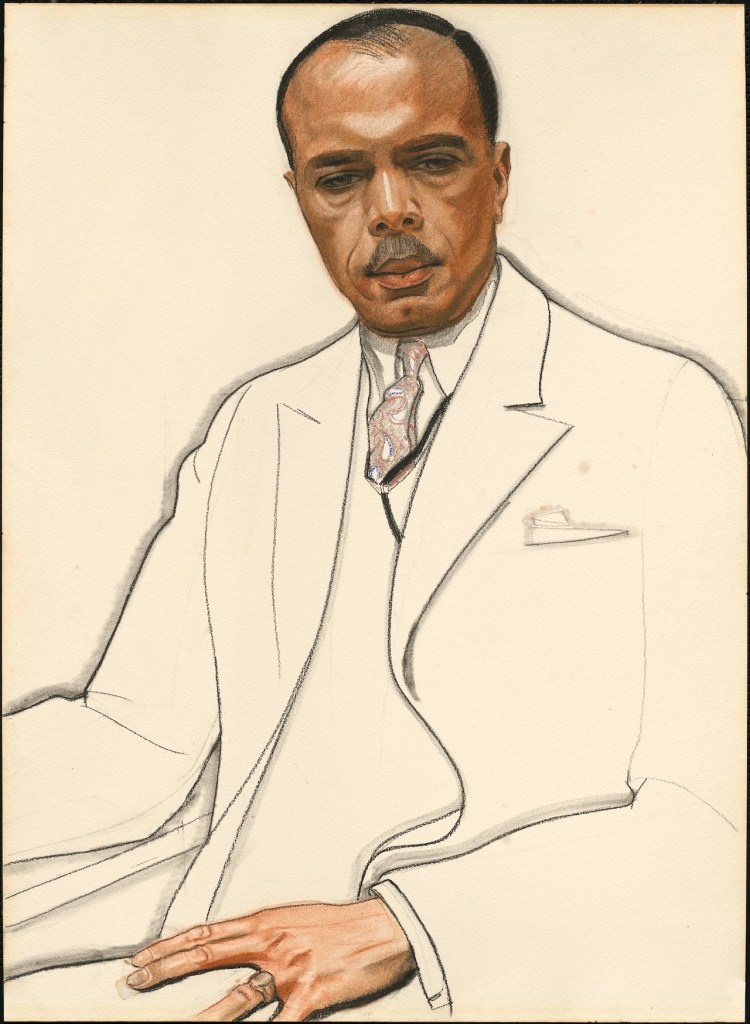
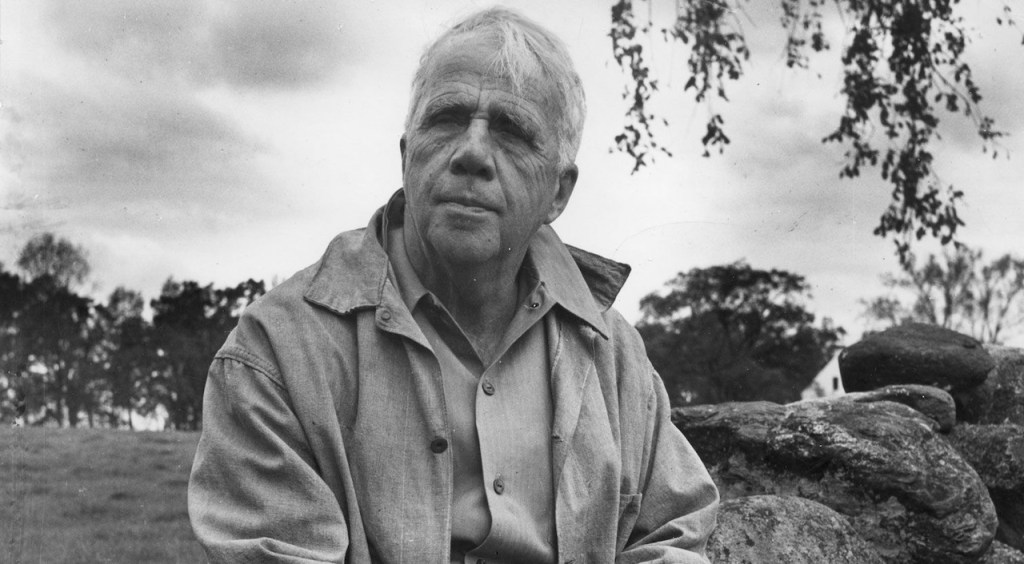
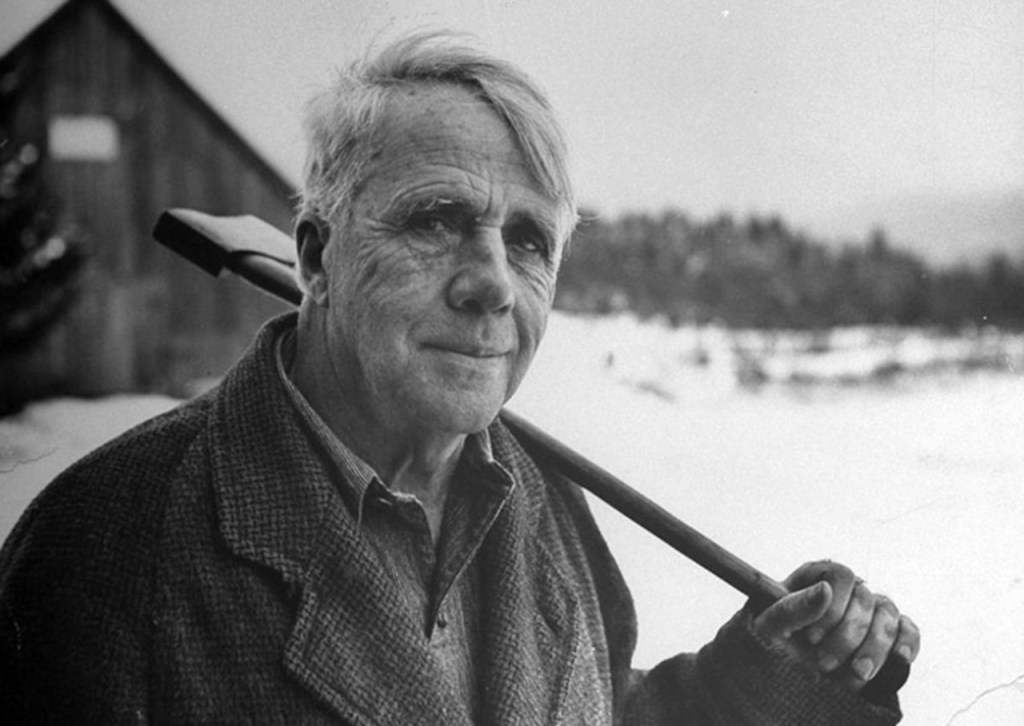
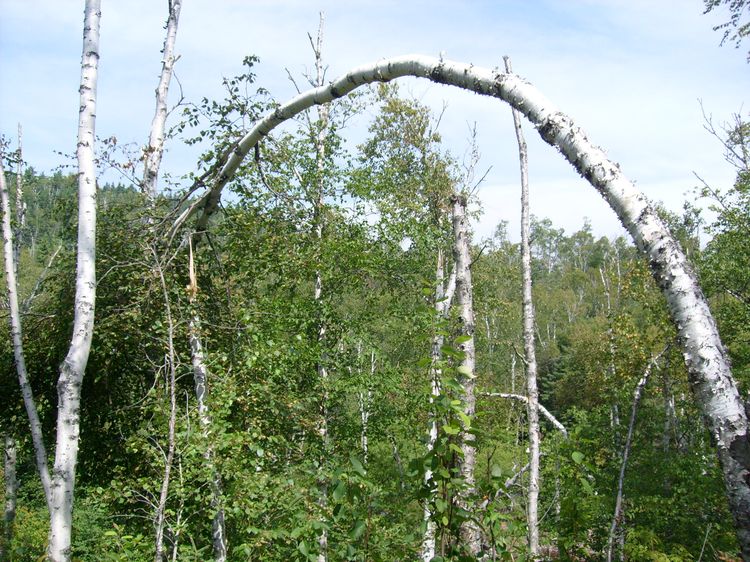
 Linda's Literary Home