Image: Emily Dickinson – Amherst College – Daguerrotype of the poet at age 17, circa 1847 – likely the only authentic, extant likeness of the poet
Emily Dickinson’s “Nature – the Gentlest Mother is”
In a unique mystical voice, Emily Dickinson’s speaker is dramatizing a number of the many ways in which Mother Nature takes care of her children. Dickinson’s keep observation and knowledge of science allowed her the ability to skillfully create her little dramas about her surroundings.
Introduction with Text of “Nature – the Gentlest Mother is”
Emily Dickinson’s love of nature was deep and abiding. Along with her intense study of and research in the sciences, she observed her surroundings keenly and those activities bestowed on her the ability to render into art her amazingly beautiful and accurate statements regarding how nature functions.
Dickinson discovered the careful nurturing as well as the softly discipling forces of nature, and she observed those qualities in both the animal and plant kingdoms. Those natural qualities motivated a deep affection for the workings of all of God’s creation.
This poem contrasts greatly with her riddle-poems, for it states explicitly the target of her observation—nature. After he clear statement of focus, she demonstrates how keen were her powers of observation and then how skillful she was in transforming those observations into art.
Nature – the Gentlest Mother is
Nature – the Gentlest Mother is, Impatient of no Child – The feeblest – or the waywardest – Her Admonition mild –
In Forest – and the Hill – By Traveller – be heard – Restraining Rampant Squirrel – Or too impetuous Bird –
How fair Her Conversation – A Summer Afternoon – Her Household – Her Assembly – And when the Sun go down –
Her Voice among the Aisles Incite the timid prayer Of the minutest Cricket – The most unworthy Flower –
When all the Children sleep – She turns as long away As will suffice to light Her lamps – Then bending from the Sky –
With infinite Affection – And infiniter Care – Her Golden finger on Her lip – Wills Silence – Everywhere –
Commentary on “Nature – the Gentlest Mother is”
Emily Dickinson’s speaker is employing her unique mystical voice as she dramatizes a catalogue of the myriad ways in which Mother Nature nurtures the beings under her care. She has determined that the Mother that mothers nature uses the softest touch, thus earning the title of “Gentlest Mother.”
First Stanza: The Mothering from Mother Nature
Nature – the Gentlest Mother is, Impatient of no Child – The feeblest – or the waywardest – Her Admonition mild –
The speaker in Emily Dickinson’s “Nature – the Gentlest Mother is“ assigns to Mother Nature the superb quality of “Gentlest Mother.”
The speaker is also reporting to her audience that this gentlest of mothers has abundant patience in dealing with her charges.
Mother Nature, this gentlest mother, guides in an even tempered way those who are the weakest. And she addresses and corrects in a “mild” manner those who are the most recalcitrant.
Second Stanza: Disciplining Methods
In Forest – and the Hill – By Traveller – be heard – Restraining Rampant Squirrel – Or too impetuous Bird
As Mother Nature’s human progeny moves over the hills and go riding through the woodlands, they are apt to hear that Gentlest Mother as she restrains an excited “Squirrel,” or as she tones down a very tempestuous bird.
The speaker expresses the natural behavior of animals in terms of the disciplining methods used by the “Gentlest Mother.”
Animal behavior quite often requires that a higher force guide them in their impetuousness. And thus the gentlest mother deals with them as they require. In her tenderness, they are permitted to flourish and to grow. In their life span, they remain in the embrace of the mother’s caring, tender arms.
Third Stanza: Measured Ways
How fair Her Conversation – A Summer Afternoon – Her Household – Her Assembly – And when the Sun go down –
The speaker observes that this gentlest mother’s discussions with her charges always remains completely balanced.
The speaker relates how on a beautifully peaceful summer afternoon this perfect mother maintained her “Household,” while gathering together all the fine qualities of her very being, and those of her little family.
The speaker then commences her next idea in this stanza but leaves it conclusion in the fourth stanza. The skillful placement of this statement permits the action taken in “And when the Sun do down” to become finalized; then, she moves on the remainder of the thought.
Fourth Stanza: Bringing Forth Prayer
Her Voice among the Aisles Incite the timid prayer Of the minutest Cricket – The most unworthy Flower –
The speaker places this gentlest Mother “among the Aisles” from where she can bring forth from the attendees their “timid prayer.”
In an earlier poem, the poet has reported that her “church” remains where the creatures of nature abide; they luckily appear nearby her home which serves her as her cloister:
Some keep the Sabbath going to Church – I keep it, staying at Home – With a Bobolink for a Chorister – And an Orchard, for a Dome
Therefore, in this fourth stanza of “Nature – the Gentlest Mother is,” her speaker can assert that this gentlest Mother may be found bringing forth a prayer from the smallest “Cricket” and “The most unworthy Flower.”
Naturally, the human notion of “unworthy” cannot be not applied to the evaluation by this gentlest mother, because she accepts all prayers equally. She applies the same level of justice to all of her children.
Fifth Stanza: Dousing the Lights for Sleep
When all the Children sleep – She turns as long away As will suffice to light Her lamps – Then bending from the Sky –
As the day progresses to its end—”when all the Children sleep”—this gentlest mother quietly moves to put one her lamps. And of course those lamps are the moon and stars.
Here again in this stanza, the speaker begins an idea, but then again puts off its conclusion to the next stanza.
The speaker has begun the thought of the mother “bending” from her perch in the heavens. She thus travels very far to light her lamps, and then she must return to her children.
Sixth Stanza: Hushing for Slumber
With infinite Affection – And infiniter Care – Her Golden finger on Her lip – Wills Silence – Everywhere –
It is with great affection and tender care that this gentlest mother moves her “Golden finger” to her lips, signaling for “silence.” Night is now embracing her children who are spread far and wide.
The mother now calls for silence so that her charges may peacefully slumber. The mother bestows on them a great stillness that is night time, so that they may rest from the day’s activities. And so that they they recharge for the coming events of the coming day.
Taking his place among luminaries such as Dickinson and Whitman, Frost has remained one of the most widely anthologized American poets of all time. His poems are more complex than simple nature pieces; many are “tricky—very tricky,” as he once quipped about “The Road Not Taken.”
Robert Frost has earned his reputation as one of America’s most beloved poets. The poet holds the honor of being the first American poet to deliver his poems to the assembled celebrants at the 1961 inauguration of the 35th president of the United States of America, John F. Kennedy.
Early Life
Robert Frost’s father, William Prescott Frost, Jr., was a journalist, residing in San Fransisco, California, when Robert Lee Frost was born on March 26, 1874. Robert’s mother, Isabelle, was an immigrant from Scotland.
The young Frost spent the first eleven years of his childhood in San Fransisco. After his father died of tuberculosis, Robert’s mother relocated the family, including his sister, Jeanie, to Lawrence, Massachusetts, where they lived with Robert’s paternal grandparents.
In 1892, Robert graduated from Lawrence High School, where he and Elinor White, his future wife, served as co-valedictorians.
Robert then made his first attempt to attend college at Dartmouth College, but after only a few months, he left school and returned to Lawrence, where he began working a series of part-time jobs [1].
Marriage and Children
Elinor White, who had been Robert’s high school sweetheart, was attending St. Lawrence University when Robert proposed to her. She turned him down because she wanted to complete her college education before she married.
Robert then moved to Virginia, and then after he returned to Lawrence, again he proposed to Elinor, who had now completed her college education. The couple married on December 19, 1895. They produced six children.
Their son, Eliot, was born in 1896 but died in 1900 of cholera; their daughter, Lesley, lived from 1899 to 1983. Their son, Carol, born in in 1902 but committed suicide in 1940.
Their daughter, Irma, 1903 to 1967, battled schizophrenia for which she was confined in a mental hospital. Daughter, Marjorie, born 1905 died of puerperal fever after giving birth. Their sixth child, Elinor Bettina, who was born in 1907, died one day after her birth.
Only Lesley and Irma survived their father. Mrs. Frost suffered heart issues for most of her life. She was diagnosed with breast cancer in 1937 but the following year died of heart failure [2].
Farming and Writing
Robert then again attempted to attend college. In 1897, he enrolled in Harvard University, but because of health problems, he was forced to leave school again. He rejoined his wife in Lawrence. Their second child Lesley was born in 1899.
The family then relocated to a New Hampshire farm that Robert’s grandparents had procured for him. Robert’s farming phase thus began as he strove to farm the land while continuing his writing. The Frost’s farming endeavors continued to result in unsuccessful fits and starts. Frost became well adjusted to rustic life, despite his lack of success as a farmer.
On November 8, 1894, in The Independent, a New York newspaper, Frost’s first poem “My Butterfly” appeared in print. The next dozen years proved to be a difficult period in the poet’s personal life yet a fertile one for his writing. The poet’s writing life was launched in a impressive fashion, and the rural, rustic influence on his poems would set a tone and style for all of his works.
Nevertheless, despite the popularity of his individually published poems, such “The Tuft of Flowers” and “The Trial by Existence,” he could not secure a publisher for his collections of works [3].
Moving to England
In 1912, Frost sold the New Hampshire farm and relocated his family to England. Because of his failure to find a publisher in the US for his collections of poems, he decided to try his luck across the pond.
That moved turned out to be life-line for the young poet and his career. At age 38 in England, Frost found a publisher for his collection A Boy’s Will and soon after for his collection North of Boston.
In addition to securing publishers for his two books, the American poet became acquainted with Ezra Pound and Edward Thomas, two important contemporary poets. Pound and Thomas reviewed favorably Frost’s two book, and thus Frost’s career as a poet was launched.
Frost’s friendship with Edward Thomas became especially important, and Frost has revealed that the long walks taken by the two poet/friends had influenced his writing in a wonderfully constructive manner.
Frost has given credit to Thomas for one of his most famous poems, “The Road Not Taken,” which was influenced by Thomas’ attitude toward the fact of not being able to take two different paths on their long walks.
Returning to America
After World War 1 began in Europe, the Frosts moved back to the United States. Their brief stay in England had sparked useful results for the poet’s reputation, for even in his native country, he was becoming well known and loved.
American Publisher Henry Holt republished Frost’s earlier collections, and then published the poet’s third collection, Mountain Interval, which had been written while Frost was still living in England.
Frost began to experience the pleasing situation of having the same journals, such as The Atlantic, solicit his work, even though they had rejected those same works only a few years earlier.
In 1915, the Frosts purchased a farm, located in Franconia, New Hampshire. Their traveling days had come to and end, and Frost continued his writing career. Frost also taught intermittently at a number of colleges, including Dartmouth, University of Michigan, and especially Amherst College, where he served regularly from 1916 until 1938.
Amherst’s primary library is now the Robert Frost Library, in honor of the long-time educator and poet. Frost also spent most of his summers teaching English at Middlebury College in Vermont.
Frost never completed a university degree, but over his lifetime, he accumulated more than forty honorary degrees. Frost won the Pulitzer Prize four times for his books, New Hampshire, Collected Poems, A Further Range, and A Witness Tree.
Frost labeled himself a “lone wolf” in the world of poetry because he did not follow any current literary movements. His only motivation was to express the human condition in a world of duality.
Frost did not pretend to explain that condition; he sought solely to create his little dramas to reveal the nature of the emotional life in the mind and heart of a human being [4].
First American Inaugural Poet
Robert Frost had intended to star his occasional piece “Dedication” as a preface to the poem that the President-Elect John F. Kennedy had requested for his 1961 inauguration.
But the sun rendered Frost’s reading impossible, so he dropped “Dedication” but continued on to recite “The Gift Outright” from memory.
Introduction with Text of “Dedication”
On January 20, 1961, Robert Frost became the first American poet to deliver a poem at a presidential inauguration. He recited his poem “The Gift Outright” at the swearing in of John F. Kennedy as the 35th president of the United States of America. Frost had also written a new poem to preface his recitation of “The Gift Outright,” but he did not have time to commit his new piece to memory.
At the inauguration, Frost began to read the new piece, but he was unable to see clearly his copy of the poem because of the bright sunlight bouncing off the snow; he managed to stumble through the first 23 lines of the new poem [5]. But then he switched to reciting “The Gift Outright,” which he had by memory.
While Frost’s “Dedication” offers some useful and important historical features, it does reveal some of the fawning exaggeration that occasional poems [6] are often wont to suffer.
Dedication
Summoning artists to participate In the august occasions of the state Seems something artists ought to celebrate. Today is for my cause a day of days. And his be poetry’s old-fashioned praise Who was the first to think of such a thing. This verse that in acknowledgement I bring Goes back to the beginning of the end Of what had been for centuries the trend; A turning point in modern history. Colonial had been the thing to be As long as the great issue was to see What country’d be the one to dominate By character, by tongue, by native trait, The new world Christopher Columbus found. The French, the Spanish, and the Dutch were downed And counted out. Heroic deeds were done. Elizabeth the First and England won. Now came on a new order of the ages That in the Latin of our founding sages (Is it not written on the dollar bill We carry in our purse and pocket still?) God nodded his approval of as good So much those heroes knew and understood, I mean the great four, Washington, John Adams, Jefferson, and Madison So much they saw as consecrated seers They must have seen ahead what not appears, They would bring empires down about our ears And by the example of our Declaration Make everybody want to be a nation. And this is no aristocratic joke At the expense of negligible folk. We see how seriously the races swarm In their attempts at sovereignty and form. They are our wards we think to some extent For the time being and with their consent, To teach them how Democracy is meant. “New order of the ages” did they say? If it looks none too orderly today, ‘Tis a confusion it was ours to start So in it have to take courageous part. No one of honest feeling would approve A ruler who pretended not to love A turbulence he had the better of. Everyone knows the glory of the twain Who gave America the aeroplane To ride the whirlwind and the hurricane. Some poor fool has been saying in his heart Glory is out of date in life and art. Our venture in revolution and outlawry Has justified itself in freedom’s story Right down to now in glory upon glory. Come fresh from an election like the last, The greatest vote a people ever cast, So close yet sure to be abided by, It is no miracle our mood is high. Courage is in the air in bracing whiffs Better than all the stalemate an’s and ifs. There was the book of profile tales declaring For the emboldened politicians daring To break with followers when in the wrong, A healthy independence of the throng, A democratic form of right divine To rule first answerable to high design. There is a call to life a little sterner, And braver for the earner, learner, yearner. Less criticism of the field and court And more preoccupation with the sport. It makes the prophet in us all presage The glory of a next Augustan age Of a power leading from its strength and pride, Of young ambition eager to be tried, Firm in our free beliefs without dismay, In any game the nations want to play. A golden age of poetry and power Of which this noonday’s the beginning hour.
Commentary on “Dedication”
Robert Frost’s poem “The Gift Outright” remains the poem remembered for the inauguration of John F. Kennedy, and it also happens to be a much stronger poem than “Dedication.”
Frost once remarked [7] about his poem “The Gift Outright” that is was “a history of the United States in a dozen lines of blank verse.”
First Movement: Invocation to Artists
Summoning artists to participate In the august occasions of the state Seems something artists ought to celebrate. Today is for my cause a day of days. And his be poetry’s old-fashioned praise Who was the first to think of such a thing. This verse that in acknowledgement I bring Goes back to the beginning of the end Of what had been for centuries the trend; A turning point in modern history.
The speaker seems to be postponing his task of making this inauguration a grand and glorious event by remarking the efficacy and appropriateness of artists contributing to such an occasion. He likens his current effort to past glories of “poetry’s old-fashioned praise” of remarking that certain occasions are bound to point to historical trends.
The speaker’s claims remain rather vague and noncommittal but still leave open the possibility that things will become clearer and more specific as he continues to offer his gems of wisdom.
He claims that what he is doing, bringing verse to event, is as old as the beginning. But that beginning is then sparked by the “beginning of the end”; thus, the speaker is covering himself in case he may be proven wrong.
Second Movement: The Forming of a Nation
Colonial had been the thing to be As long as the great issue was to see What country’d be the one to dominate By character, by tongue, by native trait, The new world Christopher Columbus found. The French, the Spanish, and the Dutch were downed And counted out. Heroic deeds were done. Elizabeth the First and England won.
The speaker then draws an interesting picture of “colonial” America. He contends that the many nations that have found their progeny on the new shores were battling for dominance, putting forth the question: would France, Spain, or Holland take the lead in heading the American nation?
But then he answers the question by declaring England the winner, as “Elizabeth the First and England won.” Thus, the speaker provides answers to this question of whose characteristics, language, and traits would prevail: America would not adopt French or Spanish or Dutch as its native language; it would be English whose tongue the New World would speak.
Also, one can imagine the “native traits” including English style clothing, manners, and food. The other nations, while welcome, would take their place as an accompanying position.
Third Movement: Tribute to the Founding
Now came on a new order of the ages That in the Latin of our founding sages (Is it not written on the dollar bill We carry in our purse and pocket still?) God nodded his approval of as good So much those heroes knew and understood, I mean the great four, Washington, John Adams, Jefferson, and Madison So much they saw as consecrated seers They must have seen ahead what not appears, They would bring empires down about our ears And by the example of our Declaration Make everybody want to be a nation.
While this movement contains a number of historically accurate statements, it remains rather awkward in its structural execution. The parenthetical—”(Is it not written on the dollar bill / We carry in our purse and pocket still?)”— followed by the line,”God nodded his approval of as good” render their substance less impactful.
That “Latin of our founding sages” refers to “E Pluribus Unum,” (Out of the many, One) and loses it heft when placed as a parenthetical. Robert Frost was a somewhat religious agnostic. That he would claim that God was nodding approval of anything seems a bit out of character sparking a question of sincerity.
Because of Frost’s wholly secular take on the historical founding of a nation— despite the fact that one of the founding principles for founding this nation was religious—the questionable sincerity issue continues to present itself.
This issue is especially evident since the poem is an occasional poems specifically written to celebrate a politician in his ascendency to political office. The tribute to “Washington, / John Adams, Jefferson, and Madison,” whom the speaker designates “as consecrated seers” remains a wholly accurate statement.
And the final two lines appropriately celebrate the document the “Declaration of Independence” which along with the U. S. Constitution remain two of the most important texts ever to exist. The existence of those documents remains important both to the American nation and the world, making “everybody want to be a nation.”
Fourth Movement: Pursuing Life, Liberty, and Happiness
And this is no aristocratic joke At the expense of negligible folk. We see how seriously the races swarm In their attempts at sovereignty and form. They are our wards we think to some extent For the time being and with their consent, To teach them how Democracy is meant. “New order of the ages” did they say? If it looks none too orderly today, ‘Tis a confusion it was ours to start So in it have to take courageous part. No one of honest feeling would approve A ruler who pretended not to love A turbulence he had the better of.
The speaker then engages the issue of immigration to this newly formed nation. It makes perfect sense that folks from all over the world would desire to emigrate from totalitarian, freedom-squelching dictators in their own nations. And it remains quite sensible that they would want to relocate to this new land.
This new land from the beginning embraces freedom and individual responsibility while promising such in those documents delineating the basic human rights of “life, liberty, and the pursuit of happiness.”
The speaker denigrates the notion that only the aristocrats were appreciated and allowed to flourish in this new land. New immigrants may become our “ward,” but that status is only temporary and “with their consent.” In other words, new immigrants can become citizens of our new land of freedom because that new land represents the “[n]ew order of the ages.”
Fifth Movement: A Courageous Nation
Everyone knows the glory of the twain Who gave America the aeroplane To ride the whirlwind and the hurricane. Some poor fool has been saying in his heart Glory is out of date in life and art. Our venture in revolution and outlawry Has justified itself in freedom’s story Right down to now in glory upon glory. Come fresh from an election like the last, The greatest vote a people ever cast, So close yet sure to be abided by, It is no miracle our mood is high. Courage is in the air in bracing whiffs Better than all the stalemate an’s and ifs.
The speaker then focuses on the very specific event of the Wright Brothers (“the twain”) and their new invention “the aeroplane.” He then asserts that such feats have put the lie to the “poor fool” who thinks that there is no longer any “glory” in “life and art.” He insists that the American adventure story in “revolution and outlawry” has been gloriously vindicated and “justified [ ] in freedom’s story.”
The speaker then offers his take of how this recent election, whose result he is now celebrating, played out. He deems it the “greatest vote a people ever cast”—an obvious exaggeration. Yet, while the election was “close,” it will be “abided by.” The citizenry’s mood is “high,” and that fact is “no miracle.” He then asserts that such a situation arises out of the courage of the nation.
Sixth Movement: The Curse of the Inaugural Poem
There was the book of profile tales declaring For the emboldened politicians daring To break with followers when in the wrong, A healthy independence of the throng, A democratic form of right divine To rule first answerable to high design. There is a call to life a little sterner, And braver for the earner, learner, yearner. Less criticism of the field and court And more preoccupation with the sport. It makes the prophet in us all presage The glory of a next Augustan age Of a power leading from its strength and pride, Of young ambition eager to be tried, Firm in our free beliefs without dismay, In any game the nations want to play. A golden age of poetry and power Of which this noonday’s the beginning hour.
In the opening line of this final movement, the speaker alludes to John F. Kennedy’s book, Profiles in Courage—”book of profile tales.” Of course, the inaugural poet in his inaugural poem had to focus on the subject of this occasion, the new president of the United States, whom he is celebrating with his poem.
But then he becomes overly solicitous in his following remarks claiming that this president was a politician who can “break with followers when in the wrong.” The speaker furthers his fawning remarks by suggesting that this administration would be a “democratic form of right divine / To rule first answerable to high design.” This statement boarders on toadying flattery.
Then the puffery in the movement continues with the prediction of a “next Augustan age,” until the final unfortunate lines, “A golden age of poetry and power / Of which this noonday’s the beginning hour.”
Of course, hindsight now confirms that no “golden age” ever resulted for politics or poetry. And this president was assassinated before the completion of his first term in office.
While Frost’s “Dedication” offers some useful commentary, it still fails as a genuine poem. Even as an occasional poem in it final movement, it engages overzealously in exaggerated flattery.
One is reminded that fortunately, this piece did not see the light of day, as Frost was unable to read it as he intended. The poet was spared the drubbing he no doubt would have received had the sunlight not conspired to keep that piece in the dark.
Robert Frost’s “The Gift Outright”
Robert Frost’s “The Gift Outright” became the first inaugural poem, after President-Elect John F. Kennedy asked the famous poet to read at his swearing in ceremony—the first time a poet had read a poem at a presidential inauguration.
Introduction with Text of “The Gift Outright”
On January 20, 1961, John F. Kennedy was inaugurated the 35th president of the United States of America. For the inauguration ceremony, Kennedy had invited America’s most famous poet, Robert Frost, to write and read a poem. Frost rejected the notion of writing an occasional poem, and so Kennedy asked him to read “The Gift Outright.” Frost then agreed.
Kennedy then had one more favor to ask of the aging poet. He asked Frost the change the final line of the poem from “Such as she was, such as she would become” to “Such as she was, such as she will become.”
Kennedy felt that the revision reflected more optimism than Frost’s original. Frost did not like the idea, but he relented for the young president’s sake. Frost did, nevertheless, write a poem especially for the occasion titled “Dedication,” which he intended to read as a preface to “The Gift Outright.”
At the inauguration, Frost attempted to read his occasional poem, but because of the bright sunlight bouncing off the snow, his aging eyes could not see the poem well enough to read it. He then continued to recite “The Gift Outright.”
Regarding the changing of the final line: instead of merely reading the line with the revision Kennedy had requested, Frost stated,
Such as she was, such as she would become, has become, and I – and for this occasion let me change that to –what she will become. (my emphasis added)
Thus, the poet remained faithful to his own vision, while satisfying the presidential request. Robert Frost’s poem, “The Gift Outright,” offers a brief history of the USA, which has just elected and was in the process of inaugurating its 35th president.
The speaker of Frost’s poem, without becoming chauvinistically patriotic, manages to offer a positive view of the country’s struggle for existence, a struggle that can be deemed a gift that the Founding Fathers gave to themselves and the world.
To the question—“Well, Doctor, what have we got—a Republic or a Monarchy?”—regarding the product created by the Constitutional conveners during their meetings from May 25 to September 17, 1787, in Philadelphia, Founder Benjamin Franklin responded, “A Republic, if you can keep it” [8].
The US Constitution became a gift that has kept on giving in the best possible way. It replaced the old, weak Articles of Confederation and kept the nation in tact even during a bloody Civil War, nearly a century later.
The speaker in Frost’s poem offers a brief overview of the American struggle for existence, and he describes that struggle resulting in a Constitution as a gift the Founders gave themselves and to all the generations to follow.
The Gift Outright
The land was ours before we were the land’s. She was our land more than a hundred years Before we were her people. She was ours In Massachusetts, in Virginia, But we were England’s, still colonials, Possessing what we still were unpossessed by, Possessed by what we now no more possessed. Something we were withholding made us weak Until we found out that it was ourselves We were withholding from our land of living, And forthwith found salvation in surrender. Such as we were we gave ourselves outright (The deed of gift was many deeds of war) To the land vaguely realizing westward, But still unstoried, artless, unenhanced, Such as she was, such as she would become.
Robert Frost Reading “The Gift Outright”
At Inauguration
Commentary on “The Gift Outright”
Robert Frost’s inaugural poem offers a glimpse into the history of the country that has just elected its 35th president.
First Movement: The Nature of Possession
The land was ours before we were the land’s. She was our land more than a hundred years Before we were her people. She was ours In Massachusetts, in Virginia, But we were England’s, still colonials, Possessing what we still were unpossessed by, Possessed by what we now no more possessed.
The first movement begins by offering a brief reference to the history of the country over which the new government official would now preside. The speaker asserts that the men and women who had settled on the land, which they later called the United States of America, had begun their experiment in freedom living on the land which would later become their nation, and they would then become its citizens.
Instead of merely residing as a loosely held-together band of individuals, they would become a united citizenry with a name and government shared in common. The official birthdate of the United States of America is July 4, 1776; with the Declaration of Independence, the new country took its place among the nations of the world.
And the speaker correctly states that the land belonged to the people “more than a hundred years” before Americans became citizens of the country. He then mentions two important early colonies, Massachusetts and Virginia, which would become states (commonwealths) after the new land was no longer a possession of England.
Second Movement: The Gift of Law and Order
Something we were withholding made us weak Until we found out that it was ourselves We were withholding from our land of living, And forthwith found salvation in surrender.
During the period from 1776 to 1887, the country struggled to found a government that would work to protect individual freedom and at the same time provide a legal order that would make living in a free land possible. An important first step was the Articles of Confederation and Perpetual Union [9], the first constitution written in 1777, which was not ratified until 1781.
The Articles failed to provide enough structure for the growing nation, and by 1787, it was deemed that a new, stronger document was needed to keep the country functioning and united. Thus, the Constitutional Convention of 1787 [10] was convened to rewrite the Articles.
Instead of merely writing them, however, the Founding Fathers scrapped the old document and composed a new U.S. Constitution, which has remained the founding set of laws guiding America since it was finally ratified June 21, 1788 [11].
The speaker describes America’s early struggle for self governance as “something we were withholding,” and that struggle “made us weak.” But finally, we found “salvation in surrender,” that is, the Founding Fathers surrendered to a document that provided legitimate order but at the same time offered the greatest possible scope for individual freedom.
Third Movement: The Gift of Freedom
Such as we were we gave ourselves outright (The deed of gift was many deeds of war) To the land vaguely realizing westward, But still unstoried, artless, unenhanced, Such as she was, such as she would become.
The speaker describes the early turbulent history of his country as a time of “many deeds of war,” which would include the war [12] the early Americans had to fight against England—its mother country—to secure the independence that it had declared and demanded.
But the young nation wholeheartedly gave itself that “gift” of existence and freedom by continuing its struggle and continuing to grow by expanding “westward.” The people of this nation struggled on through many hardships “unstoried, artless, unenhanced” to become the great nation that now—at the time of the poet’s recitation—has elected its 35th president.
Sources
[1] Editors. “Robert Frost.” Poetry Foundation. Accessed March 26, 2023.
Gerard Manley Hopkins – National Portrait Gallery, London
Gerard Manley Hopkins’ “To seem the stranger lies my lot, my life”
The speaker in Gerard Manley Hopkins’ sonnet “To seem the stranger lies my lot, my life” explores the sense of spiritual, national, and personal estrangement during years in Ireland. Written with the same intensity that characterizes Hopkins’ work, the poem dramatizes exile as both an external condition and an inward trial.
In the octave, the speaker is focusing on separation from family and his country England, and in the sestet, he turns inward to the silence imposed by his vocation, leaving him isolated yet faithful.
Introduction and Text of “To seem the stranger lies my lot, my life”
Father Gerard Manley Hopkins, who was a Jesuit priest as well as a poet, wrote many of his most profound poems during periods of emotional strain and vocational doubt. He wrote “To seem the stranger lies my lot, my life” in 1889 during his final years in Ireland; he created a speaker in the poem who is reflecting an acute sense of displacement—geographical, familial, and spiritual.
Although Father Hopkins remained consistently obedient to his religious calling, he often felt alienated from England, misunderstood by authority, and silenced as a poet. This sonnet, however, reveals not rebellion but suffering endured with disciplined faith, unveiling exile as a severe trial for spiritual testing.
As the first of the six “terrible sonnets,” “To seem the stranger lies my lot, my life” remains distinctive because its sense of despair is aimed less at abstract spiritual terror and more at everyday human loss—failed relationships, missed vocations, and social estrangement.
However, like the others, it offers little comfort and speaks in a raw, urgent voice. It is unusual in how little it turns to nature or directly to Christ. Instead, it keeps its focus on the speaker’s painful isolation from family, community, and any sense of being useful as a priest.
To seem the stranger lies my lot, my life
To seem the stranger lies my lot, my life Among strangers. Father and mother dear, Brothers and sisters are in Christ not near And he my peace my parting, sword and strife. England, whose honour O all my heart woos, wife To my creating thought, would neither hear Me, were I pleading, plead nor do I: I wear- y of idle a being but by where wars are rife.
I am in Ireland now; now I am at a thírd Remove. Not but in all removes I can Kind love both give and get. Only what word Wisest my heart breeds dark heaven’s baffling ban Bars or hell’s spell thwarts. This to hoard unheard, Heard unheeded, leaves me a lonely began.
Reading
Commentary on “To seem the stranger lies my lot, my life”
Father Hopkins’ sonnet is a meditation on exile and silence. The octave emphasizes outward separation—from family, country, and recognition—while the sestet deepens the conflict by revealing an inward blockage: the poet’s inability to speak or be heard.
Octave: “To seem the stranger lies my lot, my life”
To seem the stranger lies my lot, my life Among strangers. Father and mother dear, Brothers and sisters are in Christ not near And he my peace my parting, sword and strife. England, whose honour O all my heart woos, wife To my creating thought, would neither hear Me, were I pleading, plead nor do I: I wear- y of idle a being but by where wars are rife.
The speaker open the octave with a stark declaration: “To seem the stranger lies my lot, my life.” The phrasing is deliberate and emphatic, with “lot” and “life” placed side by side to suggest that estrangement is not incidental but foundational. The speaker does not merely feel like a stranger; seeming a stranger has become the defining pattern of his existence. The verb “lies” suggests fate or destiny, implying that this condition is imposed rather than chosen.
The repetition of “stranger” in the second line—“Among strangers”—reinforces the sense of isolation. The speaker is not simply alone; he is surrounded by others from whom he feels fundamentally divided. This alienation is then specified in personal terms: separation from “Father and mother dear” and from “Brothers and sisters.”
These lines resonate deeply, as Hopkins had consciously embraced a religious vocation at the cost of ordinary familial intimacy. Yet the phrase “are in Christ not near” reveals a crucial nuance. The separation is not merely geographical or emotional but mediated through faith. His family exists “in Christ,” but spiritual unity does not erase physical absence.
Line four intensifies the tension through paradox: “And he my peace my parting, sword and strife.” The “he” here refers unmistakably to Christ, echoing Christ’s own words in the Gospel that he came not to bring peace but a sword.
Christ is simultaneously the speaker’s source of peace and the cause of painful division. This line crystallizes the poem’s central conflict: obedience to God has fractured his earthly attachments.
England emerges next as a figure of longing and betrayal. The speaker personifies the nation as a beloved woman: “England, whose honour O all my heart woos, wife / To my creating thought.” England is not merely homeland; it is the imaginative and cultural source of his poetry.
The speaker’s “creating thought” is bound to England’s landscape, language, and traditions. Yet this beloved “wife” refuses to listen. England “would neither hear / Me, were I pleading.” The rejection is imagined even before the plea is made.
Significantly, the speaker then states, “plead nor do I.” Either Pride, humility, or exhaustion restrains him from petitioning for recognition or return. The enjambment underscores weariness: “I wear- / y of idle a being but by where wars are rife.” The broken word “weary” visually enacts fatigue.
The speaker feels useless, idle, unless he is placed where conflict exists. The “wars” here may be literal—cultural and political unrest in Ireland—or spiritual, referring to inner trials. Either way, the octave closes with a man who sees struggle as the only justification for his continued existence.
Throughout the octave, the speaker’s syntax becomes knotted and his clauses have become compressed. This density mirrors his emotional burden. There is no lyric ease, no pastoral consolation. Instead, the octave establishes exile as a lived reality—accepted but not softened.
Sestet: “I am in Ireland now; now I am at a thírd”
I am in Ireland now; now I am at a thírd Remove. Not but in all removes I can Kind love both give and get. Only what word Wisest my heart breeds dark heaven’s baffling ban Bars or hell’s spell thwarts. This to hoard unheard, Heard unheeded, leaves me a lonely began.
The sestet shifts from the general condition of estrangement to a precise location: “I am in Ireland now.” The repetition of “now” emphasizes immediacy and finality. Ireland is not a temporary assignment but a present, enduring state.
The speaker then deepens the sense of displacement by calling this “a thírd / Remove.” The word “remove” suggests not travel but distance layered upon distance—England removed from family, and Ireland removed yet again from England.
(Note the acute accent mark over the “i” in third: Hopkins often placed accent marks to indicate a stress that might be passed over in a quick reading. He wanted to assure that his sprung rhythm received its full impact.)
The speaker then immediately qualifies this isolation: “Not but in all removes I can / Kind love both give and get.” Despite exile, he affirms the possibility of charity. This assertion is a theologically critical.
Love is not extinguished by displacement; grace operates even in separation. The line resists self-pity and aligns the speaker’s world view with Jesuit discipline, which demands adaptability and service wherever one is sent.
However, the speaker’s deepest anguish follows: “Only what word / Wisest my heart breeds dark heaven’s baffling ban / Bars or hell’s spell thwarts.” Here the speaker turns inward, focusing not on where he is but on what he cannot do. His “wisest” words—his poetry—are blocked.
Heaven itself seems to be imposing a “ban,” a prohibition that frustrates expression. The phrase “dark heaven” is especially striking. Heaven, normally associated with clarity and illumination, becomes obscure and baffling. The alternative force is equally terrifying: “hell’s spell.” Whether divine silence or demonic interference, the result is the same—his words are thwarted.
This line reveals one of the most painful aspects of the poet’s late life: the sense that his poetic gift, given by God, is simultaneously withheld by God. Silence becomes both command and punishment.
The final couplet intensifies the tragedy: “This to hoard unheard, / Heard unheeded, leaves me a lonely began.” The speaker is forced to “hoard” his words, storing them without release. Even when heard, they are “unheeded.”
The repetition emphasizes futility. The phrase “a lonely began” is deliberately and strangely ungrammatical. “Began” suggests something unfinished, a life or vocation that never reached fulfillment. The speaker is not calling himself a failure, but he is implying that he feel incomplete.
Yet even here, the speaker sees despair as part of his discipline. He is not accusing God; he is only lamenting his lot. The speaker conclude his revelation with witness not rebellion. The speaker is recording his condition faithfully; he trusts that meaning may lie well beyond his own understanding. Although the loneliness is real, he can bear it through obedience.
In the sestet, then, exile becomes interiorized. The outer fact of Ireland gives way to the inner trial of silence. The speaker’s greatest suffering is not being far from England but being cut off from utterance.
For this speaker, this wound is the deepest. Yet the very existence of the poem contradicts the ban it describes. In writing this sonnet, the poet speaks from within silence, transforming isolation into testimony.
Taken together, the octave and sestet reveal a soul suspended between fidelity and desolation. “To seem the stranger lies my lot, my life” is not a cry for rescue but a record of endurance.
The speaker/poet accepts exile as part of his vocation, even when it costs him voice, recognition, and comfort. The sonnet stands as one of his most austere achievements—a poem that does not resolve suffering but sanctifies it through truthful speech.
Gerard Manley Hopkins – National Portrait Gallery, London
Gerard Manley Hopkins’ “Pied Beauty”
Gerard Manley Hopkins’ “Pied Beauty” is an eleven-line curtal sonnet, dedicated to honoring and praising God for the special beauty of His creation. Father Hopkins coined the term “curtal” to label his eleven-line sonnets.
Introduction and Text of “Pied Beauty”
The speaker in Gerard Manley Hopkins’ poem/hymn “Pied Beauty” offers a tribute to the Creator for all things natural and human inspired, with special emphasis on things that are multi-colored, dotted, striped, or patterned in ingenious ways. The poem employs Father Hopkins’ famed sprung rhythm and unique rime scheme: ABCABCDBCDC.
The poem is an eleven-line sonnet called a curtal, a term which Father Hopkins coined to describe the form he employed in certain of his poems, including “Pied Beauty.” While the speaker emphasizes beauty by contrasting things that are widely touted as unpleasant yet possess a certain aura of unique loveliness, he ultimately is affirming that God has made all of creation to reflect various styles of beauty.
Thus, the speaker begins by giving all “glory” to God for all these created things, and he concludes by insisting that God be praised for giving humankind these many patterned objects of beauty.
God and beauty are being weighed in special terms as the speaker creates in his hymn a drama of oppositional tension that results in the creation of balance and harmony. Through appreciation and praise of God for His gifts, humankind learns that balance and harmony in order to complete life’s goals and purposes.
Pied Beauty
Glory be to God for dappled things – For skies of couple-colour as a brinded cow; For rose-moles all in stipple upon trout that swim; Fresh-firecoal chestnut-falls; finches’ wings; Landscape plotted and pieced – fold, fallow, and plough; And áll trádes, their gear and tackle and trim.
All things counter, original, spare, strange; Whatever is fickle, freckled (who knows how?) With swift, slow; sweet, sour; adazzle, dim; He fathers-forth whose beauty is past change: Praise him.
Recitation of “Pied Beauty”
Commentary on “Pied Beauty”
Father Hopkins’ poem remarkably enlists several synonyms for the important title term “pied.” Those synonyms are dappled, couple-colour, brinded (archaic form of brindled), stipple, and freckled. All of those terms refer to multi-color or dotted patterns that so often appear in nature, that this observant human heart finds divinely inspired.
The poem is, therefore, a hymn honoring the Supreme Creator of all that exists. The piece offers gratitude that the Heavenly Father-Creator has fashioned His world to provide delight for His children.
First Movement: A Pattern of Gratitude
Glory be to God for dappled things –
The speaker begins by glorifying Creator-God for having effected His world to include objects that are multi-spotted and multi-colored. While the speaker undoubtedly offers God all glory to everything in creation, he also glorifies his Creator for not only things but also events. The act of creation remains of particular interest.
The speaker appears to be concentrating on a certain style and pattern that the Almighty has chosen to bestow on certain of His creatures and things. And this devout speaker remains most appreciative of those patterns. Thus, the glory, the honor, and the achievement of God have infused this speaker’s heart and mind to express gratitude.
Second Movement: Examples of All Things Dappled
For skies of couple-colour as a brinded cow; For rose-moles all in stipple upon trout that swim; Fresh-firecoal chestnut-falls; finches’ wings; Landscape plotted and pieced – fold, fallow, and plough; And áll trádes, their gear and tackle and trim.
The speaker then offers examples of those “dappled” things for which he is offering glory to God. He appreciates the sky that ofttimes appears as multi-colored as a spotted bovine. The speaker is thankful also for the patterns that are dotted over the bodies of “trout that swim.” These stippling patterns resemble small mole-like roses as they decorate the skin of those fish.
This observant, devout speaker also adores the beauty of fallen chestnuts that resemble freshly set-ablaze fire coals on a grate or in a stove. He also uses the “finches’ wings” to exemplify his appreciation for things “dappled.” The wings of finches are often layered strips. The speaker then widens his example to include even the “[l]andscape” or the farmers’ fields that the farmer has “plotted and pieced” in order to plough and “fold” or allow to lie “fallow.”
He finds those patterns to be offering the glory that all “dappled” things offer; thus, he honors them by mentioning them as an example. In fact, every commercial endeavor deserves a nod along with the instruments, their tools, which he refers to as “gear,” “tackle,” and “trim.”
Third Movement: The Spice of Variety
All things counter, original, spare, strange;
In the second stanza, beginning with the third movement, the speaker shifts from simple spotted, multi-colored things to everything remaining that runs against expectation, or that is original and unique, or things that seem simple, and things that appear odd.
Because creation seems to offer an infinite number of styles, patterns, and ways of being, the speaker now wishes to praise God and glorify the Divine Maker by recognizing the Creator’s penchant for variety.
If the old adage “variety is the spice of life” possesses any truth, then certainly the Heavenly Father-God is responsible for the creation of those spices. This speaker thus widens his scope for gratitude.
Fourth Movement: Things That Change
Whatever is fickle, freckled (who knows how?) With swift, slow; sweet, sour; adazzle, dim;
The speaker then offers further elucidation for the other components that make up his glossary of things that deserve attention and appreciation because of their having been offered to humankind by the Ultimate Reality, the Supreme Creator of the cosmos.
So the speaker reports that all things, beings, creatures that possess the quality of fickleness or changeability belong to his list of things that honor and give glory to God. Even “freckled” things, of which no one can define the origin, belong to this category.
Those “fickle” and “freckled” things all have several qualities in common; thus, they may exist and behave with speed or move measuredly. They may possess the opposite flavors of sweetness or sourness. Some may also reflect light blazingly while others remain muted and subdued.
Regardless of the unique qualities, they are all part of the Blessèd Creator’s offerings to His children for their pleasure or for their edification or to light whatever pathway they are destined to follow.
Fifth Movement: That Which Does not Change
He fathers-forth whose beauty is past change: Praise him.
The speaker then concludes with a command—”Praise him.” In the beginning, he made it clear that he was offering all glory to God for the things He has given through creation. Now he offers his stern command, but before that command, he offers the reason that such praise is due Him.
The Father of all this beauty continues, and although He Himself is “past change” or without the necessity to change Himself, He continues to offer through creation a beauty that is many faceted, multi-colored, multi-stippled, and brindled. And all things remain on a spectrum that humankind cannot duplicate but is surely obligated to honor, appreciate, and glorify in the name of Father God.
Langston Hughes’ “Harlem” examines the potential effects of having to postpone dreams or goals. The result of such delay may present itself in numerous ways, and the speaker explores them in this poem through colorful imagery in five dramatic similes and one explosive metaphor.
Introduction with Text of “Harlem”
The title of Langston Hughes’ “Harlem” may be considered somewhat ironic. The Harlem Renaissance became a colorful, vibrant period of flourishing in literary, musical, visual, and other forms of art. Several civil rights activists, including the excellent poet/activist James Weldon Johnson, were active contributors to this flourishing movement.
The irony, however, rests in that fact that many dreams, especially of black American artists, were being realized as never before, yet, the poem engages in speculation about the events that may transpire if dreams are postponed, remaining unrealized.
Still, on the other hand, systemic racism in America was not eliminated until enactment of the Civil Right Act of 1964. Thus Hughes’ speaker was quite timely in speculation that much of the black population was still being subjected to unfavorable conditions, including having to postpone certain dreams of equality of opportunity.
Because this poem’s speaker makes no mention of anything referring to race or ethnicity, the poem’s “dream” could be any desired goal held by any member of any race or ethnic group.
The message of this poem can be applied to any “dream” or “goal” that would have to be postponed, especially if postponed by coercion or unfair competition. The poem’s universal message is what makes it a great poem.
This poem appears in Langston Hughes’ 1951 collection, Montage of a Dream Deferred. The theme of the poem explores the mental and emotional states that the human mind might undergo if forced to postpose or abandon one’s heartfelt dreams and life goals. The poem primarily employs similes but concludes with one explosive metaphor to convey its impact.
The speaker opens the poem questioning what happens when a dream has to be postponed. He moves on to make four further inquiries; he then provides a suggestion and finally concludes with a shocking, explosive question. The inquiries that employ the use of similes turn out to be rhetorical questions; answers to these questions are actually featured within the questions themselves.
This strategy leaves no doubt about the answers to those questions. They are yes/no questions, and the obvious answer is yes in all cases. As “yes or no” questions, they require no further elaboration. The speaker’s point of view on the issue is quite clear: he holds the notion that a dream postponed indefinitely can result in all sorts of damage, including death.
The similes— “like a raisin in the sun,” “like a sore,” “like rotten meat,” “like a syrupy sweet,” “like a heavy load”—form the questioning pattern, with the final simile, however, expressed as a suggestion. Then the metaphor in the conclusion bursts forth with, “or does it explode?“—the most volatile question of all—therefore it receives added italic emphasis.
No one wants to postpone a dream, that is, a goal, regardless of whether it is to buy a new phone or start that new career. But what happens to that dream if it does have to be put off for any reason? Maybe it just languishes in the back of the mind or maybe it causes the individual to behave in a destructive manner.
In roughly 50 words, the speaker has explored a human phenomenon that most, if not all human beings, have experienced in their time on earth. The degree of intensity to which each dream deferred has been subjected is the main theme of the poem. With colorful imagery presented through rhetorical questions, the speaker has created a memorable drama, focusing on a universal human condition.
Harlem
What happens to a dream deferred?
Does it dry up like a raisin in the sun? Or fester like a sore— And then run? Does it stink like rotten meat? Or crust and sugar over— like a syrupy sweet?
Maybe it just sags like a heavy load.
Or does it explode?
Commentary on “Harlem”
Langston Hughes’ poem features several perfect rimes in “sun-run,” “meat-sweet,” “load-explode.” The poem employs images: “raisin in the sun,” “fester like a sore,” “stink like rotten meat.” Even the metaphor that contains no noun suggests the subliminal vision of an exploding bomb which includes all the five senses for which the imagery is employed.
First Movement: The Delaying
What happens to a dream deferred?
Most mature, well-adjusted, thinking human beings entertain dreams and goals that they strive to achieve. This poem full of questions begins with a question seeking to know what events might occur after a dream has been postponed: what might such a delay cause the dreamer to do?
Although it surely must be assumed that the “dream” referred to in this poem is one vital to human nature and dignity, such as the desire for individual freedom, personal security, and individual achievement, in reality, it does not matter what the dream is, because each person reacts differently to different circumstances.
Some human minds and hearts are more patient than others. What may set off a volatile reaction from one person may be well tolerated by another. Still, dreams and goals are so important to the life of the dreamer that they occupy the dreamer’s attention in the consciousness much of the time during the day and possibly even in sleep.
It is, therefore, little wonder that if the dreamer hits a roadblock that stalls his/her continuing on the path to fulfillment of a goal, s/he may become disturbed. The speaker in the poem is exploring a range of possible outcomes that may be experienced by differing personalities.
Second Movement: The Drying Up
Does it dry up like a raisin in the sun?
After a dream or goal is allowed to “dry up like a raisin in the sun,” that dream or goal will lose its value. A raisin is a sweet, nutritious food but left out in the sun, it will harden and lose its flavor as well as its nutritional value. The life’s goal of a human being performs a vital role in making that person a successful, contributing member to the culture and society of the human race.
However, if an individual is put off over and over again, admonished that s/he simply has to wait for society’s laws and attitudes to change before s/he can start a business, or become a doctor, lawyer, teacher, or artist, that individual is likely to wither away or “dry up,” particularly emotionally and mentally.
The speaker wishes to place into the consciousness of society that the notion of delaying the dreams of individuals will become an impediment to progress. Talent and ingenuity require nurturing. not being postponed.
Desire to flourish must be encouraged, not kept in the dark of indifference. The drying up of human talent and energy is a waste of human capital; thus the slogan “a mind is a terrible thing to waste” offers a useful claim as well as a clever advertisement for colleges.
The waste of that mind not only affects the individual, but it also affects the entire community and eventually the whole of society. If a country continues to denigrate its native talent, that country is bound to fail.
Third Movement: The Festering
Or fester like a sore— And then run?
The speaker then considers another issue that might arise from a delayed dream; instead of drying up, maybe it will run like a sore that has festered and become all pus infused. We all want our sores to dry up; we do not want them to fester and continue to run.
Restless dissatisfaction might occur if a dream festers and runs. The innocent dreamer might transform into a criminal, perpetrating criminal offenses against whom or what s/he believes to be standing in the way of his/her dreams. Again, the whole of society is lessened by such behavior.
Fourth Movement: The Stinking
Does it stink like rotten meat?
Rotten meat gives off a definite, unpleasant odor. A dream allowed to lie untended in the mind might decay and give off the stench of unfulfilled desires. The unpleasant odor comes from the dead dream, just as the stink spreads from rotten animal flesh.
The “rotten meat” simile is particularly powerful. The stench of decayed flesh remains nearly unbearable to the human nostrils. The speaker has grown particularly suspicious that deferred dreams can ever produce anything resembling a pleasant outcome.
Fifth Movement: The Crusting Over
Or crust and sugar over— like a syrupy sweet?
The dried accumulation that forms on syrup or honey bottles left unused for quite some time presents as an unpleasant crust. It is the lack of use has caused that unpleasant accumulation.
The contents of the bottle will become unusable if left long enough, and so it becomes with dreams. Elderly folks often complain that they failed to pursue certain dreams when they were young, and now those dreams have become a bitter memory, a crusty accumulation at the top their bottle of life. The crusted over dreams may present themselves as emotions of hatred, doubt, anger, and despair.
Sixth Movement: The Sagging
Maybe it just sags like a heavy load.
This stanza does not pose a question; it offers a suggestion that perhaps the postponed dream just bends because of the “heavy load” of deferral. The dreamer has become lazy and lethargic, even clumsy, as s/he trudges along under the heavy load that has become a mighty burden.
The dream continues to weigh heavily on the mind of the dreamer who keeps on wondering what s/he might have accomplished, if given the opportunity. Thus from carrying the burden of doubt, the dreamer may become depressed even lacking the ability to be at all productive.
Seventh Movement: The Exploding
Or does it explode?
All of the possibilities heretofore mentioned in the similes and in the sagging heavy load suggestion of suffering a dream deferred are deficient, shoddy, even possibly life-threatening. While negative in their description, all of the earlier questions imply a certain level of tolerance.
The deferral of those dreams referred to in the similes have affected mostly the dreamer. But the question metaphorically expressed in the final line becomes literally and definitely explosively life-threatening, not only to the dreamer but to his/her surroundings.
The speaker asks, “does it explode?” Bombs explode—as well as anything in a container in which pressure has built up to the point that the container is no longer capable of expanding to accommodate that pressure. If the dreamers no longer harbor a shred of hope for their dreams, they may become such a container under pressure. They may figuratively become a human bomb by employing a destructive device that can maim and kill others in the person’s vicinity.
Miserable dreamers full of despair, grief, and hopelessness may engage in any number of dangerous, life-threatening acts, as they try to hold responsible those they consider to blame for their inability to realize their dreams and life goals.
Rabindranath Tagore’s Gitanjali #48: “The morning sea of silence… “
Rabindranath Tagore’s poem elucidating a metaphorical and metaphysical journey is number 48 in his most noted collection titled Gitanjali. The poet received the Nobel Prize for Literature in 1913, specifically for that collection.
Introduction with Text from Gitanjali #48: “The Morning Sea of Silence”
Rabindranath Tagore, Nobel Laureate for Literature in 1013, translated his collection of poems, Gitanjali, from his original Bengali into English. He numbered each poem and rendered them as prose-poems, and they remain poetry of the highest order.
Readers may encounter Gitanjali #48 wide-spread across the internet titled “The Journey” playing out in eight traditional poetry stanzas. Tagore’s #48 displays in only six verse paragraphs (versagraphs), but those who converted the piece have separated the fourth versagraph into three separate units.
Tagore’s Gitanjali #48 metaphorically elucidates the spiritual journey of the speaker, even as at the outset, he and his fellow trekkers seem to be setting out on an ordinary hike through the landscape of beauty with flowers and birdsong. What happens to the speaker becomes truly astounding and inspiring, as he comes to understand the true nature of the idea of a spiritual journey.
In this poem, the term journey serves as an extended metaphor for meditation. The speaker takes his meditation seat and begins his practice in order to experience union with the Divine Belovèd (God). The speaker employs use of the extended metaphor to reveal dramatically his series of emotions as he continues his metaphorical journey.
Even though the source for the drama could credibly have remained a literal hike through the countryside on the lovely morning, the speaker of the poem remains focused on his inner spiritual journey to unite his soul with his Creator.
Gitanjali #48: “The Morning Sea of Silence”
The morning sea of silence broke into ripples of bird songs; and the flowers were all merry by the roadside; and the wealth of gold was scattered through the rift of the clouds while we busily went on our way and paid no heed.
We sang no glad songs nor played; we went not to the village for barter; we spoke not a word nor smiled; we lingered not on the way. We quickened our pace more and more as the time sped by.
The sun rose to the mid sky and doves cooed in the shade. Withered leaves danced and whirled in the hot air of noon. The shepherd boy drowsed and dreamed in the shadow of the banyan tree, and I laid myself down by the water and stretched my tired limbs on the grass.
My companions laughed at me in scorn; they held their heads high and hurried on; they never looked back nor rested; they vanished in the distant blue haze. They crossed many meadows and hills, and passed through strange, far-away countries. All honour to you, heroic host of the interminable path! Mockery and reproach pricked me to rise, but found no response in me. I gave myself up for lost in the depth of a glad humiliation in the shadow of a dim delight.
The repose of the sun-embroidered green gloom slowly spread over my heart. I forgot for what I had travelled, and I surrendered my mind without struggle to the maze of shadows and songs.
At last, when I woke from my slumber and opened my eyes, I saw thee standing by me, flooding my sleep with thy smile. How I had feared that the path was long and wearisome, and the struggle to reach thee was hard!
Reading of Gitanjali #48: “The Morning Sea of Silence”
Commentary on Gitanjali #48: “The Morning Sea of Silence”
The speaker engages a truly astounding spiritual event, placing his experience in a metaphysical setting, and metaphorically elucidating that experience as a simple hike across the landscape.
First Versagraph: The Welcoming Morning Landscape
The morning sea of silence broke into ripples of bird songs; and the flowers were all merry by the roadside; and the wealth of gold was scattered through the rift of the clouds while we busily went on our way and paid no heed.
In the first versagraph, the speaker begins by describing the beauty of the morning landscape that surrounds him and his fellow hikers as they set out on their walking excursion.
The first line offers an masterfully crafted metaphor: the early morning “silence” is likened to the waves of an ocean that break into “ripples of bird songs.” While the birds are singing, the flowers by the wayside appear to be “all merry.” The sky is spread out into a golden glow which is “scattered through the rift of the clouds.”
The speaker then states that he and his hiking buddies are in a hurry to get on with their trek, and they therefore take no notice of, and therefore do not cherish, the beauty that has already been bestowed upon them.
Second Versagraph:: Deadly Solemnity
We sang no glad songs nor played; we went not to the village for barter; we spoke not a word nor smiled; we lingered not on the way. We quickened our pace more and more as the time sped by.
The speaker then asserts that he and his fellow trekkers remain quite serious in their coming travel extravaganza; thus, they do not stop to play or sing happy songs. They did not even engage in cheerful banter with one another, nor do they stop in the village to make any purchases.
They remain so deadly solemn that not only do they not even bother to speak, but they also do not deign to smile. They refuse to linger anywhere. They remain in such a great hurry that they continue to speed by faster and faster as time wore on.
Third Versagraph: Taking Needed Rest
The sun rose to the mid sky and doves cooed in the shade. Withered leaves danced and whirled in the hot air of noon. The shepherd boy drowsed and dreamed in the shadow of the banyan tree, and I laid myself down by the water and stretched my tired limbs on the grass.
By noon, the speaker has become distracted by the position of the sun, noting that doves are making their cooing sounds in the shade of the trees. He then takes notice that a shepherd boy is resting in the shade under a tree.
While the sun is so hot and with the doves and shepherd boy enjoying a relief from action, the speaker decides to stop his own active walk. Thus, he lies down upon the grass by the water and stretches out his tired body to enjoy a respite from the strenuous task of hiking.
Fourth Versagraph: Ridicule for Taking a Rest
My companions laughed at me in scorn; they held their heads high and hurried on; they never looked back nor rested; they vanished in the distant blue haze. They crossed many meadows and hills, and passed through strange, far-away countries. All honour to you, heroic host of the interminable path! Mockery and reproach pricked me to rise, but found no response in me. I gave myself up for lost in the depth of a glad humiliation in the shadow of a dim delight.
The speaker’s walking buddies, however, chide him for wishing to take a break and rest. So, they continue on with their walk. As they continue, they strike supercilious poses with their heads in the air. They take no second notice of the speaker, as they disappear into “distant blue haze.”
Nevertheless, the speaker remains in his resting position with the determination to enjoy his leisurely rest, even as the others rapidly continue on with their swift strides. The speaker reports that his fellow hikers are pressing on as they continue to trek through the “meadows and hills.” They show that they are not as lazy as he is. The speaker’s fellows are continuing to push “through strange, far-away countries.”
He gives them credit for their adventuresome nature, and he confesses that he has experienced some guilt for remaining in leisure and not accompanying them, but he just could not urge himself on to continue this particular walking excursion.
The speaker also confesses that he has ambiguous feelings: on the one hand, he feels “lost” not remaining with the others, but on the other hand, he experiences a “glad humiliation,” feeling that he must be reclining “in the shadow of a dim delight.”
Fifth Versagraph: Rethinking the Reason for the Hike
The repose of the sun-embroidered green gloom slowly spread over my heart. I forgot for what I had travelled, and I surrendered my mind without struggle to the maze of shadows and songs.
As the speaker goes on lounging about, he takes notice that the sunset is “spread[ing] over his heart”—an act that unveils for a second time his emotions fraught with ambiguity. Such gloom is “sun-embroidered,” reminiscent of the old saw, “every cloud has a silver lining.”
The dawdling speaker then admits that he can no longer remember why he originally decided to set out on this hike. Thus, he just lets his mental body go, no longer struggling with his true urgings any more. He allows his heart and mind to continue musing through “the maze of shadows and songs.”
Sixth Versagraph: Nearing the Door-Heart of the Divine Creator
At last, when I woke from my slumber and opened my eyes, I saw thee standing by me, flooding my sleep with thy smile. How I had feared that the path was long and wearisome, and the struggle to reach thee was hard!
Finally, the speaker wakes up from his ambiguous torpor; he then realizes that he has discovered what he was searching for. He had surmised that walking such a spiritual path was out of his reach, as it was considered to be such an arduous task.
But after his discovery, he is able to realize that all he had to do was permit his inner self to be guided to the door-heart of the Divine Belovèd. All lesser journeys, including those on the physical plane, become irrelevant as one becomes ensconced in that sacred environment, near the door of the DivineCreator-Father.
Gerard Manley Hopkins (1844–1889) was a poet of exceptional originality, with an innovative approach to language. He remains one of English literature’s most enigmatic figures—a poet-priest whose work combines Victorian sensibilities with modernist experimentation.
Introduction: Early Life and Family Background
Though Gerard Manley Hopkins work was largely unpublished during his lifetime, the poet is now celebrated as one of the most significant poets of the Victorian era and a precursor to modernist poetry.
His life was marked by a profound tension between his religious vocation as a Jesuit priest and his artistic calling as a poet, a tension that shaped both his personal struggles and his creative achievements.
Gerard Manley Hopkins was born on July 28, 1844, in Stratford, Essex (now part of Greater London), into a middle-class family with strong artistic and religious inclinations. He was the oldest of nine children born to Manley Hopkins and Catherine Smith Hopkins.
His father was a successful marine insurance adjuster, who also wrote poetry and published works such as A Philosopher’s Stone and Other Poems (1843) [1]. His mother Catherine was deeply religious and musically gifted, fostering an environment where intellectual and artistic pursuits were encouraged [2].
The Hopkins household emphasized education and creativity. Gerard’s siblings also displayed artistic talents: his brother Arthur became an illustrator for Punch magazine, while another brother Everard pursued his calling to architecture [3]. The family’s Anglican faith played a central role in their lives; Gerard’s early exposure to religious devotion would later profoundly influence his poetry.
In 1854, at the age of ten, Hopkins began attending Highgate School in London, where he excelled academically and demonstrated his early poetic talent. His school years were marked by a deep engagement with Romantic poetry, particularly the works of John Keats and Percy Bysshe Shelley. Keats’s lush imagery and musicality left a lasting impression on the young poet, as can be seem in some of his earliest compositions.
While at Highgate, Hopkins also developed an interest in drawing and painting. He considered pursuing art as a career before ultimately deciding to focus on literature. While his early poems from this period reflect the Romantic tradition, they also hint at the originality that would later define his mature work [4].
The Oxford Years: Intellectual Growth and Conversion
In 1863, Hopkins entered Balliol College, Oxford, where he studied the Classics. Oxford in the mid-19th century was a hub of intellectual ferment, particularly regarding questions of faith and theology.
The Oxford Movement, led by figures such as John Henry Newman, sought to revive Catholic elements within Anglicanism [5]. This movement profoundly influenced Hopkins during his time at the university.
At Balliol, Hopkins excelled academically and formed lasting friendships with notable contemporaries such as Robert Bridges (later Poet Laureate of England). Bridges would play a crucial role in preserving and publishing Hopkins’s poetry after his death. During this period, Hopkins continued writing poetry but also began engaging with questions of faith that would lead to a dramatic transformation of his life
In 1866, under the influence of Newman’s writings and teachings, Hopkins converted to Roman Catholicism. This decision caused significant tension in his family, all of whom were devout Anglicans. However, for Hopkins, the conversion represented a profound spiritual awakening that would shape both his personal life and his artistic vision.
After graduating from Oxford with first-class honors in the Classics in 1867, Hopkins decided to pursue a religious vocation In 1868, he joined the Society of Jesus (the Jesuits), beginning his novitiate at Manresa House in Roehampton. As part of his training, he took vows of poverty, chastity, and obedience.
Hopkins believed that his religious commitment required him to renounce personal ambition, including his aspirations as a poet. In an act of self-denial characteristic of his Jesuit discipline [3], he burned many of his early poems upon entering the order. For several years, he refrained from writing any poetry at all.
During this pause from creative writing, Hopkins’s religious studies deepened his understanding of theology and philosophy. He studied at Stonyhurst College in Lancashire before moving to St. Beuno’s College in North Wales to study theology [6]. It was during this period that he began to reconcile his poetic gift with his spiritual calling.
The Wreck of the Deutschland: A Return to Poetry
In 1875, an event occurred that reignited Hopkins’ poetic creativity: the wreck of the German ship Deutschland off the coast of England. Among those who perished were five Franciscan nuns fleeing anti-Catholic persecution in Germany [1]. Deeply moved by their sacrifice and martyrdom, Hopkins composed The Wreck of the Deutschland, a long narrative poem that marked his return to writing.
The poem is notable for its novel experimentation with language and form. It introduced what Hopkins called “sprung rhythm,” a metrical system based on stressed syllables rather than traditional foot-based metrics. Sprung rhythm allowed him greater flexibility in capturing natural speech patterns while maintaining musicality.
Although The Wreck of the Deutschland was not published during Hopkins’s lifetime (it was deemed too unconventional), it signaled the beginning of his mature poetic phase. Over the next decade, he would compose some of his most celebrated and later anthologized works.
Major Themes and Innovations
Hopkins’s poetry is characterized by its vivid imagery, innovative use of language, and deep spiritual resonance. Central themes include the following:
Nature
Hopkins viewed nature as a manifestation of God’s glory—a concept he expressed through what he called “inscape,” or the unique essence of each created thing. Poems like “Pied Beauty” celebrate the variety and intricacy of nature:
“Glory be to God for dappled things— For skies of couple-colour as a brinded cow;”
Religion
As a devout Jesuit priest, Hopkins often explored themes of faith, grace, and divine presence. In “God’s Grandeur,” he reflects on humanity’s relationship with the Divine Reality (God): “The world is charged with the grandeur of God.”
Human Struggle
Hopkins did not shy away from depicting despair and inner turmoil. His so-called “terrible sonnets,” written during periods of depression in Dublin later in life (“No Worst There Is None” and “I Wake And Feel The Fell Of Dark”), are raw expressions of spiritual desolation.
Language
Hopkins’s creative inventiveness set him apart from other Victorian poets. He employed compound words (“dapple-dawn-drawn”), alliteration (“kingdom of daylight’s dauphin”), and unconventional syntax to create striking effects. It might be noted that E. E. Cummings’ innovation remains a 20th century parallel to that of Father Hopkins 19th century foray into stylizing novelty.
Academic Career in Dublin
In 1884, after years serving as a parish priest in England and Scotland (often under challenging conditions), Hopkins was appointed Professor of Greek Literature at University College Dublin.
While teaching brought him some satisfaction intellectually, he still continued to struggled with feelings of isolation as an Englishman residing and working in Ireland during a time of political upheaval.
Father Hopkins’ final years were marked by declining health and bouts of depression—what he referred to as “the long dark night.” Despite these challenges, he continued writing poetry until shortly before his death.
Father Hopkins died on June 8, 1889, at the age of 44 from typhoid fever in Dublin. At the time of his death, none of his major poems had been published; they existed only in manuscript form.
It was not until 1918—nearly three decades after his death—that Robert Bridges edited and published the collection simply titled Poems, bringing Hopkins’ work to public attention for the first time. The collection received mixed reviews initially but gained increasing recognition over time.
By the mid-20th century, critics such as F.R. Leavis had established Hopkins as one of the most original voices in English poetry. His innovative techniques anticipated modernist trends seen later in poets like T.S. Eliot, Dylan Thomas, and E. E. Cummings.
Father Gerard Manley Hopkins remains one of English literature’s most enigmatic figures—a poet-priest whose work brought together certain Victorian sensibilities with modernist experimentation. His legacy rests not only in his technical innovations but also in his ability to convey profound spiritual truths through language that continues to resonate with readers today.
Sources
[1] Gerard Manley Hopkins. Poems. Edited by Robert Bridges. Oxford University Press. 1918.
[2] Gerard Manley Hopkins. Poems and Prose. Edited by W. H. Gardner. Penguin Classics. 1953.
“God’s Grandeur” Father Gerard Manley Hopkins’ motivation to imitate Spirit (God) prompts him to craft his poems in forms, as Spirit creates entities in forms—from rocks to animals to plants to the human body.
“Pied Beauty” Gerard Manley Hopkins’ “Pied Beauty” is an eleven-line curtal sonnet dedicated to honoring and praising God for the special beauty of His creation. Father Hopkins coined the term “curtal” to label his eleven-line sonnets.
“The Habit of Perfection” The title “The Habit of Perfection” of Gerard Manley Hopkins’ poem features a pun on the term “habit.” As a monk, the poet had accepted the garb of the monastic, sometimes called a habit
The Terrible Sonnets
“To seem the stranger lies my lot, my life” Written with the same intensity that characterizes Hopkins’ work, the poem dramatizes exile as both an external condition and an inward trial.
“I wake and feel the fell of dark, not day” The speaker Gerard Manley Hopkins’ “I wake and feel the fell of dark, not day” is confronting spiritual desolation, interior darkness, and the sense of abandonment by God.
“No worst, there is none. Pitched past pitch of grief” The third in the group of sonnets widely known as “the terrible sonnets, this one,“No worst, there is none. Pitched past pitch of grief,” presents a speaker experiencing grief so intense that it feels beyond limit or measure.
“Not, I’ll not, carrion comfort, Despair, not feast on thee” Father Hopkins’ “Not, I’ll not, carrion comfort, Despair, not feast on thee” dramatizes an intense spiritual struggle in which the speaker resists despair while enduring profound inner torment.
“Patience, hard thing! the hard thing but to pray” This terrible sonnet explores searchingly the nature of spiritual endurance. The speaker is focusing on patience not as a soft virtue but as a challenging and difficult discipline, which oftentimes scars the pride, while exhausting the will.
“My own heart let me more have pity on; let” The speaker in this sonnet examines his inward struggle, through which he has learned mercy toward the self (soul) while undergoing heavy, sustained spiritual pressure. My personal issue with this pressure assures me that Father Hopkins well understood its vicissitudes as well as its rewards.
Image 1: John Donne Portrait – Unknown Artist – National Portrait Gallery, London
John Donne’s canon features two vastly different themes. One might argue that they are diametrically opposed; his earlier works focus on sensual debauchery. His later works take the theme of spirituality.
Early Life and Education
John Donne was born on June 19, 1572, into a wealthy Catholic family during the period of English history that saw the rise of anti-Catholicism. His father, John Donne, Sr., was a successful, prosperous iron worker. Donne’s mother was related to Sir Thomas More; her father was the noted playwright John Heywood. Donne’s father died in 1576, while the future poet was only four years of age. His mother struggled to raise John, Jr. and his two siblings.
When Donne was 11 years old, he and his younger brother Henry entered school at Hart Hall at Oxford University. John continued his studies at Hart Hall for three years, and then he enrolled in Cambridge University.
Donne rejected taking the mandatory supremacy oath that declared King Henry VIII the head of the church; this declaration remained an abomination in the eyes of truly devout Catholics. And because of this refusal to take that mandated oath, Donne was not permitted to graduate. Donne then studied law as a member of Thavies Inn and Lincoln’s Inn. The influence of the Jesuits remained with Donne throughout his student years [1].
Marriage to Anne More
In 1601, Donne secretly married Anne More, who was only 17 years old at the time. This marriage put an end to Donne’s career in government positions. Anne’s father arranged to have Donne arrested and imprisoned [2] along with Donne’s fellow compatriots who assisted Donne in keeping secret his courtship with Anne.
After losing his government position, Donne remained without gainful employment for nearly a decade. His growing family, including twelve children, struggled with poverty during this period.
Donne quipped about those lean years, “John Donne, Anne Donne, Undone.” The family depended greatly on family and friends for their sustenance. A cousin of Anne’s supplied them with a residence at Pyrford in Surrey. Friends, including Lady Magdalen Herbert, mother of George Herbert, and the Countess of Bedford assisted the family. Those individuals had also assisted Donne in his literary career.
Despite the largess of family and friends, the family struggled bitterly during those years. Donne’s pride was bruised; he was well aware that his intellectual capacity far exceeded those responsible for his poverty. In 1609, Donne’s father-in-law, Sir George More, finally relented and consented to a reconciliation with his son-in-law and his family, whereupon Sir More paid his daughter’s dowry.
Questioning Catholicism
John Donne began to question his Catholic faith after his brother Henry died in prison. The brother had been arrested and sentenced to prison for assisting a Catholic priest [3]. Donne’s first collection of poems titled Satires addresses the issue of the efficacy of faith.
At age forty, Donne composed and published two treatises that denounced the Catholic Church. These publications served as the final statement regarding of his severance from his earlier faith. His polemic titled Pseudo-Martyr asserted that Catholics in England should be permitted to pledge allegiance to the king, James I, without being accused of disavowing their loyalty to the Pope. This publication won Donne favor with King James.
During these same years, Donne was composing his love/lust poems, Songs and Sonnets, from which many of his most widely anthologized poems are taken; three example poems are “The Apparition,” “The Flea,” and “The Indifferent.” John Donne, going by the informal moniker of “Jack,” spent a significant portion of his youth and a sizable amount of an inherited fortune on travel and womanizing. He traveled with Robert Devereux, 2nd Earl of Essex on a naval expedition to Cádiz, Spain.
Donne later journeyed with another expedition to the Azores; from that trip, he was inspired to compose his piece, “The Calm.” After his return to England, he accepted a position as a private secretary to Thomas Egerton, whose status was Lord Keeper of the Great Seal.
Although Donne had renounced Catholicism, King James insisted that Donne could receive no government employment unless it was church related. Donne had continued to refuse to take Anglican orders. However, in 1615, Donne finally entered the ministry and accepted the post of Royal Chaplain.
After completing the doctorate in divinity, he was appointed to the post of Reader in Divinity at Lincoln’s Inn. Donne’s elaborate style of oratory filled with spiritual metaphors and other religious symbols earned for him the reputation as one of the greatest ministers of that period.
Although Donne had also practiced law for several years, his family had remained living at the substance level. Then after he accepted the position of Royal Chaplain, life for the Donnes seemed to be improving [4].
Anne’s Death
However, tragedy struck the family when Anne at age 33 died on August 15, 1617, after giving birth to their twelfth child, who was stillborn. Only seven of the couple’s children survived. The poet mourned his wife’s death in Holy Sonnet XVII: “Since she whom I lov’d hath paid her last debt.”
According to Donne’s most important biographer and friend Izaak Walton [5], after Anne’s death Donne became “crucified to the world.” Although Donne continued to compose his poems, he focused entirely upon the theme of spirituality and the search for meaning.
Poems and Faith
John Donne is often grouped with the Metaphysical poets. However, according to T. S. Eliot, Donne’s poems along with other Metaphysicals such as Henry Vaughan, George Herbert, and Andrew Marvell do not, in fact, possess the attributes of the metaphysical label any “more than other serious poets” [6].
The death of John Donn’e wife Anne exerted a strong influence on his poetic achievement. He started composing his poems of faith, collected in The Holy Sonnets, including “Hymn to God the Father,” “Batter my heart, three-person’d God,” and “Death, be not proud, though some have called thee”—three of the most widely anthologized holy sonnets.
Donne also composed a collection of private meditations, published in 1624 as Devotions upon Emergent Occasions. His collection of private meditations, a classic spiritual work, features “Meditation 17,” from which two of his most famous quotations have been taken: “No man is an island” and “Therefore, send not to know / For whom the bell tolls, / It tolls for thee.”
In 1621, Donne was appointed Dean of St. Paul’s, and in 1624, he took up the position as vicar of St Dunstan’s-in-the-West [7],where he continued to serve as a minister until his death on March 31, 1631. Interestingly, a mythology has grown up around the claim that he preached his own funeral sermon “Death’s Duel” only a few weeks before his death.

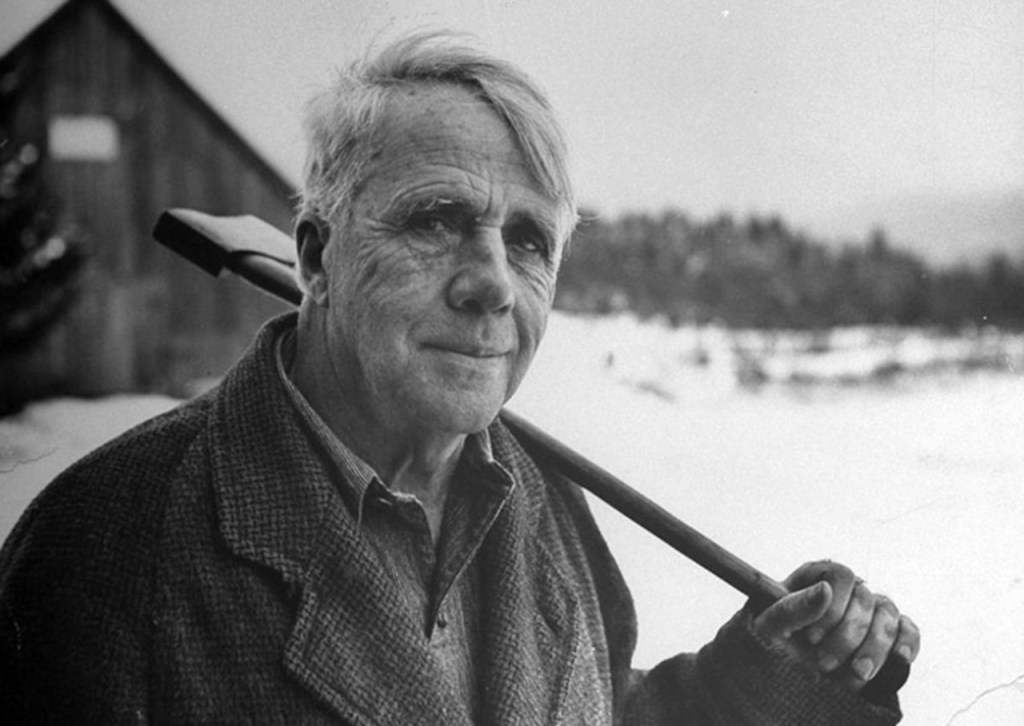

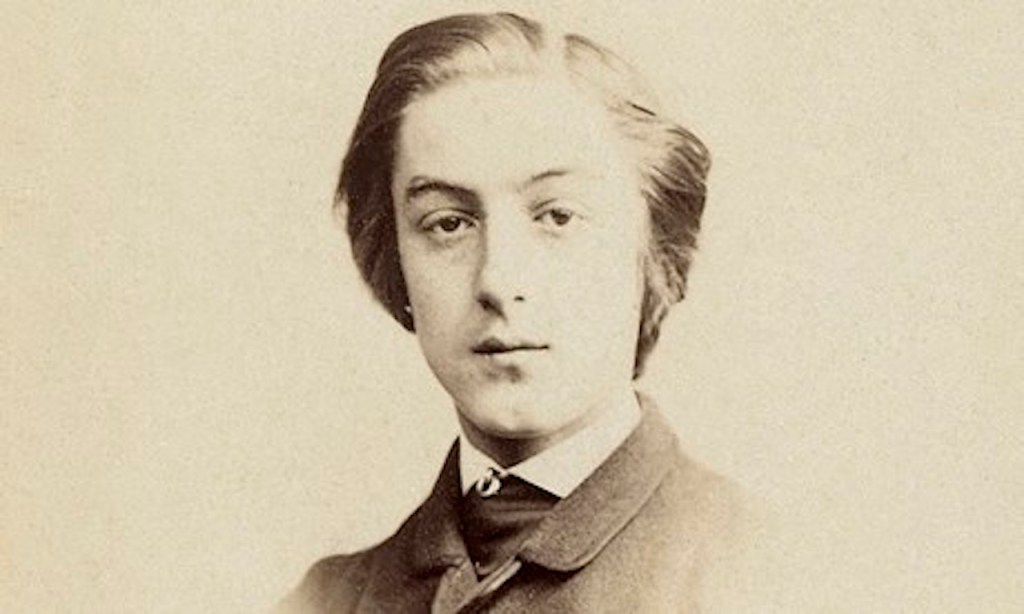
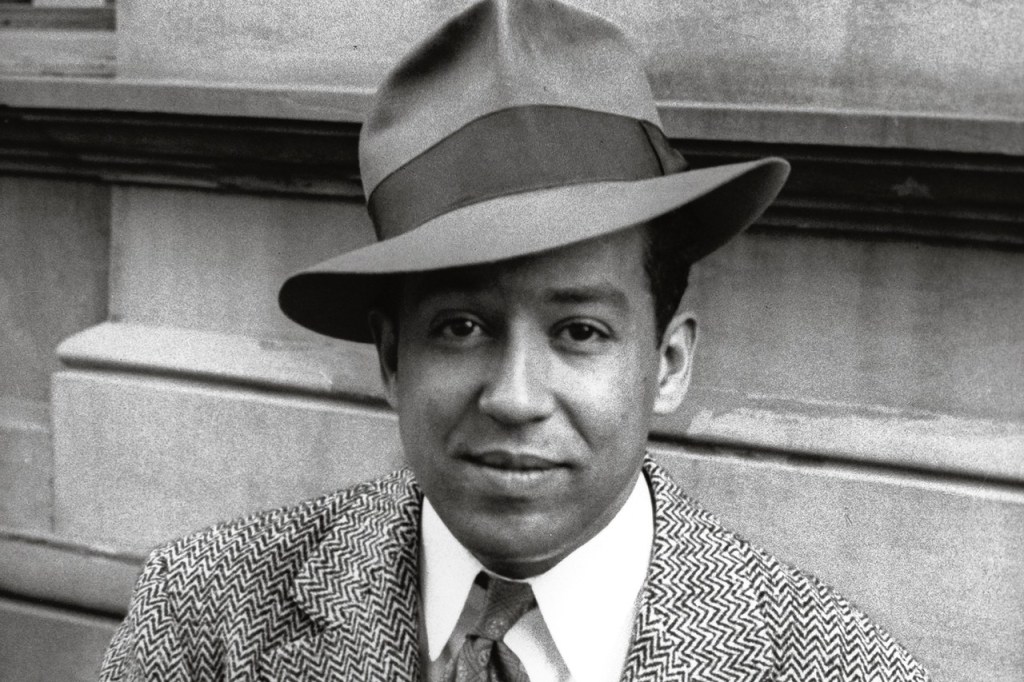
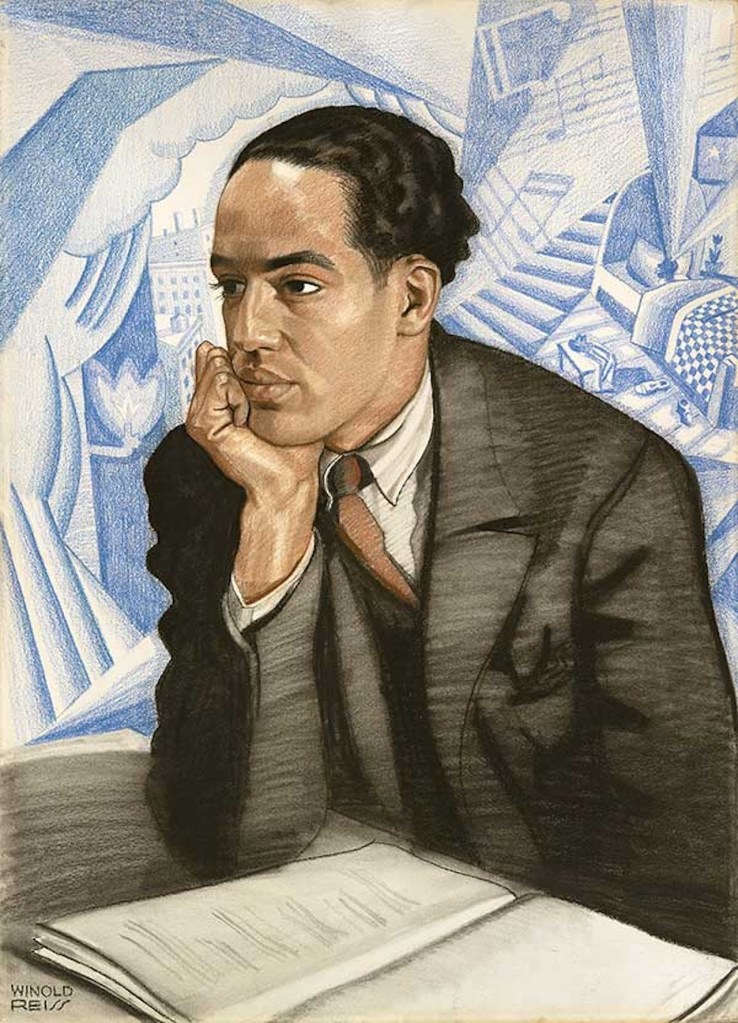
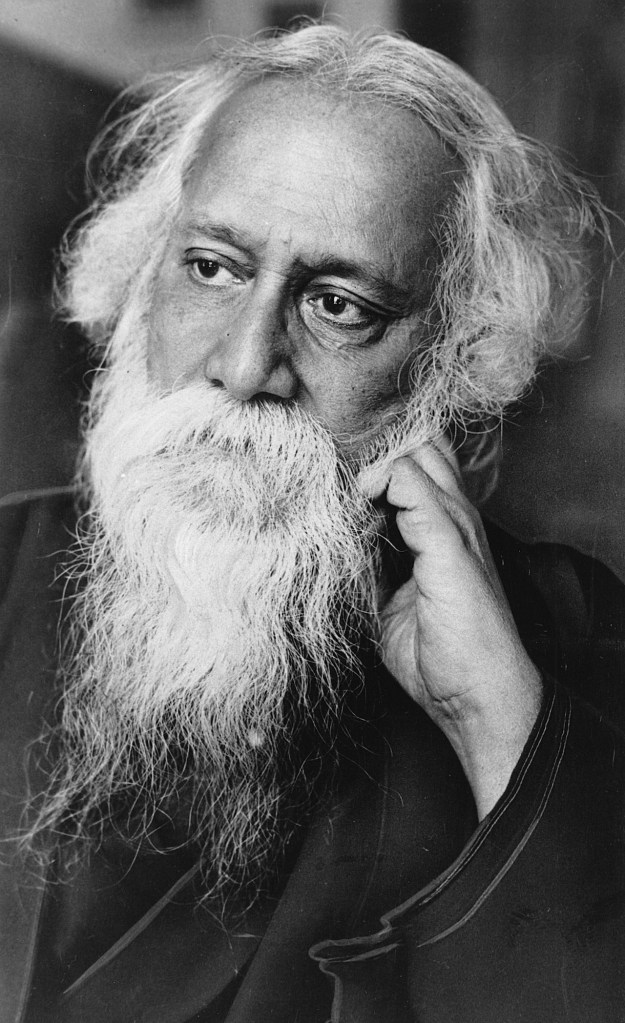
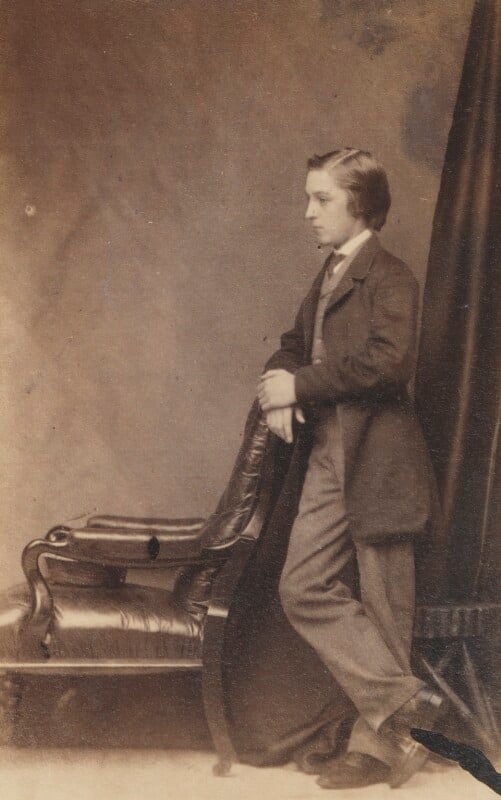
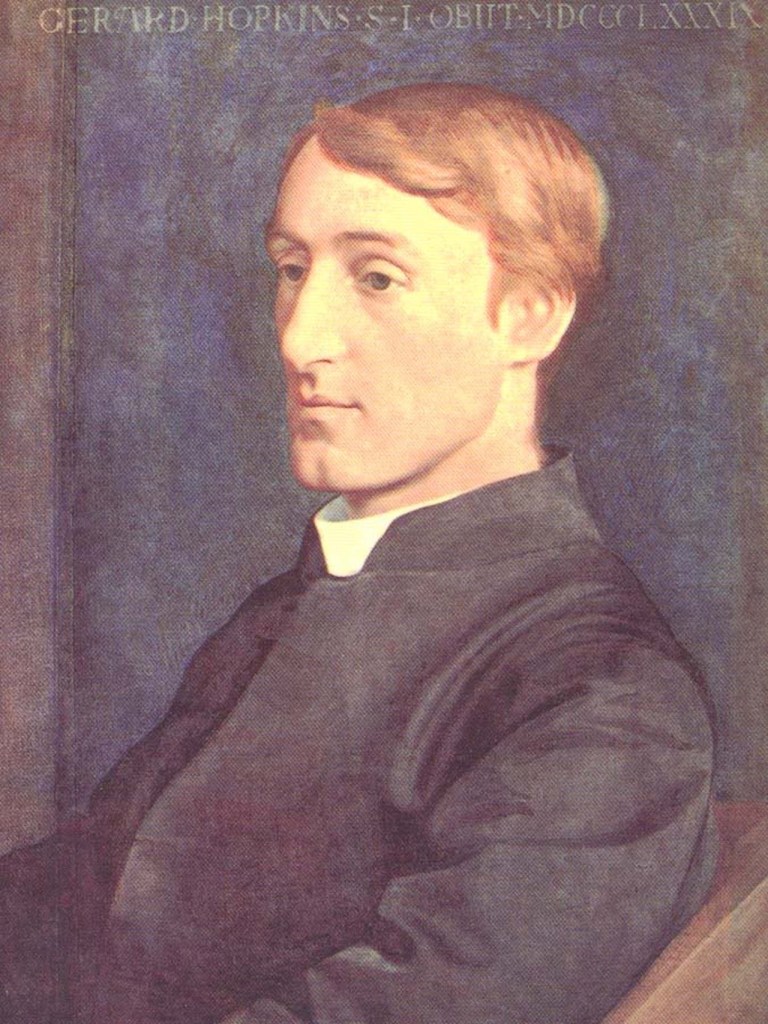
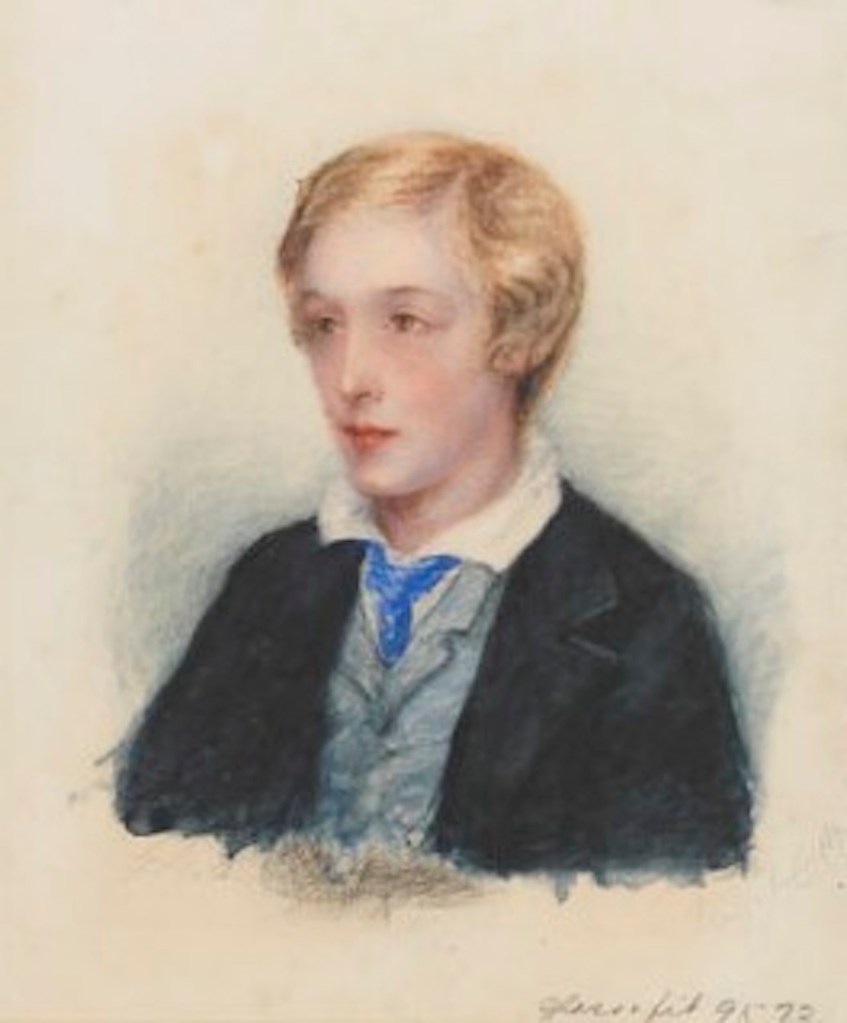


 Linda's Literary Home