Linda's Literary Home

Tag: poet

  • James Weldon Johnson

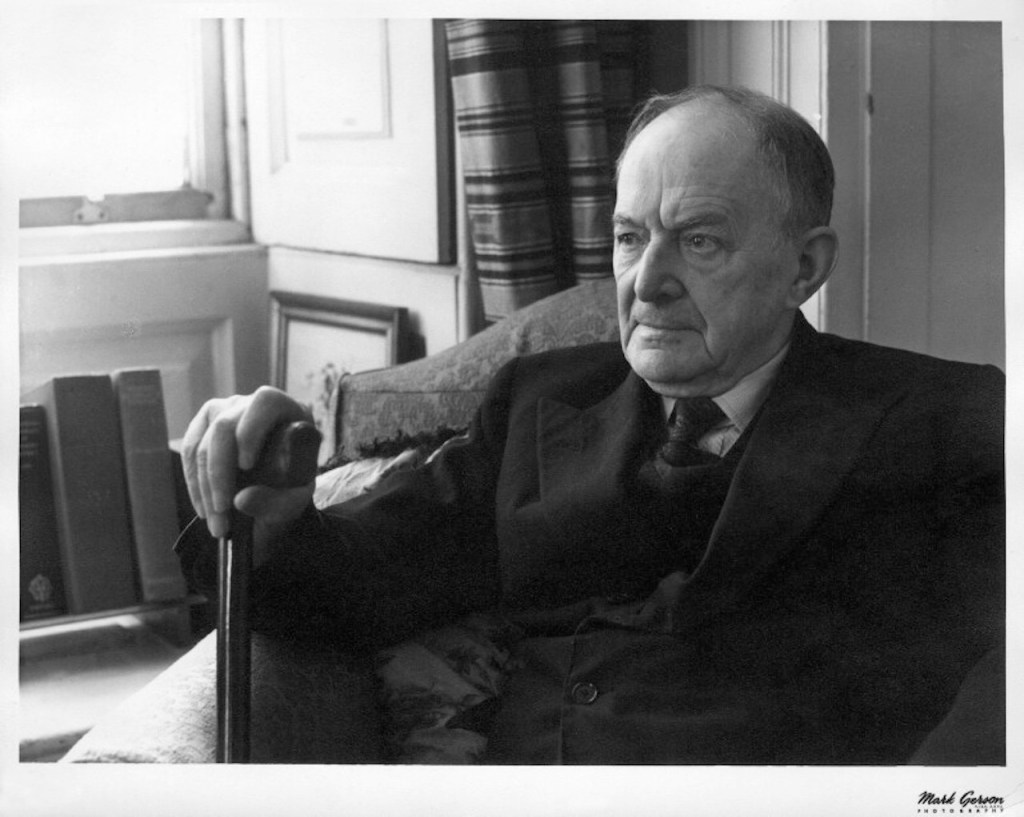
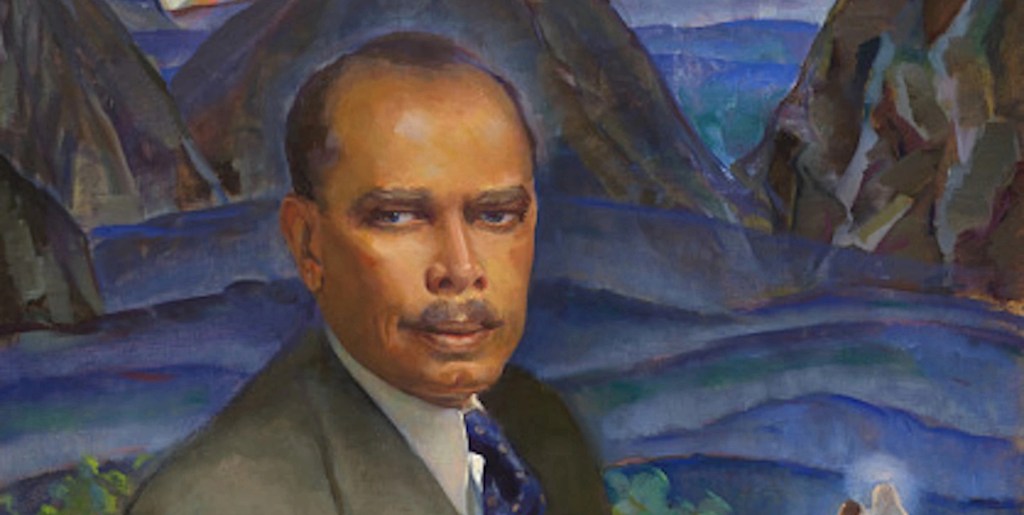
    Image:James Weldon Johnson – Portrait  by Laura Wheeler Waring

    Life Sketch of James Weldon Johnson

    A true “Renaissance man,” James Weldon Johnson wrote some the best spiritual poems and songs in the American literary canon.  He also held positions as attorney, diplomat, professor, and activist in a political party, fighting for the civil rights of black Americans.

    Note on Term Usage:  Before the late 1980s in the United States, the terms “Negro,” “colored,” and “black” were accepted widely in American English parlance.   While the term “Negro” had started to lose it popularity in the 1960s, it wasn’t until 1988 that the Reverend Jesse Jackson began insisting that Americans adopt the phrase “African American.”  The earlier more accurate terms were the custom at the time that James Weldon Johnson was writing.

    Early Life and Schooling

    James Weldon Johnson was born on June 17, 1871, in Jacksonville, Florida, [1] to James Johnson, of Virginia, who had held a position as headwaiter at a resort hotel, and Helen Louise Dillet, of the Bahamas, who had served as a teacher in Florida.  

    His parents raised James to be a strong, independent man.  The future poet became a free-thinker as his parents encouraged him to understand that he was capable of achieving all the success in life for which he sought to strive. 

    In 1894, after completing the bachelor’s degree at Atlanta University, he accepted a position as principal at the Edwin M. Stanton School.  His mother had taught at that school.  In his position as principal of Stanton, he made great improvements in the curriculum, adding grades 9 and 10.

    While serving at the Stanton school as principal, Johnson founded the newspaper, The Daily American.  The paper remained in publication for only a year, but it served as a lever for Johnson’s role as an activist, bringing him to the attention of Booker T. Washington and W.E.B. DuBois, two of the most influential activists of the civil rights movement.

    Johnson began the study of law in Thomas Ledwith’s law office in Jacksonville, Florida, in 1896 [2].  He passed the bar exam in 1898 and was admitted to the Florida bar.  He practiced law for several years and then decided to pursue other lines of work.

    From New York City to the Diplomatic Corp

    To engage a career in songwriting, in 1901 James and his brother Rosamond moved to New York City.  They became partners with Bob Cole and accepted a publishing contract which paid a $1200 monthly stipend.  That income amounted to a fortune in the early 20th century.  

    During the next half decade, the Johnson brothers wrote and produced a whopping 200 songs for both Broadway and for other formats.  Their substantial list of hits include titles such as  “Didn’t He Ramble,” “Under the Bamboo Tree,” and “The Old Flag Never Touched the Ground.”

    Along with Bob Cole, the Johnsons earned a outstanding reputation as a musical trio.   They became known affectionately as “Those Ebony Offenbachs.”  While they eschewed the artistry of the minstrel show stereotypes, they did agree to create simplified versions of black life of rustics for white audiences that seemed to relish such fare.  

    But their most important contribution includes a suite of six songs titled The Evolution of Ragtime, a documentary which has remained important for recording the black experience in contributing to music. Residing in New York also allowed Johnson the opportunity to attend Columbia University, where he engaged formally in the study literature and creative writing.  

    Johnson also began his civil rights activism in Republican Party politics.  While serving as the treasurer of New York’s Colored Republican Club, he wrote two songs for Theodore Roosevelt’s 1904 presidential campaign.  Roosevelt won that campaign, becoming the 26h president of the United States.

    The black national civil rights leadership divided into two factions: one remained traditional and was led by Booker T. Washington.  The other faction turned radical and was headed up by W.E.B. Du Bois.  Johnson chose to follow Washington and the traditionalists.  

    Washington’s leadership had offered the appropriate influence and had helped Roosevelt win the presidency.  Thus, Washington exerted his influence again to have Johnson appointed as the U.S. consulate to Venezuela.  

    Johnson’s stint in Venezuela afforded him time to create poetry. There he composed his magnificent, nearly perfect sonnet, “Mother Night,” during this time.  Also, during this three year period of service as consul on Venezuela, he was able to finish his novel, The Autobiography of an Ex-Coloured Man.  

    After Johnson’s service in Venezuela, he received a promotion that relocated him to Nicaragua. His job in Nicaragua became more demanding, allowing him less time for literary efforts.

    Back to New York and the Harlem Renaissance

    In 1900, Johnson composed the hymn “Lift Ev’ry Voice and Sing” for a school celebration of Abraham Lincoln’s birthday [3].  His brother Rosamond later added the melody to the lyric. In 1919, the National Association for Advancement of Colored People (NAACP) designated the song the “Negro National Hymn (Anthem).”

    In 1913, because of the inauguration of Woodrow Wilson, a Democrat, Johnson resigned his foreign service position and returned to the U.S.A.  In New York, Johnson began writing for New York’s prestigious black newspaper, the New York Age.  He wrote essays explaining and promoting the importance of the hard-work ethic and education.  

    Johnson’s traditionalism kept his position more in line with Booker T. Washington than with the radical militant W.E.B. Du Bois.  Despite those differences in ideologies, Johnson remained on good terms with both activists.

    In 1916, after Du Bois suggested the position to Johnson, he accepted the role as secretary in the NAACP.  In 1920, Johnson led the organization as president. Despite his many activist duties with the  NAACP, Johnson dedicated himself to writing full time. In 1917, he published his first collection of poems, Fifty Years and Other Poems.  That collection received great critical acclaim and established him as an important voice in the Harem Renaissance Movement.  

    Johnson continued writing and publishing; he also served as editor for numerous volumes of poetry, such as The Book of American Negro Poetry (1922), The Book of American Negro Spirituals (1925), and The Second Book of Negro Spirituals(1926).  

    In 1927, Johnson published his second book of poems God’s Trombones: Seven Negro Sermons in Verse [4]. Again, his collection received much praise from critics.  Dorothy Canfield Fisher, a best-selling author and activist for education reform, stated in a letter about Johnson’s style:

    . . . heart-shakingly beautiful and original, with the peculiar piercing tenderness and intimacy which seems to me special gifts of the Negro. It is a profound satisfaction to find those special qualities so exquisitely expressed.

    Back to Teaching

    After his retirement from the NAACP, Johnson continued writing.   He also served as professor  at New York University.  Johnson’s stellar reputation again preceded him; as he joined the NYU faculty, Deborah Shapiro testified:

    Dr. James Weldon Johnson was already a world-renowned poet, novelist, and educator when he arrived at the School of Education in 1934.  His faculty appointment was in the Department of Educational Sociology, yet Johnson’s influence did not end there.  As the first black professor at NYU, Johnson broke a crucial color barrier, inspiring further efforts toward racial equality both within and outside the boundaries of Washington Square.

    Death

    In 1938 at age 67, Johnson was killed in an automobile accident in Wiscasset, Maine, after a train crashed into the vehicle in which the poet was a passenger.  His funeral, held in Harlem, New York, was attended by over 2000 individuals.  

    Johnson’s creative power and activism rendered him a true “Renaissance man,” who lived a full life.  He penned some of the finest poetry and songs ever to appear on the American literary and music scenes. Johnson’s life creed bestows on the world an uplifting inspiration after which any individual might choose to chisel his life:

    I will not allow one prejudiced person or one million or one hundred million to blight my life. I will not let prejudice or any of its attendant humiliations and injustices bear me down to spiritual defeat. My inner life is mine, and I shall defend and maintain its integrity against all the powers of hell. [5]

    The poet’s body is interred in Green-Wood Cemetery in Brooklyn, New York [6]. In an unconventional final expression, his body has been arrayed in his favorite lounging cape, with his hands clutching a copy of his collection God’s Trombones.

    Sources

    [1] Editors. “James Weldon Johnson.”  Famous African Americans. Accessed January 27, 2023.

    [2] Malik Simba.  “Profile:  James Weldon Johnson (1871- 1938).”  Black Art Story.  Accessed January 27, 2023.

    [3] Editors. “The Story Behind the Black National Anthem.”  Black Excellence.  September 26, 2018.

    [4] Editors. “James Weldon Johnson.”  Poetry Foundation.  Accessed January 27, 2023.

    [5] Christine Weerts.  “How ‘Lift Every Voice And Sing’ Became A Song Of Hope For Generations.”  The Federalist.  February 12, 2021.

    [6] FindAGrave.  “James Weldon Johnson.”  Accessed January 27, 2023.

    Commentaries on Poems by James Weldon Johnson

    This room in my literary home holds links to poems written by James Weldon Johnson along with commentaries on the poems.  

    Poems with Commentaries

    1. Noah Built the Ark”
    2. “Go Down Death”
    3. “Sence You Went Away”
    4. “Fifty Years”
    5. “A Poet to His Baby Son”
    6. “Lift Every Voice and Sing”
    7. “Mother Night”
    8. “The Creation”
    9. “O Black and Unknown Bards”
    10. “My City”

    Full Image:James Weldon Johnson – Portrait  by Laura Wheeler Waring

  • Sara Teasdale’s “I Am Not Yours”

    Image: Sara Teasdale

    Sara Teasdale’s “I Am Not Yours”

    In the hands of a less skilled artist, the love theme of this lyric often trots out a tired cliché, but Sara Teasdale’s speaker makes it fresh and new.

    Introduction and Text of “I Am Not Yours”

    Taking the theme of deep and lasting love, the speaker in Sara Teasdale’s “I Am Not Yours” employs the poetic device of hyperbole to convey her emotion.  Three riming quatrains using the traditional scheme of ABCB unfold the poem’s drama.

    I Am Not Yours

    I am not yours, not lost in you,
    Not lost, although I long to be
    Lost as a candle lit at noon,
    Lost as a snowflake in the sea.

    You love me, and I find you still
    A spirit beautiful and bright,
    Yet I am I, who long to be
    Lost as a light is lost in light.

    Oh plunge me deep in love—put out
    My senses, leave me deaf and blind,
    Swept by the tempest of your love,
    A taper in a rushing wind.

    Commentary on “I Am Not Yours”

    While lovers are prone to exaggerate in artistic endeavors the level to which they have become part of their love one, this speaker on Sara Teasdale’s “I Am Not Yours” dramatizes a very different approach: a series of negative exaggerations that emphasize the positive.

    First Quatrain:  No Romantic Exaggeration

    I am not yours, not lost in you,
    Not lost, although I long to be
    Lost as a candle lit at noon,
    Lost as a snowflake in the sea.

    The speaker directs her words to her beloved in an extraordinary manner, by claiming that she is not possessed by him and that she has not lost herself in his charms.  While lovers are prone to exaggerate in artistic endeavors the level to which they have become part of their love one, this speaker dramatizes a very different approach.

    Thus this speaker then changes her direction as she proclaims that even though she is “not lost in [him],” she desires wholeheartedly that she might become so. She, therefore, states that she would like to be as is “a candle lit at noon.”  A candle at noon would barely show light at all as it would meld with the natural sunlight.

    The speaker then asserts that she would like to become part of her beloved as “a snowflake in the sea.” The oceanic presence of her beloved has engulfed her heart in such as way that she can liken herself to the smallness and malleability of a flake of snow melting in the ocean.

    The original claim that she does not belong to the addressee has now been set on its head.  Although literally it will always be true that she is not his and she is not lost in him, her desire for that blending has caused her imagination to conjure such a state in a majestic manner of metaphorical supremacy.

    Second Quatrain: Total Melding of Body, Mind, Soul

    You love me, and I find you still
    A spirit beautiful and bright,
    Yet I am I, who long to be
    Lost as a light is lost in light.

    The second quatrain confirms that the speaker is, indeed, loved by the target of her desire.  As she claims, “I am I,” she hungers for annihilation of self, that is, to melt into her lover. Her drama continues the seeking after total blending of body, mind, and spirit with the beloved.

    The speaker continues to wish for that complete melding with her lover, as she has shown from the beginning of her drama.  She wants to be totally consumed in the love she feels for him:  to be “lost [in him] as light is lost in light.”

    Third Quatrain:  Annihilation of Separation

    Oh plunge me deep in love—put out
    My senses, leave me deaf and blind,
    Swept by the tempest of your love,
    A taper in a rushing wind.

    The final quatrain finds the speaker essentially begging for the awareness of her wish to experience complete emersion in her beloved. She pleads, “Oh plunge me deep in love.”  The speaker desires to exist so close to her beloved that she has no need to hear or see. 

    His love and affection will be her only awareness and guide.  She begs that all her sense awareness become “swept by the tempest of your love.”  Again, the speaker returns to the candle metaphor.  She wishes to be so completely subsumed in him that she becomes a “taper in a rushing wind.” No longer is there a separation between the two lovers.

    Avoiding the Tired, the Obnoxious, the Clichéd

    The theme of this love lyric is a common one for lovers; pop lyrics use it over-abundantly. The idea of becoming so consumed by love that one wishes to melt into one’s lover has long been a cliché; the serious artist who employs this theme works to dramatize it in fresh, original ways.

    That freshness is achieved by Teasdale in her opening remarks, “I am not yours, not lost in you” and in her use of light as the substance to which she compares her desired union with her beloved.

    She avoids all of the tired and obnoxious sexual connotations that usually appear in portrayals of this theme. This lyric’s elocution remains so elevated that it could be interpreted as a devotee’s prayer to the Divine.

  • Renée Nicole Macklin’s “On Learning to Dissect Fetal Pigs”

    Image: Created by Grok

    Renée Nicole Macklin’s “On Learning to Dissect Fetal Pigs”

    The eight movements in this piece of postmodern doggerel serve to indict the scribbling as nothing more than a postmodern workshop exercise.  It remains one of the most flagrant tells that something is wrong in education culture in the USA: this poem won the 2020 Academy of American Poets University & College Poetry Prize at Old Dominion University.

    Introduction and Text of “On Learning to Dissect Fetal Pigs”

    This piece “On Learning to Dissect Fetal Pigs” does not merely fail on its own terms; it exemplifies a system that has mistaken posture for poetry and grievance for vision. The entire spectrum along with its habits have become unmistakable—and depressingly standardized.

    On Learning to Dissect Fetal Pigs

    i want back my rocking chairs,

    solipsist sunsets,
    & coastal jungle sounds that are tercets from cicadas and pentameter from the hairy
    legs of cockroaches.

    i’ve donated bibles to thrift stores
    (mashed them in plastic trash bags with an acidic himalayan salt lamp—
    the post-baptism bibles, the ones plucked from street corners from the meaty hands of
    zealots, the dumbed-down, easy-to-read, parasitic kind):

    remember more the slick rubber smell of high gloss biology textbook pictures; they
    burned the hairs inside my nostrils,
    & salt & ink that rubbed off on my palms.
    under clippings of the moon at two forty five AM I study&repeat
                   ribosome
                   endoplasmic—
                   lactic acid
                   stamen

    at the IHOP on the corner of powers and stetson hills—

    i repeated & scribbled until it picked its way & stagnated somewhere i can’t point to
    anymore, maybe my gut—
    maybe there in-between my pancreas & large intestine is the piddly brook of my soul.

    it’s the ruler by which i reduce all things now; hard-edged & splintering from knowledge that used to sit, a cloth against fevered forehead.
    can i let them both be? this fickle faith and this college science that heckles from the back of the classroom

                   now i can’t believe—
                   that the bible and qur’an and bhagavad gita are sliding long hairs behind my
    ear like mom used to & exhaling from their mouths “make room for wonder”—
    all my understanding dribbles down the chin onto the chest & is summarized as:
    life is merely
    to ovum and sperm
    and where those two meet
    and how often and how well
    and what dies there.

    Commentary on “On Learning to Dissect Fetal Pigs”

    Line breaks are not thoughts; failure to capitalize signals nothing profound.  This piece strains to be original to the point of exhaustion.  Its sprawling placement on the page does not equate to anything Whitmanesque; its mindless juxtapositions do little more than startle and stun and then fall flat.

    First Movement: Nostalgia as Substitute for Form

    i want back my rocking chairs,

    solipsist sunsets,
    & coastal jungle sounds that are tercets from cicadas and pentameter from the hairy legs of cockroaches.

    The piece opens with a whine rather than an image: “i want back my rocking chairs.” This awkwardly phrased salvo is not memory shaped by art; it is desire announced without effort. The rocking chair is a prefabricated symbol, wheeled in to signal premodern calm without earning it.

    The gesture toward “tercets” and “pentameter” is particularly revealing. These features are not forms the poem employs but instead are terms it waves at the reader like credentials: “look I know some poetry terms I learned in my creative writing class.” 

    Meter becomes metaphor, form becomes flavoring. As Helen Vendler insists, poetry requires a thinking ear, not a decorative vocabulary [1]. This poem treats form the way lifestyle branding treats craft: as an aesthetic aura, not a discipline.

    Second Movement: Desecration as Cultural Credential

    i’ve donated bibles to thrift stores
    (mashed them in plastic trash bags… the dumbed-down, easy-to-read, parasitic kind):

    Here we arrive at the first ritual sacrifice. Sacred texts are not confronted, questioned, or even read; they are disposed of theatrically. The Bible appears only as an evangelical pamphlet, never as literature, theology, or intellectual inheritance.

    Such effusion is not critique; it is credentialing. George Steiner warned that modern art’s fixation on desecration often signals creative exhaustion rather than courage [2]. The poem performs disbelief the way a résumé lists internships. As Harold Bloom observed, contemporary poetry often avoids agon—the struggle with strong precursors—in favor of symbolic vandalism [3]. Trash bags replace thought.

    Third Movement: Science as Vocabulary Trauma

    remember more the slick rubber smell of high gloss biology textbook pictures; they
    burned the hairs inside my nostrils,
    & salt & ink that rubbed off on my palms.
    under clippings of the moon at two forty five AM I study&repeat
                   ribosome
                   endoplasmic—
                   lactic acid
                   stamen

    Science enters the poem not as inquiry but as irritation. Scientific terms are recited like curse words, their meanings irrelevant. The poem resents knowledge without attempting to understand it.

    James Longenbach has noted that free verse collapses when it merely records annoyance rather than transforming it [4]. Here, scientific language is treated as an assault on sensitivity, revealing not science’s limitations but the speaker’s refusal to engage it beyond syllabic discomfort.

    Fourth Movement: Specificity as Alibi

    at the IHOP on the corner of powers and stetson hills—

    This line is the system’s shibboleth. The named diner is not symbol, setting, or pressure point—it is proof of authenticity. The poem assumes that coordinates equal meaning.  Randall Jarrell warned that poetry which merely reports experience degenerates into prose with line breaks [5]. This IHOP does nothing but exist, which the poem treats as sufficient.

    Fifth Movement: The Soul, Shrunk for Convenience

    maybe there in-between my pancreas & large intestine is the piddly brook of my soul.

    Here the poem congratulates itself for modesty by reducing the soul to runoff. Unlike metaphysical poetry, which used bodily imagery to heighten spiritual stakes, this poem uses anatomy to flatten them.

    Christopher Ricks argued that metaphor should increase imaginative pressure [6]. This one relieves it. The soul becomes small enough not to trouble anyone—including the poet.

    Sixth Movement: The Straw-Man Dialectic

    this fickle faith and this college science that heckles from the back of the classroom

    Faith and science are staged as cartoon antagonists: faith as comfort blanket, science as rude undergraduate. This weasel language is not dialectic; it is melodrama for the intellectually uncurious.

    As T. S. Eliot warned, poetry that mistakes emotional dissatisfaction for insight substitutes complaint for thought [7]. The poem invents a conflict it cannot articulate and then sulks about it.

    Seventh Movement: Wonder Infantilized

    the bible and qur’an and bhagavad gita are sliding long hairs behind my ear like mom used to…

    Wonder here is not earned but remembered—and remembered only as childhood comfort. Sacred texts become maternal figures, soothing rather than demanding.

    Eliot cautioned against confusing regression with depth. This passage does exactly that. The poem inadvertently admits that its concept of wonder cannot survive adulthood and then blames knowledge for the failure.

    Eighth Movement: The Grand Reduction (a.k.a. The Sulk)

    life is merely
    to ovum and sperm
    and where those two meet
    and how often and how well
    and what dies there.

    The poem concludes with the system’s obligatory finale: a reduction so crude it pretends to be brave. Life is reduced to sex and death, as though no one has ever thought this before.

    No serious scientist, philosopher, or poet holds such a view, and the poem does not pretend to argue it. As Eliot observed, exhaustion presented as revelation is still exhaustion. The poem ends not with insight, but with a pout.

    An Afterword: Dissatisfaction Does Not Bring Wisdom

    Macklin’s “On Learning to Dissect Fetal Pigs” exemplifies the current rot that passes for poetry because it wants the authority of crisis without the labor of understanding. It rejects form while gesturing at it, dismisses belief without engaging it, and resents knowledge without learning it. 

    It longs for rocking chairs but refuses carpentry. What it offers instead is the familiar debris of postmodern workshop verse: fragments of feeling, gestures of rebellion, and the unexamined belief that dissatisfaction is a form of wisdom.  It is not.

    Readers might notice that this essay does not even begin to address the awkwardness of language use this piece, which would require another essay to fully engage the issue. Suffice it to say that said awkwardness could, in fact, result either from intent or simply lack of language acumen of the doggerelist.

    Either reason aligns with postmodern thought that dismisses utility for heft and originality for quaint novelty. For the postmod mindset, Ezra Pound’s diktat “make it new” [8] has become “make it shockingly ugly.”

    Sources

    [1] Helen Vendler. The Art of Shakespeare’s Sonnets. Harvard UP, 1997.

    [2] George Steiner. Real Presences. University of Chicago Press, 1989.

    [3] Harold Bloom. The Anxiety of Influence. Oxford UP, 1973.

    [4] James Longenbach. The Resistance to Poetry. University of Chicago Press, 2004.

    [5] Randall Jarrell. Poetry and the Age. University Press of Florida, 2001.

    [6] Christopher Ricks. The Force of Poetry. Oxford UP, 1984.

    [7] T. S. Eliot. The Use of Poetry and the Use of Criticism. Harvard UP, 1933.

    [8] Ezra Pound. Make It New: Essays.  Faber and Faber. 1934.

  • Sara Teasdale’s “Barter” 

    Image: Sara Teasdale Britannica

    Sara Teasdale’s “Barter” 

    Sara Teasdale’s “Barter” is a lyrical musing on the importance and value of beauty, stressing the indispensability of giving oneself up completely to any moment of loveliness that happens to appear before one’s consciousness.

    Introduction and Text of “Barter”

    Sara Teasdale’s “Barter” was first published in 1917 in her collection titled simply Love Songs. It is likely the poet’s most anthologized poem, for it remains one of  her most crystallized expressions on loveliness, self-surrender, and sublimity. 

    In “Barter,” the poet has created a speaker who professes the belief that beauty is all encompassing in all of its aspects including its presence in nature, or in love between individuals, or in the soul’s quiet musings.  To purchase such a rare commodity, one must be willing to pay any price.

    Barter

    Life has loveliness to sell,
         All beautiful and splendid things,
    Blue waves whitened on a cliff,
         Soaring fire that sways and sings,
    And children’s faces looking up
    Holding wonder like a cup.

    Life has loveliness to sell,
         Music like a curve of gold,
    Scent of pine trees in the rain,
         Eyes that love you, arms that hold,
    And for your spirit’s still delight,
    Holy thoughts that star the night.

    Spend all you have for loveliness,
         Buy it and never count the cost;
    For one white singing hour of peace
         Count many a year of strife well lost,
    And for a breath of ecstasy
    Give all you have been, or could be.

    Commentary on “Barter”

    The title “Barter”offers the first hint that the controlling metaphor of the poem will be that of commerce in the marketplace. The speaker then moves from description of worldly things of beauty to exhortation in demanding the audience’s complete surrender in order to acquire that beauty.

    First Stanza:  What Life Possesses

    Life has loveliness to sell,
      All beautiful and splendid things,
    Blue waves whitened on a cliff,
      Soaring fire that sways and sings,
    And children’s faces looking up
    Holding wonder like a cup.

    In the opening line, the speaker establishes the controlling metaphor for the poem: life is similar to a marketplace where its products are myriad forms of beauty.  The speaker thus is personifying “Life” as a vendor, who is selling “loveliness.” 

    The speaker then begins a catalogue of examples of the things that are lovely, that is, they are “[a]ll beautiful and splendid things” such as ocean waves that whiten as they beat up against “a cliff,” fire that soars, sways, and sings, and the faces of little children as they look up in wonderment.  The structure of the stanza features a quatrain with the rime scheme ABCB, and the final two lines are a rimed couplet.  This structure is repeated in the remaining two stanzas.

    Second Stanza:  Things of Beauty

    Life has loveliness to sell,
      Music like a curve of gold,
    Scent of pine trees in the rain,
      Eyes that love you, arms that hold,
    And for your spirit’s still delight,
    Holy thoughts that star the night.

    Opening the second stanza, the speaker repeats the line “Life has loveliness to sell,” creating a chant-like rhythm and continuing the commerce metaphor.   Then again following the same structure, the speaker offers another catalogue of the items for sale that are beautiful.

    The four senses of hearing, smell, sight, and touch are represented.  For hearing, there is music with its “curve of gold,” suggesting both melody and shape, along with value and warmth; this auditory image melds aesthetic and moral value: music soothes and inspires while gold glitters and is long lasting.

    Representing the olfactory image, the “[s]cent of pine trees in the rain” brings to mind a pungent oder, wherein rain further enhances the scent by drawing out the resinous sharpness of the trees.

    The sense of sight finds its ocular image in the “[e]yes that love you,” and the tactile image in the  “arms that hold.” The human element brings to the poem an aura of intimacy and love, as these two images engage the emotion involved in the human acts of affection and protection.  

    The final couplet moves from the physical to the spiritual level of existence. The spirit (soul) also is afforded the quality of beauty in this marketplace.  “Holy thoughts” offer pleasure to the soul as the stars offer loveliness to the night time sky.

    Third Stanza:  The Vital Importance of Experiencing Beauty

    Spend all you have for loveliness,
      Buy it and never count the cost;
    For one white singing hour of peace
      Count many a year of strife well lost,
    And for a breath of ecstasy
    Give all you have been, or could be.

    In the final stanza, the speaker moves from announcement and description to a direct command.  Replacing the incantatory “Life has loveliness to sell” is the command to spend all that you possess in order to purchase this commodity called “loveliness.” Further commanding, the speaker insists that her listeners continue to purchase and give no thought as to how much is the price.

    Conjoining color, sound, and time, the speaker commands her listeners to find it prudent to have lost “many a year of strife” for acquiring the amazing experience of “one white singing hour of peace.” 

    In the final couplet, the speaker presses forth her most intense commanding statement:  for even a moment of the highest bliss, give up yourself entirely, including all you have been and all you could ever be. For this speaker the importance of experiencing even a brief moment of joyful beauty is worth all one can sacrifice.  

    Such a suggestion implies that the speaker believes that most beauty is lost through the human acts of non-observation and non-involvement with the things of this world that are indeed lovely if one looks with seeing eyes and an open loving heart.

    Full Image: Sara Teasdale Britannica

  • Paul Laurence Dunbar’s “Sympathy”

    Image:  Paul Laurence Dunbar

    Paul Laurence Dunbar’s “Sympathy”

    The speaker of Paul Laurence Dunbar’s “Sympathy” metaphorically elucidates, through the employment of a “caged bird,” the stifling condition of a human soul locked in a human body.

    Introduction with Text of “Sympathy”

    Although at the literal level, Paul Laurence Dunbar’s poem “Sympathy” commits the pathetic fallacy [1], it makes a useful and accurate statement about the confinement of the human soul as it becomes aware of its stifling condition of being “caged” in a physical body.

    In the fields of hard science, thinkers and researchers, who once insisted that the soul was only a religious construct or “an object of human belief” [2] are finally catching up with spiritual sages and avatars.

    Spiritual adepts from time immemorial in religious scripture from the major world religions, including Hinduism [3]  Christianity [4] and Islam [5], have explained that the soul, as a essential being of energy, is potentially capable of instantaneous flight to any location of its choice.  The soul grapples with the slow, earth-bound limitations put on it by living in a human body under cosmic delusion.

    Sympathy

    I know what the caged bird feels, alas!
    When the sun is bright on the upland slopes;
    When the wind stirs soft through the springing grass,
    And the river flows like a stream of glass;
    When the first bird sings and the first bud opes,
    And the faint perfume from its chalice steals—

    I know what the caged bird feels!
    I know why the caged bird beats his wing
    Till its blood is red on the cruel bars;
    For he must fly back to his perch and cling
    When he fain would be on the bough a-swing;
    And a pain still throbs in the old, old scars
    And they pulse again with a keener sting—

    I know why he beats his wing!
    I know why the caged bird sings, ah me,
    When his wing is bruised and his bosom sore,—
    When he beats his bars and he would be free;
    It is not a carol of joy or glee,
    But a prayer that he sends from his heart’s deep core,
    But a plea, that upward to Heaven he flings—
    I know why the caged bird sings!

    Maya Angelou recites 

    Commentary on “Sympathy”

    The speaker of Paul Laurence Dunbar’s “Sympathy” employs the metaphor of the “caged bird” to elucidate the machinations of the soul contending with a physical encasement.

    First Septet:  Unfortunate Knowledge

    I know what the caged bird feels, alas!
    When the sun is bright on the upland slopes;
    When the wind stirs soft through the springing grass,
    And the river flows like a stream of glass;
    When the first bird sings and the first bud opes,
    And the faint perfume from its chalice steals—

    The speaker begins by employing the pathetic fallacy, asserting that he understands the feelings of a bird in a cage.  He appends the interjection “Alas!”—indicating that that sensory knowledge is unfortunate.

    Scientifically, the fact remains that the assertion of knowing how the caged bird feels cannot be accurate. Science cannot ascertain that avians and humans “feel” in a comparable manner.  Nevertheless, poetic understanding can circumvent scientific facts, as they describe metaphorically ineffable knowledge.

    Dunbar’s employment of the pathetic fallacy ascends to a level from which it has the ability to elucidate the claimed truth.  Such an inference can be accepted as an appropriate comparison between a human soul incarnated in a human body and a “caged bird.”

    The speaker creates a catalogue of all the beauties of nature that a bird while caged cannot enjoy:  the bright sunshine, sloping hillsides, breezes through the new spring grass, streaming rivers running smooth and clear, the chirping songs of other avians, blossoms opening from buds emitting their “faint perfume.”

    Obviously, the bird in a cage must stay in a limited space; a creature bestowed by its Creator with the enviable capability of flying through the air becomes confined, limiting its movements drastically.

    The human heart and mind find it difficult to succumb to such limitations; thus, it seems nearly impossible to comprehend how the idea of placing bird in cage ever originated.  

    Still, birds in captivity do live longer [6]:  they are afforded a constant and safe food supply and remain protected from predators.  Nevertheless, the essence of human romanticism still craves and clings to the idea of a free ranging life for all living things.  

    To the very heart-core of humanity, it remains that living beings ought never become captives to other living beings.  And as that captivity is observed, only the dreadful aspect of such captivity pings in the consciousness humanity.

    Second Septet:  Bleeding for Freedom

    I know what the caged bird feels!
    I know why the caged bird beats his wing
    Till its blood is red on the cruel bars;
    For he must fly back to his perch and cling
    When he fain would be on the bough a-swing;
    And a pain still throbs in the old, old scars
    And they pulse again with a keener sting—

    In the second stanza, the speaker moves on to the direct negative affects of having a bird caged up, as he laments the activities of the poor avian.  This captive creature will “beat his wings” on the bars of the cage until they begin to bleed.

    After beating his wings to a bloody mess, the poor injured creature can move only onto his perch in the cage; he cannot seek solace in the open branches of nature to where the bird would rather flee.  

    The bird again suffers the wounds of incarceration in addition to the wounds of damaged, bloody wings.  The pain becomes ever more pronounced each time the bird tries to escape his confinement.  

    His memory of freedom may motivate him to continue to free himself, but his inability to access that freedom continues to force him to continue his attempts.  By nature, he must continue his bloody struggles against confinement.

    Third Septet:  Singing for Freedom

    I know why he beats his wing!
    I know why the caged bird sings, ah me,
    When his wing is bruised and his bosom sore,—
    When he beats his bars and he would be free;
    It is not a carol of joy or glee,
    But a prayer that he sends from his heart’s deep core,
    But a plea, that upward to Heaven he flings—
    I know why the caged bird sings!

    The speaker now reiterates what has grown into a refrain; the human speaker knows why this caged bird continually beats his wings and bruises his breast on the hard bars of confinement.  The speaker also understands why the avian sings.  

    The poor singing creature does not sing prompted by “joy or glee.”  His song is not a carol but is instead a prayer of supplication to the Creator for deliverance from his captivity. The bird’s song is, in fact, a plea that the avian is flinging “upward to Heaven.”  Yet, the speaker only implies the reason for that plea.  

    It should become perfectly obvious the reason that this bird is singing.  He hopes that his plea, which is a prayer, will urge the heart of his sympathetic Creator to bring the creature release from his painful incarceration.

    The speaker finalizes his claim, “I know why the caged bird sings!”  With this repeated sentiment, the speaker wishes to make clear his understanding that the poor bird’s frustration is his own.  The speaker thus is offering “Sympathy” to this poor, caged avian.

    The Historical Aberration of Slavery and the Body-Caged Soul

    Human history [7] is replete with despicable institutions of slavery—a people taking another people captive to procure their labor and resources in order to profit the enslavers.

    The Romans [8] enslaved vast portions of the globe under the Roman Empire.  Muslims [9]  enslaved expansive areas of the Middle-East in their empire building era, which included the Ottoman Empire.

    According to Thomas Sowell [10], Rose and Milton Friedman Senior Fellow at Stanford University’s Hoover Institution,

    To me the most staggering thing about the long history of slavery — which encompassed the entire world and every race in it — is that nowhere before the 18th century was there any serious question raised about whether slavery was right or wrong. In the late 18th century, that question arose in Western civilization, but nowhere else. (my emphasis added)

    The list of slave owning societies goes on and on, from Biblical times to the present day in some areas of the world.  However, because of the relatively recent proximity to the enslavement of Africans on plantations in the United States, many history-deficient thinkers associate slavery solely with the American experience [11].

    And the repercussions of that evil institution still vibrate throughout twenty-first century America.

    Because the poet Paul Laurence Dunbar was black, readers may find it difficult to accept that this poem can be elucidating any issue other than black life in  the USA—both before and after the Civil War.  That narrowly interpreted version of the poem, however, limits the poem’s profundity. 

    If a black individual is denied by law or custom the ability to choose and follow his own path in life, his life is then circumscribe in such as way as to liken him to a bird in a cage. That fact cannot be disputed. 

    However, Dunbar’s achievement with his poem “Sympathy”is so much greater than the interpretation of a black life in a cage will allow.  Such a limitation may be even considered racist, as well as reductionist.

    Dunbar’s “Sympathy” expresses a cosmic—not merely cultural—truth. All human souls find representation in that poem—not just the soul of  black individuals. Every human soul that becomes aware of itself encased in a human body feels like that bird in a cage.

    Each human soul suffers the same suffocating confinement that the bird experiences because the bird and the soul are created to be far ranging, throughout the limitless sky of life.

    The human soul has been created by the Divine Creator to be an immortal, eternal entity, with the power and the ability to experience the limitless expanse of Omnipresence. The soul is meant to exist everlastingly without any bindings of flesh or mental trammels that would cage it or hem it round.

    Dunbar’s “Sympathy” features a useful description of the soul lodged in a human body-cage, employing metaphorically the caged bird. The poem’s achievement deserves to be celebrated because of its omnipresent universality and not merely read through a racial, temporal prism of culture.

    The Late Maya Angelou’s First Memoir

    Likely the line, “I know why the caged bird sings,” will be immediately recognized by many readers as the title of the late Maya Angelou’s first memoir.  Maya Angelou gives credit to Abbey Lincoln Roach [12] for titling her book; yet, they both neglect to mention the Dunbar poem, about which one would expect not only a reference but an exact quotation featuring the line. 

    To her credit, Angelou did acknowledge the existence of Dunbar’s poem, and she read an excerpt from it in a PBS interview [13].   Angelou also composed a piece, which she titled, “Caged Bird” [14].  Angelou’s piece sports a sing-song rime and rhythm, pleasing to the ear but lacking the spiritual profundity that Dunbar’s far-superior poem achieves.

    Sources

    [1] Editors. “Pathetic Fallacy.”  LitCharts. Accessed May 16, 2022.

    [2] Robert Lanza, M.D., “Does the Soul Exist? Evidence Says ‘Yes’.”  Psychology Today.  December 21, 2011.

    [3]  Curators. “The Soul.”  Royal Path of Self-Realization.  Accessed September 12, 2023

    [4]  Curators. “50 Bible Verses about The Soul.”  The Bible: Knowing Jesus.  Accessed May 16, 2022.

    [5]  Editors. “Soul in Islamic Philosophy.” Muslim Philosophy.  Accessed September 12, 2023.

    [6]  John C. Mittermeier.  “The Surprisingly Complex Science of Bird Longevity.”  American Bird Converancy.  January 29, 2021.

    [7] Editors.  “Slave Societies.”  Encyclopedia Britannica. Accessed September 12, 2023.

    [8]   Mark Cartwright.  “Slavery in the Roman World.”  World History Encyclopedia.  November 1, 2013.

    [9]  Editors.  “Slavery in Islam.” BBC.  September 7, 2009.

    [10]  Thomas Sowell.  “Ending Slavery.”  Jewish World Review. February, 8, 2005.

    [11]  Curators.  “The Real History of Slavery by Thomas Sowell.”  Internet Archive.  Accessed September 12, 2023.

    [12]Editors. “I Know Why the Caged Bird Sings, page 1.” Read From Net.  Accessed September 12, 2023

    [13]  Curators. “Maya Angelou reads from Paul Dunbar’s poem “Sympathy”?.” PBS. Aired March 28, 2017.

    [14]  Maya Angelou.  “Caged Bird.”  Poetry Foundation.  Accessed September 12, 2023.

    Image:  Paul Laurence Dunbar  SCAD Museum of Art

  • Walter de la Mare’s “Silver”

    Image: Walter de la Mare  

    Walter de la Mare’s “Silver”

    The speaker in Walter de la Mare’s “Silver” personifies the moon as a lady out walking at night in silver slippers, showering the landscape and everything in it with the color of silver. The silvering of the night moon reveals a special style of beauty; while sunlight is gold, moonlight is silver.

    Introduction and Text of “Silver”

    Walter de la Mare’s classic poem, “Silver,” plays out in the form of an innovative sonnet [my coined term American-Innovative Sonnet], composed of seven riming couplets, in which the moon is personified as a lady out walking in silver slippers that shine upon the landscape causing everything visible to don a silver glow.

    The speaker is taking a walk at nighttime, and the moon shines gloriously upon the landscape. The speaker is emotionally enthralled by the transition from daylight appearance to nightlight appearance.

    The sun manifests for humanity one style of scenario, while the moon reveals quite another. The sense of sight is predominant during this rendering; one barely hears anything save perhaps the “scampering” of a “harvest mouse.”   The quiet beauty seems to swell the heart of the observer with tranquil appreciation.

    Silver 

    Slowly, silently, now the moon
    Walks the night in her silver shoon;
    This way, and that, she peers, and sees
    Silver fruit upon silver trees;
    One by one the casements catch
    Her beams beneath the silvery thatch;
    Couched in his kennel, like a log,
    With paws of silver sleeps the dog;
    From their shadowy cote the white breasts peep
    Of doves in a silver-feathered sleep;
    A harvest mouse goes scampering by,
    With silver claws, and silver eye;
    And moveless fish in the water gleam,
    By silver reeds in a silver stream.

    Reading of Walter de la Mare’s “Silver” 

    Commentary on “Silver”

    During daylight hours, sunlight reveals the creatures and things of the earth in its golden light, displaying many varied colors, while during the nighttime hours, moonlight offers a very different experience of seeing everything through the lens of silver.

    First Couplet:  The Moon Informs the Night

    Slowly, silently, now the moon
    Walks the night in her silver shoon;

    The speaker begins by setting the scene of the moon slowly moving in silence upon the landscape.  That moon is transforming the land in ways that one might not expect.  

    In sunlight, the creatures of earth have come to expect the ability to see all things in a certain way, but in moonlight all is changed——all is so very delightfully different. Instead of merely revealing the consciousness of daylight experience of earthly creatures, the moon reveals a whole different scenario.  

    The speaker portrays that difference by alerting the poem’s audience that the moon is “walk[ing] the night,” wearing “silver shoon.” The British dialect that uses “shoon” for “shoes” effects a useful rime with “moon.” 

    Personified as a lady, the silver slippered moon is walking the landscape “slowly” but also “silently.” Nighttime is a time for reflection, contemplation, and meditation. 

    And those who have observed the stillness of nighttime with the moon shining searchingly will attest to the serenity garnered from that quiet time of day:  a time for still reflection and musing on all that is beautiful, yet mysterious.

    Second Couplet:  The Moon Walking and Observing

    This way, and that, she peers, and sees
    Silver fruit upon silver trees;

    The moonlight permeates the landscape during her walk.  This metaphoric moon lady “peers and sees.” Anyone walking the silver-sprayed landscape at night might encounter certain objects being bathed and transformed by moonlight.  

    This moon sees trees with fruit.  The metaphor of the moon as a person walking the landscape enlarges the vision for the reader/listener who, no doubt, has encountered such an experience.  

    Who has not walked at night and observed the beauty of the transformed landscape from sunlight to moonlight?  Colors are gone, fine definitions are gone, but what is left is a new experience of beauty that entices the observer with new, fascinating perceptions.

    By personifying the moon as one who walks the landscape at night, the speaker/poet has given humanity back its experience of having seen that landscape and enjoyed it——perhaps without even realizing it, but still capturing it for future perusal in memory. 

    Because the poet has seen fit to capture that experience, his fellow earth inhabitants are now capable of experiencing it also.  In the speaker’s crystalline snapshot of his night walk in the silvery moonlight, he is creating a scene of beauty and stillness that complements the sun’s golden featuring of day.

    Third Couplet:  All Bathed in Silver

    One by one the casements catch
    Her beams beneath the silvery thatch;

    The speaker then observes that the whole vantage point of his capability is bathed in silver.  The windows of every cottage he has the privilege to view are also bathed in that marvelous silver.  The thatched roofs are flowing with silver.  Everything is swimming in this mercurial silver.

    But far from poisoning anything as the actual metal will do, this silver enlivens and enhances the beauty of the nighttime landscape.  It merely proclaims that everything God has created is beautiful, if one can only open one’s eyes to see that beauty.  

    Most human eyes have become habituated to the fact that sunlight on a flower creates a wondrous spectacle of beauty.  Quite likely, far fewer have realized that the moonlight turning that same flower into a spectacle in silver could also offer an example of beauty.  This speaker’s unveiling his experience allows readers to engage their own hidden memories.

    Fourth Couplet:  Happy, Silvered Dogs

    Couched in his kennel, like a log,
    With paws of silver sleeps the dog;

    Human beings love their dogs——man’s best friend!  So much so that most Americans will not likely identify with “couched in a kennel,” because it is more likely that their dogs will be couched in their indoor beds not far from the beds of their human companions. 

    Yet, earlier history had people keeping their dogs outside in the dog houses or “kennels.”  Therefore, the speaker has observed that in their doghouses, these dogs are all silvered as they sleep “like a log.” Happy silvered dogs, sleep peacefully outside in full view of any observer who might be taking a walk in the moonlight.

    Fifth Couplet:  Silvery Sleep

    From their shadowy cote the white breasts peep
    Of doves in a silver-feathered sleep;

    Nature offers many scenes for observation.  The speaker then notes that even the doves can be seen in the silver of the moonlight.  The breasts of the doves are peeping out from their shadowy cote.   And like all the creatures of nature heretofore portrayed, the doves send forth the majestic beauty of the moon’s silver.

    Sixth Couplet:  Equal Opportunity in Silver

    A harvest mouse goes scampering by,
    With silver claws, and silver eye;

    The speaker does not fail to note that even rodents are captured by the silvering of the moon. The speaker then describes a harvest mouse.  The mouse goes “scampering by.”  And of course, this harvest mouse, this rodent, possesses “silver claws, and silver eye.”

    The silvering of the moon offers equal opportunity:  no one is left out, no one escapes it.  Silver becomes the only descriptor of things as they parade through the moonlight.  

    Thus, rinsed by silver moonlight, even the tiny harvest mouse becomes an important player in the scenario of the silver moonlight play.  Those silver “shoon” splash far and wide.

    Seventh Couplet:  The Silvering of Fish in a Silver Stream

    And moveless fish in the water gleam,
    By silver reeds in a silver stream.

    Having lived with fish in bodies of water in rivers, creeks, and lakes, I can attest to the silvering of fish in streams in moonlight.  They do, in fact, “gleam” with the silver of the moonlight.  

    Those fish do, in fact, take their existence among the “reeds,” as they swish through the waters, with the goal of continued existence, their way of glorifying their Creator in any way they can, at their evolutionary stage of existence. 

    This speaker has marvelously captured the wonderful silvering of things as they appear in the nighttime blessed with moonlight upon them.  

    As the moon has walked the night, she has invited those who have also observed such a scene to remember not the absence of golden light, but the intense presence of silver.   Night with a big moon paints beauty as it silvers each object and enhances its stillness in loveliness.

    Acknowledgment:  Hooked on Poetry

    Walter de la Mare’s “Silver” is the poem that is responsible for getting me hooked on poetry in high school in the early 1960s.  It was in Mrs. Edna Pickett’s sophomore English class that we read and studied this poem.  

    Mrs. Pickett was a devout Shakespeare scholar, and she had a soft spot in her heart for all poetry.  As she explained the nature of poetry, she defined that form as a “crystallization” of thought.  The devotion that she felt for that form was clear and moving.  

    From that point on, I have felt that I too possessed a motivating kinship with the form, and that relationship has grown deeper and broader over the years, since 1961, when I first studied literature in Mrs. Pickett’s class.

  • Ella Wheeler Wilcox’s “The Queen’s Last Ride”

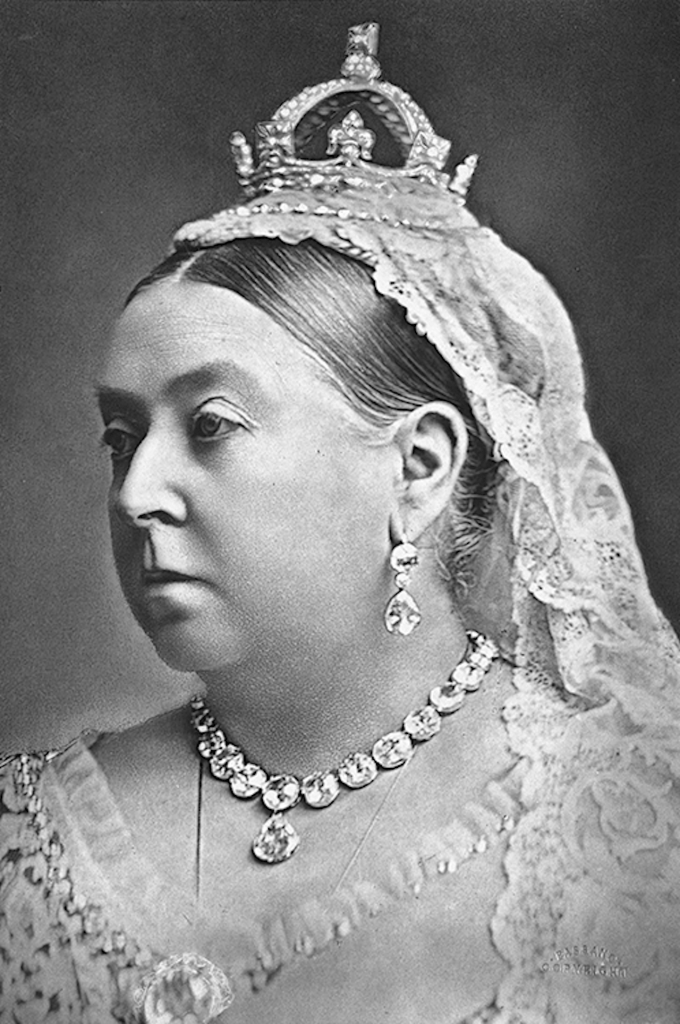
    Image:  Queen Victoria – National Portrait Gallery, London

    Ella Wheeler Wilcox’s “The Queen’s Last Ride”

    As the subtitle to the elegy reveals, the poet composed her poem “The Queen’s Last Ride” on the day of Queen Victoria’s funeral on February 2, 1901. The poem retains it special status and a tribute to the queen, whose reign influenced an era.

    Introduction and Text of “The Queen’s Last Ride”

    With its colorful imagery and a strict formal tone, Ella Wheeler Wilcox’s elegy “The Queen’s Last Ride” reveals the serious nature of the occasion.  

    The poem furthermore presents clearly the results of the speaker’s having mused on the themes of mortality, a royal legacy, and spiritual transcendence from the physical level of being to the astral level of being.

    The Queen’s Last Ride

    (Written on the day of Queen Victoria’s funeral)

    The Queen is taking a drive to-day,
    They have hung with purple the carriage-way,
    They have dressed with purple the royal track
    Where the Queen goes forth and never comes back.

    Let no man labour as she goes by
    On her last appearance to mortal eye:
    With heads uncovered let all men wait
    For the Queen to pass, in her regal state.

    Army and Navy shall lead the way
    For that wonderful coach of the Queen’s to-day.
    Kings and Princes and Lords of the land
    Shall ride behind her, a humble band;
    And over the city and over the world
    Shall the Flags of all Nations be half-mast-furled,
    For the silent lady of royal birth
    Who is riding away from the Courts of earth,
    Riding away from the world’s unrest
    To a mystical goal, on a secret quest.

    Though in royal splendour she drives through town,
    Her robes are simple, she wears no crown:
    And yet she wears one, for, widowed no more,
    She is crowned with the love that has gone before,
    And crowned with the love she has left behind
    In the hidden depths of each mourner’s mind.

    Bow low your heads—lift your hearts on high—
    The Queen in silence is driving by!

    Reading of “The Queen’s Last Ride”

    Commentary on “The Queen’s Last Ride”

    On the same day as Queen Victoria’s funeral on February 2, 1901,Ella Wheeler Wilcox composed her most famous and likely most ambitious poem “The Queen’s Last Ride.” The poem is an elegy for the queen’s funeral procession, commingling sentiments of reverence as well as spirituality.

    Stanza 1: A Metaphoric Drive

    They have hung with purple the carriage-way,
    They have dressed with purple the royal track
    Where the Queen goes forth and never comes back.

    The first stanza introduces the poem’s main metaphor: the queen’s funeral procession is portrayed as a “drive,” a term which lightens the formal nature of a royal, state funeral, while it grants the occasion an intimate, personal tone. 

    The repetition of “purple” in “They have hung with purple the carriage-way” and “They have dressed with purple the royal track” implies the color’s two-fold importance as a symbol of royalty and also as a symbol of spirituality [1]. 

    In Victorian England, the color of purple was used to symbolize royal dignity [2]; that hue was often in evidence in ceremonies to signal authority but also to show reverence. 

    The color’s distinction in this poem emphasizes the grave and serious nature of the occasion; it utterly transforms the physical, earthly path of the procession into a symbolic “royal track” that leads to an eternal destination. The implication corresponds to the poem’s spiritual undertones.

    The phrase “Where the Queen goes forth and never comes back” heralds the theme of finality, signaling that death remains an inevitable departure. The word “never” rings in a stark closure, which contrasts mightily with the gentleness suggested by use of the term “drive”; thus a balance of tenderness and inevitability is accomplished.

    The speaker’s employment of the present tense—”The Queen is taking a drive to-day”—creates a feel of immediacy, connecting the poem to the historical moment of February 2, 1901, when the queen’s  funeral procession actually took place [3]. 

    This time-stamped anchoring invites readers to join and observe the event as it is occurring; this invitation encourages a shared sense of mourning. The stanza’s meter and rime scheme (AABB) parallels the orderly movement of the funeral  procession, as it emphasizes the ceremonial tone. 

    Furthermore, the actions stated by “They have hung” and “They have dressed” suggest a shared effort. It is thus implied that the nation—or even the world—is, in fact, participating in arranging this sacred path. 

    That shared agency sets the stage for the poem’s broader exploration of shared grief and reverence; such common sharing places the queen’s act of leaving her physical encasement (death) as a special moment of world-wide importance.

    The imagery of the “carriage-way” and “royal track” further reveals the Victorian fascination with ceremonial processions [4] as well as other public events. 

    Funerals of high-ranking official were very carefully orchestrated events; they were intended to mirror the social order of the community [5]. Wilcox’s speaker’s use of language clearly communicates the Victorian cultural customs. 

    Such subtle linguistic performance is responsible for transforming the physical route of funeral procession into a metaphorical, even metaphysical,  journey from the earthly to the spiritual level of being. 

    Finally, this stanza sets forth the poem’s somber tone while firmly grounding it in the cultural and historical state of Queen Victoria’s unusually long occupation of the throne, which ran through six decades (63 years and 7 months, from June 20, 1837, to her death on January 22, 1901) and left an enduring influence on British identity.

    Stanza 2:  Setting Laboring Duties Aside

    Let no man labour as she goes by
    On her last appearance to mortal eye:
    With heads uncovered let all men wait
    For the Queen to pass, in her regal state.

    The second stanza moves from description to command: it calls for the ceasing of labor and the displaying of respect.  No one should be giving attention to anything else as the queen passes by for the last time.

    This command demonstrates the Victorian era’s stress on decorum, especially during moments of national mourning. The laying aside of work was a common practice during royal funerals. The cessation of labor and other everyday duties was for demonstrating a community pause for the purpose of honoring the deceased. 

    The speaker’s command to stand with “heads uncovered” calls forth a traditional gesture of respect.  This custom became deeply ensconced in British customs of removing any head gear in the presence of royalty or during solemn occasions. 

    This act of removing headgear also carries a democratic undertone, which suggests that all men, regardless of class, remain united in moments of homage.

    The phrase “last appearance to mortal eye” deepens the poem’s musing on mortality; such musing frames death as a leaving off of human sense awareness. 

    The word “mortal” emphasizes the Queen’s humanness, an act that strips away her royal status to concentrate on her shared vulnerability with all other member of humanity. 

    This universal gesture is representative of Wilcoxian poetry in general, which often explores themes of human connection and spiritual continuity. The stanza’s imperative tone—”Let no man labour” and “let all men wait”—creates a sense of common obligation, inviting readers to join in the ritual of mourning. 

    The regular rime and meter continue to parallel the orderly nature of the procession, while the repetition of “let” reinforces the speaker’s authority in guiding the reader’s response.

    The second stanza also subtly critiques the busyness of modern life, a growing concern in Victorian literary arts. By calling for a pause in labor, the speaker elevates the queen’s passing above the everyday concerns of life, placing it as a moment of profound importance. 

    The phrase “her regal state” reinforces Victoria’s continued majesty, even in death, while the act of waiting suggests a open space between life and death, where the living honor those who have left their physical encasements. 

    This stanza thus serves as both a call to action and as a musing on the cultural practices that guided Victorian responses to death, particularly for a queen whose reign set the boundaries of an era.

    Stanza 3: A World-Wide Tribute

    Army and Navy shall lead the way
    For that wonderful coach of the Queen’s to-day.
    Kings and Princes and Lords of the land
    Shall ride behind her, a humble band;
    And over the city and over the world
    Shall the Flags of all Nations be half-mast-furled,
    For the silent lady of royal birth
    Who is riding away from the Courts of earth,
    Riding away from the world’s unrest
    To a mystical goal, on a secret quest.

    The third stanza expands the poem’s reach to a world-wide scale; it depicts a grand procession led by the “Army and Navy,” followed by “Kings and Princes and Lords of the land.” 

    This imagery accurately portrays the historical reality of Queen Victoria’s funeral, which was a carefully orchestrated event, attended by foreign dignitaries, including other European royalty, and further punctuated with military honors. 

    Victoria’s rôle as the “grandmother (or godmother) of Europe” [6], with family ties to many royal houses, transformed her funeral as a diplomatic as well as a ceremonial occasion. 

    The speaker’s introduction of “Kings and Princes” emphasizes the international extent of her influence, while at the same time portraying the Queen as a unifying figure whose impact had been felt beyond national borders.

    The image of “Flags of all Nations” at half-mast further emphasizes the international impact of Victoria’s death. The half-mast flag, a world-wide symbol of mourning, reveals the widespread grief that accompanied the end of her reign, which correlated with the height of British imperial power. 

    The speaker’s claim of “all Nations” suggests the joint act of homage, which reinforces the queen’s rôle as a symbol of stability in an era of rapid expansion of colonies and often uncertain international alliances. 

    The stanza’s language, with its expansive scope and formal diction, parallels the grandeur of the funeral itself, which was formal display of imperial power as well as national unity.

    The latter half of the stanza introduces a spiritual element, as it describes the queen as a “silent lady of royal birth” who is “riding away from the Courts of earth” to a “mystical goal, on a secret quest.” 

    This move from earthly to astral realms corresponds to the Victorian interest in spirituality and the afterlife, a theme  that can be observed in tWilcox’ oeuvre as well. 

    The word “silent” invokes both the solemn nature of the funeral and the ineffable nature of death, while “mystical goal” and “secret quest” suggest a transcendental purpose beyond human understanding. 

    These phrases subtly suffuse the queen’s final journey with an element of divine mystery, which places her death as a possible passage to a higher plane of existence. The stanza thus melds the specifics of history with universal themes, which reflects both the public exhibition of the funeral and the private, spiritual implications for immortality.

    Stanza 4:  Emphasizing Simplicity

    Though in royal splendour she drives through town,
    Her robes are simple, she wears no crown:
    And yet she wears one, for, widowed no more,
    She is crowned with the love that has gone before,
    And crowned with the love she has left behind
    In the hidden depths of each mourner’s mind.

    The fourth stanza juxtaposes the queen’s “royal splendour” with her simplicity, noting that “Her robes are simple, she wears no crown.” (Note the use of the British spelling “splendour.”)

    This contrast furthermore demonstrates the historical portrayal of Victoria in her later years, especially after the death of her husband (consort) Prince Albert of Saxe-Coburg and Gotha in 1861, at which time she adopted a subdued public image; she often publicly appeared n simple black attire [7]. 

    The speaker’s stress on simplicity humanizes the queen and signals that she remained humble. Humility was a Victorian ideal, especially in the facing of death. However, the speaker reimagines the crown by portraying it as a metaphorical one, “crowned with the love that has gone before” and “crowned with the love she has left behind.” 

    This two-fold crowning advances Victoria’s legacy well beyond any material wealth and speeds it on to an enduring emotional and spiritual force.

    The reference to “love that has gone before” likely alludes to Prince Albert, whose death profoundly influenced Victoria’s life as all as her reign. The “love she has left behind” reaches to the mourners, who remain carrying love in the “hidden depths of [their] mind.” 

    This phrase suggests a personal, introspective connection to the queen, emphasizing her rôle as a beloved figure, whose influence continues in shared memory. The imagery of a crown of love elevates the traditional symbol of royalty to a universal emblem of affection and loyalty, which emphasizes the poem’s theme of legacy.

    The stanza’s language, with its emphasis on simplicity and emotional depth, reveals the poet’s skill in combining the personal and the public. 

    The regular rime scheme continues to provide a sense of order, which parallels the structured and controlled nature of the funeral procession, while the shift to metaphorical imagery introduces a more introspective tone. 

    By focusing on the queen’s emotional legacy, the speaker emphasizes the human dimension of her passing, inviting readers to reflect on their own bond with the monarch.

    Final Couplet 5: A Silent Farewell

    Bow low your heads—lift your hearts on high—
    The Queen in silence is driving by!

    The final couplet serves as a touching conclusion, urging readers to bow their heads as in prayer but also to take the occasion into their hearts with great feeling.  This duality speaks to the poem’s balance of grief and hope, a distinctive feature of all successful elegiac poetry. 

    The act of bowing heads signifies humility, respect, and mourning, while lifting hearts suggests a transcendence of earthly, physical plane sorrow, joining with the spiritual undercurrents introduced earlier. 

    The phrase “The Queen in silence is driving by” reinforces the solemn nature of the moment, with “silence” symbolizing both the reverence of the mourners and the ineffable nature of death. The repetition of “driving” ties back to the first stanza, creating a cyclical structure that simulates the the motion of the procession’s journey.

    The stanza’s commanding tone engages readers directly, inviting them to join in the shared act of mourning. This call to action reveals the Victorian practice of community grieving, where public displays of sorrow reinforced social continuity. 

    The upward gesture of lifting hearts also corresponds to the Christian tenet of resurrection and eternal life, which was cardinal to Victorian commemoration culture. 

    By concluding with this hopeful note, the speaker transforms the queen’s death into a moment of spiritual upliftment, an act which strongly suggests that her legacy will endure beyond the physical level of being.

    Wilcox’s Mastery

    Ella Wheeler Wilcox’s “The Queen’s Last Ride” remains a masterful elegy that explores the interaction between public presentation and private grief. 

    As both a historical, literary artifact and a timeless musing on death, “The Queen’s Last Ride” exemplifies Wilcox’s ability to blend individual emotional depth with public formal elegance, offering a fitting tribute to a queen whose reign influenced the culture and customs of an era.

    Sources

    [1]  Editors. “Exploring Purple Symbolism: From Royalty to Spirituality.” The Symbolism Hub. 2025.

    [2]  Greg Gillespie.  “What Does Purple Mean in the Victorian Era?” Vintage Printable Art.  June 23, 2023.

    [3] Curators. “Funeral procession of Queen Victoria, February 1901.”  Todays History.  February 1, 2019.

    [4]  Herman du Toit, editor.  Pageants and Processions: Images and Idiom as Spectacle. Cambridge Scholars Publishing.  2009. pdf.

    [5] Curators. “The History of Funeral Processions.” Sunset.  April 1, 2024.

    [6]  Editors.  “The ‘Godmother of Europe’: Queen Victoria’s Family Ties across the Continent.”  Accessed May 31, 2025.

    [7] Liam Doyle. “Royal Heartbreak: Why Did Queen Victoria Wear Black?Express. September 17, 2020.

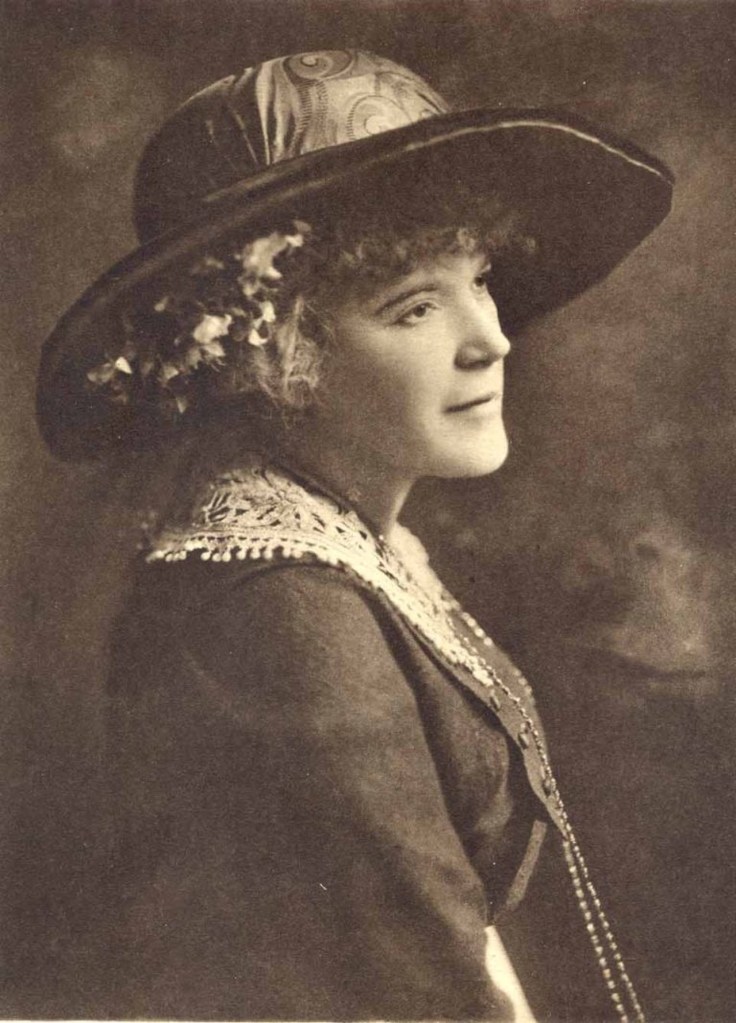
    Image:  Ella Wheeler Wilcox 

  • W. H. Auden’s “Doggerel by a Senior Citizen”

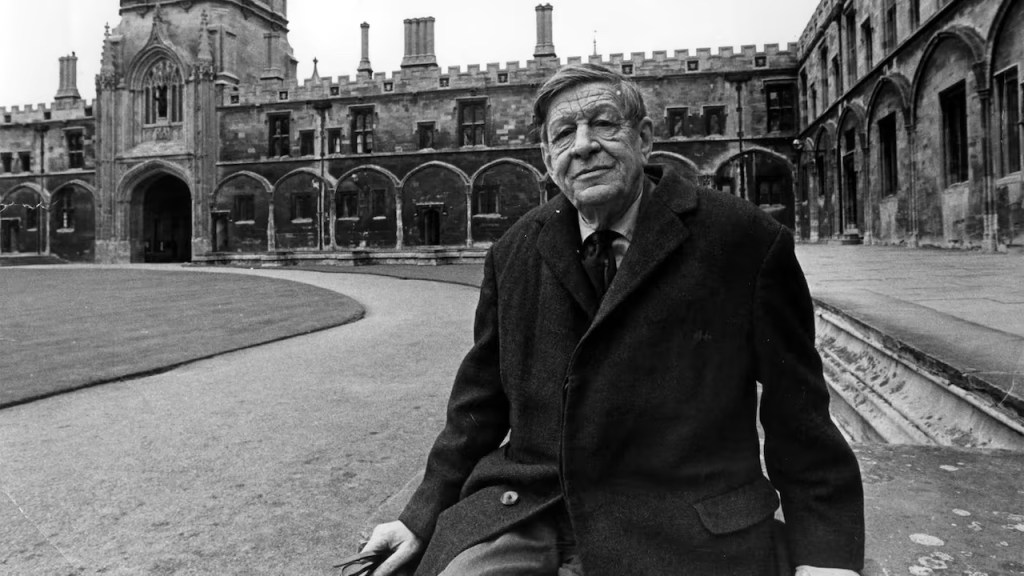
    Image: WH Auden in the Tom Quadrangle at Christ Church College, Oxford © Camera Pres 

    W. H. Auden’s “Doggerel by a Senior Citizen”

    The speaker in Auden’s “Doggerel by a Senior Citizen” is a man of certain age, warning listeners that what he is about to spew is doggerel.  But the claim is made in ironic jest; what the “doggerelist” is about to spew is the bitter truth, or at least in his humble opinion, about societal progress.

    Introduction with Text from “Doggerel by a Senior Citizen”

    By ironically jesting that his utterance will be only a bit of doggerel, the speaker in W. H. Auden’s “Doggerel by a Senior Citizen” lightens any blame he may receive, or any pushback against his views.    The views and the biting criticism remain perfectly in line with the poet’s views as expressed in his utterly serious works, such as “The Unknown Citizen.”

    Doggerel by a Senior Citizen

    Our earth in 1969
    Is not the planet I call mine,
    The world, I mean, that gives me strength
    To hold off chaos at arm’s length.

    My Eden landscapes and their climes
    Are constructs from Edwardian times,
    When bath-rooms took up lots of space,
    And, before eating, one said Grace.

    The automobile, the aeroplane,
    Are useful gadgets, but profane:
    The enginry of which I dream
    Is moved by water or by steam.

    Reason requires that I approve
    The light-bulb which I cannot love:
    To me more reverence-commanding
    A fish-tail burner on the landing.

    My family ghosts I fought and routed,
    Their values, though, I never doubted:
    I thought the Protestant Work-Ethic
    Both practical and sympathetic.

    When couples played or sang duets,
    It was immoral to have debts:
    I shall continue till I die
    To pay in cash for what I buy.

    The Book of Common Prayer we knew
    Was that of 1662:
    Though with-it sermons may be well,
    Liturgical reforms are hell.

    Sex was of course — it always is —
    The most enticing of mysteries,
    But news-stands did not then supply
    Manichean pornography.

    Then Speech was mannerly, an Art,
    Like learning not to belch or fart:
    I cannot settle which is worse,
    The Anti-Novel or Free Verse.

    Nor are those Ph.D’s my kith,
    Who dig the symbol and the myth:
    I count myself a man of letters
    Who writes, or hopes to, for his betters.

    Dare any call Permissiveness
    An educational success?
    Saner those class-rooms which I sat in,
    Compelled to study Greek and Latin.

    Though I suspect the term is crap,
    There is a Generation Gap,
    Who is to blame? Those, old or young,
    Who will not learn their Mother-Tongue.

    But Love, at least, is not a state
    Either en vogue or out-of-date,
    And I’ve true friends, I will allow,
    To talk and eat with here and now.

    Me alienated? Bosh! It’s just
    As a sworn citizen who must
    Skirmish with it that I feel
    Most at home with what is Real.

    Commentary on “Doggerel by a Senior Citizen”

    Claiming to be offering a piece of doggerel, this speaker/senior-citizen offers his personal evaluation about what things are like in the year 1969.

    First Movement:   A Different Planet from Yesteryear

    Our earth in 1969
    Is not the planet I call mine,
    The world, I mean, that gives me strength
    To hold off chaos at arm’s length.

    My Eden landscapes and their climes
    Are constructs from Edwardian times,
    When bath-rooms took up lots of space,
    And, before eating, one said Grace.

    The speaker begins by alerting his listeners that he is reporting from the year 1969, and he then makes clear through a bit of exaggeration that the earth no longer represents the same “planet” upon which he had formerly existed.   This new “earth” “planet” “world” has become a place of mayhem, and the disorder is so bad that he has difficulty keeping it at bay or out of his own life.

    The speaker suggests that his own preference is for the Edwardian age [1], a period of prosperity and especially important in the areas of fashion and art.  The speaker hints that religion was still a central feature in the family, as they said “Grace” before dining.

    The speaker makes it clear that for him those times were “[his] Eden”—likely he does mean prelapsarian Eden [2]. He employs the rest of his discourse to show how the times in which he is now living can be considered quite postlapsarian [3]

    Second Movement:  Nostalgia Outsmarts Novelty

    The automobile, the aeroplane,
    Are useful gadgets, but profane:
    The enginry of which I dream
    Is moved by water or by steam.

    Reason requires that I approve
    The light-bulb which I cannot love:
    To me more reverence-commanding
    A fish-tail burner on the landing.

    The speaker refers to the common inventions of the day, calling the mode of travel by car and plane “useful” but “profane.”  He still longs for the steam engine  and old-timey wind sailing.

    Although he feels that he is likely required to accept used of the “light-bulb,” he cannot bring himself to “love” the object.  He prefers the gaslight resembling a fish tail, which resulted from two gas jets spewing through two holes that fanned out and formed the fish tail shaped flame.  Nostalgia often overcomes efficacy when it comes to every-day useful appliances.

    Third Movement:  From the Work Ethic to Debt Accumulation

    My family ghosts I fought and routed,
    Their values, though, I never doubted:
    I thought the Protestant Work-Ethic
    Both practical and sympathetic.

    When couples played or sang duets,
    It was immoral to have debts:
    I shall continue till I die
    To pay in cash for what I buy.

    The speaker has overcome the idiosyncrasies of family life, coming to love those whom he had earlier found unpleasant; he has, however, always accepted the basic moral rectitude of those family members.  They adhered to the “Protestant Work-Ethic,” which the speaker has always deemed practical and proper.

    Back during the time when party entertainment often consisted of “couples [playing or singing] duets,” the society deemed acquiring debt an immoral act.  The speaker assures his listener that to his dying day he will continue to accept that societal feature and continue to pay “in cash for what I buy.”

    Fourth Movement:  The Weakness of Liturgical Reforms

    The Book of Common Prayer we knew
    Was that of 1662:
    Though with-it sermons may be well,
    Liturgical reforms are hell.

    Sex was of course — it always is —
    The most enticing of mysteries,
    But news-stands did not then supply
    Manichean pornography.

    The speaker remembers that before certain religious reforms a “Book of Common Prayer” held sway, and it dated all the way back to 1662, during the era of the Restoration of King Charles II [4].

    Religious reformation always comes about through controversy.  Those who have become accustomed to certain practices of worship distain any change and thus argue against “liturgical reforms” [5].  This speaker has already placed his likely position on such reforms; he naturally comes down solidly on the side against them, labeling such actions “hell.”

    The speaker then cites “sex,” which is always engulfed in “mysteries,” as an example of one phase of life that has suffered because of “liturgical reforms”:  the obnoxious duality of “Manichean pornography” now sits on “news-stands,” whereas in the more modest past, such sights would not have been tolerated.

    Fifth Movement:  The Problem with Language Study

    Then Speech was mannerly, an Art,
    Like learning not to belch or fart:
    I cannot settle which is worse,
    The Anti-Novel or Free Verse.

    Nor are those Ph.D’s my kith,
    Who dig the symbol and the myth:
    I count myself a man of letters
    Who writes, or hopes to, for his betters.

    The speaker now tackles “Speech,” the art of the word, the use of letters that creates literary art.  But first he delves into the vulgar act of belching or farting, which along with the “mannerly” use of language, would not be acceptable.  Children would then learn to avoid the grossness involved in such human effusions.

    The speaker says he has not decided which art form is more vile: “the Anti-Novel” or “Free Verse.”  The proliferation of those holding doctoral degrees, particularly the Ph.D., does not impress this speaker; he finds this who revel in “myth” and “symbol” hold little interest for him.

    He contrasts himself with those book-learned fellows: he assures his listeners that he himself is “a man of letters.”  But instead of trying to appeal to the vulgar, profane masses, he strives to compose for “his betters.”  He remains a bit humble in his claim by inserting “or hopes to.”

    Sixth Movement:  Lack of Discipline

    Dare any call Permissiveness
    An educational success?
    Saner those class-rooms which I sat in,
    Compelled to study Greek and Latin.

    Though I suspect the term is crap,
    There is a Generation Gap,
    Who is to blame? Those, old or young,
    Who will not learn their Mother-Tongue.

    The speaker then refers to permissiveness as the bane of success in education.  He finds the old-fashioned disciplines focusing on learning “Greek and Latin” to be a much “saner” focus for the classroom.  He was such a student and now feels he has benefited for the rigor of such study of language.

    Mentioning the buzz-phrase of the late sixties “Generation Gap,” he says its likely a worthless expression, even though he does detect that such a thing exists.  But he wonders who is to blame for it? Is the the “old or young”?  But then he answers his question by asserting that both are to blame, that is, those who refuse to learn “their Mother-Tongue.”

    Seventh Movement:  Love and Reality

    But Love, at least, is not a state
    Either en vogue or out-of-date,
    And I’ve true friends, I will allow,
    To talk and eat with here and now.

    Me alienated? Bosh! It’s just
    As a sworn citizen who must
    Skirmish with it that I feel
    Most at home with what is Real.

    The speaker concludes with some uplifting thoughts:  love, for example, never goes out of style, and he retains good friends with whom he can pleasantly dine and converse.

    He seems to reject the notion that he might feel “alienated,” but he does suggest that the loosening of societal mores causes him to “skirmish” with it all.  He insists that he feels most comfortable with “what is Real.”  He does not equivocate with what he thinks that reality entails; he has just laid it all out in his piece of “doggerel.”

    Sources

    [1]  Curators.  “Edwardian Era Facts: Daily Life Of People, Society.” Victorian Era.  Accessed November 26, 2023.

    [2]  Curators.  “prelapsarian.”  vDict.pro. Accessed November 26, 2023.

    [3]  Curators. “postlapsarian.”  Merriam-Webster.  Accessed November 26, 2023.

    [4]  History.com Editors.  “The English Restoration begins.”  History. May 21, 2020.

    [5]  Helen Hull Hitchcock.  “Why the Liturgical Reform? or, ‘What if we just say no to any liturgical change?’Adoremus. November 11, 2020.

  • Malcolm M. Sedam’s “The Hill Maiden”

    Image: Malcolm M. Sedam

    Malcolm M. Sedam’s “The Hill Maiden”

    In his poem, “The Hill Maiden,” Malcolm M. Sedam has created a speaker voicing cheerful vaticination that his teenage angst-ridden protégé will one day shed her nihilism and burst into life affirming joy.  The best teachers are those who can inspire as well as instruct their students.  This poem represents a stellar example of that kind of inspirational educator.

    Introduction and Text of “The Hill Maiden”

    Malcolm M. Sedam‘s “The Hill Maiden” features a teacher dramatizing his observations about a particularly inquisitive but melancholy student.  His ultimate purpose is to instill in the student the notion that she will ultimately be able to appreciate the life that she seems to disdain.

    The poem plays out in three movements of unrimed stanzas.  This organization allows the speaker to touch lightly on the physical reality of the subject but then move more intensely to the mental and finally the spiritual possibility of the subject’s inclinations. 

    Because the speaker can only infer certain facts about his student, the poem remains metaphorically and imagistically implicative  instead of unequivocally literal.  For example, the teacher has no exact idea what the student does at her home; thus he places her in an image of “moving among the phantom rocks of reverie.”  

    The teacher/speaker knows from the negativity the student has been expressing to him that she mentally resides among hardness that causes her to imagine that things are worse than they are.

    Mentally she travels like a rocket through her ghostly musings until night fall when she sleeps but likely gets little rest, accounting for the nervous, brittle energy the educator perceives in his young scholar.

    Likely the adolescent girl is simply suffering the turbulence of teenage angst through which most individuals of that age group must travel.  But the best, most effective teachers are those who can inspire as well as instruct their students.  This poem represents a stellar example of that kind of inspirational educator.

    As an educator, Mr. Malcolm M. Sedam wrote poems to many of his students, always with the goal of inspiring them to high thinking and plain living.  Mr. Sedam once said he felt that his function as an educator was “to kick the dirt off of his students.”  By that he meant to help them see life more clearly without the fog of stereotypes, prejudice, and provincialism.  

    The Hill Maiden

    (for Linda, over in the valley)

    She is moving among the phantom
    Rocks of reverie hurtling through
    By mind bringing days into darkness
    Where the pull of growth rings
    The heart and spurs the soul

    Where her wish strings questions
    In the mysterious night of snow
    Bringing a promise that only the hills can sing.
    Her smile waits behind a frown of swords
    That rend her days

    In the melancholy of the deep valley
    Of dreams where she lives among flowers
    Gathering her moods that may bring peace
    Once the sorrow of lonely distance
    Has closed on hands—

    The same hands that Zen-like reach
    To answer each knock at the door of her heart
    Broken to be mended by tender time.
    Her mind is speeding through a galaxy
    Of intensity where the blood rose

    Will speak to her frozen will
    All forgiven by decree in warring winds—
    The nature of her plight?
    Without wings
    She will still spring into flight.

    Commentary on “The Hill Maiden”

    Malcolm M. Sedam’s “The Hill Maiden” features a teacher, who is also a practicing poet, dramatizing his observance of an inquisitively intelligent but extremely melancholy student.  

    His only purpose is to instill in the student the notion that she will ultimately be able to appreciate the life that she seems now to disdain.

    First Movement:  Dreaming amongst the Hills

    She is moving among the phantom
    Rocks of reverie hurtling through
    By mind bringing days into darkness
    Where the pull of growth rings
    The heart and spurs the soul

    Where her wish strings questions
    In the mysterious night of snow
    Bringing a promise that only the hills can sing.

    The speaker begins by placing the object of his speculative musing in an image that implies sharp but dream-like rigidity.  Rocks appear ghost-like through a dream-scape as they bewilder the mental musings of the young girl with whom the mature educator is engaging both as a poetry mentor as well as a teacher.

    Teachers often counsel their students who seek out their advice and direction even in issues outside of the academic sphere as well as within the educational arena.  Those teachers who must essentially become counselors will either direct the students to other professionals, or they will attempt to offer their own gleanings from their life experience.

    The teacher in this poem demonstrates that he is the latter kind of teacher, and he has given the mind of the young student some serious analysis.  Thus he not only describes her environment, but he also speculates and then foreshadows what is likely to befall the girl once she is able to erase her current adolescent fog.

    Until that glowing day arrives, however, the speaker sees that the girl’s maturing process weighs heavily on her heart and soul.  She is full of questions brought on by the mystery of life.  

    The “snow” that brings beauty as it covers the hills also brings bitter cold and slippery conditions the cause the girl to miss the music that her hill-valley home affords her.

    By pointing out these images of beauty and placing them a context of mystery and difficulty, the speaker hopes to allow his charge to contemplate the possibility that life is real and offers hope to those who search its reaches with an open mind and cheerful heart.

    Second Movement:  Frowning Swords

    Her smile waits behind a frown of swords
    That rend her days

    In the melancholy of the deep valley
    Of dreams where she lives among flowers
    Gathering her moods that may bring peace
    Once the sorrow of lonely distance
    Has closed on hands—

    The same hands that Zen-like reach
    To answer each knock at the door of her heart
    Broken to be mended by tender time.

    The speaker has observed the teen’s unwillingness to show a cheerful countenance.   Her bitterness “behind a frown of swords” likely often gives the mentor a shudder at the likelihood that the girl is suffering intensely.

    No doubt, he believes that at this point in her life, she should be dancing merrily among “flowers” and allowing her sorrowful moods to dissolve in the “deep valley of dreams.”

    But again, he returns to prognostication that once she has learned to fold her hands in wonder and listen to the love that knocks at the “door of her heart,” her melancholy will be rendered null and void as “tender time” moves her through the rough spots of her anguish.

    Again, the speaker chooses beauty—”flowers gathering”—to balance the “frown.”  He offers the image of the heart’s door to harmonize with the environment that will reach her with the “Zen-like” hands of mystery and the ultimate gain-of-wisdom.  

    Like a Zen koan, the riddle of life will remain before her as she continues to search for answers to her perplexing questions.  

    Third Movement:  Springing into Flight

    Her mind is speeding through a galaxy
    Of intensity where the blood rose

    Will speak to her frozen will
    All forgiven by decree in warring winds—
    The nature of her plight?
    Without wings
    She will still spring into flight.

    Finally, the speaker makes his most striking vaticination after asserting that his young charge has a strong mind but also a tender heart that is quick to show intense emotion.  

    That the “blood rose” will speak itself undeniably to the girl’s will portends that all of her negativity and nihilism will be “forgiven” as she continues to navigate through the conflicts that life bestows on all searching souls.

    Then the speaker offers the question that he is likely very content to answer.  The frustrating situation that befuddles the young scholar’s mind and heart has been implied by all the imagery that went before, but then what will eventually be the path chosen by and/or for the student?   

    She will be able to navigate through all the trials and tribulations as a bird that so easily lifts it wings to the wind and takes to the air through the abundant space of sky.

    The speaker is not so naïve as to insist that such navigation will come easily, but he does remain assured that the path will open to the girl, and she will become willing to follow it. Thus the speaker can conclude affirmatively that “Without wings, she will still spring into flight.”

    Offered by a beloved and well-respected mentor, such faith in a young scholar’s ability to navigate life is bound to redound in blessings, despite the pitfalls and rough spots that her life, no doubt, will place sphinx-life before her mind and heart.