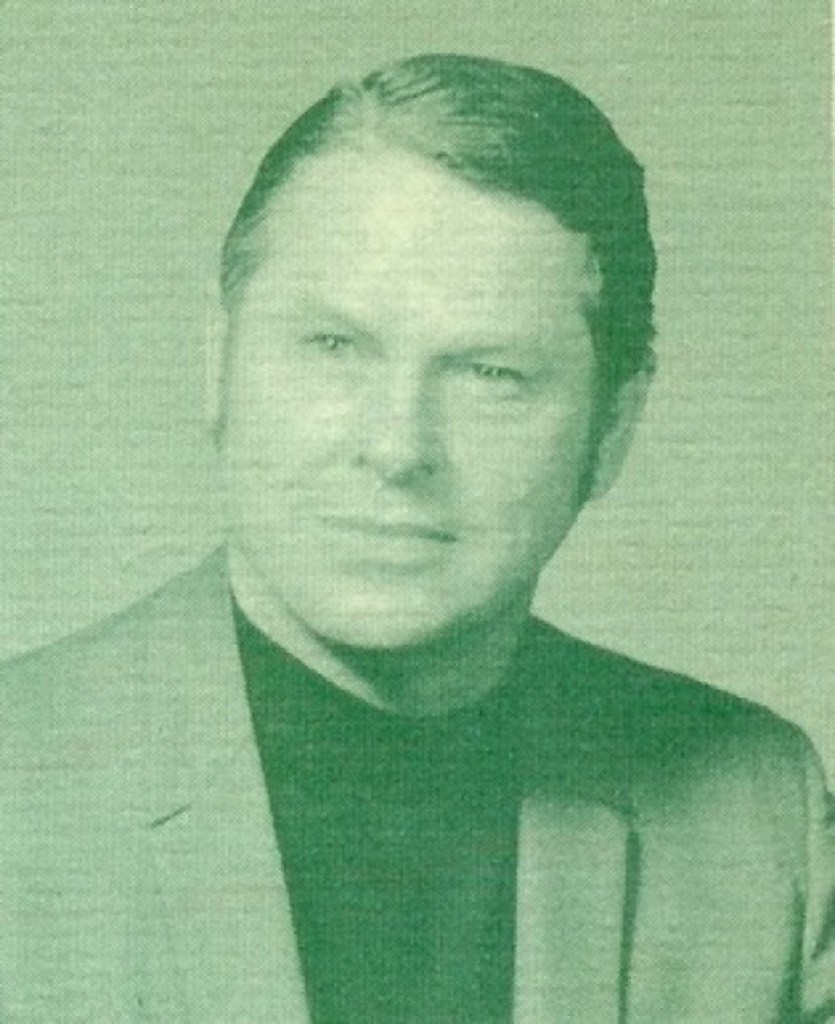
Malcolm M. Sedam – Book Cover The Man in Motion
The following sampling of poems are from Mr. Sedam’s second published collection, The Man in Motion.
1 THE QUICK AND THE DEAD
As friends of the deceased
we stood outside the plot
and spoke of many things;
I said that I was a teacher
and it came out he was too,
somewhere up North, he said,
a good community — good school,
no foreigners, Negroes, or Jews
in fact, he said,
no prejudice of any kind.
2 SAINT GEORGE
He says he has a problem
and I say: Tell me about it
because he’s going to tell me about it anyway
so it seems he was making love with his wife
last night or thought he was
when right in the middle of it she stopped
and remembered he hadn’t put out the trash
for the trash man the next morning
so he asks: What would you have done?
and I say: Get up and put out the trash
which of course he did
but he still doesn’t know why
and I reply:
You must slay the dragon
before there is peace in the land.
3 FACES
A funny thing happened in the war
and you’ll never believe it
but there was this Jap Zero
at ten o’clock low
so I rolled up in a bank
and hauled back on the stick
too fast
and nearly lost control
and when I rolled out again
there was this other Jap
(He must have been the wingman)
flying formation with me.
We flew that way for hours
(at least four seconds)
having nothing else to do
but stare each other down,
and then as if by signal
we both turned hard away
and hauled ass out of there.
We flew that way for hours
(at least four seconds)
and when I looked again
he was gone—
but I can still see that oriental face
right now
somewhere In Tokyo
standing in a bar
there’s this guy who’s saying:
a funny thing happened in the war
and you’ll never believe it
but there was this American. . .
4 EXPERIENCE
Then there was that night in Baton Rouge
Jack and I went out on the town
looking
two looking for two
And we saw these two broads at the bar
and I said
There’s two Jack but yours doesn’t look so good
but he was game
So we grabbed them and wined them and dined them
with champagne and steak
I remember
forty-four bucks to be exact
And when we walked out of that place
I slipped my arm around the pretty one
an whispered
let’s go up
And she said
whadaya think you’re gonna do
And I said
not a goddam thing
and left her flat
And Jack took the dog-face one home
And made a two-weeks stand of it
and come to think of it
I never chose a pretty girl after that.
5 NOSTALGIA
(For Lee Anne)
Call it the wish of the wind
flowing
from a dream of dawn
through the never-to-be forgotten
spring of our years
running
swiftly as a lifetime
flying
like a vision borne
Slim Indian princess wedded in motion
dark hair streaming
sunlight and freedom
floating on the cadence song
drifting shadow-down
in the distance
my daughter riding bareback
on a windy April afternoon.
6DESAFINADO
(For Allen Ginsberg, et al)
Through this state and on to Kansas
more black than May’s tornadoes
showering a debris of art —
I saw you coming long before you came
in paths of twisted fear and hate
and dread, uprooted, despising all judgment
which is not to say
that the bourgeois should not be judged
but by whom and by what,
junkies, queers, and rot
who sit on their haunches and howl
that the race should be free for pot
and horny honesty?
which I would buy
if a crisis were ever solved
in grossness and minor resolve
but for whom and for what?
I protest your protest
its hairy irrelevancy,
I, who am more anxious than you
more plaintive than you
more confused than you
having more at stake
an investment in humanity.
For my commentary on the poem, please visit, “Malcolm M. Sedam’s ‘Desafinado’”
7 JOSEPH
Some things were never explained
even to me, and of course
they would tell it his way
but I believed in her
because I chose to believe
and you may be sure of this:
A man’s biological role is small
but a god’s can be no more
that it was I who was always there
to feed him, to clothe him
to teach him, and nurture his growth—
discount those foolish rumors
that bred on holy seed
for truly I say unto you:
I was the father of Christ.
For my commentary on this poem, please visit “Malcolm M. Sedam’s ‘Joseph’”
8 TO MOSES AT SINAI
At least part of your message is clear,
thou shalt not kill except in certain seasons
and thou shalt not commit adultery
except in certain regions
and thou shalt not lie
except on incredible things
like carrying five tons of tablet stones
down mountains.
9 INDIAN COUNTRY
Can it be enough to wake in the morning
to find in a land above all others
the generosity of spring
a summer’s desire
the sky like a psalm unfolding a season for lovers?
Stay, do not be afraid
walking hand in hand with me
through the gentle wilderness
the glorious heart of it
I know this country better than I know myself
better
let me share it with you
this immortal scene—
how can you close your eyes?
10 REGENERATION
Something in me and the abiding dust
Loosed an imprisoned force
And I became a man at the age of twelve
Proclaiming myself above women
I decided to be a trapper up North
But tried the near creek first
Caught a muskrat that turned me weak
Cried boys tears then came back strong
Finding maturity was thirteen
Growing soft on animals and girls.
11 FOREVER CALVIN
Life had seldom been good to him
and the cloth he had always denied
but faced with the new theology
he stood with his beer and replied:
“People been sayn’ God is dead
but I know
that old sonofabitch is still alive.”
12 MYSTIQUE
My thoughts are on the ring of morning
my insight beholding the sun—
I will say she is not beautiful
or shall I say, no more beautiful
than the average of her age
an average girl
in plain blue sleeveless dress
with soft brown sling-back shoes
and matching purse
but for the silver dragonfly . . .
ah yes! the silver dragonfly
as delicate as her slender hands
her red-gold hair
her high born face
or the white lace of her brassiere,
which brings my focus to the nearer things
the rainbow from the window
the warm wet sound of rain
the clear clear air.
13 CASUALTIES
Admission of reality
that time can bend a memory
am I a victim of my own credulity
or did I see the dark blood flow
from such savagery . . .
unbelievable
that I was even there
that I remember and forget
so easily
the brain is lensed like that
protects the image
sometimes dims forever
unless a matching pattern focuses the scene
joins two worlds
the then and now . . .
and then
it was no ordinary war
a time some unseen power
had set the stage for me
an unemployed pilot, I happened along
a spectator of the invasion
until the airplanes came—
Admission . . .
they brought the casualties in
and laid them on the tables
of the ship’s wardroom
where only hours before
we ate our peaceful fare
no white-clad nurses here, no softer graces
no operating room decor
I would identify
but my only experience is a football knee
and nothing in the past could conjure this:
a casual would brings no trail
a shattered arm or leg they amputate
of mangled flesh in disarray they sew
a captain missing half his face
the jawbone almost gone
what primal instinct saved his life?
they can’t decide
he crawled back on his own . . .
another
with both hands taped down to his arms
his wrists nearly severed
he says his pistol jammed as he was struck
a sword—
a more immediate concern
he also has a bullet in his chest,
they probe the fevered flesh that forms the hole
almost lose him
Shock!
a call for plasma
the way that nature saves her own
or takes in death if the blood is pooled too long
the surgeon quietly explains—
Admission . . .
the other details I forget
or something doesn’t want me to recall
it is only the surgeon who comes through clear to me
whose raw exposure captured me
record the butchery
whose eyes knew me
as I stood fascinated by his sight—
at three A.M. they bring the last one in
his back a confusion of shrapnel and blood
but almost perfect pattern of designs
a gaping hole with radiating lines
a mortar shell—
his face like the grey dawn precipitates the storm
he is barely conscious now moving through another world
perhaps the only peace he’ll ever know—
the stoic surgeon stares and then starts in
deadens down with morphine
with speed to equal skill
and then in rare expression, he’s feeling with his hands
searching for something
like fish under a log
he has a memory now
pulls out a bloody jagged hunk
smiles and drops it in the pan I’m holding
and for the first time notices me
and for the time I’ll do
a pilot orderly?
why not
incredible
but then how callous I’ve become
beside, I can perform and I am remarkably calm
he knows, sustains my balance
talks of fishing all the while
until the fragments are found
later
much later
our two worlds match again
he sews with a feminine stitch
hands leading heart
compassionate in his touch
Surprisingly the human skin is very tough
he says
cuts easily, punches and tears hard
the consistency of leather
remembering how my mother sewed my shoe
way back there
he tugs and pulls, but carefully
the sergeant groans
from pain I ask?
no, reflex action he explains
the pain comes later
much later
more thread!
will he ever get their wounds sewed up?
how neat the stitches come
a patchwork quilt, a Frankenstein design
and finally done
his genius shows, he’s made another man
but what about his kind
and if he lives how does he survive?
what cursed the learned doctor after time
and after twenty-five years
what monster roams to haunt the tortured mind?
Admission . . .
it is unbelievable the punishment
the human body can absorb
or what the mind can hold
at least for awhile
until the patterns match
the greatest pain comes later . . .
much later.
14 SELF ANALYSIS
Often I have wondered
from where I came
something of motion
wind and cloud and wing
high unity
the sky was my medicine dream
an identity, I suspect . . .
I never was born at all
I fell from another world
was found by a savage tribe
ran through my Indian youth
followed rivers and leas
talked with birds
climbed ancient trees
then beholding all things
I found creativity—
all my years of learning
have taught me
only what I knew as a child.
15 INCONGRUITY
Theirs is a house, a show place
of antiseptic rooms marked:
His and Hers
with climb marks on his walls
and halls that lead to nowhere
(they wouldn’t dare)
and yet they have three daughters
which their friends assure me
came naturally.
16 APRIL
Then from the winter grief
and the tree’s last clinging
the dead leaf falls
to be born in time’s intricate weaving
from the sentient sleep it awakes
to behold life believing . . .
and you thought the spring would never come—
Arise My Love, arise
for love has performed a miracle.
17 HIGH SIERRA
And try as I would today
I could not walk that objective distance away
to write a universal poem
that symbolized all metaphors of love
profoundly beautiful
sensitive to wordways, more sensitive to height
the clearest view
the path ran always toward the sunlight
always to you, in lines as free as
taking you into my arms
feeling the flow of your warmth
creation smiling upon me.
18 JURISPRUDENCE
Yes, yes, I know the tree belongs to you
but your mistake was planting to close to the line—
possession being nine-tenths of the law
your branches leaning heavily my way,
I have picked the apple on this side
and I intend to eat every damned on of them.
19 MIRRORS
And now my daughter
what shall I say to you
when only yesterday I learned to know
myself
I cannot tell just where I end
where you begin or when it was
I loved and lost and won
the perfect picture of my ego —
I know the cruelty that reprimands
your nature
you feel too much
you love too much
you give too much
and I would make you man, like me
hardened and warm
vulnerable and sound
hidden between poems
doubting . . .
believing . . .
no, it is not so
I would not rule you and corrupt your beauty,
you declare in the desperate desire
an intimate loneliness
a weakness yet laden with power
a possible greatness —
then what shall I say to you?
you have written me a poem,
really, it is almost good . . .
really, too much like me.
20 ORIGINAL SIN
“And as life must always contemplate death.”
Now and again in a crowd
I’ll see that look in someone’s eye
that searing stare of endless pain
a desperate longing for the sky . . .
a tremor in the sun, a hurried cry —
“This is Blue Four bailing out!”
the convoluting sight, a silver streak
the searing flash, a rolling red-orange flame
but someone calls: “He’s clear! He’s clear!”
we see him floating free, momentarily safe
billowing white against the perfect blue
like an angel removed from evil—
God’s merciful arrangement?
the decision was never his
he is falling into the enemy’s hands
and the guilt of war goes with him —
he gathers in his chute, hopelessly alone
we circle one more time
but none of us can save him,
standing on the crest of his years
he waves his last goodbye —
Paul Williams . . . the loneliest man I ever saw.
21 CREATION
I will allow to my plan
one dream of man’s own choosing
that he may break his earthly bonds
and exist beyond reason
and Adam and Eve looked upon each other
and behold, they were overjoyed!
22 DOWN TWO AND VULNERABLE
Whose knees these are I think I know
her husband’s in the kitchen though
he will not see me glancing here
to watch her eyes light up and glow;
My partner thinks it’s rather queer
to hear me bidding loud and clear
between the drinks before the take
the coldest bridge night of the year;
She give her head a little shake
to ask if there is some mistake
five no-trump bid, their diamonds deep
and one finesse I cannot make;
Those knees are lovely warm and sleek
but I have promises to keep
and cards to play before I sleep
and cards to play before I sleep.
23 UNTOUCHABLES
If you will ride with me
in the warm and velvet rain
and stay discreetly on your side
I will write for you
the most beautiful love poem
of your life.
24 THE DEATH OF GOD
Look at me Father beneath the grime and blood
a soft-faced boy fading in your sight,
severed from the power to make the sign
one arm dangles, the other grasps my side;
Listen to me Father and hear the red flood
rain the morning with low moaning
black whispers marching in armies of shadows
exposing, exploding the expedient lie,
the cold thought crawls pain-studded, shouting
cutting the sacred threads from all tomorrows;
Time and the sun are staring
sending gods and heroes to their places;
while yet I live and slowly shed my robe
I witness your death as you witness mine.
25 LETTER
Before all colors fade
before you are gone
I’ll hold to this memory of you,
I see you in that gown like wine
two shades of purple pink and purple red
of passion drawn, deep down
I wandered weak from want of you
then knew your warmth and drank my fill
and filled the caverns of my mind
and sewed the hills with vineyards fine
that I each year might touch the spring again —
when you are gone, and surely you are
I know it now
for the words are beginning to come.
26 FORGOTTEN SPRING
And I
awake
in the veil of morning
from shadow dreams
unfound
unknown
there is no sight or sound
but the rain in the willows
and I have forgotten
when it was that came in May
with the scent of spring
and a trace of the forest bloom —
I arise
and go to the window
and search in the darkness
to feel the lifeblood
touching the night with my hands
recalling the smallest things
transformed in rain
the linden flowers
the redbud lane
and I return
and I am young in my shadows
reflecting a sequined day of warmer years
when children walked the emerald springs
remembering nothing but dreams
nothing
but sleep
sleep
Sleep that come a thousand miles beyond
a distant sorrow
the forest road and garden flowers dissembled
torment settled
the terror of unearthly storms
from sounding dreams of heartbeats
falling
falling
asleep
asleep
and I awake to know not to know
what lonely river fills the tortured mind
a soul’s denial
why nether light unveils a ghost of time
condemns tomorrow
somewhere the dead is watching
exists
is calling
something I have lost has troubled me
awakens me
calls me
to sleep
sleep
the broken frames of memory close
asleep
open
and I awake to the black veil of mourning
painfully conscious of that final hour
and one forgotten scene
the wringing hands the labored breath
a tension crowded room
the moral madness of his sight
the faded flowers
the dreaded tomb,
but I am old, have shed my tears —
sleep! give me sleep!
I want no memory of that time
and avalanche of lifeblood fallen
drowning in a sea of slime
the shadow man more child than man
was dying . . . dead
and life removed
is dead
calls to me to silence
and sleep
sleep
sleep that goes a thousand miles beyond
perpetual dawn
the spring was morning
the sun had healing powers
I stood at the window beside my mother
and Albert walked along the garden flowers
and called:
come, Marcene, let’s go mushroom hunting.
27 EDELWEISS
Then I will tell you about beauty
it is the miracle revealed on a winter day
that in a careful moment flowers a barren land
and leaves tomorrow
wherein we walk from snowy graves reborn seven times over,
touch me then for that is beauty
the only kind I understand
what matters now is that I remember
for the longest possible time the longest day
when beauty is covered with sorrow . . .
this too shall pass away.
28 SUMMER PLACE
Still my awareness can say what happened there —
there was such a time and such a woman
there was a river flowing
a blood so dramatically clear
there was a windwalk flowering through the trees
an endless stream of light that marked the year —
how do I measure your loveliness?
I see you again like willow wand summer sun
shining and free and unashamed
love and the slowly spreading leaves
care and the greatest gift we claimed —
calmer then we knew our way
we gathered life around us like a golden cloak
and wore it every day.
29 LONELINESS
On that October afternoon
under the maple bordered streets
the canopy of memory closed every Godly sound
when Billy Lambert died —
the rainfall felled and crushed red leaves
bled through bitter wine
and I drank paralyzed like any man
too stunned to reason why
too brave to cry, they said,
they took my silent grief
what sixty pounds could give
as proof like theirs, standing for strength —
they did not know that I was eleven
without faith.
30 FARFALLA
It seems inevitable now
that I should find you again
at mid-summer,
when I came down from the spring
I walked along in the rain
thinking of you
your form and being
as warm and secure
as nature’s cocoon
knowing that someday soon
you would arrive with the sun
beautiful and alive.
31 ALCHEMIST
From the imagery of the past
with the metaphorical present
the match is made
sometimes obvious
but more often than not
a sixth sense tells us
it is there
and apparently without reason
we know because we have tried —
a poem is not tricked
not willed into being,
with or without us
it comes with a mind of it own
a substance of rhythm and tone
base metal some unknown alchemy
has turned to gold.
32 FOR REASONS UNKNOWN
“The Board after review of the crash that took the lives of fifty-eight people, has ruled, the probable cause: a loss of control, for reasons unknown.”
To one who must review the will of impossible gods
this crash leaves in its wake man’s torn identity
For Reasons Unknown; the probable cause,
an altimeter’s difference, an obvious loss of control
but who can comfort oneself on finding death at this expense;
here in the residue of grief, a coat, a toy, a case
the charred remains of lives the lived before the shrouds,
once with a burning intensity, a chemistry sublime
now an horrendous blending shattered by time
For Reasons Unknown;
only a few hours before when there was hope
we were intrigued by their heights, sensation of pride and power
in that moment of brilliance, a soul’s magnificence
then a wall and a new dimension of mind;
again we have met in this place, the corridor of death
where we are no longer strangers to the hard intelligence:
that the dream is impenetrable for them and for us
and for them it is all or nothing,
and if it is nothing . . .
but then, how foolish is forever,
For Reasons Unknown, cancel flight fifty-eight.
33 CONCEPTIONS
If I were a woman
I would become great with child
if only to test my creative power
to bring a fertilized egg into being
proof positive that my reproductive prowess exists
but being a man
I can still stare at sperm unbelieving
that there is anything great with me
having no conception of conception
I’m disturbed when she asks me:
“Aren’t you proud to be a father?”
and I answer yes and no
no for the biological act, yes after the fact
I fulfilled my responsibilities
and earned my right to that
to be called Father?
no, with no awareness of conception
I knew only, still felt only the pleasure,
so I would alter the master plan somewhat —
a woman should be wired for light and sound
and at the time conception
like an exciting pinball machine
her body would glow and the lights would come on
and bells would ring and out of her navel
would pop a card which would say:
Big Man with your wondrous sperm
this time you the the jackpot!
keep this card and in nine months you can collect.
34 PHD
I continued upward
ignoring signs of the northern sky
until I crossed the subtle circle
and arrived at the pole;
I sat in frozen silence
reflecting an impotent sun
and when I left that place
my direction was necessarily south.
35 DIVINE RIGHT
“And God saw every thing that he had made and behold, it was very good.” Genesis 1:31
All of God’s creatures have purpose
they say, including me
and even I may prove it yet
and even a mosquito proved it once,
Texas breed, Matagorda brand
he sat upon my hand
and sucked my blood, innocently
without checking my rank
and mismatched as we were
he filled too full to fly
and fluttered fitfully flopping
like a frog, so heavily wing-loaded
I smashed him flat
than sat back on my throne
and praised my bloody competence.
36 PATHFINDER
Two roads diverged in the yellow woods
And I knowing I could not travel both
impetuously cried:
To Hell with decisions!
And struck off through the woods.
37 BEAUTY AND THE BEAST
“I thought you were strong for Jenny?”
“Well you know how she is—
Wears three coats of makeup,
Flat chested, legs too short,
And without contacts—ugh!”
Which reminded me of the time
He introduced me to Jenny—
Lavender eyes, satin skin
And bosom and legs enough . . .
“Oh yes and another thing
You wouldn’t have guessed:
We broke up last week.”
38 DISCOVERY
Between the first and the last
there is a part of us that lives
outside ourselves where we can see
held in life’s rhythm
our first encounter with immortality,
no joy specific could cry that pleasure
proclaiming what we are
but if we could tell this tale
where no one cared to know
we would live it again
that intimate discovery
like Adam and Eve
we were the first two people.
39 POEM TO MY FATHER
On His Seventy-fifth Birthday
For as a man stands for love—
and now
after the gift of our friendship
when I am alone to see myself for what I am,
how slow was my awakening, and it seemed
too many years you had passed us by
but then as I became mature and unafraid
they made the bond enduring when we discovered
we walked the same valley of age and wisdom
respectfully different, feeling the same imprints
hearing the same footfalls
following the same river to the ultimate sea—
foreseeing that day of silence
I need no tears to purify the past:
this was the gift of the gods
For as a man stands for love
there will remain his legacy an everlasting moment
the memory of the nobility of man.
40 YOKOHOMMA MISSION
(After Twenty-fiveYears)
What the years have taken away
what I forget to remember
and what lasts forever
in dreams that burned the imprint on my mind . . .
Flying across that lonely shield of space
the interwoven contrails streak the malevolent sun
high and clear at twenty thousand feet
down a flawless sweep of sky—
We have formed to protect the second wave of bombers
long-barreled B-29s with huge block letter markings
on their tails
three hundred in a massive glare
but one that stands out over all
the letter R
Remember
How they came
the enemy in swarm
like magnificent fireflies
in black and green
with big red suns on their wings
confused our aim
skywalked our tracers
missing four and hitting one
he spins away angrier in death then life
again
the engines strain
moving upward
climbing to regain
ah precious altitude
the run is perfectly aligned—
We have broken off momentarily
giving way to the black flak highway
blanketing the run
the first unfolded far behind
the second overled
the third more accurate
scores
a bomber falls away, hesitates then dies
rolls over slowly
explodes
the sky churns with debris
another in its death throes
yet another, and another
vectored down the line
moving
moving onward
Here they cone again!
scattered, less reckless now
they’ll never understand
another pass would run our fuel tanks low
one almost playfully tags along
we clobber him impatiently
move on
always moving
full throttle
maximum RPM
abuse the trim
damn the machine
always straining
always climbing
The name of the game is survive
and some are delivered
and some luck out
and some are determined to die
but what is left of skill is gone . . .
A Kamikaze! A mid-air!
one of theirs and one of ours
a final terrible embrace
falling
falling away
unforgiven
a cripple falling far behind
another going down
another R
Remember
the unbearable emptiness
the invisible force of time
of sailing, drifting, soaring
always moving
wind driven by some mysterious mind
of wheeling, climbing, floating—
Then suddenly the departure point
I turn for one last look at life
transfixed in war’s psychotic stare
the horrifying tower
the hell we made for a million souls
in flames that outlast fire
the pinpoint accuracy of this day
twenty-five years ago, a quarter of a century
and Yokohomma is still burning.
41 DIALOGUE INTELLECTUAL
You call that poetry?
That was my intention.
Well it’s not good poetry.
By whose contention?
Mine!
Which makes you a critic?
Yes, now here’s a good line,
Whose is it?
Mine.
Is it part of a poem?
No, it’s only a line.
You could never finish it?
Yes, that’s true.
Well add this pseudo intellectual schmaltzy phrase.
What’s that?
Up you!
42 UNDERSTANDINGS
I had heard these aunts before
damn their fat Victorian souls
who gathered in our house
those poor depression days
for grand reunions
with gossip of the years
and I the slender one
too young too male to hear
that day hid behind the door
and combed their conversation
for tidbits dear
for boys too mean to bore
and in the painful hour
they took my subject sex
and tore to bloody shreds
all acts of manly fire
of passion and desire
all aunts but one
who would become my favorite
in the end
she said: “The way I see it girls
the way you should
it don’t hurt me none
and seems to do George a power of good.”
43 REFLECTIONS
What would I keep for beauty’s sake
to cherish your presence in me
not you but the essence of you
even more than the intimate part of me
you took with you—
I smile at your face in the mirror
looking at me
my countenance radiant, taut-muscled
confident and so sure
that I am a man, with you
I, too, am beautiful.
44 BLOOD ROOT
Then I becoming I
considered then the flower
from winter’s spring where I was I
who found the trail of God’s creation
who could hold beauty walking on
touching every bloom of nature —
it took me a long time to grow up
from winter’s need where I was I
like love
it was a wind fragile flower
and when I pick it
it bled.
45 GORDON CHRISTOE
I remember his confident voice
his high-flying banter
the sound of his chattering guns
that echoed his laughter
then the Samurai came
and shouted his name
and Gordon disappeared
in a black whisper.
46 DEATH OF A FIGHTER PILOT
Falling
through legend and sky
his vision
a flaming mirror
spinning away and away
all promise of life
lost
in the lonely cry:
I’m going in.
47 RELATIVITY
And so you are real
but how long will you last?
I have learned not to ask
playing these god games
to reconcile the past,
yes, we’ll make too much of it
our pleasure and crowded lament
but why not
the sands run low
on dreadful wisdom.
48 VERTIGO
The sky was down
the clouds had closed the chance
a vast and inlaid sleep
then magnified the trance,
so set in power
I saw the phantom dance
that sent the brain dials spinning . . .
abruptly
the earth cut my remembering
and I awoke in flames.
49 NIGHT TRAIN
Loneliness and a faraway whistle
loneliness stirring the wind
loneliness swelling the moonlight
a storm swept song
callling
calling
COMMmmee . . .
He’s hard out of Glenwood now
trailing his midnight smoke
a symphony on steel
coming from someplace, somewhere
from places of never before
from fabulous lands and scenes
dreamed in my book of days
closer
closer
He’s rounding the curve downgrade
on rambling thundering rods
pulse like my heartbeat
pounding
pounding
he whistles our crossing now
his hot steam severs the air
COMMmmee . . . COMMmmee . . . A WAY e-e-e
Straight through the town, throttle down
deafening sound
the summer night made aware
screaming upgrade
exhaust in staccato rhyme
telling the world of his climb
rolling on Arlington now
high on his whirling wheels
gaining the crest of the hill
going to someplace, somewhere
to fabulous lands and scenes
pulse like my heart beat
calling
calling
COMMmmee . . . COMMmmee . . . A WAY e-e-e
50 SCARLET TANAGER
I look at him as he looks at me
in sly appraisal
and I think he must be a discriminating bird
to choose my woods for his mating show,
but still I know that recently
he came North from the land of the Chavante*
and could it be that he sees in me
only the image of another stage?
(*Alternate spelling of Xavante.)
51 PARADOX IN DUPLICATE
I knew that I must laugh
before they carried me away
and then
I was carried away with laughter
and now
they have carried me away.
52 ZIP CODE
From that red restlessness
understanding
they would accept no compromise
they left
without a word between.
53 TIPPECANOE BATTLEFIELD
Walking
through legend and tale
I thought I saw Indians
charging in feathered lines
and calm Kentuckians
gathering war-scalps—
wandering too far
I saw Harrison the magnificent
riding his white stallion and . . .
the thing I remember most about war
was its bloody confusion.
54 MOON GLOW
So beautifully
she could express desire —
we had walked along the woods
enamored of nature and ourselves;
the moon grass
an infinite sky
the warm repletion
a cry —
come, she said,
the children will be returning.
55 HARVEST
You will remember this time
the love that holds this place
born from a season of growing
when we bled into each other
from long histories
and found all our futures foretold;
Now it is clear from our height
this time is God’s artistic best,
the sun revolves in a velvet line
the winnowing need drawn from our childhood —
Harvest . . .
when the seek of the human heart
knows assurance.
56 HOMECOMING
No one seemed to know him
but he impressed us
as he led the vocabulary parade;
obviously he was a college man
suave in dress
submerged in manners
and we could se his class ring
when he picked his big nose.
57 PERCEPTIVO
If you’ll remember that day
we barely met
and yet I know all about you,
I listened to your poetry
but long before that —
there is something in every woman
that inevitably gives her away
and you, my dear, were wearing
exquisite pink shoes.
58 HAPPINESS
The storm cometh, the moment grows pale —
nothing in my memory ever dies,
I remember our search for the sun
that great straining upward
formation flying like exotic birds
spreading our wings on the day,
and then a sudden flame —
a terrible calm . . .
happiness
like a solitary leaf
breaks off and falls away.
59 MARTY
(Who came without an appointment)
Softly she came
with a folder under her arm, clutched tightly
a countenance between a smile and a frown,
she could go quickly either way,
and then she spoke her mind
in metaphor and rhythm,
disgressed* in imagery
that give her mood away
and finally she told me she wrote poetry
which I had already discovered
before ever reading a word.
*”Disgressed” is an obvious typographical error. I suggest that the best reading of this line would be “dressed in imagery.”
60 ADAM
For over a week you have appeared in my sleep
and I find myself seeking you endlessly —
should I deny what I am, alone and awake
a shadowless man
tomorrow his glory gone like a season?
and when you close upon my flesh
then leave me naked and afraid
should I deny what you are
the storm of your coming
and from its center the heart of emptiness
the blood that cannot touch or give
until it commands existence?
I feel at this moment of birth
the death of all things
but let God speak honestly
the power was given me to weigh with immortality
and rather than let this moment pass away
I will awake and create a poem
which is woman
which is life.
61 NOVEMBER
And you my friend
tell me what you will
there are some things you will never hold
not even their innocent birth
or trembling growth
or color of life
or last breathing;
In the bright façade of June
you have said: Time has no end
the sun to command has stood still
and day and night are one
immortal light
like this summer
I think I know why
I hesitate as though I had never known
the beauty of which you speak
almost as if your voice could alter distance
conjure love
or call creation’s fire
which I cannot believe
When years have hollow eyes
I marvel I even remember the flight
the scene of desire removed
you think I dream what I write
but think what you will —
I have seen what winter can do.
62 GROUND FOG
Her night’s commitment
soft and sultry,
I touched the quintessence
distilled five times
fondled the moon
disguised five times
filtered the sky
diffused five times
and caught her mood . . .
all this while sitting on my hands.
63 SILENT TREATMENT
I would not speak
as a matter of fact
I was determined
not to give in this time
because I was By God Right!
and I was,
I did not speak
though I did smile
as I carried her up the stairs.
64 INTERSTATE 75
Believing
and I would believe
against all possible odds
against the inroads of roads
against the factory walls
against all concrete and steel
that nature will always be real
when I can write poetry
at seventy, driving south
and trail two lovers through
the slow warm passage of time.
65 V J DAY
Appropriately we were airborne during the lull
flying in our time
testing out and staying sharp just in case
when suddenly and literally out of the blue it came
the pronouncement:
“Iwo Tower to all planes —
it’s all over boys — the War’s over!”
a stunned long static unbelief
before someone broke the spell —
“Yahooo! Yahooo!”
then everyone turned on
how many times we yelled I can’t recall
we firewalled all controls and rocked the sky
in rollicking release
but then the voice of God himself cut in
the Squadron Commander:
“All right you guys let’s knock it off —
Remedy Red leader to all flights
join up with me over the island
and fly the tightest formation of your life.”
we closed in fast and stacked down on his wing
locked inside, reset the trim and leveled for the show —
he waved
how beautiful that square and hawk-nosed face
bright like the Leo sun in terrible relief
the pain and anxiety gone, drawn dangerously
close to sentimental words —
I settled back in throttles and controls
chose my new horizon
aware of every feeling and desire
becoming strangely awed by the sight of my hand
the flesh and blood that was in me
the hope of tomorrow alive
at last believing that a miracle had really happened
the War was over, that I was human again.
66 THEN SUDDENLY
Then suddenly
as if I had always known
I loved you as naturally
as breathing.
67 AND I
And I
lifted against the burning
heart of a woman’s heart
and I
drunk with your beauty.
68 AND LOVE IS
And love is that joy of giving
of finding oneself profoundly acceptable
in the sight of another.
69 REPRIEVE
On a day that I had chosen to die
I was stopped by a child
standing in the doorway.
70 ETERNITY
Flying the terraced night
among the stars death-mirrored —
is it possible I see the hereafter?
71 MEMORIAL — TEN DAYS AFTER
Silence to silence
these faded geraniums tell me
that happy people have no history.
71 ID 111
Life: Meets hourly, daily
A non-credit course.
72 PERFECTION
Listening to a baby’s laughter —
perfection . . .
a short poem.
73 DISTILLATION REPORT
God: the neutral spirit
with which man blends impossible proofs.
74 WEATHER REPORT
Marriage: that marrow exposure
a temperature inversion
as we grow older.
Publication Status of The Man in Motion
As with Between Wars, securing copies of Mr. Sedam’s The Man in Motion requires some research. Currently, no copies are available on Amazon, but by checking back from time to time, one might become available.


