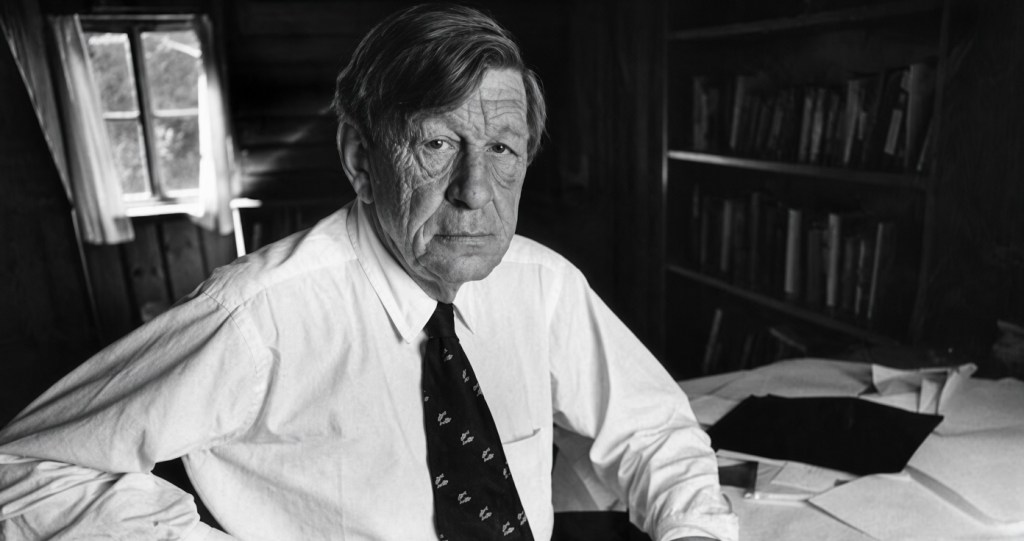
W. H. Auden’s politically influenced poem, “The Unknown Citizen,” portrays a character whose life has been stifled by “the State,” yet, who does not recognize his subjugation—making him a perfect citizen. In many respects, Auden’s speaker is foreshadowing the politics of 21st century America.
Introduction with Text of “The Unknown Citizen”
Poet W.H. Auden relocated from England to the United States in 1939. He experienced the stifling affects [1]of the New Deal legislation of the Franklin Delano Roosevelt administration.
The creeping socialistic policies were beginning to transform the once free nation into a ghetto of socialism. It has been calculated that those policies prolonged the Great Depression by as much as seven [2] years.
Once a country where the citizen was free to develop his talents and interests, the socialist policies of the FDR administration were beginning to stifle that character, placing the individual into a metaphoric, bureaucratic wall.
Auden’s dissatisfaction with this socialist trend plays out masterfully in his poem, “The Unknown Citizen.” The poem’s subtitle establishes a “citizen” without a name, who is thus characterless and without status as an individual.
The “citizen” has merely been designated by a vague string of letters and numbers which, however, are not without significance for the reader: “JS/07 M 378” likely alludes to the initials of the widely common name, “John Smith,” the “M” likely refers to “male,” while the numbers, station the man in the bureaucratic brick wall of similarity and conformity.
With bitter irony, this characterless individual is not an individual in the meaningful and humane sense of the word. That the state would erect a “marble monument” to such a brick-in-the-wall is risible.
Yet the designation—”unknown citizen”—is reminiscent of the term applied to those with high honor: “the unknown soldier,” whose remains cannot be identified but are granted honor for service to the country.
While honoring an unknown military serviceman, who lost his life defending his country has always been a high purpose for any country, no state would erect any kind of monument to the faceless, characterless individuals who make up the designated selection called “unknown citizen” as described in this highly symbolic and ironic poem.
The poem plays out in groups of rime with similar content, as it displays in eight movements.
The Unknown Citizen
(To JS/07 M 378 This Marble Monument Is Erected by the State)
He was found by the Bureau of Statistics to be One against whom there was no official complaint, And all the reports on his conduct agree That, in the modern sense of an old-fashioned word, he was a saint, For in everything he did he served the Greater Community. Except for the War till the day he retired He worked in a factory and never got fired, But satisfied his employers, Fudge Motors Inc. Yet he wasn’t a scab or odd in his views, For his Union reports that he paid his dues, (Our report on his Union shows it was sound) And our Social Psychology workers found That he was popular with his mates and liked a drink. The Press are convinced that he bought a paper every day And that his reactions to advertisements were normal in every way. Policies taken out in his name prove that he was fully insured, And his Health-card shows he was once in a hospital but left it cured. Both Producers Research and High-Grade Living declare He was fully sensible to the advantages of the Installment Plan And had everything necessary to the Modern Man, A phonograph, a radio, a car and a frigidaire. Our researchers into Public Opinion are content That he held the proper opinions for the time of year; When there was peace, he was for peace: when there was war, he went. He was married and added five children to the population, Which our Eugenist says was the right number for a parent of his generation. And our teachers report that he never interfered with their education. Was he free? Was he happy? The question is absurd: Had anything been wrong, we should certainly have heard.
Auden reading
Commentary on “The Unknown Citizen”
W. H. Auden’s widely anthologized classic poem portrays a pathetic character whose life has been stifled by “the State,” representing a form of government which seeks to subjugate the citizenry.
Auden employs irony to protest the state-owned life that goes against the basic American principle that the purpose of government is to protect “life, liberty, and the pursuit of happiness” for its citizens.
Auden’s wry description of his target reveals that this “unknown citizen” has had his independent ability to think and feel benumbed by the systemic, statist control under which he resides.
First Movement: A Bureaucrat Speaks
He was found by the Bureau of Statistics to be One against whom there was no official complaint, And all the reports on his conduct agree That, in the modern sense of an old-fashioned word, he was a saint, For in everything he did he served the Greater Community.
The speaker appears to be a bureaucrat who has found it important enough to file this report regarding the unknown individual, henceforth called “the unknown citizen.”
The speaker begins reporting that by a government agency no issues of resistance were ever detected by this “unknown citizen.” This unknown individual seemed to have functioned in a bureaucratically perfect manner throughout his life which resulted in his life “serv[ing] the Greater Community.”
The speaker offers a comic exaggeration of the citizen’s status by calling him a “saint”—but only in a “modern sense” of that “old-fashioned word,” indicating that any mystical or religious meaning be sucked out of that term. While a true saint remains a unique individual in his sainthood, this “saint” functions only for the state, not for his own unique relationship with the Divine.
Because the description of the citizen in this poem can be detected in the current political atmosphere of the USA, W. H. Auden has demonstrated a high level of prescience as his speaker reports on this state-obliging, willingly over-taxed citizen [3].
Such a citizen fits well the political ethos [4] of Manchurian Candidate Biden’s definition of a patriotic citizen [5], who, concurs with his former boss, Barack Obama, who insisted, “When you spread the wealth around, it’s good for everybody” [6].
The requirement for a controlling socialist state begins with citizens remaining willing pawns in the hands of government authority. Like sheep or lemmings, they follow and never question and that makes the statist overlord rich and satisfied with that citizenry.
Second Movement: An Unquestioning Joiner
Except for the War till the day he retired He worked in a factory and never got fired, But satisfied his employers, Fudge Motors Inc. Yet he wasn’t a scab or odd in his views, For his Union reports that he paid his dues, (Our report on his Union shows it was sound) And our Social Psychology workers found That he was popular with his mates and liked a drink.
This unknown citizen for his entire life labored in the factory or business concern called “Fudge Motor Inc.” He took time off as his patriotic duty called, such as serving in the military. He unquestioningly joined the “union” and paid his dues dutifully.
This unknown citizen enjoyed friends and a drink occasionally. Such a detail demonstrates the thorough intrusion of the state into the lives of individuals. The state has employed “Social Psychology workers” to determine the state-appropriate behavior of every aspect of every citizen’s life.
Auden’s prescience has foreshadowed the 21st century Democratic Party (USA) [7], which attempts to control every aspect of American lives today, from what people can eat and drink to how they use energy.
Third Movement: Controlling the Life of Everyman
The Press are convinced that he bought a paper every day And that his reactions to advertisements were normal in every way.
The unknown citizen read a daily newspaper. He responded properly to the commercial ads. Again, such a detail demonstrates the complete control that the government has over the individual.
The government is glad to report that this citizen had never lodged a complaint against it, as it is unlikely that he ever composed an editorial to the newspaper, detailing his dissatisfaction with any policies. He remained content with journalism, as well as with governmental bureaucracy, and he did not speak out against the social engineering.
Fourth Movement: Properly Insured
Policies taken out in his name prove that he was fully insured, And his Health-card shows he was once in a hospital but left it cured.
This subject of the state throughout his life bought the appropriate insurance policies. His health insurance covered his one hospital stay, and he left the facility returned to health again—and lucky for him, he was admitted to the hospital only once.
Fifth Movement: Alarming Information Possessed by the State
Both Producers Research and High-Grade Living declare He was fully sensible to the advantages of the Installment Plan And had everything necessary to the Modern Man, A phonograph, a radio, a car and a frigidaire.
The unknown citizen managed to procure all the modern conveniences, such as a record-player, a radio, an automobile, and even a refrigerator. Although this kind of information may be gleaned from survey companies that research such information, that the state is privy to it is alarming and unsatisfactory for a free society.
Sixth Movement: Proper Public Opinion
Our researchers into Public Opinion are content That he held the proper opinions for the time of year; When there was peace, he was for peace: when there was war, he went.
This citizen, according to “researchers into Public Opinion,” always maintained ways of thinking that pleased the state. He believed that there was peace if the state declared “there was peace.” But he accepted the state of war if the state reported that conflict broke out.
The governmental “Public Opinion” bureau would not be pleased if the citizen had bucked the system in any way, and no doubt bureaucratic sanctions of some sort would have been applied and reported. But this citizen passed the “Public Opinion” test.
Seventh Movement: Pleasing the State
He was married and added five children to the population, Which our Eugenist says was the right number for a parent of his generation. And our teachers report that he never interfered with their education.
This citizen’s family life also continued to please the state: the man took a wife and produced the appropriate number of children. That he did not “interfer[e] with their education” would be a blessing for the state, and of course, for the teachers’ unions [8]. The prescience of this poem is again observed as teachers’ unions currently are battling parents [9] to maintain power over those that they should serve.
Eighth Movement: The Struggle against a Faceless Bureaucracy
Was he free? Was he happy? The question is absurd: Had anything been wrong, we should certainly have heard.
Because this “unknown citizen” has been described as a non-thinker and a completely unfeeling individual, the inquiry into his status of freedom and happiness further demonstrates the irony of the situation. And yet, the final comment adds a further layer of ironic humor.
Because the bureaucratic offices had never heard any complaint from the man, they assume he was, in fact, free and happy, or at least thought himself to be thus. They reason that if anything were wrong, they would have heard.
Of course, the reader of this piece becomes painfully aware of the blandness and the dullness that the state has foisted upon this “citizen.” Following sheeplike the authoritative dictates of a powerful state was the status against which the Founding Fathers of the United States of America struggled to form the kind of government which would allow the most freedom for every citizen.
Poetry and Politics
While poetry and politics usually remain in an uneasy partnership, in the hands of an expert, a political statement can render itself workable in a poem. W. H. Auden was an expert at penning poems even of a political nature, even though he came to dislike many of his own political poems and “withdrew several from publication” [10].
Auden’s use of irony serves to carry “The Unknown Citizen” to a successful outcome. More important is the focus of the political poem; as political poems focus on merely damaging the reputation of an opponent or on falsehoods employed in propaganda, the pieces lose credibility.
But if, like “The Unknown Citizen,” the piece focuses on universal principles such as freedom and individuality, while dramatizing the results that failed policies bring about, the poem can work brilliantly.
Readers will note that the poem does not seek to disparage any government official’s reputation nor does it make propagandistic statements based on inaccuracies and blatant lies; it simply portrays the characteristics that the sheeplike citizen has assimilated in his desire to remain under the radar of state intrusion.
Sun shines in the moonlight; nighttime stops at dawn. When morning sprays the flowers, the crickets carry on, But I’ve put a hold on what I say; my say done come and gone: My words will not touch you again, cause everything I say is wrong.
Where do you get your factoids doesn’t matter one thin whit. Wherever you go you spin your spin; I just don’t give a shit. So I’ve put a hold on what I say; my say done come and gone: My words will not touch you again, cause everything I say is wrong.
Right is wrong since you want it to be. Left is right as you choose— Up is down, a smile’s a frown, Walking in your shoes.
Winter might come early; summer may be late; Fall may never fall at all & spring may spring the gate, But I’ve put a hold on what I say; my say done come and gone: My words will not touch you again, cause everything I say is wrong.
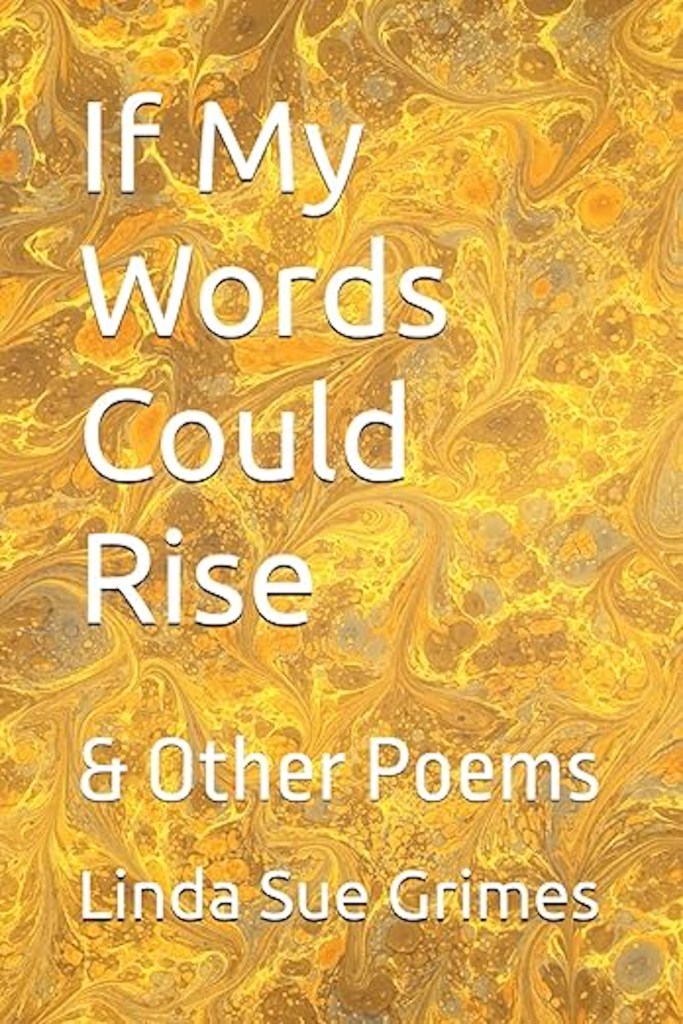
A slightly different version of this piece appears in my collection If My Words Could Rise.