The speaker in Auden’s “Doggerel by a Senior Citizen” is a man of certain age, warning listeners that what he is about to spew is doggerel. But the claim is made in ironic jest; what the “doggerelist” is about to spew is the bitter truth, or at least in his humble opinion, about societal progress.
Introduction with Text from “Doggerel by a Senior Citizen”
By ironically jesting that his utterance will be only a bit of doggerel, the speaker in W. H. Auden’s “Doggerel by a Senior Citizen” lightens any blame he may receive, or any pushback against his views. The views and the biting criticism remain perfectly in line with the poet’s views as expressed in his utterly serious works, such as “The Unknown Citizen.”
Doggerel by a Senior Citizen
Our earth in 1969 Is not the planet I call mine, The world, I mean, that gives me strength To hold off chaos at arm’s length.
My Eden landscapes and their climes Are constructs from Edwardian times, When bath-rooms took up lots of space, And, before eating, one said Grace.
The automobile, the aeroplane, Are useful gadgets, but profane: The enginry of which I dream Is moved by water or by steam.
Reason requires that I approve The light-bulb which I cannot love: To me more reverence-commanding A fish-tail burner on the landing.
My family ghosts I fought and routed, Their values, though, I never doubted: I thought the Protestant Work-Ethic Both practical and sympathetic.
When couples played or sang duets, It was immoral to have debts: I shall continue till I die To pay in cash for what I buy.
The Book of Common Prayer we knew Was that of 1662: Though with-it sermons may be well, Liturgical reforms are hell.
Sex was of course — it always is — The most enticing of mysteries, But news-stands did not then supply Manichean pornography.
Then Speech was mannerly, an Art, Like learning not to belch or fart: I cannot settle which is worse, The Anti-Novel or Free Verse.
Nor are those Ph.D’s my kith, Who dig the symbol and the myth: I count myself a man of letters Who writes, or hopes to, for his betters.
Dare any call Permissiveness An educational success? Saner those class-rooms which I sat in, Compelled to study Greek and Latin.
Though I suspect the term is crap, There is a Generation Gap, Who is to blame? Those, old or young, Who will not learn their Mother-Tongue.
But Love, at least, is not a state Either en vogue or out-of-date, And I’ve true friends, I will allow, To talk and eat with here and now.
Me alienated? Bosh! It’s just As a sworn citizen who must Skirmish with it that I feel Most at home with what is Real.
Commentary on “Doggerel by a Senior Citizen”
Claiming to be offering a piece of doggerel, this speaker/senior-citizen offers his personal evaluation about what things are like in the year 1969.
First Movement: A Different Planet from Yesteryear
Our earth in 1969 Is not the planet I call mine, The world, I mean, that gives me strength To hold off chaos at arm’s length.
My Eden landscapes and their climes Are constructs from Edwardian times, When bath-rooms took up lots of space, And, before eating, one said Grace.
The speaker begins by alerting his listeners that he is reporting from the year 1969, and he then makes clear through a bit of exaggeration that the earth no longer represents the same “planet” upon which he had formerly existed. This new “earth” “planet” “world” has become a place of mayhem, and the disorder is so bad that he has difficulty keeping it at bay or out of his own life.
The speaker suggests that his own preference is for the Edwardian age [1], a period of prosperity and especially important in the areas of fashion and art. The speaker hints that religion was still a central feature in the family, as they said “Grace” before dining.
The speaker makes it clear that for him those times were “[his] Eden”—likely he does mean prelapsarian Eden [2]. He employs the rest of his discourse to show how the times in which he is now living can be considered quite postlapsarian [3]
Second Movement: Nostalgia Outsmarts Novelty
The automobile, the aeroplane, Are useful gadgets, but profane: The enginry of which I dream Is moved by water or by steam.
Reason requires that I approve The light-bulb which I cannot love: To me more reverence-commanding A fish-tail burner on the landing.
The speaker refers to the common inventions of the day, calling the mode of travel by car and plane “useful” but “profane.” He still longs for the steam engine and old-timey wind sailing.
Although he feels that he is likely required to accept used of the “light-bulb,” he cannot bring himself to “love” the object. He prefers the gaslight resembling a fish tail, which resulted from two gas jets spewing through two holes that fanned out and formed the fish tail shaped flame. Nostalgia often overcomes efficacy when it comes to every-day useful appliances.
Third Movement: From the Work Ethic to Debt Accumulation
My family ghosts I fought and routed, Their values, though, I never doubted: I thought the Protestant Work-Ethic Both practical and sympathetic.
When couples played or sang duets, It was immoral to have debts: I shall continue till I die To pay in cash for what I buy.
The speaker has overcome the idiosyncrasies of family life, coming to love those whom he had earlier found unpleasant; he has, however, always accepted the basic moral rectitude of those family members. They adhered to the “Protestant Work-Ethic,” which the speaker has always deemed practical and proper.
Back during the time when party entertainment often consisted of “couples [playing or singing] duets,” the society deemed acquiring debt an immoral act. The speaker assures his listener that to his dying day he will continue to accept that societal feature and continue to pay “in cash for what I buy.”
Fourth Movement: The Weakness of Liturgical Reforms
The Book of Common Prayer we knew Was that of 1662: Though with-it sermons may be well, Liturgical reforms are hell.
Sex was of course — it always is — The most enticing of mysteries, But news-stands did not then supply Manichean pornography.
The speaker remembers that before certain religious reforms a “Book of Common Prayer” held sway, and it dated all the way back to 1662, during the era of the Restoration of King Charles II [4].
Religious reformation always comes about through controversy. Those who have become accustomed to certain practices of worship distain any change and thus argue against “liturgical reforms” [5]. This speaker has already placed his likely position on such reforms; he naturally comes down solidly on the side against them, labeling such actions “hell.”
The speaker then cites “sex,” which is always engulfed in “mysteries,” as an example of one phase of life that has suffered because of “liturgical reforms”: the obnoxious duality of “Manichean pornography” now sits on “news-stands,” whereas in the more modest past, such sights would not have been tolerated.
Fifth Movement: The Problem with Language Study
Then Speech was mannerly, an Art, Like learning not to belch or fart: I cannot settle which is worse, The Anti-Novel or Free Verse.
Nor are those Ph.D’s my kith, Who dig the symbol and the myth: I count myself a man of letters Who writes, or hopes to, for his betters.
The speaker now tackles “Speech,” the art of the word, the use of letters that creates literary art. But first he delves into the vulgar act of belching or farting, which along with the “mannerly” use of language, would not be acceptable. Children would then learn to avoid the grossness involved in such human effusions.
The speaker says he has not decided which art form is more vile: “the Anti-Novel” or “Free Verse.” The proliferation of those holding doctoral degrees, particularly the Ph.D., does not impress this speaker; he finds this who revel in “myth” and “symbol” hold little interest for him.
He contrasts himself with those book-learned fellows: he assures his listeners that he himself is “a man of letters.” But instead of trying to appeal to the vulgar, profane masses, he strives to compose for “his betters.” He remains a bit humble in his claim by inserting “or hopes to.”
Sixth Movement: Lack of Discipline
Dare any call Permissiveness An educational success? Saner those class-rooms which I sat in, Compelled to study Greek and Latin.
Though I suspect the term is crap, There is a Generation Gap, Who is to blame? Those, old or young, Who will not learn their Mother-Tongue.
The speaker then refers to permissiveness as the bane of success in education. He finds the old-fashioned disciplines focusing on learning “Greek and Latin” to be a much “saner” focus for the classroom. He was such a student and now feels he has benefited for the rigor of such study of language.
Mentioning the buzz-phrase of the late sixties “Generation Gap,” he says its likely a worthless expression, even though he does detect that such a thing exists. But he wonders who is to blame for it? Is the the “old or young”? But then he answers his question by asserting that both are to blame, that is, those who refuse to learn “their Mother-Tongue.”
Seventh Movement: Love and Reality
But Love, at least, is not a state Either en vogue or out-of-date, And I’ve true friends, I will allow, To talk and eat with here and now.
Me alienated? Bosh! It’s just As a sworn citizen who must Skirmish with it that I feel Most at home with what is Real.
The speaker concludes with some uplifting thoughts: love, for example, never goes out of style, and he retains good friends with whom he can pleasantly dine and converse.
He seems to reject the notion that he might feel “alienated,” but he does suggest that the loosening of societal mores causes him to “skirmish” with it all. He insists that he feels most comfortable with “what is Real.” He does not equivocate with what he thinks that reality entails; he has just laid it all out in his piece of “doggerel.”
William Butler Yeats’ “The Second Coming” remains one of the most widely misunderstood poems of the 20th century. Many scholars and critics have failed to criticize the exaggeration in the first stanza and the absurd metaphor in the second stanza, which render a potentially fine poem a critical failure.
Introduction with Text of “The Second Coming”
Poems, in order to communicate, must be as logical as the purpose and content require. For example, if the poet wishes to comment on or criticize an issue, he must adhere to physical facts in his poetic drama. If the poet wishes to emote, equivocate, or demonstrate the chaotic nature of his cosmic thinking, he may legitimately do so without much seeming sense.
For example, Robert Bly’s lines—”Sometimes a man walks by a pond, and a hand / Reaches out and pulls him in” / / “The pond was lonely, or needed / Calcium, bones would do,”—are ludicrous [1] on every level. Even if one explicates the speaker’s personifying the pond, the lines remain absurd, at least in part because if a person needs calcium, grabbing the bones of another human being will not take care of that deficiency.
The absurdity of a lake needing “calcium” should be abundantly clear on its face. Nevertheless, the image of the lake grabbing a man may ultimately be accepted as the funny nonsense that it is. William Butler Yeats’ “The Second Coming” cannot be dismissed so easily; while the Yeats poem does not depict the universe as totally chaotic, it does bemoan that fact that events seem to be leading society to armageddon.
The absurdity surrounding the metaphor of the “rough beast” in the Yeats poem renders the musing on world events without practical substance.
The Second Coming
Turning and turning in the widening gyre The falcon cannot hear the falconer; Things fall apart; the centre cannot hold; Mere anarchy is loosed upon the world, The blood-dimmed tide is loosed, and everywhere The ceremony of innocence is drowned; The best lack all conviction, while the worst Are full of passionate intensity.
Surely some revelation is at hand; Surely the Second Coming is at hand. The Second Coming! Hardly are those words out When a vast image out of Spiritus Mundi Troubles my sight: somewhere in sands of the desert A shape with lion body and the head of a man, A gaze blank and pitiless as the sun, Is moving its slow thighs, while all about it Reel shadows of the indignant desert birds. The darkness drops again; but now I know That twenty centuries of stony sleep Were vexed to nightmare by a rocking cradle, And what rough beast, its hour come round at last, Slouches towards Bethlehem to be born?
Commentary on “The Second Coming”
William Butler Yeats’ “The Second Coming” remains one of the most widely anthologized poems in world literature. Yet its hyperbole in the first stanza and ludicrous “rough beast” metaphor in the second stanza result in a blur of unworkable speculation.
First Stanza: Sorrowful over Chaos
Turning and turning in the widening gyre The falcon cannot hear the falconer; Things fall apart; the centre cannot hold; Mere anarchy is loosed upon the world, The blood-dimmed tide is loosed, and everywhere The ceremony of innocence is drowned; The best lack all conviction, while the worst Are full of passionate intensity.
The speaker is sorrowing over the chaos of world events that have left in their wake many dead people. Clashes of groups of ideologues have wreaked havoc, and much blood shed has smeared the tranquil lives of innocent people who wish to live quiet, productive lives.
The speaker likens the seemingly out of control situation of society to a falconer losing control of the falcon as he attempts to tame it. Everyday life has become chaotic as corrupt governments have spurred revolutions. Lack of respect for leadership has left a vacuum which is filled with force and violence.
The overstated claim that “The best lack all conviction, while the worst / Are full of passionate intensity” should have alerted the poet that he needed to rinse out the generic hyperbole in favor of more accuracy on the world stage.
Such a blanket, unqualified statement, especially in a poem, lacks the ring of truth: it simply cannot be true that the “best lack all conviction.” Surely, some the best still retain some level of conviction, or else improvement could never be expected.
It also cannot be true that all the worst are passionate; some of the worst are likely not passionate at all but remain sycophantic, indifferent followers. Any reader should be wary of such all-inclusive, absolutist statements in both prose and poetry.
Anytime a writer subsumes an entirety with the terms “all,” “none,” “everything,” “everyone,” “always,” or “never,” the reader should question the statement for its accuracy. All too often such terms are signals for stereotypes, which produce the same inaccuracy as groupthink.
Second Stanza: What Revelation?
Surely some revelation is at hand; Surely the Second Coming is at hand. The Second Coming! Hardly are those words out When a vast image out of Spiritus Mundi Troubles my sight: somewhere in sands of the desert A shape with lion body and the head of a man, A gaze blank and pitiless as the sun, Is moving its slow thighs, while all about it Reel shadows of the indignant desert birds. The darkness drops again; but now I know That twenty centuries of stony sleep Were vexed to nightmare by a rocking cradle, And what rough beast, its hour come round at last, Slouches towards Bethlehem to be born?
The idea of “some revelation” leads the speaker to the mythological second coming of Christ. So he speculates on what a second coming might entail. However, instead of “Christ,” the speaker conjures the notion that an Egyptian-Sphinx-like character with ill-intent might arrive instead.
Therefore, in place of a second coming of godliness and virtue, as is the purpose of the original second coming, the speaker wonders: what if the actual second coming will be more like an Anti-Christ? What if all this chaos of bloodshed and disarray has been brought on by the opposite of Christian virtue?
Postmodern Absurdity and the “Rough Beast”
The “rough beast” in Yeats’ “The Second Coming” is an aberration of imagination, not a viable symbol for what Yeats’ speaker thought he was achieving in his critique of culture. If, as the postmodernists contend, there is no order [2] in the universe and nothing really makes any sense anyway, then it becomes perfectly fine to write nonsense.
Because this poet is a contemporary of modernism but not postmodernism [3], William Butler Yeats’ poetry and poetics do not quite devolve to the level of postmodern angst that blankets everything with the nonsensical. Yet, his manifesto titled A Vision is, undoubtedly, one of the contributing factors to that line of meretricious ideology.
Hazarding a Guess Can Be Hazardous
The first stanza of Yeats’ “The Second Coming” begins by metaphorically comparing a falconer losing control of the falcon to nations and governments losing control because of the current world disorder, in which “[t]hings fall apart; the centre cannot hold.”
Political factions employ these lines against their opposition during the time in which their opposition is in power, as they spew forth praise for their own order that somehow magically appears with their taking the seat of power.
The poem has been co-opted by the political class so often that Dorian Lynskey, overviewing the poem in his essay, “‘Things fall apart’: the Apocalyptic Appeal of WB Yeats’s The Second Coming,” writes, “There was apparently no geopolitical drama to which it could not be applied” [4].
The second stanza dramatizes the speaker’s musing about a revelation that has popped into his head, and he likens that revelation to the second coming of Christ; however, this time the coming, he speculates, may be something much different.
The speaker does not know what the second coming will herald, but he does not mind hazarding a dramatic guess about the possibility. Thus, he guesses that the entity of a new “second coming” would likely be something that resembles the Egyptian sphinx; it would not be the return of the Christ with the return of virtue but perhaps its opposite—vice.
The speaker concludes his guess with an allusion to the birth of such an entity as he likens the Blessed Virgin Mother to the “rough beast.” The Blessèd Virgin Mother, as a newfangled, postmodern creature, will be “slouching toward Bethlehem” because that is the location to which the first coming came.
The allusion to “Bethlehem” functions solely as a vague juxtaposition to the phrase “second coming” in hopes that the reader will make the connection that the first coming and the second coming may have something in common. The speaker speculates that at this very moment wherein the speaker is doing his speculation some “rough beast” might be pregnant with the creature of the “second coming.”
And as the time arrives for the creature to be born, the rough beast will go “slouching” towards its lair to give birth to this “second coming” creature: “its hour come round at last” refers to the rough beast being in labor.
The Flaw of Yeats’ “The Second Coming”
The speaker then poses the nonsensical question: “And what rough beast, its hour come round at last, / Slouches towards Bethlehem to be born?” In order to make the case that the speaker wishes to make, these last two lines should be restructured in one of two ways:
And what rough beast, its hour come round at last, Slouches towards Bethlehem to give birth?
or
And what rough beast’s babe, its time come at last, Is in transport to Bethlehem to be born?
An unborn being cannot “slouch” toward a destination. The pregnant mother of the unborn being can “slouch” toward a destination. But the speaker is not contemplating the nature of the rough beast’s mother; he is contemplating the nature of the rough beast itself.
The speaker does not suggest that the literal Sphinx will travel to Bethlehem. He is merely implying that a Sphinx-like creature might resemble the creature of the second coming. Once an individual has discounted the return of Jesus the Christ as a literal or even spiritual fact, one might offer personal speculation about just what a second coming would look like.
It is doubtful that anyone would argue that the poem is dramatizing a literal birth, rather than a spiritual or metaphorical one. It is also unreasonable to argue that the speaker of this poem—or Yeats for that matter—thought that the second coming actually referred to the Sphinx. A ridiculous image develops from the fabrication of the Sphinx moving toward Bethlehem. Yeats was more prudent than that.
Exaggerated Importance of Poem
William Butler Yeats composed a manifesto to display his worldview and poetics titled A Vision, in which he set down certain tenets of his thoughts on poetry, creativity, and world history. Although seemingly taken quite seriously by some Yeatsian scholars, A Vision is of little value in understanding either meaning in poetry or the meaning of the world, particularly in terms of historical events.
An important example of Yeats’ misunderstanding of world cycles is his explanation of the cyclical nature of history, exemplified with what he called “gyres” (pronounced with a hard “g.”) Two particular points in the Yeatsian explanation demonstrate the fallacy of his thinking:
In his diagram, Yeats set the position of the gyres inaccurately; they should not be intersecting but instead one should rest one on top of the other: cycles shrink and enlarge in scope; they do not overlap, as they would have to do if the Yeatsian model were accurate.
Image : Gyres – Inaccurate Configuration from A Vision
Image: Gyres – Accurate Configuration
2. In the traditional Second Coming, Christ is figured to come again but as an adult, not as in infant as is implied in Yeats’ poem “The Second Coming.”
Of great significance in Yeats’ poem is the “rough beast,” apparently the Anti-Christ, who has not been born yet. And most problematic is that the rough beast is “slouch[ing] towards Bethlehem to be born.” The question is, how can such a creature be slouching if it has not yet been born? There is no indication the speaker wishes to attribute this second coming fiasco to the mother of the rough beast.
This illogical event is never mentioned by critics who seem to accept the slouching as a possible occurrence. On this score, it seems critics and scholars have lent the poem an unusually wide and encompassing poetic license.
The Accurate Meaning of the Second Coming
Paramahansa Yogananda has explained in depth the original, spiritual meaning of the phrase “the second coming”[5] which does not signify the literal coming again of Jesus the Christ, but the spiritual awakening of each individual soul to its Divine Nature through the Christ Consciousness.
Paramahansa Yogananda summarizes his two volume work The Second Coming of Christ: The Resurrection of the Christ Within You:
In titling this work The Second Coming of Christ, I am not referring to a literal return of Jesus to earth . . .
A thousand Christs sent to earth would not redeem its people unless they themselves become Christlike by purifying and expanding their individual consciousness to receive therein the second coming of the Christ Consciousness, as was manifested in Jesus . . .
Contact with this Consciousness, experienced in the ever new joy of meditation, will be the real second coming of Christ—and it will take place right in the devotee’s own consciousness. (my emphasis added)
Interestingly, knowledge of the meaning of that phrase “the second coming” as explained by Paramahansa Yogananda renders unnecessary the musings of Yeats’ poem “The Second Coming”and most other speculation about the subject. Still, the poem as an artifact of 20th century thinking remains an important object for study.
The phenomenon known as Trump Derangement Syndrome (TDS) has established a pattern of behavior and language applied by the political opposition of President Donald Trump. That outrage arises from ignoring facts or context, leveling unfair criticism, and engaging in melodramatic emotion, wherein calm reasoning is abandoned.
Introduction: Extreme Rhetoric
Trump Derangement Syndrome (TDS) has fostered an atmosphere in which contemporary political rhetoric and public discourse operate as fallacious argumentation, in which every statement or action becomes distorted and weaponized.
Political disagreement does not employ discussion, analysis, and explanation regarding policy differences but instead, it operates on disgust and indignation that the opponent even holds differing views.
TDS is often manifested in Trump’s opponents through ad hominem attacks, in which personal slander takes the place of logical argument—substituting name-calling and character assassination for substantive argument.
Trump has been called a Russian puppet, sexual predator, dictator, threat to democracy, racist, white supremacist, convicted felon, traitor, insurrectionist, clown, idiot, nazi, fascist, and the pièce de résistance—Hitler.
Even obvious joking sarcasm when spouted by Trump becomes fodder for re-interpretation and bad-faith reporting. For example, during the presidential election campaign of 2016, when Trump facetiously called on Russia/Putin to find Hillary Clinton’s 33,000 deleted emails, the following exemplary headline appeared on PBSNews :“Trump asked Russia to find Clinton’s emails. On or around the same day, Russians targeted her accounts,” suggesting that Trump was asking a foreign government to interfere in the election campaign.
In addition to ad hominem attacks, immediate condemnation of any policy issuing out of the Trump administration results in reasoning and careful inquiry being abandoned [1], resulting in the use of the most extreme, heated language.
However, Trump himself is not the only target of this invective; all of those terms and others are applied to his supporters: during the 2016 presidential campaign, Hillary Clinton called them “deplorables,” and during the 2024 campaign, Joe Biden called them “garbage.” Those who oppose Trump, his administration, and his supporters are not simply critical of them; they are obsessed them.
A dangerous mixture of outrage, exaggeration, and hypocrisy involved in attacking Trump has caused TDS sufferers to lack the ability to think clearly about issues. Any idea suggested by Trump is immediately railed against simply because it was suggested by Trump.
The Origin of Trump Derangement Syndrome
The phrase “Trump Derangement Syndrome” did not originate as a clinical diagnosis, although its predecessor “Bush Derangement Syndrome” was coined by the psychiatrist and political analyst Charles Krauthammer, who observed that extreme, irrational reactions to President George W. Bush often went far beyond substantive policy disagreement.
Krauthammer used the term to highlight how emotional fixation and hostility replaced reasoned analysis and proportional criticism. The revival of this concept during Donald Trump’s presidency reflects the same phenomenon, magnified by social media, a 24-hour news cycle, and an increasingly polarized political culture [2].
However much words do matter, Trump Derangement Syndrome (TDS) is more than rhetorical excess; it has real consequences that harm individuals, families, public institutions, and the broader political environment. The following examples illustrate how hyper-emotional fixation on Donald Trump—when divorced from clear reasoning and grounded fact—creates verifiable and dangerous effects on American society:
Escalation to Political Violence
The starkest danger of TDS is that it fuels political violence rather than dissent through words. During the 2024 campaign, Donald Trump survived at least two assassination attempts motivated by political hatred and extremism.
The first happened at a rally in Butler, Pennsylvania, [3] when a gunman shot at Trump, wounding him on his right ear. The gunman killed Corey Comperatore, a rally attendee and former fire chief, who took a bullet protecting his family. The gunman also wounded several other people before being killed by Secret Service.
A second assassination attempt was thwarted by authorities at Trump’s golf club in West Palm Beach, Florida [4]. This perpetrator was arrested, stood trial, and was found guilty of the assassination attempt; he awaits sentencing on February 4, 2026.
Another unmistakable instance of politically motivated violence occurred on September 10, 2025, when Turning Point USA founder Charlie Kirk was fatally shot during a public event at Utah Valley University in Orem, Utah. While speaking at an outdoor gathering, Kirk was struck in the neck by a single bullet fired from a distance, an attack that Utah officials and others characterized as a political assassination [5].
These incidents demonstrate how obsessive political animus can translate into lethal intent, transforming rhetoric into action and endangering not only public figures but bystanders, law enforcement, and the democratic process itself.
Political Polarization Breaking Family Bonds
TDS has also deeply strained familial relationships. In too many households across the country, deep political disagreements have resulted in personal and familial estrangement. A Time magazine feature documented families [6] who stopped speaking entirely during the Trump years, including one case in which a woman was uninvited from Thanksgiving and later cut off from close relatives solely because of her political views related to Donald Trump.
What had once remained ordinary disagreement has hardened into moral condemnation, with ideological choice being prioritized over blood relations. This dynamic tarnishes one of our most cherished and fundamental social units—the family—leaving emotional scars that persist long after the election cycle has passed.
Exploitation of Tragedy for Political Weaponization
Another disturbing example of how TDS has distorted reactions to violent events is evident in public opinion data following the July 2024 assassination attempt on Donald Trump.
In a snap poll conducted shortly after the attack, roughly one‑third of Democrat voters agreed with the statement “I wish Trump’s assassin hadn’t missed”[7]. That such a large proportion of the opposition political party actively wished that an opponent had been killed should place a huge red flag on the issue.
Such sentiments reflect a deeply disturbing willingness to engage in the ultimate violence in addressing political differences. This response illustrates how TDS can override basic empathy and moral restraint, further polarizing discourse and normalizing violent attitudes toward political opponents.
Rejection of Policy on Source Alone
TDS sufferers without thinking oppose any policy regardless of merit simply because it comes from Trump. During his presidency, Trump championed criminal justice reform through the First Step Act, a bipartisan measure that reduced sentences for nonviolent offenders and earned praise from figures like Van Jones [8]. Yet many on of his top opponents dismissed it outright, calling it a sham despite its tangible results in releasing thousands from prison.
Even as they voted for the bill, these congressional member expressed negative criticism of it as too limited, exclusionary, narrow: Sen. Bernie Sanders (I-VT), Sen. Kamala Harris (D-CA), Sen. Cory Booker (D-NJ), and Rep. Alexandria Ocasio-Cortez (D-NY).
This knee-jerk rejection ignores benefits to real people—mostly minorities—and poisons the well for future bipartisan efforts. The danger lies in discarding proven solutions, leaving societal problems festering while politics trumps progress.
Lawfare Weaponization against Citizens
Mainstream media outlets and Democrat officials, gripped by TDS, have pursued “lawfare” against ordinary Trump supporters, turning legal processes into political retribution.
After the January 6 riot, Attorney General Merrick Garland’s Justice Department charged hundreds of nonviolent participants—parents, grandparents, workers, small business owners, some individuals who were not even present at the capitol—with felonies carrying decades in prison, while ignoring similar or worse rioting by groups such as Antifa and BLM [9] .
This selective prosecution creates two tiers of justice: one for Trump opponents who face lenient treatment, another for his supporters treated as domestic terrorists. The danger lies in weaponizing the rule of law itself, eroding equal protection under the Constitution and fostering a climate where citizens fear political expression.
Families lose breadwinners to draconian sentences, communities fracture, and trust in impartial justice evaporates—leaving Americans vulnerable to future authoritarian overreach from any side that may promise a return to fairness under the law [10].
Economic Self-Sabotage through Hysteria
TDS has led opponents to sabotage policies that later prove beneficial [11], harming the economy they claim to champion. Tariffs on China, derided as reckless by TDS critics, pressured Beijing into trade concessions that revitalized American manufacturing jobs in key states. Critics who railed against them without nuance prolonged economic pain for workers.
By prioritizing anti-Trump animus over pragmatic assessment, this mind-set risks national prosperity. It endangers livelihoods when ideology blinds leaders to data-driven gains.
Suppression of Free Speech on Campuses
Universities, which formerly boasted their positions as bastions of open inquiry, have seen TDS manifest as censorship of Trump-related views [12]. Professors and students expressing support for Trump’s policies face shouting-downs, doxxing, low grades, or job threats, as seen in cases at Yale and NYU ,where conservative speakers were mobbed or disinvited.
This kind of unfair discrimination chills intellectual diversity, turning campuses into echo chambers. The danger is profound: it trains a generation to equate disagreement with moral failing, undermining the reasoned debate essential for maintaining a free society.
Foreign Policy Paralysis
TDS hampers coherent foreign policy by fixating on Trump over real threats facing the United States and other nations. While Trump brokered the Abraham Accords [13] normalizing Israel-Arab ties—hailed as historic by many—his opposition fixated on and imaginary “divisiveness,” denigrating and downplaying the breakthrough.
One might recall that the phrase “Abraham Accords” ran noticeably missing during the Biden administration’s four years. Instead of trying to build on the success of those Accords, the Biden administration essentially ignored them, and instead proceeded to cozy up to Iran just as President Barack Obama had done.
So it remains obvious that “The reason for the administration’s hostility to the Abraham Accords goes beyond jealousy or the desire to deny credit to a hated predecessor” [14]. The Biden administration’s reaction to the Abraham Accords demonstrates another blatant example of TDS causing its sufferer to bite off its nose to spite its face. World peace be damned, if Donald Trump has anything to do with it! (my emphasis added)
Such tunnel vision weakens America’s global stance. It allows adversaries like Iran to exploit divisions, endangering allies and U.S. interests when personal hatred eclipses strategic thinking.
Workplace Discrimination against Supporters
TDS has infiltrated some workplaces, where Trump voters have faced bias in hiring or promotions. Recent surveys indicate some hiring managers admit to bias against Trump supporters in hiring and promotions. Reports highlight concerns over social media scrutiny for political views, especially in tech sectors after the 2024 election.
A ResumeBuilder.com poll of over 750 U.S. managers found 1 in 6 less likely to hire Trump supporters, citing poor judgment (76%), lack of empathy (67%), or workplace tension risks (59%) [15]. One in 8 managers are less likely to promote such employees, with similar rationales; some even encourage quits.
Managers often check social media indirectly, as direct bias questions are avoided, amplifying unaddressed discrimination [16]. Post-2024 election, tech firms like Google and Meta tightened internal policies to curb activism, removing political posts and limiting discussions on elections or related symbols.
While no widespread firings for Trump support are documented in these sources, the surveys flag a “concerning trend” of political bias akin to other protected categories, urging HR to enforce objective evaluations. Broader DEI rollbacks under Trump policies (e.g., executive orders in 2025) shifted focus to merit, but hiring biases persist in certain areas.
Cultural Institutions Alienating Half the Nation
Hollywood and elite culture, steeped in TDS, produce content that vilifies Trump supporters as rubes or villains, deepening cultural rifts [17]. Films and shows routinely caricature “MAGA” hats as symbols for bigotry, alienating millions of viewers. This breeds mutual contempt, fracturing national cohesion. When culture wars replace dialogue, shared identity unravels, leaving society brittle and weakened against common challenges.
Tom Hanks played a Trump supporter named Doug on SNL’s “Black Jeopardy” during the 50th anniversary special in February 2025. The character wore a MAGA hat and an American flag shirt, hesitating to shake a black host’s hand, while speaking with a Southern drawl. Critics called it a racist caricature amid Trump’s growing support with black Americans.
In Bong Joon-ho’s “Mickey 17” (2025), a Trump-like politician rallies crowds with “First we survive! Then we thrive!” slogans. Supporters wear red hats, and the figure obsesses over image in a gaudy setup, reducing women to breeders. Even some Reddit users [18] noted it as Hollywood propaganda tying MAGA visuals to bigotry.
These depictions use MAGA hats as symbolic icons for backwardness or hate, alienating everyday Americans. Commentary points to “Trump Derangement Syndrome” in elite content driving rifts between supporters of Trump and his opposition.
Hypocrisy and TDS
One of the clearest markers of Trump Derangement Syndrome is not merely excess emotion, but selective memory—an amnesia that conveniently erases facts that negate the preferred narrative. This hypocrisy is especially evident when examining Donald Trump’s public reputation prior to his decision to run for president as a Republican. That distinction matters: does anyone really believe that if Trump had run for president as a Democrat, he would have received the same level of sustained media hostility and moral outrage, or would his celebrity excesses have been reframed as colorful flaws rather than disqualifying sins?
Before entering politics, Trump was not widely regarded as a pariah or an existential threat to democracy. On the contrary, he was a mainstream celebrity, a frequent guest on talk shows, a fixture in popular culture, and a recognizable brand associated with success and entertainment.
His television program The Apprentice was a major hit [19], running for fourteen seasons and drawing millions of viewers weekly. Trump was welcomed in elite social circles, praised by entertainers, courted by politicians, and treated as a cultural icon rather than a moral monster.
That history poses an uncomfortable question for TDS sufferers: if Trump was allegedly a racist, fascist, authoritarian, or “Hitler” all along, why was he celebrated so enthusiastically for decades [20]? The answer is obvious but rarely admitted—Trump became unacceptable only after he challenged the status quo of entrenched political power.
This hypocrisy is further illustrated by the now‑forgotten fact that Oprah Winfrey [21], one of the most influential cultural figures in America, once raised the prospect of a Trump presidential run on her nationally syndicated show. In a 1988 interview, Winfrey openly entertained the idea by asking Trump whether he would run for president, a notion that drew no negative response from the audience.
At the time, such a notion was not treated as dangerous or absurd, but as intriguing. No cries of impending dictatorship followed. No accusations of fascism emerged. The man has not changed; the political context has.
Similarly revealing is the selective outrage surrounding immigration enforcement. Tom Homan, who later became a senior immigration official under Trump, previously served in the Obama administration [22], where he oversaw large-scale deportations of illegal immigrants.
Under President Obama, deportations reached record levels, earning Obama the nickname “Deporter in Chief” among immigration activists. Yet Homan’s actions under Obama attracted no media hysteria and no moral condemnation.
Once those same policies—and in many cases, the same personnel—were associated with Donald Trump, they were suddenly recast as evidence of cruelty, racism, and authoritarianism [23]. The policy substance remained largely unchanged; only the political association shifted. This double standard exposes the core of TDS: opposition not to ideas or actions, but to the individual himself.
Such contradictions reveal that Trump Derangement Syndrome is propagated not by principle but by animosity. It is not driven by consistent moral reasoning, but by prejudicial hostility that rewrites history to justify present outrage.
When yesterday’s admired celebrity becomes today’s Hitlerian villain, yesterday’s lawful deportations become today’s unconstitutional atrocities, and yesterday’s encouragement becomes today’s horror, the problem is not Trump—it is the inability of his critics to apply standards with balance and proportion.
In this way, hypocrisy is not a side effect of TDS; it is one of its defining features.
Toward Official Recognition of TDS
Taken together, these examples demonstrate that Trump Derangement Syndrome is not a harmless turn of phrase or a bit of political snark; it is a corrosive mind-set with real-world, measurable consequences.
When outrage replaces analysis, disagreement hardens into dehumanization, and fixation eclipses fact, the result is not merely bad manners but real harm—to families torn apart, to public trust in institutions, to free expression, and even to human life.
The pattern remains consistent: an inability or refusal to separate Donald Trump the individual from objective evaluation of policies, principles, and people associated with him. In that environment, reason is not merely sidelined; it is treated with suspicion.
The growing recognition of this phenomenon has moved beyond commentary and into the realm of formal inquiry. The introduction of the Trump Derangement Syndrome (TDS) Research Act of 2025 by Representative Warren Davidson reflects an acknowledgment that the effects described here warrant serious examination rather than reflexive dismissal [24].
Whether one supports Trump or opposes him, a healthy republic depends on the ability to argue without hysteria, to criticize without hatred, and to reject violence, censorship, and collective punishment as political tools.
Ultimately, the danger of TDS lies in what it does to the culture of self-government. A nation cannot remain free if its citizens are trained to see political opponents as enemies to be destroyed rather than fellow Americans to be debated. Reclaiming proportion, restraint, and reason is not a concession to Donald Trump; it is a necessity for the survival of civil society itself.
Anne Frank Is Not a Metaphor: On History, Citizenship, and the Danger of False Analogies
Visual posted on Facebook: “Somewhere in a attic, a little girl is writing about ICE.”
And about that visual someone has responded: “The little girl is more than likely also a U.S. citizen, same way Anne Frank was a German citizen by birth.”
Every generation inherits Anne Frank. The girl herself, however, was taken from the world before she could grow old, but her diary, her voice, and the moral weight of what happened to her live on becoming what should remain a lesson from history. That inheritance carries a responsibility: to remember accurately, and to resist using her life as symbolic for experiences that are not, in fact, the same.
A social-media analogy comparing a hypothetical child hiding from ICE (U.S. Immigration and Customs Enforcement ) to Anne Frank hiding from the Nazis may feel emotionally compelling, providing those suffering from Trump Derangement Syndrome (TDS) a sugar high with morally superior comfort, but it is not historically accurate. Worse, it blurs the very lessons Anne Frank’s life and death can teach.
From Whom Was Anne Frank Hiding?
Anne Frank was born on June 12,1929, in Frankfurt am Main, Germany [1]. That fact is often cited as proof that citizenship offers little protection in times of fear. But this framing skips a crucial truth: Nazi Germany destroyed the meaning of citizenship itself.
By the mid-1930s, the Nazi state had redefined citizenship along fallacious racial lines: the Nazis mandated that the Jews were an inferior “race.” Thus, Jews were no longer citizens in any meaningful sense.
Through the Nuremberg Laws and later decrees, they were stripped of legal protection, civil rights, and finally nationality [2]. In 1941, Jews living outside Germany—including Anne Frank—were formally denaturalized. They became stateless by design.
Anne Frank went into hiding not simply because of a disputed legal status, but because her existence had been criminalized. If discovered, she faced deportation to a camp where survival was unlikely because death was often immediate. There was no appeal process, no sympathetic court, no lawful path to safety. The state was not merely enforcing policy; it was pursuing annihilation.
Citizenship There and Then vs Citizenship Here and Now
To say that Anne Frank was “a citizen too” is technically true but morally empty, because Nazi citizenship was revocable at will. It offered no shield against racial ideology or state violence. Law existed only to serve the power of the state.
U.S. citizenship operates on a fundamentally different premise. Under the Fourteenth Amendment, [3] citizenship is a constitutional status that cannot be stripped by executive agencies, racial classifications, or political moods. A U.S. citizen—child or adult—cannot be deported. This fact is not a matter of discretion; it is settled law.
When U.S. citizens are wrongfully detained in immigration enforcement actions, those incidents represent violations of law, not expressions of it. They trigger lawsuits, judicial review, and public accountability. The existence of legal failure is not the same as the absence of law altogether. Anne Frank had no such protections to fail.
What ICE Is—and What It Is Not
ICE is a civil immigration enforcement agency operating within a functioning legal system. Immigration violations are civil matters. Proceedings involve hearings, attorneys, appeals, and oversight [4]. Like any system, it is imperfect, at times harsh, and open to criticism—but it is not genocidal, therefore, not analogous to Nazism.
ICE does not target children because of race or religion. It does not operate death camps. It does not seek the eradication of an entire people. These distinctions are not rhetorical conveniences; they are moral boundaries. To erase them is to misunderstand both the Holocaust and contemporary America.
The Cost of Misusing Holocaust History
Holocaust analogies demand care. The Holocaust was not simply “government overreach.” It was a state-engineered genocide, carried out with bureaucratic precision and ideological obsession. Its victims were not caught in administrative systems; they were hunted.
When Anne Frank is invoked casually—when her hiding place becomes a metaphor for fear in general—her story is diminished. She becomes an emotional device rather than a historical person. And history, once blurred, loses its power to warn. Remembering Anne Frank accurately does not weaken moral arguments today; it strengthens them. Precision is not coldness; it is respect.
Criticism without Distortion
One can grieve for children harmed by any administration policy. One can argue and should argue passionately for reform. One can condemn cruelty where it exists. None of that requires invoking Nazis.
In fact, such comparisons often signal a failure of imagination: the inability to describe injustices on their own terms. When every wrong becomes the Holocaust, the Holocaust becomes just another talking point—and present wrongs become harder, not easier, to address.
What Anne Frank Still Teaches Us
Anne Frank teaches us what happens when law collapses into ideology, when citizenship becomes conditional, and when fear is turned into policy. She does not teach us that all fear is the same, or that every state action is equivalent. She deserves better than metaphorical reuse. She deserves remembrance grounded in truth.
History does not need exaggeration. It needs honesty, proportion, and care—the very qualities Anne Frank herself brought to the act of writing, even while hiding from a world that had decided she did not belong in it.
How Partisan Politics Distort Analogies
Part of why we see comparisons like this so often is the way modern political arguments work. Some commentators and social-media voices exaggerate threats to generate outrage. In today’s highly polarized climate, opponents are often treated not just as political rivals but as moral (even mortal) enemies.
This kind of exaggeration—exemplified by the phenomenon labeled “Trump Derangement Syndrome” in popular discourse—turns ordinary policy debates into emotional theater.
Opponents the Trump administration interpret every government action as an existential threat, and thus, they reach for dramatic analogies, even when those analogies are historically inaccurate. Using Anne Frank as a metaphor or symbol for any kind of fear or injustice is part of this pattern: it signals outrage, but it distorts reality.
This distortion heralds a twofold danger: it trivializes real historical suffering, and it undermines possible criticism of current policies. One can oppose ICE, advocate for children, and call for reform, but the conversation becomes less productive when hyperbolic, false comparisons replace honest, careful, accurate analysis.
Sources
[1] Anne FrankThe Diary of a Young Girl. Translated by B.M. Mooyaart-Doubleday, Bantam Books, 1993.
[2] United States Holocaust Memorial Museum. “Nuremberg Laws.” Holocaust Encyclopedia, 2023.
[3] United States Constitution, Amendment XIV.
[4] David Weissbrodt and Laura Danielson. Immigration Law and Procedure in a Nutshell. West Academic Publishing, 2017.
Poetry in its highest sense seeks truth, coherence, and a vision of reality that unites the temporary with the eternal, the personal and the universal.
Losing the “Cosmic Voice”
The great poets who employ something like a “cosmic voice” speak from beyond partisan quarrels and transient fashion, reminding humankind of permanent things—order, beauty, justice, and the unity of all creation [1].
My personal description of poetry has long been the following: The highest purpose of poetry is to express in deliberate, truthful, crystalline language what it feels like to experience certain aspects of human life. Thus much great poetry focuses on four subjects: truth, love, beauty, and death.
Humanity from the time of its inception (or at least since the Fall) has experienced events involving those subjects, and they have caused deep, intense feelings that the human psyche has needed to express.
The “cosmic voice” can be understood to express the universal reality of human emotion in its raw intensity through language that can be grasped and recognized—even if it must often work through paradox and other forms of literary language devices.
Such a voice does not flatter the crowd but calls it upward, inviting the soul to transcend the narrow confines of appetite and ideology. It stretches time and space, allowing the reader to glimpse a moral horizon that relativistic culture and mass entertainment all too often obscure [2].
The Decline of Poetry in Public Life
Contemporarily in the United States of America, high poetry has largely disappeared from the public square; fewer than ten percent of citizens report reading even a single poem in a given year [3]. Critics have observed that poetry has retreated into academic enclaves, where it is often politicized, trivialized, or made self-referential rather than addressed to the common culture [4].
This retreat has grave consequences because a society that no longer listens to genuine poetry loses one of its strongest checks on propaganda and ideological frenzy. When the imagination is not nourished by disciplined, truth-seeking art, it becomes vulnerable to cheaper substitutes that mimic poetic power while serving partisan ends.
Political Rhetoric as Surrogate Poetry
The vacuum left by serious poetry has been filled, in part, by political speech that borrows poetic techniques—imagery, rhythm, metaphor, antithesis—not to illuminate reality but to move “men to action or alliance,” according to Richard N. Goodwin, a prominent American speechwriter, who worked for Presidents John F. Kennedy and Lyndon B. Johnson.
Speechwriters openly acknowledge that their goal is persuasion and agenda-setting rather than patient education; language is crafted to captivate attention and stir emotion in a distracted populace.
Literary devices used by poets—alliteration, imagery, parallelism, and antimetabole—appear in many of the most memorable modern speeches [5]. John F. Kennedy’s “Ask not what your country can do for you—ask what you can do for your country” exemplifies how chiasmus and rhythm can engrave an idea on the public mind with almost incantatory force.
When Persuasion Masquerades as Propaganda
Persuasion becomes propaganda when the deliberate, systematic shaping of perception and behavior serves the hidden intent of the speaker rather than the good of the hearer [6]. Scholars of communication define propaganda as the organized attempt to manipulate cognitions and direct behavior in a way that furthers the propagandist’s aims, often by using false or misleading information [7].
In that sense, propaganda is not merely strong or forceful speech but a corruption of language itself, dressing deception in the garments of poetic beauty. Words cease to be windows onto reality and become tools for obscuring it, fostering confusion, distrust, and cynicism among citizens.
The Poetic Surface of Modern Speeches
Because political rhetoric must compete in a noisy media environment, it increasingly relies on stylistic intensifiers that resemble poetic adornment. Emotive vocabulary, simple syntax, repetitive structures, and parallel clauses are deployed to reach inattentive listeners at an affective level.
These devices can ennoble public discourse when they express honest conviction and point toward realities accessible to reason and experience. Yet they can also serve as a velvet glove over an iron fist, smoothing over contradictions in policy and concealing the true costs of political projects.
Content Emptied, Form Retained
In genuine poetry, form and content serve one another; the music of the line clarifies rather than conceals meaning. In much twenty-first-century political speech, however, poetic form—cadence, symmetry, metaphor—is preserved while substantive content is hollowed out.
As one observer notes, contemporary cultural elites often prefer verbal display to engagement with enduring truths, elevating slogans and activist catchphrases over disciplined reflection. The result is rhetoric that sounds profound while remaining vague, elevating feeling over thought and identity over principle.
Emotional Choreography and Manufactured Unity
Modern campaign speeches illustrate how poetic devices choreograph collective emotion, producing surges of hope, anger, or solidarity on command. Through repeated metaphors, rhythmic chants, and staged crescendos, speakers offer audiences a sense of unity that may have little basis in shared understanding.
This emotional unity, grounded in sentiment rather than truth, is a hallmark of propaganda. Citizens are not invited to deliberate but to feel together, often against a demonized “other” whose humanity is reduced to caricature.
Contemporary political discourse frequently illustrates this tendency through the use of historically charged labels—such as comparisons to fascism or authoritarianism—directed at political opponents, including Donald Trump.
FromMuse to Machine
Historically, poets answered to a muse—an intuition of beauty and order that could not be fully subordinated to political calculation. Even when poets engaged political themes, they did so under the constraint of truth-telling, often placing them at odds with power.
In the twenty-first century, many of the most rhetorically gifted writers work not as independent poets but as speechwriters, marketers, and narrative technicians embedded in political machinery. Their allegiance tends to lie with electoral success or ideological advance rather than the slow discipline of contemplating what is true and good.
Propaganda as Perversion of Poetic Power
Because propaganda seeks to shape perceptions, manipulate cognitions, and direct behavior, it exploits the same imaginative faculties that poetry once honored and educated. Metaphors that ought to deepen understanding are repurposed to compress complex realities into emotionally charged images—walls, storms, plagues, and saviors.
In such language, the cosmic dimension collapses into the partisan; transcendence is traded for mobilization. Citizens are urged to choose sides in a perpetual struggle rather than contemplate the unity of all created things.
The Threat to American Freedom
Propaganda threatens American freedom not only by spreading falsehoods but by corroding the capacities required for self-government: attention, memory, judgment, and trust. Sustained exposure to disinformation fosters withdrawal from civic engagement, leaving decisions to unaccountable elites.
When citizens cannot distinguish poetic truth from manipulative rhetoric, they become susceptible to messages that flatter fear or desire. In a constitutional republic dependent on informed consent, such susceptibility opens the door to soft despotism even without overt repression.
Recognizing the Poetic Techniques of Propaganda
To defend liberty, citizens must learn to recognize the poetic devices propaganda uses to bypass reason. These include metaphor and symbol that frame opponents as existential threats, rhythmic repetition that produces unthinking assent, and emotional appeals that offer catharsis without clarity. Such analysis requires not cynicism but discernment.
Restoring Poetry as Antidote
The recovery of serious poetry is not a luxury but a cultural necessity. By reintroducing citizens to art that reveres truth and beauty above ideology, poetry inoculates the imagination against counterfeit enchantments.
Poetry trains attention, demands patience, and rewards rereading—virtues that directly oppose the habits formed by soundbites, memes, and sloganeering speeches.
Citizens as Stewards of Language
If propaganda is to be defeated, citizens must see themselves as stewards rather than consumers of language. This stewardship includes rejecting rhetorical violence, refusing manipulative content, and demanding clarity and accountability from those who seek office.
The Battle for the American Mind
The struggle against propaganda is a battle for the American mind and heart, a contest over whether language will serve truth or power. When poetic energies are monopolized by political strategists, the republic stands on dangerous ground.
Redeeming Poetic Speech
The techniques of poetry have not been lost; they have been surrendered to politics, where persuasion easily slides into propaganda. If the United States is to remain free, citizens must reclaim poetry as a vehicle of truth and resist propaganda as a counterfeit poetics of power.
Ursula K. Le Guin’s November 2016 Blog Post: “The Election, Lao Tzu, a Cup of Water”
(For the full text of Le Guin’s post, readers may consult the Le Guin blog.)
Introduction: The Absurdity of the Opening Claim
Ursula K. Le Guin begins her blog entry with the shocking assertion that “Americans have voted for a politics of fear, anger, and hatred,” framing the 2016 election as a popular endorsement of negativity and thus collective moral failure rather than a legitimate political contest. This claim is absurd on multiple levels.
Le Guin reduces the motivations of over 62 million Trump voters to a monolithic emotional outburst, ignoring the many and varied reasons people cited for their choices—economic anxiety, desire for policy change on trade and immigration, distrust of establishment politics, or even optimism about shaking up the status quo.
Exit polls from the 2016 presidential election year revealed that, as the driving force, voters prioritized issues like the economy (52% said it was the most important issue) and terrorism (18%)—not the abstract qualities of “fear, anger, and hatred.”
By accusing half the electorate of being emotionally deranged, Le Guin engages in the very division she later decries, creating a false binary where one side is enlightened and the other is barbaric.
Instead of offering a balanced, informed opinion, this diatribe creates a caricature that exempts the losing side of any introspection about why its message failed to resonate. If anything, such rhetoric fuels the “fear, anger, and hatred” that it claims to oppose, by demonizing fellow citizens rather than seeking understanding.
Further Analysis of the Absurdity of the Opening Claim
Le Guin’s opening assertion—”Americans have voted for a politics of fear, anger, and hatred”—is a masterclass in the very thing she claims to oppose: divisive, enemy-making rhetoric that poisons democratic discourse.
The Logical Contradiction
Notice the immediate self-contradiction: Le Guin writes that she is “looking for a place to stand… where the behavior of those I oppose will not control my behavior,” yet her opening sentence does precisely the opposite. By characterizing roughly half the American electorate as motivated by “fear, anger, and hatred,” she has allowed her opponents’ victory to control her into making sweeping, uncharitable judgments about millions of people she has never met.
She wants to rise above and avoid “fixed enmity” while at the same time she asserts that tens of millions of her fellow citizens have voted for hatred itself. Such dishonest rhetoric does not seek amicable understanding; instead, it creates the very enemy she claims she wants to transcend and avoid.
The Mind-Reading Fallacy
How does Le Guin know what motivated Trump voters? Did she conduct psychological surveys? Interview thousands across different states and demographics? No—she simply assumes the worst possible motives for people who reached a different political conclusion than she did.
This act embodies the fundamental attribution error writ large: when some individuals agree with an action, they attribute their agreement to principle, reason, and good intentions. When they disagree, they attribute it to character flaws, base emotions, and moral deficiency.
Many Trump voters would describe their choice in terms of economic anxiety, distrust of establishment politicians, desire for change, concern about immigration policy, or opposition to Clinton specifically. Were all of these just masks for hatred? Or might people have complex, varied motivations that do not fit Le Guin’s narrative?
The Irony of Fear and Anger
Le Guin’s post itself radiates fear and anger—fear of what Trump’s presidency might bring, anger at the election outcome. Her entire piece is written in response to these emotions. Yet she has no trouble recognizing her own fear and anger as legitimate responses to perceived threats, while denying Trump voters the same interpretive charity.
Perhaps Trump voters also felt fear—of economic displacement, cultural change, or being dismissed by coastal elites. Perhaps they felt anger—at politicians who seemed not to care about their communities, at being called “deplorables,” at seeing their concerns ignored. Why are Le Guin’s fears valid while theirs are evidence of moral rot?
The Dehumanizing Assumption
To claim that millions of Americans voted “for” hatred is to deny them moral agency and complexity. It suggests they woke up on Election Day thinking, “I want to spread hate today.” Such a suggestion is absurd. People generally vote for what they perceive as good, even when they are wrong about what that good is or how to achieve it.
Le Guin has done exactly what she accuses Americans of doing: she has named an enemy (Trump voters), attributed evil motives to them (fear, anger, hatred), and declared herself on the side of righteousness. She has simplified a complex political coalition into a moral monolith worthy only of opposition, not understanding.
The Historical Amnesia
Political campaigns have always involved fear, anger, and appeals to group identity—on all sides. Obama’s 2008 campaign ran on anger at the Iraq War and the financial crisis, fear about healthcare and climate change. Bush’s 2004 campaign exploited fear of terrorism. Clinton’s 2016 campaign emphasized fear of Trump himself (remember “Love Trumps Hate”?).
Every losing side in every election could claim their opponents voted for “fear, anger, and hatred” if they wanted to be uncharitable. Such nonsense is not analysis; it is rationalization disguised as moral clarity.
The Self-Fulfilling Prophecy
Most destructively, when you tell people they voted for hatred, you make reconciliation impossible. If Trump voters are motivated by pure malice, there is no conversation to be had, no common ground to find, no way forward except total victory over irredeemable opponents.
Le Guin claims to seek a better way than war, yet her opening salvo ensures continued conflict. By attributing the worst possible motives to her political opponents, she guarantees they will never listen to her, never consider her perspective, never be persuaded by her arguments. She has preemptively ended any possibility of the bridge-building her post supposedly values.
How She Could Have Opened Her Post
An honest assessment might have been: “Americans have elected someone I deeply oppose, and I’m trying to understand why. Many Trump voters cite concerns about the economy, immigration, and political corruption. While I disagree with their analysis and fear the consequences of their choice, I must find a way to oppose these policies without demonizing my fellow citizens.”
But that would require the very humility and openness Le Guin demands from others while exempting herself. It is far easier for her to dress up contempt in the language of disappointed idealism and blame her opponents for making her angry than to actually practice the patient, water-like understanding she preaches.
Thus, the opening claim is even beyond absurd; it is the original sin that corrupts everything that follows. A contender cannot begin with “my opponents are motivated by hatred” and end with “let’s transcend division.” The post fails before it begins because Le Guin has already done precisely what she condemns: she has declared war while calling it peace.
Fundamental Weaknesses of the Post: False Dichotomies and Oversimplification
The post’s fundamental weakness lies in its rigid binary between “the way of the warrior” and “the way of water.” Le Guin suggests these are the only two paths available, ignoring the vast middle ground where most effective social change actually occurs.
Successful movements combine elements she artificially separates: the Civil Rights Movement, which she invokes favorably, involved both nonviolent resistance and strategic legal battles—literal fights in courtrooms, aggressive lobbying, and forceful rhetoric. To claim these were not forms of “fighting” requires tortured redefinition of ordinary English words.
Contradictory Treatment of Action and Reaction
Le Guin condemns “reaction” as victim mentality while praising “action,” yet her own framework collapses under scrutiny. She writes that “defending a cause without fighting… is not a reaction. It is an action.” But Standing Rock, her own example, was explicitly reactive—a reaction against pipeline construction.
There is no coherent principle here distinguishing reactive movements she approves of from reactive politics she condemns. The difference appears to be purely which side she agrees with politically.
Similarly, she claims “refusing to meet violence with violence is a powerful, positive act,” yet simultaneously insists we must “unlearn the vocabulary of war” because even metaphorical combat language shapes destructive thinking. If nonviolent resistance is truly powerful and positive action, why does it require such linguistic gymnastics to avoid appearing reactive or combative?
Historical Myopia
The post romanticizes nonviolence while ignoring inconvenient historical realities. Le Guin invokes Selma but omits that the Civil Rights Movement’s success depended partly on the implicit threat of more violent alternatives (the Black Power movement), federal enforcement power, and yes, warriors—the National Guard troops who protected the marchers. Nonviolent protest works best when backed by institutional force, a point her framework cannot accommodate.
Her dismissal of all “warrior” virtues except courage is historically illiterate. Many of history’s most effective peacemakers—from George Marshall to Dwight Eisenhower—were literal warriors who brought military discipline, strategic thinking, and organizational prowess to peace-building. The Marshall Plan was not passive water-like yielding; it was aggressive, strategic investment requiring warrior-like determination.
The Fatal Flaw in the Water Metaphor
Le Guin’s extended water metaphor ultimately fails because it proves too much. She writes that water “accepts whatever comes to it, lets itself be used and divided and defiled, yet continues to be itself.”
This situation precisely identifies the problem: water has no agency, no moral compass, no capacity for judgment. Water flows equally into irrigation ditches and sewers. It nourishes crops and spreads cholera. It carves canyons and drowns children.
The “way of water” cannot distinguish between accommodation and collaboration, between strategic retreat and cowardice, between patience and passivity. Water in a cup does not simply “give itself to thirst” through compassion—it sits there until someone drinks it.
Water does not choose to go to low places out of humility; it obeys gravity mindlessly. Attributing moral qualities to physical processes is poetic but philosophically empty—and it also smacks of the pathetic fallacy.
Despite the fact that the human body is composed of about 70% water, human beings are not water. They possess consciousness, moral reasoning, and the ability to make choices that may violate their immediate self-interest for principle.
Human beings who “accept[] contamination, accept[] foulness” while waiting to somehow remain pure are not practicing virtue—they are enabling evil through passivity. The Jews who boarded trains hoping water-like endurance would see them through were not weak for choosing that path, but they were tragically wrong about its efficacy.
The Unexamined Privilege
Le Guin’s ability to prefer the “way of water” reflects a position of significant privilege. When your house is flooded, you do not admire water’s patient persistence—you fight to save your family. When armed men threaten violence, water-like yielding means death.
The luxury of choosing nonviolent response requires either that the stakes are manageable or that others (warriors, police, soldiers) will ultimately enforce the social order protecting your protest.
A More Honest Framework
The real lesson of successful nonviolent movements is not that fighting is wrong, but that different situations require different tools. Sometimes negotiation works; sometimes litigation; sometimes protest; sometimes, yes, violence is the only response to imminent violence. Pretending otherwise is not wisdom—it is self-deception dressed in Taoist robes.
Le Guin wants courage, compassion, patience, and peace. So do most people—even the Trump supporters she disparages. But achieving these goods in a world with genuine conflicts, limited resources, and bad actors requires more than poetic metaphors and pathetic fallacies about water. It requires the very thing Le Guin rejects: strategic, sometimes aggressive, always purposeful struggle toward defined goals. Water cannot struggle. Human beings must.
The way of water is the way of erosion, not transformation. If scenario of the way of water were our model, we would accept that change comes only over geological time, grinding away opposition through mindless persistence.
But human dignity, justice, and freedom cannot wait for the river to wear down the mountain. These positive qualities require conscious, directed, forceful action—yes, at times even fighting—by people who refuse to be passive before injustice, no matter how poetically one describes their refusal.
Poem: “A Meditation”
To her rant against the November 2016 presidential election, Le Guin has appended a poem, “A Meditation,” which distills the post’s governing metaphor into lyrical form.
The verse reiterates her faith in erosion rather than confrontation, in “breath” and “tears” rather than struggle, as the means by which “the hardness of hate” is worn away. As poetry, the piece is spare and affecting; it achieves in image what the prose attempts through argument.
Yet the poem also magnifies the central weakness of the post itself. The river does not choose its course, nor does erosion discriminate between justice and injustice. By ending with a vision of moral change as a slow, impersonal process, the poem reinforces the post’s preference for endurance over agency.
In doing so, it offers consolation rather than strategy—an image of patience that is emotionally resonant but ethically incomplete when applied to human conflict, which demands not only compassion and courage, but judgment, decision, and action.
The late Charles James Kirk, Charlie Kirk, is most noted as the founder of the organization Turning Point USA, created to assist young voters in understanding the values and policies that make life in America prosperous, safe, and spiritually satisfying.
The Growth of a Movement
Born Charles James Kirk on October 14, 1993, to Robert and Kathryn Kirk in Arlington Heights, Illinois, Charlie Kirk graduated from Wheeling High School in 2012; for one semester, he attended Harper College a community college in Palatine, Illinois [1]. As a junior in high school he applied to West Point and was rejected.
While still in high school at age 18, Kirk and a group of friends began laying the foundation for what later became Turning Point USA (TPUSA) [2]. His main reason for dropping out of college was to use his time and effort in growing Turning Point, whose purpose was the supply the education for young people that felt was lacking.
His semester at Harper College, as well as his observation of the lack of informed young voters, convinced him that in general college did more harm than good in passing on to the coming generation the accurate history and values of America [3].
Kirk’s grassroots organization grew rapidly into a national phenomenon, and by 2025, TPUSA had multiplied into chapters numbering in the thousands, including chapters in universities, high schools, and even online.
“Prove Me Wrong”
Shortly after launching Turning Point USA, Charlie Kirk started holding sessions he labeled “Prove Me Wrong” on college campuses [4]. He would invite those students in the crowd who opposed his views to come forward to the microphone to debate issues. These sessions became widely popular, with views on Youtube and TikTok numbering in the billions.
Some of the public universities across the United States, where Kirk spoke and held his “Prove Me Wrong” sessions include Arizona State University (2018), the University of California–Berkeley (2019), and Ohio State University (2019), and many others.
At each session, Kirk first delivered his statement on a hot-button political or cultural issue, including free speech, immigration, abortion, or taxation. He then invited those students in the crowd who disagreed with his positions to come forward, speak into a microphone, and “prove him wrong.”
The verbal duels were recorded and made publicly available through YouTube, TikTok, and other media platforms, becoming widely popular, numbering in the billions by the mid-2020s.
Kirk’s goal was to persuade these young voters; he employed a civil tone, never demeaning them or talking down to them as he relied on verifiable facts and logical analyses to support his claims.
Through he own experience, Kirk became aware that the college/university environment fosters Marxist ideology, which is antithetical to the American way life that values freedom, individuality, and actual diversity of thought.
His “Prove Me Wrong” debates offered a forum for respectful exchange of ideas, something the average college classroom has long abandoned in favor of indoctrinating students on what to think rather than how to think. These sessions always attracted large number of students, most of them Kirk supporters, but many of them detractors, to whom Kirk most directly spoke.
Kirk’s engagement with his opposition always remained civil, respectful, and he even expressed admiration for his challengers for their courage and for their attempts to engage and think critically.
Political analysts have credited Kirk’s “Prove Me Wrong” sessions as playing a key role in assisting in the increasing interest of young people in the political process. These sessions along with other activities of Turning Point, as well as, Kirk’s charismatic performance and personality have had a great uplifting influence on the whole of society both old and young.
Kirk held the conviction that persuasion with facts and logic was more influential than partisan oneupmanship. His engagement with students was often the first opportunity they had been given to think and express their views.
Political Stance
Charlie Kirk’s politics centered on three basic issues: free speech, limited government, and free markets. Thus he advocated for deregulation. Furthermore, he supported school-choice initiatives, pro-life/pro-family commitment, and a strong approach to national defense.
Along with Andrew Breitbart, he believed that politics was downstream form culture. Culturally, Kirk argued against the tenets of what has become known as “woke” orthodoxy.
Kirk’s ultimate strategic purpose was to help win elections, which he believed meant winning the hearts, minds, and habits of the younger generation. Thus he directed his message primarily to young people, especially those who are experiencing the aridity of the college camps.
He also emphasized life-affirming activities such as career choice, marriage and family life, and civic duty. The topics he chose to address could often be associated with his core values.
Religious Faith
Charlie Kirk’s Christian faith was the driving force both for his life and his political activism. He believed in the importance of the role of faith in any strategy for cultural renewal.
He personally maintained a daily routine that not only bolstered his faith but kept his mind centered in spirituality. Daily, he read from the Holy Bible, prayed, examined his inner motives [5]. He also maintained a “Sabbath practice,” which meant observing a day of quiet meditation without worldly engagements such as news reports.
Kirk was raised in a Christian family and as a adult became more intensely dedicated to his faith. He remained aware that his faith enhanced his ability to engage publicly and to lead his organization.
Charlie Kirk did not argue for a state sponsored religion. He well understood that the state is prohibited from establishing a religion in order that individuals could practice and worship their religion as they wished.
Kirk’s rhetoric often expressed political struggles in theological terms. Moral questions about family, gender, and identity were not merely policy items but spiritual battles: he believed that cultural trends were demonstrating spiritual decay and that spirituality need to be revived.
His ideas resonated with conservative Christians who believed that secular elites had diminished the influence of faith in public institutions. His ideas and unique voice made him a prominent presence in American politics.
While some critics have denigrated his stance with the label “Christian nationalist,” he described his purpose in civic, not religious terms. His knew that teaching religion by example not rhetoric was more important and effective for today’s youth [6].
Kirk’s religious faith also shaped his alliances and media platforms. He partnered with Christian media (e.g., Salem Media) and evangelical leaders who amplified his message. His faith remained the central focus for his personal identity and his political strategy.
Death and Legacy
The “Charlie Kirk Effect” is felt in his enduring influence as co-founder and CEO of Turning Point USA (TPUSA) and on mobilizing and educating young conservatives.
After his assassination on September 10, 2025, at Utah Valley University during the launch of his “American Comeback Tour,” the name and influence of Charlie Kirk spread far and wide, as it had never been before. This heinous act was immediately recognized as an event that elevated the once spiritual and political activist to the status of a martyr (7).
Although there is a presence of his organization on at least 3500 campuses, reports have claimed that requests for new chapters all over the world are numbering about 120,000, growing every day.
Charlie Kirk’s work focused on promoting fiscal responsibility, free markets, limited government, and faith-based values among high school and college students. By the time of his death at age 31, TPUSA’s annual revenue had grown to nearly $85 million in 2024, fueled by major donors and events like the 2025 Student Action Summit, which drew 5,000 attendees in Tampa, and the Young Women’s Leadership Summit, which hosted over 3,000 participants in Texas.
As mentioned earlier, Kirk’s approach emphasized grassroots activism, including the establishment of student chapters for leadership training and on-campus debates in his signature “Prove Me Wrong” style.
These efforts reached millions through social media—he attracted 2.8 million followers on X—and initiatives like the “You’re Being Brainwashed” tour, which visited 25 campuses in 2024 to boost Gen Z voter turnout for Donald Trump’s presidential campaign.
As a close Trump ally, Kirk attended the 2025 inauguration, played golf with the president days before, and served as a personal aide to Donald Trump, Jr. during the 2016 election. Kirk’s media presence extended to hosting The Charlie Kirk Show podcast and a weekday talk show on Trinity Broadcasting Network that began in February 2025.
Kirk’s educational vision went beyond activism. He launched Turning Point Academy in 2025 to counter “woke ideology” by creating Christian schools rooted in biblical principles, with the first brick-and-mortar site at Dream City Christian in Phoenix.
Through Turning Point Faith, Kirk partnered with evangelical leaders for tours framing elections as spiritual battles. These programs trained young leaders, with TPUSA alumni entering roles in conservative politics and media.
The assassination—a targeted shooting by 22-year-old Tyler Robinson from a rooftop 125 meters away—drew widespread condemnation as a “political assassination” from Utah Governor Spencer Cox and President Trump, who announced a posthumous Presidential Medal of Freedom for Kirk.
The event, attended by about 3,000 people, prompted campus closures and a manhunt that ended with Robinson’s arrest. In its aftermath, TPUSA reported over 32,000 inquiries for new campus chapters within 48 hours, followed by 18,000 more requests after widow Erika Kirk’s address, signaling a surge in engagement.
Erika Kirk was unanimously elected CEO and Chair of the Board on September 18, 2025, fulfilling Charlie’s expressed wishes and vowing to expand TPUSA tenfold. The tour continues, with the next stop at Colorado State University on September 18.
Arizona Senate President Warren Petersen also proposed renaming Loop 202 the “Charlie Kirk Memorial Loop 202” to honor his Arizona roots.
Charlie Kirk Effect
The “Charlie Kirk Effect” is present in this institutional momentum: a network of chapters, donor support, and media infrastructure that equips young conservatives with tools for civic and political involvement.
Kirk’s books, such as Time for a Turning Point (2016), and his emphasis on family (8), faith, and patriotism continue to inspire. Globally, TPUSA’s model has influenced groups in the UK and beyond.
Charlie Kirk’s legacy will be measured by the sustained growth of these efforts and the leaders they produce, ensuring his mission endures.
Poetry and Politics under the Influence of Postmodernism
Although many dissemblers in both fields of poetry and politics have tainted those fields through pretense and duplicity, a good measure of skepticism, the one valuable tenet of postmodernism, remains a useful asset in genuine literature and authentic statesmanship.
The Basics of Postmodernism
In general, the tenets of postmodernism [1] work against most traditions in Western civilization, including but not limited to tight structure in works of art, received moral tenets, family values and structure, legal imperatives, and attitudes toward subjects such as patriotism, beauty, love, truth, and religion.
This oppositional stance includes viewing the world through a lens of skepticism, and while too often the works produced by those heavily invested in subterfuge seem to be using a rather fogged lens, nevertheless, skepticism has its place in human activity.
The issue regarding whether “truth” exists has suffered greatly within the confines of the postmodernist mind-set, resulting in the notion that “Postmodernist truth [2] is hence that there is no truth.”
A result of this pernicious idea that there is no truth—that all truth is relative—is demonstrated in the following narrative, regarding Oprah Winfrey’s receiving a life-time achievement award at the 75th Golden Globe Awards:
[Winfrey is speaking]: “I want to say that I value the press more than ever before as we try to navigate these complicated times, which brings me to this: What I know for sure is that speaking your truth is the most powerful tool we all have…For too long, women have not been heard or believed if they dared to speak their truth to the power of those men, but their time is up. Their time is up!” [emphasis added]
Winfrey did not say that women were speaking the truth, because in the postmodern world, there is no absolute truth, only narrative. Only “your truth” or “my truth.” As Ben Shapiro recently tweeted, “There is no such thing as ‘your truth.’ There is the truth and your opinion.” [3]
The very claim that “there is no truth” negates itself, as poet and essayist David Solway has explained:
Ironically, the governing canon such postmodern revisionists espouse, namely, the relativity of all truth claims, applies to everything, apparently, but their own absolute insights and pronouncements about the relativity of truth claims. All facts are fictive except their own. [4]
Apparently, even those postmodernists who concocted and spread that notion have remained humble enough not to add the caveat, “except for this statement,” likely already seeing the absurdity of the claim or perhaps remaining blind to its implication.
Postmodern Poetry
Nevertheless, the idea of relativism has taken hold and has wrought havoc in many fields of endeavor, including poetry, which has become a vague shadow of itself, as Anis Shivani’s scatter-shot review [5] of Paul Hoover’s Postmodern American Poetry: A Norton Anthology demonstrates.
Often the works of art produced through the fog of nihilism result in disjoined imagery which never coalesces around meaning. Many postmodernist poets have succumbed to the notion that they can spew anything forth in broken lines and have it accepted as “poetry.” Often even without a system of thought which the basic skepticism of postmodernism should supply, these postmods have perpetrated a fraud upon the reading public.
If a poet does not attempt to write something that makes sense even to herself, she should not expect her works to be admired by others. Unfortunately, too many so-called poets have allowed themselves to be lured by that method. Yet others have simply accepted revisionist versions of history and fallen for the idea of victimhood, categorized by the politics of identity.
A Notable Exception
Although Allen Ginsberg’s poem “Howl” stands at the beginning of the postmodernist era in America, the piece has stood the test of time as holding value for literary studies. Ginsberg’s poem, whose style is loosely based on that of Walt Whitman’s Leaves of Grass, provides a view of American life that informs that portion of society that would never consider taking the trips of a Ginsberg or a Kerouac.
Regardless of whether one agrees with or appreciates a work of art or not, that art’s message can be useful. Even if a work displays nonsense or spews nihilism, immorality, or naïveté, art consumers are entitled to experience such a piece and should be allowed to determine their own thoughts and feelings about the work.
While poetry’s main function is not for reporting facts and information, poems do include facts as they focus mainly on expressing human experience of emotion and feeling. Despite Ginsberg’s focus on debauchery and degradation, his poem’s reportage of certain facts can remain useful in comprehending the milieu in which Ginsberg and his ilk operated.
The Curse of Censorship
If poets are cowed by the possibility that misreadings of their poems may arise and thus they allow that possibility to influence what they write, they are permitting themselves to be censured and censored. No form of censorship should be condoned—even those poets, whose works are not admirable such as Bly, Glück, and Rich, must be permitted a hearing. Honest, heartfelt claptrap is better than timorous, duplicitous flattery.
However, readers should always vehemently speak out against senseless blather, filled with nihilistic whining and blaming others for perceived victimhood. Further response to such unsatisfying texts is preferable to attempting to cancel what one does not admire or censor that with which one does not agree. Regarding censorship, John Stuart Mill in his essay, “On Liberty,” has averred,
the peculiar evil of silencing the expression of an opinion is, that it is robbing the human race; posterity as well as the existing generation; those who dis- sent from the opinion, still more than those who hold it. If the opinion is right, they are deprived of the opportunity of exchanging error for truth: if wrong, they lose, what is almost as great a benefit, the clearer perception and livelier impression of truth, produced by its collision with error. [6]
Capitalizing on this same line of thinking, Justice Louis Brandeis composed the Counterspeech Doctrine [7] in which he declared, “If there be time to expose through discussion, the falsehoods and fallacies, to avert the evil by the processes of education, the remedy to be applied is more speech, not enforced silence” [7].
Under the vacuous influence of postmodern thought, poetry has become devalued and under-appreciated, and the same emptiness and misdirection can be detected in the arena of politics. The once respected status of statesmanship, which originally intended to represent only temporary service [8] to the nation through elected government posts, has too often degenerated into a career of influence-peddling.
This degradation of statesmanship has its greatest example in the Biden family, as nationally acclaimed Professor Jonathan Turley [9] and the research of esteemed journalist Miranda Devine [10] so thoroughly demonstrate. Victor Davis Hanson offers a useful overview and introduction to the issue of political postmodernism:
All presidents have, at one time or another, fudged on the truth. Most politicians pad their résumés and airbrush away their sins. But what is new about political lying is the present notion that lies are not necessarily lies anymore — a reflection of the relativism that infects our entire culture.
Postmodernism (the cultural fad “after modernism”) went well beyond questioning norms and rules. It attacked the very idea of having any rules at all. Postmodernist relativists claimed that things like “truth” were mere fictions to preserve elite privilege. Unfortunately, bad ideas like that have a habit of poisoning an entire society — and now they have. [11]
The postmodern mind-set, touting relativism often surrenders to abject hypocrisy. Within the political arena [12], certain issues must be revisited from time to time as the society changes—for example, the institution of slavery, women’s suffrage, and same-sex experience. Care should be taken not to judge unfairly the good just because it is not perfect.
Perfection in an imperfect world remains a fantasy—something most school children learn, or used to learn, by the end of grade school. In their expectation and pursuit of the “perfect,” many postmods have indulged in the melancholy of nihilism [13], seeking to abolish certain societal strictures. Their wishlists for proper behavior are too often based only on personal preference.
Such illogical thought leads only to more melancholy and ultimately to the chaos of anarchy through which no organized society can exist. Politicians who engage in the extreme tenets of relativism do so in order to pander to influence groups for the purpose of securing votes, not of serving their constituents’ actual needs.
The poet and essayist David Solway has observed and written extensively about the threats of relativism and how those threats undermine the values attained and held within the Judeo-Christian ethic, vital to the continued strength of Western civilization. Individual rights including free speech, freedom of religion, freedom of peaceable assembly, guaranteed by the US Constitution and Declaration of Independence hold little to no sway under the auspices of relativism.
Furthermore, turned on their heads as they are thought of as “sub-cultural attitudes or culture-specific assumptions” are such issues as gender equality, traditional matrimony, habeas corpus, and even the basic rule of law. Relativism assumes that the forces that govern a civilized society do not necessarily apply to all people. Thus, David Solway concludes,
It is this relativistic sentiment that informed President Obama’s Cairo speech. Alluding to the muddy concept of the “will of the people,” Obama deposed that “Each nation gives life to this principle in its own way, grounded in the traditions of its own people.” Barack Obama is America’s first postmodern president.
Postmodern Presidencies: Obama’s Lie of the Year / Biden’s First Lie of His Presidency
President Barack Obama’s tentative relationship with truth also has marked him as “America’s first postmodern president.” His most widely spread prevarication was one of his earliest: “if you like your health plan, you can keep it”—deemed by the left-leaning PolitiFact “Lie of the Year” [14].
Additionally, Matt Margolis, political commentator for PJMedia, has documented the “29 scandals” [15] of the preposterously touted “scandal-free” Obama administration. Regarding the postmodernism of the current Oval Office occupier, Joe Biden, Julio M. Shilling, political scientist and director of the CubanAmerican Voice, writes that the Biden presidency is being administered more like a “regime” than a “government.”
That the press behaves as an arm of the Democratic Party feeds into this evaluation, as does the fact the private businesses and government have become aligned as in fascist regimes. Thus, Shilling explains,
A regime includes a government but additionally brings with it a set of institutions, laws, rituals, belief systems and a power structure. To merely identify the Biden Administration as simply a government would be flawed. This is a postmodern presidency. [16]
Further discussion regarding the postmodern presidency of the current administration is offered by the Cornell Review’s Joe Silverstein [17]. Silverstein addresses the first lie told by Joe Biden, as the former VP began his campaign for the presidency—his original reason for running for president.
In Biden’s announcement that he would be seeking the nomination for president, the former vice president repeated the vile already debunked claim circulating about his predecessor: “good people on both sides” became the fake rallying cry for Biden and his ilk. Opposition media had spread the lie that President Trump had praised the neo-nazis and white supremacists who clashed with the protesters at the removal of Robert E. Lee’s statue in Charlottesville—now labeled the “Charlottesville Hoax” [18].
When President Donald Trump said there were “good people on both sides,” he was referring to the protestors’ two sides: those who wanted the statue down and those who did not. He was not referring to the extremists white nationalists and neo-nazis who tried to take advantage of the protest to seek publicity. And in that same speech, Trump made that distinction perfectly clear.
Silverstein also points out the prevarication by Biden that his administration “didn’t have the vaccine,” until after he took office. Yet, Biden had already been vaccinated while Trump was still president.
Silverstein explains that academic postmodernism has declaimed on the “no objective reality” notion and that flaw has influenced culture. He avers that the claim that facts can come from bias has led some professors to assert that “math is racist.” Because of such anomalies, Silverstein chides Republican politicos for not engaging and giving an airing to Biden’s claim that “we choose truth over facts” as Biden campaigned in Iowa. Silverstein avers,
By dismissing Biden’s comment as a mere gaffe, they missed an important opportunity to highlight Biden’s allegiance to the ideological far Left. His remarks represented more than a mere verbal slip-up: they demonstrated Biden’s commitment to an ideology hellbent on destroying America.
An Unsavory Collision: Politics and Poetry
Even Joe Biden’s choice of poet to perform at his inaugural ceremony put on display one of the most current fads in postmodern poetry, as the very young spoken-word (Hip-Hop) artist, Amanda Gorman, celebrated her president with a text that can be described only as a word salad, filled with bland, even meaningless platitudes.
True to the sycophantic postmodernist flair for uncritical criticism, Maya King and Nolan D. McCaskill offer their disingenuous appraisal of Gorman and her pedestrian piece in their article on Politico, “The political roots of Amanda Gorman’s genius” [19].
A Caveat
The basic original tenet of informed skepticism can result in useful works. However, because too much of postmodern thought has resulted in fake and fraudulent works, readers must be continually vigilant while experiencing contemporary poetry. Separating the genuine from the disingenuous is necessary to avoid falling prey to literary charlatans. The same vigilance is necessary in vetting politicians who are committed to relativistic truth telling that too often equals blatant lying.
One has to wonder how certain lies can continue with such strength as the “Charlottesville Hoax” proffered by Biden, as he threw his hat in ring to run for president, because what President Trump actually said can so easily be found on the internet. Did Biden not know that Trump said, “I’m not talking about the neo-Nazis and white nationalists because they should be condemned totally.”
Whether Biden knew or not, his deplorable prevarication equals dereliction of duty: if he knew, he blatantly lied; if he did not know, he should have, and that lapse in knowledge places part of the blame on his advisors.
Currently, America now awaits the likely dangerous results arising from the debacle [20] of the American military withdrawal from Afghanistan. As political pundit, Tom Borelli, has averred, “President Biden’s promise that the Taliban will not take over Afghanistan will go down as a huge lie.” With the remaining years of the Biden occupancy of the Oval Office, it is quite likely that many more examples of postmodern political dreck will fill media pages and spotlights.
Relief from Postmodern Denial of Truth
In order to alleviate the disservice done to the culture by a movement based on denying reality and truth, readers, thinkers, citizens from all walks of life, races, and ethnic groups should take it upon themselves to become and remain as informed as possible.
Citizens must engage with ideas by reading and listening to texts from widely different sources, and must do so carefully and closely so they can make the appropriate connections that lead to accurate meaning.
Readers need to look up words, learn the meanings of symbols, and determine whether a text, speech, lecture, or any discourse is primarily literal, figurative, or satiric. Most of all individuals must retain some skepticism, which remains the best and virtually the only positive tenet of the otherwise vile, culture-destroying movement known as postmodernism.
Sources
[1] Editors. “Postmodernism.” Britannica. Accessed August 30, 2021.
[2] Editors. “Postmodernist Truth.” Changing Minds. Accessed August 30, 2021.
[6] John Stuart Mill. “On Liberty.” EE-T Project Portal. Accessed August 31, 2021. PDF file.
[7] David L. Hudson, Jr. “Counterspeech Doctrine.” The First Amendment Encyclopedia. Middle Tennessee State University. Updated December 2017. Originally published 2009.
The Problem of Race: Junk Science, Faulty Metaphor
Scientists have revealed the fallacy of employing race to classify human beings. Still, the metaphor of color remains a strong societal force. Prejudice requires no reason—only willingness to believe despite evidence. Thus the metaphor of color continues to influence human relationships and cheapen the culture.
The Junk Science of Race
Early in the nineteenth century, Samuel Morton, a Philadelphia physician, who was considered an important scientist, formulated the theory of “race” based on his collection of skulls.
Skulls from the collection of Samuel Morton, the father of scientific racism, illustrate his classification of people into five races—which arose, he claimed, from separate acts of creation. From left to right: a black woman and a white man, both American; an indigenous man from Mexico; a Chinese woman; and a Malaysian man. —Photo by Robert Clark, Penn Museum
Measuring the skulls, Morton called his procedure “craniometry” and claimed that this procedure determined that there are five races, and each race represented a different level of intelligence:
Caucasians (white) stood at the top of Morton’s hierarchy
Mongolians (yellow) came second
Southeast Asians next (olive), followed by
American Indians (aka Native Americans) (red) with
Ethiopians (black) bringing up the rear and the lowest level of intelligence.
Morton’s racial classifications along with their intelligence markers that placed whites at the top and blacks at the bottom found favor with promoters of slavery in the United States before the American Civil War (1861-1865).
According to Paul Wolff Mitchell, an anthropologist at the University of Pennsylvania, “[Morton’s race theory] had a lot of influence, particularly in the South.”
Morton’s pernicious legacy stemmed from the lack of scientific knowledge at the time regarding human DNA and how physical characteristics are passed on from one generation to the next. Upon Morton’s death in 1851, the Charleston Medical Journal in South Carolina lauded the doctor for “giving to the negro his true position as an inferior race.”
Nearly two centuries later, through the many gains in scientific knowledge, scientists have debunked Morton’s theory, and currently he is considered to be the “father of scientific racism”:
To an uncomfortable degree we still live with Morton’s legacy: Racial distinctions continue to shape our politics, our neighborhoods, and our sense of self. This is the case even though what science actually has to tell us about race is just the opposite of what Morton contended. [1]
The Human Genome
In June 2000, at a groundbreaking announcement ceremony in the White House Rose Garden, scientists Francis Collins and Craig Venter revealed that “the completion of a draft sequence of the human genome” had been accomplished.
The project’s purpose was to aid in understanding the nature of human biology in order to assist public health and medical professionals in preventing and treating diseases. Additionally, on the issue of race, Dr. Venter reported the following:
On that day Venter and Collins emphasized that their work confirmed that human genetic diversity cannot be captured by the concept of race and demonstrated that all humans have genome sequences that are 99.9% identical. …Venter said “the concept of race has no genetic or scientific basis.” [2]
Scientists Call for Race Categories To Be “Phased Out”
Regarding the concept of race, Michael Yudell, professor of public health at Drexel University claims,
It’s a concept we think is too crude to provide useful information, it’s a concept that has social meaning that interferes in the scientific understanding of human genetic diversity and it’s a concept that we are not the first to call upon moving away from. [3]
As Professor Jan Sapp, Biology Department at York University, Toronto, has stated, “Science has exposed the myth of race.”
In his review of two recent books on the issue, Race?: Debunking a Scientific Myth, by Ian Tattersall and Rob DeSalle, and Race and the Genetic Revolution: Science, Myth, and Culture, edited by Sheldon Krimsky and Kathleen Sloan, Professor Sapp offers the following summary of the two works:
Although biologists and cultural anthropologists long supposed that human races—genetically distinct populations within the same species—have a true existence in nature, many social scientists and geneticists maintain today that there simply is no valid biological basis for the concept. The consensus among Western researchers today is that human races are sociocultural constructs. Still, the concept of human race as an objective biological reality persists in science and in society. It is high time that policy makers, educators and those in the medical-industrial complex rid themselves of the misconception of race as type or as genetic population. (4)
Many contemporary scientists are insisting that “racial categories are weak proxies for genetic diversity” and are calling for categories on race to be “phased out.” The scientific community, including those associated with the Human Genome Project and other geneticists point out that most of the US population are immigrants from various “homelands.”
Thus, describing groups of people becomes a complex task. And they insist that “race”—that is, grouping folks as Caucasian, Asian or African—is not scientifically useful:
the most immediately obvious characteristic of “race’ is that describing most of us as Caucasian, Asian or African is far too simple. Despite attempts by the US Census Bureau to expand its definitions, the term “race” does not describe most of us with the subtlety and complexity required to capture and appreciate our genetic diversity. Unfortunately, this oversimplification has had many tragic effects.
Thus, these scientists are calling for the U.S. National Academies of Sciences, Engineering and Medicine to assemble a group of experts in biology and social science to study the issue and formulate a better concept for addressing the useless racial category that interferes with research in genetics [5].
Ashley Montagu’s Man’s Most Dangerous Myth: The Fallacy of Race
After earning a PhD in anthropology at Columbia University in 1936, widely noted scientist Ashley Montagu studied Australian aboriginal culture and in 1949 founded and chaired the anthropology department at Rutgers University. But Montagu had written and published his seminal work, Man’s Most Dangerous Myth: The Fallacy of Race, in 1942.
The following excerpt from that work demonstrates Montagu’s reasoning in determining that race is a social construct rather than a scientific fact:
As far as research and observation have been able to prove, the chromosome number of all the human races is the same, and all of the five, seven, or ten races (depending on who we follow) are inter-fertile. The blood of all races is built of the same pattern of agglutinins and antigens, and the appropriate blood type from one race can be transfused into any other without untoward effect. Thus in spite of the questionable physical differences between groups of people, an imposing substrate of similarity underlies these differences.
Montagu’s work was so controversial at the time that academia turned against him, but his ideas have influenced succeeding generations of scientists [6].
Even though “race” remains a strong societal influence, especially for those who have managed to gain financially through identity politics and political correctness, the world of hard science continues to unearth examples of the dangers of relying on race as reality in distinguishing differences between and among human beings.
The Faulty Metaphor of Color
The poetic device “metaphor” is employed mostly by poets in their poems. A metaphor says that one thing is another very different thing for literary effect, for example, Robert Frost’s speaker in his poem “Bereft” describes the activity of leaves with the following metaphor:
Leaves got up in a coil and hissed Blindly struck at my knees and missed.
Frost is metaphorically saying that leaves are a snake. But no human being has ever insisted that “leaves” are the same as “snakes,” yet that is exactly what has happened to the metaphor of color.
Science is demonstrating more and more clearly that there is only one “race”—the human race, and I would like to offer the suggestion that, after the metaphor of color has been correctly interpreted, it becomes obvious that there is only one skin color: brown, ranging from light brown to dark brown.
The various skin “colors”—white, yellow, red, olive, and black—are only exaggerations of the actual shades, hues, and tones of human skin. This exaggeration functions in the current vernacular as a metaphor. Human skin is never literally “white,” “black,” “red,” “olive,” or “yellow.”
From so-called “white Caucasians” to supposedly “black Africans,” the range of skin tones may resemble the color of winter grass to a deep chocolate, but no human being ever appears with skin that can be described literally by the prevailing metaphor of colors.
Skin Color: An Insidious Classification
Possibly influenced by Samual Morton’s 5-race theory, the currentrace count usually stands at three: Caucasoid, Mongoloid, and Negroid [7]. But identifying members of each of these so-called races becomes impossible, as many scientists have asserted.
The most insidious as well as the most popular quality used in the attempt to classify human beings according to race is skin tone: black, white, yellow, red, olive. Yet, as I suggest, there is not one single individual on this planet whose skin color is literally black, white, yellow, red, or olive.
The skin color of all human beings, that is, members of the only true scientific race—”human race, homo sapiens“— is brown: from light brown, metaphorically called “white” to dark brown, metaphorically called “black.”
And all shades, hues, and tones in between, some of which are metaphorically called “yellow,” “red,” and sometimes “olive.” Even the lightest skin tone is not literally “white,” and the darkest “skin tone” is not literally black.
The Equator and Skin Tone
The closer the individual lives to the Equator the darker the skin tone. This fact is common sense. The stronger the sun’s rays striking the skin, the more melanin is made by the body. Melanin protects the skin from the sun:
Melanin, the skin’s brown pigment, is a natural sunscreen that protects tropical peoples from the many harmful effects of ultraviolet (UV) rays. [8]
Clearly, not all Caucasoids are “white,” that is, light brown; not all Negroids are “black,” that is, dark brown. The Mongoloid skin tone also exhibits a wide range of brown hues—none literally yellow or red.
The metaphor of color has served only to segregate and denigrate groups of people. In time, perhaps science will prevail and the metaphor of color will be interpreted to be what it is, only a metaphor.
Race Often Confused with Religion and Nationality
The terms “race” and “racism” have virtually lost meaning in current parlance [9]. However, “race” refers only to the major three classes: Caucasoid, Mongoloid, and Negroid. But as already noted, these categories of race have been debunked as non-scientific.
“Religion” refers to faith traditions of the five major world religions: Hinduism, Buddhism, Judaism, Christianity, and Islam, [10] along with the various branches that have grown from these major categories.
By recategorizing the followers of Judaism as a “race,” Adolf Hitler and the Nazis exerted their political power to exterminate their own Jewish German citizens. That redefinition and misidentification led directly to the Holocaust [11]. The fact that the Judaic ethnicity was recategorized as a “race”—and widely accepted—offers further evidence of the unreality of the racial concept.
“Nationality” refers to the region of the earth that individuals inhabit, particularly the nation or country. Again, misidentification occurs with such claims as some “whites” are “racist” against Hispanics. But “Hispanic” refers to nationality, not race.
A Hispanic may be of any of the so-called races. The country from which an individuals originate does not dictate their “race.” Both Jews and Hispanics (or Latinos, Latinas) may be of any of the race classes.
A Negroid individual may be Jewish, if Judaism is his religion, for example, the late famous singer/actor Sammy Davis, Jr., was a black man of the Jewish faith. Also any individual will be Hispanic, if he is a native of Spain or Latin America.
The confusion of race with religion and nationality reveals the fact that human classifications, as they currently exist, are inadequate because they are too often inaccurate.
As with the Hitlerian Nazis, those classifications have foisted upon humanity worldwide holocausts [12] and other pogroms [13]. If humanity must classify itself, perhaps it should be on the look out for a better criterion for classification than that of race.
Neo-Racism on the Rise
While racism was on the wane in America, especially after passage of the Civil Rights Act of 1964, a new wave of the racist plague has begun to increase, ironically becoming especially pronounced after the election of Barack Obama, America’s first black president [14].
The irony of deteriorating race relations in America after twice electing a black president speaks volumes for the insidiousness of the emphasis placed on race and skin color.
Also, the rise in popularity of race huckster Ibram X. Kendi and the fallacious ideology of critical race theory (CRT) have taken center stage in the identity politics area, turning the racial divide on its head, revising the history of racism with alarming and dangerous falsehoods.
As Christopher Rufo explains, “Kendi is a false prophet — and his religion of ‘antiracism’ is nothing more than a marketing-friendly recapitulation of the academic left’s most pernicious ideas.”
According to Kendi, “When I see racial disparities, I see racism.” Asked to define racism, he opined in a circular and tautological fashion, “a collection of racist policies that lead to racial inequity that are substantiated by racist ideas” [15].
An important rule of rhetoric is that a term cannot be defined by using the same term; thus, Kendi simply goes on a merry-go-round of word salad employing repeatedly the term he is pretending to define. He feigns a definition of “racism” by essentially saying, “Racism is racism.”
Even as Kendi has revealed himself as a lightweight in the struggle against racism, the result of identity politics taken to extremes with CRT has become the scapegoating of the “white race.”
Instead of arguing for equality for all people, CRT hucksters are demanding the abolishing of “whiteness” [16], including the goal of terminating “white” people [17], just as the Nazis attempted to wipe out the Jews.
As the so-called “white race” now becomes the target for denigration, segregation, and ultimate elimination, the unfortunate fact remains that human beings are still in the misguided process of judging, hating, and killing one another because of the misuse of a metaphor.
Ever since the 18th century, when Edward Jenner experimented with formulating a preventative for small pox, controversy has surrounded the use of vaccines. Vaccines have become a multi-billion dollar enterprise, and vaccine manufacturers now control most of the information about their product.
Edward Jenner’s Theory
In the closing years of the 18th century, a pharmacist named Edward Jenner began experimenting and seeking a preventative for the scourge of small pox, a dreadful disease that killed and maimed many of those who contracted it.
Jenner had heard of milkmaids who had contracted cowpox and then had become immune to small pox; thus, he formulated the theory [1] that has become the basis for vaccination: that small pox immunity could be effected by surviving the cowpox disease.
To test his theory, Jenner secured fluid from Sarah Nelmes, a milkmaid, who had survived cowpox; he injected the fluid into the arm of James Phipps, an eight-year-old boy, who had been healthy.
The boy then suffered cowpox and recuperated, and six weeks later, Jenner injected the boy with fluid taken from a small pox pustule. When the boy failed to suffer small pox, Jenner concluded that his theory had been proved correct.
The problem with this happy tale of science is that the boy, James Phipps, died of tuberculosis at the age of 20. Also, Jenner had injected his own son with his small pox vaccine, who exhibited a negative reaction and began showing signs of mental retardation.
Jenner’s son also died of tuberculosis at age 21. In the 19th century, it was discovered that the small pox vaccination was linked to tuberculosis (consumption). Dr. Alexander Wilder, editor of The New York Medical Times and professor of pathology, explained:
Vaccination is the infusion of contaminating element into the system, and after such contamination you can never be sure of regaining the former purity of the body. Consumption follows in the wake of vaccination as certainly as effect follows cause.
The science of vaccines even in the 21st century has remained unchanged since Jenner’s theory was promulgated in the late 18th century.
While most fields of science have progressed exponentially, for example, from the Earth-centered universe to the Sun-centered galaxy, the equivocal theory of Edward Jenner’s vaccinology has remained the “settled science,” despite the many great strides in understanding of vaccines that have been made in every century since Jenner’s first discovery.
These new discoveries offer an abundance of evidence for questioning the notion that Jenner was correct and that vaccines are, indeed, safe and effective.
Legally Protected Yet “Unavoidably Unsafe”
In the United States, the measles vaccine [2] was introduced in 1963, followed by the mumps vaccine in 1967, and then rubella in 1969. In the early seventies after the three shots were combined into a single MMR dose, schools began requiring that students be vaccinated to enter.
After these mass vaccination programs began, vaccine injuries and death began to skyrocket. During in the the 1970s and 1980s, vaccine-related injuries and death resulted in lawsuits against vaccine makers.
The drug manufacturers were paying out millions of dollars to the plaintiffs of these lawsuits, and they threatened to stop manufacturing vaccines. Health officials became alarmed even though they admit that vaccines can cause both injury and death.
The powerful health care industry lobbied congress and in 1986, the governing body passed the law that prevents vaccine makers from being sued for the injuries and death that result from their products.
In the 2010 court case, Bruesewitz v. Wyeth LLC [3], the Supreme Court guaranteed that vaccine manufacturers, despite the fact that their product is deemed “unavoidably unsafe,” will remain protected from legal action against them.
Instead of suing a vaccine maker, those injured by vaccines can seek compensation from a government program known as the Vaccine Court or the National Vaccine Injury Compensation Program (VICP) after reports to the Vaccine Adverse Event Reporting System (VAERS). According to the Health Resources & Services Administration (HRSA) [4],
Since 1988, over 26,046 petitions have been filed with the VICP. Over that 30-year time period, 22,132 petitions have been adjudicated, with 9,738 of those determined to be compensable, while 12,394 were dismissed. Total compensation paid over the life of the program is approximately $4.9 billion.
Parents with healthy, thriving children who changed into difficult, withdrawn, unhealthy children after a vaccine have begun to speak up and question the heretofore claimed safety and efficacy of those inoculations.
And now with the rushed manufacture of the newest vaccine for COVID-19, the question of vaccine efficacy and safety has taken the spotlight, and more citizens than ever before are faced with the vaccine question. The following issues lead to questioning the safety and efficacy of vaccines:
Controversy has always swirled around the issue of vaccines from the beginning [5].
Vaccines have never been tested in any meaningful way, that is, against a placebo; thus, there is no evidence for the claim that they are safe and effective. RFK,Jr. Lawsuit against HHS [6].
Manufacturers of vaccines cannot be sued [7] when their product causes an injury or death. Therefore, they have no incentive to improve or maintain the purity and safety of their product.
Vaccine ingredients [8] particularly aluminum and mercury have been proven to damage human health.
Rates of autism [9] have increased as the number of vaccines required for children have increased. Not only autism but a host of other illnesses afflict American children, rendering them the sickest in the world, suffering ADD, ADHD, asthma, and SIDS.
The case of Hannah Poling [10].
Dr. Frank DeStefano, former CDC Director of Immunization Safety, has admitted [11] that “vaccines might rarely trigger autism.” “I guess, that, that is a possibility. It’s hard to predict who those children might be, but certainly, individual cases can be studied to look at those possibilities.”
Vaccine Advocates Refuse to Debate
Robert F. Kennedy, Jr., and Alan Dershowitz participated in a debate [12], in which Kennedy presents a well-researched, in depth set of facts about the issue, as Dershowitz shows only how meagre is his own knowledge on the issue.
Dershowitz’s major point focuses only on a legal issue: if vaccines are safe and effective, then the Supreme Court would likely side with the branches of government in requiring all citizens to be vaccinated. But the law professor has nothing to offer to address the questionable claim that vaccines are, in fact, safe and effective. About the debate, Kennedy has said,
I want to thank Alan for participating in this debate. I’ve actually been trying to do a debate on this issue for 15 years. I’ve asked Peter Hotez, I’ve asked Paul Offit, and Ian Lipkin. I’ve asked all of the major leaders who are promoting vaccines to debate me and none of them have. And I think it’s really important for our democracy to be able to have spirited, civil discussions about important issues like this.
If pro-vaccine apologists, such as Drs. Paul Offit [13], Peter Hotez [14], and Ian Lipkin [15] remain so confident about their stance, it seems that they would gladly debate Kennedy in order to demonstrate their superior knowledge and to reassure the public that vaccines are safe and effective.
That the pro-vaccine apologists continue to refuse to debate the issue suggests a weakness that discredits their claims, making it vital that the public become aware of both sides of the issue.
This issue [16] remains controversial, even as new reports on the injuries and deaths from vaccines are being provided daily; yet many current mainstream media often make it difficult to acquire information when it counters the pharmaceutical claims for vaccine safety and efficacy.
The practice of social media platforms such as YouTube, Twitter (until recently converted to X), and Facebook of deleting and canceling alternative voices has become an obstacle to finding reliable resources for data. Despite the difficulty of remaining informed about the vaccine issue, the research is out there. One simply needs to do some digging to find it.
[15] Kent Heckenlively, JD. “The Case Against Ian Lipkin.” BolenReport: Science Based Analysis of the North American Health Care System. Accessed December 30, 2023.
In addition to the sources already cited, the following is a list of links to scientists, physicians, nurses, and activists who have offered analyses on this issue.
Many of these sources originally appeared on YouTube but were later censored and disappeared. Luckily, many of them now exist on rumble, the free speech competitor of YouTube.
The following resources relate specifically to COVID:
J. Roberts/Medical Veritas 5 (2008). “The dangerous impurities of vaccines.” EXCERPT: In 1998 and 1999 scientists representing the World Health Organization (WHO) met with the senior vaccine regulatory scientists of the USA and UK at the National Institutes of Health (NIH) in Washington D.C. to discuss the safety of the manufacturing methods employed to produce vaccines. No journalists were present but official transcripts were kept. What they record is that all the many experts that spoke expressed grave concern over the safety of the manufacturing process currently employed to make the licensed vaccines, such as MMR, flu, yellow fever, and polio. It was reported by leading experts that the vaccines could not be purified, were “primitive,” made on “crude materials,” and the manufacturers could not meet lowered government standards.
Alliance for Human Research Protection. “How the case against Andrew Wakefield was concocted.” EXCERPT: The case against Andrew Wakefield was funded by Murdoch; hatched by Brian Deer; launched in the Sunday Times; magnified by the BMJ.
End All Disease. “Gandhi On Vaccines: ‘One Of The Most Fatal Delusions Of Our Time’.” EXCERPT: Almost one century ago, Gandhi published a book where he deconstructed the dangers and lack of effectiveness of vaccines and the agendas surrounding them. His voice rings true now more than ever.
Highwire. “Dr. McCullough Meets Dr. Geert Vanden Bossche.” EXCERPT: We covered how ill-advised mass vaccination with outdated mRNA vaccines continues to apply non-sterilizing ecological pressures on SARS-CoV-2 which work to: 1) prolong the pandemic 2) drive more mutations 3) increase transmissibility.
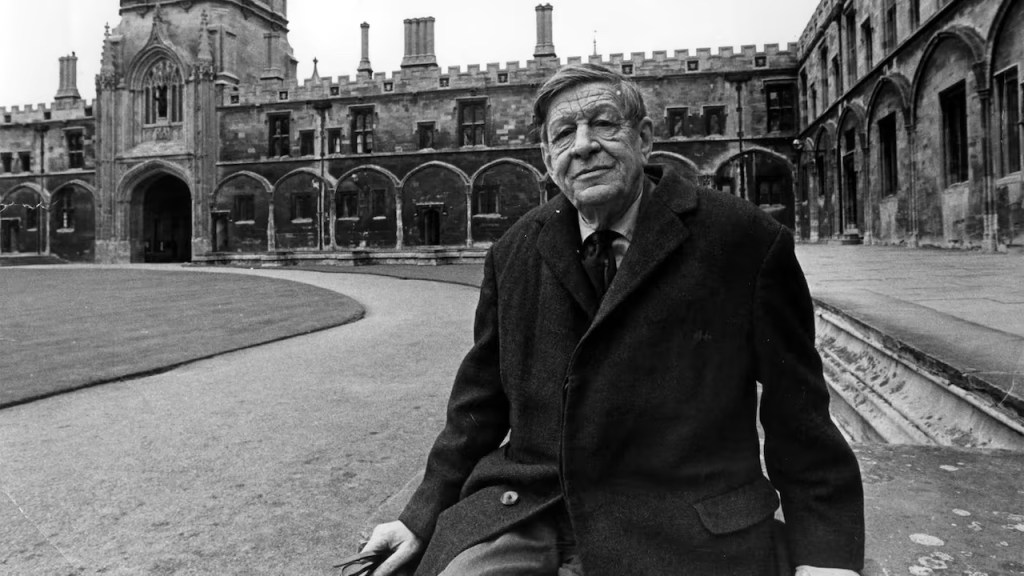


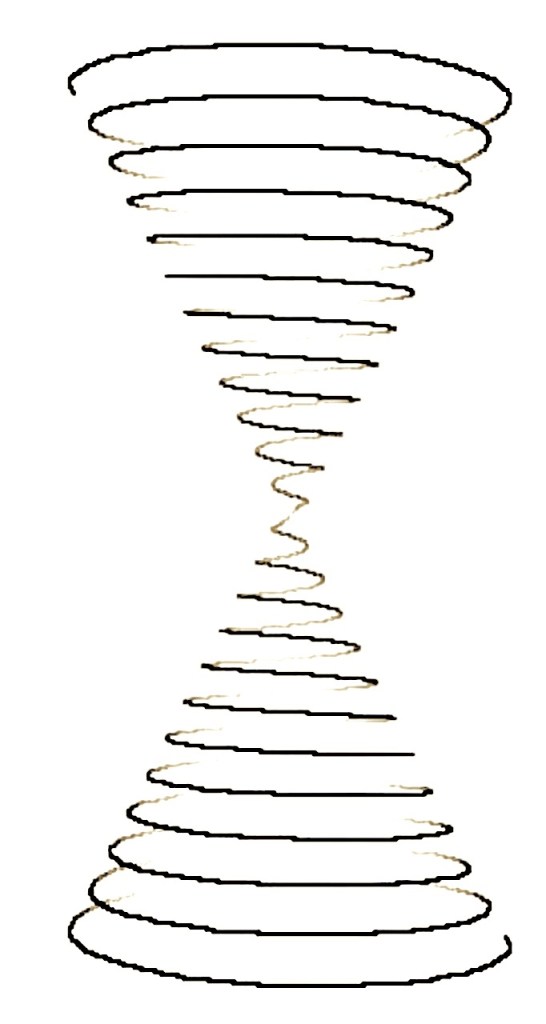




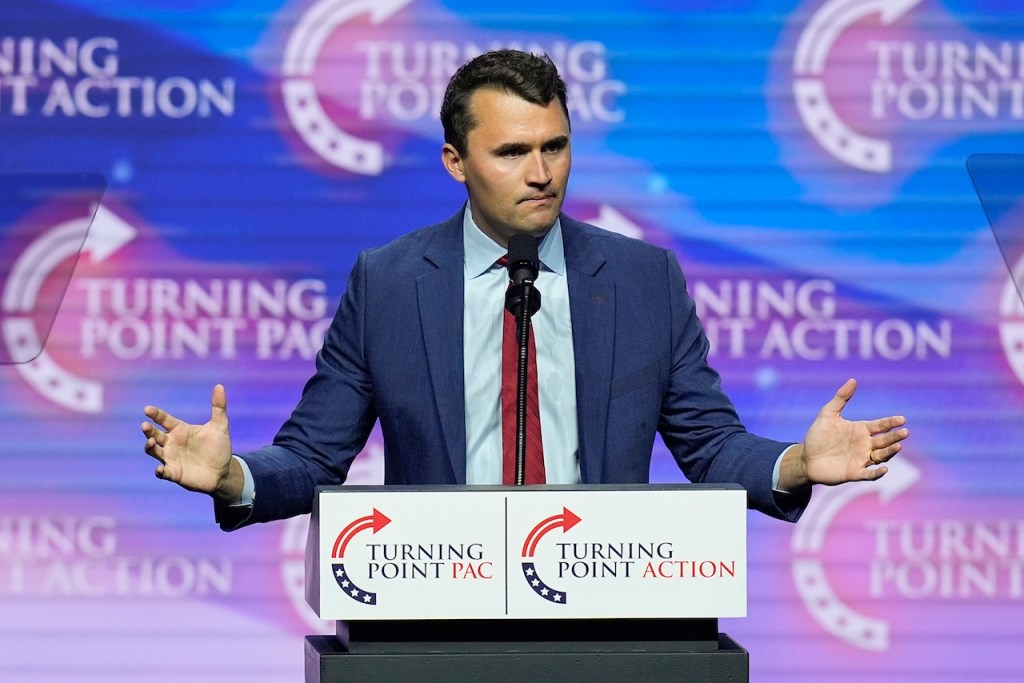



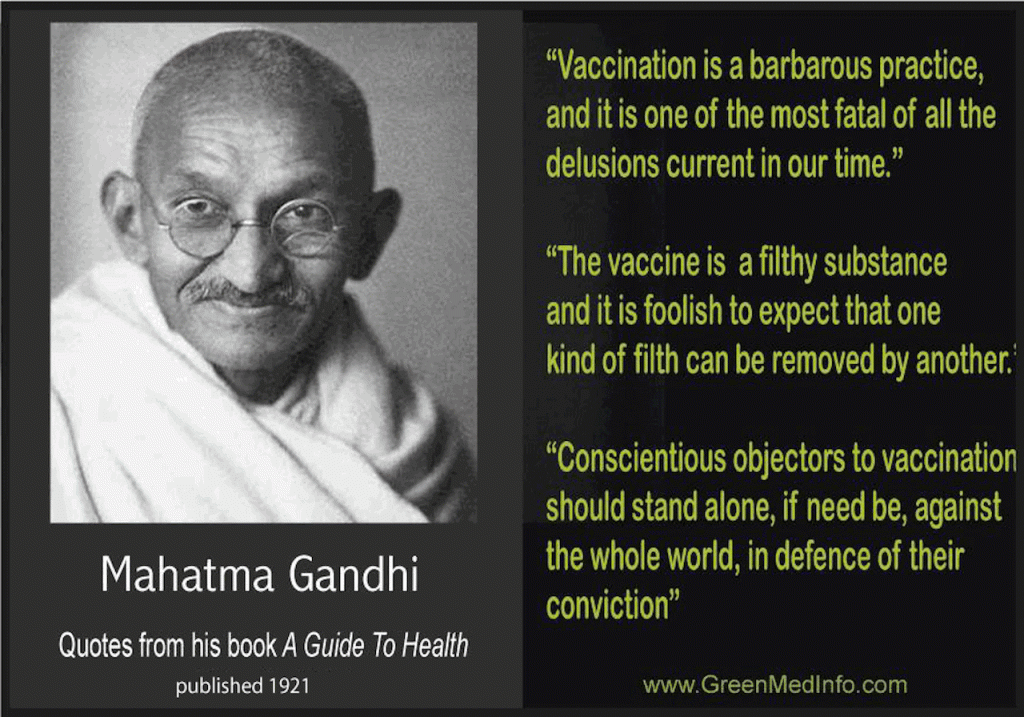
 Linda's Literary Home