Linda's Literary Home

Tag: postmodern doggerel

  • Charles Simic’s “My Shoes”

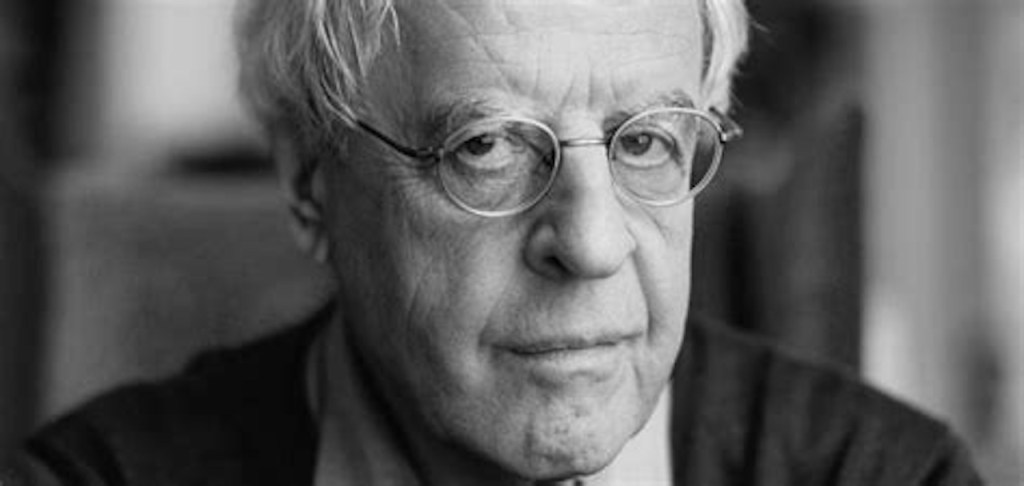
    Image:  Charles Simic  https://vuelapalabra.com/charles-simic-el-tiempo-de-los-poetas-menores-se-acerca/ Vuela Palabra
    Image: Charles Simic  – Vuela Palabra

    Charles Simic’s “My Shoes”

    Charles Simic’s “My Shoes” is a festering piece of doggerel, sounding like a postmodern poetry workshop assignment.  We will look at the poem using the medium of that oh-so-serious poetry workshop where trivia and nonsense are certain to prevail.

    Introduction and Text of  “My Shoes”

    Charles Simic’s piece “My Shoes” features five unriming stanzas. This nonsensical piece could be the response to a bizarre assignment in a poetry workshop such as the following:

    Pick some ordinary object, perhaps one you see daily.  Assign to it exclusive characteristics which only the imagination is capable of conjuring. Perform as outlandishly as you can, while staying focused on the object throughout. Choose either formal or free verse or any combination: for example, it may have rime but no regular meter or vise versa, and it may use traditional punctuation or innovative, postmodern style. Concentrate on creating a unified theme above a unifying metaphor.

    It is with these instructions in mind that one might imagine the late poetaster Charles Simic concocted his piece of doggerel titled “My Shoes.”  The postmodern mindset prevails in this piece. (For an overview of the central tenets of postmodernism, please see “Poetry and Politics under the Influence of Postmodernism.”)

    My Shoes

    Shoes, secret face of my inner life:
    Two gaping toothless mouths,
    Two partly decomposed animal skins
    Smelling of mice nests.

    My brother and sister who died at birth
    Continuing their existence in you,
    Guiding my life
    Toward their incomprehensible innocence.

    What use are books to me
    When in you it is possible to read
    The Gospel of my life on earth
    And still beyond, of things to come?

    I want to proclaim the religion
    I have devised for your perfect humility
    And the strange church I am building
    With you as the altar.

    Ascetic and maternal, you endure:
    Kin to oxen, to Saints, to condemned men,
    With your mute patience, forming
    The only true likeness of myself.

    Commentary on “My Shoes”

    Because “My Shoes” by the late poetaster Charles Simic reads like the result of a poetry workshop assignment, I have offered up some likely quips from those workshoppers who are forced to endure the drivel as they study and practice the art of poetry.

    First Stanza:  Choose Your Blues

    Shoes, secret face of my inner life:
    Two gaping toothless mouths,
    Two partly decomposed animal skins
    Smelling of mice nests.

    The speaker of the piece, a workshop participant, chooses to write about his shoes. He sits staring at them and then begins a conversation with them, addressing them directly, “Shoes, secret face of my inner life.”

    The speaker reveals that his inner life is like “[t]wo gaping toothless mouths.” By this revelation, he implies that he recognizes two aspects of his inner self, and they both look dumbstruck.

    The speaker continues to describe his shoes, which by chosen metaphor, describe his inner secret life: the shoes are made of “partly decomposed animal skins / Smelling of mice-nests.”

    The leather shoes comport with the speaker’s inner self as a consumer of animal flesh, it might be inferred, and the unpleasantness asserted by the stench of “mice-nests” alerts the reader to unwholesomeness to come.

    The workshoppers will find this a clever and fresh way of expressing the melancholy and dreary existence of residents of the war-torn 21st century; someone will even suggest that they are now post-postmodern and declare a new literary era for their own verse attempts, but the era’s name will have to remain undeclared for a year or two.

    Second Stanza:  Dead Sibling Shoes

    My brother and sister who died at birth
    Continuing their existence in you,
    Guiding my life
    Toward their incomprehensible innocence.

    In the second stanza, the speaker reports that his siblings, a brother and a sister, both “died at birth.” But oddly, those siblings are still living in the speakers/workshopper’s shoes.  Absurdly, they are even directing the speaker’s life.  And even more absurdly, they are leading his life to “their incomprehensible innocence.”

    It is at this point that the workshop will break into pandemonium over the workability of this second stanza. How the devil can he liken his shoes to his dead brother and sister? How on earth can those dead siblings be guiding his life through his shoes, no less?  And what is so “incomprehensible” about the “innocence” of infants who die at birth?

    However, others will marvel at the creative genius of having shoes likened to dead siblings:  shoes are kind of like brother and sister to each other, so then they could be brother and sister to the wearer.  Plus shoes are your feet when you go somewhere, and when you go somewhere, that place is “innocent” until you get there.

    What a treat it would be to listen in on the discussion this stanza would engender! This speaker is on a dangerous path, no doubt, but will he pull it off?  And we have not even considered what the workshop leader would attribute to the conversation.  The workshop leader is likely a poetaster himself, who publishes drivel in fledging, unread poetry mags.

    The workshop leader may even be an entrepreneur, having started his own little poetry publishing established to offset his own inability to make into the big po-biz mags.  But wait, we are getting too far from our workshop—back to the discussion.

    Third Stanza:  Question

    What use are books to me
    When in you it is possible to read
    The Gospel of my life on earth
    And still beyond, of things to come?

    The speaker poses a question in the third stanza: why do I need to read books when my shoes will tell me everything I need to know about myself and about everything else that I will experience in the future, even “on earth / And still beyond”?

    Defending this kind of question in a poem can be done only by defending the dexterity with which it is expressed. The lines sound fresh, although esoteric; they show a progression from the material to the spiritual, yet they remain stuck in the obtuseness of the content of the question.

    The workshoppers will remain obsessed with their initial reactions.  Again, some will offer light-weight questions and suggestions, while others will fawn and slobber over the “amazing” creativity of the piece.

    Fourth Stanza:   The Shoe Religion

    I want to proclaim the religion
    I have devised for your perfect humility
    And the strange church I am building
    With you as the altar.

    These postmodern workshop participants steeped in religion bashing will have no problem with the fourth stanza. That the speaker will let his shoes be “the altar” in his self-proclaimed/created religion that will be housed in “the strange church [he] is building” will delight and tickle the fancy of all church and religion haters.

    Better to worship shoes than a phantom that would control your sense pleasures and lusts with commanding guidelines for behavior. Only one or two of the workshoppers will shake their heads at this one and probably remain quiet after all the praise and gushing has subsided.

    Fifth Stanza:  The Shoe God

    Ascetic and maternal, you endure:
    Kin to oxen, to Saints, to condemned men,
    With your mute patience, forming
    The only true likeness of myself.

    After the noted religious conversion of the fourth stanza, the majority of the participants will hail the fifth stanza an unparalleled success. Yes, the shoes have now taken on a god-like patina, permanent because “[a]scetic and maternal.”

    It is wise to note that if the shoes had been labeled “paternal,” feminist cries of sexism would have ballooned to the classroom ceiling, despite the fact that this is a man and a man’s shoes.

    But the true value of the playful but completely asinine final line is that it satisfies the postmodern nihilistic psyche, while at the same time capping the mindlessness that has prevailed throughout the piece: it turns out that the man’s motherly shoes are “[t]he only true likeness of [him]self.”  He is not made in the image of God; he is made in the image of his shoes.

    The workshoppers have been had but will probably never know it. And they will go on to write equally dismal drivel, find it difficult to get published, and wonder why.  The more adventurous of spirit will likely establish their own publishing platforms, from which they can preach to their choir.

  • Renée Nicole Macklin’s “On Learning to Dissect Fetal Pigs”

    Image: Created by Grok

    Renée Nicole Macklin’s “On Learning to Dissect Fetal Pigs”

    The eight movements in this piece of postmodern doggerel serve to indict the scribbling as nothing more than a postmodern workshop exercise.  It remains one of the most flagrant tells that something is wrong in education culture in the USA: this poem won the 2020 Academy of American Poets University & College Poetry Prize at Old Dominion University.

    Introduction and Text of “On Learning to Dissect Fetal Pigs”

    This piece “On Learning to Dissect Fetal Pigs” does not merely fail on its own terms; it exemplifies a system that has mistaken posture for poetry and grievance for vision. The entire spectrum along with its habits have become unmistakable—and depressingly standardized.

    On Learning to Dissect Fetal Pigs

    i want back my rocking chairs,

    solipsist sunsets,
    & coastal jungle sounds that are tercets from cicadas and pentameter from the hairy
    legs of cockroaches.

    i’ve donated bibles to thrift stores
    (mashed them in plastic trash bags with an acidic himalayan salt lamp—
    the post-baptism bibles, the ones plucked from street corners from the meaty hands of
    zealots, the dumbed-down, easy-to-read, parasitic kind):

    remember more the slick rubber smell of high gloss biology textbook pictures; they
    burned the hairs inside my nostrils,
    & salt & ink that rubbed off on my palms.
    under clippings of the moon at two forty five AM I study&repeat
                   ribosome
                   endoplasmic—
                   lactic acid
                   stamen

    at the IHOP on the corner of powers and stetson hills—

    i repeated & scribbled until it picked its way & stagnated somewhere i can’t point to
    anymore, maybe my gut—
    maybe there in-between my pancreas & large intestine is the piddly brook of my soul.

    it’s the ruler by which i reduce all things now; hard-edged & splintering from knowledge that used to sit, a cloth against fevered forehead.
    can i let them both be? this fickle faith and this college science that heckles from the back of the classroom

                   now i can’t believe—
                   that the bible and qur’an and bhagavad gita are sliding long hairs behind my
    ear like mom used to & exhaling from their mouths “make room for wonder”—
    all my understanding dribbles down the chin onto the chest & is summarized as:
    life is merely
    to ovum and sperm
    and where those two meet
    and how often and how well
    and what dies there.

    Commentary on “On Learning to Dissect Fetal Pigs”

    Line breaks are not thoughts; failure to capitalize signals nothing profound.  This piece strains to be original to the point of exhaustion.  Its sprawling placement on the page does not equate to anything Whitmanesque; its mindless juxtapositions do little more than startle and stun and then fall flat.

    First Movement: Nostalgia as Substitute for Form

    i want back my rocking chairs,

    solipsist sunsets,
    & coastal jungle sounds that are tercets from cicadas and pentameter from the hairy legs of cockroaches.

    The piece opens with a whine rather than an image: “i want back my rocking chairs.” This awkwardly phrased salvo is not memory shaped by art; it is desire announced without effort. The rocking chair is a prefabricated symbol, wheeled in to signal premodern calm without earning it.

    The gesture toward “tercets” and “pentameter” is particularly revealing. These features are not forms the poem employs but instead are terms it waves at the reader like credentials: “look I know some poetry terms I learned in my creative writing class.” 

    Meter becomes metaphor, form becomes flavoring. As Helen Vendler insists, poetry requires a thinking ear, not a decorative vocabulary [1]. This poem treats form the way lifestyle branding treats craft: as an aesthetic aura, not a discipline.

    Second Movement: Desecration as Cultural Credential

    i’ve donated bibles to thrift stores
    (mashed them in plastic trash bags… the dumbed-down, easy-to-read, parasitic kind):

    Here we arrive at the first ritual sacrifice. Sacred texts are not confronted, questioned, or even read; they are disposed of theatrically. The Bible appears only as an evangelical pamphlet, never as literature, theology, or intellectual inheritance.

    Such effusion is not critique; it is credentialing. George Steiner warned that modern art’s fixation on desecration often signals creative exhaustion rather than courage [2]. The poem performs disbelief the way a résumé lists internships. As Harold Bloom observed, contemporary poetry often avoids agon—the struggle with strong precursors—in favor of symbolic vandalism [3]. Trash bags replace thought.

    Third Movement: Science as Vocabulary Trauma

    remember more the slick rubber smell of high gloss biology textbook pictures; they
    burned the hairs inside my nostrils,
    & salt & ink that rubbed off on my palms.
    under clippings of the moon at two forty five AM I study&repeat
                   ribosome
                   endoplasmic—
                   lactic acid
                   stamen

    Science enters the poem not as inquiry but as irritation. Scientific terms are recited like curse words, their meanings irrelevant. The poem resents knowledge without attempting to understand it.

    James Longenbach has noted that free verse collapses when it merely records annoyance rather than transforming it [4]. Here, scientific language is treated as an assault on sensitivity, revealing not science’s limitations but the speaker’s refusal to engage it beyond syllabic discomfort.

    Fourth Movement: Specificity as Alibi

    at the IHOP on the corner of powers and stetson hills—

    This line is the system’s shibboleth. The named diner is not symbol, setting, or pressure point—it is proof of authenticity. The poem assumes that coordinates equal meaning.  Randall Jarrell warned that poetry which merely reports experience degenerates into prose with line breaks [5]. This IHOP does nothing but exist, which the poem treats as sufficient.

    Fifth Movement: The Soul, Shrunk for Convenience

    maybe there in-between my pancreas & large intestine is the piddly brook of my soul.

    Here the poem congratulates itself for modesty by reducing the soul to runoff. Unlike metaphysical poetry, which used bodily imagery to heighten spiritual stakes, this poem uses anatomy to flatten them.

    Christopher Ricks argued that metaphor should increase imaginative pressure [6]. This one relieves it. The soul becomes small enough not to trouble anyone—including the poet.

    Sixth Movement: The Straw-Man Dialectic

    this fickle faith and this college science that heckles from the back of the classroom

    Faith and science are staged as cartoon antagonists: faith as comfort blanket, science as rude undergraduate. This weasel language is not dialectic; it is melodrama for the intellectually uncurious.

    As T. S. Eliot warned, poetry that mistakes emotional dissatisfaction for insight substitutes complaint for thought [7]. The poem invents a conflict it cannot articulate and then sulks about it.

    Seventh Movement: Wonder Infantilized

    the bible and qur’an and bhagavad gita are sliding long hairs behind my ear like mom used to…

    Wonder here is not earned but remembered—and remembered only as childhood comfort. Sacred texts become maternal figures, soothing rather than demanding.

    Eliot cautioned against confusing regression with depth. This passage does exactly that. The poem inadvertently admits that its concept of wonder cannot survive adulthood and then blames knowledge for the failure.

    Eighth Movement: The Grand Reduction (a.k.a. The Sulk)

    life is merely
    to ovum and sperm
    and where those two meet
    and how often and how well
    and what dies there.

    The poem concludes with the system’s obligatory finale: a reduction so crude it pretends to be brave. Life is reduced to sex and death, as though no one has ever thought this before.

    No serious scientist, philosopher, or poet holds such a view, and the poem does not pretend to argue it. As Eliot observed, exhaustion presented as revelation is still exhaustion. The poem ends not with insight, but with a pout.

    An Afterword: Dissatisfaction Does Not Bring Wisdom

    Macklin’s “On Learning to Dissect Fetal Pigs” exemplifies the current rot that passes for poetry because it wants the authority of crisis without the labor of understanding. It rejects form while gesturing at it, dismisses belief without engaging it, and resents knowledge without learning it. 

    It longs for rocking chairs but refuses carpentry. What it offers instead is the familiar debris of postmodern workshop verse: fragments of feeling, gestures of rebellion, and the unexamined belief that dissatisfaction is a form of wisdom.  It is not.

    Readers might notice that this essay does not even begin to address the awkwardness of language use this piece, which would require another essay to fully engage the issue. Suffice it to say that said awkwardness could, in fact, result either from intent or simply lack of language acumen of the doggerelist.

    Either reason aligns with postmodern thought that dismisses utility for heft and originality for quaint novelty. For the postmod mindset, Ezra Pound’s diktat “make it new” [8] has become “make it shockingly ugly.”

    Sources

    [1] Helen Vendler. The Art of Shakespeare’s Sonnets. Harvard UP, 1997.

    [2] George Steiner. Real Presences. University of Chicago Press, 1989.

    [3] Harold Bloom. The Anxiety of Influence. Oxford UP, 1973.

    [4] James Longenbach. The Resistance to Poetry. University of Chicago Press, 2004.

    [5] Randall Jarrell. Poetry and the Age. University Press of Florida, 2001.

    [6] Christopher Ricks. The Force of Poetry. Oxford UP, 1984.

    [7] T. S. Eliot. The Use of Poetry and the Use of Criticism. Harvard UP, 1933.

    [8] Ezra Pound. Make It New: Essays.  Faber and Faber. 1934.