Liza Libes on Postmodern Literary Studies
The literary world has always depended upon readers who believe that books are more than cultural artifacts. Liza Libes is one such reader, writer, poet, and cultural critic.
Her work has emerged from a deep affection for literature and from a growing conviction that great books should be read as works of art that illuminate the human condition rather than merely as vehicles for contemporary political arguments.
Through her writing, teaching, videos, podcasts, and literary project Pens and Poison, Libes has become an increasingly visible voice in the discussion of literature and the future of literary education.
Introduction: Restoring Literature to the Humanistic Tradition
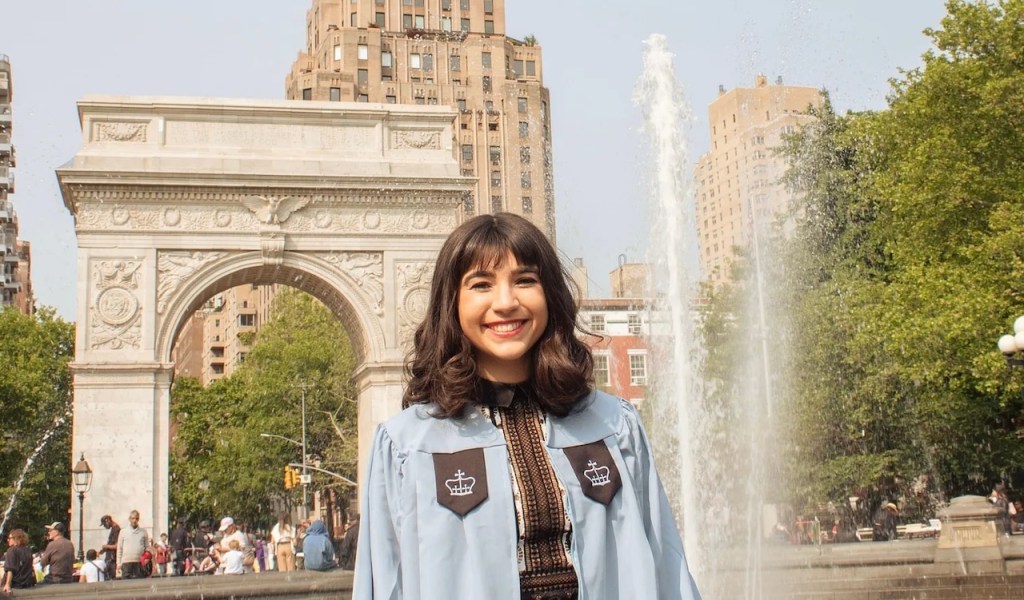
Liza Libes describes herself as a writer and cultural critic. She earned both a B.A. and an M.A. in English and Comparative Literature from Columbia University, studying the poetry of Sylvia Plath as an undergraduate and T. S. Eliot as a graduate student [1].
Her academic training gave her an unusually close acquaintance with the literary tradition, but her experience in the university also produced the central question that has shaped much of her subsequent work: What happens to literature when political theory becomes more important than literature itself?
Libes has argued that contemporary literary study has become too heavily dependent upon ideological approaches. In a 2024 essay, “Why I Am Not a PhD,” she describes becoming increasingly dissatisfied with an approach in which works such as The Great Gatsby or The Canterbury Tales were primarily approached through political themes. She concluded that she was being taught to discuss political literary theory rather than to study literature itself [2].
Her criticism is not simply a rejection of literary theory in general. Libes explicitly states that she does not advocate eliminating theory from universities. Her objection is to what she regards as the disproportionate influence of political and ideological frameworks over the actual literary works. For Libes, literature possesses a purpose that transcends contemporary political disputes: it can reveal universal truths about human nature and at the human condition.
This conviction became the foundation for Pens and Poison, the literary project she established after leaving graduate study. The project describes its mission as resisting the assumption that literature must be interpreted through political lenses and refocusing attention upon the humanistic tradition [3]. In this respect, Libes has positioned herself not merely as a critic of contemporary literary education but as an advocate for the recovery of the appreciation for literature itself.
Early Life and the Love of Literature
Libes has written that her desire to become a writer began when she was a young child. In describing her childhood, she recalls spending time creating stories and entering imaginative worlds of her own invention. Writing was not initially a career calculation; it was a natural expression of her imagination [4].
As she grew older, her childhood stories gave way to an increasing interest in serious fiction and the literary classics. She developed a particular affection for authors whose works investigate the psychological and moral dimensions of human existence. Among her most important literary influences are Sylvia Plath and T. S. Eliot, the subjects of her undergraduate and graduate theses at Columbia University.
Libes’ academic career therefore began from genuine enthusiasm for literature. She did not enter the university as someone hostile to literary scholarship. On the contrary, she hoped to become an English professor. In her account of her experience at Columbia, she recalls imagining herself as a future literature professor standing before a classroom and discussing poetry with students [5]. That ambition gradually changed.
As she progressed through her university education, Libes became increasingly concerned about what she regarded as the dominance of ideological criticism in literary studies. In one autobiographical account, she explains that she began questioning approaches that seemed to reduce literary works to political arguments about race, class, gender, capitalism, or social power.
Her disagreement became particularly significant and galling for her because she continued to love the books themselves. The issue was not whether political questions could ever be discussed in connection with literature. Rather, she questioned whether those questions should displace the literary, moral, psychological, and aesthetic dimensions of a work.
Columbia University and the Turning Point
After completing her B.A. at Columbia University, Libes graduate work culminated in an M.A. thesis examining T. S. Eliot and Wagnerian parallels. Her academic experience, however, eventually convinced her that she did not want to pursue the traditional academic career she had once imagined.
In “Proud Not to Be PhD,” Libes describes finishing her master’s thesis during the pandemic in 2020 and leaving graduate study with her degree but without the academic future she had once expected. She describes the decision as liberating. Rather than becoming a professor within a literary system she had come to distrust, she began looking for ways to engage readers directly.
Her essay “The Year I Quit Reading” provides an even more personal account of this transition. Libes describes reaching a point at which she found herself unable to read major works without automatically applying the theoretical frameworks she had encountered in the academy.
Instead of meeting and enjoying a novel or poem as a work of art, she found herself searching for Marxist, postcolonial, feminist, or other ideological interpretations [6]. This experience effected an important turning point; she wanted to reclaim the pleasure of reading. She wanted to experience literature again as literature.
Pens and Poison
Because of that conviction, Libes created Pens and Poison, a multi-platform literary project designed to encourage readers to appreciate literature and the written word as works of art instead of target practice for ideological arrows.
The project includes articles, essays, videos, podcasts, and other forms of online literary discussion. Its stated purpose is to challenge—even refute— the assumption that literature must be understood through predetermined political categories and to redirect attention toward the humanistic tradition as preserved in letters.
The project has also given Libes a direct relationship with a contemporary audience. According to her biographical sketch, Pens and Poison reaches more than 140,000 Instagram followers and more than 45,000 YouTube subscribers. Her work has thus moved beyond the traditional academic audience of literary criticism and into the much larger world of online readers.
In 2024, Pens and Poison also introduced a magazine intended to provide young poets and writers with a platform for their work [7]. Through this work, Libes is not merely criticizing contemporary literary culture. She is attempting to build an alternative literary community in which young writers can read, write, discuss, and appreciate literature without first having to adopt a particular political interpretation.
Criticism of Postmodern Literary Study
One of the defining themes in Libes’ criticism is her objection to the postmodern assumptions she believes have become influential in university English departments.
In “Why Contemporary Publishing Is Broken,” Libes argues that postmodern approaches have helped establish several assumptions in literary study: that meaning is relative, that authorial intention is irrelevant, and that claims to universal truth are inherently suspect [8].
She believes these assumptions have consequences beyond the classroom because university graduates frequently enter publishing, education, and the broader literary world.
Her argument is especially concerned with the relationship between literary criticism and the purpose of literature. According to Libes, if students are trained to regard every literary work primarily as a product of social power or political ideology, they may lose the ability to ask what a work says about human beings themselves. Her alternative is a humanistic understanding of literature.
Libes argues that great literature can teach readers about human nature precisely because individual stories can reveal universal experiences. In discussing the classics, she has rejected the idea that a work loses its value simply because its author belongs to a demographic group with which a contemporary reader does not personally identify [9].
For Libes, Shakespeare, Dostoyevsky, Eliot, Plath, and other major writers remain worth reading because literature can cross boundaries of time, culture, sex, class, and nationality. A reader does not have to resemble an author in order to discover something true in that author’s work. This belief is central to her criticism of contemporary literary education.
The Case for Humanistic Literature
Libes’ criticism is ultimately constructive. She does not merely want to identify what she believes is wrong with literary education; she wants to restore something she believes has been lost.
In her essay “The Case for Humanistic Literature,” she examines Thomas Mann’s The Magic Mountain and connects the novel to the older humanistic tradition of Western literature [10]. She argues that literature has historically served purposes larger than entertainment. Great works can force readers to confront questions about morality, meaning, civilization, suffering, virtue, and the nature of human existence.
Her essay “How Postmodernism Killed Great Literature” develops the same argument. There she contends that literature should not merely provide an open-ended space for ideological interpretation but should help readers think about what constitutes a good and meaningful life [11].
This argument is perhaps the most important feature of Libes’ criticism: her opposition to ideological literary interpretation grows out of her belief that literature matters. She objects to political reductionism because she believes books are capable of doing something more profound.
Writing, Poetry, and Education
Libes’ literary interests extend beyond criticism. She is also a poet and writer whose work has appeared in literary journals and publications including Persuasion, The American Spectator, the Jewish Book Council, and others.
She has published poetry collections including Broken Weekend, Vintage Lovers, and Illicit Kingdom, plus another very recently published collection, Girl Soldier. Her poetry addresses subjects including identity, Judaism, desire, and other dimensions of personal experience.
Libes has also made education an important part of her professional life. She founded Invictus Prep, a college-consulting company through which she works with students on writing and college preparation [12]. The company describes her work as helping students develop their writing and intellectual abilities while guiding them through the college-application process.
Her concern about declining writing ability among students has also become part of her public criticism. In “Why Can’t Our Kids Write?,” Libes describes working with college-bound teenagers and observing what she considers a troubling decline in students’ ability to write effectively [13]. Her criticism therefore extends beyond literary interpretation to the larger question of whether young people are being adequately prepared to read, think, and communicate.
A New Kind of Literary Critic
Liza Libes represents an unusual figure in contemporary literary culture. She possesses the academic credentials of a traditional literary scholar but has chosen not to remain within the conventional academic system. Instead, she has taken literary criticism into the online world.
Her work combines scholarship, poetry, cultural criticism, education, entrepreneurship, and social media. Through Pens and Poison, she communicates with an audience far larger than the readership normally associated with academic literary criticism. Her importance may ultimately lie in this combination.
Libes is not arguing that literary studies should become less intellectual. She is arguing that it should become more fully intellectual by returning to questions of meaning, truth, beauty, morality, psychology, and the human condition. Her criticism of postmodern literary study is therefore part of a broader argument about what education is supposed to accomplish.
For Libes, literature should not merely train students to identify ideological categories. It should teach them how to see. It should enlarge the imagination. It should deepen the reader’s understanding of other people and of himself. And above all, it should remain literature.
The Libesian Opposition
The case against Liza Libes is strikingly insubstantial: one published polemic built on factual reductionism and personal contempt, followed by the usual anonymous online sneering masquerading as critique.
Karen Myers’ November 2025 post at Mad Genius Club [14] is the centerpiece of the attack. It dismisses one of Libes’s essays as a “heartfelt entitlement/industry whine” and portrays her as “young and snobbish,” sneering that she has “only” three poetry collections and supposedly lacks any understanding of the market.
This assertion is not a serious rebuttal of Libes’s claims; it is a credential-counting exercise designed to imply that a writer may not criticize literary institutions unless she has first accumulated whatever résumé Myers considers sufficiently substantial.
That framing is especially evasive given Libes’s actual record. She has cultivated a sizeable independent audience across Instagram and YouTube, built a Substack that reached bestseller status, published essays in The Boston Globe, Persuasion, and The Daily Wire, and continued to produce fiction, poetry, and cultural criticism.
Pretending that her career can be reduced to “only three poetry collections” is not analysis; it is selective accounting deployed to make the writer look unserious. Myers’ objection ultimately appears less concerned with whether Libes is right about ideological conformity in academia and publishing than with the fact that Libes still takes conventional literary prestige seriously.
On an indie-publishing site, that ambition is recast as vanity or delusion. But treating an author’s aspiration to serious literary recognition as proof of incompetence is not a factual refutation; it is an ideological preference, expressed with the confidence of a verdict.
Beyond that post, the opposition largely disintegrates into drive-by abuse: social-media insults, vague insinuations, and the occasional YouTube comment declaring Libes “full of herself.” None of it meaningfully addresses her arguments about political gatekeeping, institutional conformity, or the narrowing range of acceptable viewpoints in literary and academic culture.
The so-called critics do not defeat her analysis; they mostly avoid it, substituting irritation at her visibility and ambition for an actual argument. The weak responses of these ideological critics demonstrate more about their self-aggrandizement than about the target of their criticism.
Sources
[1] Liza Libes. “About.” Liza Libes. Accessed August 25, 2026.
[2] – – -. “Why I Am Not a PhD.” Persuasion. October 22, 2024.
[3] – – -. “A Letter from the Founder.” Pens and Poison. Accessed August 25, 2026.
[4] – – -. “Proud Not to Be PhD.” Pens and Poison. August 10, 2025.
[5] – – -. “When Literature Lost Its Way.” Pens and Poison. February 16, 2026.
[6]. – – -. “The Year I Quit Reading.” Pens and Poison. Accessed August 245 2026.
[7] Editors. “Liza Libes.” Poets & Writers. Last update: January 1, 2025.
[8] Liza Libes. “Why Contemporary Publishing Is Broken.” Pens and Poison. June 15, 2026.
[9]. – – – . “Q&A with Liza Libes.” Pens and Poison. August 31, 2024.
[10] – – -. “The Case for Humanistic Literature.” Pens and Poison. June 30, 2025.
[11] – – -. “How Postmodernism Killed Great Literature.” Pens and Poison. January 2, 2026.
[12] Editors. “About Us.” Invictus Prep. Accessed August 25, 2026.
[13] Liza Libes. “Why Can’t Our Kids Write?” Pens and Poison. April 3, 2025.
[14] Karen Myers. “Old Pub.” Mad Genius Club. November 6, 2025.