
Image: Original Icon for American Thinker
List for “Thought of the Day”
March 18, 2026:
March 12, 2026: “Many accusers have spoken against me from childhood, persuading you by slander. The most unreasonable thing of all is that it is impossible to know and name my accusers, except in the case of a comic poet. But the others who have persuaded you by slander and prejudice—these are the most difficult to deal with.” —Socrates’ Apology, 18c–19a.
March 10, 2026: “Atheists are as dull, / Who cannot guess God’s presence out of sight.” —Elizabeth Barrett Browning’s Sonnet 20 “Beloved, my Beloved, when I think” from Sonnets from the Portuguese
March 1 2026: Millions of people never analyze themselves. Mentally they are mechanical products of the factory of their environment, preoccupied with breakfast, lunch, and dinner, working and sleeping, and going here and there to be entertained. They don’t know what or why they are seeking, nor why they never realize complete happiness and lasting satisfaction. By evading self-analysis, people go on being robots, conditioned by their environment. True self-analysis is the greatest art of progress. ― Paramahansa Yogananda
February 25, 2026: “You must not let your life run in the ordinary way; do something that nobody else has done, something that will dazzle the world. Show that God’s creative principle works in you.”
― Paramahansa Yogananda
“You have come to earth to entertain and to be entertained.”
― Paramahansa Yogananda, Autobiography of a Yogi
The following thoughts have appeared earlier on the welcome page of Linda’s Literary Home
February 15, 2026: “Remember that when you are unhappy it is generally because you do not visualize strongly enough the great things that you definitely want to accomplish in life, nor do you employ steadfastly enough your will power, your creative ability, and your patience until your dreams are materialized.” —SRF Lessons and Spiritual Diary, April 22 – Will Power, Creative Ability, & Patience —Paramahansa Yogananda
February 14, 2026: “Don’t depend on death to liberate you from your imperfections. You are exactly the same after death as you were before. Nothing changes; you only give up the body. If you are a thief or a liar or a cheater before death, you don’t become an angel merely by dying. If such were possible, then let us all go and jump in the ocean now and become angels at once! Whatever you have made of yourself thus far, so will you be hereafter. And when you reincarnate, you will bring that same nature with you. To change, you have to make the effort. This world is the place to do it.” —Paramahansa Yogananda
February 7, 2026:
February 4, 2026:
January 29, 2026:
January 23, 2026:

January 19, 2026: Remembering that great voice that deeply influenced my life in music . . . with great love and respect for this dear, angel-voiced singer . . .
In Memoriam: Phil Everly – January 19, 1939 — January 3, 2014

January 15, 2026:
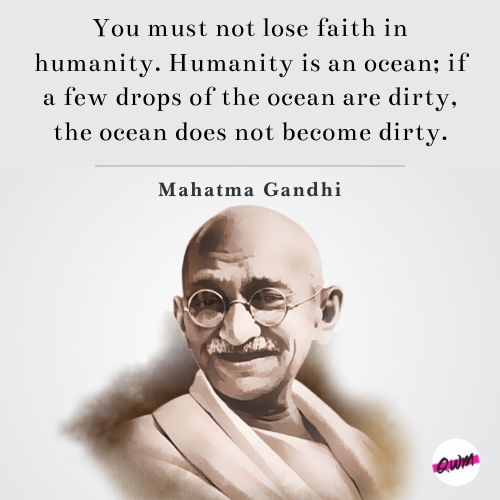
January 8, 2026: Carefully watch your thoughts, for they become your words. Manage and watch your words, for they will become your actions. Consider and judge your actions, for they have become your habits. Acknowledge and watch your habits, for they shall become your values. Understand and embrace your values, for they become your destiny. —Mahatma Gandhi
January 7, 2026:
January 6, 2026: “By ignoble whips of pain, man is driven at last into the Infinite Presence, whose beauty alone should lure him.” –a wandering sadhu, quoted in Autobiography of a Yogi by Paramahansa Yogananda
January 1, 2026: A Nearly Perfect Sonnet: “God’s Grandeur” by Father Gerard Manley Hopkins
Foolish, mendacious partisan hacks who busily push an agenda based on the claim that humanity has the power to transform an entity as big and forceful as the Earth should heed the message of this splendid little sonnet. Humankind’s power could never begin to change the climate of this marvelous God-driven orb on which we all find ourselves. Love the planet, observe and enjoy its gifts, keep it clean—but don’t make up fantasies through which even a child blessed with enough information can see!

Image: Created by ChatGPT
God’s Grandeur
The world is charged with the grandeur of God.
It will flame out, like shining from shook foil;
It gathers to a greatness, like the ooze of oil
Crushed. Why do men then now not reck his rod?
Generations have trod, have trod, have trod;
And all is seared with trade; bleared, smeared with toil;
And wears man’s smudge and shares man’s smell: the soil
Is bare now, nor can foot feel, being shod.
And for all this, nature is never spent;
There lives the dearest freshness deep down things;
And though the last lights off the black West went
Oh, morning, at the brown brink eastward, springs —
Because the Holy Ghost over the bent
World broods with warm breast and with ah! bright wings.
December 27, 2025: Paramahansa Yogananda – The Sanskrit word for ‘musician’ is bhagavathar, “he who sings the praises of God.” —Autobiography of a Yogi
December 22, 2025: T. S. Eliot – Man is man because he can recognize supernatural realities, not because he can invent them.
December 17, 2025: Paramahansa Yogananda – Remember that when you are unhappy it is generally because you do not visualize strongly enough the great things that you definitely want to accomplish in life, nor do you employ steadfastly enough your will power, your creative ability, and your patience until your dreams are materialized. —SRF Lessons and Spiritual Diary, April 22 – Will Power, Creative Ability, & Patience
December 15, 2023: Paramahansa Yogananda – In the natural course of evolution through reincarnation, souls are automatically reincarnated by cosmic law in a higher form or species in each incarnation. The soul is never reborn in the same animal species: a dog is never a dog again. — SRF Lesson 78: “Conscious Evolution”
December 10, 2025: Paramahansa Yogananda: People interested in developing their memory should avoid the regular use of stimulants such as coffee, tea, and tobacco, which contain caffeine, theine, and nicotine, respectively.* Strictly avoid using strong stimulants such as liquor and drugs. Such substances intoxicate, drug, and deteriorate the intelligence and memory cells of the brain, preventing them from recording noble ideas and sense impressions in general. Memory cells that are constantly anesthetized by intoxicants lose their retentive power, and become lazy and inert. Intoxication obliterates the functions of the conscious mind by harmful chemicals, hence injures the cerebral memory-organ. When the brain is affected the memory is impaired. — SRF Lesson 51: “Yoga Methods for Developing Memory” (*Editor’s Note: Some modern research indicates that light to moderate use of caffeine improves short-term memory for brief periods. Yogis, however, assert that continuous use over a long period erodes rather than enhances the capacity of this divine faculty.)
November 30, 2025: Sri Yukteswar – Forget the past. The vanished lives of all men are dark with many shames. Human conduct is ever unreliable until man is anchored in the Divine. Everything in future will improve if you are making a spiritual effort now. —Paramahansa Yogananda’s Autobiography of a Yogi
November 25, 2025: Reflection on the Suspension of Ball State’s Ph.D. Program in English
Learning that Ball State University has suspended its Ph.D. program in English has been both shocking and saddening to me. I earned my doctorate at BSU in 1987, during a period when the program felt vibrant, intellectually rigorous, and full of possibility. It was a community where faculty and graduate students alike believed deeply in the value of literary study and in the capacity of language to shape human understanding.
The news feels like more than an administrative adjustment; it feels like the quiet closing of a chapter. Doctoral study at Ball State was not simply a credential — it was a space of discovery and discipline, a place where I learned to think more deeply, read more closely, and write with greater purpose. Many of us who passed through the program carry its influence into every classroom we taught in and every page we have written since.
I also recognize that this suspension is part of a broader trend affecting humanities programs nationwide. It does not reflect a failure of the program’s quality or mission but rather the pressures of shifting institutional priorities and metrics that often undervalue the humanities. Still, it is difficult to see a once-thriving program constrained by forces far removed from its scholarly heart.
Whatever the future holds, I remain grateful for the education I received and for the professors, especially Thomas Thornburg, Frances Rippy, and Tetsumaro Hayashi and fellow students, including Daniel Wright, Virginia Paddock, and Beverly Simpson, who shaped my intellectual life. The legacy of the program lives on in its graduates — in our research, our writing, and our ongoing belief that literary study remains essential to a thoughtful and humane society.
 Linda's Literary Home