Linda's Literary Home

Tag: race

  • Emily Dickinson’s “Color – Caste – Denomination”

    Image: Emily Dickinson - Amherst College - Daguerrotype of the poet at age 17, circa 1847 - likely the only authentic, extant likeness of the poet
    Image: Emily Dickinson – Amherst College – Daguerrotype of the poet at age 17, circa 1847 – likely the only authentic, extant likeness of the poet

    Emily Dickinson’s “Color – Caste – Denomination”

    Emily Dickinson’s speaker in “Color – Caste – Denomination” is demonstrating a profound truth about the flaws in human classifications that still today lead to ill-will and even violence toward members of different racial, social class, and religion groups.

    Human Classifications:  Two Views

    Emily Dickinson’s “Color – Caste – Denomination” and Arna Bontemps’ “God Give to Men” take as their theme the issue of the classifications that humanity has through the centuries imposed upon itself.  

    While there are many ways that human beings identity themselves, three common ones are race, class (social status), and religion; thus, Dickinson has labeled the classes “color” (race), “caste” (class, social status), and “denomination” (religion).

    Arna Bontemps in his race conscious piece “God Give to Men” has concentrated primarily on the classification of color (race).  He refers to the skin color for two of the classes—”yellow” and “black”—but then uses the eye color “blue” for the third class.  The poets Emily Dickinson and Arna Bontemps have handled the issue of human classification in two quite disparate ways:  

    (1) Dickinson’s drama serves to unite all human classes, as her speaker insists that each human being is a soul without any of the outward classifications with which humanity has burdened itself.

    (2) Bontemps’ speaker remains squarely focused on the issues that he finds repugnant or venal in each color class, not his own.  As his speaker asks God to give certain gifts to men, he reveals his animosity toward two of his designated classes.  The third class receives rather short shrift in an ironic attempt at humility.

    Dickinson’s ultimate truth is based on the individuality of each human being, while Bontemps relies heavily on racial stereotypes [1], which  serve only to divide, not unify, for not all members of any so-called classification represent the concocted stereotype that attempts to define and describe that classification.

    Text of Emily Dickinson’s “Color – Caste – Denomination”

    The speaker in Emily Dickinson’s “Color – Caste – Denomination” demonstrates a profound understanding regarding the futility of human classifications [2]  based on race, class, religion, and sex.

    The theme of the Dickinson poem is likely influenced by Galatians 3: 28: “There is neither Jew nor Greek, there is neither bond nor free, there is neither male nor female: for ye are all one in Christ Jesus” [3].

    Color – Caste – Denomination

    Color – Caste – Denomination –
    These – are Time’s Affair –
    Death’s diviner Classifying
    Does not know they are –

    As in sleep – all Hue forgotten –
    Tenets – put behind –
    Death’s large – Democratic fingers
    Rub away the Brand –

    If Circassian – He is careless –
    If He put away
    Chrysalis of Blonde – or Umber –
    Equal Butterfly –

    They emerge from His Obscuring –
    What Death – knows so well –
    Our minuter intuitions –
    Deem unplausible –

    To view Emily Dickinson’s hand-written copy of this poem, please visit the Emily Dickinson Archive.

    Commentary on Dickinson’s “Color – Caste – Denomination”

    The speaker in Emily Dickinson’s “Color – Caste – Denomination” is demonstrating the futility of humanity’s self-classification that is still today widely and tragically misconstrued and continues to lead to unfortunate struggles and misunderstandings among the peoples of the world.

    First Stanza:  The Delusion of Classification

    Color – Caste – Denomination –
    These – are Time’s Affair –
    Death’s diviner Classifying
    Does not know they are –

    The perspicacious speaker begins with an audacious claim: the human soul possesses no ordinary identities associated with race, class (social status), or religion.  By extension, one would realize that if those common classes are null, so is the classification by sex and/or sexual orientation.

    This speaker perceives that those classifications are merely delusional imaginings, resulting from the mayic realm [4] of the operative pairs of opposites which have their being under time’s sway:  “These – are Time’s Affair.” 

    The fact that these classifications vanish after death demonstrates that they are merely delusive tools, useful only, if useful at all, to the material level of existence.  The soul is “Death’s diviner Classifying,” and Death cannot classify the living.  When Death attempts to classify the soul, it finds that the soul’s purity lacks those limiting qualities that humanity assigns itself.

    Second Stanza:   A Dreamer’s Awareness

    As in sleep – all Hue forgotten –
    Tenets – put behind –
    Death’s large – Democratic fingers
    Rub away the Brand –

    The speaker, desiring to further clarify her claim, then compares “death” to “sleep”—in sleep, the human being forgets his/her race, class, religion, and sex.  These “tenets” are abandoned, and the sleeper, if she dreams, may dream herself a different race, class, religion, or sex, but as long as she dreams those classes will seem to be reality.

    Sleep, like Death, has “large – Democratic fingers” which are capable of erasing the marks of human classifications that circumscribe the individual in ordinary, waking consciousness. The dreamer understands her images and relates to them exactly as she does while awake. 

    Third Stanza:   The Unclassifiable Soul

    If Circassian – He is careless –
    If He put away
    Chrysalis of Blonde – or Umber –
    Equal Butterfly –

    The Circassians [5] comprised a civilization in Diaspora, routed by the Russians and then by the Ottoman Empire. Their classifications would be tenuous at best; thus, their ability to classify themselves would be quite difficult, as many other civilizations have experienced.  Peoples who live in contiguity to conquering peoples have found it difficult to maintain a unified identity; such has also been the lot of the Jewish people [6]. 

    But even the “Circassian” who attempts to identity her classification would find that like a butterfly, whether it be “Blonde – or Umber,” she would still remain “Equal Butterfly.” The speaker is suggesting that the usefulness of names on the material plane can never taint the soul. The soul remains perfectly unclassifiable by mayic limitations. 

    This speaker finds solace in this awareness as do most objective, fair-minded thinkers,  but in 21st century America, those who are financially and emotionally invested in the victimhood concocted through identity politics [7] find such an idea abhorrent, as it leaves them without a favorite issue to exploit for political gain [8].

    Fourth Stanza:  Delusive Limitations of Race, Class, Religion, and Gender

    They emerge from His Obscuring –
    What Death – knows so well –
    Our minuter intuitions –
    Deem unplausible –

    The speaker ultimately is averring through suggestion that each human soul is not “obscured” by any attempt to classify it by the delusive limitations of race, class, religion, or sex.   Death knows this, the speaker again emphasizes. Even the tiniest inference that the human mind makes regarding that futile act of classifying will remain “unplausible.”

    Sources

    [1] Saul Mcleod, PhD.  “Stereotypes In Psychology: Definition & Examples.”  SimplyPsychology.  Updated onJune 16, 2023

    [2] Elizabeth Kolbert. “There’s No Scientific Basis for Race—It’s a Made-Up Label.” National Geographic. The Race Issue.

    [3]  King James Version:   Galatians 3: 28.

    [4]  Paramahansa Yogananda.  “Theory of Maya.”  The Royal Path of Kriya Yoga.  Accessed August 18, 2023.

    [5]   Kipyego Isaac Kipruto.  “Who Are the Circassian People?”  World Atlas.  Accessed May 31, 2026.

    [6] Editors.  “Ancient Jewish History: The Diaspora.” Jewish Virtual Library.  Accessed May 31, 2026.

    [7] David Azerrad, Ph.D.”The Promises and Perils of Identity Politics.” The Heritage Foundation.  January 23, 2019.

    [8] Walter Benn Michaels, Charles W. Mills, Linda Hirshman and Carla Murphy.  “What Is the Left Without Identity Politics?The Nation.  December 16, 2016.

  • Langston Hughes’ “Night Funeral in Harlem”

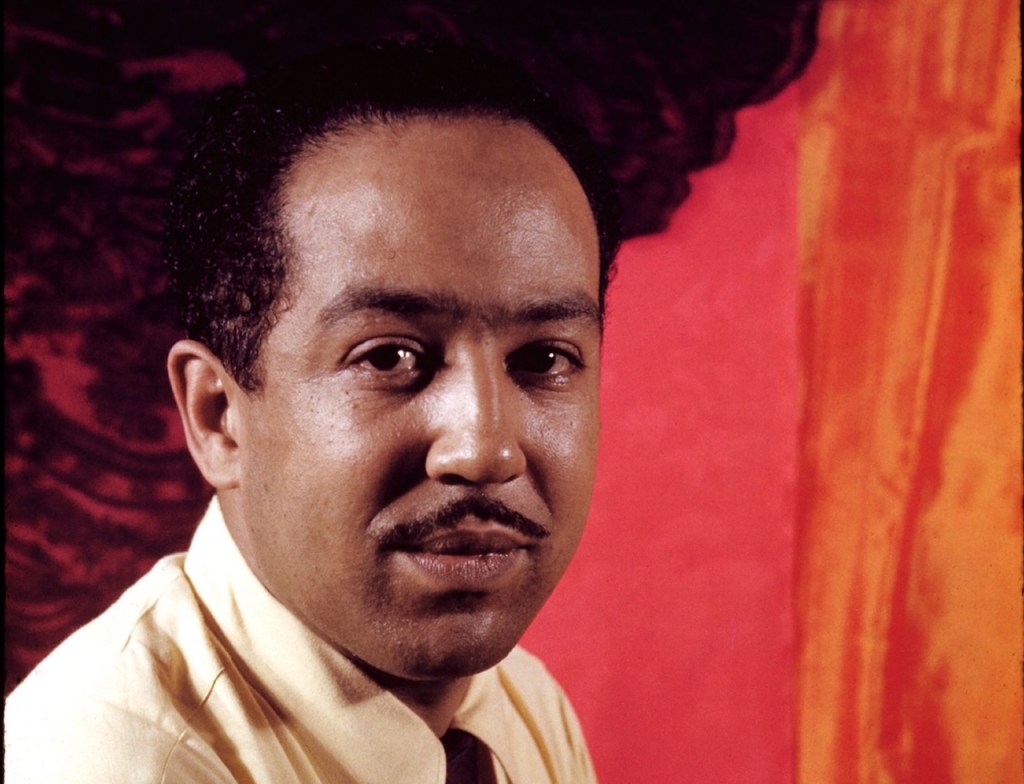
    Langston Hughes - https://www.newyorker.com/magazine/2015/02/23/sojourner - Photograph by Carl Van Vechten / Carl Van Vechten Trust / Beinecke Library, Yale - 1280
    Image: Langston Hughes – Photograph by Carl Van Vechten / Carl Van Vechten Trust / Beinecke Library, Yale – 1280

    Langston Hughes’ “Night Funeral in Harlem”

    The speaker in Langston Hughes’ “Night Funeral in Harlem” wonders how this poor dead boy’s friends and relatives are able to afford such a lavish funeral.

    Introduction and Text of “Night Funeral in Harlem”

    Langston Hughes’ “Night Funeral in Harlem” is an example of the poet’s affinity for the blues. He employs a form that includes the blues flavor, allowing the reader to hear a mournful voice that implies issues that he never actually discusses.

    The speaker’s questions are more than mere decoration, and their implications attempt to make a political and sociological, as well as religious, evaluation. The poem’s form features an inconsistent conglomeration of rimed stanzas, with varied refrains.

    Night Funeral in Harlem

         Night funeral
         In Harlem:

         Where did they get
         Them two fine cars?

    Insurance man, he did not pay—
    His insurance lapsed the other day—
    Yet they got a satin box
    for his head to lay.

         Night funeral
         In Harlem:

         Who was it sent
         That wreath of flowers?

    Them flowers came
    from that poor boy’s friends—
    They’ll want flowers, too,
    When they meet their ends.

         Night funeral
         in Harlem:

         Who preached that
         Black boy to his grave?

    Old preacher man
    Preached that boy away—
    Charged Five Dollars
    His girl friend had to pay.

         Night funeral
         In Harlem:

    When it was all over
    And the lid shut on his head
    and the organ had done played
    and the last prayers been said
    and six pallbearers
    Carried him out for dead
    And off down Lenox Avenue
    That long black hearse done sped,
         The street light
         At his corner
         Shined just like a tear—
    That boy that they was mournin’
    Was so dear, so dear
    To them folks that brought the flowers,
    To that girl who paid the preacher man—
    It was all their tears that made
         That poor boy’s
         Funeral grand.

         Night funeral
         In Harlem.

    Reading:  

    Commentary on “Night Funeral in Harlem”

    The speaker in Langston Hughes’ “Night Funeral in Harlem” jabs insults at these mourners as he wonders how this poor dead boy’s friends and relatives are able to afford such a lavish funeral.

    First Movement:  An Critical Observer

         Night funeral
         In Harlem:

         Where did they get
         Them two fine cars?

    Insurance man, he did not pay—
    His insurance lapsed the other day—
    Yet they got a satin box
    for his head to lay.

         Night funeral
         In Harlem:

         Who was it sent
         That wreath of flowers?

    The speaker begins with his refrain that features his subject, “Night funeral / In Harlem.” He then shoots in his first question that is ultimately insulting to the mourners. The speaker wonders, “Where did they get / Them two fine cars?” 

    The speaker’s dialect is intended to reveal him as an intimate with the mourners, yet his questions actually separate him from them. If he is one of them, why does he have to ask where the cars come from? His concern, therefore, comes across as disingenuous.

    The speaker then introduces the “insurance man,” who might be the reason for the “fine cars,” but no, the poor boy’s “insurance lapsed the other day.” Again, the speaker’s knowledge of the particulars of the situation clash; he knows the people well enough to know that their insurance lapsed, but yet not well enough to know who, in fact, is paying for the lavish funeral. 

    And then the speaker offers a further bit of incongruity that these poor folks have managed to supply a “satin box / for [the deceased’s] head to lay.” The speaker offers these incongruities but never manages to make clear his purpose.

    Second Movement:  A Question of Integrity

    Them flowers came
    from that poor boy’s friends—
    They’ll want flowers, too,
    When they meet their ends.

         Night funeral
         in Harlem:

         Who preached that
         Black boy to his grave?

    The speaker again introduces his next stanza with a variation on the opening refrain: “Night funeral / In Harlem: / / Who was it sent / That wreath of flowers?” Again, the speaker reveals that his distance from the mourners is so great that he has to ask about the flowers. But then he admits that he does actually know that the flowers came from “that poor boy’s friends.”

    But the speaker then insults those friends by accusing them of sending them only because “They’ll want flowers, too, / When they meet their ends,” and also implying that he wonders how those friends paid for the flowers.

    Third Movement:  Is Race Really the Issue?

    Night funeral
      Night funeral
         in Harlem:

         Who preached that
         Black boy to his grave?

    Old preacher man
    Preached that boy away—
    Charged Five Dollars
    His girl friend had to pay.

    The third stanza’s opening varied refrain asks, “Who preached that / Black boy to his grave?” He reveals for the first time that the deceased is black but does not clarify why he should offer the race of the dead at this point.  

    The had been implying that the deceased was black all along by using stereotypical Black English and placing the funeral in Harlem, which was heavily populated by African Americans at the time that the poet was writing.

    The preacher is portrayed then as a money-grubber, charging five dollars to “preach[ ] that boy away,” and the poor boy’s girlfriend had to pay the preacher the five dollar charge.  Again, how it is that the speaker knows the girlfriend paid the preacher, but that he does not know who paid for two limousines, casket, flowers?

    Fourth Movement:   Despite the Insults

        Night funeral
         In Harlem:

    When it was all over
    And the lid shut on his head
    and the organ had done played
    and the last prayers been said
    and six pallbearers
    Carried him out for dead
    And off down Lenox Avenue
    That long black hearse done sped,
         The street light
         At his corner
         Shined just like a tear—
    That boy that they was mournin’
    Was so dear, so dear
    To them folks that brought the flowers,
    To that girl who paid the preacher man—
    It was all their tears that made
         That poor boy’s
         Funeral grand.

         Night funeral
         In Harlem.

    The final stanza is a rather flabby summation of what has happened during this Harlem funeral at night. The opening refrain merely reiterates the subject, “Night funeral / In Harlem.”

    Gone is the additional commentary as appeared in the three opening refrains, but the speaker does leave the affair on a compassionate note; at least he can admit, “It was all their tears that made / That poor boy’s / Funeral grand.”  

    Despite his probing, insulting questions, he finally admits that the importance of the event is that it shows the love the mourners had for their dearly departed.

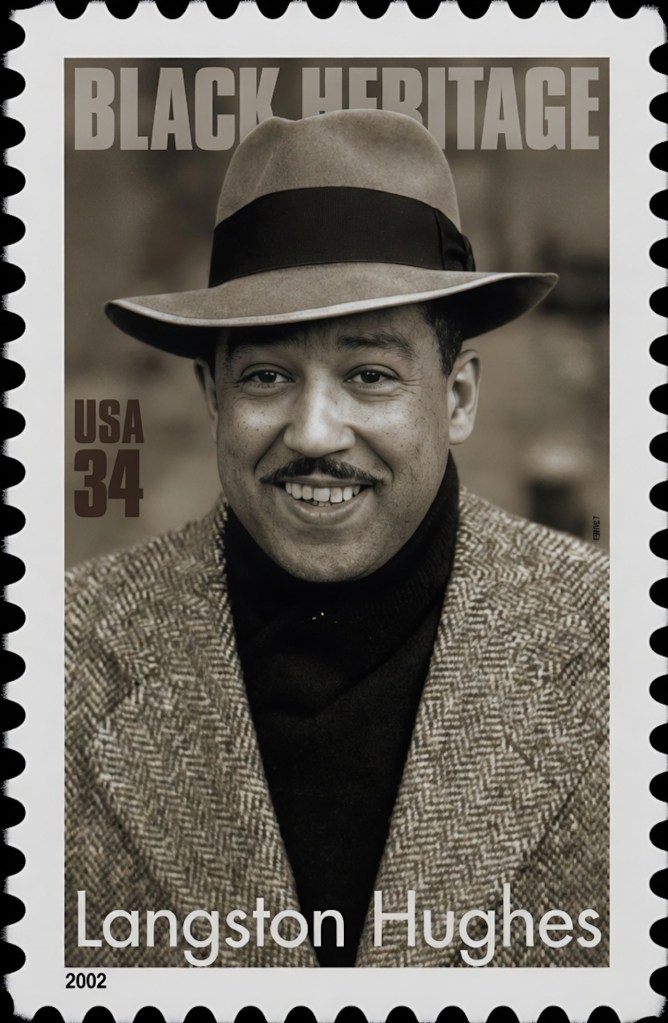
    Image:  Langston Hughes - Commemorative Stamp  http://usstampgallery.com/view.php?id=0787693b268f0944d0264088b300c02721d73814&Langston_Hughes&st=Langston%20Hughes&ss=&t=&s=8&syear=&eyear=  US Stamp Gallery
    Image: Langston Hughes – Commemorative Stamp  – US Stamp Gallery
  • The Stifling of Spirituality

    Image:  Created by Grok

    The Stifling of Spirituality

    According to Paramahansa Yogananda, the human is a soul who has a body.  Identifying more strongly with the body than with the immortal soul cripples spiritual striving.

    Humanity Classifies Itself

    Humans classify themselves first by sex.  When a newborn arrives, the first question is, boy or girl?  Sex is the easiest classification, because only two categories exist, excluding the very rare occurrence of hermaphroditism and current fad of confusing sex with gender.

    The newborn will later realize that he belongs to a category called “race.”  Unless both parents are the result of many generations of the same “race,” the newborn may not resemble the race of either parent.  Nevertheless, race is still a fairly reliable classification even though that category is becoming less acceptable scientifically.

    Next comes nationality, an easy one:  birth country.  One is always his original nationality even though he is free to become virtually any hyphenated version.  So humans classify themselves by sex, race, and nationality; in addition to those categories are religious, political, and socio-economic classifications.

    Temporary vs Permanent Classification

    Only the first three—sex, race, and nationality—are virtually unchangeable.  However, the other three—religious, political, and socio-economic—are changeable, based on choice.  

    A new category has entered the field, one of sexual-orientation, for which there can be at least two choices:  heterosexuality, homosexuality, and possibly bisexuality.  (A problematic category because at least two sexual partners are required to complete that orientation—a situation that society does not accept.  Bigamy is illegal.  And though promiscuity is wide-spread, it is not an acceptable societal norm.) 

    And there is also a category called “transgendered,” which defeats the spiritual purpose of transcending sex identity, which is  purpose of the original, natural change of sex upon rebirth on the physical plane.

    No one would consider allowing pedophilia—despite supportive organizations such a NAMBLA—bestiality, masturbation, and celibacy as valid categories.  Pedophilia and bestiality are against the law, while masturbation and celibacy are barely tolerated.

    Behavior not Being

    The obvious problem with the new category based on sexual-orientation is that it is based on behavior or activity, not being.  At birth one can be classified using all the six categories, but one has to wait until at least puberty to classify as a hetero-, or homo-sexual.  And still the classification will be based on an act not an essence. 

    Act of Sex Always a Choice

    That choice plays the central rôle is what is always overlooked when discussing this issue.  Any act of sex, with the exception of rape and peer-pressure, is always a choice.  No one is ever required to engage in sexual experience.  Of course, the sexual urge is strong, especially when abused and over-indulged, but still one can live an entire life without ever having engaged in sexual activity.  The issue with rape is that that act has little to do with sex itself and more to do with power that the perpetrator has over the victim.

    The other categories cannot be chosen this way.  As a non-self-realized human being in the prenatal state, one cannot choose sex, race, nationality, etc.  No matter how one lives or where, he will always be eligible for classification on sex, race, nationality, religion, politics, and socio-economics.  But one never has to be classified as hetero- or homo-sexual. 

    Because the sex act is a voluntary one—excluding rape and peer-pressure/societal intimidation, the latter which is responsible for most people becoming sexually active before they are really inclined to—one cannot argue that sexual-orientation is part of anyone’s character; it is behavior, but not part of the essence, character, or personality, which is essentially a soul, a spiritual being, whose existence is not dependent upon any physical attributes.

    Sexuality Misunderstood

    A great chasm separates the reality and societal notions of sexuality.  The misunderstanding is as great now as it was when homosexuality was universally considered a sin and punishable by law.  It is doubtful that the wider society will ever equate homo- and hetero-sexuality.  Celibacy is even less understood.  A sex culture permeates society, wherein sex sells everything from shampoo to shoes.

    Procreation vs Recreation

    The true purpose of the sex act is primarily procreation and possibly in moderation, the expression of genuine love and affection between two committed partners—including homophile partners.  The sex act is simply not amenable to recreation.  Doing it because it feels good is not a moral attitude, because it tends to lead to moral turpitude.  

    If parents were consistently capable of teaching their offspring that the purpose of the sex act is procreation and genuine love within a stable, loving marriage, there would be less reliance on abortions, fewer sufferers of venereal disease, no supposed need for pornography, and much less waste of energy trying to lure a fellow human being into a recreational diversion.