William Butler Yeats’ “Sailing to Byzantium” is a profound meditation on aging, art, and the quest for spiritual transcendence, despite his failure to clearly grasp the Eastern religious/philosophical concepts he strived to portray.
Introduction and Excerpt from “Sailing to Byzantium”
William Butler Yeats’ “Sailing to Byzantium” is a profound meditation on aging, art, and the quest for spiritual transcendence. However, despite Yeats’ deep engagement with Eastern religion and philosophy, his interpretation and application of these concepts in his poetry often reveal a “Romantic misunderstanding,” as T.S. Eliot astutely observed.
This misunderstanding is clearly evident in “Sailing to Byzantium,” especially in its fourth stanza, where Yeats’ vision of eternal existence through art diverges significantly from Eastern religious/philosophical principles.
Yeats wrote “Sailing to Byzantium” in 1926, at the age of 61, as a reflection on the aging process and the spiritual journey required to maintain vitality in the face of physical decline.
Sailing to Byzantium
That is no country for old men. The young In one another’s arms, birds in the trees —Those dying generations—at their song, The salmon-falls, the mackerel-crowded seas, Fish, flesh, or fowl, commend all summer long Whatever is begotten, born, and dies. Caught in that sensual music all neglect Monuments of unageing intellect.
An aged man is but a paltry thing, A tattered coat upon a stick, unless Soul clap its hands and sing, and louder sing For every tatter in its mortal dress, Nor is there singing school but studying Monuments of its own magnificence; And therefore I have sailed the seas and come To the holy city of Byzantium.
O sages standing in God’s holy fire As in the gold mosaic of a wall, Come from the holy fire, perne in a gyre, And be the singing-masters of my soul. Consume my heart away; sick with desire And fastened to a dying animal It knows not what it is; and gather me Into the artifice of eternity.
Once out of nature I shall never take My bodily form from any natural thing, But such a form as Grecian goldsmiths make Of hammered gold and gold enamelling To keep a drowsy Emperor awake; Or set upon a golden bough to sing To lords and ladies of Byzantium Of what is past, or passing, or to come.
Commentary on “Sailing to Byzantium”
The poem “Sailing to Byzantium” uses a journey to Byzantium (Constantinople now Istanbul,) as a metaphor for a spiritual quest, with the speaker seeking to transcend the limitations of the mortal body and achieve a form of immortality through art.
First Stanza: Contrasting Vividly
That is no country for old men. The young In one another’s arms, birds in the trees —Those dying generations—at their song, The salmon-falls, the mackerel-crowded seas, Fish, flesh, or fowl, commend all summer long Whatever is begotten, born, and dies. Caught in that sensual music all neglect Monuments of unageing intellect.
The opening stanza of “Sailing to Byzantium” presents a vivid contrast between the vitality of youth and the poet’s sense of alienation from the natural world as he ages. Yeats paints a picture of a country teeming with life, where “The young / In one another’s arms, birds in the trees” and “the mackerel-crowded seas” represent the cyclical nature of life and death.
The phrase “Those dying generations” underscores the transient nature of all living things, a concept that aligns with Eastern philosophy’s emphasis on impermanence. However, Yeats’ reaction to this natural cycle reveals a departure from Eastern thought.
While Buddhism and Hinduism often advocate for acceptance of life’s impermanence, Yeats expresses a desire to escape it. His assertion that “all neglect / Monuments of unageing intellect” suggests a privileging of human intellect and art over the natural world, a distinctly Western perspective that contradicts the Eastern emphasis on harmony with nature.
Second Stanza: Aging and the Quest for Renewal
An aged man is but a paltry thing, A tattered coat upon a stick, unless Soul clap its hands and sing, and louder sing For every tatter in its mortal dress, Nor is there singing school but studying Monuments of its own magnificence; And therefore I have sailed the seas and come To the holy city of Byzantium.
In the second stanza, Yeats further develops the theme of aging and the quest for spiritual renewal. The image of an aged man as “a paltry thing, / A tattered coat upon a stick” vividly conveys the physical deterioration that comes with age. However, Yeats proposes that this decline can be transcended if the soul can “clap its hands and sing, and louder sing / For every tatter in its mortal dress.”
This concept of the soul triumphing over bodily decay echoes certain Eastern philosophical ideas, particularly the Hindu concept of the soul, which is the eternal self, transcending the physical body.
However, Yeats’ emphasis on the soul’s need to “sing” and study “Monuments of its own magnificence” reveals a more Western, ego-centric approach to spiritual transcendence. In contrast, many Eastern philosophies advocate for the dissolution of the ego and the realization of the soul’s unity with the Divine Reality.
Third Stanza: The Concept of Transformation
O sages standing in God’s holy fire As in the gold mosaic of a wall, Come from the holy fire, perne in a gyre, And be the singing-masters of my soul. Consume my heart away; sick with desire And fastened to a dying animal It knows not what it is; and gather me Into the artifice of eternity.
The third stanza introduces the “sages standing in God’s holy fire,” whom the speaker implores to be the “singing-masters of my soul.” This imagery draws on both Western and Eastern concepts, blending Christian imagery of holy fire with the Eastern idea of spiritual masters or gurus. The speaker’s desire to have his heart consumed away and to be gathered into “the artifice of eternity” reflects a yearning for spiritual transformation.
However, Yeats’ conception of this transformation as an “artifice” created by sages diverges from Eastern philosophical traditions. In many Eastern spiritual practices, enlightenment or liberation is seen not as an artificial state created by external forces, but as the realization of one’s true nature, of uniting the individual soul with the Oversoul, or God. Yeats’ portrayal suggests a more Western, interventionist approach to spiritual transformation.
Fourth Stanza: Romantic Misunderstanding
Once out of nature I shall never take My bodily form from any natural thing, But such a form as Grecian goldsmiths make Of hammered gold and gold enamelling To keep a drowsy Emperor awake; Or set upon a golden bough to sing To lords and ladies of Byzantium Of what is past, or passing, or to come.
The final stanza of “Sailing to Byzantium” most clearly demonstrates Yeats’ “Romantic misunderstanding” of Eastern philosophy. Here, the speaker envisions his eternal form not as a dissolution into God-consciousness (self-realization), as many Eastern traditions insist, but as a golden artifact created by “Grecian goldsmiths.” This vision of immortality through art is fundamentally at odds with Eastern concepts of liberation from the cycle of birth and death.
Yeats’ desire to take a form “Of hammered gold and gold enamelling” to entertain “lords and ladies of Byzantium” reveals a distinctly Western preoccupation with individual identity and artistic legacy. This contrasts sharply with Eastern religious/philosophical concepts such as the Buddhist non-self upon entering nirvana or the Hindu idea of samadhi or liberation from cycles of death and rebirth.
Furthermore, the speaker’s intention to “sing / To lords and ladies of Byzantium / Of what is past, or passing, or to come” suggests a linear view of time that is more aligned with Western thought than with the cyclical time concepts expounded in Eastern religion/philosophy.
While “Sailing to Byzantium” is undoubtedly a masterpiece of poetic craft, it also reveals the limitations of Yeats’ understanding and application of Eastern philosophical concepts.
His vision of spiritual transcendence, particularly as expressed in the fourth stanza, remains rooted in Western ideas of individual immortality and artistic legacy, rather than the Eastern concepts of ego dissolution and unity with the Divine Creator.
This “Romantic misunderstanding” of Eastern philosophy, as Eliot termed it, is indeed on full display in this poem, showcasing both the brilliance of Yeats’ poetic vision and the cultural limitations that shaped his interpretation of Eastern thought.
Commentaries on Paramahansa Yogananda’s Songs of the Soul
Each time my father, mother, friends Do loudly claim they did me tend, I wake from sleep to sweetly hear That Thou alone didst help me here. —from Paramahansa Yogananda’s “One Friend”
for Ron Grimes, my soul mate with whom I travel the spiritual path
This collection of personal commentaries is a companion to the book of spiritual poems, Songs of the Soul, written by Paramahansa Yogananda, the “Father of Yoga in the West.” While these commentaries offer elucidation of each poem, they cannot offer the beauty and majesty experienced by reading the poems themselves.
I have included only an excerpt from each poem preceding each commentary. I, therefore, humbly suggest that you acquire a copy of the great guru’s poems to experience them for yourself, along with my commentaries.
Paramahansa Yogananda’s Songs of the Soul is available at the Self-Realization Fellowship bookstore, Amazon, Barnes & Noble, and other online outlets, as well as in bookstores everywhere.
These commentaries are my personal responses to the poems in Paramahansa Yogananda’s Songs of the Soul. If they assist any reader in understanding the poetic language on a deeper level, then that is a bonus, for my only purpose is to offer my own personal, humble reading.
Brief Publishing History of Songs of the Soul
The first version of Paramahansa Yogananda’s Songs of the Soul appeared in 1923. He continued to revise the poems during the 1920s and 1930s, and the definitive revision that was authorized by the great guru was published in 1983, featuring many restored lines that had been excised from the first publication of the text.
The 1923 version of the collection of poems appears online at Internet Archive. For my commentaries, I rely on the printed text of the 1983 version; the current printing year for that version is 2014.The 1983 printing offers the final approved versions of these poems.
Special Purpose of the Poems in Songs of the Soul
The poems in Songs of the Soul come to the world not as mere literary pieces that elucidate and share common human experiences as most ordinary successful poems do, but these mystical poems also serve as inspirational guidance to enhance the study of the yoga techniques disseminated by the great guru, Paramahansa Yogananda.
He came to the West, specifically to Boston, Massachusetts, in the United States of America, to share his deep knowledge of yoga through techniques that lead the mind to conscious awareness of God, a phenomenon that he called “self-realization.”
The great guru published a series of lessons that contain the essence of his teaching as well as practical techniques of Kriya Yoga. His organization, Self-Realization Fellowship, has continued to publish collections of his talks in both print and audio format that he gave nationwide during the 1920s, 1930s, 1940s, and 1950s.
In addition to Songs of the Soul, the great guru/poet offers mystical poetic expressions in two other publications, Whispers from Eternity and Metaphysical Meditations, both of which serve in the same capacity that Songs of the Soul does, to assist the spiritual aspirant on the journey along the spiritual path.
This section features the commentaries, one for each of the 101 poems in Songs of the Soul. Each commentary is preceded by a brief introduction and excerpt from the poem. Here I am offering the first commentaries, each with an excerpt from the poem.
1. “Consecration”
In the opening poem, titled “Consecration,” the speaker humbly offers his works to his Creator. He offers the love from his soul to the One Who gives him his life and his creative ability, as he dedicates his poems to the Divine Reality or God.
Introduction and Excerpt from “Consecration”
Paramahansa Yogananda, the great guru/poet and founder of Self-Realization Fellowship, known as the “Father of Yoga in the West,” dedicates his book of mystical poems, Songs of the Soul, to his earthly father and consecrates it by offering it to his Heavenly Father (God—the Divine Creator). In dedicating his collection to his earthly father, the great guru writes,
Dedicated to my earthly father, who has helped me in all my spiritual work in India and America
The first poem appearing in the great yogi-poet’s book of spiritual poems is an American (innovative) sonnet, featuring two sestets and a couplet with the rime scheme AABBCC DDEFGGHH.
The first sestet is composed of three rimed couplets; the second sestet features two rimed couplets and one unrimed couplet that occupies the middle of the sestet.
This innovative form of the sonnet is perfectly fitted to the subject matter and purpose of the Indian yogi, who has come to America to minister to the waiting souls, yearning for the benefits of the ancient yogic techniques in which the great guru will instruct them.
The ancient Hindu yogic concepts offer assistance to Westerners in understanding their own spiritual traditions, including the dominant Christianity of which many are already devotees.
Excerpt from “Consecration”
At Thy feet I come to shower All my full heart’s rhyming* flower: Of Thy breath born, By Thy love grown, Through my lonely seeking found, By hands Thou gavest plucked and bound . . .
*The spelling, “rhyme,” was introduced into English by Dr. Samuel Johnson through an etymological error. As most editors require the Johnson-altered spelling of this poetic device, the text of Songs of the Soul also adheres to that requirement featuring the spelling, “rhyming.” However, when I employ that term in my commentaries, I use the original spelling, “rime.”
Commentary
These spiritual poems begin with their consecration, a special dedication that offers them not only to the world but to God, the Ultimate Reality and Cosmic Father, Mother, Friend, Creator of all that is created.
First Sestet: Dedication of Poetic Effort
The speaker proclaims that he has come to allow his power of poetry to fall at the feet of his Divine Belovèd Creator. He then avers that the poems as well as the poet himself are from God Himself.
The Divine Belovèd has breathed life into the poems that have grown out of the speaker’s love for the Divine. The speaker has suffered great loneliness in his life before uniting with his Divine Belovèd.
The spiritually striving speaker, however, has earnestly searched for and worked to strengthen his ability to unite with the Divine Creator, and he has been successful in attaining that great blessing.
The speaker/devotee is now offering that success to his Divine Friend because he knows that God is the ultimate reason for his capabilities to accomplish all of his worthwhile goals. As he feels, works, and creates as a devotee, he gives all to God, without Whom nothing that is would ever be.
Second Sestet: Poems for the Divine
In the second sestet, the speaker asserts that he has composed these poems for the Belovèd Creator. The collection of inspirational poetic works placed in these pages contains the essence of the guru-poet’s life and accomplishments made possible by the Supreme Spirit.
The writer asserts that from his life he has chosen the most pertinent events and experiences which will illuminate and inform the purpose of these poems.
The speaker is metaphorically spreading wide the petals of his soul-flowers to allow “their humble perfume” to waft generously.
He is offering these works not merely as personal effusions of shared experience for the purpose of entertainment or self-expression but for the upliftment and soul guidance of others, especially for his own devoted followers.
His intended audience remains the followers of his teachings, for he knows they will continue to require his guidance as they advance on their spiritual paths.
The Couplet: Humbly Returning a Gift
The speaker then with prayer-folded hands addresses the Divine directly, averring that he is in reality only returning to his Divine Belovèd that which already belongs to that Belovèd. He knows that as a writer he is only the instrument that the Great Poet has used to create these poems.
As the humble writer, he takes no credit for his works but gives it all to the Prime Creator. This humble poet/speaker then gives a stern command to his Heavenly Father, “Receive!”
As a spark of the Divine Father himself, this mystically advanced speaker/poet discerns that he has the familial right to command his Great Father Poet to accept the gift that the devotee has created through the assistance of the Divine Poet.
2. “The Garden of the New Year”
In “The Garden of the New Year,” the speaker celebrates the prospect of looking forward with enthusiastic preparation to live “life ideally!”
Introduction and Excerpt from “The Garden of the New Year”
The ancient tradition of creating New Year’s resolutions has situated itself in much of Western culture, as well as Eastern culture. As a matter of fact, world culture participates in this subtle ritual either directly or indirectly. This tradition demonstrates that hope is ever present in the human heart.
Humanity is always searching for a better way, a better life that offers prosperity, peace, and solace. Although every human heart craves those comforts, each culture has fashioned its own way of achieving them. And by extension, each individual mind and heart follows its own way through life’s vicissitudes.
The second poem is titled “The Garden of the New Year.” This poem dramatizes the theme of welcoming the New Year, using the metaphor of the garden where the devotee is instructed to pull out “weeds of old worries” and plant “only seeds of joys and achievements.”
The pulling out of weeds from the garden of life is a perfect metaphor for the concept of a New Year’s resolution. We make those resolutions for improvement and to improve we often find that we must eliminate certain behaviors in order to instill better ones.
The poem features five unrimed versagraphs*, of which the final two are excerpted.
Excerpt from “The Garden of the New Year”
. . . The New Year whispers: “Awaken your habit-dulled spirit To zestful new effort. Rest not till th’ eternal freedom is won And ever-pursuing karma outwitted!”
With joy-enlivened, unendingly united mind Let us all dance forward, hand in hand, To reach the Halcyon Home Whence we shall wander no more . . .
*The term, “versagraph,” is a conflation of “verse paragraph,” the traditional unit of lines for free verse poetry. I coined the term for use in my poem commentaries.
Commentary
This poem is celebrating living life “ideally,” through changing behavior that has limited that ability in the past.
First Versagraph: Out with the Old and in with the New
The speaker is addressing his listeners/readers as he asserts that the old year has left us, while the New Year is arriving. The old year did spread its “sorrow and laughter,” yet the New Year holds promises of brighter encouragement and hope.
The New Year’s “song-voice” offers grace to the senses, while commanding, “Refashion life ideally!”
This notion is universally played out as many people fashion New Year’s resolutions, hoping to improve their lives in the coming year. Because most people are always seeking to improve their situations, they determine how to do so and resolve that they will follow a new path that will lead to a better place.
Second Versagraph: Abandoning the Weed to Plant New Seeds
In the second versagraph, the speaker employs the garden metaphor to liken the old problematic ways to weeds that must be plucked out so that the new ways can be planted and grow.
The speaker instructs the metaphoric gardener to pull out the weeds of “old worries” and in their place plant “seeds of joys and achievements.” Instead of allowing the weeds of doubt and wrong actions to continue growing, the spiritual gardener must plant seeds of “good actions and thoughts, all noble desires.”
Third Versagraph: The Garden Metaphor
Continuing the garden metaphor, the speaker advises the spiritual aspirant to “sow in the fresh soil of each new day / Those valiant seeds.” After having sown those worthy seeds, the spiritual gardener must “water and tend them.”
The perfect metaphor for one’s life is the garden with its life-giving entities as well as its weeds. As one tends a garden, one must tend one’s life as well to make them both the best environment for life to thrive. By careful attention to the worthy, good seeds of attitudes and habits, the devotee’s life will become “fragrant / With rare flowering qualities.”
Fourth Versagraph: New Year as Spiritual Guide
The speaker then personifies the New Year as a spiritual guide who gives sage advice through whispers, admonishing the devotees to employ real effort to wake up their sleeping spirit that has become “habit-dulled.” This new spiritual guide advises the spiritual aspirant to continue struggling until their “eternal freedom” is gained.
The spiritual searchers must work, revise their lives, and continue their study until they have “outwitted” karma, the result of cause and effect that has kept them earth-bound and restless for aeons.
The beckoning New Year always promises a new chance to change old ways. But the seekers must do their part. They must cling to their spiritual path, and as soon as they veer off, they must return again and again until they have reached their goal.
Fifth Versagraph: A Benediction of Encouragement
The speaker then offers a benediction of encouragement, giving the uplifting nudge to all those spiritual aspirants who wish to improve their lives, especially their ability to follow their spiritual paths. The speaker invites all devotees to “dance forward” together “With joy-enlivened, unendingly united mind.”
The speaker reminds his listeners that their goal is to unite their souls with their Divine Beloved Who awaits them in their “Halcyon Home.” And once they achieve that Union, they will need no long venture out into the uncertainty and dangers as they exist on the physical plane.
The New Year always holds the promise, but the spiritual aspirant must do the heavy lifting to achieve the lofty goal of self-realization.
3. “My Soul Is Marching On”
This amazing poem, “My Soul Is Marching On,” offers a refrain which devotees can chant and feel uplifted in times of lagging interest and seeming spiritual dryness.
Introduction and Excerpt from “My Soul Is Marching On”
The poem, “My Soul Is Marching On,” offers five stanzas, each with the refrain, “But still my soul is marching on!” The poem demonstrates the soul’s power in contrast with the weaker powers of entities from nature. For example, as strong as the light of the sun may be, it vanishes at night, and will eventually be extinguished altogether in the long, long run of aeons of time.
Unlike those seemingly forceful, yet ultimately, much weaker physical, natural creatures, the soul of each individual human being remains a strong, vital, eternal, immortal force that will keep marching on throughout all time—throughout all of Eternity.
Devotees who have chosen the path toward self-realization may sometimes feel discouraged as they tread the path, feeling that they do not seem to be making any progress. But Paramahansa Yogananda’s poetic power comes to rescue them, giving in his poem a marvelous repeated line that the devotee can keep in mind and repeat when those pesky times of discouragement float across the mind.
Included here are the epigram and first two stanza of the poem, “My Soul Is Marching On.”
Excerpt from “My Soul Is Marching On”
Never be discouraged by this motion picture of life. Salvation is for all. Just remember that no matter what happens to you, still your soul is marching on. No matter where you go, your wandering footsteps will lead you back to God. There is no other way to go.
The shining stars are sunk in darkness deep, The weary sun is dead at night, The moon’s soft smile doth fade anon; But still my soul is marching on!
The grinding wheel of time hath crushed Full many a life of moon and star, And many a brightly smiling morn; But still my soul is marching on! . . .
Commentary
Before beginning his encouraging drama of renewal, Paramahansa Yogananda offers an epigram that prefaces the poem by stating forthrightly its intended purpose. In case the reader may fail to grasp the drama of the poetic performance, the epigram will leave no one in doubt.
The Epigram: A Balm to the Marching Soul
The great guru avers that there is no other reality but the soul’s forward march. Despite all circumstance to the contrary, the soul will, in fact, continue its march.
The devotee simply has to come to realize that fact that all “wandering footsteps” return to their home in the Divine. The guru then states unequivocally, “There is no other way to go.”
This amazing, inspiring statement culminates in the refrain that allows the devotee to take into mind a chant for upliftment anytime, anywhere it is needed.
First Stanza: The Soul Marches on in Darkness
The speaker begins by asserting that the bright bodies of the stars, sun, and moon are often hidden. The stars seem to sink into the black backdrop of the sky, or even remain hidden by day, as if never to be seen again, yet other times, they are completely invisible.
The largest dominant star of all—the sun—also seems to completely vanish from the sight of world-weary inhabitants of planet Earth. The sun seems to be “weary” as it has crossed the diurnal sky and then sinks out of sight.
The moon whose glow remains less bright compared to the sun, nevertheless, also fades out of sight. All of these bright orbs of such tremendous magnitude glow and fade, for they are mere physical beings.
The speaker then adds his marvelous, encouraging claim that becomes his refrain—”But still my soul is marching on!” The speaker will continue repeating this vital assertion as he dramatizes his poem to encourage and uplift devotees whose spirits may from time-to-time lag.
This refrain will then ring in their souls and urge them to keep marching because their souls are already continuing that march.
Second Stanza: Nothing Physical Can Halt the Spiritual
The speaker then reports that time has already smashed moons and stars and obliterated them from existence. Many cycles of creation and recreation have come and gone from the annals of eternity.
That eventuality remains the nature of physical creation: it emerges from the depths of the body of the Divine Creator and then later is taken back into that Divine Body, disappearing as if they had never been.
But regardless of what happens on the physical level, the soul remains an existing Entity throughout Eternity. The soul of each individual continues its journey. It makes no difference on which planet it may appear; it may continue from planet to planet, if necessary, as it marches back to its Creator.
That soul will continue its march to the Divine, despite all cosmic activity. Nothing can prevent the soul’s forward march, nothing can stop the marching soul, and nothing can hinder that march. The refrain shall again and again ring in the mind of the devotee who has begun this march to self-realization.
Third Stanza: The Evanescence of Nature
The speaker then reports on other natural phenomena. Marvelous, beautiful flowers have offered their colorful blooms to the eyes of humankind, but then they invariably fade and shrivel up to nothingness. The evanescence of beauty remains a conundrum for the mind of humankind.
Like the beauty yielding flowers, the gigantic trees offer their “bounty” for only a while, and then they too sink into nothingness. The naturally appearing entities that feed the human mind as well as the human body all mysteriously come under ” time’s scythe,” appearing and disappearing again and again.
But the soul again remains in contrast to these wonderful natural entities. The soul continues its eternal march, unlike the outer physical realities of flowers and trees.
The human soul will continue its march, as will the invisible souls of those seemingly vanishing nature’s living beings. The refrain must take hold in the mind of the devotee, who in times of lagging interest and self-doubt will chant its truth and become re-invigorated.
Fourth Stanza: As Physical Life Fades, The Soul Continues Unabated
All of the great emissaries sent by the Divine Creator continue to speed by. Vast swaths of time also speed by as creation seems to remain on a collision course with ultimate disaster.
The human being must remain in a perpetually vigilant state of mind just to remain alive in this dangerous and pestilent-filled world. Even human against human remains a continued concern as “man’s inhumanity to man” prevails in very age in every nation of planet Earth.
But the speaker is not only referring to the small planet at a short period of time; he is speaking cosmically of the entire history of all Creation. He is averring that being born a human being at any time in history brings that individual soul into the same arena of struggle.
As each human being lets fling his arrows in battle, the individual finds that all of his “arrows” have been used up. He finds his life ebbing away.
But again, while the physical body remains the battle ground of trials and tribulations, the soul is unaffected. It will continue on its path back to its Divine Haven, where it will no longer need those arrows. The devotee will continue to chant this truth again and again to spark his march to greater heights.
Fifth Stanza: The Refrain Must Remain
The speaker has observed that his fight with nature has been a fierce one. Failures have blocked his way. He has experienced the ravages of death’s destruction. He has had to face obstructions blocking “his path.”
All of nature has conspired to “block [his] path.” Nature has always been a challenging force, but the human being who has determined to overcome the ravages of nature will find that his “fight” is stronger than that of nature, despite the fact that nature remains a “jealous” power.
The soul continues to march to its home in God, where it will never again have to face the fading of beautiful light, the vanishing of colorful flowers, the failures that obstruct and slow one’s pace.
The soul will continue to march, to study, to practice, to meditate, and to pray until it at last experiences success, until it as last finds itself totally awake in the arms of the Blessed Divine Over-Soul, from which it has come. The devotee will continue to hear that amazingly uplifting line and continue to know that his/her “soul is marching on!”
Seamus Heaney’s “Whatever You Say, Say Nothing” is displayed in four parts. The piece dramatizes a rough-style free verse with an irregularly paced rime scheme. The speaker is describing the events surrounding the command for political operatives to be extremely careful with what they say.
Introduction and Text of “Whatever You Say, Say Nothing”
The title, “Whatever You Say, Say Nothing,” originates with the secretive activity of Northern Ireland’s rebel paramilitary that admonished its members with this demand.
Its purpose was to advise members to be extremely careful with what they say. If they speak to “civilians” at all, they should make their talk so small that it would reveal nothing about their activity.
Whatever You Say, Say Nothing
I
I’m writing just after an encounter With an English journalist in search of ‘views On the Irish thing’. I’m back in winter Quarters where bad news is no longer news, Where media-men and stringers sniff and point, Where zoom lenses, recorders and coiled leads Litter the hotels. The times are out of joint But I incline as much to rosary beads As to the jottings and analyses Of politicians and newspapermen Who’ve scribbled down the long campaign from gas And protest to gelignite and Sten, Who proved upon their pulses ‘escalate’, ‘Backlash’ and ‘crack down’, ‘the provisional wing’, ‘Polarization’ and ‘long-standing hate’. Yet I live here, I live here too, I sing, Expertly civil-tongued with civil neighbours On the high wires of first wireless reports, Sucking the fake taste, the stony flavours Of those sanctioned, old, elaborate retorts: ‘Oh, it’s disgraceful, surely, I agree.’ ‘Where’s it going to end?’ ‘It’s getting worse.’ ‘They’re murderers.’ ‘Internment, understandably …’ The ‘voice of sanity’ is getting hoarse.
II
Men die at hand. In blasted street and home The gelignite’s a common sound effect: As the man said when Celtic won, ‘The Pope of Rome’s a happy man this night.’ His flock suspect
In their deepest heart of hearts the heretic Has come at last to heel and to the stake. We tremble near the flames but want no truck With the actual firing. We’re on the make
As ever. Long sucking the hind tit Cold as a witch’s and as hard to swallow Still leaves us fork-tongued on the border bit: The liberal papist note sounds hollow
When amplified and mixed in with the bangs That shake all hearts and windows day and night. (It’s tempting here to rhyme on ‘labour pangs’ And diagnose a rebirth in our plight
But that would be to ignore other symptoms. Last night you didn’t need a stethoscope To hear the eructation of Orange drums Allergic equally to Pearse and Pope.)
On all sides ‘little platoons’ are mustering- The phrase is Cruise O’Brien’s via that great Backlash, Burke-while I sit here with a pestering Drouth for words at once both gaff and bait
To lure the tribal shoals to epigram And order. I believe any of us Could draw the line through bigotry and sham Given the right line, aere perennius.
III
“Religion’s never mentioned here”, of course. “You know them by their eyes,” and hold your tongue. “One side’s as bad as the other,” never worse. Christ, it’s near time that some small leak was sprung In the great dykes the Dutchman made To dam the dangerous tide that followed Seamus. Yet for all this art and sedentary trade I am incapable. The famous Northern reticence, the tight gag of place And times: yes, yes. Of the “wee six” I sing Where to be saved you only must save face And whatever you say, you say nothing. Smoke-signals are loud-mouthed compared with us: Manoeuvrings to find out name and school, Subtle discrimination by addresses With hardly an exception to the rule That Norman, Ken and Sidney signalled Prod And Seamus (call me Sean) was sure-fire Pape. O land of password, handgrip, wink and nod, Of open minds as open as a trap, Where tongues lie coiled, as under flames lie wicks, Where half of us, as in a wooden horse Were cabin’d and confined like wily Greeks, Besieged within the siege, whispering morse.
IV
This morning from a dewy motorway I saw the new camp for the internees: A bomb had left a crater of fresh clay In the roadside, and over in the trees Machine-gun posts defined a real stockade. There was that white mist you get on a low ground And it was déjà-vu, some film made Of Stalag 17, a bad dream with no sound. Is there a life before death? That’s chalked up In Ballymurphy. Competence with pain, Coherent miseries, a bite and sup, We hug our little destiny again.
Commentary on “Whatever You Say, Say Nothing”
The poem, “Whatever You Say, Say Nothing,” is displayed in four parts. The piece dramatizes a rough-style free verse with an irregularly paced rime scheme.
First Part: Harassed by Reporters
I’m writing just after an encounter With an English journalist in search of ‘views On the Irish thing’. I’m back in winter Quarters where bad news is no longer news, Where media-men and stringers sniff and point, Where zoom lenses, recorders and coiled leads Litter the hotels. The times are out of joint But I incline as much to rosary beads As to the jottings and analyses Of politicians and newspapermen Who’ve scribbled down the long campaign from gas And protest to gelignite and Sten, Who proved upon their pulses ‘escalate’, ‘Backlash’ and ‘crack down’, ‘the provisional wing’, ‘Polarization’ and ‘long-standing hate’. Yet I live here, I live here too, I sing, Expertly civil-tongued with civil neighbours On the high wires of first wireless reports, Sucking the fake taste, the stony flavours Of those sanctioned, old, elaborate retorts: ‘Oh, it’s disgraceful, surely, I agree.’ ‘Where’s it going to end?’ ‘It’s getting worse.’ ‘They’re murderers.’ ‘Internment, understandably …’ The ‘voice of sanity’ is getting hoarse.
In Part I, the speaker reports that he is being harassed by reporters. They seek information about how the Irish feel about their situation. The intrusive reporters shove cameras and microphones into the faces of the locals. They “litter” the localities and disturb the peace.
The speaker then describes the chaos of the political situation. He claims that he leans more toward religion than politics, but because he is also a citizen he has to pay some attention to current events.
The speaker portrays the situation as fractious and obstreperous. As the citizens discuss the chaos, each has his own opinion. But this speaker/observer notes that certain phrases keep popping up as the folks wonder how all the fighting and back-biting will end. They all agree that the situation is disagreeable even full of disgrace.
The speaker even hears his neighbors complaining and keening cries about murderers. They seem to have no recourse to keep themselves safe. There seems to be no one around them who possesses a healthy attitude.
The speaker’s attitude runs the gamut from amusement to sheer philosophical angst as he looks on the chaos. He becomes Yeastian at times as he marvels, condemns, and pontificates.
Second Part: After Centuries of War Zone Living
Men die at hand. In blasted street and home The gelignite’s a common sound effect: As the man said when Celtic won, ‘The Pope of Rome’s a happy man this night.’ His flock suspect
In their deepest heart of hearts the heretic Has come at last to heel and to the stake. We tremble near the flames but want no truck With the actual firing. We’re on the make
As ever. Long sucking the hind tit Cold as a witch’s and as hard to swallow Still leaves us fork-tongued on the border bit: The liberal papist note sounds hollow
When amplified and mixed in with the bangs That shake all hearts and windows day and night. (It’s tempting here to rhyme on ‘labour pangs’ And diagnose a rebirth in our plight
But that would be to ignore other symptoms. Last night you didn’t need a stethoscope To hear the eructation of Orange drums Allergic equally to Pearse and Pope.)
On all sides ‘little platoons’ are mustering- The phrase is Cruise O’Brien’s via that great Backlash, Burke-while I sit here with a pestering Drouth for words at once both gaff and bait
To lure the tribal shoals to epigram And order. I believe any of us Could draw the line through bigotry and sham Given the right line, aere perennius.
The speaker is, however, also capable of spouting the same jeremiads that the Irish have spouted for centuries of residing in a war zone. Understandably, they have become hardened and discouraged seeing people dying around them as homes are bombed and streets are littered with fire power and debris.
The speaker claims that a common sound is the explosion of “gelignite.” He seems fascinated by the term “gelignite,” which he continues to spread liberally throughout his passages.
The speaker is also, however, dramatizing the socialist nature of the crowd and manages to fling off a worked-over cliché: “cold as a witch’s tit” becomes “hind tit / Cold as a witch’s”—his colorful way of dramatizing the angst.
The speaker’s colorful portrayals lurch the poem forward, even if the politics gives it a decided lag, as he confounds the papal intrusion with emptiness. The continued explosions, however, rip the night and rattle the people’s minds and hearts as well as the windows of their houses.
Of course, the reader is aware that eventual outcomes depend totally upon which side one is shouting for. The speaker philosophizes that all the citizens could find the correct solution given enough time and space.
They would likely be better at cutting through the bigotry and fake political posturing than those seeking personal gain at the expense of others. Enough time and anything could be accomplished, the speaker wants to suggest.
Third Part: The Resistance vs Authority
“Religion’s never mentioned here”, of course. “You know them by their eyes,” and hold your tongue. “One side’s as bad as the other,” never worse. Christ, it’s near time that some small leak was sprung In the great dykes the Dutchman made To dam the dangerous tide that followed Seamus. Yet for all this art and sedentary trade I am incapable. The famous Northern reticence, the tight gag of place And times: yes, yes. Of the “wee six” I sing Where to be saved you only must save face And whatever you say, you say nothing. Smoke-signals are loud-mouthed compared with us: Manoeuvrings to find out name and school, Subtle discrimination by addresses With hardly an exception to the rule That Norman, Ken and Sidney signalled Prod And Seamus (call me Sean) was sure-fire Pape. O land of password, handgrip, wink and nod, Of open minds as open as a trap, Where tongues lie coiled, as under flames lie wicks, Where half of us, as in a wooden horse Were cabin’d and confined like wily Greeks, Besieged within the siege, whispering morse.
In Part III, the poem’s title appears, warning that the members of the resistance should take great care not to tip their hand. If they speak to anyone, they must keep their conversation as neutral as possible.
They must be quiet, so quiet that a smoke-signal would sound louder. They must keep their talk to a level of mum. They must not reveal their plans to anyone lest some authority figure get hold of them.
Fourth Part: Is There Life Before Death?
This morning from a dewy motorway I saw the new camp for the internees: A bomb had left a crater of fresh clay In the roadside, and over in the trees Machine-gun posts defined a real stockade. There was that white mist you get on a low ground And it was déjà-vu, some film made Of Stalag 17, a bad dream with no sound. Is there a life before death? That’s chalked up In Ballymurphy. Competence with pain, Coherent miseries, a bite and sup, We hug our little destiny again.
In the final part, the speaker describes what he has seen. He saw a crater in the middle of an internee camp. The bomb has carved out the crater and the fresh clay has been spewed all over the trees and the road.
The speaker then sums up his report with a statement filled with questions. He wonders if there is life before death. He also questions the notions of pain and competence. It seems that life is filled with contradictions, that misery can be coherent stands in his mind as a blind trust.
If they are to enjoy their dinner, they must grasp their own destiny repeatedly as they wait for each bit of knowledge that will eventually lead them out of chaos.
Reading: Seamus Heaney reading Part 3 of his poem:
Addressing a portion of the errors that have been foisted on the literary world by Ursula K. Le Guin’s faulty “translation” of the sacred text Lao Tsu’s Tao Te Ching, this essay seeks to redirect the narrative driving that spiritual classic.
Introduction: Translation vs Rendition/Version
This essay contrasts a translation of Lao Tsu’s Tao Te Ching by Gia-Fu Feng and Jane English to a rendering by Ursula K. Le Guin. Feng actually translated the text from the original Chinese, while Le Guin simply rewrote and reinterpreted from genuine translations of the text, including the Feng/English translation. In order words, Le Guin pulled a stunt akin to poetaster Robert Bly’s notion of translation.
To be fair to Le Guin, however, it must be noted that she does not claim to have “translated” Lao Tsu’s work; she merely wrote her own interpretations and reactions based on the translations of others. She refers to the effort as a “rendering” or a “version”—not a translation.
In her study and revising of the sacred text, Le Guin appears to be working out her own path of spirituality, which means that the work should have remained private and never been released on the public. Poets and writers who become widely famous—as have Le Guin and Robert Bly—often become so enamored with their own output that they seem to think that anything they write must be worthy of widespread distribution—not to mention the possibility of added revenue from sales.
The personal rendering of sacred texts may become hazardous, when the poet does not truly understand the spirit that originally motivated the work. The result in T. S. Eliot’s “romantic misunderstanding” becomes all too evident. Unfortunately, reviewers, publishers, and promoters have labeled Le Guin’s work a translation, and such labeling is grossly misleading. In her section on Sources, Le Guin lists several translations of the work that she studied; among them are translations by Paul Caru, Arthur Waley, Robert G. Hendricks, and several others.
She also mentions Gia-Fu Feng and Jane English with the comment: “First published in 1972. I have the Vintage edition of 1989. Arising from a sympathetic and informed understanding, this is literarily the most satisfying and recent translation, I have found terse, clear, and simple.”
It is this last one with which I am concerned in this essay. And because Le Guin has called the Feng/English the “most satisfying,” I wonder why she would have even taken it upon herself to engage with a text that others would mistakenly reckon to be a new translation.
And the unfortunate consequence is that those relying on the Le Guin “translation” of the Tao Te Ching as a reference for supporting their arguments will find that their claims do not age well. The inaccuracies foisted on the literary world by faulty translations cheapens the very engagement that literary scholars love and work hard to keep genuine. It is with the purpose of correction that I offer this essay.
Note: While the original text of Tao Te Ching is comprised of 81 chapters and Le Guin’s content focuses on all 81, I have excised a mere dozen or so of them for this essay. I plan to engage a larger study to include all of the chapters in future.
What follows is not a general complaint about poetic freedom, but a critique of specific departures from Lao Tsu’s meaning—departures that, when repeated throughout the work, amount to a systematic softening and psychologizing of Taoist metaphysics. In each case, I cite the Feng/English translation alongside Le Guin’s rendering and explain why the former preserves Lao Tsu’s intent while the latter obscures or distorts it.
1. Chapter 1: Ontology Reduced to Epistemology
Feng/English:
“The Tao that can be told is not the eternal Tao. The name that can be named is not the eternal Name.”
Here Lao Tsu asserts the ontological priority of the Tao over language and conceptualization. Telling and naming are functions of the human mind, and the human mind cannot conceive of the Ultimate Reality, the Tao, or God. Only the soul can perceive, unite with, and therefore understand the Tao (Ultimate Reality, Divine Belovéd, Divine Mother, or God).
Note that the term “Tao” is capitalized in the Feng/English work, while Le Guin lowercases it. Le Guin’s lower-casing possibly results from the mistaken notion that Eastern religions, especially Buddhism, which was heavily influenced by Taoism, is an atheistic (Godless) religion.
Le Guin:
“The tao that can be told is not the eternal Tao. The name that can be named is not the eternal name.”
While the wording remains the same, except for lowercasing, Le Guin’s framing elsewhere in her text interprets the passage primarily as a comment on human linguistic limitation, rather than as a declaration about the structure of reality itself. Taoist philosophy as well as most Eastern religious philosophy is entirely judgment/evaluation free: these texts describe reality; they do not judge/evaluate the pairs of opposites. Western interpretation of Eastern texts across the board go astray by adding judgment/evaluation.
2. Chapter 2: Mutual Arising vs. Moral Psychology
Feng/English:
“When people see some things as beautiful, other things become ugly.”
This expresses the Taoist principle of mutual arising (相生). It engages the basic principle of maya delusion that exists through the pairs of opposites: beautiful vs ugly, good vs evil, up vs down, etc.
Le Guin:
“Everybody on earth knowing that beauty is beautiful makes ugliness.”
Le Guin’s phrasing shifts structural polarity (pairs of opposites) into psychological causation. Instead of merely expressing the fact that the pairs of opposites exist in relation to each other, this shift adds the notion that the human mind causes the contrast, and that notion is simply false, because those contrasts exist without the human mind interpreting them. Le Guin’s phrasing implies that if only we did not deem something beautiful, we would not then see ugliness. The error of that implication should be self-evident.
3. Chapter 11: Emptiness as Enabling Force
Feng/English:
“We shape clay into a pot, but it is the emptiness inside that holds whatever we want.”
Le Guin:
“…the emptiness inside that makes it useful.”
Potentiality becomes utility—again the hint of judgment mars the usefulness of this rendering. While the Feng/English simply states a fact, the Le Guin adds the human value judgment of usefulness.
4. Chapter 17: Wu Wei and Governance
Feng/English:
“When the Master governs, the people are hardly aware that he exists.”
Le Guin:
“The best rulers are those the people don’t notice.”
Governance becomes political minimalism rather than cosmic alignment.
5. Chapter 22: Ontological Paradox Flattened
Feng/English:
“Yield and overcome; Bend and be straight.”
Le Guin:
“Yielding is completion.
Bending is becoming straight.”
Paradox is psychologized.
6. Chapter 25: Cosmogony Softened
Feng/English:
“There was something formless and perfect before the universe was born.”
Le Guin:
“There is something unformed yet complete that existed before heaven and earth.”
Metaphysical priority is rendered poetic.
7. Chapter 32: The Uncarved Block and Cosmic Authority
Feng/English:
“The Tao is forever nameless. Though the uncarved block is small, no one in the world dare claim it. If kings and lords could harness it, the ten thousand things would naturally obey. Heaven and earth would unite…”
Le Guin:
“The way is forever nameless. Though the uncarved block is small, no one in the world dares make it a servant…”
Metaphysical taboo becomes ethical restraint.
8. Chapter 37: Wu Wei as Koan
Feng/English:
“The Tao never does anything, yet through it all things are done.”
Le Guin:
“The Tao does nothing, yet nothing is left undone.”
Causality becomes aphorism.
9. Chapter 42: Violence as Ontological Failure
Feng/English:
“The violent perish by their own violence. This is the root of my teaching.”
Le Guin:
“What others teach, I teach also: the violent die a violent death. This will be the root of my teaching.”
Cosmic law becomes moral maxim.
10. Chapter 48: Subtraction vs. Self-Improvement
Feng/English:
“In the pursuit of learning, every day something is acquired. In the pursuit of Tao, every day something is dropped.”
Le Guin:
“Learning adds. The Way subtracts.”
Radical existential negation becomes slogan.
11. Chapter 57: Governance and Natural Order
Feng/English:
“The more prohibitions you have, the less virtuous people will be.”
Le Guin:
“The more laws you make, the more criminals there will be.”
Taoist naturalism is reframed as modern political critique.
12. Chapter 74: Human vs Divine Justice
Feng/English:
If men are not afraid to die, It is of no avail to threaten them with death.
If men live in constant fear of dying, And if breaking the law means that a man will be killed, Who will dare to break the law?
There is always an official executioner. If you try to take his place, It is like trying to be a master carpenter and cutting wood. If you try to cut wood like a master carpenter, you will only hurt your hand.
The Feng/English version accurately captures the chapter’s critique of harsh governance and the death penalty. It directly addresses rulers who rely on threats of execution to control the people, pointing out the futility when people lose their fear of death (often due to oppressive conditions).
The “official executioner” refers to the natural order or Tao itself—the impartial force that metes out consequences. Attempting to usurp this role through arbitrary human killings is presumptuous and self-destructive, like an amateur wielding a master carpenter’s tools. This rendering stays close to the original Chinese text’s structure and intent, emphasizing non-interference and the dangers of overreaching authority.
Le Guin:
When normal, decent people don’t fear death, how can you use death to frighten them? Even when they have a normal fear of death, who of us dare take and kill the one who doesn’t? When people are normal and decent and death-fearing, there’s always an executioner. To take the place of that executioner is to take the place of the great carpenter. People who cut the great carpenter’s wood seldom get off with their hands unhurt.
Le Guin’s version introduces interpretive additions that distort the original meaning. Phrases like “normal, decent people” and repeated emphasis on “normal” behavior inject a moralistic, humanistic judgment absent from the Chinese text, which speaks generally of “the people” without qualifiers of decency or normality. This shifts the focus from a political warning against tyrannical rule to a psychological or ethical observation about consistent human behavior.
The hypothetical “who of us dare take and kill the one who doesn’t?” implies no one would dare execute even the fearless, softening the critique of capital punishment and missing the irony in the original’s rhetorical question about lawbreakers (“who would dare?”).
While poetic, these liberties dilute the chapter’s core Taoist message: rulers should not play executioner, as death is the province of the Tao (“great carpenter” or divine master who “hews” life), and human interference invites harm. The Feng/English stays truer to this anti-authoritarian essence without the added layers.
Image c: Le Guin’s Book Cover
Why Accuracy Matters
Le Guin’s Tao Te Ching is a graceful literary artifact. It is often insightful, occasionally beautiful, and sometimes moving. But it is not Lao Tsu—which she spells “Lao Tzu.” By filtering Taoism through modern psychology, ethical sentiment, and literary minimalism, Le Guin consistently narrows a cosmological text into a personal one. Feng and English, by contrast, preserve the exotic, impersonality, and metaphysical rigor of the original.
This distinction matters. Sacred texts are not raw material for aesthetic rearrangement without consequence. When a “version” is mistaken for a translation, the philosophical lineage is compromised, and later arguments built upon it rest on unstable ground. It is precisely to prevent such erosion that this essay insists on correction—not to diminish Le Guin’s literary talent, but to restore Lao Tsu’s voice where it has been inadvertently overwritten.
The Damage Done by Overwriting
Le Guin’s Tao Te Ching is often defended on the grounds that it is not a translation at all, but a “version,” a “rendering,” a personal engagement with the text. That defense, however, does not mitigate the damage done when such a rendering is repeatedly received and cited as Lao Tsu. The harm lies not in poetic interpretation per se, but in philosophical overwriting—the replacement of a coherent metaphysical system with a modern ethical sensibility that only partially overlaps with it.
Because Lao Tsu views human perceptual reality as a yin/yang play of dualities within a wholeness of Being, he does not present good and bad as moral preferences or psychological dispositions. They are structural features of manifested reality. Likewise, Lao Tsu distinguishes between a true, creative form of power—one aligned with the Tao—and a false, destructive form, arising from coercion, force, and egocentric assertion. This distinction is not ethical window dressing; it is central to Taoist ontology.
In the Feng/English translation, this structure remains intact. Power is impersonal, prior, and generative; its counterfeit is self-assertive and ultimately self-defeating. Violence fails not because it is morally frowned upon, but because it violates the grain of reality itself.
Le Guin, however, repeatedly recasts this ontological distinction in affective and evaluative language. Where Lao Tsu speaks of alignment and misalignment with the Tao, Le Guin substitutes terms such as “mysterious,” “great,” and “true” for what might be called real power, and “care” as its preferred human expression. Opposed to this is not ontological distortion, but what reads as a lesser, egocentric abuse of power—a psychological or ethical failing rather than a metaphysical one. This shift is subtle, but its consequences are profound.
Taoist power is not something one chooses to wield kindly; it is something that operates whether one believes in it or not. By recasting power as a matter of care versus abuse, Le Guin relocates Taoism from the realm of cosmology into that of moral psychology. The Tao becomes something one believes in, rather than something one must align with.
This same kind of misunderstanding is observable in Christianity, when religionists insist that one must believe in Jesus as God, instead of as a son (child) of God, who was aligned with God in ways that the bulk of humanity has forgotten, the fall of Adam and Eve being the mythological depiction of that fall. Jesus took on some of the karma of erring humanity, but individual karma still applies to each human being born of woman into this world of maya.
The impact of inaccuracies results in the damage done by overwriting. The text is no longer strong enough. Its impersonality is softened; its rigor is humanized; its metaphysical claims are domesticated into ethical preferences. What remains is graceful, humane, and accessible—but it is no longer Lao Tsu’s Tao Te Ching.
When such a version is mistaken for a translation, the consequences extend beyond literary taste. Scholars, students, and readers build arguments upon it, unaware that the philosophical ground has shifted beneath their feet. Over time, the Tao itself is subtly redefined—not by debate or refutation, but by replacement.
It is precisely to prevent such erosion that this essay insists on correction. Not to deny Ursula K. Le Guin her considerable literary gifts, but to insist that a sacred philosophical text must be allowed to remain what it is, even when it resists modern sensibilities. Lao Tsu does not need to be improved, clarified, or made more caring. He needs to be heard.
William Butler Yeats’ reputation stands him as one of the towering figures of twentieth-century poetry, a master whose lyrical skill and evocative imagery earned him the Nobel Prize in Literature in 1923.
William Butler Yeats: A World-Class Poet
Many of William Butler Yeats’ poems, including “The Second Coming” and “Sailing to Byzantium,” reveal a profound sensitivity to the human condition, blending Irish myth with modern innovation.
Yet, beneath his celebrated poetry lies a less triumphant endeavor: A Vision, a sprawling metaphysical treatise first published in 1925 and revised in 1937. In A Vision, Yeats attempts to create a comprehensive system—a poetic ethic—that would unify history, personality, and art under a single rubric.
Despite Yeats’ stature as a world-class poet, A Vision represents a resounding failure. Far from establishing a coherent ethic, the work emerges as a cacophony of misguided notions, revealing Yeats’ superficial and often erroneous grasp of the Eastern religious traditions he claimed to have deeply studied.
Yeatsean Audacity
Yeats’ ambition in A Vision may be understood as the epitome of audacity. Supposedly inspired by automatic writing sessions with his wife, Georgie Hyde-Lees, beginning in 1917, the poet believed he had received revelations from spiritual “instructors” that offered a key to understanding human creativity as well as history.
The result was a system based on a cyclical theory of history, symbolized by interlocking gyres—conical spirals that represent the rise and fall of civilizations over 2,000-year periods. (For a discussion regarding the error of the gyres, please see “William Butler Yeats’ ‘The Second Coming’.”)
Yeats divided human personalities into 28 phases of the moon, each corresponding to a specific type, and posited that art, history, and the soul were governed by these cosmic rhythms. His goal was not merely philosophical; he aimed to craft a poetic ethic, a lens through which his poetry could be both generated and then interpreted.
This ambition, however, was challenged by Yeats’ intellectual limitations. While his poetic genius thrived on intuition and ambiguity,the success of a work such as A Vision demanded precision and coherence—qualities it sorely lacks.
Scholars such as Richard Ellmann have noted that Yeats himself admitted to the work’s thinness and opacity, famously remarking in a letter to Ethel Mannin that he wrote it “to keep myself from going mad” [1]. The treatise’s reliance on occult sources, including theosophy and Rosicrucianism, already situates it on shaky ground, but its most glaring and distressing failure lies in Yeats’ mishandling of Eastern religious concepts, which he claimed as foundational influences.
An Eastern Mirage: Yeats’ “Romantic Misunderstanding”
T. S. Eliot labeled Western misunderstanding of Eastern philosophy and religious concepts “Romantic misunderstanding.” He could have been pointing directly to Yeats in this evaluation.
Yeats’ engagement with Eastern religion was not a passing fancy. He was introduced to Hindu philosophy through his association with the Theosophical Society and his friendship with figures such as Sri Mohini Chatterjee, an Indian philosopher whom Yeats met in 1885. Yeats’ fascination deepened with readings of the Upanishads and the Bhagavad Gita, texts he revisited throughout his life.
In A Vision, Yeats explicitly invokes these traditions, particularly in his concepts of reincarnation, the eternal self, and the interplay of the pairs of opposites—ideas he aligns with his gyres and lunar phases. Yet, a closer examination reveals that Yeats’ interpretations are not only idiosyncratic but fundamentally at odds with the traditions he sought to integrate.
Take, for instance, Yeats’ treatment of reincarnation. In Hindu and Buddhist frameworks, reincarnation (samsara) is a process governed by karma, the moral law of cause and effect, aimed at liberation (samadhi in Hinduism, nirvana in Buddhism, salvation in Christianity).
The Brihadaranyaka Upanishad, a key text Yeats references, describes the soul’s journey as a quest for union with Brahman, the universal consciousness or God (as that concept is understood in Western culture) [2].
Yeats, however, reimagines reincarnation as a mechanistic cycle tied to his gyres, devoid of moral progression or spiritual liberation. This watering down of the concept of reincarnation obliterates its deep, spiritual purpose in the lives of humanity.
His 28 phases of the moon assign fixed personality types—such as the “Hunchback” or the “Saint”—with no clear path to transcendence, reducing a dynamic process to a deterministic wheel.
Again, Yeats misunderstanding results in a fatal flaw that limits the Eastern concepts to mere thought experiments, not profound truths that guide individuals on spiritual paths to a definite goal.
Scholar Harold Bloom observes Yeats’ limited awareness of Eastern religious concepts by suggesting that the poet’s understanding of reincarnation amounts to little more than a parody; in Yeats system the soul is trapped rather than liberated [3].
Similarly, Yeats’ appropriation of the Bhagavad Gita’s concept of dharma (duty) is distorted beyond recognition. In the Gita, Krishna advises Arjuna to act according to his rôle as a warrior, emphasizing selfless action within a cosmic order [4]. Yeats, however, interprets dharma as a fatalistic submission to historical forces, as seen in his analysis of civilizations’ rise and fall.
His gyres suggest that human agency is illusory, a stark departure from the Gita’s call to active participation in one’s destiny. This misreading reflects not a deep study but a superficial cherry-picking of Eastern ideas to bolster his preconceived system.
A Cacophony of Contradictions
The intellectual incoherence of A Vision extends beyond its Eastern distortions to its internal structure. Yeats’ gyres, meant to symbolize the dialectical interplay of opposites (primary and antithetical tinctures, in his terminology), collapse under scrutiny.
He asserts that history oscillates between unity and multiplicity, yet his examples—such as the fall of Troy or the rise of Christianity—are cherry-picked and lack rigorous historical grounding. Scholar Northrop Frye critiques this approach, arguing that the poet’s historical cycles are poetic fictions masquerading as metaphysics, unsupported by evidence or logic [5].
The treatise’s reliance on vague assertions—for example the suggestion that the end of an age, which always receives the revelation of the character of the next age, is represented by the coming of one gyre to its place of greatest expansion [6]. Such bland unexplained statements further muddy the work’s claims.
Moreover, the 28 lunar phases, intended as a typology of human character, devolve into arbitrary categorization. Yeats assigns historical figures like Shelley (Phase 17) and Napoleon (Phase 20) to these phases, but the criteria are inconsistent and subjective.
The system’s complexity overwhelms its usefulness, leaving readers with a tangled, labyrinthine taxonomy rather than a meaningful ethic. As critic T.R. Henn has avered that the work is less a philosophy than a privately concocted mythology, a wobbly scaffolding for Yeats’ imagination that collapses under its own weight [7].
The Poetic Ethic That Never Materialized
Yeats’ stated intention in formulating his treatise was to establish a poetic ethic, a poetic framework that would elevate his art and serve as a guide those who consume his art. Yet, A Vision fails to come together as either a practical guide or a philosophical statement.
Unlike Dante’s Divine Comedy, which integrates a clear Christian cosmology into its poetry, or Rabindranath Tagore’s works that reveal the Eastern concepts as they are meant to be understood through a poetry that resonates with appropriate imagery as it reveals those concepts, A Vision remains detached from Yeats’ best poetry; its unhinged rhetoric is a like a raft let loose to the wind.
Poems such as “The Second Coming” draw loosely on its imagery—for example, the “widening gyre”—but their power lies in their ambiguity, not in the treatise’s labored explanations. Scholar Helen Vendler has suggested that Yeats’ great poems transcend A Vision, and that they succeed despite it, not because of it [8].
This disconnect underscores the work’s failure as an ethic. An ethic, poetic or otherwise, requires clarity and applicability—qualities A Vision sorely lacks. Its esoteric jargon and convoluted diagrams (the gyres, the wheel, the unicorn) alienate rather than enlighten, rendering it inaccessible.
Even the most devoted Yeatsean acolytes have struggled to reveal any logic or utility in the work. Yeats’ Eastern borrowings, far from lending depth, expose his misunderstanding of traditions that emphasize simplicity and direct experience over intellectual abstraction.
The Zen Buddhist principle of direct insight, for instance, stands in stark contrast to Yeats’ overwrought theorizing, highlighting the huge gulf between his system and the philosophies he seemingly admired.
A Poet’s Folly
William Butler Yeats’ legacy as a poet is unassailable; his poetry remains a testimony to his genius. Yet, A Vision reveals the limits of that genius when applied to systematic thought.
Sadly, intended as a poetic ethic, the work instead emerges as a cacophony of wrong-headed ideas, its Eastern influences warped by misinterpretation and its structure undone by contradiction.
Yeats’ deep study of Hindu and Buddhist concepts, so proudly proclaimed, proves shallow in execution, a veneer of exoticism atop a fundamentally Western occult framework.
The treatise stands not as a triumph but as a cautionary tale: even a world-class poet can falter when straying too far from his craft. In the end, A Vision is less a vision than a mirage—a grand but misguided attempt to impose order on a world that resists such human intervention on a grand scale.
Misreading the Orpheus and Eurydice Myth: Feminist Ideology and the Corruption of Mythic Meaning
Misunderstanding myth is a widespread phenomenon: the very definition of the term “myth” is trivialized in modern parlance, as anything from an error to a lie is often called a myth. The term myth refers to stories with universal, spiritual appeal to the heart, mind, and soul of humankind.
The current motivation to “correct” the past has become one of the more persistent urges in contemporary literary studies. This tendency is visible in the modern attempts to rewrite classical myth, from which ancient figures are called forth, not to unveil perennial truth but to recite the slogans of contemporary feminist ideology.
The myth of Orpheus and Eurydice has suffered significantly from this modernizing impulse in the hands of Margaret Atwood and Carol Ann Duffy. The myth’s spiritual drama—the soul’s yearning for transcendence and the unfortunate failure of faith—has been “corrected” by turning it into a patriarchal battle between man and woman.
Atwood and Duffy
In Atwood’s “Eurydice,” from Interlunar (1984), and Duffy’s “Eurydice,” from The World’s Wife (1999), Eurydice has become a cynical voice for liberation, mocking Orpheus as the stereotype of the egotistical male artist. Duffy’s Eurydice calls the musician/poet “Big O” and accuses him of valuing his own legend above his loved one’s life.
Both Atwood and Duffy applaud Eurydice for slipping through her husband’s grasp as he looks back, disobeying his only command. This understandable failure of Orpheus, which is tragic, is converted into emancipation of his spouse by the simple wave of the feminist wand, levied against the patriarchy.
Yet this politically inspired moral conversion relies upon an act of historical and spiritual blindness. The myth of Orpheus is grounded in the sacred lore, explicating the imagination of antiquity, not to the ideological preoccupations of the current modern social climate.
In its original telling, preserved most completely in Virgil’s Georgics and Ovid’s Metamorphoses, the mythic narrative of Orpheus and Eurydice is not about the sexes but about the soul.
Orpheus remains the quintessential musician/poet; his music/lyrics seeks to restore harmony between life and death as well as between the physical body and the soul. His foray into the Underworld represents the artist’s very vocation: to recover the lost beauty of the world through creative song.
Disobeying a Spiritual Command
The spiritual command not to glance back symbolizes the command of faith: trust in that which cannot be seen with the human eye. His failure as he looks back is not an claim to dominance but the revelation of human weakness facing the enigma of divine perfection. Eurydice’s vanishing does not symbolize an act of resistance; it reveals the soul’s return to the mystery, from which it had only briefly materialized.
The readings of Atwood and Duffy convert the mythic dimension from human emotional truth into the psychology of victimhood. Their Orpheus is not a mystic but a narcissist; their Eurydice is no symbol of the soul but a sarcastic wife in a contemporary petty quarrel. By revising the myth’s value, they turn the story into social allegory and thereby trivialize what they intend to redeem.
They remake the Underworld into a metaphor for patriarchy, and the danger associated with divine disobedience transforms into a parable of female self-assertion. The result remains not only tone-deaf but spiritually hollow. They have thus allowed their gesture of contemporary moralism to masquerade as mythic revision.
Readers can easily understand the appeal for such ministrations. Contemporary literary culture has come to measures significance by the degree of subversion it can produce. To “provide Eurydice a voice” is to score a moral victory for the supposedly oppressed silences of women in the past.
Yet mythic silence is not oppression; it is reverence. Eurydice’s quietness is the silence of mythic spiritual mystery, not the muteness of oppressive victimhood. To convert sacred stillness to irony is to replace contemplation with complaint.
The ancient poets comprehended well the aspects of life and creativity that their modern revisers ignore. Myth does not express itself with grievance language; instead it speaks in the language of the soul. As Orpheus sings, he does not merely effuse emotion; he reorders cosmic energy.
Orpheus’ songs are capable of charming the stones and the trees, not because they answer grievances, but because they call forth balance and harmony between the human and the divine—as does all art, rightly framed.
A Universal Tragedy
The tragedy of Orpheus’ looking back remains universal, not personal. Every human heart and mind, aspiring to attain perfection—self-realization—is required to face the same frailty of faith. Because of this universal mandate, Orpheus’ failure is our own failure: in our fallen state, we cannot help but glance back to what we love, even as love commands us to trust the unseen.
By the empty social moralizing of the myth and sifting it through modern political ideology, poets including Atwood and Duffy abandon the myth’s sacred resonance to the insipid, spiritually dry idiom of politics. They mischaracterize the myth’s silent universality as erasure and mistake its reverence for oppression.
The irony becomes blatantly clear that their “liberated” Eurydice is not free; she remains bound within the suffocating psychology of the age. Her fake, modern voice, though loud with wit, cannot move beyond self-assertion. She may have been granted parole from Hades, but she now finds herself imprisoned in ideology.
The Myth’s Endurance
Thankfully, what endures, however, is not the Atwoodian-Duffian parody of the myth but the myth itself. The songs of Orpheus continue to waft across the centuries because they sing to the immutable condition of the human soul, which longs for what it has lost and suffers as it fails to secure it.
The modern motivation to correct such myths by turning them into moral parables cannot extinguish the ancient fire of their importance. Such trivialization does remind us how some thinkers, influenced by the contemporary postmodernism of radical feminist ideology, only dimly glimpse that light.
Works Cited
Margaret Atwood. “Eurydice.” Interlunar. Oxford University Press, 1984. Carol Ann Duffy. “Eurydice.” The World’s Wife. Picador, 1999. Ovid. Metamorphoses. Translated by A. D. Melville. Oxford University Press, 1986. Virgil. Georgics. Translated by Peter Fallon. Oxford University Press, 2006.
Osama bin Laden’s “Letter to the American People”: Revisiting Hyperbolic Propaganda
After the heinous Hamas attack on Israel on October 7, 2024, a number of young people seemed to become enthralled with the bin Laden letter, gushing their support on TikTok. The Guardian then removed the letter that had been on their website for two decades.
Opining that the letter should be read and not censored, I decided to capture it and display it here. Following the letter itself, I have placed two videos examining the issue of a number of young people, who seemed to want to side with the terrorist over their own country’s values.
I am, therefore, offering the full transcript of the letter, allegedly written by the late terrorist Osama bin Laden. He claims that he wished to explain to the American people why he decided to kill a large number of them on September 11, 2001.
The propagandistic nature of this piece is on full display, as well as the false notions that pepper the misunderstanding of history spewed by bin Laden and his ilk. It should be remembered that this deluded mass murderer’s “victory” was forfeited through his violent death, as described on the History website:
Osama bin Laden, the mastermind behind the September 11, 2001, terrorist attacks in the United States, is killed by U.S. forces during a raid on his compound hideout in Pakistan. The notorious, 54-year-old leader of Al Qaeda, the terrorist network of Islamic extremists, had been the target of a nearly decade-long international manhunt.
The raid began around 1 a.m. local time (4 p.m. EST on May 1, 2011 in the United States), when 23 U.S. Navy SEALs in two Black Hawk helicopters descended on the compound in Abbottabad, a tourist and military center north of Pakistan’s capital, Islamabad. One of the helicopters crash-landed into the compound but no one aboard was hurt.
During the raid, which lasted approximately 40 minutes, five people, including bin Laden and one of his adult sons, were killed by U.S. gunfire. No Americans were injured in the assault. Afterward, bin Laden’s body was flown by helicopter to Afghanistan for official identification, then buried at an undisclosed location in the Arabian Sea less than 24 hours after his death, in accordance with Islamic practice.
Terrorist bin Laden begins his diatribe with the widespread revisionist version of the history of “Palestine.” For an accurate discussion of that history, please see Jerrold L. Sobel’s “There Was Never a Country Called Palestine.”
Reading of the Letter:
Osama bin Laden’s “Letter to the American People”
The full transcript of the letter ibegins here:
November 24, 2002
In the Name of Allah, the Most Gracious, the Most Merciful,
“Permission to fight (against disbelievers) is given to those (believers) who are fought against, because they have been wronged and surely, Allah is Able to give them (believers) victory.” [Quran 22:39]
“Those who believe, fight in the Cause of Allah, and those who disbelieve, fight in the cause of Taghut (anything worshipped other than Allah e.g. Satan). So fight you against the friends of Satan; ever feeble is indeed the plot of Satan.”[Quran 4:76]
Some American writers have published articles under the title ‘On what basis are we fighting?’. These articles have generated a number of responses, some of which adhered to the truth and were based on Islamic Law, and others which have not. Here we wanted to outline the truth – as an explanation and warning – hoping for Allah’s reward, seeking success and support from Him.
While seeking Allah’s help, we form our reply based on two questions directed at the Americans:
(Q1) Why are we fighting and opposing you?
(Q2) What are we calling you to, and what do we want from you?
As for the first question: Why are we fighting and opposing you? The answer is very simple:
(1) Because you attacked us and continue to attack us.
a) You attacked us in Palestine:
(i) Palestine, which has sunk under military occupation for more than 80 years. The British handed over Palestine, with your help and your support, to the Jews, who have occupied it for more than 50 years; years overflowing with oppression, tyranny, crimes, killing, expulsion, destruction and devastation. The creation and continuation of Israel is one of the greatest crimes, and you are the leaders of its criminals. And of course there is no need to explain and prove the degree of American support for Israel. The creation of Israel is a crime which must be erased. Each and every person whose hands have become polluted in the contribution towards this crime must pay its*price, and pay for it heavily.
(ii) It brings us both laughter and tears to see that you have not yet tired of repeating your fabricated lies that the Jews have a historical right to Palestine, as it was promised to them in the Torah. Anyone who disputes with them on this alleged fact is accused of anti-semitism. This is one of the most fallacious, widely-circulated fabrications in history. The people of Palestine are pure Arabs and original Semites. It is the Muslims who are the inheritors of Moses (peace be upon him) and the inheritors of the real Torah that has not been changed. Muslims believe in all of the Prophets, including Abraham, Moses, Jesus and Muhammad, peace and blessings of Allah be upon them all. If the followers of Moses have been promised a right to Palestine in the Torah, then the Muslims are the most worthy nation of this.
When the Muslims conquered Palestine and drove out the Romans, Palestine and Jerusalem returned to Islam, the religion of all the Prophets peace be upon them. Therefore, the call to a historical right to Palestine cannot be raised against the Islamic Ummah that believes in all the Prophets of Allah (peace and blessings be upon them) – and we make no distinction between them.
(iii) The blood pouring out of Palestine must be equally revenged. You must know that the Palestinians do not cry alone; their women are not widowed alone; their sons are not orphaned alone.
(b) You attacked us in Somalia; you supported the Russian atrocities against us in Chechnya, the Indian oppression against us in Kashmir, and the Jewish aggression against us in Lebanon.
(c) Under your supervision, consent and orders, the governments of our countries which act as your agents, attack us on a daily basis;
These governments prevent our people from establishing the Islamic Shariah, using violence and lies to do so.(
These governments give us a taste of humiliation, and place us in a large prison of fear and subdual.
(iii) These governments steal our Ummah’s wealth and sell them to you at a paltry price.
(iv) These governments have surrendered to the Jews, and handed them most of Palestine, acknowledging the existence of their state over the dismembered limbs of their own people.
(v) The removal of these governments is an obligation upon us, and a necessary step to free the Ummah, to make the Shariah the supreme law and to regain Palestine. And our fight against these governments is not separate from our fight against you.
(d) You steal our wealth and oil at paltry prices because of your international influence and military threats. This theft is indeed the biggest theft ever witnessed by mankind in the history of the world.
(e) Your forces occupy our countries; you spread your military bases throughout them; you corrupt our lands, and you besiege our sanctities, to protect the security of the Jews and to ensure the continuity of your pillage of our treasures.
(f) You have starved the Muslims of Iraq, where children die every day. It is a wonder that more than 1.5 million Iraqi children have died as a result of your sanctions, and you did not show concern. Yet when 3000 of your people died, the entire world rises and has not yet sat down.
(g) You have supported the Jews in their idea that Jerusalem is their eternal capital, and agreed to move your embassy there. With your help and under your protection, the Israelis are planning to destroy the Al-Aqsa mosque. Under the protection of your weapons, Sharon entered the Al-Aqsa mosque, to pollute it as a preparation to capture and destroy it.
(2) These tragedies and calamities are only a few examples of your oppression and aggression against us. It is commanded by our religion and intellect that the oppressed have a right to return the aggression. Do not await anything from us but Jihad, resistance and revenge. Is it in any way rational to expect that after America has attacked us for more than half a century, that we will then leave her to live in security and peace?!!
(3) You may then dispute that all the above does not justify aggression against civilians, for crimes they did not commit and offenses in which they did not partake:
(a) This argument contradicts your continuous repetition that America is the land of freedom, and its leaders in this world. Therefore, the American people are the ones who choose their government by way of their own free will; a choice which stems from their agreement to its policies. Thus the American people have chosen, consented to, and affirmed their support for the Israeli oppression of the Palestinians, the occupation and usurpation of their land, and its continuous killing, torture, punishment and expulsion of the Palestinians. The American people have the ability and choice to refuse the policies of their Government and even to change it if they want.
(b) The American people are the ones who pay the taxes which fund the planes that bomb us in Afghanistan, the tanks that strike and destroy our homes in Palestine, the armies which occupy our lands in the Arabian Gulf, and the fleets which ensure the blockade of Iraq. These tax dollars are given to Israel for it to continue to attack us and penetrate our lands. So the American people are the ones who fund the attacks against us, and they are the ones who oversee the expenditure of these monies in the way they wish, through their elected candidates.
(c) Also the American army is part of the American people. It is these very same people who are shamelessly helping the Jews fight against us.
(d) The American people are the ones who employ both their men and their women in the American Forces which attack us.
(e) This is why the American people cannot be not innocent of all the crimes committed by the Americans and Jews against us.
(f) Allah, the Almighty, legislated the permission and the option to take revenge. Thus, if we are attacked, then we have the right to attack back. Whoever has destroyed our villages and towns, then we have the right to destroy their villages and towns. Whoever has stolen or wealth, then we have the right to destroy their economy. And whoever has killed our civilians, then we have the right to kill theirs.
The American Government and press still refuses to answer the question:
Why did they attack us in New York and Washington?
If Sharon is a man of peace in the eyes of Bush, then we are also men of peace!!! America does not understand the language of manners and principles, so we are addressing it using the language it understands.
(Q2) As for the second question that we want to answer: What are we calling you to, and what do we want from you?
(1) The first thing that we are calling you to is Islam.
(a) The religion of the Unification of God; of freedom from associating partners with Him, and rejection of this; of complete love of Him, the Exalted; of complete submission to His Laws; and of the discarding of all the opinions, orders, theories and religions which contradict with the religion He sent down to His Prophet Muhammad (peace be upon him). Islam is the religion of all the prophets, and makes no distinction between them – peace be upon them all.
It is to this religion that we call you; the seal of all the previous religions. It is the religion of Unification of God, sincerity, the best of manners, righteousness, mercy, honor, purity, and piety. It is the religion of showing kindness to others, establishing justice between them, granting them their rights, and defending the oppressed and the persecuted. It is the religion of enjoining the good and forbidding the evil with the hand, tongue and heart. It is the religion of Jihad in the way of Allah so that Allah’s Word and religion reign Supreme. And it is the religion of unity and agreement on the obedience to Allah, and total equality between all people, without regarding their color, sex, or language.
b) It is the religion whose book – the Quran – will remain preserved and unchanged, after the other Divine books and messages have been changed. The Quran is the miracle until the Day of Judgment. Allah has challenged anyone to bring a book like the Quran or even ten verses like it.
(2) The second thing we call you to, is to stop your oppression, lies, immorality and debauchery that has spread among you.
(a) We call you to be a people of manners, principles, honor, and purity; to reject the immoral acts of fornication, homosexuality, intoxicants, gambling’s, and trading with interest.
We call you to all of this that you may be freed from that which you have become caught up in; that you may be freed from the deceptive lies that you are a great nation, that your leaders spread amongst you to conceal from you the despicable state to which you have reached.
(b) It is saddening to tell you that you are the worst civilization witnessed by the history of mankind:
(i) You are the nation who, rather than ruling by the Shariah of Allah in its Constitution and Laws, choose to invent your own laws as you will and desire. You separate religion from your policies, contradicting the pure nature which affirms Absolute Authority to the lord and your Creator. You flee from the embarrassing question posed to you: How is it possible for Allah the Almighty to create His creation, grant them power over all the creatures and land, grant them all the amenities of life, and then deny them that which they are most in need of: knowledge of the laws which govern their lives?
(ii) You are the nation that permits Usury, which has been forbidden by all the religions. Yet you build your economy and investments on Usury. As a result of this, in all its different forms and guises, the Jews have taken control of your economy, through which they have then taken control of your media, and now control all aspects of your life making you their servants and achieving their aims at your expense; precisely what Benjamin Franklin warned you against.
(iii) You are a nation that permits the production, trading and usage of intoxicants. You also permit drugs, and only forbid the trade of them, even though your nation is the largest consumer of them.
(iv) You are a nation that permits acts of immorality, and you consider them to be pillars of personal freedom. You have continued to sink down this abyss from level to level until incest has spread amongst you, in the face of which neither your sense of honour nor your laws object.
Who can forget your President Clinton’s immoral acts committed in the official Oval office? After that you did not even bring him to account, other than that he ‘made a mistake’, after which everything passed with no punishment. Is there a worse kind of event for which your name will go down in history and remembered by nations?
(v) You are a nation that permits gambling in its all forms. The companies practice this as well, resulting in the investments becoming active and the criminals becoming rich.
(vi) You are a nation that exploits women like consumer products or advertising tools calling upon customers to purchase them. You use women to serve passengers, visitors, and strangers to increase your profit margins. You then rant that you support the liberation of women.
(vii) You are a nation that practices the trade of sex in all its forms, directly and indirectly. Giant corporations and establishments are established on this, under the name of art, entertainment, tourism and freedom, and other deceptive names you attribute to it.
(viii) and because of all this, you have been described in history as a nation that spreads diseases that were unknown to man in the past. Go ahead and boast to the nations of man, that you brought them AIDS as a Satanic American Invention.
(xi) You have destroyed nature with your industrial waste and gases more than any other nation in history. Despite this, you refuse to sign the Kyoto agreement so that you can secure the profit of your greedy companies and industries.
(x) Your law is the law of the rich and wealthy people, who hold sway in their political parties, and fund their election campaigns with their gifts. Behind them stand the Jews, who control your policies, media and economy.
(xi) That which you are singled out for in the history of mankind, is that you have used your force to destroy mankind more than any other nation in history; not to defend principles and values, but to hasten to secure your interests and profits. You who dropped a nuclear bomb on Japan, even though Japan was ready to negotiate an end to the war. How many acts of oppression, tyranny and injustice have you carried out, O callers to freedom?
(xii) Let us not forget one of your major characteristics: your duality in both manners and values; your hypocrisy in manners and principles. All*manners, principles and values have two scales: one for you and one for the others.
(a) The freedom and democracy that you call to is for yourselves and for white race only; as for the rest of the world, you impose upon them your monstrous, destructive policies and Governments, which you call the ‘American friends’. Yet you prevent them from establishing democracies. When the Islamic party in Algeria wanted to practice democracy and they won the election, you unleashed your agents in the Algerian army onto them, and to attack them with tanks and guns, to imprison them and torture them – a new lesson from the ‘American book of democracy’!!!
(b) Your policy on prohibiting and forcibly removing weapons of mass destruction to ensure world peace: it only applies to those countries which you do not permit to possess such weapons. As for the countries you consent to, such as Israel, then they are allowed to keep and use such weapons to defend their security. Anyone else who you suspect might be manufacturing or keeping these kinds of weapons, you call them criminals and you take military action against them.
(c) You are the last ones to respect the resolutions and policies of International Law, yet you claim to want to selectively punish anyone else who does the same. Israel has for more than 50 years been pushing UN resolutions and rules against the wall with the full support of America.
(d) As for the war criminals which you censure and form criminal courts for – you shamelessly ask that your own are granted immunity!! However, history will not forget the war crimes that you committed against the Muslims and the rest of the world; those you have killed in Japan, Afghanistan, Somalia, Lebanon and Iraq will remain a shame that you will never be able to escape. It will suffice to remind you of your latest war crimes in Afghanistan, in which densely populated innocent civilian villages were destroyed, bombs were dropped on mosques causing the roof of the mosque to come crashing down on the heads of the Muslims praying inside. You are the ones who broke the agreement with the Mujahideen when they left Qunduz, bombing them in Jangi fort, and killing more than 1,000 of your prisoners through suffocation and thirst. Allah alone knows how many people have died by torture at the hands of you and your agents. Your planes remain in the Afghan skies, looking for anyone remotely suspicious.
(e) You have claimed to be the vanguards of Human Rights, and your Ministry of Foreign affairs issues annual reports containing statistics of those countries that violate any Human Rights. However, all these things vanished when the Mujahideen hit you, and you then implemented the methods of the same documented governments that you used to curse. In America, you captured thousands of Muslims and Arabs, took them into custody with neither reason, court trial, nor even disclosing their names. You issued newer, harsher laws.
What happens in Guantanamo is a historical embarrassment to America and its values, and it screams into your faces – you hypocrites, “What is the value of your signature on any agreement or treaty?”
(3) What we call you to thirdly is to take an honest stance with yourselves – and I doubt you will do so to discover that you are a nation without principles or manners, and that the values and principles to you are something which you merely demand from others, not that which yourself must adhere to.
(4) We also advise you to stop supporting Israel, and to end your support of the Indians in Kashmir, the Russians against the Chechens and to also cease supporting the Manila Government against the Muslims in Southern Philippines.
(5) We also advise you to pack your luggage and get out of our lands. We desire for your goodness, guidance, and righteousness, so do not force us to send you back as cargo in coffins.
(6) Sixthly, we call upon you to end your support of the corrupt leaders in our countries. Do not interfere in our politics and method of education. Leave us alone, or else expect us in New York and Washington.
(7) We also call you to deal with us and interact with us on the basis of mutual interests and benefits, rather than the policies of sub dual, theft and occupation, and not to continue your policy of supporting the Jews because this will result in more disasters for you.
If you fail to respond to all these conditions, then prepare for fight with the Islamic Nation. The Nation of Monotheism, that puts complete trust on Allah and fears none other than Him. The Nation which is addressed by its Quran with the words: “Do you fear them? Allah has more right that you should fear Him if you are believers. Fight against them so that Allah will punish them by your hands and disgrace them and give you victory over them and heal the breasts of believing people. And remove the anger of their (believers’) hearts. Allah accepts the repentance of whom He wills. Allah is All-Knowing, All-Wise.” [Quran 9:13-1]
The Nation of honor and respect: “But honour, power and glory belong to Allah, and to His Messenger (Muhammad- peace be upon him) and to the believers.” [Quran 63:8]
“So do not become weak (against your enemy), nor be sad, and you will be*superior (in victory )if you are indeed (true) believers” [Quran 3:139]
The Nation of Martyrdom; the Nation that desires death more than you desire life:
“Think not of those who are killed in the way of Allah as dead. Nay, they are alive with their Lord, and they are being provided for. They rejoice in what Allah has bestowed upon them from His bounty and rejoice for the sake of those who have not yet joined them, but are left behind (not yet martyred) that on them no fear shall come, nor shall they grieve. They rejoice in a grace and a bounty from Allah, and that Allah will not waste the reward of the believers.” [Quran 3:169-171]
The Nation of victory and success that Allah has promised: “It is He Who has sent His Messenger (Muhammad peace be upon him) with guidance and the religion of truth (Islam), to make it victorious over all other religions even though the Polytheists hate it.” [Quran 61:9]
“Allah has decreed that “Verily it is I and My Messengers who shall be victorious, All-Powerful, All-Mighty.” [Quran 58:21]
The Islamic Nation that was able to dismiss and destroy the previous evil Empires like yourself; the Nation that rejects your attacks, wishes to remove your evils, and is prepared to fight you. You are well aware that the Islamic Nation, from the very core of its soul, despises your haughtiness and arrogance.
If the Americans refuse to listen to our advice and the goodness, guidance and righteousness that we call them to, then be aware that you will lose this Crusade Bush began, just like the other previous Crusades in which you were humiliated by the hands of the Mujahideen, fleeing to your home in great silence and disgrace. If the Americans do not respond, then their fate will be that of the Soviets who fled from Afghanistan to deal with their military defeat, political breakup, ideological downfall, and economic bankruptcy.
This is our message to the Americans, as an answer to theirs. Do they now know why we fight them and over which form of ignorance, by the permission of Allah, we shall be victorious?
🕉
After the heinous Hamas attack on Israel on October 7, 2024, a number of young people seemed to become enthralled with the bin Laden letter, gushing their support on TikTok. The following two videos examine that phenomenon:
Roughly in order of origin, the five major world religions are Hinduism, Buddhism, Judaism, Christianity, and Islam. Each major religion has many branches or denominations that focus on certain aspects of the main religion. This article features a brief overview of each of the five major religions.
Introduction: What Is the Purpose of Religion?
“If God after making the world puts Himself outside it, He is no longer God. If He separates Himself from the world or wants to separate Himself, He is not God. The world is not the world when it is separated from God. God must be in the world and the world in God.” —D. T. Suzuki
According to Paramahansa Yogananda [1], the purpose of all religions—as well as the purpose of life itself—is to reunite the individual soul with the Supreme Soul or God. The differences that seem to split religions from one another result from the use of different metaphors that portray concepts.
Also use of different names for the Supreme Deity causes confusion; for example, Allah, Divine Mother, Ultimate Reality, Supreme Intelligence, Emptiness, Absolute, and Over-Soul represent some of the terms used to name the Unnameable or the Ineffable [2].
A common misunderstanding of Hinduism emerges from the many Hindu names for God or the Supreme Soul. But instead of actually signifying different “gods,” the names merely signify different aspects of of the one God. Hinduism is monotheistic, just as Christianity and all other religions are.
All of the five major world religions—Hinduism, Buddhism, Judaism, Christianity, and Islam—have in common a basic faith, even though each religion describes the nature of their faith differently. They each have a prophet, or prophets, who interpret God’s ways, and scripture in which the interpretation resides.
Hinduism
Hinduism’s scripture is the Bhagavad-Gita, and major prophet is Krishna. However, Hinduism is probably the world’s oldest religion, [3] and, therefore, it also has other ancient scripture that was not written down for many centuries or perhaps millennia. These are called the Vedas.
In more recent history the important scripture that contains the explanation for existence and the guide back to God is the Bhagavad-Gita, whose central narrator is Bhagavan Krishna.
Buddhism
Buddhism’s scripture is the Dhammapada, and its major prophet is Siddhartha Gautama or the Buddha [4]. Buddhism began around 500 B.C. in India, when the prince Gautama abandoned his young wife and child and took up the life of an ascetic. It is said that he positioned himself under a banyan tree and determined to remain there until he had attained enlightenment.
Buddhism is very similar to Hinduism in that they both focus on meditation to achieve “enlightenment,” which is called “nirvana” in Buddhism and “samadhi” in Hinduism. Also both religions describe the nature of God, or the Absolute, pantheistically.
Judaism
Judaism’s major prophets are the Old Testament prophets, especially Moses [5]; thus, its scripture is the Old Testament or Torah consisting of the Five Books of Moses: Genesis, Exodus, Leviticus, Numbers, and Deuteronomy.
Because Judaism does not recognize the New Testament, it does not recognize the “old” testament as such, but simply as the Torah. The name “Judaism” originates from the fourth son of Jacob, who was the father of the tribe of “Judah.” The name “Judah” means gratitude in Hebrew.
It was the tribe of Judah that resided in Jerusalem during the reign of both David and Solomon. Later the Judaic kingdom included all of the southern tribes of Israel.
Thus, the religion of the Jews is called “Judaism.
Christianity
Christianity’s major prophet is Jesus Christ, whose major scripture is the Sermon on the Mount [6] which is part of the New Testament. Like most prophets, Christ appeared at a time of history when there was great turmoil and strife. Human kind had lost its knowledge of its divinity within the soul, and the Christ appeared to remind people that “the kingdom of God is with you.”
Islam
Islam’s prophet is Muhammad, and its scripture is the Quran (Koran). In addition to the Quran, the devout Muslim studies the Sunnah, which is an account of the prophet’s life and the activities and traditions he approved.
The prophet Muhammad was born April 20, 571, to a wealthy family of the tribe of Mecca. His father had died a few days before his son was born, and his mother died when he was six-years-old.
His grandfather, who was caring for the boy, then died when Muhammad turned nine, at which time he was cared for by an uncle. The world in which the young boy lived was a chaotic one, sometimes described a “barbaric.” It is said that Muhammad was a gentle boy, sensitive and compassionate in his dealings with others.
At the age of twenty-five he entered the caravan business owned by a wealthy widow, Khadija; their relationship grew from deep respect to admiration and love, and they married. Their union proved successful. Fifteen years later the man Muhammad transformed into the Prophet, but such a transformation did not happen overnight. According to Huston Smith [7],
There was a huge, barren rock on the outskirts of Mecca known as Mount Hira, torn by cleft and ravine, erupting unshadowed and flowerless from the desert sands. In this rock was a cave which Muhammad, in need of deep solitude, began to frequent. Peering into the mysteries of good and evil, unable to accept the crudeness, superstition, and fratricide that were accepted as normal, “this great fiery heart, seething, simmering like a great furnace of thoughts,” was reaching out for God.
Religious Distortion
All of the great religions have suffered distortion at the hands ignorant interpreters. In the name of Christianity large scale devastation was visited upon the world during in the Middle Ages during the Crusades [8], then later in the Spanish Inquisition [9] , and even in the colonial America during the Salem Witch Trials [10].
Hindu zealots have misappropriated and turned the Caste system into an oppressive ordering of society [11] that was not part of Hindu scripture. Many adherents to Buddhism in the West are attracted to that religion based on the misunderstanding that Buddhism is an atheistic religion.
Again, the misunderstanding results from failure to grasp the basic metaphors used to make sensible the Ineffable. And, of course, the extremist Islamists who distort the meaning of jihad [12] demonstrate the horror that can be fostered from erroneous understanding of the metaphor of scripture.
Much fantasy has grown out of the facts of religions, and much mayhem and destruction has been and continues to be carried out in the name of religion. But all of the great religions teach compassion and love, and even though certain misguided zealots try to conquer others immorally in so-called holy wars, they do not represent the vast majority of the devout who understand and practice their religions as they are meant to be practiced.
Sources
[1] Paramahansa Yogananda. The Science of Religion. Self-Realization Fellowship. 1953. Print. [2] Linda Sue Grimes. “Names for the Ineffable God.” Linda’s Literary Home. October 7, 2025.
[3] Joshua J. Mark. “Hinduism.” World History Encyclopedia. June 8, 2020.
According the renowned spiritual leader, Paramahansa Yogananda, when an individual develops an intense yearning for God, then God sends that individual tangible evidence of His love: “When you have convinced the Lord of your desire for Him, He will send someone — your guru — to teach you how to know Him.”
Also Yogananda has explained that when evil seems to be overcoming good in the world,
God sends a prophet (guru or spiritual leader) to help people turn back toward God. Muhammad, being a gentle, compassionate soul, developed his latent soul qualities and by intense meditation in the cave at Mount Mira touched God’s heart and God spoke to him, not only to satisfy the individual soul of Muhammad, but God also used Muhammad to inform those crude, superstitious, fratricidal brothers of a better way of life.
Unfortunately, just as Hindu zealots have misappropriated and turned the Caste system into an oppressive ordering of society, many Islamists have turned the teachings of Muhammad into the opposite of the prophet’s instructions for peace, and instead of leading to a “better way of life,” many ignorant followers of that faith have returned to “crude, superstitious, fratricidal” behavior.
God is one Being, but God has many aspects; thus God has many names. All religious scriptures point to God as the only Creator. As the ineffable Spirit, God remains only the essence of Bliss, but as Creation, He is able to function through various bodies and powers for differing motives.
The Many Names of God, the Ineffable
The term “ineffable” applies to anything that is indescribable, something that is so beyond human concepts that there are actually no words that can do it justice. The term God is such a concept. If humankind wanted to proscribe all terms hitherto naming God, it would do well to employ only the term the “Ineffable.”
Despite the fact that there are things, beings, even events that humanity finds ineffable, the confluence of the human mind and heart seeks to name and describe those entities anyway. But the naming and describing must always come with the caveat that anything said naming and describing are mere approximations.
For example, on the purely material, physical plane, the taste of an orange remains ineffable. One may say the orange tastes sweet, but so do apples, cookies, and ethylene glycol—none of which tastes like an orange. The only way to know the taste of an orange is to taste it—no description will ever reveal that actual taste.
The same situation exists facing the issue of knowing who or what God is. Humanity from time immemorial has described God, given God names and descriptions, but to know God is like to know the taste of an orange—it has to be experienced for oneself.
That is where the practice of religion enters: the purpose of religion is to assist the individual in discovering the method for knowing God. Because most human knowledge is acquired through the five senses, one would think that knowing God would also be acquired the same way.
But that does not work, because the senses can detect only phenomena on the physical, material level of being. The five senses cannot detect noumena which exists on a different plane of existence.
As the Absolute Spirit, God is an ineffable concept because the term God includes everything in creation and also everything that exists outside of creation. God is both creation and the originator of creation. This fact means that there is no way to understand such a being with the limited human mind.
Thus, the concept of God has come to be thought of in many manifestations or aspects, such as God as Father, God as Son, as God as Holy Spirit, which will be immediately recognized as the Trinity of Christianity, the religion of the West. And the “Holy Spirit” aspect is the only aspect of God within creation. Paramahansa Yogananda explains the nature of the trinity [1]:
When Spirit manifests creation, It becomes the Trinity: Father, Son, Holy Ghost, or Sat, Tat, Aum. The Father (Sat) is God as the Creator existing beyond creation (Cosmic Consciousness).
The Son (Tat) is God’s omnipresent intelligence existing in creation (Christ Consciousness or KutasthaChaitanya). The Holy Ghost (Aum) is the vibratory power of God that objectifies and becomes creation.
Many cycles of cosmic creation and dissolution have come and gone in Eternity. At the time of cosmic dissolution, the Trinity and all other relativities of creation resolve into the Absolute Spirit.
The principal religion of the East is Hinduism, which is often mistakenly thought to be a polytheistic religion. The term “polytheism” signifies a misleading concept. There could never be two or more ultimate creators [2]:
Spirit, being the only existing Substance, had naught but Itself with which to create.
Spirit and Its universal creation could not be essentially different, for two ever-existing Infinite Forces would consequently each be absolute, which is by definition an impossibility. An orderly creation requires the duality of Creator and created.
That mistake of assuming Hinduism to be polytheistic arises because in Hinduism, especially as interpreted through yogic philosophy, God is expressed through many aspects.
Some of those aspects include such terms as Father, Mother, Friend, Love, Light, Brahma, Vishnu, Shiva, Sat-Chit-Ananda, Kali, Prakriti, Sat-Tat-Aum, and many others. Dr. David Frawley’s explanation [3] includes the lowercase use of the term “god” which actually refers only to an aspect of the Supreme God, as the context will reveal:
Spirit, being the only existing Substance, had naught but Itself with which to create.
Spirit and Its universal creation could not be essentially different, for two ever-existing Infinite Forces would consequently each be absolute, which is by definition an impossibility. An orderly creation requires the duality of Creator and created.
If Hinduism is deemed a polytheistic religion because of the many names for aspects of the one God, then Christianity could also be considered a polytheistic religion because it also possesses a trinity. In addition to the trinity, the Judeo-Christian Bible also puts on display many other names for God such as Jehovah, Yahweh, Lawgiver, Creator, Judge, and Providence—all obvious aspects of the One Supreme Absolute or God.
The fact remains that both Hinduism and Christianity, along with Judaism and Islam, are monotheistic religions. The Christian Trinity portrays the three functions of God, and Hinduism offers the same functional trinity in Sat-Tat-Aum. Hinduism also includes other manifestations or aspects of God such as Krishna [4], who in many ways parallels Jesus the Christ and Kali [5], who parallels the Virgin Mary.
Scientific religionists and dedicated spiritual seekers have determined that there is only one God—and all religions profess this fact—but there are many aspects of that one God. And those aspects have been given specific labels for the purpose of discussion. One cannot discuss everything at once; thus, to aid in that the ability to discuss spirituality and religion, various aspects of the one God have been isolated and specified with different names.
Aspect Names Similar to Nicknames
A human being may have several nicknames. I am Linda Sue Grimes, born Linda Sue Richardson, but I am also Sissy, Grammy, Nubbies—those are three of my nicknames: I am Sissy to my sister; Grammy to my grandchildren; Nubbies to the husband.
There are not five of me just because I have five names. There is one of me, but I have various aspects to different people; thus, each of them thinks of me in terms of a specific aspect to which they have each given a specific name. It is a similar situation for naming God through His many aspects.
However, even more pressing because in theory, one could discuss the person “Linda Sue Grimes” without breaking the concept of her into various aspects because Linda Sue Grimes as a human being is not ineffable. A discussion of the ineffable God remains impossible without those names of aspects.
God Remains Ineffable
Still, God remains ineffable despite the various aspects assigned to the concept. The spiritually striving devotee on the path to God unity is not attempting to merely understand God, which would be a mental function.
The spiritual aspirant is working to unite with God, more specifically to contact his own soul which is the spark or expression of God. Contacting the soul means quieting both the physical body and the mind in order for the soul become ascendant in one’s consciousness.
Avatars such a Paramahansa Yogananda instruct devotees that they are not the body, not the mind, but the soul. In fact, the human being is a soul that possesses and body and mind, not the other way around. The soul has become a blurred concept as it is replaced with the ego, which strongly identifies with physical body and the mind.
It is only through the soul that the human being can contact God. The body cannot contact God because it is just bunch of chemicals; the mind cannot contact God because it gets its information through the unreliable senses.
The senses are in contact with the ever-changing maya delusion of the created cosmos. Thus, only the soul as a spark of God can contact God. The only way the soul can contact God is to quiet the body and mind. After the body and mind become quieted and capable of remaining perfectly still, the soul can manifest to the consciousness of the individual human being.
Why Did God Create the Cosmic Delusion?
Paramahansa Yogananda explains:
In order to give individuality and independence to Its thought images, Spirit had to employ a cosmic deception, a universal mental magic.
Spirit overspread and permeated Its creative desire with cosmic delusion, a grand magical measurer described in Hindu scriptures as maya (from the Sanskrit root ma, “to measure”).
Delusion divides, measures out, the Undefined Infinite into finite forms and forces. The working of cosmic delusion on these individualizations is called avidya, individual illusion or ignorance, which imparts a specious reality to their existence as separate from Spirit.
. . .
This Unmanifested Absolute cannot be described except that It was the Knower, the Knowing, and the Known existing as One.
In It the being, Its cosmic consciousness, and Its omnipotence, all were without differentiation: ever-existing, ever-conscious, ever newly joyous Spirit.
In this Ever-New Bliss, there was no space or time, no dual conception or law of relativity; everything that was, is, or is to be existed as One Undifferentiated Spirit.[6]
The question arises, however: why did God decide to manifest into various forms, if as one ineffable Spirit He is nothing but Bliss? The best answer to that question is what gurus (spiritual leaders) tell their chelas (spiritual aspirants): leave some questions to Eternity, meaning after you reach your goal of unity with God, all questions will be answered.
However, Paramahansa Yogananda has also answered that question by explaining that God created his lila or divine play simply in order to enjoy it. As unmanifested Spirit, God exists as bliss, but even though He is present in his Creation and likely enjoying it, He is also suffering it; thus arise various paths that lead god back to God, or the soul back to the Over-Soul.
Because that answer likely still heralds another “why?” One must return to the notion of leaving some answers to Eternity. One must take baby steps on the journey back to uniting with unmanifested Spirit. Just fitting the physical and mental bodies by yogic practice for the ability to accomplish that unity gives the devotee enough to think about and do.
Other Concepts and Labels for God
As names for God vary, so do personal concepts. For example, Jesus the Christ liked to think of God as the Father [7]; thus, many Western prayers begin with “Heavenly Father.”
The founder Self-Realization Fellowship (SRF), Paramahansa Yogananda—”The Father of Yoga in the West”—was fond of assigning the mother-aspect to God and referring to God as Divine Mother. Thus, the opening of each SRF gathering begins with the following invocation:
Heavenly Father, Mother, (often lengthened to “Divine Mother”), Friend, Belovèd God, followed by the names of each guru associated with Self-Realization Fellowship.
All of these named references designate aspects of the same Entity—the Absolute Spirit or God.
My Use of the Term “God”
Because the term God can be alienating, especially triggering atheists and agnostics, I often refer to God in my commentaries by one of His possibly less disagreeable aspects. Therefore, I employ such terms as Ultimate Reality, Originator, Creator, Divine Reality, Divine Belovèd, Blessèd Creator, or simply just the Divine.
Likely, even the term Divine can be too mystically oriented for some postmodern, belligerent anti-spiritual, anti-religionists. Nevertheless, I do not completely eschew using the label God, despite negative reactions to and ignorance about the term, because the term does remain accurate and perfectly descriptive.
I do, however, continue to strive to render the context in which I use the term God as accurate and understandable as possible so that it may soften the blow for postmodern minds, being accosted by that term.
Sources
[1] Editors. Glossary: Trinity. Self-Realization Fellowship Official Web Site. Accessed March 5, 2023.
[2] Editors. “Law of Maya.” Paramahansa Yogananda: The Royal Path of Yoga. Accessed March 5, 2023.
Image: Open AI created inspired by the lines “Noise blossoms in the mind / Bursting into a riot of sound color”
Quotations
Paramahansa Yogananda: People interested in developing their memory should avoid the regular use of stimulants such as coffee, tea, and tobacco, which contain caffeine, theine, and nicotine, respectively.* Strictly avoid using strong stimulants such as liquor and drugs. Such substances intoxicate, drug, and deteriorate the intelligence and memory cells of the brain, preventing them from recording noble ideas and sense impressions in general. Memory cells that are constantly anesthetized by intoxicants lose their retentive power, and become lazy and inert. Intoxication obliterates the functions of the conscious mind by harmful chemicals, hence injures the cerebral memory-organ. When the brain is affected the memory is impaired. — SRF Lesson 51: “Yoga Methods for Developing Memory” (*Editor’s Note: Some modern research indicates that light to moderate use of caffeine improves short-term memory for brief periods. Yogis, however, assert that continuous use over a long period erodes rather than enhances the capacity of this divine faculty.)
Paramahansa Yogananda: In the natural course of evolution through reincarnation, souls are automatically reincarnated by cosmic law in a higher form or species in each incarnation. The soul is never reborn in the same animal species: a dog is never a dog again. — SRF Lesson 78: “Conscious Evolution”
Paramahansa Yogananda: There is nothing more powerful than will. Everything in this universe is produced by will. Physiological changes may even be made to occur in the body by will power. There is no time element involved; place a thought in the mind and hold it there, and think that the thing is done and your whole body and mind will respond to it. Nor does it take time to acquire or discard a habit if you exercise sufficient will power. It is all in your mind. —SRF Lesson S-4 P-79
Paramahansa Yogananda: Remember that when you are unhappy it is generally because you do not visualize strongly enough the great things that you definitely want to accomplish in life, nor do you employ steadfastly enough your will power, your creative ability, and your patience until your dreams are materialized. —SRF Lessons and Spiritual Diary, April 22 – Will Power, Creative Ability, & Patience
Paramahansa Yogananda: The Sanskrit word for ‘musician’ is bhagavathar, “he who sings the praises of God.” —Autobiography of a Yogi
Sri Yukteswar: Forget the past. The vanished lives of all men are dark with many shames. Human conduct is ever unreliable until man is anchored in the Divine. Everything in future will improve if you are making a spiritual effort now. —Autobiography of a Yogi
Sri Yukteswar: “How can sense slaves enjoy the world? Its subtle flavors escape them while they grovel in primal mud. All nice discriminations are lost to the man of elemental lusts.” —Autobiography of a Yogi
Sri Yukteswar: Sri Yukteswar’s interpretation of the Adam and Eve creation story in Genesis—from Autobiography of a Yogi, pages 169-171, Twelfth Edition, First quality paperback printing 1994:
Genesis is deeply symbolic, and cannot be grasped by a literal interpretation; its “tree of life” is the human body. The spinal cord is like an upturned tree, with man’s hair as its roots, and afferent and efferent nerves as branches. The tree of the nervous system bears many enjoyable fruits, or sensations of sight, sound, smell, taste, and touch. In these, man may rightfully indulge; but he was forbidden the experience of sex, the “apple” at the center of the body (“in the midst of the garden”). (my emphasis)
The “serpent” represents the coiled-up spinal energy that stimulates the sex nerves. “Adam” is reason, and “Eve” is feeling. When the emotion or Eve-consciousness in any human being is overpowered by the sex impulse, his reason or Adam also succumbs.
God created the human species by materializing the bodies of man and woman through the force of His will; He endowed the new species with the power to create children in a similar “immaculate” or divine manner. Because His manifestation in the individualized soul had hitherto been limited to animals, instinct-bound and lacking the potentialities of full reason, God made the first human bodies, symbolically called Adam and Eve. To these, for advantageous upward evolution, He transferred the souls or divine essence of two animals. In Adam or man, reason predominated; in Eve or woman, feeling was ascendant. Thus was expressed the duality or polarity that underlies the phenomenal worlds. Reason and feeling remain in the heaven of cooperative joy so long as the human mind is not tricked by the serpentine energy of animal propensities.
The human body was therefore not solely a result of evolution from beasts, but was produced through an act of special creation by God. The animal forms were too crude to express full divinity; man was uniquely given the potentially omniscient “thousand-petaled lotus” in the brain, as well as acutely awakened occult centers in the spine.
God, or the Divine Consciousness present within the first created pair, counseled them to enjoy all human sensibilities, with one exception: sex sensations. These were banned, lest humanity enmesh itself in the inferior animal method of propagation. (my emphasis) The warning not to revive subconsciously present bestial memories was unheeded. Resuming the way of brute procreation, Adam and Eve fell from the state of heavenly joy natural to the original perfect man. When “they knew they were naked,” their consciousness of immortality was lost, even as God had warned them; they had placed themselves under the physical law by which bodily birth must be followed by bodily death.
The knowledge of “good and evil,” promised Eve by the “serpent,” refers to the dualistic and oppositional experiences that mortals under maya must undergo. Falling into delusion through misuse of his feeling and reason, or Eve- and Adam-consciousness, man relinquishes his right to enter the heavenly garden of divine self-sufficiency. The personal responsibility of every human being is to restore his “parents” or dual nature to a unified harmony or Eden.
Alexander Pope: Hope springs eternal in the human breast. —An Essay on Man: “Epistle 1”
Alexander Pope: All are but parts of one stupendous whole, / Whose body Nature is, and God the soul. —An Essay on Man: “Epistle 1”
Alexander Pope: And, spite of pride, in erring reason’s spite, / One truth is clear, Whatever is, is right. —An Essay on Man: “Epistle 1”
Alexander Pope: Know then thyself, presume not God to scan; / The proper study of mankind is man. —An Essay on Man: “Epistle 2”
Alexander Pope: What Reason weaves, by Passion is undone. —An Essay on Man: “Epistle 2”
T. S. Eliot: Man is man because he can recognize supernatural realities, not because he can invent them.
Evan Sayet: “The modern liberal will invariably side with evil over good, wrong over right, and the behaviors that lead to failure over those that lead to success.”

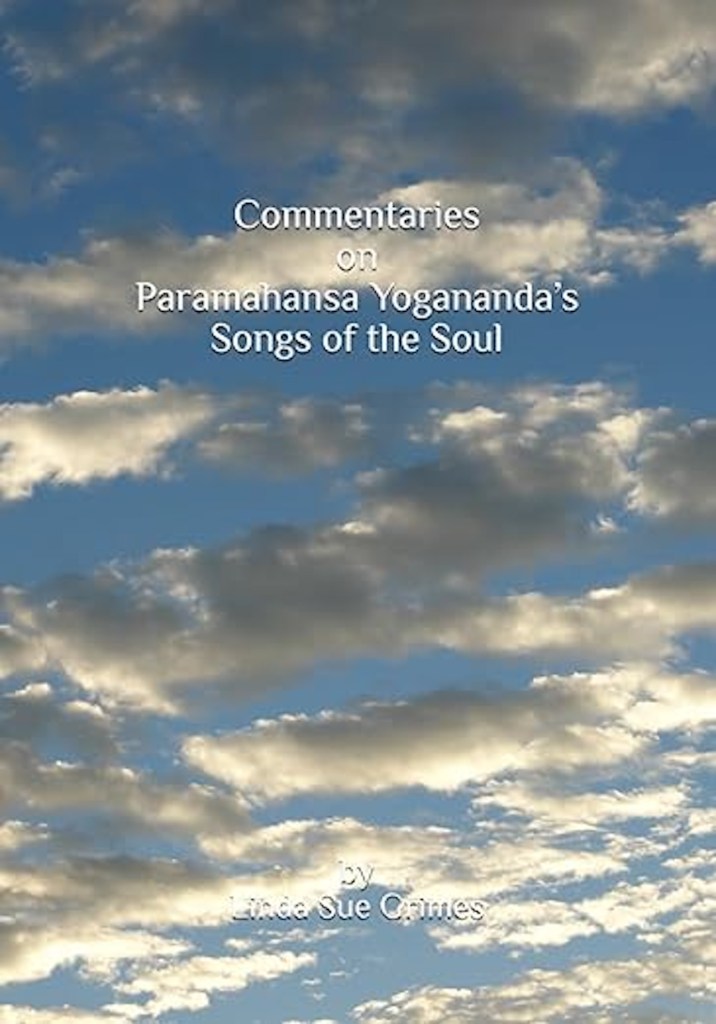
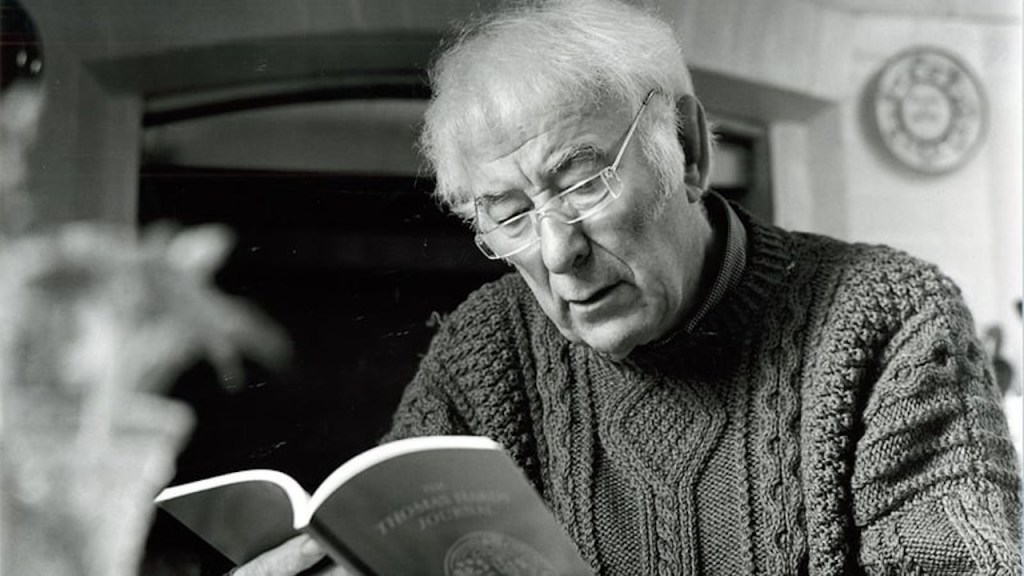
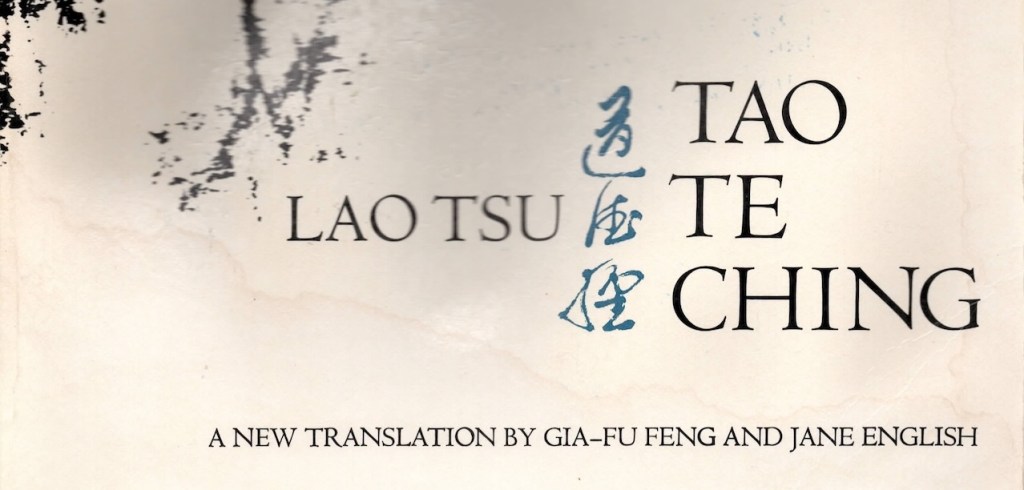
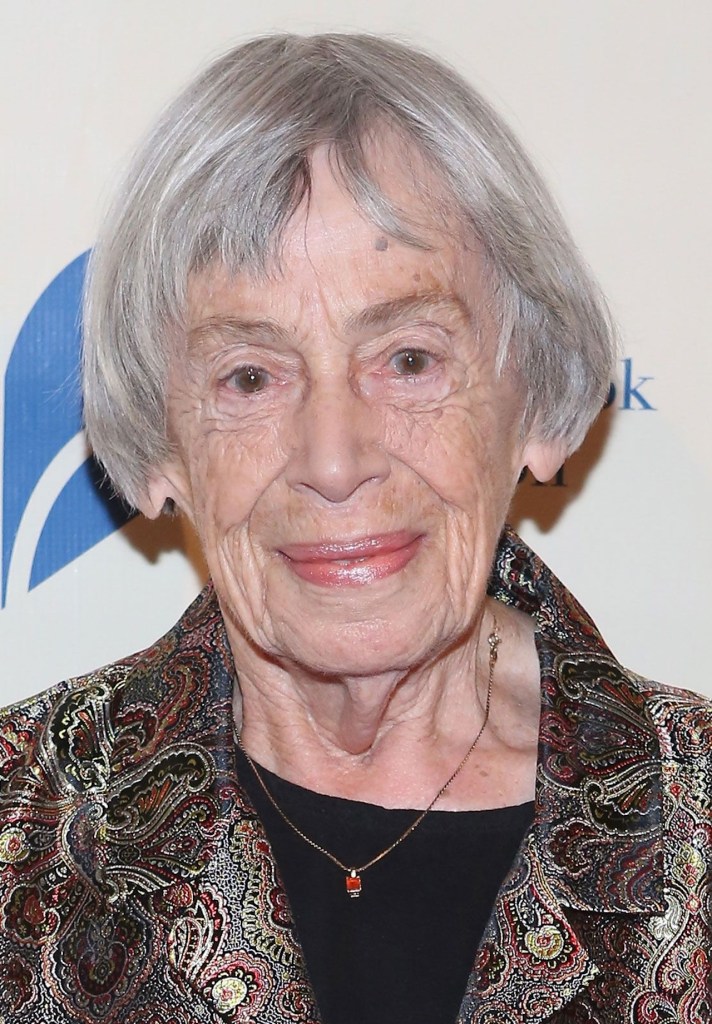
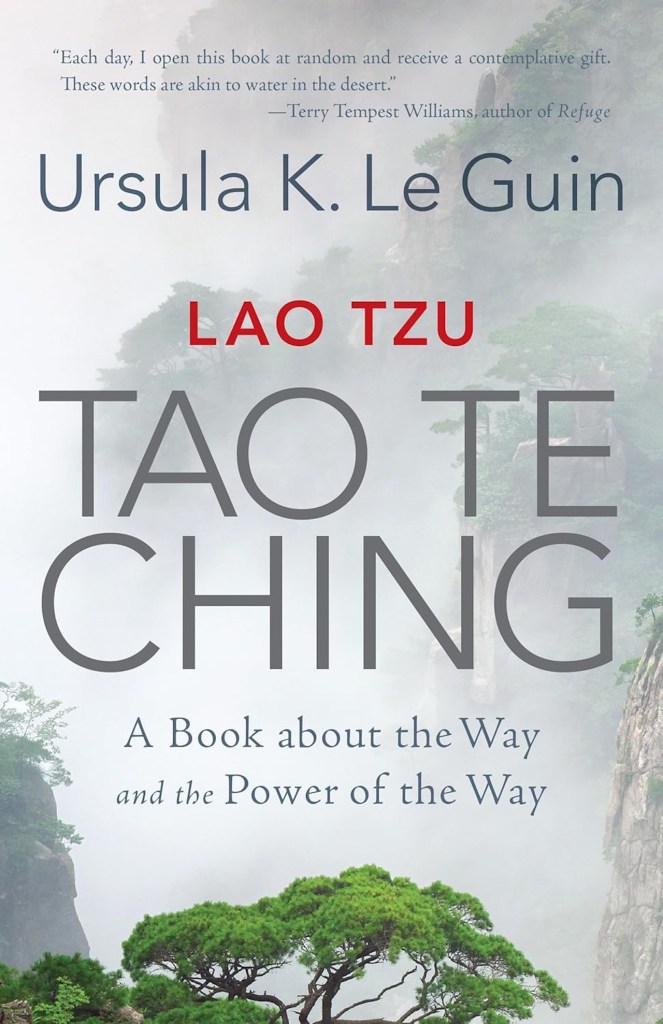
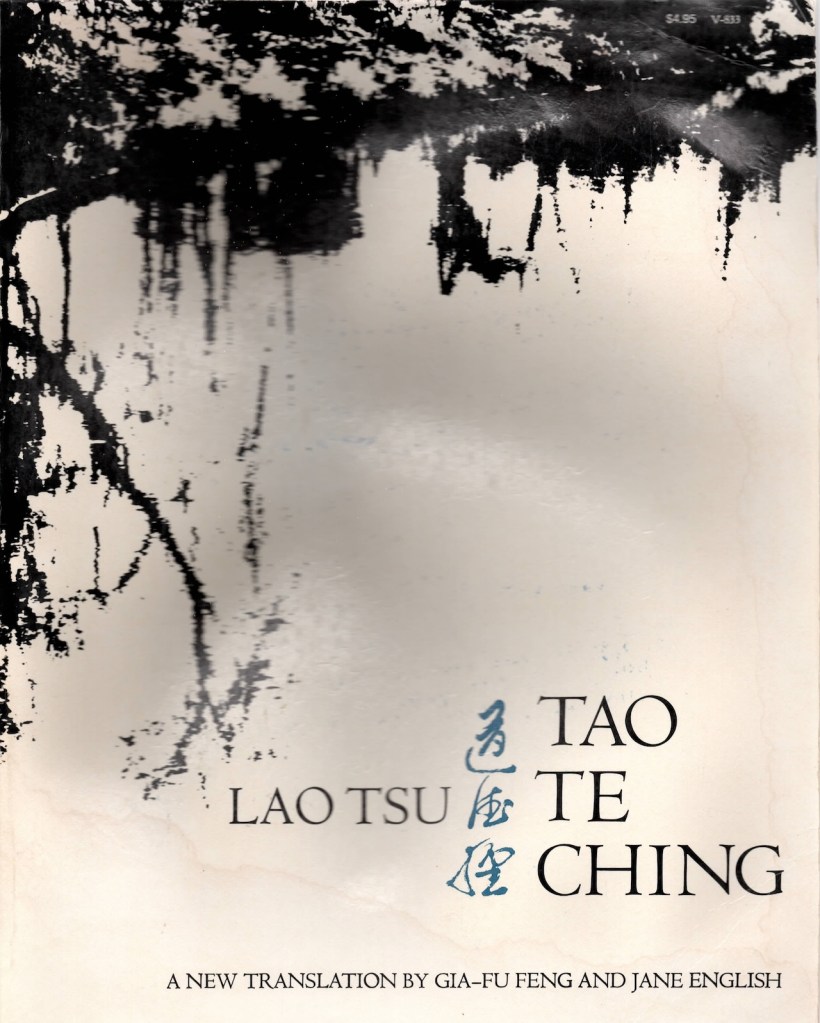

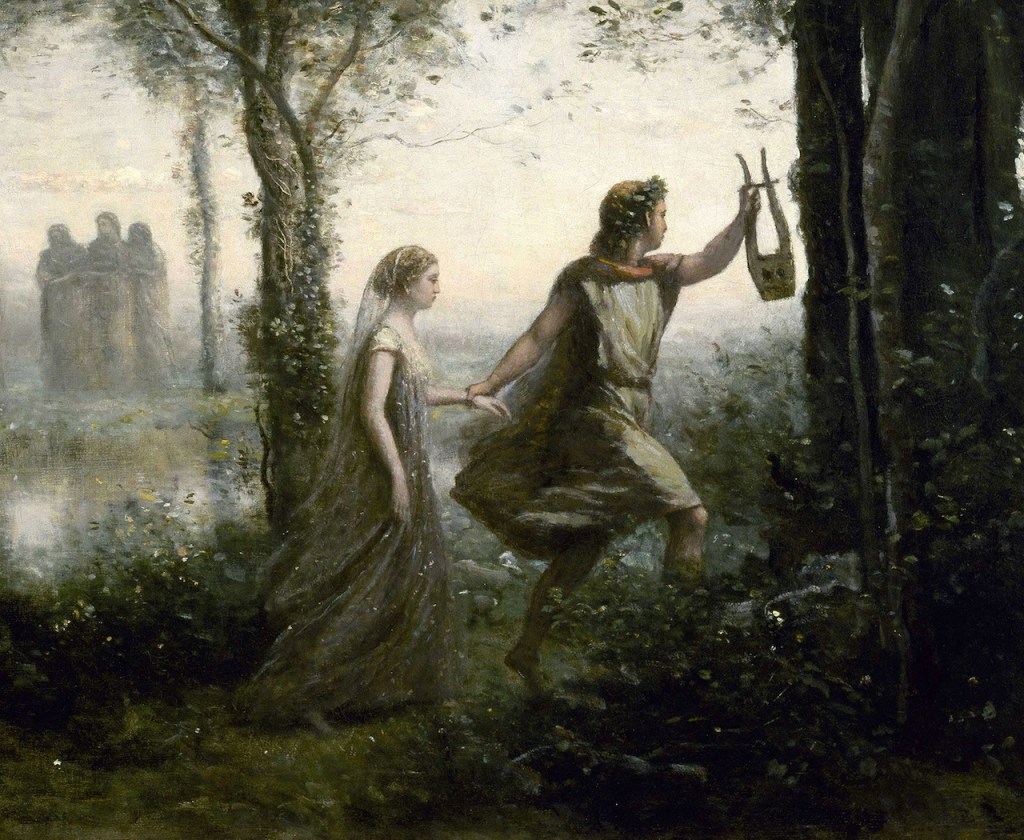
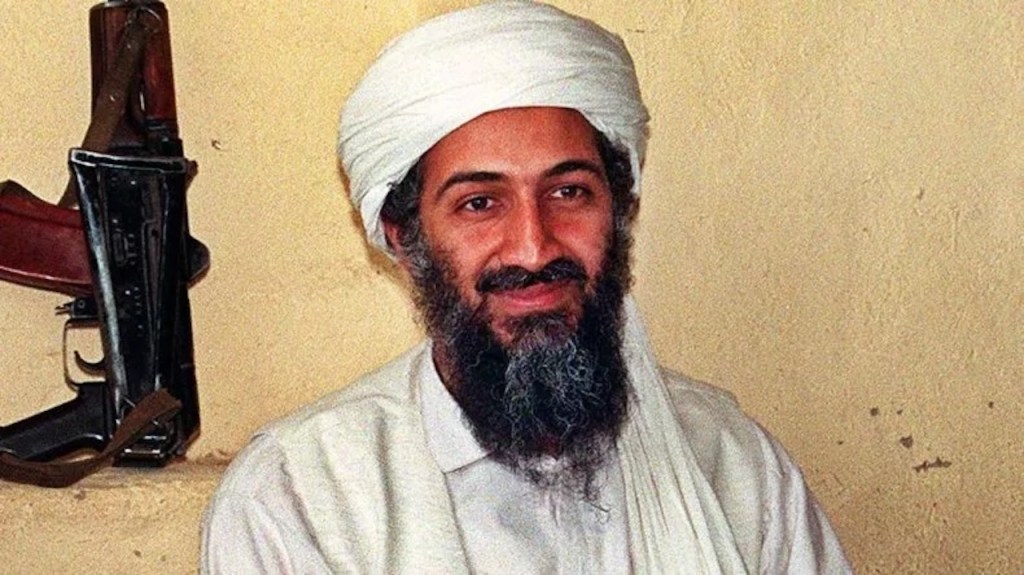







 Linda's Literary Home
