Linda's Literary Home

Tag: Robert Browning

  • Elizabeth Barrett Browning’s Sonnet 1 “I thought once how Theocritus had sung”

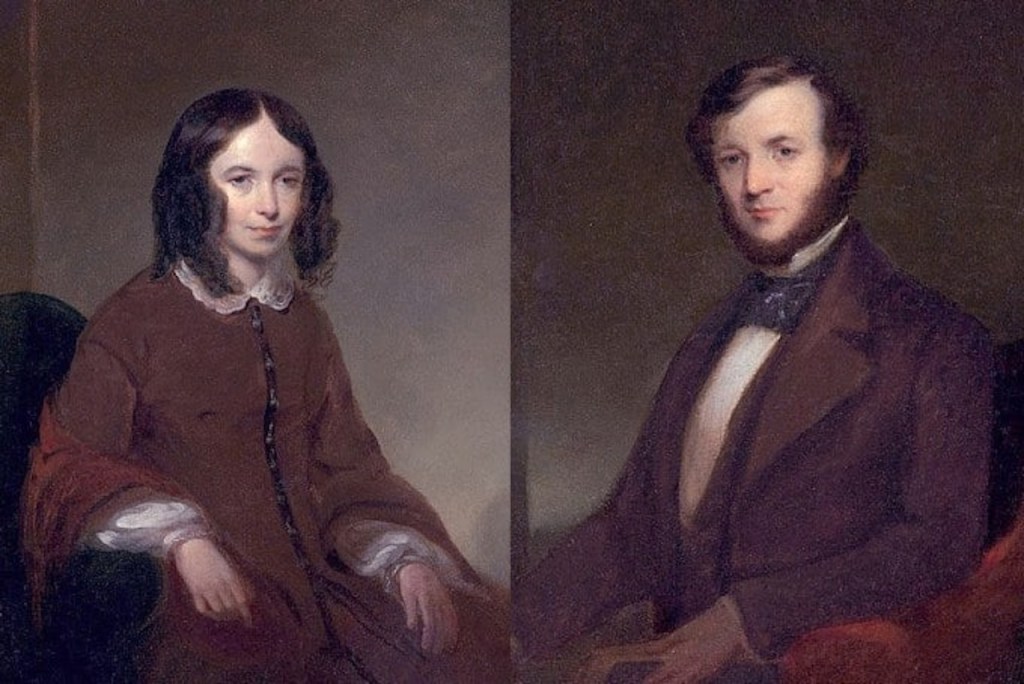
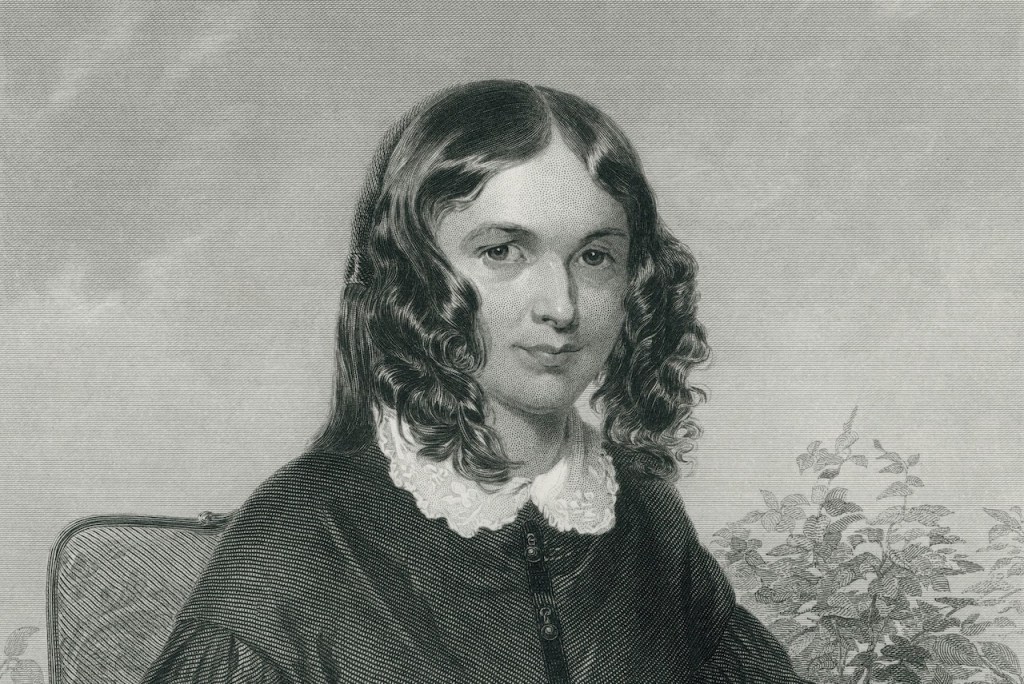
    Image:  Elizabeth Barrett Browning – NPG, London

    Sonnet 1 “I thought once how Theocritus had sung”

    The first sonnet in Elizabeth Barrett Browning’s Sonnets from the Portuguese features a speaker who is expressing the futility of concentrating on death and the melancholy such musing too often may create.

    Introduction with Text of Sonnet 1 “I thought once how Theocritus had sung”

    Elizabeth Barrett Browning’s Sonnets from the Portuguese unveil a marvelous testimony to the love and respect that the poet fostered for her suitor and future husband Robert Browning. Robert Browning’s stature as a poet rendered him one of the most noted and respected poets of Western culture.  

    Robert Browning’s fame and influence in literary studies has spread over the globe, and his wife’s reputation has also been enhanced by his noteworthiness as well as her own mastercraftmanship as a sonneteer.

    In the dramatic renderings of the sonnet sequence, as the relationship between the poets continues to flower, Elizabeth worries that it might not long endure.  She thus has created a speaker who muses on and voices the insecurities experienced by the poet.

    Sonnet 1 “I thought once how Theocritus had sung”

    I thought once how Theocritus had sung
    Of the sweet years, the dear and wished for years,
    Who each one in a gracious hand appears
    To bear a gift for mortals, old or young:
    And, as I mused it in his antique tongue,
    I saw, in gradual vision through my tears,
    The sweet, sad years, the melancholy years,
    Those of my own life, who by turns had flung
    A shadow across me. Straightway I was ‘ware,
    So weeping, how a mystic Shape did move
    Behind me, and drew me backward by the hair,
    And a voice said in mastery, while I strove, …
    Guess now who holds thee?’—Death,’ I said. But there,
    The silver answer rang … Not Death, but Love.’

    Reading 

    Commentary on Sonnet 1 “I thought once how Theocritus had sung”

    Sonnet 1 “I thought once how Theocritus had sung” in Elizabeth Barrett Browning’s classic work, Sonnets from the Portuguese, opens as the speaker is musing on the pressure created by melancholy.

    First Quatrain:  The Bucolic Classical Poetry of Theocritus

    I thought once how Theocritus had sung
    Of the sweet years, the dear and wished-for years,
    Who each one in a gracious hand appears
    To bear a gift for mortals, old or young:

    The speaker begins the dramatization of her musing by reporting that she has perused the pastoral poetry of the ancient classical poet, Theocritus.  She reveals that that classical Greek poet put into song the nature of the time of life when the young are full of hope and wishes—such desire renders those years sweet.

    The speaker has garnered the notion from the poem’s insightful knowledge that every year bestows on each mortal “a gift”; the elderly and the youthful are both able to accept those magnificent and eternal blessings.

    The speaker’s own melancholy and sadness have prompted her to seek out answers for questions that have troubled her, answers to important issue such as the very purpose of life on this planet.

    The speaker appropriately and with gratitude has been turning to the ancient thinkers because she understand that they have bestowed wisdom and encouragement to each of the succeeding generations.

    Second Quatrain:  Finding Her Own Life in Poetry

    And, as I mused it in his antique tongue,
    I saw, in gradual vision through my tears,
    The sweet, sad years, the melancholy years,
    Those of my own life, who by turns had flung 

    After a significant period of time spent in musing on the words of Theocritus, the speaker has come to comprehend the important ideas presented by those words, and their gravity brings tears to her eyes.   It is, thus, through those emotional tears that the speaker seems to be able to view her “own life.”  

    She becomes well aware that her own years have not rendered to her any special  kindness.  Her own years have been filled with pain and sadness.  Those gifts presented by time are not always useful or pleasant ones to the recipient.   But that is how life is.

    Each person’s individual karma remains responsible for the specific events that occur in each life.  One can remain assured that one will always reap what one sows.   But each individual is not required to be happy or even satisfied with the results; thus, one becomes motivated to strive to change former karmic patterns by improving one’s thoughts and behavior.

    Barrett Browning’s ability to understand the original Greek text is critical in her ability to feel the profound emotional impact of those thoughts.   Fraudulent “translators” such a Robert Bly, who was not fluent in the languages of the texts he supposedly translated, could not faithfully render emotion expressed in the original.  

    As poet Stephen Kessler has averred:  “The major problem with [Robert Bly’s] translations (often from languages he didn’t know, by way of other English versions) was that he made every poet, from García Lorca to Mirabai, sound like Robert Bly.” But Barrett Browning was fluent in the languages which she read and studied, and thus she could translate accurately and render in her speaker unique, genuine emotion.

    First Tercet:  Life Beneath a Shadow

    A shadow across me. Straightway I was ‘ware,
    So weeping, how a mystic Shape did move
    Behind me, and drew me backward by the hair, 

    The speaker then reveals that her own life has been passed under a “shadow.”  A dark cloud has moved “across [her],” and she has suddenly become cognizant that she is weeping.  

    She feels as if she is being dragged backward by someone or something. Some being seems to be pulling her by the hair into some “mystic Shape.”   Unfortunately, she remains unable to ascertain just what that strange creature is who seems to be tugging at her.

    Second Tercet:  A Correcting Voice

    And a voice said in mastery, while I strove, …
    Guess now who holds thee?’—Death,’ I said. But there,
    The silver answer rang … Not Death, but Love.’

    As she tries to right herself, she then becomes aware of what seems to be a voice—a “voice of mastery.” That strange voice poses a question to her; it asks her to take a guess regarding who “holds [her].”  The speaker then suddenly responds fatalistically, “Death.” However, she is then relieved to hear a surprising retort, correcting her fatalism: “Not Death, but Love.”

    An Inspiring Love Story

    The love story of Robert and Elizabeth Barrett Browning has become and has remained a subject for research and exploration as well as admiration in the literary world, especially in the poetry branch of that world.

    In her Sonnets from the Portuguese, Mrs. Browning crafts and portrays a speaker who dramatizes the poet’s moments of sorrow and melancholy as well as her painful doubt-filled hours.   

    Her speaker becomes elated at times that a man as accomplished and noteworthy as Robert Browning would take note of her and even desire to spend time with her. But then her mood will change, and she will grow doubtful that the relationship could ever blossom into a lasting, true love.

    Readers who explore the sonnets will become pleasantly captivated by her amazing growth from skepticism and doubt to deep awareness and faith that the couple’s love is genuine and sustained by the Divine Belovèd Creator (God).   Uniquely told in sonnets, the Brownings’ courtship leading to their marriage remains a truly inspiring love story.

    🕉

    You are welcome to join me on the following social media:
    TruthSocial, Locals, Gettr, X, Bluesky, Facebook, Pinterest 

    🕉

    Share

  • Elizabeth Barrett Browning

    Image:  Elizabeth Barrett Browning – NPG, London

    Brief Life Sketch of Elizabeth Barrett Browning and Introduction to Sonnets from the Portuguese

    Elizabeth Barrett Browning’s classic work Sonnets from the Portuguese is the poet’s most anthologized and widely published work, studied by students in secondary schools, colleges, and universities and appreciated by the general poetry lover.

    Two Poets in Love

    Robert Browning, while wooing Elizabeth Barrett, referred to his sweetheart lovingly by the nickname he had given her: “my little Portuguese” [1].  He chose that nickname for her because of her dark complexion.  Elizabeth Barrett then quite consequentially titled her sonnet sequence Sonnets from the Portuguese.

    Since its publication, Elizabeth Barrett Browning’s Sonnets from the Portuguese has become a beloved, often anthologized, and widely studied sonnet sequence. With this 44-sonnet sequence, Barrett Browning puts on display her mastery of the Petrarchan (Italian) sonnet form.  

    Throughout the sequence, Barrett Browning creates a speaker who develops the theme of the romantic relationship between Elizabeth Barrett and fellow poet, Robert Browning, the man whom she will ultimately marry. 

    As their relationship begins, the speaker is continually beset with deep doubts.  She has little confidence that she can keep the affection of such an accomplished, world-renowned poet as Robert Browning [2].

    The speaker, therefore, continues to dramatize her deep skepticism that the relationship will withstand their differences.  The speaker is continually musing on her insecure nature and doubts as she even magnifies them.  Her exploration and examination of her situation causes her much consternation. Likely, the poet’s prior experience with love relationships influences her hesitancy in engaging in a relationship with Robert Browning:

    Much of E.B.B.’s hesitation came from knowing that love can bring injury as well as boon. She had suffered such injury. With great pain did she finally recognise that her father’s strangely heartless affection would have buried her sickroom, for how else could she interpret his squelching of her plan to travel south for health in 1846, when doctors practically ordered the journey to Italy as a last hope? E.B.B. had had previous experience of one-sided affection, as we see in her diary of 1831-3, which concerns her relationship with the Greek scholar H.S. Boyd. For a year her entries calculate the bitter difference between his regard and her own, and she wonders if she can ever hope for reciprocation. In fact she finds her womanly capacity for feeling a liability and wishes she could feel less — “I am not of a cold nature, & cannot bear to be treated coldly. When cold water is thrown upon a hot iron, the iron hisses. I wish that water wd. make that iron as cold as self.”  [3]

    Elizabeth Barrett’s poor health is often emphasized in the many biographies of the poet.   Few biographers have offered any speculations regarding the origin of the poet’s illness; nor have they attempted to name the disease from which the poet suffered.

    However, Anne Buchanan, who is a research assistant in anthropology, has suggested that  Elizabeth Barrett suffered from hypokalemic periodic paralysis (HKPP), a muscle disorder [4].  Buchanan’s daughter suffers from that same disease, which “causes blood levels of potassium to fall because potassium becomes trapped in muscle cells.”  

    Buchanan and her daughter Ellen Buchanan Weiss observed that the descriptions of Barrett Browning’s malady resembled closely those of the daughter.  The Buchanans have thus suggested that a cold, moist climate often intensifies the pain associated with HKPP.

    Throughout Barrett Browning’s lifetime, London’s cold, damp climate had exacerbated the poet’s health problems, and whatever the title of the disease, escaping the London’s weather was a Godsend to her. 

    Thus, her marriage to  Robert Browning enhanced her health as well as her mental state because the coupled relocated to Italy, where they enjoyed the warm climate, which was amenable to Elizabeth’s health.

    Because of Robert Browning, Elizabeth Barrett not only enjoyed a soulmate to love her, but she also found one who would protect her health and allow her live her remaining years more comfortably and productively.

    The Petrarchan (Italian) Sonnet Form

    The Petrarchan sonnet is named after the 14 century Italian poet, Francesco Petrarch [5].  It is also known as the Italian sonnet.  The Petrarchan/Italian sonnet displays an eight-line octave and a six-line sestet. The octave contains two quatrains (four lines each), and the sestet contains two tercets (three lines each). The traditional rime scheme of the Petrarchan/Italian sonnet is ABBAABBA in the octave and CDCDCD in the sestet.

    Poets, however, often display a variation on the sestet rime scheme, transforming it from CDCDCD to CDECDE.  Many other poets vary the octave as well as create other schemes for the sestet. But Barrett Browning never varies the rime scheme; she retains the traditional rime scheme ABBAABBACDCDCD throughout the entire 44-sonnet sequence.  

    Following such a tight, restricted form that the poet chose to follow as she composed 44 sonnets magnifies her skill and her mastery of that sonnet form. The poet’s choice of the Petrarchan sonnet also reveals her deep affinity for the original Petrarchan theme, as she muses upon the relationship between herself and her belovèd as well as the relationship between the Divine Creator-Father and His human children.

    According to Robert Stanley Martin, Petrarch “reimagined the conventions of love poetry in the most profound way: love for the idealized lady was the path towards learning how to properly love God . . .”:

    [Petrarch’s] poems investigate the connection between love and chastity in the foreground of a political landscape, though many of them are also driven by emotion and sentimentality.  Critic Robert Stanley Martin writes that Petrarch “reimagined the conventions of love poetry in the most profound way: love for the idealized lady was the path towards learning how to properly love God . . . .” [6]

    Each sonnet in this sequence is displayed in only one stanza with its octave and sestet. However, engaging the sonnet’s quatrains and sestets separately allows the commentarian a clearer focus in concentrating on each line unit. 

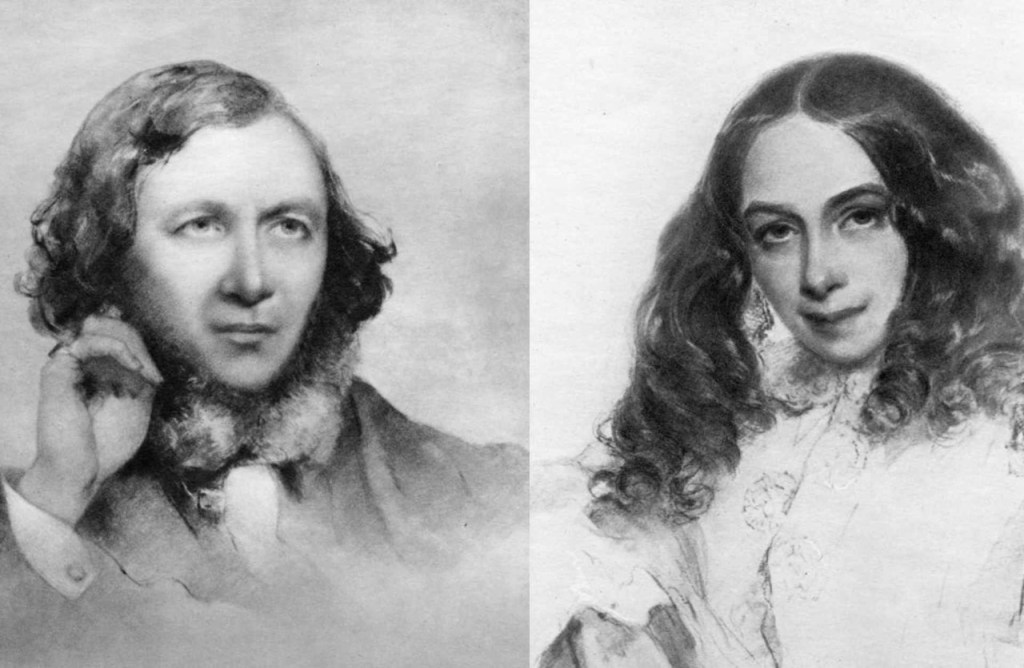
    Image: Two Poets in Love

    A Legacy of Love

    Elizabeth Barrett Browning’s sonnet sequence offered the poet a remarkably open field as well as the imaginative opportunity for discovery of her true feelings.   The poet’s life had become steeped in melancholy, as a result of her poor health and her family’s inability to understand and appreciate her abilities and sensibilities.  Especially problematic was her difficult relationship with her father.

    As the poet through her speaker navigates through the sonnet sequence, she demonstrates a change of mood. The speaker of the sequence grows from an individual holding the desperate thought that only death would remain her consort to one who could finally experience joy.

    After her doubts that she and such a man of the world as Robert Browning could have a true relationship are finally removed, she finds life to be very different from what she has earlier experienced.

    The confident, sophisticated Robert Browning brought Miss Barrett a happiness that genuinely gave her life meaning. The two poets’ relationship had to struggle against a host of trials and tribulations, but their love story results in one that remains one for the ages. The world is more acquainted with these two lover-poets than it would have otherwise been without their loving relationship:

    In addition to being celebrated for their literary talents, Elizabeth and Robert are remembered as people who were deeply in love. As Sir Frederic Kenyon wrote, Elizabeth and Robert “gave the most beautiful example of [love] in their own lives.” The marriage of Elizabeth Barrett Browning and Robert Browning required courage and sacrifice, and they were willing to do whatever it took to build a beautiful life together.  [7]

    Barrett Browning’s 44-sonnets sequence recounts the journey of a poet who begins with many doubts. But she examines and muses upon the origins of those doubts and then finally blossoms into a joyous, creative individual after she accepts and engages with the love that Robert Browning had so generously and genuinely offered her.  The story of the love relationship between these two poets has a become one of most inspirational stories in the literary world—or, for that matter, in any world.

    Sources

    [1]  Jennifer Kingma Wall. “Love and Marriage: How Biographical Interpretation affected the Reception of Elizabeth Barrett Browning’s ‘Sonnets from the Portuguese’The Victorian Web.  Last modified May 4, 2005.

    [2] Editors.  “Robert Browning.”  Poetry Foundation.  Accessed March 2, 2023.

    [3]  Kathleen Blake. “The Relationship of Elizabeth Barrett Browning and Robert Browning.” The Victorian Web.  1991.

    [4] Editors.  “Elizabeth Barrett Browning’s Illness Deciphered after 150 Years.”  American Association for the Advancement of Science. December 19, 2011.

    [5] Editors.  “Petrarch.”  Academy of American Poets.  Accessed March 2, 2023.

    [6] Editors.  “Petrarch.”  Poetry Foundation.  Accessed June 29, 2021.

    [7]  Taylor Jasmine. “The Literary Love Story of Elizabeth Barrett and Robert Browning.”  Literary Ladies Guide.  November 1, 2020.

    Image: Elizabeth Barrett and Robert Browning

    Commentaries on Sonnets from the Portuguese

    1. Sonnet 1 “I thought once how Theocritus had sung”  The first sonnet in Elizabeth Barrett Browning’s “Sonnets from the Portuguese” features a speaker who is expressing the futility of concentrating on death and the melancholy such musing too often may create.
    2. Sonnet 2 “But only three in all God’s universe”  The second sonnet from Sonnets from the Portuguese reports that her relationship with her life-mate is granted by God, and thus, it cannot be broken or disavowed.  
    3. Sonnet 3 “Unlike are we, unlike, O princely Heart!”  The speaker in Elizabeth Barrett Browning’s sonnet 3 muses on how unlikely it seems that a plain individual such as herself would begin a relationship with a person who has attracted royalty.