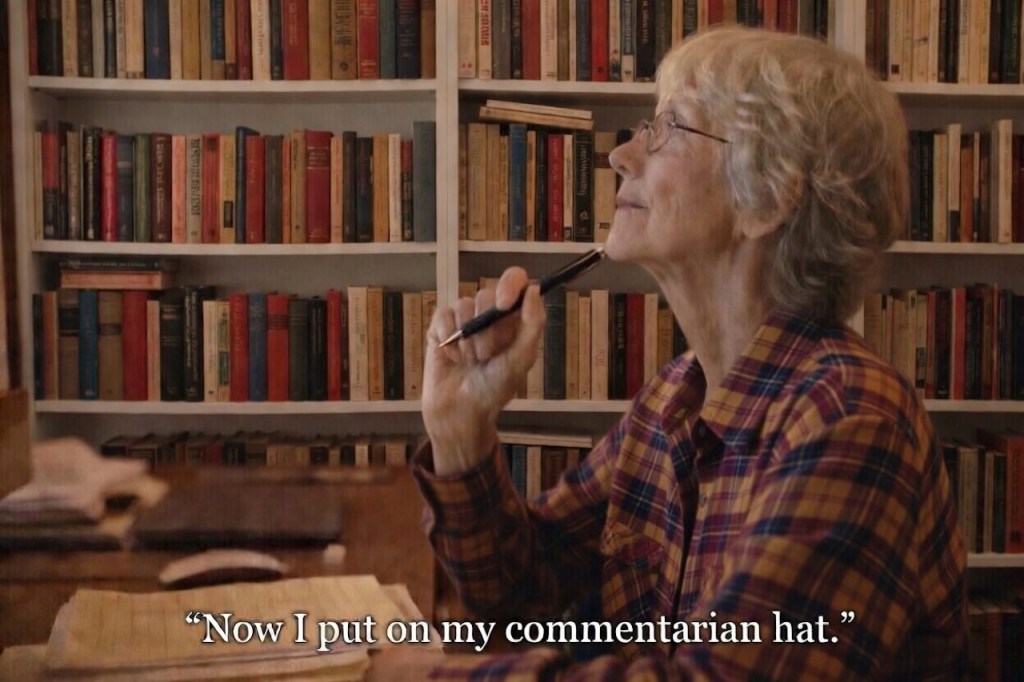
Similar to a caffeine buzz But instead of propelling to more movement Instills urge to more calm, more stillness— Until you zoom into the Star!
Image: Original photo by Linda Sue Grimes, text added by Grok
A Prose Commentary on My Original Poem “Soul Buzz”
In my little poemette “Soul Buzz,” my speaker reveals a form of heightened awareness that differs existentially from ordinary physical excitement. The opening comparison to a “caffeine buzz” refers to a familiar sensation of stimulation, alertness, and energy. But the poem immediately distinguishes the two experiences: whereas caffeine propels the body and mind toward greater activity, the soul’s distinctive “buzz” instills the motivation to achieve quietude, calmness, tranquility, stillness (Be still, and know that I am God . . . KJV Psalm 46:10).
This contrast establishes spiritual awakening as an inward experience in which consciousness turns away from external distraction and toward the deep perception of the soul. The repetition of “more” emphasizes the progressive deepening of this inward movement. Calmness and stillness remain the essential, yogic conditions for meditation and spiritual realization.
The great guru Paramahansa Yogananda teaches that this stillness prepares consciousness to envision the spiritual eye, whose luminous center contains a brilliant, silver-white, five-pointed star. The verb “zoom” conveys the exhilarating intensity of focused consciousness penetrating the spiritual eye. Ultimately, the poemette presents stillness as a dynamic spiritual experience culminating in the vision of the Star and the soul’s movement toward divine consciousness.
The concluding phrase, “Until you zoom into the Star!” directly evokes this spiritual vision, transforming the poem’s apparent paradox into a steady movement from inner quietude to transcendent, divine perception, or samadhi.
Image: Emily Dickinson – Amherst College – Daguerrotype of the poet at age 17, circa 1847 – likely the only authentic, extant likeness of the poet
Emily Dickinson’s “If pain for peace prepares”
Emily Dickinson’s “If pain for peace prepares” reveals the speaker’s exhilarating intuition that the temporary trials of earthly existence prepare the soul for an abundance of peace, beauty, and spiritual illumination.
Introduction and Text of “If pain for peace prepares”
In “If pain for peace prepares,” the speaker reasons from the familiar cycles of winter and night toward a more exalted spiritual possibility. Pain, darkness, and deprivation may seem severe while they are being endured, but the speaker perceives them as preparatory conditions for peace, springtime, and a blaze of celestial light.
The little drama moves from conditional questions to an ecstatic final vision. The speaker’s confidence grows as each natural image becomes a figure for the soul’s progress from limitation toward an awakened consciousness.
In my earlier essays on Dickinsonian poems, I have discussed the speaker’s reliance on intuition to discover realities that physical sight alone cannot verify. Her speakers’ reliance on spirituality informs most of Emily Dickinson’s minimalist poetry.
If pain for peace prepares
If pain for peace prepares L0, what “Augustan” years Our feet awaIt!
If springs from winter rise, Can the Anemones Be reckoned up?
If night stands first – then noon To gird us for the sun, What gaze!
When from a thousand skies On our developed eyes Noons blaze!
Commentary on “If pain for peace prepares”
The speaker transforms pain from a merely negative experience into a possible preparation for a richer awareness. Her repeated “If” does not express empty doubt; it creates a chain of intuitively perceived correspondences between sorrow and peace, winter and spring, darkness and spiritual light.
First Stanza: “‘If pain for peace prepares”
If pain for peace prepares L0, what “Augustan” years Our feet awaIt!
The speaker begins with a daring supposition: “If pain for peace prepares.” Pain is not praised for its own sake, nor does the speaker pretend that suffering is pleasant. Instead, she wonders whether pain may serve as preparation for a peace so profound that the preceding hardship becomes understandable.
The word “prepares” is especially significant. Preparation implies movement toward something not yet fully possessed. A student prepares for knowledge, a field prepares for harvest, and the human heart may prepare through trial for a more permanent tranquility. The speaker thus shifts the reader’s attention away from present discomfort toward its possible spiritual consequence.
Her exclamation, “Lo,” announces a sudden vision. If pain indeed leads toward peace, then the future contains “Augustan” years. “Augustan” suggests not merely the month of August but a season of fullness, ripeness, warmth, and dignified abundance. The speaker sees life’s ultimate destination as a long summer of fulfillment.
The phrase “Our feet await!” makes the vision bodily and immediate. Feet represent the human journey through the earthly world. They have walked through difficult terrain, yet they are poised before a more favorable country. The speaker does not claim that peace has already arrived; she feels the soul standing on the threshold of it.
Paramahansa Yogananda asserts that “Pain is a prod to remembrance.” The statement closely resembles the Dickinsonian speaker’s intuition that pain can awaken an individual from forgetfulness and direct consciousness toward a deeper peace. Pain may jar the mind away from dependence upon changing circumstances and toward the enduring source of joy.
In my earlier essays on Dickinsonian poems, I have discussed the speaker’s conviction that the visible world contains hints of a more permanent metaphysical reality. The “Augustan” years suggest just such a reality: a condition of ripened joy that temporary earthly hardship cannot finally prevent.
The speaker’s three brief lines retain an energetic optimism. She does not linger over the nature of pain; she quickly imagines the peace for which it may prepare. Her gaze remains fixed upon the soul’s future enlargement rather than upon the passing difficulty.
Second Stanza: “If springs from winter rise”
If springs from winter rise, Can the Anemones Be reckoned up?
The speaker next turns to nature for an illustration of her spiritual premise. Winter appears barren, cold, and lifeless, but it does not possess the final word. Spring rises after winter, bringing renewed color, fragrance, and growth. The natural process offers the speaker a visible example of restoration.
The verb “rise” conveys more than an ordinary seasonal change. Spring does not merely follow winter in a mechanical sequence; it rises out of it. The word implies lifting, awakening, and overcoming. The speaker finds in the annual rebirth of nature a figure for the soul’s emergence from difficulty.
She then asks, “Can the Anemones / Be reckoned up?” Anemones are delicate spring flowers, and their appearance represents the uncountable wealth of beauty that follows the wintry season. The speaker’s question requires no numerical answer. The blossoms are too numerous, too various, and too delightful to be reduced to calculation.
The image of flowers also deepens the contrast between pain and peace. Winter’s bleakness can make the return of flowers more vivid. The speaker seems to suggest that the soul, having known deprivation, may recognize and cherish beauty with a greater intensity. What had seemed an ending becomes a condition preceding renewal.
Paramahansa Yogananda teaches that lasting happiness cannot be expected from ever-changing material conditions; he identifies real peace and contentment with “the bliss of God.” The speaker’s spring is therefore more than a pleasant season. It may be contemplated as an emblem of that inner joy which outlasts the alternating conditions of life.
In my earlier essays on Dickinsonian poems, I have discussed the speaker’s close attention to natural details as vehicles for larger spiritual intuitions. Here, the small anemones become evidence that apparent barrenness can conceal a coming abundance.
The questioning tone is not skeptical. It is delighted. The speaker’s mind encounters a beauty too plentiful to inventory, and the inability to “reckon” the flowers becomes a measure of their overflowing generosity. Spring offers a quiet answer to the first stanza’s question about pain and peace.
Third Stanza: “If night stands first – then noon”
If night stands first – then noon To gird us for the sun, What gaze!
The third movement advances from winter and spring to the daily passage from night toward noon. Night “stands first,” occupying an initial position before the arrival of light. The speaker recognizes darkness as part of the sequence, but never as the ultimate condition.
The phrase “then noon” brings an abrupt reversal. Noon is the day’s fullest outward radiance, when the sun occupies its commanding height. The movement from night to noon is more dramatic than a simple transition from darkness to dawn. The speaker leaps directly toward a blaze of complete illumination.
The clause “To gird us for the sun” is complex and suggestive. “Gird” means to prepare, strengthen, or equip. Night, despite its obscurity, may strengthen the perceiver for an encounter with greater light. Just as the first stanza proposes pain as preparation for peace, this stanza proposes night as preparation for the sun.
The speaker does not assume that the unprepared eye can easily endure brilliance. Excessive light may overwhelm a person who has known only darkness. Thus the night becomes a period in which the soul gradually develops the capacity to receive a fuller revelation.
Her exclamation—“What gaze!”—records astonishment before that possibility. The word “gaze” indicates sustained looking rather than a passing glance. The speaker is imagining an inward vision equal to the light that it receives. Such vision requires more than physical sight; it requires awakened intuition.
Paramahansa Yogananda explains that the spiritual eye is “the single eye of intuition and omnipresent perception” and calls it an entryway into higher states of divine consciousness. His teaching offers a striking parallel to the speaker’s developing gaze, which is being strengthened for a light beyond ordinary sunlight.
In my earlier essays on Dickinsonian poems, I have discussed the speaker’s contemplative musing upon the powers of the mind and soul. This “gaze” demonstrates that same concern with an inner faculty capable of perceiving truths unavailable to the merely literal eye.
The speaker’s progression now becomes clear. Pain may prepare for peace; winter may prepare for flowers; night may prepare for noon. Each contrast teaches that an adverse condition can be temporary and can even contribute to the soul’s readiness for a higher condition.
Fourth Stanza: “When from a thousand skies”
When from a thousand skies On our developed eyes Noons blaze!
The final movement completes the speaker’s ascent into an overwhelming vision of light. The conditional “If” has now changed to “When.” That change is important. The earlier stanzas explore possibilities, but the concluding stanza speaks with the confidence of anticipated fulfillment.
The speaker no longer envisions one sky or one noon. She imagines “a thousand skies” from which “Noons blaze.” The plural forms enlarge the scene beyond ordinary experience. The image suggests that illumination will arrive from every direction, surrounding the soul with an inexhaustible radiance.
The word “developed” reveals that the eyes have not always been capable of this perception. They have grown through the earlier disciplines of pain, winter, and night. Development implies gradual maturation, much like the unfolding of a flower or the ripening of the “Augustan” years.
The eyes are also “our” eyes. The speaker’s spiritual hope is not confined to one isolated individual. Her vision embraces humanity, or at least all readers willing to undertake the contemplative musing required to recognize the poem’s spiritual correspondences.
“Noons blaze!” is the poem’s culminating exclamation. Noon, earlier anticipated after night, now becomes plural and immeasurable. The blazing light signifies a consciousness so illuminated that darkness no longer controls perception. The speaker arrives not at a modest consolation but at a lavish revelation.
Paramahansa Yogananda explains that seekers who develop sufficient concentration can penetrate the spiritual eye and “see God.” He also identifies the thousand-petaled lotus in the brain as the seat of cosmic consciousness. The speaker’s “thousand skies” and “developed eyes” harmonize suggestively with that teaching of expanded spiritual perception.
In my earlier essays on Dickinsonian poems, I have discussed the speaker’s mystical intuition and her interest in the relationship between the human mind and Ultimate Reality. The concluding blaze of noons portrays the mind not as imprisoned in darkness but as capable of receiving transcendent light.
The poem therefore leaves the reader with an exhilarating reversal. Pain, winter, and night are not denied, but they are placed within a larger sequence. The speaker intuits that the soul’s difficult passages leads toward peace, innumerable blossoms, strengthened vision, and a final flood of divine illumination.
Image:The Pacific Ocean – Encinitas, CA – Photo by Ron Grimes
Without the Waves
I exist without the cosmic shadow, But it could not live bereft of me; As the sea exists without the waves, But they breathe not without the sea.
—from “Samadhi” by Paramahansa Yogananda
“Be still, and know that I am God.” — from Psalm 46:10
In Memoriam: Bill Craig August 8, 1954 — February 6, 2025
Without the waves——I exist only as boundless sea. God’s boundless love has stemmed the tide. God’s bliss is mine——deep, wide, eternally free.
No more hemmed round in time, space, and memory, My soul will now and always in sacred Light abide. Without the waves——I exist only as boundless sea.
Satan’s veil is shed——my soul’s eye now can see Only holy Light no shadow can ever hide. God’s bliss is mine——deep, wide, eternally free.
My soul unborn of flesh, not changed through history— Like Christ I stand up to the trial that would divide. Without the waves——I exist only as boundless sea.
I listen only to angelic voices singing to me. Lesser music has vanished——noise has died. God’s bliss is mine——deep, wide, eternally free.
I take no thought for I live in celestial unity—— From former failures no need to hide. Without the waves——I exist only as boundless sea. God’s bliss is mine——deep, wide, eternally free.