
Linda's Literary Home

Tag: Sara Teasdale

  • Sara Teasdale’s “I Am Not Yours”

    Image: Sara Teasdale

    Sara Teasdale’s “I Am Not Yours”

    In the hands of a less skilled artist, the love theme of this lyric often trots out a tired cliché, but Sara Teasdale’s speaker makes it fresh and new.

    Introduction and Text of “I Am Not Yours”

    Taking the theme of deep and lasting love, the speaker in Sara Teasdale’s “I Am Not Yours” employs the poetic device of hyperbole to convey her emotion.  Three riming quatrains using the traditional scheme of ABCB unfold the poem’s drama.

    I Am Not Yours

    I am not yours, not lost in you,
    Not lost, although I long to be
    Lost as a candle lit at noon,
    Lost as a snowflake in the sea.

    You love me, and I find you still
    A spirit beautiful and bright,
    Yet I am I, who long to be
    Lost as a light is lost in light.

    Oh plunge me deep in love—put out
    My senses, leave me deaf and blind,
    Swept by the tempest of your love,
    A taper in a rushing wind.

    Commentary on “I Am Not Yours”

    While lovers are prone to exaggerate in artistic endeavors the level to which they have become part of their love one, this speaker on Sara Teasdale’s “I Am Not Yours” dramatizes a very different approach: a series of negative exaggerations that emphasize the positive.

    First Quatrain:  No Romantic Exaggeration

    I am not yours, not lost in you,
    Not lost, although I long to be
    Lost as a candle lit at noon,
    Lost as a snowflake in the sea.

    The speaker directs her words to her beloved in an extraordinary manner, by claiming that she is not possessed by him and that she has not lost herself in his charms.  While lovers are prone to exaggerate in artistic endeavors the level to which they have become part of their love one, this speaker dramatizes a very different approach.

    Thus this speaker then changes her direction as she proclaims that even though she is “not lost in [him],” she desires wholeheartedly that she might become so. She, therefore, states that she would like to be as is “a candle lit at noon.”  A candle at noon would barely show light at all as it would meld with the natural sunlight.

    The speaker then asserts that she would like to become part of her beloved as “a snowflake in the sea.” The oceanic presence of her beloved has engulfed her heart in such as way that she can liken herself to the smallness and malleability of a flake of snow melting in the ocean.

    The original claim that she does not belong to the addressee has now been set on its head.  Although literally it will always be true that she is not his and she is not lost in him, her desire for that blending has caused her imagination to conjure such a state in a majestic manner of metaphorical supremacy.

    Second Quatrain: Total Melding of Body, Mind, Soul

    You love me, and I find you still
    A spirit beautiful and bright,
    Yet I am I, who long to be
    Lost as a light is lost in light.

    The second quatrain confirms that the speaker is, indeed, loved by the target of her desire.  As she claims, “I am I,” she hungers for annihilation of self, that is, to melt into her lover. Her drama continues the seeking after total blending of body, mind, and spirit with the beloved.

    The speaker continues to wish for that complete melding with her lover, as she has shown from the beginning of her drama.  She wants to be totally consumed in the love she feels for him:  to be “lost [in him] as light is lost in light.”

    Third Quatrain:  Annihilation of Separation

    Oh plunge me deep in love—put out
    My senses, leave me deaf and blind,
    Swept by the tempest of your love,
    A taper in a rushing wind.

    The final quatrain finds the speaker essentially begging for the awareness of her wish to experience complete emersion in her beloved. She pleads, “Oh plunge me deep in love.”  The speaker desires to exist so close to her beloved that she has no need to hear or see. 

    His love and affection will be her only awareness and guide.  She begs that all her sense awareness become “swept by the tempest of your love.”  Again, the speaker returns to the candle metaphor.  She wishes to be so completely subsumed in him that she becomes a “taper in a rushing wind.” No longer is there a separation between the two lovers.

    Avoiding the Tired, the Obnoxious, the Clichéd

    The theme of this love lyric is a common one for lovers; pop lyrics use it over-abundantly. The idea of becoming so consumed by love that one wishes to melt into one’s lover has long been a cliché; the serious artist who employs this theme works to dramatize it in fresh, original ways.

    That freshness is achieved by Teasdale in her opening remarks, “I am not yours, not lost in you” and in her use of light as the substance to which she compares her desired union with her beloved.

    She avoids all of the tired and obnoxious sexual connotations that usually appear in portrayals of this theme. This lyric’s elocution remains so elevated that it could be interpreted as a devotee’s prayer to the Divine.

  • Sara Teasdale’s “Barter” 

    Image: Sara Teasdale Britannica

    Sara Teasdale’s “Barter” 

    Sara Teasdale’s “Barter” is a lyrical musing on the importance and value of beauty, stressing the indispensability of giving oneself up completely to any moment of loveliness that happens to appear before one’s consciousness.

    Introduction and Text of “Barter”

    Sara Teasdale’s “Barter” was first published in 1917 in her collection titled simply Love Songs. It is likely the poet’s most anthologized poem, for it remains one of  her most crystallized expressions on loveliness, self-surrender, and sublimity. 

    In “Barter,” the poet has created a speaker who professes the belief that beauty is all encompassing in all of its aspects including its presence in nature, or in love between individuals, or in the soul’s quiet musings.  To purchase such a rare commodity, one must be willing to pay any price.

    Barter

    Life has loveliness to sell,
         All beautiful and splendid things,
    Blue waves whitened on a cliff,
         Soaring fire that sways and sings,
    And children’s faces looking up
    Holding wonder like a cup.

    Life has loveliness to sell,
         Music like a curve of gold,
    Scent of pine trees in the rain,
         Eyes that love you, arms that hold,
    And for your spirit’s still delight,
    Holy thoughts that star the night.

    Spend all you have for loveliness,
         Buy it and never count the cost;
    For one white singing hour of peace
         Count many a year of strife well lost,
    And for a breath of ecstasy
    Give all you have been, or could be.

    Commentary on “Barter”

    The title “Barter”offers the first hint that the controlling metaphor of the poem will be that of commerce in the marketplace. The speaker then moves from description of worldly things of beauty to exhortation in demanding the audience’s complete surrender in order to acquire that beauty.

    First Stanza:  What Life Possesses

    Life has loveliness to sell,
      All beautiful and splendid things,
    Blue waves whitened on a cliff,
      Soaring fire that sways and sings,
    And children’s faces looking up
    Holding wonder like a cup.

    In the opening line, the speaker establishes the controlling metaphor for the poem: life is similar to a marketplace where its products are myriad forms of beauty.  The speaker thus is personifying “Life” as a vendor, who is selling “loveliness.” 

    The speaker then begins a catalogue of examples of the things that are lovely, that is, they are “[a]ll beautiful and splendid things” such as ocean waves that whiten as they beat up against “a cliff,” fire that soars, sways, and sings, and the faces of little children as they look up in wonderment.  The structure of the stanza features a quatrain with the rime scheme ABCB, and the final two lines are a rimed couplet.  This structure is repeated in the remaining two stanzas.

    Second Stanza:  Things of Beauty

    Life has loveliness to sell,
      Music like a curve of gold,
    Scent of pine trees in the rain,
      Eyes that love you, arms that hold,
    And for your spirit’s still delight,
    Holy thoughts that star the night.

    Opening the second stanza, the speaker repeats the line “Life has loveliness to sell,” creating a chant-like rhythm and continuing the commerce metaphor.   Then again following the same structure, the speaker offers another catalogue of the items for sale that are beautiful.

    The four senses of hearing, smell, sight, and touch are represented.  For hearing, there is music with its “curve of gold,” suggesting both melody and shape, along with value and warmth; this auditory image melds aesthetic and moral value: music soothes and inspires while gold glitters and is long lasting.

    Representing the olfactory image, the “[s]cent of pine trees in the rain” brings to mind a pungent oder, wherein rain further enhances the scent by drawing out the resinous sharpness of the trees.

    The sense of sight finds its ocular image in the “[e]yes that love you,” and the tactile image in the  “arms that hold.” The human element brings to the poem an aura of intimacy and love, as these two images engage the emotion involved in the human acts of affection and protection.  

    The final couplet moves from the physical to the spiritual level of existence. The spirit (soul) also is afforded the quality of beauty in this marketplace.  “Holy thoughts” offer pleasure to the soul as the stars offer loveliness to the night time sky.

    Third Stanza:  The Vital Importance of Experiencing Beauty

    Spend all you have for loveliness,
      Buy it and never count the cost;
    For one white singing hour of peace
      Count many a year of strife well lost,
    And for a breath of ecstasy
    Give all you have been, or could be.

    In the final stanza, the speaker moves from announcement and description to a direct command.  Replacing the incantatory “Life has loveliness to sell” is the command to spend all that you possess in order to purchase this commodity called “loveliness.” Further commanding, the speaker insists that her listeners continue to purchase and give no thought as to how much is the price.

    Conjoining color, sound, and time, the speaker commands her listeners to find it prudent to have lost “many a year of strife” for acquiring the amazing experience of “one white singing hour of peace.” 

    In the final couplet, the speaker presses forth her most intense commanding statement:  for even a moment of the highest bliss, give up yourself entirely, including all you have been and all you could ever be. For this speaker the importance of experiencing even a brief moment of joyful beauty is worth all one can sacrifice.  

    Such a suggestion implies that the speaker believes that most beauty is lost through the human acts of non-observation and non-involvement with the things of this world that are indeed lovely if one looks with seeing eyes and an open loving heart.

    Full Image: Sara Teasdale Britannica

  • Essays: Poems and Songs with Commentaries

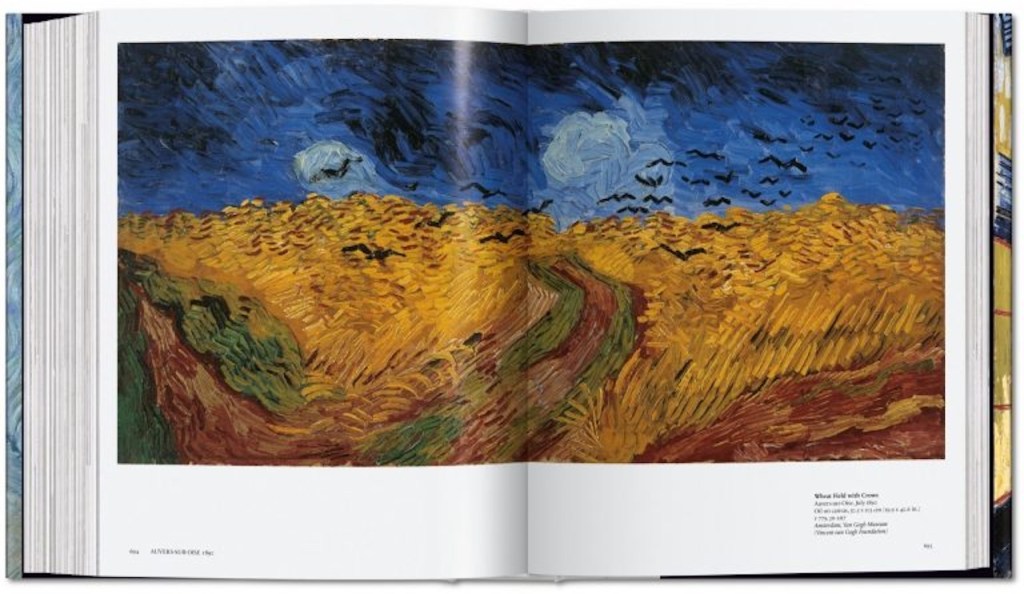
    Image:   Van Gogh: The Complete Paintings

    Essays: Poems and Songs with Commentaries

    This room in my literary home holds links to poems primarily written by others along with my personal commentaries on the poems.   Some of these additions include commentaries that appear on HubPages.

    Thank you for visiting my literary home.  Questions, comments, and suggestions offered in good faith are always welcome.

    Poems with Commentaries

    1. Sterling A. Brown’s “Southern Cop”
    2. Barack Obama’s “Pop”
    3. Barack Obama’s “Underground”
    4. Malcolm M. Sedam’s “The Hill Maiden”
    5. W. B. Yeats’ “The Second Coming”
    6. Al Gore’s “One thin September soon”
    7. W. H. Auden’s “Doggerel by a Senior Citizen”
    8. Gloria’s “To the Man I Married”  
    9. Sharon Olds’ “The Victims”
    10. Ben Okri’s Poem “Obama”
    11. Ella Wheeler Wilcox’s “The Queen’s Last Ride”
    12. Audre Lorde’s “Father Son and Holy Ghost”
    13. Seamus Heaney’s “Whatever You Say, Say Nothing”
    14. Walter de la Mare’s “Silver”
    15. Henry Wadsworth Longfellow’s “Christmas Bells”
    16. Henry Wadsworth Longfellow’s “A Psalm of Life”  
    17. D. H. Lawrence’s “Afternoon in School: The Last Lesson”
    18. Paul Laurence Dunbar’s “Sympathy” 
    19. Robert Bly’s “The Cat in the Kitchen” and “Driving to Town Late to Mail a Letter” 
    20. Thomas Thornburg’s “Serving the South”
    21. Sara Teasdale’s “Barter
    22. Sylvia Plath’s “Mirror” 
    23. Renée Nicole Macklin’s “On Learning to Dissect Fetal Pigs”
    24. Sara Teasdale’s “I Am Not Yours”
    25. Cornelius Eady’s “Renée Nicole Good Is Murdered”  
    26. Malcolm M. Sedam’s “Desafinado” 
    27. Walt Whitman’s “When Lilacs Last in the Dooryard Bloom’d”
    28. Thomas Gray’s “Elegy Written in a Country Churchyard”
    29. Amanda Gorman’s “For Renee Nicole Good”  
    30. Robert Hayden’s “Those Winter Sundays”
    31. Alfred, Lord Tennyson’s “Come not, When I Am Dead”
    32. E. A. Robinson’s “Richard Cory”

    Songs with Commentaries

    1. Gary Clarks’s “Mary’s Prayer”: A Yogic Interpretation 
    2. .38 Special’s “Second Chance”