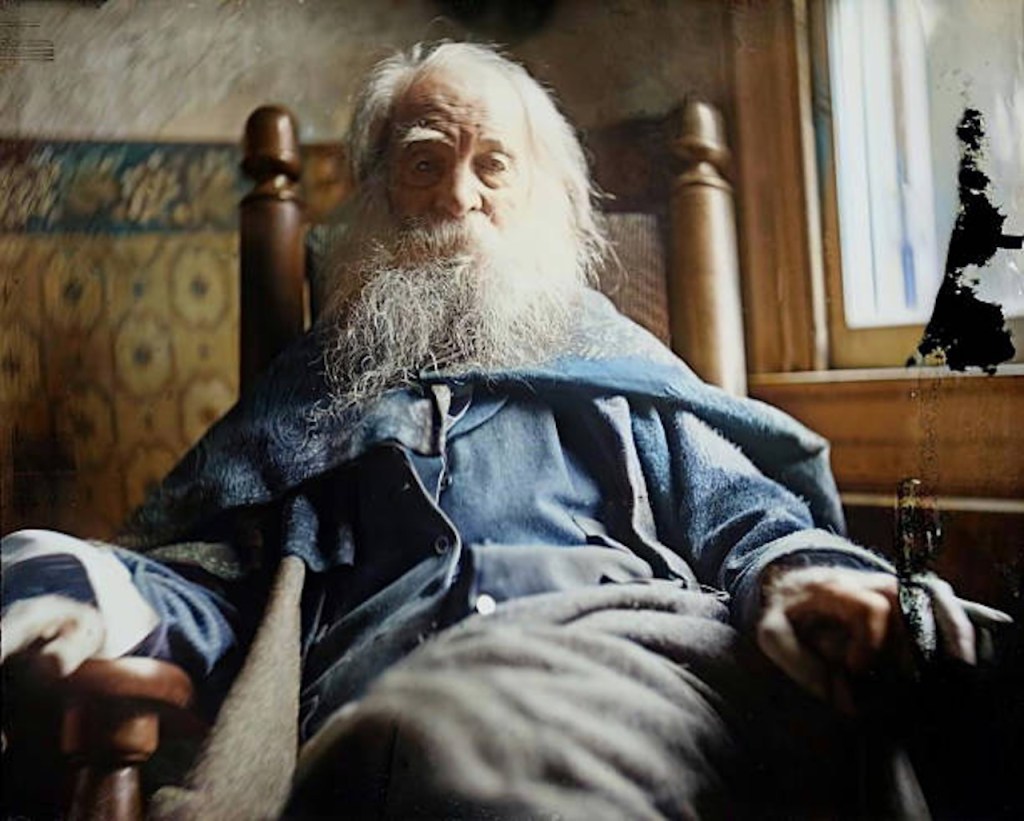
Image: Walt Whitman in Camden, N.J., c. 1891. (Colorised black and white print). Creator: Thomas Eakins. (Photo by Heritage Art/Heritage Images via Getty Images)
Walt Whitman’s “Miracles”
In Walt Whitman’s “Miracles,” the speaker catalogues all the miracles he finds as he goes through life, concluding that he has encountered nothing but miracles.
Introduction and Text of “Miracles”
Walt Whitman’s “Miracles” consists of three versagraphs. (Please note: “Versagraph” is a term I coined; it is the conflation of “verse paragraph,” the primary unit of free verse poetry.)
The first versagraph features a long catalogue for which Whitman is noted, in which he begin his display of miracles. The second reinforces his notion that everything in creation is a miracle, and the third takes special note of the miracle of the ocean.
The poem begins and ends with a question that rhetorically, as usual, answers itself. The speaker wishes to assert and defend the idea that all aspects of creation are, in fact, miracles, not just the so-called supernatural events that are often touted as miraculous.
The speaker intuits that anything that seems supernatural is merely not yet understood. By claiming that everything from a fish to a man is a miracle, he transcends the mundane notion that divides humanity as it strives to discern what is holy and what is not.
Miracles
Why! who makes much of a miracle? As to me, I know of nothing else but miracles, Whether I walk the streets of Manhattan, Or dart my sight over the roofs of houses toward the sky, Or wade with naked feet along the beach, just in the edge of the water, Or stand under trees in the woods, Or talk by day with any one I love—or sleep in the bed at night with any one I love, Or sit at table at dinner with my mother, Or look at strangers opposite me riding in the car, Or watch honey-bees busy around the hive, of a summer forenoon, Or animals feeding in the fields, Or birds—or the wonderfulness of insects in the air, Or the wonderfulness of the sun-down—or of stars shining so quiet and bright, Or the exquisite, delicate, thin curve of the new moon in spring; Or whether I go among those I like best, and that like me best—mechanics, boatmen, farmers, Or among the savans—or to the soiree—or to the opera, Or stand a long while looking at the movements of machinery, Or behold children at their sports, Or the admirable sight of the perfect old man, or the perfect old woman, Or the sick in hospitals, or the dead carried to burial, Or my own eyes and figure in the glass; These, with the rest, one and all, are to me miracles, The whole referring—yet each distinct, and in its place.
To me, every hour of the light and dark is a miracle, Every cubic inch of space is a miracle, Every square yard of the surface of the earth is spread with the same, Every foot of the interior swarms with the same; Every spear of grass—the frames, limbs, organs, of men and women, and all that concerns them, All these to me are unspeakably perfect miracles.
To me the sea is a continual miracle; The fishes that swim—the rocks—the motion of the waves—the ships, with men in them, What stranger miracles are there?
Commentary on“Miracles”
Whitman’s speaker in “Miracle” is cataloguing all the miracles he finds as he goes through life, concluding that he has encountered nothing but miracles.
First Versagraph: The Supernatural
Why! who makes much of a miracle? As to me, I know of nothing else but miracles, Whether I walk the streets of Manhattan, Or dart my sight over the roofs of houses toward the sky, Or wade with naked feet along the beach, just in the edge of the water, Or stand under trees in the woods, Or talk by day with any one I love—or sleep in the bed at night with any one I love, Or sit at table at dinner with my mother, Or look at strangers opposite me riding in the car, Or watch honey-bees busy around the hive, of a summer forenoon, Or animals feeding in the fields, Or birds—or the wonderfulness of insects in the air, Or the wonderfulness of the sun-down—or of stars shining so quiet and bright, Or the exquisite, delicate, thin curve of the new moon in spring; Or whether I go among those I like best, and that like me best—mechanics, boatmen, farmers, Or among the savans—or to the soiree—or to the opera, Or stand a long while looking at the movements of machinery, Or behold children at their sports, Or the admirable sight of the perfect old man, or the perfect old woman, Or the sick in hospitals, or the dead carried to burial, Or my own eyes and figure in the glass; These, with the rest, one and all, are to me miracles, The whole referring—yet each distinct, and in its place.
The speaker begins with an exclamation, “Why!,” that implies that he has just heard someone remark about some possible supernatural event that is being touted as a miracle. He then asks the question, “who makes much of a miracle?” The question is merely rhetorical because the speaker continues to answer his own question.
The speaker avers that he is not aware that there is anything in existence that is not a miracle, and he then begins a long catalogue of things he claims are miracles. It does not matter, he asserts, “whether he is walk[ing] the streets of Manhattan or merely looking toward the sky,” all he sees are miracles.
When he wades “with bare feet along the beach and stand[s] under trees in the woods,” he perceives these acts as part of the great miracle. “Sit[ting] at table at dinner with [his] mother, seeing strangers opposite [him] riding the car, watching bees and animals feeding in the fields, or birds and insects”— all these events portend the miraculous for this speaker.
This speaker also finds miracles in the sun-down and the stars shining so quiet and bright, as well as the delicate, thin curve of the new moon in spring. Whether he associates with mechanics, boatmen, farmers or the fancy people who attend the opera, he still perceives all these people to be part of the great dramatic miracle of life.
He also finds miracles in the movements of machinery and children at their sports. He admires the perfect old man, or the perfect old woman. Even sick people in hospitals, and the deceased headed for burial, he finds miraculous. When he views his own reflection in the mirror, he finds his own eyes and figure to be miracles.
The speaker finalizes his long catalogue by asserting that these things and even all those things he has not named are “one and all to me miracles.” Each miracle reflects the whole as it occupies its own space.
Second Versagraph: A Pantheistic View
To me, every hour of the light and dark is a miracle, Every cubic inch of space is a miracle, Every square yard of the surface of the earth is spread with the same, Every foot of the interior swarms with the same; Every spear of grass—the frames, limbs, organs, of men and women, and all that concerns them, All these to me are unspeakably perfect miracles.
The speaker then claims that both day and night are miracles, along with every inch of space. He emphasizes, “[e]very square yard of the surface of the earth is spread with the same.” From the soil, to the grass, to bodies of all men and women, he finds “[a]ll these to me are unspeakably perfect miracles.”
Third Versagraph: The Miracle of the Ocean
To me the sea is a continual miracle; The fishes that swim—the rocks—the motion of the waves—the ships, with men in them, What stranger miracles are there?
Almost as an afterthought the speaker asserts that to him the sea is a continual miracle with swimming fish, its rocks, the waves, and the ships that have men in them. The speaker concludes with his final question: “What stranger miracles are there?” Of course, the answer is, none.
Image: Emily Dickinson – Amherst College – Daguerrotype of the poet at age 17, circa 1847 – likely the only authentic, extant likeness of the poet
Emily Dickinson’s “The Soul’s distinct connection”
The speaker in Emily Dickinson’s “The Soul’s distinct connection” reveals that immortality is suddenly disclosed through shock and danger experiences.
Introduction and Text of “The Soul’s distinct connection”
The speaker presents “The Soul’s distinct connection” as a compressed American-Innovative lyric exploring spiritual perception. Its short lines and slant rimes create a sudden movement from idea to visionary image. The speaker suggests immortality is not gradual knowledge but a flash of direct awareness.
The speaker frames immortality as something revealed through sudden crisis rather than gradual understanding. The structure anticipates a metaphysical shock that disrupts ordinary perception.
The Soul’s distinct connection”
The Soul’s distinct connection With immortality Is best disclosed by Danger Or quick Calamity –
As Lightning on a Landscape Exhibits Sheets of Place – Not yet suspected – but for Flash – And Click – and Suddenness.
Commentary on “The Soul’s distinct connection”
The speaker frames immortality as something revealed through sudden crisis rather than gradual understanding. The structure anticipates a metaphysical shock that disrupts ordinary perception. Her vision aligns with Paramahansa Yogananda’s teaching that immortality is perceived through sudden inner awakening beyond ordinary awareness.
First Stanza: The Soul and Immortality
The Soul’s distinct connection With immortality Is best disclosed by Danger Or quick Calamity –
In the first stanza, the speaker defines a direct relationship between the soul and immortality, presenting the connection as inherent rather than acquired, embedded within the very structure of consciousness itself. This connection is not continuously visible in ordinary perception, but it becomes evident when danger or sudden calamity interrupts the expected flow of life and thought.
Paramahansa Yogananda explains that the soul perceives immortality most clearly when the mind is startled into higher awareness beyond sensory routine, allowing intuitive consciousness to rise above temporal limitation enabling perception of immortality as immediate experience rather than abstract belief grounded in time-bound reasoning.
In the phrase “Danger / Or quick Calamity,” the speaker emphasizes the disruptive force required to awaken spiritual perception, suggesting that only extreme interruption can break habitual mental patterns.
On my literary website Linda’s Literary Home, I have discussed the fact that Dickinson often uses shock imagery to reveal hidden spiritual states, where disruption becomes a gateway to deeper awareness of the soul.
Here the speaker suggests that spiritual awareness emerges when normal continuity is broken, forcing consciousness into a heightened state of perception that resembles awakening from illusion aligning consciousness with a sudden intuitive shift beyond habitual cognition.
Second Stanza: Soul Suddenness
As Lightning on a Landscape Exhibits Sheets of Place – Not yet suspected – but for Flash – And Click – and Suddenness.
In the second stanza, the speaker uses lightning as the central image to describe how spiritual perception suddenly reveals the hidden structure of reality, revealing perception as a sudden cognitive rupture rather than a gradual interpretive process unfolding in time.
This revelation is not gradual but instantaneous, exposing “Sheets of Place” across the landscape of experience implying hidden dimensionality within ordinary perception itself.
Paramahansa Yogananda explains that divine insight often arrives like a flash of lightning, dissolving mental obscurity and awakening superconscious awareness where consciousness transcends linear reasoning and enters intuitive cognition.
The speaker suggests that reality is composed of layers that are normally invisible, only becoming apparent when perception is abruptly illuminated suggesting that ordinary awareness conceals deeper structures until disrupted by sudden insight.
On my literary website Linda’s Literary Home, I have noted that Dickinson compresses vast metaphysical ideas into brief, electric imagery that mimics sudden spiritual awakening where brevity intensifies metaphysical meaning through concentrated symbolic expression that emphasizes non-linear cognition characteristic of mystical experience.
This structure mirrors mystical experience, where understanding arrives all at once rather than through linear reasoning reinforcing the immediacy of perception as a sudden cognitive awakening beyond temporal sequence, dissolving fragmentation into unified awareness that transcends sensory division aligning sensory faculties into a single integrated perception of truth.
The imagery of flash and click emphasizes immediacy, suggesting a sudden recognition of truth that cannot be delayed or extended over time emphasizing that spiritual understanding arrives as a decisive moment rather than gradual accumulation.
Paramahansa Yogananda explains that when consciousness rises above sensory limitation, truth is perceived as a single unified moment of clarity marking transformation from illusion to awakened recognition within consciousness.
The speaker frames this experience as both visual and auditory, merging perception into one unified spiritual event where poetic compression mirrors expanded metaphysical insight through condensed language.
Image: Emily Dickinson – Amherst College – Daguerrotype of the poet at age 17, circa 1847 – likely the only authentic, extant likeness of the poet
Emily Dickinson’s “When Roses cease to bloom, Sir”
Emily Dickinson’s “When Roses cease to bloom, Sir” features prominently a surprising demand of the Divine Belovèd Creator. The Dickinsonian speaker always holds in great reverence and regard the Creator of the cosmic universe and all of earthly nature.
Introduction with Text of “When Roses cease to bloom, Sir”
Emily Dickinson’s poem, “When Roses cease to bloom, Sir,” demonstrates the poet’s depth of scientific knowledge of the world as well as her insight into the spiritual significance that such scientific knowledge implies for human evolution.
The poem features prominently a surprising demand of the Divine Belovèd Creator. The Dickinsonian speaker always holds in great reverence and regard the Creator of the cosmic universe and all of earthly nature.
She dramatizes in poetic form her physical world observations to reveal her awareness of the Divine Creator’s existence both within the natural world and outside of that natural world, extending into the realm of spirit.
The octave is structured by a “when-then” time sequence: when one thing happens, then the other may be expected to happen or may be desired to happen. In this poem, the structure adds a complex sub-feature to the equation.
Not only is the speaker offering a “when” structure that encompasses three natural phenomena of plant and animal kingdom activity, but she is also adding a third element from the human realm to the “when” clause.
The speaker has thus inserted herself into the narrative in an unobtrusive way through the employment of the synecdochic”hand.” After setting up the “when” application, she engages her own action and then offers the second half of the “when-then” function.
That “then” application, however, delivers a subtle demand of the Belovèd Creator—one that may at first appear somewhat shocking but yet remains comprehensible and infinitely appropriate.
When Roses cease to bloom, Sir
When Roses cease to bloom, Sir, And Violets are done – When Bumblebees in solemn flight Have passed beyond the Sun – The hand that paused to gather Upon this Summer’s day Will idle lie – in Auburn – Then take my flowers – pray!
“When Roses cease to bloom, Sir” rendered in song
Commentary on “When Roses cease to bloom, Sir”
Emily Dickinson’s “When Roses cease to bloom, Sir” demonstrates the poet’s depth of knowledge of the science of the evolutionary progress, as well as her insight into the spiritual significance that such knowledge suggests for the human mind and heart on its path through evolutionary advancement.
First Movement: Emphasis on Beauty
When Roses cease to bloom, Sir, And Violets are done –
The speaker begins the “when” function by addressing the Divine Ineffable Reality. She suggests that she will be asking for some favor after flowers have come and gone. She allows “Roses” and “Violets” to represent all natural vegetation, which would include all plants growing in the fields, along the streets, and in her own vegetable garden.
By allowing only two lovely flowers to represent all of the plant kingdom, the speaker is demonstrating her emphasis on her love of beauty. The speaker then demonstrates that she is including both domesticated plants—roses, and those that continue to grow wild—violets.
The Blessèd Author of creation as well as the speaker’s listeners/readers are invited to observe that the speaker keeps her mind firmly on her goal, her own creation of beauty and engagement in health and wholesomeness.
Second Movement: Evolution from Plant to Animal
When Bumblebees in solemn flight Have passed beyond the Sun –
The speaker then turns to the animal kingdom, allowing the simple bumblebee to represent that kingdom. The “Bumblebees” have engaged in “solemn flight” and like the roses and violets are now passing out of existence.
Unlike the rose that “cease[s] to bloom” and the violet whose passing out of existence is qualified as merely “done,” the bee, an evolutionarily higher-stationed member of the animal kingdom, “pass[es] beyond the Sun.”
The speaker makes the distinction between the two kingdoms in this marvelously ingenious way–how they cease their summer sojourn. As flowers simply pass away by simple cessation, the bees have engaged in the physical act of moving, which is denied plants rooted to the earth; thus, the speaker creates the bees’ metaphorical passing beyond light.
Even though the souls of all those creatures remain distinct entities in the mind of their Creator, they express in very different ways according to their current incarnation on earth, representative of their individual and collective karma. It is only natural that the higher evolved bee would demonstrate an ability beyond that of the lower plant world.
And the speaker’s ability to place this distinction in such a minimalist setting demonstrates this speaker’s understanding regarding the existence of the hierarchy to which earthly creatures remain attached until their final liberation. All created beings must pass through this hierarchical system on their way from lowest to highest form on the evolutionary scale.
Third Movement: The Human in Creation
The hand that paused to gather Upon this Summer’s day
The speaker has now quit her focus on the plant and animal kingdoms and is focusing on the simple human feature of a “hand,” a synecdochic representative of the human physical encasement.
That hand pauses. Instead of moving to pluck and collect those flowers before they are gone, this hand leaves them in place. Instead of shooing away the bees, the speaker simply takes the measure of their movement, while fashioning the observation that distinguishes the flowers from the bees.
All summer long, the speaker has observed the bees extracting nectar from the flowers. The relationship between the flowers and the nectar-gathering bees has impressed upon the mind of the speaker the symbiotic relationship that exists in nature and that extends to the human being as an integral part of that natural scenario.
But the speaker now holds her request of the Divine Creator until she has described her own situation, her own participation in the drama that she has created in the garden of her mind, heart, and soul.
Her poetic garden contains multitudes, and the ability to grow metaphorical, metaphysical flowers, bees, human hands remains her greatest challenge and strongest ability.
Fourth Movement: The Metaphysical Garden of Verse
Will idle lie – in Auburn – Then take my flowers – pray!
That human hand that pauses does so to continue its construction of her own metaphysical, poetic creation—that original garden into which she had early on invited her brother to visit.
After that hand becomes “idle,” it will cease creating those metaphysical flowers and those metaphysical bees. Therefore, the speaker then demands of the Belovèd “Sir” that He “take [her] flowers”—adding for emphasis, “pray!”
After the speaker herself has ceased blooming and flying beyond the sun and pausing from the labor of metaphorical, metaphysical garden creation, her physical form will exist like a bug in amber and become unresponsive and “lie – in Auburn.” Thus, the clever speaker is requesting through a strong demand that the Divine Gardener accept her metaphysical flowers.
Such a demand may seem infinitely cheeky of a mere created child of the Master Creator of the Cosmos, but the speaker has demonstrated repeatedly that she remains steadfast in her devotion and confident in her ability to create flowers—offerings—that are acceptable to a most discriminating Divine Creator.
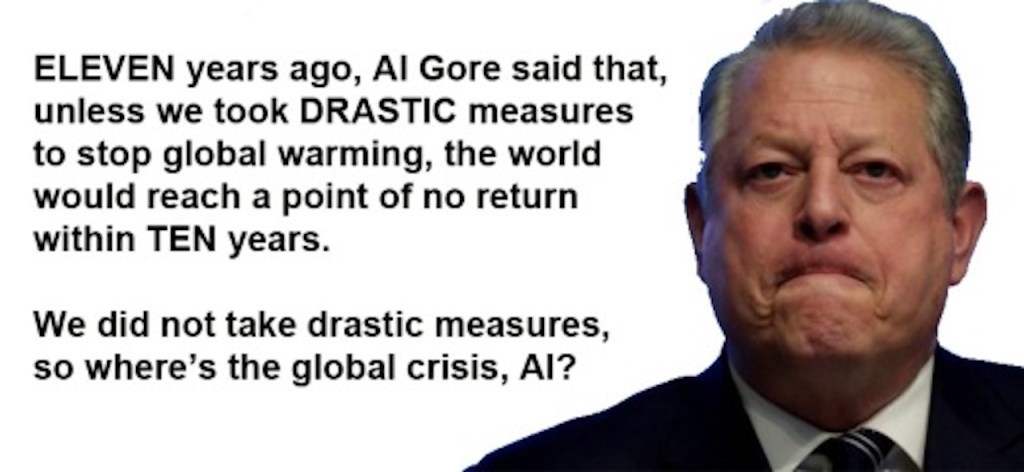
Climate change alarmist Al Gore joked to his publisher that W. B. Yeats had penned the so-called poem “One thin September soon” in Gore’s latest book; sadly, the publisher seemed to fall for it, before Gore admitted to scribbling it.
Introduction with Text of “One thin September soon”
The former vice-president’s untitled piece appears in his book, Our Choice: A Plan to Solve the Climate Crisis, which purportedly offers the antidote to “global warming.” Al Gore’s untitled verse is chopped up into seven three-line sets, which may charitably be labeled tercets.
In this farcical piece of doggerel, the AGW (anthropogenic global warming) fanatic has his speaker pontificate from the position of a shepherd, who is crying to the world about the impending doom that human mankind is bringing on the world through the use of fossil fuels.
Through his many pontifications and written tracts on the politically fabricated issue of global warming, the former failed presidential candidate shows that he fancies himself a kind of modern-day John-the-Baptist crying in the wilderness, which is growing hotter and drier year after year, despite the fact that there has been no “warming” since the mid-1990s [1].
And now temperatures have actually started to cool [2], according to official NASA global temperature data.
Never mind the inconvenient facts, Gore heralds his speaker to bark loudly about the concocted problem and to offer his saintly wisdom in his untitled “poem”—wonder when Gore will publish a collection of his poetry. Likely, never. It seems that the political gasbag has penned only one “poem” which barely qualifies as doggerel.
One thin September soon
One thin September soon A floating continent disappears In midnight sun
Vapors rise as Fever settles on an acid sea Neptune’s bones dissolve
Snow glides from the mountain Ice fathers floods for a season A hard rain comes quickly
Then dirt is parched Kindling is placed in the forest For the lightning’s celebration
Unknown creatures Take their leave, unmourned Horsemen ready their stirrups
Passion seeks heroes and friends The bell of the city On the hill is rung
The shepherd cries The hour of choosing has arrived Here are your tools
Supposedly well read in scientific literature, climate alarmist Al Gore gets the science of the Earth wrong as he has his speaker claim to be “crying in the wilderness” like some modern day John-the-Climate-Change-Baptist.
First Tercet: Beginning with a Fantasy
One thin September soon A floating continent disappears In midnight sun
Gore’s speaker begins his piece by asserting that soon one of these Septembers—and it will be a “thin” September, not like the usual thick Septembers—the midnight sun will embrace the disappearance of a continent that floats.
This first assertion presents several problems:
it must be referring only to the continents at the Earth’s extreme north and south;
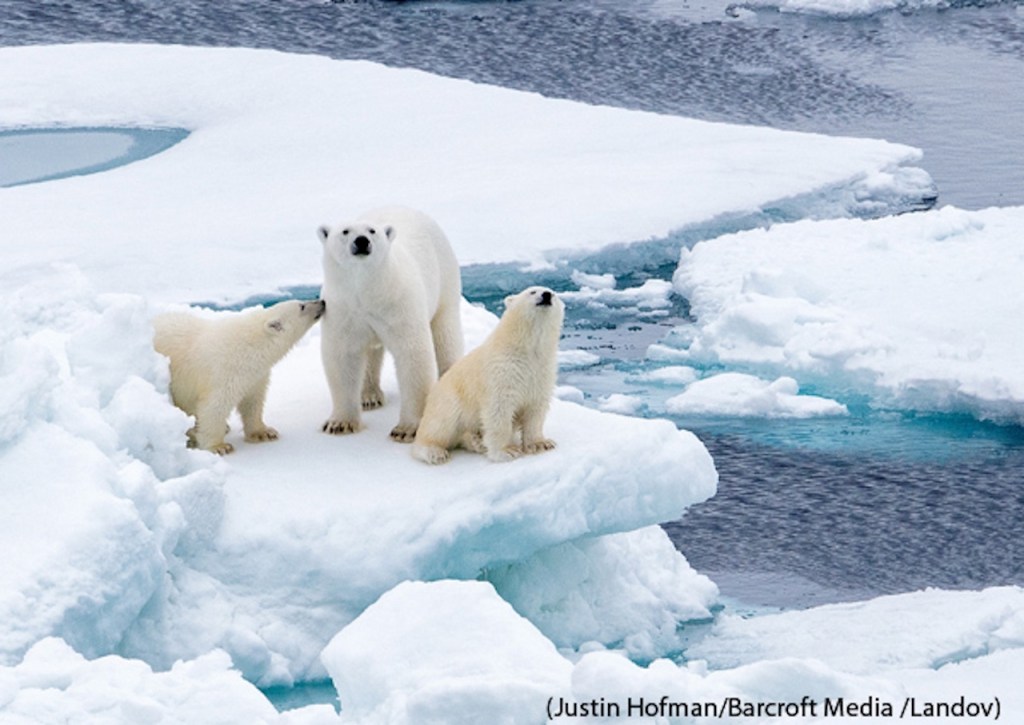
floating continents [3] exist only in fantasy [4],
he has to be referring to Antarctica because the Arctic is not a continent at all;
the midnight sun refers to a phenomenon that occurs in summer at each pole when the sun does not set.
For the midnight sun reference, the speaker has to be referring to the non-continent Arctic because he names the month of September. There is midnight sun in the first three weeks of September at the North Pole but not at the South, whose summer is from December 22 to March 21.
This confusion of poles gets the verse off to an inauspicious start.
On the one hand, the reader might remember that the composer of this pigswill is a man who is supposedly steeped in scientific studies in support of his global warming theory; yet, he engages a non-scientific fantasy and confuses the facts regarding activities at the Earth’s poles.
On the other hand, if one considers Gore’s academic accomplishment in the study of science —”According to his Harvard transcript, he earned a D in natural science his sophomore year”—[5], his error-prone nonsense makes perfect sense.
Second Tercet: The Conundrum of Postmodern Claptrap
Vapors rise as Fever settles on an acid sea Neptune’s bones dissolve
According to global warming proponents, ocean waters are becoming acidic because of the lethal effects that the warming is having on various sea creatures, including coral and urchins. Gore’s speaker refers to these sea creatures as Neptune’s bones that are dissolving.
The absurd conflation of the bones of a mythological god and sea creatures bends the piece to the frowziness of postmodernism, where nothing matters because nothing makes sense anyway. Yet this man of hard science wants to influence politicians and governments to make policies that will affect all citizens worldwide.
Third Tercet: A Pile of Images
Snow glides from the mountain Ice fathers floods for a season A hard rain comes quickly
Because of the warming, snows begin to loosen and slide down mountains while melting ice gluts the ocean, and then the rains begin, those horrid rains! And they are “hard” [6] rains—recall that other noted poetaster/plagiarist Bob Dylan [7].
The politician-cum-poetaster then makes those three claims of the melting that the earth is enduring: all obviously caused by the heat, all slapped together without punctuation or conjunction, possibly because everything is happening almost simultaneously. As the snow and ice suddenly become a hard rain, the reader might then suspect the prompt need of an ark.
Fourth Tercet: As Lightning Celebrates
Then dirt is parched Kindling is placed in the forest For the lightning’s celebration
However, the next scene takes the reader to dry land where dirt is parched, and out of the blue, someone has placed small slips of wood in a forest where lightning can catch them to flame as it celebrates.
The doggerelist does not reveal who placed that “[k]indling” in the forest so that lightning could set it aflame for its celebration. Why, one might wonder, would lightning be “celebrating” anyway? But by now the gentle reader has become aware that taking anything in this piece seriously is a fool’s errand.
Fifth Tercet: Getting Ready for the Apocalypse
Unknown creatures Take their leave, unmourned Horsemen ready their stirrups
There are many species of animals on Antarctica, but Gore’s speaker chooses to claim that they are unknown as they “[t]ake their leave.” It seems that such a situation would merit some drama, instead of the faint, euphemistic “take their leave.”
But then they are unmourned. He, no doubt, would at least have them be mourned, despite their being unknown. Perhaps the most bizarre and useless line in the entire piece is, “Horsemen ready their stirrups.” There seems to be no reason for that line, for it connects to nothing.
And if the bizarre notion of an allusion to the “Four Horsemen of the Apocalypse” springs to mind, it will offer no resolution of any kind. The Book of Revelation has suffered many absurd interpretations, and if Gore’s speaker is attempting to add another, it results in the lamest of the lame.
Sixth Tercet: A Gorean City on the Hill
Passion seeks heroes and friends The bell of the city On the hill is rung
The brave shepherd is passionately seeking others who will help him get his message out, that the earth is becoming a scorched, iceless dustbowl with the oceans rising. The speaker/shepherd now credits himself for ringing that all important bell in that all important place—that “city / On the hill.” The solipsism of this piece is nausea invoking.
Could the city on the hill be that same place to which President Ronald Reagan [8] referred?
A troubled and afflicted mankind looks to us, pleading for us to keep our rendezvous with destiny; that we will uphold the principles of self-reliance, self-discipline, morality, and, above all, responsible liberty for every individual that we will become that shining city on a hill.
It is likely that Gore’s speaker does, in fact, refer to that same place, but for very different reasons, for the policies thus far suggested to stop global warming would stifle the individualism and freedom of all world citizens, especially those in Third-World nations.
Seventh Tercet: The Shepherd Handing Over the Tools
The shepherd cries The hour of choosing has arrived Here are your tools
In the final three-line set, Gore’s speaker reports that he, as this good crying shepherd, is telling his listeners that the time for action is at hand, and he has hereby come to hand to them all the tools they need.
This self-important, junk-science spewing “shepherd” is offering in his new book the necessary “tools” that his sheep will need as they waddle with him down this fantastical path to an Earth-saving global temperature. Whatever that is?
(Please note: On Amazon, Fredrick P. Wilson, in his comment, “Ugly, Economically Disastrous, Green Choices,” offers a useful review of Gore’s book, Our Choice: A Plan to Solve the Climate Crisis.)
Sources
[1] Prof. Don J. Easterbrook. “Global Cooling is Here.” Global Research. November 2, 2008.
The Problem of Race: Junk Science, Faulty Metaphor
Scientists have revealed the fallacy of employing race to classify human beings. Still, the metaphor of color remains a strong societal force. Prejudice requires no reason—only willingness to believe despite evidence. Thus the metaphor of color continues to influence human relationships and cheapen the culture.
The Junk Science of Race
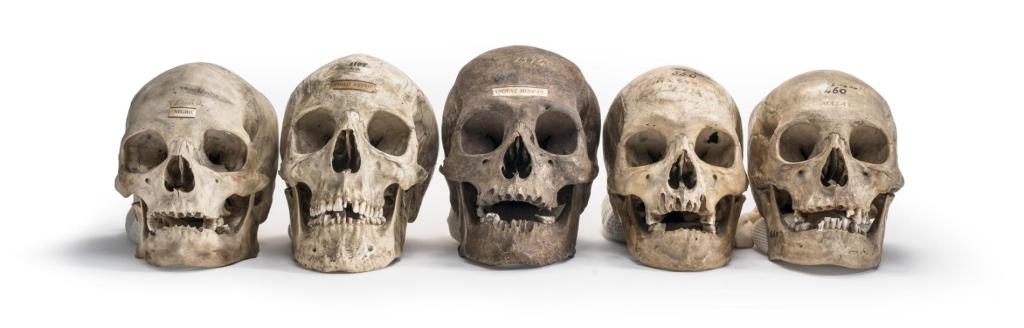
Early in the nineteenth century, Samuel Morton, a Philadelphia physician, who was considered an important scientist, formulated the theory of “race” based on his collection of skulls.
Skulls from the collection of Samuel Morton, the father of scientific racism, illustrate his classification of people into five races—which arose, he claimed, from separate acts of creation. From left to right: a black woman and a white man, both American; an indigenous man from Mexico; a Chinese woman; and a Malaysian man. —Photo by Robert Clark, Penn Museum
Measuring the skulls, Morton called his procedure “craniometry” and claimed that this procedure determined that there are five races, and each race represented a different level of intelligence:
Caucasians (white) stood at the top of Morton’s hierarchy
Mongolians (yellow) came second
Southeast Asians next (olive), followed by
American Indians (aka Native Americans) (red) with
Ethiopians (black) bringing up the rear and the lowest level of intelligence.
Morton’s racial classifications along with their intelligence markers that placed whites at the top and blacks at the bottom found favor with promoters of slavery in the United States before the American Civil War (1861-1865).
According to Paul Wolff Mitchell, an anthropologist at the University of Pennsylvania, “[Morton’s race theory] had a lot of influence, particularly in the South.”
Morton’s pernicious legacy stemmed from the lack of scientific knowledge at the time regarding human DNA and how physical characteristics are passed on from one generation to the next. Upon Morton’s death in 1851, the Charleston Medical Journal in South Carolina lauded the doctor for “giving to the negro his true position as an inferior race.”
Nearly two centuries later, through the many gains in scientific knowledge, scientists have debunked Morton’s theory, and currently he is considered to be the “father of scientific racism”:
To an uncomfortable degree we still live with Morton’s legacy: Racial distinctions continue to shape our politics, our neighborhoods, and our sense of self. This is the case even though what science actually has to tell us about race is just the opposite of what Morton contended. [1]
The Human Genome
In June 2000, at a groundbreaking announcement ceremony in the White House Rose Garden, scientists Francis Collins and Craig Venter revealed that “the completion of a draft sequence of the human genome” had been accomplished.
The project’s purpose was to aid in understanding the nature of human biology in order to assist public health and medical professionals in preventing and treating diseases. Additionally, on the issue of race, Dr. Venter reported the following:
On that day Venter and Collins emphasized that their work confirmed that human genetic diversity cannot be captured by the concept of race and demonstrated that all humans have genome sequences that are 99.9% identical. …Venter said “the concept of race has no genetic or scientific basis.” [2]
Scientists Call for Race Categories To Be “Phased Out”
Regarding the concept of race, Michael Yudell, professor of public health at Drexel University claims,
It’s a concept we think is too crude to provide useful information, it’s a concept that has social meaning that interferes in the scientific understanding of human genetic diversity and it’s a concept that we are not the first to call upon moving away from. [3]
As Professor Jan Sapp, Biology Department at York University, Toronto, has stated, “Science has exposed the myth of race.”
In his review of two recent books on the issue, Race?: Debunking a Scientific Myth, by Ian Tattersall and Rob DeSalle, and Race and the Genetic Revolution: Science, Myth, and Culture, edited by Sheldon Krimsky and Kathleen Sloan, Professor Sapp offers the following summary of the two works:
Although biologists and cultural anthropologists long supposed that human races—genetically distinct populations within the same species—have a true existence in nature, many social scientists and geneticists maintain today that there simply is no valid biological basis for the concept. The consensus among Western researchers today is that human races are sociocultural constructs. Still, the concept of human race as an objective biological reality persists in science and in society. It is high time that policy makers, educators and those in the medical-industrial complex rid themselves of the misconception of race as type or as genetic population. (4)
Many contemporary scientists are insisting that “racial categories are weak proxies for genetic diversity” and are calling for categories on race to be “phased out.” The scientific community, including those associated with the Human Genome Project and other geneticists point out that most of the US population are immigrants from various “homelands.”
Thus, describing groups of people becomes a complex task. And they insist that “race”—that is, grouping folks as Caucasian, Asian or African—is not scientifically useful:
the most immediately obvious characteristic of “race’ is that describing most of us as Caucasian, Asian or African is far too simple. Despite attempts by the US Census Bureau to expand its definitions, the term “race” does not describe most of us with the subtlety and complexity required to capture and appreciate our genetic diversity. Unfortunately, this oversimplification has had many tragic effects.
Thus, these scientists are calling for the U.S. National Academies of Sciences, Engineering and Medicine to assemble a group of experts in biology and social science to study the issue and formulate a better concept for addressing the useless racial category that interferes with research in genetics [5].
Ashley Montagu’s Man’s Most Dangerous Myth: The Fallacy of Race
After earning a PhD in anthropology at Columbia University in 1936, widely noted scientist Ashley Montagu studied Australian aboriginal culture and in 1949 founded and chaired the anthropology department at Rutgers University. But Montagu had written and published his seminal work, Man’s Most Dangerous Myth: The Fallacy of Race, in 1942.
The following excerpt from that work demonstrates Montagu’s reasoning in determining that race is a social construct rather than a scientific fact:
As far as research and observation have been able to prove, the chromosome number of all the human races is the same, and all of the five, seven, or ten races (depending on who we follow) are inter-fertile. The blood of all races is built of the same pattern of agglutinins and antigens, and the appropriate blood type from one race can be transfused into any other without untoward effect. Thus in spite of the questionable physical differences between groups of people, an imposing substrate of similarity underlies these differences.
Montagu’s work was so controversial at the time that academia turned against him, but his ideas have influenced succeeding generations of scientists [6].
Even though “race” remains a strong societal influence, especially for those who have managed to gain financially through identity politics and political correctness, the world of hard science continues to unearth examples of the dangers of relying on race as reality in distinguishing differences between and among human beings.
The Faulty Metaphor of Color
The poetic device “metaphor” is employed mostly by poets in their poems. A metaphor says that one thing is another very different thing for literary effect, for example, Robert Frost’s speaker in his poem “Bereft” describes the activity of leaves with the following metaphor:
Leaves got up in a coil and hissed Blindly struck at my knees and missed.
Frost is metaphorically saying that leaves are a snake. But no human being has ever insisted that “leaves” are the same as “snakes,” yet that is exactly what has happened to the metaphor of color.
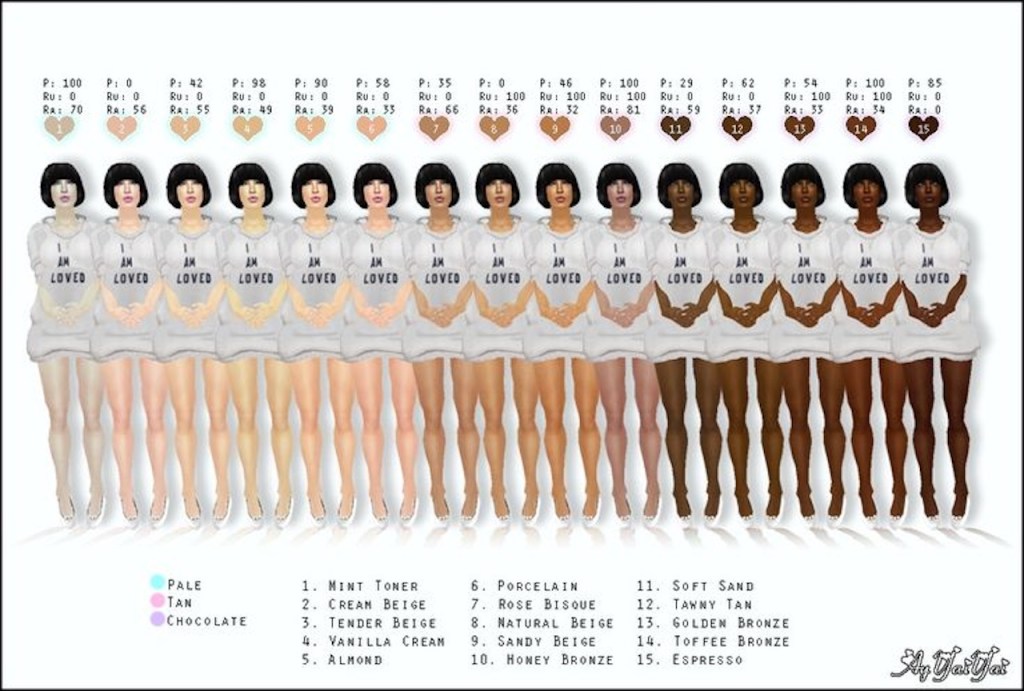
Science is demonstrating more and more clearly that there is only one “race”—the human race, and I would like to offer the suggestion that, after the metaphor of color has been correctly interpreted, it becomes obvious that there is only one skin color: brown, ranging from light brown to dark brown.
The various skin “colors”—white, yellow, red, olive, and black—are only exaggerations of the actual shades, hues, and tones of human skin. This exaggeration functions in the current vernacular as a metaphor. Human skin is never literally “white,” “black,” “red,” “olive,” or “yellow.”
From so-called “white Caucasians” to supposedly “black Africans,” the range of skin tones may resemble the color of winter grass to a deep chocolate, but no human being ever appears with skin that can be described literally by the prevailing metaphor of colors.
Skin Color: An Insidious Classification
Possibly influenced by Samual Morton’s 5-race theory, the currentrace count usually stands at three: Caucasoid, Mongoloid, and Negroid [7]. But identifying members of each of these so-called races becomes impossible, as many scientists have asserted.
The most insidious as well as the most popular quality used in the attempt to classify human beings according to race is skin tone: black, white, yellow, red, olive. Yet, as I suggest, there is not one single individual on this planet whose skin color is literally black, white, yellow, red, or olive.
The skin color of all human beings, that is, members of the only true scientific race—”human race, homo sapiens“— is brown: from light brown, metaphorically called “white” to dark brown, metaphorically called “black.”
And all shades, hues, and tones in between, some of which are metaphorically called “yellow,” “red,” and sometimes “olive.” Even the lightest skin tone is not literally “white,” and the darkest “skin tone” is not literally black.
The Equator and Skin Tone
The closer the individual lives to the Equator the darker the skin tone. This fact is common sense. The stronger the sun’s rays striking the skin, the more melanin is made by the body. Melanin protects the skin from the sun:
Melanin, the skin’s brown pigment, is a natural sunscreen that protects tropical peoples from the many harmful effects of ultraviolet (UV) rays. [8]
Clearly, not all Caucasoids are “white,” that is, light brown; not all Negroids are “black,” that is, dark brown. The Mongoloid skin tone also exhibits a wide range of brown hues—none literally yellow or red.
The metaphor of color has served only to segregate and denigrate groups of people. In time, perhaps science will prevail and the metaphor of color will be interpreted to be what it is, only a metaphor.
Race Often Confused with Religion and Nationality
The terms “race” and “racism” have virtually lost meaning in current parlance [9]. However, “race” refers only to the major three classes: Caucasoid, Mongoloid, and Negroid. But as already noted, these categories of race have been debunked as non-scientific.
“Religion” refers to faith traditions of the five major world religions: Hinduism, Buddhism, Judaism, Christianity, and Islam, [10] along with the various branches that have grown from these major categories.
By recategorizing the followers of Judaism as a “race,” Adolf Hitler and the Nazis exerted their political power to exterminate their own Jewish German citizens. That redefinition and misidentification led directly to the Holocaust [11]. The fact that the Judaic ethnicity was recategorized as a “race”—and widely accepted—offers further evidence of the unreality of the racial concept.
“Nationality” refers to the region of the earth that individuals inhabit, particularly the nation or country. Again, misidentification occurs with such claims as some “whites” are “racist” against Hispanics. But “Hispanic” refers to nationality, not race.
A Hispanic may be of any of the so-called races. The country from which an individuals originate does not dictate their “race.” Both Jews and Hispanics (or Latinos, Latinas) may be of any of the race classes.
A Negroid individual may be Jewish, if Judaism is his religion, for example, the late famous singer/actor Sammy Davis, Jr., was a black man of the Jewish faith. Also any individual will be Hispanic, if he is a native of Spain or Latin America.
The confusion of race with religion and nationality reveals the fact that human classifications, as they currently exist, are inadequate because they are too often inaccurate.
As with the Hitlerian Nazis, those classifications have foisted upon humanity worldwide holocausts [12] and other pogroms [13]. If humanity must classify itself, perhaps it should be on the look out for a better criterion for classification than that of race.
Neo-Racism on the Rise
While racism was on the wane in America, especially after passage of the Civil Rights Act of 1964, a new wave of the racist plague has begun to increase, ironically becoming especially pronounced after the election of Barack Obama, America’s first black president [14].
The irony of deteriorating race relations in America after twice electing a black president speaks volumes for the insidiousness of the emphasis placed on race and skin color.
Also, the rise in popularity of race huckster Ibram X. Kendi and the fallacious ideology of critical race theory (CRT) have taken center stage in the identity politics area, turning the racial divide on its head, revising the history of racism with alarming and dangerous falsehoods.
As Christopher Rufo explains, “Kendi is a false prophet — and his religion of ‘antiracism’ is nothing more than a marketing-friendly recapitulation of the academic left’s most pernicious ideas.”
According to Kendi, “When I see racial disparities, I see racism.” Asked to define racism, he opined in a circular and tautological fashion, “a collection of racist policies that lead to racial inequity that are substantiated by racist ideas” [15].
An important rule of rhetoric is that a term cannot be defined by using the same term; thus, Kendi simply goes on a merry-go-round of word salad employing repeatedly the term he is pretending to define. He feigns a definition of “racism” by essentially saying, “Racism is racism.”
Even as Kendi has revealed himself as a lightweight in the struggle against racism, the result of identity politics taken to extremes with CRT has become the scapegoating of the “white race.”
Instead of arguing for equality for all people, CRT hucksters are demanding the abolishing of “whiteness” [16], including the goal of terminating “white” people [17], just as the Nazis attempted to wipe out the Jews.
As the so-called “white race” now becomes the target for denigration, segregation, and ultimate elimination, the unfortunate fact remains that human beings are still in the misguided process of judging, hating, and killing one another because of the misuse of a metaphor.