Image: Thomas Thornburg, Back Book Cover American Ballads
American Ballads
Published by Author House, Bloomington IN, 2009
Bag Ladies
Bag ladies are this season wearing field-jackets gleaned from K-MART shoppers and KEDS cast off by charioteers on skateboards fleeing from the cops; hooded and rope-cinched at their waists (doomed matched pairs shuffling westward). vespers et matins in their quest they toss and comb the city’s trash, each empty can discovered, cash. Sometimes drunk they will confess it, and sometimes cough the alley retching pink spittle in their sad kermess. Sometimes we talk (they ask my pardon for sifting through these things discarded) for better homes and other gardens.
Other Gardens
When children, we dreamed Of sailing to Baghdad. Hoosier gardens teemed Like Iram; Kaikobad Led Persian cavalry Down to an inland sea.
Those magic minarets Are with childhood hidden, Our children in the desert Killing children.
Serving the South
deadended on a siding in Midway, Alabama, stand 6.5 miles of RR cars. covered in kudzu and time, they stand, iron cheeks squaring their gothic mouths; they are Southern and Serve the South (hub-deep in red clay) this land, this ekkuklema of southern drama. still, it is Bike Week in Daytona, and the Lady is sold in yards from rucksacks where a tattooed mama fucks & sucks (her name is not Ramona). here will come no deus ex machina, this American South, this defeated dream. drunken, drugged, dolorous in their dementia, forbidden by Law to wear their colors, these cavaliers race their engines and scream where the marble figure in every square shielding his eyes as the century turns stands hillbilly stubborn and declares. heading back north having spent our earnings, honeyed and robbed we are fed on hatred cold as our dollar they cannot spurn, and we are in that confederate.
Poor Eddie Poe collapsed in the snow and exhaled no more in old Baltimore
Poor Mary Mallon wept o’er many a gallon of soapsuds, avoiding the cops, and typhoiding.
W. B. Yeats believed in the fates, but on Sunday in Spiritus Mundi.
. . .
Koan
Once in this journey, following the call I broke my bones falling Now I go hobbled to a distant star My shippe a heavy bar Friends come asking how we are My friends, my friends, we are alone. He who would know must break his own bones
A Ballad of My Grandfather
My grandfather was a Wobbly, sirs, And as such he was banned And blackballed from his daily bread Across your promised land.
My grandfather polished metal, sirs, And ripped his skilly hands Whenever you allowed him to Across your promised land.
My grandfather suffered somewhat, sirs, And worked till he could stand No more before your wheel; he loafs Beneath your promised land.
My father walked a picket, sirs, In nineteen-forty-five, His son beside, and with them walked His father, man alive.
That was a bitter solstice, sirs, The wind complained like ghosts, The cold struck home, the striker stood Frozen to their posts.
The people in the city, sirs, Sequestered in their hate, Supped in communal kitchens there And massed at every gate.
Consider all such service, sirs, Kindred to your time, A long apprenticeship to cast Such mettle into rime:
The pain these fathers weathered, sirs, The freedoms you forsook, Is polished into pickets here And winters in their book.
to be continued, check back for updates
Publication status of American Ballads
Copies of American Ballads are readily available on Amazon and reasonably priced at $10.99, even offered as Prime. This Amazon page features a commentary by the wife of the poet, who felt that the book deserved further description.
The Graveyard Whistler has found a new story with a complex of irony. He is rethinking his profession as literary sleuth. Captivated by the stories he finds, he remains conflicted about continuing with literature. Maybe he will give up and become a lawyer.
Fiction Alert! This story is fiction. It does not depict any real person or actual event.
Graveyard Whistler Offers Some Explanatory Remarks
Hey, hey! It’s been a while since I’ve posted.
The one titled “Literary History and the Art of Irony” brought me a ton of complaints from all the brothers and sisters who enjoy a beautiful, harmonious relationship and deeply resent that I would reveal a set of siblings who scratched at each other like cats in a clothes dryer.
My response was to delete that post, even though the subject was irony, the sibs just provided the example. But hey, I’m not in the business of alienating readers, so I just let it go. The experience did give me some food for thought.
So as I rethink my journey into the literary life, I am finding it discouraging that so many people can’t tell the difference between biography and fiction. What I mean is, a writer creating fiction does not always reveal only what is in his heart and mind: that’s why it’s called “fiction.”
The writer of fiction makes up stuff. If a writer were limited to writing only what he felt and thought, there would be no murder mysteries because only murderers have the knowledge of what it feels like to kill and what thoughts are engendered by that deplorable act.
So as I think though my dilemma, I take comfort in knowing that I will probably never become a creative writer: I write no poetry, no short stories, no plays, no novels. I just write about what poets, fiction writers, playwrights, and novelist have already written.
As I have said, I am especially interested in irony as a literary form and that’s why I wrote about the dysfunctional sibling relationship because the piece I had found had dealt with irony.
The following piece that I found, not on the Internet, but in an ancient, dusty tome at the New Chesterfield Library in Cabot Cove, Maine, features a wacky sea captain and her crew of the Blarney Barnacle, a strange seafaring vessel that ranged up and down the East coast from Maine to Georgia, sometime after the Civil War in the 1870s.
It’s a long and complicated tale but I have excerpted a spot that I found particularly interesting. It was quite a hassle having to type out text, made me very appreciative of the “cut and paste” function on modern word processors.
Without further ado, I present the story to you warts and all—meaning I have not corrected spelling or grammar errors unless they interfered too much with meaning.
The Irony of the Bones
The seas was strictly calm the night that Elizabeth Wayneright ran off from her blackhearted husband.
She hid under the technical tarp on the starboard side and was not detected until we’s way down the coast nearing on Massachusetts.
Cap’n Jane Pickwick, who as you now know, ran a tight ship-shape shippe—actually we wasn’t a shippe, we more a oversize tub but big enough to hold a crew of 9 and sometimes we’d take on passengers who need to travel down the coast.
We started out as usual, Capt. Janey, as we with affection called her, making her rounds, and her first mate, Lt. Maxine Stauttlemeyer, was checking out supplies then ran around the tub, as we with affection called our shippe. Everything in order we start her moving on down the coast.
We’s almost to Massachusetts Bay when a storm busted through, starting to bluster us about something awful. It wasn’t near so bad as it sounded, we’s all used to it and knew we’d be through it in an hour. But the stowaway, Elizabeth Wayneright musta thought we’s headed to perdition.
She came busting out flailing her arms around screaming and yelling, “Oh, God! Oh, God! We’re going to die! We’re going to die! What have I done? What have I done?”
First mate Maxy, as we with affection called her, arrived on the scene, grabbed Lizzy, as we later came to call her with affection, and got her settled own.
She brought Lizzy to Capt. Janey who asked Lizzy all manner of interrogatories, maybe taking hours on into the night.
Capt. put Lizzy in a cabin that had a cot, gave her some tea, and told her that breakfast was at 600 hours. We can only guess if Lizzy slept but next morning as we’s sailing the tub around Mass Bay, we stopped, spread out breakfast and then Lizzy told us her story.
Elizabeth Wayneright was a wife and mother, citizen from a little fishing village about a mile north of Cabot Cove, Maine. She wrote stories for newspapers and magazines. She wrote stuff she just made up, not news reports or journalist-like stuff.
She said she was doing pretty good, making a few extra bucks to help out the family. She had a husband who worked as a lumberjack and blacksmith, depending on what was busy at any given time.
They had one son, who was now grown, married, and living in Augusta, where he did some copyediting work for the state.
She said she worked as a waitress in the local pub while her son was growing up, and that’s how she got the idea to write made-up stories, listening to and talking to all the different types of folk who’d blow into town.
She said she’d been writing her stories for about ten years, sending them off to as far away as California. Said her stories had been published in the same magazine that published biggies like Samuel Clemens, aka Mark Twain.
We’s all really impressed, we hadn’t heard of her, but we did know the man Samuel Clemens, aka Mark Twain.
Going on with her story, she said everything was fine, her money helped so that when her husband couldn’t get enough work, they didn’t ever have to fall into debt or go begging on the streets. Then during a long stretch of workless days, her husband started rifling through the stories she had written.
At first, she was glad to see that he was taking an interest, something he had never done before. She felt a little concerned however because he’d read and then the rest of day not say anything. Then he’d read some more and seemed to get kind of mean toward her.
This went on for a week or so, and then he came busting into their bedroom where she sat writing, and he was shaking a magazine at her, and began to call her all sort of bad woman names, like bitch, whore, trollop.
She asked him what he’s taking about and he said it was all there in black and white. She hated him, she had bedded every stranger who came into town, and now she was planning to kill him. It was all there in black and white, he kept saying.
She tried to explain to him that those were stories she made up, she said she got ideas for those stories from listening to folks who frequented the pub where she used to waitress.
She told him she never wrote any stories about him, herself or anyone else she knew. They were all just fiction, stories she had made up.
He was having none of it. He stated ripping the pages out of the magazine, and throwing them at her. She tried again to reason with him, but again he had the goods on her it was all there in black and white.
He kept this rant up for several days, and then one night as Lizzy was cooking supper, he blasted though the door into the kitchen brandishing a knife. Whore! Trollop! What you think of this. I’ll teach you to make a fool out of Roger Blassing Wayneright.
He struck at her, leaving deep wound in her left arm. Lizzy held up her arm and sure enough a deep wound she said she wrapped up and then packed a little bag, and while Roger was sacked out after supper, she ran from their home and here she was.
We all sat, amazed, by this tale this poor woman was telling. We all said we’d think of how we could help her. She said she knew this tub went down the coast but didn’t know how far.
We told her it goes down to Savannah, Georgia. She asked if she could stay with us until then. We said we’s glad to help anyway we could.
After pulling the tub into Savannah, Lizzy clutching her little bag left the shippe, and we never heard from her again. We kept on sailing the Blarney Barnacle up and down the coast.
Then about thirty years after we’d encountered Lizzy, we all stepped out of our tub near Cabot Cove and went into the little diner where we planned to get a much needed, nearly home-cooked meal.
The place was buzzing with a strange report that was spreading through the little village. Near the old Wayneright place, some pigs has had been plugging into the dirt and unearthed a bunch of bones.
The local sheriff had sent the bones off to the capital for testing. But what grabbed us was the rumors that was buzzing about.
Some people was saying those bones was Roger Blassing Wayneright and that Elizabeth Wayneright had murdered her husband about three decade ago. They was sure it was her that done the nasty deed because one night she went missing and soon after it was discovered that Roger was also missing.
But then other folks saw it different, they said it was Elizabeth’s bones and that Roger had done his wife in. Both stories were floating around and we couldn’t tell which side was right, except for the fact that we’d carried Elizabeth Wayneright down to Savannah. We heard her story, but maybe she left out somethin’?
We had a meetin’ on the tub and tossed around the notion of telling the local authorities about seeing Elizabeth all those years ago. We voted that we should tell and so next day, we fetched ourselves to the sheriff’s office and laid out our tale.
He shocked us though and said that Elizabeth Wayneright had come back to Cabot Cove and she and Roger had patched things up and had been living pretty much a quiet life for at least the past twenty years or so.
So we asked him why the two sides of a story about those bones: some thinking Lizzy killed Roger, and some thinking Roger killed Lizzy. He said, that’s just what people in that town do. There was a third group of folks who knew that both Waynerights had moved to Augusta to be near their grandchildren.
A friend of Elizabeth, fellow writer lady of Cabot Cove who wrote under the name of Janice Baines Longstreet had kept that third group in the know about Elizabeth. So the sheriff could say for sure that those bones belonged to neither Wayneright. And to cap it off, he had funeral notices for both Roger and Elizabeth from when they lived and then died in Augusta.
We asked him why there could be three different version of the Wayneright story floating around this little village when at least two upstanding citizens knew the real skinny.
He just said, people gonna believe what they wanna believe. Don’t matter who says what. Once they choose up a side they just won’t see the other side, no matter the evidence.
Capt. Janey then put out the question we’s all wondering about. How did Elizabeth ever convince her husband that her stories were just stuff she made u? He cut her arm thinking she was going to kill him because of her stories.
The sheriff said that writer lady had a book that tried to answer that question. But he said he thought because it was a novel, it might have fudged the details a bit.
What he knew was that Elizabeth came back because she wanted to keep writing her stories and making money.
Roger had been down on his luck for quite a while, and had to depend on their son to even keep their home, and so when Elizabeth showed up, he knew he’d either have to accept her and her money or eventually sink to the poor house.
He knew their son who had a growing family couldn’t continue to support him. The sheriff said, it’s simple, money talks, and Roger finally accepted the fact that if stories about adultery and murder could make money that was better then no money.
We left again down the coast before the report about the bones came back, but we knew that once it did, no matter what the report said, those two sides would continue their rumors, and the third side, the one that knew the truth would just be so much whistling in the wind.
Graveyard Whistler’s Final Remark on Dramatic/Situational Irony
I asked a friend of mine to proofread this piece and he asked me what is ironic about the bones. Well, at first the reader thinks they must be Roger’s because they know Elizabeth had traveled with the Barnacle crew after running away from him.
Then it shifts to the possibility it could be Elizabeth’s because they learn that she went back to Roger.
But then they finally know that the bones are not Roger or Elizabeth, and they never find whose they are.
It’s a complex of dramatic and situational irony instead of simple verbal irony because the irony is based on situation not just words and the audience does become aware of information that the people in the story will never know.
Graveyard Whistler discovers a treasure trove of literary gems in a website titled “Stone Gulch Literary Forum,” including a piece displaying the literary device “irony,” and he then runs with it.
Fiction Alert! This story is fiction. It does not depict any real person or actual event.
Graveyard Whistler’s Introduction
Hello, to recap a bit—my name is Belmonte Segwic, (aka “Graveyard Whistler,” a handle I used in grad school), and I just recently earned my master of arts in creative writing from the Iowa Writers’ Workshop at the University of Iowa.
After achieving that momentous event, I decided I would go for a PhD in the history of letters. Thus, I had to go searching for a topic about which to attach my literarily waning interest. With a ton of doubt on my mind, I started rummaging the Internet searching for my focus of interest.
Unfortunately, I am still searching for that focus, but I am happy to report that I found an interesting piece that caught my eye because its title contains the term “irony,” and irony is my very, extremely very, favorite literary device.
I happened upon a literary website called “Stone Gulch Literary Forum.” The website owner explained that he was terminally ill and was therefore terminating his site. He thanked all of his readers and wished them well. So I contacted that website owner and discovered some fascinating facts about him.
He was actually the writer and creator of all the pieces offered on the site. I asked him if I could use his pieces in my research, and he gave me complete ownership of all of his works on the site. I have a legal contract and all that!
He asked only that I not divulge his name and that I change any names in the pieces that I reproduced. I gladly agreed and now I am in possession of a treasure trove of short stories, songs, poems, philosophical and political essays, even some drawings and sketches.
A few months after I acquired the Stone Gulch literature, the owner did succumb to his illness, and now when I feel it necessary to refer to this excellent writer, I refer to him only as “Stoney.”
The following short story “Chester Shows Them” is the first offering from Stoney’s treasure trove. It gave me a chill or two! Maybe it will do the same for you.
Chester Shows Them
Chester is sitting near the river, intending to slash his wrists so he would be found in a pool of blood. “That will show them,” he thinks. He sits for a long time brandishing a sharp stick, slashing through the muddy bank leaving long trails of troughs.
He continues to wait, he knows not what for, perhaps the courage to take out his knife and finish the job.
Suddenly, Chester bolts upright, after having dozed off for how long he could not tell. He throws down the sharp stick and starts walking up the riverbank, thinking a new location might inspire him.
A tree root reaches out and wraps itself around his ankle. He cannot move. Then a tree branch grabs him around the neck, squeezing tighter and tighter.
He thinks he may pass out, so he takes out his knife, cuts the tree branch from his neck and then cuts the root from his ankle, and walks on up the riverbank, cursing “Goddam tree!”
Suddenly, the bank is covered in weeds and grass so thick he can hardly walk through them. The grass is slick, and he nearly falls as he continues on, again cursing, “Goddam weeds!” Finally, he sees a place to sit near a large rock.
He feels that the rock may give him courage, and he can take out his knife slash both wrists with deep wide slashes so the blood will gush out, and he will be found in the pool of blood that he continues to envision.
Yes, they will find me in a pool of blood, and they will be sorry for wrecking my life, leaving me helpless, leaving me without any hope, leaving me without any dignity with which I could conduct my life.
They will find me, and they will see what they have done.
While Chester is playing out his drama down by the river, Flora is taking out the last of her money from the checking account she and Chester had shared.
Flora is on her way to a new life without Chester’s constant whining and accusations and sudden temper tantrums that always end with beatings and promises of death and utter destruction for Flora and her parents.
Chester’s brother is helping their parents clean up the mess Chester had left after breaking into their home, stealing money from their wall safe, breaking every mirror in the house, and emptying the food from the refrigerator onto the kitchen floor, where he had apparently stomped the lettuce, yogurt cartons, cheese, and other items until they were flattened, disgusting globs.
Chester’s friend Arthur is listening to his voicemail from Chester, who is ranting uncontrollably about all the times Arthur had tried to pull something over on him. Chester keeps repeating, “you’re going to pay, Artie.”
Chester continues: “You and everyone else is going to be sorry for all the shit you have slung at me over the years. Just wait and see. Kiss my ass, you motherfucker. Kiss my goddam ass. Piss off, fake friend. Friend! Ha! Go to hell!”
Arthur is stunned by this rant. He had seen Chester suffer from dark moods but had never heard Chester talk like that. He runs to his car and speeds over to Chester’s apartment but finds no Chester.
Sitting by the big rock, Chester again takes up a sharp stick and begins craving long trough-like trails through the moist riverbank soil. He carves and carves until he falls asleep.
As Chester sleeps, it begins to rain. It rains the rest of the day into the night as Chester continues to sleep. The river overflows its banks.
By the evening of the next day, the flood waters begin to recede. By this time Chester’s family and Arthur have alerted the police that Chester is missing. A search is put in place, but no one had any idea where Chester might have gone.
After four weeks, the captain of a riverboat sees something bobbing in the water. The riverboat crew haul in the object and realize it is a human body, badly decomposed and unrecognizable.
Chester’s family hears on the news about the riverboat crew finding a body, and they haul themselves down the police headquarters to check on their missing loved one.
Yes, the authorities are aware of the body, and the lab had started DNA tests but with nothing to which they can compare it, they had put the testing on hold. Chester’s brother gives a sample of his DNA for comparison to the corpse.
And his mother turns over a hair brush with Chester’s hair. The test comes back positively identifying the corpse as Chester.
Three days later, the forensic examiners offer their completed report. The victim had died by drowning. It appeared that the victim had fallen asleep sitting quietly by the riverbank. So simple!
So different from the drama that Chester had hoped to leave. No pool of blood! No remorseful gnashing of teeth by the family and friends who feel no compunction about taking any blame for Chester’s accidental drowning.
Graveyard Whistler’s Final Comment
I am kicking around the notion of focusing my dissertation on letters of famous literary figures who have confused their audiences with “irony.” I think that might work. I’ll keep you posted as I continue to research this issue.
Given the choice of continuing to suffer beatings from a brutal husband and being held safely behind some unemotional bars, which would you choose?
Man at the best a creature frail and vain, In knowledge ignorant, in strength but weak; Subject to sorrows, losses, sickness, pain. Each storm his state, his mind, his body break; From some of these he never finds cessation, But day or night, within, without, vexation, Troubles from foes, from friends, from dearest, near’st relation. —Anne Bradstreet, from “Contemplations” #29
A Dead Baby
Joyce Ann took the shovel from the shed and dug the hole as quickly as she could in her flustered state. She laid the little thing unceremoniously at the bottom of the hole and started shoveling dirt on it.
She heard a faint whimper and just for the span of a heartbeat felt the urge to grab the thing and clean it off and stick its mouth to her breast. But she ignored that urge and continued to refill the hole.
The second and third and fourth shovels full of dirt were covering the thing but the whimper seemed to get louder, so she shoveled all the more furiously to stifle the noise. Finally, sweating and panting, she heaved a sigh of relief that the thing was gone, out of her life. Not a trace of its existence would follow her back to the house. She was safe now.
She could wash the blood from between her legs and walk to town and sit down at the drug store lunch counter and order herself a Coke, and nothing could stop her. She hoped she would see that soda jerk, Barry Flimstead. She would comb her hair and wear her best pink and white dress now. Now that she looked like her own self again. Maybe Barry would take her for a ride in his ’57 cherry-red Chevy.
Back inside the house cleaning herself up, she had to hurry; it was already past two o’clock, and Jiggs would be trudging in by three-thirty. But today she would not be there. And even if he came to the drug store looking for her, she would not be there either.
She would be out riding with Barry. She knew it would happen, now that she had unloaded that burden she had carried around all those months. Too bad it was born dead, she said to herself. Born dead. Born dead. It was born dead.
“Joyce Ann, where the hell are you?” Jiggs Batston was home early. She looked at the clock again. She was right, she knew she had at least an hour. Why was he home so early? Now her plans were ruined.
“Jiggs,” she answered, as she quickly pulled off her dress and threw on her ratty old housecoat. “Jiggs, I’m up here. I didn’t feel good and I took a nap. I’m coming down.”
“Why is the shovel laying out in the yard. I know damn well I didn’t leave it out. Now just who the hell did?” He grabbed her arm and twisted it and gave her one of those looks that scared the breath out of her.
“Ouch, Jiggs, I don’t know. I never saw any shovel. I been in the house all day. What I know about an old shovel?” She started to cry and pull her arm loose. But Jiggs just shoved her back.
He scowled and barked, “Where’s my goddam supper? I get home a lousy hour early. You damn worthless bitch can’t have my supper a hour early, can you? Hell, no, that’d be just too much for you. And I go work my ass off everyday to give you all this. And you’d better come up with some damn good reason for that shovel being out of the shed. Was it that neighbor Tom Tix fellow that borrows flower vases from you? You’d better come up with something damn good.”
He was more or less talking to himself now, as he headed outside to put the shovel back in the shed. He always did that though. His threats made her shiver, and she’d lived with them for over two years now, and she knew he’d knock her around later. He might even break her arm the way he did the first month he brought her here, but no matter what she told him he wouldn’t believe her.
Four months later Joyce Ann had finally snagged the attention of Barry Flimstead. In his ’57 Cherry-Red Chevy, he drove out along Fern Hill Road with Joyce Ann and pulled off the side of the road into a niche, a love nest for lovers who have no other sanctuary but their cars. Barry pulled Joyce Ann to him immediately.
Wasting no time, he shelled off her dress and underwear and his own pants in what seemed one movement, and he straddled her and began to pump hard and fast. Joyce Ann hardly had time to realize what was happening when Barry peeled off of her and reached to the back seat for a beer.
“Barry, did you like that?” Joyce Ann asked, putting her clothes back on.
“Hell, yes, I like to fuck. Don’t you?”
“Yeah, I do.” But she turned her head to look out the window, and she started to cry. She didn’t want him to see. So she held back as many of the tears as she could. Barry said, “Hey, give me a minute and I’ll pump you again. What d’ya say?”
“I gotta get back. Jiggs’ll be home soon and he’ll kill me if I ain’t there.”
“Well, OK. But I don’t see how he can kill you if you ain’t there.” She didn’t quite get it, so she leaned over to kiss Barry, but he reached back for another beer. Then he started the car and drove back to the drugstore.
She hoped he would kiss her now and ask to see her again soon, but he just parked the car, got out, and went into the drugstore without a word. Joyce Ann watched as he returned to his job behind the counter. She frowned and sighed and then started her walk back home.
As she was approaching the house, she saw a police cruiser with a flashing light and a bunch of men tromping around in the yard. She saw four fierce-looking German shepherds sniffing around. She feared that her secret had been discovered, but she stood back too far away to see that the corpse had actually been exhumed.
She began to think that somehow they found out that the baby wasn’t really dead when she buried it. They would arrest her. She would go to jail. What was she going to do? She decided to hide in the bushes and wait until they left. But they showed no signs of leaving. She thought they must be waiting for someone to show up.
She couldn’t let them catch her. She started walking back to town. But where could she go? She felt the only place she could go would be to Barry. Barry Flimstead and Tom Tix were the only two people she had really talked with, besides her husband, since he had brought her here.
But Barry wasn’t at the drug store. The manager said he took off early, said he had to go help his sister move. She sat at the fountain, drinking a Coke trying to figure out what to do. It was getting late. Jiggs would be home soon. She couldn’t go home now. With the cops there trying to arrest her for murder and Jiggs coming home.
He’d kill her just because she hadn’t been home on time. What a mess? But what if the police tell Jiggs about the baby? He didn’t even know about the baby. All the time she was pregnant he kept condemning her for getting fat. He’d call her a fat bitch. Tell her she’d better lose that weight or he was going to kick her blubber butt out.
He wouldn’t stay married to a tub of lard. When he’d climb on her at night, he always complained that her gut was in the way, mumbling that he couldn’t even get a good fuck out of her anymore.
She never told him she was pregnant, because she didn’t know it either. She also just thought she was getting fat. And the day the baby fell out as she reached up to swat a horsefly off the icebox, she could hardly believe that messy looking thing came out of her.
When she saw it was a baby, a boy, she imagined in a few years that two Jiggs’ would be blackening her eyes and beating her with belts and pushing her into furniture. She remembered her father and her brother used to gang up to teach her mom lessons about obedience.
And she remembered the day they taught her for the last time. At first she felt lucky at age fifteen that Jiggs Batston had come along and rescued her from that house. But less than a month after the rescue, Jiggs had started knocking her around and swearing at her the same way her father had done her mother.
What could she do now? It was very late. Nearly five-thirty and the drug store closed at six. She’d sat there for three hours trying to figure out what to do, and she hadn’t come up with anything. She figured she’d just go walking and think some more.
As she started to leave the drug store, the police cruiser was pulling up the street and when the officer saw her, he stopped the car. He stepped out of the cruiser, and Jiggs got out of the other side. Her face went sickly white, and she nearly fainted.
“Mrs. Batston, are you ill?” the officer asked Joyce Ann, as she stepped back to brace herself against the wall just outside the drug store. She looked at Jiggs. She couldn’t tell what he was thinking. What kind of mood was he in? What would happen now?
“I’m all right. Can I sit down?” She started to slide down the wall. But the officer caught her and led her to the cruiser.
“Mrs. Batston, we need to ask you some questions. This is not going to be pleasant. And if you’d like to have a lawyer present you can. But there are some things we need to know, in light of a report we’ve had from your neighbor, Mrs. Jella Tix.”
“I don’t need a lawyer. Just ask me. What is it?” She looked at Jiggs, who had not said anything yet. But now his face started to show some signs. She saw that same look the day he pushed her down the stairs, and again the day he choked her until she thought she’d never be able to speak again.
His hands were balled up in fists that promised her the beating of her life. And he sneered through his teeth, “Just you wait. Just you wait.” She looked back at the officer and felt a strange, sudden surge of security. She knew what she had to do; she had to make sure she kept that feeling.
A Safe Place
“Mrs. Batston, according to Mrs. Tix, you were pregnant and gave birth to a baby about four or five months ago. Mrs. Tix’s pigs were in your yard today, and they dug up what looks life the corpse of a baby. Now we’ve sent the body down to Richmond for an autopsy. But we’d really like it, Mrs. Batston, and it’d go a lot better for you, if you’d just tell us what happened.”
“What will happen to me after I tell you?”
“Well, that depends. You could be charged with something as minor as an illegal burial to something as serious as murder. Now, Mrs. Batston, the autopsy will show that pretty conclusively. If that baby was alive when you buried him, then you can count on being charged with murder. What you tell me right now determines whether your husband takes you back home tonight, or I take you to jail. So Mrs. Batston, why don’t you just tell me the truth.”
“You mean, if I tell you that the baby was dead before I buried it I go home with Jiggs. And if I tell you the baby was alive when I buried it, I go with you to jail. Does Jiggs go to jail too?”
“No, Mrs. Batston, your husband didn’t even know you were pregnant. Some folks might have some trouble with that one. But it’s not against the law not being able to recognize that your wife’s pregnant.”
“Well, what if I tell you, I didn’t know if the baby was dead or not. That I thought it was, but I wasn’t sure.”
“Is that what you’re telling me?”
“No, I want to know what if I tell you that. Then where do I go?”
“Then I’d have to let you go, but you’d then be arrested or not depending on the autopsy. Mrs. Batston, the only way I could hold you right now is if you admit to murder. Do you understand all this yet?”
“I did it. I murdered it. I heard it whimpering whilst I’s shoveling the dirt in on top of it. I hated it because it made me fat. And it was a little Jiggs. I think it was a little
Jiggs. And I did it. Take me to jail. Take me away from Jiggs. Take me where it’s safe.”
Fiction Alert! This story is fiction. It does not depict any real person or actual event.
Falling Grace
Grace Jackson began her freshman year at Ball State Teachers College with hopes of becoming an English teacher like her favorite high school teacher Mrs. Daisy Slone, an avid Shakespeare fan and scholar.
Grace Goes to College
In the Hoosier heartland of America, where cornfields stretch like the dreams of the early American settlers, stood Ball State Teachers College (later renamed Ball State University), a bastion of teacher education.
There among the ten-thousand or so students and armies of administrators came Grace Jackson, a freshman with eyes like the last autumn leaves—vibrant yet tinged with the inevitability of fall.
Grace was majoring in English, where in a world woven from words, each sentence threaded itself into the tapestry of her young life. She had brought her treasure trove of books in one suitcase, and her clothes in much smaller one. She had marveled at all the gear other students had carted into the dorms.
Her days were spent plumbing the nuances of Shakespeare and the Romantic tropes of Wordsworth, but her heart and hormones were captivated by a different history, one not bound by books but by the circling rhythm of a forbidden dance.
A Professor’s Gaze
Professor Ed Stewart, her professor in general studies American history, possessed eyes that seemed to have witnessed centuries, even as they betrayed the youth of a young scholar, for he was less than a decade older than Grace. In class, he held her gaze, thrilling to smiles this young co-ed flashed his way.
Those lectures became a prelude to the symphony of secrets they would share. They soon began to meet outside of class; at first, she just needed some advice about extra reading. Then they met just to talk and walk and finally . . .
For Grace, their affair became a clandestine sonnet, whispered in the shadows of the old library, where the dust of ancient texts seemed to conspire in silence. Here, time felt suspended, each stolen moment of hand-holding, passionate kissing, and sweet talk—all a defiance against the ticking clock of morality.
The sad fact was that Professor Stewart was a married man with two young daughters, but that marriage had long soured, and he felt unhappily tethered to a life with Darlene, whose laughter had once been the melody of his days, now the echo of a song he no longer sang.
Darlene had become a born-again Christian in a very strict denomination called Hard Shell Baptist, and Ed chafed under her constant nagging that he attend church with her and the girls. At ages 11 and 9, the daughters easily sided with the mother making Ed’s life a constant, bitter struggle with adversity
Moonlight and Shadows
One late evening, when the campus was fairly deserted, under the cloak of a moon that seemed to understand their forbidden desire, Ed led Grace to a secluded alcove in the shadows between the college library and the assembly hall.
The air was lightly scented with the fragrance of burning leaves from the neighborhood surrounding the school, and the stars above whispered secrets only lovers could hear. Here, in this shadowed hide-away, they sought solace that seemed to escape them in the cold light of day
Ed took her hand and whispered, “Now, we are not separated.” Ed’s touch was like the first pages of a cherished book, gentle yet eager to explore. His lips pressed against Grace’s, and she felt that her body would melt into his.
A rustling of clothing and their bodies sealed together in a passionate embrace. Grace felt a stab of virginal pain but then dismissed it as her mind flew into the utter romance of consummation.
Ed quietly spoke of a love that transcends the boundaries of their world. “We are but a footnote in history,” he whispered, his breath warm against her neck, “but let us write our own chapter tonight.” And he took her body again in a passionate rush
Their bodies, entwined like the ivy around the old stone walls, continued to pump with the rhythm of a salacious sonnet. This love scene, hidden from the prying eyes of the world, was their rebellion. They rationalized that it was their silent scream against the life they could not openly claim.
Grace’s Fall
Fall turned to winter, and with the first frost, Grace’s heart and mind hardened. She saw Darlene not as a person but as an obstacle, a leaf that refused to fall, clinging to a tree that should now be hers.
Grace etched her plan. She would feign the need for help with a project, one that she knew was dear to Darlene’s heart, Campus Kids of Christ.
On a Monday night, under a moon that seemed to mourn, Grace visited the Stewart’s modest home, while the professor and the girls were away. The plan was simple, as sinister as the frost that nipped at the earth’s warmth.
Darlene greeted her with a smile, unaware of the storm she harbored. Grace’s words were sweet, like poisoned honey, as she asked for help with a project, to raise money for the group CKC.
In the quiet kitchen, where Darlene turned her back to pour tea, Grace’s hand, guided by a dark resolve, found the handle of the knife. The act was swift, a betrayal that whispered through the steam of the kettle, sealing fate as irrevocably as the first snow seals the ground.
The Frame of an Innocent
Grace stole out quickly into the night that seemed to swallow her like the silence after a gunshot, but in her wake, she planted seeds of deceit. She decided to frame Lester Phillips, a fellow student, whose jealousy over grades made him a plausible suspect. The framing was meticulous, a work of dark art.
First, Grace began to plant clues. She had seen Lester’s disdain for Professor Stewart in class, his bitter accusations of favoritism. She used this knowledge, planting a scarf with Lester’s initials near the crime scene. She had taken it from his locker one day, a small theft that would later become a noose around his neck.
She then concocted a false alibi. She made sure Lester was seen arguing with Darlene at a university event a week before the murder, their voices raised in the heat of academic rivalry. Grace whispered rumors, ensuring this altercation was remembered.
Grace then borrowed several sheets of paper from Lester’s personalized stationery under the guise of needing to write a letter to her mother, and she hadn’t had time to go to the bookstore to purchase her own writing paper.
On Lester’s stationery, she composed and then sent a letter to Darlene; the missive was filled with veiled threats and anger, suggesting a buildup of hostility.
Then finally, in her own room, she left notes about Lester’s supposed obsession with Darlene, scribblings that hinted at an unhealthy fixation, all written in her hand but styled to mimic Lester’s handwriting, as she had done with his stationery. She had practiced Lester’s handwriting style from a paper he left behind in class.
Truth Will Not Hide
Lester, with his loud protests and defensive demeanor, became the scapegoat, his life unraveling like a poorly knitted scarf in the hands of an unjust fate. But shadows, even those cast by the cunning, have a way of revealing their source.
But the college, as a microcosm of the world, was not immune to whispers. The police, methodical in their search for truth, found discrepancies in Grace’s alibi, her motive buried but not deep enough. The poetry of her deception was undone by the prosaic truth of evidence.
Grace could never account satisfactorily for her visit to the Stewart home at the time of Darlene’s murder. Too many roommates in her dorm all knew where she had gone that night. And the blood on her coat and boots proved to be Darlene’s, not her own nose bleed that she had tried to claim.
Sentencing Grace
Grace’s trial was an intense spectacle, the courtroom a stage where her life was dissected with the precision of a scientist. The judge, an old man with eyes that had seen too many stories end badly, announced that the jury had found her guilty.
The judge sentenced her to death, a final act in a drama she had orchestrated but could not control. In addition to the murder, her attempt to frame an innocent man swayed the judge and jury to impose the death penalty.
In her cell, Grace awaited the end, her world now a stark contrast to the vibrant one she had envisioned. In her cell, there were no books, no metaphors to escape into, only the cold reality of bars and the echo of her own heartbeat. She wrote her last poem on the wall, words etched with the stub of a pencil, a confession and a lament:
The gray cell and the black bars seem to pray As I pen my fate: My love has melted away From my heart. His stubborn wife Clinging to my love brought death her way. She fell like a leaf under a cold, hard moon. She stole my innocence, so I die at noon.
The imagery of her life became clear in these lines—her ambitious delusions, her faux love, her crime, all intertwined like the roots of an old oak, now exposed. The poetry that once colored her world was now her shroud, each word a reminder of the affection she sought and the darkness she embraced.
As she continued to think of her former lover, she continued in a depraved solace knowing that although she would never cleave her body to his again, neither would Darlene, who was now nothing more than an object of hatred.
An insane, silent cry kept ringing through her brain that it was all Darlene’s fault that she was now facing death before reaching the age of twenty.
On the day of her execution, the sky was as gray as the walls of her cell, the air heavy with the scent of rain, not unlike the day she first met Professor Stewart. As she walked her final steps, she looked up, perhaps seeking redemption or merely an end to the story she had written with blood instead of ink.
The Legend
The college moved on, its halls echoing with old legends, new stories, new lives, but in the old library, where their affair began, one could almost feel the ghost of Grace Jackson, her passion, her folly, her poetry. The leaves outside turned, year after year, a reminder of life’s cycle, of love’s complexity, and the tragic, tumultuous, terrifying power of desire.
And Ed, left with the weight of his part in this tragedy, returned to his lectures, his words now haunted by the specter of what was once his heart’s desire, turned to pity by the very hands he once held.
He felt that he could not face his daughters after the shame he brought to the family, so when Darlene’s sister Natalie, who lived in Georgia, insisted on seeking custody of the girls, he readily bent to Natalie’s wishes and allowed his daughter to grow up without him.
Thus, the tale of Grace Jackson and Professor Ed Stewart became part of the legend of this Indiana heartland college, a dark narrative woven into the fabric of its history, a cautionary tale of attraction, ambition, and the fatal missteps of those who dare to step outside of the boundaries of moral truth.
Image 1: A Dog Named Spot – Helen Richardson – Family Album
Fiction Alert! This story is fiction. It does not depict any real person or actual event.
Dedalus
“To live, to err, to fall, to triumph, to recreate life out of life!” —James Joyce, A Portrait of the Artist as a Young Man
They had kids. Their kids were their dogs. Their kids may be strange; they had never asked for a dog.
At 4 a.m.
Lane Rushington rolled out of bed at four a.m. as usual, heated her new favorite morning drink orange juice, sewed a patch on her fast-becoming-threadbare jeans, before she began writing. She heated her juice, because she had quit coffee but still craved something hot before breakfast.
She could have drunk herbal beverages, as Jane Ralston had recommended, but she didn’t like those beverages, so she stayed with what she liked—orange juice, and it was working out quite nicely.
It kept her from bouncing back into the caffeine habit. It had worked for a year. So what if the heat destroyed the vitamin C—what did caffeine ever do for her but make her nervous and forgetful and cause her heart to beat funny? At least, she always blamed the caffeine for making her heart beat funny—sort of skip a beat and flutter once in a while. So what? As long as it helped her stay off coffee.
About 6:15 a.m.
About six fifteen right as she was popping bread into the toaster, the phone rang. It was Jane. She was the best friend Lane had in the English department, a college instructor like Lane, who wanted to write great novels that would become best-sellers. Of course, they always complained that great novels do not become best-sellers, but they could hope, couldn’t they?
They had published short stories in literary journals. Jane had even sold one to Redbook, but that was ten years before Lane met her. They both blamed teaching for their slow progress in their writing careers.
They had that complaint in common, but actually little else. It’s the little else that caused Lane to feel not quite the camaraderie with Jane that she might have liked. And except for their riming names, they found little else to joke about.
Lane thought that Jane acted like a victim of a great conspiracy. Jane insisted that her writing was a great calling that would profit mankind—womankind, she always said, that is, if it were ever recognized for its true worth. She disparaged anything new—including the one new thing that could aid her the most in her writing career, the computer.
When Lane got her computer, she didn’t tell Jane for three months. They weren’t close on a personal basis. They never visited each other’s homes. Lane had a husband. Jane had a husband. But they had never met each other’s husband.
A James Joyce Symposium
So that morning, when Jane called, Lane was surprised.
“Hi, where have you been? I haven’t seen you yet this semester. How’s everything?” Lane tried to sound friendly despite the surprise.
“Lane, dear, I need to ask you a big favor and I’m somewhat overcome by, oh, a bit of shyness. I don’t want to take advantage of our quiet friendship,” Jane prefaced her request.
“Oh, well, gee, what is it? I’ll do whatever I can,” she tried to sound willing but not too committed so that she could back out if the favor was too distasteful.
“Jason has to go to Hawaii for a literary convention—a Joyce symposium, and I’m going with him,” Jane explained, sounding somewhat humble at first. “Hawaii, can you imagine what that will do for my repertoire of place names? I’ve longed to cross the Pacific, but the opportunity has thus far eluded me. And Jason is ecstatic that his paper on Joyce was accepted. There are so few opportunities to present the work—the seminal work—Jason is doing on Joyce. We both feel that this trip is much more than the ordinary tourist on holiday. We both feel that this is the opportunity to grow and contribute.”
“Sure, you’re right, what a great chance,” Lane said.
One Concern
“There is one concern, and that’s why I’m calling you. We have a dog, a Dalmatian named Dedalus, and he’s in great need of some loving care while we are gone. We just don’t have the heart to board him. I remember your telling me about a Dalmatian you had when you were growing up, and I recalled the love in your voice as you spoke of him. And when this concern over Dedi arose I thought of you immediately and hoped so much that you could keep him for us. Oh, I do hope you do this, and we will pay you more than the boarding kennel charges. We are just so concerned that our baby gets the best of care. We know that he will miss us terribly.”
“Oh, well, gosh, I haven’t had a dog since Duke—he was a great dog, and I’ve always thought that if I ever had another dog, it would be a Dalmatian like Duke.”
Lane was stalling, unsure about this venture. Keeping a dog. What would Rob think? They’d never thought about having a dog. Of course not. They had kids. Their kids were their dogs. Their kids may be strange; they had never asked for a dog. They only wanted turtles and mice.
Why did their kids never ask for a dog? All kids want dogs. But their kids were twenty-three and twenty-five now. Come to think of it, they both had dogs now. Maybe they should have a dog—she and Rob. Well, if she kept Jane’s dog, they could get a taste of dog ownership. Who knows, maybe it would be an opportunity for them to grow and contribute.
“Well, I just might do it, but I’d better check with Rob first to make sure he doesn’t mind or have some plans that would make it impossible. How soon do you need us as dog-sitters?”
Leaving Next Week
“We leave early next week, let’s see, the 3rd of October and we’ll arrive back the 13th. We’d like to bring him over perhaps the 1st—just in case it doesn’t work out, and we have to make other arrangements.”
“Well, I’ll talk to Rob about it and let you know tonight. I get home around 5:30, and I could call you then, if that’s OK,” replied Lane.
“That will be superb, I’ll be expecting your call around 5:30.”
Later that morning, before Rob left for the hospital, Lane brought up the topic of dog-sitting. After explaining who Jane was, and what she and her husband would be doing in Hawaii, she emphasized their reason for asking her to be in charge of their dog. He thought for a moment and said he had been thinking about getting a dog. And that it was OK with him.
But he added that he thought she would get attached to the animal and not want to give him up, and that she would probably be hoping they never came back. She told him that was just silly, and besides they could get their own dog if they really liked having one around.
No Survivors
Lane called Jane and told her that they would be glad to keep Dedalus. Jane was relieved and couldn’t thank her enough.
Jane and Jason brought Dedalus to Lane’s house as planned on the first of October. Dedalus and Lane fell immediately in love. He followed her everywhere around the house that evening. He ate blackberries from her hand, and Jane and Jason were amazed; they claimed that he ate only the finest cuts of prime steak from Lamphen’s Butcher Shop. But the dog would became a vegetarian in Lane’s house.
Of course, she did not tell Jane and Jason that only vegetarian meals would be served to their dog. Surely, they would have reconsidered letting the animal stay with Lane. But they soon departed, and Dedalus did not grieve or act as if he much cared that they were gone.
On the last day that they were to enjoy each other’s company, Lane got up that morning, as usual, heated her juice, shared some with her charge—she had been calling him Duke, feeling a little guilty, that maybe she and Duke/Dedi had grown too close—and just as she was sitting down to brush him, the phone rang.
It was Martha Cruelling, chairman of the English department; Jason and Jane had left careful emergency instructions for contacting everyone who had anything to do with their trip, and Professor Cruelling was calling to tell Lane that the plane carrying Jason and Jane back to the mainland had crashed near Maui, leaving no survivors.
Fiction Alert! This story is fiction. It does not depict any real person or actual event.
Introducing Sharm Wilson
What will happen to Sharm? Is she doomed? Where is she going, walking these dark hallways?
In this bizarre tale, Sharm Wilson takes you on a bizarre journey, a slice of her life. She speaks her mind but seems to be trying to tell it like it is. Her off-the-wall language about her off-the-wall experience fosters the questions: What will happen to Sharm? Is she doomed? Where is she going, walking these dark hallways?
The story, like most pieces of fiction that writers write, stems from an incident in my own life, but it is greatly—and I emphasize “greatly”—embellished. And I am eternally grateful for that. Now just read the story and see what I mean!
Walking down Dark Hallways
Sharm was sleepwalking again. Oh, forget about it, I’m Sharm, and I’m not going to pretend again. I’m going to tell this story as myself. So if you don’t like it, that’s ok by me. Just don’t read it.
But ask yourself this, would a fakity fake bother to write all those words without some meaning. Hecky darn, don’t we all yearn for meaning? I just want to tell a little story here: so read or don’t. It’s totally up to you. I’ll try to keep it as clean as possible. I never intended for this to happen, but it did, and I wish so much that I could go back and make all the bad stuff go away, but then who don’t? Right?
At the Y
I was walking to my room at the Y, down the dark hallway. I shoved my key into the lock, opened the door, and went inside. I was so tired after a full day’s work at the salmon factory. (Oh please don’t expect me to tell you which salmon factory. If they knew that someone like me had been working there, they would probably arrest me.)
Anyway, I sat down on my bed and began to think about what I should do the rest of the evening. I decided to light up a joint to get me all relaxed. I knew pot was not allowed in this fine establishment, so I also lit an incense and a tobacco ciggy and went on with my tokes. Just as I was getting a good buzz, a knock comes at the door.
I moved the incense closer to the door, picked up my tobacco ciggy, tried to look as straight—meaning non-stoned—as I could, and then opened the door.
“Hello, Ms Wilson,” a matronly looking gal addressed me. “How are you this evening?”
“I’m ok,” I managed to spout out and then she laid it on me. “There have been complaints from other residents. Are you smoking marijuana in your room?” Feeling a little strained, I took a big puff off the ciggy and then announced, “Oh, no! I’m just smoking my regular Marlboros. I burn incense when I smoke because I like the smell of sandalwood better than tobacco. Is that a problem, ma’am?”
“Oh, no! You’re allowed to smoke in your room, for now. After September, I’m afraid even smoking cigarettes will not be allowed. So you might want to find a new residence, if you continue to smoke after September,” she explained, all the while seeming to buy that I was only smoking tobacco and not wacky tobacky.
“Well, thanks for letting me know. You know, I’ve been meaning to quit anyway. So maybe this is just another reason to do that.” She gave me a knowing look, an understanding look, and left.
It wasn’t five minutes later that another knock came at my door, and it was the cops, who pushed their way inside, found the four pounds of pot, and arrested me for drug dealing.
Tarnation, I had never dealt in drugs. Sometimes I had a lot of pot for personal use. They could never prove that I was a dealer so they had to let me go. But by that time, I had no job, no place to live, and so here I was walking down another dark hallway to another room in a dump called the Cozy Inn.
But I considered myself lucky. I had my freedom. I had the opportunity to look for work. And so when I found a job at the Cozy Dinner, I decided to turn over a new leaf, keep on the straight and narrow (I know that’s a cliché), and keep out of trouble.
Then Bruce came along. He was kind of cute, seemed to have lots of dough, and he started telling me stories about Vietnam. One time he and couple of buddies were captured and taken to a place where they were interrogated.
He thought they were going to become POWs, but that night he and the other two guys decided to break out of the little hut they are held in. They succeeded, made it back to their unit, and lived happily every after—they lived to be discharged from the Army with all their body parts in tact.
One night Bruce and I had just made out in the back seat of his station wagon down on River Road. He was a great lover—oh the stories I could make up, I mean tell, about his loving making! But then as we were getting our clothes back on, a big bang came down hard on the top of the car.
“Get out of there! You creeps! Step out of the vehicle!” a voice rang out loud and stern.
We could see the shape of a very large man, banging on the top of the vehicle, while he seemed to be encircling it, running fast.
Bruce opened the back hatch and yelled, “What the hell do you want? Who are you?”
The man suddenly was upon Bruce beating him with a huge flashlight. He kept beating and beating until Bruce lay a crumbled mass of flesh and bone, unrecognizable. Then the man spotted me.
He grabbed me like I was a sack of flour and headed for his own vehicle, where he dumped me inside on the passenger side and then entered the driver’s side.
I was so scared. I knew this was it. The day I would leave this world. The day I would be killed like an insect. I was shaking but suddenly I became very calm because I knew nothing mattered anymore. I was dead. And nothing mattered anymore.
What happened next is nothing short of bizarre, miraculous, out of this world,—oh crap, you decide!
Along Came Gerrod
“My name is Gerrod Slater,” Bruce’s killer started telling me about himself. “I’ve been looking for that sum-bitch for thirteen years. He killed my mother and sister while my father was serving in Vietnam. His name is not Bruce Slater; his name is Anton Norman. He would have killed you too, I’m damned sure of it.”
“How do you know all this?” I asked this new acquaintance.
“Like I said, I’ve been on his trail for 13 long, goddam years. I need to thank you for slowing him down. When he started making the moves on you, he kind of slipped. He stayed in the town a little too long. And I was able to follow him, check out his history, and then when I saw him on you pretty regular, I was able to catch him.”
Gerrod started his car and peeled out, leaving Bruce/Anton, leaving the night behind. The last night I would spend with Bruce. My mind was a chaos of images: but maybe I won’t die, but what do I do next?
Gerrod drove for several miles and then asked me, “Where do you want to go?”
“Oh, I’m staying at the Cozy Inn, next to the Cozy Dinner, where I work,” I said.
“Yeah, I knew where you worked, wasn’t sure where you stayed, though, but I know Anton lives in Darrtown with his wife and three kids. Wait, did I say, lives — I mean lived,” chuckled Gerrod.
“What are you going to do? How do you plan to get away with murdering Bruce?” I asked Gerrod.
“Well, you know, I hadn’t planned that far,” he said. “My only plan for the past 13 years has been to catch him and kill him. I guess all that planning took up my mind and I have no clue what to do next.”
“Won’t the cops be coming for you?” I asked. “If they come for me, what do you want me to tell them?”
“Look,” he said, giving a look that scared the crap out of me, “I don’t care what you tell anybody. I don’t care if the cops come for me. That’s just another story, another day. You get it. I reached a goal tonight that nobody can ever take away. Look, I’m free. You see, I could kill you too, and by all rights, I should, you are the only person on the planet who can put me at the scene of that scumbag’s death.”
I Ain’t No Rat
“Oh, yes, I see your point,” I said, as I started to exist the car. “I see I’ve asked too many questions. I hope you have a good life, whatever happens. Glad I could help you catch Bruce. Good-bye,” I said as I started to leave.
“Hey, wait!” Oh, God, he’s finally come to his senses, he’s going to kill me too.
“What?” I asked.
“Look, you seem like a nice young lady. Don’t go messing with the likes of Anton Norman again. You got your whole life ahead of you. Make something out of yourself,” advice from a guy who just slaughtered a fellow human being; still it made of lot of sense.
And Now?
That all happened five or so years ago. What have I done since? I’ve made up my mind to do as little as possible. All I really want is to live a life that doesn’t have my heart in my throat from time to time. Can you dig it?
I didn’t rat Gerrod out. Why should I? Just more crap that I’d have to suffer. I want to be as far away from law enforcement as possible, unless I’m being assaulted, robbed, or something.
But then that’s why I keep a very low profile now—just try to keep my waitress job and small apartment maintained. Took Gerrod’s advice about getting too close to handsome strangers.
Haven’t found the perfect answer though, and if you have a suggestion, I’d like to hear it.
Lenore’s most dreaded chore was picking up pop bottles. She had to tote a heavy pop crate while collecting the pop bottles from around the ponds. She trembled in fear while negotiating the sloping side of the pond because she could not swim . . .
Fiction Alert! This story is fiction. It does not depict any real person or actual event.
Lenore’s Dreaded Chore
Lenore Ellen Thompson spent her childhood at end of a long dirt road, where her family owned and operated pay fishing lakes—Thompson’s Ponds, later renamed Heavenly Lakes. The fellows who came fishing would get mighty thirsty, so the Thompson’s sold soda pop and other snacks in their concession stand that they nicknamed “The Shanty.”
Back then in the late 1950s and early 1960s, the pop was sold in 12 ounce returnable bottles, but the fishers would not bring back their bottles to “The Shanty.” Instead they simply threw them on the ground around the ponds, and Lenore would have to go out and gather them up, so they could return them to the Pop Man, who came every Saturday to deliver fresh bottles of pop from his big pop truck.
To gather up the pop bottles, Lenore would carry a pop crate that held about 20 or so bottles. She was always fearful when negotiating the sloping side of the ponds because she could not swim, and her inability to swim accounted for the reason that she feared picking up bottles on the sloping sides of the lakes. Sometimes she would pick them up around the level sides and just not bother with the sloping side.
But when she did that, her father would tell her she was lazy for not finishing her task, so to avoid being upbraided by her father, she determined to finish her task regardless of her safety. After a weekend of fairly heavy business, the Monday, June 17, 1957, at approximately 9 a.m., Lenore was hauling the pop crate along the sloping side of the Big Pond, as the family referred to the bigger pond back then. The other one was the Little Pond, naturally.
It had rained the night before and the ground was slippery with mud. There was only one person fishing in the lake, a very thin woman who was casting her line out and reeling in and casting out and reeling in, more as if she were practicing than fishing. As Lenore stepped down and reached out to retrieve a bottle from near the edge of the water, she slipped and went tumbling into the water. The pop crate tumbled in after her hitting her on the leg. She panicked, she could not feel the bottom of the lake under her feet, so she panicked some more.
Suddenly, her lungs felt as though they were going to burst. All at once, she realized that she was breathing under water, and she was shocked! She wondered how she would tell her mom and dad that she could breathe under water.
A Bizarre Thing Happened
But then a most bizarre thing happened. She lunged up out of the water, hovered over it, and then looked around for what to do next. She saw the woman, who was sitting in an odd position, cross-legged, on the hard ground, not moving, just staring off into space. It seemed that Lenore saw the woman open her brain and ask Lenore to enter it.
She did what the thin woman requested, and then after what must have been only seconds, Lenore realized that she no longer had the body of an eleven-year-old, but that of a woman who must have been in her thirties. Lenore got up and walked into a clump of trees up the sloping side of the pond. She sat down to decide what to do. She closed her eyes and began to pray.
Although she had never really prayed before, she couldn’t think of anything else to do, so she prayed for God or Someone or Something to tell her what to do. She knew she could not live as this woman—Lenore was still only eleven-years-old. What could she do? Lenore was guided to think hard about what she used to look like, and so she did that thinking for several minutes as hard as she could. Slowly, she could feel her body changing. She looked down at the hands; they were her hands.
The legs were her legs, and the arms her arms. She wondered if the face was her face, so she went down to the water’s edge and looked in and saw that, indeed, it was the face of eleven-year-old Lenore Ellen Thompson.
And she saw something that stunned her more than she had ever been stunned before: she saw her former body in the water. She was starting to panic again—this time not because of not being able to swim, because she knew that if she fell into the water now, she would be able to swim.
What if They Find the Body?
Lenore tried to figure what she would do when people find that body. Everybody knows that she is not twins. She searched for a long tree branch and shoved the body deeper into the water. Luckily, it finally disappeared so no one could see it from the bank, and she reasoned that because she was very much alive, no one would ever bother to look. She sat for a few moments trying to calm herself and figure what to do next.
She had been gone for what seemed a long time, and she knew her mother would begin to worry if she didn’t get back to the house soon. Then it hit her that she had that woman’s clothes on. They were so tight that she could barely breathe.
The woman, whose body she now inhabited, had been a very thin woman, and Lenore was a rather chubby girl. And she realized that her mother would know that those clothes were not Lenore’s shorts and top. She had to get into the house without her mother seeing her and get some of her own clothes.
So she sneaked up the hillside and waited until her mother came outside. Fortunately, her mother came out and went to the garden to pull weeds. Lenore ran as fast as she could, bounded into the house, changed her clothes, bundled up the thin woman’s clothes and then started to panic again.
What could she do with those clothes? Her mother would know that these were not hers. She looked out the window and saw that her mother had moved to the very far end of the garden, and thus could not see Lenore if she went outside.
Lenore thought at first that she could burn the clothes in a trash barrel drum that they were using to burn trash. But then she would have to account for the fire. The trash barrel was just a few yards away from their outdoor john, (they still had no indoor plumbing back then), and she got the idea to just toss them in the john, and that’s what she did.
It didn’t occur to her that anyone would look down into the excrement hard enough to recognize a pair of shorts and a blouse. But later that night, her father started complaining about the fishermen using their private toilet. He said somebody had put some clothes down in it. That’s all though. He and Lenore’s mother just thought that some fisherman had tossed those clothes down there. Luck was on Lenore’s side again.
Who Was That Woman?
Things settled down for Lenore Ellen Thompson over the next few days, months, years—at times, she wondered if that body would ever be discovered. But what bothered her most was, who was that woman who gave up her body for Lenore? Every time Lenore would hear of a woman missing, she wondered if it were that thin woman until she’d find out some fact that made it impossible.
For example, a woman in Eaton, Ohio, went missing, but they found her body later in Dayton in a hotel room, where she had committed suicide. Over the years, this fear finally faded. After earning her culinary certificate in Cooking Arts at the Culinary Institute in Rhode Island, Lenore married the chef Christopher Evanston.
They worked together in vegetarian restaurants in Chicago, Miami, and finally Encinitas, where they settled down to raise their two sons, Eliot and William. In her early thirties, Lenore encountered the teachings of Vedanta from which she learned some astounding concepts which gave her great comfort—like reincarnation and karma and how each human being is responsible for his/her own salvation.
According to those teachings, if we have led a life that has caused us great pain, we can change it, and follow a pathway that leads us to happiness in the future. And the heart of these teaching is meditation, which calms the body and mind, allowing the soul to find itself.
Discovering that each human body has a soul was a defining moment in the life of Lenore Ellen Thompson because she could now understand that it was her soul that left that body that day and entered the body of the thin woman. Who was the thin woman? Lenore still did not know.
But she thought that the woman was just an astral being used by the Divine Creator to allow Lenore to continue to live out her life. Also what the woman did for Lenore give her an experience base that would allow her to identify with the teachings of Vedanta—no one else in her family ever had such an experience base.
No one ever turned up missing who fit the thin woman’s description. And no one had bought a ticket to fish that morning that Lenore drowned while picking up pop bottles. No one saw the thin woman except Lenore.
Strange Teachings
Vedanta explains that vagrant souls exist and try to enter bodies of people who allow their minds to remain blank. At some point during Lenore’s death state, she became something like a vagrant soul. And the thin woman was waiting for Lenore to take over her body. Lenore comforted herself knowing that the thin woman invited her to do that; Lenore did not merely abscond with the woman’s physical encasement.
Lenore didn’t even know how she did it. It was as if forces were moving her and connecting her without much of her awareness. Lenore was guided to place her attention between her eyes and let the forces do the rest. Vedanta also explains that intense prayer can change the physical body. And at the time of her death and entry into that woman’s body, Lenore prayed with an intensity that she had never before or after experienced.
The Thin Woman Revisits
Despite her bizarre drowning death and rebirth, Lenore lived a fairly ordinary life. She was content in her marriage, motherhood, and loved working with her husband cooking in vegetarian restaurants. Both sons entered monastic life in the ashrams of Paramahansa Yogananda, and Lenore whole-heartedly approved of her sons’ life choices.
Lenore’s soul left its body with finality June 17, 2057, at 9:00 a.m.—exactly one hundred years after the bizarre drowning. Both sons were at her side as she slipped out of her physical encasement. Her belovèd husband had passed only days before. As she was entering the astral realm, Lenore was permitted a brief visitation with her belovèd husband and with several friends from her meditation group.
Then she saw a brilliant light that slowly formed itself into the image of the thin woman, who had offered Lenore her body that day by the Big Pond. The thin woman then welcomed Lenore’s soul to the astral world, where she continues on her journey back to the Infinite.
The story of Sylvin is older than time, flowing more surely than the rapid river of the mind. It is a story of longing and waiting, and then waiting and enduring, and then lingering long enough to reach a cherished Love that beckons from all corners of the heart, mind, and soul.
Fiction Alert! This story is fiction. It does not depict any real person or actual event.
Sylvin Is Waiting
Everyone wishes to view all the stars on Glory Hill. They follow their hearts to the place where the wind whispers secrets.
They let their own will go but do not go alone. There are trees and bushes and flowers and all kinds of spritely doves that warm Sylvin’s heart and she loves them all. Then she is free, and no one can ever know where she has gone.
Sylvin waited for her Belovèd but He failed to arrive, as usual. She watched her watch. He kept on not arriving. She started walking back to the earth farm.
Her heart was full and her mind was calm. She had spent the coin of the divine realm which is time, precious time, in Glorified Expectation. She will wait again and again until His arrival sets her free.
Sylvin’s Mother Saw Her
Sylvin did not see her mother, but her mother saw Sylvin.
“Syl, where were you, all this time?” her mother implored.
“I just went for a walk,” Sylvin replied.
“No, you didn’t! Gotcha this time, missy! I had your brother follow you, and he saw you at the Knob Hill,” screamed the mother. “Everybody knows what the Knob Hill is all about.”
“I don’t know what you are talking about. I did not go to the Knob Hill. I don’t even know where that is,” insisted Sylvin. “I just went for a walk. I waited by the stars on Glory Hill, I waited for my Belovèd, but He did not come. I will go again as many times as it takes. He will in time come to me,” responded Sylvin.
“You always talk such nonsense! Why can’t you be a problem like other girls? I don’t even know what you are talking about! You might as well be speaking Pomeranian,” cried the mother.
Following the Flow of Time
Sylvin follows her heart and soul and waits by the river where time seems to flow with the water. She hears footsteps. They gain speed. She does not look. She waits. And then waits again.
This time Sylvin is not anxious, and she left her watch at home. She listens, she waits, and she listens and waits again.
Again, Sylvin will be accosted by her mother, maybe too by her brother, maybe too by a townie whose mind has been filtered through the rhetoric of Sylvin’s mother and brother.
“Where did you go this time, you silly girl?” the mother will ask.
“Where did you go this time, you silly sister?” the brother will ask.
“Where did you go this time, Miss Sylvin?” the townie will ask.
And Sylvin will smile and respond, “Oh, I just went walking by the stream, listening to the bubbling waters pouring down from the glacial waters of Mount Bounty. I listened to the cooing of the doves and the music of the stars until they shut up their voices in glad atonement. Oh, I just went for a walk!”
And again, they all will just shrug, scratch their heads, and move on for they have work to work, books to read, dinners to cook, children to tend, and a myriad other important dates with daylight occurrences.
Sylvin walks on.
Mother, Did You Ever?
“Mother, did you ever love anyone before father?” Sylvin asks her mother this question on the eve of a day that would turn out to be very important to Sylvin.
“Of course not. I only loved your father up to the day he died,” lied the mother. “I loved only him and he only me.”
“That is so wonderful, Mother,” responded Sylvin. “Mother, I have to go away now. I am too old to be living with my mother and brother. I love you both, but I have to go away. Do you understand?”
Silly Girl
“You can’t go away. You have nowhere to go. You can’t do anything to get money and you have to have money to live, you silly girl?” said the mother.
“Oh, well, never mind, Mother,” said Sylvin. “I’ll stay as long as I can.”
Not mother, not brother, no one in the town or field was ever able to look and see Sylvin.
Where she went, what she did, what she said, no one knows. Maybe she lived like the sprites in the Atmosphere, or the spirits in Fork River Valley.
Sylvin must have moved with lightning or waited by whole meadows of golden minded angels. Did angels fill her days, did little people with courage and fortitude offer her succor?
The dark world remains a dark place, but not for Sylvin, not for where she lived—in the mind of her Spirit Soul Belovèd.
Sylvin will stay as long as she can with her mother, with her brother, with her father’s grave in Fork River Valley.
Her bed will contain her body but the glories of expanded skyways will contain her mind. And she will stay as long as the molecules of her physical encasement remain in tact.
Though the winds of skyey glories threaten to rend her very atoms, Sylvin will remain as long as she can. She will not speak in harsh tones, for she has long since left recrimination behind her.
Her mother may still rebuke her. Her brother may still follow her and report what he cannot understand: what can the blind report about a meteor shower? Her demeanor will remain calm and her tongue at rest.
Sylvin will stay the silly girl, walking in the sunless sunshine, feeling the wetless rain on her shadow skin, and fleeing down the corridors of lost pathways that lead only the silly to their journey’s end in Perfection.
Love on the Wind
Love is on the wind. Love is in the deep blue sea. Love lifts all boats. Love brings in the crops and lets out the dogs. Love never fails.
Love is work and play. Love leaves fall and springs spring. Love heats up summer. Love cools down winter.
Sylvin waited by the brook flowing through green pastures. She took nothing. She sat alone. She did not think. She did not feel. She did not watch. She did not listen. She did not think. She did not feel. She did not notice. She did not worry.
All she did was be.
Sylvin moved into the place where money is not needed, where the love of a mate is not even considered—a genuine Sylvin Sprite.
Sylvin moved slowly but deliberately into the arrival of her Belovèd. She thus found her Origin. She was then Free.
Fiction Alert This story is fiction. It does not depict any real person or actual event.
Krystal’s Dark Nights
The nightmares had started attacking Krystal Dickson again, robbing her of sleep, rendering her so listless, so confused that she had mislaid the files for the divorce proceedings of an important client.
My short story, “Krystal’s Dark Nights,” is based loosely on my original poem, “A Terrible Fish.”
A Terrible Fish
“In me she has drowned a young girl, and in me an old woman Rises toward her day after day, like a terrible fish.” —Sylvia Plath’s “Mirror“
The nightmare repeats itself: A daughter clamped tight to each foot Pulling her down under The brute waters of the dark, deep lake — She gasps — imagines she’s drowning While her husband watching on the levy Wrings his hands, faints in the heavy fog. A terrible fish looms under her nose; She smells blood dripping From a dozen hooks dangling From his mouth. His eyeballs slide out easy As the drawer of a cash register. Each eye-socket a window To her own soul — $ bills With little jackpots on them Jump up and dance like clowns Poking out their tongues, Flapping campaign signs With hammers, sickles, swastikas — She believes – ¡Sí se puede! Morning shivers her awake again, Stumbling to the bathroom Where the mirror flashes In her face that same terrible fish That has been catching her dreams And throwing them back As she chases each $, Never quite able to grasp enough.
The nightmares had started attacking Krystal Dickson again, robbing her of sleep, rendering her so listless, so scatter-brained that she had mislaid the files for the divorce proceedings of an important client. Now she had to call that client and ask her to reschedule an appointment to recapture the information. Her associates in the firm of Stegall, Porter, Marsch, Rictoff, and Davis, the most prominent law firm in Richmond, Indiana, were like family to Krystal so they once again cut the blundering legal eagle some slack, as she so often seemed distracted.
Everyone surmised that Krystal was out her element as a lawyer, but they felt sorry for her, and once in a blue moon Krystal actually pulled her weight for a few months, and more importantly Krystal provided the face of diversity. Krystal couldn’t count the times she feared she would lose her job, yet every pay check seemed to evaporate before she could register that she actually was paid.
Krystal’s husband, Dr. Jamal Kreedmont, had nightmares of his own. His own heart was failing, but he somehow managed to keep his practice a float. Kreedmont had given up on his family business, The Wilderness Trail Campground, just south of town in favor of doctoring; although he still lived on the land in the sprawling old ranch-style house he grew up in, kept his five ponds well manicured and stocked with fish, his loss of income from the campground caused Krystal to fret over losing those dollars. And Krystal made sure Jamal knew how she felt about losing dollars.
Many times Krystal and her sister Bethany would gang up on the good doctor, castigating him for not making the most of his property. But Jamal would remind Bethany that perhaps if she had stayed in Indiana instead of traipsing off to Florida with Jamal’s brother Florence, they could have kept the business running. Jamal would trust only family to run his business, and since both of his brothers and three sisters had left the state, he closed it instead of trying to manage employees.
Jamal never worried about money; Krystal was the center of his life, and it did pang him that she was so insecure about their financial situation. He promised her repeatedly that he would always take care of her, and she would never have to suffer.
Shasta and Keishlan, the couple’s two daughters, dropped out of high school to pursue a career in early retirement, fleshed out with adventures in crime. Despite their job hopping, the girls were perennially broke and ended up living in a make-shift, loft apartment above the barn, a cornfield away from their parents’ house. They were bleeding the parents dry in daily hundred $ increments. Jamal and Krystal had enjoyed stellar reputations in town until Shasta and Keishlan started their reign of terror: shop-lifting, brawling in restaurants, bullying fire fighters, wrecking a car they had stolen for a joy ride and then assaulting the police officers who rescued them from the burning vehicle; then one night they were caught sexually gratifying each other in a restroom in Glen Miller Park. At ages 28 and 30, the Dickson girls—they both were assigned their mother’s last name—had trashed their own reputations and nearly ruined that of their parents.
Lucky for the lawyer and doctor, most people were aware that sometimes kids just don’t reflect the values of their parents and would sympathize when someone would say to Krystal, “I overheard your daughters the other day, trying to open a saving account at the Second National Bank; they said they were from Canada and apparently had some Canadian IDs.” To which Krystal would apologize profusely, explain a bit about her plight, thus gaining the empathy and sympathy of another Richmondite. Continually, the behavior of those girls caused a lot of grief for Krystal and Jamal.
Krystal experienced nightmares, and Jamal developed a heart condition. But things hummed along for a few years, and then Shasta and Keishlan started hatching a plan: they reasoned that if they could get that 350 acres of land on which the former Wilderness Trail Campground once flourished, they could sell it and live big time. They knew that the property would go to their mom if their dad died first. They also knew that it was likely he would die first, being twenty years older and suffering a heart condition. They also knew that they could manipulate Krystal and ultimately get anything they wanted from her. So the first part of the plan: Dad has to go.
The Dickson girls knew that their dad was crazy about their mom, so they reasoned the best way to kill off Dad is to stick it to Mom somehow. They put their heads together and came up with love letters written to Mom from one of her associates at the law firm. They told Dad that they had something to talk to him about, and they showed him the letters. He read them and knew immediately that the girls had written them. He said to them, “You two must be the sickest, dumbest creatures to ever live,” then turned and walked away. “Goddam him!” they screeched and proceeded to plan B.
They would hire Ziggy, a druggy friend who would do anything for a brick or two of crack, to break into the house, hold Mom at gunpoint and then pistol whip Dad. Dad’s bum ticker would do the rest. So the plan went down, but Pop didn’t. Krystal and Jamal huddled closer than ever, started revealing old secrets to each other in order to cleanse their souls, so they could fuse even closer. They realized while staring down the barrel of Ziggy’s gun and his crack-crazed buddy Toody, that life is precarious, better cling to the good and true while you can.
Then Krystal admitted that she had been “seeing” Mel Frenchman, a lawyer who practiced in Washington, D. C. She would “see” him only two or three times a year when she had a conference in the capital to learn about all the new regulations affecting law firms. Jamal stood opened mouthed for a long moment; his blood began to boil, he remembered the “love letters” he accused his daughters of writing—no, he still knew they had written them; they weren’t intelligent enough to have suspected Krystal’s real “affair.” In an instant, all the closeness, all the love Jamal had nourished in his heart for Krystal turned to a bitter bile of hatred. He grabbed his 15 pound bowling trophy, raised it high and came down hard on Krystal’s head; she fell dead—her back had been turned to Jamal; thus she did not know what hit her.
Stuttering, jabbering, wildly flinging his arms about, Jamal finally calmed enough to ask himself, what do I do now? Well, the only thing possible: bury the body. He dragged the corpse out beyond his vegetable garden into the middle of his big cornfield, retrieved a shovel from the shed and dug as deep as he could.
After shoving Krystal’s lifeless form into the hole, he began to refill it. Now all is good, he kept thinking: yes, he had fixed it. He would simply tell whoever might ask that Krystal had run away. Sure, she couldn’t take living with those two black holes of daughters, so she just ran away. But on his way back to the shed carrying the shovel, Jamal keeled over and died.
Now lest gentle reader think those black holes had finally triumphed, not so fast. When Dr. Kreedmont didn’t show up for work, his office assistant sent the authorities out to his estate. Of course, they figured out in record time what had gone down. And after proper funerals, the Dickson girls seemed to be in the catbird seat, until the wills were read. With Krystal preceding him in death, Jamal’s property went to a large recreational corporation that promptly evicted the Dickson girls.
After several failed attempts to sue, they gave up. Last anyone around Richmond ever saw of them, they were hitchhiking to San Francisco. But a newspaper report in Wyoming might have offered the last bit of information on the whereabouts of the girls: the headline read, “Two Nude Female Bodies Found Near Jackson Hole.” The report read in part: “Gunshot wounds to the back of each head seem to suggest an execution style killing. Thus far the bodies remain unidentified.” Maybe it was Shasta and Keishlan, or maybe not. As some wise philosopher has said, karma is a bitch. So whatever they deserve . . . .
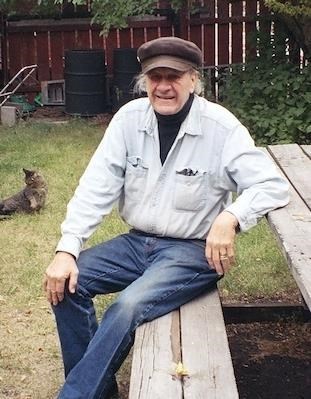





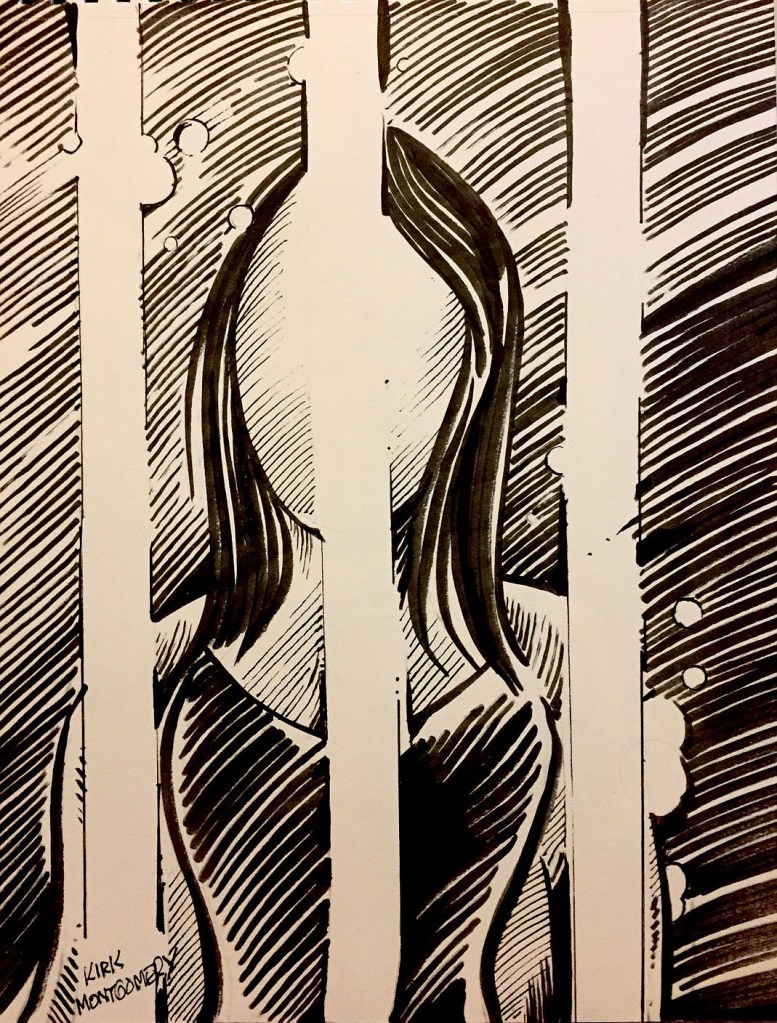

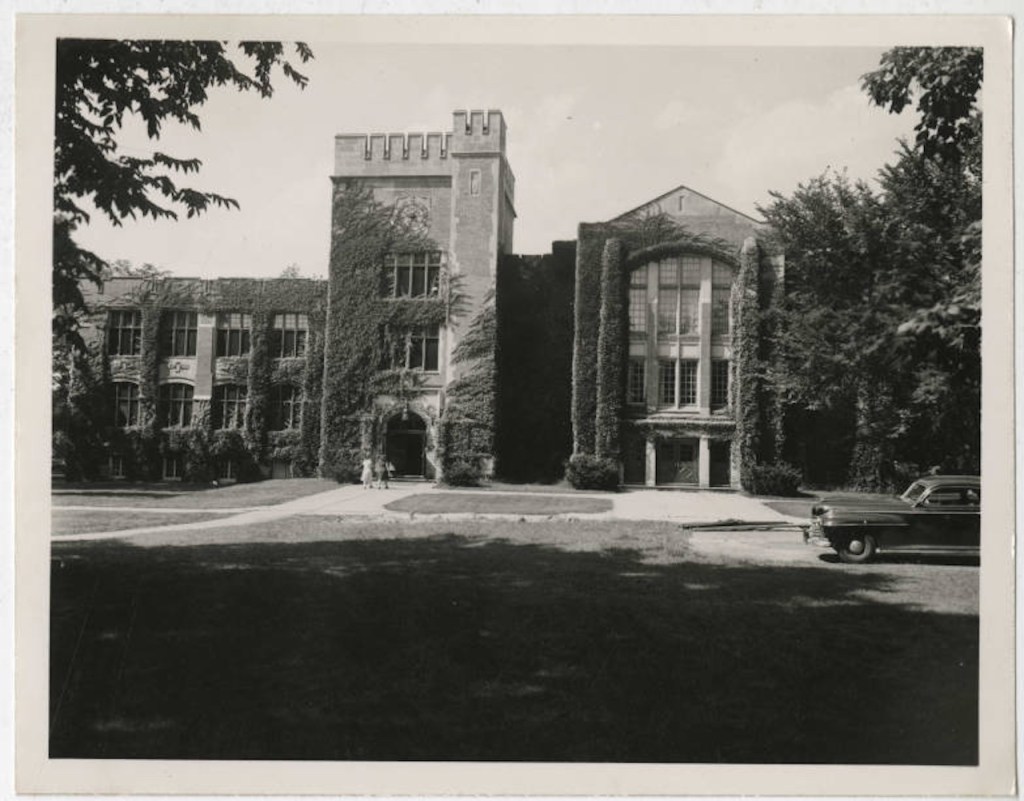
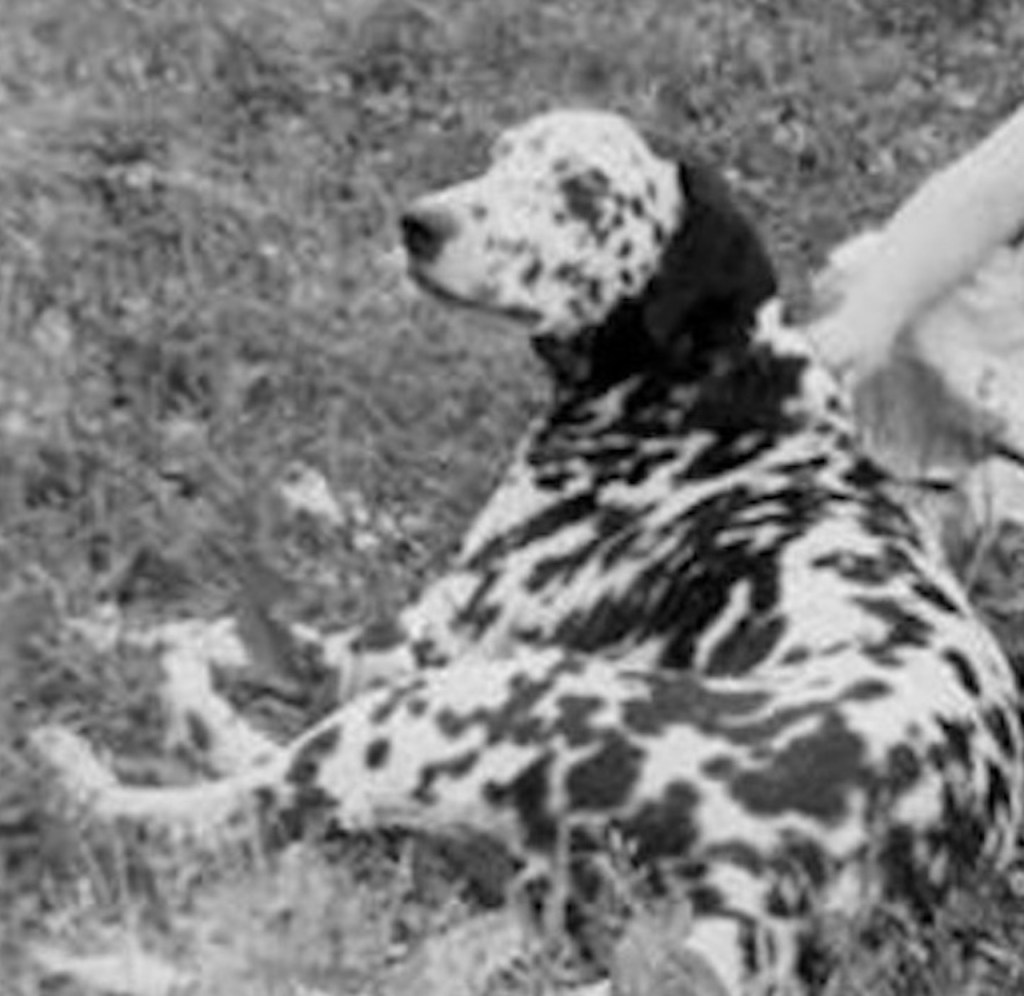





 Linda's Literary Home
