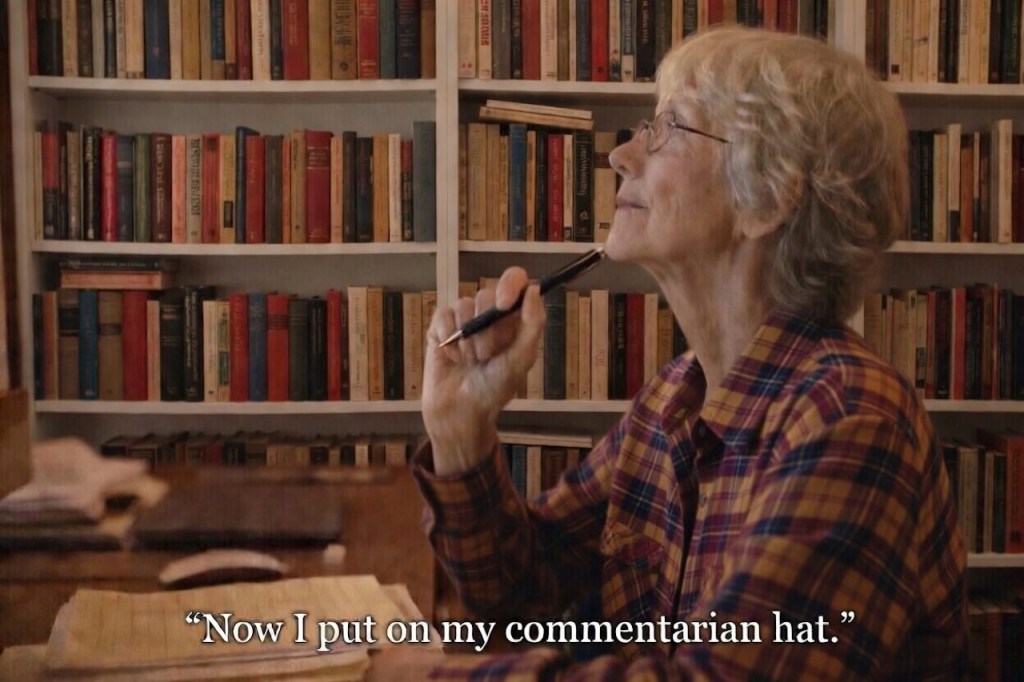
Similar to a caffeine buzz But instead of propelling to more movement Instills urge to more calm, more stillness— Until you zoom into the Star!
Image: Original photo by Linda Sue Grimes, text added by Grok
A Prose Commentary on My Original Poem “Soul Buzz”
In my little poemette “Soul Buzz,” my speaker reveals a form of heightened awareness that differs existentially from ordinary physical excitement. The opening comparison to a “caffeine buzz” refers to a familiar sensation of stimulation, alertness, and energy. But the poem immediately distinguishes the two experiences: whereas caffeine propels the body and mind toward greater activity, the soul’s distinctive “buzz” instills the motivation to achieve quietude, calmness, tranquility, stillness (Be still, and know that I am God . . . KJV Psalm 46:10).
This contrast establishes spiritual awakening as an inward experience in which consciousness turns away from external distraction and toward the deep perception of the soul. The repetition of “more” emphasizes the progressive deepening of this inward movement. Calmness and stillness remain the essential, yogic conditions for meditation and spiritual realization.
The great guru Paramahansa Yogananda teaches that this stillness prepares consciousness to envision the spiritual eye, whose luminous center contains a brilliant, silver-white, five-pointed star. The verb “zoom” conveys the exhilarating intensity of focused consciousness penetrating the spiritual eye. Ultimately, the poemette presents stillness as a dynamic spiritual experience culminating in the vision of the Star and the soul’s movement toward divine consciousness.
The concluding phrase, “Until you zoom into the Star!” directly evokes this spiritual vision, transforming the poem’s apparent paradox into a steady movement from inner quietude to transcendent, divine perception, or samadhi.
Image: Emily Dickinson – Amherst College – Daguerrotype of the poet at age 17, circa 1847 – likely the only authentic, extant likeness of the poet
Emily Dickinson’s “I heard a Fly buzz – when I died”
Emily Dickinson’s “I heard a Fly buzz – when I died” dramatizes the speaker’s act of dying, as well as Dickinson’s mystical vision, which corresponds to yogic philosophical and religious teachings.
Introduction and Text of “I heard a Fly buzz – when I died”
Emily Dickinson’s “I heard a Fly buzz – when I died” consists of four rimed quatrains with the rime scheme ABCB. Most of the rimes are slant rimes: Room-Storm, firm-room, be-fly. Sprinkled liberally with her signature dashes, the poem displays an appropriate breathless quality.
I heard a Fly buzz – when I died
I heard a Fly buzz – when I died – The Stillness in the Room Was like the Stillness in the Air – Between the Heaves of Storm –
The Eyes around – had wrung them dry – And Breaths were gathering firm For that last Onset – when the King Be witnessed – in the Room –
I willed my Keepsakes – Signed away What portion of me be Assignable – and then it was There interposed a Fly –
With Blue – uncertain stumbling Buzz – Between the light – and me – And then the Windows failed – and then I could not see to see –
Commentary on “I heard a Fly buzz – when I died “
Emily Dickinson’s “I heard a Fly buzz – when I died” dramatizes the speaker’s act of dying. Even though it is unlikely that the poet had studied any Eastern philosophy as Ralph Waldo Emerson had done, her mystical vision corresponds nearly perfectly to Eastern yogic philosophical and religious teachings.
First Stanza: Breathlessness upon Dying
I heard a Fly buzz – when I died – The Stillness in the Room Was like the Stillness in the Air – Between the Heaves of Storm –
In the first stanza, the speaker makes the odd assertion that as she was dying, she heard the sound of a fly. The first instance of the breathlessness of the poem occurs immediately following the announcement, “I heard a Fly buzz.” Such a mundane statement if left unmodified! But the speaker then adds a real shocker, “when I died.”
Nothing could be more startling, nothing could be more Dickinsonian. The room at the time of her passing professed an eerie stillness, reminding the speaker of the quiet that settles briefly between the turbulences of a storm. The mention of the fly then hangs without further discussion until the last line of the third stanza.
Second Stanza: Mourning the Passing
The Eyes around – had wrung them dry – And Breaths were gathering firm For that last Onset – when the King Be witnessed – in the Room –
The speaker then depicts the people who are beginning their mourning of her passing: her loved ones had cried until they could not cry any longer. The mourners seemed to hold their breath, waiting for that moment when the soul of the loved one makes its final departure from the body: such a momentous occasion herald’s the Divine Belovèd emissary to be in attendance.
The King refers to God’s angel, who will appear to escort the soul from the physical to the astral plane. While the escaping soul will be cognizant of the angel, most of the mourners probably will not be, but they will intuit the presence or “that last Onset,” which prompts the breath to tighten.
Third Stanza: Last Will and Testament
I willed my Keepsakes – Signed away What portion of me be Assignable – and then it was There interposed a Fly –
The speaker asserts that she has completed her last will and testament, designating which “Keepsakes” should go and to whom; she has assigned to others everything that can be assigned. Some time has obviously passed between making the will and the moment presently dramatized.
The immediate shift from something she must have accomplished earlier suggests the conflating power of the dying process, something like the old expression that one’s life passes before one’s sight at death. And then the “Fly” makes it appearance: “There interposed a Fly.” But she begins a new stanza to portray the importance of the “Fly.”
Fourth Stanza: No Ordinary House Fly
With Blue – uncertain stumbling Buzz – Between the light – and me – And then the Windows failed – and then I could not see to see –
The significant final stanza reveals that the fly is not a literal household fly but is a metaphor for the sound of the soul leaving the body. The line “With Blue – uncertain stumbling Buzz” has taken the place of the term “fly.”
In nature, flies appear to be black not blue. However, as the human soul is existing its physical encasement, it experiences the blue that makes up part of the spiritual eye with its outer golden circle which rims the blue inside of which is a pentagonal white star. The soul must travel through this eye, often referred to as a tunnel by those who have experienced near-death episodes and returned to describe their experience.
The sound of a bumble bee or “fly,” which is a buzzing sound, is emanated by the coccygeal chakra in the spine. As the soul journeys up the spine, it begins at the buzz chakra. In very advanced yogis, the “buzz” sound might be described as the “om” sound.
With the “Buzz” sound emanating from the departing soul beginning its journey from the coccygeal center, the physical eyesight begins to fail–”then the Windows failed / and then / I could not see to see.” The speaker’s unusual claim “I could not see to see” underscores the fact that her light of vision is fading, and the final dash represents its total departure.
Evidence of Mystical Ability
Although it is highly unlikely that Emily Dickinson had studied any yogic philosophy or techniques, her accurate descriptions of the process of death as well as her descriptions of experiences after death provide evidence that the poet possessed advanced mystical insight.