Image: Emily Dickinson – Amherst College – Daguerrotype of the poet at age 17, circa 1847 – likely the only authentic, extant likeness of the poet
Emily Dickinson’s “He touched me, so I live to know”
Emily Dickinson’s “He touched me, so I live to know” dramatizes an experience in mystical union with the Divine Reality. Often interpreted and examined as madness, Dickinson’s mystical proclivities more easily and thoroughly explain her elliptical writings.
Introduction with Text of “He touched me, so I live to know”
Emily Dickinson’s many experiences in mystical union [1] with the Divine Spiritual Reality reveal that the poet was working from an extraordinary state of awareness. Often interpreted and examined as madness or extreme idiosyncrasy, Dickinson’s mystical proclivities more easily and thoroughly explain her elliptical writings than total reliance on the physical and mental levels of being.
While Dickinson must be perceived primarily as an accomplished poet and not an avatar of perfect knowledge, her mystical proclivities are difficult to deny. For example, superficial observers of this poem are wont to report that the speaker is describing her happy experience of engaging in a physical tryst with a lover.
But the “lover” trope is often used by those who experience the mystical union with the Divine, for example, Saint Terese of Ávila’s ecstasy is metaphorically expressed as similar to “erotic intensity [2].
Instead of physical bodies uniting, however, the mystical experience is the uniting of the individual soul and the Divine Creator or God. Because the physical union offers intense pleasure, it makes a useful metaphor for the even more intense pleasure experienced during mystical union.
While understanding the union metaphorically is perfectly acceptable and logical, it is absurd to misunderstand and think those two very different experiences are identical. It is helpful to remember that a metaphor is useful in that it likens two very different entities.
The purpose of the physical, sexual union exists for procreation, that is, the continuation of the generations of humanity, while the mystical union remains the true goal of each human soul.
Paramahansa Yogananda and the avatars all of faiths have taught that the true purpose of life [3] is to find and unite the individual soul with the Over-Soul, Divine Reality, or God.
As the spiritual scientist, Sant Rajinder Singh Ji Maharaj, has elucidated [4], “It is important to recognize that this human existence has a purpose, that we are here to grow spiritually, to know God, and to merge back in God.”
He touched me, so I live to know
He touched me, so I live to know That such a day, permitted so, I groped upon his breast – It was a boundless place to me And silenced, as the awful sea Puts minor streams to rest.
And now, I’m different from before, As if I breathed superior air – Or brushed a Royal Gown – My feet, too, that had wandered so – My Gypsy face – transfigured now – To tenderer Renown –
Into this Port, if I might come, Rebecca, to Jerusalem, Would not so ravished turn – Nor Persian, baffled at her shrine Lift such a sign To her imperial Sun.
Reading
Commentary on “He touched me, so I live to know”
The speaker is describing the mystical experience that has transfigured her mind, her heart, even her entire life. Likely, this poem was the poet’s first attempt to delve into that particular theme that had such a profound influence on her ability to compose poetry.
First Stanza: The Visitation
He touched me, so I live to know That such a day, permitted so, I groped upon his breast – It was a boundless place to me And silenced, as the awful sea Puts minor streams to rest.
The speaker begins by announcing that she has been visited by the Divine Reality. Her union with the Mystical Creative Force caused her to feel that her living is now more intense and vital than it had ever been before this momentous realization.
The speaker now is aware that such a soul-realizing event can actually happen to mere mortals. The reality of His presence makes her feel that during this visitation she was “groping” upon an enormous entity. Her consciousness has become unbounded by her heretofore mental and physicals encasements.
Because God’s body remains inside and outside of creation, that Entity in human terms is a vast area of space and matter, and as the individual human soul unites with that Entity it experiences the enormity of that Form.
The speaker then likens the experience to a “minor stream” such as a river that flows into the ocean. Paramahansa Yogananda likens the little human body to a “bubble” and the God to the ocean, and in his chant he commands the Divine Reality: “I am the bubble, make me the sea” [5].
The speaker in Dickinson’s “He touched me, so I live to know” is experiencing a time that God had made her the sea; she was a tiny bubble, and for a time, she experienced being the sea.
Second Stanza: The Transformation
And now, I’m different from before, As if I breathed superior air – Or brushed a Royal Gown – My feet, too, that had wandered so – My Gypsy face – transfigured now – To tenderer Renown –
After her mystical experience, the speaker now realizes that she is “different”; she has been transformed and feels that now even her breathing has been clarified and elevated. She also likens her new awareness to touching a “Royal Gown.”
The speaker is describing an event that, in fact, cannot be translated into language; thus, she must metaphorically compare the ineffable to physical things and experiences that come closest to expressing her experience.
She then reports that her feet now seem more firmly planted, as before they had remained roaming in delusion. Her face also has been transformed from a roaming, inquisitive face of to something kind, pleasant, and staid.
Third Stanza: The Reality of Permanence
Into this Port, if I might come, Rebecca, to Jerusalem, Would not so ravished turn – Nor Persian, baffled at her shrine Lift such a sign To her imperial Sun.
The speaker then contrasts her journey along with its destination to the biblical character, Rebekah, who traveled to the home of Isaac to become his wife, and to some nameless “Persian” whose prayerful pleadings remained somewhat superficial.
Instead of such worldly experiences, this speaker insists that she has become aware of the permanence bestowed by this amazing event that has captured her. Her port, if she understands if correctly, leads to the immortality upon which she has long mused and upon which she strongly insists is a reality.
Her mystical experience has now confirmed for her that the Afterlife is real and that she has visited and now knows in her soul that the Creator of the Cosmos is directing and guarding her.
William Butler Yeats’ “Sailing to Byzantium” is a profound meditation on aging, art, and the quest for spiritual transcendence, despite his failure to clearly grasp the Eastern religious/philosophical concepts he strived to portray.
Introduction and Excerpt from “Sailing to Byzantium”
William Butler Yeats’ “Sailing to Byzantium” is a profound meditation on aging, art, and the quest for spiritual transcendence. However, despite Yeats’ deep engagement with Eastern religion and philosophy, his interpretation and application of these concepts in his poetry often reveal a “Romantic misunderstanding,” as T.S. Eliot astutely observed.
This misunderstanding is clearly evident in “Sailing to Byzantium,” especially in its fourth stanza, where Yeats’ vision of eternal existence through art diverges significantly from Eastern religious/philosophical principles.
Yeats wrote “Sailing to Byzantium” in 1926, at the age of 61, as a reflection on the aging process and the spiritual journey required to maintain vitality in the face of physical decline.
Sailing to Byzantium
That is no country for old men. The young In one another’s arms, birds in the trees —Those dying generations—at their song, The salmon-falls, the mackerel-crowded seas, Fish, flesh, or fowl, commend all summer long Whatever is begotten, born, and dies. Caught in that sensual music all neglect Monuments of unageing intellect.
An aged man is but a paltry thing, A tattered coat upon a stick, unless Soul clap its hands and sing, and louder sing For every tatter in its mortal dress, Nor is there singing school but studying Monuments of its own magnificence; And therefore I have sailed the seas and come To the holy city of Byzantium.
O sages standing in God’s holy fire As in the gold mosaic of a wall, Come from the holy fire, perne in a gyre, And be the singing-masters of my soul. Consume my heart away; sick with desire And fastened to a dying animal It knows not what it is; and gather me Into the artifice of eternity.
Once out of nature I shall never take My bodily form from any natural thing, But such a form as Grecian goldsmiths make Of hammered gold and gold enamelling To keep a drowsy Emperor awake; Or set upon a golden bough to sing To lords and ladies of Byzantium Of what is past, or passing, or to come.
Commentary on “Sailing to Byzantium”
The poem “Sailing to Byzantium” uses a journey to Byzantium (Constantinople now Istanbul,) as a metaphor for a spiritual quest, with the speaker seeking to transcend the limitations of the mortal body and achieve a form of immortality through art.
First Stanza: Contrasting Vividly
That is no country for old men. The young In one another’s arms, birds in the trees —Those dying generations—at their song, The salmon-falls, the mackerel-crowded seas, Fish, flesh, or fowl, commend all summer long Whatever is begotten, born, and dies. Caught in that sensual music all neglect Monuments of unageing intellect.
The opening stanza of “Sailing to Byzantium” presents a vivid contrast between the vitality of youth and the poet’s sense of alienation from the natural world as he ages. Yeats paints a picture of a country teeming with life, where “The young / In one another’s arms, birds in the trees” and “the mackerel-crowded seas” represent the cyclical nature of life and death.
The phrase “Those dying generations” underscores the transient nature of all living things, a concept that aligns with Eastern philosophy’s emphasis on impermanence. However, Yeats’ reaction to this natural cycle reveals a departure from Eastern thought.
While Buddhism and Hinduism often advocate for acceptance of life’s impermanence, Yeats expresses a desire to escape it. His assertion that “all neglect / Monuments of unageing intellect” suggests a privileging of human intellect and art over the natural world, a distinctly Western perspective that contradicts the Eastern emphasis on harmony with nature.
Second Stanza: Aging and the Quest for Renewal
An aged man is but a paltry thing, A tattered coat upon a stick, unless Soul clap its hands and sing, and louder sing For every tatter in its mortal dress, Nor is there singing school but studying Monuments of its own magnificence; And therefore I have sailed the seas and come To the holy city of Byzantium.
In the second stanza, Yeats further develops the theme of aging and the quest for spiritual renewal. The image of an aged man as “a paltry thing, / A tattered coat upon a stick” vividly conveys the physical deterioration that comes with age. However, Yeats proposes that this decline can be transcended if the soul can “clap its hands and sing, and louder sing / For every tatter in its mortal dress.”
This concept of the soul triumphing over bodily decay echoes certain Eastern philosophical ideas, particularly the Hindu concept of the soul, which is the eternal self, transcending the physical body.
However, Yeats’ emphasis on the soul’s need to “sing” and study “Monuments of its own magnificence” reveals a more Western, ego-centric approach to spiritual transcendence. In contrast, many Eastern philosophies advocate for the dissolution of the ego and the realization of the soul’s unity with the Divine Reality.
Third Stanza: The Concept of Transformation
O sages standing in God’s holy fire As in the gold mosaic of a wall, Come from the holy fire, perne in a gyre, And be the singing-masters of my soul. Consume my heart away; sick with desire And fastened to a dying animal It knows not what it is; and gather me Into the artifice of eternity.
The third stanza introduces the “sages standing in God’s holy fire,” whom the speaker implores to be the “singing-masters of my soul.” This imagery draws on both Western and Eastern concepts, blending Christian imagery of holy fire with the Eastern idea of spiritual masters or gurus. The speaker’s desire to have his heart consumed away and to be gathered into “the artifice of eternity” reflects a yearning for spiritual transformation.
However, Yeats’ conception of this transformation as an “artifice” created by sages diverges from Eastern philosophical traditions. In many Eastern spiritual practices, enlightenment or liberation is seen not as an artificial state created by external forces, but as the realization of one’s true nature, of uniting the individual soul with the Oversoul, or God. Yeats’ portrayal suggests a more Western, interventionist approach to spiritual transformation.
Fourth Stanza: Romantic Misunderstanding
Once out of nature I shall never take My bodily form from any natural thing, But such a form as Grecian goldsmiths make Of hammered gold and gold enamelling To keep a drowsy Emperor awake; Or set upon a golden bough to sing To lords and ladies of Byzantium Of what is past, or passing, or to come.
The final stanza of “Sailing to Byzantium” most clearly demonstrates Yeats’ “Romantic misunderstanding” of Eastern philosophy. Here, the speaker envisions his eternal form not as a dissolution into God-consciousness (self-realization), as many Eastern traditions insist, but as a golden artifact created by “Grecian goldsmiths.” This vision of immortality through art is fundamentally at odds with Eastern concepts of liberation from the cycle of birth and death.
Yeats’ desire to take a form “Of hammered gold and gold enamelling” to entertain “lords and ladies of Byzantium” reveals a distinctly Western preoccupation with individual identity and artistic legacy. This contrasts sharply with Eastern religious/philosophical concepts such as the Buddhist non-self upon entering nirvana or the Hindu idea of samadhi or liberation from cycles of death and rebirth.
Furthermore, the speaker’s intention to “sing / To lords and ladies of Byzantium / Of what is past, or passing, or to come” suggests a linear view of time that is more aligned with Western thought than with the cyclical time concepts expounded in Eastern religion/philosophy.
While “Sailing to Byzantium” is undoubtedly a masterpiece of poetic craft, it also reveals the limitations of Yeats’ understanding and application of Eastern philosophical concepts.
His vision of spiritual transcendence, particularly as expressed in the fourth stanza, remains rooted in Western ideas of individual immortality and artistic legacy, rather than the Eastern concepts of ego dissolution and unity with the Divine Creator.
This “Romantic misunderstanding” of Eastern philosophy, as Eliot termed it, is indeed on full display in this poem, showcasing both the brilliance of Yeats’ poetic vision and the cultural limitations that shaped his interpretation of Eastern thought.
Image: Langston Hughes. Library of Congress. Photographer Gordon Parks
Langston Hughes’ “The Negro Speaks of Rivers”
Langston Hughes’ speaker in “The Negro Speaks of Rivers” displays his message in five versagraphic movements, thematically exploring his soul experience with a “cosmic voice,” which includes and unites all of humanity.
Note on Term Usage: Before the late 1980s in the United States, the terms “Negro,” “colored,” and “black” were accepted widely in American English parlance. While the term “Negro” had started to lose it popularity in the 1960s, it wasn’t until 1988 that the Reverend Jesse Jackson began insisting that Americans adopt the phrase “African American.” The earlier more accurate terms were the custom at the time that Langston Hughes was writing.
Introduction and Text of “The Negro Speaks of Rivers”
Langston Hughes’ speaker in “The Negro Speaks of Rivers” displays his message with a “cosmic voice,” which includes and unites all of humanity. The poem plays out in five versagraphic movements, focusing on the theme of soul exploration.
The Cosmic Voice in Poetry
Writers, especially poets, often employ the “cosmic voice” in order to provide a deep and wide view of historical events and vast swaths of space. A device called the omniscient speaker is often used in fiction; that voice is similar to the cosmic voice but much more limited.
Time and space may stretch or contract as needed as the cosmic seer narrates what he experiences. The “cosmic voice” may come to a poet through a vivid imagination; however, it transcends the imagination as a truth teller. Only a few poets have been blessed with such a voice; examples are Emily Dickinson, Rabindranath Tagore, Paramahansa Yogananda, and to a limited degree Walt Whitman.
The cosmic voice imparts truth through deep intuition. The soul of the speaker employing the cosmic voice is, even if only temporarily as is the case with Langston Hughes, becomes aware of its vast and profound knowledge. The cosmic voice speaks from a place far beyond ordinary sense awareness.
Individuals who comprehend the cosmic voice are bequeathed a consciousness far beyond their own sense awareness and thus comprehend the unity of all created things. Those individuals are heralded into the realm of the Cosmic Creator and often remain transformed beings for having experienced that Sacred Locus.
Langston Hughes and the Cosmic Voice
The voice employed in “The Negro Speaks of Rivers” is not a whining, complaining one so often heard in the protest voices of activists; instead Hughes is employing the cosmic voice—the voice of the soul that knows itself to be a divine entity. That voice speaks with inherent authority; it reports its intuitions so that others might hear and regain their own experiences through its guidance.
Langston Hughes’ speaker in “The Negro Speaks of Rivers” imparts his discourse in five versagraphic movements. His theme explores with the cosmic voice that unites all of humanity.
The vital lines that serve as a refrain—”I’ve known rivers” and “My soul has grown deep like the rivers”—work like a chant, instilling in the listener the truth that the speaker wishes to impart. That Langston Hughes was able to employ a cosmic voice in a poem at age seventeen is quite remarkable.
Although some of his later work, even as much of it remained important and very entertaining, descended into the banal and at times even slipshod, no one can deny his marvelous accomplishment with this early poem in which he speaks as a master craftsman.
The Negro Speaks of Rivers
I’ve known rivers: I’ve known rivers ancient as the world and older than the flow of human blood in human veins.
My soul has grown deep like the rivers.
I bathed in the Euphrates when dawns were young. I built my hut near the Congo and it lulled me to sleep. I looked upon the Nile and raised the pyramids above it. I heard the singing of the Mississippi when Abe Lincoln went down to New Orleans, and I’ve seen its muddy bosom turn all golden in the sunset.
I’ve known rivers: Ancient, dusky rivers.
My soul has grown deep like the rivers.
Reading: Langston Hughes reads his poem “The Negro Speaks of Rivers”
Commentary on “The Negro Speaks of Rivers”
Langston Hughes’ speaker in “The Negro Speaks of Rivers” stands as high testimony to the poet’s ability to craft genuine, heartfelt poetry. To have composed such a profound piece of art at such an early age bespeaks a literary marvel.
First Movement: The River as a Symbol
I’ve known rivers: I’ve known rivers ancient as the world and older than the flow of human blood in human veins.
The poem opens with the speaker remarking rather nonchalantly that he has experienced the natural phenomenon known as “rivers.” He has no doubt observed rivers flowing in their channels, and he has become aware that rivers flow through the earth as blood flows through the veins of human beings.
Both flowing rivers and flowing blood must be ancient, but the speaker intuits that the flow of the rivers surely predates that of the appearance of the human being upon the planet. The river image becomes a symbol linking all of humanity from the pre-historic era to the present day.
As the “river” has served to carry the physical encasements (bodies) and mental bodies over the rough terrain of land and rocks, the symbolic river carries the soul on its Divine journey. Readers and listeners will easily intuit the significance of the speaker’s focus as it ranges far beyond the boundaries of the physical, material universe.
Second Movement: Intuitive Awareness
My soul has grown deep like the rivers.
This line indicates that the speaker has become aware that through his own soul he can intuit historical events, places, and people, who have existed from the beginning to time. The line becomes a refrain and will be encountered again in the poem because of its great importance.
It becomes quite obvious that the speaker would not have been able to know literally the rivers of antiquity that he claims to “know.” However, through his soul, or mystical awareness, he can. Thus, he again employs the cosmic, thus mystical, voice to fashion his assertion.
Third Movement: Historical Unity
I bathed in the Euphrates when dawns were young. I built my hut near the Congo and it lulled me to sleep. I looked upon the Nile and raised the pyramids above it. I heard the singing of the Mississippi when Abe Lincoln went down to New Orleans, and I’ve seen its muddy bosom turn all golden in the sunset.
The speaker claims that he “bathed in the Euphrates” at the dawning of Western civilization. From the Euphrates to the Mississippi Rivers, the speaker offers a huge expansion of time and place.
In biblical times to present time, he lays claim to knowledge, again impossible except for soul consciousness. Awareness through the soul is unlimited, unlike the limitations of body and mind. The speaker could not have experienced the Euphrates when “dawns were young.”
But the cosmic voice of the speaker can place itself at any point along the time line of civilization or cosmic creation. In claiming to have built his “hut near the Congo,” the speaker continues his cosmic, mystically inspired journey. He “looked upon the Nile” and “raised the pyramids” only as a cosmic-voiced speaker.
People of all times and climes have been influenced by the river experience. The speaker can thus unite all races, nationalities, creeds, and religions in his gathering of historic experiences within which all those peoples have lived. And he accomplishes this feat through employment of the symbolic force of the “river.”
Emphasizing the American experience, the speaker claims to have “heard the singing of the Mississippi when Abe Lincoln / went / down to New Orleans . . . .” The allusion to President Abraham Lincoln reminds the reader of the process of slave emancipation.
As with all the rivers mentioned, the Mississippi River, an American river, stands as a symbol of the blood of the human race—not naturally segregated into color and national categories. The American Mississippi River, as the earlier mention of rivers has done, symbolizes the human blood of the human race—the only race that scientifically exists.
Fourth Movement: A Soul Chant
I’ve known rivers: Ancient, dusky rivers.
Because of the importance of the “river” as a symbol, the speaker repeats the line, “I’ve known rivers.” Like the line, “My soul has grown deep like the rivers,” this one also serves as a refrain. If the speaker had chanted the line many more times, the poem’s delightful charm would have even been enhanced—that line is that crucial!
The soul, the river, the depth of the soul and the river—all force history to yield a mighty blessing on those who have “known rivers,” and whose souls have grown deep like those rivers.
Thus the speaker offers a brief description of how those river appear: they are extremely old, and they are mystically dark, a measure that alludes to the dark-skinned race with graceful precision, even as it holds all races as having experienced the nature of the mystic river.
Fifth Movement: Life Force and the Symbol of the River
My soul has grown deep like the rivers.
The speaker’s soul has grown profoundly deep like the rivers and along with the rivers. Civilizations have grown up and grown deep along rivers all over Planet Earth. The soul that possesses the body is the life force informing and maintaining that body.
Likewise, rivers streaming through the earth give life force to civilizations and also assist in maintaining those civilization with the products and supplies that river travel has allowed over the centuries.
The speaker is taking his own identity from the energetic force of the soul and the river force of the earth. The children of the Divine Creative Reality (God) all spring forth from a common ancestry, a symbolic set of original parents. It has always been rivers that link all of those ancestors as the blood in their veins links them into one family—the Human Race.
The cosmic voice of a young poet—who happened possess the darker hue of skin along the color spectrum—has rendered a statement that could enlighten and reconnect all peoples if only they could listen with their own cosmic awareness.
At the soul level, all human beings remain eternally linked as children of the Great Divine River King (God). That River God flows in the blood of His offspring. And that same River God flows in the rivers of the planet on which they find themselves too often segregated by ignorance of their own common being as sparks of the Divine.
Instead of identifying with the perishable body and changeable mind that too often rule, the simple act of identifying with their own cosmic nature would allow individuals to experience the cosmic voice of their own soul. The simple poet named Langston Hughes has offered a useful template for viewing the world through a cosmic lens in his nearly perfect poem.
Rabindranath Tagore’s “Light the Lamp of Thy Love”
Rabindranath Tagore’s poem “Light the Lamp of Thy Love” is a devotional lyric that expresses the speaker’s longing for self-realization. Through colorful imagery, the poem explores themes of transformation, redemption, and the transcendence of human limitation through spiritual awakening.
Introduction and Text of “Light the Lamp of Thy Love”
Rabindranath Tagore, a Nobel laureate poet and philosopher, often infused his works with spiritual depth and mysticism. His lyric “Light the Lamp of Thy Love” offers a prayerful plea for divine intervention, as the speaker implores a higher power to dispel darkness and replace it with enlightenment.
The poem’s structure follows a gathering movement from supplication to transformation, resulting in the profound realization of divine presence, also known as self-realization or God-union. Tagore employs vivid metaphors—lamps, light, and gold—to symbolize the process of spiritual purification.
The repetition of phrases reinforces the urgency of the speaker’s plea, while the invocation of touch underscores the immediacy of divine grace. The poem’s universal theme of seeking enlightenment resonates beyond religious confines, making it a poignant reflection on the human soul’s yearning for transcendence.
Paramahansa Yogananda refashioned this poem into a chant that is performed at SRF meditation gatherings and ceremonies. Immediately below the poem, there is a video of the SRF monks chanting the piece at one of SRF’s World Convocations.
Light the Lamp of Thy Love
In my house, with Thine own hands, Light the lamp of Thy love! Thy transmuting lamp entrancing, Wondrous are its rays. Change my darkness to Thy light, Lord! Change my darkness to Thy light. And my evil into good. Touch me but once and I will change, All my clay into Thy gold All the sense lamps that I did light Sooted into worries Sitting at the door of my soul, Light Thy resurrecting lamp!
Commentary on “Light the Lamp of Thy Love”
Rabindranath Tagore’s poem “Light the Lamp of Thy Love” serves a prayer for divine illumination or God-union (also known as self-realization), reflecting an intense spiritual longing. The speaker acknowledges human frailty and desires transformation through divine grace. Each movement of the poem builds upon the preceding one, deepening the speaker’s surrender to the divine will.
First Movement: Invocation of Divine Light
In my house, with Thine own hands, Light the lamp of Thy love!
The speaker begins with a direct appeal to the divine, requesting illumination within his own “house,” a metaphor for the soul. The imagery of the divine hand lighting the lamp suggests an intimate and personal act of grace.
This scenario establishes the poem’s central theme of spiritual awakening as a force intervening in the speaker’s internal world. The use of the imperative conveys urgency as well as personal familiarity, emphasizing human dependency on divine intervention for enlightenment. This evocative opening sets the tone for the poem’s progression from entreaty to transformation.
Second Movement: Transformation through Divine Light
Thy transmuting lamp entrancing, Wondrous are its rays. Change my darkness to Thy light, Lord! Change my darkness to Thy light. And my evil into good.
In the second movement, the speaker acknowledges the power of divine enlightenment, describing it as “entrancing” and “wondrous.” The repetition of “Change my darkness to Thy light” underscores the urgency and necessity of divine transformation. Darkness symbolizes ignorance, sin, and suffering, while light represents wisdom, virtue, and divine grace.
The explicit plea to change evil into good reflects Tagore’s vision of spiritual evolution, wherein the divine presence purges human flaws. This movement portrays transformation as both passive and active—the speaker submits to divine will while the divine force actively reshapes his essence. The imagery of light as a catalyst for moral and spiritual purification aligns with Tagore’s broader philosophical themes of unity between the self and the divine.
Third Movement: Spiritual Alchemy
Touch me but once and I will change, All my clay into Thy gold
The speaker then expresses absolute faith in divine transformation, emphasizing the power of a single divine touch. The contrast between “clay” and “gold” serves as a metaphor for spiritual alchemy—earthly, flawed existence is refined into something pure and incorruptible.
This suggestion reflects the Upanishadic tenet that the soul has potential to merge with the divine. The phrase “but once” highlights the immediacy and sufficiency of divine intervention, reinforcing the idea that enlightenment is not a gradual process but an instantaneous, transcendent experience, after conditions become aligned.
Fourth Movement: Renunciation of Material Attachments
All the sense lamps that I did light Sooted into worries Sitting at the door of my soul, Light Thy resurrecting lamp!
In this final movement, the speaker reflects on past attempts to find light through worldly means, represented by “sense lamps.” These artificial lights, linked to sensory experiences, have only resulted in “worries,” suggesting that material pursuits lead to disillusionment.
The speaker, becoming aware that the Divine Reality is “sitting at the door of my soul,” finds himself in a precarious position, awaiting true illumination. The plea for the “resurrecting lamp” signifies the desire for rebirth through divine grace.
This conclusion emphasizes the contrast between self-induced, transient sources of light and the enduring illumination provided by the Divine. Tagore’s imagery addresses surrender and renewal, resulting in the speaker’s complete reliance on divine intervention for enlightenment.
A Philosophy of Divine Love
“Light the Lamp of Thy Love” encapsulates Tagore’s philosophy of divine love as the ultimate source of transformation. The poem progresses from invocation to surrender, illustrating the speaker’s deepening spiritual realization. Tagore employs symbolic imagery—light, lamps, gold—to depict the process of transcendence, wherein the divine presence eradicates darkness and imparts purity.
The repetition of phrases reinforces the speaker’s desperation for enlightenment, while the shift from self-lit lamps to the resurrecting lamp signifies the futility of worldly pursuits in comparison to divine grace.
The interplay between passivity and divine action suggests that while human effort is insufficient for true transformation, surrender to divine will results in ultimate fulfillment.
Tagore’s devotional lyric aligns with the Bhakti tradition, where longing for divine presence is central. However, its universal message extends beyond religious boundaries, addressing the fundamental human desire for meaning, clarity, and redemption. The poem’s cyclical structure, resulting in divine illumination, parallels the spiritual journey from ignorance to wisdom.
By portraying the speaker’s progression from a seeker to one awaiting divine grace, Tagore underscores the idea that true enlightenment is not self-generated but received through divine compassion. Ultimately, “Light the Lamp of Thy Love” serves as a meditation on the transformative power of divine love and its ability to guide the human soul toward transcendence.
Image: Rabindranath Tagore – Portrait by Unknown Artist
A true “Renaissance man,” James Weldon Johnson wrote some the best spiritual poems and songs in the American literary canon. He also held positions as attorney, diplomat, professor, and activist in a political party, fighting for the civil rights of black Americans.
Note on Term Usage: Before the late 1980s in the United States, the terms “Negro,” “colored,” and “black” were accepted widely in American English parlance. While the term “Negro” had started to lose it popularity in the 1960s, it wasn’t until 1988 that the Reverend Jesse Jackson began insisting that Americans adopt the phrase “African American.” The earlier more accurate terms were the custom at the time that James Weldon Johnson was writing.
Early Life and Schooling
James Weldon Johnson was born on June 17, 1871, in Jacksonville, Florida, [1] to James Johnson, of Virginia, who had held a position as headwaiter at a resort hotel, and Helen Louise Dillet, of the Bahamas, who had served as a teacher in Florida.
His parents raised James to be a strong, independent man. The future poet became a free-thinker as his parents encouraged him to understand that he was capable of achieving all the success in life for which he sought to strive.
In 1894, after completing the bachelor’s degree at Atlanta University, he accepted a position as principal at the Edwin M. Stanton School. His mother had taught at that school. In his position as principal of Stanton, he made great improvements in the curriculum, adding grades 9 and 10.
While serving at the Stanton school as principal, Johnson founded the newspaper, The Daily American. The paper remained in publication for only a year, but it served as a lever for Johnson’s role as an activist, bringing him to the attention of Booker T. Washington and W.E.B. DuBois, two of the most influential activists of the civil rights movement.
Johnson began the study of law in Thomas Ledwith’s law office in Jacksonville, Florida, in 1896 [2]. He passed the bar exam in 1898 and was admitted to the Florida bar. He practiced law for several years and then decided to pursue other lines of work.
From New York City to the Diplomatic Corp
To engage a career in songwriting, in 1901 James and his brother Rosamond moved to New York City. They became partners with Bob Cole and accepted a publishing contract which paid a $1200 monthly stipend. That income amounted to a fortune in the early 20th century.
During the next half decade, the Johnson brothers wrote and produced a whopping 200 songs for both Broadway and for other formats. Their substantial list of hits include titles such as “Didn’t He Ramble,” “Under the Bamboo Tree,” and “The Old Flag Never Touched the Ground.”
Along with Bob Cole, the Johnsons earned a outstanding reputation as a musical trio. They became known affectionately as “Those Ebony Offenbachs.” While they eschewed the artistry of the minstrel show stereotypes, they did agree to create simplified versions of black life of rustics for white audiences that seemed to relish such fare.
But their most important contribution includes a suite of six songs titled The Evolution of Ragtime, a documentary which has remained important for recording the black experience in contributing to music. Residing in New York also allowed Johnson the opportunity to attend Columbia University, where he engaged formally in the study literature and creative writing.
Johnson also began his civil rights activism in Republican Party politics. While serving as the treasurer of New York’s Colored Republican Club, he wrote two songs for Theodore Roosevelt’s 1904 presidential campaign. Roosevelt won that campaign, becoming the 26h president of the United States.
The black national civil rights leadership divided into two factions: one remained traditional and was led by Booker T. Washington. The other faction turned radical and was headed up by W.E.B. Du Bois. Johnson chose to follow Washington and the traditionalists.
Washington’s leadership had offered the appropriate influence and had helped Roosevelt win the presidency. Thus, Washington exerted his influence again to have Johnson appointed as the U.S. consulate to Venezuela.
Johnson’s stint in Venezuela afforded him time to create poetry. There he composed his magnificent, nearly perfect sonnet, “Mother Night,” during this time. Also, during this three year period of service as consul on Venezuela, he was able to finish his novel, The Autobiography of an Ex-Coloured Man.
After Johnson’s service in Venezuela, he received a promotion that relocated him to Nicaragua. His job in Nicaragua became more demanding, allowing him less time for literary efforts.
Back to New York and the Harlem Renaissance
In 1900, Johnson composed the hymn “Lift Ev’ry Voice and Sing” for a school celebration of Abraham Lincoln’s birthday [3]. His brother Rosamond later added the melody to the lyric. In 1919, the National Association for Advancement of Colored People (NAACP) designated the song the “Negro National Hymn (Anthem).”
In 1913, because of the inauguration of Woodrow Wilson, a Democrat, Johnson resigned his foreign service position and returned to the U.S.A. In New York, Johnson began writing for New York’s prestigious black newspaper, the New York Age. He wrote essays explaining and promoting the importance of the hard-work ethic and education.
Johnson’s traditionalism kept his position more in line with Booker T. Washington than with the radical militant W.E.B. Du Bois. Despite those differences in ideologies, Johnson remained on good terms with both activists.
In 1916, after Du Bois suggested the position to Johnson, he accepted the role as secretary in the NAACP. In 1920, Johnson led the organization as president. Despite his many activist duties with the NAACP, Johnson dedicated himself to writing full time. In 1917, he published his first collection of poems, Fifty Years and Other Poems. That collection received great critical acclaim and established him as an important voice in the Harem Renaissance Movement.
Johnson continued writing and publishing; he also served as editor for numerous volumes of poetry, such as The Book of American Negro Poetry (1922), The Book of American Negro Spirituals (1925), and The Second Book of Negro Spirituals(1926).
In 1927, Johnson published his second book of poems God’s Trombones: Seven Negro Sermons in Verse [4]. Again, his collection received much praise from critics.Dorothy Canfield Fisher, a best-selling author and activist for education reform, stated in a letter about Johnson’s style:
. . . heart-shakingly beautiful and original, with the peculiar piercing tenderness and intimacy which seems to me special gifts of the Negro. It is a profound satisfaction to find those special qualities so exquisitely expressed.
Back to Teaching
After his retirement from the NAACP, Johnson continued writing. He also served as professor at New York University. Johnson’s stellar reputation again preceded him; as he joined the NYU faculty, Deborah Shapiro testified:
Dr. James Weldon Johnson was already a world-renowned poet, novelist, and educator when he arrived at the School of Education in 1934. His faculty appointment was in the Department of Educational Sociology, yet Johnson’s influence did not end there. As the first black professor at NYU, Johnson broke a crucial color barrier, inspiring further efforts toward racial equality both within and outside the boundaries of Washington Square.
Death
In 1938 at age 67, Johnson was killed in an automobile accident in Wiscasset, Maine, after a train crashed into the vehicle in which the poet was a passenger. His funeral, held in Harlem, New York, was attended by over 2000 individuals.
Johnson’s creative power and activism rendered him a true “Renaissance man,” who lived a full life. He penned some of the finest poetry and songs ever to appear on the American literary and music scenes. Johnson’s life creed bestows on the world an uplifting inspiration after which any individual might choose to chisel his life:
I will not allow one prejudiced person or one million or one hundred million to blight my life. I will not let prejudice or any of its attendant humiliations and injustices bear me down to spiritual defeat. My inner life is mine, and I shall defend and maintain its integrity against all the powers of hell. [5]
The poet’s body is interred in Green-Wood Cemetery in Brooklyn, New York [6]. In an unconventional final expression, his body has been arrayed in his favorite lounging cape, with his hands clutching a copy of his collection God’s Trombones.
Sources
[1] Editors. “James Weldon Johnson.” Famous African Americans. Accessed January 27, 2023.
Original Song: “Astral Mother” with Prose Commentary
This song is dedicated to my beautiful mother, Helen Richardson, whose soul left the physical planet Earth at the age of 58 and now resides in the astral world. By faith and deep love, I visit her there from time to time.
Introduction with Text of “Astral Mother”
My original song, “Astral Mother,” plays out in three verse-movements and two chorus-movements. A traditional verse is a unified set of lines—often four but through innovation the number is not consistent.
Thus, a verse-movement may be any number of lines or stanzas because the emphasis in on the theme of the movement. A movement depends upon theme rather than number of lines or stanzas.
On the astral plane, souls have shed their bodies of chemicals and dust and reside in bodies of light. Although the physical body is also made fundamentally of light, the astral body is perceived as light more easily than the “mud” covering the soul on the earthly plane.
After visiting my mother on the astral plane, I bring back images, ideas, and thoughts that I dedicate to her in poems and songs. The text of the song follows, and you are welcome to listen to the song on SoundCloud.
Astral Mother
In memoriam: Helen Richardson June 27, 1923 — September 5, 1981
for your beautiful soul
You are waiting now . . . A bright star light In the astral world
You have shed the mud That covers the soul On the earthly plane . . . —
Where you were my mother, and I was your child You were my mother, and I was your child . . .
You are watching for me . . . To catch my beam In the astral world
We will live again The love we lived On the earthly plane . . . —
Where you were my mother, and I was your child You were my mother, and I was your child . . .
We will understand the Spirit-made plan . . . That kept us a while . . . In this earthly world . . . —
Where you were my mother, and I was your child You were my mother, and I was your child . . .
O, my Divine Mother, make me Thy Divine Child! O, my Divine Mother, make me Thy Divine Child!
Commentary on “Astral Mother”
A daughter addresses her mother who has departed the earth and now resides in the astral world. Through faith and divine guidance, the daughter visits the mother and creates a tribute to her mother’s beautiful soul of light
First Verse-Movement: Living as Light in the Astral World
You are waiting now . . . A bright star light In the astral world
You have shed the mud That covers the soul On the earthly plane . . . —
From the earthly plane of existence, the singer/narrator is addressing a loved one who is residing on the astral plane of existence.
The soul of the departed loved one is now existing in her astral/causal bodies—where the soul continues without its physical encasement. Paramahansa Yogananda explains this phenomenon:
astral body. Man’s subtle body of light, prana or lifetrons; the second of three sheaths that successively encase the soul: the causal body (q.v.), the astral body, and the physical body. The powers of the astral body enliven the physical body, much as electricity illumines a bulb.
The astral body has nineteen elements: intelligence, ego, feeling, mind (sense consciousness); five instruments of knowledge (the sensory powers within the physical organs of sight, hearing, smell, taste, and touch); five instruments of action (the executive powers in the physical instruments of procreation, excretion, speech, locomotion, and the exercise of manual skill); and five instruments of life force that perform the functions of circulation, metabolization, assimilation, crystallization, and elimination.
The singer/narrator affirms that her loved one—her belovèd mother—is now “waiting” in her body of light as it exists on the astral plane. The singer/narrator in the second part of the movement refers to the physical body as “mud” which the astral mother has now “shed.” The physical body encases the soul on the earthly plane of existence.
The physical body may be metaphorically referred to as “mud” after the Biblical description of the human body:
In the sweat of thy face shalt thou eat bread, till thou return unto the ground; for out of it wast thou taken: for dust thou art, and unto dust shalt thou return. (KJV Genesis 3:19)
But after the soul leaves that physical encasement, it continues its existence in the two other bodies—astral and causal—on the astral plane where it is perceived only as light. Thus, the daughter/speaker has perceived her mother as a body of light, which she designates metaphorically as “a bright star light.”
Second Verse-Movement: Waiting to Spot a Familiar Dot of Light
You are watching for me . . . To catch my beam In the astral world
We will live again The love we lived On the earthly plane . . . —
The singer/narrator then affirms that the astral mother is waiting for her daughter to join her on the astral plane. The daughter will become a “beam” of light after she leaves her own physical encasement, entering the “astral world.”
The singer/narrator then affirms that the mother and daughter will experience that same love that they shared when they were both on the earth together. The “lived” love and they continue to live that love, but after they both are in the same level of existence, they are likely to recognize and have a deeper level of awareness of that love.
Third Verse-Movement: Understanding and Appreciating Love and Light
We will understand the Spirit-made plan . . . That kept us a while . . . In this earthly world . . . —
The singer/narrator finally affirms that after the mother and daughter are reunited, for however briefly that reunion might exist, they will understand more about the divine plan that God has for them.
They were both maintained on the earth planet for while; they no doubt had questions about the meaning of life and all of its vicissitudes. The singer/narrator predicts that after entering the astral plane, both she and her mother will understand more about meaning and purpose then they had before.
Experience is great teacher; and God puts His children in positions from which they may learn what they need in order to meet their karmic demands. The singer/narrator holds great faith that she and her mother on the path that leads to the ultimate enlightenment of union with the Divine.
Chorus-Movement 1: A Simple Statement of Fact
Where you were my mother, and I was your child You were my mother, and I was your child . . .
In the first chorus, the singer/narrator simply states the fact that the addressee in the song was the singer’s mother, and the singer was the child of the mother. On the earth plane, they were mother and daughter.
The simplicity of the statement may be misleading. This simple fact is, however, very important. On the earth plane, they were mother and daughter, but on the astral plane they are only two individual souls that are children of the One Father-Mother-God.
The mother/daughter relationship on earth is likely quite a different one from that relationship as two individual souls on the astral plane. Despite that obvious fact, the important fact to remember is that love exists between the two; it existed on earth and it will exist in the astral world.
Chorus-Movement 2: A Prayer-Chant to the Divine Mother
O, my Divine Mother, make me Thy Divine Child! O, my Divine Mother, make me Thy Divine Child!
The momentousness of the shift from the earth relationship of mother/daughter to Divine Mother/Divine Child cannot be overstated.
By ending with a chant-like prayer, the singer/narrator affirms that through the love relationship between earth mother and daughter, she has come to understand that both mother and daughter are children of the Divine Reality (God).
And the singer/narrator then supplicates to God as Divine Mother to help her realize her soul as that “Divine Child” that she is. The same supplication is offered on behalf of the astral mother, whom the singer/narrator has been addressing.
Both former earth mother and earth daughter are children of the Divine, and they both must one day come to realize that relationship to the Divine—and the singer/narrator prays for that to happen.
My original song “River of Time” is a hymn to my Divine Belovèd, featuring a chorus that functions as a chant.
Introduction with Text of Lyric “River of Time”
Because music was my first love that I remember from the earliest age, I have always been attracted by the sounds from inspiring music.
I began writing songs seriously around age 32, and I especially enjoy and appreciate my songs that turn into hymns to the Divine Belovèd. “River of Time” is such a hymn.
I am strongly influenced by the Cosmic Chants of my guru (spiritual leader) Paramahansa Yogananda. Many of my original hymns have a chant-like element—a repetition that takes the minds within or bespeaks some spiritual truth for mental awareness.
River of Time
A hymn to my Divine Belovèd
Verse Waiting by the river of time— My beloved keeps His rime In the sunlight that sings in stars The moon will wax in tune
Verse Flowing with the river of time— Do you feel the rhythm that glides As you sing each lingering verse? Your soul will chant in bliss
Verse Once beyond the river of time— Where you seek your ultimate rime, Where you need to battle no more You’ve reached that heavenly shore
Chorus Every moment is light infused Behind the darkness of closed eyes Seek no more for all is here Nothing more to do or fear
Video by Carlene Craig
Commentary on “River of Time”
The singer/seeker/devotee in this hymn does not directly address her Heavenly Father-God. She suggests the target of her report in subtle ways by essentially addresses her own self or soul. She sings to remind herself of her goal of soul- or self-realization, unity with the Divine Belovèd.
First Verse: Existence on the Physical Plane
Waiting by the river of time— My beloved keeps His rime In the sunlight that sings in stars The moon will wax in tune
The singer/devotee exists along a continuum that the human mind and heart often liken metaphorically to a river—a “river of time.” Time seems to flow, meander, going somewhere.
Intuition tells the human mind and heart that the soul is moving as on a flowing body of water to somewhere that must be wonderful.
The beloved who is causing this river to flow displays his wares in light—sunlight and moonlight. Science tells humanity that sunlight is reflected in the stars, and the moon also reflects that important, life-sustaining orb.
The singer/devotee implies that her beloved is a poetic artist because he keeps “His rime” visible in the light of the sun and the moon.
Second Verse: The Rhythm of Soul Bliss
Flowing with the river of time— Do you feel the rhythm that glides As you sing each lingering verse? Your soul will chant in bliss
The singer then states that her soul is, in fact, moving down this metaphorical river. She poses a rhetorical question of her self to ascertain if she is really sensing the rhythmic sway of the music of her verses.
As she sings, she has become aware of her soul flowing into its natural state of “bliss.” The verses that linger in the heart and mind bestow on her a marvelous state of awareness and joy.
Third Verse: Transcending Physical Existence
Once beyond the river of time— Where you seek your ultimate rime, Where you need to battle no more You’ve reached that heavenly shore
The singer then begins to speculate about the existence to be experienced after transcending the physical level of existence, metaphorically named the “river of time.”
Beyond that locus is where the ultimate poetry and music hold sway, where humanity no longer is required to struggle with life’s vicissitudes, trails, and tribulations. Once the soul has become self-realized, it knows only divine joy and love.
Chorus: Moving into the Joy of the Light
Every moment is light infused Behind the darkness of closed eyes Seek no more for all is here Nothing more to do or fear
The singer’s repeated, chant-like chorus is an affirmative statement about what goes on after she closes her eyes to the physical level of existence.
She need not continue searching for she has arrived at the Goal of life. United with the Divine Belovèd, there is nothing that she will ever have to fear.
Video: Whitewater River-Tim Bowman-East Fork of the Whitewater River-near Brownsville IN
Dedicated with my love and gratitude to my sweet Ron
The following poems appear in my collection titledIf My Words Could Rise, available on Amazon as paperback or Kindle.
1 If My Words Could Rise
Dedicated to my sweet Ron
If my words could rise Like smoke They would form your face In the clouds They would hang In the tops of the trees Looking for a nest Where a mother bird sits On eggs The color of your eyes
2 In the Tops of the Trees
“As soon as you hear the sound of marching in the tops of the trees, then attack, for God has attacked in front of you to defeat the Philistine army.” —2 Samuel 5:25 Common English Bible
–for the moldman, who screeched, “That’s my line!”
No, dude, that is not your line! No matter how many times Or with how much spit You spew it.
Trees and their tops And the words they live in Belong to all of us. Go! Dig your hole–grovel in your slime.
3 Dreams and Days
“His tongue cuts / Slices of meat / From the hearts / And livers / Of those / Who would love him” – “Between Slices of Bread” —from Linda Sue Grimes’ At the End of the Road
I quote myself, well then, I quote myself — I include multitudes — Uncle Walt taught me that much.
The man in the poem Cannot bring himself to say Or to pray about his own lividness He shuts out spaces and commas Lives in his own relevance.
He murders his own children With his viper attitude And nibbles the ankles Of prostitutes Who erase his will to power on.
You have seen him Perhaps did not recognize him — He has sat in your parlor Sipping your coffee Dusting off his duplicitous moves —
He fears death but not yours He imagines you at the bottom Of a cold, black ocean Your tongue bait for the fishes His Bolshevik brain conjures.
Your freedom is a fantasy If you remain too close to his heat Get your life back – get your love back Where God made you in his image And you are close to seeing it.
4 Flesh and Desire
“Humankind cannot bear very much reality.” —T. S. Eliot
Into the fire of wisdom, thoughts go to perish. “Get thee behind me, Satan!” Christ commands. But we still wobble behind the Devil Hoping to be snatched from the arms of death In time for supper and for the many tomorrows We image we still possess. In the valley of dreck and poison, I have lived Even as I knew better or thought I did. No, I am not here to testify. Although a word or two of testimony May slip out every line or so! I can pound sand with the best of them. But I can also bitch and moan. Where is the beginning of joy and rectitude? One might ask. Where is the promise? O, come on! You know where the promise is . . . Yes, just testing the waters and they are warm. Every time I delay, I am warned. Just pray And wait and listen close and tight to the hum In the brain. I will follow. I will follow close. Yes, I will. And flesh with its crude desire Will no longer taint the years With their distractions. The mercy of Spirit will wipe my tears.
Addressing a portion of the errors that have been foisted on the literary world by Ursula K. Le Guin’s faulty “translation” of the sacred text Lao Tsu’s Tao Te Ching, this essay seeks to redirect the narrative driving that spiritual classic.
Introduction: Translation vs Rendition/Version
This essay contrasts a translation of Lao Tsu’s Tao Te Ching by Gia-Fu Feng and Jane English to a rendering by Ursula K. Le Guin. Feng actually translated the text from the original Chinese, while Le Guin simply rewrote and reinterpreted from genuine translations of the text, including the Feng/English translation. In order words, Le Guin pulled a stunt akin to poetaster Robert Bly’s notion of translation.
To be fair to Le Guin, however, it must be noted that she does not claim to have “translated” Lao Tsu’s work; she merely wrote her own interpretations and reactions based on the translations of others. She refers to the effort as a “rendering” or a “version”—not a translation.
In her study and revising of the sacred text, Le Guin appears to be working out her own path of spirituality, which means that the work should have remained private and never been released on the public. Poets and writers who become widely famous—as have Le Guin and Robert Bly—often become so enamored with their own output that they seem to think that anything they write must be worthy of widespread distribution—not to mention the possibility of added revenue from sales.
The personal rendering of sacred texts may become hazardous, when the poet does not truly understand the spirit that originally motivated the work. The result in T. S. Eliot’s “romantic misunderstanding” becomes all too evident. Unfortunately, reviewers, publishers, and promoters have labeled Le Guin’s work a translation, and such labeling is grossly misleading. In her section on Sources, Le Guin lists several translations of the work that she studied; among them are translations by Paul Caru, Arthur Waley, Robert G. Hendricks, and several others.
She also mentions Gia-Fu Feng and Jane English with the comment: “First published in 1972. I have the Vintage edition of 1989. Arising from a sympathetic and informed understanding, this is literarily the most satisfying and recent translation, I have found terse, clear, and simple.”
It is this last one with which I am concerned in this essay. And because Le Guin has called the Feng/English the “most satisfying,” I wonder why she would have even taken it upon herself to engage with a text that others would mistakenly reckon to be a new translation.
And the unfortunate consequence is that those relying on the Le Guin “translation” of the Tao Te Ching as a reference for supporting their arguments will find that their claims do not age well. The inaccuracies foisted on the literary world by faulty translations cheapens the very engagement that literary scholars love and work hard to keep genuine. It is with the purpose of correction that I offer this essay.
Note: While the original text of Tao Te Ching is comprised of 81 chapters and Le Guin’s content focuses on all 81, I have excised a mere dozen or so of them for this essay. I plan to engage a larger study to include all of the chapters in future.
What follows is not a general complaint about poetic freedom, but a critique of specific departures from Lao Tsu’s meaning—departures that, when repeated throughout the work, amount to a systematic softening and psychologizing of Taoist metaphysics. In each case, I cite the Feng/English translation alongside Le Guin’s rendering and explain why the former preserves Lao Tsu’s intent while the latter obscures or distorts it.
1. Chapter 1: Ontology Reduced to Epistemology
Feng/English:
“The Tao that can be told is not the eternal Tao. The name that can be named is not the eternal Name.”
Here Lao Tsu asserts the ontological priority of the Tao over language and conceptualization. Telling and naming are functions of the human mind, and the human mind cannot conceive of the Ultimate Reality, the Tao, or God. Only the soul can perceive, unite with, and therefore understand the Tao (Ultimate Reality, Divine Belovéd, Divine Mother, or God).
Note that the term “Tao” is capitalized in the Feng/English work, while Le Guin lowercases it. Le Guin’s lower-casing possibly results from the mistaken notion that Eastern religions, especially Buddhism, which was heavily influenced by Taoism, is an atheistic (Godless) religion.
Le Guin:
“The tao that can be told is not the eternal Tao. The name that can be named is not the eternal name.”
While the wording remains the same, except for lowercasing, Le Guin’s framing elsewhere in her text interprets the passage primarily as a comment on human linguistic limitation, rather than as a declaration about the structure of reality itself. Taoist philosophy as well as most Eastern religious philosophy is entirely judgment/evaluation free: these texts describe reality; they do not judge/evaluate the pairs of opposites. Western interpretation of Eastern texts across the board go astray by adding judgment/evaluation.
2. Chapter 2: Mutual Arising vs. Moral Psychology
Feng/English:
“When people see some things as beautiful, other things become ugly.”
This expresses the Taoist principle of mutual arising (相生). It engages the basic principle of maya delusion that exists through the pairs of opposites: beautiful vs ugly, good vs evil, up vs down, etc.
Le Guin:
“Everybody on earth knowing that beauty is beautiful makes ugliness.”
Le Guin’s phrasing shifts structural polarity (pairs of opposites) into psychological causation. Instead of merely expressing the fact that the pairs of opposites exist in relation to each other, this shift adds the notion that the human mind causes the contrast, and that notion is simply false, because those contrasts exist without the human mind interpreting them. Le Guin’s phrasing implies that if only we did not deem something beautiful, we would not then see ugliness. The error of that implication should be self-evident.
3. Chapter 11: Emptiness as Enabling Force
Feng/English:
“We shape clay into a pot, but it is the emptiness inside that holds whatever we want.”
Le Guin:
“…the emptiness inside that makes it useful.”
Potentiality becomes utility—again the hint of judgment mars the usefulness of this rendering. While the Feng/English simply states a fact, the Le Guin adds the human value judgment of usefulness.
4. Chapter 17: Wu Wei and Governance
Feng/English:
“When the Master governs, the people are hardly aware that he exists.”
Le Guin:
“The best rulers are those the people don’t notice.”
Governance becomes political minimalism rather than cosmic alignment.
5. Chapter 22: Ontological Paradox Flattened
Feng/English:
“Yield and overcome; Bend and be straight.”
Le Guin:
“Yielding is completion.
Bending is becoming straight.”
Paradox is psychologized.
6. Chapter 25: Cosmogony Softened
Feng/English:
“There was something formless and perfect before the universe was born.”
Le Guin:
“There is something unformed yet complete that existed before heaven and earth.”
Metaphysical priority is rendered poetic.
7. Chapter 32: The Uncarved Block and Cosmic Authority
Feng/English:
“The Tao is forever nameless. Though the uncarved block is small, no one in the world dare claim it. If kings and lords could harness it, the ten thousand things would naturally obey. Heaven and earth would unite…”
Le Guin:
“The way is forever nameless. Though the uncarved block is small, no one in the world dares make it a servant…”
Metaphysical taboo becomes ethical restraint.
8. Chapter 37: Wu Wei as Koan
Feng/English:
“The Tao never does anything, yet through it all things are done.”
Le Guin:
“The Tao does nothing, yet nothing is left undone.”
Causality becomes aphorism.
9. Chapter 42: Violence as Ontological Failure
Feng/English:
“The violent perish by their own violence. This is the root of my teaching.”
Le Guin:
“What others teach, I teach also: the violent die a violent death. This will be the root of my teaching.”
Cosmic law becomes moral maxim.
10. Chapter 48: Subtraction vs. Self-Improvement
Feng/English:
“In the pursuit of learning, every day something is acquired. In the pursuit of Tao, every day something is dropped.”
Le Guin:
“Learning adds. The Way subtracts.”
Radical existential negation becomes slogan.
11. Chapter 57: Governance and Natural Order
Feng/English:
“The more prohibitions you have, the less virtuous people will be.”
Le Guin:
“The more laws you make, the more criminals there will be.”
Taoist naturalism is reframed as modern political critique.
12. Chapter 74: Human vs Divine Justice
Feng/English:
If men are not afraid to die, It is of no avail to threaten them with death.
If men live in constant fear of dying, And if breaking the law means that a man will be killed, Who will dare to break the law?
There is always an official executioner. If you try to take his place, It is like trying to be a master carpenter and cutting wood. If you try to cut wood like a master carpenter, you will only hurt your hand.
The Feng/English version accurately captures the chapter’s critique of harsh governance and the death penalty. It directly addresses rulers who rely on threats of execution to control the people, pointing out the futility when people lose their fear of death (often due to oppressive conditions).
The “official executioner” refers to the natural order or Tao itself—the impartial force that metes out consequences. Attempting to usurp this role through arbitrary human killings is presumptuous and self-destructive, like an amateur wielding a master carpenter’s tools. This rendering stays close to the original Chinese text’s structure and intent, emphasizing non-interference and the dangers of overreaching authority.
Le Guin:
When normal, decent people don’t fear death, how can you use death to frighten them? Even when they have a normal fear of death, who of us dare take and kill the one who doesn’t? When people are normal and decent and death-fearing, there’s always an executioner. To take the place of that executioner is to take the place of the great carpenter. People who cut the great carpenter’s wood seldom get off with their hands unhurt.
Le Guin’s version introduces interpretive additions that distort the original meaning. Phrases like “normal, decent people” and repeated emphasis on “normal” behavior inject a moralistic, humanistic judgment absent from the Chinese text, which speaks generally of “the people” without qualifiers of decency or normality. This shifts the focus from a political warning against tyrannical rule to a psychological or ethical observation about consistent human behavior.
The hypothetical “who of us dare take and kill the one who doesn’t?” implies no one would dare execute even the fearless, softening the critique of capital punishment and missing the irony in the original’s rhetorical question about lawbreakers (“who would dare?”).
While poetic, these liberties dilute the chapter’s core Taoist message: rulers should not play executioner, as death is the province of the Tao (“great carpenter” or divine master who “hews” life), and human interference invites harm. The Feng/English stays truer to this anti-authoritarian essence without the added layers.
Image c: Le Guin’s Book Cover
Why Accuracy Matters
Le Guin’s Tao Te Ching is a graceful literary artifact. It is often insightful, occasionally beautiful, and sometimes moving. But it is not Lao Tsu—which she spells “Lao Tzu.” By filtering Taoism through modern psychology, ethical sentiment, and literary minimalism, Le Guin consistently narrows a cosmological text into a personal one. Feng and English, by contrast, preserve the exotic, impersonality, and metaphysical rigor of the original.
This distinction matters. Sacred texts are not raw material for aesthetic rearrangement without consequence. When a “version” is mistaken for a translation, the philosophical lineage is compromised, and later arguments built upon it rest on unstable ground. It is precisely to prevent such erosion that this essay insists on correction—not to diminish Le Guin’s literary talent, but to restore Lao Tsu’s voice where it has been inadvertently overwritten.
The Damage Done by Overwriting
Le Guin’s Tao Te Ching is often defended on the grounds that it is not a translation at all, but a “version,” a “rendering,” a personal engagement with the text. That defense, however, does not mitigate the damage done when such a rendering is repeatedly received and cited as Lao Tsu. The harm lies not in poetic interpretation per se, but in philosophical overwriting—the replacement of a coherent metaphysical system with a modern ethical sensibility that only partially overlaps with it.
Because Lao Tsu views human perceptual reality as a yin/yang play of dualities within a wholeness of Being, he does not present good and bad as moral preferences or psychological dispositions. They are structural features of manifested reality. Likewise, Lao Tsu distinguishes between a true, creative form of power—one aligned with the Tao—and a false, destructive form, arising from coercion, force, and egocentric assertion. This distinction is not ethical window dressing; it is central to Taoist ontology.
In the Feng/English translation, this structure remains intact. Power is impersonal, prior, and generative; its counterfeit is self-assertive and ultimately self-defeating. Violence fails not because it is morally frowned upon, but because it violates the grain of reality itself.
Le Guin, however, repeatedly recasts this ontological distinction in affective and evaluative language. Where Lao Tsu speaks of alignment and misalignment with the Tao, Le Guin substitutes terms such as “mysterious,” “great,” and “true” for what might be called real power, and “care” as its preferred human expression. Opposed to this is not ontological distortion, but what reads as a lesser, egocentric abuse of power—a psychological or ethical failing rather than a metaphysical one. This shift is subtle, but its consequences are profound.
Taoist power is not something one chooses to wield kindly; it is something that operates whether one believes in it or not. By recasting power as a matter of care versus abuse, Le Guin relocates Taoism from the realm of cosmology into that of moral psychology. The Tao becomes something one believes in, rather than something one must align with.
This same kind of misunderstanding is observable in Christianity, when religionists insist that one must believe in Jesus as God, instead of as a son (child) of God, who was aligned with God in ways that the bulk of humanity has forgotten, the fall of Adam and Eve being the mythological depiction of that fall. Jesus took on some of the karma of erring humanity, but individual karma still applies to each human being born of woman into this world of maya.
The impact of inaccuracies results in the damage done by overwriting. The text is no longer strong enough. Its impersonality is softened; its rigor is humanized; its metaphysical claims are domesticated into ethical preferences. What remains is graceful, humane, and accessible—but it is no longer Lao Tsu’s Tao Te Ching.
When such a version is mistaken for a translation, the consequences extend beyond literary taste. Scholars, students, and readers build arguments upon it, unaware that the philosophical ground has shifted beneath their feet. Over time, the Tao itself is subtly redefined—not by debate or refutation, but by replacement.
It is precisely to prevent such erosion that this essay insists on correction. Not to deny Ursula K. Le Guin her considerable literary gifts, but to insist that a sacred philosophical text must be allowed to remain what it is, even when it resists modern sensibilities. Lao Tsu does not need to be improved, clarified, or made more caring. He needs to be heard.
William Butler Yeats’ reputation stands him as one of the towering figures of twentieth-century poetry, a master whose lyrical skill and evocative imagery earned him the Nobel Prize in Literature in 1923.
William Butler Yeats: A World-Class Poet
Many of William Butler Yeats’ poems, including “The Second Coming” and “Sailing to Byzantium,” reveal a profound sensitivity to the human condition, blending Irish myth with modern innovation.
Yet, beneath his celebrated poetry lies a less triumphant endeavor: A Vision, a sprawling metaphysical treatise first published in 1925 and revised in 1937. In A Vision, Yeats attempts to create a comprehensive system—a poetic ethic—that would unify history, personality, and art under a single rubric.
Despite Yeats’ stature as a world-class poet, A Vision represents a resounding failure. Far from establishing a coherent ethic, the work emerges as a cacophony of misguided notions, revealing Yeats’ superficial and often erroneous grasp of the Eastern religious traditions he claimed to have deeply studied.
Yeatsean Audacity
Yeats’ ambition in A Vision may be understood as the epitome of audacity. Supposedly inspired by automatic writing sessions with his wife, Georgie Hyde-Lees, beginning in 1917, the poet believed he had received revelations from spiritual “instructors” that offered a key to understanding human creativity as well as history.
The result was a system based on a cyclical theory of history, symbolized by interlocking gyres—conical spirals that represent the rise and fall of civilizations over 2,000-year periods. (For a discussion regarding the error of the gyres, please see “William Butler Yeats’ ‘The Second Coming’.”)
Yeats divided human personalities into 28 phases of the moon, each corresponding to a specific type, and posited that art, history, and the soul were governed by these cosmic rhythms. His goal was not merely philosophical; he aimed to craft a poetic ethic, a lens through which his poetry could be both generated and then interpreted.
This ambition, however, was challenged by Yeats’ intellectual limitations. While his poetic genius thrived on intuition and ambiguity,the success of a work such as A Vision demanded precision and coherence—qualities it sorely lacks.
Scholars such as Richard Ellmann have noted that Yeats himself admitted to the work’s thinness and opacity, famously remarking in a letter to Ethel Mannin that he wrote it “to keep myself from going mad” [1]. The treatise’s reliance on occult sources, including theosophy and Rosicrucianism, already situates it on shaky ground, but its most glaring and distressing failure lies in Yeats’ mishandling of Eastern religious concepts, which he claimed as foundational influences.
An Eastern Mirage: Yeats’ “Romantic Misunderstanding”
T. S. Eliot labeled Western misunderstanding of Eastern philosophy and religious concepts “Romantic misunderstanding.” He could have been pointing directly to Yeats in this evaluation.
Yeats’ engagement with Eastern religion was not a passing fancy. He was introduced to Hindu philosophy through his association with the Theosophical Society and his friendship with figures such as Sri Mohini Chatterjee, an Indian philosopher whom Yeats met in 1885. Yeats’ fascination deepened with readings of the Upanishads and the Bhagavad Gita, texts he revisited throughout his life.
In A Vision, Yeats explicitly invokes these traditions, particularly in his concepts of reincarnation, the eternal self, and the interplay of the pairs of opposites—ideas he aligns with his gyres and lunar phases. Yet, a closer examination reveals that Yeats’ interpretations are not only idiosyncratic but fundamentally at odds with the traditions he sought to integrate.
Take, for instance, Yeats’ treatment of reincarnation. In Hindu and Buddhist frameworks, reincarnation (samsara) is a process governed by karma, the moral law of cause and effect, aimed at liberation (samadhi in Hinduism, nirvana in Buddhism, salvation in Christianity).
The Brihadaranyaka Upanishad, a key text Yeats references, describes the soul’s journey as a quest for union with Brahman, the universal consciousness or God (as that concept is understood in Western culture) [2].
Yeats, however, reimagines reincarnation as a mechanistic cycle tied to his gyres, devoid of moral progression or spiritual liberation. This watering down of the concept of reincarnation obliterates its deep, spiritual purpose in the lives of humanity.
His 28 phases of the moon assign fixed personality types—such as the “Hunchback” or the “Saint”—with no clear path to transcendence, reducing a dynamic process to a deterministic wheel.
Again, Yeats misunderstanding results in a fatal flaw that limits the Eastern concepts to mere thought experiments, not profound truths that guide individuals on spiritual paths to a definite goal.
Scholar Harold Bloom observes Yeats’ limited awareness of Eastern religious concepts by suggesting that the poet’s understanding of reincarnation amounts to little more than a parody; in Yeats system the soul is trapped rather than liberated [3].
Similarly, Yeats’ appropriation of the Bhagavad Gita’s concept of dharma (duty) is distorted beyond recognition. In the Gita, Krishna advises Arjuna to act according to his rôle as a warrior, emphasizing selfless action within a cosmic order [4]. Yeats, however, interprets dharma as a fatalistic submission to historical forces, as seen in his analysis of civilizations’ rise and fall.
His gyres suggest that human agency is illusory, a stark departure from the Gita’s call to active participation in one’s destiny. This misreading reflects not a deep study but a superficial cherry-picking of Eastern ideas to bolster his preconceived system.
A Cacophony of Contradictions
The intellectual incoherence of A Vision extends beyond its Eastern distortions to its internal structure. Yeats’ gyres, meant to symbolize the dialectical interplay of opposites (primary and antithetical tinctures, in his terminology), collapse under scrutiny.
He asserts that history oscillates between unity and multiplicity, yet his examples—such as the fall of Troy or the rise of Christianity—are cherry-picked and lack rigorous historical grounding. Scholar Northrop Frye critiques this approach, arguing that the poet’s historical cycles are poetic fictions masquerading as metaphysics, unsupported by evidence or logic [5].
The treatise’s reliance on vague assertions—for example the suggestion that the end of an age, which always receives the revelation of the character of the next age, is represented by the coming of one gyre to its place of greatest expansion [6]. Such bland unexplained statements further muddy the work’s claims.
Moreover, the 28 lunar phases, intended as a typology of human character, devolve into arbitrary categorization. Yeats assigns historical figures like Shelley (Phase 17) and Napoleon (Phase 20) to these phases, but the criteria are inconsistent and subjective.
The system’s complexity overwhelms its usefulness, leaving readers with a tangled, labyrinthine taxonomy rather than a meaningful ethic. As critic T.R. Henn has avered that the work is less a philosophy than a privately concocted mythology, a wobbly scaffolding for Yeats’ imagination that collapses under its own weight [7].
The Poetic Ethic That Never Materialized
Yeats’ stated intention in formulating his treatise was to establish a poetic ethic, a poetic framework that would elevate his art and serve as a guide those who consume his art. Yet, A Vision fails to come together as either a practical guide or a philosophical statement.
Unlike Dante’s Divine Comedy, which integrates a clear Christian cosmology into its poetry, or Rabindranath Tagore’s works that reveal the Eastern concepts as they are meant to be understood through a poetry that resonates with appropriate imagery as it reveals those concepts, A Vision remains detached from Yeats’ best poetry; its unhinged rhetoric is a like a raft let loose to the wind.
Poems such as “The Second Coming” draw loosely on its imagery—for example, the “widening gyre”—but their power lies in their ambiguity, not in the treatise’s labored explanations. Scholar Helen Vendler has suggested that Yeats’ great poems transcend A Vision, and that they succeed despite it, not because of it [8].
This disconnect underscores the work’s failure as an ethic. An ethic, poetic or otherwise, requires clarity and applicability—qualities A Vision sorely lacks. Its esoteric jargon and convoluted diagrams (the gyres, the wheel, the unicorn) alienate rather than enlighten, rendering it inaccessible.
Even the most devoted Yeatsean acolytes have struggled to reveal any logic or utility in the work. Yeats’ Eastern borrowings, far from lending depth, expose his misunderstanding of traditions that emphasize simplicity and direct experience over intellectual abstraction.
The Zen Buddhist principle of direct insight, for instance, stands in stark contrast to Yeats’ overwrought theorizing, highlighting the huge gulf between his system and the philosophies he seemingly admired.
A Poet’s Folly
William Butler Yeats’ legacy as a poet is unassailable; his poetry remains a testimony to his genius. Yet, A Vision reveals the limits of that genius when applied to systematic thought.
Sadly, intended as a poetic ethic, the work instead emerges as a cacophony of wrong-headed ideas, its Eastern influences warped by misinterpretation and its structure undone by contradiction.
Yeats’ deep study of Hindu and Buddhist concepts, so proudly proclaimed, proves shallow in execution, a veneer of exoticism atop a fundamentally Western occult framework.
The treatise stands not as a triumph but as a cautionary tale: even a world-class poet can falter when straying too far from his craft. In the end, A Vision is less a vision than a mirage—a grand but misguided attempt to impose order on a world that resists such human intervention on a grand scale.


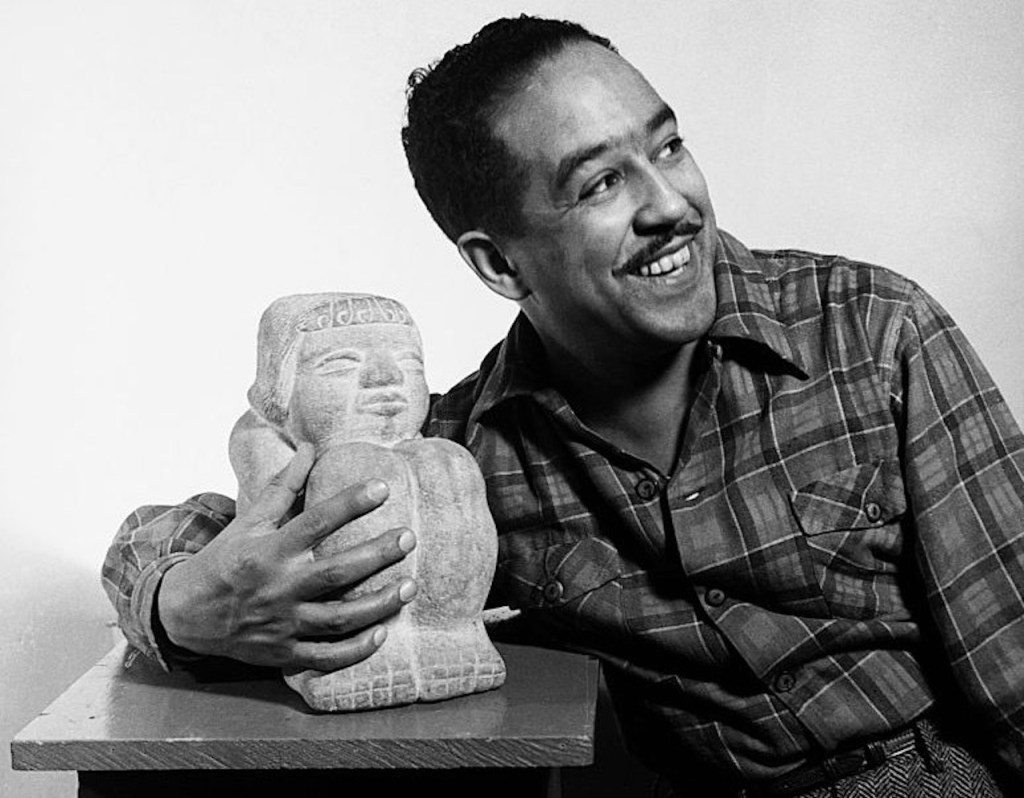


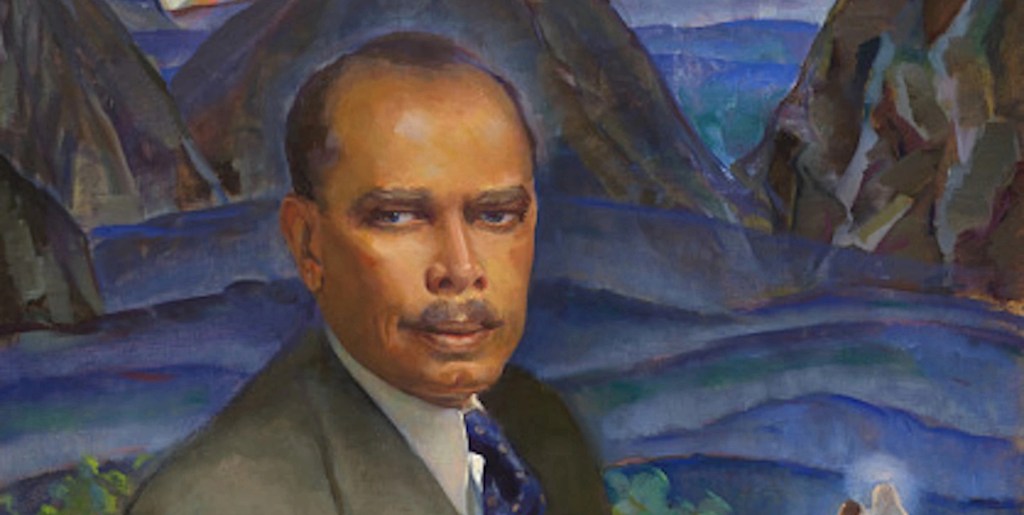



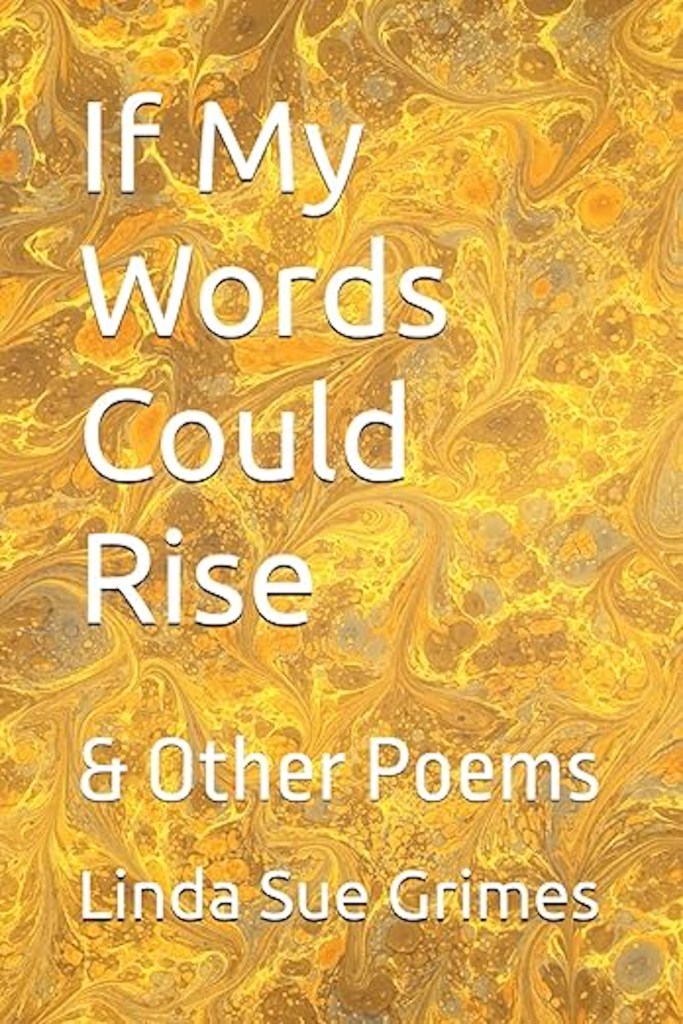
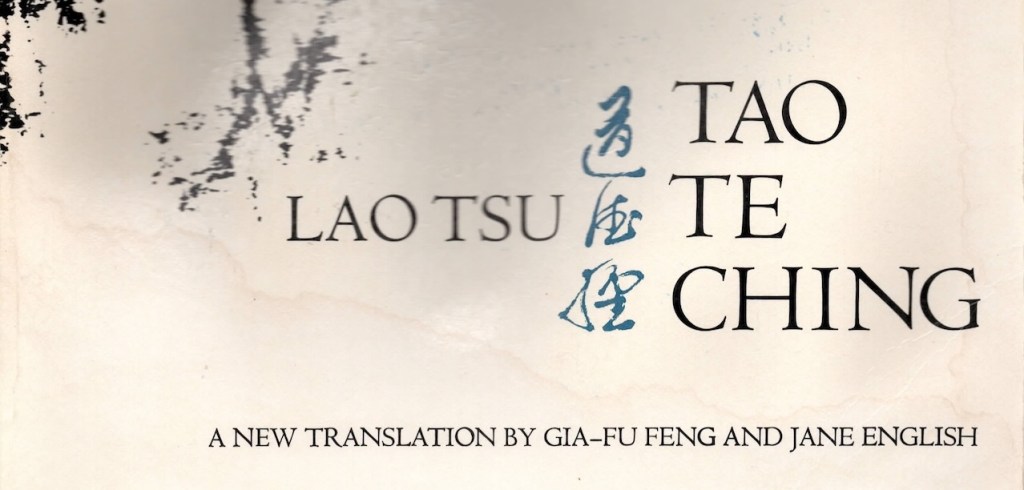
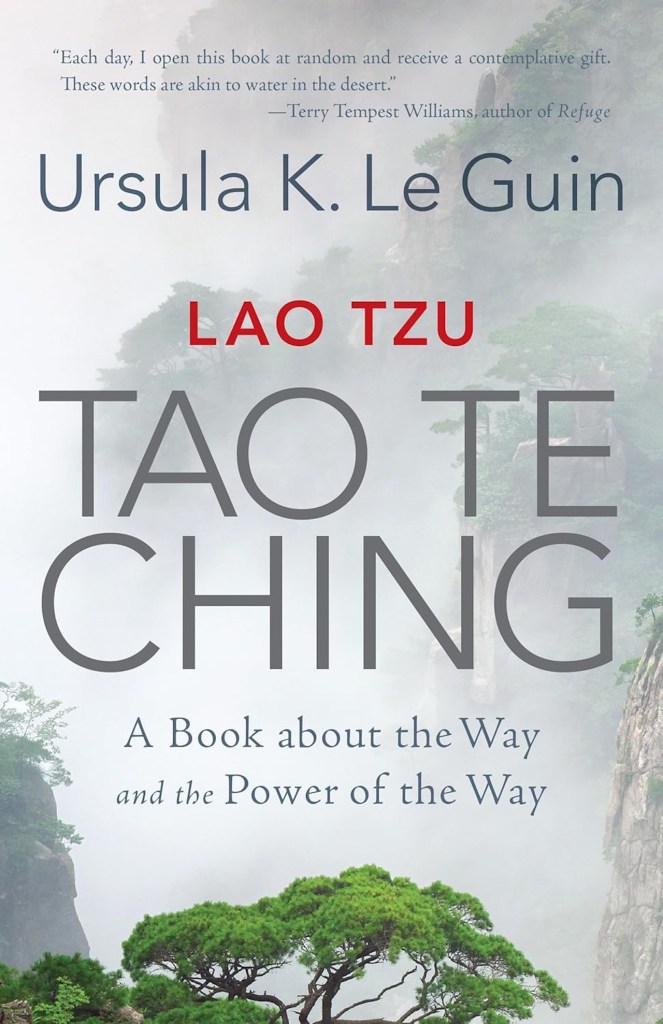
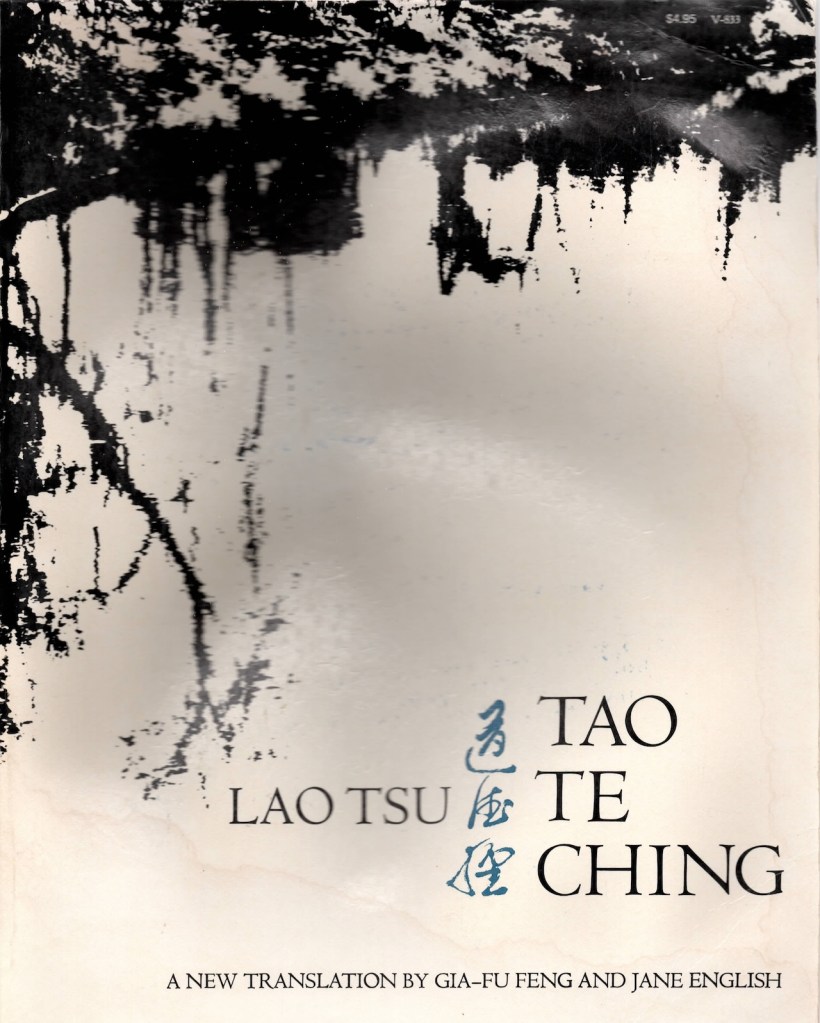

 Linda's Literary Home