Sun shines in the moonlight; nighttime stops at dawn. When morning sprays the flowers, the crickets carry on, But I’ve put a hold on what I say; my say done come and gone: My words will not touch you again, cause everything I say is wrong.
Where do you get your factoids doesn’t matter one thin whit. Wherever you go you spin your spin; I just don’t give a shit. So I’ve put a hold on what I say; my say done come and gone: My words will not touch you again, cause everything I say is wrong.
Right is wrong since you want it to be. Left is right as you choose— Up is down, a smile’s a frown, Walking in your shoes.
Winter might come early; summer may be late; Fall may never fall at all & spring may spring the gate, But I’ve put a hold on what I say; my say done come and gone: My words will not touch you again, cause everything I say is wrong.
A slightly different version of this piece appears in my collection If My Words Could Rise.
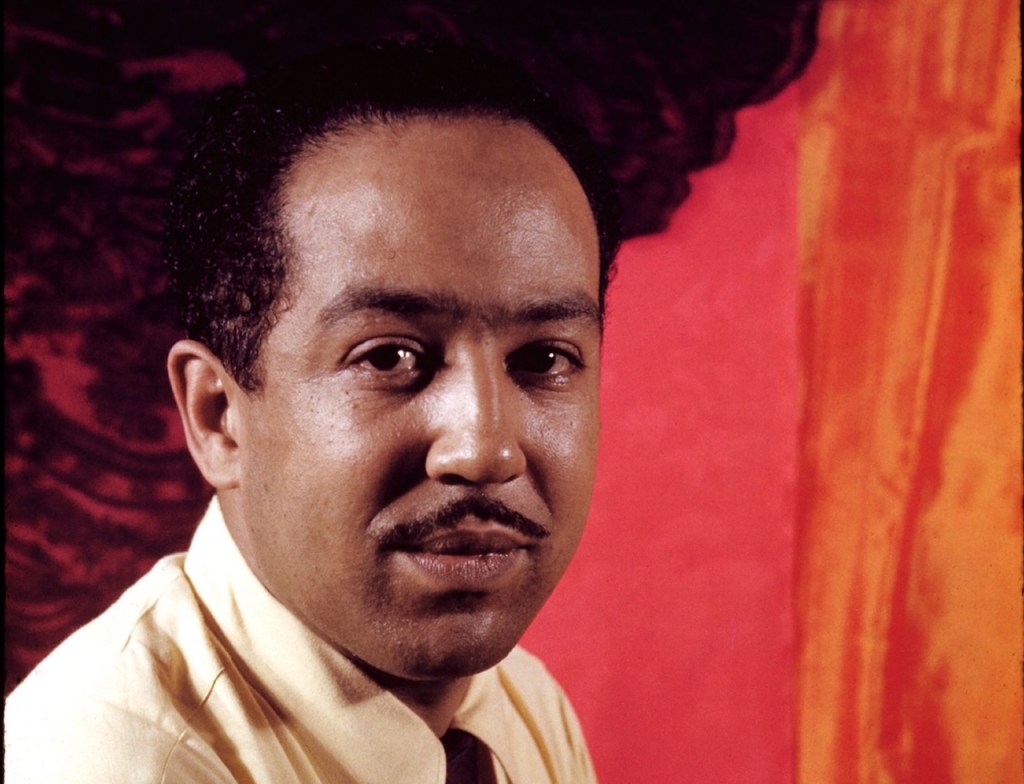
Image: Langston Hughes – Photograph by Carl Van Vechten / Carl Van Vechten Trust / Beinecke Library, Yale – 1280
Langston Hughes’ “Night Funeral in Harlem”
The speaker in Langston Hughes’ “Night Funeral in Harlem” wonders how this poor dead boy’s friends and relatives are able to afford such a lavish funeral.
Introduction and Text of “Night Funeral in Harlem”
Langston Hughes’ “Night Funeral in Harlem” is an example of the poet’s affinity for the blues. He employs a form that includes the blues flavor, allowing the reader to hear a mournful voice that implies issues that he never actually discusses.
The speaker’s questions are more than mere decoration, and their implications attempt to make a political and sociological, as well as religious, evaluation. The poem’s form features an inconsistent conglomeration of rimed stanzas, with varied refrains.
Night Funeral in Harlem
Night funeral In Harlem:
Where did they get Them two fine cars?
Insurance man, he did not pay— His insurance lapsed the other day— Yet they got a satin box for his head to lay.
Night funeral In Harlem:
Who was it sent That wreath of flowers?
Them flowers came from that poor boy’s friends— They’ll want flowers, too, When they meet their ends.
Night funeral in Harlem:
Who preached that Black boy to his grave?
Old preacher man Preached that boy away— Charged Five Dollars His girl friend had to pay.
Night funeral In Harlem:
When it was all over And the lid shut on his head and the organ had done played and the last prayers been said and six pallbearers Carried him out for dead And off down Lenox Avenue That long black hearse done sped, The street light At his corner Shined just like a tear— That boy that they was mournin’ Was so dear, so dear To them folks that brought the flowers, To that girl who paid the preacher man— It was all their tears that made That poor boy’s Funeral grand.
Night funeral In Harlem.
Reading:
Commentary on “Night Funeral in Harlem”
The speaker in Langston Hughes’ “Night Funeral in Harlem” jabs insults at these mourners as he wonders how this poor dead boy’s friends and relatives are able to afford such a lavish funeral.
First Movement: An Critical Observer
Night funeral In Harlem:
Where did they get Them two fine cars?
Insurance man, he did not pay— His insurance lapsed the other day— Yet they got a satin box for his head to lay.
Night funeral In Harlem:
Who was it sent That wreath of flowers?
The speaker begins with his refrain that features his subject, “Night funeral / In Harlem.” He then shoots in his first question that is ultimately insulting to the mourners. The speaker wonders, “Where did they get / Them two fine cars?”
The speaker’s dialect is intended to reveal him as an intimate with the mourners, yet his questions actually separate him from them. If he is one of them, why does he have to ask where the cars come from? His concern, therefore, comes across as disingenuous.
The speaker then introduces the “insurance man,” who might be the reason for the “fine cars,” but no, the poor boy’s “insurance lapsed the other day.” Again, the speaker’s knowledge of the particulars of the situation clash; he knows the people well enough to know that their insurance lapsed, but yet not well enough to know who, in fact, is paying for the lavish funeral.
And then the speaker offers a further bit of incongruity that these poor folks have managed to supply a “satin box / for [the deceased’s] head to lay.” The speaker offers these incongruities but never manages to make clear his purpose.
Second Movement: A Question of Integrity
Them flowers came from that poor boy’s friends— They’ll want flowers, too, When they meet their ends.
Night funeral in Harlem:
Who preached that Black boy to his grave?
The speaker again introduces his next stanza with a variation on the opening refrain: “Night funeral / In Harlem: / / Who was it sent / That wreath of flowers?” Again, the speaker reveals that his distance from the mourners is so great that he has to ask about the flowers. But then he admits that he does actually know that the flowers came from “that poor boy’s friends.”
But the speaker then insults those friends by accusing them of sending them only because “They’ll want flowers, too, / When they meet their ends,” and also implying that he wonders how those friends paid for the flowers.
Third Movement: Is Race Really the Issue?
Night funeral Night funeral in Harlem:
Who preached that Black boy to his grave?
Old preacher man Preached that boy away— Charged Five Dollars His girl friend had to pay.
The third stanza’s opening varied refrain asks, “Who preached that / Black boy to his grave?” He reveals for the first time that the deceased is black but does not clarify why he should offer the race of the dead at this point.
The had been implying that the deceased was black all along by using stereotypical Black English and placing the funeral in Harlem, which was heavily populated by African Americans at the time that the poet was writing.
The preacher is portrayed then as a money-grubber, charging five dollars to “preach[ ] that boy away,” and the poor boy’s girlfriend had to pay the preacher the five dollar charge. Again, how it is that the speaker knows the girlfriend paid the preacher, but that he does not know who paid for two limousines, casket, flowers?
Fourth Movement: Despite the Insults
Night funeral In Harlem:
When it was all over And the lid shut on his head and the organ had done played and the last prayers been said and six pallbearers Carried him out for dead And off down Lenox Avenue That long black hearse done sped, The street light At his corner Shined just like a tear— That boy that they was mournin’ Was so dear, so dear To them folks that brought the flowers, To that girl who paid the preacher man— It was all their tears that made That poor boy’s Funeral grand.
Night funeral In Harlem.
The final stanza is a rather flabby summation of what has happened during this Harlem funeral at night. The opening refrain merely reiterates the subject, “Night funeral / In Harlem.”
Gone is the additional commentary as appeared in the three opening refrains, but the speaker does leave the affair on a compassionate note; at least he can admit, “It was all their tears that made / That poor boy’s / Funeral grand.”
Despite his probing, insulting questions, he finally admits that the importance of the event is that it shows the love the mourners had for their dearly departed.
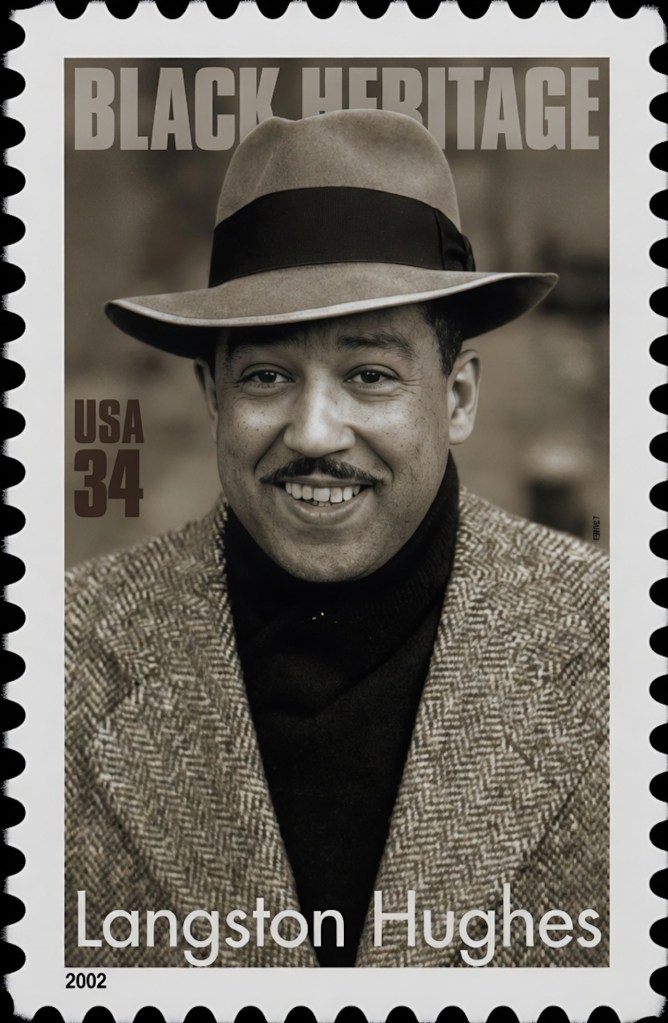
Image: Langston Hughes – Commemorative Stamp – US Stamp Gallery