Linda's Literary Home

Tag: The Complete Poems of Emily Dickinson

  • Emily Dickinson’s “When I count the seeds”

    In "When I count the seeds," Emily Dickinson’s speaker is contemplating her spiritual garden, wherein she plants and grows the metaphorical seeds for her poems.  She introduced this garden in the poem, "There is another sky."
    Image: Emily Dickinson – Amherst College – Daguerrotype of the poet at age 17, circa 1847 – likely the only authentic, extant likeness of the poet

    Emily Dickinson’s “When I count the seeds”

    In “When I count the seeds,” Emily Dickinson’s speaker is contemplating her spiritual garden, wherein she plants and grows the metaphorical seeds for her poems.  She introduced this garden in the poem, “There is another sky.”

    Introduction and Text of “When I count the seeds”

    In her poem, “There is another sky,” Emily Dickinson creates a speaker who introduces her own spiritual, mystical garden, the second poem featured in Editor Thomas Johnson’s The Complete Poems of Emily Dickinson, the volume in which Johnson presents Dickinson’s original forms, rescuing them from the versions that had been manipulated and altered by editors such as Mabel Loomis Todd and Thomas Higginson.

    In “When I count the seeds,” the speaker is musing on the nature of her spiritual garden of verse and ultimately concludes its importance for her.  After such mental forays into the blessed garden, her beloved, favorite season, “summer,” she can leave without trepidation.

    The form of the poem is structured on three “when” clauses, after which the speaker makes the claim that something happens following the activities in the clauses.  Because of the vague nature of the adverbial conjunction, “when,” one should think of its meaning as “after.” It is after each of the events in the “when” clauses that the last line’s activity becomes possible.

    When I count the seeds

    When I count the seeds
    That are sown beneath,
    To bloom so, bye and bye –

    When I con the people
    Lain so low,
    To be received as high –

    When I believe the garden
    Mortal shall not see –
    Pick by faith its blossom
    And avoid its Bee,
    I can spare this summer, unreluctantly.

    Commentary on “When I count the seeds”

    Each “when” clause features an event, after the sum of which the speaker becomes relieved of the human trepidation of regret at losing some desired situation.  In this case, it is simply the passing of summer.  

    The speaker feels a certain melancholy at the end of the summer season.  That emotion presents a problem that she must solve, lest she remain in blue funk.  Her wide brain is up to the task, as she storms her garden of verse for the answer to the difficulty.

    First Stanza:  Taking Stock

    When I count the seeds
    That are sown beneath,
    To bloom so, bye and bye –


    From time to time, the speaker takes stock of her little garden.  In this musing, she begins by implying that something will occur after she has “count[ed] the seeds.”  She reports that the seeds once planted beneath the soil in the spiritual garden, they do, as any seed will, bloom, as time goes by.

    An interesting tension results because “the seeds” are the ideas, thoughts, and/or prompts for each poem in her spiritually effected garden. After each idea or thought or prompt has been sown, it will blossom forth into a perfect flower-poem.  In time, she has found that she possesses many seeds as well as flowers to be reckoned with.

    The term “count” is employed metaphorically to stand as “reckon,” “contemplate,” or more likely even, “muse,” rather than the literal, mathematical rendering of the term’s definition. She is not counting to find out how many seeds she has; she is musing on the lot for the glory of outcome they possess.

    Second Stanza:  Continuing to Contemplate

    When I con the people
    Lain so low,
    To be received as high –

    The second “when” clause addresses the time-frame wherein the speaker has contemplated folks who have been demoted from high station to low but likely still remain held in high regard to many others.  Some folks have died, and yet their reputations have been elevated.

    The speaker’s reason for musing on this situation likely ascends out of a need to place evaluations on the stages of life.  To be placed “so low” metaphorically responds to being placed in the lowest position the human body may find itself, that is, in the bottom of a grave.  

    Yet, the generality of the phrase “so low” remains easily understood as position in life from a lowly profession to a high one, for example, a dog catcher to a president or CEO.  After such cogitation on the seeds of her spiritual garden and then on the various degrees of humanity, the speaker is almost ready to assert her report about what happens next.

    Third Stanza:   Achievement of Purpose

    When I believe the garden
    Mortal shall not see –
    Pick by faith its blossom
    And avoid its Bee,
    I can spare this summer, unreluctantly.

    In the final “when” clause, the speaker is asserting that after she has had the opportunity to survey the marvelous, mystical garden, which may not be perceived through “mortal” vision, her faith allows her to pluck any of the garden’s magic blossoms.

    And then she can re-experience any of the poems which have thus far been cultivated therein without attracting the painful attention of the worrisome sting of “its Bee,” a natural creature that would bedevil any literal garden.

    So after she has contemplated the seeds (thoughts, feelings), which have led to sprouting those flowers (poems), and after she has mused on the nature of human status, and finally after she has plucked (read) one of those “blossom[s]” (poems), she can recover from feeling any sorrow and regret that her beloved, favorite season of summer is now coming to a close.

    The little drama featured in this poem remains so simple, yet through the instrumentality of the complex talent possessed by the poet, the resulting discourse features a colorful, strikingly refreshing account that reveals the nature of profound, intuitive thinking.  

    The poet possessed virtually magical powers of seeing deep into the nature of each created object, into each empirical development, and into each observable array of kinetic energy that infused those things and events.
  • Emily Dickinson’s “I would distal a cup”

    Image: Emily Dickinson – Amherst College – Daguerrotype of the poet at age 17, circa 1847 – likely the only authentic, extant likeness of the poet

    Emily Dickinson’s “I would distal a cup”

    Emily Dickinson’s “I would distal a cup” mimics a toast to a departing friend.  It appears in a letter to newspaper editor Samuel Bowles, a family friend.

    Introduction and Text of “I would distil a cup”

    The text of Emily Dickinson’s “I would distal a cup” in prose form appears in a letter to Samuel Bowles, editor of the Springfield Republican, the most influential newspaper in New England around 1858.  The letter begins with the writer thanking Mr. Bowles for sending her a pamphlet.  She expresses uncertainly that he is the actual sender but thanks him in case he is.

    The rest of the letter finds the writer communicating her famous claim that her friends are her “estate,” and celebrating the notion that friendship enlivens her, keeping her on her toes.  The letter bears the date August 1858 and she remarks that the workers are gathering the “second Hay.”  

    Thus the summer season is winding down.  It is at this point in the letter that she states, “I would distil a cup, and bear to all my friends, drinking to her no more astir, by beck, or burn, or moor!”

    Apparently, Dickinson thought enough of this sentence to include it as a full-fledged poem in one of the many  fascicles that Thomas H. Johnson later edited for publication in his The Complete Poems of Emily Dickinson, the groundbreaking work that restored Dickinson’s poems to their original forms.  

    In the letter, Dickinson’s sentence-turned-poem seems to jump up out the verbiage as a toast at a gala dinner party, wherein one would rise, raise a cup, and offer the toast to one being recognized.

    I would distil a cup

    I would distil a cup,
    And bear to all my friends,
    Drinking to her no more astir,
    By beck, or burn, or moor!

    Commentary on “I would distal a cup”

    In a letter to Samuel Bowels, Emily Dickinson puts on display her colorful, chatty conversational ability, including this original prose-statement, which later became a finished poem.

    First Movement:  Creating, Rising, and Offering

    I would distil a cup,
    And bear to all my friends,

    The speaker, as if rising to offer a toast at some gathering of friends, imparts that she wishes to offer a toast “to all [her] friends.”  The drink is likely a fine whiskey; thus the speaker conflated the manufacture of the drink with her lifting the cup.  

    She makes herself more important to the creation of the drink than she, or anyone offering a toast, would deserve.  But the exaggeration simply implies her devotion to her friends, who are by the way, her “estate.”  Not only is she offering a toast, but she is also creating the drink in order to offer it.

    Then after the speaker had created this distilled beverage, she lifts her cup and bears its contents to all of her friends.  At the point that poem appears in her letter to Bowles, she had made it clear that she can make chatty conversation.  

    She has claimed that she wishes to be forgiven for hoarding her friends.  She has surmised that those who were once poor have a very different view of gold than those who have never suffered poverty.

    The letter writer even invokes God, saying He does not worry so much as we or else he would “give us no friends, lest we forget him.”  Playing on the expression, “A bird in the hand is worth two in the bush,” she compares what one might anticipate in “Heaven” as opposed to what one experiences on earth and finds the latter more appealing.

    However, the speaker then abruptly tells Bowles that, “Summer stopped since you were here,” after which she mourns the loss of summer with several acerbic witticisms.  She offers Bowles some paraphrases from her “Pastor,” who has dismissed humanity as nothing but a “Worm.”  

    Then she poses the question to Bowles:  “Do you think we shall ‘see God’?”  This abrupt inquiry likely startled Bowles, which is no doubt the writer’s purpose.  But then she moves on to the image of “Abraham” “strolling” with God “in genial promenade,” seemingly answering her own startling question.

    Second Movement:  As Summer Abandons the Streams and Meadows

    Drinking to her no more astir,
    By beck, or burn, or moor!

    After having distilled the fine liquor, poured it into her cup, she lifts it and offers her toast to the one who is in the process of departing—her beloved summer.  The summer season is no longer “astir” in the streams or on the meadows.  

    She employs the colorful terms “beck” and “burn” (bourne) to refer to streams of water.  And then she refers to fields, heaths, or meadows as “moor,” likely also for its colorful, exotic texture.

    Immediately after the toasting sentence in the letter, the letter writer abruptly bids Mr. Bowles, “Good night,” but she still has more to say and proceeds to say it.  She then claims that “this is what they say who come back in the morning.”  

    She seems to be identifying with summer who is saying good-bye but only to return “in the morning.”  But her certainty that “Confidence in Daybreak modifiers Dusk,” allows her to accept the pair of opposites that continually blight her world.

    The speaker has difficulty even saying good-night or good-bye to a friend once she has opened the conversation. But she knows she must wind down, just a summer has done; thus she wishes blessings for Bowles’ wife and children, even going to far as to send kisses for lips of the little ones.  

    She then tells Bowles that she and the rest of the Dickinson family remain eager to visit with him again.  And she will dispense with “familiar truths,” for his sake.

    Emily Dickinson and at the Exotic

    Emily Dickinson’s penchant for exoticisms likely enamored her of some of the more cryptic expressions placed in her letters.  That penchant allowed her be so cheeky as to select certain expressions and later present them in a fascicle as a poem.  

    It also explains her employment of terms for ordinary nouns such a field, river, creek, or meadow.  She kept her dictionary handy and made abundant use of it. Luckily, her intuitive perception and ability with language kept her from suffering the clownish terminology often detected by users of a thesaurus.

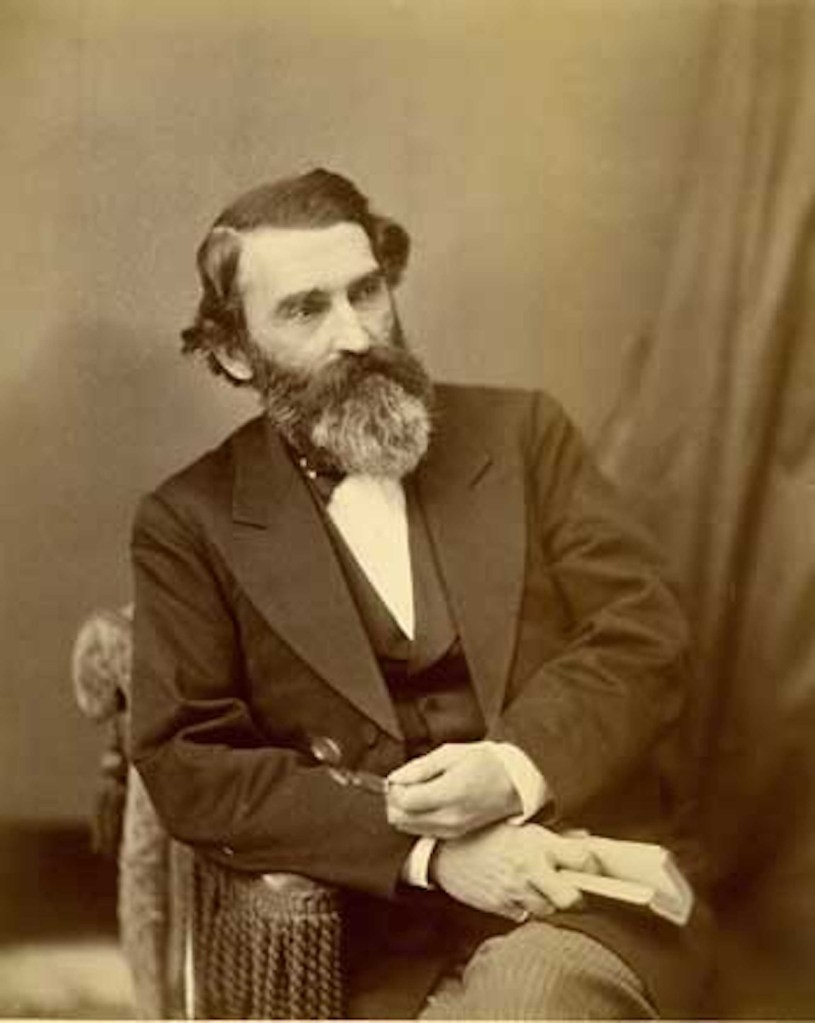
    Image b: Samuel Bowles – Emily Dickinson Museum

  • Emily Dickinson’s “The feet of people walking home”

    Image: Emily Dickinson – Amherst College – Daguerrotype of the poet at age 17, circa 1847 – likely the only authentic, extant likeness of the poet

    Emily Dickinson’s “The feet of people walking home”

    In a uniquely dramatic way, Dickinson’s speaker reveals the simple truth that people are happier when they are on their way home.

    Introduction with Text of “The feet of people walking home”

    Emily Dickinson’s “The feet of people walking home” plays out its little drama in three octaves or eight-line stanzas.  Instead of the literal meaning of the word, “home,” this poem employs the figurative meaning as in the old hymn lyric “This World Is Not My Home.”  This Dickinson poem features highly symbolic imagery, while at times seeming to point to things of this physical world. 

    Every image works in service of supporting the claim that each human soul wears “gayer sandals” as it strides toward its permanent “home” in the abode of the Divine Creator.  Again, the Dickinsonian mysticism provides the poet’s speaker with an abundance of mystic meaning garnered from that “Bird” of hers that ventures out and returns with new melodies.

    The feet of people walking home

    The feet of people walking home
    With gayer sandals go  –
    The Crocus  – till she rises
    The Vassal of the snow  –
    The lips at Hallelujah
    Long years of practise bore
    Till bye and bye these Bargemen
    Walked singing on the shore.

    Pearls are the Diver’s farthings
    Extorted from the Sea  –
    Pinions  – the Seraph’s wagon
    Pedestrian once  – as we  –
    Night is the morning’s Canvas
    Larceny  – legacy  –
    Death, but our rapt attention
    To Immortality.

    My figures fail to tell me
    How far the Village lies  –
    Whose peasants are the angels  –
    Whose Cantons dot the skies  –
    My Classics vail their faces  –
    My faith that Dark adores  –
    Which from its solemn abbeys
    Such resurrection pours.

    Reading: 

    Commentary on “The feet of people walking home”

    In a uniquely dramatic way, Dickinson’s speaker reveals the simple truth that people are happier when they are on their way home–especially as they are making progress toward their Divine Abode.

    First Stanza:  Happier on the Way Home

    The feet of people walking home
    With gayer sandals go  –
    The Crocus  – till she rises
    The Vassal of the snow  –
    The lips at Hallelujah
    Long years of practise bore
    Till bye and bye these Bargemen
    Walked singing on the shore.

    A paraphrase of the first two lines of Dickinson’s “The feet of people walking home” might be:  People are happier when they are on their way back to the abode of the Divine Creator.  The physical earthly place called “home” serves as a metaphor for Heaven or the Divine Place where the belovèd Lord resides.  

    That “Divine Place” is ineffable, and therefore has no earthly counterpart, but for most human beings and especially for Emily Dickinson, home is the nearest thing on earth, that is, in this world to the spiritual level of being known as “Heaven.”    So according to this speaker even the shoes of people who are on their way “home” are “gayer,” happier, more peaceful, filled with delight.  

    The speaker then begins to offer support for her claim: the flower exemplified by the “Crocus” is restrained by the “snow” until it pushes up through the ground and displays it marvelous colors.   Similarly, the human soul remains restrained by maya delusion until it pushes up through the dirt of this world to reveal its true colors in God.  

    Those who have practiced meditating on the name of the Divine for many years ultimately find themselves walking and “singing on the shore” like “Bargemen,” who have come ashore after a long haul of work.

    Second Stanza:  The Value of Commodities

    Pearls are the Diver’s farthings
    Extorted from the Sea  –
    Pinions  – the Seraph’s wagon
    Pedestrian once  – as we  –
    Night is the morning’s Canvas
    Larceny  – legacy  –
    Death, but our rapt attention
    To Immortality.

    Further examples of those who are going “home” are divers for pearls who are able to “extort” those valuable commodities “from the sea.”  Again, highly symbolic is the act of diving for pearls.  The meditating devotee is diving for the pearls of love and wisdom that only the Blessed Creator provides his striving children.  

    This image is comparable to the line in the chant by Paramahansa Yogananda “Today My Mind Has Dived”:  “Today my mind has dived deep in Thee / for Thy pearls of love from my depthless sea.”  

    The metaphoric diving for pearls enlivens and strengthens the message regarding the spiritual seeker’s search for God’s wisdom and love.  In both discourses, the “sea” serves as a metaphor for the Divine.   

    The “Seraph” before getting his wings once was confined to walking, not riding in a wagon.  His wings or pinions now serve him as a useful vehicle to alleviate his need to take the shoe-leather express.  “Night” serves the “morning” as a “canvas” on which can be painted taking and giving.  

    If in dreams, the poet can see herself as a channel for providing mystic truths, she will be leaving a “legacy,” but if she has envisioned only selfish wish fulfillment, she will be committing “larceny.”   

    Therefore, as night serves morning, morning serves the soul as it allows expression to blossom.   “Death” is not the end of life, not the life of the soul, because the soul is immortal; therefore, the only purpose for death is to focus the human being’s mind on the ultimate fact of “Immortality.”  Without the duality of death vs immortality, the latter could not be grasped in the physical world on the material plane.

    Third Stanza:  Ultimate Home in Heaven

    My figures fail to tell me
    How far the Village lies  –
    Whose peasants are the angels  –
    Whose Cantons dot the skies  –
    My Classics vail their faces  –
    My faith that Dark adores  –
    Which from its solemn abbeys
    Such resurrection pours.

    The speaker now admits that she has no idea how far away the “Village” is, that is, how far or how long it will take to reach her Ultimate Home in Heaven.   But she then makes sure that her audience knows that she is indeed referring to Heaven when she asserts that Heaven’s “peasants are the angels.”  

    The souls that have already entered that Kingdom of Ineffable Reality have joined the angels.  The speaker then refers to the stars calling them “Cantons” that “dot the skies.”   The speaker is implying that the “Village” she speaks of is full of light, and the only earthly comparison is the stars in the sky.  The speaker reports that her old, established expressions have hidden themselves, as her faith remains cloistered and “solemn.”

    But from those “abbeys” of her faith, she senses that the “resurrection” of her soul is certain, as the pouring out of sunshine from a dark cloud that divides to reveal those marvelous, warm rays.

    Dickinson’s Grammar/Spelling Errors

    Some of Dickinson’s poems contain grammatical and/or spelling errors; for example, in “The feet of people walking home” in line 6,”Long years of practise bore,” she employs the British spelling—a verb form—instead of the noun form “practice,” which is actually required in this phrase.  

    Interestingly, while American English currently uses “practice” for both noun and verb, the British forms use “practice” to function as a noun and “practise” as a verb. It remains unclear why editor Thomas H. Johnson did not quietly correct that error, because he reports in the introduction to his The Complete Poems of Emily Dickinson

    I have silently corrected obvious misspelling (witheld, visiter, etc), and misplaced apostrophes (does’nt).

    However, those errors do tend to give her work a human flavor that perfection would not have rendered.

    The Metaphor of Divinity

    The impossibility of expressing the ineffable has scooped up poets of all ages.   The poet who intuits that only the Divine exists and that all Creation is simply a plethora of manifestations emanating from that Ultimate Reality has always been motivated to express that intuition.  

    But putting into words that which is beyond words remains a daunting task.   Because Dickinson was blessed with a mystic’s vision, she was able to express metaphorically her intuition that the soul of the human being is immortal, even though her sometimes awkward expressions seem to lurch forward in fits and starts.   But many of her best efforts feature the divine drama, which she often plays out in her poems.