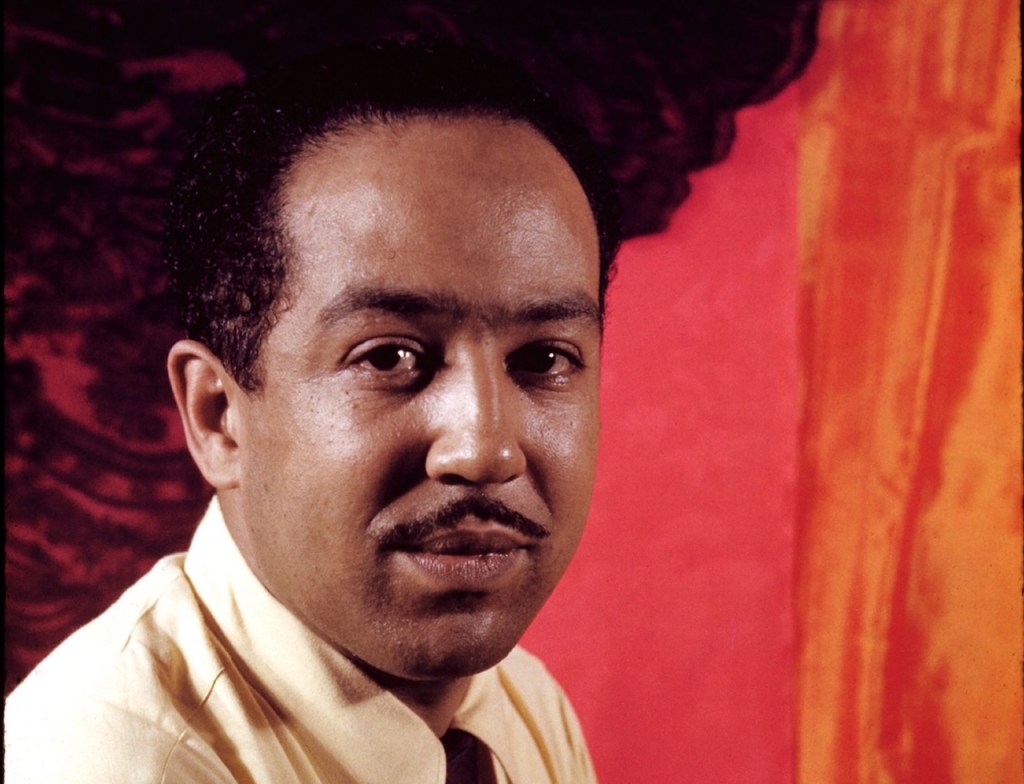
Langston Hughes’ “Cross”
The speaker in Langston Hughes’ “Cross” laments having been born to biracial parents, a white father and a black mother. But the poem merely dramatizes stereotypes, and that reliance limits its achievement. This poem fails to exemplify the true achievement of this poet.
Introduction with Text of “Cross”
The speaker in Langston Hughes’ “Cross” is lamenting having been born to a mixed racial couple, a white father and a black mother.The title implies two meanings: he is the “cross” between two individuals, as are all human beings a cross between their parents. But this speaker’s special situation of being a cross between two races causes him to suffer a burden, as in the idiom “cross to bear” [1].
The poet, Langston Hughes, who penned this piece, was black and so were both of his parents: about his parents, Hughes has remarked [2], “My father was a darker brown. My mother an olive-yellow.”
Thus, he is not speaking from the experience of a mixed race individual but instead is relying on stereotypes as he explores the possible, and perhaps even, likely feelings of a biracial man.
Cross
My old man’s a white old man
And my old mother’s black.
If ever I cursed my white old man
I take my curses back.
If ever I cursed my black old mother
And wished she were in hell,
I’m sorry for that evil wish
And now I wish her well
My old man died in a fine big house.
My ma died in a shack.
I wonder where I’m going to die,
Being neither white nor black?
Commentary on “Cross”
One of Langston Hughes’ less successful pieces, his poem “Cross” does not dramatize the true feelings of a mixed race man. The piece, instead, relies heavily on mere stereotypes, such as a rich white father and a poor black mother—rich father dying in a mansion, poor mother dying in a shack. Supposedly, this situation leaves the biracial speaker wondering where he will die because he, incongruously, considers himself of neither race (of course, he is of both.)
First Stanza: Cursing the Father
My old man’s a white old man
And my old mother’s black.
If ever I cursed my white old man
I take my curses back.
The speaker commences his lament by reporting that his father is white while his mother is black. The speaker is thus an adult looking back over the events of his life as he remembers them, but it remains unclear how old the speaker may be at the time of his musing.
It may be assumed that he has seen enough of life to find that being a biracial individual can be a burdensome experience; thus, he is claiming he has had a heavy cross to bear during his lifetime.
The speaker then admits that in the past he has spoken ill of his “white old man,” but now he has had a change of heart and wants to retract those inflammatory words. The speaker offers no reason for his changing his mind about his father, but the poem moves along with a fine, rhythmic, well-rimed clip.
While speculation about the motives or intentions [3] of a speaker in poem may remain unhelpful or even counterproductive, one can quietly assume that the speaker has just decided that forgiveness leaves the conscience more peaceful than hanging on to a grievance.
Because the poem relies only on stereotypes of what life is like for a mixed race individual, it is likely that the poet is just configuring his words to fill out his poem with possible riming sounds that move along in a pleasant meter.
Second Stanza: Cursing the Mother
If ever I cursed my black old mother
And wished she were in hell,
I’m sorry for that evil wish
And now I wish her well
As the speaker has formerly “cursed” his father, he has also “cursed” his mother, even wished her to be condemned to “hell.” But again as with his father, he now wants to retract those curses. And with the old black mother, he now even “wishes her well.”
The speaker did not wish his father well; he wished only to take back his curses that he has hurled at the old man. Therefore, the speaker renders a least a tittle more affection for the mother.
This situation is quite understandable: the speaker was likely raised by the mother, thus in reality, he identifies more with his black racial makeup than his white. Plus the very nature of motherhood more than fatherhood lends itself to more affection [4] by most children.
Third Stanza: Remaining in Confusion
My old man died in a fine big house.
My ma died in a shack.
I wonder where I’m going to die,
Being neither white nor black?
Somewhat vaguely, the speaker is suggesting that he was not raised by both parents, perhaps even by neither. Stereotypically, he has his father, the “white old men,” die in a “fine big house.” So he, at least, knows where his father lived, unless he is merely guessing, based on stereotype.
Stereotype again intact, he has his “black old mother” dying “in a shack.” Again, it remains unclear if the speaker was raised by the mother, even though that is likely. If the speaker was raised by his mother, he would likely assume that he would die as she did.
If the speaker had been raised by the father in a “fine big house,” again he would assume that he would die as his father did. These assumptions suggest that the speaker has accomplished a life that is not quite as rich as his father’s but not quite as poor as his mother’s. The speaker’s socio-economic status is ultimately irrelevant, however.
That the speaker sees himself as “neither white nor black” poses an important question, however: why does he not think of himself as both white and black? Biologically, he is, in fact, both white and black. What would that acceptance imply for the speaker’s confusion?
Such speculation goes beyond the scope of this poem or any commentary about it; the poet, Langston Hughes, had no doubt been acquainted with individuals who expressed such mixed feelings.
Still, because Hughes was a master craftsman, who composed many fine, genuine pieces of writing, the poem clips along at an entertaining pace, even though it lacks the luster of a poem [5], such as Hughes’ “The Negro Speaks of Rivers,” which truly offers enlightenment of its subject.
Facts and Feelings
While each individual is entitled to his own feelings, opinions, and thoughts, he is not entitled to the facts surrounding and/or motivating those feelings, opinions, and thoughts. For example, if a black individual claims that he feels depressed, angry, or outraged because racism keeps him from attaining his goal of becoming a lawyer, we must believe his claim that he feels that way.
However, we do not have to accept his reason for his feelings, because lawyers come in all races; there are two black justices currently serving on the U.S. Supreme Court. So he is perfectly free to believe that racism is the cause of his feelings, but just because he believes it does not make it true.
The question then would arise, what is causing him to fail to understand that there must be other reasons—not racism—that he has failed to achieve his goal of entering the legal profession? Similarly, the biracial fellow in “Cross” is entitled to feel that he is confused because he is not black or white. But the fact of the matter is that he is both black and white.
So the next question for him might be, what are you doing to address your ongoing confusion from your black-and-whiteness? One might argue that in all cases, stereotypical responses to issues actually prevent the ability to properly address those issues. One cannot solve a problem that has been misidentified.
Sources
[1] Curators. “cross to bear.” Farlex Dictionary of Idioms. 2015.
[2] Denise Low & T. F. Pecore Weso. “Langston Hughes on His Racial and Ethnic Background.” Kansas History. 2004.
[3] Nasrullah Mambrol. “Intentional Fallacy.” Literary Theory and Criticism. March 17, 2016.
[4] Paramahansa Yogananda. “Beauty and Joy, Grace and Refuge: Living in the Presence of the Mother Divine: Discover the Feminine Aspect of God.” Self-Realization Fellowship Official Website. Accessed October 31, 2023.
[5] Linda Sue Grimes. “Langston Hughes’ ‘The Negro Speaks of Rivers’.” Linda’s Literary Home. February 11, 2026.
The Cross of Barry Soetoro
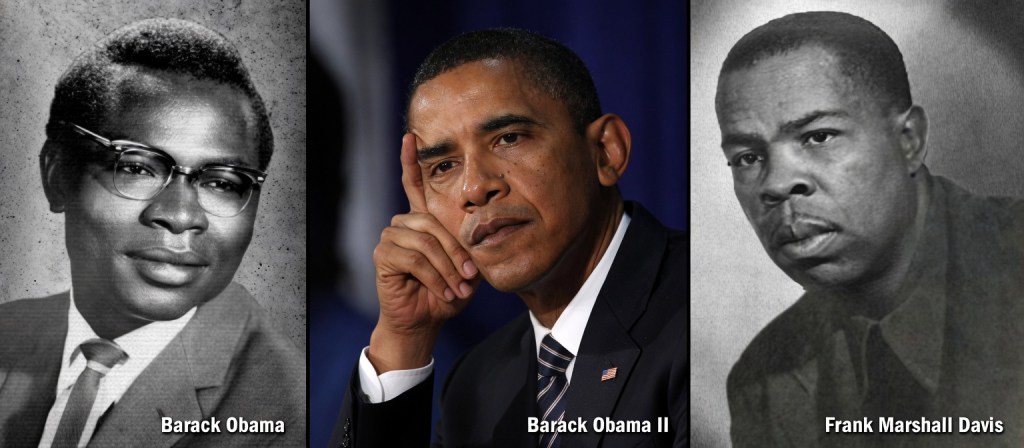
The poet Langston Hughes did not experience life as a biracial individual, because both of his parents were black. Thus, the poet has created a character in his poem to attempt to make a statement about biracial individuals.
Hughes’ poem is not entirely successful in making that statement: the poem depends only on a stereotype, the one that offers the notion that biracial individuals will remain confused because they cannot figure out with which race they should identify.
Barack Obama, in his biographical, Bill Ayers-ghost-written Dreams from My Father, claims to have suffered the same confusion, but because he was raised by the white side of his family, he clearly absorbed the values of the white, communist ideological spectrum to which that family ascribed.
Obama’s attempt to identify as “black” came as he discovered the advantages of that now politically advantaged identity group. Also, instead of sporting the name of his likely true biological father, Frank Marshall Davis, Obama achieves an even further boost at being a cosmopolitan, world citizen, with the ability to jokingly assert that he has a “funny name.”
In order to achieve that joking stance, Obama changed the name he had been using, “Barry Soetoro,” to “Barack Obama”—”Barry” just didn’t quite fit the joke of the “funny name.”
The vagueness and hypocrisy of taking a stance with which one is not wholly familiar results in formless, vague imagery. Therefore, in Hughes’ “Cross,” the speaker remains a vague, unformed figure. And such a figure cannot convey a fully formed notion of what it is actually like to have lived life as a biracial individual.
The speaker’s goal in Langston Hughes’ “Cross” like that of “Barack Obama” is to air a grievance in hopes of achieving an unearned status, not to honestly inform. As Obama remains a crepuscular figure on the horizon, Hughes’ poem remains a mere glance at a stereotype—not even close to what a poem needs to be to communicate its message.

