
Linda's Literary Home

Tag: “The Terrible Sonnets”

  • Gerard Manley Hopkins’ “My own heart let me more have pity on; let”

    Image: Gerard Manley Hopkins – National Portrait Gallery, London

    Gerard Manley Hopkins’ “My own heart let me more have pity on; let”

    The speaker in this sonnet examines his inward struggle, through which he has learned mercy toward the self (soul) while undergoing heavy, sustained spiritual pressure.  My personal issue with this pressure assures me that Father Hopkins well understood its vicissitudes as well as its rewards.

    Introduction and Text of “My own heart let me more have pity on; let”

    In this final terrible sonnet, the speaker turns inward to speak directly to his own heart; he does so with urgency but restraint. The sonnet foregrounds his own personal moral and spiritual reckoning.  In that accounting, he has found that self-pity is not indulgence but instead it is simply charity rightly ordered and affirmed. 

    The poetic language pushes as well as it knots itself into compression.  It portrays the pressure exerted on a mind that has been tormented to the point of exhaustion.  Thus, now that exhausted mind must seek a genuine place to rest.

    Readers may note that Father Hopkins has separated  both the octave and the sestet into two quatrains in the octave and two tercets in the sestet.  This kind of separation adds to the dramatic effect that each stanza represents.  

    The sonnet could be interpreted as consisting of four movements; however, for consistency of preserving the Petrarchan model, I have kept them grouped in my commentary as simply octave and sestet.

    My own heart let me more have pity on; let

    My own heart let me more have pity on; let
    Me live to my sad self hereafter kind,
    Charitable; not live this tormented mind
    With this tormented mind tormenting yet.

    I cast for comfort I can no more get
    By groping round my comfortless, than blind
    Eyes in their dark can day or thirst can find
    Thirst’s all-in-all in all a world of wet.

    Soul, self; come, poor Jackself, I do advise
    You, jaded, lét be; call off thoughts awhile
    Elsewhere; leave comfort root-room; let joy size

    At God knows when to God knows what; whose smile
    ‘S not wrung, see you; unforeseen times rather—as skies
    Betweenpie mountains—lights a lovely mile.

    Reading

    Commentary on “My own heart let me more have pity on; let”

    The sonnet dramatizes four movements, as mentioned above,  from self-laceration to self-mercy, which has led to the discovery of hope—not by force of harsh discipline but by soft, divinely inspired release.

    Octave: “My own heart let me more have pity on; let”

    My own heart let me more have pity on; let
    Me live to my sad self hereafter kind,
    Charitable; not live this tormented mind
    With this tormented mind tormenting yet.

    I cast for comfort I can no more get
    By groping round my comfortless, than blind
    Eyes in their dark can day or thirst can find
    Thirst’s all-in-all in all a world of wet.

    The speaker begins the octave by offering a plea that is, however, also a command.  He is directly addressing his own heart as both somewhat metaphorically as both judge and defendant. The line “Let me more have pity on” signals a deliberate act of will: pity must be allowed to exist and work its power, not merely be passively felt. 

    The speaker then labels his accustomed cruelty toward himself: he has become a “tormented mind” that compounds his suffering by continually rehearsing it. The repetition of “tormented” mimics the cycle he is condemning; his has become a mind that had kept turning upon itself without pause to rest. 

    Charity here does not engage merely for sentimental purposes; it remains a necessary,  ethical discipline, employing the discipline to refuse to continually inflict self-harm, even under the guise of rigor.

    The second quatrain moves quite quickly but assertively, and then it intensifies the uselessness of the same old, ordinary search for simple, quiet comfort. Casting “for comfort” metaphorically creates the two leisure activities of  fishing and gambling. Both of these activities involve chance, and uncertainty often hands over nothing to the player after plunging much effort into them. 

    The “blind/Eyes” image sharpens the deadlock: Blind eyes cannot see daylight simply by groping, while thirst cannot be slaked by being dunked in water that is not fit to drink.  Again, the poet has been performing his duty of giving back to the reader his own experience.  And the mark of a great poet is that he does so completely in a natural, believable voice, as Father Hopkins does here.

    The paradox of “thirst’s all-in-all in all a world of wet” completely and earnestly captures spiritual barrenness as it spirits about in a world of abundance, where remedies for maladies surround the suffering soul yet remain remote and unreachable. 

    The octave thus has closed every false door. The  activities of exerting much effort, of analyzing each sorrow’s parts, and then groping toward some restless search have only deepened the dryness of the  issue. The speaker’s understanding and honesty now clear the way for a genuine rejoinder that does not hang on mastery or grasping.

    The minds and hearts of all humanity remain in search of such genuineness, especially as it contemplates it own mortality.  The winds of change may threaten the material world, but the astral and causal levels of being hold promises that humanity keeps deep in its bosom.

    Sestet: “Soul, self; come, poor Jackself, I do advise”

    Soul, self; come, poor Jackself, I do advise
    You, jaded, lét be; call off thoughts awhile
    Elsewhere; leave comfort root-room; let joy size

    At God knows when to God knows what; whose smile
    ‘S not wrung, see you; unforeseen times rather—as skies
    Betweenpie mountains—lights a lovely mile.

    The speaker in the sestet now is able to turn advice into consolation, as he discovers joy; and this joy was not seized by groping fingers but granted by steady grace, which arrived without exertion and through patience.

    In the sestet, the direct address broadens as the “Soul, self” bring together the divided mind/heart into a single event. The affectionate diminutive “Jackself” calms the weather of judgment, while weariness is acknowledged but without contempt. 

    The advice remains as simple as it is radical—“let be.” Thought itself must be allowed to rest “awhile,” not disappeared but its temperature lowered. The speaker suggests a turning “elsewhere,” away from the former obsessive peer into inwardness, leaving “comfort root-room.” Comfort cannot be bludgeoned at the root, an joy must be afforded a place to increase.

    The speaker then suspends time as well as outcome, when he asserts “At God knows when to God knows what.” This line refuses acts that schedule or  measure. It finds that hope exists only under divine discretion. The smile then appears quite naturally because it is “not wrung”; it is not forced by circumstances , neither is it caught up by the will. Instead, this divine joy may come like a flash in “unforeseen times,” and the speaker compares that flash colorfully to the sudden light that appears between mountains. 

    This image then significantly gives honor to the obstruction without dragging in the issue of despair: the mountains still remain mountains, but between them, a mile or so  has been wonderfully lighted.   The sonnet concludes with a vista—limited, lovely, and sufficient. Mercy toward the self has become the condition for perceiving the divine light, for experiencing joy, and it is patience that remains the means by which that blessed condition endures.
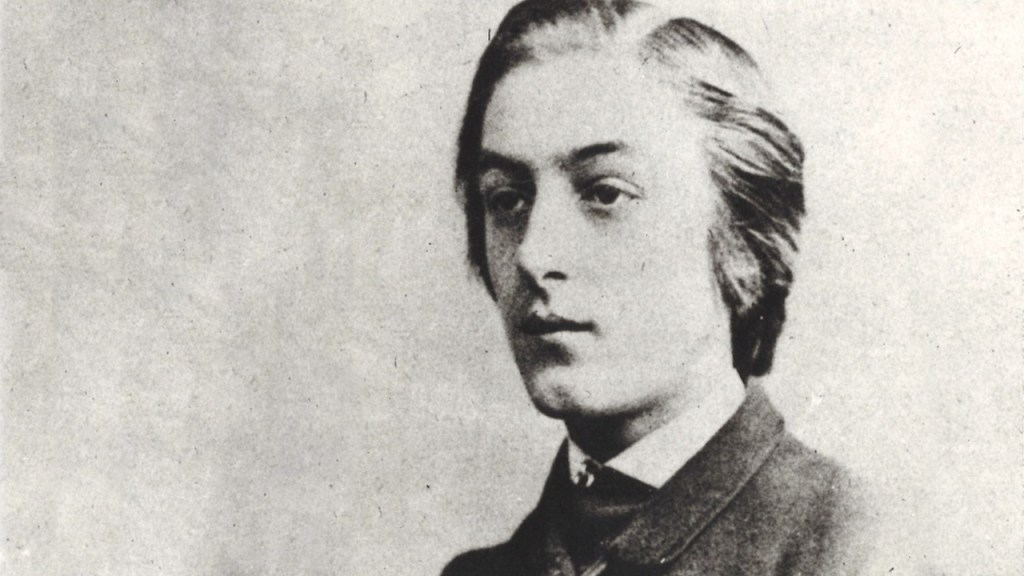

  • Gerard Manley Hopkins’ “Patience, hard thing! the hard thing but to pray”

    Image: Gerard Manley Hopkins – Inspirational Jesuits

    Gerard Manley Hopkins’ “Patience, hard thing! the hard thing but to pray”

    This sonnet is counted as one of Father Hopkins’ six “terrible sonnets.”

    Introduction and Text of “Patience, hard thing! the hard thing but to pray”

    The speaker in Father Hopkins’ “Patience, hard thing! the hard thing but to pray” explores searchingly the nature of  spiritual endurance. He is focusing on patience not as a soft virtue but as a challenging and difficult discipline, which oftentimes scars the pride, while exhausting the will.  

    But those actions still reflect and align with divine will and action. As he usually does, this speaker reveals the hard discipline of God remains always for the betterment of humankind.  As human beings, we all search for—or at least wish for—our own betterment.

    As a Jesuit priest, Father Hopkins made it his mission to seek divine guidance, and unlike us non-priestly poets, he focused primarily on religious and spiritual issues that affected him deeply.

    Patience, hard thing! the hard thing but to pray

    Patience, hard thing! the hard thing but to pray,
    But bid for, Patience is! Patience who asks
    Wants war, wants wounds; weary his times, his tasks;
    To do without, take tosses, and obey.
    Rare patience roots in these, and, these away,
    Nowhere. Natural heart’s ivy, Patience masks
    Our ruins of wrecked past purpose. There she basks
    Purple eyes and seas of liquid leaves all day.

    We hear our hearts grate on themselves: it kills
    To bruise them dearer. Yet the rebellious wills
    Of us we do bid God bend to him even so.
    And where is he who more and more distils
    Delicious kindness? – He is patient. Patience fills
    His crisp combs, and that comes those ways we know.

    Reading

    Commentary on “Patience, hard thing! the hard thing but to pray”

    As human beings, we learn early that patience is an important personal quality, but the speaker in this sonnet is revealing his inner turmoil as an  argument against  which he confronts resistance even as he refuses to decry the virtue that seems to be resisting him.   He treats the virtue of patience in a realistic manner—not with sentimentality.  He asserts that patience is both vitally necessary as well as deeply painful.

    The humanity of his cries shows us that as we strive and struggle, all of humanity has done so.  Father Hopkins lived in the 19th century—two centuries earlier than our own, and yet his struggles are our struggles.

    Octave: “Patience, hard thing! the hard thing but to pray”

    The speaker begins the octave with an effusive cry—no calm reflection here!  He invokes “patience” immediately and pairs it with prayer; they are both difficult things to approach and accomplish.  We often cry for what we seem to lack, even in the 21st century.

    He knows that genuine prayer requires patience, and it is a kind of patience that the heart and mind naturally resist in a fallen world.   The sharpness of his complaint is emphasized through repetition.

    He then seems to create a stunning paradox in that patience is difficult, but it is also “bid for.” The speaker easily confesses that patience is not only endured, but it is sought and asked for, even though that asking heralds conflict. 

    Personified as a female figure who is doing the asking, Patience paradoxically “wants war, wants wounds,” and those qualities expose that there is a cost in acquiring her. She commands that one live a life without ease, which includes doing without things one might need for comfort, receiving blows that stun and hurt, all the while remaining obedient.  Dame Patience then requires obedience under pressure with the willingness to accept pain, trials, and tribulations that seem arbitrary instead of well-deserved.

    The speaker asserts that that kind of patience remains rare, even fragile. It takes hold only under these catastrophic conditions; for if they are removed them, there is not patience within existence.  This insistence blows up the notion that patience can be a decorative virtue experienced in comfort; instead, patience makes it appearance only in deprivation, instability, and any other calamity. 

    Still through all this mayhem, the speaker refuses to qualify her as infertile. Through a striking shift in tone and assurance,  patience then transforms into “Natural heart’s ivy” —a living being, covering “our ruins of wrecked past purpose.” We chafe under ruined purposes as we try to build a better world even in current times.

    With that ivy image, the speaker is acknowledging that failure and collapse within the self, which include all past intentions are broken and defeated. Patience, however, does not convert them; she merely masks them by covering all that damage with new growth.

    The final lines of the octave seems to complicate the struggle. Patience is basking in colorful accoutrements, yet luxuriant color and fluidity suggest abundance, as well as beauty, even though it is a beauty that grows over wreckage. 

    The speaker thus remains well aware that such patience beautifies what has been lost without denying the loss itself. The octave leaves the speaker’s fragility suspended between intense pain and strange fertility—between war and ivy.

    Sestet: “We hear our hearts grate on themselves: it kills”

    In the sestet, the speaker turns inward with even greater urgency. He hears that “our hearts grate on themselves”; this image is harsh and mechanical, suggesting inner resistance. And patience can be understood as not only difficult, but it is also possibly lethal, in that “it kills / To bruise them dearer.” 

    That claim is intimating that the heart continues to hang onto its own wounds because it would rather retain the familiar pain than to face the adversity made possible by surrender. 

    Especially within the confines of such thinking,  the speaker has to surrender to an subtle prayer: “the rebellious wills / Of us we do bid God bend to him.” Even as the will resists God, it, at the same time, must supplicate to God to transcend its resistance.  An exotic tension unfolds the divided mind/soul as it prays. It remains faithful but still defiant.

    The main focus that has infused itself throughout the entire sonnet comes into sharp relief in the form of the question “where is the goodness that justifies all of this misery and suffering?”  A question to haunts our current civilization as surely as it did two centuries ago!

     The speaker responds not with an argumentative abstract notion, but with a person. “He is patient.” God’s kindness can come only slowly, similar to a liquid being “distilled,” drop by drop, rather than being poured out all at once.  As science has shown us certain processes, poetry shows us the metaphorical value of understanding those processes.

    Patience is not merely a virtue that human beings must learn; it is the basic method of God’s own divine action. The final image of “crisp combs” brings to mind honey made by bees that labor furiously as they produce such sweetness. 

    Patience “fills” them (all of creation’s creatures), and from that fullness comes kindness in “those ways we know,” as it ascends to human experience through evolutionary time rather than temporal spectacle.

    In the sestet, the speaker comes close to showing how to defend one’s heart and mind in the struggle that humanity is engaged in.  He does not provide direct relief from pain or a way to guard against rebellion. 

    But instead, the speaker suggests that the answer can only be understood in terms of what is human and what is divine; thus, human patience can be seen to resemble divine patience.  The pain and suffering experiences by human beings can be converted into the divine stuff that produces sweetness, i.e., kindness.

    The process, of course, is meditation and prayer, along with deep thought and service to humankind and the world at large, in whatever form that service must take—even writing poems, thus, can serve a divine purpose.

    We struggle today as humanity has struggled in the past.  From poets such as Father Hopkins, we can glean the depth of our sorrow but also we can be comforted that there is a light at the end of the tunnel of sad darkness, and we can determine that we will progress toward that light.

  • Gerard Manley Hopkins’ “No worst, there is none. Pitched past pitch of grief”

    Image: Gerard Manley Hopkins – Inspirational Jesuits

    Gerard Manley Hopkins’ “No worst, there is none. Pitched past pitch of grief”

    The third in the group of sonnets widely known as “the terrible sonnets,” this one,“No worst, there is none. Pitched past pitch of grief,” presents a speaker experiencing grief so intense that it feels beyond limit or measure.

    In the octave, suffering overwhelms his body and spirit and leads to urgent appeals for divine comfort. In the sestet, the speaker turns inward, describing his mind as dangerous terrain. The sonnet ends with a grim acknowledgment of mortality and the daily release offered by sleep.

    Introduction and Text of “No worst, there is none. Pitched past pitch of grief”

    Father Hopkins’ “No worst, there is none. Pitched past pitch of grief” is a sonnet that records extreme mental and spiritual suffering. Written in the traditional Petrarchan form, it moves from an octave of mounting anguish to a sestet of reflection and hard-earned recognition. 

    The speaker struggles to express grief that feels limitless and that is unrelieved by faith or prayer. Dense sound patterns and abrupt phrasing mirror the pressure of despair. Rather than offering comfort, the poem confronts pain directly, showing how the mind and soul endure when consolation seems absent.

    No worst, there is none. Pitched past pitch of grief

    No worst, there is none. Pitched past pitch of grief,
    More pangs will, schooled at forepangs, wilder wring.
    Comforter, where, where is your comforting?
    Mary, mother of us, where is your relief?
    My cries heave, herds-long; huddle in a main, a chief-
    Woe, wórld-sorrow; on an áge-old ánvil wínce and síng —
    Then lull, then leave off. Fury had shrieked “No ling-
    Ering! Let me be fell: force I must be brief.”
    O the mind, mind has mountains; cliffs of fall
    Frightful, sheer, no-man-fathomed. Hold them cheap
    May who ne’er hung there. Nor does long our small
    Durance deal with that steep or deep. Here! creep,
    Wretch, under a comfort serves in a whirlwind: all
    Life death does end and each day dies with sleep.

    Reading

    Commentary on “No worst, there is none. Pitched past pitch of grief”

    The sonnet moves from outward cries of anguish to inward examination of mind. The octave presents grief as limitless, cumulative, and shared with the world at large. In the sestet, suffering becomes psychological, depicted as dangerous inner terrain. The poem ends without relief, settling instead on a sober recognition of death and the temporary rest found in sleep.

    Octave: “No worst, there is none. Pitched past pitch of grief”

    No worst, there is none. Pitched past pitch of grief,
    More pangs will, schooled at forepangs, wilder wring.
    Comforter, where, where is your comforting?
    Mary, mother of us, where is your relief?
    My cries heave, herds-long; huddle in a main, a chief-
    Woe, wórld-sorrow; on an áge-old ánvil wínce and síng —
    Then lull, then leave off. Fury had shrieked “No ling-
    Ering! Let me be fell: force I must be brief.”

    The octave opens with a blunt assertion, denying that suffering reaches a final point. Grief, in this view, has no bottom and no boundary. The phrase “pitched past pitch of grief” reinforces this idea by suggesting that pain has gone beyond any scale by which it might be measured. Grief is not merely intense; it has surpassed all known limits.

    In the second line, the speaker explains how pain increases rather than diminishes.  Each new pang learns from the last. Suffering becomes more violent because it has practiced its activity and method. The verb “wring” suggests twisting pressure, as if grief grips and contorts the speaker from within. Pain is physical as well as mental, as the grip tightens.

    The speaker then turns to directly address urgency and confusion. The repetition of “where” emphasizes abandonment rather than disbelief. The speaker still believes in comfort but cannot find it. 

    The following line continues the appeal. The speaker invokes maternal mercy and protection, yet relief does not come. These lines reveal a faith under strain, not a faith rejected, but one tested by silence.

    Next, the speaker describes the sheer force of personal grief. The cries are compared to herds, large and uncontrollable. Individual anguish gathers into a single overwhelming mass. By calling it “world-sorrow,” the speaker enlarges private suffering into something shared by humanity across time. The grief feels ancient, collective, and unavoidable.

    This sorrow plays out “on an age-old anvil,” an image suggesting repeated blows over centuries. The anvil implies endurance and also punishment. On it, the cries “wince and sing.” Pain produces sound, and suffering is shaped into expression. The poem itself becomes the product of this hammering, forged under pressure.

    The octave ends with the sudden emotional recoil. The intensity momentarily subsides, only to be replaced by fury that demands an end: “No lingering!” The speaker feels forced to compress suffering into brevity, not because it is resolved, but because it is unbearable. The octave closes without comfort, suspended between eruption and exhaustion.

    Sestet: “O the mind, mind has mountains; cliffs of fall”

    O the mind, mind has mountains; cliffs of fall
    Frightful, sheer, no-man-fathomed. Hold them cheap
    May who ne’er hung there. Nor does long our small
    Durance deal with that steep or deep. Here! creep,
    Wretch, under a comfort serves in a whirlwind: all
    Life death does end and each day dies with sleep.

    The sestet turns inward, shifting attention from external cries to internal experience. The mind is described as a vast landscape, filled not with beauty but with danger. These “mountains” are steep and unstable, ending in sudden drops. Mental suffering is portrayed as perilous terrain.

    The cliffs are terrifying because they are steep and impossible to measure. Those who have not faced such depths cannot understand them.  The two half lines “Hold them cheap / May who ne’er hung there” conspire to dismisses the judgments of outsiders. Only those who have been suspended over these mental precipices know their true danger.

    The speaker then acknowledges human limitation.  Endurance is described as “small,” easily overwhelmed. Prolonged suffering exceeds what a person can reasonably bear. This admission removes any suggestion of weakness or failure. The problem is not the sufferer but the scale of the suffering.

    At this point, the speaker addresses the self (sou) directly; he recognizes personal vulnerability and degradation. The command to “creep” suggests retreat rather than triumph. Survival, not victory, becomes the goal.

    The comfort that follows is limited and unstable. Any relief comes amid turbulence. There is no calm resolution, only brief shelter within chaos. Comfort exists, but it is fragile and temporary.

    The sonnet ends with a stark conclusion.  Life moves inevitably toward death. Each day rehearses that ending through sleep, which brings both rest and unconsciousness. Sleep offers a small mercy, a pause from suffering, but it also mirrors death itself.

    The sestet does not undo the despair of the octave. Instead, it reframes it. The speaker accepts the limits of endurance and the reality of mortality. The sonnet closes with clarity rather than consolation, acknowledging that while suffering may not be cured, it can, at least, be named and endured one day at a time.

    🕉

    You are welcome to join me on the following social media:
    TruthSocial, Locals, Gettr, X, Bluesky, Facebook, Pinterest 

    🕉

    Share

  • Gerard Manley Hopkins’ “I wake and feel the fell of dark, not day”

    Image: Gerard Manley Hopkins – National Portrait Gallery, London

    Gerard Manley Hopkins’ “I wake and feel the fell of dark, not day”

    The speaker Gerard Manley Hopkins’ “I wake and feel the fell of dark, not day” is confronting spiritual desolation, interior darkness, and the sense of abandonment by God. 

    Awakening into psychological night, the speaker measures time not in hours but in years of suffering. His cries feel unheard, like letters sent to one who lives far away. In the sestet, suffering turns inward as his soul becomes both the source and the punishment of torment.

    Introduction and Text of “I wake and feel the fell of dark, not day”

    This sonnet is the second installment belonging to the group of six poems often called the “terrible sonnets.”  They focus on intense inward struggle in highly compressed language, and they reveal a profound sense of spiritual trial. The speaker is describing an internal condition of darkness that persists even after waking. 

    The poem follows the traditional Petrarchan structure, but the poet displayed the poem on the page separating the octave into two quatrains and the sestet into two tercets. The octave presents the condition of suffering, followed by the sestet which deepens and internalizes that suffering. The language remains quite visceral, yet sacramental and judicial, suggesting punishment and endurance.

    I wake and feel the fell of dark, not day

    I wake and feel the fell of dark, not day.
    What hours, O what black hours we have spent
    This night! what sights you, heart, saw; ways you went!
    And more must, in yet longer light’s delay.

    With witness I speak this. But where I say
    Hours I mean years, mean life. And my lament
    Is cries countless, cries like dead letters sent
    To dearest him that lives alas! away.

    I am gall, I am heartburn. God’s most deep decree
    Bitter would have me taste: my taste was me;
    Bones built in me, flesh filled, blood brimmed the curse.

    Selfyeast of spirit a dull dough sours. I see
    The lost are like this, and their scourge to be
    As I am mine, their sweating selves, but worse.

    Reading

    Commentary on “I wake and feel the fell of dark, not day”

    In the octave, the speaker presents spiritual suffering as prolonged night and unanswered prayer, while the sestet reveals suffering as internalized judgment.

    Octave: “I wake and feel the fell of dark, not day.”

    I wake and feel the fell of dark, not day.
    What hours, O what black hours we have spent
    This night! what sights you, heart, saw; ways you went!
    And more must, in yet longer light’s delay.

    With witness I speak this. But where I say
    Hours I mean years, mean life. And my lament
    Is cries countless, cries like dead letters sent
    To dearest him that lives alas! away.

    The octave opens abruptly: “I wake and feel the fell of dark, not day.” The speaker awakens, yet awakening does not bring light. The word fell suggests something savage, cruel, or deadly, as though darkness itself were an attacking force. 

    Day has failed to arrive, not externally but internally. The speaker’s consciousness remains trapped in night. This darkness is not merely the absence of light but a palpable weight that can be felt.

    The second line intensifies this experience. The repetition emphasizes exhaustion. These hours are not ordinary; they are “black hours,” heavy with dread.   The speaker addresses his own heart directly, asking it to remember what it has seen and where it has wandered, suggesting a night filled with disturbing thoughts, memories, or spiritual visions that cannot be escaped even in sleep.

    The line “And more must, in yet longer light’s delay” extends the suffering into the future. Relief is postponed; light is delayed. The speaker anticipates further endurance without comfort. The octave has thus established a defining theme: suffering continues; the speaker is conscious of the fact that it is also unavoidable.

    In the second quatrain, the speaker asserts his testimony.  He is not exaggerating or indulging emotion; instead, he is claiming authority as one who has endured. Yet immediately, time expands. When he says “hours,” he means “years,” and beyond that, “life.” What began as a single night becomes a metaphor for an entire existence marked by anguish. The darkness is not episodic but continually defining.

    The lament itself takes the form of “cries countless.” These cries are compared to missives sent to a loved one far away.   The metaphor is striking. The speaker believes his cries are addressed to God, “dearest him,” yet they receive no reply. Like letters that never reach their destination, these prayers feel wasted, unheard, and perhaps unopened. God is known to be living, yet distant.

    The emotional force of the octave lies in this tension: the speaker continues to cry out, continues to bear witness, even while believing those cries go unanswered.  The speaker is not revealing disbelief but instead he is demonstrating faith that yet suffers. 

    The speaker holds no compunction to deny God’s existence, a suffering humanity often is wont to do; instead, he suffers under God’s silence. The speaker therefore is expressing despair not as rebellion but as endurance under abandonment. The night continues, the cries continue, and the speaker remains awake within it.

    Sestet: “I am gall, I am heartburn. God’s most deep decree”

    I am gall, I am heartburn. God’s most deep decree
    Bitter would have me taste: my taste was me;
    Bones built in me, flesh filled, blood brimmed the curse.

    Selfyeast of spirit a dull dough sours. I see
    The lost are like this, and their scourge to be
    As I am mine, their sweating selves, but worse.

    The sestet takes a decisive inward turn. Where the octave emphasized time and unanswered cries, the sestet focuses on the body and self as the site of punishment.  The speaker does not merely feel bitterness; he is bitterness. Gall, a bitter substance associated with suffering and poison, suggests spiritual nausea. Heartburn implies a burning from within, a pain generated internally rather than inflicted from without.

    The speaker attributes this condition to “God’s most deep decree.” This suffering is not accidental or random. It is permitted, even ordained. The bitterness is something the speaker must taste, yet the shocking revelation follows: “my taste was me.” The self (soul) becomes both the instrument and the substance of suffering. There is no external punishment necessary; identity itself is the affliction.

    The line “Bones built in me, flesh filled, blood brimmed the curse” intensifies the embodiment of despair.  The curse is not simply symbolic; it saturates the physical body. Bones, flesh, and blood—the fundamental elements of life—are all implicated. Suffering is total, leaving no refuge within the soul. The speaker’s claims suggest a complete inhabitation or incarnation of pain, as though despair has become structural.

    The metaphor of fermentation is created in the line “Selfyeast of spirit a dull dough sours.” Yeast is normally a source of growth and life, but here it produces sourness. The spirit works upon itself destructively. The self generates its own decay. This image reinforces the idea that suffering is self-contained, inescapable, but continuous.

    In the final lines, the speaker broadens his vision.  He recognizes his condition as a foretaste of damnation. The lost are punished not by external flames but by being trapped within themselves. Their scourge is to be “their sweating selves.” The speaker identifies with this fate, acknowledging that he already experiences something like it, though he believes theirs will be worse.

    The sestet ends without consolation. There is no resolution, no light breaking through. Instead, the poem concludes with recognition and endurance. The speaker understands the nature of suffering more clearly, but understanding does not remove it. The sonnet closes in grim clarity rather than hope.

  • Gerard Manley Hopkins’ “To seem the stranger lies my lot, my life”

    Gerard Manley Hopkins – National Portrait Gallery, London

    Gerard Manley Hopkins’ “To seem the stranger lies my lot, my life”

    The speaker in Gerard Manley Hopkins’ sonnet “To seem the stranger lies my lot, my life” explores the sense of spiritual, national, and personal estrangement during years in Ireland.  Written with the same intensity that characterizes Hopkins’ work, the poem dramatizes exile as both an external condition and an inward trial. 

    In the octave, the speaker is focusing on separation from family and his country England, and in the sestet, he turns inward to the silence imposed by his vocation, leaving him isolated yet faithful.

    Introduction and Text of “To seem the stranger lies my lot, my life”

    Father Gerard Manley Hopkins, who was a Jesuit priest as well as a poet, wrote many of his most profound poems during periods of emotional strain and vocational doubt.  He wrote “To seem the stranger lies my lot, my life” in 1889 during his final years in Ireland; he created a speaker in the poem who is reflecting an acute sense of displacement—geographical, familial, and spiritual. 

    Although Father Hopkins remained consistently obedient to his religious calling, he often felt alienated from England, misunderstood by authority, and silenced as a poet. This sonnet, however, reveals not rebellion but suffering endured with disciplined faith, unveiling exile as a severe trial for spiritual testing.

    As the first of the six “terrible sonnets,” “To seem the stranger lies my lot, my life” remains distinctive because its sense of despair is aimed less at abstract spiritual terror and more at everyday human loss—failed relationships, missed vocations, and social estrangement. 

    However, like the others, it offers little comfort and speaks in a raw, urgent voice.  It is unusual in how little it turns to nature or directly to Christ. Instead, it keeps its focus on the speaker’s painful isolation from family, community, and any sense of being useful as a priest.

    To seem the stranger lies my lot, my life

    To seem the stranger lies my lot, my life
    Among strangers. Father and mother dear,
    Brothers and sisters are in Christ not near
    And he my peace my parting, sword and strife.
    England, whose honour O all my heart woos, wife
    To my creating thought, would neither hear
    Me, were I pleading, plead nor do I: I wear-
    y of idle a being but by where wars are rife.

    I am in Ireland now; now I am at a thírd
    Remove. Not but in all removes I can
    Kind love both give and get. Only what word
    Wisest my heart breeds dark heaven’s baffling ban
    Bars or hell’s spell thwarts. This to hoard unheard,
    Heard unheeded, leaves me a lonely began.

    Reading

    Commentary on “To seem the stranger lies my lot, my life”

    Father Hopkins’ sonnet is a meditation on exile and silence. The octave emphasizes outward separation—from family, country, and recognition—while the sestet deepens the conflict by revealing an inward blockage: the poet’s inability to speak or be heard. 

    Octave: “To seem the stranger lies my lot, my life”

    To seem the stranger lies my lot, my life
    Among strangers. Father and mother dear,
    Brothers and sisters are in Christ not near
    And he my peace my parting, sword and strife.
    England, whose honour O all my heart woos, wife
    To my creating thought, would neither hear
    Me, were I pleading, plead nor do I: I wear-
    y of idle a being but by where wars are rife.

    The speaker open the octave with a stark declaration: “To seem the stranger lies my lot, my life.” The phrasing is deliberate and emphatic, with “lot” and “life” placed side by side to suggest that estrangement is not incidental but foundational. The speaker does not merely feel like a stranger; seeming a stranger has become the defining pattern of his existence. The verb “lies” suggests fate or destiny, implying that this condition is imposed rather than chosen.

    The repetition of “stranger” in the second line—“Among strangers”—reinforces the sense of isolation. The speaker is not simply alone; he is surrounded by others from whom he feels fundamentally divided. This alienation is then specified in personal terms: separation from “Father and mother dear” and from “Brothers and sisters.” 

    These lines resonate deeply, as Hopkins had consciously embraced a religious vocation at the cost of ordinary familial intimacy. Yet the phrase “are in Christ not near” reveals a crucial nuance. The separation is not merely geographical or emotional but mediated through faith. His family exists “in Christ,” but spiritual unity does not erase physical absence.

    Line four intensifies the tension through paradox: “And he my peace my parting, sword and strife.” The “he” here refers unmistakably to Christ, echoing Christ’s own words in the Gospel that he came not to bring peace but a sword. 

    Christ is simultaneously the speaker’s source of peace and the cause of painful division.  This line crystallizes the poem’s central conflict: obedience to God has fractured his earthly attachments.

    England emerges next as a figure of longing and betrayal. The speaker personifies the nation as a beloved woman: “England, whose honour O all my heart woos, wife / To my creating thought.” England is not merely homeland; it is the imaginative and cultural source of his poetry. 

    The speaker’s “creating thought” is bound to England’s landscape, language, and traditions. Yet this beloved “wife” refuses to listen. England “would neither hear / Me, were I pleading.” The rejection is imagined even before the plea is made.

    Significantly, the speaker then states, “plead nor do I.” Either Pride, humility, or exhaustion restrains him from petitioning for recognition or return. The enjambment underscores weariness: “I wear- / y of idle a being but by where wars are rife.” The broken word “weary” visually enacts fatigue. 

    The speaker feels useless, idle, unless he is placed where conflict exists. The “wars” here may be literal—cultural and political unrest in Ireland—or spiritual, referring to inner trials. Either way, the octave closes with a man who sees struggle as the only justification for his continued existence.

    Throughout the octave, the speaker’s syntax becomes knotted and his clauses have become compressed. This density mirrors his emotional burden. There is no lyric ease, no pastoral consolation. Instead, the octave establishes exile as a lived reality—accepted but not softened.

    Sestet: “I am in Ireland now; now I am at a thírd”

    I am in Ireland now; now I am at a thírd
    Remove. Not but in all removes I can
    Kind love both give and get. Only what word
    Wisest my heart breeds dark heaven’s baffling ban
    Bars or hell’s spell thwarts. This to hoard unheard,
    Heard unheeded, leaves me a lonely began.

    The sestet shifts from the general condition of estrangement to a precise location: “I am in Ireland now.” The repetition of “now” emphasizes immediacy and finality. Ireland is not a temporary assignment but a present, enduring state. 

    The speaker then deepens the sense of displacement by calling this “a thírd / Remove.” The word “remove” suggests not travel but distance layered upon distance—England removed from family, and Ireland removed yet again from England.

    (Note the acute accent mark over the “i” in third:  Hopkins often placed accent marks to indicate a stress that might be passed over in a quick reading.  He wanted to assure that his sprung rhythm received its full impact.)

    The speaker then immediately qualifies this isolation: “Not but in all removes I can / Kind love both give and get.” Despite exile, he affirms the possibility of charity. This assertion is a theologically critical.

    Love is not extinguished by displacement; grace operates even in separation. The line resists self-pity and aligns the speaker’s world view with Jesuit discipline, which demands adaptability and service wherever one is sent.

    However, the speaker’s deepest anguish follows:  “Only what word / Wisest my heart breeds dark heaven’s baffling ban / Bars or hell’s spell thwarts.” Here the speaker turns inward, focusing not on where he is but on what he cannot do. His “wisest” words—his poetry—are blocked. 

    Heaven itself seems to be imposing a “ban,” a prohibition that frustrates expression. The phrase “dark heaven” is especially striking. Heaven, normally associated with clarity and illumination, becomes obscure and baffling.  The alternative force is equally terrifying: “hell’s spell.” Whether divine silence or demonic interference, the result is the same—his words are thwarted. 

    This line reveals one of the most painful aspects of the poet’s late life: the sense that his poetic gift, given by God, is simultaneously withheld by God. Silence becomes both command and punishment.

    The final couplet intensifies the tragedy: “This to hoard unheard, / Heard unheeded, leaves me a lonely began.” The speaker is forced to “hoard” his words, storing them without release. Even when heard, they are “unheeded.” 

    The repetition emphasizes futility. The phrase “a lonely began” is deliberately and strangely ungrammatical. “Began” suggests something unfinished, a life or vocation that never reached fulfillment.  The speaker is not calling himself a failure, but he is implying that he feel incomplete.

    Yet even here, the speaker sees despair as part of his discipline. He is not accusing God; he is only lamenting his lot.  The speaker conclude his revelation with witness not rebellion.  The speaker is recording his condition faithfully; he trusts that meaning may lie well beyond his own understanding. Although the loneliness is real, he can bear it through obedience.

    In the sestet, then, exile becomes interiorized. The outer fact of Ireland gives way to the inner trial of silence.  The speaker’s greatest suffering is not being far from England but being cut off from utterance. 

    For this speaker, this wound is the deepest. Yet the very existence of the poem contradicts the ban it describes. In writing this sonnet, the poet speaks from within silence, transforming isolation into testimony.

    Taken together, the octave and sestet reveal a soul suspended between fidelity and desolation. “To seem the stranger lies my lot, my life” is not a cry for rescue but a record of endurance. 

    The speaker/poet accepts exile as part of his vocation, even when it costs him voice, recognition, and comfort. The sonnet stands as one of his most austere achievements—a poem that does not resolve suffering but sanctifies it through truthful speech.