
Linda's Literary Home

Tag: thoughts of the day

  • Thought of the Day

    Image: Original Icon for American Thinker 

    List of Thoughts of the Day

    The following thoughts have appeared earlier on the welcome page of Linda’s Literary Home

    February 7, 2026:
    February 4, 2026:
    January 29, 2026:
    January 23, 2026:
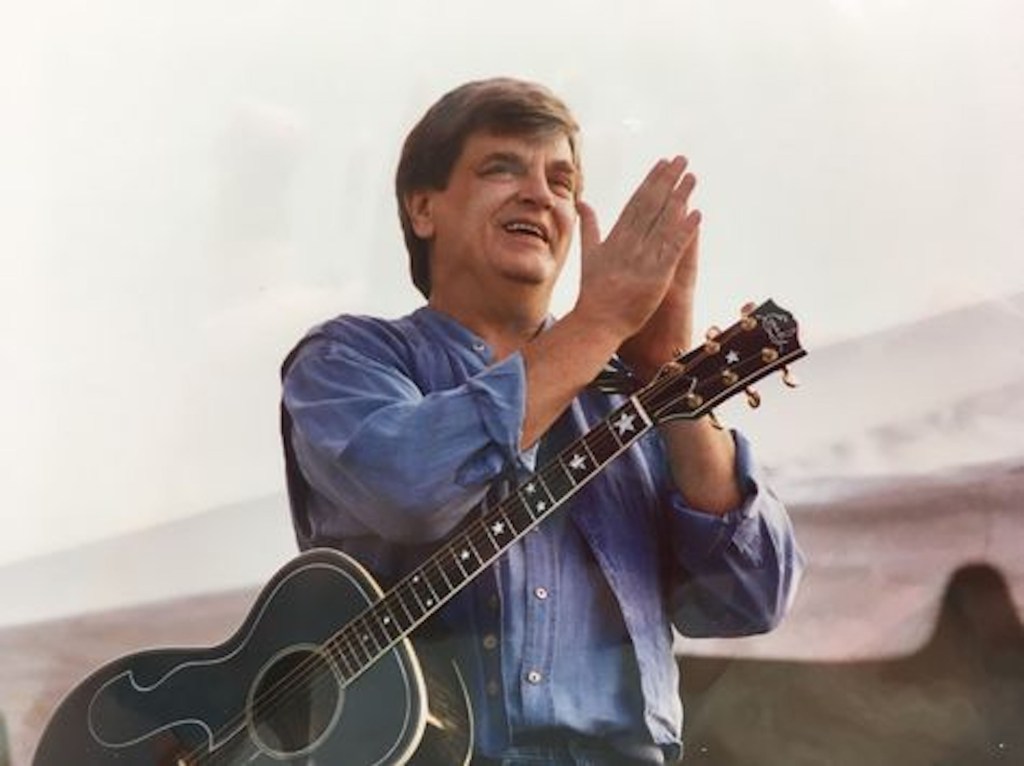
    January 19, 2026: Remembering that great voice that deeply influenced my life in music . . . with great love and respect for this dear, angel-voiced singer . . .

    In Memoriam: Phil Everly – January 19, 1939 — January 3, 2014
    January 15, 2026: 
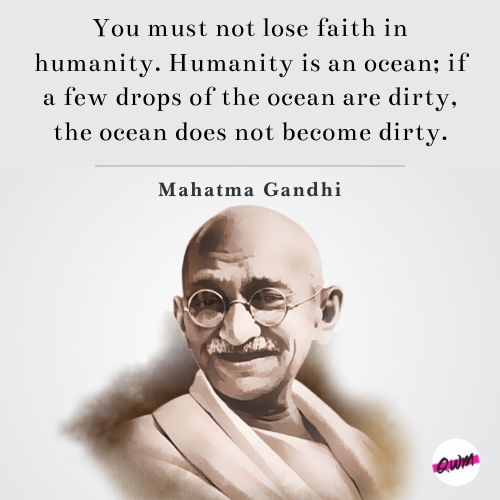
    January 8, 2026: Carefully watch your thoughts, for they become your words. Manage and watch your words, for they will become your actions. Consider and judge your actions, for they have become your habits. Acknowledge and watch your habits, for they shall become your values. Understand and embrace your values, for they become your destiny. —Mahatma Gandhi

    January 7, 2026:
    January 6, 2026: “By ignoble whips of pain, man is driven at last into the Infinite Presence, whose beauty alone should lure him.” –a wandering sadhu, quoted in Autobiography of a Yogi by Paramahansa Yogananda

    January 1, 2026:  A Nearly Perfect Sonnet: “God’s Grandeur” by Father Gerard Manley Hopkins

    Foolish, mendacious partisan hacks who busily push an agenda based on the claim that humanity has the power to transform an entity as big and forceful as the Earth should heed the message of this splendid little sonnet. Humankind’s power could never begin to change the climate of this marvelous God-driven orb on which we all find ourselves. Love the planet, observe and enjoy its gifts, keep it clean—but don’t make up fantasies through which even a child blessed with enough information can see!
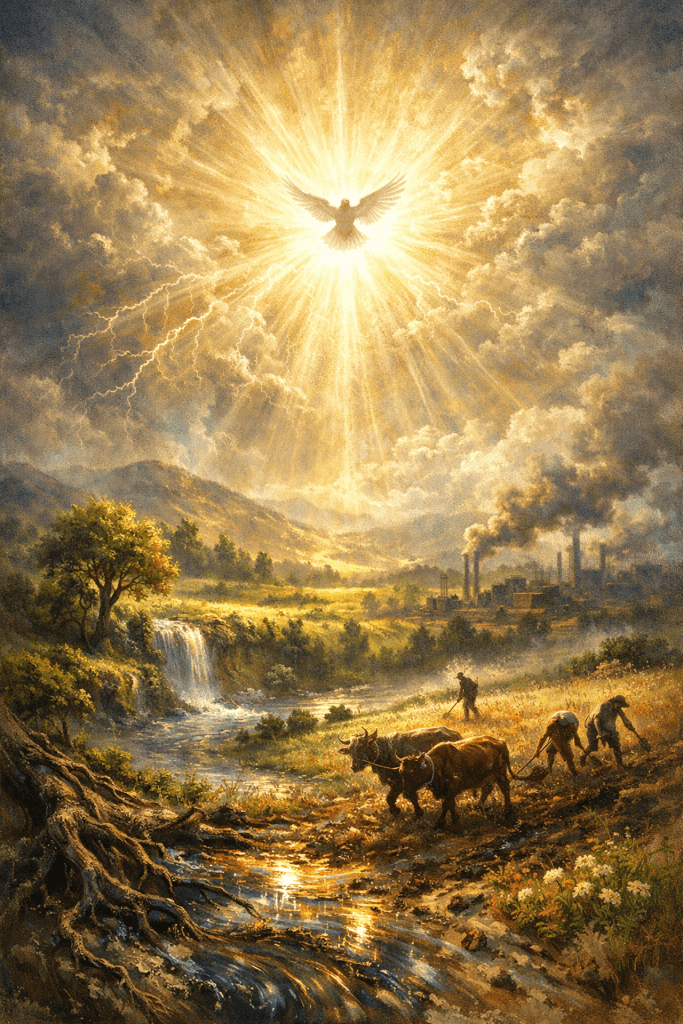
    Image: Created by ChatGPT

    God’s Grandeur

    The world is charged with the grandeur of God.
    It will flame out, like shining from shook foil;
    It gathers to a greatness, like the ooze of oil
    Crushed. Why do men then now not reck his rod?
    Generations have trod, have trod, have trod;
    And all is seared with trade; bleared, smeared with toil;
    And wears man’s smudge and shares man’s smell: the soil
    Is bare now, nor can foot feel, being shod.
    And for all this, nature is never spent;
    There lives the dearest freshness deep down things;
    And though the last lights off the black West went
    Oh, morning, at the brown brink eastward, springs —
    Because the Holy Ghost over the bent
    World broods with warm breast and with ah! bright wings.

    December 27, 2025: Paramahansa Yogananda – The Sanskrit word for ‘musician’ is bhagavathar, “he who sings the praises of God.” —Autobiography of a Yogi

    December 22, 2025:  T. S. Eliot – Man is man because he can recognize supernatural realities, not because he can invent them.

    December 17, 2025:  Paramahansa Yogananda – Remember that when you are unhappy it is generally because you do not visualize strongly enough the great things that you definitely want to accomplish in life, nor do you employ steadfastly enough your will power, your creative ability, and your patience until your dreams are materialized. —SRF Lessons and Spiritual Diary, April 22 – Will Power, Creative Ability, & Patience

    December 15, 2023:  Paramahansa Yogananda – In the natural course of evolution through reincarnation, souls are automatically reincarnated by cosmic law in a higher form or species in each incarnation.  The soul is never reborn in the same animal species:  a dog is never a dog again. — SRF Lesson 78: “Conscious Evolution”

    December 10, 2025:  Paramahansa Yogananda – People interested in developing their memory should avoid the regular use of stimulants such as coffee, tea, and tobacco, which contain caffeine, theine, and nicotine, respectively.* Strictly avoid using strong stimulants such as liquor and drugs.  Such substances intoxicate, drug, and deteriorate the intelligence and memory cells of the brain, preventing them from recording noble ideas and sense impressions in general.  Memory cells that are constantly anesthetized by intoxicants lose their retentive power, and become lazy and inert. Intoxication obliterates the functions of the conscious mind by harmful chemicals, hence injures the cerebral memory-organ.When the brain is affected the memory is impaired. — SRF Lesson 51:  “Yoga Methods for Developing Memory” (*Editor’s Note: Some modern research indicates that light to moderate use of caffeine improves short-term memory for brief periods.  Yogis, however, assert that continuous use over a long period erodes rather than enhances the capacity of this divine faculty.)

    November 30, 2025: Sri Yukteswar – Forget the past.  The vanished lives of all men are dark with many shames.  Human conduct is ever unreliable until man is anchored in the Divine.  Everything in future will improve if you are making a spiritual effort now.   —Paramahansa Yogananda’s Autobiography of a Yogi

    November 25, 2025:  Reflection on the Suspension of Ball State’s Ph.D. Program in English

    Learning that Ball State University has suspended its Ph.D. program in English has been both shocking and saddening to me. I earned my doctorate at BSU in 1987, during a period when the program felt vibrant, intellectually rigorous, and full of possibility. It was a community where faculty and graduate students alike believed deeply in the value of literary study and in the capacity of language to shape human understanding.

    The news feels like more than an administrative adjustment; it feels like the quiet closing of a chapter. Doctoral study at Ball State was not simply a credential — it was a space of discovery and discipline, a place where I learned to think more deeply, read more closely, and write with greater purpose. Many of us who passed through the program carry its influence into every classroom we taught in and every page we have written since.

    I also recognize that this suspension is part of a broader trend affecting humanities programs nationwide. It does not reflect a failure of the program’s quality or mission but rather the pressures of shifting institutional priorities and metrics that often undervalue the humanities. Still, it is difficult to see a once-thriving program constrained by forces far removed from its scholarly heart.

    Whatever the future holds, I remain grateful for the education I received and for the professors, especially Thomas Thornburg, Frances Rippy, and Tetsumaro Hayashi and fellow students, including Daniel Wright, Virginia Paddock, and Beverly Simpson, who shaped my intellectual life. The legacy of the program lives on in its graduates — in our research, our writing, and our ongoing belief that literary study remains essential to a thoughtful and humane society.

  • ~Maya Shedd’s Temple~

    Image: SRF Mother Center Lotus – Photo by Ron W. G.

    My spiritual journey began in earnest in 1978, when I became a devotee of Paramahansa Yogananda’s teachings and a member of his organization Self-Realization Fellowship.  As a Kriyaban since 1979, I have completed the four Kriya Initiations, and I continue to study the teachings and practice the yoga techniques as taught by the great spiritual leader, who is considered to be the “Father of Yoga in the West.”

    I practice the chants taught by the great guru accompanying myself on the harmonium and serve at the local SRF Meditation Group as one of the chant leaders.

    “By ignoble whips of pain, man is driven at last into the Infinite Presence, whose beauty alone should lure him.” –a wandering sadhu, quoted in Autobiography of a Yogi by Paramahansa Yogananda

    I am a Self-Realization Yogi because the teachings of Paramahansa Yogananda, who in 1920 founded Self-Realization Fellowship, make sense to me.  Paramahansa Yogananda teaches that we are immortal souls, already connected to the Divine Reality, but we have to “realize” that divine connection.  

    Knowing the Great Spirit (God) is not dependent upon merely claiming to believe in a divine personage, or even merely following the precepts of a religion such as the Ten Commandments.  

    Knowing the Creator is dependent upon “realizing” that the soul is united with that Creator.  To achieve that realization we have to develop our physical, mental, and spiritual bodies through exercise, scientific techniques, and meditation. 

    There are many good theorists who can help us understand why proper behavior is important for our lives and society, but Paramahansa Yogananda’s teachings offer definite, scientific techniques that we practice in order to realize our oneness with the Divine Power or God. 

    It makes sense to me that my salvation should be primarily my own responsibility.

    I did not grow up with a religious tradition.  My mother was a Baptist, who claimed that at one time she felt she was saved, but then she backslid.  I learned some hymns from my mother.  But she never connected behavior with religion.  

    My father was forced to attend church when he was young, and he complained that his church clothes were uncomfortable as was sitting on the hard pews.  

    My father disbelieved in the miracles of Jesus, and he poked fun at people who claimed to have seen Jesus “in the bean rows.”  My mother would not have doubted that a person might see Jesus, because she saw her father after he had died.  

    My mother characterized my father as agnostic, and she lived like an agnostic, but deep down I think she was a believer after the Baptist faith.

    Here’s a little story that demonstrates how ignorant about religion I was as a child:  When I was in first or second grade, I had a friend.  At recess one day at the swings, she wanted to confide something to me, and she wanted me to keep it secret.  

    She said I probably wouldn’t believe it, but she still wanted to tell me.  I encouraged her to tell me; it seemed exciting to be getting some kind of secret information.  So she whispered in my ear, “I am a Quaker.”  

    I had no idea what that was.  I thought she was saying she was magic like a fairy or an elf or something.  So I said, “Well, do something to prove it.”  It was my friend’s turn to be confused then.  

    She just looked very solemn.  So I asked her to do something else to prove it.  I can’t remember the rest of this, but the point is that I was so ignorant about religion.

    Looking back on my life as a child, teenager, young adult, and adult up to the age of 32, I realize that the lack of a religious tradition left a great void in my life.  Although my father was on the fence regarding religion, he would listen to Billy Graham preach on TV.  

    I hated it whenever Billy Graham was preaching on TV.  His message scared me.  Something like the way I felt when my father’s mother would come and visit us, and when my father would let out a “Goddam” or other such swear word, Granny would say he was going to hell for talking that way.  

    I was afraid for my father.  And Billy Graham made me afraid for myself and all of us because we did not attend church.   I never believed that things like swearing and masturbation could send a soul to hell.   But then back then I had no concept of “soul” or “hell.”  I believed it was wrong to kill, steal, and to lie.  But I’m not sure how these proscripts were taught to me.  

    I guess by example.   It seems that I had no real need for God and spirituality until I was around thirty years old.  

    My life went fairly smoothly except for two major traumas before age thirty.  The first trauma was experiencing a broken heart at age eighteen and then undergoing a failed marriage, after which I thought I would never find a mate to love me.  But I did meet a wonderful soulmate when I was 27.

    A second trauma that added to my confusion was being fired twice from the same job at ages 22 and 27.  By age 27 things started to make no sense.  And it started to bother me intensely that things made no sense.  

    I had always been a good student in grade school and high school, and I was fairly good in college, graduating from Miami University with a 3.0 average.  That grade point average bothered me because I thought I was better than that, but I guess I was wrong.  

    But then not being able to keep my teaching job and not being able to find another one after I had lost it very much confused me.  It seemed that I had lost touch with the world.  School had been my world, and my teachers and professors had expected great things from me.  But there I was at age 27 and couldn’t get connected to school again.

    I began reading feminist literature starting with Betty Friedan’s Feminine Mystique, continuing with Ms. Magazine, and many others.  The result of taking in the feminist creed led me to believe that I had someone to blame for my failure—men; men had caused the world to be arranged so that women cannot succeed outside the home.  

    I began writing again, an endeavor I have sporadically engaged in most of my life from about age sixteen.  

    I decided to apply for a graduate assistantship in English at Ball State University, feeling that I was ready to get out in the man’s world and show it what a woman could do.  I felt confident that I could succeed now that I knew what the problem was.  But that didn’t work out either.  

    I finished the year without a master’s degree in English, and then there I was, confused again, and still searching for something that made sense. 

    I had heard about the Eastern philosophy known as “Zen” at Ball State, and I started reading a lot about that philosophy.  Zen helped me realize that men were not the problem, attitude was.  I kept on writing, accumulating many poems, some of which I still admire.  

    And I kept reading Zen, especially Alan Watts, but after a while the same ideas just kept reappearing with no real resolution, that is, even though the Zen philosophy did help me understand the world better, it was not really enough.  I got the sense that only I could control my life, but just how to control it was still pretty much a mystery.

    In 1977, my husband Ron and I went on one of our book shopping trips.  I spied a book, Paramahansa Yogananda’s “Autobiography of a Yogi,” and I recommended it to Ron because he liked biographies.  Strangely, I said to him about the man on the cover: “He’s a good guy!”  Strange, because I had no idea if the individual was a good guy or not, being the first time I ever saw him.  So, we purchased poetry books, and we also purchased the autobiography for him.  

    Ron did not get around to reading it right away, but I did, and I was totally amazed at what I read.  It all made sense to me; it was such a scholarly book, clear and compelling.   There was not one claim made in the entire 500 plus pages that made me say “what?” or even feel any uncertainty that this writer knew exactly whereof he spoke.  

    Paramahansa Yogananda was speaking directly to me, at my level, where I was in my life, and he was connecting with my mind in a way that no writer had ever done. For example, the book offers copious notes, references, and scientific evidence that academics will recognize as thorough research. 

    This period of time was before I had written a PhD dissertation, but all of my years of schooling including the writing of many academic papers for college classes had taught me that making claims and backing them up with explanation, analysis, evidence, and authoritative sources were necessary for competent, persuasive, and legitimate exposition.

    Paramahansa Yogananda’s autobiography contained all that could appeal to an academic and much more because of the topic he was addressing.   As the great spiritual leader recounted his own journey to self-realization, he was able to elucidate the meanings of ancient texts whose ideas have remained misunderstood for many decades and even centuries.

    The book contained a postcard that invited the reader to send for lessons that teach the techniques for becoming self-realized.  I sent for them, studied them, and I have been practicing them since 1978.  They do, indeed, hold the answer to every human problem.

    I know it is difficult for most educated people to believe that all human problems can be solved, but that’s because they get stuck in the thought that they cannot. 

    If you believe that you can never really know something, then you can’t, because if you believe that you can never really know something, you won’t try to know it. 

    Yogananda gives a map with directions to reaching God, and realizing that one’s soul is united with God brings about the end of all sorrow and the beginning of all joy. 

    Just knowing the precepts intellectually does not cause this realization, but it goes a long way toward eliminating much suffering.  

    The faith that we can overcome all suffering is a great comfort, even if we are not there yet.   I realize that God is knowable, but most important is that I know I am the only one who can connect my soul to God—and that is the spiritual journey I am now on.

    🕉

    Entries

    1. Thought of the Day
    2. Life Sketch of Paramahansa Yogananda
    3. My Life in Little Stories
    4. Autobiography of a Hoosier Hillbilly
    5. “Forget the Past”: A 10-Sonnet Sequence
    6. A Suite of “Samadhi” Villanelles
    7. Overcoming Fear
    8. The Bad Man Who Was Preferred by God
    9. Quotations
    10. Names for the Ineffable God
    11. An Orphic Oath: To Enshrine a Standard of Excellence for Poets 
    12. Brief Sketches of the Five Major World Religions
    13. The Stifling of Spirituality