Buck Ramsey’s “Christmas Waltz” dramatizes a holiday celebration on the ranch. The participants all join in a joyful preparation for their celebration as they keep their faith central and focused.
Introduction and Text of “Christmas Waltz”
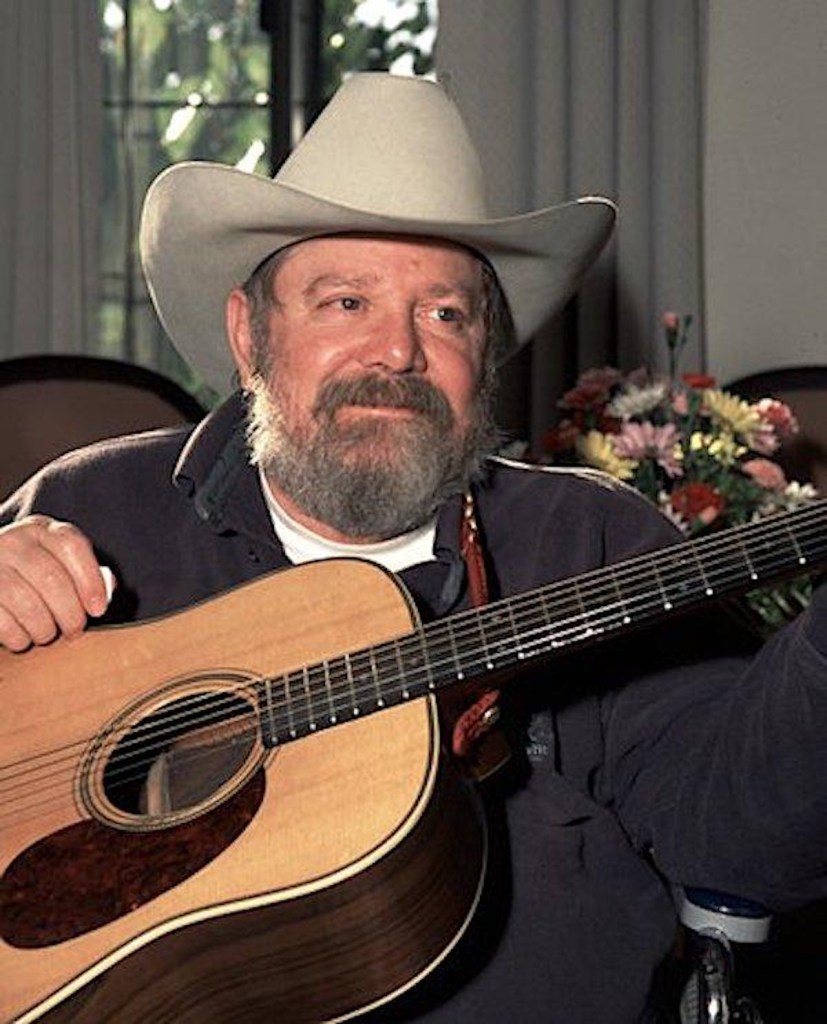
Buck Ramsey is considered the “Father of Cowboy Poetry.” Many of his poems, which have also been rendered in song, have become classics in the cowboy poetry genre.
Ramsey’s “Christmas Waltz” stages a cowboy Christmas celebration with a tree from the big ranch that was selected way back in summer. The ranch hands then experience a rambunctious good time as they acknowledge their joy in the birth of a “baby boy born in a cow shed.”
This traditionally flavored ballad offers many colorful images of cowboy culture from the American West as the folks prepare for a big feast to recognize and celebrate their faith that keeps them grounded throughout the year.
Christmas Waltz
The winter is here and the old year is passing, The sun in its circle winds far in the south. It’s time to bring cheer to a cold, snowbound cow camp, It’s Christmas tree time of the year for the house.
Go ride to the cedar break rim of a canyon, Down by where the river takes creek water clear, And saddle-sleigh home us a fine shapely evergreen Picked out while prowling the pasture this year.
While Fair strings the berries and popcorn and whatnots And Ty braids the wreaths out of leather and vines, Old Dunder, he whittles and whistles old carols And fills them with stories of fine olden times.
He talks of a baby boy born in a cow shed, All swaddled in tatters and laid in a trough, Who, growing up, gave away all he could gather And taught us that what is not given is lost.
It’s morning of Christmas and long before dawning The camp hands are risen to ready the feast. But with the fires glowing they don warm apparel And go out to gaze on the Star of the East.
They cobbler the plums they put up back in summer, They bake a wild turkey and roast backstrap deer, They dollop the sourdough for rising and baking, And pass each to each now the brown jug of cheer.
The dinner is done and they pass out the presents, Their three each they open with handshakes and hugs, Then Ty gets his guitar and Fred gets his fiddle While Dunder and Fair laugh and roll back the rugs.
The tunes that they play melt the chill from the winter As Dunder and Fair waltz and two-step along. They play, sing and dance till the next morning’s dawning Then all of the their slumbers are filled with this song.
Musical Version Buck Ramsey’s “Christmas Waltz”
Commentary on “Christmas Waltz”
A cowboy Christmas filled with family, friends, and good times allows the narrator to colorfully describe even scientific facts.
First Stanza: It Winter Time
The winter is here and the old year is passing, The sun in its circle winds far in the south. It’s time to bring cheer to a cold, snowbound cow camp, It’s Christmas tree time of the year for the house.
The cowboy/speaker starts off his celebration of the Christmas season by reporting, “winter is here”; he continues to offer a description of the time of year by averring that the old year is almost over, and the sun has moved “far to the south.”
Around Christmas time, the sun is in the Tropic of Capricorn in the southern hemisphere; thus, the speaker colorfully reports that scientific fact, “sun in its circle winds far in the south.”
Interestingly, the speaker then describes the Christmas holiday season as being “Christmas tree time” at the ranch, placing emphasis on the tree as the center of decoration for the season. The speaker is full of joy that a big Christmas tree will soon stand tall in the ranch house.
Second Stanza: The Big Christmas Tree
Go ride to the cedar break rim of a canyon, Down by where the river takes creek water clear, And saddle-sleigh home us a fine shapely evergreen Picked out while prowling the pasture this year.
The cowboy/speaker then reports to his audience where that big Christmas tree comes from: during the summer, while looking over the pasture, the speaker had spotted the perfect tree that stood down along the river where the water was clear as crystal.
The speaker had made a mental note to remember exactly where it stood so he could send another cowboy to fetch it as Christmas time was on its way. He so admired that “shapely evergreen” that he had no difficulty remembering exactly where he saw it.
Third Stanza: Fair Decorating
While Fair strings the berries and popcorn and whatnots And Ty braids the wreaths out of leather and vines, Old Dunder, he whittles and whistles old carols And fills them with stories of fine olden times.
A gal named “Fair” will help decorate the grand tree with berries and popcorn on a string. Another cow-hand named “Ty” will put up wreaths fashioned out of vines and leather.
While each ranch hand attends to his part in the decorating, the old cowboy they call “Old Dunder” will be whittling while he whistles old Christmas carols, and he will be telling stories of the olden days.
The speaker makes it clear that everyone involved with this celebration is fulled with the joy of the season as they tend to their appointed tasks. Each member of the party, no doubt, looks forward to the fine gathering they are anticipating as they work to bring about the holiday appearance.
Fourth Stanza: Testimony
He talks of a baby boy born in a cow shed, All swaddled in tatters and laid in a trough, Who, growing up, gave away all he could gather And taught us that what is not given is lost.
Old Dunder will be the one who will offer testimony regarding the reason for the season, “a baby boy born in a cow shed.” He will mention how Jesus “gave away” all material possessions in order to demonstrate for humanity the vital importance of giving.
The cowboy colloquial of having the baby Christ “born in a cow shed” adds to the American West flavor of the ballad. The “born in a manger” theme easily translates to cowboy lingo for the cow poke who retains his love and respect for American culture, influenced by Jesus the Christ.
Each aspect of the American culture can be expressed through unique images and language common to each group that has become integral to the melting pot of languages and cultures while remaining purely American.
Fifth Stanza: Christmas Morning
It’s morning of Christmas and long before dawning The camp hands are risen to ready the feast. But with the fires glowing they don warm apparel And go out to gaze on the Star of the East.
Finally, Christmas day has arrived. Even well before the light of day, the ranch hands are up and wide awake, getting ready to start blazing up fires for cooking. But before they commence their chores for the big celebration, they go outside, “to gaze on the Star of the East”; this annual ritual is the heart of their cowboy prayer that they gratefully offer as part of their celebration.
While the partying and feasting remain a central part of the poem’s theme, the birth of their Christian faith also figures strongly in that celebration as they ready the ranch and their hearts and minds for keeping their faith strong and vibrant.
Sixth Stanza: Time to Cook
They cobbler the plums they put up back in summer, They bake a wild turkey and roast backstrap deer, They dollop the sourdough for rising and baking, And pass each to each now the brown jug of cheer.
Finally, the cooking begins. They whip up plum cobbler using the plums they had stored up back in summer. The revelers bake wild turkey and roast backstrap deer; they also bake sourdough bread, as they continue to pass around “the brown jug of cheer.”
Seventh Stanza: A Big Dinner
The dinner is done and they pass out the presents, Their three each they open with handshakes and hugs, Then Ty gets his guitar and Fred gets his fiddle While Dunder and Fair laugh and roll back the rugs.
They all enjoy their big dinner, and then they all gather around the beautiful Christmas tree to exchange their gifts. Each partier receives at least three presents for which they are very grateful and easily express their gratitude to one another. They hug and shake hands to show gratitude for their bounty.
After the gift exchange, they are now ready for music and dancing. Old Dunder and Fair roll back the rugs for the dancing. Fred starts his fiddle-playing, while Ty warms up his guitar.
Eighth Stanza: Music and Fun Times
The tunes that they play melt the chill from the winter As Dunder and Fair waltz and two-step along. They play, sing and dance till the next morning’s dawning Then all of the their slumbers are filled with this song.
The music is rollicking and lively, and everyone has a great time. It seems the robust celebration takes the chill off the bitter winter weather. The dancing continues way past dawn; every one sings and dances until morning. After the partiers finally say good-night and drift off to sleep, the music and singing will keep on playing in their dreams.
The theme of Christmas cheer and the beautiful faith each cowboy experiences will play out as the images from this ballad continue to influence their work and play in the coming year.
Belmonte Segwic, aka Graveyard Whistler, is a persona that I created to tell a story about a unique individual’s interaction with the study of the literary arts.
Fiction Alert!
Belmonte Segwic, aka Graveyard Whistler, is a fictional character, created to explore the world of literary studies. Thus Graveyard Whistler is free to invent characters, events, and places—all fictional. Any resemblance to real people, living or deceased, to actual events or to real geographic locations is unintentional.
Introduction by Graveyard Whistler
“We cannot choose what we are free to love.” —W. H. Auden, “Canzone”
Greetings! My name is Belmonte Segwic, aka “Graveyard Whistler,” a handle I used in my many Internet writings and communications in grad school. I fairly recently completed a master of arts degree in creative writing at the Iowa Writers’ Workshop at the University of Iowa.
After achieving that step in my education, I have been batting around the idea of pursuing a PhD in the history of letters.
Thus, I have transferred to a large university in the eastern United States that will remain nameless. My advisor advised me to keep it nameless because of my intentions to engage heavily on the Internet.
I guess she felt that my style might cramp that of this “prestigious” institution of higher learning.
Being the opinionated fool that I am, I would love nothing better than to engage in poking holes in the inflated balloon of reputation that these Ivy League monstrosities like to float over the heads of their inferiors.
But I will have to save that for another day because now I intend to seek, read, and research, looking backward into the history of literature.
I am particularly drawn to irony as a literary device, and likely I will offer lots of stuff pertaining to that device.
But I’m also easily swayed by intriguing narratives of all sorts, from flash fiction to gigantic tomes that seem never ending.
For my writing purposes though, I will likely stick to mid-sized works that can be handled in 1000 to 4000 words for the Internet, where attention spans diminish daily.
So those honorable mentions represent a brief overview of my literary intentions at the present time, and of course, I reserve the right change directions as speedily as I can close one text and open another.
My apparent lack of direction is somewhat upsetting to my advisor, but I have assured her that I will have a dandy dissertation all tied up in bows by end of the three-year limitation that has been imposed upon me.
A Little Bit about My Background
I was born on an undisclosed day in an undisclosed small hamlet in eastern Kentucky. I’d like nothing more than to disclose those bits of bio, but my parents are important people in Kentucky politics.
And I refuse commit any act that would limit where I will go in my Internet scribblings, which I would most definitely be called upon to do if it got out who my important parents are. No! Forget about it! It ain’t Mitch McConnell or the Pauls.)
Just let me say that they are decent, hard-working folks, highly educated, and even to my own politics-blighted view, important to the societal, cultural, as well as political fabric of Kentucky and the mid-South in general.
I am an only child and feel that I have not missed out on anything important by not having siblings. I did grow up with about a dozen cousins who seemed like siblings, some staying with us for extended visits.
It seems that there were always a cousin or two filling up our extra bedrooms, keeping our refrigerator perpetually empty but offering the best company a young tyke could ask for.
I always enjoyed having those cousins visit, learned a great deal from the older ones and was constantly entertained by the younger ones.
What I remember most is writing and putting on plays. All of cousins loved movies, theater, and books about imaginary characters.
From my age of six to seventeen we must have written and performed a couple hundred plays, all influenced by something some cousin had read and loved.
I hated acting but was always recruited to be one of the main characters. I loved doing the art for the backgrounds and working props like swords, capes, pistols, wands, fairy dust, make-up and other costumes—whatever we needed to make the play more colorful and life-like.
My Favorite Play
The summer after high school graduation when I seventeen, four of my cousins (all of us getting ready for college in the fall) came to stay for the entire summer.
The first few days we just goofed off—swimming, throwing baseballs around, riding bikes, watching TV, and cooking large meals every night.
Then about two weeks into the visit, the oldest cousin blurted out while we were sitting around trying to decide what to do that day, “Let’s do a play!” Everyone shouted in unison, “Of course, a play!”
The next question was—what will it be about? And after batting around ideas for about an hour, we decided it would be a play based on a Shakespeare play.
One girl-cousin then insisted it be based on The Tragedy of Romeo and Juliet, but then the other girl-cousin objected saying that one always made her “cryyy.”
But then a boy-cousin piped up, saying, no, let’s make it a comedy. It doesn’t have to be exactly like the Shakespeare, let’s turn it into a comedy. That will be a barrel of fun to turn a tragedy into a comedy.
To make a really, really long story much shorter than the original, we began right away to write our version of the Shakespeare tragedy into a comedy. We titled it “Raymond and Julie: A Funny Tale with a Happy Ending.”
We worked and worked. I painted sets, helped make costumes, and we then asked the principal of our high school to let us use the auditorium to put on the play. Then we got the brilliant idea of selling tickets.
I typed up a ticket, took it to Kinko’s and ran off a thousand copies. And we sold every one of them!
The auditorium only held 850 people. So on performance night, roughly 200 people had to stand around to watch this amateur group of ragamuffins scuffling across a stage performing their original version of one the great bard’s masterpieces.
Luckily, the play went off without a hitch, the audience loved it, some even asked if we would do it again!
Then all hell broke loose! The county clerk’s office contacted the principal of the high school and asked if a certain unapproved event had taken place at the high school.
The clerk asked for details such as tickets sold, capacity of the room, and what permits the administrators of the event had applied for and obtained.
Well, we had not applied for and obtained any permits, and when the clerk had gathered all that information, he sent the sheriff to our house for a little sit-down with our parents.
The sheriff found that we were in violation of a number of county and city ordinances, and the fines for those violations amounted to $15,000!
We had sold tickets for 50 cents each. We sold a 1000, so that means we took in $500 for the sale of the tickets. My parents were stupefied about all those ordinances and that’s how they got into politics.
They first ran for council positions to try to eliminate the coercive nature of government into the lives of young people who were actually doing good creative work.
But for the time being, before they could actually do anything politically, my parents owed $15,000 in fines for allowing us to perform a play for the community.
Luckily, they were friends with a neighbor who was a tax attorney. He also knew quite a lot about the ordinances that we had violated. He came over to our house one evening to explain what he had found out about satisfying that ridiculous fine.
He told us that we could retro-actively apply for a permit for the play, but that we would have to perform the play again after we received it—that is—if we received it.
He then said that if we apply and receive the permit and re-perform the play, we must turn over the proceeds to a county or city charity. We didn’t have to sell tickets again, we could just turn over the money we had collected from the first performance.
So here is how it went down: we had paid $50 to get the tickets copied. We took in $500 for the first performance of the play, which had left us with $450.
After the lawyer-friend told us about getting the permit, we shelled out $100 for the permit.
It didn’t cost us anything to re-perform the play, and actually we loved getting to do it again, and our audience loved it so much that they donated money because we had not charged them for the second performance.
And they donated big time: the 1000 people who attended, donated roughly $60 each.
That meant after we gave the original $500 to the charity (our three sets of parents made up the $150 missing from the original intake of $500 that paid for the tickets and application for the permit)—we chose to give to the “Little Brothers and Sisters of Saint Francis”—we ended up with roughly $55,000!
We did not have to pay the fines because we donated our $500 to the “Saint Francis” charity, so all that money was ours. So we gave $5000 more to “Saint Francis” and split up the rest of it among ourselves.
We each got $10,000, and we all were entering college in the fall.
When we get together now, we all wonder how we would have managed to enter college that fall without that windfall.
Sometimes we get silly and say things like, we should do that again, I got car payments that could use it, or who knew we could sell our skills so cheap and then reap a big payout like that?
It all seems surreal now, but the play, “Raymond and Julie: A Funny Tale with a Happy Ending,” will always be my favorite. I have a worn-out copy that I take out from time to time when I need a smile or two.
I thus have no doubt about what sealed my interest in the literary arts. Our play had included rich dialog, poems, songs, jokes, biography, and even a play within a play.
Thank you to those who have stayed with me to this point. I will now go off to play in the world of literary arts, and wherever you go off to, I wish you as much fun as I will have in mine.
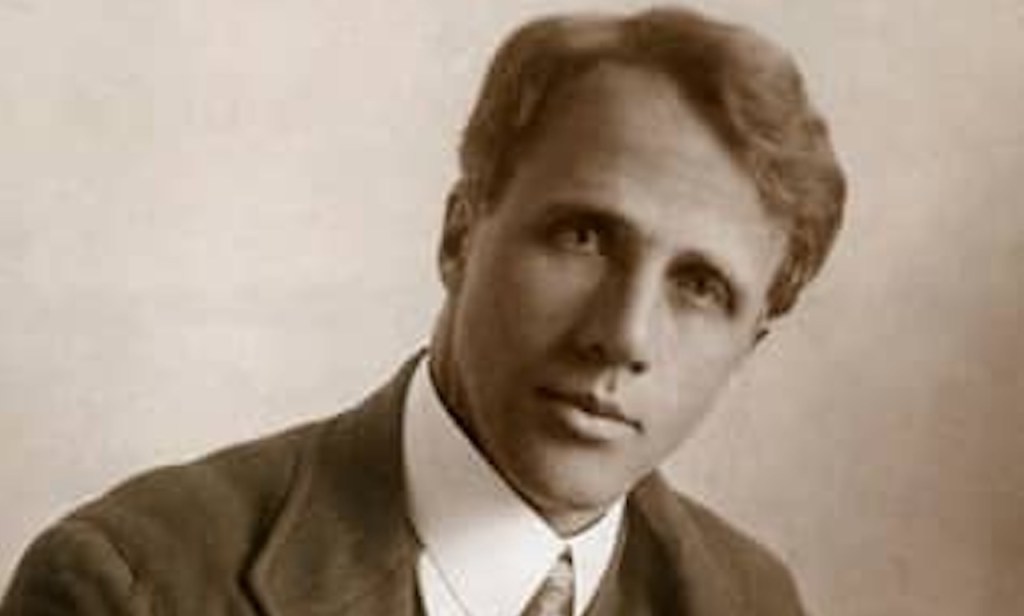
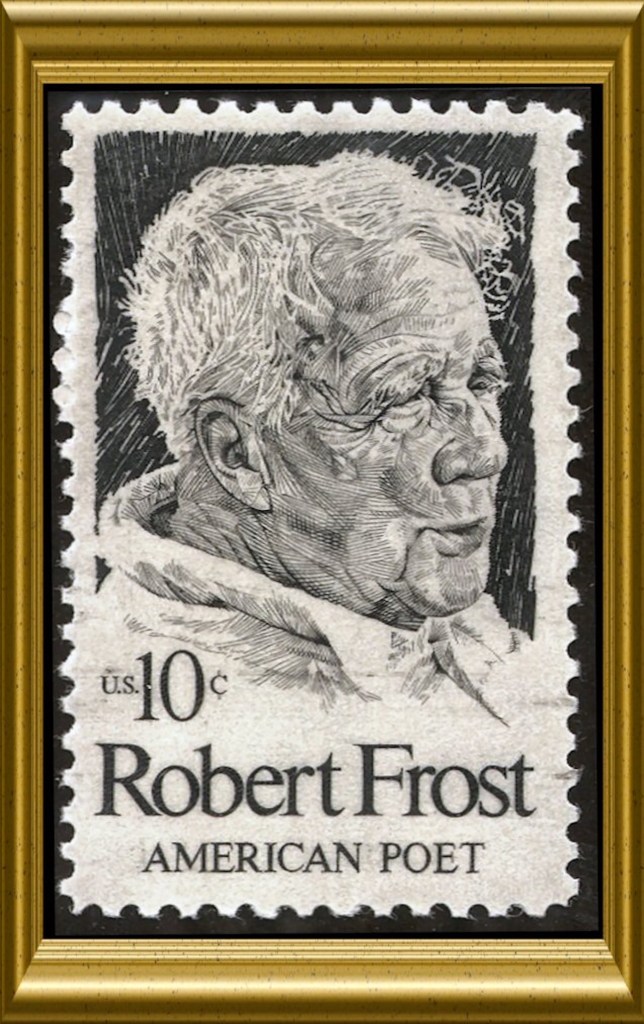
The speaker in Robert Frost’s “And All We Call American” attempts to play down the Columbian heroic status by castigating the great explorer for not having the ability to predict the future.
Introduction and Text of “And All We Call American”
The speaker in Robert Frost’s poem “And All We Call American” attempts a retelling of the familiar story of Christopher Columbus. In so doing, he questions the legendary heroism of the explorer.
No one can deny that the miscalculation of landing on what is now the North American continent instead of the South Asian country of the exploration’s intent—India—opens itself to a certain level of scrutiny.
But the ultimate consequence of the discovery greatly outweighs the unintended nature of the discovery. The importance of the North American continent, particularly the United States of America, for the world remains undeniable. Despite the current failure to appreciate these Western values, those values continue to uplift cultures from the dire straits of physical and moral poverty.
Frostian Curmudgeonry
Even as he took on the reputation of a belovèd poet of nature and human feeling, Robert Frost remained a life-long contrarian and a specialized curmudgeon. Thus instead of celebrating the Columbian legendary figure who opened up the Old World to a New World, he has his speaker concentrate of the limitations of the explorer.
That Columbus was not capable of imagining what the United States of America, Canada, and Mexico would become is not a particularly egregious failure. Excepting clairvoyants, no one else of the time period would have been able to predict any better.
While Frost has attempted to produce a poem that is both historical and philosophical
by having his speaker employ the Columbian expedition, the poem’s cranky bitterness ultimately says more about the speaker/poet himself than about the objective nature of the significance of the voyage of Christopher Columbus.
And All We Call American
Columbus may have worked the wind A new and better way to Ind And also proved the world a ball, But how about the wherewithal? Not just for scientific news Had the queen backed him for a cruise.
Remember he had made the test Finding the East by sailing West. But had he found it ? Here he was Without one trinket from Ormuz To save the queen from family censure For her investment in his future.
There had been something strangely wrong With every coast he tried along. He could imagine nothing barrener. The trouble was with him the mariner. He wasn’t off a mere degree; His reckoning was off a sea.
And to intensify the drama Another mariner Da Gama Came just then sailing into port From the same general resort, But with the gold in hand to show for His claim it was another Ophir.
Had but Columbus known enough He might have boldly made the bluff That better than Da Gama’s gold He had been given to behold The race’s future trial place, A fresh start for the human race.
He might have fooled them in Madrid. I was deceived by what he did. If I had had my way when young I should have had Columbus sung As a god who had given us A more than Moses’ exodus.
But all he did was spread the room Of our enacting out the doom Of being in each other’s way, And so put off the weary day When we would have to put our mind On how to crowd but still be kind.
For these none too apparent gains He got no more than dungeon chains And such small posthumous renown (A country named for him, a town, A holiday) as where he is He may not recognize as his.
They say his flagship’s unlaid ghost Still probes and dents our rocky coast With animus approaching hate, And for not turning out a strait He has cursed every river mouth From fifty north to fifty south.
Some day our navy I predict Will take in tow this derelict And lock him through Culebra Cut, His eyes as good (or bad) as shut To all the modern works of man And all we call American.
America is hard to see. Less partial witnesses than he In book on book have testified They could not see it from outside — Or inside either for that matter. We know the literary chatter.
Columbus, as I say, will miss All he owes to the artifice Of tractor-plow and motor-drill. To naught but his own force of will Or at most some Andean quake Will he ascribe this lucky break.
High purpose makes the hero rude: He will not stop for gratitude. But let him show his haughty stern To what was never his concern Except as it denied him way To fortune-hunting in Cathay.
He will be starting pretty late. He’ll find that Asiatic state Is about tired of being looted While having its beliefs disputed. His can be no such easy raid As Cortez on the Aztecs made.
Commentary on Robert Frost’s “And All We Call American”
The speaker in Robert Frost’s “And All We Call American” attempts to play down the Columbian heroic status by castigating the great explorer for not having the ability to predict the future.
First Stanza: Promise vs Problem
Columbus may have worked the wind A new and better way to Ind And also proved the world a ball, But how about the wherewithal? Not just for scientific news Had the queen backed him for a cruise.
In the opening stanza, the speaker refers to the Columbian legendary mission that confirmed the scientific theory that Earth was round and that one could end up in the East by sailing West.
The speaker then throws shade at the feat by implying that not enough loot had been procured from the journey: after all, the queen was not especially interested in confirming a scientific theory; she wanted gold, spices, and other goods that usually took an arduous overland journey to reach her part of the world.
At this point, the speaker has introduced a conflict, placing bold discovery against material possession. Because that conflict is inherent in nearly every worldly endeavor, to complain about it, or even point it out, is somewhat naïve.
Second Stanza: Discovery vs Disappointment
Remember he had made the test Finding the East by sailing West. But had he found it ? Here he was Without one trinket from Ormuz To save the queen from family censure For her investment in his future.
In the second stanza, the speaker spotlights Columbus’ achievement of sailing west to get to the East. He then poses a question: what did the explorer really find? But then he jarringly shifts to the material possessions that the queen was expecting by claiming that the explorer brought back not even “one trinket from Ormuz.”
The Ormuz trinket becomes a symbol for the Eastern wealth that the queen had been counting on. The speaker implies that the queen’s family would not be happy with her for backing such an unprofitable “investment.”
Third Stanza: Columbus’ Miscalculation
There had been something strangely wrong With every coast he tried along. He could imagine nothing barrener. The trouble was with him the mariner. He wasn’t off a mere degree; His reckoning was off a sea.
The speaker now shows clear disdain for Columbus for not recognizing that he had not landed in India. The speaker imagines that the mariner searching the barren coasts for the Indian riches and not finding them simply remains perplexed.
The speaker emphasizes the fact that Columbus not only managed to be off by a degree or so, but that he was off by a whole ocean. The speaker seems to take glee in revealing such an error by such a brave man, who has in fact sailed over a whole ocean and has now discovered a heretofore unknown land. Thus the speaker’s lack of empathy and imagination are revealed more than the fact that the a brave sea-farer had failed to reach India.
Fourth Stanza: Da Gama’s Success
And to intensify the drama Another mariner Da Gama Came just then sailing into port From the same general resort, But with the gold in hand to show for His claim it was another Ophir.
The speaker now doubles down on his Columbian criticism. While Columbus returned home without riches in tow, the explorer Vasco da Gama came home with gold from Africa.
The speaker’s harsh tone furthers his grift against the brave Columbus. By concentrating on material wealth, he is sure he has a good case for humiliating the failed Columbus by playing up the success of da Gama.
But that comparison in hindsight levels the criticism to failure, for the voyage of Columbus is much more widely known than that of da Gama. The importance of da Gama’s gold pales in comparison to the importance of the Columbian discovery of a whole New World.
Fifth Stanza: The Absurdity of a Missed Bluff
Had but Columbus known enough He might have boldly made the bluff That better than Da Gama’s gold He had been given to behold The race’s future trial place, A fresh start for the human race.
The speaker now presents the ridiculous notion that if Columbus had been smart enough, if could have told the queen and any others dejected by lack of material riches that he had discovered a place where the future of humanity might reside.
Such a notion is patently absurd. The speaker is looking back about five centuries, castigating a man for not realizing that a place called the United States of America would provide a “fresh start for the human race.”
The line if “Columbus [had] known enough” demonstrates a level of ignorance that borders on the profane: In any endeavor, it is not necessarily the amount of knowing that is important; it is the nature of the knowledge. He is decrying Columbus for not being prescient, a seer, a clairvoyant.
To cover the fact that he is calling for Columbus to predict the future, the speaker positions the notion that the mariner could have used a “bluff” to suggest the future importance of his discovery. Such a notion remains petty and irresponsible and again shows more about the speaker/poet’s mind than it does the reality of history.
Sixth Stanza: A Youthful Misreading of Columbus
He might have fooled them in Madrid. I was deceived by what he did. If I had had my way when young I should have had Columbus sung As a god who had given us A more than Moses’ exodus
The speaker now inserts a phony self-deprecation. He admits that he once upon a time thought of Columbus as a hero, but now he recognizes that since Columbus was not able to predict the value of the New World he had discovered, then credit for his accomplishment of actually finding that New World should be withdrawn.
The speaker is attempting a bait and switch operation. By claiming that Columbus could have “fooled them in Madrid” the speaker is again referring to the “bluff” suggested in the preceding stanza.
But he then seems to be confessing to being deceived by the Columbus legend. The issue is not however that the speaker/poet was deceived; it is that now the speaker wishes to denigrate an Italian-American hero, and he is reaching beyond reality to form the basis for that derogatory image.
Seventh Stanza: Room and Doom
But all he did was spread the room Of our enacting out the doom Of being in each other’s way, And so put off the weary day When we would have to put our mind On how to crowd but still be kind.
The speaker now goes completely off the rails. Adding to Columbus’ inability to predict the future is the idea that even if he had bluffed his peers about the future of a New World, what he actually did was just give the world population more room to spread out and be mean.
Such a suggestion implies that if people had just remained in the Europe, Africa, and other reaches of the known world, they could have worked on learning to kind to one another as they continued to live in a “crowd.”
Again, such a suggestion is not only naïve, but it does not take into account that human nature remains the same whether humans are spread out or in a crowd. There is/was no such phenomenon that learning to be “kind” was postponed by the discovery of a New World. Did the folks who remained in Old World learn to be “kind”?
According to this line of thinking, they should have. But again the speaker has come up with a notion this is absurd, while exposing his real purpose of smearing 15th century explorer.
Eighth Stanza: Columbus’ Rewards
For these none too apparent gains He got no more than dungeon chains And such small posthumous renown (A country named for him, a town, A holiday) as where he is He may not recognize as his.
The speaker’s gross depiction of Columbus having been thrown in prison and receiving little attention crosses into the obscene. First, through instrumentality of the corrupt Francisco de Bobadilla, Columbus was sent back to Castile in “chains.”
But the Bobadilla’s abject lies about the explorer became immediately obvious, and Columbus was released and restored to his earlier prominence. And the claim of “small posthumous renown”—places named for him—is mind-numbing.
There are over 6000 places in the United States alone named after the explorer. Virtually every state in the USA has a town, city, park, or some landmark named after Christopher Columbus: some “small posthumous renown”!
Ninth Stanza: The Restless Ghost of Discovery
They say his flagship’s unlaid ghost Still probes and dents our rocky coast With animus approaching hate, And for not turning out a strait He has cursed every river mouth From fifty north to fifty south.
In this stanza, the speaker concocts sheer fantasy that would make today’s Columbus bashers proud. Every creative writer has the unleashed opportunity to foist onto historical figures their own proclivities.
The lame narrative in this stanza is immediately revealed with the vague “They say.” Who are they? How reliable are they? Well, “they” are the demons living in the imagination of the curmudgeon infested brain of the speaker/poet.
Tenth Stanza: Modern Discovery
Some day our navy I predict Will take in tow this derelict And lock him through Culebra Cut, His eyes as good (or bad) as shut To all the modern works of man And all we call American.
Here the speaker is not really predicting anything. He is merely setting up another pin to bowl down with his castigation of a fifteenth century man being unable to see into the future.
That Columbus could not image what the United States would look like in the 20th century is hardly an earthshaking discovery. But the speaker is no doubt self-congratulatory for implying that if Columbus has thought to sail through the Panama Canal he would have been on his way to discovering the real India.
Eleventh Stanza: Elusive America
America is hard to see. Less partial witnesses than he In book on book have testified They could not see it from outside — Or inside either for that matter. We know the literary chatter.
The speaker then takes a dramatic shift from beating up on Columbus to asserting the daft opinion that “America is hard to see.” Besides the flabby language, signifying less than nothing, it makes a brainless claim.
Because anything that extends for miles beyond human vision would be “hard to see,” one might as well say a railroad, New York, or the ocean— each is hard to see. But the speaker seems to be trying to say that America is not only a place but is also a political entity that continues in a mysterious vortex. Thus the “literary chatter” suggests that “America” cannot be expressed clearly in words.
Twelfth Stanza: Columbus’ View of America’s Advancement
Columbus, as I say, will miss All he owes to the artifice Of tractor-plow and motor-drill. To naught but his own force of will Or at most some Andean quake Will he ascribe this lucky break.
The speaker now makes a delusional claim that Columbus’ selfishness would blind him to the genuine causes of America’s development—that is, if the explorer were able to see America in its current iteration.
The speaker has no idea how Columbus would view the advances in the modern technological influence of “tractor-plow and motor-drill.” That he would impute such an attitude to the explorer is beyond damnable.
Thirteenth Stanza: A Speaker’s Obtuseness
High purpose makes the hero rude: He will not stop for gratitude. But let him show his haughty stern To what was never his concern Except as it denied him way To fortune-hunting in Cathay.
This stanza again is just another putrid display of a speaker whose own jealousy is out of control. Criticizing a historian figure through the lens of an contemporary set of scruples just does not work in a piece of discourse purporting to be a poem.
Fourteenth Stanza: The Futility of Defaming Hero
He will be starting pretty late. He’ll find that Asiatic state Is about tired of being looted While having its beliefs disputed. His can be no such easy raid As Cortez on the Aztecs made.
The final stanza serves as a monument to the failure of the speaker’s position so eloquently laid throughout this piece of drivel masquerading as a poem, for in this stanza the speaker is pretending to predict the future.
The future finds the explorer reaching Asia only to be rebuffed and rebuked because the Asias are tired being “looted” and “disrupted.” And lastly, Columbus will be humiliated that Cortez was so successful in conquering the Aztecs.
The sheer fantasy falls apart immediately because no such voyage was ever made by Christopher Columbus; therefore, he could not have been rebuffed and rebuked by people tired of being “looted” and “disrupted.”
In classical rhetoric such a concoction is called a straw man, fashioned solely for the purpose of burning it down. The speaker fancies an exploration that never existed simply to ridicule it for having failed. If an event is never begun, it cannot be considered to have failed, just as it cannot be deemed to have succeeded.
Robert Frost’s Worse Poem
Robert Frost’s “And All We Call American” is without a parallel; it is Frost’s absolute worst poem. The only quality that keeps this piece from being an contemptible piece of doggerel is the fact that it was composed one of the world’s most noted and beloved poets. Taking as his subject Christopher Columbus, Frost creates a speaker who reveals a deficiency of thought that seems remarkably reminiscent of adolescent self-absorption.
Instead of celebrating the remarkable discoveries of the great explorer, this speaker chooses to downplay achievement, offering in its place ignorant criticism that Columbus living in the fifteenth century was unable to know what would take place the 20th century.
When a fine, reputable poet throws out a stinker like this one, the only reason for studying such a piece is to understand the complex inconsistency of the human brain. If a student or novice poetry reader begins a study of Frost with this one, that individual has in store a shocking experience in discovering Frost’s later works such “The Road Not Taken,” “Birches,” “Bereft,” “The Gift Outright,” and “Stopping by Woods on a Snowy Evening.”

 Linda's Literary Home