Image: Nicholas J. Fuentes adopted the term “Groypers” as a self-designation, signaling irony and in-group humor [2]. What began as performative irreverence, however, often hardened into a posture that substitutes provocation for careful reasoning.
Nick Fuentes: Dazed and Confused
So Nick Fuentes will be voting for Democrats and urging his followers to do the same. If this young man seems dazed and confused, that’s likely because he is a charlatan posing as a political activist and simply struggling for financial gain.
In contemporary discourse, figures such as Nick Fuentes are often described using broad ideological labels—“extremist,” “far-right,” or “radical.” Yet such labels sometimes obscure a more basic problem: the absence of a consistent political philosophy. In Fuentes’ case, the evidence suggests not a coherent ideological system but a pattern of rhetorical improvisation, shifting positions, and incentives aligned with maintaining attention and revenue [1].
First, Fuentes rarely presents a sustained political framework comparable to traditional ideological systems. His commentary often jumps between historical nostalgia, populist grievances, internet humor, and personal provocation. Rather than building arguments from stable principles, he frequently relies on spectacle and reaction rather than systematic argument [1][3][4]. This pattern makes it difficult to identify a clear philosophical core underlying his public statements.
Second, the content of Fuentes’ messaging often changes depending on audience reaction and media attention. Themes appear, intensify during moments of controversy, and then fade without systematic development. Reporting on Fuentes’ movement and online broadcasts notes how the surrounding community tends to organize around moments of controversy rather than policy development, reinforcing a cycle of reaction and escalation [2][7].
Third, defenders sometimes frame his rhetoric as satire or irony. Yet satire typically clarifies a deeper argument by exaggeration. In Fuentes’ case, irony frequently replaces argument rather than sharpening it. The result is ambiguity: audiences are left to infer whether statements are literal, ironic, or deliberately provocative. Reviews of his broadcasts and interviews show a recurring pattern in which controversial remarks are later reframed as jokes or irony when challenged [3][5][6].
Fourth, the economic structure of modern online media rewards attention rather than coherence. Personal livestream platforms, subscription communities, and donation-based broadcasting encourage controversy because controversy drives engagement. Fuentes’ career trajectory—including livestreaming, audience-funded programming, and branded political communities—fits this broader pattern of personality-driven media entrepreneurship [3][5][8].
This does not mean that every criticism Fuentes raises is baseless. Skepticism toward institutions, frustration with elite consensus, and debates over immigration or globalization are longstanding features of democratic politics. However, raising such issues is not the same as developing a systematic political philosophy capable of addressing them.
A more precise conclusion, therefore, may be that Fuentes is best understood less as an ideological theorist and more as a politically confused media personality. His commentary often substitutes provocation for analysis, and the structure of his platform incentivizes continued controversy regardless of intellectual consistency. Under these conditions, the line between political advocacy and entertainment becomes blurred.
For scholars, journalists, critics, and commentarians, the analytical task is therefore straightforward: evaluate Fuentes’ claims according to standards of coherence, evidence, and philosophical clarity. Doing so may reveal that the central issue is not ideological extremism so much as the absence of a stable ideology at all—combined with incentives that reward performance more than political thought.
Early Life and Education
Nicholas J. Fuentes was raised in a middle-class Catholic household. He reports that his ethnicity is Irish, Italian, and Mexican; his father is half Mexican, accounting for his Hispanic surname. His family background is conventional: his parents are professionals who value education and religious observance and who are not public political figures [3].
Fuentes attended local schools in the Chicago area and, after graduating from Lyons Township High School, enrolled at Boston University. It was during his time there that he first attracted national attention—not for academic distinction, but for his increasingly confrontational political commentary. He became active on YouTube and other platforms while still a student, criticizing progressive campus culture and what he viewed as complacency within mainstream conservatism.
Following public controversy surrounding his online activity, Fuentes did not complete his studies at Boston University, choosing instead to pursue political broadcasting and activism full time [4]. While this decision places him among a tradition of American polemicists who bypass formal credentialing, it also partially explains the unevenness of his arguments. His rhetorical confidence often exceeds his historical knowledge, philosophical grounding, or empirical discipline.
Political Stance
Neither Democrat nor Republican, Fuentes describes his political stance as nationalist conservative. He regularly attacks what he calls the “donor-class Right” [5], accusing Republican leaders of prioritizing corporate interests, foreign interventionism, and symbolic gestures over cultural and demographic concerns.
Fuentes has claimed the following positions:
Opposition to mass immigration
Skepticism of globalism and multinational institutions
Advocacy for a Christian moral framework in public life
Economic nationalism rather than laissez-faire libertarianism
Cultural traditionalism regarding family and gender roles
These positions are not, in themselves, fringe. However, Fuentes frequently undermines them by presenting personal grievances, cultural resentments, and sweeping generalizations as settled truths. His tendency to collapse complex social questions into moral binaries weakens arguments that might otherwise merit serious consideration.
Although critics attempt to situate Fuentes within historical extremist movements, he denies adherence to racial supremacy as a formal doctrine, framing his views instead in terms of national cohesion and cultural continuity. Yet his habitual reliance on demographic insinuation and collective blame invites precisely the interpretations he claims to reject.
Politically, Fuentes has expressed intermittent support for Republican candidates—most notably Donald Trump—while remaining hostile to party leadership [6]. This oppositional stance has energized younger activists but has also locked Fuentes into a permanent posture of negation rather than construction.
Despite his youth, Fuentes has achieved a level of cultural penetration that many professional politicians never reach. His livestreamed program, America First, has drawn tens of thousands of viewers and inspired conferences, donor networks, and activist initiatives [7].
Financially, Fuentes operates through viewer donations, subscriptions, event ticket sales, and merchandising—standard mechanisms for independent media figures. Public reporting suggests that his operation sustained full-time activity for several years without institutional backing [8]. This entrepreneurial success reflects genuine organizational ability.
The Groyper movement stands as Fuentes’ most visible achievement. What began as an online meme subculture evolved into a coordinated activist network capable of disrupting conservative events and shaping online discourse. Yet the movement’s confrontational style often mirrors Fuentes’ own immaturity, privileging mockery over persuasion.
The intensity of institutional backlash—media denunciations, congressional mentions, deplatforming—demonstrates Fuentes’ visibility rather than his wisdom. Influence, in this case, measures reach, not intellectual depth.
My Personal Response
My greatest fear surrounding the controversy arising from the Fuentes effect is that Fuentes will become more widely known and then embrace the Left. Although leftist policies are currently anathema to Fuentes’ thinking, he could be welcomed and embraced by the sufferers of TDS (Trump Derangement Syndrome) after speaking out against the president (see video below).
If Fuentes’ finds himself the darling of the left, it might become convenient for him to use his influence to elect leftists. I’m hoping he is too strongly dedicated to his principles to have that happen, but he is very young, and the young can be driven primarily by emotion. The emotion of belonging can be very strong.
Sources
[1] Editors. “Nick Fuentes”. Britannica. Accessed December 18, 2025.
[3] Nicholas Thompson. “The Making of a Far-Right Provocateur.” Wall Street Journal. 2021.
[4] John McCormack. “Who Is Nick Fuentes?” National Review. 2020.
[5] Nicholas J. Fuentes. America First. Broadcast statements and interviews, 2019–2023.
[6] Interviews with Nicholas J. Fuentes, archived by Right Side Broadcasting Network.
[7] Michael Edison Hayden. “Inside the Groyper Movement.” Southern Poverty Law Center.
[8] Congressional testimony and public reporting on online deplatforming, 2021–2023.
Sample of a Fuentes Rant: Keep in mind that despite a keen intellect, the very young can be wrong. Over the next three years, this rant will likely not age well!
On the Other Hand: Could Coleman Hughes Be Correct about Fuentes?
Noam Chomsky, Jeffrey Epstein, and the Problem of Judgment
Since the mid-1960s, the name Noam Chomsky has exerted a great deal of influence on American dissident political thought [1]. Chiefly known for his critiques of U.S. foreign policy and media power, Chomsky has often been regarded as a moral voice of dissent, despite the fact that his opposition has made a convincing case refuting that status.
Currently, recent revelations about his relationship with Jeffrey Epstein further challenge that reputation. These disclosures impose a broader question: do Chomsky’s past political positions, such as his association with Epstein, reflect a recurring pattern of poor judgment?
The Epstein Relationship
Public scrutiny of Chomsky, who labels his political leanings “anarcho-syndicalist and libertarian socialist,” has intensified after newly released emails and financial records show that Chomsky maintained a relationship with Epstein years after Epstein’s 2008 conviction for sex crimes involving a minor.
According to multiple reports, the two men met repeatedly and remained in contact well into the 2010s [2]. Chomsky himself admitted that Epstein assisted him with a financial matter involving roughly $270,000 [3], which was transferred through Epstein’s network. More recent disclosures suggest the relationship went well beyond that single transaction.
Emails reveal Chomsky describing his interactions with Epstein as “a most valuable experience,” and he maintained “regular contact” with Epstein even after Epstein’s criminal conviction was widely known [4][5]. In addition to emails, Epstein’s personal calendar and correspondence show that meetings, dinners, and travel plans were arranged between the two [6].
Even more telling are reports revealing that Chomsky offered Epstein advice on how to handle negative media coverage. In a 2019 email, Chomsky suggested to Epstein that he avoid public attention and characterized press scrutiny as excessive or “horrible” [7][8]. Again, by 2019, Epstein’s crimes had been widely reported for over a decade.
Even Chomsky’s supporters have acknowledged his poor judgment. A 2025 analysis in The Nation noted that Chomsky has historically been inclined to treat “fools, knaves, and criminals too lightly,” suggesting that Epstein may fit into a broader pattern rather than an unfortunate but isolated lapse [9]. More recently, Chomsky’s own wife publicly described their association with Epstein as a “serious error in judgment,” attributing it in part to misplaced trust [10].
A Pattern of Intellectual Leniency
To understand whether this episode is unique, it is useful to analyze Chomsky’s earlier political positions. Critics have long argued that Chomsky’s worldview often leads him to downplay or reinterpret wrongdoing by figures who align—directly or indirectly—with his broader negative criticism of Western power.
The Cambodia case is the most extensively documented example. In their 1977 article “Distortions at Fourth Hand” [11], Noam Chomsky and Edward S. Herman urged caution toward refugee testimony and criticized what they saw as exaggerated media reporting on Khmer Rouge atrocities. This position drew sustained criticism from later scholars and analysts, who argued that Chomsky’s skepticism led him to downplay credible evidence of mass violence and to rely on selectively favorable sources.
Political scientist Stephen J. Morris [12], for example, accused Chomsky of minimizing repression and misrepresenting available evidence, while later analyses by writers such as Bruce Sharp [13] identified methodological flaws and omissions in his treatment of the Cambodian record. Survivors and scholars, including Sophal Ear [14], have likewise criticized Western intellectuals who appeared to discount or reinterpret the scale of Khmer Rouge atrocities.
Chomsky’s defenders argue that he never flatly denied the atrocities, and that his primary target was Western double standards rather than the Khmer Rouge itself. That defense has some merit, but it does not resolve the central problem: the asymmetry of scrutiny.
The same 1977 article that urged skepticism toward refugee accounts of Khmer Rouge mass killings offered no comparable skepticism toward the pro-Khmer Rouge book Cambodia: Starvation and Revolution by Gareth Porter and George Hildebrand [15]—a volume that, as Chomsky and Herman themselves noted, did not contain a single sentence critical of the regime.
Yet, they gave the book their implicit endorsement, contrasting with sources they attacked. The pattern, in short, was not neutrality. It was the application of a demanding critical standard to evidence of atrocities by U.S.-opposed regimes, and a conspicuously lighter touch toward sources that minimized those atrocities.
Similarly, Chomsky has often pitted authoritarian governments in the Global South against U.S. imperialism in his ongoing critique of the West. While this perspective has been influential in academic and activist circles, Chomskyan challengers argue that such a view often leads to moral asymmetry—judging and viewing Western actions harshly while applying a more forgiving lens to others.
The Epstein case appears to fit into a similar pattern of Chomskyan readiness to bracket or relativize serious abuses when they cannot be comfortably assigned to the actors and structures he regards as primary villains. Epstein was not a political figure, but he occupied a position within elite networks that Chomsky has often harshly berated. Instead of maintaining distance, Chomsky engaged with Epstein, accepted financial assistance, and even offered reputational advice. The gap between Chomsky’s theoretical critique of elite power and his personal association with a disgraced financier remains impossible to ignore.
The Role of Personal Trust
One possible exculpatory excuse for this pattern is Chomsky’s intellectual disposition. Some supporters describe him as principled but also unusually willing to engage with a wide range of individuals, including controversial ones.
Other supporters point out that this disposition has led him not only to cultivate relationships with ideological allies but also to defend the institutional rights of his adversaries—for example, insisting in 1969 that Walt Rostow, a chief architect of the Vietnam War, must be allowed to teach at MIT in the name of academic freedom, despite Chomsky’s own fierce opposition to Rostow’s policies. Such openness can be interpreted as a strength—an unwillingness to adopt simplistic moral binaries, but it may also leave him vulnerable to manipulation.
From a number of reports, it can be gleaned that Epstein specialized in cultivating relationships with influential figures; this specialty accounts for the many references to Donald Trump. Epstein presented himself as a philanthropist and intellectual patron, often targeting academics, scientists, and well-known business figures. In this sense, Chomsky’s association with Epstein may be interpreted not as ideological alignment but as a failure to recognize manipulation.
However, this explanation does not withstand close analysis. Epstein’s criminal record was publicly known long before many of these interactions occurred. Continued engagement under such conditions suggests not merely naïveté, but a willingness to overlook serious moral concerns.
It should be noted that the Donald Trump-Epstein relationship [16] contrasts in important ways with that of Chomsky-Epstein. Donald Trump’s relationship with Jeffrey Epstein was a pre-conviction social friendship from the late 1980s to early 2000s that ended abruptly around 2004–2007.
Reports and legal filings have been used to argue that Trump banned Epstein from Mar-a-Lago after news of inappropriate behavior toward a teenage girl there, publicly distanced himself well before Epstein’s 2008 conviction, called him “not a fan” in later years, and alerted authorities to concerns about Epstein’s conduct as early as 2006.
None of this news about the Chomsky-Epstein relationship suggests that Chomsky engaged in any of the crimes associated with Epstein. However, reports of that close relationship remain troubling even if not shocking to Chomsky’s oppositional critics.
Implications for Chomsky’s Legacy
The significance of this controversy extends well beyond a Chomskyan personal reputation. Noam Chomsky has long derived authority from his claim to moral clarity—his insistence on exposing hypocrisy, power abuse, and ethical double standards. The Epstein relationship undermines that claim in a direct way.
Maintaining contact with a convicted sex offender, accepting financial assistance routed through Epstein, and offering reputational advice cannot be dismissed as mere eccentricity or intellectual openness. These acts remain conscious choices made in the presence of widely known facts. Such behavior indicates a failure not only of understanding, but also of a moral disposition to prioritize relativistic sensibilities.
This pattern aligns with earlier criticisms of Chomsky’s political judgment. His inclination to approach Western wrongdoing with extreme contempt, while failing to apply any harsh evaluation of other cultures, has long been observed and criticized.
In the Epstein case, that same instinct appears redirected into the personal sphere: a willingness to discount or compartmentalize serious wrongdoing when it does not fit neatly into his established framework of critique. That decision does not reflect neutrality; it clearly demonstrates selective judgment.
Reassessing Intellectual Authority
It is also worth reconsidering the broader assumption that Chomsky’s stature in one field secures his authority in others. While his early contributions to linguistics—particularly in generative grammar—were influential, they have been seriously debated and, in many areas, revised or challenged by subsequent research.
His reputation in linguistics rests on the claim that he transformed the field from simple description into a genuine science. That claim has been strongly challenged. What he actually produced was a highly abstract, internally shifting framework that substitutes theory for empirical accountability. His reputation as an unassailable intellectual figure has been challenged and even refuted by well-respected linguists [17][18][19].
More importantly, even successful intellectual achievement does not excuse poor judgment in ethical or practical matters. The Epstein association demonstrates that analytical sharpness in abstract domains does not necessarily translate into sound decision-making in real-world contexts. If anything, Chomsky’s case illustrates how intellectual confidence can coexist with, and perhaps even enable, serious lapses in judgment.
Chomskyan Accountability
The evidence surrounding Chomsky’s relationship with Jeffrey Epstein should not be treated as an isolated misstep. It is better understood as part of a broader pattern in which moral evaluation becomes inconsistent and, at times, selectively applied. This pattern, therefore, requires a more critical and less deferential reading of his work.
For readers, the takeaway is straightforward: authority must be continually tested against behavior. Chomsky’s career demonstrates that prominence and forceful critique do not guarantee reliability in judgment. In this instance, the failure is not subtle—it is clear, documented, and consequential.
[11] Noam Chomsky and Edward S. Herman. “Distortions at Fourth Hand.” The Nation. June 25, 1977, pp. 789–790. Also available at chomsky.info/19770625/.
[12] Stephen J. Morris. “Whitewashing Dictatorship in Vietnam and Cambodia.” The Anti-Chomsky Reader. Encounter Books. 2004.
[19] Steven Piantadosi. “Modern Language Models Refute Chomsky’s Approach to Language.” From Fieldwork to Linguistic Theory: A Tribute to Dan Everett. Eds.Edward Gibson and Moshe Poliak, Language Science Press. 2023, pp. 353-414. Published online July 5, 2024 .
The phenomenon known as Trump Derangement Syndrome (TDS) has established a pattern of behavior and language applied by the political opposition of President Donald Trump. That outrage arises from ignoring facts or context, leveling unfair criticism, and engaging in melodramatic emotion, wherein calm reasoning is abandoned.
Introduction: Extreme Rhetoric
Trump Derangement Syndrome (TDS) has fostered an atmosphere in which contemporary political rhetoric and public discourse operate as fallacious argumentation, in which every statement or action becomes distorted and weaponized.
Political disagreement does not employ discussion, analysis, and explanation regarding policy differences but instead, it operates on disgust and indignation that the opponent even holds differing views.
TDS is often manifested in Trump’s opponents through ad hominem attacks, in which personal slander takes the place of logical argument—substituting name-calling and character assassination for substantive argument.
Trump has been called a Russian puppet, sexual predator, dictator, threat to democracy, racist, white supremacist, convicted felon, traitor, insurrectionist, clown, idiot, nazi, fascist, and the pièce de résistance—Hitler.
Even obvious joking sarcasm when spouted by Trump becomes fodder for re-interpretation and bad-faith reporting. For example, during the presidential election campaign of 2016, when Trump facetiously called on Russia/Putin to find Hillary Clinton’s 33,000 deleted emails, the following exemplary headline appeared on PBSNews :“Trump asked Russia to find Clinton’s emails. On or around the same day, Russians targeted her accounts,” suggesting that Trump was asking a foreign government to interfere in the election campaign.
In addition to ad hominem attacks, immediate condemnation of any policy issuing out of the Trump administration results in reasoning and careful inquiry being abandoned [1], resulting in the use of the most extreme, heated language.
However, Trump himself is not the only target of this invective; all of those terms and others are applied to his supporters: during the 2016 presidential campaign, Hillary Clinton called them “deplorables,” and during the 2024 campaign, Joe Biden called them “garbage.” Those who oppose Trump, his administration, and his supporters are not simply critical of them; they are obsessed them.
A dangerous mixture of outrage, exaggeration, and hypocrisy involved in attacking Trump has caused TDS sufferers to lack the ability to think clearly about issues. Any idea suggested by Trump is immediately railed against simply because it was suggested by Trump.
The Origin of Trump Derangement Syndrome
The phrase “Trump Derangement Syndrome” did not originate as a clinical diagnosis, although its predecessor “Bush Derangement Syndrome” was coined by the psychiatrist and political analyst Charles Krauthammer, who observed that extreme, irrational reactions to President George W. Bush often went far beyond substantive policy disagreement.
Krauthammer used the term to highlight how emotional fixation and hostility replaced reasoned analysis and proportional criticism. The revival of this concept during Donald Trump’s presidency reflects the same phenomenon, magnified by social media, a 24-hour news cycle, and an increasingly polarized political culture [2].
However much words do matter, Trump Derangement Syndrome (TDS) is more than rhetorical excess; it has real consequences that harm individuals, families, public institutions, and the broader political environment. The following examples illustrate how hyper-emotional fixation on Donald Trump—when divorced from clear reasoning and grounded fact—creates verifiable and dangerous effects on American society:
Escalation to Political Violence
The starkest danger of TDS is that it fuels political violence rather than dissent through words. During the 2024 campaign, Donald Trump survived at least two assassination attempts motivated by political hatred and extremism.
The first happened at a rally in Butler, Pennsylvania, [3] when a gunman shot at Trump, wounding him on his right ear. The gunman killed Corey Comperatore, a rally attendee and former fire chief, who took a bullet protecting his family. The gunman also wounded several other people before being killed by Secret Service.
A second assassination attempt was thwarted by authorities at Trump’s golf club in West Palm Beach, Florida [4]. This perpetrator was arrested, stood trial, and was found guilty of the assassination attempt; he awaits sentencing on February 4, 2026.
Another unmistakable instance of politically motivated violence occurred on September 10, 2025, when Turning Point USA founder Charlie Kirk was fatally shot during a public event at Utah Valley University in Orem, Utah. While speaking at an outdoor gathering, Kirk was struck in the neck by a single bullet fired from a distance, an attack that Utah officials and others characterized as a political assassination [5].
These incidents demonstrate how obsessive political animus can translate into lethal intent, transforming rhetoric into action and endangering not only public figures but bystanders, law enforcement, and the democratic process itself.
Political Polarization Breaking Family Bonds
TDS has also deeply strained familial relationships. In too many households across the country, deep political disagreements have resulted in personal and familial estrangement. A Time magazine feature documented families [6] who stopped speaking entirely during the Trump years, including one case in which a woman was uninvited from Thanksgiving and later cut off from close relatives solely because of her political views related to Donald Trump.
What had once remained ordinary disagreement has hardened into moral condemnation, with ideological choice being prioritized over blood relations. This dynamic tarnishes one of our most cherished and fundamental social units—the family—leaving emotional scars that persist long after the election cycle has passed.
Exploitation of Tragedy for Political Weaponization
Another disturbing example of how TDS has distorted reactions to violent events is evident in public opinion data following the July 2024 assassination attempt on Donald Trump.
In a snap poll conducted shortly after the attack, roughly one‑third of Democrat voters agreed with the statement “I wish Trump’s assassin hadn’t missed”[7]. That such a large proportion of the opposition political party actively wished that an opponent had been killed should place a huge red flag on the issue.
Such sentiments reflect a deeply disturbing willingness to engage in the ultimate violence in addressing political differences. This response illustrates how TDS can override basic empathy and moral restraint, further polarizing discourse and normalizing violent attitudes toward political opponents.
Rejection of Policy on Source Alone
TDS sufferers without thinking oppose any policy regardless of merit simply because it comes from Trump. During his presidency, Trump championed criminal justice reform through the First Step Act, a bipartisan measure that reduced sentences for nonviolent offenders and earned praise from figures like Van Jones [8]. Yet many on of his top opponents dismissed it outright, calling it a sham despite its tangible results in releasing thousands from prison.
Even as they voted for the bill, these congressional member expressed negative criticism of it as too limited, exclusionary, narrow: Sen. Bernie Sanders (I-VT), Sen. Kamala Harris (D-CA), Sen. Cory Booker (D-NJ), and Rep. Alexandria Ocasio-Cortez (D-NY).
This knee-jerk rejection ignores benefits to real people—mostly minorities—and poisons the well for future bipartisan efforts. The danger lies in discarding proven solutions, leaving societal problems festering while politics trumps progress.
Lawfare Weaponization against Citizens
Mainstream media outlets and Democrat officials, gripped by TDS, have pursued “lawfare” against ordinary Trump supporters, turning legal processes into political retribution.
After the January 6 riot, Attorney General Merrick Garland’s Justice Department charged hundreds of nonviolent participants—parents, grandparents, workers, small business owners, some individuals who were not even present at the capitol—with felonies carrying decades in prison, while ignoring similar or worse rioting by groups such as Antifa and BLM [9] .
This selective prosecution creates two tiers of justice: one for Trump opponents who face lenient treatment, another for his supporters treated as domestic terrorists. The danger lies in weaponizing the rule of law itself, eroding equal protection under the Constitution and fostering a climate where citizens fear political expression.
Families lose breadwinners to draconian sentences, communities fracture, and trust in impartial justice evaporates—leaving Americans vulnerable to future authoritarian overreach from any side that may promise a return to fairness under the law [10].
Economic Self-Sabotage through Hysteria
TDS has led opponents to sabotage policies that later prove beneficial [11], harming the economy they claim to champion. Tariffs on China, derided as reckless by TDS critics, pressured Beijing into trade concessions that revitalized American manufacturing jobs in key states. Critics who railed against them without nuance prolonged economic pain for workers.
By prioritizing anti-Trump animus over pragmatic assessment, this mind-set risks national prosperity. It endangers livelihoods when ideology blinds leaders to data-driven gains.
Suppression of Free Speech on Campuses
Universities, which formerly boasted their positions as bastions of open inquiry, have seen TDS manifest as censorship of Trump-related views [12]. Professors and students expressing support for Trump’s policies face shouting-downs, doxxing, low grades, or job threats, as seen in cases at Yale and NYU ,where conservative speakers were mobbed or disinvited.
This kind of unfair discrimination chills intellectual diversity, turning campuses into echo chambers. The danger is profound: it trains a generation to equate disagreement with moral failing, undermining the reasoned debate essential for maintaining a free society.
Foreign Policy Paralysis
TDS hampers coherent foreign policy by fixating on Trump over real threats facing the United States and other nations. While Trump brokered the Abraham Accords [13] normalizing Israel-Arab ties—hailed as historic by many—his opposition fixated on and imaginary “divisiveness,” denigrating and downplaying the breakthrough.
One might recall that the phrase “Abraham Accords” ran noticeably missing during the Biden administration’s four years. Instead of trying to build on the success of those Accords, the Biden administration essentially ignored them, and instead proceeded to cozy up to Iran just as President Barack Obama had done.
So it remains obvious that “The reason for the administration’s hostility to the Abraham Accords goes beyond jealousy or the desire to deny credit to a hated predecessor” [14]. The Biden administration’s reaction to the Abraham Accords demonstrates another blatant example of TDS causing its sufferer to bite off its nose to spite its face. World peace be damned, if Donald Trump has anything to do with it! (my emphasis added)
Such tunnel vision weakens America’s global stance. It allows adversaries like Iran to exploit divisions, endangering allies and U.S. interests when personal hatred eclipses strategic thinking.
Workplace Discrimination against Supporters
TDS has infiltrated some workplaces, where Trump voters have faced bias in hiring or promotions. Recent surveys indicate some hiring managers admit to bias against Trump supporters in hiring and promotions. Reports highlight concerns over social media scrutiny for political views, especially in tech sectors after the 2024 election.
A ResumeBuilder.com poll of over 750 U.S. managers found 1 in 6 less likely to hire Trump supporters, citing poor judgment (76%), lack of empathy (67%), or workplace tension risks (59%) [15]. One in 8 managers are less likely to promote such employees, with similar rationales; some even encourage quits.
Managers often check social media indirectly, as direct bias questions are avoided, amplifying unaddressed discrimination [16]. Post-2024 election, tech firms like Google and Meta tightened internal policies to curb activism, removing political posts and limiting discussions on elections or related symbols.
While no widespread firings for Trump support are documented in these sources, the surveys flag a “concerning trend” of political bias akin to other protected categories, urging HR to enforce objective evaluations. Broader DEI rollbacks under Trump policies (e.g., executive orders in 2025) shifted focus to merit, but hiring biases persist in certain areas.
Cultural Institutions Alienating Half the Nation
Hollywood and elite culture, steeped in TDS, produce content that vilifies Trump supporters as rubes or villains, deepening cultural rifts [17]. Films and shows routinely caricature “MAGA” hats as symbols for bigotry, alienating millions of viewers. This breeds mutual contempt, fracturing national cohesion. When culture wars replace dialogue, shared identity unravels, leaving society brittle and weakened against common challenges.
Tom Hanks played a Trump supporter named Doug on SNL’s “Black Jeopardy” during the 50th anniversary special in February 2025. The character wore a MAGA hat and an American flag shirt, hesitating to shake a black host’s hand, while speaking with a Southern drawl. Critics called it a racist caricature amid Trump’s growing support with black Americans.
In Bong Joon-ho’s “Mickey 17” (2025), a Trump-like politician rallies crowds with “First we survive! Then we thrive!” slogans. Supporters wear red hats, and the figure obsesses over image in a gaudy setup, reducing women to breeders. Even some Reddit users [18] noted it as Hollywood propaganda tying MAGA visuals to bigotry.
These depictions use MAGA hats as symbolic icons for backwardness or hate, alienating everyday Americans. Commentary points to “Trump Derangement Syndrome” in elite content driving rifts between supporters of Trump and his opposition.
Hypocrisy and TDS
One of the clearest markers of Trump Derangement Syndrome is not merely excess emotion, but selective memory—an amnesia that conveniently erases facts that negate the preferred narrative. This hypocrisy is especially evident when examining Donald Trump’s public reputation prior to his decision to run for president as a Republican. That distinction matters: does anyone really believe that if Trump had run for president as a Democrat, he would have received the same level of sustained media hostility and moral outrage, or would his celebrity excesses have been reframed as colorful flaws rather than disqualifying sins?
Before entering politics, Trump was not widely regarded as a pariah or an existential threat to democracy. On the contrary, he was a mainstream celebrity, a frequent guest on talk shows, a fixture in popular culture, and a recognizable brand associated with success and entertainment.
His television program The Apprentice was a major hit [19], running for fourteen seasons and drawing millions of viewers weekly. Trump was welcomed in elite social circles, praised by entertainers, courted by politicians, and treated as a cultural icon rather than a moral monster.
That history poses an uncomfortable question for TDS sufferers: if Trump was allegedly a racist, fascist, authoritarian, or “Hitler” all along, why was he celebrated so enthusiastically for decades [20]? The answer is obvious but rarely admitted—Trump became unacceptable only after he challenged the status quo of entrenched political power.
This hypocrisy is further illustrated by the now‑forgotten fact that Oprah Winfrey [21], one of the most influential cultural figures in America, once raised the prospect of a Trump presidential run on her nationally syndicated show. In a 1988 interview, Winfrey openly entertained the idea by asking Trump whether he would run for president, a notion that drew no negative response from the audience.
At the time, such a notion was not treated as dangerous or absurd, but as intriguing. No cries of impending dictatorship followed. No accusations of fascism emerged. The man has not changed; the political context has.
Similarly revealing is the selective outrage surrounding immigration enforcement. Tom Homan, who later became a senior immigration official under Trump, previously served in the Obama administration [22], where he oversaw large-scale deportations of illegal immigrants.
Under President Obama, deportations reached record levels, earning Obama the nickname “Deporter in Chief” among immigration activists. Yet Homan’s actions under Obama attracted no media hysteria and no moral condemnation.
Once those same policies—and in many cases, the same personnel—were associated with Donald Trump, they were suddenly recast as evidence of cruelty, racism, and authoritarianism [23]. The policy substance remained largely unchanged; only the political association shifted. This double standard exposes the core of TDS: opposition not to ideas or actions, but to the individual himself.
Such contradictions reveal that Trump Derangement Syndrome is propagated not by principle but by animosity. It is not driven by consistent moral reasoning, but by prejudicial hostility that rewrites history to justify present outrage.
When yesterday’s admired celebrity becomes today’s Hitlerian villain, yesterday’s lawful deportations become today’s unconstitutional atrocities, and yesterday’s encouragement becomes today’s horror, the problem is not Trump—it is the inability of his critics to apply standards with balance and proportion.
In this way, hypocrisy is not a side effect of TDS; it is one of its defining features.
Toward Official Recognition of TDS
Taken together, these examples demonstrate that Trump Derangement Syndrome is not a harmless turn of phrase or a bit of political snark; it is a corrosive mind-set with real-world, measurable consequences.
When outrage replaces analysis, disagreement hardens into dehumanization, and fixation eclipses fact, the result is not merely bad manners but real harm—to families torn apart, to public trust in institutions, to free expression, and even to human life.
The pattern remains consistent: an inability or refusal to separate Donald Trump the individual from objective evaluation of policies, principles, and people associated with him. In that environment, reason is not merely sidelined; it is treated with suspicion.
The growing recognition of this phenomenon has moved beyond commentary and into the realm of formal inquiry. The introduction of the Trump Derangement Syndrome (TDS) Research Act of 2025 by Representative Warren Davidson reflects an acknowledgment that the effects described here warrant serious examination rather than reflexive dismissal [24].
Whether one supports Trump or opposes him, a healthy republic depends on the ability to argue without hysteria, to criticize without hatred, and to reject violence, censorship, and collective punishment as political tools.
Ultimately, the danger of TDS lies in what it does to the culture of self-government. A nation cannot remain free if its citizens are trained to see political opponents as enemies to be destroyed rather than fellow Americans to be debated. Reclaiming proportion, restraint, and reason is not a concession to Donald Trump; it is a necessity for the survival of civil society itself.
Ursula K. Le Guin’s November 2016 Blog Post: “The Election, Lao Tzu, a Cup of Water”
(For the full text of Le Guin’s post, readers may consult the Le Guin blog.)
Introduction: The Absurdity of the Opening Claim
Ursula K. Le Guin begins her blog entry with the shocking assertion that “Americans have voted for a politics of fear, anger, and hatred,” framing the 2016 election as a popular endorsement of negativity and thus collective moral failure rather than a legitimate political contest. This claim is absurd on multiple levels.
Le Guin reduces the motivations of over 62 million Trump voters to a monolithic emotional outburst, ignoring the many and varied reasons people cited for their choices—economic anxiety, desire for policy change on trade and immigration, distrust of establishment politics, or even optimism about shaking up the status quo.
Exit polls from the 2016 presidential election year revealed that, as the driving force, voters prioritized issues like the economy (52% said it was the most important issue) and terrorism (18%)—not the abstract qualities of “fear, anger, and hatred.”
By accusing half the electorate of being emotionally deranged, Le Guin engages in the very division she later decries, creating a false binary where one side is enlightened and the other is barbaric.
Instead of offering a balanced, informed opinion, this diatribe creates a caricature that exempts the losing side of any introspection about why its message failed to resonate. If anything, such rhetoric fuels the “fear, anger, and hatred” that it claims to oppose, by demonizing fellow citizens rather than seeking understanding.
Further Analysis of the Absurdity of the Opening Claim
Le Guin’s opening assertion—”Americans have voted for a politics of fear, anger, and hatred”—is a masterclass in the very thing she claims to oppose: divisive, enemy-making rhetoric that poisons democratic discourse.
The Logical Contradiction
Notice the immediate self-contradiction: Le Guin writes that she is “looking for a place to stand… where the behavior of those I oppose will not control my behavior,” yet her opening sentence does precisely the opposite. By characterizing roughly half the American electorate as motivated by “fear, anger, and hatred,” she has allowed her opponents’ victory to control her into making sweeping, uncharitable judgments about millions of people she has never met.
She wants to rise above and avoid “fixed enmity” while at the same time she asserts that tens of millions of her fellow citizens have voted for hatred itself. Such dishonest rhetoric does not seek amicable understanding; instead, it creates the very enemy she claims she wants to transcend and avoid.
The Mind-Reading Fallacy
How does Le Guin know what motivated Trump voters? Did she conduct psychological surveys? Interview thousands across different states and demographics? No—she simply assumes the worst possible motives for people who reached a different political conclusion than she did.
This act embodies the fundamental attribution error writ large: when some individuals agree with an action, they attribute their agreement to principle, reason, and good intentions. When they disagree, they attribute it to character flaws, base emotions, and moral deficiency.
Many Trump voters would describe their choice in terms of economic anxiety, distrust of establishment politicians, desire for change, concern about immigration policy, or opposition to Clinton specifically. Were all of these just masks for hatred? Or might people have complex, varied motivations that do not fit Le Guin’s narrative?
The Irony of Fear and Anger
Le Guin’s post itself radiates fear and anger—fear of what Trump’s presidency might bring, anger at the election outcome. Her entire piece is written in response to these emotions. Yet she has no trouble recognizing her own fear and anger as legitimate responses to perceived threats, while denying Trump voters the same interpretive charity.
Perhaps Trump voters also felt fear—of economic displacement, cultural change, or being dismissed by coastal elites. Perhaps they felt anger—at politicians who seemed not to care about their communities, at being called “deplorables,” at seeing their concerns ignored. Why are Le Guin’s fears valid while theirs are evidence of moral rot?
The Dehumanizing Assumption
To claim that millions of Americans voted “for” hatred is to deny them moral agency and complexity. It suggests they woke up on Election Day thinking, “I want to spread hate today.” Such a suggestion is absurd. People generally vote for what they perceive as good, even when they are wrong about what that good is or how to achieve it.
Le Guin has done exactly what she accuses Americans of doing: she has named an enemy (Trump voters), attributed evil motives to them (fear, anger, hatred), and declared herself on the side of righteousness. She has simplified a complex political coalition into a moral monolith worthy only of opposition, not understanding.
The Historical Amnesia
Political campaigns have always involved fear, anger, and appeals to group identity—on all sides. Obama’s 2008 campaign ran on anger at the Iraq War and the financial crisis, fear about healthcare and climate change. Bush’s 2004 campaign exploited fear of terrorism. Clinton’s 2016 campaign emphasized fear of Trump himself (remember “Love Trumps Hate”?).
Every losing side in every election could claim their opponents voted for “fear, anger, and hatred” if they wanted to be uncharitable. Such nonsense is not analysis; it is rationalization disguised as moral clarity.
The Self-Fulfilling Prophecy
Most destructively, when you tell people they voted for hatred, you make reconciliation impossible. If Trump voters are motivated by pure malice, there is no conversation to be had, no common ground to find, no way forward except total victory over irredeemable opponents.
Le Guin claims to seek a better way than war, yet her opening salvo ensures continued conflict. By attributing the worst possible motives to her political opponents, she guarantees they will never listen to her, never consider her perspective, never be persuaded by her arguments. She has preemptively ended any possibility of the bridge-building her post supposedly values.
How She Could Have Opened Her Post
An honest assessment might have been: “Americans have elected someone I deeply oppose, and I’m trying to understand why. Many Trump voters cite concerns about the economy, immigration, and political corruption. While I disagree with their analysis and fear the consequences of their choice, I must find a way to oppose these policies without demonizing my fellow citizens.”
But that would require the very humility and openness Le Guin demands from others while exempting herself. It is far easier for her to dress up contempt in the language of disappointed idealism and blame her opponents for making her angry than to actually practice the patient, water-like understanding she preaches.
Thus, the opening claim is even beyond absurd; it is the original sin that corrupts everything that follows. A contender cannot begin with “my opponents are motivated by hatred” and end with “let’s transcend division.” The post fails before it begins because Le Guin has already done precisely what she condemns: she has declared war while calling it peace.
Fundamental Weaknesses of the Post: False Dichotomies and Oversimplification
The post’s fundamental weakness lies in its rigid binary between “the way of the warrior” and “the way of water.” Le Guin suggests these are the only two paths available, ignoring the vast middle ground where most effective social change actually occurs.
Successful movements combine elements she artificially separates: the Civil Rights Movement, which she invokes favorably, involved both nonviolent resistance and strategic legal battles—literal fights in courtrooms, aggressive lobbying, and forceful rhetoric. To claim these were not forms of “fighting” requires tortured redefinition of ordinary English words.
Contradictory Treatment of Action and Reaction
Le Guin condemns “reaction” as victim mentality while praising “action,” yet her own framework collapses under scrutiny. She writes that “defending a cause without fighting… is not a reaction. It is an action.” But Standing Rock, her own example, was explicitly reactive—a reaction against pipeline construction.
There is no coherent principle here distinguishing reactive movements she approves of from reactive politics she condemns. The difference appears to be purely which side she agrees with politically.
Similarly, she claims “refusing to meet violence with violence is a powerful, positive act,” yet simultaneously insists we must “unlearn the vocabulary of war” because even metaphorical combat language shapes destructive thinking. If nonviolent resistance is truly powerful and positive action, why does it require such linguistic gymnastics to avoid appearing reactive or combative?
Historical Myopia
The post romanticizes nonviolence while ignoring inconvenient historical realities. Le Guin invokes Selma but omits that the Civil Rights Movement’s success depended partly on the implicit threat of more violent alternatives (the Black Power movement), federal enforcement power, and yes, warriors—the National Guard troops who protected the marchers. Nonviolent protest works best when backed by institutional force, a point her framework cannot accommodate.
Her dismissal of all “warrior” virtues except courage is historically illiterate. Many of history’s most effective peacemakers—from George Marshall to Dwight Eisenhower—were literal warriors who brought military discipline, strategic thinking, and organizational prowess to peace-building. The Marshall Plan was not passive water-like yielding; it was aggressive, strategic investment requiring warrior-like determination.
The Fatal Flaw in the Water Metaphor
Le Guin’s extended water metaphor ultimately fails because it proves too much. She writes that water “accepts whatever comes to it, lets itself be used and divided and defiled, yet continues to be itself.”
This situation precisely identifies the problem: water has no agency, no moral compass, no capacity for judgment. Water flows equally into irrigation ditches and sewers. It nourishes crops and spreads cholera. It carves canyons and drowns children.
The “way of water” cannot distinguish between accommodation and collaboration, between strategic retreat and cowardice, between patience and passivity. Water in a cup does not simply “give itself to thirst” through compassion—it sits there until someone drinks it.
Water does not choose to go to low places out of humility; it obeys gravity mindlessly. Attributing moral qualities to physical processes is poetic but philosophically empty—and it also smacks of the pathetic fallacy.
Despite the fact that the human body is composed of about 70% water, human beings are not water. They possess consciousness, moral reasoning, and the ability to make choices that may violate their immediate self-interest for principle.
Human beings who “accept[] contamination, accept[] foulness” while waiting to somehow remain pure are not practicing virtue—they are enabling evil through passivity. The Jews who boarded trains hoping water-like endurance would see them through were not weak for choosing that path, but they were tragically wrong about its efficacy.
The Unexamined Privilege
Le Guin’s ability to prefer the “way of water” reflects a position of significant privilege. When your house is flooded, you do not admire water’s patient persistence—you fight to save your family. When armed men threaten violence, water-like yielding means death.
The luxury of choosing nonviolent response requires either that the stakes are manageable or that others (warriors, police, soldiers) will ultimately enforce the social order protecting your protest.
A More Honest Framework
The real lesson of successful nonviolent movements is not that fighting is wrong, but that different situations require different tools. Sometimes negotiation works; sometimes litigation; sometimes protest; sometimes, yes, violence is the only response to imminent violence. Pretending otherwise is not wisdom—it is self-deception dressed in Taoist robes.
Le Guin wants courage, compassion, patience, and peace. So do most people—even the Trump supporters she disparages. But achieving these goods in a world with genuine conflicts, limited resources, and bad actors requires more than poetic metaphors and pathetic fallacies about water. It requires the very thing Le Guin rejects: strategic, sometimes aggressive, always purposeful struggle toward defined goals. Water cannot struggle. Human beings must.
The way of water is the way of erosion, not transformation. If scenario of the way of water were our model, we would accept that change comes only over geological time, grinding away opposition through mindless persistence.
But human dignity, justice, and freedom cannot wait for the river to wear down the mountain. These positive qualities require conscious, directed, forceful action—yes, at times even fighting—by people who refuse to be passive before injustice, no matter how poetically one describes their refusal.
Poem: “A Meditation”
To her rant against the November 2016 presidential election, Le Guin has appended a poem, “A Meditation,” which distills the post’s governing metaphor into lyrical form.
The verse reiterates her faith in erosion rather than confrontation, in “breath” and “tears” rather than struggle, as the means by which “the hardness of hate” is worn away. As poetry, the piece is spare and affecting; it achieves in image what the prose attempts through argument.
Yet the poem also magnifies the central weakness of the post itself. The river does not choose its course, nor does erosion discriminate between justice and injustice. By ending with a vision of moral change as a slow, impersonal process, the poem reinforces the post’s preference for endurance over agency.
In doing so, it offers consolation rather than strategy—an image of patience that is emotionally resonant but ethically incomplete when applied to human conflict, which demands not only compassion and courage, but judgment, decision, and action.
Debunking the Big Lie That Democrats and Republicans Switched Sides on Race
Republican failure to refute Democrats’ “big lie” that their parties switched sides on race has allowed that falsehood to spread. Republicans need to refute the Democrats’ lie to reclaim for their Party its history in fighting slavery and racism. The GOP has always been the party of Civil Rights.
The Big Lie and American Politics
The phrase “the big lie” [1] was popularized by Adolf Hitler [2] and his propaganda minister, Joseph Goebbels. The primary purpose of the big lie technique as employed by Hitler and the Nazis was to turn German citizens against the Jews.
The technique worked so well that the Holocaust, resulting in the deaths of upward of eleven million people, including at least six million Jews, became a stain on humanity and a historical reference point.
Unfortunately, American politics has never become immune to the diseased concept of the big lie.
Numerous fabrications have flourished and influenced in heinous ways the relationship between various identities groups that make up the United States of America.
Debunking a Pernicious Myth
One of the biggest of the big lies in American politics is that the two major political parties, Democratic and Republican, switched sides on the issue of race. In Dan O’Donnell’s “The Myth of the Republican-Democrat ‘Switch’,” the writer offers a useful introduction to the issue:
When faced with the sobering reality that Democrats supported slavery, started the Civil War when the abolitionist Republican Party won the Presidency, established the Ku Klux Klan to brutalize newly freed slaves and keep them from voting, opposed the Civil Rights Movement, modern-day liberals reflexively perpetuate the rather pernicious myth—that the racist southern Democrats of the 1950s and 1960s became Republicans, leading to the so-called “switch” of the parties. This is as ridiculous as it is easily debunked. [3]
Because the Republican Party was founded to abolish slavery and has always been the party of Civil Rights—including the struggle for women’s suffrage—in the U.S.A, the Democratic Party seized the issue, turning racism into a Republican problem by claiming that the parties switched sides of race.
The big lie of the parties switching sides on race, however, is not the only falsehood that litters the political landscape. Various factions have filled historical reportage with inaccurate claims that persist; for example, a 2015 Washington Post headline blares, “We used to count black Americans as 3/5 of a person” [4].
Political ideologues and agenda-driven academics often claim that in establishing the Constitution, the Founding Fathers thought that blacks were only three/fifths human because of the three-fifths compromise; however, the “Three/Fifths Compromise” focused on representation to congress not on the humanity of each person.
Even Condoleezza Rice [5], an educated, accomplished former secretary of state, fell for this lie: “In the original U.S. Constitution, I was only three-fifths of a person.” Such a misstatement by a sophisticated and knowledgeable person just shows how widespread and deep some errors have been carved into the culture.
Then there is the false assertion that “Nazis” are right wing. The term “Nazi” is short for National Socialist German Worker Party, translation from the German, “Nationalsozialistische Deutsche Arbeiterpartei.”
The political right has never endorsed “socialism.” Along with “fascism,” the term by definition includes statism or government control of the lives of citizens—the antithesis of the political right’s stance.
Confronting an Inconvenient Past
When confronted with the inconvenient history of their party regarding the issue of race, the American Democratic Party members and its sycophants insist that the Republican and Democratic Parties simply switched positions on race, after the Republicans had ushered in the Civil Rights Act of 1964. This ludicrous claim can easily be laid to rest with a few pertinent facts.
On January 1, 1863, Republican President Abraham Lincoln signed the Emancipation Proclamation, which stated “that all persons held as slaves are, and henceforward shall be free.”
The country had already been suffering two years of a bloody Civi War to end slavery. Democrats had been lobbying for and passing legislation such as the Jim Crow laws and Black Codes for over a century—all designed to keep the black population from enjoying the fruits of citizenship.
President Lyndon Johnson, a Democrat, signed the Civil Right Act of 1964 in to law; however, Johnson himself had labored tirelessly against earlier civil rights legislation.
By signing that bill, Johnson merely demonstrated that he had come to understand that the way for Democrats to acquire and maintain power in future was to pacify and humor blacks, instead of denigrating them and segregating them from whites as the Democrats had always done in the past.
Allegedly, Johnson had quipped, “I’ll have those ni**ers voting Democrat for the next 200 years.” That infamous statement clearly reveals where Johnson’s loyalties lay: with acquiring power for the Democratic Party and not for recognizing African Americans as citizens. Endeavoring to deconstruct Johnson’s racist position, David Emery at snopes.com labels the claim regarding Johnson’s remark “unproven” [6].
But then as he continues his biased analysis, Emery reveals other suggestions that make it clear that Johnson’s beliefs rendered him the consummate racist. For example, Emery offers the report, in which according to Doris Kearns Godwin, Johnson quipped,
These Negroes, they’re getting pretty uppity these days and that’s a problem for us since they’ve got something now they never had before, the political pull to back up their uppityness. Now we’ve got to do something about this, we’ve got to give them a little something, just enough to quiet them down, not enough to make a difference. (my emphasis)
After continued biased bloviating, David Emery admits, “Circling back to the quote with which we started, it wouldn’t have been entirely out of character for LBJ to have said something like, ‘I’ll have those ni**ers voting Democratic (sic) for 200 years’”; however, Emery doubts it, of course.
House and Senate Vote Tally for the Civil Rights Act 1964
The following is a breakdown of the voting tally in the House and Senate [7] for the Civil Rights Act of 1964 of members voting for the bill:
Democrats: House 153 out of 253 = approx. 60% Republicans: House 136 out of 178 = approx. 80% Democrats: Senate 46 out of 67 = 69% Republicans: Senate 27 out of 33 = 82%
While about 80% of the Republicans in the House of Representatives voted for the Civil Rights Act of 1964, only about 60% of the Democrats voted aye. Also while in the Senate, 82% percent of Republicans voted for the bill, only 69% of Democrats did.
Attempting to Rehabilitate by Geography
In order to try to rehabilitate the Democrats’ negative voting record on civil rights, Democrat apologists point out that when one accounts for geographical positioning [8] of the members of the house and senate, the voting tallies this way:
Southern Democrats: 1–20 (5%–95%) (Ralph Yarborough of Texas voted yea) Southern Republicans: 0–1 (0%–100%) (John Tower of Texas voted nay)
Northern Democrats: 45–1 (98%–2%) (Robert Byrd of West Virginia voted nay) Northern Republicans: 27–5 (84%–16%)
This set of votes shows that no southern senate Republicans voted for the act, but there was only one southern Republican in the senate at the time. And also no house Republican voted for the act, but again there were only ten southern Republicans in the house.
This low number of Republicans in the house and senate when converted to percentages skews the reality of the fact that the overall vote, which is the vote that counts, clearly outs the Democrats as opposers of the act. And the Democrats’ main reason for voting against the act was based on race, especially in the south.
However, all of the Republican senators, both north and south, who voted against the act, did so because they favored Senator Barry Goldwater’s position, who remained against the act, not because of racial animus but because of his belief that it was unconstitutional in usurping states’ rights, especially in the area of private business.
The Republican Party was founded, primarily in order to abolish slavery. Yet over a century later, modern-day Democrats such as former house member, Charlie Rangel, continue to spread the big lie that the Republican and Democratic parties simply “changed sides” in the 1960s on civil rights issues.
That excuse is widely exercised by Democrats when confronted with their own undeniably racist past [9]. However, the facts do not support but rather reveal that claim as a big lie.
Three Misrepresented Issues
The persistent inaccuracy that the two parties switched sides is partially based on three significant issues that have been misrepresented by Democrats and their sycophants in the mainstream media:
1.Barry Goldwater’s position regarding the Civil Right Act of 1964. Goldwater [10] did oppose that bill in its final form because he argued that it was unconstitutional, in that it usurped state and individual rights. Goldwater had helped found Arizona’s National Association for the Advancement of Colored People (NAACP), and he had voted for earlier versions of civil rights legislation.
Thus, Goldwater’s opposition was not similar to the Democrats’ opposition based on racism; Goldwater’s opposition was based on his interpretation of the Constitution.
2.The Southern Strategy. With this strategy [11], the Republican Party was attempting to demonstrate to southern Democrats that by continuing to vote for racist/socialist Democrats they were voting against their own economic interests.
What gave Democrats the opening to use this strategy against Republicans was that the Republicans utilized racist political bigots, who were, in fact, Democrats themselves, to help win votes for Republicans.
This strategy prompted the GOP opponents to misrepresent the Republican’s purpose and thus label it primarily racist, when it was, in fact, based on economic growth, not racism.
3. The American South turning to Red from Blue. This claim falls apart with the fact that the “Deep South”—Alabama, Mississippi, Georgia, South Carolina, and Louisiana—took 30 years to begin changing from Democrat to Republican.
It was only in the peripheral South—Florida, Texas, Tennessee, Virginia, North Carolina, and Arkansas—that many working-class transplants, relocating from the northern states as well as from other parts of the United States, understood that the Republican Party offered policies that promoted business, commerce, and entrepreneurial success.
Those transplants, after all, had relocated south to improve their financial status through their new jobs. Gerard Alexander explains in his review:
The myth that links the GOP with racism leads us to expect that the GOP should have advanced first and most strongly where and when the politics of white solidarity were most intense.
The GOP should have entrenched itself first among Deep South whites and only later in the Periphery. The GOP should have appealed at least as much, if not more, therefore, to the less educated, working-class whites who were not its natural voters elsewhere in the country but who were George Wallace’s base.[12]
If the myth of the switched sides were accurate, the Republican Party would have taken hold more strongly first among the traditional racists—that is, the older voters would have become Republicans before the younger ones and the transplants. But that did not happen, because the Republican Party attracted those who were “upwardly mobile” and “non-union.”
After the passage of the Civil Rights Act of 1964, racism in the country’s history had begun to wane as a social and political force. But the Democratic Party continued to foment unrest between the races in order to employ racism as an issue against their opponents in the Republican Party. That tactic is still in place.
After the election of 2020, under the Democratic administration of Joe Biden, the racial unrest began to escalate further with the ideas touted by proponents of Critical Race Theory [13] and the insistence that white supremacy [14] remains the country’s greatest threat.
Poverty Producing Policies
The main reason that the Democratic Party concocted the idea that the parties simply switched positions was to gain power. Reverend Wayne Perryman explains:
Many believed the Democrats had a change of heart and fell in love with blacks. To the contrary, history reveals the Democrats didn’t fall in love with black folks, they fell in love with the black vote knowing this would be their ticket into the White House.[15]
Economist Thomas Sowell [16] has also shed light on the subject: “some of the most devastating policies, in terms of their actual effects on black people, have come from liberal Democrats.”
Sowell emphasizes that the “minimum wage laws” everywhere they have been established have a “track record of increasing unemployment, especially among the young, the less skilled and minorities.”
According to historian Sam Jacobs [17], the 1960s Great Society and War on Poverty, the programs established by the Johnson administration, brought about conditions, which furthered the rise of poverty among black families.
By discouraging marriage, these policies have resulted in out-of-wedlock birthrates that have skyrocketed, “among all demographic groups in the U.S., but most notably African Americans.”
The U.S. out-of-wedlock birthrate in the 1960s hovered around 3% for whites and close to 8% for all Americans; that rate was around 25% for blacks. But, by the mid 1970s, those rates had increased to 10% for whites, 25% for all Americans, and over 50% for blacks.
Then by late 1980s, the birth-rate of unmarried black women had become greater than for married black women. In 2013, the out-of-wedlock birth rate for blacks had climbed to almost 75%.
The Census Bureau [18] maintains that poverty is closely associated with out-of-wedlock births. By instituting a system that keeps blacks at a disadvantage, the Democrats have a captive audience to which they pander for votes.
The Democratic Party stations itself as the protector of blacks and other minorities, not with policies that assist those demographics but with policies that keep them dependent on government.
Unfair Race Policies Unsystematized
Despite the revisionist history and unsupportable claims of the CRT and white supremacy advocates, there is no argument that can refute the fact that racism as an issue of public policy has been unsystematized since the passage of the civil rights acts of the 1960s. No more Jim Crow laws or Black Codes anywhere call for racial discrimination as they had done before the passage of those civil right laws.
Before the passage of those acts, not only did racist laws exist, they were enforced by legal authorities as well as the Ku Klux Klan, which, according the North Carolina historian Allen W. Trelease [19] in his book, White Terror: The Ku Klux Klan Conspiracy and Southern Reconstruction, “The Klan became in effect a terrorist arm of the Democratic Party.”
And Eric Foner [20], Columbia University historian, in his study, A Short History of Reconstruction, 1863–1877, has averred that the KKK was “a military force serving the interests of the Democratic Party.”
Still, statist historians such as Carole Emberton, an associate professor of history at the University at Buffalo, continue to employ the “party lines of the 1860s/1870s are not the party lines of today” [21] bromide attempting to separate the Democratic Party’s engagement from the Ku Klux Klan.
Yet in the same breath, Emberton admits, “that various ‘Klans’ that sprung up around the South acted as a ‘strong arm’ for many local Democratic politicians during Reconstruction.”
Democrats continue to employ the often debunked claim that racism is still a “systemic” problem. They offer this prevarication so they can insist that only the Democratic Party is willing to fight against that “systemic” blight on society.
But again and again, the Democratic Party’s policies have been used, as Lyndon Johnson used them, to placate blacks by making them think they are getting something that no political party even has the power to give: financial security and equality with guaranteed outcomes.
Political parties, when in power, can help the voting public only by instituting policies that encourage financial success and individual freedom. They cannot guarantee that success. They cannot legislate individual success through identity politics.
Strategy to Gain Power
The Democratic Party and its allies continue to employ the big lie that the two parties exchanged positions on race, in an attempt to gain power and to rehabilitate the party’s racist past.
Party members and its minions continue to tie most issues to race because that tactic seems to have worked for gaining power. But when voters look at the basic facts, that claim begins to lose its strength.
For example, citing the voter ID issue as a racist Republican strategy simply bolsters the evidence that Republicans are, in fact, not racist. A majority [22] of black citizens and voters are in favor of the voter ID laws.
However, the Democrats continue to rail against voter ID laws because they know that those laws would impede voter fraud—a demonstrably proven staple in the machine [23] to elect Democrats to government.
Democrats have been attempting to whitewash their racist past for decades; to do so, they often fabricate history. For example, as a candidate for the presidency in 2000, Al Gore falsely stated [24] to the NAACP that his father, Al Gore, Sr., had lost his senate seat because he voted for the Civil Rights Act of 1964.
But Gore, Sr., voted against that act [25], as he supported and joined in the filibuster against that act. Gore, Sr. then sponsored an amendment [26] that would take the teeth out of the enforcement power of that bill, just in case it passed.
Did Dixiecrats Become Republicans?
Democrats also point to the rise of the Dixiecrats that supposedly shows racist Democrats becoming Republicans. However, only two major politicians who had been Dixiecrats switched to the Republican Party.
Fewer than 1% [27] of the more than 1500 Democrats-turned-Dixiecrats left the Democratic Party for the Republican Party. They were prompted to switch party allegiance primarily for economic reasons rather than racial animus.
As the Democratic Party began moving toward socialism, many former Democrats experienced disdain for that socialist impact on business and entrepreneurship.
Senator Strom Thurmond traded in his party alliance with the Democrats to join the Republicans in 1964—not because he continued to support racism, but because he began repudiating it.
Frances Rice [28] explains: “Thurmond was never in the Ku Klux Klan and, after he became a Republican, Thurmond defended blacks against lynching and the discriminatory poll taxes imposed on blacks by Democrats.”
Governor Mills E. Godwin, Jr. of Virginia [29] abandoned the Democrats for the Republican Party in 1974. But again, like Thurmond, Godwin simply abandoned his racist past. Godwin also served as Virginia governor first while a Democrat and then as a Republican.
Hypocrisy about Racist Past
West Virginia’s Robert Byrd, a former Ku Klux Klan Exalted Cyclops and long serving Democratic senator, did renounce his earlier support for segregation and racism. However, Byrd voted against confirmation to the Supreme Court of Justice Thurgood Marshall [30], a Democrat and the first black to be appointed to the high Court.
Byrd also joined 47 of his fellow Democratic senators as he voted against Justice Clarence Thomas [31], a Republican. Neither a black Democrat nor a black Republican could pass muster with the former Klansman.
Senator Christopher Dodd [32] praised Byrd highly by stating that Byrd would have been “a great senator for any moment.” To this potentially inflammatory remark, the Democrats remained silent.
Then later after Senator Trent Lott spoke kind words of Senator Strom Thurmond, the Democrats with their usual hypocrisy lambasted Lott unmercifully. It made no difference that Thurmond had never served as a member of the Ku Klux Klan while Byrd had risen to the high position of Exalted Cyclops.
Regarding Democrat hypocrisy, John Feehery [33] has remarked: “. . . Democrats are super-sizing their hypocrisy to levels never seen. It is their embrace of nihilism that is pushing them to these extremes.”
Policies Harmful to All Citizens
Undoubtedly, the majority of the members of the Democratic Party are not racists today. Yet, it remains unconscionable that so many Democrats label Republicans racists and bigots in pursuit of political power against their opponents.
Democrats cannot legitimately deny the many studies that offer support to the argument proffered by Republicans that Democratic policies are detrimental not only to black citizens but to all citizens.
The current theoretical philosophy of Democratic Party consists of seizing through taxation the financial rewards from “the rich” and giving those rewards to “the poor.” In practice, this Robin Hood scam ultimately means taking from those who earn and redistributing it to friends and allies of the redistributors. Such a system cannot possibly succeed. It can only create victims whose ability to produce becomes atrophied by the false promises of pandering politicians.
Democrats continue to play the race card because they have become utter failures at convincing the majority of the electorate that their policies work. Citizens have become dissatisfied with the actual theft of their earnings, as they have watched as shabby, crime filled cities are, in fact, the result of Democrat policy fecklessness and fraud.
Rose and Milton Friedman Senior Fellow at the Hoover Institution Thomas Sowell has pointed out repeatedly that the policies of Democrats have prevented the black population from rising out of poverty.
Many of the poorest cities in the USA have been run by Democrats for decades. According to Investor’s Business Daily,
When Democrats are in control, cities tend to go soft on crime, reward cronies with public funds, establish hostile business environments, heavily tax the most productive citizens and set up fat pensions for their union friends. Simply put, theirs is a Blue State blueprint for disaster. [34]
Surely, it is time that African Americans, women, and minorities adopt a different mind-set and realize, as Rev. Perryman avers, that the Democratic Party is interested only in their vote, not in their welfare. And, in fact, there seems to be a shift coming in the voting preferences of blacks and Hispanics.
According to Darvio Morrow [35], CEO of the FCB radio network, Democrats for decades have relied on the theory that as the USA grows less white, its voters will become more firmly entrenched as a Democratic Party voting block.
However, Morrow explains, “The problem with this theory is that it relied on the premise that minorities were going to remain solid Democrats. And that premise is turning out to be false.”
American politics is a complex machine, and the force of big lies remains strong. Whether the republic can remain in tact will depend on refuting those lies and in their place establishing a culture of truth, in which facts dominate and falsehoods are rejected.
Despite their fervent support for the Marxist movement touting “Black Lives Matter,” today’s Democrats, including the former occupier of the Oval Office, Joe Biden, [36] continue to support the abortion provider known as Planned Parenthood.
Planned Parenthood is one of the greatest perpetrators of violence against African Americans in this country. It is founded on racism, perpetuates racism, and kills more than 850 African Americans every day. [37]
While blacks constitute roughly 13% of the USA population, they account for 36% of the abortions. Nearly 80% of all Planned Parenthood clinics are located near black neighborhoods [38]. Activists such as Candace Owens [39] and Kanye West [40] have labeled this set of circumstances genocide.
According to the educational website, blackgenocide.org, blacks are the only declining minority population in the USA, and “if the current trend continues, by 2038 the black vote will be insignificant.” Because abortion accounts for most deaths of black lives in the USA [41], those pandering for black votes might want to give that claim some serious thought.
Sources
[1] “Big Lie.” Merriam-Webster Dictionary.com. Accessed May 17, 2023.


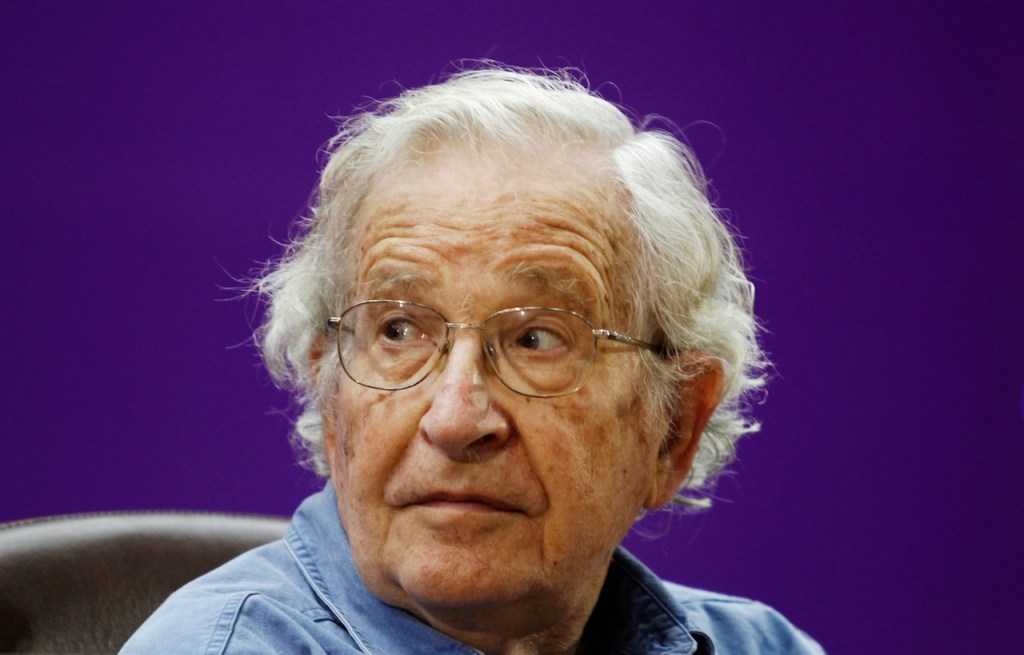



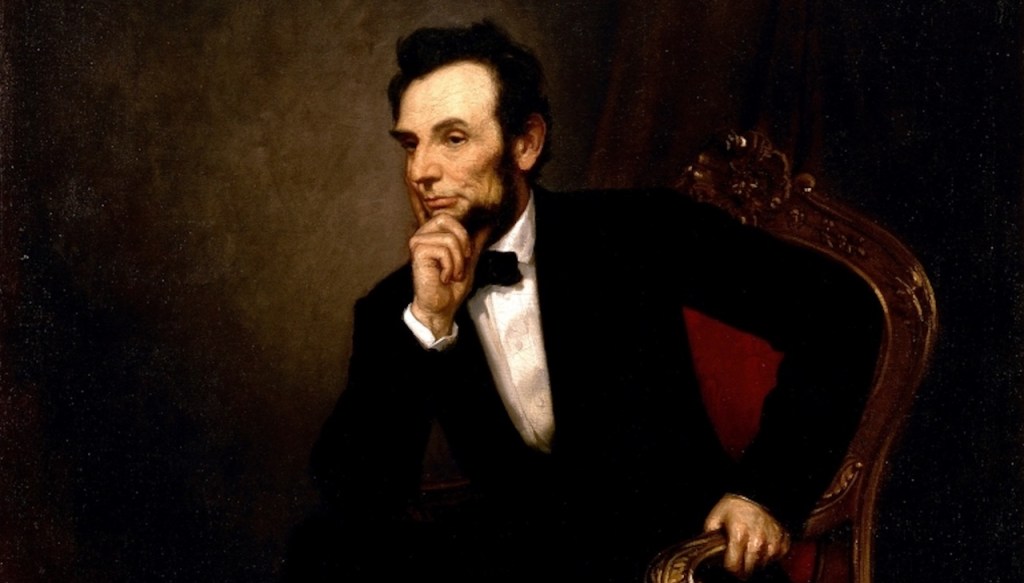
 Linda's Literary Home