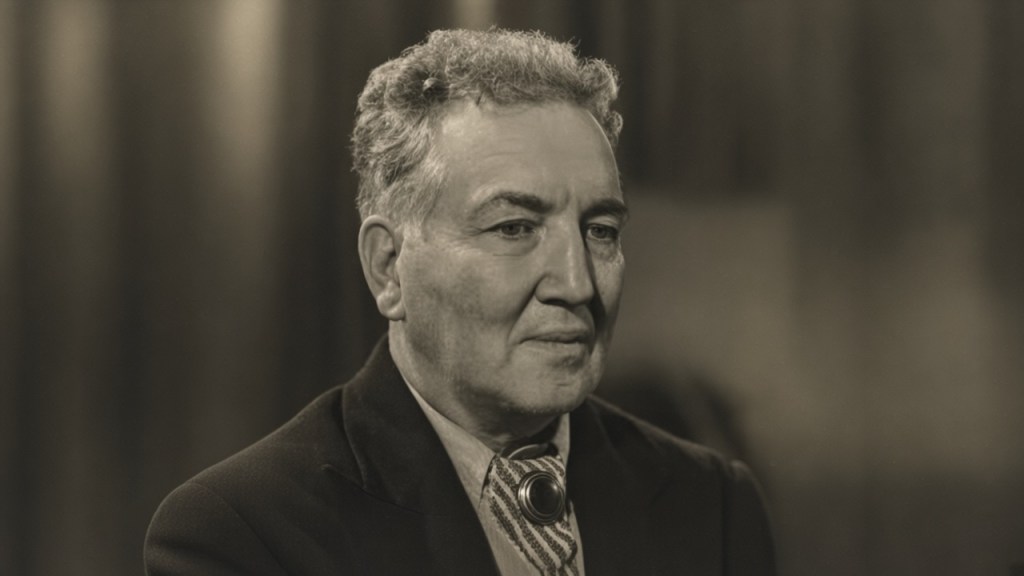
Robert Graves’ “Not Dead”
The speaker in Robert Graves’ elegy “Not Dead” remembers his son who died in war; his elegiac tribute resurrects the young man as a spiritual reality.
Introduction and Text of “Not Dead”
Actually, the speaker in Robert Graves’ “Not Dead” does more than just remember because in his act of dramatizing the son’s spiritual qualities, he renders the young man’s presence as something quite tangible.
The elegy plays out in a curtal sonnet, a form created by Father Gerard Manley Hopkins. The sonnet may be considered innovative because the rime-scheme—aabccb cbbdd—differs from the traditional abcabc dcbdc or abcabc dbcdc.
Not Dead
Walking through trees to cool my heat and pain,
I know that David’s with me here again.
All that is simple, happy, strong, he is.
Caressingly I stroke
Rough bark of the friendly oak.
A brook goes bubbling by: the voice is his.
Turf burns with pleasant smoke;
I laugh at chaffinch and at primroses.
All that is simple, happy, strong, he is.
Over the whole wood in a little while
Breaks his slow smile.
Commentary on “Not Dead”
The speaker in Graves’ “Not Dead” is remembering his son who died in war, but this particular remembering also dramatizes the resurrection of the young man as a spiritual reality.
First Movement: Walking to Clear the Mind
Walking through trees to cool my heat and pain,
I know that David’s with me here again.
All that is simple, happy, strong, he is.
Caressingly I stroke
In the opening line of Robert Graves’ “Not Dead,” the speaker locates himself in a wood, “Walking through trees to cool my heat and pain.” He has gone for a simple walk to clear his mind to allow himself to mourn his loss.
However, instead of mourning the loss of his son, he transforms that loss into a spiritual reality, asserting, “I know that David’s with me here again.” The spiritual presence of the son made itself known to the father, as the father walks through the woods. The calmness of the natural setting has rendered the speaker capable of sensing the spiritual level of being.
Instead of dramatizing the physical absence of his son, the speaker begins to muse on the spiritual reality of the son’s presence. The speaker avers that his son, David, influences the universe in a positive manner:”All that is simple, happy, strong, he is.”
He is insisting that David “is”—not “was,” as might be expected in remarking about the deceased. The importance of that line is so strong that it is later repeated intact. The speaker’s sense of his son’s essence remains with him.
Second Movement: The Ethereal Speaker
Rough bark of the friendly oak.
A brook goes bubbling by: the voice is his.
Turf burns with pleasant smoke;
I laugh at chaffinch and at primroses.
In a way of supporting his astounding claim that David is, indeed, with him again, and that David “is,” the speaker suggests that the qualities he finds in nature, in fact, resurrect the qualities of his son. The speaker lovingly touches the “[r]ough bark of the friendly oak.” The oak is “friendly,” suggesting the same familial and familiar relationship he enjoyed with his son.
The speaker “caressingly” “strokes” the bark; the act of listening to and perhaps discussing ideas with his son is brought back to his mind by this simple natural act of touching the bark of a tree.
Then the speaker hears the “bubbling” of a brook and avers that that sound is David’s voice. He continues finding his son in the pleasant odor of the burning turf, in the sound of a bird melody and in the beauty of the primroses.
Third Movement: Summary of a Life
All that is simple, happy, strong, he is.
Over the whole wood in a little while
Breaks his slow smile.
Then the speaker repeats the important line that describes his son: “All that is simple, happy, strong, he is.” This line offers the summation of the life of the deceased, and it serves as a signifier for the speaker as he dramatizes David’s qualities in order to resurrect the spirit of his son.
The final two lines—”Over the whole wood in a little while / Breaks his slow smile—reveal the success of the speaker’s dramatic attempts to summon his son’s spirit from the physical grave.
The speaker can sense David’s smile in the “whole wood,” and the speaker’s mourning is transcended by the “simple, happy, strong” qualities that were and, more importantly, are the hallmark of his son as a soul.
The speaker will still miss the physical presence of his son, but the son’s soul qualities will live on in the resurrection and drama of this speaker/poet’s creation. The speaker comes to realize that the soul is permanent, even though the body is not.
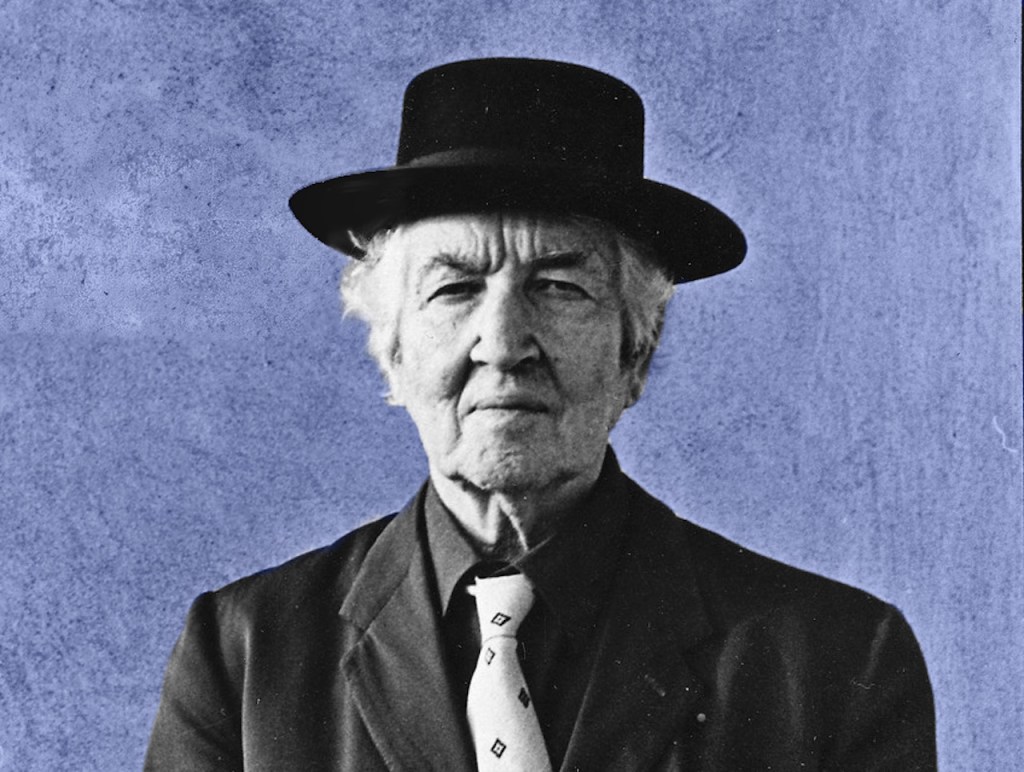
Brief Life Sketch of Robert Graves
Born in Wimbledon, a wealthy suburb of London, in 1895, Robert Graves [1] enjoyed a long career as a poet, biographer, novelist, translator, classical scholar, and mythographer, before dying in Majorca in 1985.
Robert Graves was twice married, producing four children in each marriage. The poem “Not Dead” grows out of the war death of his son, David. Between marriages, Graves lived with the American poet, Laura Riding (aka Laura Riding Jackson and Laura Riding Gottschalk, née Reichenthal), who is associated with the Fugitive Movement (See “The Fugitive-Agrarian Movement in Poetry.”
Graves’ dalliance with Riding provides his biography with an especially dramatic episode [2]. Riding took a fancy to the husband of one of their friends, and when she could not win him, she jumped out a three-story window, fracturing her pelvis in three places.
Graves had tried to stop Riding from jumping by jumping out the second-floor window himself. They both recovered from their traumatic injuries. Graves went on to marry his second wife; Riding went on the win the Nashville Poetry Prize in 1924 [3] and marry Schuyler Jackson in 1941.
Most noted for his poetry, Grave’s produced upwards of 150 works in his prolific career. It is thought that Graves quipped [4]: “There’s no money in poetry, but then there’s no poetry in money, either.”
Sources for “Brief Life Sketch of Robert Graves”
[1] Editors. “Robert Graves.” Poetry Foundation. Accessed October 14, 2026.
[2] David Mason. “The One Story of Robert Graves.” The Hudson Review. Vol. 72. No. 1. Spring 2019. Via JSTOR.
[3] Curators. “Laura Riding Jackson.” Academy of American Poets. Accessed October 14, 2026.
[4] Leo Hickman. “The Rise of Poetry in Advertising.” The Guardian. December 1, 2009.

