Linda's Literary Home

Tag: writing

  • Rabindranath Tagore

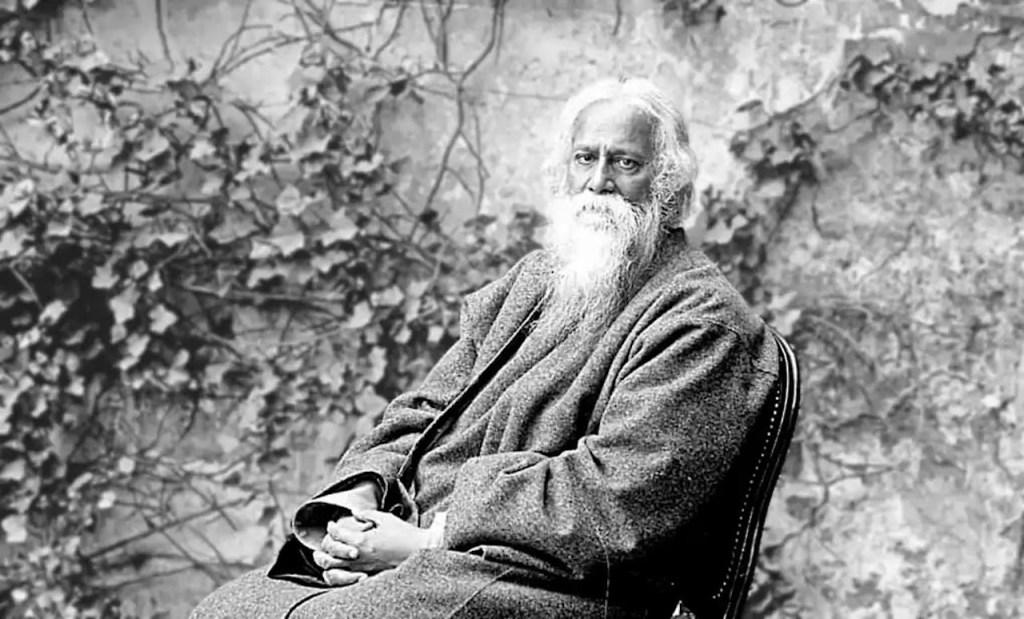
    Image: Rabindranath Tagore Beshara Magazine

    Life Sketch of Rabindranath Tagore

    In 1913, Rabindranath Tagore, Indian Nobel Laureate, won the literature prize for his prose translations of Gitanjali, Bengali for “song offerings.”  A true Renaissance man, he served as a poet, social reformer, and founder of a school.

    Early Life and Education

    Rabindranath Tagore, (in Bengali, Rabīndranāth Ṭhākur), was born May 7, 1861, Calcutta, India, to the religious reformer Debendranath Tagore (1817–1905) and Sarada Devi (1830–1875).  Sarada gave birth to fifteen children with Debendranath Tagore [1].  

    Rabindranath was the youngest of the children and was raised primarily by his oldest sister and servants.  His mother fell ill after giving birth to her last child, and she died when Rabindranath was only fourteen years of age.

    Tagore came to disdain formal education.  He was first enrolled in public education at the Oriental Seminary School in Calcutta.  At only seven years of age, he dropped out of school after attending for one month.  Students at the school were punished by being beaten with sticks.

    After enrolling in the school of Saint Xavier in 1876, he managed to attend for six months but then again left the institution.  However, he did retain some pleasant memories of his attendance at Saint Xavier and in 1927, he gifted the school with a statue of Jesus Christ from his personal collection.

    Saint Xavier values its relationship with Tagore, despite its brevity,  and commemorates his birthday anniversary, even holding their ceremony during the pandemic in 2021:

    The principal of the college, Father Dominic Savio, said: “We have decided to remember him on his birthday not only for paying tribute to a true Xaverian, who preached universal humanism but also to get inspiration from his writings, preaching and philosophy, particularly at this trying time”.[2]

    Tagore was richly homeschooled by his many accomplished siblings; his brother Hemendranath trained his younger brother in physical culture, having “Rabi” swim in the Ganges and hike through the surrounding hills. 

    Rabindranath also practiced gymnastics, wresting, and judo, under the watchful eye of his older brother.  With other siblings, Tagore studied history, geography, drawing, anatomy, mathematics.  Most importantly for his future writing career, he studied Sanskrit and English literature.

    Tagore’s contempt for formal schooling was on display when he enrolled in Presidency College but then spent only one day at the school.   His philosophy of teaching held that appropriate teaching included fueling curiosity not merely explaining situations.

    Founding His Own School

    Ironically, Tagore’s later interest in education led him to the founding of his own school in 1901 at Santiniketan (“Peaceful Abode”) in the bucolic countryside in West Bengal.    His school was established as an experimental educational institution, which would blend the best features of Eastern and Western traditions in education.

    Tagore relocated from Calcutta to reside permanently at his school.  In 1921, it became officially known as Visva-Bharati University, an important learning institution still flourishing today.  The following is from the school’s mission statement:


    The principal of the college, Father Dominic Savio, said: “We have decided to remember him on his birthday not only for paying tribute to a true Xaverian, who preached universal humanism but also to get inspiration from his writings, preaching and philosophy, particularly at this trying time”.[2]

    To bring into more intimate relation with one another, through patient study and research, the different cultures of the East on the basis of their underlying unity.

    To approach the West from the standpoint of such a unity of the life and thought of Asia.

    To seek to realize in a common fellowship of study the meeting of the East and the West, and thus ultimately to strengthen the fundamental conditions of world peace through the establishment of free communication of ideas between the two hemispheres.  [3]

    Tagore’s keen perception and deep understanding of the areas in which public education had become hopelessly corrupt prompted him to create a learning environment in which his vision of holistic learning could become a reality while continuing to grow and flourish.
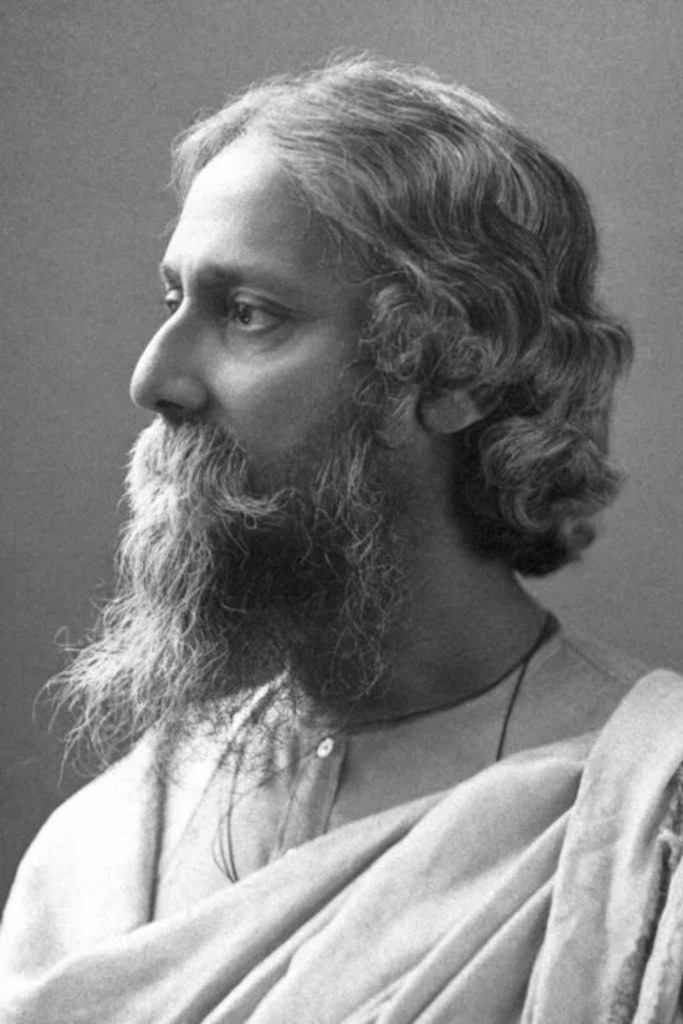
    Image: Rabindranath Tagore – Nobel Prize

    Nobel Prize for Literature

    The English painter and art critic William Rothenstein [4] became deeply interested in the philosophy and writings of Rabindranath Tagore. The painter especially was attracted to Tagore’s prose poems from Gitanjali, Bengali for “song offerings.”    The beauty and charm of these poems compelled Rothenstein to suggest to Tagore that he translate them into English so people in the West could appreciate them.

    Tagore, following Rothenstein’s advice, translated his song offerings in Gitanjali into English prose renderings. In 1913, Rabindranath Tagore was awarded the Nobel Prize for literature primarily for this volume of poems.   Also in 1913, the publishing house Macmillan brought out the hardcover copy of Tagore’s prose translations of Gitanjali.   

    William Butler Yeats, the greatest Irish poet, also a Nobel Laureate (1923), penned the introduction to Gitanjali.    Yeats reports that this volume of poems “stirred [his] blood as nothing has for years.” About Indian culture in general, Yeats opines, “The work of a supreme culture, they yet appear as much the growth of the common soil as the grass and the rushes.”  

    Yeats’ interest and perusal of Eastern philosophy intensified, and he was particularly moved by Tagore’s spiritual writing.  Yeats avers that Tagore’s tradition was one wherein 

    poetry and religion are the same thing and that it has passed through the centuries, gathering from learned and unlearned metaphor and emotion, and carried back again to the multitude the thought of the scholar and of the noble.  [5]

    Yeats later composed many poems based on Eastern concepts, although their subtleties at times evaded him [6]. Nevertheless, Yeats deserves credit for advancing the West’s attention and interest in the spiritual essence of those concepts.    Yeats further asserts in his introductory piece to Gitanjali

    If our life was not a continual warfare, we would not have taste, we would not know what is good, we would not find hearers and readers. Four-fifths of our energy is spent in this quarrel with bad taste, whether in our own minds or in the minds of others. 

    Yeats’ decidedly severe appraisal of Western culture quite accurately reflects the mood of his era:  the Irish poet’s birth and death dates (1861-1939) sandwiches his life between two bloody Western wars, the American Civil War (1861–1965) and World War II (1939–1945).  

    Yeats also accurately speaks to Tagore’s achievement as he reports that Tagore’s songs “are not only respected and admired by scholars, but also they are sung in the fields by peasants.”  The Irish poet would have been astonished and delighted if his own poetic efforts had been accepted by such a wide spectrum of the populace. 

    In Yeats’ poem, “The Fisherman,” he creates a speaker who is asserting the need for such an organic, pastoral style of poetry.  He is calling for a poetry that will be meaningful for the common folk. 

    Yeats reveals his contempt for charlatans, while encouraging an ideal that he feels must guide culture and art. Yeats encouraged a style of art that he felt most closely appealed to the culture of the Irish.  Thus, the Irish poet comprehended the beauty and simplicity native to the concept of a poetry for the common folk.
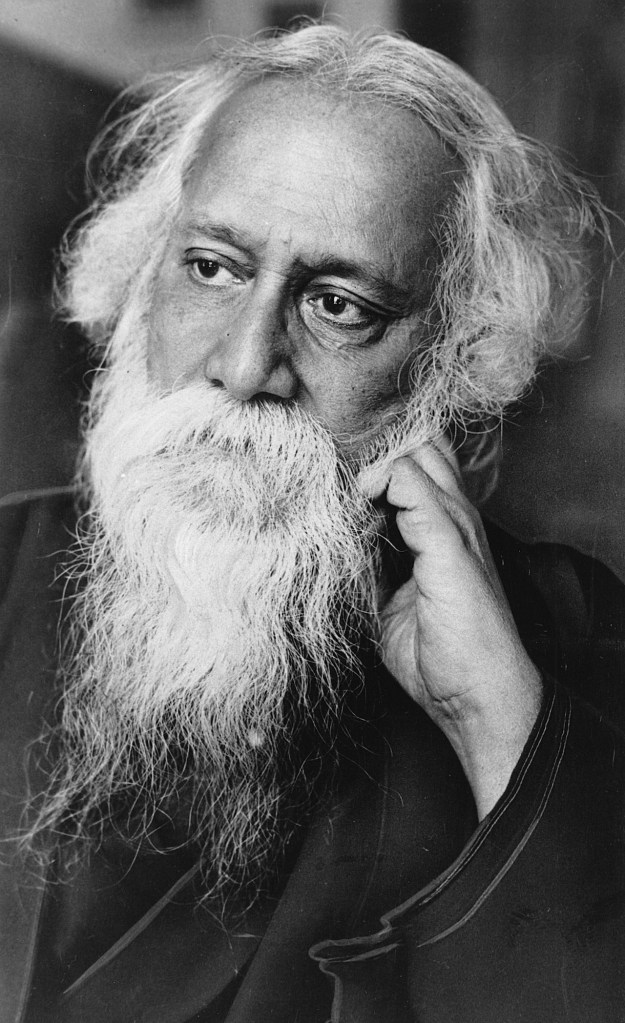
    Image: Rabindranath Tagore

    Sample Poem from Gitanjali

    The following prose-poem rendering #7 is representative of the Gitanjali’s form and content: 

    My song has put off her adornments. She has no pride of dress and decoration. Ornaments would mar our union. They would come between thee and me. Their jingling would drown thy whispers. 

    My poet’s vanity dies in shame before thy sight. O Master Poet, I have sat down at thy feet. Only let me make my life simple and straight like a flute of reed for thee to fill with music. 

    This poem unveils a charm that remains humble: it is, in fact, a prayer to soften the poet’s heart to his Belovèd Master Poet (God), without unnecessary words and gestures.    A poet steeped in vanity produces only ego-centered poetry, but this guileless poet/devotee seeks only to be open to the simple humbleness of truth that only the Heavenly Father-Creator can bestow upon his soul. 

    As the Irish poet William Butler Yeats has averred, these songs emerge from a culture in which art and religion have become synonymous.  Thus, it comes as no surprise that the offerer of these humble songs is speaking directly to the Divine Belovèd (God) in song after song, and song rendering #7 remains a perfect example.   

    In the last line of song #7 is a subtle allusion [7] to Bhagavan Krishna. The great yogi/poet Paramahansa Yogananda elucidates the meaning: 

    Krishna is shown in Hindu art with a flute; on it he plays the enrapturing song that recalls to their true home the human souls wandering in delusion.

    Tagore’s employment of religious themes remains a subtle yet integral part of his works.  He seldom engages in overtly polemical exposition, only a natural, organic art that inspires even as it educates and entertains.

    Renaissance Man

    Rabindranath Tagore became an accomplished writer of poetry, essays, plays, and novels. And despite his early disagreeable relationship with schooling, he is also noted for becoming an educator and founder of Visva-Bharati University in Santiniketan, West Bengal, India.  

    Tagore’ many accomplishments renders him a perfect example of a Renaissance man, who is skilled in many fields of endeavor, including spiritual poetry.  Despite being a world traveler, Rabindranath Tagore lived most of his life in the same house in which he was born.  On August 7, 1941, he died in that same house, three months after his 80thbirthday.

    Sources

    [1]  Editors. “Rabindranath Tagore.”  Britannica.  Accessed February 17, 2022.

    [2]  Debraj Mitra.  “Rabindranath Tagore’s Birthday Celebrated at Xavier’s.”  The Telegraph Online.  October 5, 2021.

    [3] Official Website of Visva-Bharati University.  Accessed February 19, 2023.

    [4]  William Rothenstein. Rabindranath Tagore.  Imperfect Encounter : Letters of William Rothenstein and Rabindranath Tagore, 1911-1941.  Semantic Scholar. Accessed January 2, 2024.

    [5]  Malcolm Sen.  “Mythologising a ‘Mystic’:  W.B. Yeats on the Poetry of Rabindranath Tagore.”  History Ireland.  July/August 2010.

    [6]  Linda S. Grimes. “William Butler Yeats’ Transformations of Eastern Religious Concepts.” Dissertation Abstract.  Ball State University. Advisor: Thomas R. Thornburg. 1987.

    [7]  Paramahansa Yogananda.  “Chapter 15: The Cauliflower Robbery from Autobiography of a Yogi.”  Hinduwebsite.com.  Accessed February 17, 2022.

    🕉

    Commentaries on Rabindranath Tagore Poems

    • Rabindranath Tagore’s Gitanjali #48: “The morning sea of silence…”  Rabindranath Tagore’s poem elucidating a metaphorical and metaphysical journey is number 48 in his most noted collection titledGitanjali. The poet received the Nobel Prize for Literature in 1913, specifically for that collection.
    • Rabindranath Tagore’s “Light the Lamp of Thy Love”  Rabindranath Tagore’s poem “Light the Lamp of Thy Love” is a devotional lyric that expresses the speaker’s longing for self-realization. Through colorful imagery, the poem explores themes of transformation, redemption, and the transcendence of human limitation through spiritual awakening.
    • Rabindranath Tagore’s “The Last Bargain”  Rabindranath Tagore’s “The Last Bargain” focuses on what seems to be an quandary:  how is it that a child’s offering of “nothing” to a seeker becomes the “last bargain” as well as the best bargain?
  • Original Song:  “River Spirit” and Prose Commentary

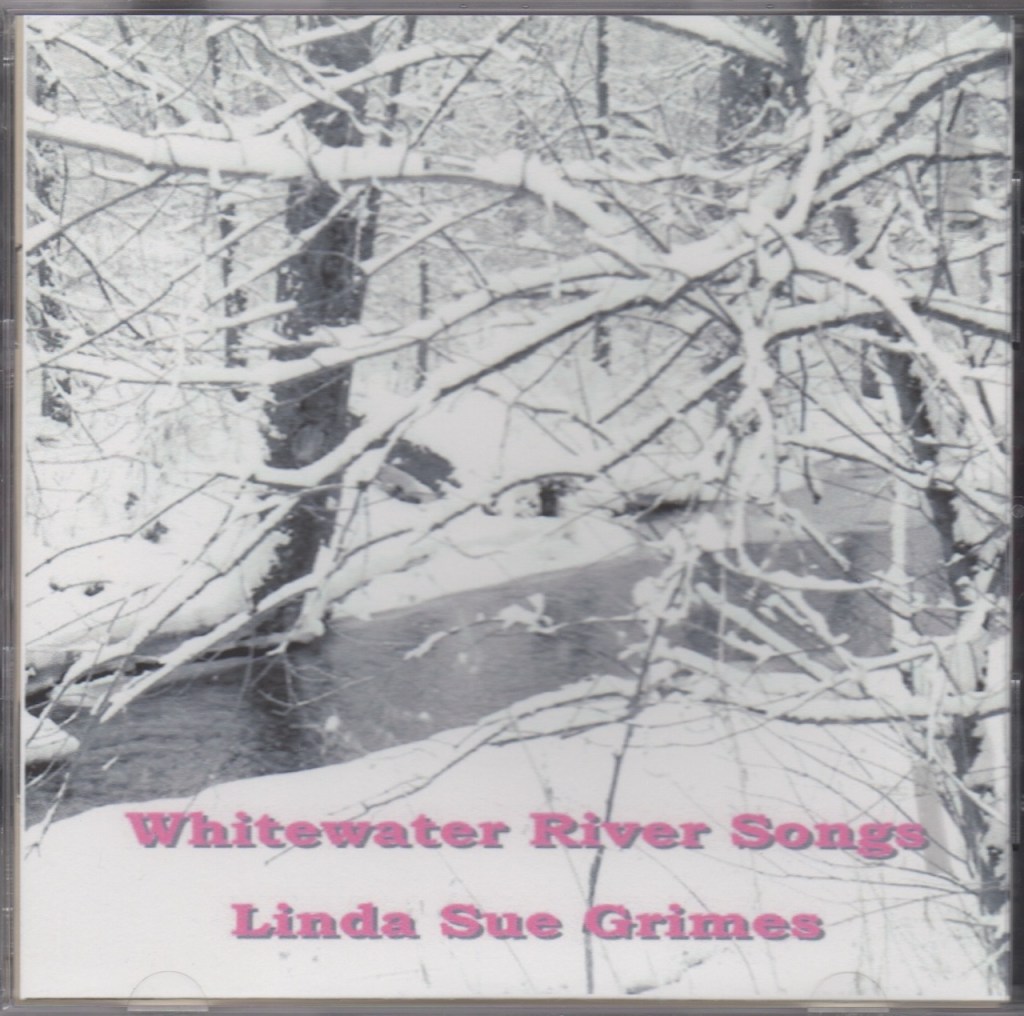
    Image: “Whitewater River Songs – Album Cover” Photo by Ron W. G.

    Original Song:  “River Spirit” and Prose Commentary

    I wrote “River Spirit” circa 1980 then made a homemade recording of it around 20 around 2004.  In 2023, my husband Ron—whom I call “My Sweet Ron”—created the video featuring his own photos and videos selections along with the song.  

    Introduction to and Lyric of “River Spirit”

    The lyric of “River Spirit” plays out in four stanzas of tercets, with one couplet appearing as the second stanza.  It sports no traditional rime-scheme but does offer one set of perfect rime in “hand/sand” in the second and third lines.  Other slant—or more accurately ghost rimes—appear in “water/before” in the couplet.

    Ghost rimes also make an appearance with “bed/edge” and “changes/images.”  The time frame begins in spring, as the singer begins to report what she sees along the river after the cold hard season of winter has given way to the warmth of spring.

    The theme of the song is the mystery the singer feels at seeing that the landscape along the river has been radically transformed from what she had observed during the summer before this transforming winter had its sway.  The singer poses questions about how the trees got uprooted and the path along the river has shifted, as even the stones are taking on new patterns.

    The singer then announces what she had thought to be the agent of the transformations; however, she is ultimately revealing—in the title—that what she “guessed” back in the day, she now knows to be the work of the Divine Reality, the “River Spirit”—or God (see “Names for the Ineffable God”).

    (Please note:  Dr. Samuel Johnson introduced the form “rhyme” into English in the 18th century, mistakenly thinking that the term was a Greek derivative of “rythmos.”  Thus “rhyme” is an etymological error. For my explanation for using only the original form “rime,” please see “Rime vs Rhyme: Dr. Samuel Johnson’s Error.”)

    River Spirit

    Every spring along the Whitewater River
    I saw that some mysterious hand
    Had rearranged the rocks and sand.

    The path I followed the summer before
    Was slipping off into the water.
    I could not figure out whose force
    Could drive that water among the reeds
    & shift the river in its bed

    Whose muscles uprooted those trees?
    Whose fingers patterned those stones
    Along the edge?  

    I guessed only that the spring thaw
    Conjured up the changes
    In those sleeping river images.

    Commentary on “River Spirit”

    The time frame is spring, as the singer begins to muse on what she observes along the river after the cold, hard season of winter has given way to the warmth of spring.  Her earlier guess about that riverbank rearrangement has now become an article of faith, and she proclaims in the title the answer to her earlier inquiry.

    First Movement:  The Hand of Mystery

    Every spring along the Whitewater River
    I saw that some mysterious hand
    Had rearranged the rocks and sand.

    The singing narrator launches right into her story by making the claim that she observed a change in the pattern of stones and sand along the river’s edge, and she make this observation “every spring.”  She had thus a recollection of having experiences these changes many times.

    She colorfully attributes those rearrangements to “some mysterious hand.”  At this point, it may sound a bit odd that a river walker would think a hand had been involved in what went on along the riverbank in her absence.

    Second Movement:  River Features Shifting

    The path I followed the summer before
    Was slipping off into the water.

    After setting the stage for mystery and rearrangement of river features, the singer offers a very specific change.  She had walk along a path during the preceding summer, and now that path simply veered off into the river water.  Such a change would likely be quite jarring for the hiker, who would necessarily be obliged to alter her walking pattern.

    Third Movement:  Puzzling over the Changes 

    I could not figure out whose force
    Could drive that water among the reeds
    & shift the river in its bed

    The singer now inserts her puzzlement.  She becomes curious as to how such changes could have occurred.  She sees that the river has now shifted its course, plunging into the reeds along the bank.

    The mere fact of the river shifting “in its bed” seems Herculean in prospect.  The river is such a large body of moving water that the notion of it shifting surely requires a force that strikes the singer an unimaginable at this point.

    Fourth Movement:  Who Made Those Changes?

    Whose muscles uprooted those trees?
    Whose fingers patterned those stones
    Along the edge?  

    The singer then again adds more specificity to her inquiry.  She sees that trees have been “uprooted,” and she observes that the stones along the river’s edge have been rearranged in a different pattern from the summer before.

    Again, she colorfully attributes those “changes” to a seemingly human agency of “muscles” and “fingers.”  But behind those specific agents must lie some metaphysical force that at this point the singer cannot name, cannot even offer a guess about.

    Fifth Movement:  Guessing at the Conjuring

    I guessed only that the spring thaw
    Conjured up the changes
    In those sleeping river images.

    Now the singer offers what she thought to be an answer to her inquiry: Well, it was likely that not any hands, muscles, or fingers enforced all of these changes; it was simply the process of thawing out from the ice during the warming movements brought on by spring.

    Sure, that’s it: the spring movements of thawing influenced those inert river features to alter themselves into differing patterns from the summer before.  What else could it be?  But the singer is understating what she really believes now.  She “guessed” about the “spring thaw”—but that was then, this is now.

    Thus the singer through anthropomorphic images of hands, muscles, fingers has proclaimed that a humanlike power has, in fact, mades these changes.  Not an actual human being on its own however.  But some power that retains in its Being the image of the human form, power,  and ingenuity.

    Simply, the title of the lyric has already stated what the singer pretends to guess about as she unfurls the song:  God (as the “River Spirit”) has performed His magic on these “sleeping river images.” God has “conjured up” those alterations in those river images as they moved from a frozen, winter sleep to vital spring time awakening.

  • Original Song:  “I Wonder if You Ever Think of Me” and Commentary

    Image:  “Winter Melancholy” Irca & Jacky K.

    Original Song:  “I Wonder if You Ever Think of Me” and Commentary

    I wrote this song about 40 years ago, made a homemade studio recording of it about 20 years ago.  Recently, my husband Ron created a video using his own photos and videos selections featuring the song.  

    Introduction, the Lyric, and the Video

    The lyric of “I Wonder if You Ever Think of Me” displays in four cinquains and one single line, which concludes the lyric by repeating the chorus-like line, transforming the title from wondering to knowing.  The time frame runs from winter to the beginning of spring, with the singer signaling “snow” in the opening line and concluding with winter having turned to spring.

    The song follows a lost-love theme, which therefore relies on melancholic images such as “gray sky” in the opening cinquain, “bare branch” in the second, “wind is blowing cold” in the third, “empty house” in the final stanza.  Despite the theme of melancholy and the lost-love subject, the rendition maintains a rather fast paced rhythm, which allows room for interpretation regarding the depth of the sorrow that appears to be elucidated.

    I Wonder if You Ever Think of Me

    Now the snow is on the ground.
    I walk through the yard.
    Your footsteps I can’t find.
    Gray sky is pressing me down,
    And I wonder if you ever think of me.

    Light through my window comes late.
    I stand and I watch
    Bare branch against the sky.
    I take a walk down by the bridge,
    And I wonder if you ever think of me.

    Outside the wind is blowing cold.
    My heart beats fast
    To think you may be near.
    I walk back to my bed,
    And I wonder if you ever think of me.

    Night turns to day, winter to spring.
    I walk down the road,
    My dog my only friend.
    I walk back to the empty house,
    And I guess I know you never think of me.

    I guess I know you never think of me.

    Commentary on “I Wonder if You Ever Think of Me”

    What may at first blush seem to be a “lost-love” theme filled with sorrow and foreboding can be understood in actuality as quite the opposite—an affirmation of the efficacy of musing, ruminating, and clear-eyed observation.

    First Cinquain:  Beginning a Winter Tale 

    Now the snow is on the ground.
    I walk through the yard.
    Your footsteps I can’t find.
    Gray sky is pressing me down,
    And I wonder if you ever think of me.

    The singer begins to set the stage by revealing the season of the year in which she is making her musing.  “Snow” likely says, it is winter time.  A cold beginning foreshadows the mood of the piece as the singer wonders if the addressee ever thinks of her. Before revealing what she is wondering, she adds two details that set her glum mood. 

    The sky is gray and causing her mood to be low and likely sad, but more likely the detail responsible for her mood is that she cannot see the footprints of the addressee in the snow. That a natural phenomenon of the gray sky accompanying the lack of footprints of a likely lost loved one is wholly understandable.  Human emotion often tinges the nature of  things surrounding it.

    Second Cinquain: Bare Branch and Gray Sky Compound the Melancholy

    Light through my window comes late.
    I stand and I watch
    Bare branch against the sky.
    I take a walk down by the bridge,
    And I wonder if you ever think of me.

    The singer then reveals that she is looking out a window and the sun seems to have delayed its arrival that morning, as it is coming late.  She continues to stand at the window looking out at the winter branches on the trees; they are, of course, bare, having experienced the autumn season that preceded the current time frame.  The “bare branch” is set “against the sky,” revealing another detail of the melancholy which the singer is experiencing.  Bare branches are not considered to be as beautiful as branches full of leaves as in spring and summer.  

    It has already been revealed that the sky is “gray,” and thus the coupling a gray sky and bare branch work together the compound the melancholy mood of the singer.  The singer is then on the move; she walks down to the bridge.  She then repeats the chant-like refrain of wondering if the addressee thinks of her.  Likely the walk was intended to mitigate the melancholy of her wondering, but it has not helped thus she repeats her refrain.

    Third Cinquain:  A Fantastic Interlude

    Outside the wind is blowing cold.
    My heart beats fast
    To think you may be near.
    I walk back to my bed,
    And I wonder if you ever think of me.

    Instead of supplying any detail of the walk back to her house, the singer just suddenly places herself there as she notices that a cold wind is rustling “outside.”  The singer’s continued attempt to mitigate her painful wondering causes her mind to become jerked about, leaving out details that her listeners might want to have as they try to follow her narrative. 

    Again, the speaker adds an important detail that remains otherworldly; her heart begins to beat fast because the thought has arisen that, in fact, the addressee may actually “be near”—not just in her thought but in physical reality.  But instead of rushing to window to look to see if that nearness is likely, she simply “walk[s] back to [her] bed.”  Again, her refrain becomes dominant as she “wonder[s] if [the addressee] ever thinks of [her].”

    Fourth Cinquain:  Winter Bleeds into Spring

    Night turns to day, winter to spring.
    I walk down the road,
    My dog my only friend.
    I walk back to the empty house,
    And I guess I know you never think of me.

    Quite a bit of time has passed from the time frame of the first three cinquains; it is now spring.  But the singer conflates the changing of the season with nighttime turning to daytime.  Her mind is on the passage of time.  Time is supposed to possess a healing power.  Observing the changing of temporal phenomena may become part of the healing process.   

    But now the singer reveals that she is on the move again; this time she is simply taking a walk “down the road” and she is accompanied by her dog.  She confides that her dog is her “only friend.”  Thus her listener can be assured that she is still alone, still missing the addressee, even before she reveals that her house is still empty.  Again, the refrain of wondering if the addressee thinks of her becomes a final or near final expression.  She has continued to wonder as she wandered from winter to spring, as night becomes day, as she strolls about with or without her dog friend, and as she has continued to observe the things around her.

    Final Single Line:  The Return of Harmony and Balance

    I guess I know you never think of me.

    The final single line reveals that the singer has reached a conclusion.  She now knows that the addressee does not ever think of her.  She does not reveal explicitly how she knows that, but she has made it clear the she has cogitated on the issue for at least a whole season.  She began in winter time observing the absence of the addresses by the absence of footprints in the snow. She strolled through the yard, she strolled down the bridge, and she stood at her window watching as night turned to day and one season bled into another.

    The listener can then easily assume that as the singer did all of these things, she was musing, turning over in her mind details about the relationship with the addressee.  Thus with all of this musing and cogitation, she has reached the conclusive answer to the question, and it is no, the addressee never thinks of her. 

    The fast pace of the song reveals a certain mood of affirmation despite the melancholy that many of the images impart.  The singer has therefore not composed a dirge but a hymn to the importance of musing, cogitation, and observation.  The human heart may be persuaded to lighten if the mind of the observer remains focused on achieving balance and harmony. 

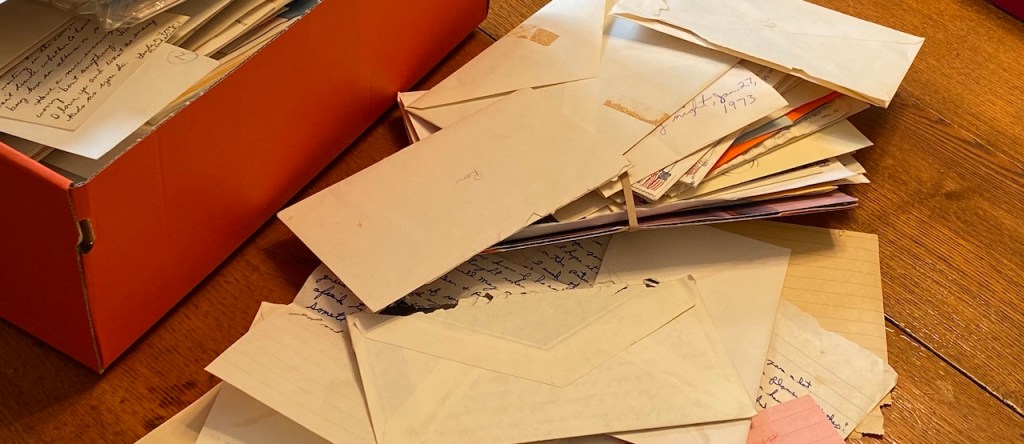
  • Original Song:  “These Letters” with Prose Commentary

    Image:  Letters  – Photo by Ron W. G.

    Original Song:  “These Letters” with Prose Commentary

    My original song “These Letters” is a rather uncategorizable love song:  it does not exactly fit into the lost love category, nor does it fit into the romantic, idealism of most love songs.

    Introduction and Lyric of “These Letters”

    The singer and the individual addressed in the song have apparently had a friendly, loving relationship in the past—even likely lived together experiencing the life that the singer suggests with images in the song.  However, the addressee at the time of the song remains at some distance from the singer.   The fact that they have been exchanging letters reveals that a spacial distance exists between the two parties.

    The singer does not reveal the reason for the two being apart, but the fact that she hopes the addressee will return to her leaves open the question for the addressee’s departure and even whether the addressee will ever return.  The singer expresses the wish and hope that the addressee will return, and by that expression of that wish/hope, she is implying that the addressee many not ever return.

    Interestingly, the mention of being “far apart” is not clear that the singer is referring only to distance in miles, but it is obvious that a spacial distance exists because of the very title of the song.  The song cannot be considered a “lost love” song because the singer expresses her love for the distant individual and that she hopes the addressee will return to her.  Whether the two reunite remains a mystery because the theme of the song is simply that letters are not sufficient to maintain a close relationship.

    These Letters

    First Verse

    Here I sit with knitting needles
    Winter drawing near.
    Mind on fire with old desire
    Wishing you were here.
    So I’ll make this sweater
    To send to you
    With the love that’s in my heart
    And I’ll tell you that I long for you
    ‘Cause we’re so far apart.

    Second Verse

    The wine in the cellar gets better and better.
    I wish you could taste some with me.
    I try not to show
    The young plants as they grow
    How empty and sad I can be.
    The tomato vines hung so full this year
    I wish you had been here to see.
    I’ll send you some pictures and strawberry jam
    And my hopes that you’ll come back to me.

    Chorus

    These letters can’t take your place, my Love.
    I hope that you come back to me.
    No, these letters can’t take your place, my Love.
    I hope that you come back to me.

    Commentary on “These Letters”

    Because the title of the song is “These Letters,” the singer is placing great emphasis on that form of writing.  But she is letting the recipient of her letters know that she finds such correspondence insufficient to maintain their relationship.  While letters cannot take the place of the missing individual, she singer adds her hope their the addressee will return to their her and their life together.

    First Verse:   A Distant Relationship

    Here I sit with knitting needles
    Winter drawing near.
    Mind on fire with old desire
    Wishing you were here.
    So I’ll make this sweater
    To send to you
    With the love that’s in my heart
    And I’ll tell you that I long for you
    ‘Cause we’re so far apart.

    The singer begins by noting where she is and suggesting what she is doing:  she is sitting somewhere, likely in her home, with a pair of “knitting needles.”   She then alerts the addressee and her listeners to the fact that the winter season is coming soon.

    The fact that the coldest season is nearly upon her prompts her to reveal the reason for her sitting with knitting needles:  she is knitting a sweater for the individual, whom she is addressing in the song.  She then tells the individual that she is sending the sweater to him/her.  She adds the unexpected element that she will also be sending love the person.  

    Love resides in her heart for the person she is addressing, and she wishes they were not “so far apart.”  She reports that she will tell the individual that she “long[s] for [the individual]” because of the vast separation.

    Second Verse:  Hopes for Return

    The wine in the cellar gets better and better.
    I wish you could taste some with me.
    I try not to show
    The young plants as they grow
    How empty and sad I can be.
    The tomato vines hung so full this year
    I wish you had been here to see.
    I’ll send you some pictures and strawberry jam
    And my hopes that you’ll come back to me.

    The singer then reveals that she and the individual whom she is addressing have made wine together.  Their wine gets “better and better” as it rests in the cellar.   This set of imagery “wine” and “cellar” implies that the singer and the individual reside in the country, in a bucolic setting as opposed to city living, where cellars are not common, nor is wine-making.

    More evidence for the country living is that the singer next mentions the growing of the grapes for the wine, which likely represent other plants that the singer and her friend have formerly grown together.

    Now that she and the individual have distance between them, she singer is “empty and sad,” but as the cultivates the garden, she attempts to put on a happier face for the sake of the plants, as plants can be sensitive to the mood of their caretaker.

    She then tells her friend that the tomato harvest was especially good this year.  And again she expresses the wish that her friend had been there to experience those full-hanging tomato vines.  The singer then alerts her friend that she will send the individual pictures—likely images of those garden plants, particularly the tomatoes that grew so abundantly.  

    In addition to the pictures, she will send “strawberry jam”—another indication that the singer lives out in the country where she has the space to grow strawberries.  And again, this singer expresses “hopes”—this time, somewhat more than a mere “wish”—that the individual will return to the singer.

    Chorus:  What Letters Cannot Do

    These letters can’t take your place, my Love.
    I hope that you come back to me.
    No, these letters can’t take your place, my Love.
    I hope that you come back to me.

    The chorus which is offered only twice expresses the fact that the two individuals have been exchanging letters.   The singer makes her feelings known that letters are not sufficient to maintain the loving relationship that the two had earlier experienced.

    The chorus itself even repeats the fact that the letters are not enough.  The singer remains hopeful that the now distant former friend and likely housemate will return to her and their life together.

  • Original Song:  “Where You Are”  with Prose Commentary

    Image: Pacific Ocean – August 2015 – Self-Realization Fellowship Meditation Gardens – Encinitas CA – Photo by Ron W. G.

    Original Song:  “Where You Are”  with Prose Commentary

    This song Where You Are” is one of my original compositions. The video accompanying it was created by landscape artist/photographer Ron Grimes.

    Introduction and Text of “Where You Are”

    My original song “Where You Are”is based on a simple premise: the singer is addressing her Divine Belovèd (God), asserting to the Belovèd the desire to be where the Ultimate Loved One is.

    Each verse features rhetorical questions and musings upon the actual location of the Divine Creator.  Because the Creator/Father of all creation is both within creation and outside of creation, the answer to all of the rhetorical questions is, naturally, yes.

    Nevertheless, being where the Divine Belovèd is cannot be the same situation as being where a human friend or beloved is.   Because it seems that God is playing hide and seek with his children, the singer asserts that her soul “soul tugs at the veil hiding You from me.”

    Where You Are

    First Verse

    Are You standing on top of a mountain?
    Are You sitting beside the vast grave sea?
    How can I ever approach You?
    Will You ever just come to me?

    Second Verse

    Are You speaking to me through my loved ones?
    Are You quietly whispering through the silver stars?
    Are You waiting to hear what my songs will sing?
    Do You listen to the rapid beat of my heart?

    Third Verse  

    If I offer You all in my stillness—
    If I silently listen to the hum in my mind—
    If I patiently fast from all my senses—
    Will You break Your vow of silence and just come to me!

    Chorus 

    Where You are is where I long to be.
    I cannot understand where else I could seek.
    My soul tugs at the veil hiding You from me.
    Where You are is where I long to be.

    Video: Linda Sue Grimes performing “Where You Are”  

    SoundCloud:  Linda Sue Grimes performing “Where You Are” 

    Commentary on “Where You Are”

    After much questioning, contemplating, and ultimately meditating, the devotee will find that the soul will remove the veil hiding it from the Over-Soul—the soul’s Creator, the Divine Belovèd, or any of the preferred name for the Ineffable (God).

    First Verse:  “Are You standing on top of a mountain?”

    Are You standing on top of a mountain?
    Are You sitting beside the vast grave sea?
    How can I ever approach You?
    Will You ever just come to me?

    The singer opens with four rhetorical questions to the Divine Reality.  The first two questions reveal earthly locations that are considered sanctuaries of sacredness, holiness, or just ordinary vacation escapes:  mountain tops and sea sides. 

    The next two questions reveal that the devotee is still walking the sacred, devotional path to soul-realization (also known as self-realization or God-realization).  

    Before final liberation, the devotee experiences the separation from her Goal to be a heavy burden.  That burden causes her to wonder if she, in fact, will ever be able to unite with the Creator/Father.

    In her melancholy and sorrowful mourning because of the seeming distance, the devotee often wonders if the Lord will ever appear to her and make her know that she is His own child.   Will she ever be able to attain the Sacred Goal of self-realization and experience unity with her Belovèd Divine Creator?

    Second Verse:  “Are You speaking to me through my loved ones?”

    Are You speaking to me through my loved ones?
    Are You quietly whispering through the silver stars?
    Are You waiting to hear what my songs will sing?
    Do You listen to the rapid beat of my heart?

    In the second verse, the singer/devotee continues with rhetorical questions.  Intuiting the answer yet not knowing the fullness of each answer, she inquires of the Divine Belovèd if He is communicating with her through her family and friends.

    The singer likely is aware that God is speaking to her through everyone she knows and meets.  But without that last step in the process of enlightenment, she does not know exactly what is being said or exactly what all that conversation might ultimately mean to her.

    Thus, she also wonders if the One Who fashioned the “silver stars” may be signaling to her through those heavenly entities.  Again, she likely knows it to be a fact, but that separation continues to prompt questions.  

    The singer wonders if Divine Mother anticipates what she sings in her songs.  She wonders if her musical worship is reaching its intended Goal.

    The singer/devotee often becomes anxious with a rapid heart beat, knowing that that heart beat needs to become calm to achieve stillness.  She therefore wonders if the Creator Divine cares to listen to that rapid heart beat.  And she wonders if the Ultimate Physician will perform some medical heavenly magic to help her still her rapid heart.

    Third Verse:  “If I offer You all in my stillness”

    If I offer You all in my stillness—
    If I silently listen to the hum in my mind—
    If I patiently fast from all my senses—
    Will You break Your vow of silence and just come to me!

    The singer/devotee’s questioning becomes even more intense in the lyric of the final verse.    She has shown that she knows that she must still the rapid beat of her heart, but she also must still all of her senses as she offers her every atom to the Divine Essence.

    The devotee/singer shows awareness that she must listen the divine hum of the cosmic motor, the sacred AUM (Om) sound that upholds all of creation.  She knows that she must remove her attention from worldly things and events and place that attention upon the locus beyond the senses, where the soul resides.

    The singer/devotee remains certain that after she is able to accomplish all that is implied in her questions and musings, the Divine Belovèd Presence will, in fact, “break [that] vow of silence and [ ] come to [her].”

    Chorus:  “Where You are is where I long to be”

    Where You are is where I long to be.
    I cannot understand where else I could seek.
    My soul tugs at the veil hiding You from me.
    Where You are is where I long to be.

    The chorus, instead of offering mere rhetorical questions and musings, makes an affirmative statement:  the singer asserts that she wants to be where her Divine Beloved is.   She reveals her intuition that she cannot find love, peace, fulfillment on the physical, earthly plane.

    The singer/devotee insists that her soul is attempting to rend the cloth of separation from the Divine, as it “tugs at the veil” that keeps her from uniting with the Creator Belovèd. 

    The final line emphasizes as it repeats the important desire: “Where You are is where I long to be.”  The importance of the chorus is demonstrated by its repetition after every verse.

  • Original Song:  “The Paper Mill Bridge Song” with Prose Commentary

    Image:  Old Paper Mill Bridge, Brookville, Indiana – Built 1914 – Brookville Library Collections

    Original Song:  “The Paper Mill Bridge Song” with Prose Commentary

    My original song “The Paper Mill Bridge Song” was inspired by the beautiful Whitewater River in Indiana and its relationship to the beautiful relationship I have enjoyed for over half a century with my wonderful husband, native of the little town of Brookville, Indiana.

    Introduction and Excerpt from “The Paper Mill Bridge Song”

    My husband, landscape artist Ron Grimes, created the video featured in this article to accompany my original song “The Paper Mill Bridge Song.”  He wrote the following introduction to the piece and placed his video on YouTube:

    A celebration of life and love as witnessed by the Paper Mill Bridge over the Whitewater River in Brookville, Indiana.

    September 10th, 2022. Linda and I walked to the middle of the new Papermill Bridge. I wanted to capture some scenes for this video. As soon as I started videoing, this Canada Goose flew right over us and honked as it if it were saying, “I want to be in your video.” It was a gift.

    Innovative Chorus

    The song undergoes an unusual arrangement; instead of an ordinary chorus, it features an middle octave which behaves as a second octave and chorus that gets repeated at a the end of the song.

    The Paper Mill Bridge Song

    Here’s where people paddle canoes
    Down the Whitewater River.
    I stand here on Paper Mill Bridge.
    Watch the water and remember
    The day we walked along the bank,
    Sand so warm to my feet.
    We talked about cattails, rocks, and stars
    And the moss that grows on old trees.

    These are the things that fill my day,
    Things we’ve done together.
    Sunshine streaming down through the leaves,
    A storm in the clouds or snow in the fields.
    River water runs through my veins.
    The stars light up my eyes.
    Love for you turns in my heart
    Like the sun burns through the sky.


    Through the years my heart has filled
    With love for this old river.
    I stand here on Paper Mill Bridge.
    Watch the water and remember
    The day we paddled down the stream,
    A cool breeze on my shoulders.
    The sun shone bright over Paper Mill Bridge
    And I knew I’d love you forever.

    These are the things that fill my day,
    Things we’ve done together.
    Sunshine streaming down through the leaves,
    A storm in the clouds or snow in the fields.
    River water runs through my veins.
    The stars light up my eyes.
    Love for you turns in my heart
    Like the sun burns through the sky.

    © LINDA SUE GRIMES 2004

    Prose Commentary on “The Paper Mill Bridge Song”

    My original song—”The Paper Mill Bridge Song”—focuses on one relationship that progresses from good friends to life partner.  In the opening verse, the friends experience a quiet walk and talk along the river.  In the final verse, the life relationship is solidified.

    First Octave/Verse:  The View from the Bridge

    Here’s where people paddle canoes
    Down the Whitewater River.
    I stand here on Paper Mill Bridge.
    Watch the water and remember
    The day we walked along the bank,
    Sand so warm to my feet.
    We talked about cattails, rocks, and stars
    And the moss that grows on old trees

    The singing narrator is standing on a bridge, which turns out to be the subject of the song, the Paper Mill Bridge.  She begins to report on the activities that are locally common to that bridge.  The bridge spans the Whitewater River—a river in mideastern to southern Indiana—and from its perch one can from time to time see canoers paddling their barks down the river.

    The narrator then focuses on a memory that is important to her regarding her hike along the riverbank with a friend.  During that pleasant stroll, the two friends casually conversed about river-related entities such as water reeds that look like “cattails” and other features of nature such a “rocks and stars.”

    The narrator recalls that her feet enjoyed the luxury of the warm sand.  They also held forth about the fact that moss grows on old trees—likely that the moss grows mostly on the north side of those arbolian creatures.

    Second Octave/Chorus:  Recurring Images

    These are the things that fill my day,
    Things we’ve done together.
    Sunshine streaming down through the leaves,
    A storm in the clouds or snow in the fields.
    River water runs through my veins.
    The stars light up my eyes.
    Love for you turns in my heart
    Like the sun burns through the sky.

    The chorus has an usual placement, standing the middle of the song and containing an equal number of line as each verse, instead of following each verse with fewer lines.  Essentially the piece offers three separate octaves, even as the middle octave performs as a chorus.

    In this innovative chorus, the narrator has placed a heavy emphasis.  While she has offered some concrete details in the opening verse-octave, in the chorus-octave she is stating a general take on what she may likely be thinking about during this particular time period in her life.

    She thus has been focusing mentally on things that she and her friend have enjoyed together.  But then she adds two images in the first quatrain of the chorus-octave that allow her thoughts to show their natural influences as she experiences weather conditions—specially the warmth of spring and summer and the cold of fall and winter.

    The second quatrain of the chorus-octave becomes even more generalized: she is a creature of the river, so closely attuned to river culture that it seems that the very waters of the river flow “through [her] veins.”

    The narrators suggests that her happiness is enhanced as if by starlight.  She then asserts that she loves her friend with the same intensity that causes the “sun” to burn “through the sky.”  The hyperbole serves to suggest the strong emotion that this narrator feels for her friend, their relationship, and the natural features that they have experienced together.

    Third Octave/Verse:  The Passage of Time

    Through the years my heart has filled
    With love for this old river.
    I stand here on Paper Mill Bridge.
    Watch the water and remember
    The day we paddled down the stream,
    A cool breeze on my shoulders.
    The sun shone bright over Paper Mill Bridge
    And I knew I’d love you forever.

    The third octave/verse again focuses on the narrators thoughts about her friend, and now it becomes apparent that they are indeed life partners.  But first she places that river into her affections; she has come to love the river, and again, she is standing on the same bridge with pleasant memories coming to the fore.

    This time she remembers that like the other folks one might see canoeing down the Whitewater River, she and her partner did such paddling.  That day she recalls that she felt a breeze on the skin; it was a “cool breeze”—indicating that it was likely early to mid-spring.

    However, she then asserts that over that bridge the sun was beaming down in bright rays.  And suddenly, her heart told her then as it is telling her now that she would continue to hold her partner in her heart “forever.”  

    Second Octave/Chorus:  Recurring Images Again

    These are the things that fill my day,
    Things we’ve done together.
    Sunshine streaming down through the leaves,
    A storm in the clouds or snow in the fields.
    River water runs through my veins.
    The stars light up my eyes.
    Love for you turns in my heart
    Like the sun burns through the sky.

    The purpose of the repetition remains the exact same purpose that is held for all choruses in songs: to emphasize the sentiment expressed in the verses and perhaps add an extra image or two. 

    Linda Sue on the new Paper Mill Bridge – Constructed 1977Photo by Ron W. G.

  • “Dreaming of You Again” with Prose Commentary

    Image: Original Painting by Ron Grimes “Morning at Red River Gorge”

    “Dreaming of You Again” with Prose Commentary

    This love song “Dreaming of You Again” features an individual who is musing on his continued feelings for and thoughts about a loved one from whom he has had to separate. 

    Introduction with Lyric “Dreaming of You Again”

    The chorus of “Dreaming of You Again” features a sequence of statements regarding the visions that appear to the individual in his dreams about his beloved: first, he envisions “what could have been”; next, he sees “what would have been,” and finally he insists that he envisions “what should have been.”

    Clearly, the individual’s feelings remains so strong that he feels that the two former partners do belong together, although they likely never will again unite. Still, he has his dreams.

    Dreaming of You Again   

    Written by Ron Grimes and Linda Sue Grimes.  Performed by Linda Sue Grimes.

    Introductory Note by Ron Grimes:  This is a song I wrote in 2003. Linda put the song to music. This video was created on January 1st 2023. The scene of us walking along the river was captured January 1st 2023 at Henry Horton State Park in Tennessee. We walked along the Duck River.

    Chorus

    Dreaming of you again, making up what’s true again   
    Seeing now what we saw then
    Visions of what could have been—Dreaming of you again

    First Verse

    Growing quite accustomed to these crazy little dreams of you
    Just a way to pass the time
    These crazy little dreams of mineDreaming of you again
    Your face lights up my darkest night, stay with me, hold me tight
    Show me now what we knew then
    Help me find that joy againDreaming of you again

    Chorus

    Dreaming of you again making up what’s true again 
    Seeing now what we saw then
    Visions of what would have been—Dreaming of you again

    Second Verse

    We both knew you had to leave, you had to grow, you had to breathe
    It hurt me so to see you cry
    The night you said your last good-byeDreaming of you again
    Wish you peace and happiness, hope you’ll always have the best
    And me I’ll have these dream of you
    Dreams I’ll always hold on toDreaming of you again

    Chorus

    Dreaming of you again, making up what’s true again  
    Seeing now what we saw then
    Visions of what should have been—Dreaming of you again

    Commentary on “Dreaming of You Again”

    Dreams figure widely and often in love songs. One of the most popular love songs of the early Rock and Roll movement of the late 1950s and early 1960s was the Everly Brothers’ “All I Have to Do Is Dream.”  This song “Dreaming of You Again” offers a unique twist on the dreaming function, as it makes an affirmative claim held by the composer of the lyric. 

    Chorus:  What Could Have Been

    Dreaming of you again, making up what’s true again   
    Seeing now what we saw then
    Visions of what could have been—Dreaming of you again

    The singer begins by offering a chorus that sets the stage for the rest of the piece. He has been dreaming about the individual he is addressing, creating mental pictures about what the couple felt and did with some speculation about what could have become for them in future.

    First Verse:  Crazy Dreams Repeating Themselves

    Growing quite accustomed to these crazy little dreams of you
    Just a way to pass the time
    These crazy little dreams of mineDreaming of you again
    Your face lights up my darkest night, stay with me, hold me tight
    Show me now what we knew then
    Help me find that joy againDreaming of you again

    The composer begins by offering a chorus that sets the stage for the rest of the piece.He has been dreaming about the individual he is addressing, creating mental pictures about what the couple felt and did with some speculation about what could have become for them in future.

    Chorus:  What Would Have Been

    Dreaming of you again making up what’s true again 
    Seeing now what we saw then
    Visions of what would have been—Dreaming of you again

    Again, the composer repeats the refrain, chant-like, revealing again his  visions as well as that they also belonged to his belovèd.  This time he claim that those visions would have been reality, if they had remained together to build a life together.

    Second Verse:  Had to Leave to Breathe

    We both knew you had to leave, you had to grow, you had to breathe
    It hurt me so to see you cry
    The night you said your last good-byeDreaming of you again
    Wish you peace and happiness, hope you’ll always have the best
    And me I’ll have these dream of you
    Dreams I’ll always hold on toDreaming of you again

    The composer then offers a glimpse into the reason for this couple’s split:  the one had to leave to grow and breathe.  The lack of specificity allows the listener to fill in the blanks.  But such a situation is not unheard of.  

    Sometimes opportunities do not exist for both partners in one location; thus, they have to separate to reach their goals.  It does seem that both partners are sad about the situation.

    Nevertheless, the composer has accepted the departure and now hopes that his partner finds the fulfilled life for which the individual had to leave.  He wishes his belovèd peace, happiness, and all the best in life.  Finally, he asserts that he will continue to engage in the dreams that bring his beloved back to him.   He makes peace with the simple enjoyment of dreams instead of reality.

    Chorus:  What Should Have Been

    Dreaming of you again, making up what’s true again  
    Seeing now what we saw then
    Visions of what should have been—Dreaming of you again

    Lest the composer demonstrate too easily the giving in to the way things are, he states that now his dreams are envisioning how things should have been—not merely that they “could” or “would.”  

    His affirming that they “should have been” is likely offered to rouse new thoughts in the distant former belovèd.  If the departed individual is made aware that the composer still thinks they should have remained together, what kind of fire might that thought kindle in the mind of the addressee?  Of course, the composer does not address that issue, so the listener can only speculate.

    Other Videos by Ron Grimes

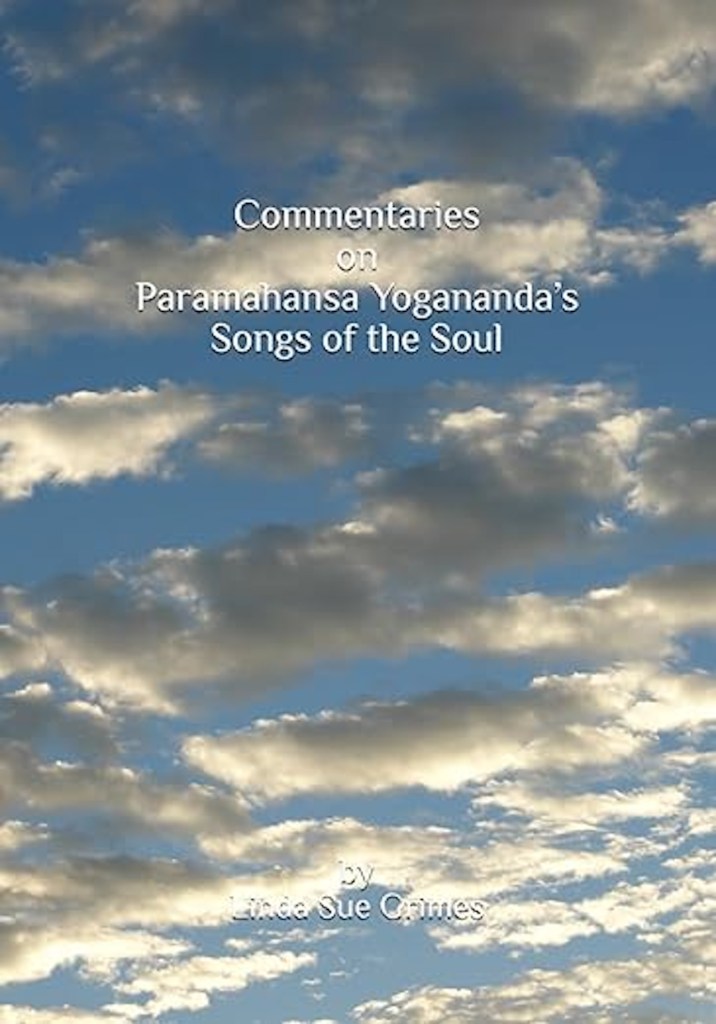
  • Commentaries on Paramahansa Yogananda’s Songs of the Soul

    Image: Commentaries on Paramahansa Yogananda’s Songs of the Soul 

    Commentaries on Paramahansa Yogananda’s Songs of the Soul

    Each time my father, mother, friends
    Do loudly claim they did me tend,
    I wake from sleep to sweetly hear
    That Thou alone didst help me here.
    —from Paramahansa Yogananda’s “One Friend”

    for Ron Grimes, my soul mate with whom I travel the spiritual path

    This collection of personal commentaries is a companion to the book of spiritual poems, Songs of the Soul, written by Paramahansa Yogananda, the “Father of Yoga in the West.”  While these commentaries offer elucidation of each poem, they cannot offer the beauty and majesty experienced by reading the poems themselves.  

    I have included only an excerpt from each poem preceding each commentary.  I, therefore, humbly suggest that you acquire a copy of the great guru’s poems to experience them for yourself, along with my commentaries.  

    Paramahansa Yogananda’s Songs of the Soul is available at the Self-Realization Fellowship bookstore, Amazon, Barnes & Noble, and other online outlets, as well as in bookstores everywhere.

    These commentaries are my personal responses to the poems in Paramahansa Yogananda’s Songs of the Soul.  If they assist any reader in understanding the poetic language on a deeper level, then that is a bonus, for my only purpose is to offer my own personal, humble reading.

    Brief Publishing History of Songs of the Soul 

    The first version of Paramahansa Yogananda’s Songs of the Soul appeared in 1923. He continued to revise the poems during the 1920s and 1930s, and the definitive revision that was authorized by the great guru was published in 1983, featuring many restored lines that had been excised from the first publication of the text. 

     The 1923 version of the collection of poems appears online at Internet ArchiveFor my commentaries, I rely on the printed text of the 1983 version; the current printing year for that version is 2014.  The 1983 printing offers the final approved versions of these poems.

    Special Purpose of the Poems in Songs of the Soul

    The poems in Songs of the Soul come to the world not as mere literary pieces that elucidate and share common human experiences as most ordinary successful poems do, but these mystical poems also serve as inspirational guidance to enhance the study of the yoga techniques disseminated by the great guru, Paramahansa Yogananda.  

    He came to the West, specifically to Boston, Massachusetts, in the United States of America, to share his deep knowledge of yoga through techniques that lead the mind to conscious awareness of God, a phenomenon that he called “self-realization.” 

    The great guru published a series of lessons that contain the essence of his teaching as well as practical techniques of Kriya Yoga. His organization, Self-Realization Fellowship, has continued to publish collections of his talks in both print and audio format that he gave nationwide during the 1920s, 1930s, 1940s, and 1950s.  

    In addition to Songs of the Soul, the great guru/poet offers mystical poetic expressions in two other publications, Whispers from Eternity and Metaphysical Meditations, both of which serve in the same capacity that Songs of the Soul does, to assist the spiritual aspirant on the journey along the spiritual path.

    Please visit the official website for Paramahansa Yogananda’s Self-Realization Fellowship for more information about the lessons offered by the organization.  And for an overview of Kriya Yoga, please see “Kriya Yoga Path of Meditation.”

    THE COMMENTARIES

    This section features the commentaries, one for each of the 101 poems in Songs of the Soul.  Each commentary is preceded by a brief introduction and excerpt from the poem.  Here I am offering the first commentaries, each with an excerpt from the poem.

    1.  “Consecration”

    In the opening poem, titled “Consecration,” the speaker humbly offers his works to his Creator.  He offers the love from his soul to the One Who gives him his life and his creative ability, as he dedicates his poems to the Divine Reality or God. 

    Introduction and Excerpt from “Consecration”

    Paramahansa Yogananda, the great guru/poet and founder of Self-Realization Fellowship, known as the “Father of Yoga in the West,” dedicates his book of mystical poems, Songs of the Soul, to his earthly father and consecrates it by offering it to his Heavenly Father (God—the Divine Creator). In dedicating his collection to his earthly father, the great guru writes,  

    Dedicated
    to my earthly father,
    who has helped me in all my spiritual
    work in India and America

    The first poem appearing in the great yogi-poet’s book of spiritual poems is an American (innovative) sonnet, featuring two sestets and a couplet with the rime scheme AABBCC DDEFGGHH. 

    The first sestet is composed of three rimed couplets; the second sestet features two rimed couplets and one unrimed couplet that occupies the middle of the sestet.  

    This innovative form of the sonnet is perfectly fitted to the subject matter and purpose of the Indian yogi, who has come to America to minister to the waiting souls, yearning for the benefits of the ancient yogic techniques in which the great guru will instruct them.

    The ancient Hindu yogic concepts offer assistance to Westerners in understanding their own spiritual traditions, including the dominant Christianity of which many are already devotees.  

    Excerpt from “Consecration”

    At Thy feet I come to shower
    All my full heart’s rhyming* flower:
    Of Thy breath born,
    By Thy love grown,
    Through my lonely seeking found,
    By hands Thou gavest plucked and bound . . . 

    *The spelling, “rhyme,” was introduced into English by Dr. Samuel Johnson through an etymological error.  As most editors require the Johnson-altered spelling of this poetic device, the text of Songs of the Soul also adheres to that requirement featuring the spelling, “rhyming.”  However, when I employ that term in my commentaries, I use the original spelling, “rime.”

    Commentary

    These spiritual poems begin with their consecration, a special dedication that offers them not only to the world but to God, the Ultimate Reality and Cosmic Father, Mother, Friend, Creator of all that is created. 

    First Sestet:  Dedication of Poetic Effort

    The speaker proclaims that he has come to allow his power of poetry to fall at the feet of his Divine Belovèd Creator.  He then avers that the poems as well as the poet himself are from God Himself. 

    The Divine Belovèd has breathed life into the poems that have grown out of the speaker’s love for the Divine.  The speaker has suffered great loneliness in his life before uniting with his Divine Belovèd.

    The spiritually striving speaker, however, has earnestly searched for and worked to strengthen his ability to unite with the Divine Creator, and he has been successful in attaining that great blessing.  

    The speaker/devotee is now offering that success to his Divine Friend because he knows that God is the ultimate reason for his capabilities to accomplish all of his worthwhile goals.  As he feels, works, and creates as a devotee, he gives all to God, without Whom nothing that is would ever be.

    Second Sestet:  Poems for the Divine 

    In the second sestet, the speaker asserts that he has composed these poems for the Belovèd Creator.  The collection of inspirational poetic works placed in these pages contains the essence of the guru-poet’s life and accomplishments made possible by the Supreme Spirit. 

    The writer asserts that from his life he has chosen the most pertinent events and experiences which will illuminate and inform the purpose of these poems.

    The speaker is metaphorically spreading wide the petals of his soul-flowers to allow “their humble perfume” to waft generously. 

    He is offering these works not merely as personal effusions of shared experience for the purpose of entertainment or self-expression but for the upliftment and soul guidance of others, especially for his own devoted followers. 

    His intended audience remains the followers of his teachings, for he knows they will continue to require his guidance as they advance on their spiritual paths. 

    The Couplet:  Humbly Returning a Gift

    The speaker then with prayer-folded hands addresses the Divine directly, averring that he is in reality only returning to his Divine Belovèd that which already belongs to that Belovèd. He knows that as a writer he is only the instrument that the Great Poet has used to create these poems.  

    As the humble writer, he takes no credit for his works but gives it all to the Prime Creator.  This humble poet/speaker then gives a stern command to his Heavenly Father, “Receive!” 

    As a spark of the Divine Father himself, this mystically advanced speaker/poet discerns that he has the familial right to command his Great Father Poet to accept the gift that the devotee has created through the assistance of the Divine Poet.

    2.  “The Garden of the New Year”

    In “The Garden of the New Year,” the speaker celebrates the prospect of looking forward with enthusiastic preparation to live “life ideally!”

    Introduction and Excerpt from “The Garden of the New Year”

    The ancient tradition of creating New Year’s resolutions has situated itself in much of Western culture, as well as Eastern culture. As a matter of fact, world culture participates in this subtle ritual either directly or indirectly.   This tradition demonstrates that hope is ever present in the human heart.  

    Humanity is always searching for a better way, a better life that offers prosperity, peace, and solace.  Although every human heart craves those comforts, each culture has fashioned its own way of achieving them.  And by extension, each individual mind and heart follows its own way through life’s vicissitudes.

    The second poem is titled “The Garden of the New Year.”  This poem dramatizes the theme of welcoming the New Year, using the metaphor of the garden where the devotee is instructed to pull out “weeds of old worries” and plant “only seeds of joys and achievements.”  

    The pulling out of weeds from the garden of life is a perfect metaphor for the concept of a New Year’s resolution.  We make those resolutions for improvement and to improve we often find that we must eliminate certain behaviors in order to instill better ones.

    The poem features five unrimed versagraphs*, of which the final two are excerpted.

    Excerpt from “The Garden of the New Year”

    . . . The New Year whispers:
    “Awaken your habit-dulled spirit
    To zestful new effort.
    Rest not till th’ eternal freedom is won
    And ever-pursuing karma outwitted!”

    With joy-enlivened, unendingly united mind
    Let us all dance forward, hand in hand,
    To reach the Halcyon Home
    Whence we shall wander no more . . . 

    *The term, “versagraph,” is a conflation of “verse paragraph,” the traditional unit of lines for free verse poetry.  I coined the term for use in my poem commentaries.

    Commentary

    This poem is celebrating living life “ideally,” through changing behavior that has limited that ability in the past.

    First Versagraph: Out with the Old and in with the New

    The speaker is addressing his listeners/readers as he asserts that the old year has left us, while the New Year is arriving.  The old year did spread its “sorrow and laughter,” yet the New Year holds promises of brighter encouragement and hope.   

    The New Year’s “song-voice” offers grace to the senses, while commanding, “Refashion life ideally!” 

    This notion is universally played out as many people fashion New Year’s resolutions, hoping to improve their lives in the coming year.  Because most people are always seeking to improve their situations, they determine how to do so and resolve that they will follow a new path that will lead to a better place.

    Second Versagraph:  Abandoning the Weed to Plant New Seeds

    In the second versagraph, the speaker employs the garden metaphor to liken the old problematic ways to weeds that must be plucked out so that the new ways can be planted and grow.

    The speaker instructs the metaphoric gardener to pull out the weeds of “old worries” and in their place plant “seeds of joys and achievements.”  Instead of allowing the weeds of doubt and wrong actions to continue growing, the spiritual gardener must plant seeds of “good actions and thoughts, all noble desires.” 

    Third Versagraph:  The Garden Metaphor

    Continuing the garden metaphor, the speaker advises the spiritual aspirant to “sow in the fresh soil of each new day / Those valiant seeds.”    After having sown those worthy seeds, the spiritual gardener must “water and tend them.” 

    The perfect metaphor for one’s life is the garden with its life-giving entities as well as its weeds.  As one tends a garden, one must tend one’s life as well to make them both the best environment for life to thrive.  By careful attention to the worthy, good seeds of attitudes and habits, the devotee’s life will become “fragrant / With rare flowering qualities.”

    Fourth Versagraph: New Year as Spiritual Guide

    The speaker then personifies the New Year as a spiritual guide who gives sage advice through whispers, admonishing the devotees to employ real effort to wake up their sleeping spirit that has become “habit-dulled.”    This new spiritual guide advises the spiritual aspirant to continue struggling until their “eternal freedom” is gained. 

    The spiritual searchers must work, revise their lives, and continue their study until they have “outwitted” karma, the result of cause and effect that has kept them earth-bound and restless for aeons. 

    The beckoning New Year always promises a new chance to change old ways.  But the seekers must do their part.  They must cling to their spiritual path, and as soon as they veer off, they must return again and again until they have reached their goal.

    Fifth Versagraph:  A Benediction of Encouragement

    The speaker then offers a benediction of encouragement, giving the uplifting nudge to all those spiritual aspirants who wish to improve their lives, especially their ability to follow their spiritual paths.  The speaker invites all devotees to “dance forward” together “With joy-enlivened, unendingly united mind.”  

    The speaker reminds his listeners that their goal is to unite their souls with their Divine Beloved Who awaits them in their “Halcyon Home.”  And once they achieve that Union, they will need no long venture out into the uncertainty and dangers as they exist on the physical plane. 

    The New Year always holds the promise, but the spiritual aspirant must do the heavy lifting to achieve the lofty goal of self-realization.

    3.  “My Soul Is Marching On”

    This amazing poem, “My Soul Is Marching On,” offers a refrain which devotees can chant and feel uplifted in times of lagging interest and seeming spiritual dryness.

    Introduction and Excerpt from “My Soul Is Marching On”

    The poem, “My Soul Is Marching On,” offers five stanzas, each with the refrain, “But still my soul is marching on!”  The poem demonstrates the soul’s power in contrast with the weaker powers of entities from nature.  For example, as strong as the light of the sun may be, it vanishes at night, and will eventually be extinguished altogether in the long, long run of aeons of time.

    Unlike those seemingly forceful, yet ultimately, much weaker physical, natural creatures, the soul of each individual human being remains a strong, vital, eternal, immortal force that will keep marching on throughout all time—throughout all of Eternity.

    Devotees who have chosen the path toward self-realization may sometimes feel discouraged as they tread the path, feeling that they do not seem to be making any progress.  But Paramahansa Yogananda’s poetic power comes to rescue them, giving in his poem a marvelous repeated line that the devotee can keep in mind and repeat when those pesky times of discouragement float across the mind.

    Included here are the epigram and first two stanza of the poem, “My Soul Is Marching On.”

    Excerpt from “My Soul Is Marching On”

    Never be discouraged by this motion picture of life.  Salvation is for all.  Just remember that no matter what happens to you, still your soul is marching on.  No matter where you go, your wandering footsteps will lead you back to God.  There is no other way to go.

    The shining stars are sunk in darkness deep,
    The weary sun is dead at night,
    The moon’s soft smile doth fade anon;
    But still my soul is marching on!

    The grinding wheel of time hath crushed
    Full many a life of moon and star,
    And many a brightly smiling morn;
    But still my soul is marching on! . . . 

    Commentary

    Before beginning his encouraging drama of renewal, Paramahansa Yogananda offers an epigram that prefaces the poem by stating forthrightly its intended purpose.  In case the reader may fail to grasp the drama of the poetic performance, the epigram will leave no one in doubt.  

    The Epigram:  A Balm to the Marching Soul

    The great guru avers that there is no other reality but the soul’s forward march.  Despite all circumstance to the contrary, the soul will, in fact, continue its march. 

    The devotee simply has to come to realize that fact that all “wandering footsteps” return to their home in the Divine.  The guru then states unequivocally, “There is no other way to go.” 

    This amazing, inspiring statement culminates in the refrain that allows the devotee to take into mind  a chant for upliftment anytime, anywhere it is needed. 

    First Stanza:  The Soul Marches on in Darkness

    The speaker begins by asserting that the bright bodies of the stars, sun, and moon are often hidden.  The stars seem to sink into the black backdrop of the sky, or even remain hidden by day, as if never to be seen again, yet other times, they are completely invisible.

    The largest dominant star of all—the sun—also seems to completely vanish from the sight of world-weary inhabitants of planet Earth.  The sun seems to be “weary” as it has crossed the diurnal sky and then sinks out of sight.

    The moon whose glow remains less bright compared to the sun, nevertheless, also fades out of sight.  All of these bright orbs of such tremendous magnitude glow and fade, for they are mere physical beings.

    The speaker then adds his marvelous, encouraging claim that becomes his refrain—”But still my soul is marching on!”  The speaker will continue repeating this vital assertion as he dramatizes his poem to encourage and uplift devotees whose spirits may from time-to-time lag. 

    This refrain will then ring in their souls and urge them to keep marching because their souls are already continuing that march.

    Second Stanza:  Nothing Physical Can Halt the Spiritual

    The speaker then reports that time has already smashed moons and stars and obliterated them from existence.  Many cycles of creation and recreation have come and gone from the annals of eternity. 

    That eventuality remains the nature of physical creation:  it emerges from the depths of the body of the Divine Creator and then later is taken back into that Divine Body, disappearing as if they had never been.

    But regardless of what happens on the physical level, the soul remains an existing Entity throughout Eternity.  The soul of each individual continues its journey.  It makes no difference on which planet it may appear; it may continue from planet to planet, if necessary, as it marches back to its Creator. 

    The soul will continue to “stand unshaken amidst the crash of breaking worlds” because that is the nature of the indestructible soul, the life energy that informs each human being.

    That soul will continue its march to the Divine, despite all cosmic activity.  Nothing can prevent the soul’s forward march, nothing can stop the marching soul, and nothing can hinder that march.  The refrain shall again and again ring in the mind of the devotee who has begun this march to self-realization.

    Third Stanza:  The Evanescence of Nature 

    The speaker then reports on other natural phenomena.  Marvelous, beautiful flowers have offered their colorful blooms to the eyes of humankind, but then they invariably fade and shrivel up to nothingness.  The evanescence of beauty remains a conundrum for the mind of humankind.  

    Like the beauty yielding flowers, the gigantic trees offer their “bounty” for only a while, and then they too sink into nothingness.  The naturally appearing entities that feed the human mind as well as the human body all mysteriously come under ” time’s scythe,” appearing and disappearing again and again.

    But the soul again remains in contrast to these wonderful natural entities.  The soul continues its eternal march, unlike the outer physical realities of flowers and trees. 

    The human soul will continue its march, as will the invisible souls of those seemingly vanishing nature’s living beings.  The refrain must take hold in the mind of the devotee, who in times of lagging interest and self-doubt will chant its truth and become re-invigorated.

    Fourth Stanza:  As Physical Life Fades, The Soul Continues Unabated  

    All of the great emissaries sent by the Divine Creator continue to speed by.  Vast swaths of time also speed by as creation seems to remain on a collision course with ultimate disaster. 

    The human being must remain in a perpetually vigilant state of mind just to remain alive in this dangerous and pestilent-filled world.  Even human against human remains a continued concern as “man’s inhumanity to man” prevails in very age in every nation of planet Earth.

    But the speaker is not only referring to the small planet at a short period of time; he is speaking cosmically of the entire history of all Creation.  He is averring that being born a human being at any time in history brings that individual soul into the same arena of struggle. 

    As each human being lets fling his arrows in battle, the individual finds that all of his “arrows” have been used up.  He finds his life ebbing away.

    But again, while the physical body remains the battle ground of trials and tribulations, the soul is unaffected.   It will continue on its path back to its Divine Haven, where it will no longer need those arrows.  The devotee will continue to chant this truth again and again to spark his march to greater heights.

    Fifth Stanza:  The Refrain Must Remain 

    The speaker has observed that his fight with nature has been a fierce one.  Failures have blocked his way.  He has experienced the ravages of death’s destruction.  He has had to face obstructions blocking “his path.” 

    All of nature has conspired to “block [his] path.” Nature has always been a challenging force, but the human being who has determined to overcome the ravages of nature will find that his “fight” is stronger than that of nature, despite the fact that nature remains a “jealous” power.

    The soul continues to march to its home in God, where it will never again have to face the fading of beautiful light, the vanishing of colorful flowers, the failures that obstruct and slow one’s pace. 

    The soul will continue to march, to study, to practice, to meditate, and to pray until it at last experiences success, until it as last finds itself totally awake in the arms of the Blessed Divine Over-Soul, from which it has come.  The devotee will continue to hear that amazingly uplifting line and continue to know that his/her “soul is marching on!”

  • At the End of the Road & Other Poems

    Image:  At the End of the Road & Other Poems

    At the End of the Road & Other Poems

    Dedicated to the memory of my father and mother:
    Bert Richardson, January 12, 1913–August 5, 2000
    & Helen Richardson, June 27, 1923–September 5, 1981

    The following poems appear in my collection titled At the End of the Road & Other Poems available on Amazon.

    1 Earned Pain

    —owed to Emily Dickinson’s “Joy to have merited the Pain

    Earned pain fades into joy,
    Gains a vivid, long liberation.
    Each phase dissolving into joy –
    Then paradise on the horizon.

    Absolved, my eyes grow strong,
    Peering into the ancient eye,
    Improved and brooking no wrong
    Approaching paradise, I realize.

    That these eyes glimpse Thine eye
    And that Thou glimpst mine atone
    And attest that my brown eyes
    And Thy sacred sight are one.

    Thou consumest all time, remaining
    Infinitely present, never astray –
    An eastern spirit explaining
    Morning to the day.

    Evoking Thy highest peak
    And the valley far below,
    My voice can speak
    Inside the darkest shadow,

    Spiritualizing all space and time
    As years drop eternally
    Ghost day by ghost night
    Journeying through eternity. 

    2 A Summer Dream Phantasm

    sweet dreams for the monster

    At the edge of the water
    We sit together
    Talking about heaven & earth
    Poems & love.

    You ask if I still think of you
    While you are away.
    I throw a stone into the water.
    The answer is the ripples.

    3 In Dreams We Happen to Meet

    for Mr. Sedam, my poetry benefactor

    “I protest your protest its hairy irrelevancy” —”Malcolm M. Sedam’s ‘Desafinado’

    In dreams we happen to meet
    On some mystic, planetary hill —
    Poetry eludes us yet we commence
    Talking about the sham progress
    Bleeding hearts have inflicted.

    The professor in you wants to align
    Wokeward but you cannot bring yourself
    To spring into the claptrap that clamped
    Shut on Ginsbergian filth, deviance
    And that mayhem of hairy irrelevance.

    You think of your children
    Wading into the waters of vipers
    Nipping their ankles
    Snapping their necks
    Erasing their freedom and will.

    You would have those you love
    Experience their own close calls —
    You crashed into your own
    As you flew those planes
    Over the Pacific, fighting that war —

    Facing death, watching death
    Take soldier after soldier
    Leaving you with the intuition
    Outcomes cannot be guaranteed
    By bureaucratic Bolsheviks.

    Only freedom of opportunity
    Guarantees free will remains free
    And life continues to beget life
    In the magnolious scheme that God
    Made man after His Own image.

    4 Bone Couplets

    Flesh of my flesh, bone of my bone…”  —Anne Bradstreet

    They outshine the flesh in the reign of desire
    Where pink like a blush goes on shining like fire.
    Fat necked imbeciles, brain-numbed and wrong
    On every backboned thought that ever ran along
    The confines of the apple of Adam sweetened
    In the birdless cage rump-driven and weakened.
    Greed and swagger click the gangling matter
    Knuckles cling and circle each limb to tatter.
    Hipbones narrow in the faulty weather.
    The bare truth flies out on filth-tinged feather.
    Bring me back to the place where life can stand!
    Let me feel the smooth relief of pounding sand!
    This belly swore it would unburden the green.
    Within the sulking skull it makes its way to preen.
    In the sweet toned laughter where children move
    And every old fart says he will not prove
    Until the night breaks over those who pray
    And every chime kinks the ear heaven to delay.
    Relevant as an old donkey on an extended beach
    The moon sinks into ripe flesh as if to teach
    Those angry cells to leave off all that hunger.
    No years will ease—no one will grow younger
    Than the moth whose flame has singed his wings
    Clacking bare truth to the mercy of things.

    5 A Terrible Fish

    “In me she has drowned a young girl, and in me an old woman
      Rises toward her day after day, like a terrible fish.  —Sylvia Plath’s “Mirror”

    The nightmare repeats itself:
    A daughter clamped tight to each foot
    Pulling her down under
    The brute waters of the dark, deep lake —
    She gasps — imagines she’s drowning
    While her husband watching from the levy
    Wrings his hands, faints in the heavy fog.
    A terrible fish looms under her nose;
    She smells blood dripping
    From a dozen hooks dangling
    From his mouth.
    His eyeballs slide out easy
    As the drawer of a cash register.
    Each eye-socket a window
    To her own soul — $ bills
    With little jackpots on them
    Jump up and dance like clowns
    Poking out their tongues,
    Flapping signs of slogans
    With hammers, sickles, swastikas —
    She believes – ¡Sí, se puede!
    Morning shivers her awake again,
    Stumbling to the bathroom
    Where the mirror flashes
    In her face that same terrible fish
    That has been catching her dreams
    And throwing them back
    As she chases each $,
    Never quite able to grasp enough.

  • Turtle Woman & Other Poems

    Image:  Turtle Woman & Other Poems

    Turtle Woman & Other Poems

    for Ron, who brings out the poetry in my life

    The following poems are from my published collection, Turtle Woman & Other Poems, available on Amazon.

    1  Turtle Woman

    “When the yogi, like a tortoise withdrawing its limbs, 
    can fully retire his senses from the objects of perception,
     his wisdom manifests steadiness.”
    —Bhagavad Gita II:58

    Will you still love me if I finish first?

    Slow as I am to you whose speed is your god, I move.
    Admiring really your shell-less existence—
    On my back it’s sometimes hard to right myself.
    In the soup they call me a delicacy,
    So I praise vegetarians,
    Though I myself sometimes snap
    At insects, small fish, & moving fingers.

    But what’s a creature so heavy-laden to do?

    O, lest I sound maudlin
    Or sorry for my webbed feet,
    I withdraw my questions
    Along with my head & legs
    And drop out of your race.

    2  Starvers

    for K. R.

    She starves
    Her body
    & her mind
    Stands vacant  haunted
    She’s dying
    To be thin
    She’s not
    Concerned
    With curves
    She wants
    Angles
    Points
    Narrow
    Hollow
    Spaces
    What she craves
    All starvers
    Understand
    A bulge around the middle
    Is a sin against God
    Thighs that spread out over a chair bottom
    Make you sick
    Breasts that mound under a sweater
    Make you gutter for breath
    Round arms  full face  big calves  wide hips  double chin
    A mighty army marching over your skeleton
    Capturing your pleasures
    Holding your life hostage
    You’re a prisoner in a guardhouse
    A dog in a pound
    Weight and measurement
    Are not useful tools
    They are obsessions
    She has starved
    Her body
    Thin
    But she cannot
    Exorcise that last
    Ghost of flesh
    That ghost that keeps adjusting the damn mirror that throws
    Back a size in your face  a size that screams
    Just a little smaller
    Just a little thinner
    And then
    Everything
    Will be OK . . . 

    8  Metaphysical Reminders

    Where that brain stores its loot
    There stands a cabin by the river,
    Where it dreamed a body too good
    For flesh and bones,
    Too good for breath and blood
    Where the clock spills stars,
    Hands that milk until honey flows,
    And a mouth that torches neck to toe.

    And as it worked itself out there
    On that bed of river mud
    Squeezing and kneading
    Lust from every pore,
    As hips pushed and crushed,
    The end of an era seemed at hand,
    And if you slept through the night,
    You would awake with the clock 
    And a note on your pillow
    Telling you to get yourself out of there—
    The river is rising.

    24  Greek Skin 

    for my mother’s father, Gus Johnson

    In a Kentucky coal mine he fell across the track
    and a loaded coal car cut off his right arm.

    This world offers no shelter to nervous pilgrims; 
    this world takes a dim view of pain even as it inflicts it, 
    as if some people were meant to starve, 
    as if some people were meant to speak 
    English with a Greek accent, 
    but my mother loved him so much that his death
    became her deepest grief, and when she crossed
    the bridge that connects this world with his, I hope
    he met and greeted her with both arms,
    he won’t let her fall through a hole in the sky, will he? 
    And though he never had the chance to speak
    a word to me, I think he must have been a multitude
    of races and climates, my blood senses his Greek skin
    was tinged with Africa, my mother’s darkness
    and my father’s whiteness left me an odd shade of gray.
    It’s not so much confusion as an unwillingness to pray—
    Yet many fold their hands when trees lash in the violent air.

    But if he knew my concern, he could wipe from my mind 
    the dust that blew in from faraway places 
    where they cut down all the trees 
    and cut off the hands of innocent thieves
    and Greek slaves slaughtered each other
    to entertain a Roman tyrant.

    92  Alex as Artist

    It’s a dog’s life.

    When he curls up beside me on the couch 
    and settles into steady breathing,
    his ease of comfort flows like a polished sonnet.
    He has mastered the art of comfort.

    When I cook, he perfects his craft of begging.  
    Taking bits of food off 
    the ends of fingers requires precise placement
     of teeth and tongue. 
    He’s mastered the art of eating.

    Some say he’s cowardly, but he’s just careful. 
    The artist’s eye and ear perceive the world 
    to be a dangerous place, 
    so he’s crafty to run from loud noises 
    and sudden moves.

    Some say he’s dumb, but he’s just deliberate.
    He wants to keep body and soul together
    and retire a well-matured craftsman.

    Unlike schemers, shams, and fantasizers,
     he takes his art quite literally,

    and he has learned to simplify: beg food, bark, 
    and sleep  sleep  sleep.

    Since publication of Turtle Woman & Other Poems, I have revised “Alex as Artist” into the form of an American-Innovative sonnet:

    Alex as Artist

    It’s a dog’s life.

    When he curls up beside me on the couch and settles into steady breathing,
    his ease of comfort flows like a polished sonnet.
    He has mastered the art of comfort.

    When I cook, he perfects his craft of begging. Taking bits of food off 
    the ends of fingers requires precise placement of teeth and tongue.
    He’s mastered the art of eating.

    Some say he’s cowardly, but he’s just careful. 
    The artist’s eye and ear perceive the world to be a dangerous place,
    so he’s crafty to run from loud noises and sudden moves.

    Some say he’s dumb, but he’s just deliberate.
    He wants to keep body and soul together
    and retire a well-matured craftsman.

    Unlike schemers, shams, and fantasizers, he takes his art quite literally,
    and he has learned to simplify: beg food, bark, and sleep sleep sleep.

    ***

    To read my prose commentary on this poem, please visit, “Original Poem: ‘Alex as Artist’ with Prose Commentary” at Discover.HubPages.