This room in my literary home holds links to poems primarily written by others along with my personal commentaries on the poems. Some of these additions include commentaries that appear on HubPages.
Image: SRF Mother Center Lotus – Photo by Ron W. G.
My Spiritual Sanctuary
My spiritual journey began in earnest in 1978, when I became a devotee of Paramahansa Yogananda’s teachings and a member of his organization Self-Realization Fellowship. As a Kriyaban since 1979, I have completed the four Kriya Initiations, and I continue to study the teachings and practice the yoga techniques as taught by the great spiritual leader, who is considered to be the “Father of Yoga in the West.”
I practice the chants taught by the great guru accompanying myself on the harmonium and serve at the local SRF Meditation Group as one of the chant leaders.
“By ignoble whips of pain, man is driven at last into the Infinite Presence, whose beauty alone should lure him.” –a wandering sadhu, quoted in Autobiography of a Yogi by Paramahansa Yogananda
Salvation Is a Personal Responsibility
I am a Self-Realization Yogi because the teachings of Paramahansa Yogananda, who in 1920 founded Self-Realization Fellowship, make sense to me. Paramahansa Yogananda teaches that we are immortal souls, already connected to the Divine Reality, but we have to “realize” that divine connection.
Knowing the Great Spirit (God) is not dependent upon merely claiming to believe in a divine personage, or even merely following the precepts of a religion such as the Ten Commandments.
Knowing the Creator is dependent upon “realizing” that the soul is united with that Creator. To achieve that realization we have to develop our physical, mental, and spiritual bodies through exercise, scientific techniques, and meditation.
There are many good theorists who can help us understand why proper behavior is important for our lives and society, but Paramahansa Yogananda’s teachings offer definite, scientific techniques that we practice in order to realize our oneness with the Divine Power or God.
It makes sense to me that my salvation should be primarily my own responsibility.
No Religious Tradition
I did not grow up with a religious tradition. My mother was a Baptist, who claimed that at one time she felt she was saved, but then she backslid. I learned some hymns from my mother. But she never connected behavior with religion.
My father was forced to attend church when he was young, and he complained that his church clothes were uncomfortable as was sitting on the hard pews.
My father disbelieved in the miracles of Jesus, and he poked fun at people who claimed to have seen Jesus “in the bean rows.” My mother would not have doubted that a person might see Jesus, because she saw her father after he had died.
My mother characterized my father as agnostic, and she lived like an agnostic, but deep down I think she was a believer after the Baptist faith.
Here’s a little story that demonstrates how ignorant about religion I was as a child: When I was in first or second grade, I had a friend. At recess one day at the swings, she wanted to confide something to me, and she wanted me to keep it secret.
She said I probably wouldn’t believe it, but she still wanted to tell me. I encouraged her to tell me; it seemed exciting to be getting some kind of secret information. So she whispered in my ear, “I am a Quaker.”
I had no idea what that was. I thought she was saying she was magic like a fairy or an elf or something. So I said, “Well, do something to prove it.” It was my friend’s turn to be confused then.
She just looked very solemn. So I asked her to do something else to prove it. I can’t remember the rest of this, but the point is that I was so ignorant about religion.
The Void in My Life and My First Trauma
Looking back on my life as a child, teenager, young adult, and adult up to the age of 32, I realize that the lack of a religious tradition left a great void in my life. Although my father was on the fence regarding religion, he would listen to Billy Graham preach on TV.
I hated it whenever Billy Graham was preaching on TV. His message scared me. Something like the way I felt when my father’s mother would come and visit us, and when my father would let out a “Goddam” or other such swear word, Granny would say he was going to hell for talking that way.
I was afraid for my father. And Billy Graham made me afraid for myself and all of us because we did not attend church. I never believed that things like swearing and masturbation could send a soul to hell. But then back then I had no concept of “soul” or “hell.” I believed it was wrong to kill, steal, and to lie. But I’m not sure how these proscripts were taught to me.
I guess by example. It seems that I had no real need for God and spirituality until I was around thirty years old.
My life went fairly smoothly except for two major traumas before age thirty. The first trauma was experiencing a broken heart at age eighteen and then undergoing a failed marriage, after which I thought I would never find a mate to love me. But I did meet a wonderful soulmate when I was 27.
Heretofore I had thought finding the proper marriage partner would solve all my problems, but I learned that my difficulties were very personal and at the level where we are all totally alone, despite any outward relationships.
The Second Trauma
A second trauma that added to my confusion was being fired twice from the same job at ages 22 and 27. By age 27 things started to make no sense. And it started to bother me intensely that things made no sense.
I had always been a good student in grade school and high school, and I was fairly good in college, graduating from Miami University with a 3.0 average. That grade point average bothered me because I thought I was better than that, but I guess I was wrong.
But then not being able to keep my teaching job and not being able to find another one after I had lost it very much confused me. It seemed that I had lost touch with the world. School had been my world, and my teachers and professors had expected great things from me. But there I was at age 27 and couldn’t get connected to school again.
Feminism and Zen
I began reading feminist literature starting with Betty Friedan’s Feminine Mystique, continuing with Ms. Magazine, and many others. The result of taking in the feminist creed led me to believe that I had someone to blame for my failure—men; men had caused the world to be arranged so that women cannot succeed outside the home.
I began writing again, an endeavor I have sporadically engaged in most of my life from about age sixteen.
I decided to apply for a graduate assistantship in English at Ball State University, feeling that I was ready to get out in the man’s world and show it what a woman could do. I felt confident that I could succeed now that I knew what the problem was. But that didn’t work out either.
I finished the year without a master’s degree in English, and then there I was, confused again, and still searching for something that made sense.
I had heard about the Eastern philosophy known as “Zen” at Ball State, and I started reading a lot about that philosophy. Zen helped me realize that men were not the problem, attitude was. I kept on writing, accumulating many poems, some of which I still admire.
And I kept reading Zen, especially Alan Watts, but after a while the same ideas just kept reappearing with no real resolution, that is, even though the Zen philosophy did help me understand the world better, it was not really enough. I got the sense that only I could control my life, but just how to control it was still pretty much a mystery.
Autobiography of a Yogi
In 1977, my husband Ron and I went on one of our book shopping trips. I spied a book, Paramahansa Yogananda’s “Autobiography of a Yogi,” and I recommended it to Ron because he liked biographies. Strangely, I said to him about the man on the cover: “He’s a good guy!” Strange, because I had no idea if the individual was a good guy or not, being the first time I ever saw him. So, we purchased poetry books, and we also purchased the autobiography for him.
Ron did not get around to reading it right away, but I did, and I was totally amazed at what I read. It all made sense to me; it was such a scholarly book, clear and compelling. There was not one claim made in the entire 500 plus pages that made me say “what?” or even feel any uncertainty that this writer knew exactly whereof he spoke.
Paramahansa Yogananda was speaking directly to me, at my level, where I was in my life, and he was connecting with my mind in a way that no writer had ever done. For example, the book offers copious notes, references, and scientific evidence that academics will recognize as thorough research.
This period of time was before I had written a PhD dissertation, but all of my years of schooling including the writing of many academic papers for college classes had taught me that making claims and backing them up with explanation, analysis, evidence, and authoritative sources were necessary for competent, persuasive, and legitimate exposition.
Paramahansa Yogananda’s autobiography contained all that could appeal to an academic and much more because of the topic he was addressing. As the great spiritual leader recounted his own journey to self-realization, he was able to elucidate the meanings of ancient texts whose ideas have remained misunderstood for many decades and even centuries.
The book contained a postcard that invited the reader to send for lessons that teach the techniques for becoming self-realized. I sent for them, studied them, and I have been practicing them since 1978. They do, indeed, hold the answer to every human problem.
I know it is difficult for most educated people to believe that all human problems can be solved, but that’s because they get stuck in the thought that they cannot.
If you believe that you can never really know something, then you can’t, because if you believe that you can never really know something, you won’t try to know it.
Yogananda gives a map with directions to reaching God, and realizing that one’s soul is united with God brings about the end of all sorrow and the beginning of all joy.
Just knowing the precepts intellectually does not cause this realization, but it goes a long way toward eliminating much suffering.
The faith that we can overcome all suffering is a great comfort, even if we are not there yet. I realize that God is knowable, but most important is that I know I am the only one who can connect my soul to God—and that is the spiritual journey I am now on.
.38 Special’s “Second Chance”: A Yogic Interpretation
The song “Second Chance” expresses the very human regret that occurs after a relationship has been threatened by the unfaithfulness of one partner, but it also redounds to the broader human longing for forgiveness and renewal. Being born a human being with the original taint of fallen humanity, the human heart and mind not only need a “second chance” given by a human partner but also need that “second chance” given by the Creator.
Introduction and Lyric “Second Chance”
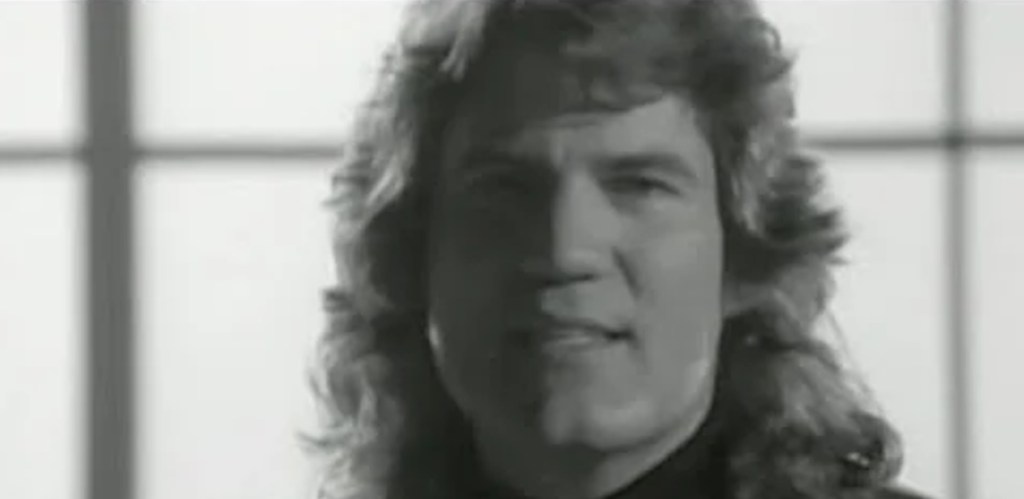
The song “Second Chance” appears on Rock & Roll Strategy (1988), the eighth studio album by the southern rock band .38 Special, formed in Jacksonville, Florida, in 1974 [1].
The band .38 Special took its name from the .38 Special revolver cartridge, after an event involving the police. In the mid-1970s in Jacksonville, Florida, while rehearsing in a locked shack, the band attracted police attention because neighbor complaining about the noise from the band’s rehearsal.
Unable to open the padlocked door, they heard an officer say he would let his .38 Special “do the talking” and shot the lock off. The phrase struck their fancy, so they adopted “.38 Special” as their band name for its gritty, humorous appeal. [2].
The song “Second Chance” was written by keyboardist Max Carl, guitarist Jeff Carlisi, and songwriter Cal Curtis, and it was released as the second single from Rock & Roll Strategy in 1989 [3]. The song traces its origins to an early Carlisi–Curtis demo titled “I Never Wanted Anyone Else But You,” which was revised by Max Carl after he joined the band, producing the now-familiar repetition, “a heart needs a second chance.”
Carl’s lead vocals and the softer, introspective arrangement of “Second Chance” was a stylistic departure from the band’s earlier Southern rock sound. The track became the band’s highest-charting [4] U.S. pop single, peaking at No. 6 on the Billboard Hot 100 and No. 1 on the Adult Contemporary chart, expanding their audience beyond rock listeners.
A Yogic Interpretation
The song “Second Chance” is most commonly received and interpreted as a traditional pop ballad of romantic regret, but that superficial reading misses the lyric’s deeper implications. The lyric’s poetic economy, its chant-like repeated plea that “a heart needs a second chance,” and its focus on guilt admission and longed-for reconciliation suggest the universal human yearning for moral and emotional renewal.
In a yogic interpretative frame, the chorus functions as a chant-like invocation to the Universal Father-Creator, elevating the listener’s attention above the earthly, material, interpersonal context of a human romantic relationship.
While the plea for forgiveness may certainly be directed toward a human partner, and of course in this song it is, still it also points to a larger spiritual and moral aspiration: the opportunity to amend past human error in order to restore soul integrity to become spiritually enlightened and self-realized. It aligns with John Donne’s “Holy Sonnets” in its recognition of past human error and craving for future soul renewal.
Thus, “Second Chance” transcends the pop ballad genre, as it presents itself to be a reflective text concerned with accountability, grace, and the enduring human desire for transformation — qualities that align naturally with yogic goal of self-realization.
Sources
[1] Rock & Roll Strategy. A&M Records. 1988. On A&M Records official discography.
Since you been gone I feel my life slipping away I look to the sky And everything is turnin’ gray All I made was one mistake How much more will I have to pay Why can’t you think it over Why can’t you forget about the past
When love makes this sound baby A heart needs a second chance Don’t put me down babe Can’t you see I love you Since you’ve been gone I’ve been in a trance This heart needs a second chance Don’t say it’s over I just can’t say goodbye
So this is love Standing in the pouring rain I fooled on you But she never meant a thing And I know I ain’t got no right To ask you to sympathize But why can’t you think it over Why can’t you forget about the past
When love makes this sound baby A heart needs a second chance Don’t put me down baby Can’t you see I love you Since you been gone I’ve been in a trance This heart needs a second chance Don’t say it’s over I just can’t say goodbye
I never loved her I never needed her She was willing and that’s all there is to say Don’t forsake me Please don’t leave me now A heart needs a second chance
Yeah, you’ve been gone and I’ve been in a trance This heart needs a second chance Don’t say it’s over I just can’t say goodbye Please forgive me and forget it I was wrong and I admit it Why can’t we talk it over Why can’t we forget about, forget about the past
(A heart needs a second chance) When love makes this sound baby (A heart needs a second chance) Don’t put me down babe You’ve been gone I’ve been in a trance This heart needs a second chance Don’t say it’s over I just can’t say goodbye
(A heart needs a second chance) When love makes this sound babe (A heart needs a second chance) (A heart needs a second chance) When love makes this sound baby (A heart needs a second chance)
Commentary on “Second Change”
While this song remains a well-written lyric and beautifully performed video, it also points to a higher, spiritual urge that is basic to human consciousness: the desire for forgiveness of past errors and unity with the Ultimate Reality.
Verse 1: “Since you’ve been gone”
Since you been gone I feel my life slipping away I look to the sky And everything is turnin’ gray All I made was one mistake How much more will I have to pay Why can’t you think it over Why can’t you forget about the past
The speaker/singer is directly addressing his romantic partner. It is not clear if they are married or if they simply live together. It is clear that their relationship has been broken. “Since you’ve been gone” clearly signals that the partner has left the relationship.
Immediately, the speaker/singer confirms that he is devastated by the break-up. He feels his life is leaving him. The sky looks gray, nay, not only the sky but “everything is turnin’ gray.” To the human being suffering in pain and anguish, all of nature seems to be a mass of unpleasantness.
Thus, the pathetic fallacy was born and employed in literary works. Nature does not care that the human being is suffering, but to the sufferer everything looks different—including nature.
The speaker/singer then admits that he made a mistake; it was just “one mistake,” but it was a highly destructive one, and it obviously hurt deeply his loved one so much that she has left him. But at his point, the man is focusing on his own sorrow. He asks her just how much suffering does he have to endure for just one mistake.
He then asks her why can she not give the situation some thought and then do what he hopes for: that upon reflection she can forget about the past. Forgetting about the past is actually a yogic injunction, invoked by Swami Sri Yukteswar in Paramahansa Yogananda’s Autobiography of a Yogi:
Forget the past. The vanished lives of all men are dark with many shames. Human conduct is ever unreliable until man is anchored in the Divine. Everything in future will improve if you are making a spiritual effort now.
The man’s conduct has obviously been the result of human conduct being unreliable because he has committed this dark shame. But does he not now have the right, even the obligation, to try to correct his past?
Chorus: “When love makes a sound, babe”
When love makes this sound baby A heart needs a second chance Don’t put me down babe Can’t you see I love you Since you’ve been gone I’ve been in a trance This heart needs a second chance Don’t say it’s over I just can’t say goodbye
The song’s next movement becomes its chorus. The first chorus line “When love makes this sound, babe” remains rather empty if one is experiencing it only as text on a page, but the performance of the song, for example in the video, provides the sound of a crying guitar. That painful sound-riff becomes the signal for something restorative.
That something is “A heart needs a second chance.” The important repeated line includes the title of the song itself. The speaker/singer then commands his beloved one not to diminish him by putting him down; he then adds the extremely important claim, phrasing it as a rhetorical question, “Can’t you see I love you?”
He loves her, and that love is at the heart of his suffering. He would not be suffering, if he did not love her. Next, he begins to explain; thus, returns the first line “Since you’ve been gone” but then followed by his description of how he had taken her being gone: he has been in a trance, suggesting that his consciousness has been numbed, he is dazed, unable to completely engage in his own life.
(It is such phrases “don’t put me down, babe,” and other conversational, talky language, and the use of the term “trance” that make this piece a song and not a poem. For a song, it is exquisitely masterful; as a poem, it would be bordering on doggerel—a distinction that can be made about almost all popular songs, even some spiritually inclined hymns.)
The next line “This heart needs a second chance” reappears for the second time, and at this point it becomes clear that this all important line is, indeed, the heart and soul of the song, its raison d’être.
The final line of the chorus again is making the plea for his beloved not to leave him. He does not want the relationship to end; thus, he fashions his plea as a command. He simply does not feel that he is able to let her go. He cannot say goodbye to the one he still loves much.
Verse 2: “So this is love”
So this is love Standing in the pouring rain I fooled on you But she never meant a thing And I know I ain’t got no right To ask you to sympathize But why can’t you think it over Why can’t you forget about the past
In verse 2, the speaker/singer engages in reflection about the nature of love. The line “standing in the pouring rain” signals tears; this lost love has him crying real tears that so often appear in popular songs as rain. He then admits his dark shame: he fooled around on his love one. But he quickly assures her that the nature of that fooling around was simply or sexual gratification, for the woman did not mean anything to him.
He knows he cannot expect his loved one to “sympathize” with his explanation; still he want her to think it over. Again, he is asking her to rethink losing the relationship, and again he suggests through a question that she “forget about the past.”
Next, the chorus is repeated.
Bridge: “I never loved her”
I never loved her I never needed her She was willing and that’s all there is to say Don’t forsake me Please don’t leave me now A heart needs a second chance
The bridge finds the speaker/singer further revealing his true feelings. He never loved the other woman; he never need her. It’s just that she was willing to engage with him sexually; he took advantage of the situation, and he’d like to drop it because he has nothing further to say about his dark shame.
The second half of the bridge again returns to the man’s pleading: don’t forsake me, don’t leave me (which he prefaces with “Please”), give me a second chance. With that all important line “A heart needs a second chance.”
Vitally Important Lines
After the bridge, a repeat of some of the opening sentiments appears, and then these all important lines
Please forgive me and forget it I was wrong and I admit it Why can’t we talk it over Why can’t we forget about, forget about the past
The poor man makes one final plea, asking for forgiveness and asking the failure be forgotten. Then confesses that he was wrong and he is admitting his error. Again, he suggests they talk it over, and hopefully “forget the past.”
Innovative Form and Musical Intensity
The song “Second Chance” exhibits a unique form. While it displays some of the usual kinds of repetitions of songs, its final lines can plausibly be described as chant-like. The vitally significant line, “A heart needs a second chance” is repeated, alternating with “when love makes this sound, babe” as the tune fades out.
The rooms within my literary home include my library/music room where I compose and maintain my original writings in poetry, songs, literary fiction, expository essays, and poem commentaries.
My literary home also includes rooms of tribute and memorials to beautiful souls who have graced my life and influenced my penchant for literary studies.
In addition to literary works, I dabble in vegan/vegetarian cooking, so I dedicate my kitchen to holding and presenting the recipes that result from my adventures in the culinary arts.
Because I remain spiritual-minded, I dedicate a temple/sanctuary to that spiritual inclination. ~Maya Shedd’s Temple~ holds personal musings about subjects that influence my life, especially my spiritual journey.
Original Writings
The following rooms will remain works in progress, as I continue to add to them from time to time.
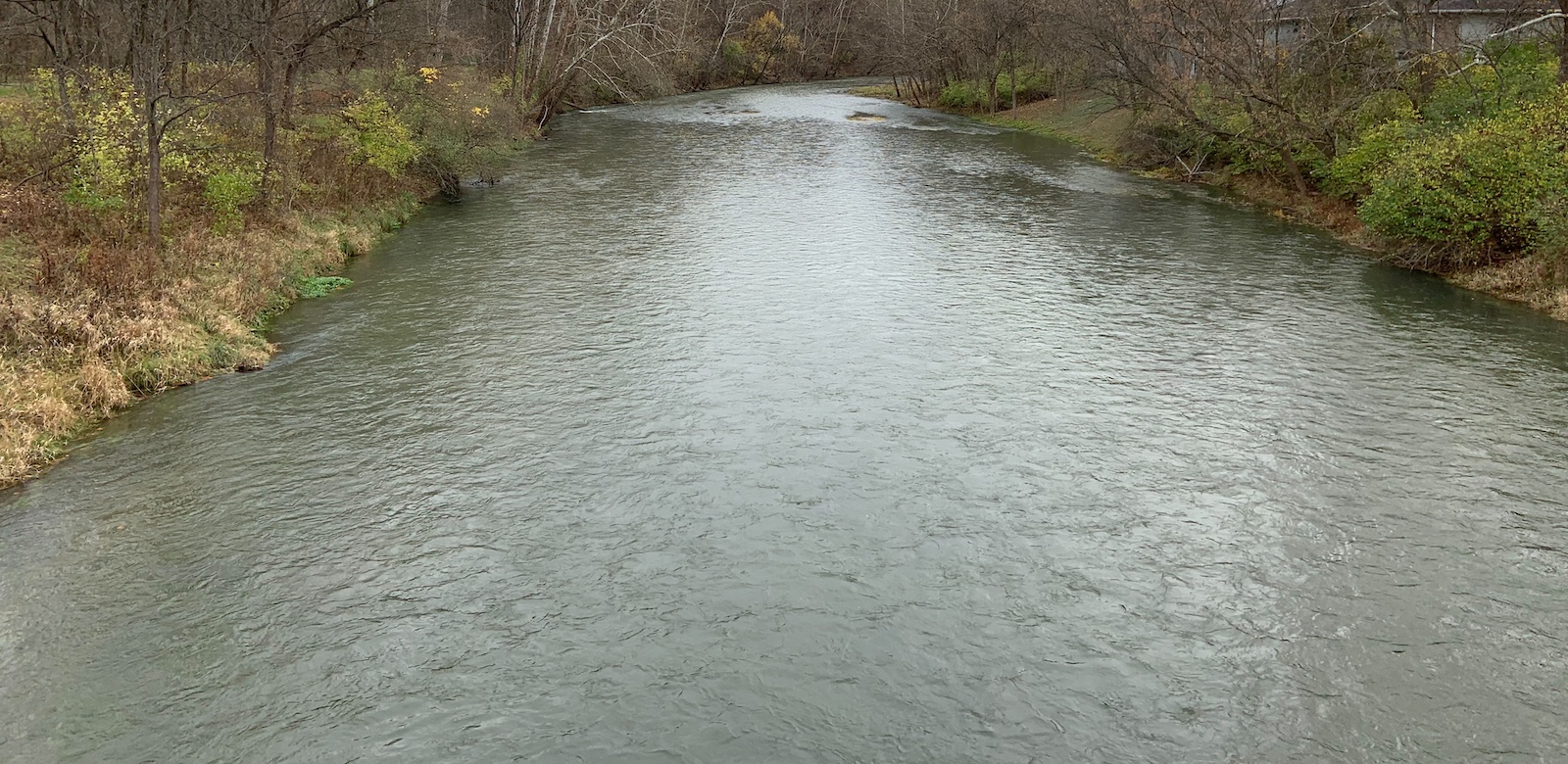
Image: The Whitewater River – Brookville, Indiana – Photo by Linda Sue Grimes
A Special Soul
One such room is an art gallery, featuring the paintings, as well as the prose renderings of the beautiful soul, Ron Grimes (Ron W. G., as he signs his paintings): Paintings and Prose. My sweet Ron has continued to bring out the poetry in my life for over half a century; our married life together began on March 10, 1973.
Also in my literary home, I dedicate another room—my kitchen—to the recipes that result from adventures in the experimental culinary arts.
I have been a vegetarian/vegan for most of my life, and thus I have found it necessary to revise or tweak most traditional recipes to accommodate my vegetarianism. So I am offering the results of that life journey.
My Temple Sanctuary
Finally, I have dedicated a sanctuary for meditation, prayer, and worship, “Maya Shedd’s Temple.” Before I rebuilt this lit site as Linda’s Literary Home, I maintained much of the construction here under the title “Maya Shedd’s Temple: Literary Home of Linda Sue Grimes.”
In the temple, I place all things spiritual. I begin with a brief memoir explaining by reasons for following my spiritual path.
The temple includes information aboutParamahansa Yogananda and commentaries on his poetic works, beginning with Songs of the Soul.
Guruji has explained that fallen humankind is under the spell of Maya or cosmic delusion. My goal is to lift that spell, thus “shed” the delusive veil of Maya: Maya Shedd.




 Linda's Literary Home