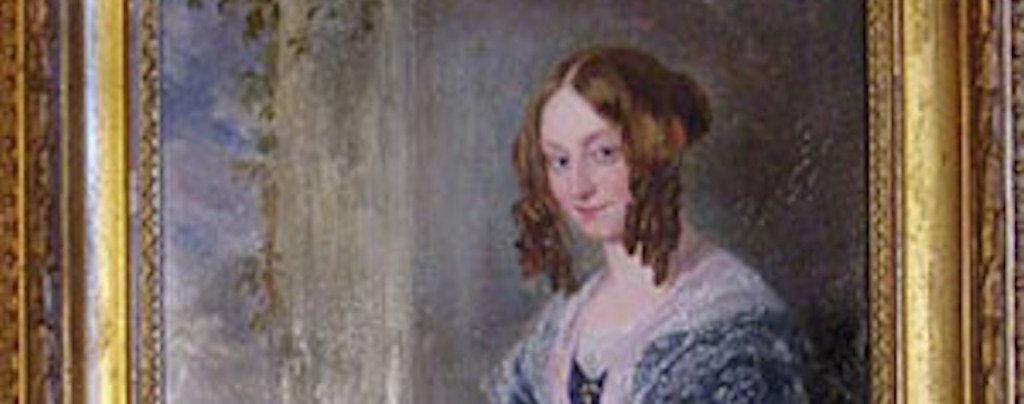
Elizabeth Barrett Browning’s Sonnet 29 “I think of thee!—my thoughts do twine and bud”
Elizabeth Barrett Browning’s speaker in sonnet 29 “I think of thee!—my thoughts do twine and bud” allows her thoughts to create a tether that is ultimately unnecessary for two lovers who share such a unique bond.
Introduction and Text of Sonnet 29 “I think of thee!—my thoughts do twine and bud”
Elizabeth Barrett Browning’s sonnet 29 “I think of thee!—my thoughts do twine and bud” from Sonnets from the Portuguese dramatizes the closeness of the speaker with her belovèd. Even as her thoughts encircle him, she insists that ultimately she is so closely united with him that she need not think of him at all.
The speaker and her illustrious suitor share a special closeness that keeps them together. The speaker of this sonnet permits her thoughts to create a drama featuring a tether that will bind the two lovers into a unique bond.
Sonnet 29 “I think of thee!—my thoughts do twine and bud”
I think of thee!—my thoughts do twine and bud
About thee, as wild vines, about a tree,
Put out broad leaves, and soon there’s nought to see
Except the straggling green which hides the wood.
Yet, O my palm-tree, be it understood
I will not have my thoughts instead of thee
Who art dearer, better! Rather, instantly
Renew thy presence; as a strong tree should,
Rustle thy boughs and set thy trunk all bare,
And let these bands of greenery which insphere thee
Drop heavily down,—burst, shattered, everywhere!
Because, in this deep joy to see and hear thee
And breathe within thy shadow a new air,
I do not think of thee—I am too near thee.
Commentary on Sonnet 29 “I think of thee!—my thoughts do twine and bud”
The speaker in sonnet 29 “I think of thee!—my thoughts do twine and bud”is now allowing her thoughts to create a tether that is ultimately unnecessary for two lovers who share such a unique bond.
First Quatrain: Vining Thoughts
I think of thee!—my thoughts do twine and bud
About thee, as wild vines, about a tree,
Put out broad leaves, and soon there’s nought to see
Except the straggling green which hides the wood.
The speaker addresses her belovèd, telling him that she thinks of him. She then goes on to describe the scene that her thoughts of him create. The speaker’s thoughts seem to resemble a vine that grows up wrapping itself around him as a Morning Glory vine would do—growing up to encircle a tree or fence post.
The speaker likens her foliage-thoughts to that vine wrapping around a tree or a post, and as it grows up the structure, it grows large, lush leaves. These leaves soon cover the tree until there is nothing visible except the vine. The wood of the tree has completely vanished under the cover of the vine.
Second Quatrain: Better than Her Thoughts
Yet, O my palm-tree, be it understood
I will not have my thoughts instead of thee
Who art dearer, better! Rather, instantly
Renew thy presence; as a strong tree should,
The speaker then shrieks in horror that her thoughts have obliterated her belovèd, for she does not wish for that to happen. The speaker then exclaims, addressing him, “O, my palm-tree,” and insisting that she does not intend for her thoughts to obliterate him. She asserts that she cherishes him much more than she does her thoughts of him.
The enraptured speaker then commands him to dislodge himself from her thoughts, so that he will once again shine through. He is as strong as a tree is strong, and the wood of the tree should always shine through the obtrusive vines, regardless of how prolific their foliage.
First Tercet: A Living Presence
Rustle thy boughs and set thy trunk all bare,
And let these bands of greenery which insphere thee
Drop heavily down,—burst, shattered, everywhere!
The speaker continues her command, insisting that he remain a physical presence, complete and whole, uncovered by her misty thoughts. She wants him to extricate himself from her thoughts and become the living presence that she so adores.
The excited speaker then insists that he break those imaginary bonds of green foliage that she has concocted and that have encircled him, so that the greenery will fall in a heavy heap, as they split apart in their zeal to reveal him. The speaker’s little drama succinctly reveals the heated passion of her love for her belovèd suitor.
Second Tercet: Affirming Passion
Because, in this deep joy to see and hear thee
And breathe within thy shadow a new air,
I do not think of thee—I am too near thee.
Finally, the speaker affirms her passion by revealing how desirous she is of merely being able to “breath” within the same environment where her belovèd remains. Her thoughts that wrap and cover her belovèd merely represent the closeness she enjoys with him.
She remains so close to him that she need not think of him at all, because she insists, “I am too near thee.” It is a closeness that she reveres as she revels in the magic of its ability to engender in her feelings of deep love and devotion.
 Linda's Literary Home
Good faith questions and comments welcome!