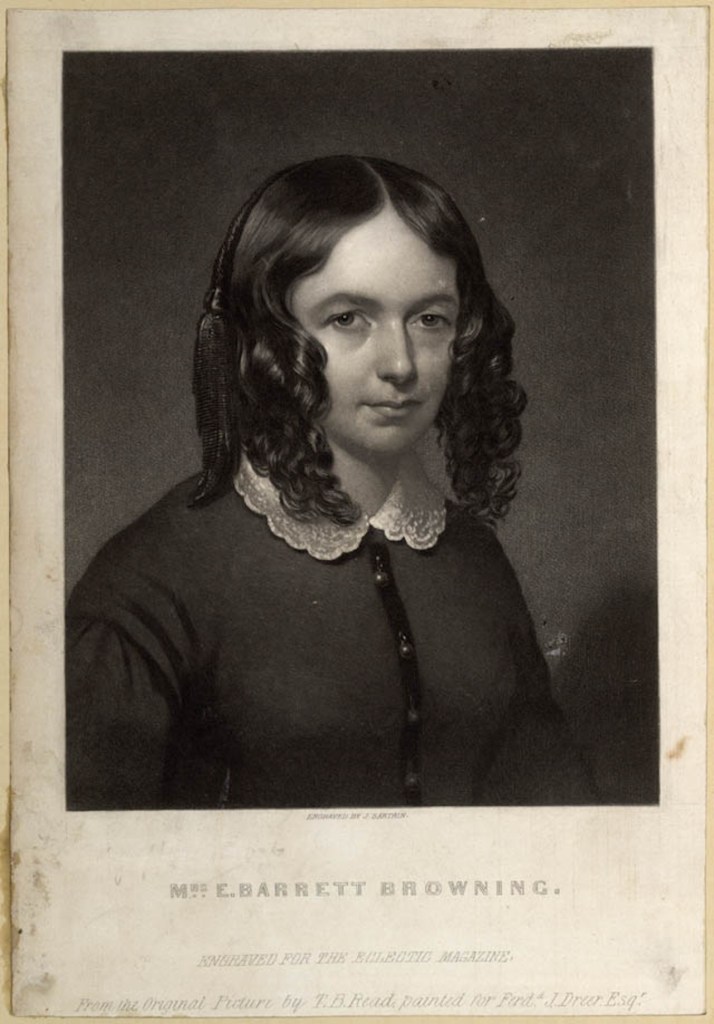
Elizabeth Barrett Browning’s Sonnet 35 “If I leave all for thee, wilt thou exchange”
In Elizabeth Barrett Browning’s sonnet 35 “If I leave all for thee, wilt thou exchange,” the poet’s speaker questions her belovèd to receive assurance of his love as a shelter from her anxiety as she prepares to leave her childhood home.
Introduction and Text of Sonnet 35 “If I leave all for thee, wilt thou exchange”
The speaker in Elizabeth Barrett Browning’s sonnet 35 “If I leave all for thee, wilt thou exchange”muses upon how she may react to leaving her childhood environment. No doubt the speaker is elated at the prospect of beginning a life with the man she adores so adamantly, but as the reader has watched this speaker, it has become clear that any change in her station will cause abundant anxiety as she navigates the course of new her life.
Sonnet 35 “If I leave all for thee, wilt thou exchange”
If I leave all for thee, wilt thou exchange
And be all to me? Shall I never miss
Home-talk and blessing and the common kiss
That comes to each in turn, nor count it strange,
When I look up, to drop on a new range
Of walls and floors, another home than this?
Nay, wilt thou fill that place by me which is
Filled by dead eyes too tender to know change?
That’s hardest. If to conquer love, has tried,
To conquer grief, tries more, as all things prove;
For grief indeed is love and grief beside.
Alas, I have grieved so I am hard to love.
Yet love me—wilt thou? Open thine heart wide,
And fold within the wet wings of thy dove.
Commentary on Sonnet 35 “If I leave all for thee, wilt thou exchange”
The speaker is asking questions of her belovèd; she needs assurance of his love as a shelter from her anxiety as she prepares to move from her childhood home.
First Quatrain: With an Eye Toward the Future
If I leave all for thee, wilt thou exchange
And be all to me? Shall I never miss
Home-talk and blessing and the common kiss
That comes to each in turn, nor count it strange,
The speaker begins her inquiry as she seeks to ascertain whether her belovèd plans to abandon his own life context in order to live with her; she is, of course “leav[ing] all for [him].”
The questioning speaker carries on with a further inquiry, wondering but also correctly believing that she will long for familiar events that currently and have always filled her life. She will miss such things as, “blessing,” “home-talk,” and “the common kiss.”
The speaker then poses her question rather diplomatically in order to suggest that while she hopes she will not hanker back after her old home-life, she continues to harbor doubts about her ability to cut those ties so quickly and completely. She then admits that she “count[s] it strange,” thinking that she would feel otherwise as she leaves her previous residence.
Second Quatrain: To Remain Steady
When I look up, to drop on a new range
Of walls and floors, another home than this?
Nay, wilt thou fill that place by me which is
Filled by dead eyes too tender to know change?
The speaker then renders clarity for her missing the “walls and floors” that she has for so long remained accustomed to observing. For this speaker, the ordinary day to day observations and even noises around the home have become very significant in helping her remain truly steady in her view of reality.
This speaker knows that she is accustomed to taking flights on mental wings that may sail her too far off from the here and now of daily life. Then she poses a very vital question, wondering if her belovèd will be able keep her from continuing to grieve over past losses.
Having her belovèd beside her, though, leads the speaker to believe that her environmental change will affect her much less traumatically than she might imagine. Although the speaker feels that her own eyes “are too tender to know change,” she can navigate the notion that with her suitor’s assistance, she will likely find adjusting to the new environment possible.
First Tercet: A Philosophical Leaning
That’s hardest. If to conquer love, has tried,
To conquer grief, tries more, as all things prove;
For grief indeed is love and grief beside.
In the first tercet, the speaker examines some philosophical leaning that has motivated her earlier questions. Subduing grief has been the speaker’s most difficult task. She finds that she must also conquer love, and that is also difficult.
However, most difficult has been her struggle with pain, sorrow, and that unending grief. She has discovered that “grief indeed is love and grief beside.” If she were to lose her belovèd or feel abandoned, her grief would compound beyond endurance.
This speaker has repeatedly agonized over every aspect of her life, sad fact after sad event. Her self-doubt has prevented her from immediate acceptance of the love of one she considers far above her station.
This speaker’s low self-esteem has caused much musing and wringing of hands. But she always remains dignified in her questions for understanding, and those questions to her belovèd demonstrate a strong mind despite its many doubts.
Second Tercet: Bold Speech
Alas, I have grieved so I am hard to love.
Yet love me—wilt thou? Open thine heart wide,
And fold within the wet wings of thy dove.
The speaker readily confesses that her long-time knowledge of sorrow has rendered her “hard to love.” Thus, she then demands that her lover, “Yet love me,” and then once again retracts the command, converting it to a mild question, “wilt thou?”
She has long lamented that she has grieved greatly in her lifetime; at times, she seems nearly tipsy with her idiosyncratic ways, as she proposes again a command to her belovèd to continue to hold her in his heart. She colorfully refers to her soul as a dove with “wet wings” likely because of her having shed so many tears.
The speaker finds any kind of bold speech beyond her capabilities, yet at the same time, she has convinced herself that she must unite with her deep soul, which she refers to as “dove.” She must find her best self in order to continue in her relationship with her wonderful, magnificent belovèd.
 Linda's Literary Home

Good faith questions and comments welcome!