Linda's Literary Home

Author: Linda Sue Grimes

  • Introduction to the Shakespeare 154-Sonnet Sequence

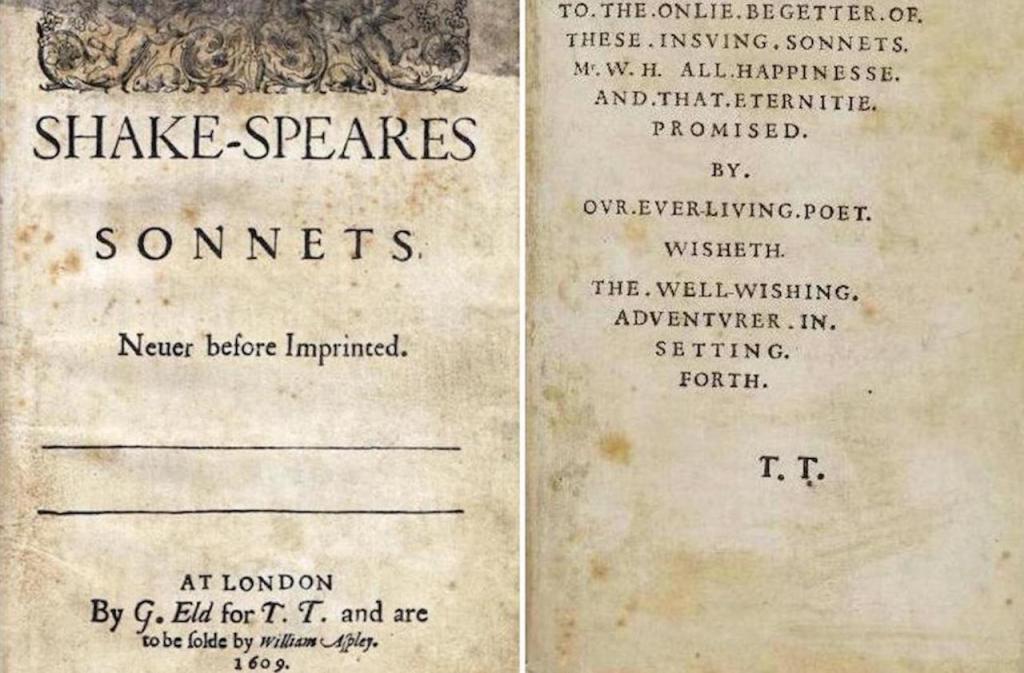
    Image: Shake-speares Sonnets Hank Whittemore’s Shakespeare Blog

    Introduction to the Shakespeare 154-Sonnet Sequence

    The Shakespeare 154-sonnet sequence offers a study of the mind of the poet.   The first 17 have a speaker persuading a young man to marry and produce lovely offspring.  Sonnets 18–126 address issues relating to talent and art creation. The final 28 explore and lament an unhealthy romance.

    Commentaries on the Shakespeare 154-Sonnet Sequence

    My Shakespeare sonnet commentaries are being offered to assist beginning poetry readers and students in understanding and appreciating the Shakespeare sonnet sequence.  Because I argue alongside the Oxfordians regarding the identity of “William Shakespeare,” some of my commentaries on the sonnets include information related to the Shakespeare writer as Edward de Vere, 17th Earl of Oxford.  

    However, consideration of the poet’s biography remains only one small factor in understanding and appreciating his art, especially the sonnets.  The sonnets’ messages are what they are regardless of the biography of who wrote them.   The “Shakespeare” identity is not the only issue with which I take exception to traditional Shakespeare studies.  

    I do not agree with the traditional view that sonnets 18–126 focus on a “fair youth.” I will show that in most of that group of sonnets there is no person at all, much less a “fair youth” or young man.

    I assert instead that those sonnets put on display the theme of the poet’s relationships with his muse, with his own heart and mind, with his art—including his doubts and fears regarding his ability to maintain and perfect his writing abilities.

    The Sonnet Sequence

    Some online Shakespeare sonnet enthusiasts have divided the 154 sequence into two thematic categories:  “The Fair Youth Sonnets” (1–126) and “The Dark Lady Sonnets” (127–154).  Such a categorization remains problematic because there is a distinct change of subject matter from the first section 1-17 to the second 18–126.

    In the first section of sonnets 1–17, the speaker is clearly imploring a young man to marry and procreate; in the second section 18–126, the speaker remains highly contemplative as he muses upon his considerable talent.

    The only feature that the first two categories have in common would be a “fair youth”; however, it is a misinterpretation that assigns a “fair youth” to sonnets 18–126.  As I mentioned above, in most of that group of sonnets there is no person at all.

    In opposition to the two category theory, a number of scholars and critics of Elizabethan literary studies have categorized the Shakespeare 154-sonnet sequence into three thematic groups:

    1.  Marriage Sonnets: 1–17    (17 total)
    2.  Fair Youth Sonnets: 18–126 (109 total)
    3.  Dark Lady Sonnets: 127–154 (28 total)

    Sonnets 1–17:  The Marriage Sonnets

    The group labeled the “Marriage Sonnets” stars a speaker, attempting to persuade a young man to marry and produce beautiful children.  Oxfordians, who hold that the actual Shakespeare writer was Edward de Vere, 17th Earl of Oxford, suggest that the young man is probably Henry Wriothesley, the third Earl of Southhampton and that the speaker of sonnets 1–17 is striving to convince the young earl to marry Elizabeth de Vere, the eldest daughter of Edward de Vere.

    Sonnets 18–126:  The Fair Youth Sonnets

    By tradition, the “Faith Youth Sonnets” are interpreted as further entreaties to a young man.  However, there is no young man in these sonnets; there are no persons at all in that group of sonnets.  Even though sonnets 108 and 126 do address a “sweet boy” or “lovely boy,” they  remain problematic and are likely miscategorized.  

    The Category “Muse Sonnets” Replaces the “Fair Youth Sonnets”

    Instead of speaking directly to a young man, as the “Marriage Sonnets” quite obviously do, the speaker in sonnets 17–126 is musing on, examining, and exploring issues of writing, thinking, and making poetry.  In some of the sonnets, the speaker addresses his muse,  and in others, his talent, and in still others, he is speaking  directly to the sonnet itself. 

    The speaker in sonnet after sonnet is exploring the entire territory of his talent, his dedication to writing and the power of his heart and soul.  He even goes into battle with the bane of a writer’s existence—periods of low inspiration for creating. He also struggles with the ennui and dryness that the writing experience undergoes.

    The result of my understanding and interpretation of this “Fair Youth” category offers a very different line of thinking from the traditionally received position of this issue.  I have, therefore, relabeled the category the “Muse Sonnets”—replacing the traditional “Fair Youth Sonnets.”

    The motive for the continued labeling the bulk of the Shakespeare sonnets “Fair Youth” likely rests with the social justice movement in rehabilitation of the same-sex orientation.  Finding evidence of homosexuality in long respected writers and artists has become a cottage industry, especially for the statist-leaning, higher education system.

    While a number of academics have bloviated in the direction of finding of Shakespeare was “gay,” others have convincingly debunked the notion.  Interestingly, those who favor the gay Shakespeare use the “Fair Youth” sonnets as their main supporting evidence.

    Also interestingly, the debunking of the notion of same-sex orientation in “Shakespeare” would be much easier if those critics assumed the real “Shakespeare” to be Edward de Vere, whose biography is known and well documented, while that of the traditional “Shakespeare,” Gulielmus Shakspere of Stratford, remains rather thin and sketchy.

    Sonnets 127–154:  The Dark Lady Sonnets

    The “Dark Lady” sonnets offer an exploration of an adulterous relationship with a woman who possesses an unsavory character.  The term “dark” is describing the woman’s shady character flaws, rather than the shade or hue of her complexion.

    Six Problematic Sonnets: 108, 126, 99, 130, 153, 154

    Sonnets 108 and 126 offer a different kind of categorization issue.   Most of the “Muse Sonnets” are speaking to writing issues, wherein the speaker examines his talent, dedication, and other issues relating to his artist skills.  There are no other human beings in most of these muse sonnets.

    However, sonnets 108 and 126 do address a young man, calling him “sweet boy” and “lovely boy.” And then poem 126 is not technically a “sonnet.” It plays out in six rimed couplets, not the traditional sonnet form with three quatrains and one couplet.

    The possibility remains that sonnets 108 and 126 have helped cause the misnaming of this group of sonnets as the “Fair Youth Sonnets.”  Those poems should logically reside with the “Marriage Sonnets,” which do address a young man.  

    Sonnets 108 and 126 could also be responsible for some scholars categorizing the sonnets into two groups, instead of three—combining the “Marriage Sonnets” with the “Fair Youth Sonnets” and naming them the “Young Man Sonnets.”  

    However, the two category alternative remains flawed because the bulk of the “Fair Youth Sonnets” do not address a young man, nor do they address any person, except on occasion as the speaker addresses himself. 

    Sonnet 99 contains 15 lines, instead of the traditional sonnet form with 14 lines.  The first quatrain expands to a cinquain, converting its rime scheme from ABAB to ABABA.  The rest of the sonnet continues traditionally, following the rime, rhythm, and function of the traditional sonnet.

    Although sonnet 130 “My mistress’ eyes are nothing like the sun” is grouped with the “Dark Lady” subsequence, it seems to prove an anomaly because in many of the others in this group the lady does not merit such positive effusions as offered in the speaker’s claim that his “love” for her is rare.  

    The “Dark Lady” sonnets explore the negative results of unchecked lust, while the execution of sonnet 130 takes for its purpose the criticism of hyperbolic displays that idealize cosmetic beauty.  This speaker remains consistent in his striving for truth as well as his striving for beauty.

    The Two Final Sonnets

    Sonnets 153 and 154 are problematic also, at least to some extent.  Although they are categorized thematically with the “Dark Lady Sonnets,” they function a bit differently from most of the poems in that thematic group.  Sonnet 154 simply features a paraphrase of sonnet 153, dramatizing identical messaging—the complaint of unrequited love.  

    Those two final sonnets then decorate that complaint with the tinsel of mythological allusion.  The speaker alludes to the force of Cupid, the Roman god of love and the power of the goddess Diana.  

    The speaker thereby maintains a secure distance from his feelings.  He possibly hopes such distancing may liberate him from the oppression of his lust and then re-establish for him the harmonious balance of mind and heart.

    In the majority of the “Dark Lady Sonnets,” the speaker has continued to offer a monologue to the woman, making it clear that he intends for her to hear about that which he is complaining.  

    Finally, in the two concluding sonnets, the speaker is no longer addressing the dark lady.  He does mention her, but instead of speaking directly to her, he is declaiming about her.  He is employing this strategy to engage and demonstrate that he is withdrawing from the woman and her unsavory mannerisms.

    The conclusion of this sequence seems to be dramatizing the fact that the speaker has become disillusioned by and weary from his battle for this disagreeable woman’s love, affection, and respect.

    The speaker concludes that he is determined to fashion a high-principled, classic,  dramatic statement to put an end to this ill-omened relationship, with an unmistakeable  pronouncement that he is finished, it is over, he is through.

    Image: Edward de Vere, 17th Earl of Oxford-The Writer of the Shakespeare Canon
  • Phillis Wheatley’s “A Hymn to the Evening”

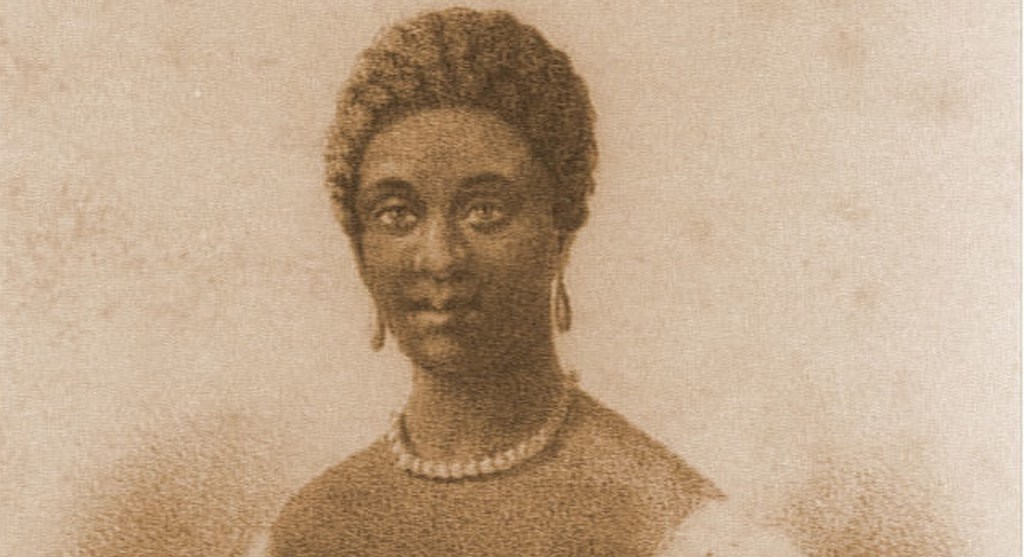
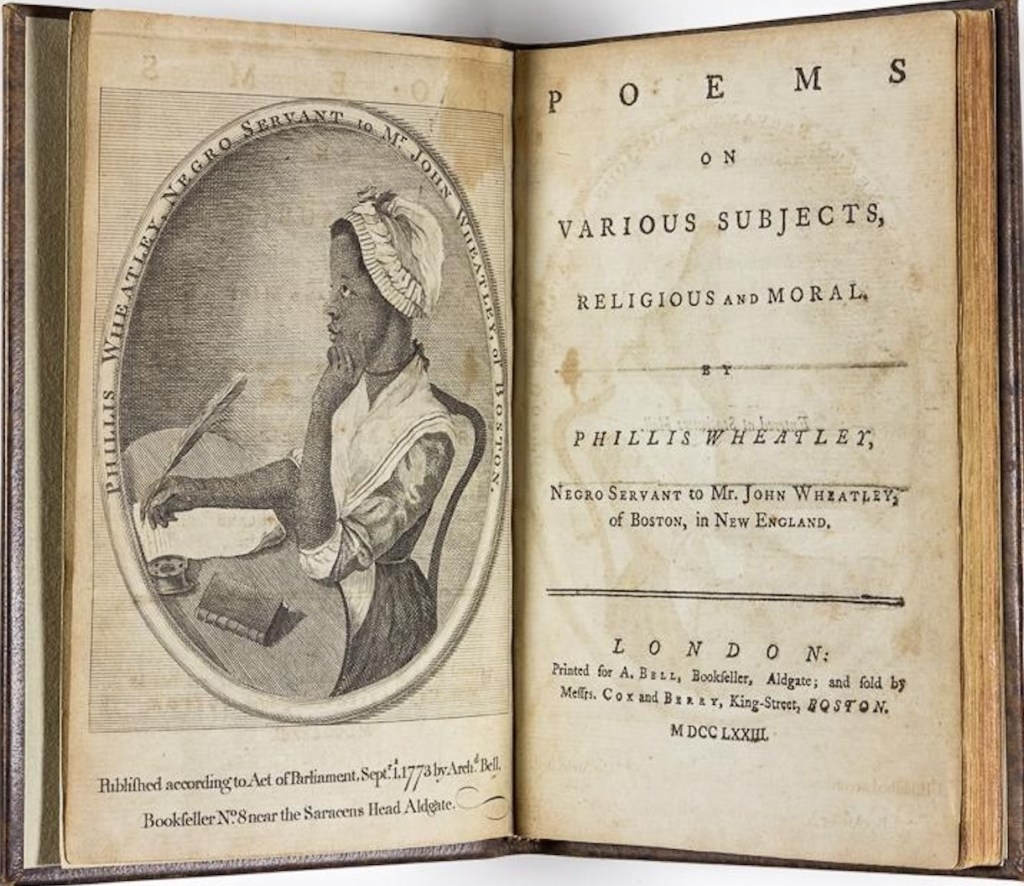
    Image: Phillis Wheatley:  Engraving, reproduced from her book, “Poems on Various Subjects, Religious and Moral.” London, 1773.  New York Public Library

    Phillis Wheatley’s “A Hymn to the Evening”

    The speaker in Phillis Wheatley’s “A Hymn to the Evening” offers her spiritually motivated song/prayer as a tribute  to evening, the part of the day when nightly slumber is arriving in all its glory.

    Introduction and Text of “A Hymn to the Evening”

    The speaker in Phillis Wheatley’s “A Hymn to the Evening” is delighting in the beauty surrounding her.  She is especially cognizant of how all events seem to be accruing for the purpose of making a beautiful day to close with a delightful, colorful evening. 

    The speaker finds the evening sky glorious as it yield the “deepest red” hue, as all other various colors are also displaying across the sky.  She also observes the scenery around her on earth; she takes measure of streams and especially the songs of birds.  She demonstrates her love and admiration for the creation that the Divine Creator has bestowed on all of His children.

    The poem consists of nine riming couplets, with the first couplet featuring an internal rime as well as an end rime.  The second couplet features the rare poetic device, similar to personification, of metaphorically comparing a gentle wind to a bird.  The couplet-formed verse lends to the high tone with which the poet has flavored her hymn.

    By labeling her poem a hymn, the poet has elevated its purpose from a simple tribute to a time of day, to a supplication for gratitude.  As she has observed much beauty about her and is thankful for the opportunity to engage that loveliness, she wishes that same gratitude for all of humankind.  

    The speaker is also offering her song as she is praying that the simple act of appreciating one’s environment may uplift and keep humankind on a virtuous path, on which avoidance of all that cause harm and corruption may be avoided.

    A Hymn to the Evening

    Soon as the sun forsook the eastern main
    The pealing thunder shook the heav’nly plain;
    Majestic grandeur! From the zephyr’s wing,
    Exhales the incense of the blooming spring.
    Soft purl the streams, the birds renew their notes,
    And through the air their mingled music floats.
    Through all the heav’ns what beauteous dies are spread!
    But the west glories in the deepest red:
    So may our breasts with ev’ry virtue glow,
    The living temples of our God below!
    Fill’d with the praise of him who gives the light,
    And draws the sable curtains of the night,
    Let placid slumbers sooth each weary mind,
    At morn to wake more heav’nly, more refin’d;
    So shall the labours of the day begin
    More pure, more guarded from the snares of sin.
    Night’s leaden sceptre seals my drowsy eyes,
    Then cease, my song, till fair Aurora rise.  

    Commentary on “A Hymn to the Evening”

    The speaker is inspired by the beauty of the day’s events that she has been observing both in the sky and on the land around her, as the end of the day is arriving.  She turns her simple awareness into a tribute and supplication for all humankind’s spiritual betterment.

    First Movement:  Opening of Day

    Soon as the sun forsook the eastern main
    The pealing thunder shook the heav’nly plain;
    Majestic grandeur! From the zephyr’s wing,
    Exhales the incense of the blooming spring.

    The speaker opens her tribute by describing how the day had begun with a thunder storm as soon as morning had ended.  She finds the event an example of “[m]ajestic grandeur.” On a soft gentle breeze, the fragrance of spring’s flowers came wafting.

    The inspired speaker then has the sun “forsaking” its domain in the east.  After having arisen, the big star does does not wait but keeps traveling across the sky, literally, forsaking all it leaves behind.  By beginning with the opening of the day, the speaker then gathers images throughout the day that accumulate to a marvelous evening at the close of that day.

    The speaker describes the thunder as “pealing” and that it colorfully caused to tremble the area around it. The thunder strikes the speaker as a grand event, one fitting to collect as evidence that a glorious evening may be in the offing.

    The first couplet includes an internal rime, as well as and end rime: “forsook – shook.”  Also, interestingly, the poet has employed avianification (akin to the device, “personification”) by metaphorically giving a gentle breeze a “wing,” a feature belonging to a bird.

    Second Movement:   The Colors of Beauty

    Soft purl the streams, the birds renew their notes,
    And through the air their mingled music floats.
    Through all the heav’ns what beauteous dies are spread!
    But the west glories in the deepest red:

    The speaker then notes that the streams are babbling gently and birds are continuing to offer their songs to the atmosphere.  The birds’ music seems to blend with other features of the landscape as their singular notes continue to waft on the breeze.  

    She has the stream purling, instead of merely babbling; this speaker is colorfully describing each natural object for the purpose of incorporating them into her collection of images, which she will offer to the day’s end.

    The speaker then remarks that through the sky swirl many various colors that she deems to be “beauteous,” as they stretch across the blue expanse.  However, she finds those hues that appear in “the west” to be the “deepest red,” and she implies that the oncoming sunset will cap the day in a marvelous and glorious procession.

    The speaker finds unusual as well as deeply spiritual ways of describing what she sees.   She is offering her words, her images, and her thoughts to her Divine Creator. Thus, she remains careful to choose each image and description with precision, for example, the west does not merely feature “deepest red,”  but it also “glories” in that color.  Making each word and each image work its magic demonstrates the poet’s skill and mastery of her art.

    Third Movement:  A Supplication for Gratitude

    So may our breasts with ev’ry virtue glow,
    The living temples of our God below!
    Fill’d with the praise of him who gives the light,
    And draws the sable curtains of the night,

    The speaker then turns to the hearts and minds of humanity, prayerfully supplicating for those hearts and minds to “glow,” filled with “ev’ry virtue.”  She hopes that the lives of all humankind become and remain “temples” on earth dedicated to the Belovèd Creator.  She includes all of humanity in her supplication as she effuses, “may our breasts” glow as living temples.

    The speaker wishes that all of humanity become full of praise for the Blessèd Creator of the cosmos; that Creator, Who had given “the light” also will close the “curtains of the night”: again the speaker has shown her marvelous skill by describing those “curtains” as “sable.”

    The speaker then prays that all of humanity may sleep peacefully and become refreshed so that the next day’s existence becomes “more heav’nly, more refin’d.”  She hopes and prays that each day will find humanity to be living more and more on a grand scale of plain living and high thinking.  As she includes herself in her prayer, she demonstrates her humility and deep inner awareness of the needs of all humankind.

    Fourth Movement:  Prayer for Virtuous Living

    Let placid slumbers sooth each weary mind,
    At morn to wake more heav’nly, more refin’d;
    So shall the labours of the day begin
    More pure, more guarded from the snares of sin.
    Night’s leaden sceptre seals my drowsy eyes,
    Then cease, my song, till fair Aurora rise.  

    After a night’s peaceful, invigorating rest of the body and mind, each child of the Divine Creator may begin his/her work, chastened and strengthened by the gratitude of finding a safe harbor in the Blessèd Lord.  

    The speaker prays that all be turned from “the snares of sin.”  Again, the speaker is demonstrating her ethical and moral strength as she wishes for all of humankind the same rectitude she desires for herself.

    The speaker then closes her song of praise for the Belovèd Creator’s beauty in creation by colorfully comparing the closing of her own sleepy eyes—her “drowsy eyes”—to being touched by a royal, magical wand.  

    She then bids her hymn end and allow her the sleep she now needs; thus, she prays for herself a soothing slumber until morning, when the Roman goddess, “Aurora,” brings in a new day with dawn.

  • Phillis Wheatley’s “On Virtue”

    Image a:  Phillis Wheatley

    Phillis Wheatley’s “On Virtue”

    The speaker in Phillis Wheatley’s “On Virtue” is describing the characteristics of that quality, as she supplicates to the heavenly realms to enrich and enliven her creative ability to produce useful, genuine, and delightful poems.

    Introduction and Text of “On Virtue”

    Phillis Wheatley’s “On Virtue” creates a speaker who is paying tribute to the coveted life goal of virtue or the characteristic that results from righteousness, integrity, and dedication to the truth.  Virtue takes its substance from behavior, that is, right behavior.  

    The virtuous are those who conduct their life in ways that contribute to freedom, prosperity, peace, and calmness of community. Without a plurality of virtuous folks, a community breaks down, becomes unlivable, causing the virtuous to flee.

    The speaker is personifying the quality of virtue, invoking its essential quality to lend its powers to her, and especially to her ability to create her art:  she wishes to create “a nobler lay.”  Thus, after offering a colorful description of the behavior of “virtue,” the speaker offers a supplication, almost a prayer, that virtue visit her and direct her abilities.

    On Virtue

    O Thou bright jewel in my aim I strive
    To comprehend thee. Thine own words declare
    Wisdom is higher than a fool can reach.
    I cease to wonder, and no more attempt
    Thine height t’explore, or fathom thy profound.
    But, O my soul, sink not into despair,
    Virtue is near thee, and with gentle hand
    Would now embrace thee, hovers o’er thine head.
    Fain would the heav’n-born soul with her converse,
    Then seek, then court her for her promis’d bliss.

    Auspicious queen, thine heav’nly pinions spread,
    And lead celestial Chastity along;
    Lo! now her sacred retinue descends,
    Array’d in glory from the orbs above.
    Attend me, Virtue, thro’ my youthful years!
    O leave me not to the false joys of time!
    But guide my steps to endless life and bliss.
    Greatness, or Goodness, say what I shall call thee,
    To give an higher appellation still,
    Teach me a better strain, a nobler lay,
    O thou, enthron’d with Cherubs in the realms of day!

    Commentary on “On Virtue”

    The speaker is Phillis Wheatley’s “On Virtue” is describing the qualities of virtue. As she muses upon the nature of that outstanding quality, she hopes not only to understand it better but also that it will assist her in creating her poems and songs.

    First Stanza: A Valued Quality

    O Thou bright jewel in my aim I strive
    To comprehend thee. Thine own words declare
    Wisdom is higher than a fool can reach.
    I cease to wonder, and no more attempt
    Thine height t’explore, or fathom thy profound.
    But, O my soul, sink not into despair,
    Virtue is near thee, and with gentle hand
    Would now embrace thee, hovers o’er thine head.
    Fain would the heav’n-born soul with her converse,
    Then seek, then court her for her promis’d bliss

    The speaker begins by addressing her subject as “bright jewel.” This appellation demonstrates the value that the speaker is placing on her subject, virtue. To her, virtue is like a precious stone that is bright, thus, cheerful.  She expresses the wish to understand exactly what “virtue” is. Virtue’s own synonyms demonstrate that the status of “wisdom” remains out of reach for the “fool.”

    The speaker then confesses that she will stop musing and trying to examine a quality that remains at such a height and depth that it seems impossible for her to attain. Then the prospect that her soul might sink into despair at abandoning that quality gives rise to her command to her soul not to “sink . . . into despair.”

    While she may not become one with virtue, that quality remains “near” her. Also, the “gentle hand” of that quality will continue to “embrace” the speaker. And it will continue to protect her as it “hovers o’er thine head.”

    The soul gladly seeks to attain virtue, for that force is “heav’n-born.” The soul wishes to hold court with virtue, and it will seek to do so. And the soul will continue to pursue that quality in order to reach its goal of “bliss”—promised by all great spiritual leaders and avatars.

    Second Stanza: A Supplication for Guidance

    Auspicious queen, thine heav’nly pinions spread,
    And lead celestial Chastity along;
    Lo! now her sacred retinue descends,
    Array’’d in glory from the orbs above.
    Attend me, Virtue, thro’ my youthful years!
    O leave me not to the false joys of time!
    But guide my steps to endless life and bliss.
    Greatness, or Goodness, say what I shall call thee,
    To give an higher appellation still,
    Teach me a better strain, a nobler lay,
    O thou, enthron’d with Cherubs in the realms of day!

    The speaker then addresses the quality of virtue as “[a]uspicious queen,” again sending the status of that quality into the higher realms, such as royalty.   But this special queen possesses wings like an angel, and those wings not only fan out but also motivate the quality of “Chastity,” the state of purity that those seeking virtue gladly embrace.

    The speaker begins describing the movement of that “auspicious queen,” as her “retinue” moves downward dressed in “glory” that belongs to the heavenly realm above it. She then commands “Virtue” to listen to her cries for guidance for her young soul during her maturing years.

    She then requests that virtue not allow her to remain in the “false joys of time”—a supplication reminiscent of “lead us not into temptation but deliver us from evil” (Matthew 6:5-15 KJV). She is seeking the genuine that she knows her soul requires and craves.

    She asks to be guided to a life of eternal bliss—the very desire that yoga avatars, such as Paramahansa Yogananda, insist remains inherent in every human soul that incarnates upon Mother Earth. The speaker then describes the quality of virtue as containing greatness and goodness, as she seeks an even “an high appellation” for the name of the quality.

    Finally, the speaker supplicates for this blessed, high-moral quality to instruct her so that she may create “a nobler lay.” She reminds that quality—as a way of reminding herself—that virtue retains a celestial, mystic power because it is encircled by “Cherubs” even as the daylight hours grace the atmosphere.

  • Phillis Wheatley’s “An Hymn to the Morning”

    Phillis Wheatley’s “An Hymn to the Morning”

    Phillis Wheatley was influenced by Greek and Roman classical literature, as well as by early 18th century British poets, who were also influenced by that same literature.

    Introduction and Text of “An Hymn to the Morning”

    Phillis Wheatley’s talent was recognized by George Washington, who became a fan of the poet.  Wheatley’s verse has earned her the status of a first class American poet, whose style resembles the great British poets, who were also influenced by the classical literature of the early Greeks and Romans.

    Phillis Wheatley’s poem “An Hymn to the Morning” consists of ten riming couplets, separated into two quatrains (first and fourth stanzas) and two sestets (second and third stanzas).

    An Hymn to the Morning

    Attend my lays, ye ever honour’d nine,
    Assist my labours, and my strains refine;
    In smoothest numbers pour the notes along,
    For bright Aurora now demands my song.

    Aurora hail, and all the thousand dies,
    Which deck thy progress through the vaulted skies:
    The morn awakes, and wide extends her rays,
    On ev’ry leaf the gentle zephyr plays;
    Harmonious lays the feather’d race resume,
    Dart the bright eye, and shake the painted plume.

    Ye shady groves, your verdant gloom display
    To shield your poet from the burning day:
    Calliope awake the sacred lyre,
    While thy fair sisters fan the pleasing fire:
    The bow’rs, the gales, the variegated skies
    In all their pleasures in my bosom rise.

    See in the east th’ illustrious king of day!
    His rising radiance drives the shades away—
    But Oh! I feel his fervid beams too strong,
    And scarce begun, concludes th’ abortive song.

    Commentary “An Hymn to the Morning”

    Phillis Wheatley was influenced by Greek and Roman classical literature, as well as by early 18th century British poets, who were also influenced by that same literature.

    First Quatrain:  Invocation to the Muses

    Attend my lays, ye ever honour’d nine,
    Assist my labours, and my strains refine;
    In smoothest numbers pour the notes along,
    For bright Aurora now demands my song.

    As the early 18th century poets such as Alexander Pope did, the speaker of Wheatley’s poem addresses the nine muses, asking them to guide her hand, heart, and mind as she composes her song.

    The nine muses are the goddesses who guide and guard the various arts and sciences: Cleo (heroes), Urania (astronomy), Calliope (music), Melpomene (tragedy), Euterpe (lyric poetry), Erato (love), Terpsichore (dance), Thalia (comedy), and Polyhymnia (sacred hymns). 

    Then the speaker says that dawn, “Aurora” or goddess of dawn, is motivating her to write her song dedicated to the goddess of morning, and the speaker wants the song to flow smoothly like a gentle brook, so she asks the muses to “pour the notes along.”  The speaker want to be sure her song is worthy of being dedicated to the important morning deity. 

    First Sestet:  Honoring Dawn’s Arrival

    Aurora hail, and all the thousand dies,
    Which deck thy progress through the vaulted skies:
    The morn awakes, and wide extends her rays,
    On ev’ry leaf the gentle zephyr plays;
    Harmonious lays the feather’d race resume,
    Dart the bright eye, and shake the painted plume.

    As morning approaches, the stars recede from view, and the speaker asks the muses to help her honor dawn’s victory of arrival. The speaker describes the morning’s sun with its far-reaching rays of light. She observes that the light is falling on every leaf, and a gentle breeze is playing upon them. 

    The humble speaker pays homage to the songs of the birds as she describes their singing as “harmonious,” and she notes that as the birds are looking around, their eyes are darting about, and they are shaking their feathers as they wake up. 

    Second Sestet:  Playful Foregrounding

    Ye shady groves, your verdant gloom display
    To shield your poet from the burning day:
    Calliope awake the sacred lyre,
    While thy fair sisters fan the pleasing fire:
    The bow’rs, the gales, the variegated skies
    In all their pleasures in my bosom rise.

    The speaker bids the trees to “shield your poet from the burning day.” She is over-emphasizing a bit, calling the shade of the trees, “verdant gloom.” The playful comparison moves in service of  foregrounding the sun’s brightness as well as the colorful morning’s sun rise. 

    She addresses Calliope, the muse of music, to play upon the lyre, while her sisters, the other muses, “fan the pleasing fire.” Fanning fire makes it burn brighter, and she is celebrating the rising sun that becomes warmer and brighter as it becomes more visible. The little drama is pleasing the poet as she composes. 

    Second Quatrain:  Light into the Darkness

    See in the east th’ illustrious king of day!
    His rising radiance drives the shades away—
    But Oh! I feel his fervid beams too strong,
    And scarce begun, concludes th’ abortive song.

    The speaker thinks of leafy alcoves, and gentle breezes, and the sky with its many colors of purple, pink, orange stretching across the vast panorama of blue, and these things give her much pleasure. Then she suddenly exclaims, “look! the sun!,” to whom she refers as the “king of day.”

    As the sun rises, all darkness has gradually faded away. The radiance of the sun inspires the speaker so immensely, but then she feels something of a let down: “But Oh! I feel his fervid beams too strong, / And scarce begun, concludes th’ abortive song.”  As soon as the sun has fully arrived, then the morning is gone, and her song was celebrating morning, and thus the song must end.

  • Phillis Wheatley’s “On Imagination”

    Image 1:  Phillis Wheatley:  Engraving, reproduced from her book, “Poems on Various Subjects, Religious and Moral.” London, 1773.  New York Public Library

    Phillis Wheatley’s “On Imagination”

    Phillis Wheatley’s classically influenced poem, “On Imagination,” explores the powerful force of human imagination.  Wheatley demonstrates her remarkable talent for use of mythological allusion and the classical forms in which she was trained and in which she excelled.

    Introduction and Text of “On Imagination”

    Phillis Wheatley’s “On Imagination” explores the nature of the human mind as it engages in the fanciful act of imagining.   In the opening movement, Wheatley’s speaker offers an invocation [1] to the “imperial queen,” on whom she bestows the royal label, while personifying her subject.  

    Phillis Wheatley’s classical training in poetry is on full display as she composes a useful “invocation” that helps set the tone for her poem.  Wheatley’s invocation also performs the traditional function of supplicating to the muses or to a deity for guidance and inspiration in composing the poem in progress. 

    The poet has her speaker follow such luminaries as the world-renowned, classical Greek poet, Homer, in his Odyssey [2 ]and the British mastercraftsman and classic poet, John Milton, in his Paradise Lost [3] .

    On Imagination

    Thy various works, imperial queen, we see,
        How bright their forms! how deck’d with pomp by thee!
    Thy wond’rous acts in beauteous order stand,
    And all attest how potent is thine hand.

        From Helicon’s refulgent heights attend,
    Ye sacred choir, and my attempts befriend:
    To tell her glories with a faithful tongue,
    Ye blooming graces, triumph in my song.

        Now here, now there, the roving Fancy flies,
    Till some lov’d object strikes her wand’ring eyes,
    Whose silken fetters all the senses bind,
    And soft captivity involves the mind.

        Imagination! who can sing thy force?
    Or who describe the swiftness of thy course?
    Soaring through air to find the bright abode,
    Th’ empyreal palace of the thund’ring God,
    We on thy pinions can surpass the wind,
    And leave the rolling universe behind:
    From star to star the mental optics rove,
    Measure the skies, and range the realms above.
    There in one view we grasp the mighty whole,
    Or with new worlds amaze th’ unbounded soul.

        Though Winter frowns to Fancy’s raptur’d eyes
    The fields may flourish, and gay scenes arise;
    The frozen deeps may break their iron bands,
    And bid their waters murmur o’er the sands.
    Fair Flora may resume her fragrant reign,
    And with her flow’ry riches deck the plain;
    Sylvanus may diffuse his honours round,
    And all the forest may with leaves be crown’d:
    Show’rs may descend, and dews their gems disclose,
    And nectar sparkle on the blooming rose.

        Such is thy pow’r, nor are thine orders vain,
    O thou the leader of the mental train:
    In full perfection all thy works are wrought,
    And thine the sceptre o’er the realms of thought.
    Before thy throne the subject-passions bow,
    Of subject-passions sov’reign ruler thou;
    At thy command joy rushes on the heart,
    And through the glowing veins the spirits dart.

        Fancy might now her silken pinions try
    To rise from earth, and sweep th’ expanse on high:
    From Tithon’s bed now might Aurora rise,
    Her cheeks all glowing with celestial dies,
    While a pure stream of light o’erflows the skies.
    The monarch of the day I might behold,
    And all the mountains tipt with radiant gold,
    But I reluctant leave the pleasing views,
    Which Fancy dresses to delight the Muse;
    Winter austere forbids me to aspire,
    And northern tempests damp the rising fire;
    They chill the tides of Fancy’s flowing sea,
    Cease then, my song, cease the unequal lay.

    Commentary on “On Imagination”

    The speaker of Phillis Wheatley’s “On Imagination” is dramatizing the power of the human imagination to create any situation it desires.  However, remaining a rational, thinking mind ensconced in reality, the speaker returns to the physical plane of being to make a humble claim about her own use of imagination.

    Opening Movement:  The Classical Invocation

    Thy various works, imperial queen, we see,
        How bright their forms! how deck’d with pomp by thee!
    Thy wond’rous acts in beauteous order stand,
    And all attest how potent is thine hand.

        From Helicon’s refulgent heights attend,
    Ye sacred choir, and my attempts befriend:
    To tell her glories with a faithful tongue,
    Ye blooming graces, triumph in my song.

        Now here, now there, the roving Fancy flies,
    Till some lov’d object strikes her wand’ring eyes,
    Whose silken fetters all the senses bind,
    And soft captivity involves the mind.

    The speaker begins by describing some of the creations that have resulted from the works of this imperial queen, Imagination.  She asserts that the queen’s many varied “works” reveal bright forms that have been accompanied by “pomp.”   The works are also “wond’rous” as they appear in a “beauteous order.”  And they all prove the exquisite power that rests in that imperial queen’s hand.

    The speaker engages an allusion to the Greek mythological mountain of Helicon [4], whose springs became known as a fount of poetic inspiration. It was there that the poet, Hesiod, was inspired to compose his Theogony, a work that offers a narration about the origin of the world as it was formed from chaos.

    Hesiod’s famous opus also describes the genesis and historical progression of the Greek gods. Also allusive is her brilliant invocation. This speaker wishes to tell with “a faithful tongue” the glories of the work of the Imagination. She avers that as “Fancy flies,” that facility eventually lands on some object of intense interest, and then the mind takes over to wrap that object in “silken fetters.”

    Second Movement:  The Astonishing Force

    The second movement begins the intense exploration of the “force” that the human mind through employment of its tool, the imagination, wields upon nature, time, and space.  

    The speaker implies that the imagination, in fact, has such a force that it is likely that no one can do it justice by speaking about it: no one can “sing” it force, and no one can fully “describe” the speed at which the imagination can move along its path.  Still, she is motivated to offer her attempt to shed some light on the subject.

    The speaker avers that through the powerful force of imagination the human mind can fly through space in search of the abode of the “thund’ring God.”  The mind through the imagination can fly past the wind and abandon the confines of the “rolling universe.”  

    On the wings of imagination, the human mind may flit from “star to star” and take a measuring tape to the skies, while roaming above the sky.  The mind through imagination can bring the human consciousness to a pinnacle from which s/he may “grasp the mighty whole,” while also discovering new places that will astonish even the “unbounded soul.”

    Third Stanza:   Imaginative Declarations

    The speaker then makes an amazing claim that through the imagination the ravages of the season of winter can be transformed, and spring-like weather may again become refulgent.  

    The fields may again hold the growing grain.  Frozen soil and streams may come alive and move unfettered. Flowers again may send out their fragrance as their colorful beauty again decorates the landscape.  

    Alluding to the Roman god, Sylvanus [5], the speaker insists that the “forest”—”silva” is Latin for “forest”—may become festooned with green leaves, replacing the brown, bare branches of winter.

    Spring rains may sprinkle the landscape while dew may form and gleam in the morning sunlight.  And roses may hold their “nectar sparkle.”  All of this is made possible by the forceful functioning of the mental process known as “imagination.”

    Fourth Stanza:   The Powerful Force for Creativity

    The speaker then affirms that what she has described as issuing from the force of imagination is, in fact, true.   She asserts that the power of imagination remains in effect and what that power orders comes into being because imagination is the “leader of the mental train.”  According to the dictates of this speaker’s thinking, the central invigorating feature of the mind is imagination.

    After the imperial queen, the imagination, lifts her staff over the heads of the “realms of thought,” her subjects, like all good subjects, “bow.”  This queen remains their “sovereign ruler.”  

    Interestingly, the speaker finds that as this ruler asserts her power, instead of resistance and doubt claiming the subjects, their hearts are filled with joy.  This joy rushes in and then “spirits dart” through those “glowing veins.”

    Thus, the presence and powerful force of the imagination offers the host mental facility only positive attributes.  With an inspirational joy flooding the body and mind, the host remains in a regenerative state of awareness.

    Fifth Movement:   A Humble Return to Reality

    The speaker next refers to the wildly imaginative venture of “ris[ing] from earth” and rushing through the expanse far distant above the earth-planet.   Alluding again to Greek mythology, she employs the character Tithon [6], whose bed from which dawn (Aurora) may awaken in a stream of pure light—an occasion that would be quite different from the activities experienced by those characters.  

    The imagination can change all negativity to positivity, but the speaker, however, must return to earthly reality by admitting that she must leave those halcyon realms to which her imaginative journey has aspired.  While an imaginative winter may turn to spring, the reality of the empirical winter forbids such flights of fancy.

    Thus, the speaker reluctantly returns to “northern tempests” that will douse the fire of pure imagination.  While Fancy’s “flowing sea” begins to chill, the speaker must end her song, which she claims is inferior to the imaginative heights she had reached earlier in her singing.

    Sources

    [1]  Editors.  “Invocation.”  Britannica.  Accessed August 26, 2023.

    [2]  Homer. Odyssey. Translation by  Classics Archive.  Accessed August 26, 2023.

    [3]  John Milton.Paradise Lost.   Poetry Foundation.  Accessed August 26, 2023.

    [4]  Curators. “Helicon.”  Fandom: Greek Mythology. Accessed August 26, 2023.

    [5]  Editors. “Sylvanus: Roman God.”  Britannica.  Accessed August 26, 2023.

    [6]  Curators.  “Tithon.”  GreekMythology.com.  Accessed August 26, 2023.

  • James Weldon Johnson’s “Sence You Went Away”

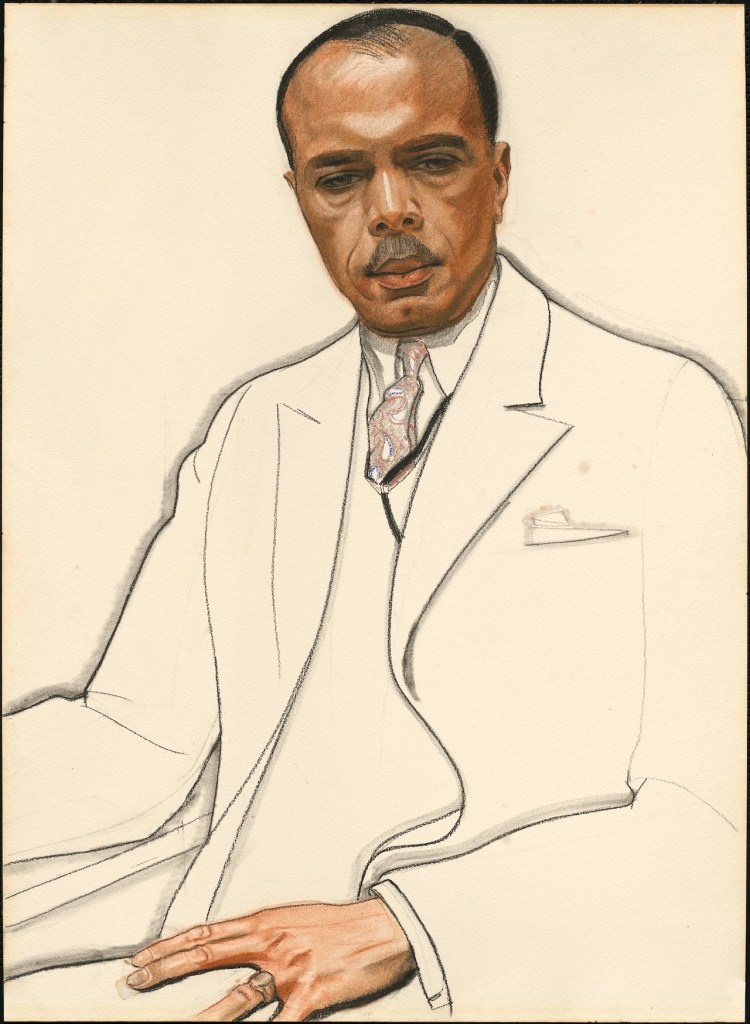
    Image:  James Weldon Johnson – Drawing – Winold Reiss

    James Weldon Johnson’s “Sence You Went Away

    In addition to poetry, James Weldon Johnson also composed many songs that have become popular.  His bluesy poem/song “Sence You Went Away” features a southern dialect and captures the melancholy that surrounds the individual who has lost a loved one.

    Introduction and Text “Sence You Went Away”

    James Weldon Johnson’s “Sence You Went Away” creates a speaker/singer who bemoans the loss of a loved one. The poem/song consists of four stanzas, each with the rime scheme AAAB, wherein the final line constitutes the refrain in which the speaker reveals the reason for his melancholy. 

    The repetition of “seems lak to me” and “sence you went away” emphasizes the pain and sorrow the speaker is experiencing.  The refrain becomes a chant-like repetition as he progresses through his report of all that is making him sad.  And he is addressing his expressions of sorrow to the individual, who is now absent from his life.

    As a poem this works quite well, and as a song it works even more nicely.  The poem/song’s use of dialect gives it an authenticity that increases the communication of pain and sorrow.  The speaker/singer incorporates and inflicts his sorrow on the world around him, while at the same time making it clear that these transformations are happening within himself.

    Sence You Went Away

    Seems lak to me de stars don’t shine so bright,   
    Seems lak to me de sun done loss his light,   
    Seems lak to me der’s nothin’ goin’ right, 
          Sence you went away. 

    Seems lak to me de sky ain’t half so blue,  
    Seems lak to me dat eve’ything wants you,   
    Seems lak to me I don’t know what to do, 
          Sence you went away. 

    Seems lak to me dat eve’ything is wrong,  
    Seems lak to me de day’s jes twice ez long,   
    Seems lak to me de bird’s forgot his song, 
          Sence you went away. 

    Seems lak to me I jes can’t he’p but sigh,   
    Seems lak to me ma th’oat keeps gittin’ dry,   
    Seems lak to me a tear stays in ma eye, 
          Sence you went away.

    Commentary on “Sence You Went Away”

    James Weldon Johnson, an accomplished poet, also composed many songs that have become quite popular. His bluesy “Sence You Went Away” features a southern dialect.  Johnson was a Southerner, having been born in 1871 and raised in Jacksonville, Florida, only relocating to New York in 1901.

    First Stanza:  Expressing Sorrow

    Seems lak to me de stars don’t shine so bright,   
    Seems lak to me de sun done loss his light,   
    Seems lak to me der’s nothin’ goin’ right, 
          Sence you went away. 

    The speaker is addressing an individual, who is likely a former lover or very good friend.  The speaker expresses his sorrow by reporting that both the sun and stars do not seem to be shedding light now because of the absence of the addressee.  The reader/listener learns nothing about the person who has gone away, only that the speaker’s life has been adversely affected by the loved one’s absence. 

    Not only do the speaker’s eyes seem no longer to perceive light, but he also feels that nothing in his life is proceeding correctly.  He makes it clear that he is not asserting that the world itself has changed; he is merely revealing how things “seem” to him as he repeats throughout the poem, “seems lak to me,” that is, “seems like to me.”

    Second Stanza:   Absence of Sun

    Seems lak to me de sky ain’t half so blue,  
    Seems lak to me dat eve’ything wants you,   
    Seems lak to me I don’t know what to do, 
          Sence you went away. 

    The absence of sun and starlight affect the shade of the blue sky, which is now presenting itself as only “half” its normal shade.  Everything reminds him that he is missing his belovèd. It even appears that everything he sees and does yearns to have this individual back in its purview.

    The speaker’s intense exaggeration emphasizes his desire for the return of his missing loved one.  Everywhere he looks he sees merely an absence that causes him pain and suffering.  He even confesses that he feels unable to decide what he should be doing, if anything at all.

    Third Stanza:  Nothing Is Right

    Seems lak to me dat eve’ything is wrong,  
    Seems lak to me de day’s jes twice ez long,   
    Seems lak to me de bird’s forgot his song, 
          Sence you went away. 

    Again, the speaker/singer asserts that nothing seems right for him anymore; thus, he feels that “ev’ything is wrong.” And he reveals that time seems to lag because of his sorrow.  Pain and suffering cause the human mind and heart to feel time as an oppressor, and that kind of oppression makes minutes seem like hours and days like weeks.

    Nature in the form of singing birds is lost on him, and he thus suggests that those birds have even forgotten to sings. His melancholy grays out all of his senses, especially seeing and hearing. Life has lost its luster, light has escaped him, and even pleasant sounds are no longer detectable.  And still again, he repeats the reason for his feeling that everything is so wrong in his life.

    Fourth Stanza:  Fog of Sorrow

    Seems lak to me I jes can’t he’p but sigh,   
    Seems lak to me ma th’oat keeps gittin’ dry,   
    Seems lak to me a tear stays in ma eye, 
          Sence you went away.

    Finally, the speaker reveals his own behavior has been influenced by the sad fact that the addressee has gone away.  He cannot seem to stop sighing, and his throat dries up.  He also continue to weep, as he endures the pain of loss. 

    His physical functions are out of kilter: what needs to be wet is dry, and what needs to be dry is wet.  The speaker’s world has transformed into a melancholy fog of sorrow and disorientation—all because his belovèd has gone away. 

    Kris Delmhorst’s Musical Version of Johnson’s Lyric

    There are extant several different musical versions of James Weldon Johnson’s lyric “Sence You Went Away.”  I suggest that Kris Delmhorst’s rendition fits perfectly with the sentiment and atmosphere of that lyric.  While the other versions are entertaining and well-done, Delmhorst’s version and her singing remain the best in accomplishing the task of capturing the exact feeling of Johnson’s lyric.

    Kris Delmhorst singing her version of Johnson’s “Sense You Went Away”  

  • James Weldon Johnson’s “Go Down Death”

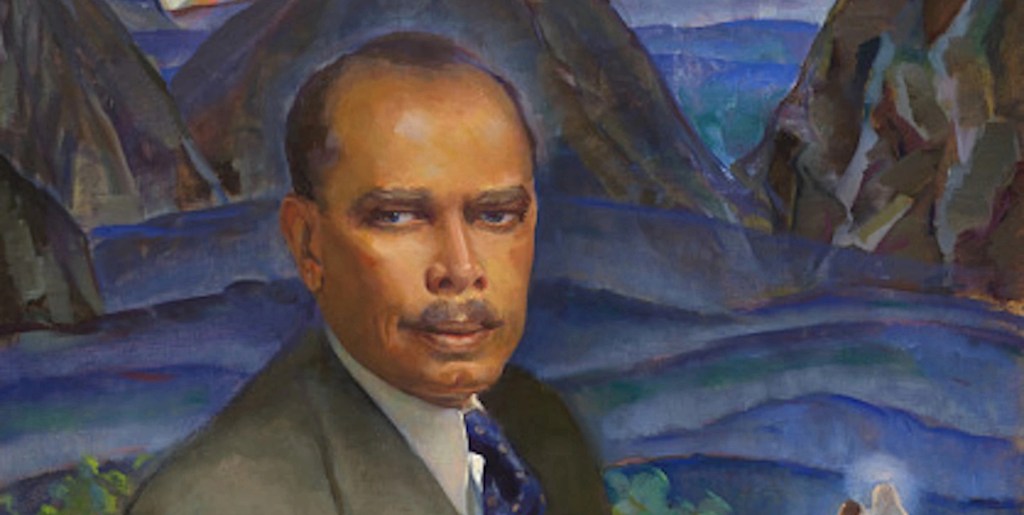
    Image: James Weldon Johnson - https://www.green-wood.com/event/the-autobiography-of-an-ex-colored-man-110-years-later/
    Image: James Weldon Johnson Green-Wood

    James Weldon Johnson’s “Go Down Death”

    James Weldon Johnson’s funeral oration, “Go Down Death,” offers one the most beautiful and heartfelt expressions of the soul’s journey through life.

    Introduction and Text of “Go Down Death”

    The epigraph to James Weldon Johnson’s poem, “Go Down Death,” from God’s Trombones: Seven Negro Sermons in Verse, identifies the poem as a dramatic “funeral oration.” This dramatization of the soul’s journey from life to death and beyond remains one of the most beautiful metaphoric expressions on the subject.

    The poem, “Go Down Death,” features ten versagraphs in which a pastor ministers to a grieving family.  The uplifting sermon remains  an example of Johnson’s marvelous craftsmanship with words and profound ideas regarding life and death.

    Go Down Death

    (A Funeral Sermon

    Weep not, weep not,
    She is not dead;
    She’s resting in the bosom of Jesus.
    Heart-broken husband—weep no more;
    Grief-stricken son—weep no more;
    Left-lonesome daughter —weep no more;
    She only just gone home.

    Day before yesterday morning,
    God was looking down from his great, high heaven,
    Looking down on all his children,
    And his eye fell on Sister Caroline,
    Tossing on her bed of pain.
    And God’s big heart was touched with pity,
    With the everlasting pity.

    And God sat back on his throne,
    And he commanded that tall, bright angel standing at his right hand:
    Call me Death!
    And that tall, bright angel cried in a voice
    That broke like a clap of thunder:
    Call Death!—Call Death!
    And the echo sounded down the streets of heaven
    Till it reached away back to that shadowy place,
    Where Death waits with his pale, white horses.

    And Death heard the summons,
    And he leaped on his fastest horse,
    Pale as a sheet in the moonlight.
    Up the golden street Death galloped,
    And the hooves of his horses struck fire from the gold,
    But they didn’t make no sound.
    Up Death rode to the Great White Throne,
    And waited for God’s command.

    And God said: Go down, Death, go down,
    Go down to Savannah, Georgia,
    Down in Yamacraw,
    And find Sister Caroline.
    She’s borne the burden and heat of the day,
    She’s labored long in my vineyard,
    And she’s tired—
    She’s weary—
    Go down, Death, and bring her to me.

    And Death didn’t say a word,
    But he loosed the reins on his pale, white horse,
    And he clamped the spurs to his bloodless sides,
    And out and down he rode,
    Through heaven’s pearly gates,
    Past suns and moons and stars;
    on Death rode,
    Leaving the lightning’s flash behind;
    Straight down he came.

    While we were watching round her bed,
    She turned her eyes and looked away,
    She saw what we couldn’t see;
    She saw Old Death.  She saw Old Death
    Coming like a falling star.
    But Death didn’t frighten Sister Caroline;
    He looked to her like a welcome friend.
    And she whispered to us: I’m going home,
    And she smiled and closed her eyes.

    And Death took her up like a baby,
    And she lay in his icy arms,
    But she didn’t feel no chill.
    And death began to ride again—
    Up beyond the evening star,
    Into the glittering light of glory,
    On to the Great White Throne.
    And there he laid Sister Caroline
    On the loving breast of Jesus.

    And Jesus took his own hand and wiped away her tears,
    And he smoothed the furrows from her face,
    And the angels sang a little song,
    And Jesus rocked her in his arms,
    And kept a-saying: Take your rest,
    Take your rest.

    Weep not—weep not,
    She is not dead;
    She’s resting in the bosom of Jesus.

    Wintley Phipps’ amazing recitation of “Go Down, Death”  

    Commentary on “Go Down Death”

    James Weldon Johnson’s “Go Down Death,” a dramatization of the soul’s journey from life to death and beyond, remains one of the most beautiful metaphoric expressions on the subject.

    First Versagraph:  A Command not to Weep  

    Weep not, weep not,
    She is not dead;
    She’s resting in the bosom of Jesus.
    Heart-broken husband—weep no more;
    Grief-stricken son—weep no more;
    Left-lonesome daughter —weep no more;
    She only just gone home.

    The often rhythmic, deeply dramatic oration begins with a refrain, “Weep not, weep not.” This command is directed to the family of a deceased woman, who is survived by a “Heart-broken husband, a Grief-stricken son, and a Left-lonesome daughter.”

    The minister delivering the funeral sermon tasks himself with convincing the grieving family that their loved one is not dead, because she is resting in the bosom of Jesus, and she has only just gone home.

    Second Versagraph:  God’s Pity and What’s Often Forgotten

    Day before yesterday morning,
    God was looking down from his great, high heaven,
    Looking down on all his children,
    And his eye fell on Sister Caroline,
    Tossing on her bed of pain.
    And God’s big heart was touched with pity,
    With the everlasting pity.

    The minister creates a beautiful narrative beginning on the day just before the beloved died. He says that God was looking down from his great, high heaven, and He happened to glimpse Sister Caroline, who was “tossing on her bed of pain.”  God in His great mercy was filled “with everlasting pity.” 

    The minister weaves a beautiful narrative designed not only to relieve the pain of the mourners but also to let them know a truth that is so often forgotten at the time of loss and grieving at death.

    Third Versagraph:   A Creature not to be Feared

    And God sat back on his throne,
    And he commanded that tall, bright angel standing at his right hand:
    Call me Death!
    And that tall, bright angel cried in a voice
    That broke like a clap of thunder:
    Call Death!—Call Death!
    And the echo sounded down the streets of heaven
    Till it reached away back to that shadowy place,
    Where Death waits with his pale, white horses.

    God instructed His “tall, bright angel” standing on His right to summon Death. The angel then summoned Death from the darkness in which he is always waiting with his pack of white horses.

    Death is now becoming an anthropomorphic creature who will perform a function directed by God.  If God is directing the creative Death, then mourners will begin to understand that Death is not a creature to be feared, only to be understood as a servant of the Belovèd Lord.

    Fourth Versagraph:   Death before the Great White Throne

    And Death heard the summons,
    And he leaped on his fastest horse,
    Pale as a sheet in the moonlight.
    Up the golden street Death galloped,
    And the hooves of his horses struck fire from the gold,
    But they didn’t make no sound.
    Up Death rode to the Great White Throne,
    And waited for God’s command.

    Hearing the call, Death leaps on his fastest stead.  Death is pale in the moonlight, but he continues on, speeding down the golden street.  And although the horses’ hooves “struck fire f rom the the gold,” no sound emanated from the clash.   Finally, Death arrives at the Great White Throne, where he waits for God to give him his orders.

    Fifth Versagraph:  Death Goes down to Georgia

    And God said: Go down, Death, go down,
    Go down to Savannah, Georgia,
    Down in Yamacraw,
    And find Sister Caroline.
    She’s borne the burden and heat of the day,
    She’s labored long in my vineyard,
    And she’s tired—
    She’s weary—
    Go down, Death, and bring her to me.

    God commands Death to travel down to Georgia in Savannah.  There he must find “Sister Caroline.”  The poor sister has suffered for a long time; she has been a valiant laborer for God.  Now she has grown too tired and too debilitated to continue on in her present incarnation.  

    Thus, God instructs Death to fetch the soul of Sister Caroline to Him.  Knowing that Death is simply the conveyance employed by the Blessèd Creator to bring His children home is a concept that can bring comfort and relief to the mourners.

    Sixth Versagraph:   Death Obeys God’s Command  

    And Death didn’t say a word,
    But he loosed the reins on his pale, white horse,
    And he clamped the spurs to his bloodless sides,
    And out and down he rode,
    Through heaven’s pearly gates,
    Past suns and moons and stars;
    on Death rode,
    Leaving the lightning’s flash behind;
    Straight down he came.

    Without uttering a sound, Death immediately complies with God’s command. Death rides out through “the pearly gates, / Past suns and moons and stars.” He heads straight down to Sister Caroline, to whom God had directed him. 

    Understanding the nature of God’s servant “Death” continues to build hope and understanding in the heart of the mourners.  Their grieving can be assuaged and directed to a whole new arena of theological thought and practice.

    Seventh Versagraph:  Welcoming God’s Emissary

    While we were watching round her bed,
    She turned her eyes and looked away,
    She saw what we couldn’t see;
    She saw Old Death.  She saw Old Death
    Coming like a falling star.
    But Death didn’t frighten Sister Caroline;
    He looked to her like a welcome friend.
    And she whispered to us: I’m going home,
    And she smiled and closed her eyes.

    Upon seeing Death approaching, Sister Caroline welcomes him as if he were an old friend, and she informs the others who were standing around her, ministering to her, that she was not afraid. Sister Caroline then tells them she is going home, as she smiles and closes her eyes for the last time.

    By seeing that the dying soul can be so accepting of her new circumstance of leaving the physical body and the earth level of existence, the mourners continue to grow in acceptance as they become capable of letting their grief go.  They can replace grief with the joy of knowing God and God’s ways.  

    That God simply uses Death for his own purposes goes a long way to healing the misunderstanding that one life on earth is all each soul has.  The physical level of being becomes a mere step in the evolution through which the soul passes on its way back to its permanent home in God.

    Eighth Versagraph:   The Soul Moving into the Astral World  

    And Death took her up like a baby,
    And she lay in his icy arms,
    But she didn’t feel no chill.
    And death began to ride again—
    Up beyond the evening star,
    Into the glittering light of glory,
    On to the Great White Throne.
    And there he laid Sister Caroline
    On the loving breast of Jesus.

    Death then takes Sister Caroline in his arms as he would a baby.  Even though Death’s arm were icy, she experiences no cold.   Sister is now able to feel with her astral body, not her physical encasement.  

    Again Death rides beyond the physical evening star and on into the astral light of “glory.”   He approaches the great throne of God and commits the soul of Sister Caroline to the loving care of Christ.

    Ninth Versagraph:  Sister Shed Delusion of Earth Life

    And Jesus took his own hand and wiped away her tears,
    And he smoothed the furrows from her face,
    And the angels sang a little song,
    And Jesus rocked her in his arms,
    And kept a-saying: Take your rest,
    Take your rest.

    Jesus brushes away all sorrow from the soul of Sister Caroline.  She soothes her, and she loses the deep furrows that marred her face, after long living in the world of sorrows and trials.   The angels then serenade her as Christ comforts her.   Sister Caroline can finally rest from her all her trials and tribulations; she can now shed the delusion that kept her hidebound as she passed through life on the physical plane.

    Tenth Versagraph:  Repeated Command not to Weep

    Weep not—weep not,
    She is not dead;
    She’s resting in the bosom of Jesus.

    The minister then repeats his opening refrain, “Weep not—weep not, / She is not dead; / She’s resting in the bosom of Jesus.”  The refrain becomes a chant that will relieve all souls of pain and headache.  Resting in the bosom of Christ will now become the aspiration for all listeners as they begin to understand truly that, “she is not dead.”  

    They will become aware that if Sister Caroline is not dead, neither will they die, when the time to leave this earth comes.  They will understand that their own souls can look forward to resting in the arms of Jesus the Christ.

  • James Weldon Johnson’s “Noah Built the Ark”

    Image: James Weldon Johnson – National Portrait Galley – Smithsonian

    James Weldon Johnson’s “Noah Built the Ark”

    A poetic retelling of the story about Noah and the Ark, this dramatic poem is one of Johnson’s seven sermons in verse from his collection, God’s Trombones.  At certain points in the story, the narrator offers his own interpretations, embellishing the tale and adding further interesting features.

    Introduction and Text of “Noah Built the Ark”

    James Weldon Johnson’s “Noah Built the Ark” offers an entertaining and educational experience in poetry.  Johnson’s clear vision in biblical lore is on full display in his narrative retelling of the Noah and the Ark story from Genesis 6:9–9:17 KJV.    The poet is offering an oratory tone in the style of a southern black preacher.  His retelling features such plain language that even a child can understand the images and events immediately.

    Johnson brought out his collection God’s Trombones: Seven Negro Sermons in Verse in 1927.  The collection begins with a prayer, “Listen Lord–A Prayer,” and then features seven verse-sermons, “The Creation,” “The Prodigal Son,” “Go Down Death,” “Noah Built the Ark,” “The Crucifixion,” “Let My People Go,” and “The Judgment Day.”

    During his lifetime, Johnson had attended many church services throughout the South, and he was inspired by the oratorical style of the many black preachers, whose preaching he admired.   A Southerner himself born in Jacksonville, Florida, Johnson had an ear for dialect and rhythms in speech.  All of his poetry is enhanced by his talent for language and its specialties of speech.

    Noah Built the Ark

    In the cool of the day—
    God was walking—
    Around in the Garden of Eden.
    And except for the beasts, eating in the fields,
    And except for the birds, flying through the trees,
    The garden looked like it was deserted.
    And God called out and said: Adam,
    Adam, where art thou?
    And Adam, with Eve behind his back,
    Came out from where he was hiding.
    And God said: Adam,
    What hast thou done?
    Thou hast eaten of the tree!
    And Adam,
    With his head hung down,
    Blamed it on the woman.

    For after God made the first man Adam,
    He breathed a sleep upon him;
    Then he took out of Adam one of his ribs,
    And out of that rib made woman.
    And God put the man and woman together
    In the beautiful Garden of Eden,
    With nothing to do the whole day long
    But play all around in the garden.
    And God called Adam before him,
    And he said to him;
    Listen now, Adam,
    Of all the fruit in the garden you can eat,
    Except of the tree of knowledge;
    For the day thou eatest of that tree,
    Thou shalt surely die.

    Then pretty soon along came Satan.
    Old Satan came like a snake in the grass
    To try out his tricks on the woman.
    I imagine I can see Old Satan now
    A-sidling up to the woman,
    I imagine the first word Satan said was:
    Eve, you’re surely good looking.
    I imagine he brought her a present, too,—
    And, if there was such a thing in those ancient days,
    He brought her a looking-glass.

    And Eve and Satan got friendly—
    Then Eve got to walking on shaky ground;
    Don’t ever get friendly with Satan.—
    And they started to talk about the garden,
    And Satan said: Tell me, how do you like
    The fruit on the nice, tall, blooming tree
    Standing in the middle of the garden?
    And Eve said:
    That’s the forbidden fruit,
    Which if we eat we die.

    And Satan laughed a devilish little laugh,
    And he said to the woman: God’s fooling you, Eve;
    That’s the sweetest fruit in the garden,
    I know you can eat that forbidden fruit,
    And I know that you will not die.

    And Eve looked at the forbidden fruit,
    And it was red and ripe and juicy.
    And Eve took a taste, and she offered it to Adam,
    And Adam wasn’t able to refuse;
    So he took a bite, and they both sat down
    And ate the forbidden fruit.—
    Back there, six thousand years ago,
    Man first fell by woman—
    Lord, and he’s doing the same today.

    And that’s how sin got into this world.
    And man, as he multiplied on the earth,
    Increased in wickedness and sin.
    He went on down from sin to sin,
    From wickedness to wickedness,
    Murder and lust and violence,
    All kinds of fornications,
    Till the earth was corrupt and rotten with flesh,
    An abomination in God’s sight.

    And God was angry at the sins of men.
    And God got sorry that he ever made man.
    And he said: I will destroy him.
    I’ll bring down judgment on him with a flood.
    I’ll destroy ev’rything on the face of the earth,
    Man, beasts and birds, and creeping things.
    And he did—
    Ev’rything but the fishes.

    But Noah was a just and righteous man.
    Noah walked and talked with God.
    And, one day, God said to Noah,
    He said: Noah, build thee an ark.
    Build it out of gopher wood.
    Build it good and strong.
    Pitch it within and pitch it without.
    And build it according to the measurements
    That I will give to thee.
    Build it for you and all your house,
    And to save the seeds of life on earth;
    For I’m going to send down a mighty flood
    To destroy this wicked world

    And Noah commenced to work on the ark.
    And he worked for about one hundred years.
    And ev’ry day the crowd came round
    To make fun of Old Man Noah.
    And they laughed and they said: Tell us, old man,
    Where do you expect to sail that boat
    Up here amongst the hills?

    But Noah kept on a-working.
    And ev’ry once in a while Old Noah would stop,
    He’d lay down his hammer and lay down his saw,
    And take his staff in hand;
    And with his long, white beard a-flying in the wind,
    And the gospel light a-gleaming from his eye,
    Old Noah would preach God’s word:

    Sinners, oh, sinners,
    Repent, for the judgment is at hand.
    Sinners, oh, sinners,
    Repent, for the time is drawing nigh.
    God’s wrath is gathering in the sky.
    God’s a-going to rain down rain on rain.
    God’s a-going to loosen up the bottom of the deep,
    And drown this wicked world.
    Sinners, repent while yet there’s time
    For God to change his mind.

    Some smart young fellow said: This old man’s
    Got water on the brain.
    And the crowd all laughed—Lord, but didn’t they laugh;
    And they paid no mind to Noah,
    But kept on sinning just the same.

    One bright and sunny morning,
    Not a cloud nowhere to be seen,
    God said to Noah: Get in the ark!
    And Noah and his folks all got in the ark,
    And all the animals, two by two,
    A he and a she marched in.
    Then God said: Noah, Bar the door!
    And Noah barred the door.

    And a little black spot begun to spread,
    Like a bottle of ink spilling over the sky;
    And the thunder rolled like a rumbling drum;
    And the lightning jumped from pole to pole;
    And it rained down rain, rain, rain,
    Great God, but didn’t it rain!
    For forty days and forty nights
    Waters poured down and waters gushed up;
    And the dry land turned to sea.
    And the old ark-a she begun to ride;
    The old ark-a she begun to rock;
    Sinners came a-running down to the ark;
    Sinners came a-swimming all round the ark;
    Sinners pleaded and sinners prayed—
    Sinners wept and sinners wailed—
    But Noah’d done barred the door.

    And the trees and the hills and the mountain tops
    Slipped underneath the waters.
    And the old ark sailed that lonely sea—
    For twelve long months she sailed that sea,
    A sea without a shore.

    Then the waters begun to settle down,
    And the ark touched bottom on the tallest peak
    Of old Mount Ararat.
    The dove brought Noah the olive leaf,
    And Noah when he saw that the grass was green,
    Opened up the ark, and they all climbed down,
    The folks, and the animals, two by two,
    Down from the mount to the valley.
    And Noah wept and fell on his face
    And hugged and kissed the dry ground.

    And then—
    God hung out his rainbow cross the sky,
    And he said to Noah: That’s my sign!
    No more will I judge the world by flood—
    Next time I’ll rain down fire.

    Recitation of “Noah Built the Ark”:  

    Commentary on “Noah Built the Ark”

    While the basic story remains a parallel to the original, the narrator offers his own embellishments at certain points that any listener will recognize as departures from the biblical version.  This embellishments stem from the narrator’s personal interpretations of the image and events.

    First Movement:  Original Creation

    The actual story featuring Noah and the ark begins in the third movement; the narrator first builds up to the purpose for Noah having to build the ark.  Thus, the opening scenes show God just after having created Adam and Eve, summoning them to hold them responsible for their disobedience.  

    God knows that they have done the one and only thing He had told them not to do: they have eaten of the “tree of knowledge.”  God had told them if they disobeyed this one rule, they would die.  

    Unfortunately, Satan had persuaded Eve to eat of the fruit, making her believe that God was lying to her.  Thus, she ate and convinced Adam to eat, and soon they had lost their paradise in Eden.

    The narrator creatively describes the characters in his narrative in colorful ways, for example he had “Old Satan” “[a]-silding up the woman.”  Then Satan, who moves “like a snake in the grass,” appeals to the woman’s vanity telling her “you’re surely good looking” and then imagining that Satan gave Eve a gift of a “looking-glass” to emphasize her vanity.

    Second Movement:  Satan’s Seduction

    The narrator now goes into some detail as he has Satan seducing Eve to commit the one sin she had been warned against.  Satan belts forth a “devilish little laugh” upon hearing that God had told that pair that they would die if they ate of the forbidden fruit.   Satan tells Eve, “God’s fooling you.”  He then tells her that the fruit she is forbidden is the “sweetest fruit in the garden” and insists that she can enjoy that fruit without dying.

    Eve is convinced, eats the fruit, convinces Adam to eat the fruit, and “Man first fell by woman— / Lord, and he’s doing the same today.”  The narrator jokingly demonstrates the rift that began between man and woman with the committing of the original sin.

    So now mankind multiplied upon the earth, and not only did people increase, but “wickedness and sin” also increased, and kept on increasing until the corruption became “[a]n abomination in God’s sight.”

    Third Movement:  Corruption and Anger

    The corruption made God angry, and the narrator states that “God got sorry that he ever made man.”  And then God decides to destroy mankind by flooding the earth.  The narrator says that God planned to destroy all life on earth—except “the fishes.”  

    The narrator is inserting a bit of comedy into his narration because he knows everyone already is aware that God, in fact, instructed Noah to save all animal life.  The claim that God would save only the “fishes” is funny, though, because the fishes are the only life forms that can live in the water, a fact that would obviate the necessity of bringing a pair of them into the ark for saving, as was done with the land animals.

    Because Noah was not a man of sin and corruption but a “just and righteous man,” who “walked and talked with God,” God chooses Noah to be his instrument in saving a portion of His Creation.  

    Thus, God instructs Noah to build an ark for which God gives specific instructions:  to be made of gopherwood, “good and strong,” pitched inside and out, and according to the dimensions handed down by the Creator.

    God tells Noah that He is going to send down a flood to “destroy this wicked world.”  But the house/family of Noah would be spared, and God wanted Noah to help Him “save the seeds of life on earth.”

    Noah then obeys God’s command, begins building the ark, working for “one hundred years,” experiencing ridicule daily as folks “make fun of Old Man Noah,” quipping, “Where do you expect to sail that boat / Up here amongst the hills?”

    Fourth Movement:  Building and Preaching

    Noah remains undeterred, working on the ark, but every now and then, he would cease his ark building and offer a sermon.  In his sermon, he would tell the “sinners” that they needed to repent because God was going to send “rain down rain on rain.”  

    Because of all the sinning and corruption, God’s wrath would “drown this wicked world.”  Noah encourages the sinners to turn their lives around while there is still time for “God to change his mind.” In response to Noah, a laughing young reprobate quips: “This old man’s / Got water on the brain.”  And then everyone else laughs.  

    Paying no attention to Noah’s warning, they keep on sinning. Then on a bright, sunny morning, the day had come.  God instructs Noah to gather pairs of animals and take them along with his family into the ark and “Bar the door!”  Then similar to ink spilling over a page, a black spot in the sky begins to spread, and the rain begins—pouring rain for forty days and night.

    And many sinners come to the ark “a-running” and “a-swimming” around the ark, pleading to be let in, but it is too late.  Though the sinners continue to weep and wail, “Noah’d done barred the door.”

    Fifth Movement:  The Promise

    The narrator then describes the flooded earth, where trees, hills, mountain tops all “slipped underneath the waters.”  And for “twelve long months,” the ark sails on a sea that possesses no shore.

    Finally, the waters begin to recede, and ark settles down on the tall peak of Mount Ararat.  A dove appears to Noah with an olive leaf, altering him that the flood is over, and anew beginning is at hand for all of the inmates of the Ark.

    After leaving the ark, the righteous Noah “wept and fell on his face / And hugged and kissed the dry ground.”  God then stretches a “rainbow across the sky” and promises Noah that the rainbow would be his reminder that He would never again “judge the world by flood.”

    But then God warns that “Next time I’ll rain down fire.”  Throughout his retelling of the Noah and the Ark story, the narrator has often added embellishments stemming from his own idiosyncratic interpretations.  

    The narrator’s final embellishment that God promised to end the world next by fire cannot be found in the biblical KJV version of that tale, but many instances in that version of the Holy Scripture do imply that God might employ the fire element the next time He feels compelled to destroy His Creation.

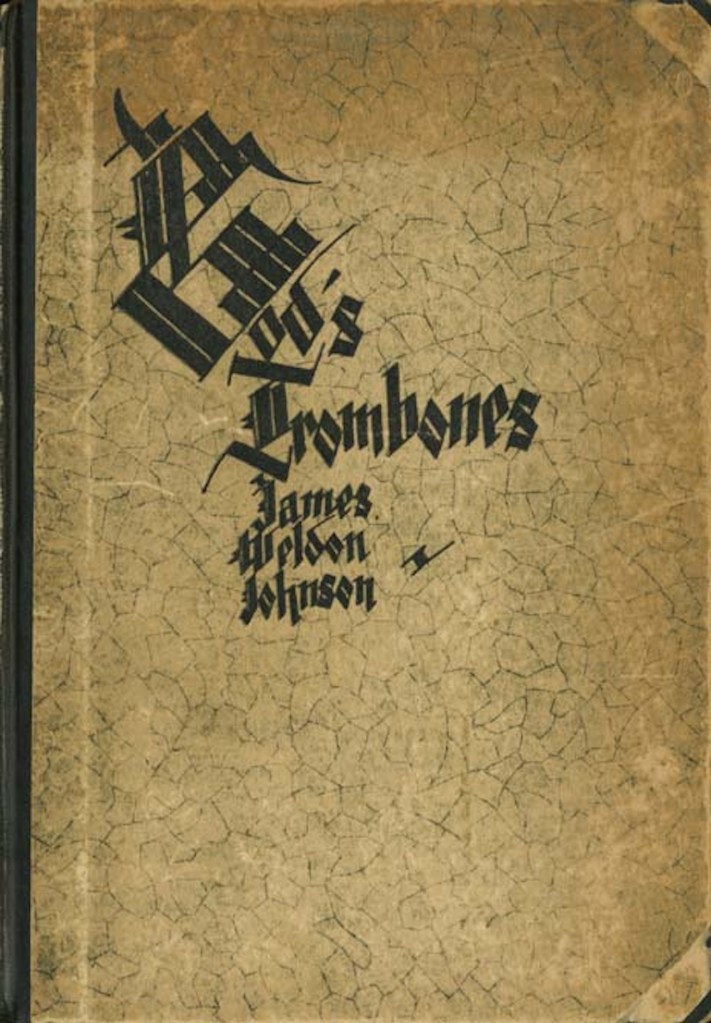
    Image:  Book Cover – Original Publication of God’s Trombones 

  • Robert Frost’s  “And All We Call American”

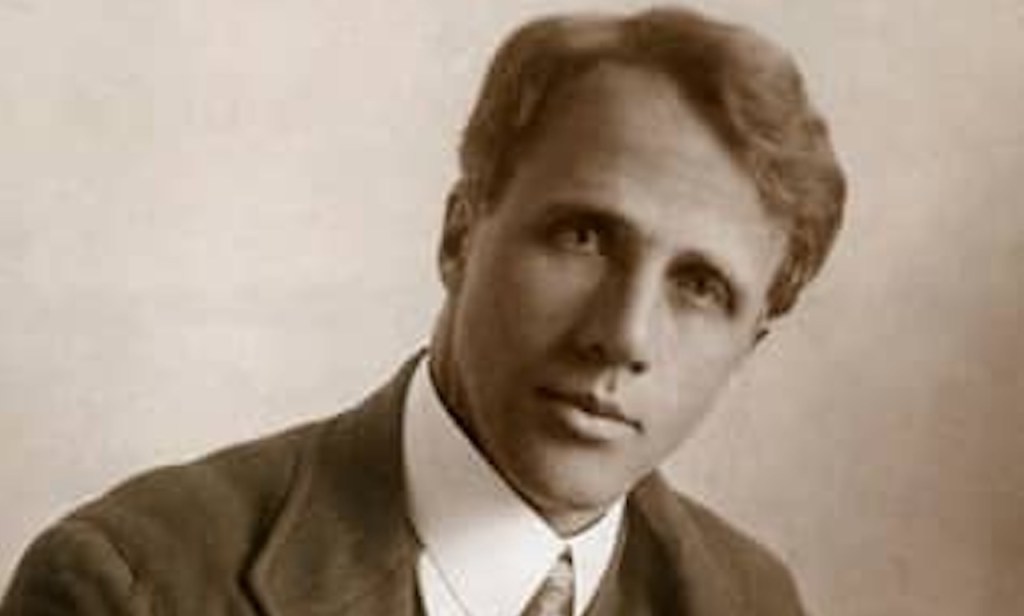
    Image: Robert Frost –  robertfrost.org

    Robert Frost’s  “And All We Call American”

    The speaker in Robert Frost’s “And All We Call American” attempts to play down the Columbian heroic status by castigating the great explorer for not having the ability to predict the future.

    Introduction and Text of “And All We Call American”

    The speaker in Robert Frost’s poem “And All We Call American” attempts a retelling of the familiar story of Christopher Columbus. In so doing,  he questions the legendary heroism of the explorer.

    No one can deny that the miscalculation of landing on what is now the North American continent instead of the South Asian country of the exploration’s intent—India—opens itself to a certain level of scrutiny.

    But the ultimate consequence of the discovery greatly outweighs the unintended nature of the discovery.  The importance of the North American continent, particularly the United States of America, for the world remains undeniable.  Despite the current failure to appreciate these Western values, those values continue to uplift cultures from the dire straits of physical and moral poverty. 

    Frostian Curmudgeonry

    Even as he took on the reputation of a belovèd poet of nature and human feeling, Robert Frost remained a life-long contrarian and a specialized curmudgeon.  Thus instead of celebrating the Columbian legendary figure who opened up the Old World to a New World, he has his speaker concentrate of the limitations of the explorer.

    That Columbus was not capable of imagining what the United States of America, Canada, and Mexico would become is not a particularly egregious failure.  Excepting clairvoyants, no one else of the time period would have been able to predict any better.

    While Frost has attempted to produce a poem that is both historical and philosophical

    by having his speaker employ the Columbian expedition, the poem’s cranky bitterness ultimately says more about the speaker/poet himself than about the objective nature of the significance of the voyage of Christopher Columbus.

    And All We Call American

    Columbus may have worked the wind
    A new and better way to Ind
    And also proved the world a ball,
    But how about the wherewithal?
    Not just for scientific news
    Had the  queen backed him for a cruise.

    Remember he had made the test
    Finding the East by sailing West.
    But had he found it ? Here he was
    Without one trinket from Ormuz
    To save the  queen from family censure
    For her investment in his future.

    There had been something strangely wrong
    With every coast he tried along.
    He could imagine nothing barrener.
    The trouble was with him the mariner.
    He wasn’t off a mere degree;
    His reckoning was off a sea.

    And to intensify the drama
    Another mariner Da Gama
    Came just then sailing into port
    From the same general resort,
    But with the gold in hand to show for
    His claim it was another Ophir.

    Had but Columbus known enough
    He might have boldly made the bluff
    That better than Da Gama’s gold
    He had been given to behold
    The race’s future trial place,
    A fresh start for the human race.

    He might have fooled them in Madrid.
    I was deceived by what he did.
    If I had had my way when young
    I should have had Columbus sung
    As a god who had given us
    A more than Moses’ exodus.

    But all he did was spread the room
    Of our enacting out the doom
    Of being in each other’s way,
    And so put off the weary day
    When we would have to put our mind
    On how to crowd but still be kind.

    For these none too apparent gains
    He got no more than dungeon chains
    And such small posthumous renown
    (A country named for him, a town,
    A holiday) as where he is
    He may not recognize as his.

    They say his flagship’s unlaid ghost
    Still probes and dents our rocky coast
    With animus approaching hate,
    And for not turning out a strait
    He has cursed every river mouth
    From fifty north to fifty south.

    Some day our navy I predict
    Will take in tow this derelict
    And lock him through Culebra Cut,
    His eyes as good (or bad) as shut
    To all the modern works of man
    And all we call American.

    America is hard to see.
    Less partial witnesses than he
    In book on book have testified
    They could not see it from outside —
    Or inside either for that matter.
    We know the literary chatter.

    Columbus, as I say, will miss
    All he owes to the artifice
    Of tractor-plow and motor-drill.
    To naught but his own force of will
    Or at most some Andean quake
    Will he ascribe this lucky break.

    High purpose makes the hero rude:
    He will not stop for gratitude.
    But let him show his haughty stern
    To what was never his concern
    Except as it denied him way
    To fortune-hunting in Cathay.

    He will be starting pretty late.
    He’ll find that Asiatic state
    Is about tired of being looted
    While having its beliefs disputed.
    His can be no such easy raid
    As Cortez on the Aztecs made.

    Commentary on Robert Frost’s “And All We Call American”

    The speaker in Robert Frost’s “And All We Call American” attempts to play down the Columbian heroic status by castigating the great explorer for not having the ability to predict the future.

    First Stanza: Promise vs Problem

    Columbus may have worked the wind
    A new and better way to Ind
    And also proved the world a ball,
    But how about the wherewithal?
    Not just for scientific news
    Had the  queen backed him for a cruise.

    In the opening stanza, the speaker refers to the  Columbian legendary mission that confirmed the scientific theory that Earth was round and that one could end up in the East by sailing West. 

    The speaker then throws shade at the feat by implying that not enough loot had been procured from the journey:  after all, the  queen was not especially interested in confirming a scientific theory; she wanted gold, spices, and other goods that usually took an arduous overland journey to reach her part of the world.

    At this point, the speaker has introduced a conflict, placing bold discovery against material possession.  Because that conflict is inherent in nearly every worldly endeavor, to complain about it, or even point it out, is somewhat naïve.

    Second Stanza: Discovery vs Disappointment

    Remember he had made the test
    Finding the East by sailing West.
    But had he found it ? Here he was
    Without one trinket from Ormuz
    To save the  queen from family censure
    For her investment in his future.

    In the second stanza, the speaker spotlights Columbus’ achievement of sailing west to get to the East. He then poses a question:  what did the explorer really find?  But then he jarringly shifts to the material possessions that the  queen was expecting by claiming that the explorer brought back not even “one trinket from Ormuz.”  

    The Ormuz trinket becomes a symbol for the Eastern wealth that the  queen had been counting on.  The speaker implies that the  queen’s family would not be happy with her for backing such an unprofitable “investment.”  

    Third Stanza: Columbus’ Miscalculation

    There had been something strangely wrong
    With every coast he tried along.
    He could imagine nothing barrener.
    The trouble was with him the mariner.
    He wasn’t off a mere degree;
    His reckoning was off a sea.

    The speaker now shows clear disdain for Columbus for not recognizing that he had not landed in India.  The speaker imagines that the mariner searching the barren coasts for the Indian riches and not finding them simply remains perplexed.

    The speaker emphasizes the fact that Columbus not only managed to be off by a degree or so, but that he was off by a whole ocean.  The speaker seems to take glee in revealing such an error by such a brave man, who has in fact sailed over a whole ocean and has now discovered a heretofore unknown land.  Thus the speaker’s lack of empathy and imagination are revealed more than the fact that the a brave sea-farer had failed to reach India.

    Fourth Stanza: Da Gama’s Success

    And to intensify the drama
    Another mariner Da Gama
    Came just then sailing into port
    From the same general resort,
    But with the gold in hand to show for
    His claim it was another Ophir.

    The speaker now doubles down on his Columbian criticism.  While Columbus returned home without riches in tow, the explorer Vasco da Gama came home with gold from Africa.

    The speaker’s harsh tone furthers his grift against the brave Columbus.  By concentrating on material wealth, he is sure he has a good case for humiliating the failed Columbus by playing up the success of da Gama.

    But that comparison in hindsight levels the criticism to failure, for the voyage of Columbus is much more widely known than that of da Gama.  The importance of da Gama’s gold pales in comparison to the importance of the Columbian discovery of a whole New World.

    Fifth Stanza: The Absurdity of a Missed Bluff

    Had but Columbus known enough
    He might have boldly made the bluff
    That better than Da Gama’s gold
    He had been given to behold
    The race’s future trial place,
    A fresh start for the human race.

    The speaker now presents the ridiculous notion that if Columbus had been smart enough, if could have told the queen and any others dejected by lack of material riches that he had discovered a place where the future of humanity might reside.

    Such a notion is patently absurd.  The speaker is looking back about five centuries, castigating a man for not realizing that a place called the United States of America would provide a “fresh start for the human race.”  

    The line if “Columbus [had] known enough” demonstrates a level of ignorance that borders on the profane:  In any endeavor, it is not necessarily the amount of knowing that is important; it is the nature of the knowledge.  He is decrying Columbus for not being prescient, a seer, a clairvoyant.

    To cover the fact that he is calling for Columbus to predict the future, the speaker positions the notion that the mariner could have used a “bluff” to suggest the future importance of his discovery.  Such a notion remains petty and irresponsible and again shows more about the speaker/poet’s mind than it does the reality of history.

    Sixth Stanza: A Youthful Misreading of Columbus

    He might have fooled them in Madrid.
    I was deceived by what he did.
    If I had had my way when young
    I should have had Columbus sung
    As a god who had given us
    A more than Moses’ exodus

    The speaker now inserts a phony self-deprecation.  He admits that he once upon a time thought of Columbus as a hero, but now he recognizes that since Columbus was not able to predict the value of the New World he had discovered, then credit for his accomplishment of actually finding that New World should be withdrawn. 

    The speaker is attempting a bait and switch operation.  By claiming that Columbus could have “fooled them in Madrid” the speaker is again referring to the “bluff” suggested in the preceding stanza.

    But he then seems to be confessing to being deceived by the Columbus legend.  The issue is not however that the speaker/poet was deceived; it is that now the speaker wishes to denigrate an Italian-American hero, and he is reaching beyond reality to form the basis for that derogatory image.

    Seventh Stanza: Room and Doom

    But all he did was spread the room
    Of our enacting out the doom
    Of being in each other’s way,
    And so put off the weary day
    When we would have to put our mind
    On how to crowd but still be kind.

    The speaker now goes completely off the rails. Adding to Columbus’ inability to predict the future is the idea that even if he had bluffed his peers about the future of a New World, what he actually did was just give the world population more room to spread out and be mean.

    Such a suggestion implies that if people had just remained in the Europe, Africa, and other reaches of the known world, they could have worked on learning to kind to one another as they continued to live in a “crowd.”

    Again, such a suggestion is not only naïve, but it does not take into account that human nature remains the same whether humans are spread out or in a crowd.  There is/was no such phenomenon that learning to be “kind” was postponed by the discovery of a New World.  Did the folks who remained in Old World learn to be “kind”?

    According to this line of thinking, they should have.  But again the speaker has come up with a notion this is absurd, while exposing his real purpose of smearing 15th century explorer.

    Eighth Stanza: Columbus’ Rewards

    For these none too apparent gains
    He got no more than dungeon chains
    And such small posthumous renown
    (A country named for him, a town,
    A holiday) as where he is
    He may not recognize as his.

    The speaker’s gross depiction of Columbus having been thrown in prison and receiving little attention crosses into the obscene.  First, through instrumentality of the corrupt Francisco de Bobadilla, Columbus was sent back to Castile in “chains.” 

    But the Bobadilla’s abject lies about the explorer became immediately obvious, and Columbus was released and restored to his earlier prominence.  And the claim of “small posthumous renown”—places named for him—is mind-numbing.   

    There are over 6000 places in the United States alone named after the explorer.   Virtually every state in the USA has a town, city, park, or some landmark named after Christopher Columbus: some “small posthumous renown”!

    Ninth Stanza: The Restless Ghost of Discovery

    They say his flagship’s unlaid ghost
    Still probes and dents our rocky coast
    With animus approaching hate,
    And for not turning out a strait
    He has cursed every river mouth
    From fifty north to fifty south.

    In this stanza, the speaker concocts sheer fantasy that would make today’s Columbus bashers proud.  Every creative writer has the unleashed opportunity to foist onto historical figures their own proclivities.

    The lame narrative in this stanza is immediately revealed with the vague “They say.”  Who are they?  How reliable are they?  Well, “they” are the demons living in the imagination of the curmudgeon infested brain of the speaker/poet.

    Tenth Stanza: Modern Discovery

    Some day our navy I predict
    Will take in tow this derelict
    And lock him through Culebra Cut,
    His eyes as good (or bad) as shut
    To all the modern works of man
    And all we call American.

    Here the speaker is not really predicting anything.  He is merely setting up another pin to bowl down with his castigation of a fifteenth century man being unable to see into the future.

    That Columbus could not image what the United States would look like in the 20th century is hardly an earthshaking discovery.  But the speaker is no doubt self-congratulatory for implying that if Columbus has thought to sail through the Panama Canal he would have been on his way to discovering the real India.

    Eleventh Stanza:  Elusive America

    America is hard to see.
    Less partial witnesses than he
    In book on book have testified
    They could not see it from outside —
    Or inside either for that matter.
    We know the literary chatter.

    The speaker then takes a dramatic shift from beating up on Columbus to asserting the daft opinion that “America is hard to see.”  Besides the flabby language, signifying less than nothing, it makes a brainless claim.  

    Because anything that extends for miles beyond human vision would be “hard to see,” one might as well say a railroad, New York, or the ocean— each is hard to see.  But the speaker seems to be trying to say that America is not only a place but is also a political entity that continues in a mysterious vortex.  Thus the “literary chatter” suggests that “America” cannot be expressed clearly in words.

    Twelfth Stanza: Columbus’ View of America’s Advancement

    Columbus, as I say, will miss
    All he owes to the artifice
    Of tractor-plow and motor-drill.
    To naught but his own force of will
    Or at most some Andean quake
    Will he ascribe this lucky break.

    The speaker now makes a delusional claim that Columbus’ selfishness would blind him to the genuine causes of America’s development—that is, if the explorer were able to see America in its current iteration.

    The speaker has no idea how Columbus would view the advances in the modern technological influence of “tractor-plow and motor-drill.”  That he would impute such an attitude to the explorer is beyond damnable.

    Thirteenth Stanza:  A Speaker’s Obtuseness

    High purpose makes the hero rude:
    He will not stop for gratitude.
    But let him show his haughty stern
    To what was never his concern
    Except as it denied him way
    To fortune-hunting in Cathay.

    This stanza again is just another putrid display of a speaker whose own jealousy is out of control.  Criticizing a historian figure through the lens of an contemporary set of scruples just does not work in a piece of discourse purporting to be a poem.

    Fourteenth Stanza: The Futility of Defaming Hero

    He will be starting pretty late.
    He’ll find that Asiatic state
    Is about tired of being looted
    While having its beliefs disputed.
    His can be no such easy raid
    As Cortez on the Aztecs made.

    The final stanza serves as a monument to the failure of the speaker’s position so eloquently laid throughout this piece of drivel masquerading as a poem, for in this stanza the speaker is pretending to predict the future.

    The future finds the explorer reaching Asia only to be rebuffed and rebuked because the Asias are tired being “looted” and “disrupted.”  And lastly, Columbus will be humiliated that Cortez was so successful in conquering the Aztecs.

    The sheer fantasy falls apart immediately because no such voyage was ever made by Christopher Columbus; therefore, he could not have been rebuffed and rebuked by people tired of being “looted” and “disrupted.”  

    In classical rhetoric such a concoction is called a straw man, fashioned solely for the purpose of burning it down.  The speaker fancies an exploration that never existed simply to ridicule it for having failed. If an event is never begun, it cannot be considered to have failed, just as it cannot be deemed to have succeeded.

    Robert Frost’s Worse Poem

    Robert Frost’s “And All We Call American” is without a parallel; it is Frost’s absolute worst poem.  The only quality that keeps this piece from being an contemptible piece of doggerel is the fact that it was composed one of the world’s most noted and beloved poets.  Taking as his subject Christopher Columbus, Frost creates a speaker who reveals a deficiency of thought that seems remarkably reminiscent of adolescent self-absorption.  

    Instead of celebrating the remarkable discoveries of the great explorer, this speaker chooses to downplay achievement, offering in its place ignorant criticism that Columbus living in the fifteenth century was unable to know what would take place the 20th century.

    When a fine, reputable poet throws out a stinker like this one, the only reason for studying such a piece is to understand the complex inconsistency of the human brain.    If a student or novice poetry reader begins a study of Frost with this one, that individual has in store a shocking experience in discovering Frost’s later works such “The Road Not Taken,” “Birches,” “Bereft,” “The Gift Outright,” and “Stopping by Woods on a Snowy Evening.”

    Robert Frost – Commemorative Stamp
  • Robert Frost’s “The Freedom of the Moon”

    Image: Robert Frost – Lotte Jacobi – NPG Smithsonian

    Robert Frost’s “The Freedom of the Moon

    Robert Frost’s “The Freedom of the Moon” muses on the nature of the free will possessed by humankind, as the moon’s freedom foreshadows the greater freedom of humankind.

    Introduction and Text of “The Freedom of the Moon”

    Robert Frost’s versanelle*, “The Freedom of the Moon,” consists of two sestets, each with the rime scheme, ABABCC. The poem dramatizes the phases of the moon and makes a statement about human freedom.

    The speaker in Frost poem demonstrates the complete freedom of humanity by dramatizing the ability of the human mind to use its physical body paradoxically to relocate the moon’s positions. The freedom of the moon heralds the greater freedom of humankind.

    *A versanelle isa short lyric, usually 20 lines or fewer, that comments on human nature or behavior, and may employ any of the usual poetic devices (I coined this term specifically for use in my poetry commentaries.

    The Freedom of the Moon

    I’ve tried the new moon tilted in the air
    Above a hazy tree-and-farmhouse cluster
    As you might try a jewel in your hair.
    I’ve tried it fine with little breadth of luster,
    Alone, or in one ornament combining
    With one first-water start almost shining.

    I put it shining anywhere I please.
    By walking slowly on some evening later,
    I’ve pulled it from a crate of crooked trees,
    And brought it over glossy water, greater,
    And dropped it in, and seen the image wallow,
    The color run, all sorts of wonder follow.

    Commentary on “The Freedom of the Moon”

    The important possession of free will extends to metaphor making by poets.

    First Sestet, First Tercet:  Ways of Contemplating the Moon

    I’ve tried the new moon tilted in the air
    Above a hazy tree-and-farmhouse cluster
    As you might try a jewel in your hair.

    Beginning his list of ways he has contemplated the moon, the speaker first asserts that he has “tried the new moon tilted in the air.” At that phase, the orb was hanging over a little clump of trees alongside a farmhouse. He compares his consideration of the moon at that point to his lady companion’s trying a “jewel in [her] hair.” 

    The oddity about the speaker’s claim is that he says he considered the “new moon” which is barely visible. And the moon was tilted in the air. It seems more likely that a crescent phase of the moon would lend itself more accurately to being “tilted.” 

    An explanation for this claim is simply that the particular phase was new to the  speaker; he had been ignoring the moon and when finally he was motivated to observe it, the newness of it prompts him to call it “the new moon.” 

    First Sestet, Second Tercet:  Probing the Nature of the Moon’s Freedom 

    I’ve tried it fine with little breadth of luster,
    Alone, or in one ornament combining
    With one first-water start almost shining.

    The speaker has furthermore probed the nature of the moon’s freedom when it was even in a thinner crescent phase; it was “fine with little breadth of luster.” He has mused on that phase when he saw it without stars and also when he has seen it with one star, a configuration from which the Islamic religion takes its icon.

    The moon at that phase looked like the first burst of water when one turns on a spigot. It was not exactly shining but only “almost shining.” The speaker seems to marvel at the unheavenly ways in which the moon at times may assert its freedom. 

    Second Sestet, First Tercet:  Freeing a Captured Orb

    I put it shining anywhere I please.
    By walking slowly on some evening later,
    I’ve pulled it from a crate of crooked trees,

    The speaker then proclaims that he has placed the moon “anywhere” he pleased, but that placement always occurred while it was bright, allowing him the vitality to work with it. 

    He then cleverly asserts his true theme that he is focusing on human freedom, not moon freedom, when he avers that he was able to place the moon anywhere he wanted because he was able to ambulate.  His ability to walk allowed him the freedom to wander “slowly on some evening later.” He was thus able to “pull[ ] [the moon] from a crate of crooked trees.”

    The trees seemed to be containing the moon as a wooden box would hold onions or melons. But the speaker was able to walk from the tree-contained moon thus metaphorically freeing the captured orb from the tree box. 

    Second Sestet, Second Tercet:   Carrying the Orb to a Lake

    And brought it over glossy water, greater,
    And dropped it in, and seen the image wallow,
    The color run, all sorts of wonder follow.

    After removing the moon from the tree-crate by simply continuing his evening walk, the speaker metaphorically carried the orb to a lake, in which he metaphorically “dropped it in.”  He then watched awestruck by the “wallow[ing]” image; he observed that like a piece of cloth losing its dye in water, the colors of the moon ran leaching out into the lake water. 

    The speaker then commits what is usually a grave poetic error; he makes an open ended statement without a hint of support, “all sorts of wonder follow.” But this speaker can get by with the ordinarily unforgivable poetic sin because of the great and wide implications that all of his lines heretofore have gathered. 

    The speaker, because he has given the moon freedom and has also shown that humankind is blessed with an even more profound freedom, has thus declared that all those “sorts of wonder” that “follow” from the possession of that free will and freedom of expression are indeed blessed with a golden freedom.    He has revealed the unmistakeable and eternal free will of humankind.