In his poem, “The Hill Maiden,” Malcolm M. Sedam has created a speaker voicing cheerful vaticination that his teenage angst-ridden protégé will one day shed her nihilism and burst into life affirming joy. The best teachers are those who can inspire as well as instruct their students. This poem represents a stellar example of that kind of inspirational educator.
Introduction and Text of “The Hill Maiden”
Malcolm M. Sedam‘s “The Hill Maiden” features a teacher dramatizing his observations about a particularly inquisitive but melancholy student. His ultimate purpose is to instill in the student the notion that she will ultimately be able to appreciate the life that she seems to disdain.
The poem plays out in three movements of unrimed stanzas. This organization allows the speaker to touch lightly on the physical reality of the subject but then move more intensely to the mental and finally the spiritual possibility of the subject’s inclinations.
Because the speaker can only infer certain facts about his student, the poem remains metaphorically and imagistically implicative instead of unequivocally literal. For example, the teacher has no exact idea what the student does at her home; thus he places her in an image of “moving among the phantom rocks of reverie.”
The teacher/speaker knows from the negativity the student has been expressing to him that she mentally resides among hardness that causes her to imagine that things are worse than they are.
Mentally she travels like a rocket through her ghostly musings until night fall when she sleeps but likely gets little rest, accounting for the nervous, brittle energy the educator perceives in his young scholar.
Likely the adolescent girl is simply suffering the turbulence of teenage angst through which most individuals of that age group must travel. But the best, most effective teachers are those who can inspire as well as instruct their students. This poem represents a stellar example of that kind of inspirational educator.
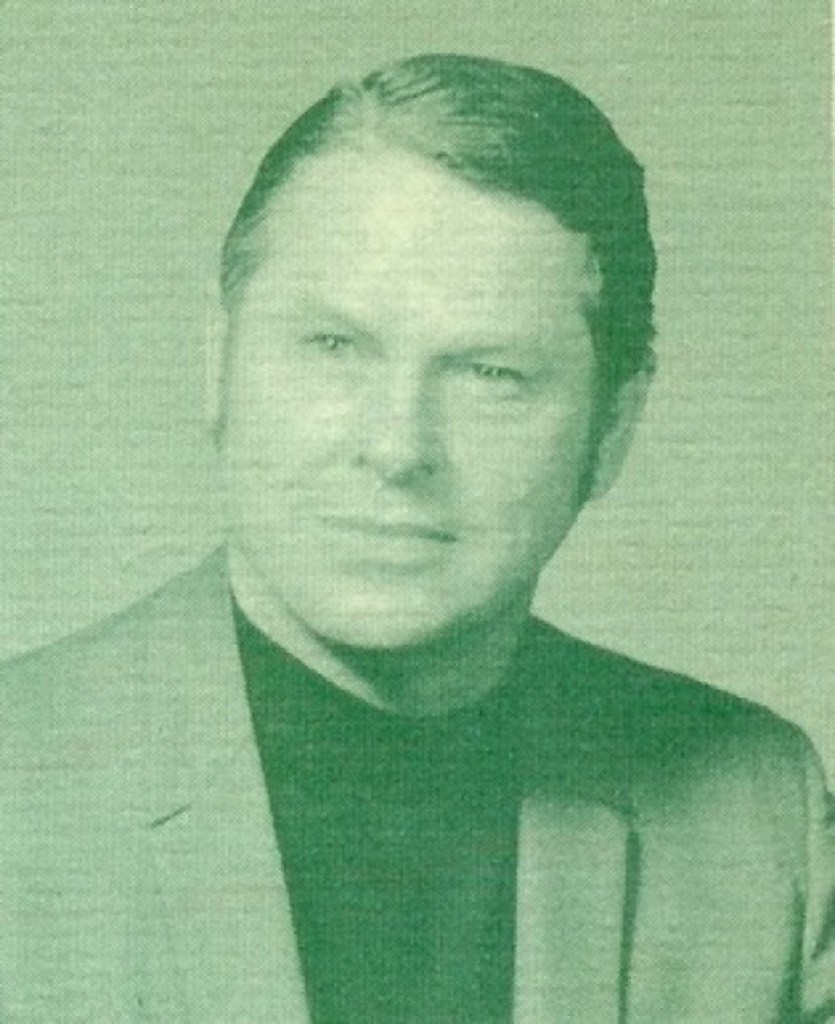
As an educator, Mr. Malcolm M. Sedam wrote poems to many of his students, always with the goal of inspiring them to high thinking and plain living. Mr. Sedam once said he felt that his function as an educator was “to kick the dirt off of his students.” By that he meant to help them see life more clearly without the fog of stereotypes, prejudice, and provincialism.
The Hill Maiden
(for Linda, over in the valley)
She is moving among the phantom Rocks of reverie hurtling through By mind bringing days into darkness Where the pull of growth rings The heart and spurs the soul
Where her wish strings questions In the mysterious night of snow Bringing a promise that only the hills can sing. Her smile waits behind a frown of swords That rend her days
In the melancholy of the deep valley Of dreams where she lives among flowers Gathering her moods that may bring peace Once the sorrow of lonely distance Has closed on hands—
The same hands that Zen-like reach To answer each knock at the door of her heart Broken to be mended by tender time. Her mind is speeding through a galaxy Of intensity where the blood rose
Will speak to her frozen will All forgiven by decree in warring winds— The nature of her plight? Without wings She will still spring into flight.
Commentary on “The Hill Maiden”
Malcolm M. Sedam’s “The Hill Maiden” features a teacher, who is also a practicing poet, dramatizing his observance of an inquisitively intelligent but extremely melancholy student.
His only purpose is to instill in the student the notion that she will ultimately be able to appreciate the life that she seems now to disdain.
First Movement: Dreaming amongst the Hills
She is moving among the phantom Rocks of reverie hurtling through By mind bringing days into darkness Where the pull of growth rings The heart and spurs the soul
Where her wish strings questions In the mysterious night of snow Bringing a promise that only the hills can sing.
The speaker begins by placing the object of his speculative musing in an image that implies sharp but dream-like rigidity. Rocks appear ghost-like through a dream-scape as they bewilder the mental musings of the young girl with whom the mature educator is engaging both as a poetry mentor as well as a teacher.
Teachers often counsel their students who seek out their advice and direction even in issues outside of the academic sphere as well as within the educational arena. Those teachers who must essentially become counselors will either direct the students to other professionals, or they will attempt to offer their own gleanings from their life experience.
The teacher in this poem demonstrates that he is the latter kind of teacher, and he has given the mind of the young student some serious analysis. Thus he not only describes her environment, but he also speculates and then foreshadows what is likely to befall the girl once she is able to erase her current adolescent fog.
Until that glowing day arrives, however, the speaker sees that the girl’s maturing process weighs heavily on her heart and soul. She is full of questions brought on by the mystery of life.
The “snow” that brings beauty as it covers the hills also brings bitter cold and slippery conditions the cause the girl to miss the music that her hill-valley home affords her.
By pointing out these images of beauty and placing them a context of mystery and difficulty, the speaker hopes to allow his charge to contemplate the possibility that life is real and offers hope to those who search its reaches with an open mind and cheerful heart.
Second Movement: Frowning Swords
Her smile waits behind a frown of swords That rend her days
In the melancholy of the deep valley Of dreams where she lives among flowers Gathering her moods that may bring peace Once the sorrow of lonely distance Has closed on hands—
The same hands that Zen-like reach To answer each knock at the door of her heart Broken to be mended by tender time.
The speaker has observed the teen’s unwillingness to show a cheerful countenance. Her bitterness “behind a frown of swords” likely often gives the mentor a shudder at the likelihood that the girl is suffering intensely.
No doubt, he believes that at this point in her life, she should be dancing merrily among “flowers” and allowing her sorrowful moods to dissolve in the “deep valley of dreams.”
But again, he returns to prognostication that once she has learned to fold her hands in wonder and listen to the love that knocks at the “door of her heart,” her melancholy will be rendered null and void as “tender time” moves her through the rough spots of her anguish.
Again, the speaker chooses beauty—”flowers gathering”—to balance the “frown.” He offers the image of the heart’s door to harmonize with the environment that will reach her with the “Zen-like” hands of mystery and the ultimate gain-of-wisdom.
Like a Zen koan, the riddle of life will remain before her as she continues to search for answers to her perplexing questions.
Third Movement: Springing into Flight
Her mind is speeding through a galaxy Of intensity where the blood rose
Will speak to her frozen will All forgiven by decree in warring winds— The nature of her plight? Without wings She will still spring into flight.
Finally, the speaker makes his most striking vaticination after asserting that his young charge has a strong mind but also a tender heart that is quick to show intense emotion.
That the “blood rose” will speak itself undeniably to the girl’s will portends that all of her negativity and nihilism will be “forgiven” as she continues to navigate through the conflicts that life bestows on all searching souls.
Then the speaker offers the question that he is likely very content to answer. The frustrating situation that befuddles the young scholar’s mind and heart has been implied by all the imagery that went before, but then what will eventually be the path chosen by and/or for the student?
She will be able to navigate through all the trials and tribulations as a bird that so easily lifts it wings to the wind and takes to the air through the abundant space of sky.
The speaker is not so naïve as to insist that such navigation will come easily, but he does remain assured that the path will open to the girl, and she will become willing to follow it. Thus the speaker can conclude affirmatively that “Without wings, she will still spring into flight.”
Offered by a beloved and well-respected mentor, such faith in a young scholar’s ability to navigate life is bound to redound in blessings, despite the pitfalls and rough spots that her life, no doubt, will place sphinx-life before her mind and heart.
I believe In fact I know it is so That the time for acting has come And I must play all of the parts; Cast in this trauma of lines The danger of saying too much Yet I fear more That silence or soliloquy That deadens the soul, So I grow more and less Baptized with fire Searching for a purpose In pleasure and pain Moving always toward the unknown — I will be lover — poet — warrior — Warmer — wiser — dead But on this stage all truth is shown And now I know why I was born Neither too young nor too old Just right for this war.
2 DEATH SONG
The sun will shine in the sky forever . . . I emptied my guns while I bled — The earth will grow new grass forever . . . I plunged to the ground in flames — Mr. Fugi will rise from the plain forever . . . Let my bones rest on her side.
3DEATH OF A MARINE
Watching the imperial call Draining away his will The thing I remember most: The incredible blue of his eyes, More than the blood-soaked shirt More than the shell-torn isle More than the greater war In our last words: “You’ll see a better day, “ I started; He smiled and was gone.
4 FOR FREEDOM
How fantastic is war But more the military mind, That epitome of pride That turns the Spartan mill And grinds everything Into a grey nothing . . . Remembering how we looked As a measureless mass And knew we no longer existed.
5 BEAUTY
(Years Later)
It was a long time ago it seems The gilded daisy of plane with props The heights And damned desire to live — almost as if The training tales were true The stimulus of danger The belonging Flying for something greater — It’s strange The things you think about God . . . Mr. Fugi And Dave Sherrin High wide and blown from his glory.
6INTERRGATION
I stand arrayed As if for one last flight Giving everything Even my thoughts Of that spectacular place and time; I saw a vision Eternal as Fugi Framed in the eyes of man Then I remember A swift and violent scene A flaming plane Disintegrating . . . Against the perfect whiteness I was forced to believe That there were no gods.
7 RENDEZVOUS AT MT. FUJI
Vectored Into eternity The legend fell As the Japanese morning Disappeared into the hills, We With the look of eagles Discovered ourselves skyward Taught beyond our will — There In the advent of blood We formed the incongruous ring Of our childhood days, We were the smallest things Bare understandings Circling a stranger god — Again The old apprehension Turned on the honor point, Climbing Throttles forward Our endurance Shuddered under the weight — Heading Toward that unknown fastness The sun lined our cry With the last whisper of spring, We were old at twenty-three — It was a good day to die.
8SECOND COMING
And it came to pass In those days, that he returned And they recognized him not But thought he was a traveler And inquired of his ways; And said unto them: “I am looking for Prester John, There must be a Christian here somewhere.”
9ABRAHAM AT MORIAH
Trusting His promise: Unto thy seed will I give this land; I went on and on believing That my descendants would be, many Like the sands among the sea, That He would make of me a great nation; I sired a son when I was very old, Proved I had magical powers
Perhaps so great I challenged even His, For jealously He asked me for this son; My will divined the purpose of the Rod, No man would kill his son for any God, And knowing well His promise I had blessed I thought it time to put Him to a test — And so with Isaac I traveled to that place And took along a ram Just in case . . .
10AL BARGAHER
When that burst of flak Tore off your wing And sent you spinning through the sky, You looked just like a maple seed Floating into the water On a bright May day.
I’m sorry you were chosen To remind me of Spring.
11NO GREATER LOVE HATH . . .
Flying Toward the strange white night We thought of deliverance from the terror of choice, The difference The splendor of our scheme We could not sleep and refuse tomorrow’s voice; Compelled We thrust the unknown With outstretched wings, a naked bond between And then a distant light when we had come alive — A flame burst over the harsh beauty of the sea And Keith was gone.
12LAST WILL AND TESTAMENT
I God Being of sound mind and body (And quite tired of it all) Do hereby give, devise and bequeath To Adam and Eve and family One restored garden With a snake-proof fence.
13WHEN I DIE
When I die Grant me the infinite peace which comes only From thoroughly confounding my aggravators; Mask me in a grin, Then place me in an upright position With my face pointing toward the East And my hand extended with thumb at nose, Respectfully of course, And if perchance it is decreed I took more from this world than I gave, Display me . . . and charge admission.
14 MIGRATION
I have walked the hills for years And have never seen a burning bush Though I have seen a few miracles, So call me a pantheist if you will, For I know it makes you feel better To know that I believe in something;
You think that you hear the grass grow, But Genesis and Spinoza told me nothing — I saw it! The mosquito drinking may blood, The oriole weaving its basket nest, And I rose from the reflective trees, Lemming-like swimming in the sky, Until I filtered into the plan Of orderly defeat and exquisite show;
I breathed the thin pure air And suffocated from the strange loneliness.
15 GREEN JOURNEY
Once out of the Garden Let us beguile ourselves And dwell in simple things, This liberation, The tree beyond the knowledge A pleasure in finding The smallest caring Swift brilliance Run and flow Spontaneity Where life came as it must With a promise Of rhythm in body and soul — Bring forth the child That we may have miracles A poem again in our keeping That from the earth grows immortal.
16 BLOOD BROTHERS
We Who had never learned patience Rose from the cloistered walls Became the searchers Creation born Became the sufferers Torn from the fact of the sun; Icarus Would they believe What you and I have known: We dare and fell from grace But we have flown.
17 THE RESURRECTION
(Painting an Easter Storm)
A crucified beam Slants from the moon-gate Over the drift of death
Blue . . . is water
The mist merges A stormed excitement With the low hills
Green . . . is land
The naked trees Shed their limbs In the wetted wood
Yellow . . . is light
New lines of urge Rise to the call Of the winds
Red . . . is life
Huge doors Open the sky To the returning sun
Clear . . . is time.
18 MATURITY PAINS
I have resolved my quarrel with the snake And I will accept him a one of God’s creatures But with the bit of a small boy that is left in me, You may expect that I will from year to year, Throw a few rocks in His direction.
19 CAIN’S WIFE
I remember the first time I saw him Walking along the life’s enormous weight, His memory bore a mark troubled and dark As if he had been punished by the Sun; Out of the dread night, I heard him cry; “Murderer, I am a murderer!” But I knew not of theses words, Only the sound of his loneliness That his separation was death; “Who are you?” he asked unknowing That want had begotten me “And where did you come from?” And I could not answer him But offered him my warmth —
Then silently along the earthly footpath Creation’s ghost returned Infinitely old, eternally new Spawned from the myriad cells That matched our difference, And finally he closed his eyes And saw the magic of existence
The woman that God had not explained; At dawn His affirmation turned from the bitter wind And together we walked into a promised land Where life gave unto life And we were born.
20 ORGANIZATION GOD
Perhaps you will understand Your place in the new order Now that you realize That we have created you In our own image;
Let us say That you were kicked upstairs And there you all stay Until we call upon you To lead our bloody schemes.
21 DOCTRINE OF ORIGINAL SEX
Hear me now All those who bow The plight I will explain It was like this: In time I stood against the wind And called his name, In faith he came And in faith he fell But he knew — Only God was naive.
22 ESAU ISAACSON
Proprietor and Sole owner
Originally we were a family concern A monopoly of sorts Dealers in asses and goats And backed by the highest O. T. Agency; Grandfather founded the firm own principles: Never trust nobody, not even relatives But father forgot and so did I Lost out in a take-over bid When Mother voted her stock; You remember that brother of mine The one with hairy schemes, Went right up to the top Until the crash caught up with him But let me tell you about that: In time I wrestled for control, Lost again, threw in with him And let him run it by the Book; I was the junior partner, a very minor sort But through my Philistine friends I learned the art of selling short; Then opportunity came Jakie told me about this scheme The hairiest one of all Something about a ladder To a golden street, a steal . . . I said, “Brother, it’s a deal! At last we’re seeing eye for eye”; I even waived the matter, How and when to cut the pie, What matter . . . I held the ladder.
23 GOLGOTHA
(For Mary, One of my Students)
When I proclaim the world is flat And that I’m searching for an edge I am only rounding a vision for you; I stand, a son of man, not God And I could be called Paul as we as Peter: I speak for our sons and daughters And had I known, it should be thus explained: That we have all failed in our historical sense, There was manipulation at the manger Saul died on the way to Damascus And Simon was wholly afraid; Only from that shipwreck of faith Did l learn to walk upon the water So what matter, then, you call me in this place A heretic, to give the cup and cross For I accept, knowing I can live through a long series of deaths Believing in your all-essential good And would not change your world in any way Except to lead you gently into spring.
24 RHYTHM METHOD
Poetry is a human trait We fall into it Naturally Inevitably Stroke a few lines Then peter out.
25ZEN
(For W. H. Auden)
When From the mountains of choice I asked the sage The nature of my plight, He replied: Leap! And I cried: Unwise! He knew I had no wings Yet I complied, And in time I found He had had tricked me into flight.
26 TO CATHÉ
(Who sits on the front row)
I cannot fail To see in you unmistakable goodness When you ask: “Why don’t you write nice poetry” And regretfully I’ve seen the world this way And worse — Perhaps, though, there’s a hope — Your innocence tells me I should not fail To write that nice poem . . . tomorrow.
27 RAIN
. . . and I came With the storm And let you take me High and against the sun To create in you An immortality From the first clouds Becoming All lost worlds Of bright togethers In warring winds And flaming sounds — Then I The emptied one Fell down in the sky Unforgiven by time.
28 CASCADE
Here Where the river starts From the snow forgotten I float motionless At the moon-beak— Below An intensity rises A blood theme In a summer swirl — The day comes Bringing only A promise of the hills Behold! I too shall create!
29 WHY
When was it when We were condemned To be free and lost To our instincts Knowing How it is how we are severed And sewn shut With abstracts Threading Where it was where We were given To choose and lose In the grandeur of want?
30 GADFLY
Dangling in the intricate maze Struggling in the evening web Drowning in the jeweled dew Knowing the spider will be here soon But that flies have all the fun.
31 WHERE IN THE EARTH’S CONSCIENCE
Where in the earth’s conscience Can we justify ourselves? Our day has wandered away The mysterious night is here Out of this memory of breaking strings We will save nothing — Then who shall we blame New or never Knowing that someday we’ll say goodbye Like . . . tomorrow.
32 DR. LINCOLN PRESCRIBES:
“With malice toward none And charity for some And a big tube of ointment For Clement Vallandidgham Who was singed When we burned off the brush To smoke out the copperheads.”
33 EXPENSE ACCOUNT
Stopped In this state Shocked Bleeding inside himself He stares at the hostess who smiles Oblivious of her own nakedness — Her siren song Salt for his would He could quench this thirst in other lands And he would if he could but he can’t; Propriety tells him to drink and he does, Quicker than the psychiatrist and cheaper too,
He retires Mourning the alcoholic way And tomorrow He submission is recorded As allowable expense.
34 FINALE
In Conservia My friend sits wondering What will become of us all, Truth is dead The world is Red And all’s been said And more’s been done than said all wrong —
The election confirmed That decadence had wormed It way into the nations’s soul And on the while His role is dead —
It died way back there In Conservia Where my friend sits awaiting the end —
Ex-boozer Ex-gambler Ex-chaser
now —
Ex-reformer.
35 LEE ANNE
(On Her Seventh Birthday)
Walking This side of her When trees are bare And distance sharpens the cold Into a clear necessity A turning goodbye As time reveals her role — What calmness Lies behind the voice When she asks, “Why are we walking his road?”
36DEATH AND REBIRTH
We have com to the end which is not the end And age and resolve have solved nothing, Our monstrous child towers over us And we cannot love what we create; What will stand in the place of death But grand endurance that cannot sing and if we stop who waits to listen It worlds that go too soon unsung; Born again and again to weep bitterly Sharing the dreadful joy of another sun Where love kills love in the cauldron of want And we who are dead, survive.
37 RETROSPECT
Of this I have seen The sober quality of a woman’s hand Waving good-bye The delicate sheen covering of love And the possibilities of me —
Of this I have known This calmness of that beauty Offset a gloomy past And I stood smiling naive as a child Thinking there would be another time.
38E = MC2
Surmounting all obstacles Our affinity, concealed, Awakened and opened its eyes To be born To be revealed anew, Transmutation in the greatest fire — Ah! Love should leave a memory, Yet, after all that We parted as perfect strangers.
39 SPRING
. . . and it come again Irresistibly drawn From the white darkness An intense recoil Of lithe life leaping In a sea of green And a raven-haired Image of eternity Straining the end Of the crazy cord.
40 LOST BOY
Caught in the glow of the moon An apparition crosses the sky, Then and again in the wind, A father’s far-a-way cry — An unexplainable sadness Comes from the night beyond A terror mysteriously formed And then I slowly remember A lonely boy running away.
41 HILLTOP
The eleventh hour of hypnotic touch Not from my memory But in an inverted dream — What pleasure it was, this torment And what possible salvation for me Except at that time Between sleeping and waking Life was wonderfully good.
42 TRANSIENT DREAM
When in a transient dream The clouds opened Creating a sun And I discovered myself — To see beyond I climbed higher Asking only for time But when I found that place Its origin was emptiness.
43 TO JOHN
(Who sits on the back row)
So I’ll admit That you as a solid football player Should never be caught standing on the your toes With your head sticking up through a cloud, But do not so loudly proclaim That you’ll have none of my game, I know it was you Who wrote that poetry on the rest room walls.
44 SPEAKING OF YOUTH
If I say anything of my youth I will say I was small for my size And got the Hell kicked out of me Purposely — It was essential To be ugly To be welcome.
45 ROLE CALL
Somewhat invested with beauty She nevertheless replies: “I’m dreadfully pregnant,” But I am envious — She can do something That I can’t do.
46 WINTER NIGHT
A singular light Across the snow-field plain, The distance to there . . . The cold.
47 OWL SPIRITS
Lightly Life comes upon him Nightly As though the day Were guilty by decree And I his honored guest Too long in earth’s repose Softly Fly away with him.
48 MARCH
The sun Cold eye of morning, Its invitation to spring Declined — When was it When the flowers last grew here?
49 MORNING GLORY
I crept into being Faintly purple Found myself a spring And touched the shyness of the sun Then On a sudden path I ran Until time had lost its meaning.
50 NIHILIST
The world A rimless zero I perceive And beyond that — Nothing.
51 REVELATION
In an otherwise cloudless sky I saw a strange formation — I am tempted to start A new religion.
52WINTER DAWN
At first When the seed opened I found nothing But time and the subtle essence Produced a flower Then From the dream silence A distant drum throbbed And in a summer mood I was born; Was it real? I yielded the pillow And in the red moon I saw the gods depart — It is quiet once more.
53 SIXTH SENSE
When the warm winds came I walked the willow edge Searching . . . listening . . . Though her footfall was soundless Her reflection was real — I looked into the stream And watched it flow uphill.
54TRAGEDY
At last We forget We forget A saving grace allowed to us And yet The memory A thousand winds beget — Perpetual loneliness.
55HOAR FROST
But For a moment The crystalled fog captures the sun And wantonly the trees smile again Then After a warm tinge of conscience They cry their jewels away.
56COLLISION COURSE
The knowledge before And the knowledge after The wind voice calls As the great door closes — I would move mountains And burn utterly away.
57 ICONOCLAST
Time and proximity Created the image With an unlikeness To any realness And it stood motionless While the flowers Formed from the shadows Of a spring song;
Time and propriety Weighted its wings With the incense Of summer mysteries But it grew restless In the growing storm Wondering and searching Autumn prophecies;
Time and anxiety Tangled and taut Tested it magic To tangible touch And it broke with a kiss — And she ran away Scattering the pieces In the dying wind.
58OBJECTIVE CASE
From symbols of love I grew A tangle of eyes and feet And could I have stayed there I would have been secure, But I insisted on a room with a view — One yank And I came from darkness, One smack And I felt tomorrow And falling backwards, I cried an eternity.
59 CLOTHES MAKE THE MAN
I have noticed that We are both impeccably dressed, But that you prefer To make your appearance In black and white, While I prefer A variety of colors. This difference, I believe, Stems from the fabric Of our hair shirts; Yours seems to scratch you While mine only tickles.
(This poem was first published in the Ball State Teachers College FORUM, Spring, 1963.)
60ON THE DAYS THAT I SAW CLEARLY
On the days that I saw clearly In the quandary of time’s coming, My intellect strayed and I could not escape; I drank intoxicating myths But I created no gods, And then the leaves fell from the tree And I recognized you as the new ghost of the sun;
Though I sensed the contradiction I was afraid to wait While time came circling the seasons And I was renewed in its flight So I have written you into being And if this divine seed should fail, So be it, for I was saved When I gave the miracle a chance.
61INTRIGUE
Wandering On a snow-night With the autumn of things A linden grove In the purple lea of time The heart leaves With her beauty, knowing That snow inevitably covers The nature of things And I never knew her — Then why do I grieve?
62LET IT BE SAID
Let it be said Then say no more of this — Too late we remembered How we had come Or when we had found This meadow land; The why is lost Here where the hill fell down, This is the relation The first and last The only one An all we’ll ever need.
Publication Status of Mr. Sedam’s Between Wars
Because Mr. Sedam’s Between Wars was published by now a defunct press, acquiring copies takes some searching. However, with a little luck, one can still find copies offered through various sellers on Amazon or Abe Books, for example, Amazon now features two copies of Between Wars, reasonably priced at $15 and $15.89. Please check back to this site or on Amazon for updates on this book’s availability.
The late poet, Malcolm M. Sedam, exemplifies the Socratic command implied in the oft-quoted, “The unexamined life is not worth living.”
Fighter Pilot
Malcolm M. Sedam served in World War II as a fighter pilot, flying bombing missions in the Pacific theatre. Then he settled down to a life in business and started a family. His war experience served to enervate him, and he began to question the efficacy of devoting his life solely to making money.
Businessman
Mr. Sedam asked himself, “How many suits can a man wear in one day?” So he decided he had to make his life about more than business and money. He returned to school, and, as William Stafford would say, he revised his life.
Teacher
Mr. Sedam traded in his life as a successful businessman to become a teacher to make his life more meaningful. He taught American history, English, and creative writing at Centerville Senior High School in Centerville, Indiana, from 1962-1964.
After receiving his M. A. degree from Ball State University, he taught at an extension of Miami University at Middletown, Ohio, until his death in 1976. Miami-Middletown offers a Malcolm M. Sedam English scholarship and awards in creative writing named for the beloved professor, the Malcolm M. Sedam Awards.
Poet
But Malcolm Sedam, called Mac by his friends, did not only serve as a teacher; he also wrote poetry and plays. He published three collections of poems: Between Wars, The Man in Motion, and The Eye of the Beholder. His play The Twentieth Mission has been performed at Playhouse in the Park, in Cincinnati, Ohio, and on many college campuses.
“It happened to me”
Mr. Sedam’s second collection of poems, The Man in Motion, brings together an eclectic assemblage from the personal “Nostalgia” to the political “For Reasons Unknown.” The book was published in 1971 by a small now-defunct Chronicle Press in Franklin, Ohio, but it is a smart, handsome publication, and the poems offer a delightful journey into the life of the man who flew fighter planes in World War II and then later became a teacher and poet.
In the preface, Mr. Sedam claims his poetic experience by stating, “Let me speak for my own poetry that it happened to me that I lived, enjoyed or suffered every scene and that these poems are the essence of these experiences.” He was a passionate man, who demanded from himself that he live every moment to the height of its possibility.
Continuing his introduction, Mr. Sedam declares, “Hopefully, for art’s sake, the poems will give pleasure and satisfaction both to the critic and the average reader, but in a test of belief, I seek that man, any man (critic or average reader) who values flesh and blood feelings above clever word manipulation.” He strove always for the authentic, the genuine, to the best of his ability.
Tribute to Mr. Malcolm M. Sedam
Entering my junior year at Centerville Senior High School in the fall of 1962, I was privileged to study with a teacher, Mr. Malcolm M. Sedam, who employed collegiate pedagogical methods. His teaching style fostered critical thinking in addition to learning the facts about the subject.
The subject was American history. Mr. Sedam had served as a fighter pilot in the Pacific theater in World War II. He attributed his worldview that urged him live each moment to the fullest to his war experience; he wanted to pass that urgency on to students. Thus, he felt that critical thinking was the most important practice that high school students needed.
Conducting the required junior year course in American history as a college course, Mr. Sedam discussed each issue in detail with background information, including additional facts not dealt with in the textbook. He connected the dots, so to speak, and encouraged us to ask questions. He also allowed us to respond and make connections during class discussion. He required outside reading as well, with oral and written reports.
Testing consisted of two parts: short identification of five to seven terms and three essay topics; we were required to write on two of the three. This method required us to organize material and make connections to demonstrate that we understood what happened, how, and why—not merely when.
This method also forced us write complete sentences, instead of just selecting answers from a multiple-choice test or merely fill in blanks, as most high school tests were fashioned. This methodology gave us practice in expository writing that usually had to wait until college.
During that same school year, Mr. Sedam often ended a class session by reading his poetry to our class, and a number of students expressed interest in a creative writing class. Mr. Sedam was able to offer that creative writing class the next year, so as a senior, I again sat for a class with Mr. Sedam.
My specialty was poetry; I had dabbled in poetry writing since my grade-school days at Abington Township Elementary School. I had not really thought of what I wrote as poetry, but having a rôle model in Mr. Sedam awakened in me the aspiration to write real poetry. Mr. Sedam encouraged us to write in the genre that most interested; thus, I began my study of poetry, and I have continued studying it, writing it, and writing about it ever since those high school days.
I had the privilege of studying with Mr. Sedam for only two years in high school from 1962-1964. Mr. Sedam later became professor of English at Miami University at Middletown, OH. The following is a tribute to Professor Sedam from one of his Miami students; it appears on the Miami page titled 10 Reasons We Love Miami:
Professor Malcolm Sedam was an English professor at Miami Middletown. He taught the art of writing from the viewpoint of a life fully lived, and believed true written communication came from the soul rather than from the end of a pen. Whether he was at the head of the classroom or sharing a table in the student break area, Professor Sedam entertained us with his stories of flying P-51 Mustangs in the Pacific during World War II, his childhood experiences growing up in Indiana, and other adventures. My two years in his classroom became a place to express passionate perspectives – a skill that carried me through college, career, and life. – John Atkins ’79, Stafford, Va.
It is with great appreciation for Mr. Sedam’s example and encouragement of my writing that I offer this memorial to my former American history and creative writing teacher.
Elizabeth Barrett Browning’s Sonnet 2 “But only three in all God’s universe”
Elizabeth Barrett Browning’s second sonnet from Sonnets from the Portuguese reports that her relationship with her life-mate is granted by God, and thus, it cannot be broken or disavowed.
Introduction and Text of Sonnet 2 “But only three in all God’s universe”
Elizabeth Barrett Browning’s sonnet 2 focuses on her growing relationship with her beloved life partner, Robert Browning. In this sonnet, the poet creates a speaker who insists that the relationship is the destiny of this couple; it is karmically determined, and therefore, nothing in this world could have kept them apart once God had issued the decree for them to come together.
The speaker’s faith allows her to begin a healing process that had begun with the onset of the relationship that would result in permanent love and affection between the two. Still, she will continue to muse and ruminate on her lot; she will remain cautious until she can become totally enveloped in the notion that she is loved as much as she had longed for and hoped.
Sonnet 2 “But only three in all God’s universe”
But only three in all God’s universe Have heard this word thou hast said,—Himself, beside Thee speaking, and me listening! and replied One of us … that was God, … and laid the curse So darkly on my eyelids, as to amerce My sight from seeing thee,—that if I had died, The deathweights, placed there, would have signified Less absolute exclusion. “Nay” is worse From God than from all others, O my friend! Men could not part us with their worldly jars, Nor the seas change us, nor the tempests bend; Our hands would touch for all the mountain-bars: And, heaven being rolled between us at the end, We should but vow the faster for the stars.
Reading
Commentary on Sonnet 2 “But only three in all God’s universe”
In sonnet 2, the speaker reports that her relationship with her life-mate is granted by God, and thus, it cannot be broken or disavowed.
First Quatrain: A Private and Holy Trinity
But only three in all God’s universe Have heard this word thou hast said,—Himself, beside Thee speaking, and me listening! and replied One of us … that was God, … and laid the curse
The speaker avers that in the couple’s relationship, there are only three beings who have been privy to “this word thou hast said.” When her partner first told her that he loved her, she senses that God was speaking His own love for her as well.
As she excitedly but tenderly took in the meaning of the declaration of love, she realized what her lot might have become without this happy turn of events. She responds rather hesitantly, even awkwardly recalling her physical illnesses that she labels “the curse.”
Second Quatrain: The Curse of the Body
So darkly on my eyelids, as to amerce My sight from seeing thee,—that if I had died, The deathweights, placed there, would have signified Less absolute exclusion. “Nay” is worse
The speaker’s reference to the “curse” is an exaggeration of the earthly physical body’s many issues with the pain of having to exist in a physical body. Additionally, it might be helpful for readers to know that the poet did suffer much physical illness during her lifetime.
Thus, she can rightly allow her speaker to focus on the inharmonious circumstances that have disrupted but also informed the dramatic issues infusing her poetics. This particular “curse” that was put “[s]o darkly on [her] eyelids” might have hampered her ability to see her beloved. Even if she had died, her separation from him would have been no worse then her inability to see him in this life.
First Tercet: God’s No
From God than from all others, O my friend! Men could not part us with their worldly jars, Nor the seas change us, nor the tempests bend;
The speaker then truthfully responds that when God hands down a “no,” it has meaning beyond the kin of the human mind and heart, and regardless of what humanity thinks, what God assigns reigns.
If God’s answer to a mortal’s most ardent prayer is a resounding no, then that supplicant will suffer more than being turned down by a mere fellow mortal. The suffering is likely to continue until that deluded soul finally reaches emancipation, thereby understanding all. But by good fortune, God brought this pair together, and thus, nothing any person could do or say could alter that fact that God bestowed this love on this couple.
The speaker is echoing the marriage vow: “what God hath joined together, let no man put asunder.” Thus, the speaker is asserting that the bond that rendered her happiest on this earthly plane of being is the one with her beloved partner and future husband.
Second Tercet: Ordained by God
Our hands would touch for all the mountain-bars: And, heaven being rolled between us at the end, We should but vow the faster for the stars.
The speaker then reveals that she has confidence that the union with her beloved is ordained by God. With such assurance, she knows that even if “mountain-bars” tried to separate them, their “hands would touch.”
So completely confident is she that she can declare that even if after death, if heaven tried to disrupt in any way or intrude in their union, the couple’s bond would become even tighter, protecting the love that is blessing them. Not even the influence of astral movements could begin to intrude upon the God-given bond this couple has gained and nourished.
I keep at least one large container of this veggie mixture and every day add it to my romaine/spinach combination for an easy, quick salad.
I try to find only organic veggies.
Ingredients
1/2 medium-sized head of red cabbage
4 slicks of celery – cut in chunk
4 large carrots – cut in large slices of shredded
1/2 small head of cauliflower – broken into small florets
6 large radishes – thick sliced
1 cup of fresh cilantro leaves
1 small tub of grape or cherry tomatoes
Instructions
Wash and dry all veggies.
Cut all the veggies in small chunks, according to your size preference
In a large mixing bow, place all veggies
Mix well
Place in storage container (I use Pyrex glass containers)
You might want to experiment with the sizes and proportions of each veggie. Just base the amount of each that you like best. I usually try to keep them about equal in amount, but I also sometimes add more carrots and cauliflower.
I have found that celery and carrot keep better if cut in large pieces. Shredded carrots turn brown and gooey, while large slices cut with a food processor stay fresher longer.
The first sonnet in Elizabeth Barrett Browning’s Sonnets from the Portuguese features a speaker who is expressing the futility of concentrating on death and the melancholy such musing too often may create.
Introduction with Text of Sonnet 1 “I thought once how Theocritus had sung”
Elizabeth Barrett Browning’s Sonnets from the Portuguese unveil a marvelous testimony to the love and respect that the poet fostered for her suitor and future husband Robert Browning. Robert Browning’s stature as a poet rendered him one of the most noted and respected poets of Western culture.
Robert Browning’s fame and influence in literary studies has spread over the globe, and his wife’s reputation has also been enhanced by his noteworthiness as well as her own mastercraftmanship as a sonneteer.
In the dramatic renderings of the sonnet sequence, as the relationship between the poets continues to flower, Elizabeth worries that it might not long endure. She thus has created a speaker who muses on and voices the insecurities experienced by the poet.
Sonnet 1 “I thought once how Theocritus had sung”
I thought once how Theocritus had sung Of the sweet years, the dear and wished for years, Who each one in a gracious hand appears To bear a gift for mortals, old or young: And, as I mused it in his antique tongue, I saw, in gradual vision through my tears, The sweet, sad years, the melancholy years, Those of my own life, who by turns had flung A shadow across me. Straightway I was ‘ware, So weeping, how a mystic Shape did move Behind me, and drew me backward by the hair, And a voice said in mastery, while I strove, … Guess now who holds thee?’—Death,’ I said. But there, The silver answer rang … Not Death, but Love.’
Reading
Commentary on Sonnet 1 “I thought once how Theocritus had sung”
Sonnet 1 “I thought once how Theocritus had sung” in Elizabeth Barrett Browning’s classic work, Sonnets from the Portuguese, opens as the speaker is musing on the pressure created by melancholy.
First Quatrain: The Bucolic Classical Poetry of Theocritus
I thought once how Theocritus had sung Of the sweet years, the dear and wished-for years, Who each one in a gracious hand appears To bear a gift for mortals, old or young:
The speaker begins the dramatization of her musing by reporting that she has perused the pastoral poetry of the ancient classical poet, Theocritus. She reveals that that classical Greek poet put into song the nature of the time of life when the young are full of hope and wishes—such desire renders those years sweet.
The speaker has garnered the notion from the poem’s insightful knowledge that every year bestows on each mortal “a gift”; the elderly and the youthful are both able to accept those magnificent and eternal blessings.
The speaker’s own melancholy and sadness have prompted her to seek out answers for questions that have troubled her, answers to important issue such as the very purpose of life on this planet.
The speaker appropriately and with gratitude has been turning to the ancient thinkers because she understand that they have bestowed wisdom and encouragement to each of the succeeding generations.
Second Quatrain: Finding Her Own Life in Poetry
And, as I mused it in his antique tongue, I saw, in gradual vision through my tears, The sweet, sad years, the melancholy years, Those of my own life, who by turns had flung
After a significant period of time spent in musing on the words of Theocritus, the speaker has come to comprehend the important ideas presented by those words, and their gravity brings tears to her eyes. It is, thus, through those emotional tears that the speaker seems to be able to view her “own life.”
She becomes well aware that her own years have not rendered to her any special kindness. Her own years have been filled with pain and sadness. Those gifts presented by time are not always useful or pleasant ones to the recipient. But that is how life is.
Each person’s individual karma remains responsible for the specific events that occur in each life. One can remain assured that one will always reap what one sows. But each individual is not required to be happy or even satisfied with the results; thus, one becomes motivated to strive to change former karmic patterns by improving one’s thoughts and behavior.
Barrett Browning’s ability to understand the original Greek text is critical in her ability to feel the profound emotional impact of those thoughts. Fraudulent “translators” such a Robert Bly, who was not fluent in the languages of the texts he supposedly translated, could not faithfully render emotion expressed in the original.
As poet Stephen Kessler has averred: “The major problem with [Robert Bly’s] translations (often from languages he didn’t know, by way of other English versions) was that he made every poet, from García Lorca to Mirabai, sound like Robert Bly.” But Barrett Browning was fluent in the languages which she read and studied, and thus she could translate accurately and render in her speaker unique, genuine emotion.
First Tercet: Life Beneath a Shadow
A shadow across me. Straightway I was ‘ware, So weeping, how a mystic Shape did move Behind me, and drew me backward by the hair,
The speaker then reveals that her own life has been passed under a “shadow.” A dark cloud has moved “across [her],” and she has suddenly become cognizant that she is weeping.
She feels as if she is being dragged backward by someone or something. Some being seems to be pulling her by the hair into some “mystic Shape.” Unfortunately, she remains unable to ascertain just what that strange creature is who seems to be tugging at her.
Second Tercet: A Correcting Voice
And a voice said in mastery, while I strove, … Guess now who holds thee?’—Death,’ I said. But there, The silver answer rang … Not Death, but Love.’
As she tries to right herself, she then becomes aware of what seems to be a voice—a “voice of mastery.” That strange voice poses a question to her; it asks her to take a guess regarding who “holds [her].” The speaker then suddenly responds fatalistically, “Death.” However, she is then relieved to hear a surprising retort, correcting her fatalism: “Not Death, but Love.”
An Inspiring Love Story
The love story of Robert and Elizabeth Barrett Browning has become and has remained a subject for research and exploration as well as admiration in the literary world, especially in the poetry branch of that world.
In her Sonnets from the Portuguese, Mrs. Browning crafts and portrays a speaker who dramatizes the poet’s moments of sorrow and melancholy as well as her painful doubt-filled hours.
Her speaker becomes elated at times that a man as accomplished and noteworthy as Robert Browning would take note of her and even desire to spend time with her. But then her mood will change, and she will grow doubtful that the relationship could ever blossom into a lasting, true love.
Readers who explore the sonnets will become pleasantly captivated by her amazing growth from skepticism and doubt to deep awareness and faith that the couple’s love is genuine and sustained by the Divine Belovèd Creator (God). Uniquely told in sonnets, the Brownings’ courtship leading to their marriage remains a truly inspiring love story.
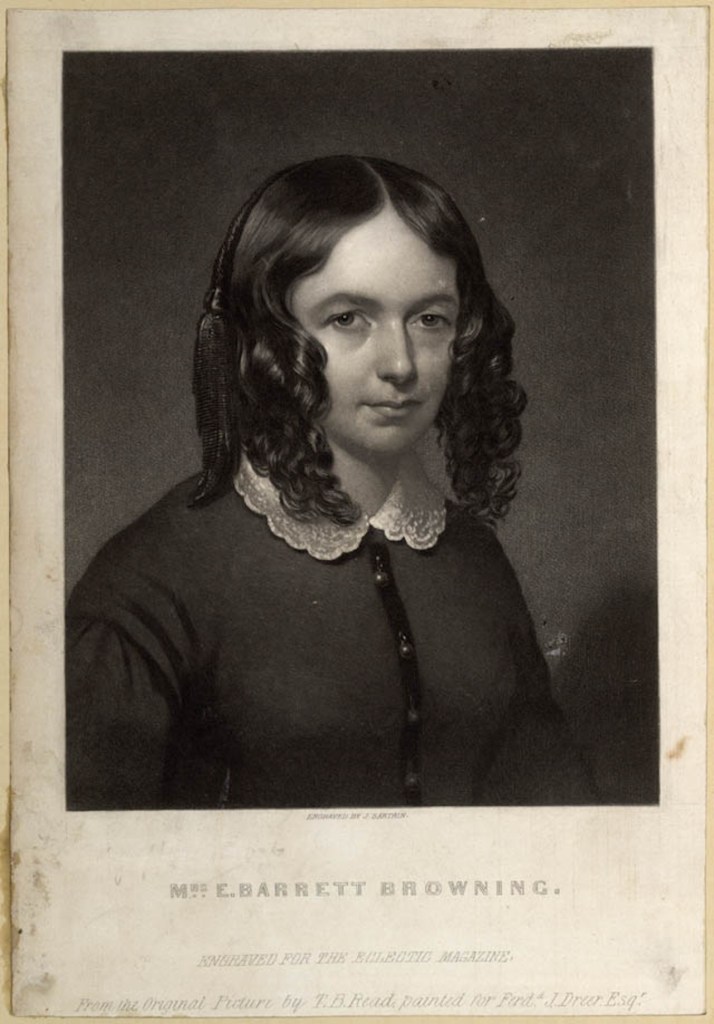
Brief Life Sketch of Elizabeth Barrett Browning and Introduction to Sonnets from the Portuguese
Elizabeth Barrett Browning’s classic work Sonnets from the Portuguese is the poet’s most anthologized and widely published work, studied by students in secondary schools, colleges, and universities and appreciated by the general poetry lover.
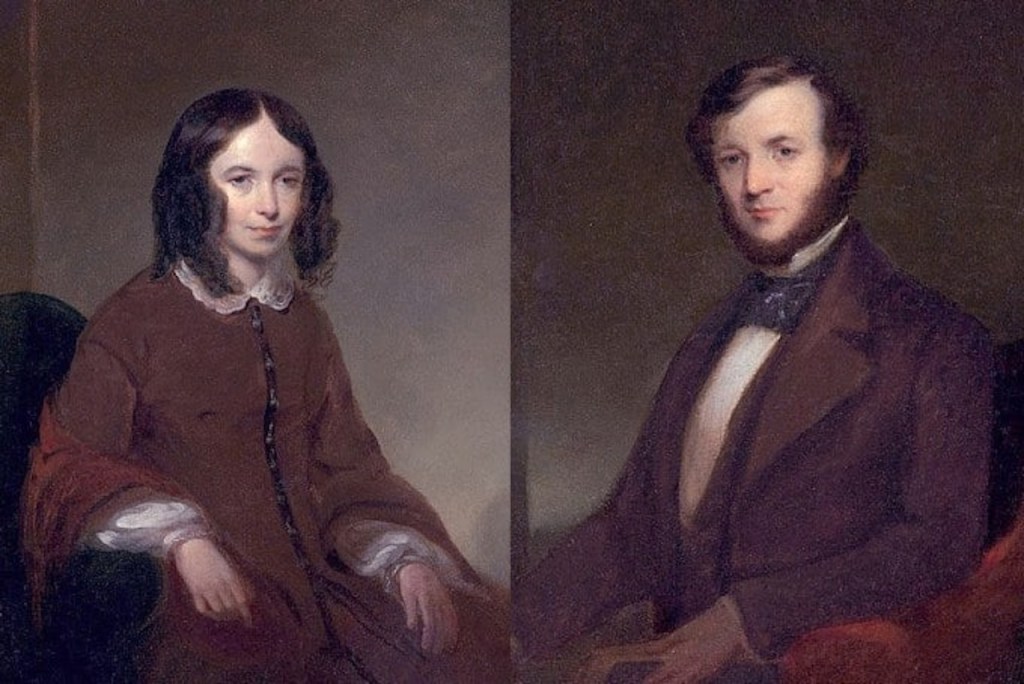
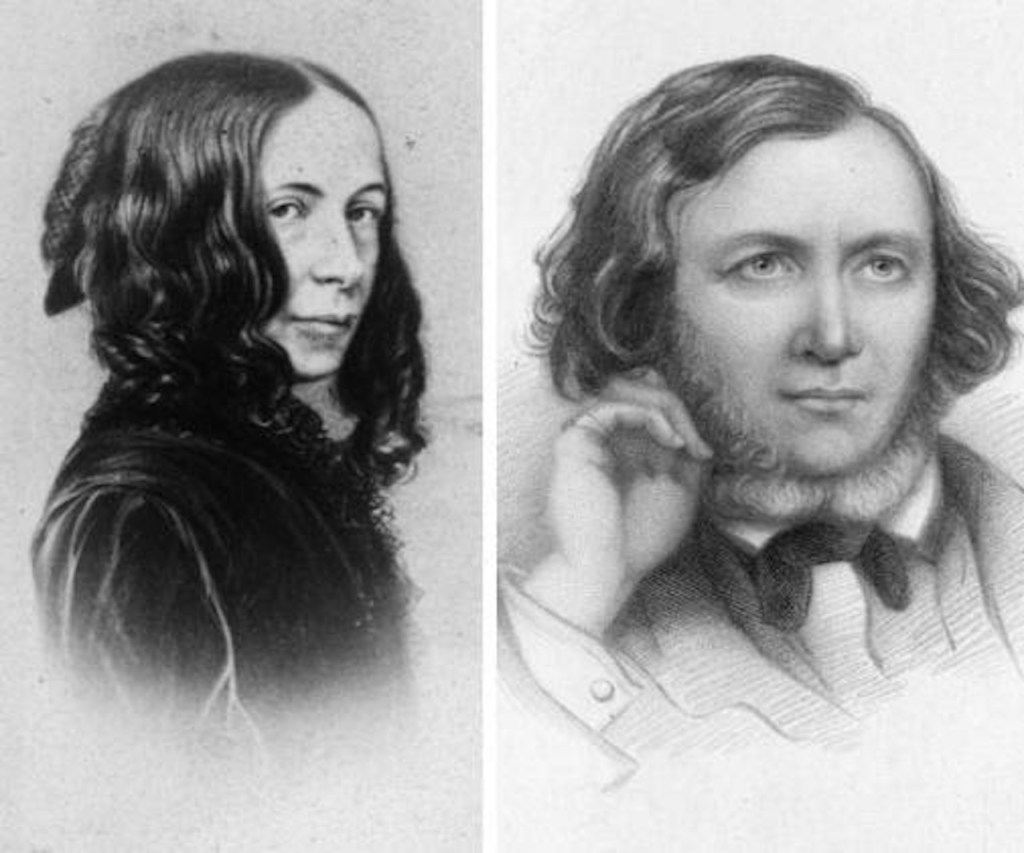
Two Poets in Love
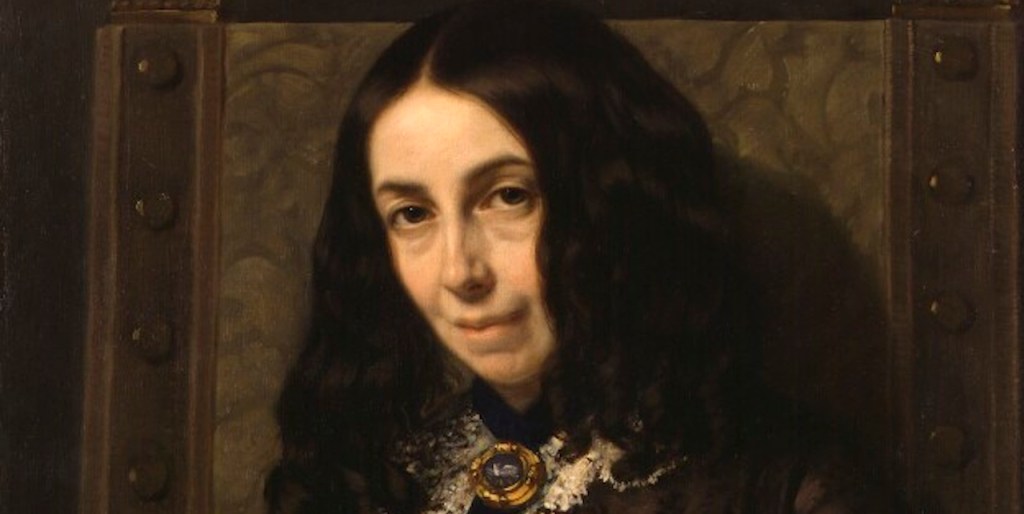
Robert Browning, while wooing Elizabeth Barrett, referred to his sweetheart lovingly by the nickname he had given her: “my little Portuguese” [1]. He chose that nickname for her because of her dark complexion. Elizabeth Barrett then quite consequentially titled her sonnet sequence Sonnets from the Portuguese.
Since its publication, Elizabeth Barrett Browning’s Sonnets from the Portuguese has become a beloved, often anthologized, and widely studied sonnet sequence. With this 44-sonnet sequence, Barrett Browning puts on display her mastery of the Petrarchan (Italian) sonnet form.
Throughout the sequence, Barrett Browning creates a speaker who develops the theme of the romantic relationship between Elizabeth Barrett and fellow poet, Robert Browning, the man whom she will ultimately marry.
As their relationship begins, the speaker is continually beset with deep doubts. She has little confidence that she can keep the affection of such an accomplished, world-renowned poet as Robert Browning [2].
The speaker, therefore, continues to dramatize her deep skepticism that the relationship will withstand their differences. The speaker is continually musing on her insecure nature and doubts as she even magnifies them. Her exploration and examination of her situation causes her much consternation. Likely, the poet’s prior experience with love relationships influences her hesitancy in engaging in a relationship with Robert Browning:
Much of E.B.B.’s hesitation came from knowing that love can bring injury as well as boon. She had suffered such injury. With great pain did she finally recognise that her father’s strangely heartless affection would have buried her sickroom, for how else could she interpret his squelching of her plan to travel south for health in 1846, when doctors practically ordered the journey to Italy as a last hope?
E.B.B. had had previous experience of one-sided affection, as we see in her diary of 1831-3, which concerns her relationship with the Greek scholar H.S. Boyd.For a year her entries calculate the bitter difference between his regard and her own, and she wonders if she can ever hope for reciprocation. In fact she finds her womanly capacity for feeling a liability and wishes she could feel less — “I am not of a cold nature, & cannot bear to be treated coldly. When cold water is thrown upon a hot iron, the iron hisses. I wish that water wd. make that iron as cold as self.” [3]
Elizabeth Barrett’s poor health is often emphasized in the many biographies of the poet. Few biographers have offered any speculations regarding the origin of the poet’s illness; nor have they attempted to name the disease from which the poet suffered.
However, Anne Buchanan, who is a research assistant in anthropology, has suggested that Elizabeth Barrett suffered from hypokalemic periodic paralysis (HKPP), a muscle disorder [4]. Buchanan’s daughter suffers from that same disease, which “causes blood levels of potassium to fall because potassium becomes trapped in muscle cells.”
Buchanan and her daughter Ellen Buchanan Weiss observed that the descriptions of Barrett Browning’s malady resembled closely those of the daughter. The Buchanans have thus suggested that a cold, moist climate often intensifies the pain associated with HKPP.
Throughout Barrett Browning’s lifetime, London’s cold, damp climate had exacerbated the poet’s health problems, and whatever the title of the disease, escaping the London’s weather was a Godsend to her.
Thus, her marriage to Robert Browning enhanced her health as well as her mental state because the coupled relocated to Italy, where they enjoyed the warm climate, which was amenable to Elizabeth’s health.
Because of Robert Browning, Elizabeth Barrett not only enjoyed a soulmate to love her, but she also found one who would protect her health and allow her live her remaining years more comfortably and productively.
The Petrarchan sonnet is named after the 14 century Italian poet, Francesco Petrarch [5]. It is also known as the Italian sonnet. The Petrarchan/Italian sonnet displays an eight-line octave and a six-line sestet. The octave contains two quatrains (four lines each), and the sestet contains two tercets (three lines each). The traditional rime scheme of the Petrarchan/Italian sonnet is ABBAABBA in the octave and CDCDCD in the sestet.
Poets, however, often display a variation on the sestet rime scheme, transforming it from CDCDCD to CDECDE. Many other poets vary the octave as well as create other schemes for the sestet. But Barrett Browning never varies the rime scheme; she retains the traditional rime scheme ABBAABBACDCDCD throughout the entire 44-sonnet sequence.
Following such a tight, restricted form that the poet chose to follow as she composed 44 sonnets magnifies her skill and her mastery of that sonnet form. The poet’s choice of the Petrarchan sonnet also reveals her deep affinity for the original Petrarchan theme, as she muses upon the relationship between herself and her belovèd as well as the relationship between the Divine Creator-Father and His human children.
According to Robert Stanley Martin, Petrarch “reimagined the conventions of love poetry in the most profound way: love for the idealized lady was the path towards learning how to properly love God . . .”:
[Petrarch’s] poems investigate the connection between love and chastity in the foreground of a political landscape, though many of them are also driven by emotion and sentimentality. Critic Robert Stanley Martin writes that Petrarch “reimagined the conventions of love poetry in the most profound way: love for the idealized lady was the path towards learning how to properly love God . . . .” [6]
Each sonnet in this sequence is displayed in only one stanza with its octave and sestet. However, engaging the sonnet’s quatrains and sestets separately allows the commentarian a clearer focus in concentrating on each line unit.
Elizabeth Barrett Browning’s sonnet sequence offered the poet a remarkably open field as well as the imaginative opportunity for discovery of her true feelings. The poet’s life had become steeped in melancholy, as a result of her poor health and her family’s inability to understand and appreciate her abilities and sensibilities. Especially problematic was her difficult relationship with her father.
As the poet through her speaker navigates through the sonnet sequence, she demonstrates a change of mood. The speaker of the sequence grows from an individual holding the desperate thought that only death would remain her consort to one who could finally experience joy.
After her doubts that she and such a man of the world as Robert Browning could have a true relationship are finally removed, she finds life to be very different from what she has earlier experienced.
The confident, sophisticated Robert Browning brought Miss Barrett a happiness that genuinely gave her life meaning. The two poets’ relationship had to struggle against a host of trials and tribulations, but their love story results in one that remains one for the ages. The world is more acquainted with these two lover-poets than it would have otherwise been without their loving relationship:
In addition to being celebrated for their literary talents, Elizabeth and Robert are remembered as people who were deeply in love. As Sir Frederic Kenyon wrote, Elizabeth and Robert “gave the most beautiful example of [love] in their own lives.” The marriage of Elizabeth Barrett Browning and Robert Browning required courage and sacrifice, and they were willing to do whatever it took to build a beautiful life together. [7]
Barrett Browning’s 44-sonnets sequence recounts the journey of a poet who begins with many doubts. But she examines and muses upon the origins of those doubts and then finally blossoms into a joyous, creative individual after she accepts and engages with the love that Robert Browning had so generously and genuinely offered her. The story of the love relationship between these two poets has a become one of most inspirational stories in the literary world—or, for that matter, in any world.
The Psychological Narrative within Elizabeth Barrett Browning’s Sonnets from the Portuguese
Elizabeth Barrett Browning’s 44 Petrarchan sonnets in Sonnets from the Portuguese suggest a subtle sequence within a psychological narrative framework.
Composed during her courtship with Robert Browning, the sequence presents an evolution from despair, low self-esteem, and self-doubt toward acceptance of love, reframing of self-awareness, and final, faithful and faith-based commitment. The sequence sections itself into the following emotional stages:
1. Musing on Despair and Resistance (Sonnets 1–8)
The sequence begins with a speaker who feels emotionally exhausted, physically fragile, convinced she could never marry, especially because her father had dictated that none of his children would ever be allowed to marry. Also her illness had enfeebled her so dramatically that she likely had little energy and strength for beginning and maintaining a loving relationship and family of her own.
The main themes of this segment of sonnets are memory of suffering, expectation of death rather than love, and suspicion that the new affection cannot last.
In the first sonnet, the speaker senses being drawn away from concentration on death by an unanticipated presence, which can only be interpreted as Robert Browning entering her life.
2. Exploring the Fear of Being Unworthy of Love (Sonnets 9–15)
The next group focuses on a persistent anxiety: she feels that her beloved deserves someone stronger and happier. She believes she is too weak, ill, and melancholy to respond as she should to his affection; she feels she is near death. He insists that he loves her deeply, and that they will have a future together.
The tension that drives this segment of sonnets creates a suggestion that she may be arguing against the relationship, even though it is quite clear that in her heart of hearts she is strongly wishing for it to success.
3. Examining the Strength of the Lover’s Devotion (Sonnets 16–24)
Here the tone changes. The speaker begins to examine the lover’s commitment more carefully. She wonders if he merely pities her, or if the love may be only temporary, or if he does in face love her for the right reasons.
She insists that love must not rest on changeable qualities such as her smile, her voice, or her appearance. She insists that love must remain constant even as those qualities dim with time.
4. Gradual Recognition of Genuine Love (Sonnets 25–36)
Gradually, the speaker is beginning to accept that the suitor’s devotion is real. The sonnets in this segment focus on memories of shared moments, reflections on spiritual companionship, and growing emotional trust. She is beginning to sense a mutual affection which is eroding the painful doubt that has plagued her.
5. Final Acceptance and Joy (Sonnets 37–44)
In the final segment, her resistance has largely disappeared. She now accepts her suitor’s love, sensing that it us utterly transformative and refreshingly life-giving. The tone has changed from ingrained doubt to joyous confidence, a healing gratitude, and spiritual cohesiveness.
The widely anthologized sonnet 43—“How do I love thee? Let me count the ways”—belongs to this final stage and expresses love in multiple dimensions: depth, breadth, height, and moral and spiritual devotion.
The final sonnet 44 “Belovèd, thou hast brought me many flowers” presents the couple’s love as an entity that will live on beyond death, as it testifies to a spiritual faith. Such a faith transcends all mortal doubt, affords the speaker a truly new Weltanschauung.
Image: SRF Mother Center Lotus – Photo by Ron W. G.
My Spiritual Sanctuary
My spiritual journey began in earnest in 1978, when I became a devotee of Paramahansa Yogananda’s teachings and a member of his organization Self-Realization Fellowship. As a Kriyaban since 1979, I have completed the four Kriya Initiations, and I continue to study the teachings and practice the yoga techniques as taught by the great spiritual leader, who is considered to be the “Father of Yoga in the West.”
I practice the chants taught by the great guru accompanying myself on the harmonium and serve at the local SRF Meditation Group as one of the chant leaders.
“By ignoble whips of pain, man is driven at last into the Infinite Presence, whose beauty alone should lure him.” –a wandering sadhu, quoted in Autobiography of a Yogi by Paramahansa Yogananda
Salvation Is a Personal Responsibility
I am a Self-Realization Yogi because the teachings of Paramahansa Yogananda, who in 1920 founded Self-Realization Fellowship, make sense to me. Paramahansa Yogananda teaches that we are immortal souls, already connected to the Divine Reality, but we have to “realize” that divine connection.
Knowing the Great Spirit (God) is not dependent upon merely claiming to believe in a divine personage, or even merely following the precepts of a religion such as the Ten Commandments.
Knowing the Creator is dependent upon “realizing” that the soul is united with that Creator. To achieve that realization we have to develop our physical, mental, and spiritual bodies through exercise, scientific techniques, and meditation.
There are many good theorists who can help us understand why proper behavior is important for our lives and society, but Paramahansa Yogananda’s teachings offer definite, scientific techniques that we practice in order to realize our oneness with the Divine Power or God.
It makes sense to me that my salvation should be primarily my own responsibility.
No Religious Tradition
I did not grow up with a religious tradition. My mother was a Baptist, who claimed that at one time she felt she was saved, but then she backslid. I learned some hymns from my mother. But she never connected behavior with religion.
My father was forced to attend church when he was young, and he complained that his church clothes were uncomfortable as was sitting on the hard pews.
My father disbelieved in the miracles of Jesus, and he poked fun at people who claimed to have seen Jesus “in the bean rows.” My mother would not have doubted that a person might see Jesus, because she saw her father after he had died.
My mother characterized my father as agnostic, and she lived like an agnostic, but deep down I think she was a believer after the Baptist faith.
Here’s a little story that demonstrates how ignorant about religion I was as a child: When I was in first or second grade, I had a friend. At recess one day at the swings, she wanted to confide something to me, and she wanted me to keep it secret.
She said I probably wouldn’t believe it, but she still wanted to tell me. I encouraged her to tell me; it seemed exciting to be getting some kind of secret information. So she whispered in my ear, “I am a Quaker.”
I had no idea what that was. I thought she was saying she was magic like a fairy or an elf or something. So I said, “Well, do something to prove it.” It was my friend’s turn to be confused then.
She just looked very solemn. So I asked her to do something else to prove it. I can’t remember the rest of this, but the point is that I was so ignorant about religion.
The Void in My Life and My First Trauma
Looking back on my life as a child, teenager, young adult, and adult up to the age of 32, I realize that the lack of a religious tradition left a great void in my life. Although my father was on the fence regarding religion, he would listen to Billy Graham preach on TV.
I hated it whenever Billy Graham was preaching on TV. His message scared me. Something like the way I felt when my father’s mother would come and visit us, and when my father would let out a “Goddam” or other such swear word, Granny would say he was going to hell for talking that way.
I was afraid for my father. And Billy Graham made me afraid for myself and all of us because we did not attend church. I never believed that things like swearing and masturbation could send a soul to hell. But then back then I had no concept of “soul” or “hell.” I believed it was wrong to kill, steal, and to lie. But I’m not sure how these proscripts were taught to me.
I guess by example. It seems that I had no real need for God and spirituality until I was around thirty years old.
My life went fairly smoothly except for two major traumas before age thirty. The first trauma was experiencing a broken heart at age eighteen and then undergoing a failed marriage, after which I thought I would never find a mate to love me. But I did meet a wonderful soulmate when I was 27.
Heretofore I had thought finding the proper marriage partner would solve all my problems, but I learned that my difficulties were very personal and at the level where we are all totally alone, despite any outward relationships.
The Second Trauma
A second trauma that added to my confusion was being fired twice from the same job at ages 22 and 27. By age 27 things started to make no sense. And it started to bother me intensely that things made no sense.
I had always been a good student in grade school and high school, and I was fairly good in college, graduating from Miami University with a 3.0 average. That grade point average bothered me because I thought I was better than that, but I guess I was wrong.
But then not being able to keep my teaching job and not being able to find another one after I had lost it very much confused me. It seemed that I had lost touch with the world. School had been my world, and my teachers and professors had expected great things from me. But there I was at age 27 and couldn’t get connected to school again.
Feminism and Zen
I began reading feminist literature starting with Betty Friedan’s Feminine Mystique, continuing with Ms. Magazine, and many others. The result of taking in the feminist creed led me to believe that I had someone to blame for my failure—men; men had caused the world to be arranged so that women cannot succeed outside the home.
I began writing again, an endeavor I have sporadically engaged in most of my life from about age sixteen.
I decided to apply for a graduate assistantship in English at Ball State University, feeling that I was ready to get out in the man’s world and show it what a woman could do. I felt confident that I could succeed now that I knew what the problem was. But that didn’t work out either.
I finished the year without a master’s degree in English, and then there I was, confused again, and still searching for something that made sense.
I had heard about the Eastern philosophy known as “Zen” at Ball State, and I started reading a lot about that philosophy. Zen helped me realize that men were not the problem, attitude was. I kept on writing, accumulating many poems, some of which I still admire.
And I kept reading Zen, especially Alan Watts, but after a while the same ideas just kept reappearing with no real resolution, that is, even though the Zen philosophy did help me understand the world better, it was not really enough. I got the sense that only I could control my life, but just how to control it was still pretty much a mystery.
Autobiography of a Yogi
In 1977, my husband Ron and I went on one of our book shopping trips. I spied a book, Paramahansa Yogananda’s “Autobiography of a Yogi,” and I recommended it to Ron because he liked biographies. Strangely, I said to him about the man on the cover: “He’s a good guy!” Strange, because I had no idea if the individual was a good guy or not, being the first time I ever saw him. So, we purchased poetry books, and we also purchased the autobiography for him.
Ron did not get around to reading it right away, but I did, and I was totally amazed at what I read. It all made sense to me; it was such a scholarly book, clear and compelling. There was not one claim made in the entire 500 plus pages that made me say “what?” or even feel any uncertainty that this writer knew exactly whereof he spoke.
Paramahansa Yogananda was speaking directly to me, at my level, where I was in my life, and he was connecting with my mind in a way that no writer had ever done. For example, the book offers copious notes, references, and scientific evidence that academics will recognize as thorough research.
This period of time was before I had written a PhD dissertation, but all of my years of schooling including the writing of many academic papers for college classes had taught me that making claims and backing them up with explanation, analysis, evidence, and authoritative sources were necessary for competent, persuasive, and legitimate exposition.
Paramahansa Yogananda’s autobiography contained all that could appeal to an academic and much more because of the topic he was addressing. As the great spiritual leader recounted his own journey to self-realization, he was able to elucidate the meanings of ancient texts whose ideas have remained misunderstood for many decades and even centuries.
The book contained a postcard that invited the reader to send for lessons that teach the techniques for becoming self-realized. I sent for them, studied them, and I have been practicing them since 1978. They do, indeed, hold the answer to every human problem.
I know it is difficult for most educated people to believe that all human problems can be solved, but that’s because they get stuck in the thought that they cannot.
If you believe that you can never really know something, then you can’t, because if you believe that you can never really know something, you won’t try to know it.
Yogananda gives a map with directions to reaching God, and realizing that one’s soul is united with God brings about the end of all sorrow and the beginning of all joy.
Just knowing the precepts intellectually does not cause this realization, but it goes a long way toward eliminating much suffering.
The faith that we can overcome all suffering is a great comfort, even if we are not there yet. I realize that God is knowable, but most important is that I know I am the only one who can connect my soul to God—and that is the spiritual journey I am now on.








 Linda's Literary Home
