Dylan Thomas created a speaker to beg his father to rail against death in “Do Not Go Gentle”; in “And Death Shall Have No Dominion,” the poet’s speaker dramatizes the truth that death cannot conquer the soul.
Introduction and Text of “And Death Shall Have No Dominion”
From the King James Version of the Judeo-Christian Holy Bible, Romans 6:9, “Knowing that Christ being raised from the dead dieth no more; death hath no more dominion over him” (my emphasis).
In Dylan Thomas’ poem, “And Death Shall Have No Dominion,” the speaker is employing the same sentiment in his title and five further repetitions as a chant-like refrain. Each of the three novtets—9-line stanzas—demonstrates the efficacy of the claim that death shall not have control over the human soul.
While the Romans quotation specifically focuses on the advanced, yogic state of consciousness of Jesus the Christ, Who rose above death’s clasp, the speaker in Thomas’ poem muses on the ability of every human soul in conquering death.
And Death Shall Have No Dominion
And death shall have no dominion. Dead man naked they shall be one With the man in the wind and the west moon; When their bones are picked clean and the clean bones gone, They shall have stars at elbow and foot; Though they go mad they shall be sane, Though they sink through the sea they shall rise again; Though lovers be lost love shall not; And death shall have no dominion.
And death shall have no dominion. Under the windings of the sea They lying long shall not die windily; Twisting on racks when sinews give way, Strapped to a wheel, yet they shall not break; Faith in their hands shall snap in two, And the unicorn evils run them through; Split all ends up they shan’t crack; And death shall have no dominion.
And death shall have no dominion. No more may gulls cry at their ears Or waves break loud on the seashores; Where blew a flower may a flower no more Lift its head to the blows of the rain; Though they be mad and dead as nails, Heads of the characters hammer through daisies; Break in the sun till the sun breaks down, And death shall have no dominion.
Thomas reading “And Death Shall Have No Dominion”
Commentary on “And Death Shall Have No Dominion”
In this poem, the speaker is dramatizing the truth that death cannot conquer the soul.
First Novtet: Death and the Physical Encasement
And death shall have no dominion. Dead man naked they shall be one With the man in the wind and the west moon; When their bones are picked clean and the clean bones gone, They shall have stars at elbow and foot; Though they go mad they shall be sane, Though they sink through the sea they shall rise again; Though lovers be lost love shall not; And death shall have no dominion.
The “dead man” is “naked” because he has lost the clothing of the physical body. The soul alone becomes “one / With the man in the wind and the west moon.” As the soul leaves the body, it exists from the East, or spiritual eye in the forehead, and thus figuratively it meets the entity that is in the west or the “west moon.”
Again, dramatically referring to loss of the physical encasement—”bones are picked clean and the clean bones gone”—the speaker declares metaphorically that the free soul will rise to the heavens and “have stars at elbow and foot.”
All infirmity that the human in physical form might have suffered will be set right, “Though they go mad they shall be sane.” While the soul will leave behind many of its earth-inherited maladies, many will be forgotten in preparation for its next incarnation, alluded to by “Though they sink through the sea they shall rise again.”
The deceased will have left behind lovers from the previous incarnation, but he will not leave behind “love” itself. Death will have no power over “love,” despite the power it has over physical bodies.
Second Novtet: Nothing Can Kill the Soul
And death shall have no dominion. Under the windings of the sea They lying long shall not die windily; Twisting on racks when sinews give way, Strapped to a wheel, yet they shall not break; Faith in their hands shall snap in two, And the unicorn evils run them through; Split all ends up they shan’t crack; And death shall have no dominion.
The soul cannot be destroyed by the forces that can maim and kill the physical body; thus even those who drown in the ocean, whose bodies are never recovered from the briny deep, shall not taste of death of their soul. Those who are tortured by enemies in war “shall not break.”
No matter how severe the punishment to the physical encasement, the faith of the soul will remain with that soul, though it “snap in two” in the bodily incarnation. Despite being impaled on the evils of this world, the soul of the victim “shan’t crack,” because “death shall have no dominion.”
Third Novtet: Creating a Belief System Overcoming Sorrow
And death shall have no dominion. No more may gulls cry at their ears Or waves break loud on the seashores; Where blew a flower may a flower no more Lift its head to the blows of the rain; Though they be mad and dead as nails, Heads of the characters hammer through daisies; Break in the sun till the sun breaks down, And death shall have no dominion.
The soul of the individual who has left his body will no longer be agitated by earthly sounds. Like the soul of a flower that grew and was beaten down by rain but whose soul rose again, human souls will rise “though they be mad and dead as nails.”
Their soul will depart the frail bodily encasements as “characters hammer through daisies.” The strength of the human soul is greater than all material level entities, including the sun; the soul’s power may “break the sun till the sun breaks down,” for the soul is not dominated by death.
The important refrain, “and death shall have no dominion,” keeps the poem’s gravity centered on the truth of its declaration; the speaker of the poem—who may even be only intellectually aware that his claims are entirely accurate—surely takes comfort in the belief system that his words set forth.
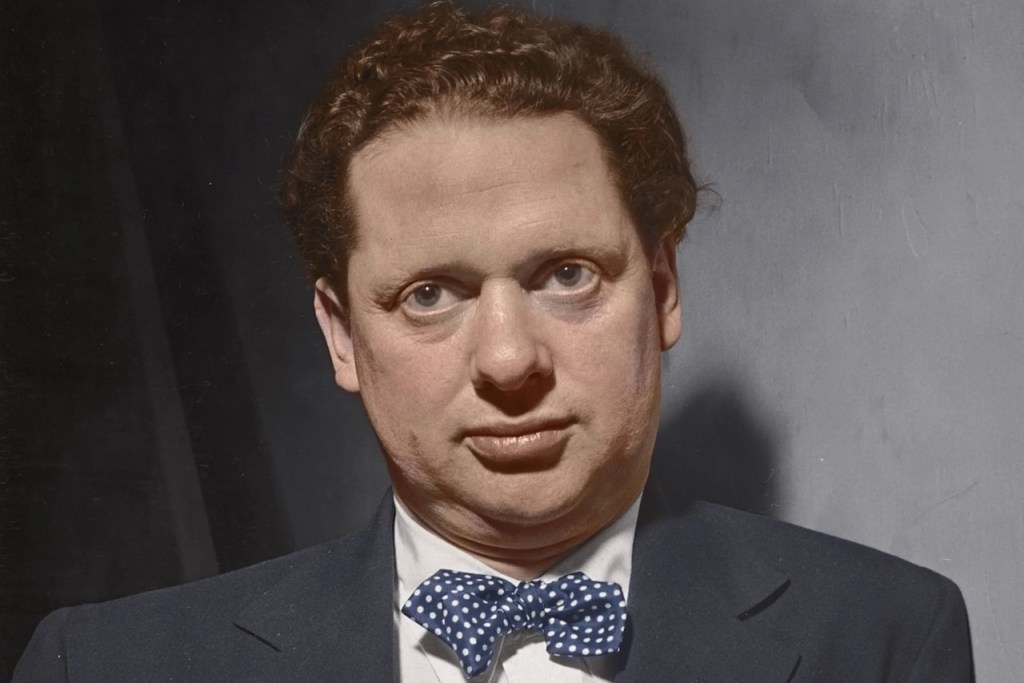
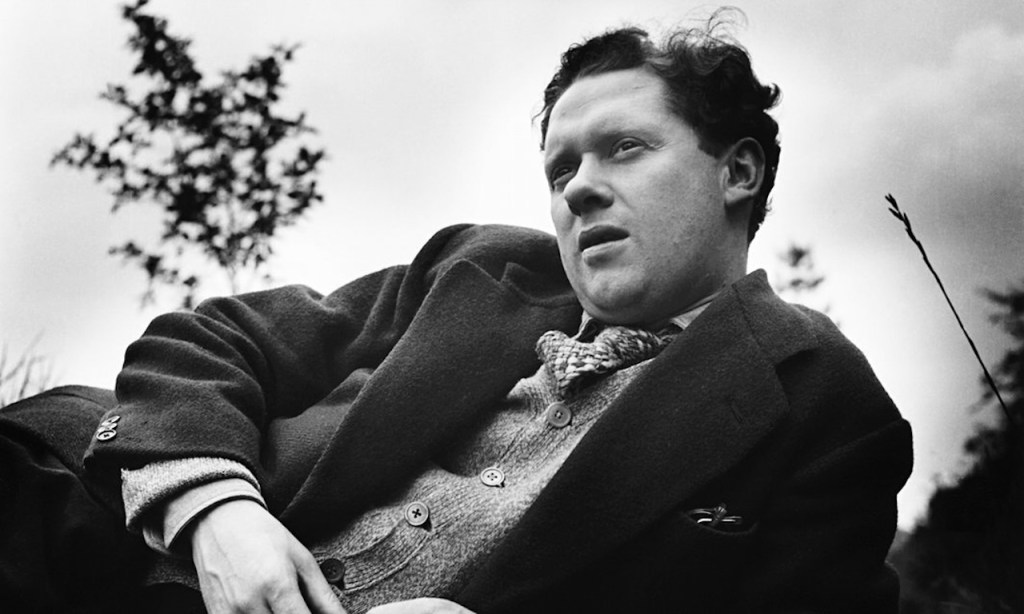
Image: Dylan Thomas – Rosalie Thorne McKenna Foundation; Courtesy Center for Creative Photography, University of Arizona Foundation – National Portrait Gallery, London
Life Sketch of Dylan Thomas
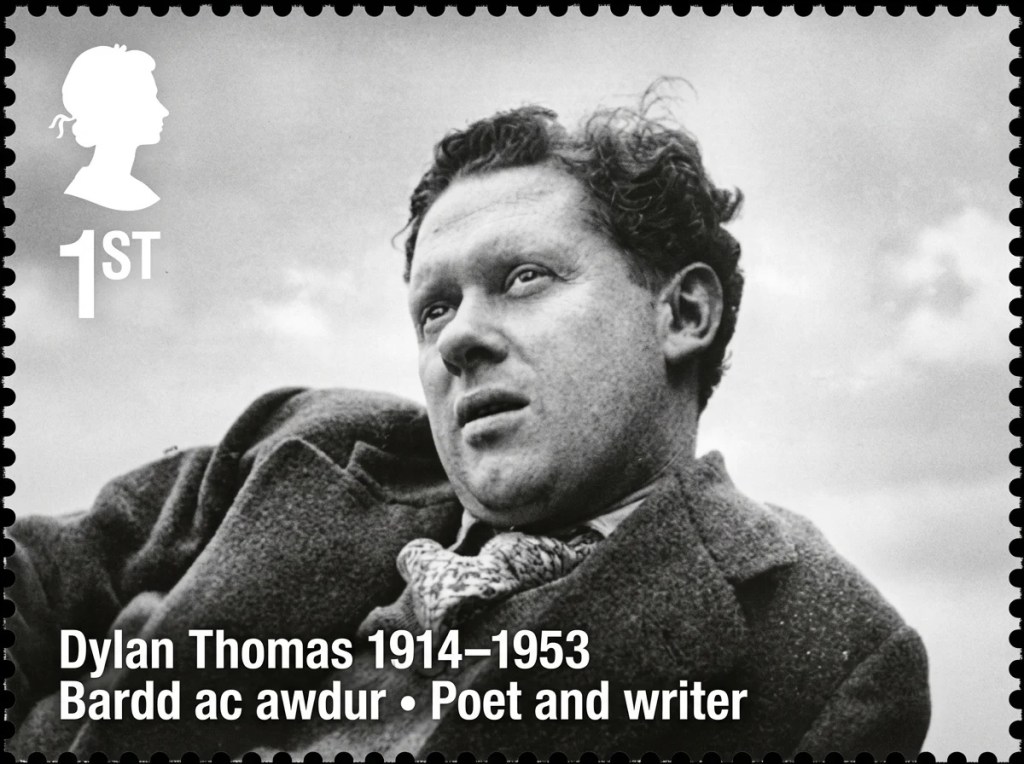
Dylan Thomas is a celebrated Welsh poet, whose extraordinary love of language, vivid imagery, and exploration of life, death, and spirituality have established him as a major twentieth-century literary figure.
Early Life and Education
Dylan Marlais Thomas was born on October 27, 1914, in Swansea, Wales, the son of David John Thomas, an English teacher, and Florence Hannah Williams Thomas. He had one older sister, Nancy. Although both parents came from Welsh-speaking families, English was the language spoken in the Thomas household.
Dylan’s father was an important influence on his intellectual development, introducing him to the works of Shakespeare and other major English writers. His mother encouraged his imagination and nurtured his early interest in poetry [1].
Thomas attended Swansea Grammar School, where his father taught English. Although he was not an outstanding student, he developed an early passion for literature and began writing poetry as a child.
His first published poem appeared in the school magazine when he was eleven. At sixteen, he left school and became a junior reporter for the South Wales Daily Post. He remained in journalism until 1932, when he decided to devote himself to writing poetry [2].
Love of Language and Poetry
Thomas possessed an extraordinary sensitivity to the sounds, rhythms, and possibilities of language. He was especially influenced by Shakespeare, the Welsh literary tradition, the Bible, and the poetry of Gerard Manley Hopkins and William Butler Yeats.
Although he wrote in English rather than Welsh, the musical qualities of Welsh speech and poetry contributed to his distinctive style. His poems are characterized by vivid imagery, elaborate metaphors, unusual word combinations, and powerful rhythms.
Thomas frequently explored universal experiences, including childhood, love, sexuality, nature, birth, death, and the passage of time. His poetry often combines physical and spiritual imagery, suggesting that the natural world possesses mysterious and divine qualities.
Among his best-known poems are “And Death Shall Have No Dominion,” “The Force That Through the Green Fuse Drives the Flower,” “Fern Hill,” and “Do Not Go Gentle into That Good Night.” His dramatic readings also became famous, as his resonant voice brought an additional musical dimension to his poetry.
Marriage
In 1936, Thomas met Caitlin Macnamara, an Irish dancer. They married on July 11, 1937, in Penzance, Cornwall. Their marriage was passionate but frequently troubled by financial difficulties, Thomas’ drinking, and periods of separation. They had three children: Llewelyn, born in 1939; Aeronwy, born in 1943; and Colm, born in 1949.
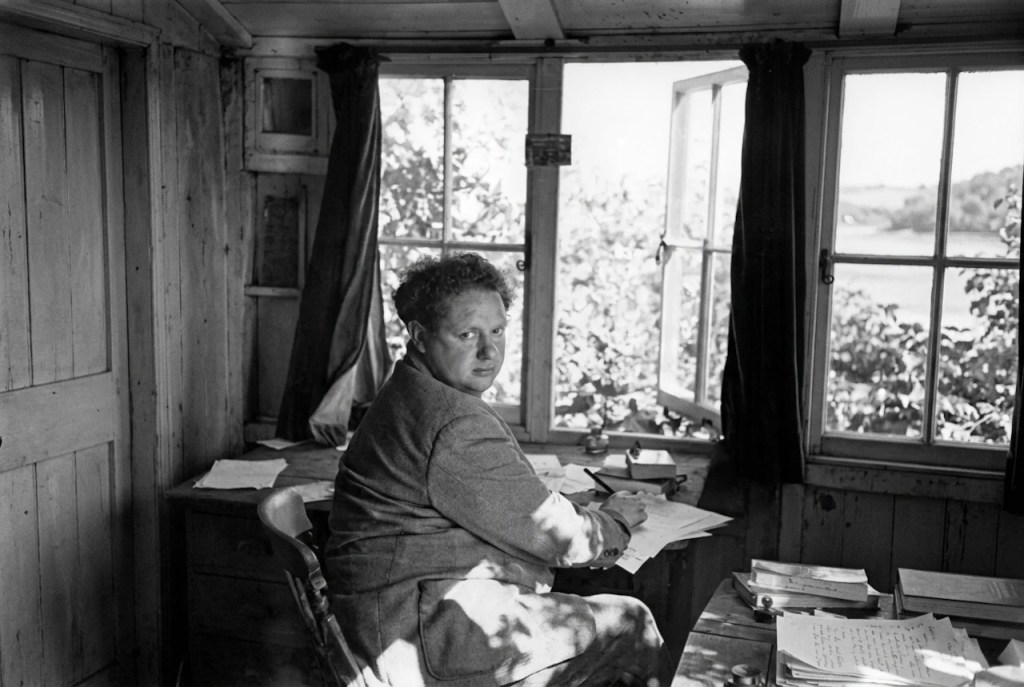
The family lived in several locations before settling in Laugharne, Wales, where they eventually occupied the Boat House overlooking the Taf Estuary. The Welsh countryside and the people of Laugharne provided inspiration for much of Thomas’ later writing. Thomas always held great affection for his family and his native landscape. He frequently traveled to London and the United States for work and poetry readings [3].
Publications
Thomas published his first collection, 18 Poems, in 1934, when he was only twenty years old. The collection attracted considerable attention because of its originality and imaginative language. It was followed by Twenty-five Poems (1936), which established his reputation as an important new poetic voice.
His subsequent publications included The Map of Love (1939), a combination of poetry and short stories; Portrait of the Artist as a Young Dog (1940), a collection of autobiographical stories; and Deaths and Entrances (1946), generally considered one of his finest collections.
During World War II, Thomas worked as a scriptwriter for documentary films and later became a frequent contributor to BBC radio. His broadcasts included readings of his poetry, childhood reminiscences, and original dramatic works. His distinctive voice and gift for storytelling made him increasingly popular with radio audiences.
His final collection of poetry published during his lifetime, In Country Sleep, and Other Poems, appeared in 1952. It included “Do Not Go Gentle into That Good Night,” one of his most celebrated poems, written in response to his father’s approaching death.
Thomas’ most ambitious dramatic work was Under Milk Wood, a lyrical radio play depicting a day in the lives of the inhabitants of a fictional Welsh village. He worked on the play during his final years, and an early version was performed in New York in 1953. The BBC broadcast the completed production in January 1954, after his death.
Death
Thomas’ final years were marked by increasing financial difficulties, heavy drinking, and frequent trips to the United States, where he gave highly successful poetry readings. During his fourth American tour in 1953, he traveled to New York City, where he became seriously ill.
He was admitted to St. Vincent’s Hospital and died on November 9, 1953, at the age of thirty-nine. His death followed a period of severe illness, although the precise medical circumstances have remained the subject of historical discussion.
Thomas was buried in Laugharne, the Welsh village that had become his home and an important source of inspiration. His reputation has continued to grow since his death. Today, he is regarded as one of the greatest Welsh poets and one of the most distinctive literary voices of the twentieth century.
His extraordinary command of language, his imaginative treatment of human experience, and his exploration of the mysteries of life and death have ensured his lasting literary significance and that his poems have become classic, widely anthologized and studied in high schools and universities the world over..
Sources
[1] Editors. “Dylan Thomas.” Poetry Foundation. Accessed November 25, 2026. [2] Editors. “Dylan Thomas.” Academy of American Poets. Accessed November 25, 2026. [3] Vernon Watkins. “On Dylan Thomas.” National Library of Wales. Accessed November 25, 2026.
The speaker in Dylan Thomas’ “Fern Hill” is nostalgically looking back to a time in his life that formed his personality and likely resulted in his creative ability to sing his dramatic creations about his experiences.
Introduction and Text of “Fern Hill”
Dylan Thomas’ “Fern Hill” belongs to that group of poems that offers readers a gentle nudge of nostalgia. The speaker, however, does much more than merely effuse emotionally charged language.
He does colorfully describe the farm, which is the object of his musing, but he does so in a minimalist, almost Hopkinsean style. His rhythmic lines echo the sprung rhythms of many of Father Hopkins’ poems.
Unconventional Placement
The poem “Fern Hill” is placed unconventionally on the page. A poem’s placement on the page can offer a subject for discussion because placement can result in addition al levels of meaning.
I do not address the issue of the poem’s placement here, but I do suggest that a useful essay could result from focusing on how the lines are placed; for example, one might note the consistency of the lines in each stanza. And then one might address the fact that in the final stanza, the consistency breaks down.
Fern Hill
Now as I was young and easy under the apple boughs About the lilting house and happy as the grass was green, The night above the dingle starry, Time let me hail and climb Golden in the heydays of his eyes, And honoured among wagons I was prince of the apple towns And once below a time I lordly had the trees and leaves Trail with daisies and barley Down the rivers of the windfall light.
And as I was green and carefree, famous among the barns About the happy yard and singing as the farm was home, In the sun that is young once only, Time let me play and be Golden in the mercy of his means, And green and golden I was huntsman and herdsman, the calves Sang to my horn, the foxes on the hills barked clear and cold, And the sabbath rang slowly In the pebbles of the holy streams.
All the sun long it was running, it was lovely, the hay Fields high as the house, the tunes from the chimneys, it was air And playing, lovely and watery And fire green as grass. And nightly under the simple stars As I rode to sleep the owls were bearing the farm away, All the moon long I heard, blessed among stables, the nightjars Flying with the ricks, and the horses Flashing into the dark.
And then to awake, and the farm, like a wanderer white With the dew, come back, the cock on his shoulder: it was all Shining, it was Adam and maiden, The sky gathered again And the sun grew round that very day. So it must have been after the birth of the simple light In the first, spinning place, the spellbound horses walking warm Out of the whinnying green stable On to the fields of praise.
And honoured among foxes and pheasants by the gay house Under the new made clouds and happy as the heart was long, In the sun born over and over, I ran my heedless ways, My wishes raced through the house high hay And nothing I cared, at my sky blue trades, that time allows In all his tuneful turning so few and such morning songs Before the children green and golden Follow him out of grace,
Nothing I cared, in the lamb white days, that time would take me Up to the swallow thronged loft by the shadow of my hand, In the moon that is always rising, Nor that riding to sleep I should hear him fly with the high fields And wake to the farm forever fled from the childless land. Oh as I was young and easy in the mercy of his means, Time held me green and dying Though I sang in my chains like the sea.
Commentary on “Fern Hill”
In Dylan Thomas’ classic poem “Fern Hill,” the speaker is soliloquizing about a nostalgic memory of his experience growing up on a farm. His engagement with nature and the farm scene has engaged readers since the poem was first published in October 1945.
First Stanza: The Nostalgic Color of Nature – An Honoured Prince
Now as I was young and easy under the apple boughs About the lilting house and happy as the grass was green, The night above the dingle starry, Time let me hail and climb Golden in the heydays of his eyes, And honoured among wagons I was prince of the apple towns And once below a time I lordly had the trees and leaves Trail with daisies and barley Down the rivers of the windfall light.
The speaker begins his soliloquy by pointing his listeners to a period of his life during which his living was easy, unhurried, colorful, and pleasant. After bluntly stating that he “was young and easy,” he continues to show why that was.
He was “easy” because he was privy to a cathedral of “apple boughs.” The house in which he lived, slept, and ate was a house that moved to a pleasant rhythm—a fact that rendered him “happy.”
Not only was he somewhat happy, he was as happy as “the grass was green.” Happiness, thus, came naturally to him. And he then continues to describe the conditions that allowed such happiness: time was on his side, rendering him healthy and strong with the ability and opportunity to “climb” the rhythms that sprang all golden from the sparkle in the “eyes” of time.
He felt like a prince because he was “honoured” among “wagons,” “apple towns,” “trees and leaves,” as he sauntered easily down a “trail” of “daisies and barley.” He moved easily with grace, respect, and happiness “down the rivers of the windfall light.”
These glorious days which he was passing kept him locked in a glorious age of gratitude and humility. All of nature seemed open to his mere ability to experience and appreciate its beauty.
Second Stanza: Time Allows Play and Bestows Fame
And as I was green and carefree, famous among the barns About the happy yard and singing as the farm was home, In the sun that is young once only, Time let me play and be Golden in the mercy of his means, And green and golden I was huntsman and herdsman, the calves Sang to my horn, the foxes on the hills barked clear and cold, And the sabbath rang slowly In the pebbles of the holy streams.
As the speaker was “honoured” among certain natural and human-made phenomena in the first stanza, he found himself “famous” as he explored the “barns.” The barnyard was a merry place, so cheerful that it sang to him as his “home.”
Again, he credits “time” for allowing him to “play” as well as remain “golden.” Time seemed to engulf him in a kind of “mercy,” even as the speaker performed tasks such as “huntsman and herdsman.”
Calves obeyed his call as he rounded them up. He remembers hearing the hills ring with the sound of foxes barking “clear and cold.” He also heard the bells of sabbath ringing, as he observed the stones in the creek: the sacredness of such a sound rendered those bodies of water “holy streams.”
Third Stanza: As the Sun Runs the Day, the Moon Runs the Night
All the sun long it was running, it was lovely, the hay Fields high as the house, the tunes from the chimneys, it was air And playing, lovely and watery And fire green as grass. And nightly under the simple stars As I rode to sleep the owls were bearing the farm away, All the moon long I heard, blessed among stables, the nightjars Flying with the ricks, and the horses Flashing into the dark.
The speaker then remarks that during the sun-drenched daytime, all about him was beauty. He exaggerates the height of the “hay / Field” by claiming them to be as “high as the house.”
The chimney seems to sing to his astonished ears. He was engulfed in fresh air, as he played in the fields, in the barnyard, and streams. He deems that his playing was “lovely and watery.” The waters seemed to flame, becoming “fire green as grass.”
As nighttime approached and as he was falling asleep, he could imagine the owls carrying the farm away from his consciousness. Just as the day ran “all the sun long,” the night ran “all the moon long,” and he could also hear sounds from the stables.
Birds called “nightjars” hovered the wagons filled with wood, and the sounds of horses “flashing in the dark”—all lulled him to sleep. His night images remain as strong as those of day.
Fourth Stanza: Arising to Eden
And then to awake, and the farm, like a wanderer white With the dew, come back, the cock on his shoulder: it was all Shining, it was Adam and maiden, The sky gathered again And the sun grew round that very day. So it must have been after the birth of the simple light In the first, spinning place, the spellbound horses walking warm Out of the whinnying green stable On to the fields of praise.
After a pleasant, restful night’s sleep, the speaker wakes up the next morning to a farm drenched in dew. His consciousness awakens to the sound of a rooster crowing, alerting him to the arrival of morning.
The farm now seems to shine, seems to be the paradisiacal garden of Eden. In the sky, the sun filled its space growing round, bringing the daylight with all of its activities and natural creatures back to the consciousness of the speaker.
As daylight is being born anew, the speaker surmises that the “simple light” being born was like it has been on the first day of creation. He imagines a mystical scene of “spellbound horses” as they walk “warm” from their stable, which was all “green” and “whinnying.” The horses move onto “fields of praise.”
The speaker’s “praise” attaches to the horses; he has created a mystic scene out of what he has, no doubt, experienced earlier by being “honoured” and “famous” and so blessed that he can live this way, surrounded by the colors and events of nature.
Fifth Stanza: Honoured and Happy as the Heart Is Long
And honoured among foxes and pheasants by the gay house Under the new made clouds and happy as the heart was long, In the sun born over and over, I ran my heedless ways, My wishes raced through the house high hay And nothing I cared, at my sky blue trades, that time allows In all his tuneful turning so few and such morning songs Before the children green and golden Follow him out of grace,
Again, the speaker touts his “honoured” status. He finds his position “among foxes and pheasants” one of such happiness that even under clouds, he remains as “happy as the heart was long.” This happy house afforded him all the tools for gaiety and gratitude.
The speaker then makes a confession that even as the sun rose many times over this precious period of time, he engaged in “heedless ways.” But his confession concedes nothing nefarious; he simply was a young lad and faced no serious cares with which to bother.
His business was the blue sky, and he remained aware of the fact that life was short, with time permitting “so few and such morning songs.” Because his time for appreciating and enjoying “tuneful turning” was short, he grasped all the more tightly with carpe diem tenacity the beauty of his surroundings.
Because all children who are “green and golden”—or young and valuable—must needs follow time to its eventual conclusion, the speaker demands of his judgments that they observe the “grace” leveled by time.
Sixth Stanza: He Sang Like the Sea
Nothing I cared, in the lamb white days, that time would take me Up to the swallow thronged loft by the shadow of my hand, In the moon that is always rising, Nor that riding to sleep I should hear him fly with the high fields And wake to the farm forever fled from the childless land. Oh as I was young and easy in the mercy of his means, Time held me green and dying Though I sang in my chains like the sea.
The speaker then concludes his effusion of youthful, paradisiacal happiness by tempering his earlier outbursts. He admits that at the time he was enjoying all the natural elements afforded by the farm, surrounded by woods, creeks, sun, moon, and stars, he had not a care in the world.
Those “lamb white days” were taking him to a place he would never have thought of at the time. He metaphorically refers to his future path as a “swallow thronged loft.” He mounted that loft by the “shadow of [his] hand.”
He had no clue whither he was mounting. But he remembers well that the moon continued to rise. He has no prescience telling him that as he drifted off to sleep in his paradise, he would one day in future awake to a “farm forever fled” from the adult mind leaving behind the “childless land.”
Again, the speaker repeats that he was “young and easy.” And he was held by the mercy of “time” and God (It is useful to interpret “time” as both periodic lengths of duration and God, Who has created and continue to control time).
Finally, he concludes that “time” grasped him tightly in his arms. But he was young and on his way to maturity and death. Metaphorically, he was held by the chains of time, place, events, and other worldly phenomena. But despite being held in this mayic dream, moving to a place he could not—or even have the desire to imagine—he “sang.”
And he sang not only as a human being, but he sang “like the sea.” So despite the decaying measures that time brings, the speaker’s memory holds onto the beauty and happiness sparked by God’s green earth, which becomes enlivened and made permanent by the speaker’s ability to create his dramatic song about his experience.
Dylan Thomas’ “Do not go gentle into that good night”
Dylan Thomas’ widely anthologized villanelle features a speaker, who is dismayed by his father’s weakness as the latter nears death. The son begs his father to rage against death and show his former strength of character.
Introduction and Text of “Do not go gentle into that good night”
Dylan Thomas’s widely anthologized “Do not go gentle into that good night” features a speaker who is troubled that his father seems to be willing to accept death without complaint. The speaker deems such acceptance as weakness. The son beseeches his father to rage against death and show his customary strength of character.
Thomas utilizes the French poetic form known as the “villanelle.” That form was originated as a medium for dramatizing simple, light verse and pastoral scenes. Dylan’s choice of such a serene poetic form masterfully underscores the irony of his suggestions in the poem.
The speaker is ironically begging his father to rage against an event which he cannot change regardless of the ferocity of said raging. It is likely also that Thomas chose this form because it requires repeating two extremely important lines: “Do not go gentle into that good night” and “Rage, rage against the dying of the light.”
The tight structure of the villanelle also adds to the gravity for the poem’s theme. The juxtaposition of the important pair of opposites results in a symbolic significance: “day” and “night” become symbols for “life” and “death.”
Do not go gentle into that good night
Do not go gentle into that good night, Old age should burn and rave at close of day; Rage, rage against the dying of the light.
Though wise men at their end know dark is right, Because their words had forked no lightning they Do not go gentle into that good night.
Good men, the last wave by, crying how bright Their frail deeds might have danced in a green bay, Rage, rage against the dying of the light.
Wild men who caught and sang the sun in flight, And learn, too late, they grieved it on its way, Do not go gentle into that good night.
Grave men, near death, who see with blinding sight Blind eyes could blaze like meteors and be gay, Rage, rage against the dying of the light.
And you, my father, there on that sad height, Curse, bless, me now with your fierce tears, I pray. Do not go gentle into that good night. Rage, rage against the dying of the light.
Dylan Thomas reading “Do not go gentle into that good night”
Commentary on “Do not go gentle into that good night”
The speaker of this poem is employing the poetic form known as the villanelle, which is a tightly structured 19-line poem, featuring a chant-like repetition of lines that come together in the final quatrain, after appearing separately and alternately in the preceding five tercets. The purpose of the repetition is to emphasize the message conveyed throughout the body of the piece.
First Tercet: Command Not to Easily Give Up
Do not go gentle into that good night, Old age should burn and rave at close of day; Rage, rage against the dying of the light.
The speaker commands his father, who is near death, not to give up easily, not to go meekly into death. The speaker’s father had been a strong—and even belligerent—man, and the speaker finds it difficult to watch his once vigorous and sturdy father serenely succumbing to the grim reaper. The son feels that if his father demonstrated that same burning, raging character of his earlier days, he would feel less helpless in the arms of his coming demise.
The speaker has begun by creating a symbol; instead of employing the dreaded term, death, he symbolizes that concept with a much less worrisome term “night.” But then he goes even further: it is not just any night; it is a “good night.” Therefore, not only is the speaker employing a symbol, but he is also employing the literary device of irony.
Second Tercet: Continue to Rail against the Inevitable
Though wise men at their end know dark is right, Because their words had forked no lightning they Do not go gentle into that good night.
The speaker is now marshaling evidence that his stance of raging again death is the right one. Other “wise men” have not gone gentle, so he wants to convince his father, who also being wise, that he should not go gentle either.
Even though men who are intelligent know that death is necessary and “right,” still they do not allow their words to wither, even in the face of devastation. Instead of letting nature take its course without remark, the speaker believes that those near death should continue to rail against it.
The speaker’s emotion is driving him to plead with his father to fight his ensuing demise; thus the speaker’s pleas are directed at his own mind and heart as well as at his father. He knows the loss of his parent will be devastating, and he is fighting against that loss himself in a manner that he feels will work for them both.
Third Tercet: Regardless, Prattle On
Good men, the last wave by, crying how bright Their frail deeds might have danced in a green bay, Rage, rage against the dying of the light.
The speaker continues to refer to what other men have done while facing death. Now focusing on “good men,” he insists that despite the intensity of their life, despite successes and failures when their “deeds might have danced in a green bay,” at their life’s end, they do not accept that finality without rage.
Even if their accomplishments were few or “frail,” these “good men” still vehemently prattle on in bravado about how grandiose they were. If anytime is right for machismo and braggadocio, it’s just before one shuffles off the mortal coil; that is this speaker’s opinion, anyway.
Fourth Tercet: Ignore the Futility and Keep on Battling
Wild men who caught and sang the sun in flight, And learn, too late, they grieved it on its way, Do not go gentle into that good night.
The speaker continues to garner his support for his claim that raging against death is sweet and proper. He now focuses on the class of men who have remained untamed and uncontrolled by their environment.
Those “[w]ild men” who have battled tooth and nail for their achievements continue to struggle, even if they found that they only brought grief to their lives. Learning too late is still learning, and the speaker encourages his father to continue the struggle, regardless of its futility.
Fifth Tercet: Railing against the Demise
Grave men, near death, who see with blinding sight Blind eyes could blaze like meteors and be gay, Rage, rage against the dying of the light.
In his continued effort to collect evidence for convincing his father to rage against his coming death, the speaker has referred to “wise men,” “good men,” “wild men,” and now he focuses on “grave men.”
Men who are dead serious—”grave”—who have eyes that are failing against the light still find the strength to rail again their final exist. The speaker claims that even in blindness there can be a “blaze like meteors.” By employing these various categories of men, the speaker is suggesting to his father that he detects the qualities of each of these types of men in his father.
If all these men, who are like his father in deed, personality, and accomplishment, have not died a quiet, sedate death, the speaker insists that his father should emulate those raging, masculine beings and take up the sword and begin his own campaign of rage against they “dying of the light.” There can still be happiness and joy left for him, if he will place his mind on the fight instead of on the finish.
Final Quatrain: Fierce Tears and Rage
And you, my father, there on that sad height, Curse, bless, me now with your fierce tears, I pray. Do not go gentle into that good night. Rage, rage against the dying of the light.
Finally, the speaker addresses his father directly, commanding him to rail with him against his coming departure from life. The speaker begs his father to speak out harshly to him but also give him the bliss of witnessing his crying with ferocity against what is coming. Thus the speaker is demanding that his father’s tears be fierce, not wimpy little fearful tears.
The final two lines, which have been repeated chant-like throughout the villanelle, come together to emphasize the importance of their mission—to command his father not to give in to death’s approach but to fight every moment before the light has gone.