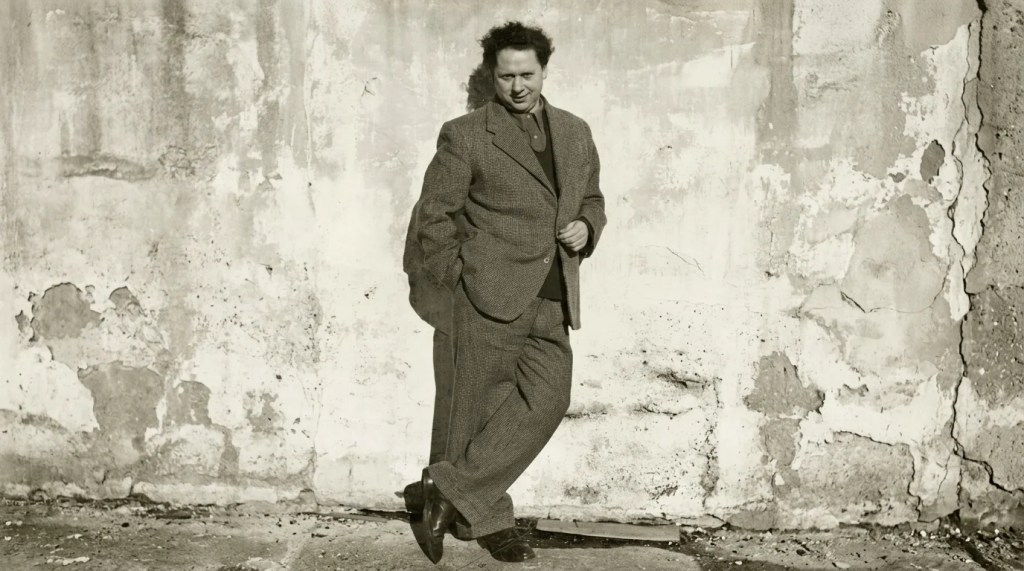
Life Sketch of Dylan Thomas
Dylan Thomas is a celebrated Welsh poet, whose extraordinary love of language, vivid imagery, and exploration of life, death, and spirituality have established him as a major twentieth-century literary figure.
Early Life and Education
Dylan Marlais Thomas was born on October 27, 1914, in Swansea, Wales, the son of David John Thomas, an English teacher, and Florence Hannah Williams Thomas. He had one older sister, Nancy. Although both parents came from Welsh-speaking families, English was the language spoken in the Thomas household.
Dylan’s father was an important influence on his intellectual development, introducing him to the works of Shakespeare and other major English writers. His mother encouraged his imagination and nurtured his early interest in poetry [1].
Thomas attended Swansea Grammar School, where his father taught English. Although he was not an outstanding student, he developed an early passion for literature and began writing poetry as a child.
His first published poem appeared in the school magazine when he was eleven. At sixteen, he left school and became a junior reporter for the South Wales Daily Post. He remained in journalism until 1932, when he decided to devote himself to writing poetry [2].
Love of Language and Poetry
Thomas possessed an extraordinary sensitivity to the sounds, rhythms, and possibilities of language. He was especially influenced by Shakespeare, the Welsh literary tradition, the Bible, and the poetry of Gerard Manley Hopkins and William Butler Yeats.
Although he wrote in English rather than Welsh, the musical qualities of Welsh speech and poetry contributed to his distinctive style. His poems are characterized by vivid imagery, elaborate metaphors, unusual word combinations, and powerful rhythms.
Thomas frequently explored universal experiences, including childhood, love, sexuality, nature, birth, death, and the passage of time. His poetry often combines physical and spiritual imagery, suggesting that the natural world possesses mysterious and divine qualities.
Among his best-known poems are “And Death Shall Have No Dominion,” “The Force That Through the Green Fuse Drives the Flower,” “Fern Hill,” and “Do Not Go Gentle into That Good Night.” His dramatic readings also became famous, as his resonant voice brought an additional musical dimension to his poetry.
Marriage
In 1936, Thomas met Caitlin Macnamara, an Irish dancer. They married on July 11, 1937, in Penzance, Cornwall. Their marriage was passionate but frequently troubled by financial difficulties, Thomas’ drinking, and periods of separation. They had three children: Llewelyn, born in 1939; Aeronwy, born in 1943; and Colm, born in 1949.
The family lived in several locations before settling in Laugharne, Wales, where they eventually occupied the Boat House overlooking the Taf Estuary. The Welsh countryside and the people of Laugharne provided inspiration for much of Thomas’ later writing. Thomas always held great affection for his family and his native landscape. He frequently traveled to London and the United States for work and poetry readings [3].
Publications
Thomas published his first collection, 18 Poems, in 1934, when he was only twenty years old. The collection attracted considerable attention because of its originality and imaginative language. It was followed by Twenty-five Poems (1936), which established his reputation as an important new poetic voice.
His subsequent publications included The Map of Love (1939), a combination of poetry and short stories; Portrait of the Artist as a Young Dog (1940), a collection of autobiographical stories; and Deaths and Entrances (1946), generally considered one of his finest collections.
During World War II, Thomas worked as a scriptwriter for documentary films and later became a frequent contributor to BBC radio. His broadcasts included readings of his poetry, childhood reminiscences, and original dramatic works. His distinctive voice and gift for storytelling made him increasingly popular with radio audiences.
His final collection of poetry published during his lifetime, In Country Sleep, and Other Poems, appeared in 1952. It included “Do Not Go Gentle into That Good Night,” one of his most celebrated poems, written in response to his father’s approaching death.
Thomas’ most ambitious dramatic work was Under Milk Wood, a lyrical radio play depicting a day in the lives of the inhabitants of a fictional Welsh village. He worked on the play during his final years, and an early version was performed in New York in 1953. The BBC broadcast the completed production in January 1954, after his death.
Death
Thomas’ final years were marked by increasing financial difficulties, heavy drinking, and frequent trips to the United States, where he gave highly successful poetry readings. During his fourth American tour in 1953, he traveled to New York City, where he became seriously ill.
He was admitted to St. Vincent’s Hospital and died on November 9, 1953, at the age of thirty-nine. His death followed a period of severe illness, although the precise medical circumstances have remained the subject of historical discussion.
Thomas was buried in Laugharne, the Welsh village that had become his home and an important source of inspiration. His reputation has continued to grow since his death. Today, he is regarded as one of the greatest Welsh poets and one of the most distinctive literary voices of the twentieth century.
His extraordinary command of language, his imaginative treatment of human experience, and his exploration of the mysteries of life and death have ensured his lasting literary significance and that his poems have become classic, widely anthologized and studied in high schools and universities the world over..
Sources
[1] Editors. “Dylan Thomas.” Poetry Foundation. Accessed November 25, 2026.
[2] Editors. “Dylan Thomas.” Academy of American Poets. Accessed November 25, 2026.
[3] Vernon Watkins. “On Dylan Thomas.” National Library of Wales. Accessed November 25, 2026.
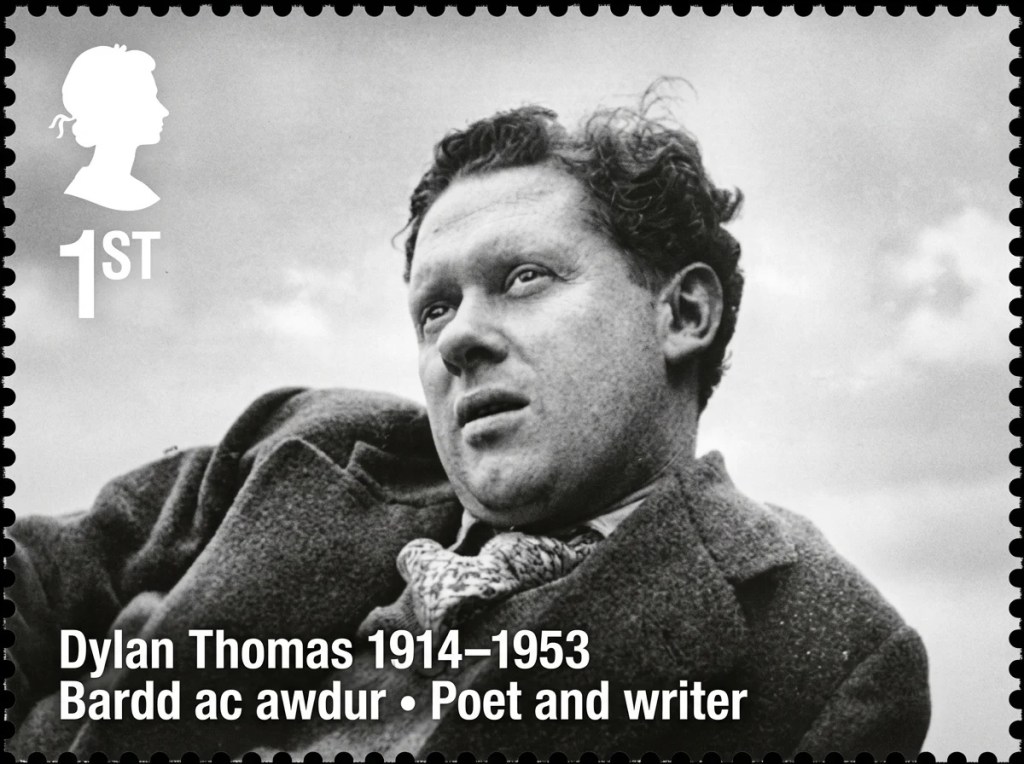
Poems with Commentaries
- Do not go gentle into that good night
- Fern Hill
- And Death Shall Have No Dominion
- The Force That through the Green Fuse Drives the Flower


Questions, comments, suggestions offered in good faith are always welcome. If you use a pseudonym, please include your real name, if you expect a response.