Linda's Literary Home

Category: Essays: Literary Works with Commentaries

  • Ben Okri’s Poem “Obama”

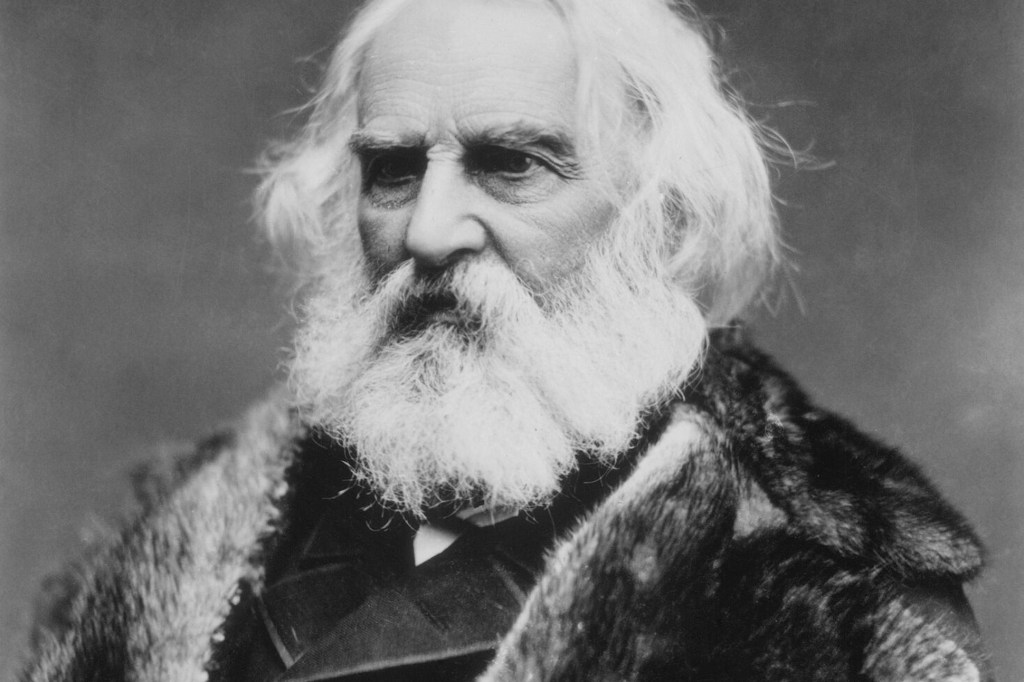
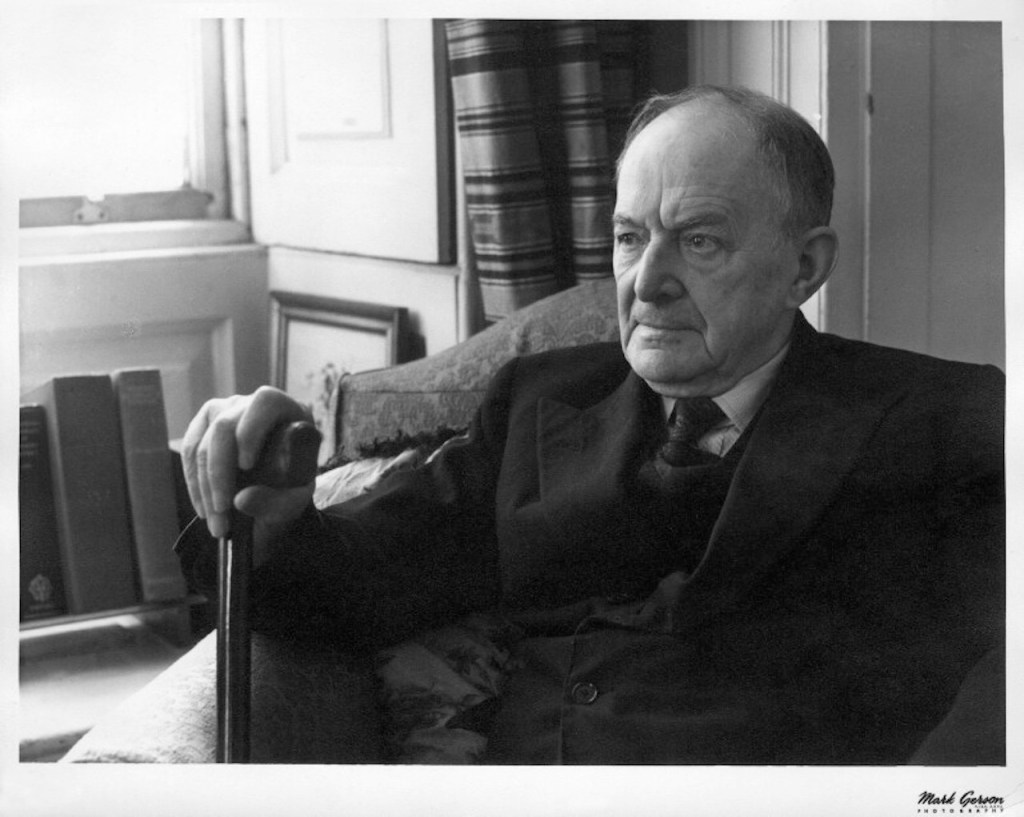
    Image:  Ben Okri

    Ben Okri’s Poem “Obama”

    A no-achievement president confounds the ability of a poet, who tries to celebrate the outgoing leader but can find no achievements to celebrate.

    Introduction with Text of Ben Okri’s “Obama” 

    On Thursday, January 19, 2017, one day before the inauguration of Donald Trump as the 45th president of the United States of America, the U.S.A. edition of The Guardian published Ben Okri’s poem [1] simply titled “Obama,” about which the publication claimed, “With Donald Trump about to enter the White House, a poet celebrates the achievements of the outgoing president.”

    One will peruse Okri’s poem in vain looking of any achievements that might be associated with President #44.  One will also peruse this poem in vain looking for any “celebration.”  The poem offers four musings of a philosophical nature, each handled in each of the four movements that structure the piece:  

    1. “Sometimes the world is not changed / Till the right person appears who can / Change it.”
    2. “For it is our thoughts that make / Our world.”
    3. “Being a black president is not a magic wand / That will make all black problems disappear.”
    4. “And so what Obama did and did not do is neither / Here nor there, in the great measure of things.”

    Each musing remains a vague utterance, especially in relationship to its avowed subject.  The promise of celebrating achievements becomes a dumbfounded leitmotiv that like the Obama presidency fails to deliver anything substantial.

    Toward the end of the piece, the speaker even seems to have become aware that he had not, in fact, offered anything concrete regarding the achievements of this president.  Thus, he rehashes an old lie that people wanted this president to fail so they could support their racism.  

    For any opposition to a black president has to be racist! 

    The opposition cannot be opposing a black president because they do not agree with his policies; that opposition must be the result of the “race-hate, twin deity of America,” despite the blaring fact that that race-hateful America elected this black man to their highest office twice.

    Okri usually provides level-headed, balanced thinking on most issues, even the race issue.  He knows the difference between achievement and lack thereof; thus, in this poem, he has his speaker spouting philosophical stances and then only implying that they apply to Barack Obama. 

    Okri, the thinking man, knows that Barack Obama is the epitome of an “empty-suit.”  Obama can lay no claim to achievements accept negative ones.  This poem might even be considered one of those that “damn with faint praise” [2].

    Obama

    Sometimes the world is not changed
    Till the right person appears who can
    Change it. But the right person is also
    In a way the right time. For the time
    And the person have to work
    The secret alchemy together.
    But to change the world is more than
    Changing its laws. Sometimes it is just
    Being a new possibility, a portal
    Through which new fire can enter
    This world of foolishness and error.
    They change the world best who
    Change the way people think.

    For it is our thoughts that make
    Our world. Some think it is our deeds;
    But deeds are the children of thought.
    The thought-changers are the game-changers,
    Are the life-changers.
    We think that achievements are symbols.
    But symbols are not symbols.
    Obama is not a mere symbol.
    Sometimes even a symbol is a sign
    That we are not dreaming potently
    Enough. A sign that the world is the home
    Of possibility. A sign that our chains
    Are unreal. That we are freer than we
    Know, that we are more powerful than
    We dare to think. If he is a symbol at all,
    Then he is a symbol of our possible liberation.
    A symbol also that power in this world
    Cannot do everything. Even Moses could
    Not set his people free. They too had to
    Wander in the wilderness. They too turned
    Against their leaders and their God
    And had to overcome much in their
    Make up and their history to arrive
    At the vision their prophets had long before.

    Being a black president is not a magic wand
    That will make all black problems disappear.
    Leaders cannot undo all the evils that
    Structural evils make natural in the life
    Of a people. Not just leadership, but
    Structures must change. Structures of thought
    Structures of dreams structures of injustice
    Structures that keep a people imprisoned
    To the stones and the dust and the ash
    And the dirt and the dry earth and the dead
    Roads. Always we look to our leaders
    To change what we ourselves must change
    With the force of our voices and the force
    Of our souls and the strength of our dreams
    And the clarity of our visions and the strong
    Work of our hands. Too often we get fixated
    On symbols. We think fame ought to promote
    Our cause, that presidents ought to change our
    Destinies, that more black faces on television
    Would somehow make life easier and more just
    For our people. But symbols ought to only be
    A sign to us that the power is in our hands.
    Mandela ought to be a sign to us that we cannot
    Be kept down, that we are self-liberating.
    And Obama ought to be a sign to us that
    There is no destiny in colour. There is only
    Destiny in our will and our dreams and the storms
    Our “noes” can unleash and the wonder our “yesses”
    Can create. But we have to do the work ourselves
    To change the structures so that we can be free.
    Freedom is not colour; freedom is thought; it is an
    Attitude, a power of spirit, a constant self-definition.

    And so what Obama did and did not do is neither
    Here nor there, in the great measure of things.
    History knows what he did, against the odds.
    History knows what he could not do. Not that
    His hands were tied, but that those who resent
    The liberation of one who ought not to be liberated
    Blocked those doors and those roads and whipped
    Up those sleeping and not so sleeping demons
    Of race-hate, twin deity of America. And they turned
    His yes into a no just so they could say they told us so,
    Told us that colour makes ineffectuality, that colour
    Makes destiny. They wanted him to fail so they could
    Prove their case. Can’t you see it? But that’s what
    Heroes do: they come through in spite of all that blockage,
    All those obstacles thrown in the path of the self-liberated.
    That way the symbol would be tainted and would fail
    To be a beacon and a sign that it is possible
    To be black and to be great.

    Commentary on Ben Okri’s  “Obama”

    Ben Okri is a fine poet and thinker.  His unfortunate choice of subject matter for this piece, however, leads his speaker down a rocky path to nowhere.

    First Movement:  “Change”?  But Where is the “Hope”?

    The speaker of Okri’s “Obama” has a mighty task before him:  he must transform a sow’s ear into a silk purse.  And of course, that cannot be done.  But the speaker tries, beginning with some wide brush strokes that attempt to sound profound:  only the right person appearing at the right time can change with world.  

    Changing laws is not sufficient to change the world, so sometimes it is only a “new possibility” which functions like a new door “through with a new fire can enter.”  

    The speaker is, of course, implying that his subject, Obama, is that “portal” through which a new fire has entered.  Readers will note that the speaker is only implying such; he does not make any direct statement about Obama actually being that new door or new fire.

    The election of 2016, after eight years of this implied new fire that has supposedly changed the way people think, proved that American citizens were indeed thinking differently.

    They had grown tired of stagnant economic growth, the destruction of their health care system, the rampant lawlessness of illegal immigrants, the war on law enforcement officers fueled by that “hope and change” spouting candidate, the ironically deteriorated race relations, and the installation of a petty dictatorship fueled by political correctness.  

    This beckon of hope and change had promised to fundamentally change [3] the United States of America, and his policies indeed had put the country on a path to an authoritarian state from which the Founders had guarded the country through the U. S. Constitution.  Obama proceeded to flout that document as he ruled by executive order, circumventing the congress.

    Indeed, after those abominable, disastrous eight years, people’s minds had changed, and they wanted no more of those socialistic policies that were driving the country to the status of a Banana Republic.

    The speaker, of course, will never refer to any of the negative accomplishments of his subject, but also he will never refer to any positive accomplishment because there simply are none.  Thus, no achievement is mentioned in the opening movement.

    Five days away:  

    Second Movement:  Symbols, Signs, Still No Achievements

    The speaker then continues with the mere philosophizing, offering some useful ideas that have nothing to do with his subject.  He asserts the importance of thought, how thought is the mother of deeds.  He then begins an equivocating series of lines that indeed fit quite well with the shallow, misdirection of the subject about which he tries to offer a celebration.

    The speaker makes a bizarre, false claim, “We think that achievements are symbols.”  We do not think any such thing; we think that achievements are important, useful accomplishments.

    A presidential achievement represents some act which the leader has encouraged that results in better lives for citizens. 

    Americans had high hopes [4] that the very least this black president could achieve would be the continued improvement of race relations.  Those hopes were dashed as this president from his bully pulpit denigrated whole segments of society—the religious, the patriotic, and especially the members of law enforcement [5].  

    Obama damaged the reputation of the entire nation as he traveled on foreign soil, apologizing for American behavior [6] that had actually assisted those nations in their times of distress.  

    The speaker then ludicrously states, “symbols are not symbols,” which he follows with “Obama is not a mere symbol.”  

    In a kind of syllogistic attempt to define a symbol, the speaker admits the truth that Obama actually had no achievements. If achievements are symbols, and Obama is not a “mere” symbol, then we hold the notion that Obama does not equal achievements, except for whatever the word “mere” might add to the equation.

    But the speaker then turns from symbols to signs. Signs can show us whether we are dreaming correctly or not.  Signs can show us that we are more free than we know.  But if Obama is any kind of  symbol, he symbolizes “our possible liberation.”  

    But he is also a symbol that “power in this world / Cannot do everything.”  He then turns to Moses’ inability to liberate his people.

    The sheer inappropriateness of likening the lead-from-behind, atheistic Obama to the great historical, religious figure Moses boggles the mind.  The speaker then makes an astoundingly arrogant inference that Americans turning against Obama equates to Moses’ people turning against him “and their God.”  

    Americans turning against leader Obama means they will have to “wander in the wilderness” until they at last come to their senses and return to the “vision of their prophets.”

    The speaker again has offered only musings about symbols, signs, power, lack of power, dreams, and misdirection, but he offers nothing that Obama has done that could be called an achievement.

    Third Movement:  Color Is not Destiny

    This movement offers a marvelous summation of truths, which essentially places all leaders in their proper places.  Leaders can serve only as symbols or signs to remind citizens that only the people themselves have the power to change the structures of society that limit individuals.  

    Black presidents possess no “magic wand” with which to make all “black problems disappear.”  Even Nelson Mandela should serve only as a sign that we are all “self-liberating.”

    The speaker rightly laments that we tend to look to our leaders to perform for us the very acts that we must perform for ourselves.  Our leaders cannot guarantee our inner freedom, only we can do that. 

    He asserts that Obama must remain only a sign that there is “no destiny in colour.”  Our destiny is in our own will and in our own dreams. 

    The speaker correctly asserts, “Freedom is not colour; freedom is thought; it is an / Attitude, a power of spirit, a constant self-definition.”

    Sadly, Obama has never demonstrated that he understands the position taken in Okri’s third movement.  Obama is so steeped in political correctness and radical collectivism that he always denigrates the stereotypical white privileged over the stereotypical groups of race, gender, nationality, and religion.  

    Obama’s warped, highly partisan stance would never accept the statements about freedom as described by Okri.  Obama believes that only the state can grant freedom to the proper constituencies as it punishes others.  Okri’s analysis runs counter to the Obama worldview [7].

    Thus, again, in its third movement, this poem that claims to be a celebration of the presidential achievements of the 44th president offers only philosophical musings, and although some of those musings state an accurate position, there still remains no positive achievement that can attach to Obama.

    Fourth Movement:  Obama, Neither Here nor There 

    With complete accuracy once again, Okri’s speaker states baldly, “And so what Obama did and did not do is neither / Here nor there, in the great measure of things.”  Certainly, one who looks for positive achievements will find the blandness of this statement on the mark.  The speaker then adds that history will record what Obama did and also what he was unable to do.

    Then the narrative goes totally off the rails.  American racists, those “racists” who had elected this black president twice, threw up road blocks that limited this president’s accomplishments.  

    They wanted him to fail because being black he had no right to succeed.  The speaker implies that those American racists thought that this black president did not deserve liberation, meaning they thought he should be a slave—a ludicrous, utterly false claim. 

    The speaker then concludes with a weak implication that Obama is a hero, who demonstrated that it is possible to be “black and to be great”:  

    They wanted him to fail so they could
    Prove their case. Can’t you see it? But that’s what
    Heroes do: they come through in spite of all that blockage,
    All those obstacles thrown in the path of the self-liberated.
    That way the symbol would be tainted and would fail
    To be a beacon and a sign that it is possible
    To be black and to be great.

    The problem with this part of the narrative again is, on the one hand, that it is only an implication, not a positive statement making the claim that Obama was, in fact, a hero; on the other hand, it is obvious why the speaker would only imply these positive qualities to Obama:  the man is not a hero; indeed, he is a fraud [8].  

    Fraudulent Claims of Literary Prowess

    There is a certain bit of irony in having a poem attempt to celebrate the achievements of a colossal fraud [9].  Nowhere is the evidence of Obama’s characteristic as a fraud more evident than in his claims to have written his two books, Dreams from My Father, and The Audacity of Hope

    Jack Cashill’s “Who Wrote Dreams from My Father?” [10] offers convincing evidence that Barack Obama could not have written the books he claims to have authored.  And Cashill continues his analysis of Obama’s writing skills in “Who Wrote Audacity of Hope?” [11].

    Writing in the Illinois Review, Mark Rhoads [12] poses the same question regarding the Obama works.  Even Obama’s presidential library [13] will offer no evidence that the president possessed any literary skills.

    Clearly, Okri’s poem provides a mélange of attitudes toward its subject.  On the one hand, it wants to praise the outgoing president, but on the other, it simply can find nothing with which to do so. 

    That the poem concludes with a bald-face lie is unfortunate, but understandable.  Still, it cannot hide the truth:  that Barack Obama offered it no achievements, which it could celebrate; at best, only phony ones [14].

    Sources

    [1]  Ben Okri.  “Barack Obama: a celebration in verse.”  The Guardian.  January 19, 2017.

    [2] Alexander Pope.  Rape of the Lock and Other Poems.  Project Gutenberg.  October 18, 2003.

    [3]  Barack Obama. “We Are 5 Days From Fundamentally Transforming America.” YouTube.  Feb 2, 2012.

    [4] Jeffrey M. Jones. “In U.S., Obama Effect on Racial Matters Falls Short of Hopes.” Gallup. August 11, 2016.

    [5]  Ben Smith. “Obama on small-town Pa.: Clinging to religion, guns, xenophobia.”  Politico.  April 11, 2008.

    [6]   Nile Gardiner and Morgan Lorraine Roach.  “Barack Obama’s Top 10 Apologies: How the President Has Humiliated a Superpower.”  The Heritage Foundation.  June 2, 2009.

    [7]  Andrew Miller.  “Unriddling the Radical Worldview of President Obama.”  The Trumpet. January 2016.

    [8]  Andrew McCarthy.  “Obama’s Massive Fraud.”  National Review Online.  November 9, 2013.

    [9]  Jack Cashill.  “‘Roots,’ ‘Dreams,’ and the Unequal Punishment of Fraud.”  The American Spectator.  December 26, 2021.

    [10]   – – – . “Who Wrote Dreams From My Father?American Thinker.  October 9, 2008.

    [11]  – – – .  “The Question the Times Should Have Asked ‘Writer’ Barack Obama.”  The American Spectator.  January 25, 2017.

    [12]  Mark Rhoads.  “Did Obama Write ‘Dreams from My Father or ‘Audacity of Hope’?”  Illinois Review. October 16, 2008.

    [13] Lolly Bowean.  “Without archives on site, how will Obama Center benefit area students, scholars?”  Chicago Tribune. October 8, 2017.

    [14]  Jennifer Rubin.  “Obama’s phony accomplishments leave us worse off.”  Washington Post.  Feb. 12, 2016.

    🕉

    You are welcome to join me on the following social media:
    TruthSocial,Locals,Gettr,X,Bluesky,Facebook,Pinterest 

    🕉

    Share

  • Sharon Olds’ “The Victims”

    Image: Sharon Olds – Illustration by Rebecca Clarke – The New Yorker

    Sharon Olds’ “The Victims”

    In her customary fashion, poetaster Sharon Olds offers up this deeply flawed, dishonest hit-piece, “The Victims,” which does little more for humanity than showcase a handful of stark images.  

    Introduction with Text of  “The Victims”

    According to noted poetry critic, Helen Vendler, Sharon Olds’ poetry comes across as  “self- indulgent, sensationalist, and even pornographic.”  And as former poet laureate Billy Collins averred:  Olds is “a poet of sex and the psyche” “infamous for her subject matter alone.”  

    And even though Collins attempted to add some faint praise, “but her closer readers know her as a poet of constant linguistic surprise,” those linguistic surprises consisting of stark images only function to undermine her attempt to produce any genuine poetry.

    Although “The Victims” is one of Olds’ least “pornographic” efforts, the piece clearly demonstrates egotistical self-indulgence and egregious sensationalism.  Such writing smacks more of loose-mused regurgitation than real cogitation on genuine emotion. 

    This unhappy piece consists of 26 uneven lines of free verse that sit in a lump chunk on the page and suffer from the customary Oldsian haphazard line breaks.

    The Victims

    When Mother divorced you, we were glad. She took it and
    took it in silence, all those years and then
    kicked you out, suddenly, and her
    kids loved it. Then you were fired, and we
    grinned inside, the way people grinned when
    Nixon’s helicopter lifted off the South
    Lawn for the last time. We were tickled
    to think of your office taken away,
    your secretaries taken away,
    your lunches with three double bourbons,
    your pencils, your reams of paper. Would they take your
    suits back, too, those dark
    carcasses hung in your closet, and the black
    noses of your shoes with their large pores?
    She had taught us to take it, to hate you and take it
    until we pricked with her for your
    annihilation, Father. Now I
    pass the bums in doorways, the white
    slugs of their bodies gleaming through slits in their
    suits of compressed silt, the stained
    flippers of their hands, the underwater
    fire of their eyes, ships gone down with the
    lanterns lit, and I wonder who took it and
    took it from them in silence until they had
    given it all away and had nothing
    left but this.

    Commentary on “The Victims”

    The piece breaks into two parts: the first is a description of how the speaker and her family felt way back a few decades when she was a child, and the second part jumps to what the speaker observes and thinks as an adult.

    First Movement:  Hindsight Sometimes Less Than 20/20 

    The speaker of the poem is an adult looking back at the break up of her family roughly around the time that her mother divorced her father. The speaker is addressing the father, telling him how glad she and the family were after the mother divorced the father.  

    The speaker and her siblings were glad because she “took it // in silence, all those years.” What she, and perhaps they, silently endured is left up to the reader to imagine, and that omission is a major flaw that leads the poem astray.  

    No two divorces are alike.  By leaving such an important motive to the imagination of the reader, the speaker weakens the thrust of her accusations against the father. The only hint of the father’s misdeeds is that he enjoyed three alcoholic beverages with his lunch.  

    Admittedly, that could present a problem, but by no means does it always do so.  Some individuals can handle a few drinks better than others, and the fact that the father seemed to have functioned in his job for a considerable period of time hints that he might have been competent in his job.

    On the other hand, the mother influenced her children in a grossly negative way, causing them to hate their father and wish him dead. 

    Apparently, the mother teaches her children to hate their father simply because he had three double bourbons for lunch or so we must assume because no other accusation is leveled against the poor man. 

    Maybe the father was a cruel alcoholic, who beat the mother and children, but there is no evidence to support that idea. And if that were the case, stark images of bruises and broken bones would surely have made an appearance in the little drama.

    The father was fired from his job, but only after the mother kicked him out. Would he have been able to keep his job to that point in his life, if he had been an out of control, cruel drunk?  Perhaps he became depressed and without purpose after being forced to leave his family and sank further into alcohol. 

    The gratuitous allusion to “Nixon’s helicopter,” carrying the newly resigned president from office, further inserts the nastiness of a political hit-piece, adding nothing to the drama except the suggestion that the family likely voted for Democrats.

    One has to wonder if the speaker and her fellow travelers would have “grinned” so readily, if a helicopter had lifted off the South Lawn carrying  Jimmy Carter or Bill Clinton.

    So the reader has no evidence that the father was guilty of anything, but the mother taught the kids to hate the father and wish for his death. The mother comes across as a less sympathetic character than the father.

    Second Movement:  Appalling Prejudice Revealed

    The speaker now begins her report on what she sees and how she thinks in her current life situation that has been tainted by her past.  She begins to observe homeless men sleeping in doorways. 

    It becomes clear that it is those homeless men in the doorway who are reminding the speaker of her father getting kicked out of their home and getting fired from his job.  

    The speaker then speculates about those men about whom readers can be sure she knows absolutely nothing.  She wonders about the lives of those homeless men, whom she calls “bums.”  

    She wonders if their families “took it” from those men the way her family supposedly took it from her father.  But again, the reader remains clueless about what it is the family “took.” 

    What an arrogant reaction! Without one whit of evidence that these “bums” did anything to anyone, the speaker simply presumes that they are like her father, who lost it all because of what he (and now they) supposedly did.

    But the reader still does not even know what the father did. They do know what the mother did; she taught her children to hate the father and wish him dead. 

    Stark, Colorful Images

    This poem, like many of Sharon Olds’ poems, offers some colorful descriptions.  The father’s business suits are rendered “dark / caresses” hanging the closet.  His shoes sport “black / noses //with their large pores.”  

    Those homeless men are name called “bums” because they are lying “in doorways.”  Their bodies are dehumanized and portrayed as “white / slugs.” 

    Those slugs shine “through slits” in compacted dirt, revealing their compromised hygiene after being homeless for a protracted length of time.  Their hands resemble “stained / flippers,” again dehumanized.  

    Their eyes remind this flippant speaker, who lacks compassion for her fellow human beings, of ships that have sunken with their “lanterns lit.”

    Would that all of those colorful images resided in a better place and without the lack of humanity this speaker reveals about herself.   Those “linguistic surprises,” however, function only to render the speaker and the so-called victims as the actual perpetrators of despicable acts.

    Although the speaker wishes to foist bad  behavior onto first her father and then onto homeless men, she cannot escape the rebuttal that she has failed to indict her father and that she knows nothing about those homeless “bums.” 

    This ugly piece remains questionable and appears to have been created solely for the purpose of showcasing a handful of stark, colorful images.

  • Angela Manalang Gloria’s “To the Man I Married”

    Image: Angela Manalang Gloria and her husband

    Angela Manalang Gloria’s “To the Man I Married”

    Angela Manalang Gloria’s poem “To the Man I Married” presents an extended metaphor in which the speaker likens her love for her husband to her existential dependence on the earth. 

    Introduction and Text of “To the Man I Married”

    This metaphor functions on both physical and spiritual levels, suggesting that her partner sustains and orients her life in a manner analogous to the natural elements necessary for survival.

    To the Man I Married

    I

    You are my earth and all the earth implies:
    The gravity that ballasts me in space,
    The air I breathe, the land that stills my cries
    For food and shelter against devouring days.

    You are the earth whose orbit marks my way
    And sets my north and south, my east and west,
    You are the final, elemented clay
    The driven heart must turn to for its rest.

    If in your arms that hold me now so near
    I lift my keening thoughts to Helicon
    As trees long rooted to the earth uprear
    Their quickening leaves and flowers to the sun,

    You who are earth, O never doubt that I
    Need you no less because I need the sky!

    II

    I cannot love you with a love
            That outcompares the boundless sea,
    For that were false, as no such love
            And no such ocean can ever be.
    But I can love you with a love
            As finite as the wave that dies
    And dying holds from crest to crest
            The blue of everlasting skies.

    Section I

    The first section of the poem adheres to the formal structure of the English (or Shakespearean) sonnet, consisting of three quatrains and a concluding couplet.

    First Quatrain: The Husband as Life-Sustaining Force

    You are my earth and all the earth implies:
    The gravity that ballasts me in space,
    The air I breathe, the land that stills my cries
    For food and shelter against devouring days.

    The speaker opens with a striking declaration, asserting her husband’s indispensable role in her existence by comparing him to the earth itself. The metaphor extends through a catalogue of essential elements: gravity, air, land, and sustenance. 

    These earthly necessities are paralleled with emotional and material support offered by her husband, suggesting that her survival—both physical and emotional—depends as much on him as it does on the natural world.

    Second Quatrain: He Provides Orientation and Final Rest

    You are the earth whose orbit marks my way
    And sets my north and south, my east and west,
    You are the final, elemented clay
    The driven heart must turn to for its rest.

    The second quatrain deepens the metaphor, portraying the husband as the source of direction and purpose in the speaker’s life. The reference to cardinal directions implies that her sense of order and orientation derives from their shared life. 

    The closing lines evoke mortality and rest, implying that just as the earth will eventually receive her physical body in death, her husband provides emotional and spiritual repose during life.

    Third Quatrain: Acknowledging Other Affections

    If in your arms that hold me now so near
    I lift my keening thoughts to Helicon
    As trees long rooted to the earth uprear
    Their quickening leaves and flowers to the sun,

    Here, the speaker introduces a subtle shift. While affirming her deep attachment to her husband, she also acknowledges her intellectual and spiritual aspirations. 

    The allusion to Helicon, a mountain sacred to the Muses in Greek mythology, evokes poetic inspiration. Her longing for the transcendent does not diminish her love for her husband; rather, it coexists with it, just as rooted trees still reach toward the sun.

    The Couplet: Coexistence of Earthly and Celestial Needs

    You who are earth, O never doubt that I
    Need you no less because I need the sky!

    The final couplet affirms the central thesis of the poem: the speaker’s need for transcendence (symbolized by “the sky”) does not negate her need for the grounding, stabilizing presence of her husband (symbolized by “the earth”). 

    Instead, both are essential, suggesting a balanced view of human experience as encompassing both the corporeal and the aspirational.

    Section II

    The second part of “To the Man I Married” diverges from the sonnet form and appears in two quatrains, adopting a more reflective tone. Here, the speaker qualifies the grand metaphors of the first section with a more tempered, realistic assessment of love.

    First Quatrain: Rejection of Hyperbolic Metaphors

    I cannot love you with a love
    That outcompares the boundless sea,
    For that were false, as no such love
    And no such ocean can ever be.

    In this stanza, the speaker resists the temptation to describe her love through hyperbole. She dismisses the comparison to the “boundless sea” as false, recognizing the limitations of human emotion and language. 

    This moment of self-awareness introduces a more grounded view of romantic love.

    Second Quatrain: Finite Love Reflecting the Infinite

    But I can love you with a love
    As finite as the wave that dies
    And dying holds from crest to crest
    The blue of everlasting skies.

    Although she renounces the oceanic metaphor, the speaker reintroduces the image of water through the wave. Unlike the sea, the wave is finite and mortal, yet it captures and reflects the sky’s infinity. 

    In this subtle turn, Gloria suggests that even within human limitations, love can embody and reflect transcendence.

  • W. H. Auden’s “Doggerel by a Senior Citizen”

    Image: WH Auden in the Tom Quadrangle at Christ Church College, Oxford © Camera Pres 

    W. H. Auden’s “Doggerel by a Senior Citizen”

    The speaker in Auden’s “Doggerel by a Senior Citizen” is a man of certain age, warning listeners that what he is about to spew is doggerel.  But the claim is made in ironic jest; what the “doggerelist” is about to spew is the bitter truth, or at least in his humble opinion, about societal progress.

    Introduction with Text from “Doggerel by a Senior Citizen”

    By ironically jesting that his utterance will be only a bit of doggerel, the speaker in W. H. Auden’s “Doggerel by a Senior Citizen” lightens any blame he may receive, or any pushback against his views.    The views and the biting criticism remain perfectly in line with the poet’s views as expressed in his utterly serious works, such as “The Unknown Citizen.”

    Doggerel by a Senior Citizen

    Our earth in 1969
    Is not the planet I call mine,
    The world, I mean, that gives me strength
    To hold off chaos at arm’s length.

    My Eden landscapes and their climes
    Are constructs from Edwardian times,
    When bath-rooms took up lots of space,
    And, before eating, one said Grace.

    The automobile, the aeroplane,
    Are useful gadgets, but profane:
    The enginry of which I dream
    Is moved by water or by steam.

    Reason requires that I approve
    The light-bulb which I cannot love:
    To me more reverence-commanding
    A fish-tail burner on the landing.

    My family ghosts I fought and routed,
    Their values, though, I never doubted:
    I thought the Protestant Work-Ethic
    Both practical and sympathetic.

    When couples played or sang duets,
    It was immoral to have debts:
    I shall continue till I die
    To pay in cash for what I buy.

    The Book of Common Prayer we knew
    Was that of 1662:
    Though with-it sermons may be well,
    Liturgical reforms are hell.

    Sex was of course — it always is —
    The most enticing of mysteries,
    But news-stands did not then supply
    Manichean pornography.

    Then Speech was mannerly, an Art,
    Like learning not to belch or fart:
    I cannot settle which is worse,
    The Anti-Novel or Free Verse.

    Nor are those Ph.D’s my kith,
    Who dig the symbol and the myth:
    I count myself a man of letters
    Who writes, or hopes to, for his betters.

    Dare any call Permissiveness
    An educational success?
    Saner those class-rooms which I sat in,
    Compelled to study Greek and Latin.

    Though I suspect the term is crap,
    There is a Generation Gap,
    Who is to blame? Those, old or young,
    Who will not learn their Mother-Tongue.

    But Love, at least, is not a state
    Either en vogue or out-of-date,
    And I’ve true friends, I will allow,
    To talk and eat with here and now.

    Me alienated? Bosh! It’s just
    As a sworn citizen who must
    Skirmish with it that I feel
    Most at home with what is Real.

    Commentary on “Doggerel by a Senior Citizen”

    Claiming to be offering a piece of doggerel, this speaker/senior-citizen offers his personal evaluation about what things are like in the year 1969.

    First Movement:   A Different Planet from Yesteryear

    Our earth in 1969
    Is not the planet I call mine,
    The world, I mean, that gives me strength
    To hold off chaos at arm’s length.

    My Eden landscapes and their climes
    Are constructs from Edwardian times,
    When bath-rooms took up lots of space,
    And, before eating, one said Grace.

    The speaker begins by alerting his listeners that he is reporting from the year 1969, and he then makes clear through a bit of exaggeration that the earth no longer represents the same “planet” upon which he had formerly existed.   This new “earth” “planet” “world” has become a place of mayhem, and the disorder is so bad that he has difficulty keeping it at bay or out of his own life.

    The speaker suggests that his own preference is for the Edwardian age [1], a period of prosperity and especially important in the areas of fashion and art.  The speaker hints that religion was still a central feature in the family, as they said “Grace” before dining.

    The speaker makes it clear that for him those times were “[his] Eden”—likely he does mean prelapsarian Eden [2]. He employs the rest of his discourse to show how the times in which he is now living can be considered quite postlapsarian [3]

    Second Movement:  Nostalgia Outsmarts Novelty

    The automobile, the aeroplane,
    Are useful gadgets, but profane:
    The enginry of which I dream
    Is moved by water or by steam.

    Reason requires that I approve
    The light-bulb which I cannot love:
    To me more reverence-commanding
    A fish-tail burner on the landing.

    The speaker refers to the common inventions of the day, calling the mode of travel by car and plane “useful” but “profane.”  He still longs for the steam engine  and old-timey wind sailing.

    Although he feels that he is likely required to accept used of the “light-bulb,” he cannot bring himself to “love” the object.  He prefers the gaslight resembling a fish tail, which resulted from two gas jets spewing through two holes that fanned out and formed the fish tail shaped flame.  Nostalgia often overcomes efficacy when it comes to every-day useful appliances.

    Third Movement:  From the Work Ethic to Debt Accumulation

    My family ghosts I fought and routed,
    Their values, though, I never doubted:
    I thought the Protestant Work-Ethic
    Both practical and sympathetic.

    When couples played or sang duets,
    It was immoral to have debts:
    I shall continue till I die
    To pay in cash for what I buy.

    The speaker has overcome the idiosyncrasies of family life, coming to love those whom he had earlier found unpleasant; he has, however, always accepted the basic moral rectitude of those family members.  They adhered to the “Protestant Work-Ethic,” which the speaker has always deemed practical and proper.

    Back during the time when party entertainment often consisted of “couples [playing or singing] duets,” the society deemed acquiring debt an immoral act.  The speaker assures his listener that to his dying day he will continue to accept that societal feature and continue to pay “in cash for what I buy.”

    Fourth Movement:  The Weakness of Liturgical Reforms

    The Book of Common Prayer we knew
    Was that of 1662:
    Though with-it sermons may be well,
    Liturgical reforms are hell.

    Sex was of course — it always is —
    The most enticing of mysteries,
    But news-stands did not then supply
    Manichean pornography.

    The speaker remembers that before certain religious reforms a “Book of Common Prayer” held sway, and it dated all the way back to 1662, during the era of the Restoration of King Charles II [4].

    Religious reformation always comes about through controversy.  Those who have become accustomed to certain practices of worship distain any change and thus argue against “liturgical reforms” [5].  This speaker has already placed his likely position on such reforms; he naturally comes down solidly on the side against them, labeling such actions “hell.”

    The speaker then cites “sex,” which is always engulfed in “mysteries,” as an example of one phase of life that has suffered because of “liturgical reforms”:  the obnoxious duality of “Manichean pornography” now sits on “news-stands,” whereas in the more modest past, such sights would not have been tolerated.

    Fifth Movement:  The Problem with Language Study

    Then Speech was mannerly, an Art,
    Like learning not to belch or fart:
    I cannot settle which is worse,
    The Anti-Novel or Free Verse.

    Nor are those Ph.D’s my kith,
    Who dig the symbol and the myth:
    I count myself a man of letters
    Who writes, or hopes to, for his betters.

    The speaker now tackles “Speech,” the art of the word, the use of letters that creates literary art.  But first he delves into the vulgar act of belching or farting, which along with the “mannerly” use of language, would not be acceptable.  Children would then learn to avoid the grossness involved in such human effusions.

    The speaker says he has not decided which art form is more vile: “the Anti-Novel” or “Free Verse.”  The proliferation of those holding doctoral degrees, particularly the Ph.D., does not impress this speaker; he finds this who revel in “myth” and “symbol” hold little interest for him.

    He contrasts himself with those book-learned fellows: he assures his listeners that he himself is “a man of letters.”  But instead of trying to appeal to the vulgar, profane masses, he strives to compose for “his betters.”  He remains a bit humble in his claim by inserting “or hopes to.”

    Sixth Movement:  Lack of Discipline

    Dare any call Permissiveness
    An educational success?
    Saner those class-rooms which I sat in,
    Compelled to study Greek and Latin.

    Though I suspect the term is crap,
    There is a Generation Gap,
    Who is to blame? Those, old or young,
    Who will not learn their Mother-Tongue.

    The speaker then refers to permissiveness as the bane of success in education.  He finds the old-fashioned disciplines focusing on learning “Greek and Latin” to be a much “saner” focus for the classroom.  He was such a student and now feels he has benefited for the rigor of such study of language.

    Mentioning the buzz-phrase of the late sixties “Generation Gap,” he says its likely a worthless expression, even though he does detect that such a thing exists.  But he wonders who is to blame for it? Is the the “old or young”?  But then he answers his question by asserting that both are to blame, that is, those who refuse to learn “their Mother-Tongue.”

    Seventh Movement:  Love and Reality

    But Love, at least, is not a state
    Either en vogue or out-of-date,
    And I’ve true friends, I will allow,
    To talk and eat with here and now.

    Me alienated? Bosh! It’s just
    As a sworn citizen who must
    Skirmish with it that I feel
    Most at home with what is Real.

    The speaker concludes with some uplifting thoughts:  love, for example, never goes out of style, and he retains good friends with whom he can pleasantly dine and converse.

    He seems to reject the notion that he might feel “alienated,” but he does suggest that the loosening of societal mores causes him to “skirmish” with it all.  He insists that he feels most comfortable with “what is Real.”  He does not equivocate with what he thinks that reality entails; he has just laid it all out in his piece of “doggerel.”

    Sources

    [1]  Curators.  “Edwardian Era Facts: Daily Life Of People, Society.” Victorian Era.  Accessed November 26, 2023.

    [2]  Curators.  “prelapsarian.”  vDict.pro. Accessed November 26, 2023.

    [3]  Curators. “postlapsarian.”  Merriam-Webster.  Accessed November 26, 2023.

    [4]  History.com Editors.  “The English Restoration begins.”  History. May 21, 2020.

    [5]  Helen Hull Hitchcock.  “Why the Liturgical Reform? or, ‘What if we just say no to any liturgical change?’Adoremus. November 11, 2020.

  • Al Gore’s “One thin September soon”

    Image:  Steven F. Hayward: Exposed! The global warming campaign enters its emperor’s-new-clothes phase.

    Al Gore’s “One thin September soon”

    Climate change alarmist Al Gore joked to his publisher that W. B. Yeats had penned the so-called poem “One thin September soon” in Gore’s latest book; sadly, the publisher seemed to fall for it, before Gore admitted to scribbling it.

    Introduction with Text of “One thin September soon”

    The former vice-president’s untitled piece appears in his book, Our Choice: A Plan to Solve the Climate Crisis, which purportedly offers the antidote to “global warming.”   Al Gore’s untitled verse is chopped up into seven three-line sets, which may charitably be labeled tercets. 

    In this farcical piece of doggerel, the AGW (anthropogenic global warming) fanatic has his speaker pontificate from the position of a shepherd, who is crying to the world about the impending doom that human mankind is bringing on the world through the use of fossil fuels. 

    Through his many pontifications and written tracts on the politically fabricated issue of global warming, the former failed presidential candidate shows that he fancies himself a kind of modern-day John-the-Baptist crying in the wilderness, which is growing hotter and drier year after year, despite the fact that there has been no “warming” since the mid-1990s [1].

    And now temperatures have actually started to cool [2], according to official NASA global temperature data.

    Never mind the inconvenient facts, Gore heralds his speaker to bark loudly about the concocted problem and to offer his saintly wisdom in his untitled “poem”—wonder when Gore will publish a collection of his poetry.  Likely, never.  It seems that the political gasbag has penned only one “poem” which barely qualifies as doggerel.

    One thin September soon

    One thin September soon
    A floating continent disappears
    In midnight sun

    Vapors rise as
    Fever settles on an acid sea
    Neptune’s bones dissolve

    Snow glides from the mountain
    Ice fathers floods for a season
    A hard rain comes quickly

    Then dirt is parched
    Kindling is placed in the forest
    For the lightning’s celebration

    Unknown creatures
    Take their leave, unmourned
    Horsemen ready their stirrups

    Passion seeks heroes and friends
    The bell of the city
    On the hill is rung

    The shepherd cries
    The hour of choosing has arrived
    Here are your tools


    Video:  Al Gore Reads “One thin September soon”  

    Image:  Polar Bears on Ice Cap (Justin Hofman/Barcroft Media/Landov)

    Commentary on “One thin September soon”

    Supposedly well read in scientific literature, climate alarmist Al Gore gets the science of the Earth wrong as he has his speaker claim to be “crying in the wilderness” like some modern day John-the-Climate-Change-Baptist.

    First Tercet: Beginning with a Fantasy

    One thin September soon
    A floating continent disappears
    In midnight sun

    Gore’s speaker begins his piece by asserting that soon one of these Septembers—and it will be a “thin” September, not like the usual thick Septembers—the midnight sun will embrace the disappearance of a continent that floats.

    This first assertion presents several problems:

    1. it must be referring only to the continents at the Earth’s extreme north and south;
    2. floating continents [3]  exist only in fantasy [4],
    3. he has to be referring to Antarctica because the Arctic is not a continent at all;
    4. the midnight sun refers to a phenomenon that occurs in summer at each pole when the sun does not set.

    For the midnight sun reference, the speaker has to be referring to the non-continent Arctic because he names the month of September. There is midnight sun in the first three weeks of September at the North Pole but not at the South, whose summer is from December 22 to March 21.

    This confusion of poles gets the verse off to an inauspicious start. 

    On the one hand, the reader might remember that the composer of this pigswill is a man who is supposedly steeped in scientific studies in support of his global warming theory; yet, he engages a non-scientific fantasy and confuses the facts regarding activities at the Earth’s poles.

    On the other hand, if one considers Gore’s academic accomplishment in the study of science —”According to his Harvard transcript, he earned a D in natural science his sophomore year”—[5], his error-prone nonsense makes perfect sense.

    Second Tercet: The Conundrum of Postmodern Claptrap

    Vapors rise as
    Fever settles on an acid sea
    Neptune’s bones dissolve

    According to global warming proponents, ocean waters are becoming acidic because of the lethal effects that the warming is having on various sea creatures, including coral and urchins. Gore’s speaker refers to these sea creatures as Neptune’s bones that are dissolving.

    The absurd conflation of the bones of a mythological god and sea creatures bends the piece to the frowziness of postmodernism, where nothing matters because nothing makes sense anyway.  Yet this man of hard science wants to influence politicians and governments to make policies that will affect all citizens worldwide.

    Third Tercet: A Pile of Images

    Snow glides from the mountain
    Ice fathers floods for a season
    A hard rain comes quickly

    Because of the warming, snows begin to loosen and slide down mountains while melting ice gluts the ocean, and then the rains begin, those horrid rains! And they are “hard” [6] rains—recall that other noted poetaster/plagiarist Bob Dylan [7].

    The politician-cum-poetaster then makes those three claims of the melting that the earth is enduring: all obviously caused by the heat, all slapped together without punctuation or conjunction, possibly because everything is happening almost simultaneously. As the snow and ice suddenly become a hard rain, the reader might then suspect the prompt need of an ark.

    Fourth Tercet: As Lightning Celebrates

    Then dirt is parched
    Kindling is placed in the forest
    For the lightning’s celebration

    However, the next scene takes the reader to dry land where dirt is parched, and out of the blue, someone has placed small slips of wood in a forest where lightning can catch them to flame as it celebrates.

    The doggerelist does not reveal who placed that “[k]indling” in the forest so that lightning could set it aflame for its celebration. Why, one might wonder, would lightning be “celebrating” anyway? But by now the gentle reader has become aware that taking anything in this piece seriously is a fool’s errand.

    Fifth Tercet: Getting Ready for the Apocalypse

    Unknown creatures
    Take their leave, unmourned
    Horsemen ready their stirrups

    There are many species of animals on Antarctica, but Gore’s speaker chooses to claim that they are unknown as they “[t]ake their leave.”  It seems that such a situation would merit some drama, instead of the faint, euphemistic “take their leave.” 

    But then they are unmourned. He, no doubt, would at least have them be mourned, despite their being unknown.  Perhaps the most bizarre and useless line in the entire piece is, “Horsemen ready their stirrups.” There seems to be no reason for that line, for it connects to nothing. 

    And if the bizarre notion of an allusion to the “Four Horsemen of the Apocalypse” springs to mind, it will offer no resolution of any kind. The Book of Revelation has suffered many absurd interpretations, and if Gore’s speaker is attempting to add another, it results in the lamest of the lame.

    Sixth Tercet: A Gorean City on the Hill

    Passion seeks heroes and friends
    The bell of the city
    On the hill is rung

    The brave shepherd is passionately seeking others who will help him get his message out, that the earth is becoming a scorched, iceless dustbowl with the oceans rising. The speaker/shepherd now credits himself for ringing that all important bell in that all important place—that “city / On the hill.” The solipsism of this piece is nausea invoking.  

    Could the city on the hill be that same place to which President Ronald Reagan [8] referred?

    A troubled and afflicted mankind looks to us, pleading for us to keep our rendezvous with destiny; that we will uphold the principles of self-reliance, self-discipline, morality, and, above all, responsible liberty for every individual that we will become that shining city on a hill.

    It is likely that Gore’s speaker does, in fact, refer to that same place, but for very different reasons, for the policies thus far suggested to stop global warming would stifle the individualism and freedom of all world citizens, especially those in Third-World nations.

    Seventh Tercet: The Shepherd Handing Over the Tools

    The shepherd cries
    The hour of choosing has arrived
    Here are your tools

    In the final three-line set, Gore’s speaker reports that he, as this good crying shepherd, is telling his listeners that the time for action is at hand, and he has hereby come to hand to them all the tools they need.

    This self-important, junk-science spewing “shepherd” is offering in his new book the necessary “tools” that his sheep will need as they waddle with him down this fantastical path to an Earth-saving global temperature. Whatever that is?

    (Please note: On Amazon, Fredrick P. Wilson, in his comment, “Ugly, Economically Disastrous, Green Choices,” offers a useful review of Gore’s book, Our Choice: A Plan to Solve the Climate Crisis.)

    Sources

    [1]  Prof. Don J. Easterbrook. “Global Cooling is Here.” Global Research. November 2, 2008.

    [2] Aaron Brown.  “Did You Know the Greatest Two-Year Global Cooling Event Just Took Place?”  RealClear Markets.  April 24, 2018.

    [3]  Dr. Christopher S. Baird.  “What keeps the continents floating on a sea of molten rock?”  Science Questions with Surprising Answers.  July 18, 2013.

    [4]  TV-Tropes: The All Devouring Pop-Culture Wiki.  “Floating Continent.”  Accessed November 20, 2023.

    [5]  College Fix Staff.  “Al Gore, Climate ‘Expert’, Bombed Science in College.”  The College Fix.  April 30, 2012.

    [6]   Bob Dylan.  “A Hard Rain’s a-Gonna Fall.”  Genius.  Accessed November 20, 2023.

    [7]  Sean MichaelsBob Dylan is ‘a Plagiarist’, claims Joni Mitchell.”  The Guardian.  April 23, 2010.

    [8] Ronald Reagan.  “Shining City on a Hill” – 1988 State of the Union .

    Image:  Al Gore – PoliNation Blog – Science 

    Video:  Excellent Lampoon of Gore’s Doggerel   

  • William Butler Yeats’ “The Second Coming”

    Image: William Butler Yeats – Howard Coster – National Portrait Galley, London

    William Butler Yeats’ “The Second Coming”

    William Butler Yeats’ “The Second Coming” remains one of the most widely misunderstood poems of the 20th century. Many scholars and critics have failed to criticize the exaggeration in the first stanza and the absurd metaphor in the second stanza, which render a potentially fine poem a critical failure.

    Introduction with Text of “The Second Coming”

    Poems, in order to communicate, must be as logical as the purpose and content require. For example, if the poet wishes to comment on or criticize an issue, he must adhere to physical facts in his poetic drama. If the poet wishes to emote, equivocate, or demonstrate the chaotic nature of his cosmic thinking, he may legitimately do so without much seeming sense.

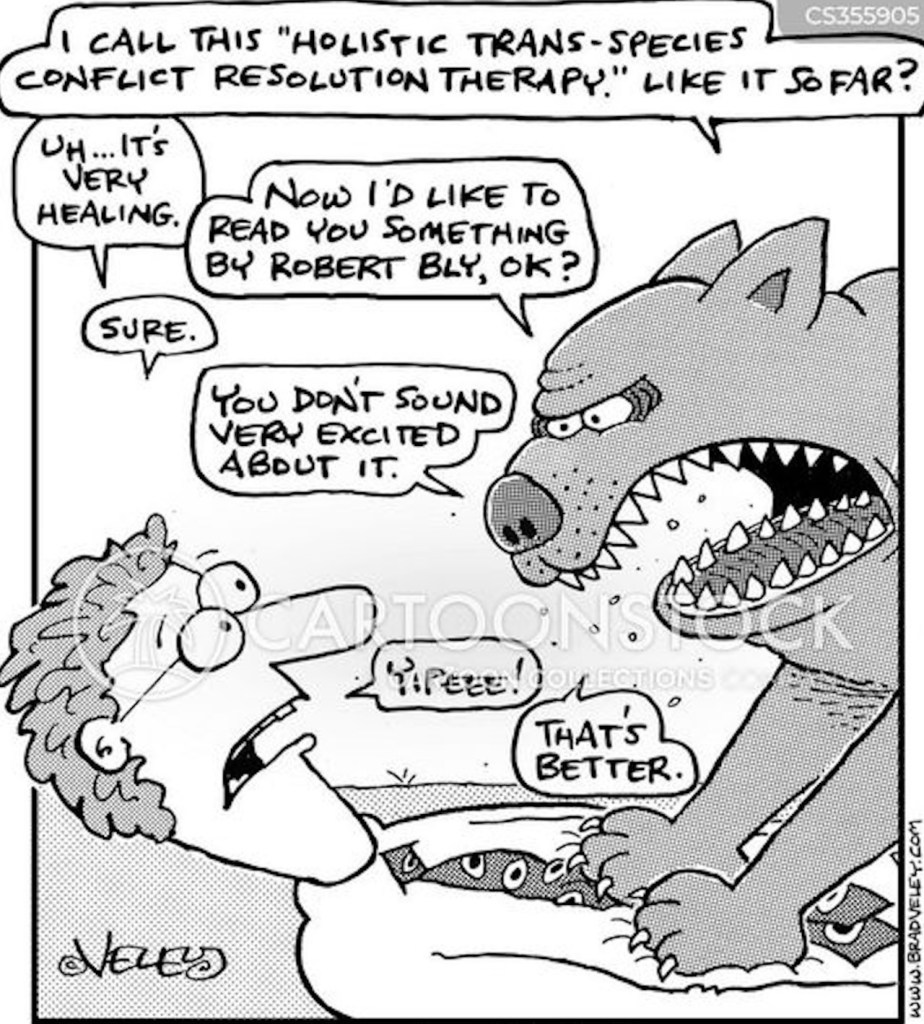
    For example, Robert Bly’s lines—”Sometimes a man walks by a pond, and a hand / Reaches out and pulls him in” / / “The pond was lonely, or needed / Calcium, bones would do,”—are ludicrous [1] on every level.   Even if one explicates the speaker’s personifying the pond, the lines remain absurd, at least in part because if a person needs calcium, grabbing the bones of another human being will not take care of that deficiency. 

    The absurdity of a lake needing “calcium” should be abundantly clear on its face.  Nevertheless, the image of the lake grabbing a man may ultimately be accepted as the funny nonsense that it is.   William Butler Yeats’ “The Second Coming” cannot be dismissed so easily; while the Yeats poem does not depict the universe as totally chaotic, it does bemoan that fact that events seem to be leading society to armageddon.

    The absurdity surrounding the metaphor of the “rough beast” in the Yeats poem renders the musing on world events without practical substance.

    The Second Coming

    Turning and turning in the widening gyre   
    The falcon cannot hear the falconer;
    Things fall apart; the centre cannot hold;
    Mere anarchy is loosed upon the world,
    The blood-dimmed tide is loosed, and everywhere   
    The ceremony of innocence is drowned;
    The best lack all conviction, while the worst   
    Are full of passionate intensity. 

    Surely some revelation is at hand;
    Surely the Second Coming is at hand.   
    The Second Coming! Hardly are those words out  
    When a vast image out of Spiritus Mundi
    Troubles my sight: somewhere in sands of the desert   
    A shape with lion body and the head of a man,   
    A gaze blank and pitiless as the sun,   
    Is moving its slow thighs, while all about it   
    Reel shadows of the indignant desert birds.   
    The darkness drops again; but now I know   
    That twenty centuries of stony sleep
    Were vexed to nightmare by a rocking cradle,  
    And what rough beast, its hour come round at last,   
    Slouches towards Bethlehem to be born? 

    Commentary on “The Second Coming”

    William Butler Yeats’ “The Second Coming” remains one of the most widely anthologized poems in world literature.  Yet its hyperbole in the first stanza and ludicrous “rough beast” metaphor in the second stanza result in a blur of unworkable speculation.

    First Stanza: Sorrowful over Chaos

    Turning and turning in the widening gyre   
    The falcon cannot hear the falconer;
    Things fall apart; the centre cannot hold;
    Mere anarchy is loosed upon the world,
    The blood-dimmed tide is loosed, and everywhere   
    The ceremony of innocence is drowned;
    The best lack all conviction, while the worst   
    Are full of passionate intensity. 

    The speaker is sorrowing over the chaos of world events that have left in their wake many dead people.  Clashes of groups of ideologues have wreaked havoc, and much blood shed has smeared the tranquil lives of innocent people who wish to live quiet, productive lives. 

    The speaker likens the seemingly out of control situation of society to a falconer losing control of the falcon as he attempts to tame it.   Everyday life has become chaotic as corrupt governments have spurred revolutions.  Lack of respect for leadership has left a vacuum which is filled with force and violence.

    The overstated claim that “The best lack all conviction, while the worst / Are full of passionate intensity” should have alerted the poet that he needed to rinse out the generic hyperbole in favor of more accuracy on the world stage.  

    Such a blanket, unqualified statement, especially in a poem, lacks the ring of truth:  it simply cannot be true that the “best lack all conviction.”  Surely, some the best still retain some level of conviction, or else improvement could never be expected.  

    It also cannot be true that all the worst are passionate; some of the worst are likely not passionate at all but remain sycophantic, indifferent followers.  Any reader should be wary of such all-inclusive, absolutist statements in both prose and poetry.  

    Anytime a writer subsumes an entirety with the terms “all,” “none,” “everything,” “everyone,” “always,” or “never,” the reader should question the statement for its accuracy.  All too often such terms are signals for stereotypes, which produce the same inaccuracy as groupthink.

    Second Stanza: What Revelation?

    Surely some revelation is at hand;
    Surely the Second Coming is at hand.   
    The Second Coming! Hardly are those words out  
    When a vast image out of Spiritus Mundi
    Troubles my sight: somewhere in sands of the desert   
    A shape with lion body and the head of a man,   
    A gaze blank and pitiless as the sun,   
    Is moving its slow thighs, while all about it   
    Reel shadows of the indignant desert birds.   
    The darkness drops again; but now I know   
    That twenty centuries of stony sleep
    Were vexed to nightmare by a rocking cradle,  
    And what rough beast, its hour come round at last,   
    Slouches towards Bethlehem to be born? 

    The idea of “some revelation” leads the speaker to the mythological second coming of Christ.  So he speculates on what a second coming might entail.  However, instead of “Christ,” the speaker conjures the notion that an Egyptian-Sphinx-like character with ill-intent might arrive instead.  

    Therefore, in place of a second coming of godliness and virtue, as is the purpose of the original second coming, the speaker wonders:  what if the actual second coming will be more like an Anti-Christ?  What if all this chaos of bloodshed and disarray has been brought on by the opposite of Christian virtue?

    Postmodern Absurdity and the “Rough Beast”

    The “rough beast” in Yeats’ “The Second Coming” is an aberration of imagination, not a viable symbol for what Yeats’ speaker thought he was achieving in his critique of culture. If, as the postmodernists contend, there is no order [2] in the universe and nothing really makes any sense anyway, then it becomes perfectly fine to write nonsense. 

    Because this poet is a contemporary of modernism but not postmodernism [3], William Butler Yeats’ poetry and poetics do not quite devolve to the level of postmodern angst that blankets everything with the nonsensical.  Yet, his manifesto titled A Vision is, undoubtedly, one of the contributing factors to that line of meretricious ideology. 

    Hazarding a Guess Can Be Hazardous

    The first stanza of Yeats’ “The Second Coming” begins by metaphorically comparing a falconer losing control of the falcon to nations and governments losing control because of the current world disorder, in which “[t]hings fall apart; the centre cannot hold.” 

    Political factions employ these lines against their opposition during the time in which their opposition is in power, as they spew forth praise for their own order that somehow magically appears with their taking the seat of power.

    The poem has been co-opted by the political class so often that Dorian Lynskey, overviewing the poem in his essay, “‘Things fall apart’: the Apocalyptic Appeal of WB Yeats’s The Second Coming,” writes, “There was apparently no geopolitical drama to which it could not be applied” [4].

    The second stanza dramatizes the speaker’s musing about a revelation that has popped into his head, and he likens that revelation to the second coming of Christ; however, this time the coming, he speculates, may be something much different.  

    The speaker does not know what the second coming will herald, but he does not mind hazarding a dramatic guess about the possibility.   Thus, he guesses that the entity of a new “second coming” would likely be something that resembles the Egyptian sphinx; it would not be the return of the Christ with the return of virtue but perhaps its opposite—vice. 

    The speaker concludes his guess with an allusion to the birth of such an entity as he likens the Blessed Virgin Mother to the “rough beast.”   The Blessèd Virgin Mother, as a newfangled, postmodern creature, will be “slouching toward Bethlehem” because that is the location to which the first coming came.  

    The allusion to “Bethlehem” functions solely as a vague juxtaposition to the phrase “second coming” in hopes that the reader will make the connection that the first coming and the second coming may have something in common.  The speaker speculates that at this very moment wherein the speaker is doing his speculation some “rough beast” might be pregnant with the creature of the “second coming.” 

    And as the time arrives for the creature to be born, the rough beast will go “slouching” towards its lair to give birth to this “second coming” creature: “its hour come round at last” refers to the rough beast being in labor. 

    The Flaw of Yeats’ “The Second Coming” 

    The speaker then poses the nonsensical question: “And what rough beast, its hour come round at last, / Slouches towards Bethlehem to be born?”   In order to make the case that the speaker wishes to make, these last two lines should be restructured in one of two ways: 

    And what rough beast, its hour come round at last,
    Slouches towards Bethlehem to give birth? 

     or

    And what rough beast’s babe, its time come at last,
    Is in transport to Bethlehem to be born?

    An unborn being cannot “slouch” toward a destination.  The pregnant mother of the unborn being can “slouch” toward a destination.   But the speaker is not contemplating the nature of the rough beast’s mother; he is contemplating the nature of the rough beast itself.  

    The speaker does not suggest that the literal Sphinx will travel to Bethlehem. He is merely implying that a Sphinx-like creature might resemble the creature of the second coming.  Once an individual has discounted the return of Jesus the Christ as a literal or even spiritual fact, one might offer personal speculation about just what a second coming would look like. 

    It is doubtful that anyone would argue that the poem is dramatizing a literal birth, rather than a spiritual or metaphorical one.    It is also unreasonable to argue that the speaker of this poem—or Yeats for that matter—thought that the second coming actually referred to the Sphinx.   A ridiculous image develops from the fabrication of the Sphinx moving toward Bethlehem. Yeats was more prudent than that. 

    Exaggerated Importance of Poem

    William Butler Yeats composed a manifesto to display his worldview and poetics titled A Vision, in which he set down certain tenets of his thoughts on poetry, creativity, and world history.   Although seemingly taken quite seriously by some Yeatsian scholars, A Vision is of little value in understanding either meaning in poetry or the meaning of the world, particularly in terms of historical events.  

    An important example of Yeats’ misunderstanding of world cycles is his explanation of the cyclical nature of history, exemplified with what he called “gyres” (pronounced with a hard “g.”)  Two particular points in the Yeatsian explanation demonstrate the fallacy of his thinking:

    1. In his diagram, Yeats set the position of the gyres inaccurately; they should not be intersecting but instead one should rest  one on top of the other:  cycles shrink and enlarge in scope; they do not overlap, as they would have to do if the Yeatsian model were accurate. 

    Image :  Gyres – Inaccurate Configuration from A Vision

    Image:  Gyres –  Accurate Configuration

    2.  In the traditional Second Coming, Christ is figured to come again but as an adult, not as in infant as is implied in Yeats’ poem “The Second Coming.”

    Of great significance in Yeats’ poem is the “rough beast,” apparently the Anti-Christ, who has not been born yet.  And most problematic is that the rough beast is “slouch[ing] towards Bethlehem to be born.”  The question is, how can such a creature be slouching if it has not yet been born?  There is no indication the speaker wishes to attribute this second coming fiasco to the mother of the rough beast.

    This illogical event is never mentioned by critics who seem to accept the slouching as a possible occurrence.  On this score, it seems critics and scholars have lent the poem an unusually wide and encompassing poetic license.

    The Accurate Meaning of the Second Coming

    Paramahansa Yogananda has explained in depth the original, spiritual meaning of the phrase “the second coming”[5] which does not signify the literal coming again of Jesus the Christ, but the spiritual awakening of each individual soul to its Divine Nature through the Christ Consciousness.  

    Paramahansa Yogananda summarizes his two volume work The Second Coming of Christ: The Resurrection of the Christ Within You:

    In titling this work The Second Coming of Christ, I am not referring to a literal return of Jesus to earth . . . 

    A thousand Christs sent to earth would not redeem its people unless they themselves become Christlike by purifying and expanding their individual consciousness to receive therein the second coming of the Christ Consciousness, as was manifested in Jesus . . . 

    Contact with this Consciousness, experienced in the ever new joy of meditation, will be the real second coming of Christ—and it will take place right in the devotee’s own consciousness. (my emphasis added)

    Interestingly, knowledge of the meaning of that phrase “the second coming” as explained by Paramahansa Yogananda renders unnecessary the musings of Yeats’ poem “The Second Coming”and most other speculation about the subject. Still, the poem as an artifact of 20th century thinking remains an important object for study. 

    Sources

    [1]  Linda Sue Grimes.  “Robert Bly’s ‘The Cat in the Kitchen’ and ‘Driving to Town Late to Mail a Letter’.”  Linda’s Literary Home. December 24, 2025. 

    [2]  David Solway.  “The Origins of Postmodernitis.”  PJ Media.  March 25, 2011.  

    [3]  Linda Sue Grimes. “Poetry and Politics under the Influence of Postmodernism.” Linda’s Literary Home.  Accessed December 3, 2025.

    [4]  Dorian Lynsey. “‘Things fall apart’: the Apocalyptic Appeal of WB Yeats’s The Second Coming.” The Guardian.  May 30, 2020.

    [5]  Editors. “The Truth Hidden in the GospelsSelf-Realization Fellowship. Accessed October 27, 2023.

  • Malcolm M. Sedam’s “The Hill Maiden”

    Image: Malcolm M. Sedam

    Malcolm M. Sedam’s “The Hill Maiden”

    In his poem, “The Hill Maiden,” Malcolm M. Sedam has created a speaker voicing cheerful vaticination that his teenage angst-ridden protégé will one day shed her nihilism and burst into life affirming joy.  The best teachers are those who can inspire as well as instruct their students.  This poem represents a stellar example of that kind of inspirational educator.

    Introduction and Text of “The Hill Maiden”

    Malcolm M. Sedam‘s “The Hill Maiden” features a teacher dramatizing his observations about a particularly inquisitive but melancholy student.  His ultimate purpose is to instill in the student the notion that she will ultimately be able to appreciate the life that she seems to disdain.

    The poem plays out in three movements of unrimed stanzas.  This organization allows the speaker to touch lightly on the physical reality of the subject but then move more intensely to the mental and finally the spiritual possibility of the subject’s inclinations. 

    Because the speaker can only infer certain facts about his student, the poem remains metaphorically and imagistically implicative  instead of unequivocally literal.  For example, the teacher has no exact idea what the student does at her home; thus he places her in an image of “moving among the phantom rocks of reverie.”  

    The teacher/speaker knows from the negativity the student has been expressing to him that she mentally resides among hardness that causes her to imagine that things are worse than they are.

    Mentally she travels like a rocket through her ghostly musings until night fall when she sleeps but likely gets little rest, accounting for the nervous, brittle energy the educator perceives in his young scholar.

    Likely the adolescent girl is simply suffering the turbulence of teenage angst through which most individuals of that age group must travel.  But the best, most effective teachers are those who can inspire as well as instruct their students.  This poem represents a stellar example of that kind of inspirational educator.

    As an educator, Mr. Malcolm M. Sedam wrote poems to many of his students, always with the goal of inspiring them to high thinking and plain living.  Mr. Sedam once said he felt that his function as an educator was “to kick the dirt off of his students.”  By that he meant to help them see life more clearly without the fog of stereotypes, prejudice, and provincialism.  

    The Hill Maiden

    (for Linda, over in the valley)

    She is moving among the phantom
    Rocks of reverie hurtling through
    By mind bringing days into darkness
    Where the pull of growth rings
    The heart and spurs the soul

    Where her wish strings questions
    In the mysterious night of snow
    Bringing a promise that only the hills can sing.
    Her smile waits behind a frown of swords
    That rend her days

    In the melancholy of the deep valley
    Of dreams where she lives among flowers
    Gathering her moods that may bring peace
    Once the sorrow of lonely distance
    Has closed on hands—

    The same hands that Zen-like reach
    To answer each knock at the door of her heart
    Broken to be mended by tender time.
    Her mind is speeding through a galaxy
    Of intensity where the blood rose

    Will speak to her frozen will
    All forgiven by decree in warring winds—
    The nature of her plight?
    Without wings
    She will still spring into flight.

    Commentary on “The Hill Maiden”

    Malcolm M. Sedam’s “The Hill Maiden” features a teacher, who is also a practicing poet, dramatizing his observance of an inquisitively intelligent but extremely melancholy student.  

    His only purpose is to instill in the student the notion that she will ultimately be able to appreciate the life that she seems now to disdain.

    First Movement:  Dreaming amongst the Hills

    She is moving among the phantom
    Rocks of reverie hurtling through
    By mind bringing days into darkness
    Where the pull of growth rings
    The heart and spurs the soul

    Where her wish strings questions
    In the mysterious night of snow
    Bringing a promise that only the hills can sing.

    The speaker begins by placing the object of his speculative musing in an image that implies sharp but dream-like rigidity.  Rocks appear ghost-like through a dream-scape as they bewilder the mental musings of the young girl with whom the mature educator is engaging both as a poetry mentor as well as a teacher.

    Teachers often counsel their students who seek out their advice and direction even in issues outside of the academic sphere as well as within the educational arena.  Those teachers who must essentially become counselors will either direct the students to other professionals, or they will attempt to offer their own gleanings from their life experience.

    The teacher in this poem demonstrates that he is the latter kind of teacher, and he has given the mind of the young student some serious analysis.  Thus he not only describes her environment, but he also speculates and then foreshadows what is likely to befall the girl once she is able to erase her current adolescent fog.

    Until that glowing day arrives, however, the speaker sees that the girl’s maturing process weighs heavily on her heart and soul.  She is full of questions brought on by the mystery of life.  

    The “snow” that brings beauty as it covers the hills also brings bitter cold and slippery conditions the cause the girl to miss the music that her hill-valley home affords her.

    By pointing out these images of beauty and placing them a context of mystery and difficulty, the speaker hopes to allow his charge to contemplate the possibility that life is real and offers hope to those who search its reaches with an open mind and cheerful heart.

    Second Movement:  Frowning Swords

    Her smile waits behind a frown of swords
    That rend her days

    In the melancholy of the deep valley
    Of dreams where she lives among flowers
    Gathering her moods that may bring peace
    Once the sorrow of lonely distance
    Has closed on hands—

    The same hands that Zen-like reach
    To answer each knock at the door of her heart
    Broken to be mended by tender time.

    The speaker has observed the teen’s unwillingness to show a cheerful countenance.   Her bitterness “behind a frown of swords” likely often gives the mentor a shudder at the likelihood that the girl is suffering intensely.

    No doubt, he believes that at this point in her life, she should be dancing merrily among “flowers” and allowing her sorrowful moods to dissolve in the “deep valley of dreams.”

    But again, he returns to prognostication that once she has learned to fold her hands in wonder and listen to the love that knocks at the “door of her heart,” her melancholy will be rendered null and void as “tender time” moves her through the rough spots of her anguish.

    Again, the speaker chooses beauty—”flowers gathering”—to balance the “frown.”  He offers the image of the heart’s door to harmonize with the environment that will reach her with the “Zen-like” hands of mystery and the ultimate gain-of-wisdom.  

    Like a Zen koan, the riddle of life will remain before her as she continues to search for answers to her perplexing questions.  

    Third Movement:  Springing into Flight

    Her mind is speeding through a galaxy
    Of intensity where the blood rose

    Will speak to her frozen will
    All forgiven by decree in warring winds—
    The nature of her plight?
    Without wings
    She will still spring into flight.

    Finally, the speaker makes his most striking vaticination after asserting that his young charge has a strong mind but also a tender heart that is quick to show intense emotion.  

    That the “blood rose” will speak itself undeniably to the girl’s will portends that all of her negativity and nihilism will be “forgiven” as she continues to navigate through the conflicts that life bestows on all searching souls.

    Then the speaker offers the question that he is likely very content to answer.  The frustrating situation that befuddles the young scholar’s mind and heart has been implied by all the imagery that went before, but then what will eventually be the path chosen by and/or for the student?   

    She will be able to navigate through all the trials and tribulations as a bird that so easily lifts it wings to the wind and takes to the air through the abundant space of sky.

    The speaker is not so naïve as to insist that such navigation will come easily, but he does remain assured that the path will open to the girl, and she will become willing to follow it. Thus the speaker can conclude affirmatively that “Without wings, she will still spring into flight.”

    Offered by a beloved and well-respected mentor, such faith in a young scholar’s ability to navigate life is bound to redound in blessings, despite the pitfalls and rough spots that her life, no doubt, will place sphinx-life before her mind and heart.

  • Barack Obama’s “Underground”

    Image:  Bookcase Credibility

    Barack Obama’s “Underground”

    In addition to his piece titled “Pop,” Barack Obama also published in Occidental college’s literary magazine, Feast, the short piece titled “Underground,” featuring a fantasy in which fig-eating apes breathe underwater, while dancing and tumbling about.

    Introduction and Text of “Underground”

    At age 19, Barack Hussein Obama II published in Occidental college’s literary magazine, Feast, two “poems.”  A piece titled “Pop,” in which he explores the relationship between a young man and a father figure, and this short piece titled “Underground,” which reveals a fantasy world where fig-eating apes breathe underwater, while dancing and tumbling in rushing water.

    Just as Obama’s piece of doggerel “Pop” does not bode well for a potential writer of any stripe, the future U. S. President’s [1] poetic effort, “Underground,” offers further evidence that this hack scribbler will retain no place in letters, while the brilliance with which the former Oval Office Occupier handled the falling off of the presidential seal further demonstrates that his talent lay in areas of entertainment, not governance.. 

    The title, “Underground,” indicates a location under the land, and it could also be indicating metaphorically some event or transaction not open to public scrutiny or awareness: an example might be a secret network similar to the Underground Railroad. However, no such meaning can be gleaned from this mass of confused doggerel.

    Underground

    Under water grottos, caverns
    Filled with apes
    That eat figs.
    Stepping on the figs
    That the apes
    Eat, they crunch.
    The apes howl, bare
    Their fangs, dance,
    Tumble in the
    Rushing water,
    Musty, wet pelts

    Commentary on “Underground”

    This three-pronged failure demonstrates even more clearly than the effort titled “Pop” that this scribbler has no place in letters. It fails for three significant reasons: (1) misuse of grammar/diction, (2) awkward enjambment, and (3) lack of meaning.

    First Movement: Underground, Underwater?

    Under water grottos, caverns
    Filled with apes
    That eat figs.

    The first line—”Under water grottos, caverns”— indicates that the setting for the activity is not “underground,” but, in fact, it is underwater. While the preferred spelling for the plural of “grotto” is “grottoes,” such an amateurish error is minor compared to the repetition of the similar terms, grotto and cavern. 

    There is a difference in the denotative meanings of those two terms: grotto can be man-made and decorative while cavern is natural. Immediately, the bumbling speaker had befuddled the reader by employing those two terms, which because of their different meanings imply different connotations. Is the cave decorated by human beings or is it not? Is it a “grotto” or a “cavern”?  It cannot be both.

    Those underwater caves, which may or may not be decorated, are teeming with land-dwelling, mammals who naturally breathe air, yet here they are—living and thus obviously breathing under water. The piece then perhaps becomes a verse of surreal fantasy. In any case, the reader must, at this point, suspend belief in order to continue, learning about those animals—”apes” that eat figs. 

    This fact is nothing out of the ordinary, because apes do love fruit, but why the versifier chooses to employ “figs” must remain a mystery. No speculation can approach a satisfactory answer, and the context offers no clue.

    Second Movement: Figs Stepping on Figs

    Stepping on the figs
    That the apes
    Eat, they crunch.

    In this three-line assertion, the misplaced modifier jumbles the message—who steps on the figs? It would appear that the apes would be doing so because no one else with feet appears in the grotto. 

    Following an introductory gerund clause—in this case, “stepping on the figs”—the subject of the main clause must be the actor in the introductory clause. Thus, the subject of the introductory gerund clause, “they,” has to be the figs because it follows immediately the introductory gerund clause.

    Because it is absurd to think that even an amateur would be stating such an impossible occurrence—that the figs are stepping on themselves—the reader becomes aware of the grammatical error called misplaced modifier. As Jack Cashill [2] has pointed out, Obama has been consistent in misapplying grammatical constructions including but not limited to bringing his subjects and verbs into alignment.

    Furthermore, word choice in poems is vital, and the writer’s choices in this poem offer nothing but speculation to the reader.  That flaw hinders meaning.  There seems to be no clear reason for choosing figs over any other fruit.  And that the speaker claims that the figs “crunch” remains nonsensical. Figs are soft and pliable; even dried figs would not “crunch” if stepped on.  Thus, not only is the choice of figs questionable; it is also unfeasible.

    Third Movement: Maddened by Crunching Figs

    The apes howl, bare
    Their fangs, dance

    It now seems that the “crunch” sound inflames the apes so that they start to “howl” and “bare their fangs” as they “dance.” The only reason for the ape-dance is that someone stepped on figs and made them crunch or so one would guess. 

    Is the ape excitement motivated by anger or is it urged on to gladness by the crunching of their figs?  Such amateurish discourse demonstrates the lack of control in composing meaningful a piece that communicate clearly.  Ultimately, this kind of nonsense communicates nothing but does clearly reveal the lack of ability of the composer.

    Fourth Movement: Awkward Enjambment

    Tumble in the
    Rushing water,
    Musty, wet pelts
    Glistening in the blue.

    As mentioned in the commentary on “Pop,” often a sign of an amateur poet is a line ending with “the”: “Tumble in the / Rushing water.” The frivolous diversion of this awkward enjambment distracts from the list of activities engaged in by the apes after their figs were stepped on.  

    The reader will want to like the apes and want to know what they are doing and why they are doing it, but the confused grammar, lack of poetic control, and awkward phrasing demonstrates by the would-be poet obliterates any hope of a clear reading.

    The reader may summarize the activities of the apes by quoting four lines: the apes “howl, bare / Their fangs, dance, / Tumble in the / Rushing water.” They do all of these things while their “[m]usty, wet pelts / [are] Glistening in the blue.”

     It remains ambiguous as to what “blue” refers: it would seem to be the water, but the scant amount of light peeping into the underwater cave would allow only enough to render the water’s color to appear black. This confusion offers further evidence that this amateur poetaster had little control of his thoughts and his language arsenal. It becomes especially galling that the poet could not even realize the nature of light and how it operates to illuminate color.

    Ungrammatical, Awkward, Meaningless

    This piece of doggerel, “Underground,” fails for three significant reasons: (1) misuse of grammar/diction, (2) awkward enjambment, but most importantly, (3) lack of meaning.  

    The apes could be charming, even endearing with their figs and their musty pelts, but the reader concludes the visit with them, baffled by the awkward execution of the piece, having no idea what has just transpired in these lines. 

    Readers might wonder what they might have communicated in the hands of a genuine poet, instead of in the hands of immature hack whose lack of a literary sensibility has misused them. 

    Such confusion fostered by this poem offers further evidence that this poetaster had little control over his thoughts and the instruments in his poetry toolkit. Nay, it remains quite likely he possessed no poetry toolkit at all.

    Sources

    [1]  AP Archive.  “Presidential seal falls off podium as Obama speaks.”   YouTube. July 2015.

    [2] Jack Kerwick. Jack Cashill’s Deconstructing Obama. American Thinker. February 25, 2011.


  • Barack Obama’s “Pop”

    Image: Obama I Obama II Davis - https://alchetron.com/Frank-Marshall-Davis
    Image: Obama I Obama II Davis – Alchetron

    There is a price to be paid for criticizing Obama.” Jack Cashill

    Barack Obama’s “Pop”

    In Barack Obama’s “Pop,” the speaker is sketching what appears to be a father-figure—likely Frank Marshall Davis—and offering a glimpse into the relationship between the two.  Obama called his maternal grandfather “Gramps,”  rendering it unlikely that the father-figure in this poem is Stanley Dunham.

    Introduction with Text of “Pop”

    The spring 1981 issue of Feast, Occidental College’s literary magazine, published two poems, “Pop” and “Underground,” by erstwhile literary prodigy Barack Obama.  According to Jack Cashill, long-time researcher of Obama’s literary efforts, Obama’s writings [1] suffer from, “awkward sentence structure, inappropriate word choice, a weakness for clichés,” and “the continued failure to get verbs and nouns to agree.” 

    Obama’s poems suffer from similar language indignities but also include further issues relevant to poems, such a faulty line breaks, confusing mixed metaphors, and inappropriate use of surrealist images.

    Although readers can forgive a 19-year old for adolescent scribblings in non-sense, especially in poems published in a college lit mag, what they cannot do is discern that this particular adolescent was showing any potential to produce a future writer. 

    Likely, the future, and now former, occupier of the Oval Office could have become a capable interpretive reader, and it is possible that Barack Obama would have served more admirably as an actor [2] than writer or president.  

    Barack Obama possesses a unique charm that could have been employed in creative ways, if he had kept his focus on the humanities and entertainment fields instead of politics and government.  The Obama administration, tainted by incompetence and corruption [3], has altered the American political landscape more intensely than any other in American history.  

    For this misdirection, Barack Obama is less to blame than his handlers, beginning with political American terrorist Bill Ayers, continuing with political hacks David Axelrod and Valerie Jarrett. 

    His coterie of political advisors steered him in a direction that has enriched Obama and that coterie financially, instead of enriching society in a humanitarian field of endeavor.  The former president’s piece titled “Pop” consists of one 45-line versagraph [4]. The piece’s awkward, postmodern codswallop represents much of what is despicable and destructive in most postmodern art.

    Pop

    Sitting in his seat, a seat broad and broken
    In, sprinkled with ashes,
    Pop switches channels, takes another
    Shot of Seagrams, neat, and asks
    What to do with me, a green young man
    Who fails to consider the
    Flim and flam of the world, since
    Things have been easy for me;
    I stare hard at his face, a stare
    That deflects off his brow;
    I’m sure he’s unaware of his
    Dark, watery eyes, that
    Glance in different directions,
    And his slow, unwelcome twitches,
    Fail to pass.
    I listen, nod,
    Listen, open, till I cling to his pale,
    Beige T-shirt, yelling,
    Yelling in his ears, that hang
    With heavy lobes, but he’s still telling
    His joke, so I ask why
    He’s so unhappy, to which he replies…
    But I don’t care anymore, cause
    He took too damn long, and from
    Under my seat, I pull out the
    Mirror I’ve been saving; I’m laughing,
    Laughing loud, the blood rushing from his face
    To mine, as he grows small,
    A spot in my brain, something
    That may be squeezed out, like a
    Watermelon seed between
    Two fingers.
    Pop takes another shot, neat,
    Points out the same amber
    Stain on his shorts that I’ve got on mine, and
    Makes me smell his smell, coming
    From me; he switches channels, recites an old poem
    He wrote before his mother died,
    Stands, shouts, and asks
    For a hug, as I shink, my
    Arms barely reaching around
    His thick, oily neck, and his broad back; ‘cause
    I see my face, framed within
    Pop’s black-framed glasses
    And know he’s laughing too.

    Commentary on “Pop”

    The man addressed in Obama’s “Pop” is likely Frank Marshall Davis, long thought to be Obama’s biological father [5]. Barry called his Grandfather Dunham “Gramps” [6], not “Pop.”

    First Movement: Sheltered Young Man

    Sitting in his seat, a seat broad and broken
    In, sprinkled with ashes,
    Pop switches channels, takes another
    Shot of Seagrams, neat, and asks
    What to do with me, a green young man
    Who fails to consider the
    Flim and flam of the world, since
    Things have been easy for me;
    I stare hard at his face, a stare
    That deflects off his brow;
    I’m sure he’s unaware of his
    Dark, watery eyes, that
    Glance in different directions,
    And his slow, unwelcome twitches,
    Fail to pass.

    The speaker places his father-figure in his usual chair where the latter is watching television, enjoying his “Seagrams, neat.” The man, called Pop, begins accosting the young man by flinging at him a rhetorical question: “What to do with me?”  

    The speaker asserts that Pop thinks his young charge is just a “green young man / Who fails to consider the / Flim and flam of the world.” 

    Pop counsels the young man that the latter’s sheltered existence is responsible for the young man’s failure to recognize the “flim-flam” world. The speaker then stares at the old man, who exhibits a facial tick, while his eyes dart off “in different directions / And his slow, unwelcome twitches.”

    Frank Marshall Davis Is “Pop”

    While many reviewers of this poem have interpreted Pop to be Stanley Armour Dunham, the maternal grandfather who raised Obama, the former president’s hagiographer, David Maraniss, in his biography, Barack Obama: The Story, reveals that the poem “Pop” focuses on Frank Marshall Davis [7], not Stanley Armour Dunham.

    And the details of the poem all point to the truth of that revelation.  That Obama’s grandfather, who raised him, would be addressing such an issue with his young charge is untenable.   If the boy is incapable of considering the “flim-flam” of the world, whose fault would that be? It would be the person who raised the kid. 

    Obama’s relationship with Frank Marshall Davis, however, provides the appropriate station for such a topic of conversation. Davis took it upon himself to help the young Obama see the world through the lens of a black man in America. 

    Again, if “things have been easy for” the young Barry, it has been the grandfather who made them easy; thus, for the grandfather to be accosting the boy for that supposed flaw would be absurd.

    Obama’s grandfather introduced the boy to Davis for the purpose of providing Barry with the advice of an older man who had lived the life of a black man in America.  The Dunhams were heavily invested in identity politics as likely members of the Communist Party, as was card carrying member, Frank Marshall Davis [8]. 

    The grandfather was of the inclination that he could never guide a young black boy in certain areas but that Davis could. Whether that sensibility is accurate or not is the topic for another day, but the topic being discussed by the speaker of this poem precludes the poem’s addressing Obama’s white grandfather.

    Faulty Line Breaks

    Many of the bad line breaks [9] in the poem demonstrate the amateurish nature of the poetaster, who makes the rookie flaw of ending several lines with the definite article “the.” 

    About Obama’s use of line breaks, poet Ian McMillan sarcastically observes [10]: “Barack likes his line breaks, his enjambments: let’s end a line with ‘broken’ and start it with ‘in’ just because we can!”

    Second Movement: Surrealistic Encounter

    I listen, nod,
    Listen, open, till I cling to his pale,
    Beige T-shirt, yelling,
    Yelling in his ears, that hang
    With heavy lobes, but he’s still telling
    His joke, so I ask why
    He’s so unhappy, to which he replies…
    But I don’t care anymore, cause
    He took too damn long, and from
    Under my seat, I pull out the
    Mirror I’ve been saving; I’m laughing,
    Laughing loud, the blood rushing from his face
    To mine, as he grows small,
    A spot in my brain, something
    That may be squeezed out, like a
    Watermelon seed between
    Two fingers.

    The speaker then employs a surrealistic style as he continues to describe his encounter with Pop. 

    The speaker listens politely, nodding occasionally, as the old man declaims, but suddenly the speaker is “cling[ing] to the old man’s “[b]eige T-shirt, yelling / Yelling in his ears.” Those ears have “heavy lobes,” and the old man is “still telling / His joke.” But the speaker then asks Pop, “why / He’s so unhappy.”

    Pop starts to respond, but the speaker does not “care anymore, cause / He took too damn long.” The speaker then pulls out a mirror from under his seat. 

    The confusion here mounts because the speaker had just claimed he was clinging to Pop’s shirt and yelling in the old man’s ear, which would have taken the speaker out of his seat. This confusion adds to the surreal nature of the episode.

    After pulling out the mirror, the speaker asserts that he is “laughing, / Laughing loud.” What he does with the mirror is never made clear. But during his outbreak of laughter, Pop “grows small” shrinking to a “spot in [the speaker’s] brain.” 

    That tiny spot, however, “may be squeezed out, like a / Watermelon seed between / Two fingers.” This shrunken seed image of the speaker’s pop implies a level of disrespect that is quite breathtaking as it suggests that the speaker would like to eliminate Pop from his mind.

    Third Movement: Smelling the Stain

    Pop takes another shot, neat,
    Points out the same amber
    Stain on his shorts that I’ve got on mine, and
    Makes me smell his smell, coming
    From me; he switches channels, recites an old poem
    He wrote before his mother died,
    Stands, shouts, and asks
    For a hug, as I shink, my
    Arms barely reaching around
    His thick, oily neck, and his broad back; ‘cause
    I see my face, framed within
    Pop’s black-framed glasses
    And know he’s laughing too.

    The speaker observes that Pop “takes another shot, neat,” but he probably means that the old man took another sip; it is not likely that the father-figure is measuring out each swig with a shot glass. 

    With this swig, Pop “points out the same amber / Stain on his shorts that I’ve got on mine, and / Makes me smell his smell, coming / From me.” During the exchange, while clinging to Pop’s shirt, the speaker has stained Pop’s shorts.

    And Pop wants the speaker to realize his blame for the stain. At least, that’s one way to interpret the smelling the stain scene. 

    Others have inferred a sexual reference in the “smelling” scene, but that requires too much of a stretch, that is, a reading into the text what is not there and not implied.

    Pop then changes TV channels and “recites an old poem / He wrote before his mother died.” He then rises from his seat, “shouts, and asks / For a hug.” 

    The younger man realizes his smallness in comparison to the size of Pop: “my / Arms barely reaching around / His thick, oily neck, and his broad back.” But the speaker sees himself reflected in Pop’s “black-framed glasses.” And now Pop is “laughing too.”

    The reference to a poem written before Pop’s mother died also eliminates Grandfather Dunham as “Pop.” Dunham was only eight years old, when he discovered the body of his mother who had committed suicide. 

    The notion that an aged man would be quoting a poem that he wrote before he was eight years old is patently absurd. Plus there is no evidence that Grandfather Dunham ever wrote any poetry, while Frank is famously known as a poet, as well as his other endeavors in political activism and pornography.

    “Shink” Is Obviously a Typo and “Know” Is Likely “Now”

    Much has been made of the obvious typo in the line, “For a hug, as I shink, my.” The word is obviously “shrink.” Pop had shrunk to the size of a watermelon seed a few lines earlier, and now the speaker shrinks as he realizes how much smaller he is than Pop.

    It is quite possible that in the last line “know” is an additional typo, for the word “now” would be more appropriate. It would be nonsensical for the speaker to say he “knows” Pop is laughing when he is right there looking into his face. But it makes sense for him to report that during the hug Pop also begins to laugh.

    Interestingly, the editors of the New York Times quietly corrected the “shink” to “shrink” when they published the poems on May 18, 2008, in an article under the title, “The Poetry of Barack Obama [11]”. The editors did not correct the obvious error “know” for “now” in the last line.

    Sources

    [1]  Jack Kerwick. Jack Cashill’s Deconstructing Obama. American Thinker. February 25, 2011.

    [2]  Padmananada Rama. “Obama Heads To Hollywood; Conservative Group Mocks ‘Celebrity President’.” NPR. May 10, 2012.

    [3]  Hans A. von Spakovsky.  “Obama’s ‘Scandal-Free Administration’ Is a Myth.”  Heritage Foundation.  January 16, 2017.

    [4]  Linda Sue Grimes. “Poetic Devices: Tools for Poetry Commentary.” Linda’s Literary Home.  February 9, 2026.

    [5] Joel Gilbert. Dreams from My Real Father: A Story of Reds and Deception. Documentary. Trailer. July 24, 2012.

    [6]  Nancy Benac. “Obama’s Gramps: Gazing skyward on D-Day in England.” San Diego Union-Tribune. May 30, 2009.

    [7]  Cliff Kincaid. “The Red Diaper Baby in Obama’s Red Cover-Up.”  Renew America.  September 2, 2016.

    [8] Paul Kengor.  “What Obama’s Mentor Thought About General Motors.”  Forbes.  August 2012.

    [9] Eric McHenry. “Obama’s Oddest Critic.” Salon. July 17, 2012.

    [10]  Ian McMillan. “The Lyrical Democrat.” The Guardian. March 29, 2007.

    [11]  Editors.  “The Poetry of Barack Obama.” New York Times. May 18, 2008.

    Image: Frank Marshall Davis – Barack Obama II – PA Pundits International
  • Sterling A. Brown’s “Southern Cop”

    Image:  Sterling A. Brown  Academy of American Poets

    Sterling A. Brown’s “Southern Cop”

    This commentary on Sterling A. Brown’s “Southern Cop” offers an alternative reading to the sycophantic interpretation given by postmodernists who subscribe to the prevailing ideology of victimhood.  The curse of identity politics soft censors such stances; thus they remain rare.

    Introduction with Text of “Southern Cop”

    While the speaker in Sterling Brown’s “Southern Cop” seems to be exposing and rebuking racism, he actually engages in racism himself. This widely anthologized poem features the following scene: A rookie cop named Ty Kendricks has shot a man who was running out of an alley. 

    The poem does not report the reason that the man was running nor the reason that the police officer happened to be at the scene.  However, the report clearly states that the man’s reason for running was not because of any guilt on his part. It is useful to keep in mind that the caveat stating that one is innocent until proven guilty applies to all citizens—even those who are running.

    The speaker of the poem purports to represent the outraged citizenry, whose emotional reaction is so powerful that the speaker must turn to verbal irony in order to convey that outrage. The outraged speaker assumes that his audience is as offended as he is and thus will agree with his statements on all levels. 

    But the speaker also assumes that a racist audience will take him literally, even though brushing away the irony would demonstrate the utter bankruptcy of his intentionally ludicrous exhortations. The ideas that because Ty Kendricks was a rookie in the process of proving himself and that the citizenry should decorate him for shooting an innocent man cannot be taken literally.

    The ideas of proving manhood and decorating a cop for shooting an innocent man are clearly absurd. The ideas are absolutely preposterous, yet the speaker does not suggest the course of action society should take in dealing with Ty Kendricks, the rookie cop, who likely made a mistake, without consideration of the race of the victim. 

    What does this rookie cop deserve? Who is to decide? An angry, disorderly mob? The speaker’s emotion becomes magnified with each stanza from the first line of the first stanza that would appear not to be ironic at all but quite literal to the first line of the last stanza that is undoubtedly filled with irony. 

    About half-way through the poem the irony becomes obvious. And the speaker then sets center stage his ironic barbs in his effusion.

    Southern Cop

    Let us forgive Ty Kendricks.
    The place was Darktown. He was young.
    His nerves were jittery. The day was hot.
    The Negro ran out of the alley.
    And so Ty shot.

    Let us understand Ty Kendricks.
    The Negro must have been dangerous.
    Because he ran;
    And here was a rookie with a chance
    To prove himself a man.

    Let us condone Ty Kendricks
    If we cannot decorate.
    When he found what the Negro was running for,
    It was too late;
    And all we can say for the Negro is
    It was unfortunate.

    Let us pity Ty Kendricks.
    He has been through enough,
    Standing there, his big gun smoking,
    Rabbit-scared, alone,
    Having to hear the wenches wail
    And the dying Negro moan.

    Commentary on “Southern Cop”

    This irony-filled drama portrays a bundle of rage and racism. The attitude of the speaker weighs in at least as heavily as the actual event that the speaker is decrying.

    Stanza 1:  Forgiveness Is Good

    Let us forgive Ty Kendricks.
    The place was Darktown. He was young.
    His nerves were jittery. The day was hot.
    The Negro ran out of the alley.
    And so Ty shot

    The first stanza opens with the speaker seemingly quite controlled as he suggests that he and his milieu “forgive” the young cop named Ty Kendricks. The invocation of the Christian value of forgiveness offers no clue that the speaker would not, in fact, forgive this rookie cop. Of course, the biblical injunction demands that  trespassers be forgiven.

    However, in this particular scenario, what is the speaker suggesting be forgiven? He is urging forgiveness of Ty Kendricks the rookie cop who shot an man because he was running out of an alley.  The speaker does not reveal the reason that the man was running, nor what caused the cop to shoot; the speaker is simply asking that the rookie be forgiven. 

    Stanza 2:  Understanding Is Also a Good Thing

    Let us understand Ty Kendricks.
    The Negro must have been dangerous.
    Because he ran;
    And here was a rookie with a chance
    To prove himself a man.

    Next, the speaker asks that he and his listeners “understand” the rookie cop. Of course, they should try to understand both the perpetrators of crime and the enforcers of law. Otherwise, justice cannot prevail without understanding. 

    But then the speakers’s audience is apprised of what they are being commanded to forgive and to understand: the man was surely dangerous/guilty because he was running.  Not only that, the rookie Ty Kendricks now has the opportunity to show himself to be a man.

    Because running does not equal guilt, and the notion of proving manhood by shooting someone is ludicrous, it now becomes clear that the speaker is engaging in verbal irony to portray his true message.  This speaker does not, in fact, want his audience to forgive nor understand Ty Kendricks, the rookie cop.

    What does the speaker hope to accomplish with his use of irony? He intends to brand Ty Kendricks a racist and elicit sympathy for the man shot by this cop. Of course, the man who was shot deserves sympathy, but the speaker offers no evidence that Ty Kendricks was a racist cop.  

    That fact that Kendricks shot a man running out of an ally does not equal racism, despite the fact that the running man was black. All things being equal, Ty Kendricks would likely have shot any man of any race in this situation.

    Stanza 3:  Condoning the Killing of an Innocent Man

    Let us condone Ty Kendricks
    If we cannot decorate.
    When he found what the Negro was running for,
    It was too late;
    And all we can say for the Negro is
    It was unfortunate.

    Condoning this apparently despicable act of a rookie cop shooting an innocent victim becomes a near surreal request.  But because the speaker is engaging in irony, he does not intend his listeners to “condone” but instead to “condemn” the rookie cop.

    The cop’s reaction of shooting the running man became just another “unfortunate” event by the time the cop learned the reason for the running.  But what is the efficacy of forgiving, condoning, and decorating a cop for a bad shoot? 

    The ironic use of the terms means that the speaker is in reality suggesting that his listeners continue to hold a grudge and to condemn cops, even those who might have mistakenly shot someone. The intensity of this verbal irony may possibly encourage speculation that the speaker is even attempting to instigate rioting, burning buildings, and killing other cops.

    Stanza 4:  Pity for All Involved

    Let us pity Ty Kendricks.
    He has been through enough,
    Standing there, his big gun smoking,
    Rabbit-scared, alone,
    Having to hear the wenches wail
    And the dying Negro moan.

    Finally, the speaker appears to return to some semblance of humanity, asking that he and his listeners “pity” this poor rookie cop.  Of course, the cop deserves pity. Or more accurately, he deserves sympathy and support. Taking the life of a fellow human being causes emotional damage—even to the most well-adjusted veteran law enforcement officer.

    And taking a human life constitutes a serious, deeply spiritual offense against Creation and the Creator, even though that Creator has arranged Creation to require such an offense at times. Even man’s law allows for self-defense.

    But notice that the speaker is still in his own racist venue, as he applies his final acerbic barb of irony: he does not, in fact, want his audience to pity that rookie cop. Instead, he wants his readers to pity only the family of the deceased man: they stood there crying and moaning the loss of their loved one. 

    The speaker asks us to pity the rookie only because that rookie has to listen to that crying and moaning.  By stating ironically that the pity should apply to Ty Kendricks and contrasting his situation with that of the deceased man and his family, the speaker is implying that any loss suffered by the cop remains negligible.

    But suffering cannot be compared and contrasted especially in such a callous way. There is no way of calculating and weighing the suffering on either side: it’s a lose-lose situation.

    Ultimately, there is no pity for Kendricks from this speaker and his ilk—only a hollow attempt to portray the cop as a criminal, not simply a human being who has made a mistake.

    The Issue of Racism in the Poem

    A cursory reading of Sterling A. Brown’s “Southern Cop” may result in the assumption of the stereotypical view that cops shoot young black men because they are black.  An example of such a reading includes the following:

    Sterling A. Brown’s poem “Southern Cop” published in 1936 is an extremely powerful piece of poetry in American history because it cuts at the heart of racism in America. Unfortunately, many of the points Brown makes are still relevant today. In fact, this poem could have been written after any number of recent events, Ferguson perhaps being the most well known, and it would be as pertenant (sic) as ever. [1]

    The claim that this poem parallels the situation in “Ferguson” is patently false.  The shooting in the poem “Southern Cop” and the shooting in Ferguson have nothing in common.  In the “Ferguson” shooting, the race of the cop who shot and the race of the victim are known.  In “Southern Cop,” the race of the cop can only be assumed—and then only prejudicially.

    The “Hands up, don’t shoot!” claim, following the shooting of black teenager Michael Brown by white cop Darren Wilson in Ferguson, Missouri, in August 2014, has been debunked repeatedly; yet its basic impetus has refused to be abated [2] [3] [4] [5].   In fact, the only racism discoverable in the poem”Southern Cop” comes from the speaker, who identifies the victim as a “Negro” but does not ever mention the race of the cop who shot the “Negro.”  

    Because the stereotype of white racist cops, especially southern cops, is so ingrained in the culture, the speaker feels no need to identify the race of Ty Kendricks, who could as likely have been of any race. But because of the assumption that the cop is white, the speaker demonstrates his own racism by his utter contempt; he is deliberately attempting to pit the race of the shooting victim against the race of the shooter. 

    The speaker demonstrates sympathy only for the “Negro” while he attempts to promote hatred and contempt for the cop. 

    Sources

    [1]  WESSWIDEREK.  “Southern Cop.” ENGL 213: Modernist Lit & Culture.  November 14, 2016.

    [2]  Noah Rothman.  “‘Hands up, Don’t Shoot’: The Myth That Refuses to Fade.”  Hotair.  December 03, 2014.

    [3]  Andrew C. Mccarthy. “Progressive Mythography.”  National Review.  November 29, 2014.

    [4]  Nick Gass.  “‘Hands up, Don’t Shoot’ Ranked One of Biggest ‘Pinocchios’ of 2015.”  Politico.  December 14, 2015.

    [5]  William A. Jacobson.  “Reminder: “Hands up, Don’t Shoot” Is a Fabricated Narrative from the Michael Brown Case.”    LI: Legal Insurrection.  June 4, 2020.

    Note on Usage

    Before the late 1980s in the United States, the terms “Negro,” “colored,” and “black” were accepted widely in American English parlance. 

    While the term “Negro” had started to lose it popularity in the 1960s, it wasn’t until 1988 that the Reverend Jesse Jackson began insisting that Americans adopt the phrase “African American.”  The earlier more accurate terms were the custom at the time that Sterling A. Brown was writing.

    Suggestion for Students Writing Papers on Sterling A. Brown’s “Southern Cop” and Other Sensitive Issues

    The following advice applies to students attending most American colleges and universities.  Exceptions are Hillsdale College and a few others, where the First Amendment and other constitutional protections are still operative.

    The current prevailing societal emphasis on identity and the politics of racial victimhood insures that my critical stance in this commentary is deemed unacceptable and will be at least soft censored, if not completely canceled.

    So if you take such a stance in your classes, you are likely to be graded down or even censored—at best.  At worst, you may be labeled racist, even expelled.   

    Therefore, please consider your options when writing on sensitive subjects like this one.  Know your professors’ biases and use caution in crossing them.

    However, the best outcome is that you are in position to take legal action against those professors who violate your constitutional rights. With such endeavors, I wish you all the best success.