In the hands of a less skilled artist, the love theme of this lyric often trots out a tired cliché, but Sara Teasdale’s speaker makes it fresh and new.
Introduction and Text of “I Am Not Yours”
Taking the theme of deep and lasting love, the speaker in Sara Teasdale’s “I Am Not Yours” employs the poetic device of hyperbole to convey her emotion. Three riming quatrains using the traditional scheme of ABCB unfold the poem’s drama.
I Am Not Yours
I am not yours, not lost in you, Not lost, although I long to be Lost as a candle lit at noon, Lost as a snowflake in the sea.
You love me, and I find you still A spirit beautiful and bright, Yet I am I, who long to be Lost as a light is lost in light.
Oh plunge me deep in love—put out My senses, leave me deaf and blind, Swept by the tempest of your love, A taper in a rushing wind.
Commentary on “I Am Not Yours”
While lovers are prone to exaggerate in artistic endeavors the level to which they have become part of their love one, this speaker on Sara Teasdale’s “I Am Not Yours” dramatizes a very different approach: a series of negative exaggerations that emphasize the positive.
First Quatrain: No Romantic Exaggeration
I am not yours, not lost in you, Not lost, although I long to be Lost as a candle lit at noon, Lost as a snowflake in the sea.
The speaker directs her words to her beloved in an extraordinary manner, by claiming that she is not possessed by him and that she has not lost herself in his charms. While lovers are prone to exaggerate in artistic endeavors the level to which they have become part of their love one, this speaker dramatizes a very different approach.
Thus this speaker then changes her direction as she proclaims that even though she is “not lost in [him],” she desires wholeheartedly that she might become so. She, therefore, states that she would like to be as is “a candle lit at noon.” A candle at noon would barely show light at all as it would meld with the natural sunlight.
The speaker then asserts that she would like to become part of her beloved as “a snowflake in the sea.” The oceanic presence of her beloved has engulfed her heart in such as way that she can liken herself to the smallness and malleability of a flake of snow melting in the ocean.
The original claim that she does not belong to the addressee has now been set on its head. Although literally it will always be true that she is not his and she is not lost in him, her desire for that blending has caused her imagination to conjure such a state in a majestic manner of metaphorical supremacy.
Second Quatrain: Total Melding of Body, Mind, Soul
You love me, and I find you still A spirit beautiful and bright, Yet I am I, who long to be Lost as a light is lost in light.
The second quatrain confirms that the speaker is, indeed, loved by the target of her desire. As she claims, “I am I,” she hungers for annihilation of self, that is, to melt into her lover. Her drama continues the seeking after total blending of body, mind, and spirit with the beloved.
The speaker continues to wish for that complete melding with her lover, as she has shown from the beginning of her drama. She wants to be totally consumed in the love she feels for him: to be “lost [in him] as light is lost in light.”
Third Quatrain: Annihilation of Separation
Oh plunge me deep in love—put out My senses, leave me deaf and blind, Swept by the tempest of your love, A taper in a rushing wind.
The final quatrain finds the speaker essentially begging for the awareness of her wish to experience complete emersion in her beloved. She pleads, “Oh plunge me deep in love.” The speaker desires to exist so close to her beloved that she has no need to hear or see.
His love and affection will be her only awareness and guide. She begs that all her sense awareness become “swept by the tempest of your love.” Again, the speaker returns to the candle metaphor. She wishes to be so completely subsumed in him that she becomes a “taper in a rushing wind.” No longer is there a separation between the two lovers.
Avoiding the Tired, the Obnoxious, the Clichéd
The theme of this love lyric is a common one for lovers; pop lyrics use it over-abundantly. The idea of becoming so consumed by love that one wishes to melt into one’s lover has long been a cliché; the serious artist who employs this theme works to dramatize it in fresh, original ways.
That freshness is achieved by Teasdale in her opening remarks, “I am not yours, not lost in you” and in her use of light as the substance to which she compares her desired union with her beloved.
She avoids all of the tired and obnoxious sexual connotations that usually appear in portrayals of this theme. This lyric’s elocution remains so elevated that it could be interpreted as a devotee’s prayer to the Divine.
Renée Nicole Macklin’s “On Learning to Dissect Fetal Pigs”
The eight movements in this piece of postmodern doggerel serve to indict the scribbling as nothing more than a postmodern workshop exercise. It remains one of the most flagrant tells that something is wrong in education culture in the USA: this poem won the 2020 Academy of American Poets University & College Poetry Prize at Old Dominion University.
Introduction and Text of “On Learning to Dissect Fetal Pigs”
This piece “On Learning to Dissect Fetal Pigs” does not merely fail on its own terms; it exemplifies a system that has mistaken posture for poetry and grievance for vision. The entire spectrum along with its habits have become unmistakable—and depressingly standardized.
On Learning to Dissect Fetal Pigs
i want back my rocking chairs,
solipsist sunsets, & coastal jungle sounds that are tercets from cicadas and pentameter from the hairy legs of cockroaches.
i’ve donated bibles to thrift stores (mashed them in plastic trash bags with an acidic himalayan salt lamp— the post-baptism bibles, the ones plucked from street corners from the meaty hands of zealots, the dumbed-down, easy-to-read, parasitic kind):
remember more the slick rubber smell of high gloss biology textbook pictures; they burned the hairs inside my nostrils, & salt & ink that rubbed off on my palms. under clippings of the moon at two forty five AM I study&repeat ribosome endoplasmic— lactic acid stamen
at the IHOP on the corner of powers and stetson hills—
i repeated & scribbled until it picked its way & stagnated somewhere i can’t point to anymore, maybe my gut— maybe there in-between my pancreas & large intestine is the piddly brook of my soul.
it’s the ruler by which i reduce all things now; hard-edged & splintering from knowledge that used to sit, a cloth against fevered forehead. can i let them both be? this fickle faith and this college science that heckles from the back of the classroom
now i can’t believe— that the bible and qur’an and bhagavad gita are sliding long hairs behind my ear like mom used to & exhaling from their mouths “make room for wonder”— all my understanding dribbles down the chin onto the chest & is summarized as: life is merely to ovum and sperm and where those two meet and how often and how well and what dies there.
Commentary on “On Learning to Dissect Fetal Pigs”
Line breaks are not thoughts; failure to capitalize signals nothing profound. This piece strains to be original to the point of exhaustion. Its sprawling placement on the page does not equate to anything Whitmanesque; its mindless juxtapositions do little more than startle and stun and then fall flat.
First Movement: Nostalgia as Substitute for Form
i want back my rocking chairs,
solipsist sunsets, & coastal jungle sounds that are tercets from cicadas and pentameter from the hairy legs of cockroaches.
The piece opens with a whine rather than an image: “i want back my rocking chairs.” This awkwardly phrased salvo is not memory shaped by art; it is desire announced without effort. The rocking chair is a prefabricated symbol, wheeled in to signal premodern calm without earning it.
The gesture toward “tercets” and “pentameter” is particularly revealing. These features are not forms the poem employs but instead are terms it waves at the reader like credentials: “look I know some poetry terms I learned in my creative writing class.”
Meter becomes metaphor, form becomes flavoring. As Helen Vendler insists, poetry requires a thinking ear, not a decorative vocabulary [1]. This poem treats form the way lifestyle branding treats craft: as an aesthetic aura, not a discipline.
Second Movement: Desecration as Cultural Credential
i’ve donated bibles to thrift stores (mashed them in plastic trash bags… the dumbed-down, easy-to-read, parasitic kind):
Here we arrive at the first ritual sacrifice. Sacred texts are not confronted, questioned, or even read; they are disposed of theatrically. The Bible appears only as an evangelical pamphlet, never as literature, theology, or intellectual inheritance.
Such effusion is not critique; it is credentialing. George Steiner warned that modern art’s fixation on desecration often signals creative exhaustion rather than courage [2]. The poem performs disbelief the way a résumé lists internships. As Harold Bloom observed, contemporary poetry often avoids agon—the struggle with strong precursors—in favor of symbolic vandalism [3]. Trash bags replace thought.
Third Movement: Science as Vocabulary Trauma
remember more the slick rubber smell of high gloss biology textbook pictures; they burned the hairs inside my nostrils, & salt & ink that rubbed off on my palms. under clippings of the moon at two forty five AM I study&repeat ribosome endoplasmic— lactic acid stamen
Science enters the poem not as inquiry but as irritation. Scientific terms are recited like curse words, their meanings irrelevant. The poem resents knowledge without attempting to understand it.
James Longenbach has noted that free verse collapses when it merely records annoyance rather than transforming it [4]. Here, scientific language is treated as an assault on sensitivity, revealing not science’s limitations but the speaker’s refusal to engage it beyond syllabic discomfort.
Fourth Movement: Specificity as Alibi
at the IHOP on the corner of powers and stetson hills—
This line is the system’s shibboleth. The named diner is not symbol, setting, or pressure point—it is proof of authenticity. The poem assumes that coordinates equal meaning. Randall Jarrell warned that poetry which merely reports experience degenerates into prose with line breaks [5]. This IHOP does nothing but exist, which the poem treats as sufficient.
Fifth Movement: The Soul, Shrunk for Convenience
maybe there in-between my pancreas & large intestine is the piddly brook of my soul.
Here the poem congratulates itself for modesty by reducing the soul to runoff. Unlike metaphysical poetry, which used bodily imagery to heighten spiritual stakes, this poem uses anatomy to flatten them.
Christopher Ricks argued that metaphor should increase imaginative pressure [6]. This one relieves it. The soul becomes small enough not to trouble anyone—including the poet.
Sixth Movement: The Straw-Man Dialectic
this fickle faith and this college science that heckles from the back of the classroom
Faith and science are staged as cartoon antagonists: faith as comfort blanket, science as rude undergraduate. This weasel language is not dialectic; it is melodrama for the intellectually uncurious.
As T. S. Eliot warned, poetry that mistakes emotional dissatisfaction for insight substitutes complaint for thought [7]. The poem invents a conflict it cannot articulate and then sulks about it.
Seventh Movement: Wonder Infantilized
the bible and qur’an and bhagavad gita are sliding long hairs behind my ear like mom used to…
Wonder here is not earned but remembered—and remembered only as childhood comfort. Sacred texts become maternal figures, soothing rather than demanding.
Eliot cautioned against confusing regression with depth. This passage does exactly that. The poem inadvertently admits that its concept of wonder cannot survive adulthood and then blames knowledge for the failure.
Eighth Movement: The Grand Reduction (a.k.a. The Sulk)
life is merely to ovum and sperm and where those two meet and how often and how well and what dies there.
The poem concludes with the system’s obligatory finale: a reduction so crude it pretends to be brave. Life is reduced to sex and death, as though no one has ever thought this before.
No serious scientist, philosopher, or poet holds such a view, and the poem does not pretend to argue it. As Eliot observed, exhaustion presented as revelation is still exhaustion. The poem ends not with insight, but with a pout.
An Afterword: Dissatisfaction Does Not Bring Wisdom
Macklin’s “On Learning to Dissect Fetal Pigs” exemplifies the current rot that passes for poetry because it wants the authority of crisis without the labor of understanding. It rejects form while gesturing at it, dismisses belief without engaging it, and resents knowledge without learning it.
It longs for rocking chairs but refuses carpentry. What it offers instead is the familiar debris of postmodern workshop verse: fragments of feeling, gestures of rebellion, and the unexamined belief that dissatisfaction is a form of wisdom. It is not.
Readers might notice that this essay does not even begin to address the awkwardness of language use this piece, which would require another essay to fully engage the issue. Suffice it to say that said awkwardness could, in fact, result either from intent or simply lack of language acumen of the doggerelist.
Either reason aligns with postmodern thought that dismisses utility for heft and originality for quaint novelty. For the postmod mindset, Ezra Pound’s diktat “make it new” [8] has become “make it shockingly ugly.”
The speaker in Sylvia Plath’s masterpiece “Mirror” employs a double metaphor of personifying a mirror and then a lake to report the experience of observing a woman obsessed with the disfiguring of her aging face.
Introduction with Text of “Mirror”
One of the best American poems of the 20th century, Sylvia Plath’s “Mirror” plays out in only two unrimed, nine-line verse paragraphs (veragraphs). The theme of the poem focuses on the reality of the aging process. The personified mirror dramatizes its amazing skill in reflecting whatever is placed before it exactly as the object is.
A lake serving as a mirror performs the same function of truth-telling. It is the mirror as lake, however, who is assigned the privilege of reporting the flailing agitation and tears of the woman who watches and senses that her aging face resembles “a terrible fish” that is rising toward her.
The death of Sylvia Plath at the tender age of thirty renders unto this awesome poem an uncanny quality. Because Plath left this earth at such an early age, the poet put an end to the actuality that she could have undergone the aging process as the woman in the poem is doing.
Plath is grouped with the 20th century “Confessional Poets,” but she often wrote poems that cannot be labeled confessional in that they do not reflect her life experience. Rather than confessing in “Mirror,” the young poet is merely speculating through a speaker, as most poets of any stripe usually do.
Mirror
I am silver and exact. I have no preconceptions. Whatever I see I swallow immediately Just as it is, unmisted by love or dislike. I am not cruel, only truthful‚ The eye of a little god, four-cornered. Most of the time I meditate on the opposite wall. It is pink, with speckles. I have looked at it so long I think it is part of my heart. But it flickers. Faces and darkness separate us over and over.
Now I am a lake. A woman bends over me, Searching my reaches for what she really is. Then she turns to those liars, the candles or the moon. I see her back, and reflect it faithfully. She rewards me with tears and an agitation of hands. I am important to her. She comes and goes. Each morning it is her face that replaces the darkness. In me she has drowned a young girl, and in me an old woman Rises toward her day after day, like a terrible fish.
Reading of “Mirror”
Commentary on “Mirror”
The poem “Mirror” is arguably Sylvia Plath’s best poetic effort, and it is arguably also one of the best poems in American poetry.
First Versagraph: The Mirror Speaks
I am silver and exact. I have no preconceptions. Whatever I see I swallow immediately Just as it is, unmisted by love or dislike. I am not cruel, only truthful ‚ The eye of a little god, four-cornered. Most of the time I meditate on the opposite wall. It is pink, with speckles. I have looked at it so long I think it is part of my heart. But it flickers. Faces and darkness separate us over and over.
The personified mirror opens the poem with a clear and accurate boast that he holds no prior prejudice against or for whatever appears before him. The mirror continues to proclaim his uncanny truthful ability for over half the versagraph. He reports that he takes in whatever is placed before him with no compunction to change the subject in any way.
The mirror cannot be moved by emotion as human beings are so motivated. The mirror simply reflects back the cold hard facts, unfazed by human desires and whims. The mirror does, however, seem almost to possess the human quality of pride in its ability to remain objective.
As the mirror continues his objective reporting, he claims that he is “not cruel, only truthful.” Again, he is making his case for complete objectivity, making sure his listeners understand that he always portrays each object before him as the object actually is.
However, again he might go a little too far, perhaps spilling his pride of objectivity into the human arena, real as he proclaims himself to be as the eye of “a little god, four-cornered.” By overstating his qualities, and by taking himself so seriously as to deify himself, he begins to lose his credibility.
Bu then as the listener/reader may be starting to waver from too much truth telling, the mirror jolts the narrative to what he actually does: he habitually renders the color of the opposite wall that has speckles on it. And he avers that he has concentrated so long on that wall that he feels that the wall might be part of his own heart.
The listener/reader can then understand that a mirror with a heart might actually tend to exaggerate and even take on some tinge of human emotion, even though it is likely that a mirror’s heart would toil quite differently from the heart of a human being.
The mirror confesses that as the objects confront him, as these “faces” and “darkness” come and go, they effect a flicker that would no doubt agitate the mirror’s sensibilities, regardless of how objective and truthful the mirror remains in human terms.
Second Versagraph: The Lake Metaphor
Now I am a lake. A woman bends over me, Searching my reaches for what she really is. Then she turns to those liars, the candles or the moon. I see her back, and reflect it faithfully. She rewards me with tears and an agitation of hands. I am important to her. She comes and goes. Each morning it is her face that replaces the darkness. In me she has drowned a young girl, and in me an old woman Rises toward her day after day, like a terrible fish.
Reading a poem can deliver the reader into a state of “narrosis”—a state once rendered by Samuel Taylor Coleridge as a “willing suspension of disbelief for the moment, which constitutes poetic faith.” A reader must allow him/herself to believe, if only temporarily, what the narrative is saying.
It is with this “poetic faith” that a listener/reader must accept the claim that the “mirror” has now become a “lake.” The dramatic effect is all important here in order to have the woman bending over the water to continue that search for herself.
The woman hopes to find “what she really is,” according to the mirror/lake. While the mirror might believe that the woman is searching for her real self, readers will grasp immediately that her obsession centers on her desire to hold on to her youth.
The mirror/lake then ridicules the woman for wanting to believe, “those liars,” that is, “the candles or the moon,” whose lighting can be deceptive, filling in those facial wrinkles, allowing her to believe that she does not look as old as she really does in the full light of day.
The mirror/lake has come to understand how important he is to the woman, despite her agitated reaction as she looks into that aging face. While he might expect gratitude for his faithful reporting, the mirror/lake does not seem to receive any thanks from the woman.
Yet despite not being thanked for his service, the mirror/lake takes satisfaction in knowing how important he has become to the woman. After all, she looks into the mirror/lake every day, no doubt, many times a day. Such attention cannot be interpreted any other way by the mirror: he is convinced of his vital rôle in the woman’s daily life.
As the woman depends on the mirror to report her aging development, the mirror/lake has come to depend on the woman’s presence before him. He knows that “her face” will continue to “replace[] the darkness” every morning.
The mirror/lake knows that whatever the woman takes away from his reflection every morning has become such an internal part of her life that he can count on her being there. He will never be alone but will continue to report his findings, objectively and truthfully. The mirror/lake’s final statement is one of the most profound statements to ultimatize a poem:
In me she has drowned a young girl, and in me an old woman Rises toward her day after day, like a terrible fish.
Plath’s genius in fashioning a mirror that morphs into a lake allowed her to create these marvelous two final lines of her magnificent poem. If Sylvia Plath had produced nothing more than this poem, she would likely have become the great voice she is as a major twentieth-century poet.
No one can deny that a mirror becoming a lake is a stretch of the imagination that a in the hands of a less skillful wordsmith could have remained banal and even silly. But in the hands of a master poet that final two-line sentence grasps the mind of its readers/listeners. The genius of those lines delivers the poem into the natural world without one extraneous thought or word, rocking the world of literary studies.
Sara Teasdale’s “Barter” is a lyrical musing on the importance and value of beauty, stressing the indispensability of giving oneself up completely to any moment of loveliness that happens to appear before one’s consciousness.
Introduction and Text of “Barter”
Sara Teasdale’s “Barter” was first published in 1917 in her collection titled simply Love Songs. It is likely the poet’s most anthologized poem, for it remains one of her most crystallized expressions on loveliness, self-surrender, and sublimity.
In “Barter,” the poet has created a speaker who professes the belief that beauty is all encompassing in all of its aspects including its presence in nature, or in love between individuals, or in the soul’s quiet musings. To purchase such a rare commodity, one must be willing to pay any price.
Barter
Life has loveliness to sell, All beautiful and splendid things, Blue waves whitened on a cliff, Soaring fire that sways and sings, And children’s faces looking up Holding wonder like a cup.
Life has loveliness to sell, Music like a curve of gold, Scent of pine trees in the rain, Eyes that love you, arms that hold, And for your spirit’s still delight, Holy thoughts that star the night.
Spend all you have for loveliness, Buy it and never count the cost; For one white singing hour of peace Count many a year of strife well lost, And for a breath of ecstasy Give all you have been, or could be.
Commentary on “Barter”
The title “Barter”offers the first hint that the controlling metaphor of the poem will be that of commerce in the marketplace. The speaker then moves from description of worldly things of beauty to exhortation in demanding the audience’s complete surrender in order to acquire that beauty.
First Stanza: What Life Possesses
Life has loveliness to sell, All beautiful and splendid things, Blue waves whitened on a cliff, Soaring fire that sways and sings, And children’s faces looking up Holding wonder like a cup.
In the opening line, the speaker establishes the controlling metaphor for the poem: life is similar to a marketplace where its products are myriad forms of beauty. The speaker thus is personifying “Life” as a vendor, who is selling “loveliness.”
The speaker then begins a catalogue of examples of the things that are lovely, that is, they are “[a]ll beautiful and splendid things” such as ocean waves that whiten as they beat up against “a cliff,” fire that soars, sways, and sings, and the faces of little children as they look up in wonderment. The structure of the stanza features a quatrain with the rime scheme ABCB, and the final two lines are a rimed couplet. This structure is repeated in the remaining two stanzas.
Second Stanza: Things of Beauty
Life has loveliness to sell, Music like a curve of gold, Scent of pine trees in the rain, Eyes that love you, arms that hold, And for your spirit’s still delight, Holy thoughts that star the night.
Opening the second stanza, the speaker repeats the line “Life has loveliness to sell,” creating a chant-like rhythm and continuing the commerce metaphor. Then again following the same structure, the speaker offers another catalogue of the items for sale that are beautiful.
The four senses of hearing, smell, sight, and touch are represented. For hearing, there is music with its “curve of gold,” suggesting both melody and shape, along with value and warmth; this auditory image melds aesthetic and moral value: music soothes and inspires while gold glitters and is long lasting.
Representing the olfactory image, the “[s]cent of pine trees in the rain” brings to mind a pungent oder, wherein rain further enhances the scent by drawing out the resinous sharpness of the trees.
The sense of sight finds its ocular image in the “[e]yes that love you,” and the tactile image in the “arms that hold.” The human element brings to the poem an aura of intimacy and love, as these two images engage the emotion involved in the human acts of affection and protection.
The final couplet moves from the physical to the spiritual level of existence. The spirit (soul) also is afforded the quality of beauty in this marketplace. “Holy thoughts” offer pleasure to the soul as the stars offer loveliness to the night time sky.
Third Stanza: The Vital Importance of Experiencing Beauty
Spend all you have for loveliness, Buy it and never count the cost; For one white singing hour of peace Count many a year of strife well lost, And for a breath of ecstasy Give all you have been, or could be.
In the final stanza, the speaker moves from announcement and description to a direct command. Replacing the incantatory “Life has loveliness to sell” is the command to spend all that you possess in order to purchase this commodity called “loveliness.” Further commanding, the speaker insists that her listeners continue to purchase and give no thought as to how much is the price.
Conjoining color, sound, and time, the speaker commands her listeners to find it prudent to have lost “many a year of strife” for acquiring the amazing experience of “one white singing hour of peace.”
In the final couplet, the speaker presses forth her most intense commanding statement: for even a moment of the highest bliss, give up yourself entirely, including all you have been and all you could ever be. For this speaker the importance of experiencing even a brief moment of joyful beauty is worth all one can sacrifice.
Such a suggestion implies that the speaker believes that most beauty is lost through the human acts of non-observation and non-involvement with the things of this world that are indeed lovely if one looks with seeing eyes and an open loving heart.
The irony in the title of Thomas Thornburg’s “Serving the South” serves the hatred spewed by a Northern bigot on a fancied journey through the Southland of the United States of America, as he engages stereotypes to disparage Southerners.
Introduction with Text of “Serving the South”
The speaker in Thomas Thornburg’s “Serving the South” from his final published collection American Ballads: New and Selected Poems is a bigoted northerner who is ostensibly reporting his observations about his southern neighbors.
However, all he actually accomplishes is a warming up and reworking of a handful of worn out clichés and stereotypes about the American South. An especially egregious example of these ignorant stereotypes plays out in the speaker’s deliberate misspelling of the word, “eccyclema” as “ekkuklema” [1].
All those “k’s” and the replacement of the “y” with “u” is meant to trigger in the minds of readers an image of the KKK—Ku Klux Klan—which for many northerners like this speaker remains one of the few things they actually know about the American South. The speaker comes across as a pathetic yet pedantic wielder of left-over 20th century animus of the North that continues to castigate the South for its culture.
And yet while no contemporary southerners believe that slavery represents a useful and gloried past to which they would gladly return, some northerners (along with some westerners and easterners) continue to tar the entire South with that broad brush of racism. That tarring is most often done for political purposes. This speaker is engaging in that atrocious act primarily for poetic drama.
Serving the South
deadended on a siding in Midway, Alabama, stand 6.5 miles of RR cars. covered in kudzu and time, they stand, iron cheeks squaring their gothic mouths; they are Southern and Serve the South (hub-deep in red clay) this land, this ekkuklema of southern drama. still, it is Bike Week in Daytona, and the Lady is sold in yards from rucksacks where a tattooed mama fucks & sucks (her name is not Ramona). here will come no deus ex machina, this American South, this defeated dream. drunken, drugged, dolorous in their dementia, forbidden by Law to wear their colors, these cavaliers race their engines and scream where the marble figure in every square shielding his eyes as the century turns stands hillbilly stubborn and declares. heading back north having spent our earnings, honeyed and robbed we are fed on hatred cold as our dollar they cannot spurn, and we are in that confederate.
A northern bigot looks down his nose at the people of the South. As he does so, his use of stereotypes reveals inaccuracies as well as his shallow understanding of his target. Employment of mere stereotypes nearly always results in wrong-headedness and even gross but often wide-spread fabrications.
deadended on a siding in Midway, Alabama, stand 6.5 miles of RR cars. covered in kudzu and time, they stand, iron cheeks squaring their gothic mouths; they are Southern and Serve the South (hub-deep in red clay) this land, this ekkuklema of southern drama.
The speaker begins his rant in what, at first, seems to be a mere description of a length of railroad cars that have been sitting in Midway, Alabama, unattended so long that kudzu is growing on them. The cars have seemingly begun to sink into the “red clay”—(Northerners are often taken aback at the sight of southern “red clay.”)
The drama that plays out in this opening movement reveals the bigotry and ignorance of this low-information speaker. He employs the term “ekkuklema” to describe the railroad cars. This usage could signal a useful metaphor, as the Greek term refers to the vehicle used in Greek dramas to assist in shifting scenes.
However, this speaker’s usage merely signals an attempt to focus readers on the despicable and now nearly defunct and everywhere debunked group that blackened the reputation of the South following the American Civil War.
The traditional, anglicized spelling of this Greek term is “eccyclema” (pronounced ɛksɪˈkliːmə), but it does have an alternate spelling “ekkyklēma.” However, no alternate spelling exists that replaces the “y” with a “u.” This speaker has coined his own term, and for a very clever reason, he, no doubt, believes.
In choosing to spell “eccyclema” as “ekkuklema,” the speaker points to the most heinous organizations that did, in fact, develop in the South, the Ku Klux Klan. The organization served as an unofficial terror group for the Democratic Party [2], after the first Republican president, Abraham Lincoln, and the Civil War put an end to slavery.
The KKK attempted to dismantle the citizenship rights of former slaves through cross burnings, lynchings, and intimidation. The Klan also attempted to overthrow Republican governors by assassinating black leaders.
With one simple, innocent word, this speaker has alluded to that despicable group that began in the South, specifically in Pulaski, Tennessee, December 24, 1865. The stone-throwers of the North like to pretend innocence in such ventures, but the KKK spread North, and by 1915, Indiana and many other northern states [3] could boast their own branches of the Klan.
This speaker’s sole purpose in coining a new spelling for the Greek stage term is to remind readers of that Southern flaw, with which he hopes his readers will be instructed to believe that all southerners remain racists.
As the railroad cars become a symbol of non-productive laziness—stuck in red clay—the speaker lays on the stereotype of racism as a quality of the South. The South is served by these railroad cars that go nowhere, having sat idle so long that kudzu is covering them, while they sink into the mud of “red clay.”
Second Movement: From Alabama on to Florida
still, it is Bike Week in Daytona, and the Lady is sold in yards from rucksacks where a tattooed mama fucks & sucks (her name is not Ramona).
The speaker has now moved on from Alabama to Florida, where it is “Bike Week in Daytona.” His participation in Bike Week remains a mystery, but what he actually does pay attention to is most revealing: he is after cocaine and c*nt.
The speaker reports that he can get cocaine, “White Lady,” or “Lady” from dealers anywhere selling from backpacks. He seems especially interested in purchasing from a woman with tattoos from whom he can also receive sexual service because this “mama f*cks & sucks.” The tattooed mama is not a looker, that is, she is not a “Ramona”—slang term for a very good-looking woman.
The speaker has done such a marvelous job of condemning the South in his first movement that he lets the second movement slide a bit, except for the fact that cocaine is flowing freely. And ugly women with tattoos continue selling coke and c*nt during “Bike Week” in Daytona. But what about the bikers?
Third Movement: The Colors
here will come no deus ex machina, this American South, this defeated dream. drunken, drugged, dolorous in their dementia, forbidden by Law to wear their colors, these cavaliers race their engines and scream where the marble figure in every square shielding his eyes as the century turns stands hillbilly stubborn and declares.
Indeed, there cannot be any happy ending involving this God-forsaken place. No “god” is going to jump out of the “machine” called the South and save it from perdition, according to this stereotype-wielding bigot from the North.
Now the speaker is ready let loose how he really feels about the American South: it is a “defeated dream.” Southerners are nothing but demented druggies and drunks. His cleverly alliterative line-and-a-half reeks of desperation: “defeated dream. / drunken, drugged, dolorous in their dementia.”
The speaker then makes a huge error with the line, “forbidden by Law to wear their colors.” Actually, there is no “Law” that forbids bikers to wear their patches or “colors.” The speaker is confusing the controversy that erupted in Florida and other states that resulted in many bars and restaurants refusing services to bikers wearing their club insignia.
There has been a decades-old movement [4] seeking legislation to end the unfair discrimination against bikers, as some areas continue to post signs demanding “No colors. No guns.”
That demand violates both the first and second amendment rights of bikers: wearing their club insignia is protected speech under the first amendment, and carrying a gun is protected by the second amendment.
The speaker then concocts an unseemly image of the bikers, whom he refers to as “cavaliers,” racing their engines and screaming under the statues of the Confederate war heroes, which the speaker places in “every square.” Oddly, many of those bikers would not be southerners at all because bikers from all over the world attend events such as Daytona’s Bike Week.
The speaker further describes the men in the statues as covering their eyes and standing “hillbilly stubborn” at the turn of the century. According to the implications of this speaker, the dirty, dastardly southerners should be becoming more like their betters in the North.
Fourth Movement: Seriously Confederate
heading back north having spent our earnings, honeyed and robbed we are fed on hatred cold as our dollar they cannot spurn, and we are in that confederate.
Finally, this speaker reports that he and his group are “heading back north.” They have spent all their money, but he calls the money “earnings,” leaving it a mystery whether he means the money they earned up North at their jobs, or money they might have earned wagering at the bike track.
The speaker now blames the southerners he has encountered for his and his group’s spending all their money. Southern flattery (“honeyed”) has motivated these savvy northerners to spend their money, but now he translates the act of voluntary spending into being “robbed.”
And what, in fact, did they buy—well, nothing, really, they were just “fed on hatred.” This speaker would have his readers believe that southern hate is notorious for robbing innocent, white northerners who are just out to have a good time.
Then the speaker offers a surprising revelation: the southerners could not spurn those northern dollars, even though those dollars were cold like the southern hatred that the speaker et al apparently experienced at every turn.
The speaker is subtly suggesting that southerners make up the bulk of that now iconic and famous Clintonian “basket of deplorables,” who are “racist, sexist, homophobic, xenophobic, Islamaphobic—you name it” [5]. The speaker then remarks that on the issue of money, or “earnings,” he, his group, and the southerners are “confederate,” or in agreement, or so it seems.
So money is after all the great leveler. Everybody needs cash, is trying to secure cash—North, South, East, and West—all groups become “confederate” in their need for financial backing on this mud ball of a planet.
But still the cliché dictates that when “other” people—in this case those deplorable southerners—work to get the money they need, they are still deplorable. But when the virtuous northerner and his little group work for their cash, they are virtuous, and only “confederate” with those “others” in the mere fact that they need it.
No doubt the speaker’s cuteness in thus employing the term “confederate” elicits from him a wild-eyed, wide-mouthed guffaw. He and his group are, after all, heading home to the North, where things are sober, sane, and sympathetic to the political correctness that is flaying the world and turning stereotypes sprinkled with clichés into models for language and behavior.
Sources
[1] Editors. “Eccyclema.” Britannica. Accessed April 5, 2023.
[2] Editors. “Ku Klux Klan.” History. Accessed April 5, 2023.
Image: Robert Bly – NYT– Robert Bly striking one of his melodramatic poses
Robert Bly’s “The Cat in the Kitchen” and “Driving to Town Late to Mail a Letter”
The following sample pieces of doggerel “The Cat in the Kitchen” and “Driving to Town Late to Mail a Letter” by Robert Bly exemplify the style of the poetaster and the types of subjects he addresses.
Introduction with Text of “The Cat in the Kitchen”
Two versions of this piece of Robert Bly doggerel are extant; one is titled “The Cat in the Kitchen,” and at the other one is titled “The Old Woman Frying Perch.” They both suffer from the same nonsense: the speaker seems to be spouting whatever enters his head without bothering to communicate a cogent thought.
Bly’s 5-line piece “Driving to Town Late to Mail a Letter” consists of a fascinating conglomeration of images that results in a facile display of redundancy and an unfortunate missed opportunity.
Robert Bly’s penchant for nonsense knows no bounds. Most of his pieces of doggerel suffer from what seems to be an attempt to engage in stream-of-consciousness but without any actual consciousness. The following summary/paraphrase of Bly’s “The Cat in the Kitchen” demonstrates the poverty of thought from which this poetaster suffers as he churns out his doggerel:
A man falling into a pond is like the night wind which is like an old woman in the kitchen cooking for her cat.
About American readers, Bly once quipped that they “can’t tell when a man is counterfeiting and when he isn’t.” What might such an evaluation of one’s audience say about the performer? Is this a confession? Bly’s many pieces of doggerel and his penchant for melodrama as he presents his works suggest that the man was a fake and he knew it.
The Cat in the Kitchen
Have you heard about the boy who walked by The black water? I won’t say much more. Let’s wait a few years. It wanted to be entered. Sometimes a man walks by a pond, and a hand Reaches out and pulls him in.
There was no Intention, exactly. The pond was lonely, or needed Calcium, bones would do. What happened then?
It was a little like the night wind, which is soft, And moves slowly, sighing like an old woman In her kitchen late at night, moving pans About, lighting a fire, making some food for the cat.
Commentary on “Cat in the Kitchen”
The two versions of this piece that are extant both suffer from the same nonsense: the speaker seems to be spouting whatever enters his head without bothering to connect a cogent thought to his images. Unfortunately, that description seems to be the modus operandi of poetaster Bly.
The version titled “The Cat in the Kitchen” has three versagraphs, while the one titled “The Old Woman Frying Perch” boasts only two, as it sheds one line by combining lines six and seven from the Cat/Kitchen version.
First Versagraph: A Silly Question
Have you heard about the boy who walked by The black water? I won’t say much more. Let’s wait a few years. It wanted to be entered. Sometimes a man walks by a pond, and a hand Reaches out and pulls him in.
In Robert Bly’s “The Cat in the Kitchen,” the first versagraph begins with a question, asking the audience if they had heard about a boy walking by black water. Then the speaker says he will not “say much more” when, in fact, he has only asked a question. If he is not going to say much more, he has ten more lines in which not to say it. However, he then makes the odd demand of the audience that they wait a few years.
The speaker’s command implies that readers should stop reading the piece in the middle of the third line and begin waiting”a few years.” Why do they have to wait? How many years? By the middle of the third line, this piece has taken its readers down several blind alleys. So next, the speaker, possibly after waiting a few years, begins to dramatize his thoughts: “It wanted to be entered.” It surely refers to the black water which is surely the pond in the fourth line.
The time frame may, in fact, be years later because now the speaker offers the wobbly suggestion that there are times during which a man can get pulled into a pond by a hand as he walks by the body of water. The reader cannot determine that the man is the boy from the first line; possibly, there have been any number of unidentified men whom the hand habitually stretches forth to grab.
Second Versagraph: Lonely Lake Needing Calcium
There was no Intention, exactly. The pond was lonely, or needed Calcium, bones would do. What happened then?
The second verse paragraph offers the reasoning behind a pond reaching out its hand and grabbing some man who is walking by. The pond didn’t exactly intend to grab the man, but because it was “lonely” or “needed / Calcium,” it figured it would ingest the bones from the man.
Then the speaker poses a second question: “What happened then?” This question seems nonsensical because it is the speaker who is telling this tale. But the reader might take this question as a rhetorical device that merely signals the speaker’s intention to answer the question that he anticipates has popped into the mind of his reader.
Third Versagraph: It Was Like What?
It was a little like the night wind, which is soft, And moves slowly, sighing like an old woman In her kitchen late at night, moving pans About, lighting a fire, making some food for the cat.
Now the speaker tells the reader what it was like. There is a lack of clarity as to what the pronoun “it” refers. But readers have no choice but take “it” to mean the phenomenon of the pond reaching out its hand, grabbing a man who was walking by, and pulling him into the water because it was “lonely, or needed / Calcium.”
Thus this situation resembles what? It resembles soft, night wind which resembles and old lady in her kitchen whipping up food for her cat. Now you know what would cause a lonely, calcium-deficient pond to reach out and grab a man, pull him into its reaches, and consequently devour the man to get at his bones.
Alternate Version: “The Old Woman Frying Perch”
In a slightly different version of this work called “Old Woman Frying Perch,” Bly used the word “malice” instead of “intention.” And in the last line, instead of the rather flabby “making some food for the cat,” the old woman is “frying some perch for the cat.”
The Old Woman Frying Perch
Have you heard about the boy who walked by The black water? I won’t say much more. Let’s wait a few years. It wanted to be entered. Sometimes a man walks by a pond, and a hand Reaches out and pulls him in. There was no Malice, exactly. The pond was lonely, or needed Calcium. Bones would do. What happened then?
It was a little like the night wind, which is soft, And moves slowly, sighing like an old woman In her kitchen late at night, moving pans About, lighting a fire, frying some perch for the cat.
For Donald Hall
While the main problem of absurdity remains, this piece is superior to “The Cat in the Kitchen” because of two changes: “malice” is more specific than “intention,” and “frying perch” is more specific than “making food.”
However, the change in title alters the potential focus of each piece without any actual change of focus.The tin ear of this poetaster has resulted in two pieces of doggerel, one just a pathetic as the other. Robert Bly dedicates this piece to former poet laureate, Donald Hall—a private joke, possibly?
Introduction with Text of “Driving to Town Late to Mail a Letter”
Technically, this aggregate of lines that constitute Robert Bly’s “Driving to Town to Mail a Letter” could be considered a versanelle. The style of poem known as a versanelle is a short narration that comments on human nature or behavior and may employ any of the usual poetic devices. I coined this term and several others to assist in my poem commentaries.
Robert Bly’s “Driving to Town to Mail a Letter” does make a critical comment on human nature although quite by accident and likely not at all what the poet attempted to accomplish. Human beings do love to waste time although they seldom like to brag about it or lie about it, as seems to be case with the speaker in this piece.
Driving to Town Late to Mail a Letter
It is a cold and snowy night. The main street is deserted. The only things moving are swirls of snow. As I lift the mailbox door, I feel its cold iron. There is a privacy I love in this snowy night. Driving around, I will waste more time.
Commentary on “Driving to Town Late to Mail a Letter”
This 5-line piece by doggerelist Robert Bly simply stacks untreated image upon image, resulting in a stagnant bureaucracy of redundant blather. The poet missed a real opportunity to make this piece meaningful as well as beautiful.
First Line: Deserted Streets on a Cold and Snowy Night
It is a cold and snowy night. The main street is deserted.
The first line consists of two sentences; the first sentence asserts, “It is a cold and snowy
night.” That sentence echoes the line, “It was a dark and stormy night, by Edward George Bulwer-Lytton, whose name became synonymous with atrocious writing for that line alone.
There is a contest named for him, “The Bulwer-Lytton Fiction Contest,” with the subtitle where WWW means “Wretched Writers Welcome.” The second sentence proclaims the emptiness of main street. The title of the poem has already alerted the reader that the speaker is out late at night, and this line supports that claim that he is out and about so late that he is virtually the only one out.
This assertion also tells that reader that the town must be a very small town because large towns will almost always have some activity, no matter how late, no matter how cold.
Second Line: Only the Swirling Snow
The only things moving are swirls of snow.
The second line reiterates the deserted image of the first line’s second sentence, claiming that the only movement about his was the swirling snow. Of course, if the street were deserted, there would be no activity, or virtually no activity, so the speaker’s redundancy is rather flagrant.
The reader already knows there is snow from the first image of a cold and snowy night; therefore, the second line is a throwaway line. The speaker is giving himself only five lines to convey his message, and he blows one on a line that merely repeats what he has already conveyed, instead of offering some fresh insight into his little jaunt into town.
Third Line: Cold Mailbox Door
As I lift the mailbox door, I feel its cold iron
The third line is incredible in it facileness: the speaker imparts the information that he can feel the cold iron of the mailbox door as he lift it before depositing his letter. Such a line might be expected in a beginning poet’s workshop efforts.
The speaker had to have a line that shows he is mailing a letter, and he, no doubt, thinks this does it while adding the drama of “lift[ing] the mailbox door” and adding that he feels the coldness in the letter-box’s iron.
It’s a lame drama at best; from the information offered already both the cold iron and lifting the mailbox lid are already anticipated by the reader, meaning this line adds nothing to the scene.
Fourth Line: “There is a privacy I love in this snowy night”
There is a privacy I love in this snowy night
This line offers the real kernel of poetry for this conglomeration of lines. If the speaker had begun with this line, perhaps revising it to “I love the privacy of a snowy night,” and let the reader go with him to mail his letter, the experience could have been an inspiring one.
The images of the cold, snowy night of privacy, the deserted main street, the swirls of snow, the mailbox door could all have been employed to highlight a meaningful experience. Instead, the poetaster has missed his opportunity by employing insipid redundancy resulting in the flat, meaningless verse.
There is a major difference between Wright’s poem and Bly’s doggerel: Wright’s speaker is believable, genuine, authentic. Bly’s empty verse is quite the opposite in every aspect, especially as Bly’s speaker proclaims he will ride around “wasting more time.” That claim is non-sense. Does he actually believe that mailing a letter is a waste of time? If he does, he has not made it clear why he would think that. It just seems that he has forgotten what the poem is supposed to be about.
In Memoriam: Robert Bly December 23, 1926 – November 21, 2021
Requiescat in Pace.
Poetaster Robert Bly, one of the greatest flim-flam artists that po-biz has ever foisted upon the literary world, has passed on to his reward. Still, Bly remains one of the sacred cows of the contemporary literary world—so often praised that most critics, scholars, and commentarians shy away from pointing out the failings of this celebrated poetaster.
Ironically, among his hagiographies will remain criticism like the one by Suzanne Gordon, “‘Positive Patriarchy’ Is Still Domination: ‘Iron John’: Robert Bly’s devoted followers seem not to grasp what his message really means to women.”
While his recycled mythos, Iron John, surely earned him more financial rewards and much more recognition that his doggerel ever had, that twisted tome will also remain as testimony to the man’s warped thinking. Ironic indeed that the man who thought of himself as a feminist turned out not to have had a feminist bone in his body.
I met Robert Bly at Ball State University during a poetry workshop in the summer 1977. He held private sessions to offer us budding poets criticism of our poetic efforts. As I approached him, he planted a big kiss upon my lips before beginning the critique. Shocked at the impertinence, nevertheless, I just figured that was his way and then flung the incident down the memory hole.
The advice he offered regarding my poem was less than worthless. For example, I had a line, “slow as sorghum on the lip of a jar.” He called that vague and suggested that I somehow work my grandmother into the line, something like “my grandmother’s jar had a rim of sorghum.” (I was 31 years old at the time, but no doubt looked little more than 12).
That idiotic suggestion has colored my view of the man’s poetry, even more than his deceitful claims of “translations.” At the same workshop, he had taught a group of us how to “translate” poems, which was little more than reworking other people’s actual translations.
Anyway, may he rest in peace. He was persistent in his folly, and although William Blake infamously opined, “If a fool persists in his folly, he becomes wise,” it remains doubtful that claim actually applies, especially in Bly’s case.
The speaker of Paul Laurence Dunbar’s “Sympathy” metaphorically elucidates, through the employment of a “caged bird,” the stifling condition of a human soul locked in a human body.
Introduction with Text of “Sympathy”
Although at the literal level, Paul Laurence Dunbar’s poem “Sympathy” commits the pathetic fallacy [1], it makes a useful and accurate statement about the confinement of the human soul as it becomes aware of its stifling condition of being “caged” in a physical body.
In the fields of hard science, thinkers and researchers, who once insisted that the soul was only a religious construct or “an object of human belief” [2] are finally catching up with spiritual sages and avatars.
Spiritual adepts from time immemorial in religious scripture from the major world religions, including Hinduism [3] Christianity [4] and Islam [5], have explained that the soul, as a essential being of energy, is potentially capable of instantaneous flight to any location of its choice. The soul grapples with the slow, earth-bound limitations put on it by living in a human body under cosmic delusion.
Sympathy
I know what the caged bird feels, alas! When the sun is bright on the upland slopes; When the wind stirs soft through the springing grass, And the river flows like a stream of glass; When the first bird sings and the first bud opes, And the faint perfume from its chalice steals—
I know what the caged bird feels! I know why the caged bird beats his wing Till its blood is red on the cruel bars; For he must fly back to his perch and cling When he fain would be on the bough a-swing; And a pain still throbs in the old, old scars And they pulse again with a keener sting—
I know why he beats his wing! I know why the caged bird sings, ah me, When his wing is bruised and his bosom sore,— When he beats his bars and he would be free; It is not a carol of joy or glee, But a prayer that he sends from his heart’s deep core, But a plea, that upward to Heaven he flings— I know why the caged bird sings!
Maya Angelou recites
Commentary on “Sympathy”
The speaker of Paul Laurence Dunbar’s “Sympathy” employs the metaphor of the “caged bird” to elucidate the machinations of the soul contending with a physical encasement.
First Septet: Unfortunate Knowledge
I know what the caged bird feels, alas! When the sun is bright on the upland slopes; When the wind stirs soft through the springing grass, And the river flows like a stream of glass; When the first bird sings and the first bud opes, And the faint perfume from its chalice steals—
The speaker begins by employing the pathetic fallacy, asserting that he understands the feelings of a bird in a cage. He appends the interjection “Alas!”—indicating that that sensory knowledge is unfortunate.
Scientifically, the fact remains that the assertion of knowing how the caged bird feels cannot be accurate. Science cannot ascertain that avians and humans “feel” in a comparable manner. Nevertheless, poetic understanding can circumvent scientific facts, as they describe metaphorically ineffable knowledge.
Dunbar’s employment of the pathetic fallacy ascends to a level from which it has the ability to elucidate the claimed truth. Such an inference can be accepted as an appropriate comparison between a human soul incarnated in a human body and a “caged bird.”
The speaker creates a catalogue of all the beauties of nature that a bird while caged cannot enjoy: the bright sunshine, sloping hillsides, breezes through the new spring grass, streaming rivers running smooth and clear, the chirping songs of other avians, blossoms opening from buds emitting their “faint perfume.”
Obviously, the bird in a cage must stay in a limited space; a creature bestowed by its Creator with the enviable capability of flying through the air becomes confined, limiting its movements drastically.
The human heart and mind find it difficult to succumb to such limitations; thus, it seems nearly impossible to comprehend how the idea of placing bird in cage ever originated.
Still, birds in captivity do live longer [6]: they are afforded a constant and safe food supply and remain protected from predators. Nevertheless, the essence of human romanticism still craves and clings to the idea of a free ranging life for all living things.
To the very heart-core of humanity, it remains that living beings ought never become captives to other living beings. And as that captivity is observed, only the dreadful aspect of such captivity pings in the consciousness humanity.
Second Septet: Bleeding for Freedom
I know what the caged bird feels! I know why the caged bird beats his wing Till its blood is red on the cruel bars; For he must fly back to his perch and cling When he fain would be on the bough a-swing; And a pain still throbs in the old, old scars And they pulse again with a keener sting—
In the second stanza, the speaker moves on to the direct negative affects of having a bird caged up, as he laments the activities of the poor avian. This captive creature will “beat his wings” on the bars of the cage until they begin to bleed.
After beating his wings to a bloody mess, the poor injured creature can move only onto his perch in the cage; he cannot seek solace in the open branches of nature to where the bird would rather flee.
The bird again suffers the wounds of incarceration in addition to the wounds of damaged, bloody wings. The pain becomes ever more pronounced each time the bird tries to escape his confinement.
His memory of freedom may motivate him to continue to free himself, but his inability to access that freedom continues to force him to continue his attempts. By nature, he must continue his bloody struggles against confinement.
Third Septet: Singing for Freedom
I know why he beats his wing! I know why the caged bird sings, ah me, When his wing is bruised and his bosom sore,— When he beats his bars and he would be free; It is not a carol of joy or glee, But a prayer that he sends from his heart’s deep core, But a plea, that upward to Heaven he flings— I know why the caged bird sings!
The speaker now reiterates what has grown into a refrain; the human speaker knows why this caged bird continually beats his wings and bruises his breast on the hard bars of confinement. The speaker also understands why the avian sings.
The poor singing creature does not sing prompted by “joy or glee.” His song is not a carol but is instead a prayer of supplication to the Creator for deliverance from his captivity. The bird’s song is, in fact, a plea that the avian is flinging “upward to Heaven.” Yet, the speaker only implies the reason for that plea.
It should become perfectly obvious the reason that this bird is singing. He hopes that his plea, which is a prayer, will urge the heart of his sympathetic Creator to bring the creature release from his painful incarceration.
The speaker finalizes his claim, “I know why the caged bird sings!” With this repeated sentiment, the speaker wishes to make clear his understanding that the poor bird’s frustration is his own. The speaker thus is offering “Sympathy” to this poor, caged avian.
The Historical Aberration of Slavery and the Body-Caged Soul
Human history [7] is replete with despicable institutions of slavery—a people taking another people captive to procure their labor and resources in order to profit the enslavers.
The Romans [8] enslaved vast portions of the globe under the Roman Empire. Muslims [9] enslaved expansive areas of the Middle-East in their empire building era, which included the Ottoman Empire.
According to Thomas Sowell [10], Rose and Milton Friedman Senior Fellow at Stanford University’s Hoover Institution,
To me the most staggering thing about the long history of slavery — which encompassed the entire world and every race in it — is that nowhere before the 18th century was there any serious question raised about whether slavery was right or wrong. In the late 18th century, that question arose in Western civilization, but nowhere else. (my emphasis added)
The list of slave owning societies goes on and on, from Biblical times to the present day in some areas of the world. However, because of the relatively recent proximity to the enslavement of Africans on plantations in the United States, many history-deficient thinkers associate slavery solely with the American experience [11].
And the repercussions of that evil institution still vibrate throughout twenty-first century America.
Because the poet Paul Laurence Dunbar was black, readers may find it difficult to accept that this poem can be elucidating any issue other than black life in the USA—both before and after the Civil War. That narrowly interpreted version of the poem, however, limits the poem’s profundity.
If a black individual is denied by law or custom the ability to choose and follow his own path in life, his life is then circumscribe in such as way as to liken him to a bird in a cage. That fact cannot be disputed.
However, Dunbar’s achievement with his poem “Sympathy”is so much greater than the interpretation of a black life in a cage will allow. Such a limitation may be even considered racist, as well as reductionist.
Dunbar’s “Sympathy” expresses a cosmic—not merely cultural—truth. All human souls find representation in that poem—not just the soul of black individuals. Every human soul that becomes aware of itself encased in a human body feels like that bird in a cage.
Each human soul suffers the same suffocating confinement that the bird experiences because the bird and the soul are created to be far ranging, throughout the limitless sky of life.
The human soul has been created by the Divine Creator to be an immortal, eternal entity, with the power and the ability to experience the limitless expanse of Omnipresence. The soul is meant to exist everlastingly without any bindings of flesh or mental trammels that would cage it or hem it round.
Dunbar’s “Sympathy” features a useful description of the soul lodged in a human body-cage, employing metaphorically the caged bird. The poem’s achievement deserves to be celebrated because of its omnipresent universality and not merely read through a racial, temporal prism of culture.
The Late Maya Angelou’s First Memoir
Likely the line, “I know why the caged bird sings,” will be immediately recognized by many readers as the title of the late Maya Angelou’s first memoir. Maya Angelou gives credit to Abbey Lincoln Roach [12] for titling her book; yet, they both neglect to mention the Dunbar poem, about which one would expect not only a reference but an exact quotation featuring the line.
To her credit, Angelou did acknowledge the existence of Dunbar’s poem, and she read an excerpt from it in a PBS interview [13]. Angelou also composed a piece, which she titled, “Caged Bird” [14]. Angelou’s piece sports a sing-song rime and rhythm, pleasing to the ear but lacking the spiritual profundity that Dunbar’s far-superior poem achieves.
Sources
[1] Editors. “Pathetic Fallacy.” LitCharts. Accessed May 16, 2022.
D. H. Lawrence’s “Afternoon in School: The Last Lesson”
In D. H. Lawrence’s “Afternoon in School: The Last Lesson,” an educator is dramatizing the lackluster performance of the students in the classroom. The teacher’s strength is being sapped by many vain attempts to teach pupils who refuse to learn.
Introduction with Text of “Afternoon in School: The Last Lesson”
D. H. Lawrence’s published collection titled Love Poems includes the poem, “Afternoon in School: The Last Lesson,” in the section labeled “The Schoolmaster.” Two other sections of the collection are “Love Poems” and “Dialect Poems.” The collection of poems, published in New York by Mitchell Kinerley, appeared in 1915.
Rime Scheme
D. H. Lawrence’s “Afternoon in School: The Last Lesson” contains a handful of rimes scattered throughout the piece. These rimes seem to occur accidentally, and therefore, do not rise to the status of an actual “rime scheme.” These seemingly random rimes, however, do play well in suggesting the level ennui of the teacher.
Alliteration
In the first stanza of D. H. Lawrence’s “Afternoon in School: The Last Lesson,” the following lines feature what upon first impression might be considered “alliteration.” The initial consonants are capitalized, bolded, and italicized for easy recognition:
Line 1: When Will the bell ring, and end this Weariness? Lines 4 and 5: they Hate to Hunt, / I can Haul them Lines 6 and 7: to Bearthe Brunt / Of the Books Lines 7, 8, and 9: Score / Of Several insults of blotted pages and Scrawl / Of Slovenly Line 11: Woodstacks Working Weariedly
Even though those lines feature repetition of initial consonantal sounds, the poetic purpose for the use of alliteration is not fulfilled in any of those consonant groups, and therefore that true poetic alliteration is not actually employed in this poem.
Poets and other creative writers employ “alliteration” in both poetry and prose to create a musically rhythmic sound. Alliterative sound renders the flow of words a beauty which attracts the auditory nerves making the language both more enjoyable and more easily remembered.
None of this poetic purpose is fulfilled in Lawrence’s lines with the assumed alliteration, especially lines 4–5, 6–7, and 7–8–9, which spill over onto the next line, thus separating the alliterative group.
The Six-Stanza Draft of This Poem
An earlier draft of Lawrence’s “Afternoon in School: The Last Lesson” featuring six stanzas appears on some internet sites. The six-stanza version is far inferior to the masterfully revised two-stanza version, which is the focus of this commentary.
Readers who encounter that earlier six-stanza draft should compare it to the two-stanza, revised version. They will then understand that the revised two-stanza version is more polished, succinct, and includes the useful metaphor of likening the soul to embers of a fire.
Afternoon in School: The Last Lesson
When will the bell ring, and end this weariness? How long have they tugged the leash, and strained apart My pack of unruly hounds: I cannot start Them again on a quarry of knowledge they hate to hunt, I can haul them and urge them no more. No more can I endure to bear the brunt Of the books that lie out on the desks: a full three score Of several insults of blotted pages and scrawl Of slovenly work that they have offered me. I am sick, and tired more than any thrall Upon the woodstacks working weariedly.
And shall I take The last dear fuel and heap it on my soul Till I rouse my will like a fire to consume Their dross of indifference, and burn the scroll Of their insults in punishment? – I will not! I will not waste myself to embers for them, Not all for them shall the fires of my life be hot, For myself a heap of ashes of weariness, till sleep Shall have raked the embers clear: I will keep Some of my strength for myself, for if I should sell It all for them, I should hate them – – I will sit and wait for the bell.
Reading of “Afternoon in School: The Last Lesson”
Commentary on “Afternoon in School: The Last Lesson”
The bored and labor-weary instructor in “Last Lesson of the Afternoon” is dramatizing the fatigue that has resulted from trying to teach lackluster pupils who resist learning. He, thus, makes a vow to himself that he will simply stop the punishing of his own soul; he will stop wasting his time and effort, trying to teach those who do not want to learn.
First Stanza: Student Dogs
When will the bell ring, and end this weariness? How long have they tugged the leash, and strained apart My pack of unruly hounds: I cannot start Them again on a quarry of knowledge they hate to hunt, I can haul them and urge them no more. No more can I endure to bear the brunt Of the books that lie out on the desks: a full three score Of several insults of blotted pages and scrawl Of slovenly work that they have offered me. I am sick, and tired more than any thrall Upon the woodstacks working weariedly.
The drama played out in this poem begins and concludes with the teacher asserting that he will simply sit and wait for the bell to ring—in a sense, he is likening his own behavior to his uninspired pupils.
The speaker metaphorically compares his lackluster students to dogs that pull hard and attempt to wrench free from a leash. The students resist his attempt to teach them; thus, the dog metaphor describes their behavior. They have no desire to learn, and the teacher thus has no desire to continue trying to instruct them.
He has arrived at the notion that he can no longer in good faith continue this farce of teaching and learning that is not taking place. He wishes to free himself from the same situation that he thinks his students are undergoing.
Apparently, this teacher does not possess the patience and love of the young required for working with students. He has become too weary, and he holds no empathy for these students who continue to turn in “slovenly work.”
He has come to loathe the job of having to correct the many badly written papers that confront him time and time again. He has become bone tired, and he complains that the whole situation serves neither him nor his students.
The teacher then declares that it does not matter if they are able to write about what they lack interest in anyway. He finds the situation pointless. Bitterly, he complains repeatedly about the ultimate purpose of all this useless activity.
Second Stanza: Unjustified Expenditure of Energy
And shall I take The last dear fuel and heap it on my soul Till I rouse my will like a fire to consume Their dross of indifference, and burn the scroll Of their insults in punishment? – I will not! I will not waste myself to embers for them, Not all for them shall the fires of my life be hot, For myself a heap of ashes of weariness, till sleep Shall have raked the embers clear: I will keep Some of my strength for myself, for if I should sell It all for them, I should hate them – – I will sit and wait for the bell.
The teacher then assumes that even if he commits all of his energy and efforts to these students, he cannot justify to himself the expenditure of his energy. His soul is being wasted and tortured in attempting to teach the unteachable. He senses that he is being insulted by the students’ lack of motivation and desire to achieve.
He has determined that there is no value in struggling to impart knowledge to a bunch of seemingly braindead urchins who possess not a shred of desire to acquire an education. This teacher proclaims his intention to stop using up his soul power in vain attempts to teach these recalcitrant unteachables.
The speaker/teacher looks fate in the eye and finds that no matter what he does and no matter what they do, it all goes down to the same nothingness. Whether he teaches or not, it does not matter. Whether they learn or not, it does not matter.
The weary teacher likens his life to “embers” of a fire that is slowly burning out; he insists that he will not allow himself to become a simple ash heap from burning himself out while attempting to accomplish the impossible. If sleep will rake the embers clear, he will, instead, save his energy for more worthwhile activities that will actually enhance his life, instead of draining it of vitality.
He implies that as a teacher, he is obligated to assume responsibly with all his strength, but by doing so, he wastes himself on a futile mission. Thus, he makes a vow to himself to cease this purposeless activity. Nothing he does can influence these poor souls, so why, he asks himself, should he continue to attempt it? Why torture himself as he also tortures the undeliverable?
The speaker/teacher can no longer care, if, in fact, he ever did. He feels that the effort is not worth it. He must move on. Vaguely yet surely, he is implying that teachers are born, not made. The disgruntled teacher has arrived at his perfect, liberating thought: like the students who resist learning, he has become the teacher who will resist teaching.
He will “sit and wait for the bell,” just as his students are doing. If they do not want to learn, then he concludes, why should he want to teach? He has finished with wasting his efforts on a futile activity.
The struggle between the unwilling students and the unenthusiastic teacher ends in a something of a stalemate. The image of them both sitting and waiting for the bell to ring signals a sad scenario of soulless sterility.
The speaker in Henry Wadsworth Longfellow’s “A Psalm of Life” is offering sage advice regarding the notion that each individual must face life with determination to be successful and fill one’s life with achievements. The alternative renders the soul dead or simply slumbering without purpose.
Introduction and Text of “A Psalm of Life”
Henry Wadsworth Longfellow’s poetry was enormously popular and influential in his own lifetime. Today, most readers have heard his quotations so often that they have become “part of the culture.”
For example, many readers will recognize the line, “Into each life some rain must fall,” and they will find that line in his poem called “The Rainy Day.” No doubt it is this Longfellow poem that helped spread the use of “rain” as a metaphor for the melancholy times in our lives.
Longfellow was a careful scholar, and his poems reflect an intuition that allowed him to see into the heart and soul of his subject. Critic and editor J. D. McClatchy says that Longfellow was “fluent in many languages,” and the poet translated such works as Dante’s The Divine Comedy.
Other Longfellow translations include “The Good Shepherd” by Lope de Vega, “Santa Teresa’s Book-Mark” by Saint Teresa of Ávila, “The Sea Hath Its Pearls” by Heinrich Heine, and several selections by Michelangelo [1].
The poet also achieved fame as a novelist with his novel Kavanaugh: A Tale. This work was touted by Ralph Waldo Emerson for its contribution to the development of the American novel. Longfellow also excelled as an essayist with such works as “The Literary Spirit of Our Country,” “Table Talk,” and “Address on the Death of Washington Irving.”
The poet’s highly spiritual poem “A Psalm of Life” offers a wise piece of advice regarding the issue of facing life with a proper positive attitude. The alternative is to allow life to defeat one’s spirit which leads to failure and lack of achievement.
Longfellow has said that the poem is “a transcript of my thoughts and feelings at the time I wrote, and of the conviction therein expressed, that Life is something more than an idle dream” [2].
A Psalm of Life
What The Heart Of The Young Man Said To The Psalmist.
Tell me not, in mournful numbers, Life is but an empty dream! For the soul is dead that slumbers, And things are not what they seem.
Life is real! Life is earnest! And the grave is not its goal; Dust thou art, to dust returnest, Was not spoken of the soul.
Not enjoyment, and not sorrow, Is our destined end or way; But to act, that each to-morrow Find us farther than to-day.
Art is long, and Time is fleeting, And our hearts, though stout and brave, Still, like muffled drums, are beating Funeral marches to the grave.
In the world’s broad field of battle, In the bivouac of Life, Be not like dumb, driven cattle! Be a hero in the strife!
Trust no Future, howe’er pleasant! Let the dead Past bury its dead! Act,— act in the living Present! Heart within, and God o’erhead!
Lives of great men all remind us We can make our lives sublime, And, departing, leave behind us Footprints on the sands of time;
Footprints, that perhaps another, Sailing o’er life’s solemn main, A forlorn and shipwrecked brother, Seeing, shall take heart again.
Let us, then, be up and doing, With a heart for any fate; Still achieving, still pursuing, Learn to labor and to wait.
Sources for the Introduction
[1] J. D. McClatchy, editor. Longfellow: Poems and Other Writings. The Library of America. 2000. Print.
The speaker in Henry Wadsworth Longfellow’s “A Psalm of Life” presents life as an instrument for striving and achievement; he challenges individuals to think and peer beyond the certainty of death and to tirelessly work toward achieving worthwhile goals.
The poem urges readers to take inspiration from the lives of great men of high accomplishments, to act in the eternal now, and to leave behind a legacy (“footprints in the sands of time” ) that will inspire others to follow their own goals on their personal paths through life.
First Stanza: Confronting and Rebutting Pessimism
Tell me not, in mournful numbers, Life is but an empty dream! For the soul is dead that slumbers, And things are not what they seem.
In one of his most widely anthologized poems “A Psalm of Life,” Henry Wadsworth Longfellow creates a speaker who is openly and directly confronting pessimism. The command, “Tell me not, in mournful numbers,” immediately heralds a defiant tone, indicating that the speaker eschews the notion that life remains nothing more than an “empty dream.”
The speaker opines and asserts that a passive, slumbering soul is “dead” and that appearances can be deceiving—life’s true value is not found in relinquishment of duty or rolling over and playing dead.
Second Stanza: A Declaration of Transcendental Life
Life is real! Life is earnest! And the grave is not its goal; Dust thou art, to dust returnest, Was not spoken of the soul.
In the second stanza, the speaker is declaring that life is real and earnest. He refutes the notion that the graveyard is life’s ultimate destinational goal. By quoting the Biblical injunction, “dust thou art, to dust returnest,” he distinguishes an important, vital difference between the physical encasement and the eternal soul, which confirms that the true purpose of living the life of a human being is to transcend mortality.
Third Stanza: Defeating the Pairs of Opposites
Not enjoyment, and not sorrow, Is our destined end or way; But to act, that each to-morrow Find us farther than to-day.
The third stanza reveals that pleasure, sorrow, and other sense factors involving the pairs of opposites are also not the ultimate aim of existence.
Instead, the speaker calls for active duty and acceptance of responsibilities as the way to progressive evolution. Each day should fulfill some advancement in one’s goal, and not merely remain a repetition of mundane activities or a stagnation of routine.
Fourth Stanza: Time Marches On, but Keep On Keeping On
Art is long, and Time is fleeting, And our hearts, though stout and brave, Still, like muffled drums, are beating Funeral marches to the grave.
The speaker then addresses the struggle between human desires and ambition and the relentless onslaught of time as it ticks on and on. The metaphor of “muffled drums” beating “funeral marches to the grave” emphasizes drearily the inevitability that death continues to approach, yet the speaker continues to urge his fellow human beings to remain “stout and brave” despite these unsavory facts.
Fifth Stanza: Confronting the Battlefield of Life
In the world’s broad field of battle, In the bivouac of Life, Be not like dumb, driven cattle! Be a hero in the strife!
The speaker in the fifth stanza then turns to a military metaphor, likening life to a battlefield. He exhorts readers again not to remain passive or herd-like (“dumb, driven cattle”), but to always strive heroically as they meet life’s struggles and set-backs.
Sixth Stanza: The Importance of the Eternal Now
Trust no Future, howe’er pleasant! Let the dead Past bury its dead! Act,— act in the living Present! Heart within, and God o’erhead!
The speaker now is admonishing his fellows against both relying on the future or on dwelling on the past. The command to “act in the living Present” becomes cardinal to the poem’s message.
The phrase “Heart within, and God o’erhead!” states in no uncertain terms that inner determination and divine protection and guidance are major sources of the necessary strength required to meet all the challenges that life is apt to throw at the human mind and heart.
Seventh Stanza: Emulating the Example of Greatness
Lives of great men all remind us We can make our lives sublime, And, departing, leave behind us Footprints on the sands of time;
In the seventh stanza, the speaker is providing the example of great men to inspire the reader. The lives of great men of the past and present clearly and convincingly demonstrate that it is possible for each human being to achieve greatness and to leave a lasting mark in the fields of endeavor to which they have been called.
By keeping in clear sight worthy goals and determining to work assiduously to achieve those goal, any individual can surely succeed and leave “footprints on the sands of time.” Those “footprints” are found in the histories of those great men and women who achieved their goals and gave to humankind tangible tools.
One thinks of such people as the Founding Fathers, who worked tirelessly to bestow on their country a document called the Constitution, which would allow the citizens to live in freedom instead of a monarchy or dictatorship. Or one might bring to mind Thomas Edison with his inventions such as the light bulb that ordinary life uses on a daily basis.
Eighth Stanza: Setting a Positive Example
Footprints, that perhaps another, Sailing o’er life’s solemn main, A forlorn and shipwrecked brother, Seeing, shall take heart again.
The speaker then expands on the idea of a life legacy to all others who may just need a boost to continue marching down their own chosen paths. One need not aim for fame and renown to leave behind those “footprints.”
Whatever good one leaves behind can offer hope and encouragement to others who are struggling. This notion emphasizes the importance of setting a positive example for others because one can never know who might benefit by learning about or seeing how hard we worked for our own goals.
Ninth Stanza: Perfecting a Stalwart Attitude
Let us, then, be up and doing, With a heart for any fate; Still achieving, still pursuing, Learn to labor and to wait.
The speaker concludes his psalm with a solemn call to action. He urges his readers to remain focused on their goals and duties, and to remain resilient in facing adversity. He wants his fellows to pursue their goal with great determination.
He also wants humanity to nurture perseverance and patience. He admonishes and urges his audience to be industrious and resilient, to pursue goals with determination, and to cultivate a stalwart attitude. Each individual must”Learn to labor and to wait” as they continue to pursue and achieve.
The Power of Longfellow’s Psalm
Henry Wadsworth Longfellow’s “A Psalm of Life” remains a powerful musing on the human condition, as it performs its function through a pleasant meter, sophisticated rime-scheme, and motivating calls for action.
Longfellow’s psalm is not merely an harangue against mortality; it offers instead a set of instructions for deliberate living, as Henry David Thoreau insisted that we went to Walden’s Pond to learn to “live deliberately.”
The psalm’s abiding appeal is that it has the ability to inspire readers to rise above despair and lethargy, to act courageously, and to hopefully leave a meaningful legacy of guideposts for coming generations.
Henry Wadsworth Longfellow’s” Christmas Bells” is a widely anthologized poem that celebrates the winter holiday. It features a phrase associated famously with the Christmas season in its chant, “Of peace on earth / Good-will to men.”
Introduction and Text of “Christmas Bells”
Henry Wadsworth Longfellow’s “Christmas Bells” is remarkable not only for its tribute to Christmas but also for its commentary regarding the American Civil War, which was in progress at the time the poet composed this poem on Christmas Day 1864. This poem was published in 1865, and by 1872, it was set to music, becoming a world famous Christmas carol, covered by many singers, including Frank Sinatra.
The poem plays out in seven cinquains, each with the riming scheme, AABBC. It repeats the phrase, “peace on earth, good-will to men,” which has become a widely chanted invocation for world peace.
Christmas Bells
I heard the bells on Christmas Day Their old, familiar carols play, And wild and sweet The words repeat Of peace on earth, good-will to men!
And thought how, as the day had come, The belfries of all Christendom Had rolled along The unbroken song Of peace on earth, good-will to men!
Till ringing, singing on its way, The world revolved from night to day, A voice, a chime, A chant sublime Of peace on earth, good-will to men!
Then from each black, accursed mouth The cannon thundered in the South, And with the sound The carols drowned Of peace on earth, good-will to men!
It was as if an earthquake rent The hearth-stones of a continent, And made forlorn The households born Of peace on earth, good-will to men!
And in despair I bowed my head; “There is no peace on earth,” I said; “For hate is strong, And mocks the song Of peace on earth, good-will to men!”
Then pealed the bells more loud and deep: “God is not dead, nor doth He sleep; The Wrong shall fail, The Right prevail, With peace on earth, good-will to men.”
Reading with musical accompaniment:
Commentary on “Christmas Bells”
Since its original publication in 1865, the concluding year of the American Civil War, Henry Wadsworth Longfellow’s” Christmas Bells” has enjoyed widespread distribution and attention.
The poem’s refrain, “Of peace on earth / Good-will to men,” has served as an appeal for a common goal, uplifting the minds and hearts of all people the world over. And while the poem’s association with the Christmas holiday is obvious, the sentiment for peace and world-wide goodwill remain regnant throughout the year.
First Cinquain: Ringing in Christmas
I heard the bells on Christmas Day Their old, familiar carols play, And wild and sweet The words repeat Of peace on earth, good-will to men!
The speaker reports that upon hearing the church bells pealing and the singing of carols in celebration of Christ’s birth, he is reminded of the purpose of Christmas celebration of peace and harmony among the world’s citizens. He avers that the words and sentiment are very well-known to him.
He also reports that those words hold a special place in his heart. The speaker’s tribute thus reveals the nature of the season that had become and still remain one of the most important celebrations of the year, especially in Western culture.
The line—”Of peace on earth, good-will to men!”—becomes the refrain in this poem that may also serve as a hymn. The refrain allows the poem to function as a chant. It has been invoked many times in many places for that purpose since its composition in 1863.
Those important words have also been employed to remind a warring world of the true goal human endeavor, that peace and harmony are ever more desirable than war and chaos.
Second Cinquain: A Reminder of Peace
And thought how, as the day had come, The belfries of all Christendom Had rolled along The unbroken song Of peace on earth, good-will to men!
Hearing the bells and the caroling also reminds the speaker of the “unbroken song” of Christ’s birth that is celebrated in all places where Christians and others of a spiritual nature acknowledge and love Jesus Christ.
Again, the speaker repeats that all important idea, “Of peace on earth, good-will to men!” The chanted line remains an important feature of this poem for its ability to alter even the speaker’s mood as he continues to describe his reaction to hearing the bells.
For the speaker, the continuation of the celebration of the birth of Jesus Christ as the savior of humankind has informed his remembrance, even as life has progressed and often descended into the chaos that all of humankind would prefer to avoid.
He is writing during the time of war, and thus he desires to achieve peace, but that desire may be contrasted with outward events that hem him round. As he writes his tribute, motivated by the words of sacredness from the carols, he is reminded of calmness and the nature of life as he would have it.
Third Cinquain: Heavenly Sounds
Till ringing, singing on its way, The world revolved from night to day, A voice, a chime, A chant sublime Of peace on earth, good-will to men!
The sounding of the bells and voices singing Christmas carols continues throughout the day as the day turns into night. The speaker describes the sounds he hears as voices and chimes. He finds those sounds to be heavenly; they remind him of all things sublime. And the chant he has fashioned again closes the cinquain.
The simple chanting of an uncomplicated but seemingly unattainable state of earthly tranquility provides the atmosphere in which a mind may rest, if only for a moment. The necessity of that rest becomes paramount during times of holy day recognition, and the celebration of the birth of Christ offers “Christendom” that opportunity for solemn meditation on the soul.
The speaker throughout his tribute remains intensely focused on the refrain that is chanted, and the peace and goodwill that he is asserting then become part of a prayer. As he asserts that the words of the carols remind him of sacredness, he yearns to bring about that very situation through concentration on the peace and harmony that such chanting is not only describing but also demanding.
Fourth Cinquain: A Moment of Bleak Melancholy
Then from each black, accursed mouth The cannon thundered in the South, And with the sound The carols drowned Of peace on earth, good-will to men!
While the speaker is enjoying of the beautiful peeling of the bells and the singing of carols, he enjoyment is suddenly interrupted by a loud, explosive reminder that war is raging.
Symbolizing the war, cannons are loudly reminding the speaker of the unfortunate events that are being played out, especially in the southern part of his country. Those likely metaphoric sounds have intruded into the speaker’s consciousness at a time when he is musing on beautiful qualities that should exist, specially at this time of year.
The loud cannons that “thunder” become a dark cloud, covering the beauty of the carols that proclaim earthly peace and the lovely fellow feeling that should exist among all citizens.
This interlude of remembrance of war contrasts greatly with the opening emphasis on beauty, tranquility, along with peace and goodwill. The stark image of a cannon’s “black, accursed mouth” startles the mind that has heretofore been soothed by the reminders of celebration of spirituality through peace and goodwill.
Fifth Cinquain: Peace Broken by War
It was as if an earthquake rent The hearth-stones of a continent, And made forlorn The households born Of peace on earth, good-will to men!
Continuing the contrasting stark interlude of war that has pushed its way into the speaker’s awareness, this stanza then likens the war to a different calamity. Thus the narrative moves from the cannons of war to the natural phenomenon of an earthquake that breaks up the very ground beneath the feet of the citizens.
The households seem to be suddenly stripped of the serenity that should be aglow with the peace and harmony for each family. This interlude of melancholy and pain, however, still contains the seeds of hope as the cinquain concludes again with the refrain for peace.
The speaker is aware that too many families have been affected by the war as husbands, wives, sons, daughters, brothers, and sisters have gone off to war to defend what they consider their homeland. This “earthquake” of war has caused a melancholy atmosphere to fall over the citizenry, but the speaker still continues to chant his prayer of yearning for peace and goodwill.
Sixth Cinquain: No Peace—Just Despair and Hatred
And in despair I bowed my head; “There is no peace on earth,” I said; “For hate is strong, And mocks the song Of peace on earth, good-will to men!”
Into the third stanza also comes the painful interlude of melancholy, which continues to serve as a reminder that this poem is being composed during a time of war. The speaker looks down, bowing his head, feeling desperate for better times.
He bemoans the fact that currently peace does not reign over the land. His country is engaged in a bloody battle for its soul; it is being pulled apart by differences that reflect strong hatred on both sides.
Political differences have spoiled the peace that should be spreading over the landscape and into the hearts and minds of the citizenry, instead of the suffering and chaos that war and hatred are bringing.
Because there is such strong hatred in the world, the song of peace is mocked by the brutality of war, which contrasts so violently with the notion of peace and harmony. Sadly then, the speaker is experiencing a moment of hopelessness that there is no truth in chanting about peace, love, and goodwill.
The contrast between his earlier feeling regarding peace and harmony reflected by his repeated refrain and this painful realization that peace is lacking must have been excruciating for the speaker as he passes through that dark moment brought on by the reality of war raging in his country.
That the speaker is forced to concede, “There is no peace on earth,” remains a painful reminder of the chaos that hatred brings into the lives all people. The very hope that peace can be achieved on earth becomes difficult to maintain in the midst of all the pain and suffering caused by the destruction of weapons and brute force against citizens.
Seventh Cinquain: The Return to Faith and Joy
Then pealed the bells more loud and deep: “God is not dead, nor doth He sleep; The Wrong shall fail, The Right prevail, With peace on earth, good-will to men.”
Just as suddenly as the melancholy had momentarily overtaken him, the speaker’s mind fortunately returns to its faith that all will be well. The bells’ tone now seems to become even deeper and louder, causing the speaker’s musings to be uplifted.
His heart and mind become filled with the notion that the wrong of the world will be defeated by the right, which will win. The speaker assures himself that God is in control, and that God never abandons His children. The sound of the bells continues to peal in the speaker’s consciousness as they deliver his mood from sadness to hope and faith again.
The speaker then is able to assert with strongest faith, “God is not dead.” He also asserts with assurance, “nor doth He sleep.” The speaker’s faith thus returns him to the knowledge that right will overcome wrong because God is still controlling all events.
The speaker can thus continue emphasizing the sentiment of his controlling refrain. He can again with renewed faith place that emphasis on that refrain that had brightened all the preceding stanzas of his discourse. He can chant again his invocation for peace and goodwill for all his earthly brethren.
Thus, because of the return of his faith in his deep heart’s core, he can proclaim the repeated truth that God still fills the world’s faithful “With peace on earth, good-will to men.”



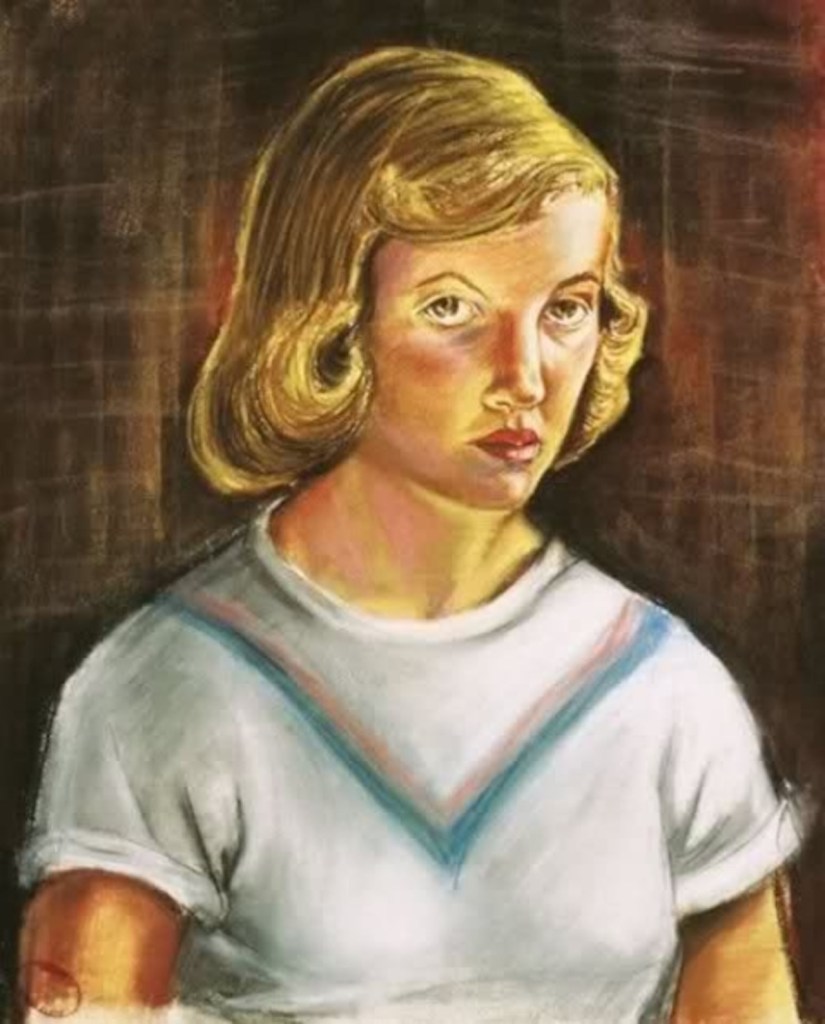



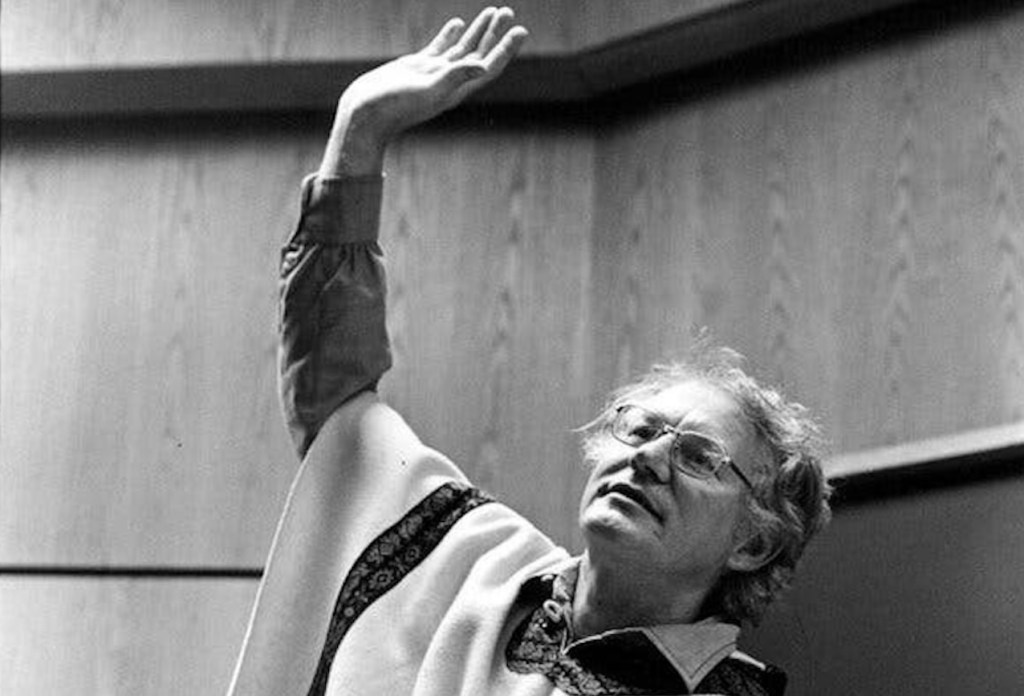





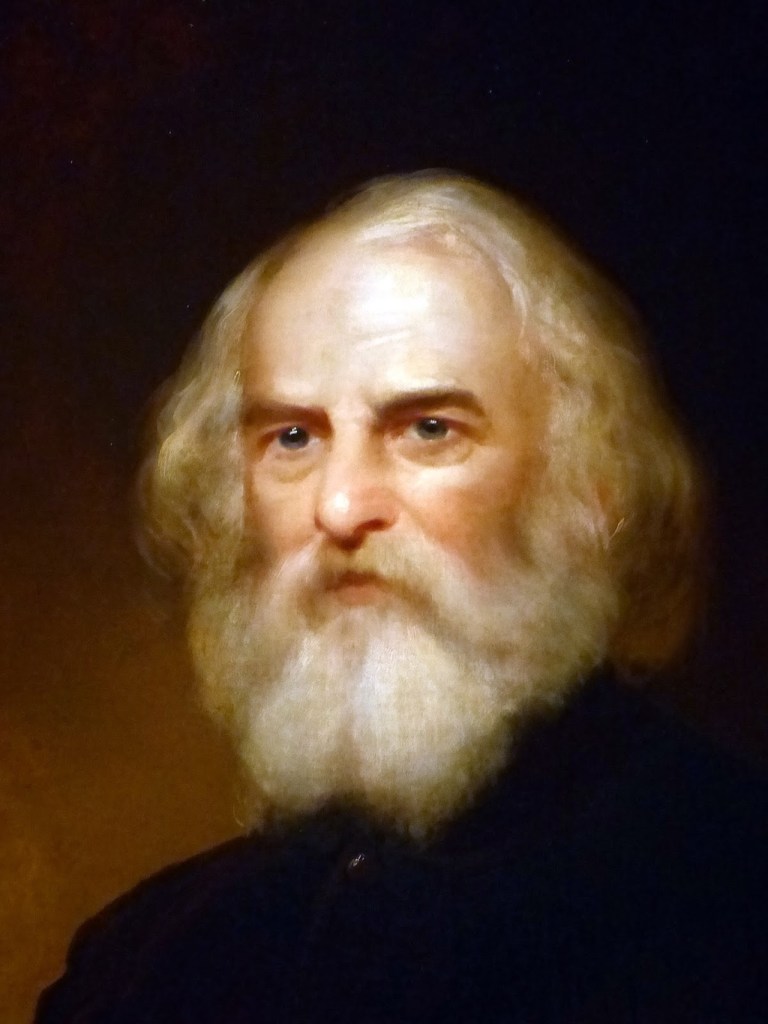

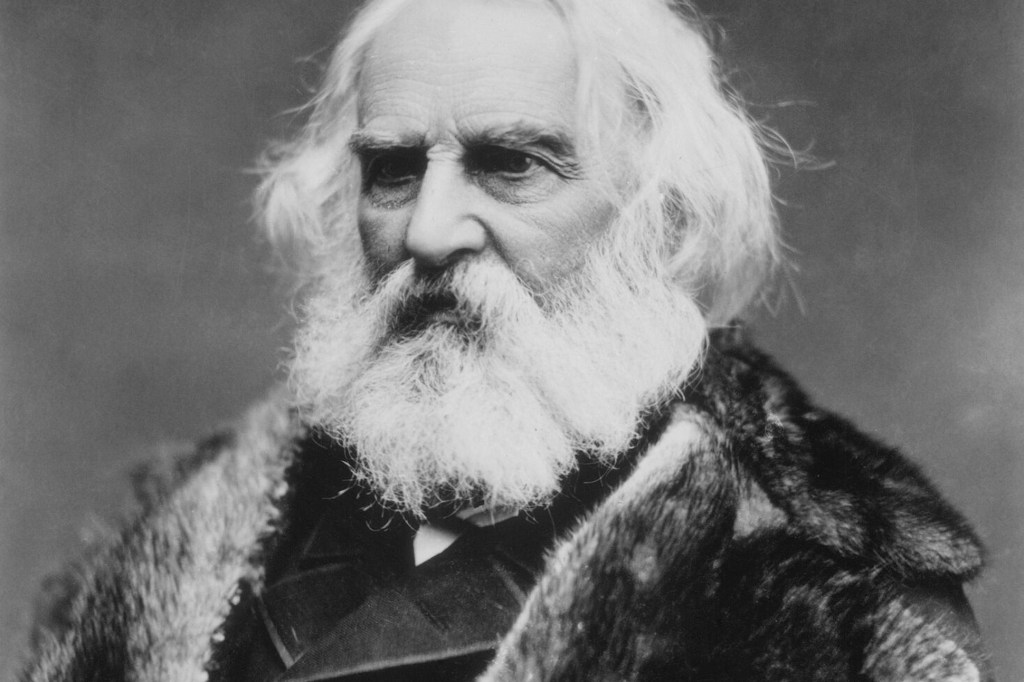
 Linda's Literary Home