for Professor Thomas Thornburg——poet, friend, colleague, beautiful soul
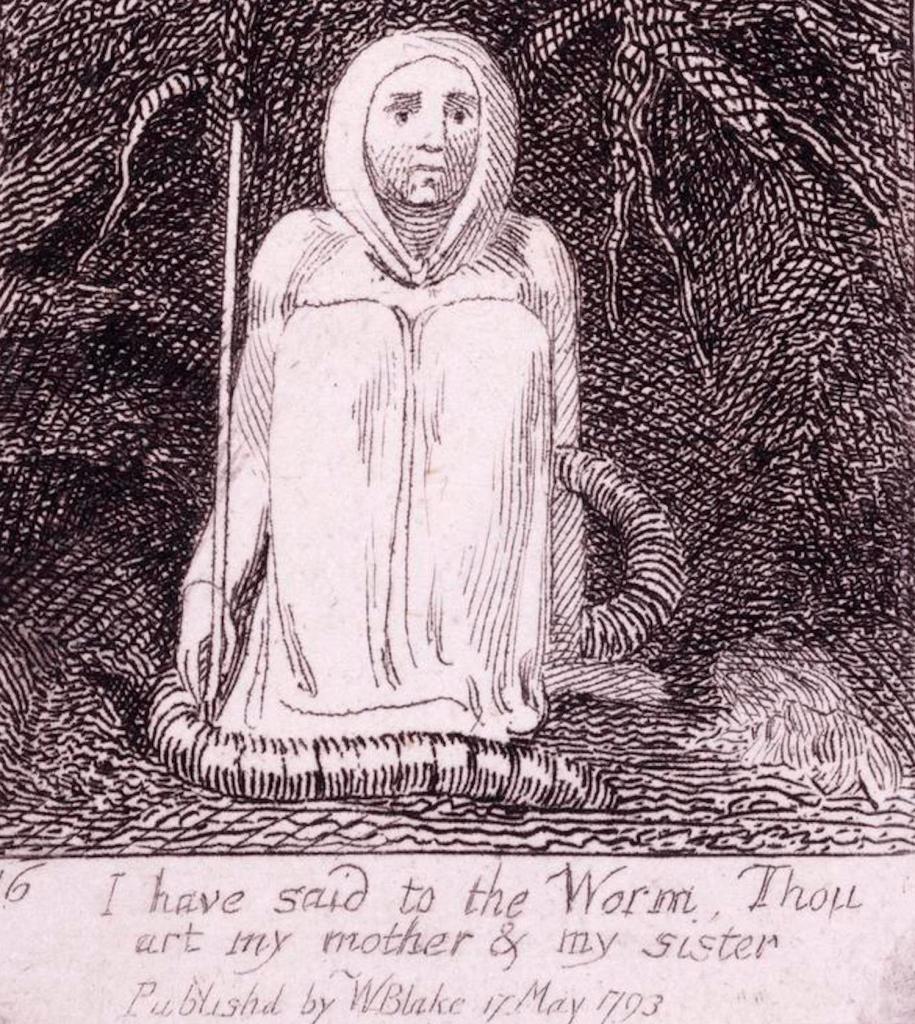
” . . . his dark secret love / Does thy life destroy.” ——William Blake, “The Sick Rose”
The invisible enemy is a worm— Not a Blakean worm as scholars understand him— (Perhaps a Blakean worm as Blake understood him.) After meeting in small rooms, saints carry their arguments Away in their heads, their hearts, Whereas scholars leave their stance in learned books, Where it remains tentative and drooping.
But the real worm—the worm that eats the saint’s heart Arouses in the saints’s brain a private worry A real agony that no book, read or written, can assuage.
I do no expect you to believe I am a saint I have seen you doubt those holier than I; But you know about the worm And you know about the tentativeness of the learned. You have helped me document him.
The real enemy is the worm That devours peace Without shedding blood. He grows deep in the soil Of our metaphysical hearts And the more we talk, the more he feeds Upon the silence that breaks Over the rock of our unpolished thoughts.
I lament dead ear, dim eye, dumb tongue of the poet faint in your heart. once on a night I would have yielded to your woo, but like a stone you sat upon the vacant shore waiting to glimpse moonlight dancers who would write your starry thought on golden sand, who would beam your fancy over the fecund sea.
I lament your blue death, your painted life your cup of anguish drained and tossed away, you fall against the knife of ignorance staggering along the streets where fools have no need of Truth. and they do not see you. not you. not the poor fool I lament, poor muse that I am.
I lament your rotting for the garden. when you died, I would have you gladly put on a gossamer shield. but your circus pride keeps you a spinning sense clown. too many smoky tongues have licked your beauty and the ash of your memory is scattered over the desert of your suffering.
I lament with closed eyes, with a heaving breast your open sorrow facing the icy wind of death. but you sat like a stone. heart like a stone. Turn your face away from me now. do not look on my lamentation. you who never believed in the blue lotus feet of the Belovèd— the only Word that writes a soul across Eternity.
as you you walk away i feel my heart beat. almost drop my suitcase on the concrete.
this heart beats for you without your answers even without your questions
you walk away to go build some bridge over the river of your memories.
i stand here watching you go. emptying my mind into a canyon of loneliness
II. Parting at the Airport
You drive away—my heart beats faster. Just a moment ago I did not notice This breaking heart that would drop to its knees Only to lose itself in the concrete.
You are already out of sight—what did I ask for But the gift of friendship? You had no answer. You could not find a place in your heart A place in your life for one such as me.
The bridge you build must be a sturdy one To expand over the loneliness you claim to own. Your ego-claim on words that belong To everyone, not just braggarts and scofflaws—
I empty my mind— calm my heart and breath And walk to the airplane.
That night we stopped by the side of the road You stared full in the face of the round moon And turning back to me your white fangs bore And tearing the seat with your claws you swore You didn’t know what got into you, but soon You knew these dog days would pay off your load
Of sorrow, but you never paid for pain. Those minutes as you ripped my hand, my heart— I felt the blood start and tears burn my eyes. Across squandered dreams I begged to now why The man left you, and you came apart Gazing hard on the blood and the stain.
And as you sank those fangs into my breast My heart became a victim of your beast.
Every time I take down this tarnished memory of you From a dusty shelf in my mind I feel the sharp blade of your bitterness Steal across my brain. Your eyes glare at me— Two slivers of pane. Sharp icicles hang in the windows of your soul. Passion gathers and drips from the hard, smooth cold.
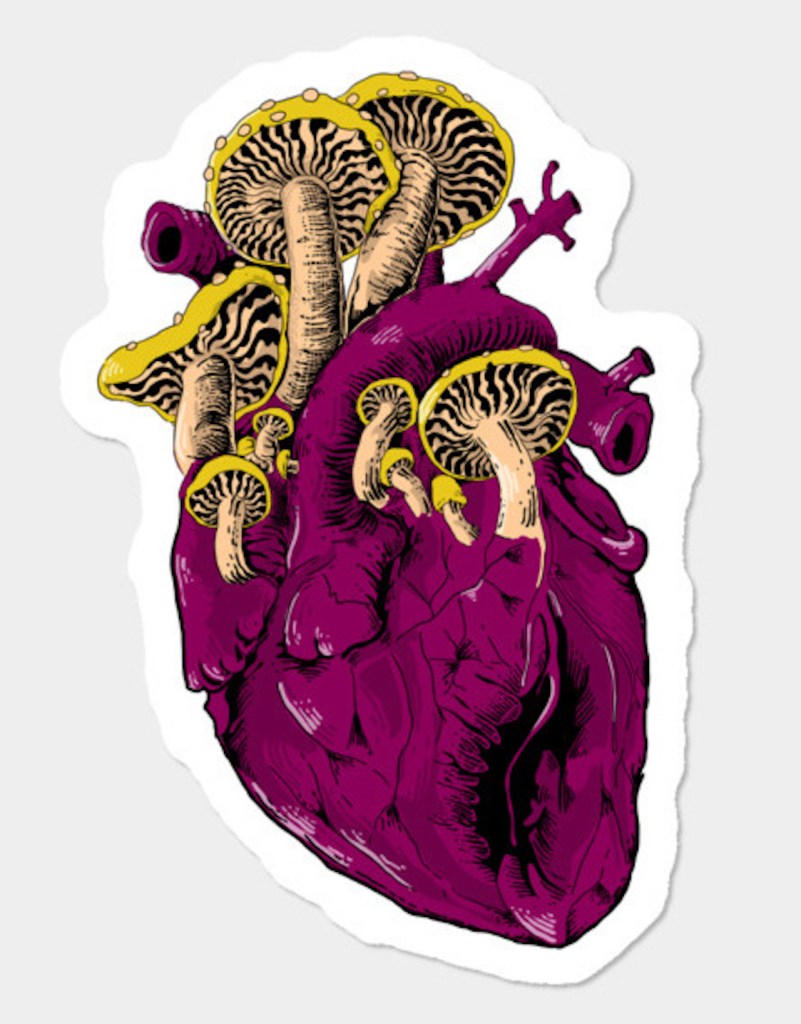
When you spoke, the room boomed and seethed. Those walls could not hold a hate so self-engorged. Your mushroom heart demanded darkness A close, dank cellar and rotten words:
You scribbled decay across many hours— The syllables all sigh their wasted powers.
It makes sense that she should tremble When she sees his face, Hears his voice—
She must wonder What her body will become If she never kisses him with a passionate mouth If she never feels his arms pull her to his heart.
How will her bones bear The yearning as they grow brittle? How will her heart beat The fire that leaps at the thought of his touch? How will her blood keep The liquid love that spills passion
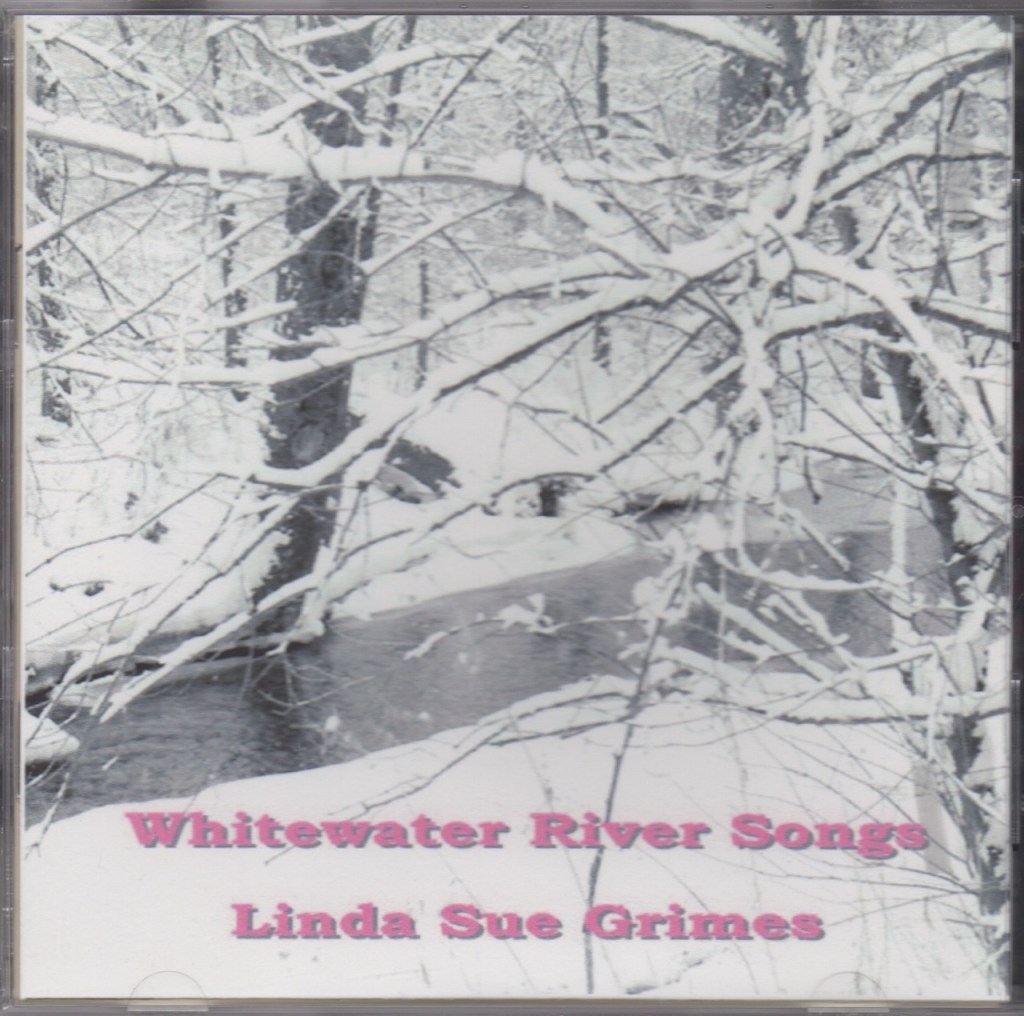
Image: “Whitewater River Songs – Album Cover” Photo by Ron W. G.
Original Song: “River Spirit” and Prose Commentary
I wrote “River Spirit” circa 1980 then made a homemade recording of it around 20 around 2004. In 2023, my husband Ron—whom I call “My Sweet Ron”—created the video featuring his own photos and videos selections along with the song.
Introduction to and Lyric of “River Spirit”
The lyric of “River Spirit” plays out in four stanzas of tercets, with one couplet appearing as the second stanza. It sports no traditional rime-scheme but does offer one set of perfect rime in “hand/sand” in the second and third lines. Other slant—or more accurately ghost rimes—appear in “water/before” in the couplet.
Ghost rimes also make an appearance with “bed/edge” and “changes/images.” The time frame begins in spring, as the singer begins to report what she sees along the river after the cold hard season of winter has given way to the warmth of spring.
The theme of the song is the mystery the singer feels at seeing that the landscape along the river has been radically transformed from what she had observed during the summer before this transforming winter had its sway. The singer poses questions about how the trees got uprooted and the path along the river has shifted, as even the stones are taking on new patterns.
The singer then announces what she had thought to be the agent of the transformations; however, she is ultimately revealing—in the title—that what she “guessed” back in the day, she now knows to be the work of the Divine Reality, the “River Spirit”—or God (see “Names for the Ineffable God”).
(Please note: Dr. Samuel Johnson introduced the form “rhyme” into English in the 18th century, mistakenly thinking that the term was a Greek derivative of “rythmos.” Thus “rhyme” is an etymological error. For my explanation for using only the original form “rime,” please see “Rime vs Rhyme: Dr. Samuel Johnson’s Error.”)
River Spirit
Every spring along the Whitewater River I saw that some mysterious hand Had rearranged the rocks and sand.
The path I followed the summer before Was slipping off into the water. I could not figure out whose force Could drive that water among the reeds & shift the river in its bed
Whose muscles uprooted those trees? Whose fingers patterned those stones Along the edge?
I guessed only that the spring thaw Conjured up the changes In those sleeping river images.
Commentary on “River Spirit”
The time frame is spring, as the singer begins to muse on what she observes along the river after the cold, hard season of winter has given way to the warmth of spring. Her earlier guess about that riverbank rearrangement has now become an article of faith, and she proclaims in the title the answer to her earlier inquiry.
First Movement: The Hand of Mystery
Every spring along the Whitewater River I saw that some mysterious hand Had rearranged the rocks and sand.
The singing narrator launches right into her story by making the claim that she observed a change in the pattern of stones and sand along the river’s edge, and she make this observation “every spring.” She had thus a recollection of having experiences these changes many times.
She colorfully attributes those rearrangements to “some mysterious hand.” At this point, it may sound a bit odd that a river walker would think a hand had been involved in what went on along the riverbank in her absence.
Second Movement: River Features Shifting
The path I followed the summer before Was slipping off into the water.
After setting the stage for mystery and rearrangement of river features, the singer offers a very specific change. She had walk along a path during the preceding summer, and now that path simply veered off into the river water. Such a change would likely be quite jarring for the hiker, who would necessarily be obliged to alter her walking pattern.
Third Movement: Puzzling over the Changes
I could not figure out whose force Could drive that water among the reeds & shift the river in its bed
The singer now inserts her puzzlement. She becomes curious as to how such changes could have occurred. She sees that the river has now shifted its course, plunging into the reeds along the bank.
The mere fact of the river shifting “in its bed” seems Herculean in prospect. The river is such a large body of moving water that the notion of it shifting surely requires a force that strikes the singer an unimaginable at this point.
Fourth Movement: Who Made Those Changes?
Whose muscles uprooted those trees? Whose fingers patterned those stones Along the edge?
The singer then again adds more specificity to her inquiry. She sees that trees have been “uprooted,” and she observes that the stones along the river’s edge have been rearranged in a different pattern from the summer before.
Again, she colorfully attributes those “changes” to a seemingly human agency of “muscles” and “fingers.” But behind those specific agents must lie some metaphysical force that at this point the singer cannot name, cannot even offer a guess about.
Fifth Movement: Guessing at the Conjuring
I guessed only that the spring thaw Conjured up the changes In those sleeping river images.
Now the singer offers what she thought to be an answer to her inquiry: Well, it was likely that not any hands, muscles, or fingers enforced all of these changes; it was simply the process of thawing out from the ice during the warming movements brought on by spring.
Sure, that’s it: the spring movements of thawing influenced those inert river features to alter themselves into differing patterns from the summer before. What else could it be? But the singer is understating what she really believes now. She “guessed” about the “spring thaw”—but that was then, this is now.
Thus the singer through anthropomorphic images of hands, muscles, fingers has proclaimed that a humanlike power has, in fact, mades these changes. Not an actual human being on its own however. But some power that retains in its Being the image of the human form, power, and ingenuity.
Simply, the title of the lyric has already stated what the singer pretends to guess about as she unfurls the song: God (as the “River Spirit”) has performed His magic on these “sleeping river images.” God has “conjured up” those alterations in those river images as they moved from a frozen, winter sleep to vital spring time awakening.