Linda's Literary Home

Category: Original Poems

  • The Poetaster

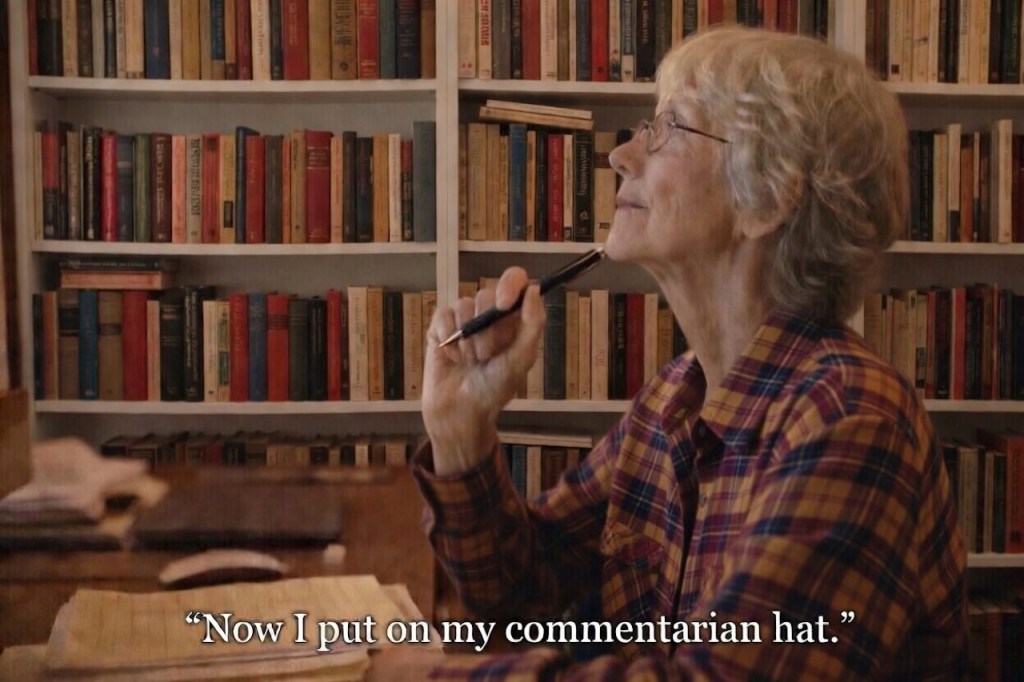
    Image: Created by Grok and ChatGPT from request by the poet. From a photo by Gerard Malanga.

    The Poetaster

    His poetastry sucked long before he wrote one line.
    His windbag approach to speech spews forth
    Rorschach gibberish, a kite loose in the wind.

    He strings together bilge & blather in prosy, broken lines.
    Each syllable a sin against language, he sounds
    Like a broken record swimming in a thesaurus cesspool.

    To him and his ilk, meaning is a four-letter word
    A limitation that blasts his own thing
    Cramps his style, like hippies against the Man.

    Dead poets scald him in their perfection
    He’s not only jealous, he’s incredulous
    That anyone could really write a poem

    His shyster ways are blistering ego trips
    Laid on the gullible who never have cared
    To understand or appreciate what poetry is

    He’s the man behind the curtain
    At the end of yellow bricking
    Fanning his flame to fame.

    A different version focusing on the same theme as this poem appears in my collection titled Turtle Woman & Other Poems.

    Image: Original photo by Linda Sue Grimes, text added by Grok

    A Prose Commentary on My Original Poem “The Poetaster”

    In my poem “The Poetaster,” I have delivered a speaker, who delivers a blow with a pointed critique of a fraudulent artist—someone who takes on the guise of a poet without submitting to the discipline, humility, or responsibility that poetry demands. 

    The poem functions as both satire and indictment, using abrasive diction and exaggerated imagery to reveal the hollowness of pretension masquerading as creativity. In my humble artist opinion, human creativity is the most cherished possession held by the human heart and mind.  

    (Human creativity has resulted in some of humanity’s most important discoveries and inventions, making life on earth both comfortable, profitable, and inspirational.  To degrade that human function with laughable, disgusting, idiotic fakery remains an abomination that corrodes the human spirit, as it mocks God and pretends to superiority it does not deserve.)

    The term “poetaster” itself signals the speaker’s purpose: it is not merely a label for bad poetry but for imitation without substance. The speaker approaches the subject with sharpened disdain, defending the integrity of poetry against those who dilute it.

    The language throughout is deliberately coarse—“windbag,” “bilge & blather,” “cesspool”—so that the revulsion is tangible. This discourse has no intention of remaining a polite literary critique; it is exposure. At the same time, the imagery is controlled, each metaphor reinforcing the disorder and emptiness that define the poetaster’s work.

    First Stanza: Inherent Failure

    The speaker opens by asserting that the poetaster’s failure precedes even the act of writing: “His poetry sucked long before he wrote one line.” The hyperbole suggests that the deficiency is fundamental, not merely technical.

    The description “Rorschach gibberish, a kite loose in the wind” emphasizes randomness and lack of control. A Rorschach blot invites projection rather than meaning, while the loose kite suggests motion without direction. These images mark the poetaster as untethered, someone whose language drifts without intention.

    Second Stanza: Abuse of Language

    Here, the speaker focuses on the poetaster’s relationship to language. The phrases “bilge & blather” and “prosy, broken lines” highlight excess without purpose, the superficial adoption of form without discipline.

    The simile “like a broken record swimming in a thesaurus cesspool” underscores repetition, artificiality, and overreliance on inflated diction. The poetaster does not shape language; he wallows in it. The speaker intends to convey that such writing actively degrades the medium it purports to serve.

    Third Stanza: Rejection of Meaning

    The third stanza identifies the poetaster’s central flaw: a willful rejection of meaning. “Meaning is a four-letter word” frames clarity and coherence as constraints.  

    (Scenario:   One imagines the poor, teenage would-be poetaster sitting in high school English class, unable to ferret out the “meaning” of a line of verse, thus becoming convinced that meaning belongs to the elite, the teacherish class alone can understand “meaning.”  Meaning shmeaning, the hell with that: words, words, words—that’s all I need for my poem.)

    The comparison to “hippies against the Man” introduces cultural satire, suggesting reflexive rebellion without depth. The poetaster mistakes the absence of structure for freedom. The speaker implies that true poetry wrestles with meaning, whereas the poetaster abdicates it.  Meaning—also one of the great necessities for living a decent life on this mud ball of a planet.  To abdicate it is to abdicate life itself!

    Fourth Stanza: Envy of the Canon

    The speaker turns to the poetaster’s relation to literary tradition. “Dead poets scald him in their perfection” conveys both intimidation and resentment. The poetaster cannot reconcile himself to genuine mastery.  Remember that teeny-bopper, would be poet sitting in the high school class, befuddled by the Greats!

    His incredulity—“That anyone could really write a poem”—reveals insecurity. If real poetry exists, his own efforts are exposed as inadequate. Rather than aspiring to that standard, he dismisses it. Envy here becomes corrosive, curdling into denial rather than inspiring growth.

    Fifth Stanza: Manipulation and Audience

    The critique expands to include the poetaster’s audience. The “shyster ways” and “blistering ego trips” indicate a performative dimension: this performance is opportunism, not craft.  

    The poetaster relies on “the gullible who never have cared / To understand or appreciate what poetry is.” The speaker thus implicates the audience as complicit in perpetuating mediocrity. The poetaster survives not only through ego but through uncritical reception; he has become a sacred cow, impervious to criticism.

    Sixth Stanza: Illusion of Grandeur

    In the final stanza, the speaker employs imagery of spectacle and deception. “The man behind the curtain” evokes false authority, manipulating appearances to maintain influence. The reference to “yellow bricking” recalls a journey toward supposed revelation that leads instead to exposure—obvious allusion to The Wizard of Oz.

    “Fanning his flame to fame” captures the poetaster’s self-promotional drive. The flame is ambition and vanity, maintained artificially rather than earned. The poem concludes without redemption: the poetaster remains what he is, sustained by ego and illusion.

    An Afterthought

    In “The Poetaster,” the speaker articulates a broader frustration with a cultural condition in which performance substitutes for substance and standards erode. The poem is intentionally harsh because the stakes are real: poetry, at its best, refines language, sharpens perception, deepens understanding, leading to spiritual rebirth for the human heard and mind. 

    When poetry is reduced to empty display, vitally essential human progress is lost.The speaker, therefore, does not merely condemn; she defends—aggressively—the possibility that poetry can and must still demand rigor, clarity, and truth.

  • Some Bones

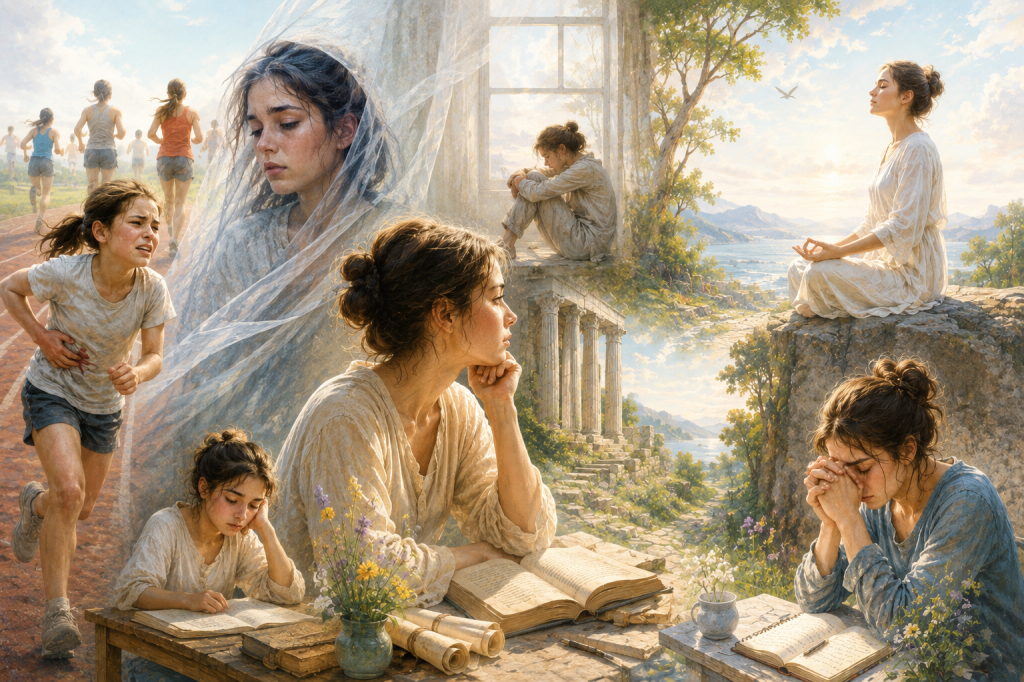
    Image:  Created by Grok inspired by the poem

    Some Bones

    Some bones stand like corn stalks
    After late harvest. They bristle in the field.
    They remain unclean though they look
    Bleached and scrubbed.

    Skeletons may hang in closets
    But not these bones—the ones
    That are losing themselves
    As they scream and pound sand.

    Some bones cry for a thinner cloak
    But unlike some hearts
    They have never broken themselves
    Over the pain of this mud ball.

    Some bones slash themselves in early spring
    And cleave to youth too late in summer.
    A young brain cannot pool its dreams
    To yield the pith of adult philosophy.

    Some bones have no star to guide errant ways.
    They may stitch themselves by valves
    But sense no light in the chambers
    That wobble and bleed ugly passions.

    Some bones keep wobbling, sputtering,
    Spitting in the face of any thought
    That might hold them to account
    Lingering in the mud of passing time.

    A Prose Commentary on My Original Poem “Some Bones”

    In my poem “Some Bones,” I have created a speaker who is musing on fragmentation, arrested development, and the failure of inner cohesion, using the recurring image of bones—stripped, exposed, and stubbornly animate—as a controlling metaphor for the human condition when it is cut off from spiritual integration. 

    Unlike the quiet endurance of stone, bone suggests a harsher, more restless existence: something once living that refuses, even in its partial ruin, to settle into peace.  Such failure epitomizes the blocked condition of generations of unhappy, prideful, and dangerous individuals who have remained strangers to themselves.

    The language remains constructively physical—bones, closets, sand, mud, valves—yet it continually gesticulates toward psychological and spiritual disarray. My speaker does not offer consolation; instead, she allows the imagery to confront the reader with a kind of unresolved agitation. Where wisdom might emerge, it does so jarringly, often obstructed by immaturity, illusion, or sheer refusal.

    Underlying the poem is my own sense that without a guiding metaphysical orientation—whether one names it divine light, higher consciousness, or moral clarity—the human being risks becoming disjointed, reactive, and perpetually unfinished.  Such an orientation of mind has been instilled in my mindset by my blessèd Guru Paramahansa Yogananda.

    First Stanza: Residue after Harvest

    In the opening stanza, my speaker presents bones as remnants, likened to corn stalks left standing after harvest. This simile is intentional: what remains is not fruitful but residual, something overlooked, perhaps even abandoned. The bones “bristle,” suggesting defensiveness, a kind of posturing that masks emptiness.

    Though they appear “bleached and scrubbed,” they remain “unclean.” This contradiction establishes a central tension: outward purification does not equate to inner transformation. 

    The bones carry a stain that cannot be washed away by exposure or time alone. I wanted the speaker to imply that mere survival or endurance does not guarantee wisdom; one can persist and yet remain fundamentally unresolved.

    Second Stanza: Refusal of Containment

    Here, my speaker contrasts the familiar idiom of “skeletons in closets” with these bones, which refuse concealment. They are not hidden but actively “losing themselves / As they scream and pound sand.” The image is specifically chaotic and futile—pounding sand accomplishes nothing, yet it expresses frustration and desperation.

    These bones are not passive relics but disintegrating agents, unable to maintain coherence. The phrase “losing themselves” suggests a failure of identity, a dissolution rather than a stable essence. The speaker is emphasizing a kind of existential noise: movement without direction, expression without meaning—a condition that will remind my readers of the influence of postmodernism on poetry.

    Third Stanza: Avoidance of True Suffering

    In this stanza, the bones “cry for a thinner cloak,” desiring relief or escape, yet my speaker contrasts them with hearts that have “broken themselves / Over the pain of this mud ball.” The implication is that these bones have avoided the kind of deep suffering that refines and transforms.

    There is, in my view, a necessary breaking that accompanies genuine emotional or spiritual growth. These bones, however, remain intact in a superficial sense precisely because they have not undergone that process. 

    Their complaint is shallow; they seek comfort without having earned insight. The “mud ball” underscores the earth’s dirty imperfection, a condition that must be confronted rather than evaded.

    Fourth Stanza: Temporal Dislocation and Immaturity

    The fourth stanza examines the misalignment of time and development. The bones “slash themselves in early spring” and “cleave to youth too late in summer,” suggesting a disordered relationship to life’s natural phases. There is both premature self-harm and delayed attachment to youth.

    The concluding line suggests frenetically what the imagery implies: maturity requires synthesis. Dreams alone, without discipline or time, cannot produce wisdom. I wanted the speaker to assert that intellectual and spiritual depth cannot be rushed or improvised; it must be cultivated through experience and reflection.

    Fifth Stanza: Absence of Guiding Light

    Here, my speaker turns sternly to the absence of direction. The image that “Some bones have no star to guide errant ways” invokes the ancient image of navigation by the heavens. Without such a reference point, these bones attempt a kind of self-repair—“stitch themselves by valves”—but the effort is mechanical and insufficient.

    The “chambers” evoke both the heart and the mind, yet they “sense no light.” This lack is crucial: the structure exists, but illumination does not. The result is a system that “wobbles and bleed[s] ugly passions,” governed not by clarity but by disorder. The speaker is averring that without an orienting principle, human faculties become unstable, even grotesque.

    Sixth Stanza: Defiance and Stagnation

    In the final stanza, the bones persist in their agitation—“wobbling, sputtering”—but now their resistance is directed against accountability itself. They reject introspection or discipline.

    The closing image, “Lingering in the mud of passing time,” echoes to the earlier “mud ball,” but now it emphasizes stagnation. Time moves, yet the bones do not progress; they remain mired, neither decaying fully nor transforming. 

    This eventuality is, perhaps, the most severe judgment in the poem: not suffering, not even failure, but refusal—the unwillingness to engage the very processes that might lead to growth.

    An Afterthought

    In “Some Bones,” I have attempted to portray a condition of partial existence—one in which the human being retains structure and motion but lacks integration, direction, and illumination. The bones are not dead, but neither are they fully alive in any meaningful sense.

    Where my earlier musing on stone suggested endurance and the possibility of quiet wisdom, here I explore a more troubled state: persistence without purpose, animation without coherence. 

    The poem ultimately argues, though indirectly, that without a willingness to suffer, to mature, and to orient oneself toward a higher principle, one risks becoming like these bones—restless, exposed, and perpetually incomplete.

  • A Memory of a Mind

    Image: Created by Grok inspired by the poem

    A Memory of a Mind

    for a respected professor

    My heat runs near my heart
    Gathering blooms like daylilies
    In the staunch atmosphere of breath.
    Somewhere a mockingbird is plying
    His abundant score of tunes.
    I listen, an ocean far away washes in.

    My childish wisdom plays dark tones
    Where no one bothers to intrude.
    I have created my shelter with roses
    & sweet notions that cling to my ears.
    Summer strives with more sunshine
    Than evil dares to counter.

    My thoughts flow down river
    Swaying like tulips in a spring breeze.
    You offered me balm from the blight
    Of crooked logic that streams from ignorance.
    Coiffed rhetoric pours acid on tumors
    Growing in idle, pampered brains.

    You played your role imperfectly,
    But I benefited from the jazzed up wisdom
    Slipping out from your tangled sentences.
    Now that you cohabit with a confuddled communist,
    Her codswallop will stunt your mental growth—
    Still your mind will one day bask in freedom.

    A Prose Commentary on My Original Poem “A Memory of a Mind”

    In my poem “A Memory of a Mind,” I fashion a speaker who reflects upon intellectual formation, gratitude, disillusionment, and the fragile persistence of independent thought. The poem operates as both tribute and critique, addressed to a once-respected mentor whose influence remains formative, though not untroubled. 

    I rely on organic and musical imagery—flowers, rivers, birdsong, jazz—to explore the shaping of consciousness, while also introducing harsher, almost corrosive metaphors to examine the distortions of thought imposed by ideology and careless reasoning.

    The speaker’s voice is at once reflective and evaluative, moving between reverence and judgment. As in an earlier poem “Downstream,” I favor a density of figurative language that merges the sensory with the intellectual: breath becomes atmosphere, thought becomes landscape, and rhetoric becomes a physical toxin. 

    The philosophical undercurrent remains concerned with the tension between clarity and confusion, wisdom and corruption, freedom and constraint—an interior drama enacted within the evolving mind.

    As I usually do in my poems and other creative works, I remain aware of the pairs of opposites, discussed and explained by my blessed Guru, Paramahansa Yogananda.  The tension between those pairs is always operative on this mud ball of planet, and my speakers are steeped in that realization.

    First Stanza: Awakening Sensibility and the Music of Distance

    The opening stanza situates the speaker in a state of heightened inward awareness. “My heat runs near my heart” suggests both vitality and emotional immediacy, while the blooming “daylilies” evoke transient beauty—fleeting but recurrent. The “staunch atmosphere of breath” implies a disciplined, almost meditative interiority, where even respiration becomes deliberate and meaningful.

    The introduction of the mockingbird, “plying / His abundant score of tunes,” extends the poem into the auditory realm. This figure embodies both natural creativity and excess—an improvisational intelligence that parallels the workings of the mind. 

    Yet the speaker does not fully inhabit this immediacy; instead, “an ocean far away washes in.” This distance signals a dual consciousness: one part present and attentive, another removed, reflective, and expansive.

    Thus the stanza establishes the central dynamic of the poem: the mind as both participant in and observer of experience, capable of intimacy yet inclined toward detachment.

    Second Stanza: The Construction of Inner Refuge

    In the second stanza, the speaker turns inward more deliberately, recalling a “childish wisdom” that “plays dark tones / Where no one bothers to intrude.” This phrase captures an early intellectual solitude—an imaginative space untested by external critique but rich with private meaning. The darkness here is not wholly negative; it suggests depth, secrecy, and the unrefined beginnings of thought.

    The “shelter with roses & sweet notions” represents a self-fashioned sanctuary, built from aesthetic pleasure and comforting ideas. Yet there is an implicit fragility in such construction: roses, while beautiful, are perishable, and “sweet notions” may lack rigor. 

    The stanza’s closing lines—“Summer strives with more sunshine / Than evil dares to counter”—introduce a provisional optimism, where light appears to dominate darkness. Still, the phrasing (“strives”) hints that this balance is not guaranteed; it must be maintained against encroaching forces.

    Here, I am acknowledging the formative illusions of youth: necessary, perhaps, but ultimately insufficient when confronted with more complex realities.  A corrupted adulthood often confounds the complexities that later snap and struggle in the confusion of time as it relates to space.

    Third Stanza: Intellectual Guidance and the Critique of Corruption

    The third stanza marks a turning point, introducing the addressed figure more directly. The speaker’s thoughts “flow down river,” suggesting maturation—movement shaped by gravity and terrain rather than mere whim. The comparison to “tulips in a spring breeze” retains a softness, but now this motion is guided.

    “You offered me balm from the blight / Of crooked logic that streams from ignorance” positions the mentor as a corrective force. The metaphor of “balm” implies healing, while “blight” evokes disease spreading through faulty reasoning. At this stage, the professor represents clarity, a defense against intellectual decay and kuuntzian* buffoonery .

    However, the stanza quickly darkens: “Coiffed rhetoric pours acid on tumors / Growing in idle, pampered brains.” The imagery becomes aggressive and surgical.

    “Coiffed rhetoric” suggests language that is polished but superficial, while the “acid” both destroys and reveals. The “tumors” symbolize entrenched ignorance, particularly in minds that are “idle” and “pampered”—unused to discipline or challenge.

    This stanza thus captures a dual process: the possibility of intellectual healing through guidance, and the simultaneous presence of corrosive discourse that threatens genuine understanding.

    Fourth Stanza: Imperfect Influence and the Persistence of Hope

    In the final stanza, the speaker adopts a more measured, retrospective tone. “You played your role imperfectly” acknowledges the mentor’s limitations, rejecting any idealization. Yet this imperfection does not negate value: “I benefited from the jazzed up wisdom / Slipping out from your tangled sentences.”

    The metaphor of jazz is crucial here—improvised, irregular, sometimes chaotic, yet capable of producing unexpected insight. Wisdom emerges not from pristine clarity but from complexity, even confusion.

    The poem then introduces a note of critique bordering on satire: “Now that you cohabit with a confuddled communist, / Her codswallop will stunt your mental growth.” The language is deliberately sharp, even colloquial, signaling the speaker’s frustration with what is perceived as ideological distortion. The shift in tone underscores a loss—not only of the mentor’s intellectual independence but of the clarity once admired.

    Yet the poem does not conclude in bitterness. “Still your mind will one day bask in freedom” restores a measure of hope. The speaker ultimately affirms the possibility of intellectual liberation, even after error or misalignment. 

    This closing gesture aligns with the broader philosophical stance evident throughout the poem: that the mind, though vulnerable to confusion and influence, retains an inherent capacity for renewal and clarity.

    A Closing Reflection

    In “A Memory of a Mind,” I attempt to trace the evolution of consciousness as it moves from youthful inwardness, through formative mentorship, into a more critical and autonomous stance. The poem resists both naïve reverence and outright condemnation; instead, it holds both gratitude and disappointment in tension.

    The central belief underlying this work is that intellectual and spiritual growth are inseparable from conflict—between clarity and confusion, influence and independence, admiration and discernment. The mind, like a river or a piece of music, is never static. It is shaped by forces both internal and external, yet it retains the capacity to reorient itself toward truth.

    In this sense, the poem affirms a disciplined optimism: that even amid imperfect guidance and ideological distortion, the individual consciousness can, with effort and discernment, return to a state of freedom.

    *kuuntzian:  a perennially flawed, shadowy, malevolent mindset (I coined this term prompted by the pathetic machinations of a Ball State University professor, whom I hope to save from embarrassment by not spelling out his name)

  • Downstream

    Image: Created by Grok inspired by the poem

    Downstream

    for a belovèd Professor

    Maybe I crept too near my own heat
    Burned my own logic into everyday issues
    But when I looked for your face
    I looked for what every child needs
    From a mother, and from God.
    And you smiled when I offered my childish wisdom
    On matters that were already folded
    And neatly tucked away in the bureau of your mind.

    Once there was a time I thought
    I lost a friend of great value.
    But Paper Mill Bridge
    From which I watched summer canoe downstream
    And fall send ships of leaves downstream
    And winter float chunks of ice downstream
    Taught me, as you teach me now,
    That the flow is downstream—
    Thought, friend, value—all flowing downstream.
    All things, all time, downstream
    Until we all empty into the open ocean
    Until we all flow empty into the mind of God.

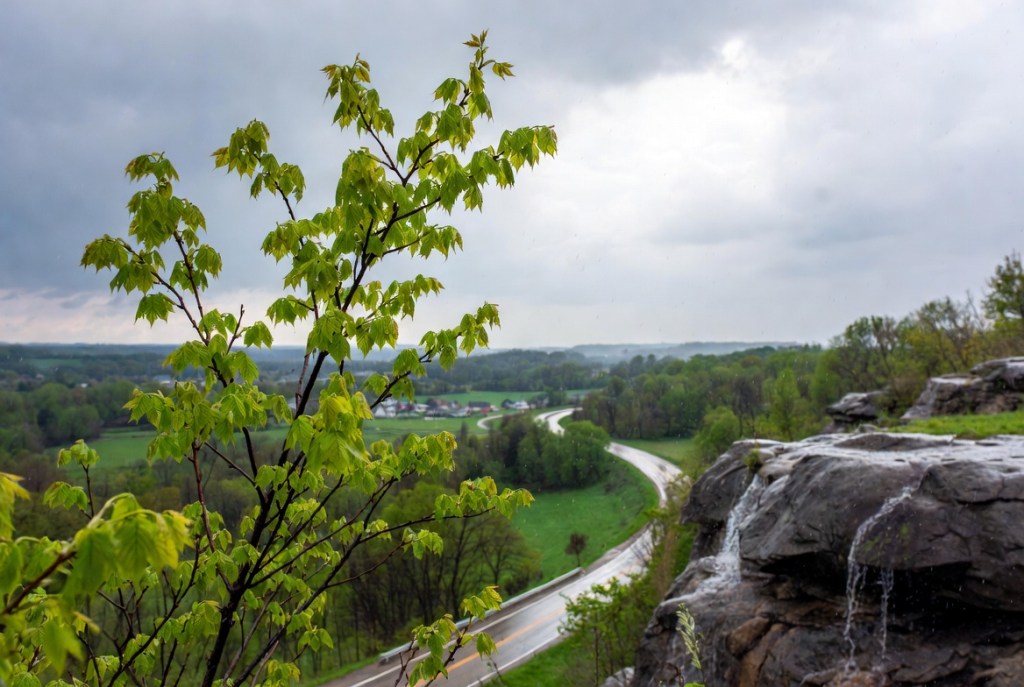
    Image: Original photo by Linda Sue Grimes, text added by Grok

    A Prose Commentary on My Poem “Downstream”

    In my poem “Downstream,” I create a speaker who is musing with measured candor on attachment, misperception, and the gradual acceptance of spiritual humility. The controlling metaphor of the poem is the downstream current.

    That important metaphor reflects steadiness, indifference, as well as ultimate unity, through which all human experience, whether intellectual, emotional, or relational, is carried toward unification with a larger, Divine Consciousness. 

    The tone remains restrained, even when approaching confession, and the language is deliberately plainspoken, allowing the philosophical weight to emerge through image rather than ornament.

    At its core, the poem concerns a misalignment of expectation: the speaker’s attempt to locate in another person—specifically, a “belovèd Professor”—a form of nurture or transcendence that properly belongs elsewhere. What emerges is not bitterness but correction, and ultimately, a subdued gratitude.

    First Movement: Projection, Heat, and Misplaced Longing

    In the opening lines, the speaker begins with self-suspicion: “Maybe I crept too near my own heat.” Her “heat” suggests both intellectual intensity and emotional overinvestment. The speaker recognizes that in pressing too closely to her own convictions—her “logic”—she has distorted their proper application, “burning” them into domains where they do not belong, namely “everyday issues.”

    The poem then shifts into a quiet admission of need. When the speaker “looked for your face,” she was not merely seeking intellectual guidance, but something more primal: “what every child needs / From a mother, and from God.” 

    The pairing here is deliberate and revealing. The professor becomes, in the speaker’s perception, a composite figure of paternal authority and divine presence—an impossible fusion that guarantees disappointment, not because the professor fails, but because the expectation itself is miscast.

    Yet the professor’s response is neither rejection nor indulgence. His smile, directed at the speaker’s “childish wisdom,” carries a measured patience. He recognizes both the sincerity and the immaturity of the offering. 

    His mind, described as a “bureau” where matters are already “folded / And neatly tucked away,” suggests order, experience, and containment. In contrast, the speaker’s thought remains provisional—still forming, still seeking validation.  

    The first movement, then, is not accusatory but diagnostic. The speaker identifies her own error: she has confused intellectual admiration with existential dependence.  But she, no doubt, intends to correct her misbegotten mistake.

    Second Movement: The Bridge and the Instruction of Time

    The poem’s second stanza introduces the central image: “Paper Mill Bridge.” The location functions as both a literal and symbolic vantage point. From this fixed position, the speaker observes the continuity of change across seasons—summer canoes, autumn leaves, winter ice—all moving “downstream.”

    The repetition of this motion across temporal variations establishes a principle: while forms differ, the direction remains constant. The downstream flow becomes a visual analogue for time itself, as well as for the procession of human attachments and valuations.

    Initially, the speaker frames her insight through personal loss: “Once there was a time I thought / I lost a friend of great value.” The phrasing is precise—“I thought”—because it signals revision. What was once experienced as loss is now understood as transition within a larger movement. 

    The bridge, and by extension the professor, “taught” the speaker that nothing is truly lost in isolation; rather, all things participate in a continuous passage beyond possession.

    The professor’s role here is restrained but decisive. He does not impose doctrine; instead, he stands as a figure whose presence aligns with the observable order of things. “As you teach me now” suggests that her instruction is ongoing and perhaps indirect, mediated through the speaker’s own disciplined observation.

    Third Movement: Universal Flow and Spiritual Resolution

    In the final lines, the metaphor expands from the personal to the universal. The downstream motion comes to include “Thought, friend, value—all flowing downstream.” The accumulation is deliberate: intellectual constructs, emotional bonds, and systems of worth are all subjected to the same current.

    The progression culminates in a metaphysical conclusion: all things “empty into the open ocean,” and further, “into the mind of God.” The ocean serves as an intermediary image—vast, undifferentiated, absorptive—before the final identification with Divine Consciousness.

    Importantly, the speaker does not present her realization of this natural act as a dramatic revelation but as a quiet acceptance. The repetition of “all” underscores inevitability rather than triumph. 

    Even the phrase “flow empty” carries a dual implication: it suggests both depletion (a relinquishing of individual claim) and purification (a release from the strain of attachment and misvaluation).

    An After-Thought: From Projection to Right Relation

    What the poem ultimately records is a movement from projection to right relation. The speaker begins by seeking to locate absolute meaning—parental, divine, and intellectual—in a single human figure. 

    She ends by recognizing that meaning is not contained within any one person but disclosed through process, time, and disciplined perception.  She also comes to understand that all such action is divinely guided.

    The downstream current becomes both corrective and stabilizing. It denies permanence but affirms continuity; it dissolves possession while preserving participation in a larger whole.

    The professor, in the speaker’s revised understanding, is neither diminished nor idealized. He is clarified. No longer burdened with symbolic excess, he remains what he is: a learned, composed presence whose distance and restraint allow the speaker to reorient herself toward a more valuable understanding of reality.

    The poem’s restraint is essential to its effect. I have tried to avoid dramatization in favor of steady articulation. The central insight—that all things move downstream—carries the full weight of the poem’s philosophical claim without rhetorical excess.

  • In the Fog of Memory

    Image:  Created by Grok inspired by the poem

    In the Fog of Memory

    Knowing that the soul lives eternal
    Gives the heart a glow, and the mind
    Rests on pillowed fluid dreams.
    Fields of fresh notions perfume
    The summer air, ripe with fervor.

    The silent morning plants fresh buds
    Of  rose-tinted possibilities, rare
    With the shining eagles of freedom.
    Flags planted by the sea wave
    In the noon-glowing sunshine.

    The salt of lovers’ tears sheds
    Its flavor in the savoring evening.
    Meditating on the Divine Belovèd,
    Chela bows listening for the music
    And the whir of the Celestial Motor. 

    Mighty armies of angelic forms
    Gather Chela in their gentle strength.
    Powerful healing flows into her being
    Spreading through body’s heart and limbs
    Making whole each ravished cell.

    Saving her soul becomes the Chela’s
    Only mission in this fallen world
    Where minions carve their names
    Upon unblinking stones to feign
    Recollection in the fog of memory.

    A Prose Commentary on My Original Poem “In the Fog of Memory”

    In my poem “In the Fog of Memory,” I construct a speaker who moves deliberately through shifting states of consciousness—memory, hope, devotion, and spiritual struggle—while maintaining a tone that is at once contemplative and quietly resolute. 

    The central tension lies between illusion and awakening, framed through a series of temporal landscapes: morning, noon, evening, and a final, darker awareness of the fallen world.

    My speaker relies heavily on imagery that remains fluid and atmospheric—fog, light, salt, music—contrasting with more fixed and symbolic elements such as stones, flags, and armies. 

    This interplay reflects my continued interest in the dual nature of reality: the ephemeral versus the enduring, the sensory versus the transcendent. As in my earlier work, I have tried to resist sentimentality, instead pressing toward a disciplined spirituality grounded in effort, perception, and inward listening.

    As is true with virtually all of my writings, philosophically, the poem draws again from yogic thought, particularly the idea of the chela (disciple) progressing through illusion (maya) toward union with the Divine. The speaker does not assume enlightenment but portrays it as a process—uneven, aspirational, and often shadowed by the persistent distortions of the material world.

    First Stanza: Memory as a Softened Gateway to Eternity

    In the opening stanza, my speaker presents memory not as a burden but as a kind of luminous fog—obscuring, yet gently illuminating. The assertion that “the soul lives eternal” provides the metaphysical anchor for what follows, allowing the heart to “glow” and the mind to recline in “pillowed fluid dreams.”

    Here, the speaker deliberately softens the language. Unlike the harsher textures of stone and blood in the earlier poem “Faded Stones,” this stanza breathes with ease and receptivity. “Fields of fresh notions” suggest a mind fertile with possibility, while the “summer air” evokes ripeness and fullness.

    Yet this status is not pure transcendence; it is a provisional state. Memory creates a space where eternity is intuited rather than realized—a comforting but potentially illusory reprieve. The fog both reveals and conceals.

    Second Stanza: The Morning of Possibility and the Symbolism of Freedom

    The second stanza shifts into morning imagery, reinforcing renewal and emergence. “Fresh buds” and “rose-tinted possibilities” suggest hope, but the speaker subtly qualifies this hope as “rare,” indicating its fragility.

    The introduction of “shining eagles of freedom” and flags by the sea broadens the scope from inward reflection to collective or even national symbolism. Freedom here operates on multiple levels—spiritual liberation, personal aspiration, and perhaps even political idealism.

    However, these flags, though vivid in the “noon-glowing sunshine,” are also subject to the same impermanence established earlier. They wave, they shine—but they do not endure unchanged. The speaker implies that even humanity’s highest ideals are part of the temporal flux.

    Third Stanza: Devotion and the Turn Inward

    In the third stanza, the tone deepens and becomes more explicitly devotional. The “salt of lovers’ tears” introduces a sacramental quality: suffering is not merely endured but tasted, absorbed, and transformed. Evening replaces morning, signaling introspection and withdrawal from outward activity.

    The figure of the Chela becomes central. Bowing in meditation, she listens “for the music / And the whir of the Celestial Motor.” This auditory imagery is crucial. Truth is not seen but heard—subtly, inwardly.

    The “Celestial Motor” clearly refers to the sound of “Om”; it suggests an underlying cosmic mechanism, a divine order that continues regardless of human confusion. The speaker affirms that through disciplined attention, one may begin to perceive this hidden rhythm. This marks a movement away from the soft illusions of memory toward a more intentional spiritual practice.

    Fourth Stanza: Grace, Healing, and the Intervention of the Divine

    The fourth stanza introduces a moment of grace. “Mighty armies of angelic forms” gather not as forces of destruction but of protection and healing. Their strength is “gentle,” an important paradox that reflects the nature of divine intervention in this poem.

    Healing flows through the Chela’s body, reaching “each ravished cell.” The word “ravished” carries dual implications—both violated and enraptured—suggesting that the body has been subject to suffering but is also capable of receiving profound restoration.

    This stanza represents a temporary resolution: the alignment of body, mind, and spirit under the influence of divine presence. Yet, consistent with the poem’s structure, this resolution is not final. It prepares the speaker for the harsher recognition that follows.

    Fifth Stanza: The Fallen World and the Illusion of Permanence

    In the final stanza, the tone shifts sharply. The Chela’s mission crystallizes: “Saving her soul becomes… / Only mission in this fallen world.” The earlier expansiveness narrows into necessity.

    The image of “minions” carving their names “upon unblinking stones” returns to a more severe symbolic register. These figures seek permanence through inscription, attempting to defy time and mortality. Yet the stones, though seemingly eternal, are “unblinking”—they do not witness, affirm, or remember.

    Thus, the act of carving becomes an illusion of legacy, an ego-driven attempt to assert significance within an indifferent material world. The speaker rejects this outward striving in favor of inward salvation.

    The poem ends without closure, intentionally so. The sentence itself breaks off, mirroring the incompleteness of the Chela’s journey. Enlightenment remains unfinished, and the world remains resistant.

    An After-Thought

    Across the poem, I trace a progression from soft, dreamlike awareness to disciplined spiritual focus, and finally to a stark recognition of worldly illusion. The Chela serves as both participant and observer, navigating states of grace and disillusionment.

    If “Faded Stone” affirmed endurance through hardness, this one explores endurance through devotion and perception. The central claim remains consistent: wisdom lies not in escaping the world, nor in inscribing oneself upon it, but in cultivating an inner clarity that can withstand both illusion and revelation.

  • Faded Stones

    Image: Created by Grok inspired by the poem

    Faded Stones

    The wise never turn away from fading.
    They know the hands of time draw 
    White lines across the faces of pewter.
    Silence brings light to the glory-bound.

    The fever of desire sputters in the brain
    Quarreling with the calm of true love.
    Blood astonishes itself meandering
    Through the veins of hope and stasis.

    The skin that covers red speed never
    Reveals its constant play of wheels
    In motion toward an unstayed destiny.
    Light tunnels through the endless mind.

    The beams that drape our lips
    Scald the soul that remains untouched
    Though the weary heart breaks over rocks
    Of creedless beasts and simpletons.

    That stones regard the world a hard place
    Takes the brut force to conquer ennui
    In the glad morning of tempted faith
    Where the head holds the heart in check.

    A Prose Commentary on My Original Poem “Faded Stones”

    In my poem “Faded Stones,” I have created a speaker who attempts to weave a tight musing on impermanence, inner conflict, and hard-won wisdom, employing the controlling metaphor of ancient, weathered stones—pewter-gray, etched by time to explore how the human spirit endures decay, desire, heartbreak, and existential boredom. 

    My speaker keeps the language dense, almost alchemical, blending the physical (stones, blood, skin, rocks) with the metaphysical (light, silence, mind, soul). Rather than offering easy consolation, the speaker insists on a stoic, clear acceptance of life’s hardness, where wisdom lies not in resistance but in quiet endurance and rational restraint.

    My own philosophy inherent in the theme broached in this poem is influenced strongly by the teachings of Paramahansa Yogananda, who explains and emphasizes the operation of the pairs of opposite within the delusive force known as Maya or in the Judeo-Christian tradition Satan.

    First Stanza: Impermanence and the Wisdom of Fading 

    In the opening lines, the speaker establishes the poem’s core philosophy, suggesting that “Fading” is not tragic but remains a natural process, one which the wise are able to embrace.  

    The speaker then again turns figurative, personifying time as an artist, who is etching “white lines” (wrinkles, cracks) on “pewter”—the dull, metallic gray that evokes aged stone or aged human skin turned ashen. 

    These stones become anthropomorphic faces, scarred yet dignified. This scenario is not a Romantic lament but a quiet affirmation: true wisdom accepts entropy, while ”Silence brings light to the glory-bound” completes the thought. Glory is never loud with triumph; it arrives through earned stillness. 

    The “glory-bound” are those who, like stones, endure without complaint. Silence becomes a pathway and a condition for illumination, contrasting the noisy fever of society at large. Thus acceptance of decay transforms itself into the gateway to inner light.

    Second Stanza:  The Struggle between Desire and Love

    In the second stanza, the speaker shifts the focus inward to the body’s hidden wars.  Desire is expressed as a metaphoric “fever”—restless, sputtering, irrational—while true love is “calm”—steady, ultimately monastic, even as the brain continues to rage as a virtual battlefield. 

    The speaker personifies the life force of blood as becoming astonished by its own path; it flows through opposing channels of “hope” (forward momentum) and “stasis” (lack of progress). Its central tension and vitality are both driven and trapped.

    Here, the speaker expresses metaphorically my own personal deepest belief that the eternal human duel between passionate urgency and serene acceptance exist and battle together on the material level of being, where neither can ever be totally victorious.

    Thus the imagery strikes out visceral even though it remains abstract—blood does not simply circulate; it “astonishes itself,” suggesting self-awareness but also shock at life’s contradictions.

    Third Stanza:  Hidden Motion beneath Still Surfaces

    In this stanza, the speaker deepens and sharpens the stone metaphor: the body (skin) compares to the stone’s surface—opaque, concealing the “red speed” (blood’s rush, life’s urgency) and the “play of wheels” (mechanistic fate, karma, or the grinding gears of time). Even if on occasion outwardly still, inwardly the human being is a machine, hurtling toward an “unstayed destiny” (no brakes, no fixed end).

    Yet, as yogic philosophy teaches, the light tunneling through the mind is the entity that offers transcendence. The mind is vast and cavernous (like stone tunnels), but on rare occasions, if one is successful in yogic practice, it will be pierced by sudden insight. 

    Thus the  speaker is affirming that while the body is racing often quite blindly, the holiness of consciousness can affirm piercing clarity.  There can always be an illusion of stillness, while everything is actually in motion at the molecular and atomic levels, but wisdom can perceive the light within the tunnel of motion.

    Fourth Stanza:  Scalding Light, Broken Hearts, and the Hard World 

    The speaker then keeps “Beams that drape our lips” somewhat ambiguous: the image could mean smiles (beams of light on the mouth) or rays of external light that force expression. 

    These smiles/lights “scald the soul”—they burn because they are superficial. The soul remains “untouched” (pure, uncompromised), while the heart—more vulnerable—shatters against the “rocks” of a cruel, unthinking world.

    “Creedless beasts and simpletons” are the unfortunate people without depth of faith, driven primarily by brute instinct—for whom all compassionate individuals must pray.

    The speaker has kept the imagery brutal yet precise. The heart does not break gently; it is smashed over jagged stones.  This outcome remains the cost of authenticity in a shallow world, where outer composure hides inner scalding and breakage.

    Fifth Stanza:  Stones, Brute Force, and the Triumph of the Head

    In the fifth stanza, the speaker returns to the title.  Stones “regard the world a hard place; they know that reality is unyielding, yet they endure without caving in to illusion. Overcoming “ennui” (boredom but more tragically spiritual apathy) requires “brut force”—raw, almost animal willpower. (Please note the French spelling “brut,” akin to the English “brute” but in French means simply raw or unrefined).

    This force operates “in the glad morning of tempted faith”—a fragile dawn where belief is tested, because remains uncertain. The resolution is cerebral: “the head holds the heart in check.” Reason must restrain emotion; intellect masters the weary heart. Such a stoic mastery through intellect and raw will does not deny pain but instead signals disciplined endurance.

  • Breathless, Dreamless Bliss

    Image: Created by Grok inspired by the poem

    Breathless, Dreamless Bliss

    She pondered the mystery
    Of paradise with blissful singing
    In the silent morning she prayed
    For the blessing of a silent night.

    Trains moving vast steel cars
    Along the long railways
    Between the cornfed towns
    Assaulted her ears and heart—

    Not that she longed to travel far
    Just that traveling far seemed
    A beacon to her staid soul
    In the fury of growth & discovery.

    For her the Celestial Face remained
    Hidden behind a marble curtain cloud
    Of suffering the trammels of childhood
    Which whirred behind her stalking.

    For her the Cosmic Lover was stretching
    Into her heart, crashing through the marble
    Curtained clouds of mundane aspiring
    To bring her to breathless, dreamless bliss.

  • In the Belly of Hell

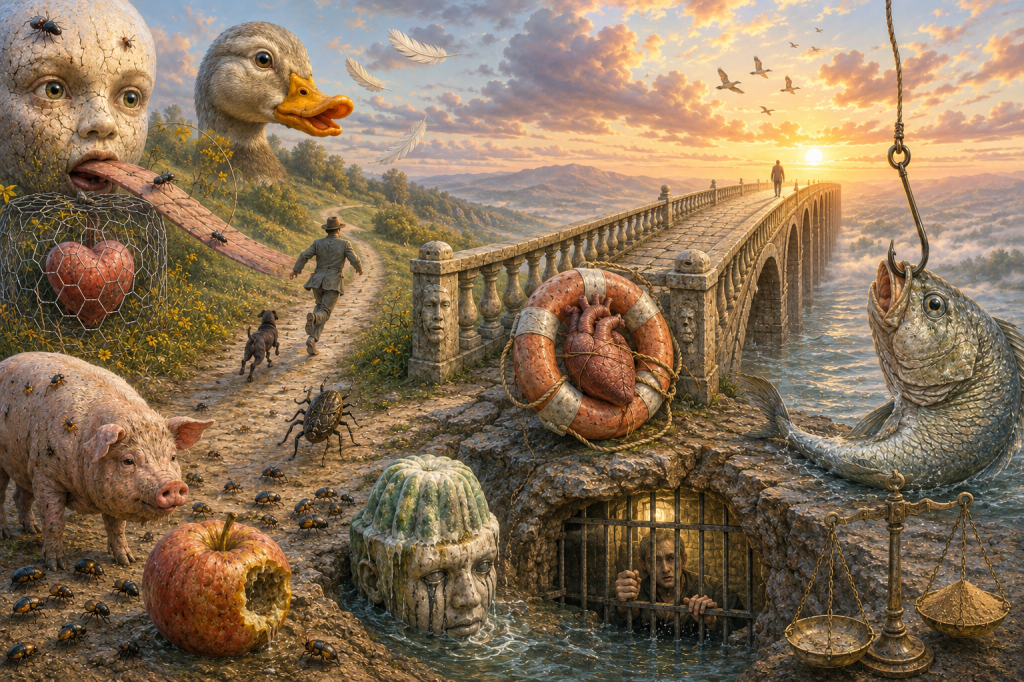
    Image:  Created by Grok inspired by the poem

    In the Belly of Hell

    “The mountains cannot judge us when we lie.”W. H. Auden “In Time of War”

    Warm faces stream into the well of darkness.
    She lights a candle as dusk breathes deep.
    Her fruit has come to fruition in the cold
    Dank moment where hatred still burns.

    A poem dictates the next decade
    Into which she elopes with madness.
    Hearts of black villains scud her world,
    Tearing her keening into shrill scrubs.

    A basket of words for weaving in the cornfield
    Where deplorable brambles fold and mold
    On the slippery slope of mutated follies — 
    Crooked pork stands disgruntled in shadows.

    A dark stump eats at the gut of the lame.
    The enemy of time goes limp waiting
    In the insane crawl space of diverse skin.
    Her mind goes to seed in the brain-dead winter.

    Her feet move spring music straining to speak.
    Her dream falls from the ink pool into blank verse.
    A fish flops and springs off its slithering spawn
    Where morning looms in from the horizon.

    Walking in the dust she dictates the next poem
    Intensity blocking the manners of evil wishers.
    But the clocks still run and water still erodes.
    The sinews of pink muscles decay in droves.

    A warm face streams out of the well of darkness
    Her candle has extinguished the force of swill.
    The ill-gotten gain of the intruder will be spent
    In the belly of Hell, as soon as she puts up the fire.

  • Clinging to Darkness

    Image: Created by Grok inspired by the poem 

     Clinging to Darkness

    Spring clouds on the horizon
    Bring to mind the forfeit
    In cool nights of no return.

    The refrain of salad days
    Clings to the same past
    Where things were different—

    Different as what we allow
    Ourselves to believe
    About love, hate, and tears,

    Different as spring breezes
    In the morning before
    Noon brings the flowers—

    Before evening carries in
    The lost memories of resolution
    In the transparent rain,

    Before cucumbers can sprout
    In the garden of desire
    As if they could ever live.

    Spring clouds that bring wet
    Thoughts to the strawberry fields
    Cling to darkness unveiled.

  • Gay Birds Dancing 

    Image:  Created by Grok inspired by “Gay Birds Dancing”

    Gay Birds Dancing 

    The feet of dancing words
    Tip lightly down the path
    Dawn sprayed and all new
    In their sheen of glory.

    Dapple dreams spill
    Luster on the day’s memory
    Of old rocks with brown moss
    Baking in celestial time. 

    Fog covers the toad
    And moistens the road
    To better nights
    Where glee dwells.

    The notions of gay birds
    Lay their folly like seed
    On the prancing herds
    Of free dancing words.