Phillis Wheatley’s talent was questioned but then authenticated during her lifetime, and she is now hailed by all but the most cynical as one of America’s finest poetic voices.
Two Versions of a Publication History
Although Phillis Wheatley’s talent was at first questioned [1], her authenticity was finally established during her lifetime. Today, she is widely recognized by all, except the most cynical [2], as one of America’s finest poetic voices.
Phillis Wheatley’s first and only collection of published poetry was titled Poems on Various Subjects, Religious and Moral; it was published in England.
There are two versions of the history of this book’s publication [3]: one is that the Countess Selina of Huntington invited Phillis to London and found a publisher for the poet; the other is that Phillis suffered from asthma, and so the Wheatley family took her to England to recuperate, and while there, they sought publication of her work.
Either way, the book was published and Wheatley’s career was established. The Wheatley family’s insight played a major role in helping a slave rise above the hardships of that vile institution.
The Value of One Poem
In May 1968, one poem written by Phillis Wheatley brought $68,500 at Christie’s auction [4], Rockefeller Center in New York. It had been estimated to bring between $18,000 and $25,000.
The poem is titled “Ocean”; its seventy lines were written on three pages that had yellowed with time. It is thought to be the only copy.
Ocean
Now muse divine, thy heav’nly aid impart, The feast of Genius, and the play of Art. From high Parnassus’ radiant top repair, Celestial Nine! propitious to my pray’r. In vain my Eyes explore the wat’ry reign, By you unaided with the flowing strain. When first old Chaos of tyrannic soul Wav’d his dread Sceptre o’er the boundless whole, Confusion reign’d till the divine Command On floating azure fix’d the Solid Land, Till first he call’d the latent seeds of light, And gave dominion o’er eternal Night. From deepest glooms he rais’d this ample Ball, And round its walls he bade its surges roll; With instant haste the new made seas complyd, And the globe rolls impervious to the Tide; Yet when the mighty Sire of Ocean frownd “His awful trident shook the solid Ground.” The King of Tempests thunders o’er the plain, And scorns the azure monarch of the main, He sweeps the surface, makes the billows rore, And furious, lash the loud resounding shore. His pinion’d race his dread commands obey, Syb’s, Eurus, Boreas, drive the foaming sea! See the whole stormy progeny descend! And waves on waves devolving without End, But cease Eolus, all thy winds restrain, And let us view the wonders of the main Where the proud Courser paws the blue abode, Impetuous bounds, and mocks the driver’s rod. There, too, the Heifer fair as that which bore Divine Europa to the Cretan shore. With guileless mein the gentle Creature strays. Quaffs the pure stream, and crops ambrosial Grass. Again with recent wonder I survey The finny sov’reign bask in hideous play. (So fancy sees) he makes a tempest rise And intercept the azure vaulted skies. Such is his sport:—but if his anger glow What kindling vengeance boils the deep below! Twas but e’er now an Eagle young and gay Pursu’d his passage thro’ the aierial way. He aim’d his piece, would C[ale]f’s hand do more ? Yes, him he brought to pluto’s dreary shore. Slow breathed his last, the painful minutes move With lingring pace his rashness to reprove; Perhaps his father’s Just commands he bore To fix dominion on some distant shore. Ah! me unblest he cries. Oh! had I staid Or swift my Father’s mandate had obey’d. But ah! too late.—Old Ocean heard his cries. He stroakes his hoary tresses and replies: What mean these plaints so near our wat’ry throne, And what the Cause of this distressful moan? Confess. Iscarius, let thy words be true Not let me find a faithless Bird in you. His voice struck terror thro’ the whole domain. Aw’d by his frowns the royal youth began, Saw you not. Sire, a tall and Gallant ship Which proudly skims the surface of the deep? With pompous form from Boston’s port she came. She flies, and London her resounding name. O’er the rough surge the dauntless Chief prevails For partial Aura fills his swelling sails. His fatal musket shortens thus my day And thus the victor takes my life away. Faint with his wound Iscarius said no more. His Spirit sought Oblivion’s sable shore. This Neptune saw, and with a hollow groan Resum’d the azure honours of his Throne.
Coming to America
Phillis Wheatley was born in Senegal/Gambia, Africa, in 1753. At age seven, she was brought to America and sold to John and Susannah Wheatley of Boston. She soon became a family member instead of a slave. The Wheatleys taught Phillis to read, and she was soon reading classic literature in Greek and Latin, as well as English.
But her talent did not stop with reading, because she began to write poetry, influenced by the Bible and the English poets, particularly John Milton, Alexander Pope, and Thomas Gray. Her poetry reflected the classical forms and content which she closely studied [5].
Phillis wrote her first poem at age thirteen, “On Messrs. Hussey and Coffin,” which was published in 1767 in the Newport Mercury [6]. But she gained wide recognition as a poet with “On the Death of the Reverend Mr. George Whitefield,” which appeared only three years later. Chiefly, because of this poem, Phillis’ first book was later published. It is thought that she had a second book of poems, but the manuscript seems to have disappeared.
In 1778, Phillis married John Peters, a failed businessman. They had three children, all of whom died in childhood. Phillis’ final years were spent in extreme poverty, despite her work as a seamstress. She continued to write poetry and tried in vain to publish her second book of poetry. She died at age 31 in Boston.
The Poet’s Authenticity Questioned
As one might surmise, there was, indeed, a controversy over the authenticity of Phillis’ writing. That a young black slave girl could write like a John Milton was not a fact easily digested back in Colonial America, when slaves were considered something less than human.
Even Thomas Jefferson [7] showed disdain for Phillis’ writing; in his Notes on the State of Virginia, he remarked, “Religion indeed has produced a Phyllis Whately [sic] but it could not produce a poet. The compositions published under her name are below the dignity of criticism.”
Yet Jefferson goes ahead and offers criticism in his next remark, “The heroes of the Dunciad are to her, as Hercules to the author of that poem.”
Unlike Jefferson, George Washington [8].proved to be a fan; in 1776, she wrote a poem and a letter to Washington, who praised her efforts and invited her to visit. I wonder how seriously we can take Jefferson’s criticism, when he so badly misspelled her name; one wonders if he might be speaking of someone else.
Important American Poet
Readers can sample Phillis’ poetry online; her book of poems, Poems on Various Subjects, Religious and Moral, is offered in its entirety, including the front material that shows how strong the controversy over her talent was [9]. After suffering the ambivalence of the Colonial mind-set during her lifetime, today Phillis Wheatley is hailed as one of the most important early American poets.
William Butler Yeats possessed a lifelong dedication to the cultural and political rebirth of Ireland. He experienced life as a poet, playwright, and senator as he lived during turbulent shifts in Irish politics. He had a lifelong unquenchable thirst for artistic and spiritual truth.
William Butler Yeats remains one of the most influential literary figures of the modern era. His canon, which includes examples of his interest in Eastern philosophy, Irish folklore, and the vicissitudes of life, eventually resulted in the production of various literary forms such as poetry, drama, and essays [1].
Early Life and Education
Born on June 13, 1865, in Sandymount, County Dublin, William Butler Yeats was raised in a household that placed a high value on intellectual curiosity bolstered by cultural heritage.
His father, John Butler Yeats, was a skilled portrait painter, and his mother, Susan Pollexfen, created an environment steeped in Irish history and folklore. His early exposure to art, literature, and the stories of ancient Ireland instilled in Yeats a deep appreciation for myth and legend that would later become central themes in his work.
As a young man, Yeats attended the Metropolitan School of Art in Dublin, where he developed keen observational skills and his ability to capture what he saw into dramatic literary form such as poetry and plays.
His early attempts to write poetry were heavily influenced by Romanticism, and he found inspiration in the rich treasure house of Irish mythology and the natural world. These early experiences laid the groundwork for a lifelong exploration of the interplay between the tangible and the transcendent [2].
The Celtic Revival
In the 1880s and 1890s, Yeats became as a principal figure in the Celtic Revival—a cultural movement, aimed at reclaiming Ireland’s heritage from centuries of British domination.
Along with contemporaries such as Lady Gregory and Edward Martyn, Yeats sought to regain Irish identity through renewed interest and influence of its ancient myths and folklore. Yeats’ first poetry collections, including The Wanderings of Oisin and Other Poems (1889), offered a vision of Ireland as a land of fantastic beauty and heroic legend.
Yeats’ involvement in the Irish literary revival was not merely rhetorical and philosophical; he assisted in the founding of the National Literary Society and became a driving force behind the establishment of the Abbey Theatre, which became the center stage for modern Irish drama.
Through the Abbey Theatre, Yeats teamed up with playwrights and dramatists to stage works, combining Irish mythology with contemporary social and political issues; thus he became responsible for creating a distinctly Irish voice in the performing arts [3].
Changing Style and Interest in the Mysticism
As Yeats’ career progressed, his creative writings faced an important transformation. As he moved away from his early Romanticism, he took up themes of aging, disillusionment, and the search for spiritual meaning. This shift was influenced by his increasing interest in Eastern Philosophy and mystical traditions.
Yeats’ lifelong engagement with esoteric philosophy—ranging from Theosophy to the study of Eastern Philosophy—found expression in poems such as “The Second Coming” (1919) and “The Indian upon God” (1927). These works reflect a mind grappling with the decline of traditional values and the potential for rebirth through art and myth.
Yeats’ fascination with mysticism was not a mere intellectual exercise; it became deeply personal. He was a member of the Hermetic Order of the Golden Dawn, an organization dedicated to the study and practice of magical rituals and mysticism.
This involvement influenced his poems with symbolic imagery and complex mythological references that continue to captivate readers. The cyclical view of history that Yeats espoused—wherein civilizations rise, decay, and ultimately transform—became a recurring theme of his later work.
Unfortunately, Yeats’ study of Eastern Philosophy/Religion at times led him astray. Some of his works demonstrated that he failed to understand [4] the most important aspects of the concepts that he tried to portray in his poems.
While his poem “The Indian upon God” accurately reflects Eastern tenets, his “The Second Coming” and “Lapis Lazuli” go far astray. The bulk of his understanding of Eastern philosophical and religious concepts may be described no less than by the term assigned by T. S. Eliot “romantic misunderstanding.”
Politics and the Poet in Society
The early twentieth century was a period of political upheaval in Ireland, and Yeats became increasingly involved with the nationalist movement. Even though he never fully aligned himself with any particular political party, his writings and public statements often reflected a profound concern for the fate of his country. His poetry became the main medium through which he expressed hope but also anxiety about the future of his country.
Poems such as “Easter 1916” suggest that whatever happens no one can deny that those rebels will have died for their dreams. This speaker still cannot completely commit to those dreams. All he can admit is that everything has changed and “A terrible beauty is born.”
The Yeatsian musing of drama ultimately finds only that things have changed. The speaker cannot say if they have changed for better for worse. He and his generation will have to wait to see how that “terrible beauty” matures. However, this duality—of destruction and creation—reflects the eternal cycles that he so frequently explored in his verse.
Beyond his poetry, Yeats contributed directly to the political life of his nation. He served from 1922-1928 in the senate of the newly formed Irish Free State [5]. Although he was often seen as an outsider by both traditional nationalists and modernists, Yeats’ presence in the Senate suggested a belief in the vital role that artists and intellectuals play in shaping public discourse and guiding cultural evolution.
Yeats’ personal life was distressed by a long, unrequited love for Maud Gonne [6], an Irish revolutionary and actress. His feelings for Gonne inspired many of his poems, imbuing them with themes of love, loss, and longing. Gonne’s rejection of his marriage proposals did not deter Yeats from writing some of his most passionate poetry, where she often appears as a muse or an ideal.
Later in life, Yeats married Georgie Hyde-Lees, who not only became his companion but also a collaborator in his mystical explorations. They had two children, Anne and Michael, and their family life was documented in some of Yeats’ more personal poems, such as “A Prayer for My Daughter” and “The Circus Animals’ Desertion.”
The Alignment of Myth and Modernity
A central aspect of Yeats’ enduring appeal is his ability to weave together disparate strands of experience—myth and modernity, beauty and decay, hope and despair—into a coherent vision of the human condition. His poetry often reads as if it were both a dream and a prophecy, a blend of personal reflection and universal truth.
For instance, in “Sailing to Byzantium,” Yeats contrasts the ephemeral nature of the physical world with the possibility of spiritual transcendence [7]. The poem’s vivid imagery and rhythmic cadence invite readers to contemplate the eternal in the midst of the temporal, a duality that lies at the heart of Yeats’ artistic endeavor.
Yeats’ engagement with myth was not limited to the realm of poetry; it also informed his political and cultural projects. By reviving ancient Irish legends and traditions, he sought to restore a sense of identity and continuity to a country grappling with the forces of modernity and colonialism. His poem “The Fisherman” offers an example of this engagement.
His work with the Abbey Theatre was driven by the conviction that drama rooted in myth could foster a national spirit and provide a counterpoint to the homogenizing effects of globalization. In this way, Yeats not only redefined the poetic landscape but also contributed to a broader cultural renaissance in Ireland.
An Enduring Influence on Literature and Beyond
The influence of William Butler Yeats extends far beyond the confines of his own time. His exploration of spiritual and metaphysical themes paved the way for subsequent generations of poets and writers who sought to reconcile the material and the mystical. In the decades following his death, critics and scholars have revisited his work, probing its layers of symbolism and historical context to uncover new meanings and insights.
Contemporary literary critics often highlight the innovative structure and language of Yeats’ later poetry, noting how his use of recurring symbols and motifs creates a dense network of associations that invites endless interpretation.
His ability to encapsulate the complexities of Irish identity, the ravages of time, and the interplay between art and life continues to resonate in today’s discussions of literature and culture.
Moreover, Yeats’ political engagement and his belief in the transformative power of art have inspired not only writers but also activists and cultural leaders who view the arts as a vital force for social change [8].
That political engagement, however, begs for a caveat. As postmodernism crept ever nearer the hearts of the contemporary artists, the loss of skill and lack of interest in truth began to blight both poetry and criticism. That postmodern mind-set has little hope of heralding and power to transform society for the better.
Yeats’ Legacy
William Butler Yeats’ life and work remain a testament to the power of art to illuminate the deepest mysteries of existence. From his early days steeped in Irish folklore to his later explorations of mystical symbolism and political transformation, he navigated the tumultuous currents of change with a keen and reflective mind. His ability to articulate the paradoxes of beauty and decay, hope and despair, has left an indelible mark on the world of literature.
Yeats’ legacy is a reminder that art is not merely a reflection of life but also can serve as an agent of transformation, when steeped in desire for truth. His vision of history as a series of cyclic renewals, his embrace of the occult and the mythical, and his commitment to cultural and political renewal have all contributed to a body of work that continues to inspire and challenge readers. In celebrating Yeats, one celebrates the eternal quest for meaning—a quest that, like his poetry, transcends time and place.
Through his poetic innovations and his fervent commitment to the rebirth of Irish culture, William Butler Yeats carved out a unique space in the annals of literary history. His words continue to echo in classrooms, theaters, and the hearts of those who dare to dream beyond the confines of the everyday routine.
Death
In his later years, Yeats’ poetry grew increasingly reflective and introspective. The themes of mortality, the nature of artistic creation, and the inexorable passage of time became ever more emphasized.
Works such as The Tower (1928) and The Winding Stair and Other Poems (1933) reveal a man deeply aware of his own aging and the inevitable approach of death. Yet, even as he grappled with the transient nature of human life, he remained committed to the idea that art could capture eternal truths.
Despite experiencing poor health, Yeats continued to write and speak out on matters of art, politics, and philosophy until his final days. On the French Riviera, he spent his last months in quiet musing, as he sought solace and reflection away from the public eye.
On January 28, 1939, in Menton, France, [9] William Butler Yeats passed away peacefully . The world mourned not just the passing of a literary giant, but also the departure of a visionary who had continually challenged and enriched the cultural landscape of Ireland and beyond.
One of the most profound memorial poems to Yeats is W. H. Auden’s “In Memory of W. B. Yeats.” The following excerpt contains some of the poem’s most memorable lines, for example, “Mad Ireland hurt you into poetry”:
You were silly like us; your gift survived it all: The parish of rich women, physical decay, Yourself. Mad Ireland hurt you into poetry. Now Ireland has her madness and her weather still, For poetry makes nothing happen: it survives In the valley of its making where executives Would never want to tamper, flows on south From ranches of isolation and the busy griefs, Raw towns that we believe and die in; it survives, A way of happening, a mouth.
Sources
[1] Richard Ellmann. Yeats. New York. Oxford University Press, 1989.
[2] Mark Fryer. The Life of W.B. Yeats: A Critical Biography. London. Bloomsbury Academic. 2001.
[3] A. Norman Jeffares. The Cambridge Companion to W.B. Yeats. Cambridge University Press, 2006.
“The Indian upon God” This poem is displayed in ten riming couplets. The theme of the poem dramatizes the biblical concept that God made man in His own image.
“The Fisherman” In “The Fisherman,” Yeats has created a speaker who is voicing a call for genuine art for the common folk, an art that dramatizes the beauty and truth inherent in all great art.
“The Second Coming” One of the most overrated and misunderstood works of the Western literary canon.
“Sailing to Byzantium” This poem is a profound meditation on aging, art, and the quest for spiritual transcendence, despite his failure to clearly grasp the Eastern religious/philosophical concepts he strived to portray.
“Leda and the Swan” Focuses on the ancient Greek myth, wherein the woman, Leda, wife of Tyndareus, was impregnated by the god Zeus in disguise as a swan. Yeats’ speaker is musing regarding the nature of such an act and how it might have impacted Leda’s mental capacities afterward.
“Among School Children” One of Yeats’ most anthologized poems, this poem features numerous allusions to ancient Greek mythology and philosophy. Yeats was always a thinker, even if not always a clear thinking one.
“Lapis Lazuli” In this poem, William Butler Yeats has his speaker explore the issue of peace and tranquility despite a chaotic environment.
Image 1: John Donne Portrait – Unknown Artist – National Portrait Gallery, London
John Donne’s canon features two vastly different themes. One might argue that they are diametrically opposed; his earlier works focus on sensual debauchery. His later works take the theme of spirituality.
Early Life and Education
John Donne was born on June 19, 1572, into a wealthy Catholic family during the period of English history that saw the rise of anti-Catholicism. His father, John Donne, Sr., was a successful, prosperous iron worker. Donne’s mother was related to Sir Thomas More; her father was the noted playwright John Heywood. Donne’s father died in 1576, while the future poet was only four years of age. His mother struggled to raise John, Jr. and his two siblings.
When Donne was 11 years old, he and his younger brother Henry entered school at Hart Hall at Oxford University. John continued his studies at Hart Hall for three years, and then he enrolled in Cambridge University.
Donne rejected taking the mandatory supremacy oath that declared King Henry VIII the head of the church; this declaration remained an abomination in the eyes of truly devout Catholics. And because of this refusal to take that mandated oath, Donne was not permitted to graduate. Donne then studied law as a member of Thavies Inn and Lincoln’s Inn. The influence of the Jesuits remained with Donne throughout his student years [1].
Marriage to Anne More
In 1601, Donne secretly married Anne More, who was only 17 years old at the time. This marriage put an end to Donne’s career in government positions. Anne’s father arranged to have Donne arrested and imprisoned [2] along with Donne’s fellow compatriots who assisted Donne in keeping secret his courtship with Anne.
After losing his government position, Donne remained without gainful employment for nearly a decade. His growing family, including twelve children, struggled with poverty during this period.
Donne quipped about those lean years, “John Donne, Anne Donne, Undone.” The family depended greatly on family and friends for their sustenance. A cousin of Anne’s supplied them with a residence at Pyrford in Surrey. Friends, including Lady Magdalen Herbert, mother of George Herbert, and the Countess of Bedford assisted the family. Those individuals had also assisted Donne in his literary career.
Despite the largess of family and friends, the family struggled bitterly during those years. Donne’s pride was bruised; he was well aware that his intellectual capacity far exceeded those responsible for his poverty. In 1609, Donne’s father-in-law, Sir George More, finally relented and consented to a reconciliation with his son-in-law and his family, whereupon Sir More paid his daughter’s dowry.
Questioning Catholicism
John Donne began to question his Catholic faith after his brother Henry died in prison. The brother had been arrested and sentenced to prison for assisting a Catholic priest [3]. Donne’s first collection of poems titled Satires addresses the issue of the efficacy of faith.
At age forty, Donne composed and published two treatises that denounced the Catholic Church. These publications served as the final statement regarding of his severance from his earlier faith. His polemic titled Pseudo-Martyr asserted that Catholics in England should be permitted to pledge allegiance to the king, James I, without being accused of disavowing their loyalty to the Pope. This publication won Donne favor with King James.
During these same years, Donne was composing his love/lust poems, Songs and Sonnets, from which many of his most widely anthologized poems are taken; three example poems are “The Apparition,” “The Flea,” and “The Indifferent.” John Donne, going by the informal moniker of “Jack,” spent a significant portion of his youth and a sizable amount of an inherited fortune on travel and womanizing. He traveled with Robert Devereux, 2nd Earl of Essex on a naval expedition to Cádiz, Spain.
Donne later journeyed with another expedition to the Azores; from that trip, he was inspired to compose his piece, “The Calm.” After his return to England, he accepted a position as a private secretary to Thomas Egerton, whose status was Lord Keeper of the Great Seal.
Although Donne had renounced Catholicism, King James insisted that Donne could receive no government employment unless it was church related. Donne had continued to refuse to take Anglican orders. However, in 1615, Donne finally entered the ministry and accepted the post of Royal Chaplain.
After completing the doctorate in divinity, he was appointed to the post of Reader in Divinity at Lincoln’s Inn. Donne’s elaborate style of oratory filled with spiritual metaphors and other religious symbols earned for him the reputation as one of the greatest ministers of that period.
Although Donne had also practiced law for several years, his family had remained living at the substance level. Then after he accepted the position of Royal Chaplain, life for the Donnes seemed to be improving [4].
Anne’s Death
However, tragedy struck the family when Anne at age 33 died on August 15, 1617, after giving birth to their twelfth child, who was stillborn. Only seven of the couple’s children survived. The poet mourned his wife’s death in Holy Sonnet XVII: “Since she whom I lov’d hath paid her last debt.”
According to Donne’s most important biographer and friend Izaak Walton [5], after Anne’s death Donne became “crucified to the world.” Although Donne continued to compose his poems, he focused entirely upon the theme of spirituality and the search for meaning.
Poems and Faith
John Donne is often grouped with the Metaphysical poets. However, according to T. S. Eliot, Donne’s poems along with other Metaphysicals such as Henry Vaughan, George Herbert, and Andrew Marvell do not, in fact, possess the attributes of the metaphysical label any “more than other serious poets” [6].
The death of John Donn’e wife Anne exerted a strong influence on his poetic achievement. He started composing his poems of faith, collected in The Holy Sonnets, including “Hymn to God the Father,” “Batter my heart, three-person’d God,” and “Death, be not proud, though some have called thee”—three of the most widely anthologized holy sonnets.
Donne also composed a collection of private meditations, published in 1624 as Devotions upon Emergent Occasions. His collection of private meditations, a classic spiritual work, features “Meditation 17,” from which two of his most famous quotations have been taken: “No man is an island” and “Therefore, send not to know / For whom the bell tolls, / It tolls for thee.”
In 1621, Donne was appointed Dean of St. Paul’s, and in 1624, he took up the position as vicar of St Dunstan’s-in-the-West [7],where he continued to serve as a minister until his death on March 31, 1631. Interestingly, a mythology has grown up around the claim that he preached his own funeral sermon “Death’s Duel” only a few weeks before his death.
A true “Renaissance man,” James Weldon Johnson wrote some the best spiritual poems and songs in the American literary canon. He also held positions as attorney, diplomat, professor, and activist in a political party, fighting for the civil rights of black Americans.
Note on Term Usage: Before the late 1980s in the United States, the terms “Negro,” “colored,” and “black” were accepted widely in American English parlance. While the term “Negro” had started to lose it popularity in the 1960s, it wasn’t until 1988 that the Reverend Jesse Jackson began insisting that Americans adopt the phrase “African American.” The earlier more accurate terms were the custom at the time that James Weldon Johnson was writing.
Early Life and Schooling
James Weldon Johnson was born on June 17, 1871, in Jacksonville, Florida, [1] to James Johnson, of Virginia, who had held a position as headwaiter at a resort hotel, and Helen Louise Dillet, of the Bahamas, who had served as a teacher in Florida.
His parents raised James to be a strong, independent man. The future poet became a free-thinker as his parents encouraged him to understand that he was capable of achieving all the success in life for which he sought to strive.
In 1894, after completing the bachelor’s degree at Atlanta University, he accepted a position as principal at the Edwin M. Stanton School. His mother had taught at that school. In his position as principal of Stanton, he made great improvements in the curriculum, adding grades 9 and 10.
While serving at the Stanton school as principal, Johnson founded the newspaper, The Daily American. The paper remained in publication for only a year, but it served as a lever for Johnson’s role as an activist, bringing him to the attention of Booker T. Washington and W.E.B. DuBois, two of the most influential activists of the civil rights movement.
Johnson began the study of law in Thomas Ledwith’s law office in Jacksonville, Florida, in 1896 [2]. He passed the bar exam in 1898 and was admitted to the Florida bar. He practiced law for several years and then decided to pursue other lines of work.
From New York City to the Diplomatic Corp
To engage a career in songwriting, in 1901 James and his brother Rosamond moved to New York City. They became partners with Bob Cole and accepted a publishing contract which paid a $1200 monthly stipend. That income amounted to a fortune in the early 20th century.
During the next half decade, the Johnson brothers wrote and produced a whopping 200 songs for both Broadway and for other formats. Their substantial list of hits include titles such as “Didn’t He Ramble,” “Under the Bamboo Tree,” and “The Old Flag Never Touched the Ground.”
Along with Bob Cole, the Johnsons earned a outstanding reputation as a musical trio. They became known affectionately as “Those Ebony Offenbachs.” While they eschewed the artistry of the minstrel show stereotypes, they did agree to create simplified versions of black life of rustics for white audiences that seemed to relish such fare.
But their most important contribution includes a suite of six songs titled The Evolution of Ragtime, a documentary which has remained important for recording the black experience in contributing to music. Residing in New York also allowed Johnson the opportunity to attend Columbia University, where he engaged formally in the study literature and creative writing.
Johnson also began his civil rights activism in Republican Party politics. While serving as the treasurer of New York’s Colored Republican Club, he wrote two songs for Theodore Roosevelt’s 1904 presidential campaign. Roosevelt won that campaign, becoming the 26h president of the United States.
The black national civil rights leadership divided into two factions: one remained traditional and was led by Booker T. Washington. The other faction turned radical and was headed up by W.E.B. Du Bois. Johnson chose to follow Washington and the traditionalists.
Washington’s leadership had offered the appropriate influence and had helped Roosevelt win the presidency. Thus, Washington exerted his influence again to have Johnson appointed as the U.S. consulate to Venezuela.
Johnson’s stint in Venezuela afforded him time to create poetry. There he composed his magnificent, nearly perfect sonnet, “Mother Night,” during this time. Also, during this three year period of service as consul on Venezuela, he was able to finish his novel, The Autobiography of an Ex-Coloured Man.
After Johnson’s service in Venezuela, he received a promotion that relocated him to Nicaragua. His job in Nicaragua became more demanding, allowing him less time for literary efforts.
Back to New York and the Harlem Renaissance
In 1900, Johnson composed the hymn “Lift Ev’ry Voice and Sing” for a school celebration of Abraham Lincoln’s birthday [3]. His brother Rosamond later added the melody to the lyric. In 1919, the National Association for Advancement of Colored People (NAACP) designated the song the “Negro National Hymn (Anthem).”
In 1913, because of the inauguration of Woodrow Wilson, a Democrat, Johnson resigned his foreign service position and returned to the U.S.A. In New York, Johnson began writing for New York’s prestigious black newspaper, the New York Age. He wrote essays explaining and promoting the importance of the hard-work ethic and education.
Johnson’s traditionalism kept his position more in line with Booker T. Washington than with the radical militant W.E.B. Du Bois. Despite those differences in ideologies, Johnson remained on good terms with both activists.
In 1916, after Du Bois suggested the position to Johnson, he accepted the role as secretary in the NAACP. In 1920, Johnson led the organization as president. Despite his many activist duties with the NAACP, Johnson dedicated himself to writing full time. In 1917, he published his first collection of poems, Fifty Years and Other Poems. That collection received great critical acclaim and established him as an important voice in the Harem Renaissance Movement.
Johnson continued writing and publishing; he also served as editor for numerous volumes of poetry, such as The Book of American Negro Poetry (1922), The Book of American Negro Spirituals (1925), and The Second Book of Negro Spirituals(1926).
In 1927, Johnson published his second book of poems God’s Trombones: Seven Negro Sermons in Verse [4]. Again, his collection received much praise from critics.Dorothy Canfield Fisher, a best-selling author and activist for education reform, stated in a letter about Johnson’s style:
. . . heart-shakingly beautiful and original, with the peculiar piercing tenderness and intimacy which seems to me special gifts of the Negro. It is a profound satisfaction to find those special qualities so exquisitely expressed.
Back to Teaching
After his retirement from the NAACP, Johnson continued writing. He also served as professor at New York University. Johnson’s stellar reputation again preceded him; as he joined the NYU faculty, Deborah Shapiro testified:
Dr. James Weldon Johnson was already a world-renowned poet, novelist, and educator when he arrived at the School of Education in 1934. His faculty appointment was in the Department of Educational Sociology, yet Johnson’s influence did not end there. As the first black professor at NYU, Johnson broke a crucial color barrier, inspiring further efforts toward racial equality both within and outside the boundaries of Washington Square.
Death
In 1938 at age 67, Johnson was killed in an automobile accident in Wiscasset, Maine, after a train crashed into the vehicle in which the poet was a passenger. His funeral, held in Harlem, New York, was attended by over 2000 individuals.
Johnson’s creative power and activism rendered him a true “Renaissance man,” who lived a full life. He penned some of the finest poetry and songs ever to appear on the American literary and music scenes. Johnson’s life creed bestows on the world an uplifting inspiration after which any individual might choose to chisel his life:
I will not allow one prejudiced person or one million or one hundred million to blight my life. I will not let prejudice or any of its attendant humiliations and injustices bear me down to spiritual defeat. My inner life is mine, and I shall defend and maintain its integrity against all the powers of hell. [5]
The poet’s body is interred in Green-Wood Cemetery in Brooklyn, New York [6]. In an unconventional final expression, his body has been arrayed in his favorite lounging cape, with his hands clutching a copy of his collection God’s Trombones.
Sources
[1] Editors. “James Weldon Johnson.” Famous African Americans. Accessed January 27, 2023.
Continued research seems to be confirming the claim by the Oxfordians that Edward de Vere, 17th Earl of Oxford—not Gulielmus Shakspere of Stratford-upon-Avon as insisted by the Stratfordians—wrote the canon of plays and poems left by the pseudonymous “William Shakespeare.”
Who Is the Authentic “Shakespeare” Writer”?
The mystery regarding the true identity of the writer traditionally known as “William Shakespeare” actually began in Elizabethan England, during the period in which most of the likely candidates for the position lived and wrote.
The controversy [1] has continued, and today there are two main groups that argue the point: the Oxfordians contend that the most likely writer of the Shakespeare canon is Edward de Vere, 17th Earl of Oxford. Arguing the other side are the Stratfordians, who maintain that Gulielmus Shakspere of Stratford-upon-Avon, the traditionally held choice, remains the actual writer.
The first biographical work on “William Shakespeare” appeared in 1769. It focuses on Gulielmus Shakspere, the man from Stratford-upon-Avon in Warwickshire, traditionally hailed as the Shakespeare writer.
That same year, Herbert Lawrence in his work titled, The Life and Adventures of Common Sense, suggests the idea that “William Shakespeare” was likely the nom de plume of some other writer but not the Stratford man.
In 1780 a clergyman/scholar in Warwickshire, James Wilmot, examined records near and surrounding Stratford-upon-Avon, searching for data on William Shakespeare and the Shakespeare works. Wilmot found nothing about the writer or his works.
After Wilmot lacked success in locating any information leading to the identity of the Stratford man as the Shakespeare writer, he floated the notion that Francis Bacon using “William Shakespeare” nom de plume had written those plays and sonnets. Wilmot, to the detriment of historical literary research, mandated that all of his research materials be burned upon his death.
In 1857, Delia Bacon, an American short story writer and Shakespeare enthusiast, offered the suggestion that perhaps a committee and not just one individual had composed the Shakespeare canon. For her suggested committee, Delia Bacon chose Edmund Spencer, Sir Walter Ralegh, and Edward de Vere; she placed Francis Bacon in the committee as its chairman.
Since those early suggestions that an individual other than the Stratford man wrote the Shakespeare canon, the controversy has raged on. Currently, the Oxfordians, who continue to gather evidence for Edward de Vere, 17th Earl of Oxford, as the Shakespeare writer are putting forth the strongest, most convincing argument.
Literary scholars and critics are increasingly coming to the conclusion that the man from Stratford, Gulielmus Shakspere, widely held as the traditional Shakespeare, is the least qualified candidate for playing that authorial rôle. From that conclusion emerges the likelihood that Edward de Vere, 17th Earl of Oxford, is the best candidate for consideration as the Shakespeare writer.
Walt Whitman, one of America’s greatest poets, agrees with the Oxfordians, who argue that the 17th Earl of Oxford is the actual author of the works published under the nom de plume, “William Shakespeare”:
Conceiv’d out of the fullest heat and pulse of European feudalism — personifying in unparalleled ways the medieval aristocracy, its towering spirit of ruthless and gigantic caste, with its own peculiar air and arrogance (no mere imitation) — only one of the “wolfish earls” so plenteous in the plays themselves, or some born descendant and knower, might seem to be the true author of those amazing works — works in some respects greater than anything else in recorded literature. [2]
From other respected writers such as Henry James and Ralph Waldo Emerson to actors such as Charlie Chaplin and Sir Derek Jacobi to supreme court justices such as Harry A. Blackmun and John Paul Stevens, famous individuals have expressed doubt about the tradition identification of the Shakespeare writer [3].
Why the Oxfordians Are Likely Correct
A study of the background of each man—Gulielmus Shakspere of Stratford-upon-Avon and Edward de Vere, 17th Earl of Oxford—reveals evidence that suggests that only Oxford possessed the ability to have produced the complex, historically based, geographically accurate works of the Shakespeare writer.
Gulielmus Shakspere—”Stratford”—was semi-literate; his parents, his wife, and his children were all semi-literate. He likely remained uneducated beyond age 14. No records have been found that demonstrate that he wrote anything more complex than a list of beneficiaries in his last will and testament.
But if the Stratfordians are correct, this semi-literate individual who traveled no farther than to London (if that far) and left no early writings just suddenly commenced the composition of complex historical dramas and perfectly modulated sonnets during the time period Shakespeare scholars call “Shakespeare’s Lost Years.”
In contrast, Edward de Vere—”Oxford”—had received a first class education, had traveled widely throughout the world, and had actually been known to be a writer of plays and poetry.
It remains as unlikely that the man Gulielmus Shakspere could have composed any of the works attributed to “William Shakespeare,” as he could have invented the horseless carriage or discovered the Pacific Ocean.
Life Sketch of Gulielmus Shakspere: Birth Date in Doubt
The biographical documents of “William Shakespeare” are virtually blank pages, upon which scholars, critics, and enthusiasts have written versions of a life, for example, no record exists of the birth date of “William Shakespeare,” even under the name Gulielmus Shakspere. Biographers, therefore, can only speculate [4]:
William Shakespeare was born in Stratford-upon-Avon, England, in April 1564. The exact date of his birth is not recorded, but it is most often celebrated around the world on 23 April. . . . Shakespeare also died on 23 April; in 1616, when he was 52 years of age.
And the speculation continues; the following represents a further example that is typical of any attempt to state when “William Shakespeare” was born:
No birth records exist, but an old church record indicates that a William Shakespeare was baptized at Holy Trinity Church in Stratford-upon-Avon on April 26, 1564.
From this, it is believed he was born on or near April 23, 1564, and this is the date scholars acknowledge as Shakespeare’s birthday. [5]
As would-be biographers speculate about the birth date and other details regarding the Shakespeare writer, they employ the nom de plume “William Shakespeare” instead of Gulielmus Shakspere, the name that appears on the man’s baptismal record.
Remaining a nebulous figure, “William Shakespeare” as Gulielmus Shakspere has no actual day of birth. His speculated birth date is April 23, 1564, as is his death date, April 23, 1616. The fabulous coincidence of any man dying on his unknown birth date further suggests the vulnerability of the claim that Stratford is the actual Shakespeare writer.
The Education of “William Shakespeare”
While uncertainty abounds regarding the birth date of “William Shakespeare,” equal uncertainty persists regarding his education. Again, no records [6] have been found to designate the level of education to which Stratford might have risen.
Supposition and guess-work suggest that Stratford might have attended King Edward VI Grammar School between the ages of seven and fourteen. After age fourteen, his formal education was finished. However, speculation regarding Stratford’s education has been offered as actual biographical history:
Stratford enjoyed a grammar school of good quality, and the education there was free, the schoolmaster’s salary being paid by the borough.
No lists of the pupils who were at the school in the 16th century have survived, but it would be absurd to suppose the bailiff of the town did not send his son there.
The boy’s education would consist mostly of Latin studies—learning to read, write, and speak the language fairly well and studying some of the Classical historians, moralists, and poets.
Shakespeare did not go on to the university, and indeed it is unlikely that the scholarly round of logic, rhetoric, and other studies then followed there would have interested him. (my emphasis on “no lists of the pupils”) [7]
It may seem absurd to deem that the Shakespearean father would not have insisted that his son attend an illustrious grammar school funded by the state. In such a school, the boy would have been immersed in Latin studies and the classics. However, such deeming does not record that boy’s name in documents that reveal that he did actually attend such an illustrious grammar school.
Also, if the son of the town’s bailiff had received such an excellent education and was taught to read and write Latin, which he did “fairly well,” one has to remain perplexed that Gulielmus Shakspere remained unable to write his own name and spell it consistently throughout his lifetime (see below “The Spelling of the Stratford’s Name”).
The Importance of Education
Although no documentation exists to validate the education of Stratford and only speculations are extant that he attended King Edward VI Grammar School in Stratford-upon-Avon, the educational record [8] for Edward de Vere is extensive.
Edward de Vere became a ward of the Crown and was educated by the Royal Court of Wards. He attended Queen’s College, Cambridge, and later underwent training at Gray’s Inn in the study of law.
De Vere was early on considered a wunderkind; his mentor and tutor Laurence Nowell asserted in 1563, as de Vere turned 13 years old, that his “work for the Earl of Oxford cannot be much longer required.” By the next year, at age 14, de Vere had been awarded a Cambridge degree. In 1566, at age 16, he earned a master of arts degree from the universities of Oxford and Cambridge.
Stratfordians like to emphasize the fact that genius can overcome station in life, but such is true only to a point. The late Shakespeare scholar Daniel Wright [9] has elucidated the issue of education vs natural genius:
A writer’s genius can elevate his or her poetry or prose beyond the mundane (indeed, in Shakespeare’s case, it endows his achievement with a magnificence that is almost transcendent in its resplendence), but it cannot of itself impart to any writer—not even to Shakespeare—a knowledge of particular facts.
Genius may animate the hand, but it does not do that which is not its office—it does not, for it cannot, supply the material with which the hand performs its work. Some things even a genius simply must be taught.
The issue of education presents one of the best supports for the fact that Stratford would not have had knowledge of the facts needed to have written the Shakespeare canon. Professor Wright has pointed out that “knowledge of particular facts” cannot come without the input of experience to the mind, even to a genius.
No evidence exists that Stratford had traveled even to London—only 100 miles from Stratford-upon-Avon—much less that he could have traveled a great deal in Italy. Such a set of facts is necessary for the writer, who wrote the plays, to have experienced. Despite natural talent and genius, an intimate knowledge of the Italian landscape cannot simply appear within the mind of said genius.
“The Lost Years”
The concept of “Lost years” in the lives of any biographical target provides a delicious opportunity to the biographer, who then has the opportunity to fill in those lost years. Because “there is no documentary evidence of his life during this period of time,” suitable scenarios may be invented that have little or no relationship to real events. Thus the would-be biographer is allowed to opine as he wishes, such as the following:
‘The Lost Years’ refers to the period of Shakespeare’s life between the baptism of his twins, Hamnet and Judith in 1585 and his apparent arrival on the London theatre scene in 1592.
We do not know when or why William Shakespeare left Stratford-upon-Avon for London, or what he was doing before becoming a professional actor and dramatist in the capital. There are various traditions and stories about the so-called ‘lost years’.
There is no documentary evidence of his life during this period of time. A type of mythology has developed around these mysterious years, and many people have their favourite version of the story. (my emphasis added) [10]
These speculating Shakespearean biographers not only do not know “when or why” Stratford left Stratford-upon-Avon for London, but they also do not even know that he actually did make that trip to London. That Stratford became “a professional actor and dramatist in the capital” remain likely one part of the confusion that has fused aspects from the lives of Stratford and Oxford.
Further Evidence Oxford Is the Real “Shakespeare”
In addition to the issue of the vast differences between the Stratford man and the Oxford earl in education, further issues advocate that Oxford continues to remain the better candidate for the real “Shakespeare” than Stratford.
The Spelling of the Stratford’s Name
The many variations in the spelling of the name “Shakspere” offer further evidence for the claim the Stratford could not have authored the Shakespeare canon. Stratford could barely write his own name, much less a complex literary canon. Stratford’s signature [11] varied, as he affixed his name with six different spellings in four legal documents:
deposition of the lawsuit, Bellott v Mountjoy (1612)
deed for a house sold in Blackfriars, London (1613)
the mortgage document for a house acquired in Blackfriars (1613)
a 3-page Last Will and Testament (1616), which he signed at the bottom of each page.
Interestingly, none of the Stratford man’s many variations on the spelling of his name includes the spelling “Shakespeare” (12).
Thomas Regnier on “Our Ever-Living Poet”
Thomas Regnier, Shakespeare scholar and prominent Oxfordian, delineates the top “18 Reasons Why Edward de Vere, Earl of Oxford, Was “Shakespeare.” Regnier’s Reason 18 clarifies the use of the phrase, “Our ever-living poet,” thus demonstrating that it refers to Oxford instead of Stratford:
Shakespeare’s Sonnets were first published in 1609. There are indications on the dedication page that the author was no longer living at that time.
First, the dedication is signed by the publisher, Thomas Thorpe, not by the author, suggesting that the author was not alive to write the dedication.
More significantly, the dedication refers to the author as “ever-living.” This is a phrase that was used metaphorically to refer to a person who was no longer alive, but who would live on through his works in our minds and hearts.
The Earl of Oxford was no longer living in 1609, while the man from Stratford, who is usually credited with writing the works of Shakespeare, would live on for another seven years. Stratfordian scholars have never been able to explain why the phrase “ever-living” would have been applied to a living person. [13]
The controversy at the heart of the Stratford vs Oxford debate will likely continue because of the simple nature of the past, which perpetually remains in a kind of fog. An unfortunate encumbrance that may interfere with the legitimacy of the debate to ultimately find the truth is that it might come to depend on which side affords the debaters greater financial and prestigious awards.
Questions that could use an airing are: Do university grants go more often to those researchers who contend that Stratford is the real “William Shakespeare”? Does Oxfordianism label one a royalist and an elitist while Stratfordianism offers the veneer of humbleness and dedication to the “little man”?
The Stigma Attached to Oxfordianism
The Stratfordians have in the past attached a stigma to the Oxfordians, for example, in 1920, J. Thomas Looney identified Oxford as the Shakespeare writer and offering the claim that “William Shakespeare” was a pseudonym (pen name or nom de plume.) While Looney’s name is pronounced with a long ō, stigmatizing Stratfordians engaging in the rhetorical fallacy called name-calling revels in calling Looney “loony” (14).
Also if one entertains any lingering doubt that the Stratfordians have an equal argument to wield against the Oxfordians, one might want to have a look at the comments offered on amazon.com after Looney’s book, “Shakespeare” Identified,” a centenary edition edited by James Warren.
John Crowe Ransom’s New Criticism movement of the middle 20th century placed emphasis on the text above biography of the writer:
The central issue that new critical thought brought to literary studies is the emphasis on the text itself, rather than on the biography of the writer or the historical and societal circumstances in which the writer composed. While these issues may be considered overall, the first consideration must be the text itself. [15]
Nevertheless, each scholar, critic, commentarian, or reader has to decided for himself which of the known facts are important and in which direction they point. It is also important to remember that biography is only one portion of the information needed to understand and appreciate any work of literary art.
My Personal View of the Shakespeare Controversy
I have written commentaries on the 154 sonnets in the Shakespeare canon, and I have posted them on this site; thus I feel it necessary to make known my thoughts on the controversy and how they likely impact issues that I focus on in my sonnet commentaries.
After studying the research of Oxfordians such as the late Professor Daniel Wright, Thomas Regnier, and many others, as well as the many who remain traditional Stratford supporters, I conclude that the Oxfordians have the far better argument, and the evidence is clear that the Shakespeare writer is most likely, if not in fact, Edward de Vere, 17th Earl of Oxford.
I agree that the name “William Shakespeare” is most likely the pen name (nom de plume) of the Earl of Oxford. I find no reason that Gulielmus Shakspere should have adopted a pen name, when as it has been fairly established the he seldom put pen to paper.
Edward de Vere, as a ranking nobleman, needed to hide his association with the lower classes who engaged in writing and putting on plays. Thus he did have the need for employing the use of a nom de plume, especially as he began to publish. It is quiet easy to see that de Vere’s choice of a pen name “William Shakespeare” could be confused with the Stratford man’s name “Gulielmus Shakspere.”
Because I find most compelling that argument that “William Shakespeare” is the nom de plume of Edward de Vere, 17th Earl of Oxford, I choose to refer to the works attributed to “William Shakespeare” as the “Shakespeare works” or the “Shakespeare sonnets,” instead of “Shakespeare’s works” or “Shakespeare’s sonnets.”
I suggest that ownership shown by the apostrophe should be reserved for a person, not a nom de plume. In cases such a “Mark Twain” and “Lewis Carroll,” I relent because of their proximity to our contemporary world, and their identities are not in question. In my opinion, however, the sonnets are Edward de Vere’s sonnets, but because they are published and traditionally known as “Shakespeare” sonnets, I refer to them as such.
In 1913, Rabindranath Tagore, Indian Nobel Laureate, won the literature prize for his prose translations of Gitanjali, Bengali for “song offerings.” A true Renaissance man, he served as a poet, social reformer, and founder of a school.
Early Life and Education
Rabindranath Tagore, (in Bengali, Rabīndranāth Ṭhākur), was born May 7, 1861, Calcutta, India, to the religious reformer Debendranath Tagore (1817–1905) and Sarada Devi (1830–1875). Sarada gave birth to fifteen children with Debendranath Tagore [1].
Rabindranath was the youngest of the children and was raised primarily by his oldest sister and servants. His mother fell ill after giving birth to her last child, and she died when Rabindranath was only fourteen years of age.
Tagore came to disdain formal education. He was first enrolled in public education at the Oriental Seminary School in Calcutta. At only seven years of age, he dropped out of school after attending for one month. Students at the school were punished by being beaten with sticks.
After enrolling in the school of Saint Xavier in 1876, he managed to attend for six months but then again left the institution. However, he did retain some pleasant memories of his attendance at Saint Xavier and in 1927, he gifted the school with a statue of Jesus Christ from his personal collection.
Saint Xavier values its relationship with Tagore, despite its brevity, and commemorates his birthday anniversary, even holding their ceremony during the pandemic in 2021:
The principal of the college, Father Dominic Savio, said: “We have decided to remember him on his birthday not only for paying tribute to a true Xaverian, who preached universal humanism but also to get inspiration from his writings, preaching and philosophy, particularly at this trying time”.[2]
Tagore was richly homeschooled by his many accomplished siblings; his brother Hemendranath trained his younger brother in physical culture, having “Rabi” swim in the Ganges and hike through the surrounding hills.
Rabindranath also practiced gymnastics, wresting, and judo, under the watchful eye of his older brother. With other siblings, Tagore studied history, geography, drawing, anatomy, mathematics. Most importantly for his future writing career, he studied Sanskrit and English literature.
Tagore’s contempt for formal schooling was on display when he enrolled in Presidency College but then spent only one day at the school. His philosophy of teaching held that appropriate teaching included fueling curiosity not merely explaining situations.
Founding His Own School
Ironically, Tagore’s later interest in education led him to the founding of his own school in 1901 at Santiniketan (“Peaceful Abode”) in the bucolic countryside in West Bengal. His school was established as an experimental educational institution, which would blend the best features of Eastern and Western traditions in education.
Tagore relocated from Calcutta to reside permanently at his school. In 1921, it became officially known as Visva-Bharati University, an important learning institution still flourishing today. The following is from the school’s mission statement:
The principal of the college, Father Dominic Savio, said: “We have decided to remember him on his birthday not only for paying tribute to a true Xaverian, who preached universal humanism but also to get inspiration from his writings, preaching and philosophy, particularly at this trying time”.[2]
To bring into more intimate relation with one another, through patient study and research, the different cultures of the East on the basis of their underlying unity.
To approach the West from the standpoint of such a unity of the life and thought of Asia.
To seek to realize in a common fellowship of study the meeting of the East and the West, and thus ultimately to strengthen the fundamental conditions of world peace through the establishment of free communication of ideas between the two hemispheres. [3]
Tagore’s keen perception and deep understanding of the areas in which public education had become hopelessly corrupt prompted him to create a learning environment in which his vision of holistic learning could become a reality while continuing to grow and flourish.
The English painter and art critic William Rothenstein [4] became deeply interested in the philosophy and writings of Rabindranath Tagore. The painter especially was attracted to Tagore’s prose poems from Gitanjali, Bengali for “song offerings.” The beauty and charm of these poems compelled Rothenstein to suggest to Tagore that he translate them into English so people in the West could appreciate them.
Tagore, following Rothenstein’s advice, translated his song offerings in Gitanjali into English prose renderings. In 1913, Rabindranath Tagore was awarded the Nobel Prize for literature primarily for this volume of poems. Also in 1913, the publishing house Macmillan brought out the hardcover copy of Tagore’s prose translations of Gitanjali.
William Butler Yeats, the greatest Irish poet, also a Nobel Laureate (1923), penned the introduction to Gitanjali. Yeats reports that this volume of poems “stirred [his] blood as nothing has for years.” About Indian culture in general, Yeats opines, “The work of a supreme culture, they yet appear as much the growth of the common soil as the grass and the rushes.”
Yeats’ interest and perusal of Eastern philosophy intensified, and he was particularly moved by Tagore’s spiritual writing. Yeats avers that Tagore’s tradition was one wherein
poetry and religion are the same thing and that it has passed through the centuries, gathering from learned and unlearned metaphor and emotion, and carried back again to the multitude the thought of the scholar and of the noble. [5]
Yeats later composed many poems based on Eastern concepts, although their subtleties at times evaded him [6]. Nevertheless, Yeats deserves credit for advancing the West’s attention and interest in the spiritual essence of those concepts. Yeats further asserts in his introductory piece to Gitanjali,
If our life was not a continual warfare, we would not have taste, we would not know what is good, we would not find hearers and readers. Four-fifths of our energy is spent in this quarrel with bad taste, whether in our own minds or in the minds of others.
Yeats’ decidedly severe appraisal of Western culture quite accurately reflects the mood of his era: the Irish poet’s birth and death dates (1861-1939) sandwiches his life between two bloody Western wars, the American Civil War (1861–1965) and World War II (1939–1945).
Yeats also accurately speaks to Tagore’s achievement as he reports that Tagore’s songs “are not only respected and admired by scholars, but also they are sung in the fields by peasants.” The Irish poet would have been astonished and delighted if his own poetic efforts had been accepted by such a wide spectrum of the populace.
In Yeats’ poem, “The Fisherman,” he creates a speaker who is asserting the need for such an organic, pastoral style of poetry. He is calling for a poetry that will be meaningful for the common folk.
Yeats reveals his contempt for charlatans, while encouraging an ideal that he feels must guide culture and art. Yeats encouraged a style of art that he felt most closely appealed to the culture of the Irish. Thus, the Irish poet comprehended the beauty and simplicity native to the concept of a poetry for the common folk.
The following prose-poem rendering #7 is representative of the Gitanjali’s form and content:
My song has put off her adornments. She has no pride of dress and decoration. Ornaments would mar our union. They would come between thee and me. Their jingling would drown thy whispers.
My poet’s vanity dies in shame before thy sight. O Master Poet, I have sat down at thy feet. Only let me make my life simple and straight like a flute of reed for thee to fill with music.
This poem unveils a charm that remains humble: it is, in fact, a prayer to soften the poet’s heart to his Belovèd Master Poet (God), without unnecessary words and gestures. A poet steeped in vanity produces only ego-centered poetry, but this guileless poet/devotee seeks only to be open to the simple humbleness of truth that only the Heavenly Father-Creator can bestow upon his soul.
As the Irish poet William Butler Yeats has averred, these songs emerge from a culture in which art and religion have become synonymous. Thus, it comes as no surprise that the offerer of these humble songs is speaking directly to the Divine Belovèd (God) in song after song, and song rendering #7 remains a perfect example.
In the last line of song #7 is a subtle allusion [7] to Bhagavan Krishna. The great yogi/poet Paramahansa Yogananda elucidates the meaning:
Krishna is shown in Hindu art with a flute; on it he plays the enrapturing song that recalls to their true home the human souls wandering in delusion.
Tagore’s employment of religious themes remains a subtle yet integral part of his works. He seldom engages in overtly polemical exposition, only a natural, organic art that inspires even as it educates and entertains.
Renaissance Man
Rabindranath Tagore became an accomplished writer of poetry, essays, plays, and novels. And despite his early disagreeable relationship with schooling, he is also noted for becoming an educator and founder of Visva-Bharati University in Santiniketan, West Bengal, India.
Tagore’ many accomplishments renders him a perfect example of a Renaissance man, who is skilled in many fields of endeavor, including spiritual poetry. Despite being a world traveler, Rabindranath Tagore lived most of his life in the same house in which he was born. On August 7, 1941, he died in that same house, three months after his 80thbirthday.
Rabindranath Tagore’s Gitanjali #48: “The morning sea of silence…” Rabindranath Tagore’s poem elucidating a metaphorical and metaphysical journey is number 48 in his most noted collection titledGitanjali. The poet received the Nobel Prize for Literature in 1913, specifically for that collection.
Rabindranath Tagore’s “Light the Lamp of Thy Love” Rabindranath Tagore’s poem “Light the Lamp of Thy Love” is a devotional lyric that expresses the speaker’s longing for self-realization. Through colorful imagery, the poem explores themes of transformation, redemption, and the transcendence of human limitation through spiritual awakening.
Rabindranath Tagore’s “The Last Bargain” Rabindranath Tagore’s “The Last Bargain” focuses on what seems to be an quandary: how is it that a child’s offering of “nothing” to a seeker becomes the “last bargain” as well as the best bargain?
Image: “Whitewater River Songs – Album Cover” Photo by Ron W. G.
Original Song: “River Spirit” and Prose Commentary
I wrote “River Spirit” circa 1980 then made a homemade recording of it around 20 around 2004. In 2023, my husband Ron—whom I call “My Sweet Ron”—created the video featuring his own photos and videos selections along with the song.
Introduction to and Lyric of “River Spirit”
The lyric of “River Spirit” plays out in four stanzas of tercets, with one couplet appearing as the second stanza. It sports no traditional rime-scheme but does offer one set of perfect rime in “hand/sand” in the second and third lines. Other slant—or more accurately ghost rimes—appear in “water/before” in the couplet.
Ghost rimes also make an appearance with “bed/edge” and “changes/images.” The time frame begins in spring, as the singer begins to report what she sees along the river after the cold hard season of winter has given way to the warmth of spring.
The theme of the song is the mystery the singer feels at seeing that the landscape along the river has been radically transformed from what she had observed during the summer before this transforming winter had its sway. The singer poses questions about how the trees got uprooted and the path along the river has shifted, as even the stones are taking on new patterns.
The singer then announces what she had thought to be the agent of the transformations; however, she is ultimately revealing—in the title—that what she “guessed” back in the day, she now knows to be the work of the Divine Reality, the “River Spirit”—or God (see “Names for the Ineffable God”).
(Please note: Dr. Samuel Johnson introduced the form “rhyme” into English in the 18th century, mistakenly thinking that the term was a Greek derivative of “rythmos.” Thus “rhyme” is an etymological error. For my explanation for using only the original form “rime,” please see “Rime vs Rhyme: Dr. Samuel Johnson’s Error.”)
River Spirit
Every spring along the Whitewater River I saw that some mysterious hand Had rearranged the rocks and sand.
The path I followed the summer before Was slipping off into the water. I could not figure out whose force Could drive that water among the reeds & shift the river in its bed
Whose muscles uprooted those trees? Whose fingers patterned those stones Along the edge?
I guessed only that the spring thaw Conjured up the changes In those sleeping river images.
Commentary on “River Spirit”
The time frame is spring, as the singer begins to muse on what she observes along the river after the cold, hard season of winter has given way to the warmth of spring. Her earlier guess about that riverbank rearrangement has now become an article of faith, and she proclaims in the title the answer to her earlier inquiry.
First Movement: The Hand of Mystery
Every spring along the Whitewater River I saw that some mysterious hand Had rearranged the rocks and sand.
The singing narrator launches right into her story by making the claim that she observed a change in the pattern of stones and sand along the river’s edge, and she make this observation “every spring.” She had thus a recollection of having experiences these changes many times.
She colorfully attributes those rearrangements to “some mysterious hand.” At this point, it may sound a bit odd that a river walker would think a hand had been involved in what went on along the riverbank in her absence.
Second Movement: River Features Shifting
The path I followed the summer before Was slipping off into the water.
After setting the stage for mystery and rearrangement of river features, the singer offers a very specific change. She had walk along a path during the preceding summer, and now that path simply veered off into the river water. Such a change would likely be quite jarring for the hiker, who would necessarily be obliged to alter her walking pattern.
Third Movement: Puzzling over the Changes
I could not figure out whose force Could drive that water among the reeds & shift the river in its bed
The singer now inserts her puzzlement. She becomes curious as to how such changes could have occurred. She sees that the river has now shifted its course, plunging into the reeds along the bank.
The mere fact of the river shifting “in its bed” seems Herculean in prospect. The river is such a large body of moving water that the notion of it shifting surely requires a force that strikes the singer an unimaginable at this point.
Fourth Movement: Who Made Those Changes?
Whose muscles uprooted those trees? Whose fingers patterned those stones Along the edge?
The singer then again adds more specificity to her inquiry. She sees that trees have been “uprooted,” and she observes that the stones along the river’s edge have been rearranged in a different pattern from the summer before.
Again, she colorfully attributes those “changes” to a seemingly human agency of “muscles” and “fingers.” But behind those specific agents must lie some metaphysical force that at this point the singer cannot name, cannot even offer a guess about.
Fifth Movement: Guessing at the Conjuring
I guessed only that the spring thaw Conjured up the changes In those sleeping river images.
Now the singer offers what she thought to be an answer to her inquiry: Well, it was likely that not any hands, muscles, or fingers enforced all of these changes; it was simply the process of thawing out from the ice during the warming movements brought on by spring.
Sure, that’s it: the spring movements of thawing influenced those inert river features to alter themselves into differing patterns from the summer before. What else could it be? But the singer is understating what she really believes now. She “guessed” about the “spring thaw”—but that was then, this is now.
Thus the singer through anthropomorphic images of hands, muscles, fingers has proclaimed that a humanlike power has, in fact, mades these changes. Not an actual human being on its own however. But some power that retains in its Being the image of the human form, power, and ingenuity.
Simply, the title of the lyric has already stated what the singer pretends to guess about as she unfurls the song: God (as the “River Spirit”) has performed His magic on these “sleeping river images.” God has “conjured up” those alterations in those river images as they moved from a frozen, winter sleep to vital spring time awakening.
Commentaries on Paramahansa Yogananda’s Songs of the Soul
Each time my father, mother, friends Do loudly claim they did me tend, I wake from sleep to sweetly hear That Thou alone didst help me here. —from Paramahansa Yogananda’s “One Friend”
for Ron Grimes, my soul mate with whom I travel the spiritual path
This collection of personal commentaries is a companion to the book of spiritual poems, Songs of the Soul, written by Paramahansa Yogananda, the “Father of Yoga in the West.” While these commentaries offer elucidation of each poem, they cannot offer the beauty and majesty experienced by reading the poems themselves.
I have included only an excerpt from each poem preceding each commentary. I, therefore, humbly suggest that you acquire a copy of the great guru’s poems to experience them for yourself, along with my commentaries.
Paramahansa Yogananda’s Songs of the Soul is available at the Self-Realization Fellowship bookstore, Amazon, Barnes & Noble, and other online outlets, as well as in bookstores everywhere.
These commentaries are my personal responses to the poems in Paramahansa Yogananda’s Songs of the Soul. If they assist any reader in understanding the poetic language on a deeper level, then that is a bonus, for my only purpose is to offer my own personal, humble reading.
Brief Publishing History of Songs of the Soul
The first version of Paramahansa Yogananda’s Songs of the Soul appeared in 1923. He continued to revise the poems during the 1920s and 1930s, and the definitive revision that was authorized by the great guru was published in 1983, featuring many restored lines that had been excised from the first publication of the text.
The 1923 version of the collection of poems appears online at Internet Archive. For my commentaries, I rely on the printed text of the 1983 version; the current printing year for that version is 2014.The 1983 printing offers the final approved versions of these poems.
Special Purpose of the Poems in Songs of the Soul
The poems in Songs of the Soul come to the world not as mere literary pieces that elucidate and share common human experiences as most ordinary successful poems do, but these mystical poems also serve as inspirational guidance to enhance the study of the yoga techniques disseminated by the great guru, Paramahansa Yogananda.
He came to the West, specifically to Boston, Massachusetts, in the United States of America, to share his deep knowledge of yoga through techniques that lead the mind to conscious awareness of God, a phenomenon that he called “self-realization.”
The great guru published a series of lessons that contain the essence of his teaching as well as practical techniques of Kriya Yoga. His organization, Self-Realization Fellowship, has continued to publish collections of his talks in both print and audio format that he gave nationwide during the 1920s, 1930s, 1940s, and 1950s.
In addition to Songs of the Soul, the great guru/poet offers mystical poetic expressions in two other publications, Whispers from Eternity and Metaphysical Meditations, both of which serve in the same capacity that Songs of the Soul does, to assist the spiritual aspirant on the journey along the spiritual path.
This section features the commentaries, one for each of the 101 poems in Songs of the Soul. Each commentary is preceded by a brief introduction and excerpt from the poem. Here I am offering the first commentaries, each with an excerpt from the poem.
1. “Consecration”
In the opening poem, titled “Consecration,” the speaker humbly offers his works to his Creator. He offers the love from his soul to the One Who gives him his life and his creative ability, as he dedicates his poems to the Divine Reality or God.
Introduction and Excerpt from “Consecration”
Paramahansa Yogananda, the great guru/poet and founder of Self-Realization Fellowship, known as the “Father of Yoga in the West,” dedicates his book of mystical poems, Songs of the Soul, to his earthly father and consecrates it by offering it to his Heavenly Father (God—the Divine Creator). In dedicating his collection to his earthly father, the great guru writes,
Dedicated to my earthly father, who has helped me in all my spiritual work in India and America
The first poem appearing in the great yogi-poet’s book of spiritual poems is an American (innovative) sonnet, featuring two sestets and a couplet with the rime scheme AABBCC DDEFGGHH.
The first sestet is composed of three rimed couplets; the second sestet features two rimed couplets and one unrimed couplet that occupies the middle of the sestet.
This innovative form of the sonnet is perfectly fitted to the subject matter and purpose of the Indian yogi, who has come to America to minister to the waiting souls, yearning for the benefits of the ancient yogic techniques in which the great guru will instruct them.
The ancient Hindu yogic concepts offer assistance to Westerners in understanding their own spiritual traditions, including the dominant Christianity of which many are already devotees.
Excerpt from “Consecration”
At Thy feet I come to shower All my full heart’s rhyming* flower: Of Thy breath born, By Thy love grown, Through my lonely seeking found, By hands Thou gavest plucked and bound . . .
*The spelling, “rhyme,” was introduced into English by Dr. Samuel Johnson through an etymological error. As most editors require the Johnson-altered spelling of this poetic device, the text of Songs of the Soul also adheres to that requirement featuring the spelling, “rhyming.” However, when I employ that term in my commentaries, I use the original spelling, “rime.”
Commentary
These spiritual poems begin with their consecration, a special dedication that offers them not only to the world but to God, the Ultimate Reality and Cosmic Father, Mother, Friend, Creator of all that is created.
First Sestet: Dedication of Poetic Effort
The speaker proclaims that he has come to allow his power of poetry to fall at the feet of his Divine Belovèd Creator. He then avers that the poems as well as the poet himself are from God Himself.
The Divine Belovèd has breathed life into the poems that have grown out of the speaker’s love for the Divine. The speaker has suffered great loneliness in his life before uniting with his Divine Belovèd.
The spiritually striving speaker, however, has earnestly searched for and worked to strengthen his ability to unite with the Divine Creator, and he has been successful in attaining that great blessing.
The speaker/devotee is now offering that success to his Divine Friend because he knows that God is the ultimate reason for his capabilities to accomplish all of his worthwhile goals. As he feels, works, and creates as a devotee, he gives all to God, without Whom nothing that is would ever be.
Second Sestet: Poems for the Divine
In the second sestet, the speaker asserts that he has composed these poems for the Belovèd Creator. The collection of inspirational poetic works placed in these pages contains the essence of the guru-poet’s life and accomplishments made possible by the Supreme Spirit.
The writer asserts that from his life he has chosen the most pertinent events and experiences which will illuminate and inform the purpose of these poems.
The speaker is metaphorically spreading wide the petals of his soul-flowers to allow “their humble perfume” to waft generously.
He is offering these works not merely as personal effusions of shared experience for the purpose of entertainment or self-expression but for the upliftment and soul guidance of others, especially for his own devoted followers.
His intended audience remains the followers of his teachings, for he knows they will continue to require his guidance as they advance on their spiritual paths.
The Couplet: Humbly Returning a Gift
The speaker then with prayer-folded hands addresses the Divine directly, averring that he is in reality only returning to his Divine Belovèd that which already belongs to that Belovèd. He knows that as a writer he is only the instrument that the Great Poet has used to create these poems.
As the humble writer, he takes no credit for his works but gives it all to the Prime Creator. This humble poet/speaker then gives a stern command to his Heavenly Father, “Receive!”
As a spark of the Divine Father himself, this mystically advanced speaker/poet discerns that he has the familial right to command his Great Father Poet to accept the gift that the devotee has created through the assistance of the Divine Poet.
2. “The Garden of the New Year”
In “The Garden of the New Year,” the speaker celebrates the prospect of looking forward with enthusiastic preparation to live “life ideally!”
Introduction and Excerpt from “The Garden of the New Year”
The ancient tradition of creating New Year’s resolutions has situated itself in much of Western culture, as well as Eastern culture. As a matter of fact, world culture participates in this subtle ritual either directly or indirectly. This tradition demonstrates that hope is ever present in the human heart.
Humanity is always searching for a better way, a better life that offers prosperity, peace, and solace. Although every human heart craves those comforts, each culture has fashioned its own way of achieving them. And by extension, each individual mind and heart follows its own way through life’s vicissitudes.
The second poem is titled “The Garden of the New Year.” This poem dramatizes the theme of welcoming the New Year, using the metaphor of the garden where the devotee is instructed to pull out “weeds of old worries” and plant “only seeds of joys and achievements.”
The pulling out of weeds from the garden of life is a perfect metaphor for the concept of a New Year’s resolution. We make those resolutions for improvement and to improve we often find that we must eliminate certain behaviors in order to instill better ones.
The poem features five unrimed versagraphs*, of which the final two are excerpted.
Excerpt from “The Garden of the New Year”
. . . The New Year whispers: “Awaken your habit-dulled spirit To zestful new effort. Rest not till th’ eternal freedom is won And ever-pursuing karma outwitted!”
With joy-enlivened, unendingly united mind Let us all dance forward, hand in hand, To reach the Halcyon Home Whence we shall wander no more . . .
*The term, “versagraph,” is a conflation of “verse paragraph,” the traditional unit of lines for free verse poetry. I coined the term for use in my poem commentaries.
Commentary
This poem is celebrating living life “ideally,” through changing behavior that has limited that ability in the past.
First Versagraph: Out with the Old and in with the New
The speaker is addressing his listeners/readers as he asserts that the old year has left us, while the New Year is arriving. The old year did spread its “sorrow and laughter,” yet the New Year holds promises of brighter encouragement and hope.
The New Year’s “song-voice” offers grace to the senses, while commanding, “Refashion life ideally!”
This notion is universally played out as many people fashion New Year’s resolutions, hoping to improve their lives in the coming year. Because most people are always seeking to improve their situations, they determine how to do so and resolve that they will follow a new path that will lead to a better place.
Second Versagraph: Abandoning the Weed to Plant New Seeds
In the second versagraph, the speaker employs the garden metaphor to liken the old problematic ways to weeds that must be plucked out so that the new ways can be planted and grow.
The speaker instructs the metaphoric gardener to pull out the weeds of “old worries” and in their place plant “seeds of joys and achievements.” Instead of allowing the weeds of doubt and wrong actions to continue growing, the spiritual gardener must plant seeds of “good actions and thoughts, all noble desires.”
Third Versagraph: The Garden Metaphor
Continuing the garden metaphor, the speaker advises the spiritual aspirant to “sow in the fresh soil of each new day / Those valiant seeds.” After having sown those worthy seeds, the spiritual gardener must “water and tend them.”
The perfect metaphor for one’s life is the garden with its life-giving entities as well as its weeds. As one tends a garden, one must tend one’s life as well to make them both the best environment for life to thrive. By careful attention to the worthy, good seeds of attitudes and habits, the devotee’s life will become “fragrant / With rare flowering qualities.”
Fourth Versagraph: New Year as Spiritual Guide
The speaker then personifies the New Year as a spiritual guide who gives sage advice through whispers, admonishing the devotees to employ real effort to wake up their sleeping spirit that has become “habit-dulled.” This new spiritual guide advises the spiritual aspirant to continue struggling until their “eternal freedom” is gained.
The spiritual searchers must work, revise their lives, and continue their study until they have “outwitted” karma, the result of cause and effect that has kept them earth-bound and restless for aeons.
The beckoning New Year always promises a new chance to change old ways. But the seekers must do their part. They must cling to their spiritual path, and as soon as they veer off, they must return again and again until they have reached their goal.
Fifth Versagraph: A Benediction of Encouragement
The speaker then offers a benediction of encouragement, giving the uplifting nudge to all those spiritual aspirants who wish to improve their lives, especially their ability to follow their spiritual paths. The speaker invites all devotees to “dance forward” together “With joy-enlivened, unendingly united mind.”
The speaker reminds his listeners that their goal is to unite their souls with their Divine Beloved Who awaits them in their “Halcyon Home.” And once they achieve that Union, they will need no long venture out into the uncertainty and dangers as they exist on the physical plane.
The New Year always holds the promise, but the spiritual aspirant must do the heavy lifting to achieve the lofty goal of self-realization.
3. “My Soul Is Marching On”
This amazing poem, “My Soul Is Marching On,” offers a refrain which devotees can chant and feel uplifted in times of lagging interest and seeming spiritual dryness.
Introduction and Excerpt from “My Soul Is Marching On”
The poem, “My Soul Is Marching On,” offers five stanzas, each with the refrain, “But still my soul is marching on!” The poem demonstrates the soul’s power in contrast with the weaker powers of entities from nature. For example, as strong as the light of the sun may be, it vanishes at night, and will eventually be extinguished altogether in the long, long run of aeons of time.
Unlike those seemingly forceful, yet ultimately, much weaker physical, natural creatures, the soul of each individual human being remains a strong, vital, eternal, immortal force that will keep marching on throughout all time—throughout all of Eternity.
Devotees who have chosen the path toward self-realization may sometimes feel discouraged as they tread the path, feeling that they do not seem to be making any progress. But Paramahansa Yogananda’s poetic power comes to rescue them, giving in his poem a marvelous repeated line that the devotee can keep in mind and repeat when those pesky times of discouragement float across the mind.
Included here are the epigram and first two stanza of the poem, “My Soul Is Marching On.”
Excerpt from “My Soul Is Marching On”
Never be discouraged by this motion picture of life. Salvation is for all. Just remember that no matter what happens to you, still your soul is marching on. No matter where you go, your wandering footsteps will lead you back to God. There is no other way to go.
The shining stars are sunk in darkness deep, The weary sun is dead at night, The moon’s soft smile doth fade anon; But still my soul is marching on!
The grinding wheel of time hath crushed Full many a life of moon and star, And many a brightly smiling morn; But still my soul is marching on! . . .
Commentary
Before beginning his encouraging drama of renewal, Paramahansa Yogananda offers an epigram that prefaces the poem by stating forthrightly its intended purpose. In case the reader may fail to grasp the drama of the poetic performance, the epigram will leave no one in doubt.
The Epigram: A Balm to the Marching Soul
The great guru avers that there is no other reality but the soul’s forward march. Despite all circumstance to the contrary, the soul will, in fact, continue its march.
The devotee simply has to come to realize that fact that all “wandering footsteps” return to their home in the Divine. The guru then states unequivocally, “There is no other way to go.”
This amazing, inspiring statement culminates in the refrain that allows the devotee to take into mind a chant for upliftment anytime, anywhere it is needed.
First Stanza: The Soul Marches on in Darkness
The speaker begins by asserting that the bright bodies of the stars, sun, and moon are often hidden. The stars seem to sink into the black backdrop of the sky, or even remain hidden by day, as if never to be seen again, yet other times, they are completely invisible.
The largest dominant star of all—the sun—also seems to completely vanish from the sight of world-weary inhabitants of planet Earth. The sun seems to be “weary” as it has crossed the diurnal sky and then sinks out of sight.
The moon whose glow remains less bright compared to the sun, nevertheless, also fades out of sight. All of these bright orbs of such tremendous magnitude glow and fade, for they are mere physical beings.
The speaker then adds his marvelous, encouraging claim that becomes his refrain—”But still my soul is marching on!” The speaker will continue repeating this vital assertion as he dramatizes his poem to encourage and uplift devotees whose spirits may from time-to-time lag.
This refrain will then ring in their souls and urge them to keep marching because their souls are already continuing that march.
Second Stanza: Nothing Physical Can Halt the Spiritual
The speaker then reports that time has already smashed moons and stars and obliterated them from existence. Many cycles of creation and recreation have come and gone from the annals of eternity.
That eventuality remains the nature of physical creation: it emerges from the depths of the body of the Divine Creator and then later is taken back into that Divine Body, disappearing as if they had never been.
But regardless of what happens on the physical level, the soul remains an existing Entity throughout Eternity. The soul of each individual continues its journey. It makes no difference on which planet it may appear; it may continue from planet to planet, if necessary, as it marches back to its Creator.
That soul will continue its march to the Divine, despite all cosmic activity. Nothing can prevent the soul’s forward march, nothing can stop the marching soul, and nothing can hinder that march. The refrain shall again and again ring in the mind of the devotee who has begun this march to self-realization.
Third Stanza: The Evanescence of Nature
The speaker then reports on other natural phenomena. Marvelous, beautiful flowers have offered their colorful blooms to the eyes of humankind, but then they invariably fade and shrivel up to nothingness. The evanescence of beauty remains a conundrum for the mind of humankind.
Like the beauty yielding flowers, the gigantic trees offer their “bounty” for only a while, and then they too sink into nothingness. The naturally appearing entities that feed the human mind as well as the human body all mysteriously come under ” time’s scythe,” appearing and disappearing again and again.
But the soul again remains in contrast to these wonderful natural entities. The soul continues its eternal march, unlike the outer physical realities of flowers and trees.
The human soul will continue its march, as will the invisible souls of those seemingly vanishing nature’s living beings. The refrain must take hold in the mind of the devotee, who in times of lagging interest and self-doubt will chant its truth and become re-invigorated.
Fourth Stanza: As Physical Life Fades, The Soul Continues Unabated
All of the great emissaries sent by the Divine Creator continue to speed by. Vast swaths of time also speed by as creation seems to remain on a collision course with ultimate disaster.
The human being must remain in a perpetually vigilant state of mind just to remain alive in this dangerous and pestilent-filled world. Even human against human remains a continued concern as “man’s inhumanity to man” prevails in very age in every nation of planet Earth.
But the speaker is not only referring to the small planet at a short period of time; he is speaking cosmically of the entire history of all Creation. He is averring that being born a human being at any time in history brings that individual soul into the same arena of struggle.
As each human being lets fling his arrows in battle, the individual finds that all of his “arrows” have been used up. He finds his life ebbing away.
But again, while the physical body remains the battle ground of trials and tribulations, the soul is unaffected. It will continue on its path back to its Divine Haven, where it will no longer need those arrows. The devotee will continue to chant this truth again and again to spark his march to greater heights.
Fifth Stanza: The Refrain Must Remain
The speaker has observed that his fight with nature has been a fierce one. Failures have blocked his way. He has experienced the ravages of death’s destruction. He has had to face obstructions blocking “his path.”
All of nature has conspired to “block [his] path.” Nature has always been a challenging force, but the human being who has determined to overcome the ravages of nature will find that his “fight” is stronger than that of nature, despite the fact that nature remains a “jealous” power.
The soul continues to march to its home in God, where it will never again have to face the fading of beautiful light, the vanishing of colorful flowers, the failures that obstruct and slow one’s pace.
The soul will continue to march, to study, to practice, to meditate, and to pray until it at last experiences success, until it as last finds itself totally awake in the arms of the Blessed Divine Over-Soul, from which it has come. The devotee will continue to hear that amazingly uplifting line and continue to know that his/her “soul is marching on!”
Dedicated with my love and gratitude to my sweet Ron
The following poems appear in my collection titledIf My Words Could Rise, available on Amazon as paperback or Kindle.
1 If My Words Could Rise
Dedicated to my sweet Ron
If my words could rise Like smoke They would form your face In the clouds They would hang In the tops of the trees Looking for a nest Where a mother bird sits On eggs The color of your eyes
2 In the Tops of the Trees
“As soon as you hear the sound of marching in the tops of the trees, then attack, for God has attacked in front of you to defeat the Philistine army.” —2 Samuel 5:25 Common English Bible
–for the moldman, who screeched, “That’s my line!”
No, dude, that is not your line! No matter how many times Or with how much spit You spew it.
Trees and their tops And the words they live in Belong to all of us. Go! Dig your hole–grovel in your slime.
3 Dreams and Days
“His tongue cuts / Slices of meat / From the hearts / And livers / Of those / Who would love him” – “Between Slices of Bread” —from Linda Sue Grimes’ At the End of the Road
I quote myself, well then, I quote myself — I include multitudes — Uncle Walt taught me that much.
The man in the poem Cannot bring himself to say Or to pray about his own lividness He shuts out spaces and commas Lives in his own relevance.
He murders his own children With his viper attitude And nibbles the ankles Of prostitutes Who erase his will to power on.
You have seen him Perhaps did not recognize him — He has sat in your parlor Sipping your coffee Dusting off his duplicitous moves —
He fears death but not yours He imagines you at the bottom Of a cold, black ocean Your tongue bait for the fishes His Bolshevik brain conjures.
Your freedom is a fantasy If you remain too close to his heat Get your life back – get your love back Where God made you in his image And you are close to seeing it.
4 Flesh and Desire
“Humankind cannot bear very much reality.” —T. S. Eliot
Into the fire of wisdom, thoughts go to perish. “Get thee behind me, Satan!” Christ commands. But we still wobble behind the Devil Hoping to be snatched from the arms of death In time for supper and for the many tomorrows We image we still possess. In the valley of dreck and poison, I have lived Even as I knew better or thought I did. No, I am not here to testify. Although a word or two of testimony May slip out every line or so! I can pound sand with the best of them. But I can also bitch and moan. Where is the beginning of joy and rectitude? One might ask. Where is the promise? O, come on! You know where the promise is . . . Yes, just testing the waters and they are warm. Every time I delay, I am warned. Just pray And wait and listen close and tight to the hum In the brain. I will follow. I will follow close. Yes, I will. And flesh with its crude desire Will no longer taint the years With their distractions. The mercy of Spirit will wipe my tears.
In dreams we happen to meet On some mystic, planetary hill — Poetry eludes us yet we commence Talking about the sham progress Bleeding hearts have inflicted.
The professor in you wants to align Wokeward but you cannot bring yourself To spring into the claptrap that clamped Shut on Ginsbergian filth, deviance And that mayhem of hairy irrelevance.
You think of your children Wading into the waters of vipers Nipping their ankles Snapping their necks Erasing their freedom and will.
You would have those you love Experience their own close calls — You crashed into your own As you flew those planes Over the Pacific, fighting that war —
Facing death, watching death Take soldier after soldier Leaving you with the intuition Outcomes cannot be guaranteed By bureaucratic Bolsheviks.
Only freedom of opportunity Guarantees free will remains free And life continues to beget life In the magnolious scheme that God Made man after His Own image.
4 Bone Couplets
“Flesh of my flesh, bone of my bone…” —Anne Bradstreet
They outshine the flesh in the reign of desire Where pink like a blush goes on shining like fire. Fat necked imbeciles, brain-numbed and wrong On every backboned thought that ever ran along The confines of the apple of Adam sweetened In the birdless cage rump-driven and weakened. Greed and swagger click the gangling matter Knuckles cling and circle each limb to tatter. Hipbones narrow in the faulty weather. The bare truth flies out on filth-tinged feather. Bring me back to the place where life can stand! Let me feel the smooth relief of pounding sand! This belly swore it would unburden the green. Within the sulking skull it makes its way to preen. In the sweet toned laughter where children move And every old fart says he will not prove Until the night breaks over those who pray And every chime kinks the ear heaven to delay. Relevant as an old donkey on an extended beach The moon sinks into ripe flesh as if to teach Those angry cells to leave off all that hunger. No years will ease—no one will grow younger Than the moth whose flame has singed his wings Clacking bare truth to the mercy of things.
5 A Terrible Fish
“In me she has drowned a young girl, and in me an old woman Rises toward her day after day, like a terrible fish. —Sylvia Plath’s “Mirror”
The nightmare repeats itself: A daughter clamped tight to each foot Pulling her down under The brute waters of the dark, deep lake — She gasps — imagines she’s drowning While her husband watching from the levy Wrings his hands, faints in the heavy fog. A terrible fish looms under her nose; She smells blood dripping From a dozen hooks dangling From his mouth. His eyeballs slide out easy As the drawer of a cash register. Each eye-socket a window To her own soul — $ bills With little jackpots on them Jump up and dance like clowns Poking out their tongues, Flapping signs of slogans With hammers, sickles, swastikas — She believes – ¡Sí, se puede! Morning shivers her awake again, Stumbling to the bathroom Where the mirror flashes In her face that same terrible fish That has been catching her dreams And throwing them back As she chases each $, Never quite able to grasp enough.
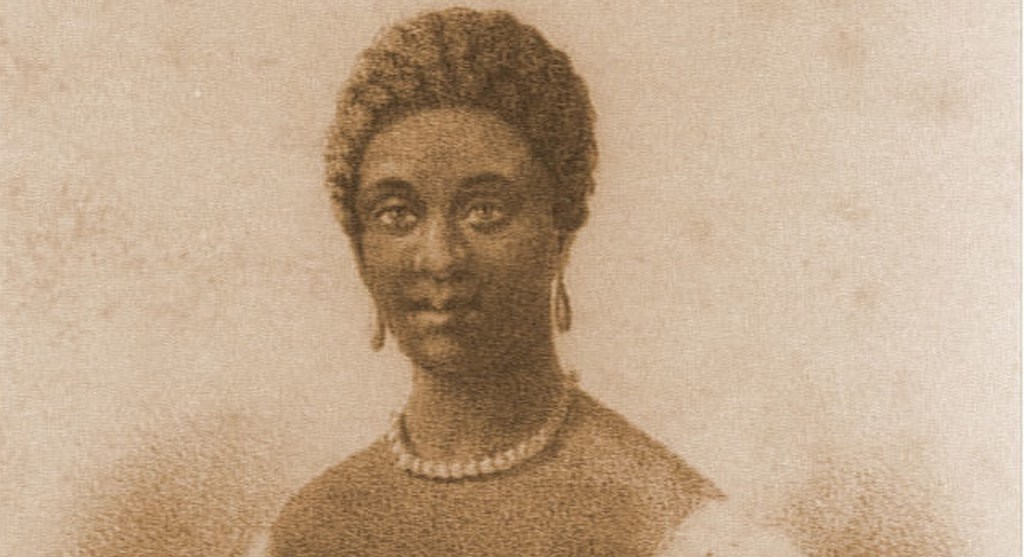
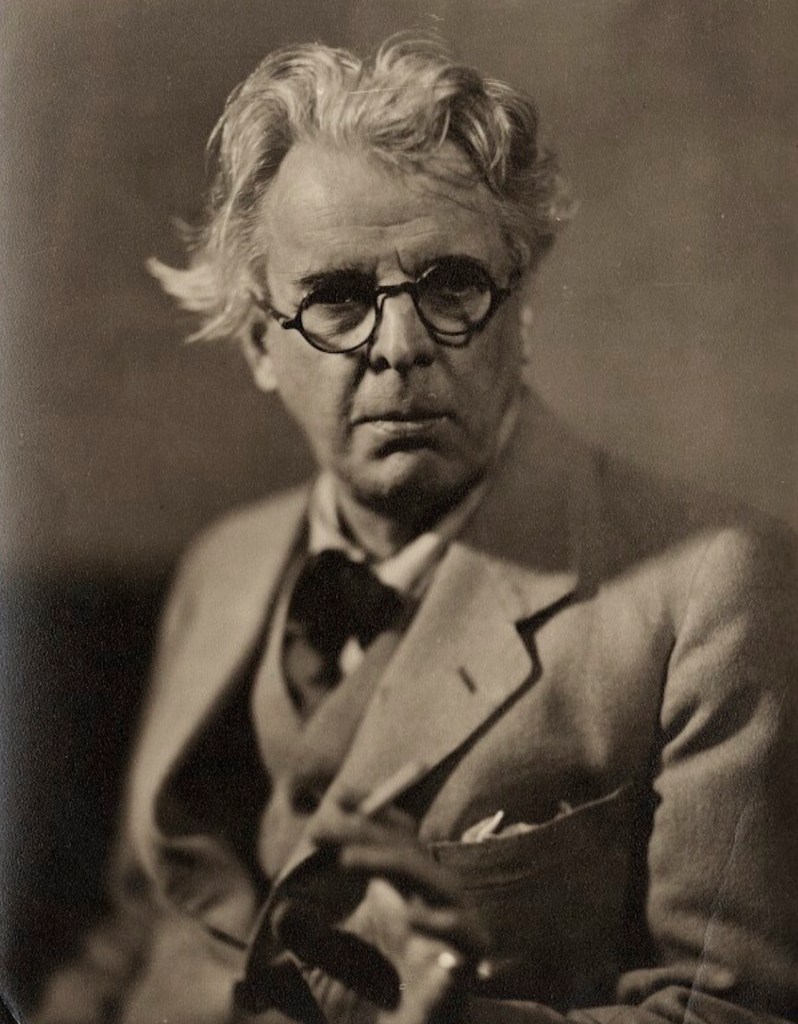


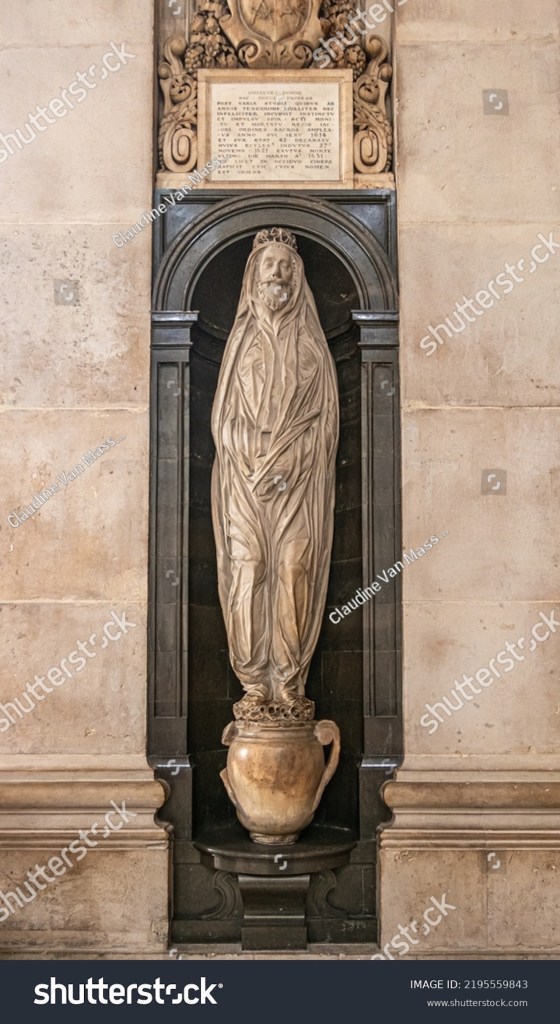
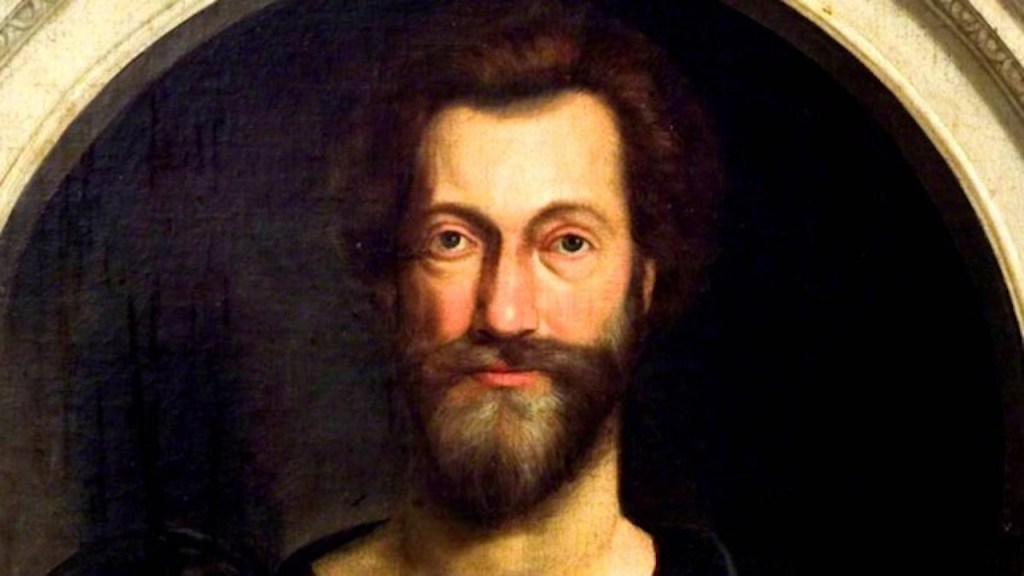
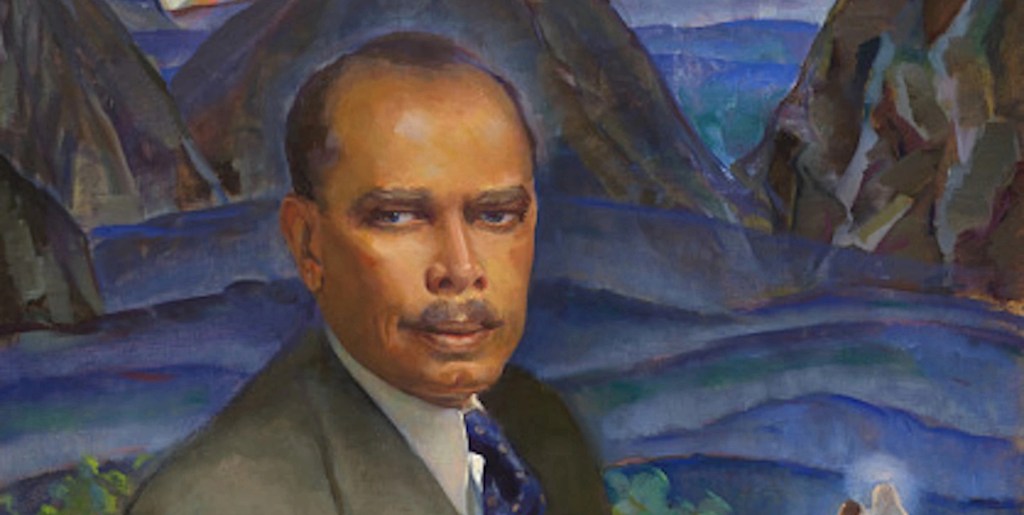


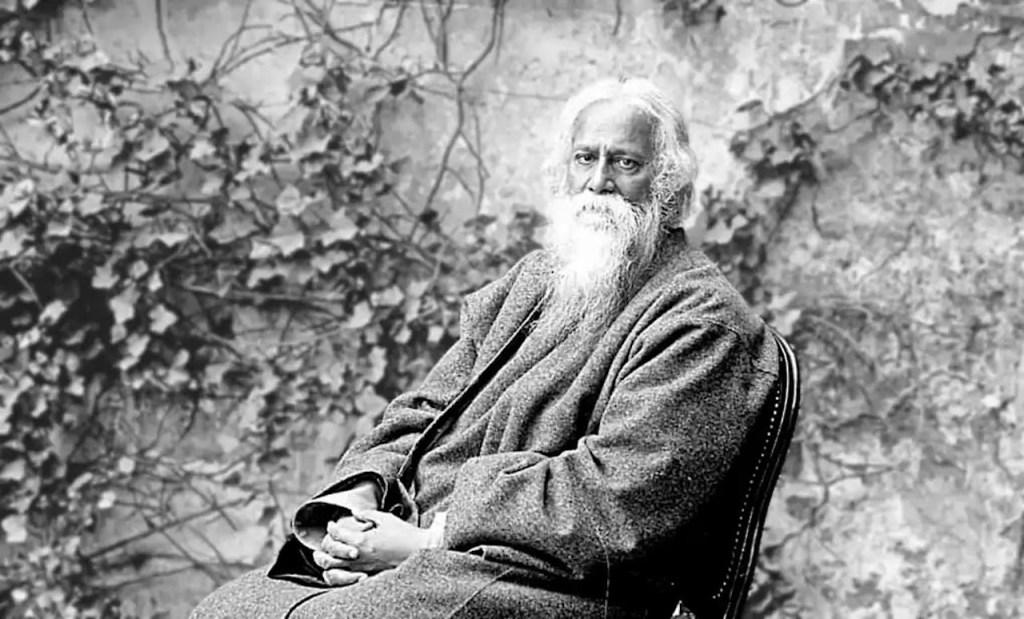
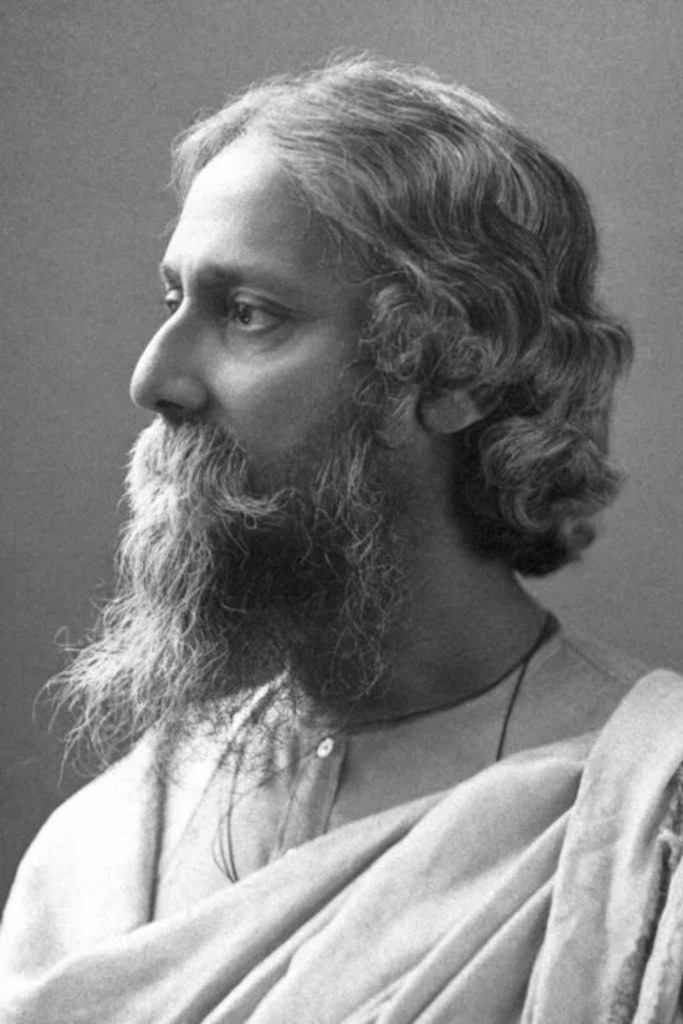
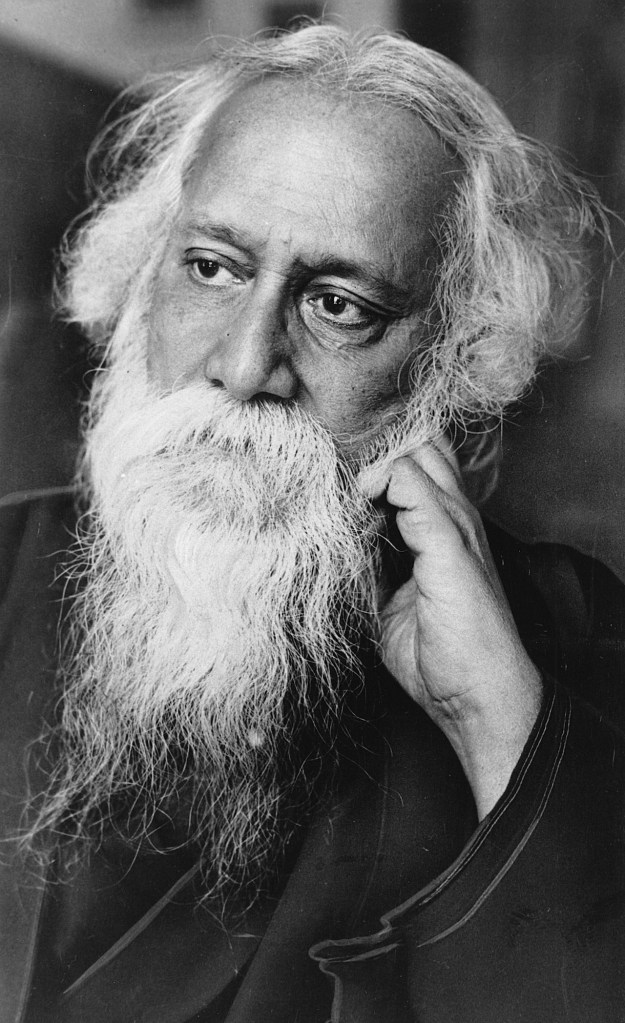
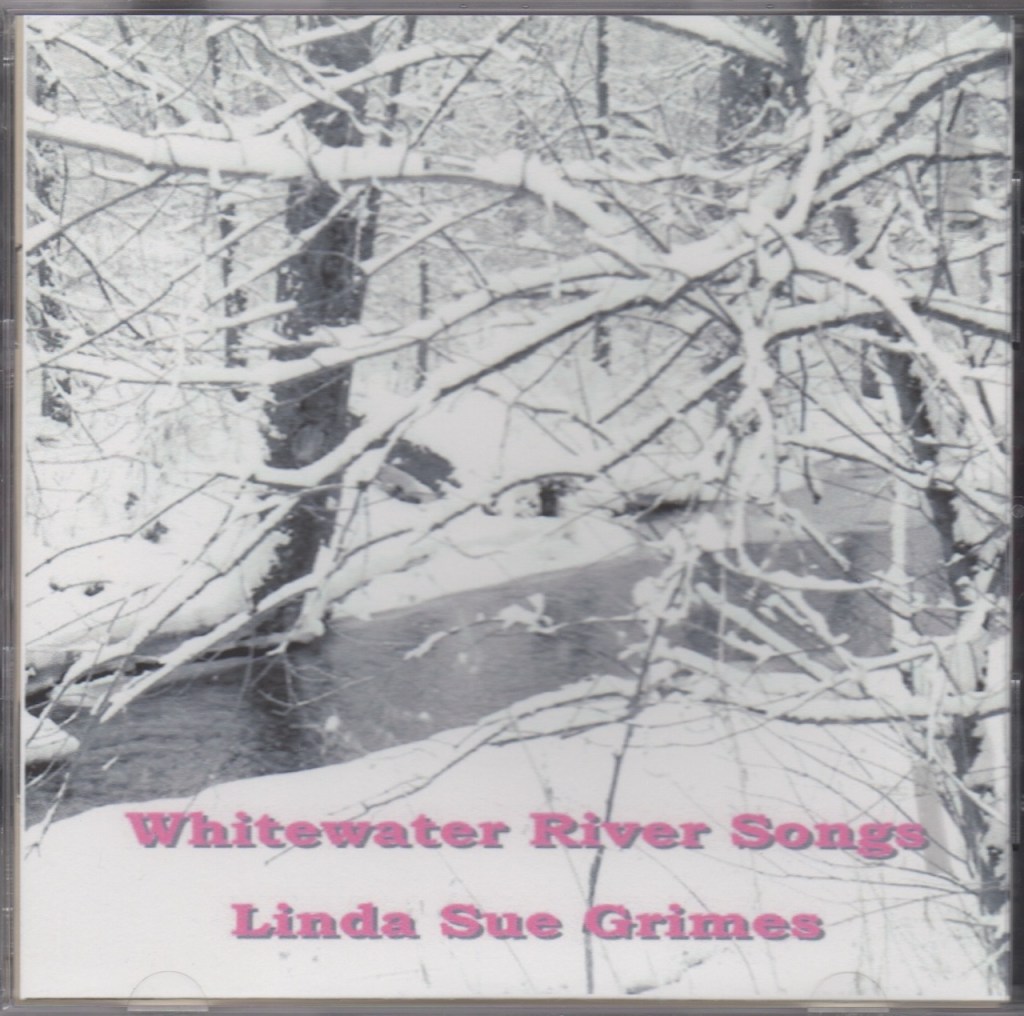
 Linda's Literary Home