Image: Emily Dickinson – Amherst College – Daguerrotype of the poet at age 17, circa 1847 – likely the only authentic, extant likeness of the poet
Emily Dickinson’s“Like Brooms of Steel”
Emily Dickinson’s “Like Brooms of Steel” features the riddle-like metaphoric usage that the poet so often employs. She playfully turns the natural elements of snow and wind into brooms made of steel and allows them to sweep the streets, while the coldness draws stillness through the landscape.
Like Brooms of Steel
Like Brooms of Steel The Snow and Wind Had swept the Winter Street – The House was hooked The Sun sent out Faint Deputies of Heat — Where rode the Bird The Silence tied His ample — plodding Steed The Apple in the Cellar snug Was all the one that played.
Commentary on “Like Brooms of Steel”
For Emily Dickinson the seasons offered ample opportunities for verse creation, and her love for all of the seasons is quite evident in her poems. However, her poetic dramas become especially deep and profound in her winter poems.
First Movement: The Nature of Things in Winter
Like Brooms of Steel The Snow and Wind Had swept the Winter Street —
The speaker has been observing and musing on the nature of things in winter. She finally speaks and makes the remarkable claim that the “Winter Street” looks as if it has been swept by “Brooms of Steel.” The “Snow and Wind” are the agencies that have behaved like those hard, industrial brooms. In Dickinson’s time were decidedly absent those big plows we have today that come rumbling down the streets, county roads, and interstates.
But those simple natural elements of snow and wind have moved the snow down the street in such a way that it looks as if it has been swept with a broom. And not just a straw broom would do, but it had to be a steel broom, an anomaly even in Dickinson’s century.
Second Movement: House as Big Warm Rug
The House was hooked The Sun sent out Faint Deputies of Heat –
The speaker then remarks about “the House,” which looked as if it had been, “hooked.” She is referring to the process of creating a rug with a loom that employs a hook. The house is like a big warm rug as “The Sun sent out / Faint Deputies of Heat.” Of course, the sun will always be sending out heat, but this speaker looks upon those dribbles of warmth as mere “Deputies.” They are sent in place of the sheriff, who will not appear until summer, or late spring at the most.
Third Movement: A Tree Steed
Where rode the Bird The Silence tied His ample – plodding Steed
The speaker then spies a bird, who seems to have ridden in on a “plodding Steed.” But the steed has been stilled by “silence”—denoting that the steed was indeed a tall tree. The tree is silenced by fall having blown away all of his leaves. He no longer rustles in the wind, but he does serve as a useful vehicle for both bird and poet.
Fourth Movement: Silent, Frozen
The Apple in the Cellar snug Was all the one that played.
The winter scene is filled with things that are still, silent, frozen in place by those agents of cold. The still bird sits in the still tree, silent, waiting in the frozen atmosphere. The musing speaker detects both silence and stillness and makes them vibrant with an inner, spiritual movement.
Yet, the speaker has to confess that the only real movement, things that might be said to have “played” that cold day, belongs to the “Apple in the Cellar.” The apple is “snug,” wrapped in tissue paper, preserved for the long winter months.
Or perhaps even some apple wine is “snug” in its bottle, and might even be a better candidate for playing. But they differ greatly from those outdoor creatures; those apples possess a level of warmth that allows them to play, although the irony of such playing might intrigue and tickle the fancy of the musing mind that deigns to contemplate the icy bitterness of winter.
Misplaced Line Alters Meaning
A number of sites that offer this poem—for example, bartleby.com—misplace the line, “The Apple in the Cellar snug,” relocating it after “Faint Deputies of Heat.”
This alteration changes the meaning of the poem: Dickinson’s poem makes it clear that it is the “apple” that is the only one who played. While it might seem more sensible to say a horse played instead of an apple, that is not what the original poem states. And, in actuality, the apple does, in fact, do some moving as it will begin to decay even though it is securely wrapped for winter and stored in the cellar.
The problem is, however, that the speaker has said that silence has “tied” or stilled the steed; he is not moving, which means that the bird is not moving. So to claim that the steed is playing gives motion to the bird, which the speaker claims is still.
The only thing that makes sense is that the speaker is exaggerating the stillness by saying that the snug apple is playing. The irony of a playing apple does not contradict the stillness that the speaker is painting, while the playing steed would violate and confuse that meaning.
Full Image: Emily Dickinson – Amherst College – Daguerrotype of the poet at age 17, circa 1847 – likely the only authentic, extant likeness of the poet
Alluding to the Genesis concept of the image of God, the speaker parallels the Eastern spiritual tradition of pantheism to dramatize the full implication of that venerable concept.
Introduction with Text of “The Indian upon God”
William Butler Yeats’ poem “The Indian upon God” is displayed in ten riming couplets. The theme of the poem dramatizes the biblical concept that God made man in His own image:
So God created man in his own image, in the image of God created he him; male and female created he them… (King James Version, Genesis 1:27).
The full implication of this fascinating dictum is that God, in fact, created all of creation after His own image. And while—because of the influence of postmodernism—that concept often receives short shrift in Western art culture, Eastern culture has long embraced it fully.
William Butler Yeats became fascinated by Eastern philosophy and religion. And while Yeats also fell victim to the “romantic misunderstanding” of many of the concepts pointed out by T. S. Eliot, Yeats still managed to dramatize certain ideas appropriately.
This poem “The Indian upon God” remains one of his most accurate offerings from among the pieces that he based upon his take on Eastern philosophy.
The Indian upon God
I passed along the water’s edge below the humid trees, My spirit rocked in evening light, the rushes round my knees, My spirit rocked in sleep and sighs; and saw the moorfowl pace All dripping on a grassy slope, and saw them cease to chase Each other round in circles, and heard the eldest speak: Who holds the world between His bill and made us strong or weak Is an undying moorfowl, and He lives beyond the sky. The rains are from His dripping wing, the moonbeams from His eye. I passed a little further on and heard a lotus talk: Who made the world and ruleth it, He hangeth on a stalk, For I am in His image made, and all this tinkling tide Is but a sliding drop of rain between His petals wide. A little way within the gloom a roebuck raised his eyes Brimful of starlight, and he said: The Stamper of the Skies, He is a gentle roebuck; for how else, I pray, could He Conceive a thing so sad and soft, a gentle thing like me? I passed a little further on and heard a peacock say: Who made the grass and made the worms and made my feathers gay, He is a monstrous peacock, and He waveth all the night His languid tail above us, lit with myriad spots of light.
Commentary on “The Indian upon God”
The speaker is paralleling the Eastern spiritual tradition of pantheism to dramatize the full impact of that venerable concept presented in Genesis: creation—including all created beings along with humankind—is created in the image of the Creator (God).
I passed along the water’s edge below the humid trees, My spirit rocked in evening light, the rushes round my knees, My spirit rocked in sleep and sighs; and saw the moorfowl pace All dripping on a grassy slope, and saw them cease to chase Each other round in circles, and heard the eldest speak: Who holds the world between His bill and made us strong or weak Is an undying moorfowl, and He lives beyond the sky. The rains are from His dripping wing, the moonbeams from His eye.
The speaker of the poem opens his musings by placing himself alongside a body of water as he walks under trees that he senses to have been moistened likely by a recent rain. In a meditative mood, he muses on the spiritual atmosphere of his locus.
He spies some birds pacing about and begins to consider how the moorfowl would elucidate his existence if he could do so in words. He continues musing on the birds as they are leisurely moving about.
Finally, the speaker, in his mind’s ear, imagines that the oldest bird begins to declaim about his existence. That discourse is roughly paraphrased by the following:
my Maker is an immortal moorfowl, Who has created all the world, and He remains hidden behind His skyey perch from where He sends the rains and lights His creation with “His eye.”
The moorfowl visualizes his Creator as a glorious version of himself. His Creator possesses a “bill” and a “wing,” and the rains drop from His wings, while the moonbeams shoot from His eye.
Image 3 Lotus – Photo by Ron Grimes
Second Movement: Lotus
I passed a little further on and heard a lotus talk: Who made the world and ruleth it, He hangeth on a stalk, For I am in His image made, and all this tinkling tide Is but a sliding drop of rain between His petals wide.
The speaker then moves on a short distance and begins his musing on what a lotus might say in explaining his origin: thus, the lotus also holds forth about his Creator:
my Maker and the ruler of the world “hang[s] on a stalk.” I am made in His image, and this rain He is sending from between His enormous petals
The lotus also describes his Creator as an embellished version of himself. His Creator “hangeth on a stalk,” just as the lotus flower does, and his Maker also causes the rain to fall.
And similar to the moorfowl’s conception that the rain drips from the Supreme Moorfowl’s wings, the lotus’ Creator lets the rain “slide” between His petals.
A little way within the gloom a roebuck raised his eyes Brimful of starlight, and he said: The Stamper of the Skies, He is a gentle roebuck; for how else, I pray, could He Conceive a thing so sad and soft, a gentle thing like me?
The speaker continues on and crafts the fulmination of a roebuck, whose eyes were full of “starlight,” as he, too, explains his creative origin, labeling his Maker, “The Stamper of the Skies“:
the creator of the world is a tender and mild roebuck, who else could have thought to fashion such a being as myself who remains so sorrowful yet so softly gentle?
The roebuck concludes that his Creator has to be like himself in order to be able to fashion his unique characteristics of sadness, softness, and gentleness. It is noteworthy that the roebuck makes his claim through a rhetorical question, which appears to humble his claim yet at the same time gives it particular emphasis.
I passed a little further on and heard a peacock say: Who made the grass and made the worms and made my feathers gay, He is a monstrous peacock, and He waveth all the night His languid tail above us, lit with myriad spots of light.
The speaker moves farther along, and listening to a peacock, he muses that the bird would describe his origin as the following:
I was created by a huge peacock who also created all vegetation and all other animals. My Maker moves His bright features through the sky, from where He sends to us the light from the stars.
Again, the animal describes his Creator in terms of his own characteristics. The peacock, however, verges on the boastful with his description, claiming that the “monstrous peacock,” or more glorious version of himself, also made the grass and worms.
The peacock implies that his Creator has made these creatures for the sake of the peacock. And the peacock also likens his beautiful tail feathers to stars hanging in the skies.
The philosophy portrayed in William Butler Yeats’ poem is pantheism, the concept that God is everything. If man (humankind) correctly discerns that God created human beings in His image, then God, in fact, created everything else that exists in His image.
If all things are reflections of one Creator, then each thing created can rightly aver that it is made in the image of the Divine. Pantheism is also logically monotheism: all of creation taken together is one entity.
The monotheistic religions of empirical reality—as opposed to that of the mythological Greek and Roman pantheon of gods—all expound the nature of God as a trinity—one being expressing in three aspects. For example, in Hinduism the trinity is Sat-Tat-Aum (also expressed as Sat-Chit-Ananda). The Christian trinity is expressed a Father-Son-Holy Spirit.
All of the five major world religions—Hinduism, Buddhism, Judaism, Christianity, and Islam—are monotheistic. Hinduism is often mistakenly referred to a a polytheistic religion by commentators who confuse the names for the various aspects of God as separate gods.
Capitalizing Pronouns Referring to God
The King Jame Version of the Holy Bible does not capitalize the pronouns referring to God; that custom is a 19th century invention. However, I usually capitalize pronouns referring to the Deity to make clear that such references are, in fact, referring to God. In this commentary, I have capitalized the pronouns primarily to make clear that the various individuals are referring to their Maker or God.
Image: Gerard Manley Hopkins – National Portrait Gallery, London
Gerard Manley Hopkins’ “My own heart let me more have pity on; let”
The speaker in this sonnet examines his inward struggle, through which he has learned mercy toward the self (soul) while undergoing heavy, sustained spiritual pressure. My personal issue with this pressure assures me that Father Hopkins well understood its vicissitudes as well as its rewards.
Introduction and Text of “My own heart let me more have pity on; let”
In this final terrible sonnet, the speaker turns inward to speak directly to his own heart; he does so with urgency but restraint. The sonnet foregrounds his own personal moral and spiritual reckoning. In that accounting, he has found that self-pity is not indulgence but instead it is simply charity rightly ordered and affirmed.
The poetic language pushes as well as it knots itself into compression. It portrays the pressure exerted on a mind that has been tormented to the point of exhaustion. Thus, now that exhausted mind must seek a genuine place to rest.
Readers may note that Father Hopkins has separated both the octave and the sestet into two quatrains in the octave and two tercets in the sestet. This kind of separation adds to the dramatic effect that each stanza represents.
The sonnet could be interpreted as consisting of four movements; however, for consistency of preserving the Petrarchan model, I have kept them grouped in my commentary as simply octave and sestet.
My own heart let me more have pity on; let
My own heart let me more have pity on; let Me live to my sad self hereafter kind, Charitable; not live this tormented mind With this tormented mind tormenting yet.
I cast for comfort I can no more get By groping round my comfortless, than blind Eyes in their dark can day or thirst can find Thirst’s all-in-all in all a world of wet.
Soul, self; come, poor Jackself, I do advise You, jaded, lét be; call off thoughts awhile Elsewhere; leave comfort root-room; let joy size
At God knows when to God knows what; whose smile ‘S not wrung, see you; unforeseen times rather—as skies Betweenpie mountains—lights a lovely mile.
Reading
Commentary on “My own heart let me more have pity on; let”
The sonnet dramatizes four movements, as mentioned above, from self-laceration to self-mercy, which has led to the discovery of hope—not by force of harsh discipline but by soft, divinely inspired release.
Octave: “My own heart let me more have pity on; let”
My own heart let me more have pity on; let Me live to my sad self hereafter kind, Charitable; not live this tormented mind With this tormented mind tormenting yet.
I cast for comfort I can no more get By groping round my comfortless, than blind Eyes in their dark can day or thirst can find Thirst’s all-in-all in all a world of wet.
The speaker begins the octave by offering a plea that is, however, also a command. He is directly addressing his own heart as both somewhat metaphorically as both judge and defendant. The line “Let me more have pity on” signals a deliberate act of will: pity must be allowed to exist and work its power, not merely be passively felt.
The speaker then labels his accustomed cruelty toward himself: he has become a “tormented mind” that compounds his suffering by continually rehearsing it. The repetition of “tormented” mimics the cycle he is condemning; his has become a mind that had kept turning upon itself without pause to rest.
Charity here does not engage merely for sentimental purposes; it remains a necessary, ethical discipline, employing the discipline to refuse to continually inflict self-harm, even under the guise of rigor.
The second quatrain moves quite quickly but assertively, and then it intensifies the uselessness of the same old, ordinary search for simple, quiet comfort. Casting “for comfort” metaphorically creates the two leisure activities of fishing and gambling. Both of these activities involve chance, and uncertainty often hands over nothing to the player after plunging much effort into them.
The “blind/Eyes” image sharpens the deadlock: Blind eyes cannot see daylight simply by groping, while thirst cannot be slaked by being dunked in water that is not fit to drink. Again, the poet has been performing his duty of giving back to the reader his own experience. And the mark of a great poet is that he does so completely in a natural, believable voice, as Father Hopkins does here.
The paradox of “thirst’s all-in-all in all a world of wet” completely and earnestly captures spiritual barrenness as it spirits about in a world of abundance, where remedies for maladies surround the suffering soul yet remain remote and unreachable.
The octave thus has closed every false door. The activities of exerting much effort, of analyzing each sorrow’s parts, and then groping toward some restless search have only deepened the dryness of the issue. The speaker’s understanding and honesty now clear the way for a genuine rejoinder that does not hang on mastery or grasping.
The minds and hearts of all humanity remain in search of such genuineness, especially as it contemplates it own mortality. The winds of change may threaten the material world, but the astral and causal levels of being hold promises that humanity keeps deep in its bosom.
Sestet: “Soul, self; come, poor Jackself, I do advise”
Soul, self; come, poor Jackself, I do advise You, jaded, lét be; call off thoughts awhile Elsewhere; leave comfort root-room; let joy size
At God knows when to God knows what; whose smile ‘S not wrung, see you; unforeseen times rather—as skies Betweenpie mountains—lights a lovely mile.
The speaker in the sestet now is able to turn advice into consolation, as he discovers joy; and this joy was not seized by groping fingers but granted by steady grace, which arrived without exertion and through patience.
In the sestet, the direct address broadens as the “Soul, self” bring together the divided mind/heart into a single event. The affectionate diminutive “Jackself” calms the weather of judgment, while weariness is acknowledged but without contempt.
The advice remains as simple as it is radical—“let be.” Thought itself must be allowed to rest “awhile,” not disappeared but its temperature lowered. The speaker suggests a turning “elsewhere,” away from the former obsessive peer into inwardness, leaving “comfort root-room.” Comfort cannot be bludgeoned at the root, an joy must be afforded a place to increase.
The speaker then suspends time as well as outcome, when he asserts “At God knows when to God knows what.” This line refuses acts that schedule or measure. It finds that hope exists only under divine discretion. The smile then appears quite naturally because it is “not wrung”; it is not forced by circumstances , neither is it caught up by the will. Instead, this divine joy may come like a flash in “unforeseen times,” and the speaker compares that flash colorfully to the sudden light that appears between mountains.
This image then significantly gives honor to the obstruction without dragging in the issue of despair: the mountains still remain mountains, but between them, a mile or so has been wonderfully lighted. The sonnet concludes with a vista—limited, lovely, and sufficient. Mercy toward the self has become the condition for perceiving the divine light, for experiencing joy, and it is patience that remains the means by which that blessed condition endures.
Gerard Manley Hopkins’ “Patience, hard thing! the hard thing but to pray”
This sonnet is counted as one of Father Hopkins’ six “terrible sonnets.”
Introduction and Text of “Patience, hard thing! the hard thing but to pray”
The speaker in Father Hopkins’ “Patience, hard thing! the hard thing but to pray” explores searchingly the nature of spiritual endurance. He is focusing on patience not as a soft virtue but as a challenging and difficult discipline, which oftentimes scars the pride, while exhausting the will.
But those actions still reflect and align with divine will and action. As he usually does, this speaker reveals the hard discipline of God remains always for the betterment of humankind. As human beings, we all search for—or at least wish for—our own betterment.
As a Jesuit priest, Father Hopkins made it his mission to seek divine guidance, and unlike us non-priestly poets, he focused primarily on religious and spiritual issues that affected him deeply.
Patience, hard thing! the hard thing but to pray
Patience, hard thing! the hard thing but to pray, But bid for, Patience is! Patience who asks Wants war, wants wounds; weary his times, his tasks; To do without, take tosses, and obey. Rare patience roots in these, and, these away, Nowhere. Natural heart’s ivy, Patience masks Our ruins of wrecked past purpose. There she basks Purple eyes and seas of liquid leaves all day.
We hear our hearts grate on themselves: it kills To bruise them dearer. Yet the rebellious wills Of us we do bid God bend to him even so. And where is he who more and more distils Delicious kindness? – He is patient. Patience fills His crisp combs, and that comes those ways we know.
Reading
Commentary on “Patience, hard thing! the hard thing but to pray”
As human beings, we learn early that patience is an important personal quality, but the speaker in this sonnet is revealing his inner turmoil as an argument against which he confronts resistance even as he refuses to decry the virtue that seems to be resisting him. He treats the virtue of patience in a realistic manner—not with sentimentality. He asserts that patience is both vitally necessary as well as deeply painful.
The humanity of his cries shows us that as we strive and struggle, all of humanity has done so. Father Hopkins lived in the 19th century—two centuries earlier than our own, and yet his struggles are our struggles.
Octave: “Patience, hard thing! the hard thing but to pray”
The speaker begins the octave with an effusive cry—no calm reflection here! He invokes “patience” immediately and pairs it with prayer; they are both difficult things to approach and accomplish. We often cry for what we seem to lack, even in the 21st century.
He knows that genuine prayer requires patience, and it is a kind of patience that the heart and mind naturally resist in a fallen world. The sharpness of his complaint is emphasized through repetition.
He then seems to create a stunning paradox in that patience is difficult, but it is also “bid for.” The speaker easily confesses that patience is not only endured, but it is sought and asked for, even though that asking heralds conflict.
Personified as a female figure who is doing the asking, Patience paradoxically “wants war, wants wounds,” and those qualities expose that there is a cost in acquiring her. She commands that one live a life without ease, which includes doing without things one might need for comfort, receiving blows that stun and hurt, all the while remaining obedient. Dame Patience then requires obedience under pressure with the willingness to accept pain, trials, and tribulations that seem arbitrary instead of well-deserved.
The speaker asserts that that kind of patience remains rare, even fragile. It takes hold only under these catastrophic conditions; for if they are removed them, there is not patience within existence. This insistence blows up the notion that patience can be a decorative virtue experienced in comfort; instead, patience makes it appearance only in deprivation, instability, and any other calamity.
Still through all this mayhem, the speaker refuses to qualify her as infertile. Through a striking shift in tone and assurance, patience then transforms into “Natural heart’s ivy” —a living being, covering “our ruins of wrecked past purpose.” We chafe under ruined purposes as we try to build a better world even in current times.
With that ivy image, the speaker is acknowledging that failure and collapse within the self, which include all past intentions are broken and defeated. Patience, however, does not convert them; she merely masks them by covering all that damage with new growth.
The final lines of the octave seems to complicate the struggle. Patience is basking in colorful accoutrements, yet luxuriant color and fluidity suggest abundance, as well as beauty, even though it is a beauty that grows over wreckage.
The speaker thus remains well aware that such patience beautifies what has been lost without denying the loss itself. The octave leaves the speaker’s fragility suspended between intense pain and strange fertility—between war and ivy.
Sestet: “We hear our hearts grate on themselves: it kills”
In the sestet, the speaker turns inward with even greater urgency. He hears that “our hearts grate on themselves”; this image is harsh and mechanical, suggesting inner resistance. And patience can be understood as not only difficult, but it is also possibly lethal, in that “it kills / To bruise them dearer.”
That claim is intimating that the heart continues to hang onto its own wounds because it would rather retain the familiar pain than to face the adversity made possible by surrender.
Especially within the confines of such thinking, the speaker has to surrender to an subtle prayer: “the rebellious wills / Of us we do bid God bend to him.” Even as the will resists God, it, at the same time, must supplicate to God to transcend its resistance. An exotic tension unfolds the divided mind/soul as it prays. It remains faithful but still defiant.
The main focus that has infused itself throughout the entire sonnet comes into sharp relief in the form of the question “where is the goodness that justifies all of this misery and suffering?” A question to haunts our current civilization as surely as it did two centuries ago!
The speaker responds not with an argumentative abstract notion, but with a person. “He is patient.” God’s kindness can come only slowly, similar to a liquid being “distilled,” drop by drop, rather than being poured out all at once. As science has shown us certain processes, poetry shows us the metaphorical value of understanding those processes.
Patience is not merely a virtue that human beings must learn; it is the basic method of God’s own divine action. The final image of “crisp combs” brings to mind honey made by bees that labor furiously as they produce such sweetness.
Patience “fills” them (all of creation’s creatures), and from that fullness comes kindness in “those ways we know,” as it ascends to human experience through evolutionary time rather than temporal spectacle.
In the sestet, the speaker comes close to showing how to defend one’s heart and mind in the struggle that humanity is engaged in. He does not provide direct relief from pain or a way to guard against rebellion.
But instead, the speaker suggests that the answer can only be understood in terms of what is human and what is divine; thus, human patience can be seen to resemble divine patience. The pain and suffering experiences by human beings can be converted into the divine stuff that produces sweetness, i.e., kindness.
The process, of course, is meditation and prayer, along with deep thought and service to humankind and the world at large, in whatever form that service must take—even writing poems, thus, can serve a divine purpose.
We struggle today as humanity has struggled in the past. From poets such as Father Hopkins, we can glean the depth of our sorrow but also we can be comforted that there is a light at the end of the tunnel of sad darkness, and we can determine that we will progress toward that light.
Image: Gerard Manley Hopkins – National Portrait Gallery, London
Gerard Manley Hopkins’ “I wake and feel the fell of dark, not day”
The speaker Gerard Manley Hopkins’ “I wake and feel the fell of dark, not day” is confronting spiritual desolation, interior darkness, and the sense of abandonment by God.
Awakening into psychological night, the speaker measures time not in hours but in years of suffering. His cries feel unheard, like letters sent to one who lives far away. In the sestet, suffering turns inward as his soul becomes both the source and the punishment of torment.
Introduction and Text of “I wake and feel the fell of dark, not day”
This sonnet is the second installment belonging to the group of six poems often called the “terrible sonnets.” They focus on intense inward struggle in highly compressed language, and they reveal a profound sense of spiritual trial. The speaker is describing an internal condition of darkness that persists even after waking.
The poem follows the traditional Petrarchan structure, but the poet displayed the poem on the page separating the octave into two quatrains and the sestet into two tercets. The octave presents the condition of suffering, followed by the sestet which deepens and internalizes that suffering. The language remains quite visceral, yet sacramental and judicial, suggesting punishment and endurance.
I wake and feel the fell of dark, not day
I wake and feel the fell of dark, not day. What hours, O what black hours we have spent This night! what sights you, heart, saw; ways you went! And more must, in yet longer light’s delay.
With witness I speak this. But where I say Hours I mean years, mean life. And my lament Is cries countless, cries like dead letters sent To dearest him that lives alas! away.
I am gall, I am heartburn. God’s most deep decree Bitter would have me taste: my taste was me; Bones built in me, flesh filled, blood brimmed the curse.
Selfyeast of spirit a dull dough sours. I see The lost are like this, and their scourge to be As I am mine, their sweating selves, but worse.
Reading
Commentary on “I wake and feel the fell of dark, not day”
In the octave, the speaker presents spiritual suffering as prolonged night and unanswered prayer, while the sestet reveals suffering as internalized judgment.
Octave: “I wake and feel the fell of dark, not day.”
I wake and feel the fell of dark, not day. What hours, O what black hours we have spent This night! what sights you, heart, saw; ways you went! And more must, in yet longer light’s delay.
With witness I speak this. But where I say Hours I mean years, mean life. And my lament Is cries countless, cries like dead letters sent To dearest him that lives alas! away.
The octave opens abruptly: “I wake and feel the fell of dark, not day.” The speaker awakens, yet awakening does not bring light. The word fell suggests something savage, cruel, or deadly, as though darkness itself were an attacking force.
Day has failed to arrive, not externally but internally. The speaker’s consciousness remains trapped in night. This darkness is not merely the absence of light but a palpable weight that can be felt.
The second line intensifies this experience. The repetition emphasizes exhaustion. These hours are not ordinary; they are “black hours,” heavy with dread. The speaker addresses his own heart directly, asking it to remember what it has seen and where it has wandered, suggesting a night filled with disturbing thoughts, memories, or spiritual visions that cannot be escaped even in sleep.
The line “And more must, in yet longer light’s delay” extends the suffering into the future. Relief is postponed; light is delayed. The speaker anticipates further endurance without comfort. The octave has thus established a defining theme: suffering continues; the speaker is conscious of the fact that it is also unavoidable.
In the second quatrain, the speaker asserts his testimony. He is not exaggerating or indulging emotion; instead, he is claiming authority as one who has endured. Yet immediately, time expands. When he says “hours,” he means “years,” and beyond that, “life.” What began as a single night becomes a metaphor for an entire existence marked by anguish. The darkness is not episodic but continually defining.
The lament itself takes the form of “cries countless.” These cries are compared to missives sent to a loved one far away. The metaphor is striking. The speaker believes his cries are addressed to God, “dearest him,” yet they receive no reply. Like letters that never reach their destination, these prayers feel wasted, unheard, and perhaps unopened. God is known to be living, yet distant.
The emotional force of the octave lies in this tension: the speaker continues to cry out, continues to bear witness, even while believing those cries go unanswered. The speaker is not revealing disbelief but instead he is demonstrating faith that yet suffers.
The speaker holds no compunction to deny God’s existence, a suffering humanity often is wont to do; instead, he suffers under God’s silence. The speaker therefore is expressing despair not as rebellion but as endurance under abandonment. The night continues, the cries continue, and the speaker remains awake within it.
Sestet: “I am gall, I am heartburn. God’s most deep decree”
I am gall, I am heartburn. God’s most deep decree Bitter would have me taste: my taste was me; Bones built in me, flesh filled, blood brimmed the curse.
Selfyeast of spirit a dull dough sours. I see The lost are like this, and their scourge to be As I am mine, their sweating selves, but worse.
The sestet takes a decisive inward turn. Where the octave emphasized time and unanswered cries, the sestet focuses on the body and self as the site of punishment. The speaker does not merely feel bitterness; he is bitterness. Gall, a bitter substance associated with suffering and poison, suggests spiritual nausea. Heartburn implies a burning from within, a pain generated internally rather than inflicted from without.
The speaker attributes this condition to “God’s most deep decree.” This suffering is not accidental or random. It is permitted, even ordained. The bitterness is something the speaker must taste, yet the shocking revelation follows: “my taste was me.” The self (soul) becomes both the instrument and the substance of suffering. There is no external punishment necessary; identity itself is the affliction.
The line “Bones built in me, flesh filled, blood brimmed the curse” intensifies the embodiment of despair. The curse is not simply symbolic; it saturates the physical body. Bones, flesh, and blood—the fundamental elements of life—are all implicated. Suffering is total, leaving no refuge within the soul. The speaker’s claims suggest a complete inhabitation or incarnation of pain, as though despair has become structural.
The metaphor of fermentation is created in the line “Selfyeast of spirit a dull dough sours.” Yeast is normally a source of growth and life, but here it produces sourness. The spirit works upon itself destructively. The self generates its own decay. This image reinforces the idea that suffering is self-contained, inescapable, but continuous.
In the final lines, the speaker broadens his vision. He recognizes his condition as a foretaste of damnation. The lost are punished not by external flames but by being trapped within themselves. Their scourge is to be “their sweating selves.” The speaker identifies with this fate, acknowledging that he already experiences something like it, though he believes theirs will be worse.
The sestet ends without consolation. There is no resolution, no light breaking through. Instead, the poem concludes with recognition and endurance. The speaker understands the nature of suffering more clearly, but understanding does not remove it. The sonnet closes in grim clarity rather than hope.
Father Gerard Manley Hopkins’ poem “The Habit of Perfection” dramatizes the importance of silencing and stilling each of the five senses in order to advance in the spiritual realm.
Introduction with Text of “The Habit of Perfection”
The title “The Habit of Perfection” of Gerard Manley Hopkins’ poem features a pun on the term “habit.” As a monk, the poet had accepted the garb of the monastic, sometimes called a habit. Of course, the ordinary meaning of common routine also functions fully.
About the importance of silence, Paramahansa Yogananda has averred, “What joy awaits discovery in the silence behind the portals of your mind no human tongue can tell” (Spiritual Diary).
Jesuit Priest Gerard Manley Hopkins concurs with the Indian guru’s claim. Father Hopkins’ poem dramatizes the bliss of silence in seven rimed quatrains, each with the rime scheme, ABAB, featuring his famous sprung rhythm and inscape techniques. The devotee/speaker commands each of his senses to cease their normal functioning, in order that his soul may meditate in holy silence and commune with the Divine.
The Habit of Perfection
Elected Silence, sing to me And beat upon my whorlèd ear, Pipe me to pastures still and be The music that I care to hear.
Shape nothing, lips; be lovely-dumb: It is the shut, the curfew sent From there where all surrenders come Which only makes you eloquent.
Be shellèd, eyes, with double dark And find the uncreated light: This ruck and reel which you remark Coils, keeps, and teases simple sight.
Palate, the hutch of tasty lust, Desire not to be rinsed with wine: The can must be so sweet, the crust So fresh that come in fasts divine!
Nostrils, your careless breath that spend Upon the stir and keep of pride, What relish shall the censers send Along the sanctuary side!
O feel-of-primrose hands, O feet That want the yield of plushy sward, But you shall walk the golden street And you unhouse and house the Lord.
And, Poverty, be thou the bride And now the marriage feast begun, And lily-coloured clothes provide Your spouse not laboured-at nor spun.
Reading
Commentary on “The Habit of Perfection”
Father Hopkins’ poem “The Habit of Perfection” dramatizes the importance of silencing and stilling each of the five senses in order to advance spiritually to experience union with the Divine Reality.
First Quatrain: Devotee of the Spiritual Path
Elected Silence, sing to me And beat upon my whorlèd ear, Pipe me to pastures still and be The music that I care to hear.
The speaker reveals himself to be a devotee on the spiritual path, as he converses with “Elected Silence.” The devotee chooses silence as the place where inner awareness starts, remembering the biblical injunction, “Be still, and know that I am God” (Psalm 46:10 King James Version).
The speaker metaphorically likens his Elected Silence to music, capable of singing to him and beating upon his eardrum. This silence “pipe[s him] to pastures” in the mind which he wants to still. He, therefore, asks silence to be “the music that [he cares] to hear.”
Second Quatrain: Commanding the Senses
Shape nothing, lips; be lovely-dumb: It is the shut, the curfew sent From there where all surrenders come Which only makes you eloquent.
As an adjunct to the auditory sense, speaking or moving the lips must cease as well as catching sounds with the ear; thus, the speaker bids his lips to remain “lovely-dumb.” He tells his lips to form no sounds, stressing that the eloquent speech of the devotee is in his surrender to the Divine. The devotee must remain silent in order to hear the voice of Divinity.
Third Quatrain: Calming the Sense of Sight
Be shellèd, eyes, with double dark And find the uncreated light: This ruck and reel which you remark Coils, keeps, and teases simple sight.
The speaker then bids his eyes remain closed. He commands them to seek “double dark” beyond which they can encounter the “uncreated light.” In their seeking, the eyes may experience flashes of unearthly light that “[c]oils, keeps, and teases simple sight.” But the devotee’s goal is to become so calm that the physical eyes cease to catch mere glimpses, while the single spiritual eye becomes operational.
Fourth Quatrain: Calming the Sense of Taste
Palate, the hutch of tasty lust, Desire not to be rinsed with wine: The can must be so sweet, the crust So fresh that come in fasts divine!
The speaker/devotee orders his sense of taste to cease its intrusion upon the soul. He specifically commands his taste buds not to crave wine. The sense of taste must be subdued by fasting, wherein the urge for food and drink become swallowed up in the bliss of Divine communion.
Fifth Quatrain: Calming the Sense of Smell
Nostrils, your careless breath that spend Upon the stir and keep of pride, What relish shall the censers send Along the sanctuary side!
The sense of smell accompanies the act of breathing, and in meditation, breathing slows until it stops in deepest awareness of the Divine Essence. The speaker commands his nose by asserting the premise that it functions through a sense of pride, which is damaging to the humbleness necessary for Divine awareness.
Sixth Quatrain: Calming the Sense of Touch
O feel-of-primrose hands, O feet That want the yield of plushy sward, But you shall walk the golden street And you unhouse and house the Lord.
The speaker then promises his greedy hands and feet, which desire softness and comfort, that they will be rewarded to walk the golden street, if they cooperate in sacrificing their worldly comforts for heavenly ones.
Seventh Quatrain: Union of Soul and Divine
And, Poverty, be thou the bride And now the marriage feast begun, And lily-coloured clothes provide Your spouse not laboured-at nor spun.
In the final quatrain, the speaker alludes to the Christ’s command not to become overly conscious about one’s clothes:
And why take ye thought for raiment? Consider the lilies of the field, how they grow; they toil not, neither do they spin: And yet I say unto you, That even Solomon in all his glory was not arrayed like one of these. (Matthew 6:28-29 KJV)
The speaker avers that taking Poverty as his bride, he will enjoy all the comforts of heaven. As a monastic, the speaker has taken a vow of poverty or simplicity because he is seeking treasures not afforded by the material world.
As he silences and calms all the senses, his true marriage feast begins, his marriage or union with the Divine Over-Soul, in Whom all worthwhile treasures are acquired and all worthy goals are achieved.
Gerard Manley Hopkins – National Portrait Gallery, London
Gerard Manley Hopkins’ “Pied Beauty”
Gerard Manley Hopkins’ “Pied Beauty” is an eleven-line curtal sonnet, dedicated to honoring and praising God for the special beauty of His creation. Father Hopkins coined the term “curtal” to label his eleven-line sonnets.
Introduction and Text of “Pied Beauty”
The speaker in Gerard Manley Hopkins’ poem/hymn “Pied Beauty” offers a tribute to the Creator for all things natural and human inspired, with special emphasis on things that are multi-colored, dotted, striped, or patterned in ingenious ways. The poem employs Father Hopkins’ famed sprung rhythm and unique rime scheme: ABCABCDBCDC.
The poem is an eleven-line sonnet called a curtal, a term which Father Hopkins coined to describe the form he employed in certain of his poems, including “Pied Beauty.” While the speaker emphasizes beauty by contrasting things that are widely touted as unpleasant yet possess a certain aura of unique loveliness, he ultimately is affirming that God has made all of creation to reflect various styles of beauty.
Thus, the speaker begins by giving all “glory” to God for all these created things, and he concludes by insisting that God be praised for giving humankind these many patterned objects of beauty.
God and beauty are being weighed in special terms as the speaker creates in his hymn a drama of oppositional tension that results in the creation of balance and harmony. Through appreciation and praise of God for His gifts, humankind learns that balance and harmony in order to complete life’s goals and purposes.
Pied Beauty
Glory be to God for dappled things – For skies of couple-colour as a brinded cow; For rose-moles all in stipple upon trout that swim; Fresh-firecoal chestnut-falls; finches’ wings; Landscape plotted and pieced – fold, fallow, and plough; And áll trádes, their gear and tackle and trim.
All things counter, original, spare, strange; Whatever is fickle, freckled (who knows how?) With swift, slow; sweet, sour; adazzle, dim; He fathers-forth whose beauty is past change: Praise him.
Recitation of “Pied Beauty”
Commentary on “Pied Beauty”
Father Hopkins’ poem remarkably enlists several synonyms for the important title term “pied.” Those synonyms are dappled, couple-colour, brinded (archaic form of brindled), stipple, and freckled. All of those terms refer to multi-color or dotted patterns that so often appear in nature, that this observant human heart finds divinely inspired.
The poem is, therefore, a hymn honoring the Supreme Creator of all that exists. The piece offers gratitude that the Heavenly Father-Creator has fashioned His world to provide delight for His children.
First Movement: A Pattern of Gratitude
Glory be to God for dappled things –
The speaker begins by glorifying Creator-God for having effected His world to include objects that are multi-spotted and multi-colored. While the speaker undoubtedly offers God all glory to everything in creation, he also glorifies his Creator for not only things but also events. The act of creation remains of particular interest.
The speaker appears to be concentrating on a certain style and pattern that the Almighty has chosen to bestow on certain of His creatures and things. And this devout speaker remains most appreciative of those patterns. Thus, the glory, the honor, and the achievement of God have infused this speaker’s heart and mind to express gratitude.
Second Movement: Examples of All Things Dappled
For skies of couple-colour as a brinded cow; For rose-moles all in stipple upon trout that swim; Fresh-firecoal chestnut-falls; finches’ wings; Landscape plotted and pieced – fold, fallow, and plough; And áll trádes, their gear and tackle and trim.
The speaker then offers examples of those “dappled” things for which he is offering glory to God. He appreciates the sky that ofttimes appears as multi-colored as a spotted bovine. The speaker is thankful also for the patterns that are dotted over the bodies of “trout that swim.” These stippling patterns resemble small mole-like roses as they decorate the skin of those fish.
This observant, devout speaker also adores the beauty of fallen chestnuts that resemble freshly set-ablaze fire coals on a grate or in a stove. He also uses the “finches’ wings” to exemplify his appreciation for things “dappled.” The wings of finches are often layered strips. The speaker then widens his example to include even the “[l]andscape” or the farmers’ fields that the farmer has “plotted and pieced” in order to plough and “fold” or allow to lie “fallow.”
He finds those patterns to be offering the glory that all “dappled” things offer; thus, he honors them by mentioning them as an example. In fact, every commercial endeavor deserves a nod along with the instruments, their tools, which he refers to as “gear,” “tackle,” and “trim.”
Third Movement: The Spice of Variety
All things counter, original, spare, strange;
In the second stanza, beginning with the third movement, the speaker shifts from simple spotted, multi-colored things to everything remaining that runs against expectation, or that is original and unique, or things that seem simple, and things that appear odd.
Because creation seems to offer an infinite number of styles, patterns, and ways of being, the speaker now wishes to praise God and glorify the Divine Maker by recognizing the Creator’s penchant for variety.
If the old adage “variety is the spice of life” possesses any truth, then certainly the Heavenly Father-God is responsible for the creation of those spices. This speaker thus widens his scope for gratitude.
Fourth Movement: Things That Change
Whatever is fickle, freckled (who knows how?) With swift, slow; sweet, sour; adazzle, dim;
The speaker then offers further elucidation for the other components that make up his glossary of things that deserve attention and appreciation because of their having been offered to humankind by the Ultimate Reality, the Supreme Creator of the cosmos.
So the speaker reports that all things, beings, creatures that possess the quality of fickleness or changeability belong to his list of things that honor and give glory to God. Even “freckled” things, of which no one can define the origin, belong to this category.
Those “fickle” and “freckled” things all have several qualities in common; thus, they may exist and behave with speed or move measuredly. They may possess the opposite flavors of sweetness or sourness. Some may also reflect light blazingly while others remain muted and subdued.
Regardless of the unique qualities, they are all part of the Blessèd Creator’s offerings to His children for their pleasure or for their edification or to light whatever pathway they are destined to follow.
Fifth Movement: That Which Does not Change
He fathers-forth whose beauty is past change: Praise him.
The speaker then concludes with a command—”Praise him.” In the beginning, he made it clear that he was offering all glory to God for the things He has given through creation. Now he offers his stern command, but before that command, he offers the reason that such praise is due Him.
The Father of all this beauty continues, and although He Himself is “past change” or without the necessity to change Himself, He continues to offer through creation a beauty that is many faceted, multi-colored, multi-stippled, and brindled. And all things remain on a spectrum that humankind cannot duplicate but is surely obligated to honor, appreciate, and glorify in the name of Father God.
Image: Langston Hughes– Appearing before Joseph McCarthy’s Senate Permanent Subcommittee on Investigations – March 24, 1953
Note on Term Usage: Before the late 1980s in the United States, the terms “Negro,” “colored,” and “black” were accepted widely in American English parlance. While the term “Negro” had started to lose it popularity in the 1960s, it wasn’t until 1988 that the Reverend Jesse Jackson began insisting that Americans adopt the phrase “African American.” The earlier more accurate terms were the custom at the time that Langston Hughes was writing.
Langston Hughes’ “Goodbye, Christ”
Langston Hughes wrote “Goodbye, Christ” in 1931. It was published in a statist publication called “The Negro Worker” in 1932, but Hughes later withdrew it from publication.
Introduction with Text of “Goodbye, Christ”
Nine years after the publication of Langston Hughes’ “Goodbye, Christ,” on January 1, 1941, the poet was scheduled to deliver a talk about Negro folk songs at the Pasadena Hotel. Members of Aimee Semple McPherson’s Temple of the Four Square Gospel picketed the hotel with a sound truck playing “God Bless America.”
Likely those members of the McPherson temple became aware of the poem because McPherson is mentioned in it. The protestors passed out copies of Hughes’ poem, “Goodbye, Christ,” even though they had not secured permission to copy and distribute it.
A few weeks later, The Saturday Evening Post, heretofore no friend to black writers, also mentioned in the poem, also printed the poem without permission. The poem had received little attention until these two events.
But Hughes had been criticized for his “revolutionary” writings and apparent sympathy for the Soviet form of government. On March 24, 1953, Hughes was called to testify before the Joseph McCarthy’s Senate Permanent Subcommittee on Investigations.
Goodbye, Christ
Listen, Christ, You did alright in your day, I reckon- But that day’s gone now. They ghosted you up a swell story, too, Called it Bible- But it’s dead now, The popes and the preachers’ve Made too much money from it. They’ve sold you to too many Kings, generals, robbers, and killers- Even to the Tzar and the Cossacks, Even to Rockefeller’s Church, Even to THE SATURDAY EVENING POST. You ain’t no good no more. They’ve pawned you Till you’ve done wore out. Goodbye, Christ Jesus Lord God Jehova, Beat it on away from here now. Make way for a new guy with no religion at all- A real guy named Marx Communist Lenin Peasant Stalin Worker ME- I said, ME! Go ahead on now, You’re getting in the way of things, Lord. And please take Saint Gandhi with you when you go, And Saint Pope Pius, And Saint Aimee McPherson, And big black Saint Becton Of the Consecrated Dime. And step on the gas, Christ! Move! Don’t be so slow about movin? The world is mine from now on- And nobody’s gonna sell ME To a king, or a general, Or a millionaire.
Commentary on “Goodbye, Christ”
Langston Hughes’ poem “Goodbye, Christ” is a dramatic monologue. The speaker is addressing Christ, telling him to leave because He is no longer wanted. The speaker is employing irony and sarcasm to express his distrust and disapproval of the many people, including the clergy, who have used religion only for financial gain.
Serving God or Mammon
In the first verse paragraph (versagraph), the speaker explains to Christ that things are different now from the way they were back in Christ’s day; the speaker figures that back then Christ’s presence might have been appreciated, but now “[t]he popes and the preachers’ve / Made too much money from [your story].”
And that complaint is addressed in the poem that certain individuals and organizations have used the name of Christ to make money: “They’ve pawned you / Till you’ve done wore out.”
The speaker makes it clear that it is not only Christianity that has been desecrated, for he also includes Hinduism when he tells Christ “please take Saint Gandhi with you when you go.” It is not only white people like McPherson, but also “big black Saint Becton,” a charlatan preacher Hughes mentions in his autobiography, The Big Sea.
Hughes is, in no way, repudiating Jesus Christ and true religion. He is, however, excoriating those whom he considers charlatans, who have profited only financially without highlighting the true meaning of Christ’s (or other religions’) teachings.
Langston Hughes on “Goodbye, Christ”
In editor Faith Berry’s Good Morning Revolution: Uncollected Writing of Langston Hughes, Berry brings together a large collection of writings for which Hughes did not seek wide publication. Some of his early politically statist-leaning poems, which had appeared in obscure publications, managed to circulate, and Hughes was labeled a Communist, which he always denied in his speeches.
About “Goodbye, Christ,” Hughes has explained that he had withdrawn the poem from publication, but it had appeared without his permission and knowledge. Hughes also insisted that he had never been a member of the Communist Party. He went so far as to say he wished Christ would return to save humanity, which was in dire need of saving, as it could not save itself.
Earlier in his immaturity, Hughes had believed that the communist form of government would be more favorable to black people, but he became aware that his VIP treatment in Russia was a ruse, calculated to make people of color think that communism was friendlier to them than capitalism while ultimately hoodwinking them just as the Democratic Party did later on in the century. (Also see Carol Swain’s “The Inconvenient Truth about the Democratic Party”)
In his senate committee testimony on March 24, 1953, Hughes makes his political inclinations clear that he had never read any book on the theory of socialism and communism. Also, he had not delved into the stances of the Republican and Democrat parties in the United States.
Hughes claimed that his interest in politics was prompted solely by his emotion. Only through his own emotions had he glanced at what politics might have to offer him in figuring out personal issues with society. So in “Goodbye, Christ,” the following versagraph likely defines the poet’s attitude at its emotional depths:
Goodbye, Christ Jesus Lord God Jehova, Beat it on away from here now. Make way for a new guy with no religion at all— -A real guy named Marx Communist Lenin Peasant Stalin Worker ME— I said, ME!
Hughes spent a year in Russia and came back to America writing glowing reports of the wonderful equalities enjoyed by all Russians, which many critics wrongly interpreted to indicate that Hughes became a communist. On January 1, 1941, Hughes wrote the following clear-eyed explanation that should once and for all put to rest the notion that his poem was meant to serve blasphemous purposes:
“Goodbye, Christ” does not represent my personal viewpoint. It was long ago withdrawn from circulation and has been reprinted recently without my knowledge or consent. I would not now use such a technique of approach since I feel that a mere poem is quite unable to compete in the power to shock with the current horrors of war and oppression abroad in the greater part of the world.
I have never been a member of the Communist party. Furthermore, I have come to believe that no system of ethics, religion, morals, or government is of permanent value which does not first start with and change the human heart. Mortal frailty, greed, and error know no boundary lines.
The explosives of war do not care whose hand fashions them. Certainly, both Marxists and Christians can be cruel. Would that Christ came back to save us all. We do not know how to save ourselves. (my emphasis added) —from Good Morning Revolution: Uncollected Writing of Langston Hughes, page 149.
The Importance of Understanding the Irony in “Goodbye, Christ”
While it may be difficult for devout Christians, who love Christ and his teachings, to read such seemingly blasphemous writing, it is important to distinguish between the literal and the figurative: Hughes’ “Goodbye, Christ” must be read through the lens of irony and sarcasm, and realized as a statement against the financial usurpation of religion, and not a repudiation of Christ and the great spiritual masters of all religions.
It should be remembered that Hughes’ seemingly blasphemous poem simply creates a character who was speaking ironically, even sarcastically, in order to call out the actual despicable blasphemers who desecrate true religion with duplicity and chicanery.
Rabindranath Tagore’s “Light the Lamp of Thy Love”
Rabindranath Tagore’s poem “Light the Lamp of Thy Love” is a devotional lyric that expresses the speaker’s longing for self-realization. Through colorful imagery, the poem explores themes of transformation, redemption, and the transcendence of human limitation through spiritual awakening.
Introduction and Text of “Light the Lamp of Thy Love”
Rabindranath Tagore, a Nobel laureate poet and philosopher, often infused his works with spiritual depth and mysticism. His lyric “Light the Lamp of Thy Love” offers a prayerful plea for divine intervention, as the speaker implores a higher power to dispel darkness and replace it with enlightenment.
The poem’s structure follows a gathering movement from supplication to transformation, resulting in the profound realization of divine presence, also known as self-realization or God-union. Tagore employs vivid metaphors—lamps, light, and gold—to symbolize the process of spiritual purification.
The repetition of phrases reinforces the urgency of the speaker’s plea, while the invocation of touch underscores the immediacy of divine grace. The poem’s universal theme of seeking enlightenment resonates beyond religious confines, making it a poignant reflection on the human soul’s yearning for transcendence.
Paramahansa Yogananda refashioned this poem into a chant that is performed at SRF meditation gatherings and ceremonies. Immediately below the poem, there is a video of the SRF monks chanting the piece at one of SRF’s World Convocations.
Light the Lamp of Thy Love
In my house, with Thine own hands, Light the lamp of Thy love! Thy transmuting lamp entrancing, Wondrous are its rays. Change my darkness to Thy light, Lord! Change my darkness to Thy light. And my evil into good. Touch me but once and I will change, All my clay into Thy gold All the sense lamps that I did light Sooted into worries Sitting at the door of my soul, Light Thy resurrecting lamp!
Commentary on “Light the Lamp of Thy Love”
Rabindranath Tagore’s poem “Light the Lamp of Thy Love” serves a prayer for divine illumination or God-union (also known as self-realization), reflecting an intense spiritual longing. The speaker acknowledges human frailty and desires transformation through divine grace. Each movement of the poem builds upon the preceding one, deepening the speaker’s surrender to the divine will.
First Movement: Invocation of Divine Light
In my house, with Thine own hands, Light the lamp of Thy love!
The speaker begins with a direct appeal to the divine, requesting illumination within his own “house,” a metaphor for the soul. The imagery of the divine hand lighting the lamp suggests an intimate and personal act of grace.
This scenario establishes the poem’s central theme of spiritual awakening as a force intervening in the speaker’s internal world. The use of the imperative conveys urgency as well as personal familiarity, emphasizing human dependency on divine intervention for enlightenment. This evocative opening sets the tone for the poem’s progression from entreaty to transformation.
Second Movement: Transformation through Divine Light
Thy transmuting lamp entrancing, Wondrous are its rays. Change my darkness to Thy light, Lord! Change my darkness to Thy light. And my evil into good.
In the second movement, the speaker acknowledges the power of divine enlightenment, describing it as “entrancing” and “wondrous.” The repetition of “Change my darkness to Thy light” underscores the urgency and necessity of divine transformation. Darkness symbolizes ignorance, sin, and suffering, while light represents wisdom, virtue, and divine grace.
The explicit plea to change evil into good reflects Tagore’s vision of spiritual evolution, wherein the divine presence purges human flaws. This movement portrays transformation as both passive and active—the speaker submits to divine will while the divine force actively reshapes his essence. The imagery of light as a catalyst for moral and spiritual purification aligns with Tagore’s broader philosophical themes of unity between the self and the divine.
Third Movement: Spiritual Alchemy
Touch me but once and I will change, All my clay into Thy gold
The speaker then expresses absolute faith in divine transformation, emphasizing the power of a single divine touch. The contrast between “clay” and “gold” serves as a metaphor for spiritual alchemy—earthly, flawed existence is refined into something pure and incorruptible.
This suggestion reflects the Upanishadic tenet that the soul has potential to merge with the divine. The phrase “but once” highlights the immediacy and sufficiency of divine intervention, reinforcing the idea that enlightenment is not a gradual process but an instantaneous, transcendent experience, after conditions become aligned.
Fourth Movement: Renunciation of Material Attachments
All the sense lamps that I did light Sooted into worries Sitting at the door of my soul, Light Thy resurrecting lamp!
In this final movement, the speaker reflects on past attempts to find light through worldly means, represented by “sense lamps.” These artificial lights, linked to sensory experiences, have only resulted in “worries,” suggesting that material pursuits lead to disillusionment.
The speaker, becoming aware that the Divine Reality is “sitting at the door of my soul,” finds himself in a precarious position, awaiting true illumination. The plea for the “resurrecting lamp” signifies the desire for rebirth through divine grace.
This conclusion emphasizes the contrast between self-induced, transient sources of light and the enduring illumination provided by the Divine. Tagore’s imagery addresses surrender and renewal, resulting in the speaker’s complete reliance on divine intervention for enlightenment.
A Philosophy of Divine Love
“Light the Lamp of Thy Love” encapsulates Tagore’s philosophy of divine love as the ultimate source of transformation. The poem progresses from invocation to surrender, illustrating the speaker’s deepening spiritual realization. Tagore employs symbolic imagery—light, lamps, gold—to depict the process of transcendence, wherein the divine presence eradicates darkness and imparts purity.
The repetition of phrases reinforces the speaker’s desperation for enlightenment, while the shift from self-lit lamps to the resurrecting lamp signifies the futility of worldly pursuits in comparison to divine grace.
The interplay between passivity and divine action suggests that while human effort is insufficient for true transformation, surrender to divine will results in ultimate fulfillment.
Tagore’s devotional lyric aligns with the Bhakti tradition, where longing for divine presence is central. However, its universal message extends beyond religious boundaries, addressing the fundamental human desire for meaning, clarity, and redemption. The poem’s cyclical structure, resulting in divine illumination, parallels the spiritual journey from ignorance to wisdom.
By portraying the speaker’s progression from a seeker to one awaiting divine grace, Tagore underscores the idea that true enlightenment is not self-generated but received through divine compassion. Ultimately, “Light the Lamp of Thy Love” serves as a meditation on the transformative power of divine love and its ability to guide the human soul toward transcendence.
Image: Rabindranath Tagore – Portrait by Unknown Artist
Original Song: “Twixt Good and Evil” and Prose Commentary
I chose the quotation from Isaiah because it demonstrates the omnipotence and omnipresence of the Almighty Creator. Some religionists, especially Christian, argue that God is all good and therefore could not have created evil. But such a claim limits God’s power and ability—an odd thing to do since they claim that God is omnipotent and omnipresent!
Twixt Good and Evil
“I form the light, and create darkness: I make peace, and create evil: I the Lord do all these things.” —Isaiah 45:7
Chorus
In the fight twixt good and evil Good will always win; For God created the devil Just tempt us all to sin. God doesn’t cause us to bear sorrow; He tries to lead us to His light, And His Word guides our tomorrow If we learn to read It right.
First Verse
Good morning, Satan! Are you doing OK? What kinds of nasty You going to throw at me today? Will my daughter get cancer? Will my son fall off his bike? Will my husband crash his truck? Will my dog lie down and die?
Second Verse
Good morning, Devil! Are you doing just fine? How will you try to tempt me To cross that boundary line? Will you make me think I’m sexy? Will you make me want to flirt? Will you take me to a place I’d never go without your dirt?
Third Verse
Good morning, Lucifer! How’s it going, Old Dude? What you got in store for me today— What kind of rude and crude? Will you shine your light on sorrow? Will you tempt me to believe I’ll be so good tomorrow That today I can misbehave?
Fourth Verse
Good morning, Maya! Of all the things in the fold Which one will grab my thoughts today To divert me from my goal? Will I seize upon another’s mote Though there’s one in my own eye? Will I hurt anyone whose handy? Or will I just sit, sigh, and cry?
Chorus
In the fight twixt good and evil Good will always win; For God created the devil Just tempt us all to sin. God doesn’t cause us to bear sorrow; He tries to lead us to His light, And His Word guides our tomorrow If we learn to read It right.
To listen to the recorded version, please visit “Twixt Good and Evil” on soundcloud.
Commentary on “Twixt Good and Evil”
Epigram: “I form the light, and create darkness: I make peace, and create evil: I the Lord do all these things.” —Isaiah 45:7
I chose this quotation from Isaiah because it demonstrates the omnipotence and omnipresence of the Almighty Creator. Some religionists, especially Christian, argue that God is all good and therefore could not have created evil.
But such a claim limits God’s power and ability and at the same time introduces a second force into being. Because there can be no second force, only God can be responsible for all that exists, including evil. In the Isaiah quotation, God is speaking and He clearly says, “I . . . create evil.”
At first, such a claim may seem paradoxical, but just because God creates evil does not make God evil: it makes Him all powerful, the very quality that Christians believe God to possess.
So with that fact established, the next question is why did/does God create/allow evil? And the answer is so that a physical creation can exist. Without pairs of opposites, there can be so creation: forces rub against forces; conflict pits good and evil against each other.
We cannot recognize a quality unless we have something to which we can compare or contrast it. Image that only good things had happened to you in your life. How would you know that only good things had happened if you had never experienced the less than good or the bad?
Humanity is faced with these forces in order to learn and to evolve. According to Paramahansa Yogananda and other great spiritual leaders, the only purpose of life is to unite the soul with the Over-Soul or God. In order to do that, each human being has to work out its karma, its issues that lead it to believe it is nothing more than a bag of bone and flesh.
Each human being must learn that he or she is essentially a soul that has a physical body. That soul is already perfect but because it lost its divine awareness by being born in a physical encasement, it has to relearn to be divine.
Now, why did God make such a plan, such an existence? Why not just let us keep our divine status and not have to go through incarnations that may take many millennia? Only God knows the answer to that question. Offering one possible explanation, Paramahansa Yogananda contends that creation is God’s lila or play, and He made for his own enjoyment.
Because that explanation may not satisfy, the following exchange between Sri Yukteswar, the guru of Paramahansa Yogananda, and a student suggests additional reasoning:
“Why did God ever join soul and body?” a class student asked one evening. “What was His purpose in setting into initial motion this evolutionary drama of creation?” Countless other men have posed such questions; philosophers have sought, in vain, fully to answer them.
“Leave a few mysteries to explore in Eternity,” Sri Yukteswar used to say with a smile. “How could man’s limited reasoning powers comprehend the inconceivable motives of the Uncreated Absolute? T
he rational faculty in man, tethered by the cause-effect principle of the phenomenal world, is baffled before the enigma of God, the Beginningless, the Uncaused. Nevertheless, though man’s reason cannot fathom the riddles of creation, every mystery will ultimately be solved for the devotee by God Himself.” (my emphasis added)
The opening quotation, therefore, establishes the spiritual nature of the song: a monotheistic worldview in which nothing—light or darkness, peace or evil—exists outside God’s sovereignty.
By invoking Isaiah 45:7, I preempt the simplistic dualism: evil is not an equal rival to God but a force that God Himself created to serve a divine purpose. This contention prepares the listener/reader to understand temptation and suffering not as evidence of God’s absence, but as part of a moral testing ground in which human choice matters.
Thus, although the singer/speaker has undergone all of these tests foisted by Satan, the Devil, Lucifer, and Maya—all of which are simply different names for the same force—she seems to be implying that she is transcending them because she realizes that God only created these forces to tempt his children.
She is also implying that she has learned to read God’s word correctly and now she understands that by not allowing that evil force to dominate her she will no longer suffer.
Chorus: “In the fight twixt good and evil”
In the fight twixt good and evil Good will always win; For God created the devil Just tempt us all to sin. God doesn’t cause us to bear sorrow; He tries to lead us to His light, And His Word guides our tomorrow If we learn to read It right.
The chorus opens the song/poem with its theme, which focuses on the battle between good and evil in the world of humankind. It makes the explicit claim that “good will always win,” and then it explains that the devil is just a tempter—not a separate force— because God Himself “created the devil.”
That “God created the devil / Just to tempt us all to sin” reflects the exact message of the Isaiah quotation. God made the devil to introduce temptation in our lives, but God allows it, and He did not create temptation to make us suffer, at least, not eternally.
We know of God’s intention because God has offered a guide in written scripture, which all religions and spiritual faiths possess. But it is interpreting those pages of guidance that confounds us and keep us in darkness. God wants to lead us to light, and learning to interpret his Word correctly and effectively can lead us there.
First Verse: “Good morning, Satan!”
Good morning, Satan! Are you doing OK? What kinds of nasty You going to throw at me today? Will my daughter get cancer? Will my son fall off his bike? Will my husband crash his truck? Will my dog lie down and die?
The singer/speaker addresses Satan directly, asking quite conversationally how he’s doing? Assuming that he is doing “OK.” Then she pitches a series of questions at him. These question involve “nasty” events that no one wants to experience: a daughter getting cancer, an son falling off his bike, a husband crashing his truck, a dog dying.
The answer to each of these questions is yes: Satan will throw all of these things at me eventually. And I personally have experienced every one of them. So addressing Satan in such a friendly way must be understood a high sarcasm.
Satan will always remain the adversary, but showing him that I can take him lightly lessens his power over me. Besides, I have already told you in the chorus that I know the score on these issues. Satan does not hold the power; God does.
Second Verse: “Good morning, Devil!”
Good morning, Devil! Are you doing just fine? How will you try to tempt me To cross that boundary line? Will you make me think I’m sexy? Will you make me want to flirt? Will you take me to a place I’d never go without your dirt?
Addressing Devil with the same tone expressed when she addressed Satan, the singer/speaker assumes Devil is “doing just fine.” Again, with a series of questions: how are you going to temp the today? will you use sex and promiscuity to make me do things that otherwise I would deplore?
Because vanity and sex lead to so much mischief and depravity in the world, one would likely be a consummate prevaricator to deny having been caught up in such “dirt.” That’s all the personal confession and testimony I will offer for this one. But obviously, again, the from Devil, the answer is “Yep, I’ll get you, my Pretty, and you little dog, too!”
Third Verse: “Good morning, Lucifer!”
Good morning, Lucifer! How’s it going, Old Dude? What you got in store for me today— What kind of rude and crude? Will you shine your light on sorrow? Will you tempt me to believe I’ll be so good tomorrow That today I can misbehave?
Addressing the devil/satan in his light-bearer form, Lucifer, the singer/speaker makes no assumption but simply asks how things are going for the “Old Dude. Then again wants to know that the Light-Bearer has “in store” for her.” She knows that whatever it is it will likely be “rude and crude.” She has learned about this being’s ways in earlier verses.
She wonders if Lucifer will put a spotlight on self-pity and thus allow her to engage in sorrowful feelings. Then abruptly, she shifts to wondering if he will encourage her think she will behave tomorrow so well that today she can engage in all manner of debauchery.
This verse captures the moral danger of self-bargaining and the illusion of future repentance as permission for present wrongdoing.
Fourth Verse:
Good morning, Maya! Of all the things in the fold Which one will grab my thoughts today To divert me from my goal? Will I seize upon another’s mote Though there’s one in my own eye? Will I hurt anyone whose handy? Or will I just sit, sigh, and cry?
In this final verse, I address the evil one as Maya, which means delusion, and is the Hindu concept for Satan/Devil/Lucifer. Maya seems less judgmental and harsh than the Christians concepts, although the end result of “delusion” is the same as the end result of sin. It is delusion that causes us to “misbehave” and therefore “suffer.”
The satanic, evil, mayic force all steer the human being to engage in sense gratification, and such activities divert the person from seeking Divine Awareness, which is the goal of life, according to Paramahansa Yogananda.
When I reference the “mote” and the “beam,” I am, of course, echoing Christ’s teaching on judgment, offering that as the first possible wrong thing I might do today. Then again I continue questions as I wonder what the magic Satan/Maya will do today to “divert me from my goal.”
I might engage in activities that hurt people, or maybe I will just sit, think useless, thought, become maudlin and then “cry.” The negativity supports the wretched influences that has been on display in the entire song/poem.
Chorus: “In the fight twixt good and evil”
In the fight twixt good and evil Good will always win; For God created the devil Just tempt us all to sin. God doesn’t cause us to bear sorrow; He tries to lead us to His light, And His Word guides our tomorrow If we learn to read It right.
What saves the whole mess from languishing in pool of sorrowful dreck is the chorus, which is repeated at the end. Despite the battle each human being has to face each day, eventually according to each person’s karma “good will always win.”

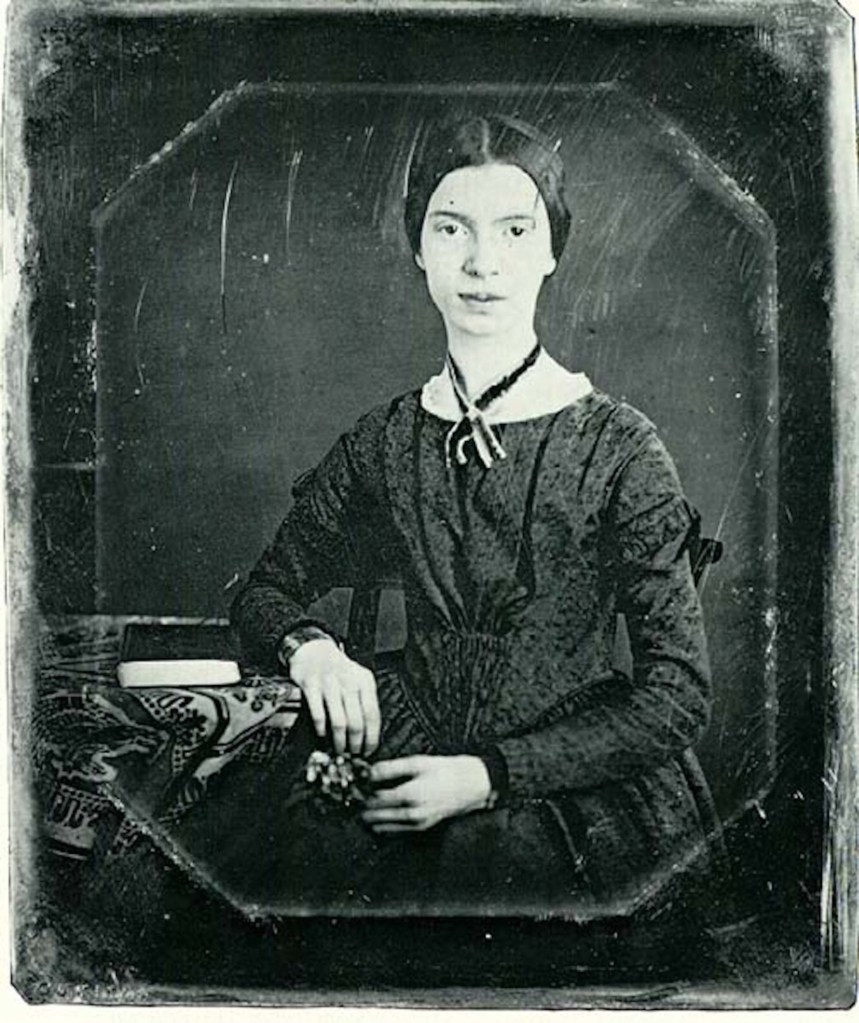




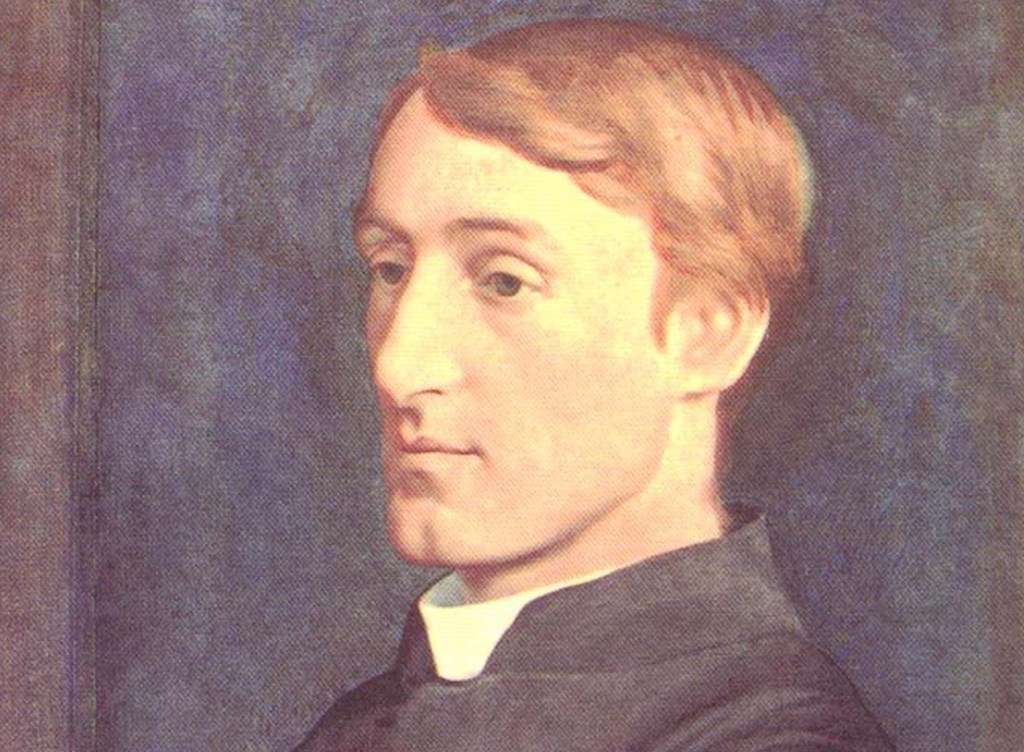
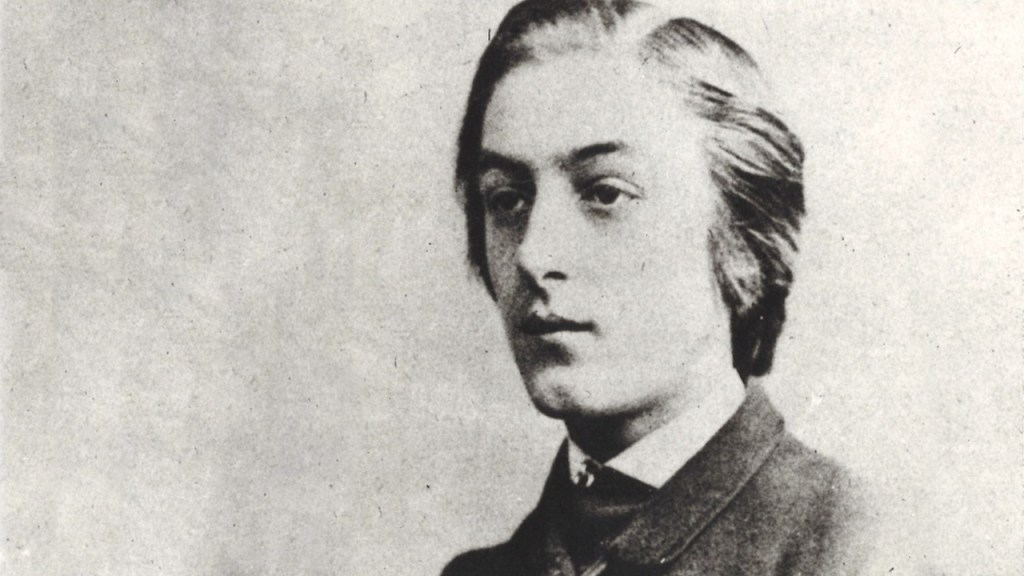
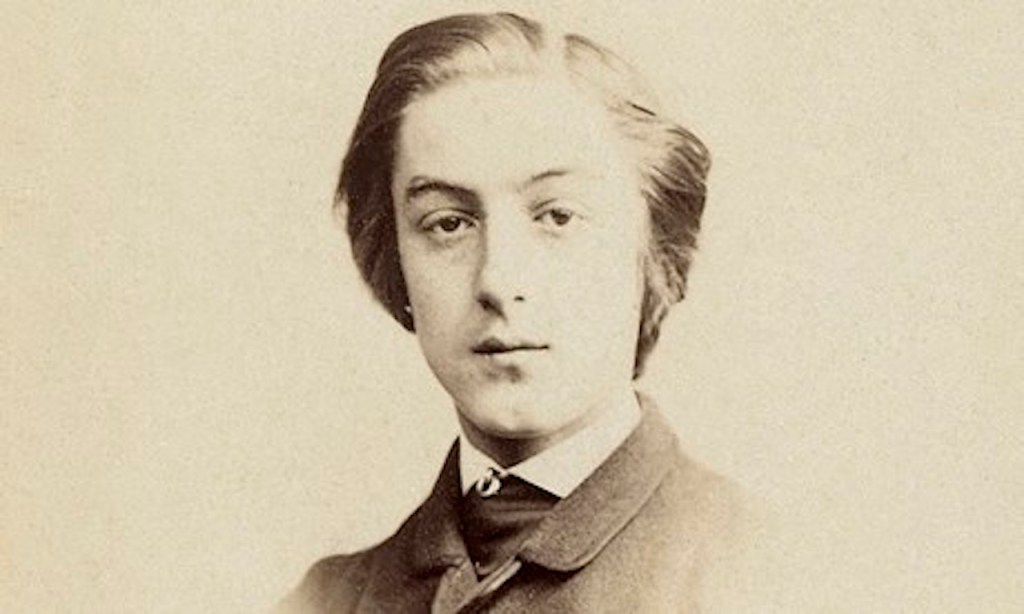
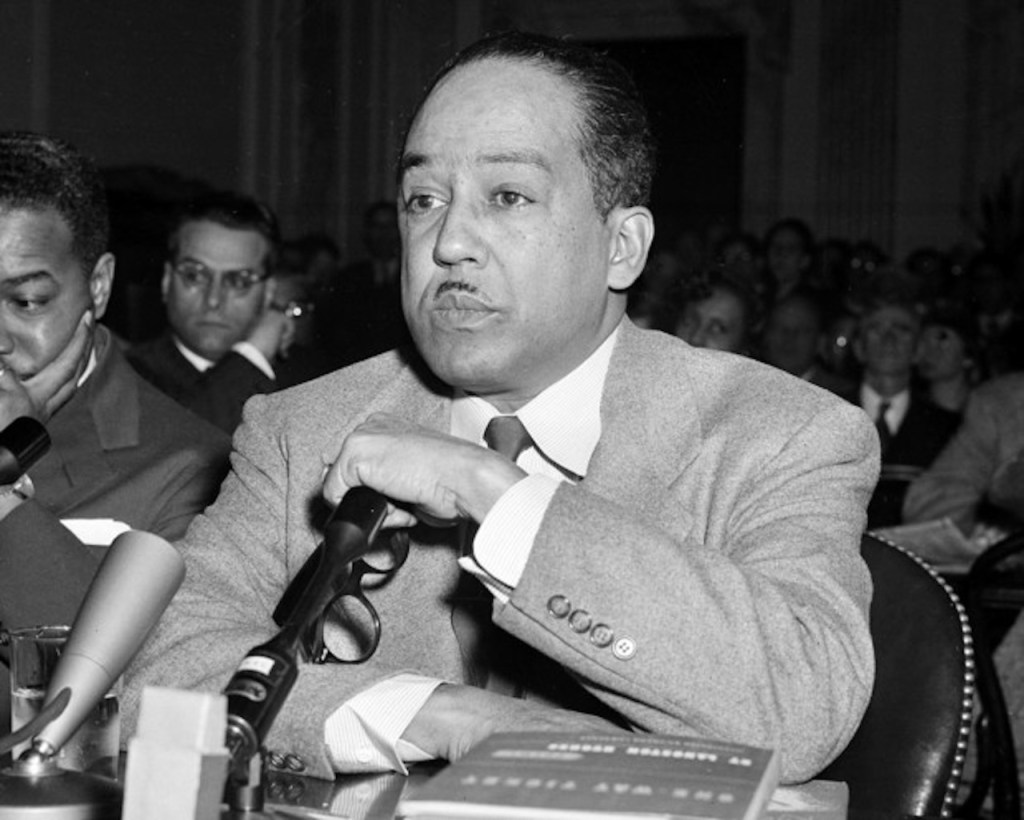


 Linda's Literary Home