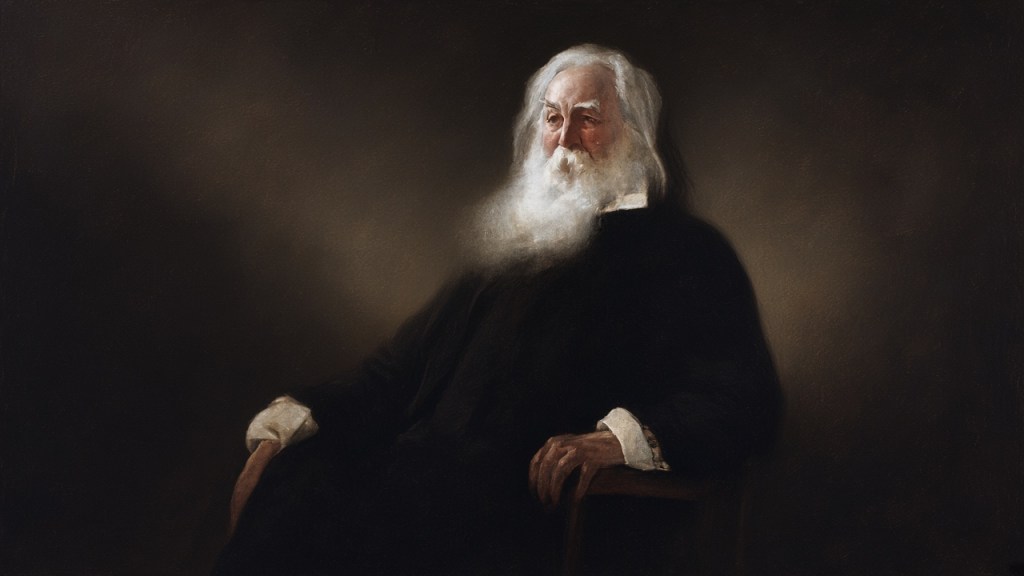
Matthew Arnold’s “Dover Beach” laments the loss of religious faith during a time of progress in science and industry. He is sorrowful that this loss may not bode well for the future of humanity.
Introduction with Text of “Dover Beach”
Matthew Arnold’s poem “Dover Beach” displays in five riming stanzas. The stanzas are uneven; the rime scheme is complicated and would require a new essay to discuss its many and varied implications.
The speaker holds forth from a melancholy brought on by world events. He hints at certain deficiencies that have occurred as humanity has been engaging in a materialism that may not be sustainable. He thus offers a humble suggestion that he feels would improve the state of affairs and the lives of individuals.
Dover Beach
The sea is calm tonight. The tide is full, the moon lies fair Upon the straits; on the French coast the light Gleams and is gone; the cliffs of England stand, Glimmering and vast, out in the tranquil bay. Come to the window, sweet is the night-air! v
Only, from the long line of spray Where the sea meets the moon-blanched land, Listen! you hear the grating roar Of pebbles which the waves draw back, and fling, At their return, up the high strand, Begin, and cease, and then again begin, With tremulous cadence slow, and bring The eternal note of sadness in.
Sophocles long ago Heard it on the Ægean, and it brought Into his mind the turbid ebb and flow Of human misery; we Find also in the sound a thought, Hearing it by this distant northern sea.
The Sea of Faith Was once, too, at the full, and round earth’s shore Lay like the folds of a bright girdle furled. But now I only hear Its melancholy, long, withdrawing roar, Retreating, to the breath Of the night-wind, down the vast edges drear And naked shingles of the world.
Ah, love, let us be true To one another! for the world, which seems To lie before us like a land of dreams, So various, so beautiful, so new, Hath really neither joy, nor love, nor light, Nor certitude, nor peace, nor help for pain; And we are here as on a darkling plain Swept with confused alarms of struggle and flight, Where ignorant armies clash by night.
Reading
Commentary on “Dover Beach”
The speaker in “Dover Beach” is lamenting the loss of religious faith during a time of progress in science and industry. He suggests that this loss that has resulted in gross materialism is causing an interruption that may cost humanity its culture and even its very life.
First Stanza: Musing on the Ocean
The sea is calm tonight. The tide is full, the moon lies fair Upon the straits; on the French coast the light Gleams and is gone; the cliffs of England stand, Glimmering and vast, out in the tranquil bay. Come to the window, sweet is the night-air! Only, from the long line of spray Where the sea meets the moon-blanched land, Listen! you hear the grating roar Of pebbles which the waves draw back, and fling, At their return, up the high strand, Begin, and cease, and then again begin, With tremulous cadence slow, and bring The eternal note of sadness in.
The speaker is standing at a window, musing and looking out at the ocean. He seems to be talking to a loved one, whom he invites to come and join him: “Come to the window, sweet is the night air!”
Such an invitation could be a romantic gesture, offering the beloved the chance to share with him the lovely ocean view: “The sea is calm tonight / The tide is full, the moon lies fair.” But that scene is not in the offing, and the reader soon finds a very different mood is being dramatized.
Second Stanza: The Drama of the Waves
Only, from the long line of spray Where the sea meets the moon-blanched land, Listen! you hear the grating roar Of pebbles which the waves draw back, and fling, At their return, up the high strand, Begin, and cease, and then again begin, With tremulous cadence slow, and bring The eternal note of sadness in.
The second stanza features the speaker dramatizing the crashing of the waves upon the ocean shore; he reports that one can hear the pebbles as they are being cast about by the waves.
He observes that the ocean waves can be heard as they begin, end, and then begin again. While the waves continue to repeat their sounds, they cause one to experience a pang of sorrow.
In place of enjoyment of the lovely, calm scene, this speaker’s thoughts have turned to the possibility of the universally shared brutality and sadness of the world with it inhumanity to man and its endless wars.
The crashing waves as they begin and end put him in a negative frame of mind. The process of beginning and ending reminds the speaker of the rounds of good and but also evil events that have been perpetrated upon humanity by humanity itself.
Third Stanza: Melancholy and Rumination
Sophocles long ago Heard it on the Ægean, and it brought Into his mind the turbid ebb and flow Of human misery; we Find also in the sound a thought, Hearing it by this distant northern sea.
The speaker offers evidence for his melancholic musing as he alludes to Sophocles, who would have listened long ago to the “ebb and flow” of the Aegean Sea. The speaker further emphasizes the allusion by averring that one can receive a “thought” as one listens to the sound of the sea.
Similar to Sophocles’ own rumination regarding the ebb and flow of “human misery,” this modern day speaker, however, has further thoughts on the matter, and he will unfurl them as he continues his drama.
Fourth Stanza: The Protection of Faith
The Sea of Faith Was once, too, at the full, and round earth’s shore Lay like the folds of a bright girdle furled. But now I only hear Its melancholy, long, withdrawing roar, Retreating, to the breath Of the night-wind, down the vast edges drear And naked shingles of the world.
The speaker then lays out his lamentation regarding the status of humanity: in an earlier time, humanity remained ensconced in a religious faith, which embraces humanity with layers of protection. That protection seems “bright” as well as comforting.
One should note that the speaker does not name any particular “faith,” nor does he directly attribute to that faith the idea that it protects. And, of course, he does not mention “God” or any other name for the Deity. The speaker merely names the mysterious quality, “faith,” as he metaphorically likens it to the sea that remains filled as it remains in contact with the “earth’s shore.”
In his own day, however, things are different from that earlier, seemingly protected time, and now he hears only “[the sea’s] melancholy, long, withdrawing roar.” While the sea continues to roar, it, nevertheless, seems to be in retreat because of the “night wind.”
“Faith,” therefore, is compared to a sea that possesses only the dour aspect of the roar as it is in retreat. The speaker further denigrates the act by asserting that faith’s retreat flows “down the vast edges drear / And naked shingles of the world.”
Fifth Stanza: The Protection of Love
Ah, love, let us be true To one another! for the world, which seems To lie before us like a land of dreams, So various, so beautiful, so new, Hath really neither joy, nor love, nor light, Nor certitude, nor peace, nor help for pain; And we are here as on a darkling plain Swept with confused alarms of struggle and flight, Where ignorant armies clash by night.
The speaker then appears to offer a lone cure for the abysmal loss of faith that is being suffered in his time. Of course, the qualifying notion must be added—if there need be a cure at all.
The speaker then again appears to speak to his beloved, whom he had earlier beckoned to come join him at the window. He seems to address his loved one thus: “Ah, love, let us be true / To one another!”
The speaker then makes quite an astute observation of the world: that it may seem at times to be “so beautiful, so new,” but the reality is that the world, “Hath really neither joy, nor love, nor light, / Nor certitude, nor peace, nor help for pain.”
The speaker concludes his lamentation with an image of the greatest lamentation of all throughout human history: Essentially, humanity exists on a “darkling plain,” and it is hurtled about by alarming “struggle and flight,” and on that dark plain there are always “ignorant armies” who “clash by night.”
Invitation to Humanity
While the opening of the poem seems to have the speaker inviting a loved one to join him at the window, it more likely that he is inviting all of humanity to join in his musing on the status of the world.
If the speaker were inviting merely one person—a lover or a spouse, for example—to join him, he would have said in the final stanza, “let us be true / To eachother!” But he says, “to one another!” indicating that he is addressing more than one person.
The speaker is concerned with a profound subject—the condition of all of humanity and how it lives in this material world. Thus, it is much more likely that the speaker is addressing all of humanity in his momentous musing.
Let’s consider his appeal: by addressing one’s spouse or beloved and asking that the speaker and that person be true to each other, he would not be suggesting much of an improvement in world events.
But by asking all of humanity to “be true to one another,” he is asking much, and taking seriously and thus granting that request would, in fact, offer a great improvement in humanity’s status in the world. By following such a request, the world could be restored to a virtue that the speaker can only imagine existed in an earlier time.
Image created by Gemini and Grok inspired by the poem
this building
for Thomas & the RB
this building is our world. we must learn to love it as we fault it. with its mouth of glass and steel it sucks our life like an armored leech. we must not let it suck out our hearts for if we do, it will swallow our love as it does the dreams of the students who sit for our classes. we must not let this building our world twist our minds into nests for birds of gloom for if we do, no butterflies will delight us with wisdom. we must not shatter our will against the newest testament that declares the messiah hath arrived and his or her name is called VAX. for is we do, we will not intuit that a messiah named VAX is better than no messiah at all. we must not let this building our world calculate us among the weak in spirit for it we do, we will learn to fear the words that ignite our souls to burn the dross from our mood-dimmed brains. this is our building, our own world, for all of its cold, sharp edges, for all of its slave laborers, and for all of its empty promises— it does offer our only shelter our only ground where we can meet, smile and say our small hellos
“When the yogi, like a tortoise withdrawing its limbs, can fully retire his senses from the objects of perception, his wisdom manifests steadiness.” —Bhagavad Gita II:58
I move slow, but what if win the race? Will thy affection remain or fast fade ? As speed is thy god, slow remains my pace. I bear this heavy shell wherein I’m staid.
Thy form unencumbered I do admire, Once dumped over, I struggle long and hard; My cooked flesh the gourmand’s greed does desire, So I support the vegan’s cleaner board.
Still, my fierce jaws from time to time will snap At crazy bugs, small fish, or busy hand. What choice have I beneath this heavy cap Wherein I creep and crawl upon the land?
I shall not weep; I’ll simply turn my face And drop out of thy breathless, vapid race.
Converted to a Shakespearean sonnet from my original free verse poem “Turtle Woman,” which appears in my collection Turtle Woman & Other Poems.
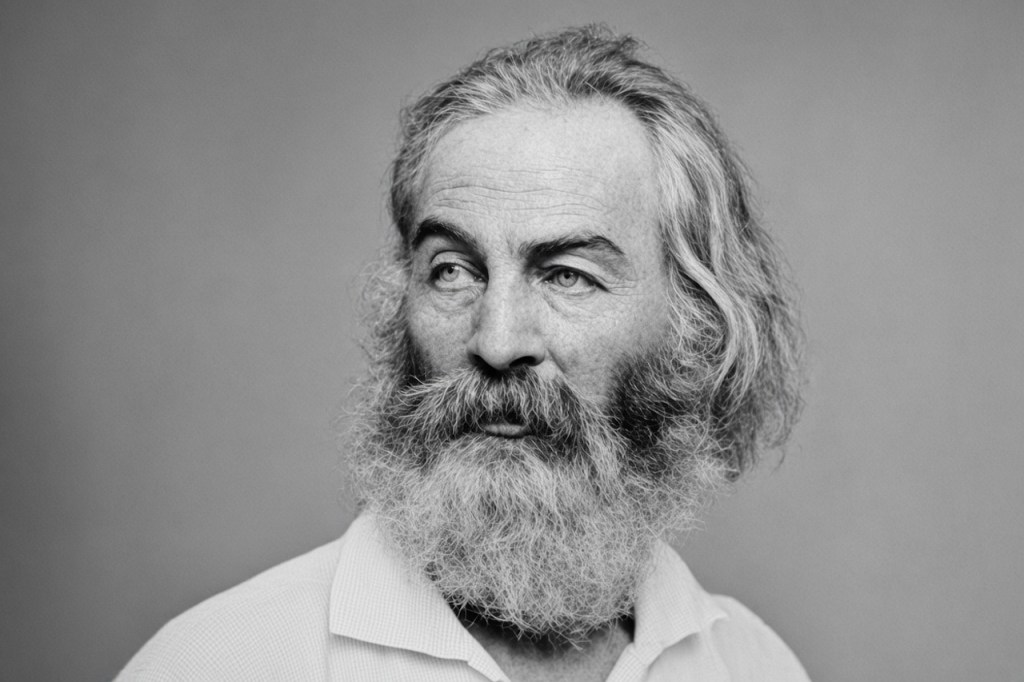
Image: Walt Whitman – Library of Congress/Getty Images
Walt Whitman’s “Reconciliation”
Walt Whitman served in field hospitals during the American Civil War (1861-1865), and he wrote extensively about his experience in both poems and essays. His much anthologized poem “Reconciliation” resulted from the poet’s first-hand observation of the ravages of war.
Introduction and Text of “Reconciliation”
Walt Whitman’s “Reconciliation” consists of only six sprawling lines. The lines are long and unwieldy—the third line has to be broken for almost any page. While one might contend that for such a subject, a cosmic voice is needed, Whitman has his speaker make his remarkable claims in a very personal, individual voice, revealed in the penultimate and final lines.
Far from ever professing a morose or melancholy view, Whitman was able to see in the overall scheme of things that death is an integral part of life, and he allows his speaker to profess his heartfelt observations.
Reconciliation
Word over all, beautiful as the sky! Beautiful that war, and all its deeds of carnage, must in time be utterly lost; That the hands of the sisters Death and Night, incessantly softly wash again, and ever again, this soil’d world: … For my enemy is dead—a man divine as myself is dead; I look where he lies, white-faced and still, in the coffin—I draw near; I bend down, and touch lightly with my lips the white face in the coffin.
Commentary on “Reconciliation”
What does the speaker in Whitman’s poem titled “Reconciliation” attempt to reconcile? Two concrete entities—friend and foe, and two abstract—life and death. His sprawling lines are immediately recognizable as the Whitman style that has captivated readers for many decades.
First Movement: Cosmic Claim
Word over all, beautiful as the sky! Beautiful that war, and all its deeds of carnage, must in time be utterly lost;
“Reconciliation” makes a cosmic claim in the first line, “Word over all, beautiful as the sky.” “Word” alludes to “the Word” as it is used in the beginning of the Gospel of St. John: “In the beginning was the Word, and the Word was with God, and the Word was God” (KJV John 1:1).
The speaker thus avers that God is “over all.” He then focuses on the limited space of humanity, claiming that something is “as beautiful as the sky.” And then he addresses his specific subject: the reconciliation of the entities he has chosen to feature. Influenced by the carnage he has witnessed, he comes to realize certain universal attributes that prevail and perplex humanity.
Despite the death and destruction that war engenders, it is a beautiful fact that eventually those evil “deeds of carnage” will disappear. The sky implies the beauty that is “the Word” (or vibration) of God, and the beauty that is lost in war will return because war “in time” loses its hold completely.
Second Movement: Death a Cleanser
That the hands of the sisters Death and Night, incessantly softly wash again, and ever again, this soil’d world:
Line three continues the claim, stating that it is also beautiful that both “Death and Night” behaving as “sisters” employ their “hands” to continue to cleanse the world’s soil repeatedly. By personifying “Death and Night” as sisters who cleanse the dirt from the world, the speaker offers further evidence of deliverance from the “deeds of carnage.”
That bad things happen on this physical plane is undeniable, but that the bad things are corrected is beautiful. “Death” gives the tired soul a respite from the torment of earth life as “night” gives rest to the body.
Third Movement: On Loving One’s Enemies
… For my enemy is dead—a man divine as myself is dead; I look where he lies, white-faced and still, in the coffin—I draw near; I bend down, and touch lightly with my lips the white face in the coffin.
In line four, the speaker makes a startling statement: he simply affirms that his enemy is now deceased, but further he avers that this vanquished enemy is a “child of God” every bit as much as he the speaker is.
It is customarily difficult for the ordinary mind to grasp that an enemy is, like one’s self, a child of God. But Whitman’s speaker does comprehend this truth, and thus he does as Jesus the Christ commands, “But I say unto you, Love your enemies, bless them that curse you, do good to them that hate you, and pray for them which despitefully use you, and persecute you” (KJV Matthew 5:44).
The speaker views the dead enemy in his casket, but instead of denigrating the enemy or experiencing gladness at the man’s death as is usually expected, this speaker does the unthinkable: He “[b]end[s] down” to “touch lightly with [his] lips the white face in the coffin.” He blesses the face of the enemy by offering a consoling touch of the lips to the enemy’s pale countenance.
Sound and Meaning
Whitman’s short lyric relies on few poetic devices. Apart of the opening allusion and personification of Death and Night as sisters, the poem is fairly literal. It does employ alliteration in the same line as the personification: “the hands of the sisters . . . incessantly softly wash . . . the soil’d world.”
The many alliterative sibilant sounds enforce the meaning of the claim that the hands wash the “soil’d world.” The sounds seem to inundate the sentence as water would inundate as it cleanses.
Repetition of the “–ld” sound in “soil’d world” emphasizes the physical plane’s uncleanliness because the words are a near rime. Also, repetition of “is dead” in line four reinforces the finality that death has brought to the victim.
Similar to a caffeine buzz But instead of propelling to more movement Instills urge to more calm, more stillness— Until you zoom into the Star!
Image: Original photo by Linda Sue Grimes, text added by Grok
A Prose Commentary on My Original Poem “Soul Buzz”
In my little poemette “Soul Buzz,” my speaker reveals a form of heightened awareness that differs existentially from ordinary physical excitement. The opening comparison to a “caffeine buzz” refers to a familiar sensation of stimulation, alertness, and energy. But the poem immediately distinguishes the two experiences: whereas caffeine propels the body and mind toward greater activity, the soul’s distinctive “buzz” instills the motivation to achieve quietude, calmness, tranquility, stillness (Be still, and know that I am God . . . KJV Psalm 46:10).
This contrast establishes spiritual awakening as an inward experience in which consciousness turns away from external distraction and toward the deep perception of the soul. The repetition of “more” emphasizes the progressive deepening of this inward movement. Calmness and stillness remain the essential, yogic conditions for meditation and spiritual realization.
The great guru Paramahansa Yogananda teaches that this stillness prepares consciousness to envision the spiritual eye, whose luminous center contains a brilliant, silver-white, five-pointed star. The verb “zoom” conveys the exhilarating intensity of focused consciousness penetrating the spiritual eye. Ultimately, the poemette presents stillness as a dynamic spiritual experience culminating in the vision of the Star and the soul’s movement toward divine consciousness.
The concluding phrase, “Until you zoom into the Star!” directly evokes this spiritual vision, transforming the poem’s apparent paradox into a steady movement from inner quietude to transcendent, divine perception, or samadhi.
Maybe his memories are locked Under a grin With rolling paper bags To keep them in. He probably pushes doll dresses Or stages wakes. You won’t see him in the thick Of things like shipwrecks, Although he might canoe downstream, If someone else paddles. He may use tools with short handles But no one knows where he keeps them. He is not a mystery, only a puzzle With a few missing pieces. He is volcanic but not violent. His flair for luster is sometimes bold. His lack of tolerance is rolled In mixed nerves and senses. He could be struggling for self-seizure Or maybe he is just getting off on the flowertops And saving the stems for later.
Your Latin professor, who is seven months pregnant, Was extremely flushed and you felt obligated To walk her to her car.
You are still very much interested in my story— You talked to someone the other day For twenty minutes about it.
You do hope this isn’t the direction your life is taking, So formal, arranging times.
You will be free all day Next Wednesday not having to work And your afternoon class being cancelled.
But if I will suggest a time next week You are sure you will be able to drop by, you Probably can’t stay long but Wednesday right after Latin class looks the best to you right now so If that would work for me, let you know.
You are sorry that your life is not convenient For me, it is not too convenient for you either: Life is not easy in the hands of an irrational god.
Image: Emily Dickinson – Amherst College – Daguerrotype of the poet at age 17, circa 1847 – likely the only authentic, extant likeness of the poet
Emily Dickinson’s “‘Arcturus’ is his other name”
Emily Dickinson’s “‘Arcturus’ is his other name” reveals the speaker’s playful resistance to scientific classification and her determination to preserve the mystery, beauty, and spiritual significance of the world she experiences.
Introduction and Text of “‘Arcturus’ is his other name”
In “‘Arcturus’ is his other name,” the speaker objects to the intrusion of scientific terminology into her personal experience of nature. Stars, flowers, butterflies, Heaven, and the Kingdom of Heaven become threatened by labels, measurements, classifications, and maps.
Yet beneath her humor lies a serious spiritual concern. The speaker wonders whether scientific knowledge can ever replace direct experience. Her playful complaints finally become a defense of wonder, imagination, spiritual intuition, and her hope that Heaven remains a familiar place.
“Arcturus” is his other name
“Arcturus” is his other name – I’d rather call him “Star.” It’s very mean of Science To go and interfere!
I slew a worm the other day – A “Savant” passing by Murmured “Resurgam” – “Centipede”! “Oh Lord – how frail are we”!
I pull a flower from the woods – A monster with a glass Computes the stamens in a breath – And has her in a “class”!
Whereas I took the Butterfly Aforetime in my hat – He sits erect in “Cabinets” – The Clover bells forgot.
What once was “Heaven” Is “Zenith” now – Where I proposed to go When Time’s brief masquerade was done Is mapped and charted too.
What if the poles should frisk about And stand upon their heads! I hope I’m ready for “the worst” – Whatever prank betides!
Perhaps the “Kingdom of Heaven’s” changed – I hope the “Children” there Won’t be “new fashioned” when I come – And laugh at me – and stare –
I hope the Father in the skies Will lift his little girl – Old fashioned – naught – everything – Over the stile of “Pearl.”
Commentary on “‘Arcturus’ is his other name”
The speaker playfully challenges the authority of scientific terminology while defending a more intimate way of experiencing creation. Her humor gradually reveals a deeper concern: whether classification can cause human beings to lose their sense of wonder.
First Stanza: “‘Arcturus’ is his other name”
“Arcturus” is his other name – I’d rather call him “Star.” It’s very mean of Science To go and interfere!
The speaker begins with a seemingly simple complaint. She knows that the star has a scientific name, “Arcturus,” but she prefers the uncomplicated word “Star.” The capitalized “Star” preserves something that the technical name seems to remove: mystery.
Her complaint that science is “mean” gives the opening a delightful touch of humor. Science has apparently committed the offense of taking something beautiful and familiar and making it technical.
The speaker does not necessarily reject knowledge itself. Instead, she objects when knowledge interferes with personal experience. Her “Star” remains something capable of inspiring wonder precisely because she does not need to reduce it to a definition.
The word “Star” also seems more intimate than “Arcturus.” The speaker wants to retain a personal relationship with the heavenly object rather than allowing a scientific designation to become the whole of its meaning.
The distinction becomes important throughout the poem. Scientific language identifies, measures, categorizes, and organizes. The speaker wants to experience. Her preference for “Star” therefore becomes a defense of mystery.
Second Stanza: “I slew a worm the other day”
I slew a worm the other day – A “Savant” passing by Murmured “Resurgam” – “Centipede”! “Oh Lord – how frail are we”!
The speaker next turns from the heavens to a small creature on earth. She has killed a worm, and a passing “Savant” immediately converts the ordinary event into an opportunity for learned observation.
The strange word “Resurgam,” meaning “I shall rise again,” adds another layer of humor. The speaker seems amused by the learned man’s reaction because his elaborate terminology contrasts so sharply with her ordinary experience. She sees a worm; he sees an object requiring identification. The final cry, “Oh Lord – how frail are we”! introduces mortality into the scene.
The worm is tiny, yet its death causes the observer to reflect upon human frailty. The speaker therefore moves effortlessly from the physical world toward spiritual questions. The little creature becomes a reminder that life is temporary.
The speaker’s humor does not prevent seriousness. Her world is filled with death, but death also points beyond itself. The physical creature becomes an occasion for contemplating the larger mystery of existence.
In my earlier essays on Dickinsonian poems, I have discussed the speaker’s recurring interest in the relationship between earthly existence and a transcendent spiritual reality. That concern appears again here as ordinary nature opens into thoughts about mortality.
Third Stanza: “I pull a flower from the woods”
I pull a flower from the woods – A monster with a glass Computes the stamens in a breath – And has her in a “class”!
The speaker now presents a flower as another casualty of scientific classification. She simply “pull[s] a flower from the woods,” apparently enjoying its natural beauty. Suddenly, a “monster with a glass” appears.
The description is comic because the scientist has become almost frightening in the speaker’s imagination. The “glass” is presumably a scientific instrument, but the speaker transforms the observer into a “monster.”
The scientist’s instrument reduces the flower to measurable parts. The “stamens” can be counted and classified, but the speaker is interested in the flower as a living, beautiful presence.
Her use of the feminine pronoun “her” makes the flower seem almost like a little personality rather than an anonymous specimen. The individual flower possesses a presence that scientific classification does not adequately express. The phrase “has her in a ‘class’” is particularly important.
Classification gives the scientist information, but it also removes some of the flower’s individuality. Once assigned to a class, the particular flower becomes representative of a category. The speaker’s objection therefore concerns more than terminology. She is defending the individual against abstraction.
Paramahansa Yogananda offers an illuminating parallel when he describes spiritual investigation as something that should lead beyond discussion toward direct experience. He writes that spiritual seekers need “the satisfaction of knowing Truth by direct experience.”
Fourth Stanza: “Whereas I took the Butterfly”
Whereas I took the Butterfly Aforetime in my hat – He sits erect in “Cabinets” – The Clover bells forgot.
The butterfly provides an even stronger contrast between living experience and scientific preservation. The speaker remembers taking a butterfly in her hat, an intimate and almost childlike act.
The scientist, however, has placed the butterfly in a cabinet, where it sits rigidly displayed. The phrase “He sits erect” makes the preserved butterfly sound almost like a person forced to maintain proper posture.
The humor masks a sadness. The living creature that once moved among flowers has become a specimen. The butterfly has lost the freedom and movement that gave it its natural identity. The final phrase, “The Clover bells forgot,” is especially poignant. The butterfly no longer participates in the living world where it once moved among clover flowers.
The speaker therefore suggests that observation can become destructive when it separates a living thing from the world that gives it meaning. The scientist may possess knowledge about the butterfly, but the speaker remembers something different: the butterfly alive.
Paramahansa Yogananda similarly distinguishes between intellectual discussion and inward realization. He explains that meditation provides a means of experiencing spiritual truth directly rather than accepting it merely as “blind belief or dogma.”
The connection is important because the speaker also values experience over abstraction. Her butterfly is not merely something that can be preserved, named, and displayed. It is something she has encountered personally.
Fifth Stanza: “What once was ‘Heaven’”
What once was “Heaven” Is “Zenith” now – Where I proposed to go When Time’s brief masquerade was done Is mapped and charted too.
The speaker now carries her complaint into the spiritual realm. Earlier, “Science” interfered with a star, a worm, a flower, and a butterfly. Now it seems to have invaded Heaven itself.
The word “Heaven” has been replaced by “Zenith,” a technical astronomical term. This change is especially significant because Heaven is not merely a location in the physical universe. For the speaker, Heaven is the destination of the soul after “Time’s brief masquerade” is finished. The phrase makes earthly life seem temporary, almost theatrical.
But even this destination has apparently been “mapped and charted.” The speaker’s comic complaint therefore becomes more profound. If science can map the heavens, what remains mysterious about Heaven? The speaker does not appear to be rejecting Heaven. Quite the opposite is true. She cares deeply about preserving its mystery.
Her anxiety arises because something sacred has been transformed into something apparently measurable. The distinction between Heaven and “Zenith” therefore becomes a distinction between spiritual meaning and physical description.
In my earlier essays on Dickinsonian poems, I have discussed the speaker’s continuing interest in the relationship between earthly existence and a transcendent spiritual reality. Here again, the speaker refuses to confine existence to what can be measured by physical observation.
Sixth Stanza: “What if the poles should frisk about”
What if the poles should frisk about And stand upon their heads! I hope I’m ready for “the worst” – Whatever prank betides!
The speaker now turns the tables on scientific certainty. If scientists believe they understand the structure of the universe, what would happen if the poles suddenly “frisk about” and “stand upon their heads”?
Her imaginary catastrophe is deliberately absurd. Yet the absurdity serves a purpose. The speaker recognizes that the universe may be stranger than human beings imagine.
Her “worst” is not simply physical disaster; it is the possibility that reality may refuse to behave according to human expectations. The word “prank” makes cosmic disorder sound almost mischievous.
The universe itself becomes capable of surprising humanity. Instead of pretending that she understands everything, the speaker admits that she must remain prepared for whatever happens.
Her attitude contains a kind of spiritual humility. She is willing to acknowledge that human beings possess limited knowledge and that reality may extend far beyond what the senses reveal.
Paramahansa Yogananda likewise presents spiritual investigation as a disciplined search for realities that extend beyond ordinary sensory consciousness. He describes meditation as a systematic means through which consciousness can be turned inward toward a deeper spiritual reality. The speaker’s humor therefore conceals a serious virtue: she is willing to admit that the universe may be larger and stranger than her own understanding.
Seventh Stanza: “Perhaps the ‘Kingdom of Heaven’s’ changed”
Perhaps the “Kingdom of Heaven’s” changed – I hope the “Children” there Won’t be “new fashioned” when I come – And laugh at me – and stare –
The speaker’s anxiety becomes more personal here. She imagines that even Heaven may have become “new fashioned.” The scientific world has already changed the names and meanings of earthly things; perhaps Heaven itself has changed while she has been away.
The imagined inhabitants of Heaven are “Children,” and the speaker worries that they may regard her as old-fashioned. This image is amusing, but it also reveals her vulnerability.
Her concern is not really about fashion: ”New fashioned” represents a world that has changed so radically that her old understanding no longer seems acceptable. The speaker fears arriving in eternity only to discover that eternity has changed. The irony is delightful because Heaven is traditionally imagined as the place beyond time and change.
Dickinson’s speaker makes the infinite universe feel intimate enough to contain family-like embarrassment, affection, laughter, and acceptance. Heaven becomes almost like a household in which the speaker hopes she will still recognize everyone.
The capitalized “Children” may also suggest the innocent inhabitants of Heaven. The speaker hopes that spiritual innocence will not have been replaced by some new, unfamiliar order. Her concern ultimately reveals that what she seeks is continuity. She wants the spiritual world to remain recognizably connected to the one she has always imagined.
Eighth Stanza: “I hope the Father in the skies”
I hope the Father in the skies Will lift his little girl – Old fashioned – naught – everything – Over the stile of “Pearl.”
The final stanza transforms the speaker from a playful critic of “Science” into a vulnerable child. She imagines God as the “Father in the skies” who will lift her over the “stile of ‘Pearl.’”
The elaborate theological argument finally becomes a simple request for loving acceptance. The speaker calls herself “his little girl,” immediately establishing an intimate relationship between herself and the Divine Father.
She does not claim spiritual perfection. Instead, she describes herself as “Old fashioned – naught – everything.” The contradictory phrase suggests that she is simultaneously innocent, troublesome, imperfect, and completely herself. The “stile of ‘Pearl’” evokes the familiar Christian image of Heaven’s entrance—the pearly gates— while “stile” keeps the scene wonderfully rural and Dickinsonian.
Heaven is not imagined as an abstract theological doctrine. It becomes a little gate over which a loving Father helps his child. The image brings the enormous mysteries of eternity into an intimate, almost domestic scene.
Paramahansa Yogananda emphasizes the personal element of the search for God. Self-Realization Fellowship explains that the seeker may approach the Divine as “the Heavenly Father,” “Divine Mother,” “Friend,” or “Beloved.”
The speaker’s Father is similarly personal, intimate, and loving. She does not end by asking for an explanation of Heaven. She asks to be received by the Father whom she already trusts.
The poem therefore ends not with scientific certainty but with trust. After objecting to names, measurements, classifications, maps, and charts, the speaker returns to the simplest relationship of all: a little girl trusting her Father to carry her home.
Dickinson Riddles
“‘Arcturus’ is his other name” is one of Dickinson’s delightful riddles because the speaker never simply announces that science is wrong. Instead, she dramatizes the difference between knowing something intellectually and experiencing it intimately.
Arcturus remains a star whether it is called Arcturus or simply “Star.” The flower remains beautiful whether its stamens are classified. The butterfly remains a living creature regardless of its scientific category.
The problem arises when the label begins to replace the experience. The speaker therefore does not have to reject scientific knowledge in order to defend her own way of seeing. Her objections become increasingly spiritual. Science first names the star, then classifies the worm and flower, preserves the butterfly, maps the heavens, and finally seems capable of changing Heaven itself.
Yet the speaker does not end in despair. She ends in relationship. Her final hope is that the “Father” will recognize his “little girl” and carry her over the “stile of ‘Pearl.” The spiritual world remains meaningful because it is personal. The speaker does not need to understand every mystery before entering eternity. She needs only to trust that the Father will recognize her.
Paramahansa Yogananda’s teaching offers an illuminating parallel. He emphasizes direct realization rather than merely intellectual discussion, writing that the seeker ultimately comes to know spiritual truth through direct experience.
The speaker’s preference for “Star” over “Arcturus” similarly protects an experience that remains larger than its scientific designation. Her star is not merely an astronomical object; it is part of a universe capable of inspiring wonder.
In my earlier essays on Dickinsonian poems, I have discussed the speaker’s habit of privileging inner knowledge over outer awareness. That habit is especially evident here. The speaker does not require scientific approval before she can call Arcturus “Star,” cherish a flower, remember a butterfly, or trust in Heaven.
Her contemplative musing finally produces a charming spiritual confidence. The speaker can laugh at scientific interference, acknowledge her own uncertainty, imagine cosmic disorder, and still believe that the Father in the skies will recognize her.
The speaker’s confidence does not depend upon possessing complete knowledge. Indeed, she openly acknowledges uncertainty. What matters is that she retains her capacity for wonder and maintains faith in a reality that cannot be exhausted by scientific terminology.
The poem’s deepest opposition is consequently not simply between science and religion. It is between classification and experience, between an external description and an inward comprehension of reality. The speaker insists upon preserving room for wonder.
Paramahansa Yogananda likewise describes the spiritual path as a disciplined search for direct realization rather than a passive acceptance of religious ideas. Self-Realization Fellowship identifies this approach as a “scientific” search for direct personal experience of God.
This connection helps illuminate the speaker’s position. She objects when science claims too much authority over experiences that possess emotional and spiritual dimensions. At the same time, she remains curious about the universe and willing to admit that she does not know everything.
The final image is therefore both humorous and deeply tender. The speaker does not need to understand every mystery before entering eternity. She simply hopes that the Father will welcome and carry his “little girl” through the Heavenly gate.
The “stile of ‘Pearl’” becomes an appropriate final image because it is simultaneously ordinary and transcendent. A stile is something one climbs over in the countryside; Pearl evokes Heaven’s gate. The speaker joins the earthly and spiritual worlds in one affectionate image.
The poem has moved from a distant star to a worm, from a flower to a butterfly, from Heaven to the poles, from the Kingdom of Heaven to the Father. The movement becomes increasingly personal until the speaker finally stands before God as a child.
Science can name Arcturus, count stamens, classify butterflies, and map the heavens. But the speaker reserves for herself something that cannot be placed in a cabinet or charted on a map: her personal experience of wonder.
Her final hope is therefore not that she will arrive in Heaven as an expert who understands everything. She hopes instead to arrive as herself—”Old fashioned – naught – everything”—and to be recognized and lovingly carried across the threshold.
That ending captures the poem’s deepest charm. The speaker’s resistance to scientific interference is ultimately a defense of the mystery that makes existence meaningful. She wants the universe to remain large enough for beauty, uncertainty, faith, imagination, and love.
And so the speaker’s playful question about whether “Arcturus” should be called “Star” becomes a much larger question about the human desire to know. Knowledge can name the world, but the heart still wants to experience it. The speaker chooses “Star.” She chooses the flower before the classification, the butterfly before the cabinet, Heaven before the chart, and the Father before the theological explanation.
Her final confidence rests not upon possessing every answer but upon believing that beyond the world’s classifications there remains a spiritual reality that recognizes her. The little girl who began by objecting to science ends by trusting the Father in the skies.
The poem thus preserves the very mystery that the speaker fears science might take away. It leaves Arcturus shining, the flower alive in memory, the butterfly ringing with the forgotten “Clover bells,” Heaven still mysterious, and the Father ready to lift his little girl over the “stile of Pearl.”
This Dickinson poem actually dramatizes an idea regarding the effects of science that is similar to Walt Whitman’s much anthologized “When I Heard the Learn’d Astronomer,” wherein the speaker finds listening to the science of the heavens sickens him, so he moves outside and looks up at the stars from time to time—an act which he finds much more satisfying.
Walt Whitman’s “When I Heard the Learn’d Astronomer”
Walt Whitman’s sprawling eight-line poem showcases the poet’s freewheeling style while dramatizing the wildly romantic world view portrayed in almost all of his poems.
Introduction and Text “When I Heard the Learn’d Astronomer”
Whitman’s “When I Heard the Learn’d Astronomer” provides a study in contrasts between science and poetry. The speaker makes his preference known that he favors looking at the stars over studying them. The speaker is a transcendentalist-romantic individual who is more interested in the life of the senses than the life of the mind.
Interestingly, however, this speaker demonstrates that, in certain instances, the senses can lead to a more spiritual experience than the mind. The speaker prefers to indulge his fancy rather than pay attention to the measured distances between heavenly bodies.
When I Heard the Learn’d Astronomer
When I heard the learn’d astronomer, When the proofs, the figures, were ranged in columns before me, When I was shown the charts and diagrams, to add, divide, and measure them, When I sitting heard the astronomer where he lectured with much applause in the lecture-room, How soon unaccountable I became tired and sick, Till rising and gliding out I wander’d off by myself, In the mystical moist night-air, and from time to time, Look’d up in perfect silence at the stars.
Reading:
Commentary on ““When I Heard the Learn’d Astronomer”
Walt Whitman’s sprawling eight-line poem showcases the poet’s freewheeling style while dramatizing the wildly romantic world view portrayed in almost all of his poems.
First Movement: When vs After
When I heard the learn’d astronomer, When the proofs, the figures, were ranged in columns before me, When I was shown the charts and diagrams, to add, divide, and measure them, When I sitting heard the astronomer where he lectured with much applause in the lecture-room
The first movement of Whitman’s influential poem consists of four adverbial clauses beginning with “when”:
1. when he listened to the lecture, 2. when the numbers were presented, 3. when “the charts and the diagrams” were shown, 4. when he heard the audience’s cheer the “learn’d astronomer.”
A fascinating riddle poses the question: “When the man jumped off the building, where was he?”
Possible answers: —Until he hit the ground, he was in the air— What’s wrong with that answer? That was “after” he jumped.
Then the person riddled might respond: —still standing on the top of the building— Wrong because, that was “before” he jumped.
This riddle is instructive for language use especially use in poetry. The adverb “when” is a flabby word, causing the ambiguity of unclarity as associated with an action. Thus if possible, one needs to consider whether the action occurred “before” or “after” the first event.
Whitman was such an astute observer of both events and language, but this poem could use one last revision changing the “when” clauses to “after” clauses because that is the accurate time frames for each of the actions that he mentions.
The reader will note that is was, actually, “after” all the following that he became “tired and sick” and determined to get up and leave:
1. after he had heard the scientist 2. after he had seen the stats and numbers 3. after he had been presented the charts 4. after he had heard the other audience members applauding the astronomer.
Second Movement: After Growing Sick and Tired
How soon unaccountable I became tired and sick, Till rising and gliding out I wander’d off by myself, In the mystical moist night-air, and from time to time, Look’d up in perfect silence at the stars.
After the speaker had listened to a portion of the lecture, he gets up and leaves the lecture hall, goes out into the refreshing night air and looks up at the stars. The event is simple, but the speaker’s dramatic portrayal of his actions enhances the act and makes it so much more interesting and meaningful than the mere event.
For example, the use of the word “unaccountable” contrasts with all the counting that was going on by the lecturer. The speaker is simply remarking that he grew “tired and sick” while listening, but he does not know why.
The speaker seems to have no reason for this reaction. He is cleverly leaving that reasoning up the reader to discern, after he paints his portrait of natural beauty in the final three lines, in which reports that he rose from his seat, moved out into the night alone, and then off and on gazed upward to the heavens where he was treated to the “perfect silence at the stars.”
Those final lines contrast the stuffy lecture hall with the lushness of the great outdoors; they contrast the enjoyment of being alone as opposed to being surrounded by people in the stuffy lecture hall. The night air is “mystical”—the speaker is carried to a transcendental height by the simple “moist night-air.”
And the best of all the observant speaker saves for the last; in contrast to the steady pace of the lecture, he leisurely “from time to time”—no hurry, no schedule, no following someone else’s line of thought—gazes up into the heavens and observes the brilliance of the stars themselves, instead of merely hearing about them through charts, diagrams, and numbers.