Linda's Literary Home

Tag: faith

  • Emily Dickinson’s “I often passed the village”

    Image: Emily Dickinson - Amherst College - Daguerrotype of the poet at age 17, circa 1847 - likely the only authentic, extant likeness of the poet
    Image: Emily Dickinson – Amherst College – Daguerrotype of the poet at age 17, circa 1847 – likely the only authentic, extant likeness of the poet

    Emily Dickinson’s “I often passed the village”

    Emily Dickinson’s “I often passed the village” dramatizes the speaker’s recognition that death remains a quiet and loving continuation of existence.

    Introduction and Text of “I often passed the village”

    Emily Dickinson’s “I often passed the village” employs the poet’s characteristic hymn-like cadence and slant rime to fashion a musing on death that remains oddly tender instead of terrifying. The speaker moves from childhood curiosity to spiritual intuition, finally offering solace to those who fear loneliness, confusion, or mortality itself.

    I often passed the village

    I often passed the village
    When going home from school–
    And wondered what they did there–
    And why it was so still–

    I did not know the year then–
    In which my call would come–
    Earlier, by the Dial,
    Than the rest have gone.

    It’s stiller than the sundown.
    It’s cooler than the dawn–
    The Daisies dare to come here–
    And birds can flutter down–

    So when you are tired–
    Or perplexed–or cold–
    Trust the loving promise
    Underneath the mould,
    Cry “it’s I,” “take Dollie,”
    And I will enfold!

    Commentary on “I often passed the village”

    Emily Dickinson’s “I often passed the village” reveals the speaker’s effort to transform the fear of death into a loving spiritual promise.

    First Stanza: Wondering

    I often passed the village
    When going home from school–
    And wondered what they did there–
    And why it was so still–

    In the first stanza, the speaker recalls passing a mysterious “village” while returning home from school. The child speaker remains fascinated by the silence surrounding the place, wondering what activities occur there and why such profound stillness dominates the atmosphere.

    The “village” is clearly a cemetery, but the speaker cleverly avoids naming it directly. As in many Dickinson riddles, the speaker permits readers gradually to intuit the truth rather than stating it openly and directly.

    The phrase “going home from school” also subtly implies humanity’s passage through earthly existence. School symbolizes the soul’s earthly training ground, while the silent village represents the inevitable destination awaiting every traveler on the physical plane.

    The speaker’s youthful curiosity resembles Paramahansa Yogananda’s teaching that death should not be feared because “life and death are only different phases of one continuous reality.” The spiritual master repeatedly reminded devotees that the soul merely changes states of consciousness rather than ceasing to exist.  

    Like the speaker in Dickinson’s “There is another sky,” this speaker senses another realm existing behind ordinary appearances. The child may not yet understand death intellectually, but intuition already whispers that the silent village conceals an important spiritual mystery.

    Second Stanza: Not Knowing

    I did not know the year then–
    In which my call would come–
    Earlier, by the Dial,
    Than the rest have gone.

    The second stanza shifts from childhood wondering to mature realization. The speaker now understands that one day her own “call” will come, summoning her into that same silent village she once regarded with innocent curiosity.

    The term “call” softens the harshness of death by suggesting invitation instead of annihilation. The speaker does not portray death as violence but as a summons issued according to divine timing.

    The line “Earlier, by the Dial” implies that the speaker expects to die relatively young. The “Dial” symbolizes the clock of earthly time, which measures each individual’s appointed span within mortal existence.

    Dickinson frequently portrayed earthly life as temporary residence while hinting that eternity remains the soul’s true homeland. The speaker now recognizes that her own departure will arrive “earlier” than others expect, yet she accepts that destiny calmly rather than rebelliously.

    The stanza echoes the speaker’s confidence found in “There is another sky,” where a permanent metaphysical realm surpasses earthly mutability. In both poems, the speaker demonstrates unusual composure before realities that traditionally provoke fear and despair.

    Paramahansa Yogananda often taught that intuitive souls gradually perceive death not as catastrophe but as transition. His observation that “the soul is ever free, untouched by birth and death” harmonizes remarkably with Dickinson’s serene handling of mortality. 

    Third Stanza: Naturing

    It’s stiller than the sundown.
    It’s cooler than the dawn–
    The Daisies dare to come here–
    And birds can flutter down–

    The third stanza offers further description of the mysterious village. The speaker compares the place to twilight and dawn, two naturally quiet transitional moments that already suggest movement between worlds.

    Yet the village remains “stiller” and “cooler” than either sunset or sunrise. Such comparisons elevate the cemetery into a realm existing outside ordinary earthly motion and noise.

    The speaker’s nature imagery softens the starkness of death. Daisies “dare” to enter this place, while birds confidently descend upon it, implying that nature itself recognizes no ultimate separation between life and death.

    Flowers and birds continue to flourish around graves because nature engulfs cyclic renewal. Human beings alone recoil emotionally from death, while, apparently, the natural world calmly accepts transformation as part of divine order.

    The speaker’s use of the verb “dare” subtly acknowledges humanity’s fearfulness. Even so, the daisies possess courage enough to bloom near the graves, suggesting that innocence and beauty can survive in the presence of mortality.

    Dickinson’s speaker resembles the poet-speaker of “There is another sky,” who fashions a permanent garden untouched by decay. Both speakers envision spiritual continuity overcoming earthly transience and corruption.

    Fourth Stanza: Trusting in Love

    So when you are tired–
    Or perplexed–or cold–
    Trust the loving promise
    Underneath the mould,
    Cry “it’s I,” “take Dollie,”
    And I will enfold!

    In the final stanza, the speaker directly addresses future mourners and sufferers. Those who feel “tired,” “perplexed,” or spiritually “cold” are instructed to trust the “loving promise” lying beneath earthly burial soil.

    The phrase “underneath the mould” transforms the grave from frightening abyss into sacred shelter. The speaker insists that divine love persists even beneath the physical earth covering the body.

    The intimate expression “I will enfold” conveys warmth, comfort, and protection. Instead of depicting death as isolation, the speaker imagines it as loving embrace and spiritual reunion.

    “Dollie” likely refers to Susan Gilbert Dickinson, the poet’s beloved sister-in-law and intimate companion. The speaker’s affectionate tone therefore intensifies the emotional tenderness permeating the poem’s conclusion.

    Like the speaker in “There is another sky,” this speaker invites loved ones into a realm untouched by earthly sorrow. The invitation finally becomes not merely literary or imaginative but profoundly spiritual and eternal.

  • Honeybees and Birds

    Image-Created by Grok inspired by the poem.
    Image: Created by Grok inspired by the poem

    Honeybees and Birds

    “My heart is like a singing bird.”  –Christina Rossetti

    Summer stood still as the moon peeped over the roses.
    You heard whispers from the fireflies dotting the night.

    Scenes of past bedlam glimped* along the footpath.
    Never quite able to say no to clever pastures.

    A tree offered its shadow to the reckless wind.
    You heard secrets that honeybees cannot keep.

    And then night offered cover from the pounding sun.
    You fumbled and stumbled into bed dead tired.

    Morning shook you awake and you tumbled out
    From your restless sleep squinting at the clock. 

    Another day to stand staring at the yard
    With its bed of grass and bird paraphernalia.

    You will keep on questioning how it all began
    Anticipating the day that brings the answer.

    *glimped: a term I coined.  It is the conflation of “glimpsed” and “limped”; thus it conjures the image of someone or something glimpsing while limping

  • In the Tops of the Trees

    Image-Created by Grok inspired by the poem
    Image: Created by Grok inspired by the poem

    In the Tops of the Trees

    “As soon as you hear the sound of marching in the tops of the trees, then attack, for God has attacked in front of you to defeat the Philistine army.” —2 Samuel 5:25 Common English Bible

    –for the moldman, who screeched, “That’s my line!”

    No, dude, that is not your line!
    No matter how many times
    Or with how much spit
    You spew it.

    Trees and their tops
    And the words they live in
    Belong to all of us.  Go!
    Dig your hole–grovel in your slime.

  • James Weldon Johnson’s “O Black and Unknown Bards”

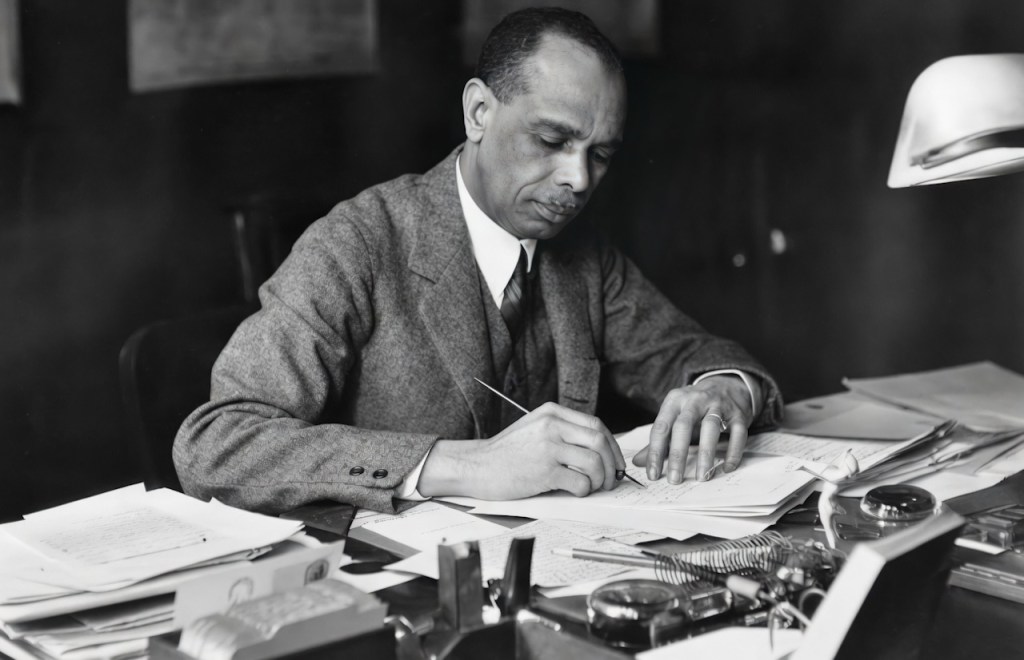
    Image: James Weldon Johnson - https://www.green-wood.com/event/the-autobiography-of-an-ex-colored-man-110-years-later/
    Image: James Weldon Johnson

    James Weldon Johnson’s “O Black and Unknown Bards”

    Johnson’s speaker dramatizes his amazement that slaves could have produced a music that would uplift of a entire race from debasement to spiritual attunement.

    Introduction and Text of Poem, “O Black and Unknown Bards”

    The speaker in James Weldon Johnson’s “O Black and Unknown Bards” celebrates the important spiritual achievement that mere slaves, oft thought the lowest rung on the ladder of society, managed to leave for future generations.  

    The poet James Weldon Johnson has well understood that through their spiritual singing to the Divine, these slaves were striving to unite their souls with God—the only true way to overcome all adversity.

    O Black and Unknown Bards

    O black and unknown bards of long ago,
    How came your lips to touch the sacred fire?
    How, in your darkness, did you come to know
    The power and beauty of the minstrel’s lyre?
    Who first from midst his bonds lifted his eyes?
    Who first from out the still watch, lone and long,
    Feeling the ancient faith of prophets rise
    Within his dark-kept soul, burst into song? 

    Heart of what slave poured out such melody
    As “Steal away to Jesus”? On its strains
    His spirit must have nightly floated free,
    Though still about his hands he felt his chains.
    Who heard great “Jordan roll”? Whose starward eye
    Saw chariot “swing low”? And who was he
    That breathed that comforting, melodic sigh,
    “Nobody knows de trouble I see”? 

    What merely living clod, what captive thing,
    Could up toward God through all its darkness grope,
    And find within its deadened heart to sing
    These songs of sorrow, love and faith, and hope?
    How did it catch that subtle undertone,
    That note in music heard not with the ears?
    How sound the elusive reed so seldom blown,
    Which stirs the soul or melts the heart to tears. 

    Not that great German master in his dream
    Of harmonies that thundered amongst the stars
    At the creation, ever heard a theme
    Nobler than “Go down, Moses.” Mark its bars
    How like a mighty trumpet-call they stir
    The blood. Such are the notes that men have sung
    Going to valorous deeds; such tones there were
    That helped make history when Time was young. 

    There is a wide, wide wonder in it all,
    That from degraded rest and servile toil
    The fiery spirit of the seer should call
    These simple children of the sun and soil.
    O black slave singers, gone, forgot, unfamed,
    You—you alone, of all the long, long line
    Of those who’ve sung untaught, unknown, unnamed,
    Have stretched out upward, seeking the divine. 

    You sang not deeds of heroes or of kings;
    No chant of bloody war, no exulting pean
    Of arms-won triumphs; but your humble strings
    You touched in chord with music empyrean.
    You sang far better than you knew; the songs
    That for your listeners’ hungry hearts sufficed
    Still live,—but more than this to you belongs:
    You sang a race from wood and stone to Christ.

    Commentary on “O Black and Unknown Bards”

    James Weldon Johnson’s speaker is dramatizing his amazed fascination that slaves could have created a music that would uplift of a downtrodden race from debasement to spiritual attunement.

    First Stanza: The Genius of Slaves

    O black and unknown bards of long ago,
    How came your lips to touch the sacred fire?
    How, in your darkness, did you come to know
    The power and beauty of the minstrel’s lyre?
    Who first from midst his bonds lifted his eyes?
    Who first from out the still watch, lone and long,
    Feeling the ancient faith of prophets rise
    Within his dark-kept soul, burst into song? 

    The speaker wonders how black slaves had the ability to fashion those beautiful, soulfilled songs.  These songs have revealed that these musicians were in tune with a heavenly realm, not of this earth.  They somehow came to understand and create with, “The power and beauty f the minstrel’s lyre.”  

    Although his questions cannot be answered, as they are essentially rhetorical in nature, he uses them to state quite clearly that these individuals were in tune with part of themselves that many fail to realize even exists. 

    The body may be whipped and suffer, but the soul cannot be beaten, nor can it suffer.  The uplifting nature of these wonderful soulful hymns demonstrates the power of the spirit over the body.

    The speaker then queries, “Who first from midst the bonds lifted his eye?”  He knows that instead of lifting the eye, the natural, common tendency is to pity oneself and continue to look downward, become hate filled and angry at one’s fellow humans for their ignorance.

    The speaker is aware that the beautiful songs unveil a spiritual level of being that can only be cherished and treasured for their qualities.  The speaker understands that instead of self-pity and angst, these soul singers were looking to God with a faith that might seem to lost.

    Second Stanza:  A Free Ranging Spirit

    Heart of what slave poured out such melody
    As “Steal away to Jesus”? On its strains
    His spirit must have nightly floated free,
    Though still about his hands he felt his chains.
    Who heard great “Jordan roll”? Whose starward eye
    Saw chariot “swing low”? And who was he
    That breathed that comforting, melodic sigh,
    “Nobody knows de trouble I see”? 

    In the second stanza, the speaker refers to four widely sung spiritual: “Steal Away to Jesus,” “Roll, Jordan, Roll,” and “Swing Low, Sweet Chariot,” and “Nobody Knows the Trouble I’ve Seen,” and he again wonders what slave could have created such an astounding tune. 

    The speaker then guesses that whoever the composer was, “His spirit must have nightly floated free.” The capacity for musical freedom as he continued to suffer his body bound in chains amazes the speaker, who becomes convinced that only a strong, abiding faith could have led the songwriter to such brilliance. 

    The speaker then alludes to the well-known spiritual, “Nobody knows de trouble I see,” as he asserts that the composer of this hymn felt the comforting, melodic sigh deep in his eing. The speaker, through his musing and questioning, is celebrating the wonderfully inspirational tone of these famous hymns. 

    Third Stanza:  The Mystery of Moving in Chains

    What merely living clod, what captive thing,
    Could up toward God through all its darkness grope,
    And find within its deadened heart to sing
    These songs of sorrow, love and faith, and hope?
    How did it catch that subtle undertone,
    That note in music heard not with the ears?
    How sound the elusive reed so seldom blown,
    Which stirs the soul or melts the heart to tears. 

    The speaker reports with his following question that those slave/hymn writers were considered mere property: “What merely living clod, what captive thing, / Could toward God through all it darkness grope . . . ?”

    The question suggests that those slaves were considered little more than mounds of unconscious clay, as they were required to function as the property of other men. 

    In the face of such degradation, these singer/songwriters managed to compose their lyrics that sing eternally Godward.  The divinity of the words cannot be missed by the perceptive observer as James Weldon Johnson was. 

    The speaker wonders how these sufferers with likely “deadened hearts,” managed to produce songs heard “not with the ears.”  He wonders how such suffering souls could have, “sound[ed] the elusive reed so seldom blown.”  He is aware that their sound was so majestic that “melts the heart.”

    Fourth Stanza:  Marvelous Spiritual That Helped Write History

    Not that great German master in his dream
    Of harmonies that thundered amongst the stars
    At the creation, ever heard a theme
    Nobler than “Go down, Moses.” Mark its bars
    How like a mighty trumpet-call they stir
    The blood. Such are the notes that men have sung
    Going to valorous deeds; such tones there were
    That helped make history when Time was young. 

    The speaker avers that is not even likely the great German composer, no doubt referring to Mozart, could have created a song, “Nobler than ‘Go down, Moses’.” He notes that its “bars / How like a mighty trumpet call they stir / The blood.” 

    The speaker compares those notes to the songs that military men have employed as they perform heroic valorous deeds. He states that the music of these marvelous spirituals helped write history. 

    Fifth Stanza: The Fiery Spirit of Servitude

    There is a wide, wide wonder in it all,
    That from degraded rest and servile toil
    The fiery spirit of the seer should call
    These simple children of the sun and soil.
    O black slave singers, gone, forgot, unfamed,
    You—you alone, of all the long, long line
    Of those who’ve sung untaught, unknown, unnamed,
    Have stretched out upward, seeking the divine. 

    The speaker again stresses the strange fact that those so depressed with the servitude of toil were able to display their fiery spirit, these simple children, these black slaves, who are gone, forgotten, unknown, yet they were capable  of “stretch[ing ] out upward, seeking the divine.” 

    They did not allow their souls to become degraded by seeking to acquire only physical comfort; these glorious forbearers looked Godward and acquired a measure of immortality that even the more well-known composers will likely not soon know. 

    Sixth Stanza: Slave Singer and the Blissful Reality of Spirit

    You sang not deeds of heroes or of kings;
    No chant of bloody war, no exulting pean
    Of arms-won triumphs; but your humble strings
    You touched in chord with music empyrean.
    You sang far better than you knew; the songs
    That for your listeners’ hungry hearts sufficed
    Still live,—but more than this to you belongs:
    You sang a race from wood and stone to Christ.

    Finally, the speaker notes that these slave singers did not compose lays about the deeds of kings and cultural heroes. They did not sing for the purpose glorifying battle.  They did not offer “exulting pean.” But they did “touch[ ] in chord with music empyrean.” Yet, they were not aware that they “sang far better than [they] knew.”

    Those slave/singers created hymns that continue to live on. Their musical creations were so vital that they “sang a race from wood and stone to Christ.” Their spiritual songs have lifted their fellows and generations to come from mere physical existence to the blissful reality of spirit.

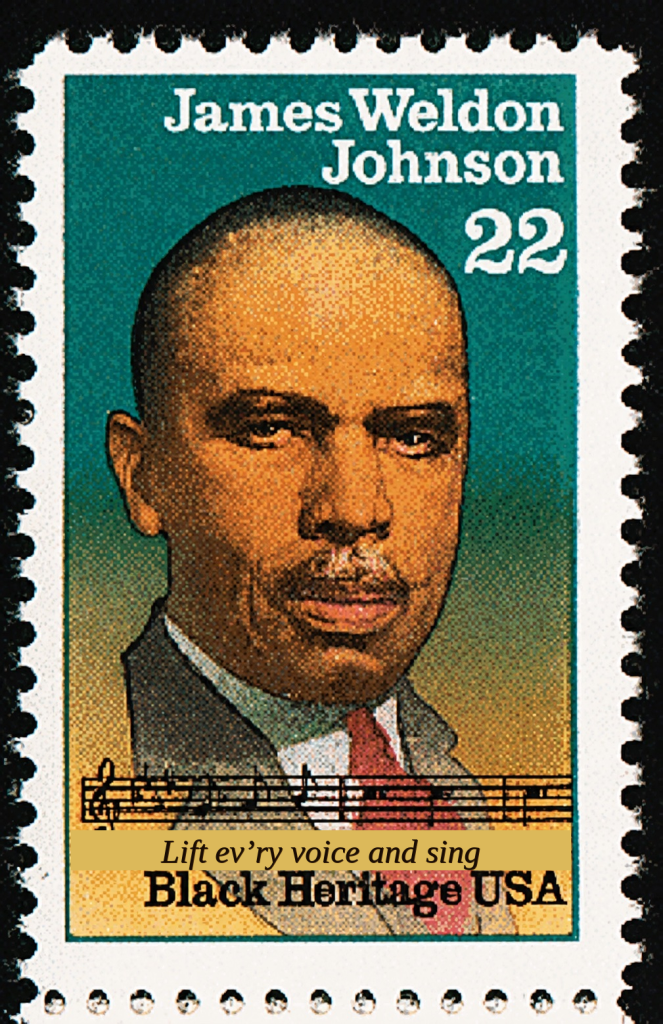
    Image: James Weldon Johnson - Commemorative Stamp - http://usstampgallery.com/view.php?id=e331c006856fe114a9ec83472d926981f48b72ec
    Image: James Weldon Johnson – Commemorative Stamp
  • Emily Dickinson’s “I haven’t told my garden yet”

    Image: Emily Dickinson - Amherst College - Daguerrotype of the poet at age 17, circa 1847 - likely the only authentic, extant likeness of the poet
    Image: Emily Dickinson – Amherst College – Daguerrotype of the poet at age 17, circa 1847 – likely the only authentic, extant likeness of the poet

    Emily Dickinson’s “I haven’t told my garden yet”

    Emily Dickinson’s “I haven’t told my garden yet” reveals the speaker’s profound confrontation with the impending transition of death. She is envisioning a quiet departure from the physical plane, utilizing her beloved natural surroundings to dramatize the hesitation of breaking this ultimate news to her terrestrial companions.

    Introduction and Text of “I haven’t told my garden yet”

    Emily Dickinson’s “I haven’t told my garden yet” is an American-Innovative ballad composed of four quatrains. Each stanza utilizes short, rhythmic lines alternating between iambic tetrameter and iambic trimeter, tied together by near or slant rimes.

    This brief drama functions to showcase the tension between the physical world of senses and the inevitable transition into the metaphysical realm. The speaker of the poem contemplates her looming departure while striving to keep the truth hidden from her earthly friends.

    By maintaining this absolute silence, she seeks to spare the natural world, such as her beloved garden and the hillsides, from the sorrow of her absence. On a second note, she is also inviting her readers to ponder the great mystery of where the soul journeys after the physical shell is cast aside.

    On the literal level, the poet is creating a speaker who is announcing her inability to break the news of her mortality to her immediate surroundings. It will be such a quiet transition that she desires no public display or open acknowledgment of her passing.

    Because she holds a deep affection for nature, she worries that sharing her secret will conquer her remaining emotional strength. Thus, she decides that her impending departure must remain a hidden secret, unspoken among her companions and the fields she has traversed.

    Posing as a quiet meditation on mortality, Dickinson’s little drama serves as a riddle regarding the boundary between life and death. By keeping her plans hidden from the natural world, she emphasizes the ultimate solitude of the soul’s transition.

    I haven’t told my garden yet

    I haven’t told my garden yet –
    Lest that should conquer me.
    I haven’t quite the strength now
    To break it to the Bee –

    I will not name it in the street
    For shops would stare at me –
    That one so shy – so ignorant
    Should have the face to die.

    The hillsides must not know it –
    Where I have rambled so –
    Nor tell the loving forests
    The day that I shall go –

    Nor lisp it at the table –
    Nor heedless by the way
    Hint that within the Riddle
    One will walk today –

    Reading of “I haven’t told my garden yet”

    Commentary on “I haven’t told my garden yet”

    Emily Dickinson’s “I haven’t told my garden yet” reveals an attitude of deep devotion to nature and a profound hesitation to disrupt its peace with the heavy reality of physical mortality.

    The poem is a literal contemplation of death, where the speaker is erecting a barrier of silence to protect her beloved earthly companions from the grief of her departure.

    First Stanza:  Hesitating to Report

    I haven’t told my garden yet –
    Lest that should conquer me.
    I haven’t quite the strength now
    To break it to the Bee –

    In the first quatrain, the speaker begins by alerting readers that she has kept her impending departure completely hidden from her closest companion, her “garden.” To vocalize this transition would overcome her fragile emotional state and deplete her remaining determination.

    The garden and the bee represent the living, vibrant physical plane of existence that the speaker is preparing to leave behind. She confesses that she lacks the personal fortitude to deliver such heavy news to the busy “Bee” that frequents her blossoms.

    This hesitation highlights the speaker’s delicate sensitivity to the beautiful life forms around her. She fears that acknowledging her departure openly would dismantle her quiet resolve.

    Behind her reluctance lies a deep understanding of the transition of the soul. As explained in the teachings on “Understanding Death and Loss” by Paramahansa Yogananda, “the body is only a garment,” and death is merely a “temporary emancipation” where the soul returns to its native home.

    Second Stanza:  Refusing to Alert

    I will not name it in the street
    For shops would stare at me –
    That one so shy – so ignorant
    Should have the face to die.

    The speaker then turns her gaze toward human society, declaring that she will not speak of her death in the public sphere. She envisions the local merchants and shopkeepers staring in absolute disbelief at her audacity.

    The public would find it unfathomable that a person so incredibly “shy” and “ignorant” of the grand ways of the world could possess the boldness to face death. This social commentary highlights the speaker’s preference for the quiet, solitary realm of nature over the bustling skepticism of human commerce.

    She remains deeply private, choosing to shield her sacred transition from the judgmental eyes of the town. Her ultimate journey is not a matter for public gossip or superficial curiosity.

    This choice to withdraw from the public eye mimics the lifestyle of a contemplative seeker who is focused entirely on the internal spirit. On my literary website Linda’s Literary Home, I note that the poet “lived a solitary life that in many ways paralleled that of a religious monastic,” choosing quiet contemplation over societal interaction.

    Third Stanza:  Keeping It Hush Hush

    The hillsides must not know it –
    Where I have rambled so –
    Nor tell the loving forests
    The day that I shall go –

    The speaker now directs her attention back to the natural landscape, asserting that the familiar “hillsides” must remain completely unaware of her departure. These are the beautiful places where she has spent countless hours walking and meditating in quiet joy.

    She also insists on keeping the secret from the “loving forests” that have provided her with shade and inspiration throughout her life. She cannot bear to cast a shadow of grief over these natural sanctuaries.

    By sparing the hills and forests from the date of her exit, she preserves the untouched joy of those spaces. She desires that her memory remain woven into their eternal beauty without the stain of physical decay.

    This deep communion with nature reflects a realization of the divine presence within the created universe. Her relationship with the “loving forests” mirrors the pantheistic devotion where every tree, leaf, and hillside is recognized as a living expression of the Divine Mother.

    Fourth Stanza: The Riming Riddle Will Out

    Nor lisp it at the table –
    Nor heedless by the way
    Hint that within the Riddle
    One will walk today –

    In the final stanza, the speaker reinforces her vow of absolute secrecy, forbidding herself from whispering the truth at the family dining table. She must not accidentally drop any careless hints to passersby along the road.

    The ultimate destination of her journey is described as “the Riddle,” a capitalized mystery into which she will walk before the day is done. This riddle is the metaphysical realm, the unseen world that lies just beyond the reach of human sensory perception.

    She steps into this grand unknown with quiet dignity, leaving her earthly companions to continue their physical cycles undisturbed. Her departure is a silent transition, a gentle slip from the physical plane into the cosmic consciousness.

    This transition into the “Riddle” is not a descent into destruction, but an entry into a higher state of awareness. As Paramahansa Yogananda teaches, the soul at death experiences a “joyous sense of relief and freedom,” realizing its eternal nature as it reunites with the infinite light of the Creator.

  • Gypsy Soul

    Image:  Created by Grok inspired by the poem
    Image: Created by Grok inspired by the poem

    Gypsy Soul

    —after “Divine Gypsy”

    I am health.
    I am wealth.
    I am whole.
    I am an eternal,
    Immortal, divine soul,
    Roaming God’s world
    Singing to the trees,
    Humming with the bees,
    Chanting Om
    In my paradise home.

    In my paradise garden,
    I am the soul proprietor
    Of my cosmos.

  • Wake Me, O Belovèd Guruji

    Image/Created by ChatGPT inspired by the poem.
    Image: Created by ChatGPT inspired by the poem

    Wake Me, O Belovèd Guruji

    —after “Do Not Dry the Ocean of my Love”

    Wishing to wake in the arms
    Of the Divine:

    Wake me, O my belovèd Guruji, wake me
    From this delusion!

    Swimming in this sea of sorrow,
    Let me swim in Thy sea of mirth.

    Dying to rise again on Thy sacred bosom sea
    No more sleep of death, no more dream of life!

    Restless sleep in the dreamland of desires
    Suffering the clack and clutter.

    From restlessness and desires that singe,
    Wake me, my belovèd Guruji, wake me!

  • James Weldon Johnson’s “The Creation”

    Image: James Weldon Johnson - https://www.green-wood.com/event/the-autobiography-of-an-ex-colored-man-110-years-later/
    Image: James Weldon Johnson

    James Weldon Johnson’s “The Creation”

    James Weldon Johnson’s “The Creation” remains a marvelous example of the poet’s depth of spirituality as well as his skilled craftsmanship at creating speakers who perform in his poetry compositions.

    Introduction with Text of “The Creation”

    In James Weldon Johnson’s “The Creation,” the speaker dramatizes Genesis chapter 1, verses 1-25.   The speaker employs the voice of a Southern preacher, exemplified by the lines, “Down in a cypress swamp” and “Like a mammy bending over her baby.”  

    The Wintley Phipps recitation of James Weldon Johnson’s “The Creation” is magnificent.  Phipps performs a perfect interpretation of Johnson’s poem.  The experience of listening to a fine poem always adds a nuance of meaning that a simple quiet reading lacks.

    The Creation

    And God stepped out on space,
    And he looked around and said:
    I’m lonely—
    I’ll make me a world.

     And far as the eye of God could see
    Darkness covered everything,
    Blacker than a hundred midnights
    Down in a cypress swamp.

    Then God smiled,
    And the light broke,
    And the darkness rolled up on one side,
    And the light stood shining on the other,
    And God said: That’s good!

    Then God reached out and took the light in his hands,
    And God rolled the light around in his hands
    Until he made the sun;
    And he set that sun a-blazing in the heavens.
    And the light that was left from making the sun
    God gathered it up in a shining ball
    And flung it against the darkness,
    Spangling the night with the moon and stars.
    Then down between
    The darkness and the light
    He hurled the world;
    And God said: That’s good!

    Then God himself stepped down—
    And the sun was on his right hand,
    And the moon was on his left;
    The stars were clustered about his head,
    And the earth was under his feet.
    And God walked, and where he trod
    His footsteps hollowed the valleys out
    And bulged the mountains up.

    Then he stopped and looked and saw
    That the earth was hot and barren.
    So God stepped over to the edge of the world
    And he spat out the seven seas—
    He batted his eyes, and the lightnings flashed—
    He clapped his hands, and the thunders rolled—
    And the waters above the earth came down,
    The cooling waters came down.

    Then the green grass sprouted,
    And the little red flowers blossomed,
    The pine tree pointed his finger to the sky,
    And the oak spread out his arms,
    The lakes cuddled down in the hollows of the ground,
    And the rivers ran down to the sea;
    And God smiled again,
    And the rainbow appeared,
    And curled itself around his shoulder.

    Then God raised his arm and he waved his hand
    Over the sea and over the land,
    And he said: Bring forth! Bring forth!
    And quicker than God could drop his hand,
    Fishes and fowls
    And beasts and birds
    Swam the rivers and the seas,
    Roamed the forests and the woods,
    And split the air with their wings.
    And God said: That’s good!

    Then God walked around,
    And God looked around
    On all that he had made.
    He looked at his sun,
    And he looked at his moon,
    And he looked at his little stars;
    He looked on his world
    With all its living things,
    And God said: I’m lonely still.

    Then God sat down—
    On the side of a hill where he could think;
    By a deep, wide river he sat down;
    With his head in his hands,
    God thought and thought,
    Till he thought: I’ll make me a man!

    Up from the bed of the river
    God scooped the clay;
    And by the bank of the river
    He kneeled him down;
    And there the great God Almighty
    Who lit the sun and fixed it in the sky,
    Who flung the stars to the most far corner of the night,
    Who rounded the earth in the middle of his hand;
    This great God,
    Like a mammy bending over her baby,
    Kneeled down in the dust
    Toiling over a lump of clay
    Till he shaped it in is his own image;

    Then into it he blew the breath of life,
    And man became a living soul.
    Amen.      Amen.

    Wintley Phipps’ recitation of “The Creation” 

    Commentary on “The Creation”

    Johnson’s speaker offers an imaginative, dramatic rendering of the origin of creation, based on the creation story in Genesis from the King James Version of the Holy Bible.

    First and Second Stanzas:  Personification of God

    And God stepped out on space,
    And he looked around and said:
    I’m lonely—
    I’ll make me a world.

     And far as the eye of God could see
    Darkness covered everything,
    Blacker than a hundred midnights
    Down in a cypress swamp.

    The speaker personifies God, giving the Deity the very human quality of loneliness and having Him “step [ ] out on space,” where He observes the vastness and decides, “I’m lonely / I’ll make me a world.” 

    The corresponding Genesis verse states,”In the beginning God created the heaven and the earth.” Johnson’s speaker gives God anthropomorphic qualities in order metaphorically explain the process of creation as revealed in the Holy Scripture.

    In Genesis, the darkness was on the face of the deep, because the world was formless. Johnson’s speaker dramatically describes pre-creation as “blacker than a hundred midnights / Down in a cypress swamp.” Of course, the speaker knows that his audience, likely his congregation, would be able to visualize that cypress swamp darkness.

    Third and Fourth Stanzas:   Calling for Light

    Then God smiled,
    And the light broke,
    And the darkness rolled up on one side,
    And the light stood shining on the other,
    And God said: That’s good!

    Then God reached out and took the light in his hands,
    And God rolled the light around in his hands
    Until he made the sun;
    And he set that sun a-blazing in the heavens.
    And the light that was left from making the sun
    God gathered it up in a shining ball
    And flung it against the darkness,
    Spangling the night with the moon and stars.
    Then down between
    The darkness and the light
    He hurled the world;
    And God said: That’s good!

    Genesis reveals that God called for light by heralding, “Let there be light.” Johnson’s speaker creatively allows that first light to beam when God smiled. In addition, the speaker metaphorically has the light causing the darkness to “roll [ ] up on one side” while “light stood shining on the other.” 

    To all this drama, God says, “That’s good!” Johnson’s speaker makes God an even more active entity than the Genesis version, where instead of speaking, God’s thoughts are exposed: “God saw the light, and it was good.” At this point, only God could have had that thought.

    The speaker then takes the liberty of having God create the sun by taking light in his hands and rolling the light into a ball and setting the sun “a-blazing in the heavens.” Using the light remaining after making the sun, God gathered it up in “a shining ball / And flung it against the darkness / Spangling the night with the moon and stars.” 

    The importance of light motivates Johnson’s speaker to elaborate on the creation of the earth’s only source of light. And again, as is repeated in Genesis, the speaker has God aver, “That’s good!”

    Fifth and Sixth Stanzas:  The Significance of the Sun

    Then God himself stepped down—
    And the sun was on his right hand,
    And the moon was on his left;
    The stars were clustered about his head,
    And the earth was under his feet.
    And God walked, and where he trod
    His footsteps hollowed the valleys out
    And bulged the mountains up.

    Then he stopped and looked and saw
    That the earth was hot and barren.
    So God stepped over to the edge of the world
    And he spat out the seven seas—
    He batted his eyes, and the lightnings flashed—
    He clapped his hands, and the thunders rolled—
    And the waters above the earth came down,
    The cooling waters came down.

    The importance of the sun is further emphasized as the speaker continues his drama. God begins to walk on the earth with the sun “on his right hand / And the moon on his left.”  And the stars were “clustered about his head.”  

    As God walked on the earth, His feet “hollowed the valleys out / And bulged the mountains up.” Genesis more vaguely reveals God’s creation process than this speaker, who imaginatively fills in the gaps as he creates his own creation myth.

    In Genesis, God separates the heavens from the earth. This speaker has God spitting out the seven seas and after clapping His hands, the thunder begins and rain comes down, “cooling waters came down.”

    Seventh and Eighth Stanzas:  Nature Comes into Being

    Then the green grass sprouted,
    And the little red flowers blossomed,
    The pine tree pointed his finger to the sky,
    And the oak spread out his arms,
    The lakes cuddled down in the hollows of the ground,
    And the rivers ran down to the sea;
    And God smiled again,
    And the rainbow appeared,
    And curled itself around his shoulder.

    Then God raised his arm and he waved his hand
    Over the sea and over the land,
    And he said: Bring forth! Bring forth!
    And quicker than God could drop his hand,
    Fishes and fowls
    And beasts and birds
    Swam the rivers and the seas,
    Roamed the forests and the woods,
    And split the air with their wings.
    And God said: That’s good!

    After the rain, grasses appear, and “little red flowers blossomed” and “A pine tree “pointed his finger to the sky.” This speaker gives specific details again not found in Genesis. He has the oak “spread out his arms.”

    He has lakes appearing as they “cuddled down in the hollows of the ground.” He has rivers running to the ocean, and God smiling as “a rainbow appeared / And curled itself around his shoulder.”

    In his eighth stanza, the speaker has God creating “Fishes and fowls / And beasts and birds.” God creates by raising His arm and waving His hand and commanding, “Bring forth! Bring forth!” Again, God evaluates His creation, declaring, “That’s good!”

    Ninth and Tenth Stanzas:  A Lonely God

    Then God walked around,
    And God looked around
    On all that he had made.
    He looked at his sun,
    And he looked at his moon,
    And he looked at his little stars;
    He looked on his world
    With all its living things,
    And God said: I’m lonely still.

    Then God sat down—
    On the side of a hill where he could think;
    By a deep, wide river he sat down;
    With his head in his hands,
    God thought and thought,
    Till he thought: I’ll make me a man!

    The speaker says that God walked about and observed all that He had created. Nevertheless, just as before He created all these things, God again found Himself lonely. Of course, Genesis does not anthropomorphize God; thus, there are no claims in Scripture that God was ever lonely.

    In trying to understand the mind of God, the human mind assigns human qualities to the Deity. As long as one realizes the limitation of such assignment, no problem occurs and much understanding can be gained through metaphor and personification.

    God then sits down to think about how to assuage His loneliness. Just as a man would do, He sits by a river with His head in His hands, thinking and thinking, and He finally gets the thought to make a man. 

    Eleventh and Twelfth Stanzas:  Bodies of Clay

    Up from the bed of the river
    God scooped the clay;
    And by the bank of the river
    He kneeled him down;
    And there the great God Almighty
    Who lit the sun and fixed it in the sky,
    Who flung the stars to the most far corner of the night,
    Who rounded the earth in the middle of his hand;
    This great God,
    Like a mammy bending over her baby,
    Kneeled down in the dust
    Toiling over a lump of clay
    Till he shaped it in is his own image;

    Then into it he blew the breath of life,
    And man became a living soul.
    Amen.      Amen.

    The speaker now has God create the first human being by “scoop[ing] the clay from the riverbed.” He employs the image of a mammy bending over her baby while she kneeled down in the dust working over a lump of clay. God shaped this lump of clay in his own image, as Genesis says, “Let us make man in our image, after our likeness.”

    Finally, God blew the breath of life into the body of the clay God-like image, and “man became a living soul.” At this point, the speaker/preacher concludes his drama/sermon with the traditional, “Amen. Amen.”

  • Emily Dickinson’s “I never lost as much but twice”

    Image: Emily Dickinson - Amherst College - Daguerrotype of the poet at age 17, circa 1847 - likely the only authentic, extant likeness of the poet
    Image: Emily Dickinson – Amherst College – Daguerrotype of the poet at age 17, circa 1847 – likely the only authentic, extant likeness of the poet

    Emily Dickinson’s “I never lost as much but twice”

    Emily Dickinson’s “I never lost as much but twice” dramatizes the speaker’s confrontation with devastating earthly loss and her anguished appeal to divine compensation.

    Introduction and Text of “I never lost as much but twice”

    Emily Dickinson’s “I never lost as much but twice” features one of the poet’s most compressed spiritual dramas. In only eight lines, the speaker moves from grief to restoration and then back again into deprivation, as she attempts to understand the mysterious machinations of the Divine. 

    The poem’s minimalist structure intensifies its emotional force, while its startling metaphors—“beggar,” “Burglar,” “Banker,” and “Father”—reveal a speaker wrestling with the paradox of God as both giver and taker.

    I never lost as much but twice

    I never lost as much but twice,
    And that was in the sod.
    Twice have I stood a beggar
    Before the door of God!

    Angels – twice descending
    Reimbursed my store –
    Burglar! Banker – Father!
    I am poor once more!

    Commentary on “I never lost as much but twice”

    Emily Dickinson’s “I never lost as much but twice” portrays the speaker’s struggle to reconcile unbearable sorrow with faith in divine providence.

    First Stanza: The Two-Fold Sorrow of Human Loss

    I never lost as much but twice,
    And that was in the sod.
    Twice have I stood a beggar
    Before the door of God!

    The speaker begins with a striking declaration that she has endured catastrophic loss only “twice,” and both occasions involved “the sod,” that ancient symbol for the grave and burial earth. Readers have often speculated that the losses refer to the deaths of loved ones, but the speaker wisely leaves the reference broad enough to encompass any profound bereavement. By refusing specificity, she elevates her suffering from the merely personal into a universal human condition.

    The phrase “stood a beggar / Before the door of God” reveals a soul stripped of earthly confidence. The speaker no longer approaches the Divine as an equal child of Spirit but as one emptied by grief and compelled to plead for mercy. 

    The image recalls the teaching of Paramahansa Yogananda, which cautions against approaching God in spiritual beggary, insisting instead that the soul possesses a divine inheritance. Dickinson’s speaker, however, dramatizes the raw emotional reality that grief often reduces even strong souls to desperation.

    The tension between earthly sorrow and spiritual assurance appears frequently in Dickinson’s poetry. In additional commentaries on Dickinson poems, I reveal that her speakers are often in the process of confronting the distance between mortal experience and eternal truth. This speaker occupies precisely that threshold, poised between despair and faith, unable to relinquish either one.

    The exclamation point concluding the fourth line intensifies the speaker’s emotional urgency. She does not quietly petition heaven; she cries out from the depths of deprivation. Yet even in anguish, she stands “before the door of God,” not outside divine awareness altogether. 

    This image clearly indicates that despite suffering, the speaker still believes the Divine Presence remains accessible.  The stanza also demonstrates Dickinson’s genius for compression and minimalism. In four brief lines, the speaker moves from memory to theological speculation and then from graveyard imagery to metaphysical yearning. 

    The emotional trajectory resembles Paramahansa Yogananda’s teaching from his talk Removing All Sorrow and Suffering that human beings seek release from suffering by lifting consciousness toward divine awareness. Dickinson’s speaker has not yet transcended grief, but she instinctively turns toward the Divine as the only possible source of restoration.

    Second Stanza: Facing Loss a Third Time?

    Angels – twice descending
    Reimbursed my store –
    Burglar! Banker – Father!
    I am poor once more!

    The second stanza shifts dramatically from deprivation to restoration. The speaker reports that “Angels” descended twice and “reimbursed” her losses, suggesting moments of spiritual consolation or renewed blessings after earlier grief. 

    The financial language of “reimbursed my store” transforms emotional recovery into an economic transaction, as though heaven keeps careful accounts of human suffering.  Yet the restoration proves temporary. 

    The astonishing line “Burglar! Banker – Father!” presents the Divine through three contradictory metaphors. God becomes simultaneously the thief who removes blessings, the banker who restores them, and the loving father who presides over both actions.   Dickinson’s speaker refuses sentimental religion; instead, she confronts the terrifying mystery of a God who both wounds and heals.

    The emotional complexity of this address resembles the spiritual paradox explored in Paramahansa Yogananda’s talk Awake in the Cosmic Dream, where the great Guru explains that worldly conditions continually shift while God alone remains permanent reality. Dickinson’s speaker suffers precisely because earthly attachments are unstable. Every restored joy remains vulnerable to removal, leaving the soul “poor once more.”

    The final declaration carries tremendous emotional weight because the speaker offers no resistance or argument after naming God as “Father.” Despite bewilderment and pain, she still recognizes divine parentage. 

    Her faith survives, though stripped of comfort and certainty. The speaker’s endurance reflects Dickinson’s recurring fascination with the soul’s ability to continue seeking meaning even after repeated disappointment.

    The repeated emphasis on poverty also deepens the poem’s spiritual resonance. Material poverty often signifies lack of worldly goods, but Dickinson transforms it into a symbol of emotional and spiritual depletion. Yet mystical traditions frequently teach that emptiness prepares the soul for greater realization. 

    Paramahansa Yogananda revealed in his writings on “Meditation & Kriya Yoga” that lasting peace arises only when one discovers inward communion beyond external conditions. Dickinson’s speaker has not yet achieved such peace, but her anguish pushes her toward that realization.

    By ending the poem with “I am poor once more!” the speaker leaves readers suspended between despair and revelation. The line may sound tragic, yet it also suggests spiritual awakening through repeated loss. 

    Earthly possessions, relationships, and consolations vanish, but the soul’s dialogue with the Divine continues. Dickinson’s speaker therefore transforms grief into a profound metaphysical/mystical inquiry, revealing that suffering often becomes the doorway through which the soul most intensely seeks God.

  • James Weldon Johnson’s “Mother Night”

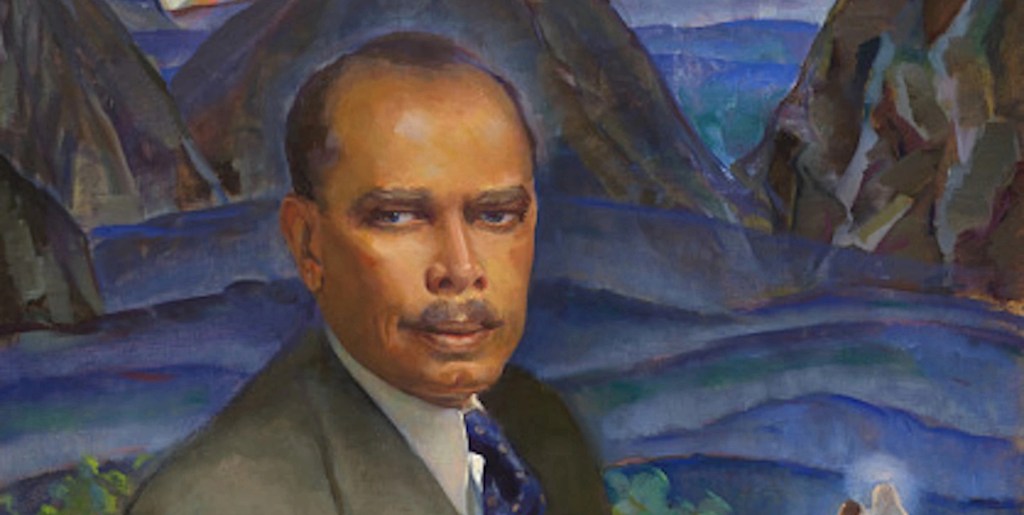
    Image: James Weldon Johnson - Portrait by Laura Wheeler Waring https://npg.si.edu/object/npg_NPG.67.40
    Image: James Weldon Johnson – Portrait by Laura Wheeler Waring

    James Weldon Johnson’s “Mother Night”

    The speaker in Johnson’s sonnet, “Mother Night,” likens his own existence and protection to that of the planets—all are created and protected by the same Divine Entity.  Thus his soul remains a spark from the Original Divine Flame.

    Introduction with Text of “Mother Night”

    James Weldon Johnson’s “Mother Night,” a Petrarchan (or Italian) sonnet, metaphorically dramatizes night as the calm union of the soul with the Oversoul or the individual self with Divine Self.

    The speaker, influenced by Eastern as well as Christian philosophical tenets, draws a parallel between the conflict of day and night in the cosmos and his own struggle with the pairs of opposites in his earthly sojourn.   This sonnet’s form offers polished Petrarchan rime-scheme:  ABBAABBA in the octave, and CDECDE in the sestet.

    Mother Night

    Eternities before the first-born day,
    Or ere the first sun fledged his wings of flame,
    Calm Night, the everlasting and the same,
    A brooding mother over chaos lay.
    And whirling suns shall blaze and then decay,
    Shall run their fiery courses and then claim
    The haven of the darkness whence they came;
    Back to Nirvanic peace shall grope their way. 

    So when my feeble sun of life burns out,
    And sounded is the hour for my long sleep,
    I shall, full weary of the feverish light,
    Welcome the darkness without fear or doubt,
    And heavy-lidded, I shall softly creep
    Into the quiet bosom of the Night.

    Commentary on “Mother Night”

    All creation is protected by its Creator, Who performs in various guises somewhat like a mother bird, who protects her progeny.  Nighttime is the time for rest, peaceful contemplation, and retreat from the hustle and bustle of day time activities.

    Thus, nighttime may be perceived as a protecting entity that offers solace and comfort to those in need and those who wish for such qualities in their lives.

    First Quatrain:  Existence Was Brooding before the First Created Day

    Eternities before the first-born day,
    Or ere the first sun fledged his wings of flame,
    Calm Night, the everlasting and the same,
    A brooding mother over chaos lay.

    Like a brooding mother, that is, a mother bird who is sitting on her brood of eggs and then who continues to protect and keep them warm as baby birds, “Calm Night” kept watch over the unmanifested entity until the first-born day, before the first planets were created and hurled into activity: “ere the first sun fledged his wings of flame.” 

    The mature planet of the sun is like a bird that is now flying off on its own, after having been tenderly nurtured by its mother.

    Mother Night tenderly nurtured the growing cosmos that ultimately resulted in planets and people. Johnson’s metaphoric Night represents the non-vibratory realm of reality where nothing is manifested, and only the mind of God exists in that vibrationless realm.

    There is no creation only a peaceful possibility, a potential. Until God chooses to create beings to populate His cosmos, He simply broods like a mother over chaos. 

    Here the term chaos does not refer to our modern usage of confusion and disorder but to infinite formlessness. The term originates from the Greek Khaos, indicating a dark void from which the gods originated.

    Second Quatrain:  The Projection of Light as It Creates the Cosmos

    And whirling suns shall blaze and then decay,
    Shall run their fiery courses and then claim
    The haven of the darkness whence they came;
    Back to Nirvanic peace shall grope their way. 

    The second quatrain describes the plight of whirling suns as they “blaze and then decay.” Those planets of fire will eventually burn out and after they do, they will return “[b]ack to Nirvanic peace.” 

    The speaker employs the term Nirvanic, adjectival form for “Nirvana,” the Buddhist term for God-union, which is “Samadhi” in  Hinduism, “Salvation” in Christianity, and “Fana” in Sufism, the mystical branch of Islam.

    The speaker cleverly plays by punning “whirling suns,” whereas sun puns son. With God as Mother Night, Her suns (sons) will “run their fiery courses” (live their passionate lives) and then recede back into the arms of the brooding mother or God. 

    First Tercet:  The Individual Self as It Careens Toward Oblivion

    So when my feeble sun of life burns out,
    And sounded is the hour for my long sleep,
    I shall, full weary of the feverish light,

    The sestet then shifts from the cosmos to the speaker himself, a son of the night mother. The speaker vows that he will react to his death a certain way, but he does not clarify that way yet, but merely sets up the conditions for his final claim. 

    As his life comes to an end, as he knows that it “is the hour for [his] long sleep,” he will be fully aware that his life is ebbing.

    Second Tercet:  Faith That Leads the Faithful toward Their True Home

    Welcome the darkness without fear or doubt,
    And heavy-lidded, I shall softly creep
    Into the quiet bosom of the Night.

    And the speaker will “[w]elcome the darkness without fear or doubt.” His strong faith and intuition allow him to realize that his soul is going home. 

    This speaker has mused long and hard upon the profundities that puzzle every thinking brain.  He has contemplated what science has discovered about the nature of the created Cosmos.

    The speaker has likewise compared the knowledge  of scientists to that of the tenets of religion and philosophy.  And the result of his in depth study now allows him to formulate a pathway to Divine Reality.  

    This prescient speaker has come to understand that his own soul is simply a spark of the Divine Flame, Who has fashioned out of chaos a marvelous entity of joy, peace, hope, and love.

    This speaker’s eyelids may droop, but his soul is ever ensconced in the omnipresent protection of the beautiful mother, the Mother Night—who parallels the Blessèd Divine Reality—who will throughout eternity continue to brood over and fiercely guide and guard her beloved son.