Poetry in its highest sense seeks truth, coherence, and a vision of reality that unites the temporary with the eternal, the personal and the universal.
Losing the “Cosmic Voice”
The great poets who employ something like a “cosmic voice” speak from beyond partisan quarrels and transient fashion, reminding humankind of permanent things—order, beauty, justice, and the unity of all creation [1].
My personal description of poetry has long been the following: The highest purpose of poetry is to express in deliberate, truthful, crystalline language what it feels like to experience certain aspects of human life. Thus much great poetry focuses on four subjects: truth, love, beauty, and death.
Humanity from the time of its inception (or at least since the Fall) has experienced events involving those subjects, and they have caused deep, intense feelings that the human psyche has needed to express.
The “cosmic voice” can be understood to express the universal reality of human emotion in its raw intensity through language that can be grasped and recognized—even if it must often work through paradox and other forms of literary language devices.
Such a voice does not flatter the crowd but calls it upward, inviting the soul to transcend the narrow confines of appetite and ideology. It stretches time and space, allowing the reader to glimpse a moral horizon that relativistic culture and mass entertainment all too often obscure [2].
The Decline of Poetry in Public Life
Contemporarily in the United States of America, high poetry has largely disappeared from the public square; fewer than ten percent of citizens report reading even a single poem in a given year [3]. Critics have observed that poetry has retreated into academic enclaves, where it is often politicized, trivialized, or made self-referential rather than addressed to the common culture [4].
This retreat has grave consequences because a society that no longer listens to genuine poetry loses one of its strongest checks on propaganda and ideological frenzy. When the imagination is not nourished by disciplined, truth-seeking art, it becomes vulnerable to cheaper substitutes that mimic poetic power while serving partisan ends.
Political Rhetoric as Surrogate Poetry
The vacuum left by serious poetry has been filled, in part, by political speech that borrows poetic techniques—imagery, rhythm, metaphor, antithesis—not to illuminate reality but to move “men to action or alliance,” according to Richard N. Goodwin, a prominent American speechwriter, who worked for Presidents John F. Kennedy and Lyndon B. Johnson.
Speechwriters openly acknowledge that their goal is persuasion and agenda-setting rather than patient education; language is crafted to captivate attention and stir emotion in a distracted populace.
Literary devices used by poets—alliteration, imagery, parallelism, and antimetabole—appear in many of the most memorable modern speeches [5]. John F. Kennedy’s “Ask not what your country can do for you—ask what you can do for your country” exemplifies how chiasmus and rhythm can engrave an idea on the public mind with almost incantatory force.
When Persuasion Masquerades as Propaganda
Persuasion becomes propaganda when the deliberate, systematic shaping of perception and behavior serves the hidden intent of the speaker rather than the good of the hearer [6]. Scholars of communication define propaganda as the organized attempt to manipulate cognitions and direct behavior in a way that furthers the propagandist’s aims, often by using false or misleading information [7].
In that sense, propaganda is not merely strong or forceful speech but a corruption of language itself, dressing deception in the garments of poetic beauty. Words cease to be windows onto reality and become tools for obscuring it, fostering confusion, distrust, and cynicism among citizens.
The Poetic Surface of Modern Speeches
Because political rhetoric must compete in a noisy media environment, it increasingly relies on stylistic intensifiers that resemble poetic adornment. Emotive vocabulary, simple syntax, repetitive structures, and parallel clauses are deployed to reach inattentive listeners at an affective level.
These devices can ennoble public discourse when they express honest conviction and point toward realities accessible to reason and experience. Yet they can also serve as a velvet glove over an iron fist, smoothing over contradictions in policy and concealing the true costs of political projects.
Content Emptied, Form Retained
In genuine poetry, form and content serve one another; the music of the line clarifies rather than conceals meaning. In much twenty-first-century political speech, however, poetic form—cadence, symmetry, metaphor—is preserved while substantive content is hollowed out.
As one observer notes, contemporary cultural elites often prefer verbal display to engagement with enduring truths, elevating slogans and activist catchphrases over disciplined reflection. The result is rhetoric that sounds profound while remaining vague, elevating feeling over thought and identity over principle.
Emotional Choreography and Manufactured Unity
Modern campaign speeches illustrate how poetic devices choreograph collective emotion, producing surges of hope, anger, or solidarity on command. Through repeated metaphors, rhythmic chants, and staged crescendos, speakers offer audiences a sense of unity that may have little basis in shared understanding.
This emotional unity, grounded in sentiment rather than truth, is a hallmark of propaganda. Citizens are not invited to deliberate but to feel together, often against a demonized “other” whose humanity is reduced to caricature.
Contemporary political discourse frequently illustrates this tendency through the use of historically charged labels—such as comparisons to fascism or authoritarianism—directed at political opponents, including Donald Trump.
FromMuse to Machine
Historically, poets answered to a muse—an intuition of beauty and order that could not be fully subordinated to political calculation. Even when poets engaged political themes, they did so under the constraint of truth-telling, often placing them at odds with power.
In the twenty-first century, many of the most rhetorically gifted writers work not as independent poets but as speechwriters, marketers, and narrative technicians embedded in political machinery. Their allegiance tends to lie with electoral success or ideological advance rather than the slow discipline of contemplating what is true and good.
Propaganda as Perversion of Poetic Power
Because propaganda seeks to shape perceptions, manipulate cognitions, and direct behavior, it exploits the same imaginative faculties that poetry once honored and educated. Metaphors that ought to deepen understanding are repurposed to compress complex realities into emotionally charged images—walls, storms, plagues, and saviors.
In such language, the cosmic dimension collapses into the partisan; transcendence is traded for mobilization. Citizens are urged to choose sides in a perpetual struggle rather than contemplate the unity of all created things.
The Threat to American Freedom
Propaganda threatens American freedom not only by spreading falsehoods but by corroding the capacities required for self-government: attention, memory, judgment, and trust. Sustained exposure to disinformation fosters withdrawal from civic engagement, leaving decisions to unaccountable elites.
When citizens cannot distinguish poetic truth from manipulative rhetoric, they become susceptible to messages that flatter fear or desire. In a constitutional republic dependent on informed consent, such susceptibility opens the door to soft despotism even without overt repression.
Recognizing the Poetic Techniques of Propaganda
To defend liberty, citizens must learn to recognize the poetic devices propaganda uses to bypass reason. These include metaphor and symbol that frame opponents as existential threats, rhythmic repetition that produces unthinking assent, and emotional appeals that offer catharsis without clarity. Such analysis requires not cynicism but discernment.
Restoring Poetry as Antidote
The recovery of serious poetry is not a luxury but a cultural necessity. By reintroducing citizens to art that reveres truth and beauty above ideology, poetry inoculates the imagination against counterfeit enchantments.
Poetry trains attention, demands patience, and rewards rereading—virtues that directly oppose the habits formed by soundbites, memes, and sloganeering speeches.
Citizens as Stewards of Language
If propaganda is to be defeated, citizens must see themselves as stewards rather than consumers of language. This stewardship includes rejecting rhetorical violence, refusing manipulative content, and demanding clarity and accountability from those who seek office.
The Battle for the American Mind
The struggle against propaganda is a battle for the American mind and heart, a contest over whether language will serve truth or power. When poetic energies are monopolized by political strategists, the republic stands on dangerous ground.
Redeeming Poetic Speech
The techniques of poetry have not been lost; they have been surrendered to politics, where persuasion easily slides into propaganda. If the United States is to remain free, citizens must reclaim poetry as a vehicle of truth and resist propaganda as a counterfeit poetics of power.
Ursula K. Le Guin’s November 2016 Blog Post: “The Election, Lao Tzu, a Cup of Water”
(For the full text of Le Guin’s post, readers may consult the Le Guin blog.)
Introduction: The Absurdity of the Opening Claim
Ursula K. Le Guin begins her blog entry with the shocking assertion that “Americans have voted for a politics of fear, anger, and hatred,” framing the 2016 election as a popular endorsement of negativity and thus collective moral failure rather than a legitimate political contest. This claim is absurd on multiple levels.
Le Guin reduces the motivations of over 62 million Trump voters to a monolithic emotional outburst, ignoring the many and varied reasons people cited for their choices—economic anxiety, desire for policy change on trade and immigration, distrust of establishment politics, or even optimism about shaking up the status quo.
Exit polls from the 2016 presidential election year revealed that, as the driving force, voters prioritized issues like the economy (52% said it was the most important issue) and terrorism (18%)—not the abstract qualities of “fear, anger, and hatred.”
By accusing half the electorate of being emotionally deranged, Le Guin engages in the very division she later decries, creating a false binary where one side is enlightened and the other is barbaric.
Instead of offering a balanced, informed opinion, this diatribe creates a caricature that exempts the losing side of any introspection about why its message failed to resonate. If anything, such rhetoric fuels the “fear, anger, and hatred” that it claims to oppose, by demonizing fellow citizens rather than seeking understanding.
Further Analysis of the Absurdity of the Opening Claim
Le Guin’s opening assertion—”Americans have voted for a politics of fear, anger, and hatred”—is a masterclass in the very thing she claims to oppose: divisive, enemy-making rhetoric that poisons democratic discourse.
The Logical Contradiction
Notice the immediate self-contradiction: Le Guin writes that she is “looking for a place to stand… where the behavior of those I oppose will not control my behavior,” yet her opening sentence does precisely the opposite. By characterizing roughly half the American electorate as motivated by “fear, anger, and hatred,” she has allowed her opponents’ victory to control her into making sweeping, uncharitable judgments about millions of people she has never met.
She wants to rise above and avoid “fixed enmity” while at the same time she asserts that tens of millions of her fellow citizens have voted for hatred itself. Such dishonest rhetoric does not seek amicable understanding; instead, it creates the very enemy she claims she wants to transcend and avoid.
The Mind-Reading Fallacy
How does Le Guin know what motivated Trump voters? Did she conduct psychological surveys? Interview thousands across different states and demographics? No—she simply assumes the worst possible motives for people who reached a different political conclusion than she did.
This act embodies the fundamental attribution error writ large: when some individuals agree with an action, they attribute their agreement to principle, reason, and good intentions. When they disagree, they attribute it to character flaws, base emotions, and moral deficiency.
Many Trump voters would describe their choice in terms of economic anxiety, distrust of establishment politicians, desire for change, concern about immigration policy, or opposition to Clinton specifically. Were all of these just masks for hatred? Or might people have complex, varied motivations that do not fit Le Guin’s narrative?
The Irony of Fear and Anger
Le Guin’s post itself radiates fear and anger—fear of what Trump’s presidency might bring, anger at the election outcome. Her entire piece is written in response to these emotions. Yet she has no trouble recognizing her own fear and anger as legitimate responses to perceived threats, while denying Trump voters the same interpretive charity.
Perhaps Trump voters also felt fear—of economic displacement, cultural change, or being dismissed by coastal elites. Perhaps they felt anger—at politicians who seemed not to care about their communities, at being called “deplorables,” at seeing their concerns ignored. Why are Le Guin’s fears valid while theirs are evidence of moral rot?
The Dehumanizing Assumption
To claim that millions of Americans voted “for” hatred is to deny them moral agency and complexity. It suggests they woke up on Election Day thinking, “I want to spread hate today.” Such a suggestion is absurd. People generally vote for what they perceive as good, even when they are wrong about what that good is or how to achieve it.
Le Guin has done exactly what she accuses Americans of doing: she has named an enemy (Trump voters), attributed evil motives to them (fear, anger, hatred), and declared herself on the side of righteousness. She has simplified a complex political coalition into a moral monolith worthy only of opposition, not understanding.
The Historical Amnesia
Political campaigns have always involved fear, anger, and appeals to group identity—on all sides. Obama’s 2008 campaign ran on anger at the Iraq War and the financial crisis, fear about healthcare and climate change. Bush’s 2004 campaign exploited fear of terrorism. Clinton’s 2016 campaign emphasized fear of Trump himself (remember “Love Trumps Hate”?).
Every losing side in every election could claim their opponents voted for “fear, anger, and hatred” if they wanted to be uncharitable. Such nonsense is not analysis; it is rationalization disguised as moral clarity.
The Self-Fulfilling Prophecy
Most destructively, when you tell people they voted for hatred, you make reconciliation impossible. If Trump voters are motivated by pure malice, there is no conversation to be had, no common ground to find, no way forward except total victory over irredeemable opponents.
Le Guin claims to seek a better way than war, yet her opening salvo ensures continued conflict. By attributing the worst possible motives to her political opponents, she guarantees they will never listen to her, never consider her perspective, never be persuaded by her arguments. She has preemptively ended any possibility of the bridge-building her post supposedly values.
How She Could Have Opened Her Post
An honest assessment might have been: “Americans have elected someone I deeply oppose, and I’m trying to understand why. Many Trump voters cite concerns about the economy, immigration, and political corruption. While I disagree with their analysis and fear the consequences of their choice, I must find a way to oppose these policies without demonizing my fellow citizens.”
But that would require the very humility and openness Le Guin demands from others while exempting herself. It is far easier for her to dress up contempt in the language of disappointed idealism and blame her opponents for making her angry than to actually practice the patient, water-like understanding she preaches.
Thus, the opening claim is even beyond absurd; it is the original sin that corrupts everything that follows. A contender cannot begin with “my opponents are motivated by hatred” and end with “let’s transcend division.” The post fails before it begins because Le Guin has already done precisely what she condemns: she has declared war while calling it peace.
Fundamental Weaknesses of the Post: False Dichotomies and Oversimplification
The post’s fundamental weakness lies in its rigid binary between “the way of the warrior” and “the way of water.” Le Guin suggests these are the only two paths available, ignoring the vast middle ground where most effective social change actually occurs.
Successful movements combine elements she artificially separates: the Civil Rights Movement, which she invokes favorably, involved both nonviolent resistance and strategic legal battles—literal fights in courtrooms, aggressive lobbying, and forceful rhetoric. To claim these were not forms of “fighting” requires tortured redefinition of ordinary English words.
Contradictory Treatment of Action and Reaction
Le Guin condemns “reaction” as victim mentality while praising “action,” yet her own framework collapses under scrutiny. She writes that “defending a cause without fighting… is not a reaction. It is an action.” But Standing Rock, her own example, was explicitly reactive—a reaction against pipeline construction.
There is no coherent principle here distinguishing reactive movements she approves of from reactive politics she condemns. The difference appears to be purely which side she agrees with politically.
Similarly, she claims “refusing to meet violence with violence is a powerful, positive act,” yet simultaneously insists we must “unlearn the vocabulary of war” because even metaphorical combat language shapes destructive thinking. If nonviolent resistance is truly powerful and positive action, why does it require such linguistic gymnastics to avoid appearing reactive or combative?
Historical Myopia
The post romanticizes nonviolence while ignoring inconvenient historical realities. Le Guin invokes Selma but omits that the Civil Rights Movement’s success depended partly on the implicit threat of more violent alternatives (the Black Power movement), federal enforcement power, and yes, warriors—the National Guard troops who protected the marchers. Nonviolent protest works best when backed by institutional force, a point her framework cannot accommodate.
Her dismissal of all “warrior” virtues except courage is historically illiterate. Many of history’s most effective peacemakers—from George Marshall to Dwight Eisenhower—were literal warriors who brought military discipline, strategic thinking, and organizational prowess to peace-building. The Marshall Plan was not passive water-like yielding; it was aggressive, strategic investment requiring warrior-like determination.
The Fatal Flaw in the Water Metaphor
Le Guin’s extended water metaphor ultimately fails because it proves too much. She writes that water “accepts whatever comes to it, lets itself be used and divided and defiled, yet continues to be itself.”
This situation precisely identifies the problem: water has no agency, no moral compass, no capacity for judgment. Water flows equally into irrigation ditches and sewers. It nourishes crops and spreads cholera. It carves canyons and drowns children.
The “way of water” cannot distinguish between accommodation and collaboration, between strategic retreat and cowardice, between patience and passivity. Water in a cup does not simply “give itself to thirst” through compassion—it sits there until someone drinks it.
Water does not choose to go to low places out of humility; it obeys gravity mindlessly. Attributing moral qualities to physical processes is poetic but philosophically empty—and it also smacks of the pathetic fallacy.
Despite the fact that the human body is composed of about 70% water, human beings are not water. They possess consciousness, moral reasoning, and the ability to make choices that may violate their immediate self-interest for principle.
Human beings who “accept[] contamination, accept[] foulness” while waiting to somehow remain pure are not practicing virtue—they are enabling evil through passivity. The Jews who boarded trains hoping water-like endurance would see them through were not weak for choosing that path, but they were tragically wrong about its efficacy.
The Unexamined Privilege
Le Guin’s ability to prefer the “way of water” reflects a position of significant privilege. When your house is flooded, you do not admire water’s patient persistence—you fight to save your family. When armed men threaten violence, water-like yielding means death.
The luxury of choosing nonviolent response requires either that the stakes are manageable or that others (warriors, police, soldiers) will ultimately enforce the social order protecting your protest.
A More Honest Framework
The real lesson of successful nonviolent movements is not that fighting is wrong, but that different situations require different tools. Sometimes negotiation works; sometimes litigation; sometimes protest; sometimes, yes, violence is the only response to imminent violence. Pretending otherwise is not wisdom—it is self-deception dressed in Taoist robes.
Le Guin wants courage, compassion, patience, and peace. So do most people—even the Trump supporters she disparages. But achieving these goods in a world with genuine conflicts, limited resources, and bad actors requires more than poetic metaphors and pathetic fallacies about water. It requires the very thing Le Guin rejects: strategic, sometimes aggressive, always purposeful struggle toward defined goals. Water cannot struggle. Human beings must.
The way of water is the way of erosion, not transformation. If scenario of the way of water were our model, we would accept that change comes only over geological time, grinding away opposition through mindless persistence.
But human dignity, justice, and freedom cannot wait for the river to wear down the mountain. These positive qualities require conscious, directed, forceful action—yes, at times even fighting—by people who refuse to be passive before injustice, no matter how poetically one describes their refusal.
Poem: “A Meditation”
To her rant against the November 2016 presidential election, Le Guin has appended a poem, “A Meditation,” which distills the post’s governing metaphor into lyrical form.
The verse reiterates her faith in erosion rather than confrontation, in “breath” and “tears” rather than struggle, as the means by which “the hardness of hate” is worn away. As poetry, the piece is spare and affecting; it achieves in image what the prose attempts through argument.
Yet the poem also magnifies the central weakness of the post itself. The river does not choose its course, nor does erosion discriminate between justice and injustice. By ending with a vision of moral change as a slow, impersonal process, the poem reinforces the post’s preference for endurance over agency.
In doing so, it offers consolation rather than strategy—an image of patience that is emotionally resonant but ethically incomplete when applied to human conflict, which demands not only compassion and courage, but judgment, decision, and action.
Addressing a portion of the errors that have been foisted on the literary world by Ursula K. Le Guin’s faulty “translation” of the sacred text Lao Tsu’s Tao Te Ching, this essay seeks to redirect the narrative driving that spiritual classic.
Introduction: Translation vs Rendition/Version
This essay contrasts a translation of Lao Tsu’s Tao Te Ching by Gia-Fu Feng and Jane English to a rendering by Ursula K. Le Guin. Feng actually translated the text from the original Chinese, while Le Guin simply rewrote and reinterpreted from genuine translations of the text, including the Feng/English translation. In order words, Le Guin pulled a stunt akin to poetaster Robert Bly’s notion of translation.
To be fair to Le Guin, however, it must be noted that she does not claim to have “translated” Lao Tsu’s work; she merely wrote her own interpretations and reactions based on the translations of others. She refers to the effort as a “rendering” or a “version”—not a translation.
In her study and revising of the sacred text, Le Guin appears to be working out her own path of spirituality, which means that the work should have remained private and never been released on the public. Poets and writers who become widely famous—as have Le Guin and Robert Bly—often become so enamored with their own output that they seem to think that anything they write must be worthy of widespread distribution—not to mention the possibility of added revenue from sales.
The personal rendering of sacred texts may become hazardous, when the poet does not truly understand the spirit that originally motivated the work. The result in T. S. Eliot’s “romantic misunderstanding” becomes all too evident. Unfortunately, reviewers, publishers, and promoters have labeled Le Guin’s work a translation, and such labeling is grossly misleading. In her section on Sources, Le Guin lists several translations of the work that she studied; among them are translations by Paul Caru, Arthur Waley, Robert G. Hendricks, and several others.
She also mentions Gia-Fu Feng and Jane English with the comment: “First published in 1972. I have the Vintage edition of 1989. Arising from a sympathetic and informed understanding, this is literarily the most satisfying and recent translation, I have found terse, clear, and simple.”
It is this last one with which I am concerned in this essay. And because Le Guin has called the Feng/English the “most satisfying,” I wonder why she would have even taken it upon herself to engage with a text that others would mistakenly reckon to be a new translation.
And the unfortunate consequence is that those relying on the Le Guin “translation” of the Tao Te Ching as a reference for supporting their arguments will find that their claims do not age well. The inaccuracies foisted on the literary world by faulty translations cheapens the very engagement that literary scholars love and work hard to keep genuine. It is with the purpose of correction that I offer this essay.
Note: While the original text of Tao Te Ching is comprised of 81 chapters and Le Guin’s content focuses on all 81, I have excised a mere dozen or so of them for this essay. I plan to engage a larger study to include all of the chapters in future.
What follows is not a general complaint about poetic freedom, but a critique of specific departures from Lao Tsu’s meaning—departures that, when repeated throughout the work, amount to a systematic softening and psychologizing of Taoist metaphysics. In each case, I cite the Feng/English translation alongside Le Guin’s rendering and explain why the former preserves Lao Tsu’s intent while the latter obscures or distorts it.
1. Chapter 1: Ontology Reduced to Epistemology
Feng/English:
“The Tao that can be told is not the eternal Tao. The name that can be named is not the eternal Name.”
Here Lao Tsu asserts the ontological priority of the Tao over language and conceptualization. Telling and naming are functions of the human mind, and the human mind cannot conceive of the Ultimate Reality, the Tao, or God. Only the soul can perceive, unite with, and therefore understand the Tao (Ultimate Reality, Divine Belovéd, Divine Mother, or God).
Note that the term “Tao” is capitalized in the Feng/English work, while Le Guin lowercases it. Le Guin’s lower-casing possibly results from the mistaken notion that Eastern religions, especially Buddhism, which was heavily influenced by Taoism, is an atheistic (Godless) religion.
Le Guin:
“The tao that can be told is not the eternal Tao. The name that can be named is not the eternal name.”
While the wording remains the same, except for lowercasing, Le Guin’s framing elsewhere in her text interprets the passage primarily as a comment on human linguistic limitation, rather than as a declaration about the structure of reality itself. Taoist philosophy as well as most Eastern religious philosophy is entirely judgment/evaluation free: these texts describe reality; they do not judge/evaluate the pairs of opposites. Western interpretation of Eastern texts across the board go astray by adding judgment/evaluation.
2. Chapter 2: Mutual Arising vs. Moral Psychology
Feng/English:
“When people see some things as beautiful, other things become ugly.”
This expresses the Taoist principle of mutual arising (相生). It engages the basic principle of maya delusion that exists through the pairs of opposites: beautiful vs ugly, good vs evil, up vs down, etc.
Le Guin:
“Everybody on earth knowing that beauty is beautiful makes ugliness.”
Le Guin’s phrasing shifts structural polarity (pairs of opposites) into psychological causation. Instead of merely expressing the fact that the pairs of opposites exist in relation to each other, this shift adds the notion that the human mind causes the contrast, and that notion is simply false, because those contrasts exist without the human mind interpreting them. Le Guin’s phrasing implies that if only we did not deem something beautiful, we would not then see ugliness. The error of that implication should be self-evident.
3. Chapter 11: Emptiness as Enabling Force
Feng/English:
“We shape clay into a pot, but it is the emptiness inside that holds whatever we want.”
Le Guin:
“…the emptiness inside that makes it useful.”
Potentiality becomes utility—again the hint of judgment mars the usefulness of this rendering. While the Feng/English simply states a fact, the Le Guin adds the human value judgment of usefulness.
4. Chapter 17: Wu Wei and Governance
Feng/English:
“When the Master governs, the people are hardly aware that he exists.”
Le Guin:
“The best rulers are those the people don’t notice.”
Governance becomes political minimalism rather than cosmic alignment.
5. Chapter 22: Ontological Paradox Flattened
Feng/English:
“Yield and overcome; Bend and be straight.”
Le Guin:
“Yielding is completion.
Bending is becoming straight.”
Paradox is psychologized.
6. Chapter 25: Cosmogony Softened
Feng/English:
“There was something formless and perfect before the universe was born.”
Le Guin:
“There is something unformed yet complete that existed before heaven and earth.”
Metaphysical priority is rendered poetic.
7. Chapter 32: The Uncarved Block and Cosmic Authority
Feng/English:
“The Tao is forever nameless. Though the uncarved block is small, no one in the world dare claim it. If kings and lords could harness it, the ten thousand things would naturally obey. Heaven and earth would unite…”
Le Guin:
“The way is forever nameless. Though the uncarved block is small, no one in the world dares make it a servant…”
Metaphysical taboo becomes ethical restraint.
8. Chapter 37: Wu Wei as Koan
Feng/English:
“The Tao never does anything, yet through it all things are done.”
Le Guin:
“The Tao does nothing, yet nothing is left undone.”
Causality becomes aphorism.
9. Chapter 42: Violence as Ontological Failure
Feng/English:
“The violent perish by their own violence. This is the root of my teaching.”
Le Guin:
“What others teach, I teach also: the violent die a violent death. This will be the root of my teaching.”
Cosmic law becomes moral maxim.
10. Chapter 48: Subtraction vs. Self-Improvement
Feng/English:
“In the pursuit of learning, every day something is acquired. In the pursuit of Tao, every day something is dropped.”
Le Guin:
“Learning adds. The Way subtracts.”
Radical existential negation becomes slogan.
11. Chapter 57: Governance and Natural Order
Feng/English:
“The more prohibitions you have, the less virtuous people will be.”
Le Guin:
“The more laws you make, the more criminals there will be.”
Taoist naturalism is reframed as modern political critique.
12. Chapter 74: Human vs Divine Justice
Feng/English:
If men are not afraid to die, It is of no avail to threaten them with death.
If men live in constant fear of dying, And if breaking the law means that a man will be killed, Who will dare to break the law?
There is always an official executioner. If you try to take his place, It is like trying to be a master carpenter and cutting wood. If you try to cut wood like a master carpenter, you will only hurt your hand.
The Feng/English version accurately captures the chapter’s critique of harsh governance and the death penalty. It directly addresses rulers who rely on threats of execution to control the people, pointing out the futility when people lose their fear of death (often due to oppressive conditions).
The “official executioner” refers to the natural order or Tao itself—the impartial force that metes out consequences. Attempting to usurp this role through arbitrary human killings is presumptuous and self-destructive, like an amateur wielding a master carpenter’s tools. This rendering stays close to the original Chinese text’s structure and intent, emphasizing non-interference and the dangers of overreaching authority.
Le Guin:
When normal, decent people don’t fear death, how can you use death to frighten them? Even when they have a normal fear of death, who of us dare take and kill the one who doesn’t? When people are normal and decent and death-fearing, there’s always an executioner. To take the place of that executioner is to take the place of the great carpenter. People who cut the great carpenter’s wood seldom get off with their hands unhurt.
Le Guin’s version introduces interpretive additions that distort the original meaning. Phrases like “normal, decent people” and repeated emphasis on “normal” behavior inject a moralistic, humanistic judgment absent from the Chinese text, which speaks generally of “the people” without qualifiers of decency or normality. This shifts the focus from a political warning against tyrannical rule to a psychological or ethical observation about consistent human behavior.
The hypothetical “who of us dare take and kill the one who doesn’t?” implies no one would dare execute even the fearless, softening the critique of capital punishment and missing the irony in the original’s rhetorical question about lawbreakers (“who would dare?”).
While poetic, these liberties dilute the chapter’s core Taoist message: rulers should not play executioner, as death is the province of the Tao (“great carpenter” or divine master who “hews” life), and human interference invites harm. The Feng/English stays truer to this anti-authoritarian essence without the added layers.
Image c: Le Guin’s Book Cover
Why Accuracy Matters
Le Guin’s Tao Te Ching is a graceful literary artifact. It is often insightful, occasionally beautiful, and sometimes moving. But it is not Lao Tsu—which she spells “Lao Tzu.” By filtering Taoism through modern psychology, ethical sentiment, and literary minimalism, Le Guin consistently narrows a cosmological text into a personal one. Feng and English, by contrast, preserve the exotic, impersonality, and metaphysical rigor of the original.
This distinction matters. Sacred texts are not raw material for aesthetic rearrangement without consequence. When a “version” is mistaken for a translation, the philosophical lineage is compromised, and later arguments built upon it rest on unstable ground. It is precisely to prevent such erosion that this essay insists on correction—not to diminish Le Guin’s literary talent, but to restore Lao Tsu’s voice where it has been inadvertently overwritten.
The Damage Done by Overwriting
Le Guin’s Tao Te Ching is often defended on the grounds that it is not a translation at all, but a “version,” a “rendering,” a personal engagement with the text. That defense, however, does not mitigate the damage done when such a rendering is repeatedly received and cited as Lao Tsu. The harm lies not in poetic interpretation per se, but in philosophical overwriting—the replacement of a coherent metaphysical system with a modern ethical sensibility that only partially overlaps with it.
Because Lao Tsu views human perceptual reality as a yin/yang play of dualities within a wholeness of Being, he does not present good and bad as moral preferences or psychological dispositions. They are structural features of manifested reality. Likewise, Lao Tsu distinguishes between a true, creative form of power—one aligned with the Tao—and a false, destructive form, arising from coercion, force, and egocentric assertion. This distinction is not ethical window dressing; it is central to Taoist ontology.
In the Feng/English translation, this structure remains intact. Power is impersonal, prior, and generative; its counterfeit is self-assertive and ultimately self-defeating. Violence fails not because it is morally frowned upon, but because it violates the grain of reality itself.
Le Guin, however, repeatedly recasts this ontological distinction in affective and evaluative language. Where Lao Tsu speaks of alignment and misalignment with the Tao, Le Guin substitutes terms such as “mysterious,” “great,” and “true” for what might be called real power, and “care” as its preferred human expression. Opposed to this is not ontological distortion, but what reads as a lesser, egocentric abuse of power—a psychological or ethical failing rather than a metaphysical one. This shift is subtle, but its consequences are profound.
Taoist power is not something one chooses to wield kindly; it is something that operates whether one believes in it or not. By recasting power as a matter of care versus abuse, Le Guin relocates Taoism from the realm of cosmology into that of moral psychology. The Tao becomes something one believes in, rather than something one must align with.
This same kind of misunderstanding is observable in Christianity, when religionists insist that one must believe in Jesus as God, instead of as a son (child) of God, who was aligned with God in ways that the bulk of humanity has forgotten, the fall of Adam and Eve being the mythological depiction of that fall. Jesus took on some of the karma of erring humanity, but individual karma still applies to each human being born of woman into this world of maya.
The impact of inaccuracies results in the damage done by overwriting. The text is no longer strong enough. Its impersonality is softened; its rigor is humanized; its metaphysical claims are domesticated into ethical preferences. What remains is graceful, humane, and accessible—but it is no longer Lao Tsu’s Tao Te Ching.
When such a version is mistaken for a translation, the consequences extend beyond literary taste. Scholars, students, and readers build arguments upon it, unaware that the philosophical ground has shifted beneath their feet. Over time, the Tao itself is subtly redefined—not by debate or refutation, but by replacement.
It is precisely to prevent such erosion that this essay insists on correction. Not to deny Ursula K. Le Guin her considerable literary gifts, but to insist that a sacred philosophical text must be allowed to remain what it is, even when it resists modern sensibilities. Lao Tsu does not need to be improved, clarified, or made more caring. He needs to be heard.
The late Maya Angelou was a poetaster, who also dabbled in the writing of essays, songs, and plays. She made her way from sex-worker to professor to world-wide, belovèd po-biz star on little writing talent. She possessed abundant quantities of the gift of gab and the skill to schmooze.
Wearing Many Hats
Critic Helen Razer [1] has said of Maya Angelou’s verse scribblings: “I won’t effectively urge you to critically read her poems, which are almost uniformly shit.” Razer still offered a certain level of praise for Angelou’s social activism.
Maya Angelou’s status as a sacred cow——i.e., one who is undeservedly immune to criticism——prevents most criticism, even the mildest form, from being leveled against this po-biz personality. Such critics often pay the price for criticizing these sacred cows.
Other more generous commentators have dubbed the former “madam” [2] a “renaissance woman” [3] for all of her so-called accomplishments such as poet(aster), essayist, songwriter, playwright, editor, actor, dancer, director, historian, and professor.
Included in Dr. Maya Angelou’s long list of professions is, indeed, the one considered the oldest profession; she worked as both a prostitute and a madam.
In her 1974 memoir, Gather Together in My Name, the former sex worker details her stint in that field of endeavor.
Angelou was also not shy about weighing in on politics: she was a “communist sympathizer” [4] and strong supporter of Cuba’s murdering dictator Fidel Castro.
Joining such luminaries as Louis Farrakhan and the Nation of Islam and the activists seeking release from prison the cop-killer Mumia Abu-Jamal, she supported many radical causes in the name of civil rights.
As Dr. Maya Angelou’s sycophants seek to elevate her as a renaissance women, the more clear-eyed critics realize she was little more than a “jack of all trades, master of none.”
The late poetaster dabbled in the writing of essays, songs, and plays in addition to verse.
After dipping into numerous professions of editor, dancer, director, actor, she was nominated for an Emmy award for her performance in Alex Haley’s Roots.
And she clawed her way from the degrading world of prostitution to become a world-wide, belovèd star, on little talent other than the gift of gab and the penchant for schmooze.
The Bogus Professor
When Dr. Maya Angelou was not traveling and delivering speeches, she occupied the Reynolds Professor of American Studies at Wake Forest University, where she “taught” beginning in 1981.
Hardly qualifying as a “professor,” Angelou taught only one course per semester, and students have reported that she occupied no office on campus.
According to John Meroney’s “The Real Maya Angelou” [5],”The office listed for her in the Wake Forest telephone directory is a storage closet in a building far from the main part of campus.”
Before the site finally eliminated her from its inclusion, her rating on “Rate My Professors” boasted a measly 2.6 on a 5-pont scale.”
One student had commented about the good Dr.’s teaching ability:
Arrogant, spiteful, rude, boring – and possessing a thoroughly mediocre intellect. The only thing that humanizes her is the suspicion that her incessant bullying stems from an awareness of just what a fraud she is. [6]
Star-struck Margaret Feinberg writes a glowing memory of an Angelou class, yet at the same time reveals the poverty of Angelou’s teaching style [7]; the phony professor spent the first three weeks of a semester having the students learn one anothers’ names!
Angelou was awarded numerous honorary doctorates, and she took full advantage of them, even calling herself “Dr.” Maya Angelou, an unearned title. According to Mark Oppenheimer, writer and podcast host,
. . . throughout academia, it is agreed that an honorary doctorate does not entitle one to call oneself “Dr.” The media generally agrees, and a good thing too. [8]
Marguerite Ann Johnson aka “Dr. Maya Angelou” did not earn a doctoral degree. Actually, she never even earned a bachelors or masters degree, having never attended college at all.
Of course, Ms Angelou has the last laugh on her critics regarding her lack of academic acumen: although she occupied no academic office space, she now boasts a residence hall standing in her name: Maya Angelou Hall! [9]
Since 2002, The “Maya Angelou Center for Health Equity” [10] has been studying the “racial and ethnic disparities in health care and health outcomes.”
Also in Angelou’s name was created the “Maya Angelou Presidential Chair” at Wake Forest, currently occupied [11] by race-baiter extremist Melissa Harris-Perry [12].
Sadly, Harris-Perry’s ranting is what currently passes for education in many of today’s universities [13], but on the bright side, note that MSNBC did have the good sense to fire her from her news anchor position.
Other Gigs
Dr. Maya Angelou teamed up with Target and the Poetry Foundation to create a project that introduces children and adults to poetry. The project is called “Dream in Color.”
Few individuals have exploited the color of their skin to the degree that the former Marguerite-Johnson-turned-Maya-Angelou did.
However, it is likely that Angelou’s best gig, the one formidably suited for her level of talent, was her stint with Hallmark Greeting cards [14].
Two samples of the drivel she created for Hallmark: “The wise woman wishes to be no one’s enemy, the wise woman refuses to be anyone’s victim” and “Life is a glorious banquet, a limitless and delicious buffet.”
A Childhood Trauma
Maya Angelou was born Marguerite Ann Johnson [15] in St. Louis on April 4, 1928. At age seven, she was raped by her mother’s boyfriend.
She confided this information only to her brother, but later she learned that one of her uncles had killed the man who raped her.
She claims melodramatically that fearing that her words had killed a man, she refused to speak and did not utter a word until she reached age thirteen.
She periodically lived with her mother and grandmother, who introduced her to literature.
Leaving high school for a short period, she became a cable car conductor in San Francisco. She returned to high school, and then she gave birth to a son a few weeks after graduation.
Although her life was difficult, she never gave up on her interests in the arts, dancing, and writing.
Marguerite Johnson Becomes Maya Angelou
After marrying Tosh Angelos, a Greek sailor, she got a job as a nightclub singer. She changed her name from Marguerite to Maya and altered the Angelos to Angelou and became “Maya Angelou” (pronounced “angelō” not “angeloo.”)
Angelou toured Europe with a production company, studied dance with Martha Graham, and released an album titled Calypso Lady in 1957.
Her interest in writing became strong, and she moved to New York, where she joined a Harlem writing group. She continued acting in off Broadway plays.
Years Abroad
In 1960, Maya Angelou met and married South African civil rights activist Vusumzi Make; the couple relocated to Cairo, Egypt, where Angelou worked as editor of the English language weekly paper The Arab Observer.
After this marriage dissolved, Angelou and her son moved to Ghana, where she worked as a music instructor at the University of Ghana; she also served as an editor at The African Review, while writing for The Ghanaian Times.
Returning to America
After Angelou returned to America in 1964, she began her writing career in earnest, producing I Know Why the Caged Bird Sings, her first autobiography, which was published in 1970.
This first autobiography gave Angelou national recognition. In all, Angelou penned seven autobiographies.
Angelou also wrote a book of essays titled, Letter to my Daughter, despite the fact that she had no daughters. Angelou’s play Georgia,Georgia was nominated for a Pulitzer Prize in 1972.
Presidential Appointments
President Gerald Ford appointed Maya Angelou to serve on the American Revolution Bicentennial Commission.
For President Jimmy Carter, she served on the Presidential Commission for the International Year of the Woman.
One of Angelou’s most famous pieces is “Phenomenal Woman.” This piece is quite accessible, as are all of her poems.
Angelou’s mystique is in her ability to perform many tasks and perform them well enough to make many people believe she is in fact a phenomenal woman, instead of simply an accomplished borderline grifter.
A Self-Invention: Famous for Being Famous
Angelou has explained that she decided to invent herself because she did not like the inventions that others had invented for her.
She was six feet tall, making her physically imposing. Angelou’s main talent was indeed in making a silk purse out of a sow’s ear——no small feat.
Despite her lack of true talent in any of her chosen fields of dabbling, she managed to gain recognition in many of them.
As some accomplishment-free yet widely celebrated folks like the Kardashians and Zsa Zsa Gabor are famous for being famous, Maya Angelou was noted for being noted.
Angelou did have the ability to make people notice her, but even more sweet for her was her ability to make herself seem accomplished when, in fact, her talent was mediocre at best.
Exposing a Sacred Cow
As a sacred cow of po-biz, Dr. Maya Angelou still benefits from an undeserved status.
Most scholars and critics shy away from pointing out the obvious about Ms. Angelou——that her talent as a writer, especially a poet, was meager at best, totally lacking at worst.
However, there are those brave commentators who ask the question, “Is it time yet to talk honestly about Maya Angelou?,” and then proceed to make that attempt.
Thus, the editor and co-founder at American Thinker Thomas Lifson [16] has begun the honest talk with the following:
There is an important phenomenon in cultural life that the hard left has exploited for many decades.
Most people cannot really tell what good poetry, or painting, or serious theatre (or artsy film, for that matter) is, but they fear looking stupid if they fail to appreciate what others say is good.
So, an “artist” in these semi-esoteric fields who is helped along by a claque of politically sympathetic cheerleaders in academia or journalism can become “widely acclaimed” and, if he or she plays the part well (as Angelou did), even “beloved.”
Still, the fact that Marguerite Johnson could transform her life in such a gigantic, flamboyant manner into the highly successful “Dr. Maya Angelou” on such little poetic talent speaks volumes for the grit and tenacity the woman possessed.
That feat may be something to be begrudgingly admired, even if not emulated.
Misreading the Orpheus and Eurydice Myth: Feminist Ideology and the Corruption of Mythic Meaning
Misunderstanding myth is a widespread phenomenon: the very definition of the term “myth” is trivialized in modern parlance, as anything from an error to a lie is often called a myth. The term myth refers to stories with universal, spiritual appeal to the heart, mind, and soul of humankind.
The current motivation to “correct” the past has become one of the more persistent urges in contemporary literary studies. This tendency is visible in the modern attempts to rewrite classical myth, from which ancient figures are called forth, not to unveil perennial truth but to recite the slogans of contemporary feminist ideology.
The myth of Orpheus and Eurydice has suffered significantly from this modernizing impulse in the hands of Margaret Atwood and Carol Ann Duffy. The myth’s spiritual drama—the soul’s yearning for transcendence and the unfortunate failure of faith—has been “corrected” by turning it into a patriarchal battle between man and woman.
Atwood and Duffy
In Atwood’s “Eurydice,” from Interlunar (1984), and Duffy’s “Eurydice,” from The World’s Wife (1999), Eurydice has become a cynical voice for liberation, mocking Orpheus as the stereotype of the egotistical male artist. Duffy’s Eurydice calls the musician/poet “Big O” and accuses him of valuing his own legend above his loved one’s life.
Both Atwood and Duffy applaud Eurydice for slipping through her husband’s grasp as he looks back, disobeying his only command. This understandable failure of Orpheus, which is tragic, is converted into emancipation of his spouse by the simple wave of the feminist wand, levied against the patriarchy.
Yet this politically inspired moral conversion relies upon an act of historical and spiritual blindness. The myth of Orpheus is grounded in the sacred lore, explicating the imagination of antiquity, not to the ideological preoccupations of the current modern social climate.
In its original telling, preserved most completely in Virgil’s Georgics and Ovid’s Metamorphoses, the mythic narrative of Orpheus and Eurydice is not about the sexes but about the soul.
Orpheus remains the quintessential musician/poet; his music/lyrics seeks to restore harmony between life and death as well as between the physical body and the soul. His foray into the Underworld represents the artist’s very vocation: to recover the lost beauty of the world through creative song.
Disobeying a Spiritual Command
The spiritual command not to glance back symbolizes the command of faith: trust in that which cannot be seen with the human eye. His failure as he looks back is not an claim to dominance but the revelation of human weakness facing the enigma of divine perfection. Eurydice’s vanishing does not symbolize an act of resistance; it reveals the soul’s return to the mystery, from which it had only briefly materialized.
The readings of Atwood and Duffy convert the mythic dimension from human emotional truth into the psychology of victimhood. Their Orpheus is not a mystic but a narcissist; their Eurydice is no symbol of the soul but a sarcastic wife in a contemporary petty quarrel. By revising the myth’s value, they turn the story into social allegory and thereby trivialize what they intend to redeem.
They remake the Underworld into a metaphor for patriarchy, and the danger associated with divine disobedience transforms into a parable of female self-assertion. The result remains not only tone-deaf but spiritually hollow. They have thus allowed their gesture of contemporary moralism to masquerade as mythic revision.
Readers can easily understand the appeal for such ministrations. Contemporary literary culture has come to measures significance by the degree of subversion it can produce. To “provide Eurydice a voice” is to score a moral victory for the supposedly oppressed silences of women in the past.
Yet mythic silence is not oppression; it is reverence. Eurydice’s quietness is the silence of mythic spiritual mystery, not the muteness of oppressive victimhood. To convert sacred stillness to irony is to replace contemplation with complaint.
The ancient poets comprehended well the aspects of life and creativity that their modern revisers ignore. Myth does not express itself with grievance language; instead it speaks in the language of the soul. As Orpheus sings, he does not merely effuse emotion; he reorders cosmic energy.
Orpheus’ songs are capable of charming the stones and the trees, not because they answer grievances, but because they call forth balance and harmony between the human and the divine—as does all art, rightly framed.
A Universal Tragedy
The tragedy of Orpheus’ looking back remains universal, not personal. Every human heart and mind, aspiring to attain perfection—self-realization—is required to face the same frailty of faith. Because of this universal mandate, Orpheus’ failure is our own failure: in our fallen state, we cannot help but glance back to what we love, even as love commands us to trust the unseen.
By the empty social moralizing of the myth and sifting it through modern political ideology, poets including Atwood and Duffy abandon the myth’s sacred resonance to the insipid, spiritually dry idiom of politics. They mischaracterize the myth’s silent universality as erasure and mistake its reverence for oppression.
The irony becomes blatantly clear that their “liberated” Eurydice is not free; she remains bound within the suffocating psychology of the age. Her fake, modern voice, though loud with wit, cannot move beyond self-assertion. She may have been granted parole from Hades, but she now finds herself imprisoned in ideology.
The Myth’s Endurance
Thankfully, what endures, however, is not the Atwoodian-Duffian parody of the myth but the myth itself. The songs of Orpheus continue to waft across the centuries because they sing to the immutable condition of the human soul, which longs for what it has lost and suffers as it fails to secure it.
The modern motivation to correct such myths by turning them into moral parables cannot extinguish the ancient fire of their importance. Such trivialization does remind us how some thinkers, influenced by the contemporary postmodernism of radical feminist ideology, only dimly glimpse that light.
Works Cited
Margaret Atwood. “Eurydice.” Interlunar. Oxford University Press, 1984. Carol Ann Duffy. “Eurydice.” The World’s Wife. Picador, 1999. Ovid. Metamorphoses. Translated by A. D. Melville. Oxford University Press, 1986. Virgil. Georgics. Translated by Peter Fallon. Oxford University Press, 2006.
The Problem of Race: Junk Science, Faulty Metaphor
Scientists have revealed the fallacy of employing race to classify human beings. Still, the metaphor of color remains a strong societal force. Prejudice requires no reason—only willingness to believe despite evidence. Thus the metaphor of color continues to influence human relationships and cheapen the culture.
The Junk Science of Race
Early in the nineteenth century, Samuel Morton, a Philadelphia physician, who was considered an important scientist, formulated the theory of “race” based on his collection of skulls.
Skulls from the collection of Samuel Morton, the father of scientific racism, illustrate his classification of people into five races—which arose, he claimed, from separate acts of creation. From left to right: a black woman and a white man, both American; an indigenous man from Mexico; a Chinese woman; and a Malaysian man. —Photo by Robert Clark, Penn Museum
Measuring the skulls, Morton called his procedure “craniometry” and claimed that this procedure determined that there are five races, and each race represented a different level of intelligence:
Caucasians (white) stood at the top of Morton’s hierarchy
Mongolians (yellow) came second
Southeast Asians next (olive), followed by
American Indians (aka Native Americans) (red) with
Ethiopians (black) bringing up the rear and the lowest level of intelligence.
Morton’s racial classifications along with their intelligence markers that placed whites at the top and blacks at the bottom found favor with promoters of slavery in the United States before the American Civil War (1861-1865).
According to Paul Wolff Mitchell, an anthropologist at the University of Pennsylvania, “[Morton’s race theory] had a lot of influence, particularly in the South.”
Morton’s pernicious legacy stemmed from the lack of scientific knowledge at the time regarding human DNA and how physical characteristics are passed on from one generation to the next. Upon Morton’s death in 1851, the Charleston Medical Journal in South Carolina lauded the doctor for “giving to the negro his true position as an inferior race.”
Nearly two centuries later, through the many gains in scientific knowledge, scientists have debunked Morton’s theory, and currently he is considered to be the “father of scientific racism”:
To an uncomfortable degree we still live with Morton’s legacy: Racial distinctions continue to shape our politics, our neighborhoods, and our sense of self. This is the case even though what science actually has to tell us about race is just the opposite of what Morton contended. [1]
The Human Genome
In June 2000, at a groundbreaking announcement ceremony in the White House Rose Garden, scientists Francis Collins and Craig Venter revealed that “the completion of a draft sequence of the human genome” had been accomplished.
The project’s purpose was to aid in understanding the nature of human biology in order to assist public health and medical professionals in preventing and treating diseases. Additionally, on the issue of race, Dr. Venter reported the following:
On that day Venter and Collins emphasized that their work confirmed that human genetic diversity cannot be captured by the concept of race and demonstrated that all humans have genome sequences that are 99.9% identical. …Venter said “the concept of race has no genetic or scientific basis.” [2]
Scientists Call for Race Categories To Be “Phased Out”
Regarding the concept of race, Michael Yudell, professor of public health at Drexel University claims,
It’s a concept we think is too crude to provide useful information, it’s a concept that has social meaning that interferes in the scientific understanding of human genetic diversity and it’s a concept that we are not the first to call upon moving away from. [3]
As Professor Jan Sapp, Biology Department at York University, Toronto, has stated, “Science has exposed the myth of race.”
In his review of two recent books on the issue, Race?: Debunking a Scientific Myth, by Ian Tattersall and Rob DeSalle, and Race and the Genetic Revolution: Science, Myth, and Culture, edited by Sheldon Krimsky and Kathleen Sloan, Professor Sapp offers the following summary of the two works:
Although biologists and cultural anthropologists long supposed that human races—genetically distinct populations within the same species—have a true existence in nature, many social scientists and geneticists maintain today that there simply is no valid biological basis for the concept. The consensus among Western researchers today is that human races are sociocultural constructs. Still, the concept of human race as an objective biological reality persists in science and in society. It is high time that policy makers, educators and those in the medical-industrial complex rid themselves of the misconception of race as type or as genetic population. (4)
Many contemporary scientists are insisting that “racial categories are weak proxies for genetic diversity” and are calling for categories on race to be “phased out.” The scientific community, including those associated with the Human Genome Project and other geneticists point out that most of the US population are immigrants from various “homelands.”
Thus, describing groups of people becomes a complex task. And they insist that “race”—that is, grouping folks as Caucasian, Asian or African—is not scientifically useful:
the most immediately obvious characteristic of “race’ is that describing most of us as Caucasian, Asian or African is far too simple. Despite attempts by the US Census Bureau to expand its definitions, the term “race” does not describe most of us with the subtlety and complexity required to capture and appreciate our genetic diversity. Unfortunately, this oversimplification has had many tragic effects.
Thus, these scientists are calling for the U.S. National Academies of Sciences, Engineering and Medicine to assemble a group of experts in biology and social science to study the issue and formulate a better concept for addressing the useless racial category that interferes with research in genetics [5].
Ashley Montagu’s Man’s Most Dangerous Myth: The Fallacy of Race
After earning a PhD in anthropology at Columbia University in 1936, widely noted scientist Ashley Montagu studied Australian aboriginal culture and in 1949 founded and chaired the anthropology department at Rutgers University. But Montagu had written and published his seminal work, Man’s Most Dangerous Myth: The Fallacy of Race, in 1942.
The following excerpt from that work demonstrates Montagu’s reasoning in determining that race is a social construct rather than a scientific fact:
As far as research and observation have been able to prove, the chromosome number of all the human races is the same, and all of the five, seven, or ten races (depending on who we follow) are inter-fertile. The blood of all races is built of the same pattern of agglutinins and antigens, and the appropriate blood type from one race can be transfused into any other without untoward effect. Thus in spite of the questionable physical differences between groups of people, an imposing substrate of similarity underlies these differences.
Montagu’s work was so controversial at the time that academia turned against him, but his ideas have influenced succeeding generations of scientists [6].
Even though “race” remains a strong societal influence, especially for those who have managed to gain financially through identity politics and political correctness, the world of hard science continues to unearth examples of the dangers of relying on race as reality in distinguishing differences between and among human beings.
The Faulty Metaphor of Color
The poetic device “metaphor” is employed mostly by poets in their poems. A metaphor says that one thing is another very different thing for literary effect, for example, Robert Frost’s speaker in his poem “Bereft” describes the activity of leaves with the following metaphor:
Leaves got up in a coil and hissed Blindly struck at my knees and missed.
Frost is metaphorically saying that leaves are a snake. But no human being has ever insisted that “leaves” are the same as “snakes,” yet that is exactly what has happened to the metaphor of color.
Science is demonstrating more and more clearly that there is only one “race”—the human race, and I would like to offer the suggestion that, after the metaphor of color has been correctly interpreted, it becomes obvious that there is only one skin color: brown, ranging from light brown to dark brown.
The various skin “colors”—white, yellow, red, olive, and black—are only exaggerations of the actual shades, hues, and tones of human skin. This exaggeration functions in the current vernacular as a metaphor. Human skin is never literally “white,” “black,” “red,” “olive,” or “yellow.”
From so-called “white Caucasians” to supposedly “black Africans,” the range of skin tones may resemble the color of winter grass to a deep chocolate, but no human being ever appears with skin that can be described literally by the prevailing metaphor of colors.
Skin Color: An Insidious Classification
Possibly influenced by Samual Morton’s 5-race theory, the currentrace count usually stands at three: Caucasoid, Mongoloid, and Negroid [7]. But identifying members of each of these so-called races becomes impossible, as many scientists have asserted.
The most insidious as well as the most popular quality used in the attempt to classify human beings according to race is skin tone: black, white, yellow, red, olive. Yet, as I suggest, there is not one single individual on this planet whose skin color is literally black, white, yellow, red, or olive.
The skin color of all human beings, that is, members of the only true scientific race—”human race, homo sapiens“— is brown: from light brown, metaphorically called “white” to dark brown, metaphorically called “black.”
And all shades, hues, and tones in between, some of which are metaphorically called “yellow,” “red,” and sometimes “olive.” Even the lightest skin tone is not literally “white,” and the darkest “skin tone” is not literally black.
The Equator and Skin Tone
The closer the individual lives to the Equator the darker the skin tone. This fact is common sense. The stronger the sun’s rays striking the skin, the more melanin is made by the body. Melanin protects the skin from the sun:
Melanin, the skin’s brown pigment, is a natural sunscreen that protects tropical peoples from the many harmful effects of ultraviolet (UV) rays. [8]
Clearly, not all Caucasoids are “white,” that is, light brown; not all Negroids are “black,” that is, dark brown. The Mongoloid skin tone also exhibits a wide range of brown hues—none literally yellow or red.
The metaphor of color has served only to segregate and denigrate groups of people. In time, perhaps science will prevail and the metaphor of color will be interpreted to be what it is, only a metaphor.
Race Often Confused with Religion and Nationality
The terms “race” and “racism” have virtually lost meaning in current parlance [9]. However, “race” refers only to the major three classes: Caucasoid, Mongoloid, and Negroid. But as already noted, these categories of race have been debunked as non-scientific.
“Religion” refers to faith traditions of the five major world religions: Hinduism, Buddhism, Judaism, Christianity, and Islam, [10] along with the various branches that have grown from these major categories.
By recategorizing the followers of Judaism as a “race,” Adolf Hitler and the Nazis exerted their political power to exterminate their own Jewish German citizens. That redefinition and misidentification led directly to the Holocaust [11]. The fact that the Judaic ethnicity was recategorized as a “race”—and widely accepted—offers further evidence of the unreality of the racial concept.
“Nationality” refers to the region of the earth that individuals inhabit, particularly the nation or country. Again, misidentification occurs with such claims as some “whites” are “racist” against Hispanics. But “Hispanic” refers to nationality, not race.
A Hispanic may be of any of the so-called races. The country from which an individuals originate does not dictate their “race.” Both Jews and Hispanics (or Latinos, Latinas) may be of any of the race classes.
A Negroid individual may be Jewish, if Judaism is his religion, for example, the late famous singer/actor Sammy Davis, Jr., was a black man of the Jewish faith. Also any individual will be Hispanic, if he is a native of Spain or Latin America.
The confusion of race with religion and nationality reveals the fact that human classifications, as they currently exist, are inadequate because they are too often inaccurate.
As with the Hitlerian Nazis, those classifications have foisted upon humanity worldwide holocausts [12] and other pogroms [13]. If humanity must classify itself, perhaps it should be on the look out for a better criterion for classification than that of race.
Neo-Racism on the Rise
While racism was on the wane in America, especially after passage of the Civil Rights Act of 1964, a new wave of the racist plague has begun to increase, ironically becoming especially pronounced after the election of Barack Obama, America’s first black president [14].
The irony of deteriorating race relations in America after twice electing a black president speaks volumes for the insidiousness of the emphasis placed on race and skin color.
Also, the rise in popularity of race huckster Ibram X. Kendi and the fallacious ideology of critical race theory (CRT) have taken center stage in the identity politics area, turning the racial divide on its head, revising the history of racism with alarming and dangerous falsehoods.
As Christopher Rufo explains, “Kendi is a false prophet — and his religion of ‘antiracism’ is nothing more than a marketing-friendly recapitulation of the academic left’s most pernicious ideas.”
According to Kendi, “When I see racial disparities, I see racism.” Asked to define racism, he opined in a circular and tautological fashion, “a collection of racist policies that lead to racial inequity that are substantiated by racist ideas” [15].
An important rule of rhetoric is that a term cannot be defined by using the same term; thus, Kendi simply goes on a merry-go-round of word salad employing repeatedly the term he is pretending to define. He feigns a definition of “racism” by essentially saying, “Racism is racism.”
Even as Kendi has revealed himself as a lightweight in the struggle against racism, the result of identity politics taken to extremes with CRT has become the scapegoating of the “white race.”
Instead of arguing for equality for all people, CRT hucksters are demanding the abolishing of “whiteness” [16], including the goal of terminating “white” people [17], just as the Nazis attempted to wipe out the Jews.
As the so-called “white race” now becomes the target for denigration, segregation, and ultimate elimination, the unfortunate fact remains that human beings are still in the misguided process of judging, hating, and killing one another because of the misuse of a metaphor.
Osama bin Laden’s “Letter to the American People”: Revisiting Hyperbolic Propaganda
After the heinous Hamas attack on Israel on October 7, 2024, a number of young people seemed to become enthralled with the bin Laden letter, gushing their support on TikTok. The Guardian then removed the letter that had been on their website for two decades.
Opining that the letter should be read and not censored, I decided to capture it and display it here. Following the letter itself, I have placed two videos examining the issue of a number of young people, who seemed to want to side with the terrorist over their own country’s values.
I am, therefore, offering the full transcript of the letter, allegedly written by the late terrorist Osama bin Laden. He claims that he wished to explain to the American people why he decided to kill a large number of them on September 11, 2001.
The propagandistic nature of this piece is on full display, as well as the false notions that pepper the misunderstanding of history spewed by bin Laden and his ilk. It should be remembered that this deluded mass murderer’s “victory” was forfeited through his violent death, as described on the History website:
Osama bin Laden, the mastermind behind the September 11, 2001, terrorist attacks in the United States, is killed by U.S. forces during a raid on his compound hideout in Pakistan. The notorious, 54-year-old leader of Al Qaeda, the terrorist network of Islamic extremists, had been the target of a nearly decade-long international manhunt.
The raid began around 1 a.m. local time (4 p.m. EST on May 1, 2011 in the United States), when 23 U.S. Navy SEALs in two Black Hawk helicopters descended on the compound in Abbottabad, a tourist and military center north of Pakistan’s capital, Islamabad. One of the helicopters crash-landed into the compound but no one aboard was hurt.
During the raid, which lasted approximately 40 minutes, five people, including bin Laden and one of his adult sons, were killed by U.S. gunfire. No Americans were injured in the assault. Afterward, bin Laden’s body was flown by helicopter to Afghanistan for official identification, then buried at an undisclosed location in the Arabian Sea less than 24 hours after his death, in accordance with Islamic practice.
Terrorist bin Laden begins his diatribe with the widespread revisionist version of the history of “Palestine.” For an accurate discussion of that history, please see Jerrold L. Sobel’s “There Was Never a Country Called Palestine.”
Reading of the Letter:
Osama bin Laden’s “Letter to the American People”
The full transcript of the letter ibegins here:
November 24, 2002
In the Name of Allah, the Most Gracious, the Most Merciful,
“Permission to fight (against disbelievers) is given to those (believers) who are fought against, because they have been wronged and surely, Allah is Able to give them (believers) victory.” [Quran 22:39]
“Those who believe, fight in the Cause of Allah, and those who disbelieve, fight in the cause of Taghut (anything worshipped other than Allah e.g. Satan). So fight you against the friends of Satan; ever feeble is indeed the plot of Satan.”[Quran 4:76]
Some American writers have published articles under the title ‘On what basis are we fighting?’. These articles have generated a number of responses, some of which adhered to the truth and were based on Islamic Law, and others which have not. Here we wanted to outline the truth – as an explanation and warning – hoping for Allah’s reward, seeking success and support from Him.
While seeking Allah’s help, we form our reply based on two questions directed at the Americans:
(Q1) Why are we fighting and opposing you?
(Q2) What are we calling you to, and what do we want from you?
As for the first question: Why are we fighting and opposing you? The answer is very simple:
(1) Because you attacked us and continue to attack us.
a) You attacked us in Palestine:
(i) Palestine, which has sunk under military occupation for more than 80 years. The British handed over Palestine, with your help and your support, to the Jews, who have occupied it for more than 50 years; years overflowing with oppression, tyranny, crimes, killing, expulsion, destruction and devastation. The creation and continuation of Israel is one of the greatest crimes, and you are the leaders of its criminals. And of course there is no need to explain and prove the degree of American support for Israel. The creation of Israel is a crime which must be erased. Each and every person whose hands have become polluted in the contribution towards this crime must pay its*price, and pay for it heavily.
(ii) It brings us both laughter and tears to see that you have not yet tired of repeating your fabricated lies that the Jews have a historical right to Palestine, as it was promised to them in the Torah. Anyone who disputes with them on this alleged fact is accused of anti-semitism. This is one of the most fallacious, widely-circulated fabrications in history. The people of Palestine are pure Arabs and original Semites. It is the Muslims who are the inheritors of Moses (peace be upon him) and the inheritors of the real Torah that has not been changed. Muslims believe in all of the Prophets, including Abraham, Moses, Jesus and Muhammad, peace and blessings of Allah be upon them all. If the followers of Moses have been promised a right to Palestine in the Torah, then the Muslims are the most worthy nation of this.
When the Muslims conquered Palestine and drove out the Romans, Palestine and Jerusalem returned to Islam, the religion of all the Prophets peace be upon them. Therefore, the call to a historical right to Palestine cannot be raised against the Islamic Ummah that believes in all the Prophets of Allah (peace and blessings be upon them) – and we make no distinction between them.
(iii) The blood pouring out of Palestine must be equally revenged. You must know that the Palestinians do not cry alone; their women are not widowed alone; their sons are not orphaned alone.
(b) You attacked us in Somalia; you supported the Russian atrocities against us in Chechnya, the Indian oppression against us in Kashmir, and the Jewish aggression against us in Lebanon.
(c) Under your supervision, consent and orders, the governments of our countries which act as your agents, attack us on a daily basis;
These governments prevent our people from establishing the Islamic Shariah, using violence and lies to do so.(
These governments give us a taste of humiliation, and place us in a large prison of fear and subdual.
(iii) These governments steal our Ummah’s wealth and sell them to you at a paltry price.
(iv) These governments have surrendered to the Jews, and handed them most of Palestine, acknowledging the existence of their state over the dismembered limbs of their own people.
(v) The removal of these governments is an obligation upon us, and a necessary step to free the Ummah, to make the Shariah the supreme law and to regain Palestine. And our fight against these governments is not separate from our fight against you.
(d) You steal our wealth and oil at paltry prices because of your international influence and military threats. This theft is indeed the biggest theft ever witnessed by mankind in the history of the world.
(e) Your forces occupy our countries; you spread your military bases throughout them; you corrupt our lands, and you besiege our sanctities, to protect the security of the Jews and to ensure the continuity of your pillage of our treasures.
(f) You have starved the Muslims of Iraq, where children die every day. It is a wonder that more than 1.5 million Iraqi children have died as a result of your sanctions, and you did not show concern. Yet when 3000 of your people died, the entire world rises and has not yet sat down.
(g) You have supported the Jews in their idea that Jerusalem is their eternal capital, and agreed to move your embassy there. With your help and under your protection, the Israelis are planning to destroy the Al-Aqsa mosque. Under the protection of your weapons, Sharon entered the Al-Aqsa mosque, to pollute it as a preparation to capture and destroy it.
(2) These tragedies and calamities are only a few examples of your oppression and aggression against us. It is commanded by our religion and intellect that the oppressed have a right to return the aggression. Do not await anything from us but Jihad, resistance and revenge. Is it in any way rational to expect that after America has attacked us for more than half a century, that we will then leave her to live in security and peace?!!
(3) You may then dispute that all the above does not justify aggression against civilians, for crimes they did not commit and offenses in which they did not partake:
(a) This argument contradicts your continuous repetition that America is the land of freedom, and its leaders in this world. Therefore, the American people are the ones who choose their government by way of their own free will; a choice which stems from their agreement to its policies. Thus the American people have chosen, consented to, and affirmed their support for the Israeli oppression of the Palestinians, the occupation and usurpation of their land, and its continuous killing, torture, punishment and expulsion of the Palestinians. The American people have the ability and choice to refuse the policies of their Government and even to change it if they want.
(b) The American people are the ones who pay the taxes which fund the planes that bomb us in Afghanistan, the tanks that strike and destroy our homes in Palestine, the armies which occupy our lands in the Arabian Gulf, and the fleets which ensure the blockade of Iraq. These tax dollars are given to Israel for it to continue to attack us and penetrate our lands. So the American people are the ones who fund the attacks against us, and they are the ones who oversee the expenditure of these monies in the way they wish, through their elected candidates.
(c) Also the American army is part of the American people. It is these very same people who are shamelessly helping the Jews fight against us.
(d) The American people are the ones who employ both their men and their women in the American Forces which attack us.
(e) This is why the American people cannot be not innocent of all the crimes committed by the Americans and Jews against us.
(f) Allah, the Almighty, legislated the permission and the option to take revenge. Thus, if we are attacked, then we have the right to attack back. Whoever has destroyed our villages and towns, then we have the right to destroy their villages and towns. Whoever has stolen or wealth, then we have the right to destroy their economy. And whoever has killed our civilians, then we have the right to kill theirs.
The American Government and press still refuses to answer the question:
Why did they attack us in New York and Washington?
If Sharon is a man of peace in the eyes of Bush, then we are also men of peace!!! America does not understand the language of manners and principles, so we are addressing it using the language it understands.
(Q2) As for the second question that we want to answer: What are we calling you to, and what do we want from you?
(1) The first thing that we are calling you to is Islam.
(a) The religion of the Unification of God; of freedom from associating partners with Him, and rejection of this; of complete love of Him, the Exalted; of complete submission to His Laws; and of the discarding of all the opinions, orders, theories and religions which contradict with the religion He sent down to His Prophet Muhammad (peace be upon him). Islam is the religion of all the prophets, and makes no distinction between them – peace be upon them all.
It is to this religion that we call you; the seal of all the previous religions. It is the religion of Unification of God, sincerity, the best of manners, righteousness, mercy, honor, purity, and piety. It is the religion of showing kindness to others, establishing justice between them, granting them their rights, and defending the oppressed and the persecuted. It is the religion of enjoining the good and forbidding the evil with the hand, tongue and heart. It is the religion of Jihad in the way of Allah so that Allah’s Word and religion reign Supreme. And it is the religion of unity and agreement on the obedience to Allah, and total equality between all people, without regarding their color, sex, or language.
b) It is the religion whose book – the Quran – will remain preserved and unchanged, after the other Divine books and messages have been changed. The Quran is the miracle until the Day of Judgment. Allah has challenged anyone to bring a book like the Quran or even ten verses like it.
(2) The second thing we call you to, is to stop your oppression, lies, immorality and debauchery that has spread among you.
(a) We call you to be a people of manners, principles, honor, and purity; to reject the immoral acts of fornication, homosexuality, intoxicants, gambling’s, and trading with interest.
We call you to all of this that you may be freed from that which you have become caught up in; that you may be freed from the deceptive lies that you are a great nation, that your leaders spread amongst you to conceal from you the despicable state to which you have reached.
(b) It is saddening to tell you that you are the worst civilization witnessed by the history of mankind:
(i) You are the nation who, rather than ruling by the Shariah of Allah in its Constitution and Laws, choose to invent your own laws as you will and desire. You separate religion from your policies, contradicting the pure nature which affirms Absolute Authority to the lord and your Creator. You flee from the embarrassing question posed to you: How is it possible for Allah the Almighty to create His creation, grant them power over all the creatures and land, grant them all the amenities of life, and then deny them that which they are most in need of: knowledge of the laws which govern their lives?
(ii) You are the nation that permits Usury, which has been forbidden by all the religions. Yet you build your economy and investments on Usury. As a result of this, in all its different forms and guises, the Jews have taken control of your economy, through which they have then taken control of your media, and now control all aspects of your life making you their servants and achieving their aims at your expense; precisely what Benjamin Franklin warned you against.
(iii) You are a nation that permits the production, trading and usage of intoxicants. You also permit drugs, and only forbid the trade of them, even though your nation is the largest consumer of them.
(iv) You are a nation that permits acts of immorality, and you consider them to be pillars of personal freedom. You have continued to sink down this abyss from level to level until incest has spread amongst you, in the face of which neither your sense of honour nor your laws object.
Who can forget your President Clinton’s immoral acts committed in the official Oval office? After that you did not even bring him to account, other than that he ‘made a mistake’, after which everything passed with no punishment. Is there a worse kind of event for which your name will go down in history and remembered by nations?
(v) You are a nation that permits gambling in its all forms. The companies practice this as well, resulting in the investments becoming active and the criminals becoming rich.
(vi) You are a nation that exploits women like consumer products or advertising tools calling upon customers to purchase them. You use women to serve passengers, visitors, and strangers to increase your profit margins. You then rant that you support the liberation of women.
(vii) You are a nation that practices the trade of sex in all its forms, directly and indirectly. Giant corporations and establishments are established on this, under the name of art, entertainment, tourism and freedom, and other deceptive names you attribute to it.
(viii) and because of all this, you have been described in history as a nation that spreads diseases that were unknown to man in the past. Go ahead and boast to the nations of man, that you brought them AIDS as a Satanic American Invention.
(xi) You have destroyed nature with your industrial waste and gases more than any other nation in history. Despite this, you refuse to sign the Kyoto agreement so that you can secure the profit of your greedy companies and industries.
(x) Your law is the law of the rich and wealthy people, who hold sway in their political parties, and fund their election campaigns with their gifts. Behind them stand the Jews, who control your policies, media and economy.
(xi) That which you are singled out for in the history of mankind, is that you have used your force to destroy mankind more than any other nation in history; not to defend principles and values, but to hasten to secure your interests and profits. You who dropped a nuclear bomb on Japan, even though Japan was ready to negotiate an end to the war. How many acts of oppression, tyranny and injustice have you carried out, O callers to freedom?
(xii) Let us not forget one of your major characteristics: your duality in both manners and values; your hypocrisy in manners and principles. All*manners, principles and values have two scales: one for you and one for the others.
(a) The freedom and democracy that you call to is for yourselves and for white race only; as for the rest of the world, you impose upon them your monstrous, destructive policies and Governments, which you call the ‘American friends’. Yet you prevent them from establishing democracies. When the Islamic party in Algeria wanted to practice democracy and they won the election, you unleashed your agents in the Algerian army onto them, and to attack them with tanks and guns, to imprison them and torture them – a new lesson from the ‘American book of democracy’!!!
(b) Your policy on prohibiting and forcibly removing weapons of mass destruction to ensure world peace: it only applies to those countries which you do not permit to possess such weapons. As for the countries you consent to, such as Israel, then they are allowed to keep and use such weapons to defend their security. Anyone else who you suspect might be manufacturing or keeping these kinds of weapons, you call them criminals and you take military action against them.
(c) You are the last ones to respect the resolutions and policies of International Law, yet you claim to want to selectively punish anyone else who does the same. Israel has for more than 50 years been pushing UN resolutions and rules against the wall with the full support of America.
(d) As for the war criminals which you censure and form criminal courts for – you shamelessly ask that your own are granted immunity!! However, history will not forget the war crimes that you committed against the Muslims and the rest of the world; those you have killed in Japan, Afghanistan, Somalia, Lebanon and Iraq will remain a shame that you will never be able to escape. It will suffice to remind you of your latest war crimes in Afghanistan, in which densely populated innocent civilian villages were destroyed, bombs were dropped on mosques causing the roof of the mosque to come crashing down on the heads of the Muslims praying inside. You are the ones who broke the agreement with the Mujahideen when they left Qunduz, bombing them in Jangi fort, and killing more than 1,000 of your prisoners through suffocation and thirst. Allah alone knows how many people have died by torture at the hands of you and your agents. Your planes remain in the Afghan skies, looking for anyone remotely suspicious.
(e) You have claimed to be the vanguards of Human Rights, and your Ministry of Foreign affairs issues annual reports containing statistics of those countries that violate any Human Rights. However, all these things vanished when the Mujahideen hit you, and you then implemented the methods of the same documented governments that you used to curse. In America, you captured thousands of Muslims and Arabs, took them into custody with neither reason, court trial, nor even disclosing their names. You issued newer, harsher laws.
What happens in Guantanamo is a historical embarrassment to America and its values, and it screams into your faces – you hypocrites, “What is the value of your signature on any agreement or treaty?”
(3) What we call you to thirdly is to take an honest stance with yourselves – and I doubt you will do so to discover that you are a nation without principles or manners, and that the values and principles to you are something which you merely demand from others, not that which yourself must adhere to.
(4) We also advise you to stop supporting Israel, and to end your support of the Indians in Kashmir, the Russians against the Chechens and to also cease supporting the Manila Government against the Muslims in Southern Philippines.
(5) We also advise you to pack your luggage and get out of our lands. We desire for your goodness, guidance, and righteousness, so do not force us to send you back as cargo in coffins.
(6) Sixthly, we call upon you to end your support of the corrupt leaders in our countries. Do not interfere in our politics and method of education. Leave us alone, or else expect us in New York and Washington.
(7) We also call you to deal with us and interact with us on the basis of mutual interests and benefits, rather than the policies of sub dual, theft and occupation, and not to continue your policy of supporting the Jews because this will result in more disasters for you.
If you fail to respond to all these conditions, then prepare for fight with the Islamic Nation. The Nation of Monotheism, that puts complete trust on Allah and fears none other than Him. The Nation which is addressed by its Quran with the words: “Do you fear them? Allah has more right that you should fear Him if you are believers. Fight against them so that Allah will punish them by your hands and disgrace them and give you victory over them and heal the breasts of believing people. And remove the anger of their (believers’) hearts. Allah accepts the repentance of whom He wills. Allah is All-Knowing, All-Wise.” [Quran 9:13-1]
The Nation of honor and respect: “But honour, power and glory belong to Allah, and to His Messenger (Muhammad- peace be upon him) and to the believers.” [Quran 63:8]
“So do not become weak (against your enemy), nor be sad, and you will be*superior (in victory )if you are indeed (true) believers” [Quran 3:139]
The Nation of Martyrdom; the Nation that desires death more than you desire life:
“Think not of those who are killed in the way of Allah as dead. Nay, they are alive with their Lord, and they are being provided for. They rejoice in what Allah has bestowed upon them from His bounty and rejoice for the sake of those who have not yet joined them, but are left behind (not yet martyred) that on them no fear shall come, nor shall they grieve. They rejoice in a grace and a bounty from Allah, and that Allah will not waste the reward of the believers.” [Quran 3:169-171]
The Nation of victory and success that Allah has promised: “It is He Who has sent His Messenger (Muhammad peace be upon him) with guidance and the religion of truth (Islam), to make it victorious over all other religions even though the Polytheists hate it.” [Quran 61:9]
“Allah has decreed that “Verily it is I and My Messengers who shall be victorious, All-Powerful, All-Mighty.” [Quran 58:21]
The Islamic Nation that was able to dismiss and destroy the previous evil Empires like yourself; the Nation that rejects your attacks, wishes to remove your evils, and is prepared to fight you. You are well aware that the Islamic Nation, from the very core of its soul, despises your haughtiness and arrogance.
If the Americans refuse to listen to our advice and the goodness, guidance and righteousness that we call them to, then be aware that you will lose this Crusade Bush began, just like the other previous Crusades in which you were humiliated by the hands of the Mujahideen, fleeing to your home in great silence and disgrace. If the Americans do not respond, then their fate will be that of the Soviets who fled from Afghanistan to deal with their military defeat, political breakup, ideological downfall, and economic bankruptcy.
This is our message to the Americans, as an answer to theirs. Do they now know why we fight them and over which form of ignorance, by the permission of Allah, we shall be victorious?
🕉
After the heinous Hamas attack on Israel on October 7, 2024, a number of young people seemed to become enthralled with the bin Laden letter, gushing their support on TikTok. The following two videos examine that phenomenon:
Refuting the Big Lie That the “Three/Fifths Compromise” Enshrined Slavery in the U. S. Constitution
The “Three/Fifths Compromise 1787” permitted the Southern slave states to count 60% of their slave population for representation—even though slaves were property, not citizens. That compromise did not state—or even imply—that each slave was only “three/fifths of a person.”
Representation, Not Percentage of Personhood
The delegates to the Constitutional Convention [1] met in Philadelphia from May 25 to September 17, 1787, for the purpose of revising the Articles of Confederation.
That document had proven too weak to address the issues that the newly formed nation was facing. Alexander Hamilton and James Madison had believed that revising the Articles was impossible and that a complete overhaul was necessary.
Thus, the members of the Constitutional Convention scrapped the Articles of Confederation in favor of composing a new document, which, of course, resulted in the Constitution, under which the U.S. has been governed since its ratification.
The convention members were confronted with two problems as they were creating the sections regarding representation in the House of Representatives and the Senate. States with small populations demanded that each state have equal representation, while large states demanded that representation be based of population. The respective demands would guarantee a desired advantage for each state.
The Constitutional conveners thus solved that problem by allowing the upper house to have 2 senators, while the lower house would have a number of representatives based on population.
However, after this fix of representation, a second issue arose: slave states demanded that slaves be counted for purposes of representation, even though slaves would not be afforded the right to vote or otherwise participate in citizenship.
Free states insisted that no slaves be counted because counting non-participating individuals would give the slave states an unfair advantage. That advantage would mean that abolishing slavery would be next to impossible. In effect, if slaves were counted for purposes of representation, that slave count would help perpetuate slavery.
Slaves Were Not Voting Citizens
Slaves possessed no rights of citizenship [2]: they could not vote, run for office, or participate in any civic discussion. Slaves were not citizens; they were property [3] in a similar sense that cattle and cotton were property.
Slave were not even allowed to learn how to read; they were kept illiterate and uneducated in order to keep them subservient. Keeping slaves as property was a priority in the slave states. And by counting slaves, their population would overpower the free states who would seek the end of slavery.
While far from being a perfect solution, the “Three/Fifths Compromise” settled the issue of counting the slave populace: instead of counting the entire population of slaves, it allowed slave states to count three/fifths of that total number for the purpose of representation.
Nowhere in that Compromise or in the Constitution does it state or even imply that each slave is only three/fifths of a person. The sole purpose of the compromise was to determine representation in the House of Representatives, not the percentage of personhood each individual slave possessed.
The slave states demanded full counting of slaves, while the free states demanded that none of the slave population count, because slaves were not citizens.
Following the logic that the “Three/Fifths Compromise” deemed each slave three/fifths of a human, the slave owners were insisting that their slaves were fully human. The free states, who later worked to abolish slavery, were implying that slaves had no personhood at all: Both of those propositions are patently absurd and opposite of the intentions of the slave and free states.
The slave states wanted it both ways essentially: for the purpose of representation, they wanted slaves to be counted as citizens, but in every other capacity, they wanted slaves to remains non-citizens or mere property.
The following excerpt, Article 1, Section 2, Paragraph 3, from the Constitution [4] shows clearly that the “Three/Fifths Compromise” does not refer to the individual personhood of each slave:
Representatives and direct Taxes shall be apportioned among the several States which may be included within this Union, according to their respective Numbers, which shall be determined by adding to the whole Number of free Persons, including those bound to Service for a Number of Years, and excluding Indians not taxed, three fifths of all other Persons. (emphasis added)
The “three fifths of all other Persons” designates the slave population and any other groups not specifically names; it does not designate that the personhood of each person in those groups is only three/fifths that of a free, tax-paying citizen.
The terms “Negroes,” “black,” “slaves,” and “slavery” do not appear in “Three/Fifths Compromise” of the U.S. Constitution.
The term “slavery” appears in the Thirteenth Amendment to “enshrine” the abolition of that evil institution. The term “slave” appears in the Fourteenth Amendment in the phrase “emancipation of any slave.”
The Fourteenth Amendment guaranteed that the former slave-holders could not petition the government for reparations for losing their slaves. Thus, those amendments, added in 1865, were not in place when Frederick Douglass [5], the foremost black abolitionist in the 1840s remarked,
If the Constitution were intended to be by its framers and adopters a slave-holding instrument, then why would neither “slavery,” “slave-holding,” nor “slave” be anywhere found in it?
Image 2: Frederick Douglass Portrait by Greg Groesch/The Washington Times
First Step to the Abolition of Slavery
The founders [6] of the United States of America and framers of the Constitution were well aware of the travesty of slavery and well understood that that institution could not endure, despite the fact that some of them owned plantations supported by slave labor.
However, as it is with most deeply ingrained cultural traditions, that evil societal feature could not be mandated in a document that was needed to help govern the young country.
Possibly, if the free states had insisted that the slave states not count any of their slave population, it would have been impossible to frame the new governing document.
Also possible was the eruption of warring factions that might have resulted in an earlier civil war. Those two eventualities were avoided through the “Three/Fifths Compromise.”
In order to assure that the southern slaves states accept the new document, the framers had to make the concession of allowing those states to count part of their slave population. But that concession can be viewed as the first step toward eradicating slavery from the country. It allowed the Constitution to become the governing document of the young nation.
By the strength of that document’s tenets, the nation was able to end the institution of slavey while remaining unified, after suffering the bloody Civil War that did occur from 1861 to 1865.
The great Founding Father, Frederick Douglass, who worked to abolish slavery understood that the ideals and words of those earlier statesmen had laid the groundwork to eliminate that evil institution. Douglass averred [7],
Notwithstanding the dark picture I have this day presented, of the state of the nation, I do not despair of this country. There are forces in operation, which must inevitably, work the downfall of slavery . . .
Discerning historians, looking back with an open mind, have determined that certain compromises such as the “Three/Fifths Compromise 1787” have, in fact, functioned for “the downfall of slavery.”
The Three/Fifths Big Lie Persists
False notions known as big lies, have staying power because they have been loudly repeated by the perpetrators until they become ingrained in the culture. Even though the phrase, “the big lie” [8], was popularized by Adolf Hitler [9] and his propaganda minister, Joseph Goebbels, American statist politicians have never been immune to employing that concept to smear their opponents.
The “Three/Fifths Compromise 1787” has been widely misrepresented as enshrining slavery in the U. S. Constitution, deeming that a slave was only three/fifths of a person. However, nowhere in the United States Constitution does the text state or even imply that the personhood of each black individual is only “three/fifths of a person.”
That persistent falsehood has been debunked repeatedly, yet it remains part of a popular mythology. The institution of slavery and the decades of Jim Crow Laws and Black Codes remain permanent stains on the history of the United States.
And those issues need to be addressed, explained, and understood, but what Americans do not need is for political operatives to falsify that history to make it more heinous than it was.
The falsehood that blacks were once considered three/fifths of a person needs to be addressed and refuted whenever and wherever it resurfaces. As Malik Simba from BlackPast.org explains,
Often misinterpreted to mean that African Americans as individuals are considered three-fifths of a person or that they are three-fifths of a citizen of the U.S., the three-fifths clause (Article I, Section 2, of the U.S. Constitution of 1787) in fact declared that for purposes of representation in Congress, enslaved blacks in a state would be counted as three-fifths of the number of white inhabitants of that state. [10]
Despite the many explanations and corrections from historians and other Constitutional experts [11], which are widely available online, the false claim that blacks were considered to be only “three/fifths a person” continues to appear regularly.
Some critics assert that the U.S. Constitution enshrined slavery [12] with the “Three/Fifths Compromise of 1787,” and others make the inaccurate statement that blacks in the U.S. were thought to be three/fifths of a person at one point in history.
Two particularly egregious examples of this “big lie” come from two high level, otherwise knowledgeable government officials: Condoleezza Rice [13], 66th Secretary of State and General Mark Milley [14], 20th chairman of the Pentagon’s Joint Chiefs of Staff.
Secretary Rice, in speeches abroad has claimed [15], “In the original U.S. Constitution, I was only three-fifths of a person.” And General Mark Milley, refers to that falsehood, as he mistakes the fraction as “three/fourths” [16] instead of “three/fifths.”
These misstatements by such accomplished and knowledgeable individuals demonstrate how widespread and deep some errors have been carved into the culture. It is past time to discard this “big lie” along with other false notion [17] that the Democratic and Republican Parties switched sides on race.
The accurate teaching of history must become a valued part of education if America is to remain free and prosperous.
Debunking the Big Lie That Democrats and Republicans Switched Sides on Race
Republican failure to refute Democrats’ “big lie” that their parties switched sides on race has allowed that falsehood to spread. Republicans need to refute the Democrats’ lie to reclaim for their Party its history in fighting slavery and racism. The GOP has always been the party of Civil Rights.
The Big Lie and American Politics
The phrase “the big lie” [1] was popularized by Adolf Hitler [2] and his propaganda minister, Joseph Goebbels. The primary purpose of the big lie technique as employed by Hitler and the Nazis was to turn German citizens against the Jews.
The technique worked so well that the Holocaust, resulting in the deaths of upward of eleven million people, including at least six million Jews, became a stain on humanity and a historical reference point.
Unfortunately, American politics has never become immune to the diseased concept of the big lie.
Numerous fabrications have flourished and influenced in heinous ways the relationship between various identities groups that make up the United States of America.
Debunking a Pernicious Myth
One of the biggest of the big lies in American politics is that the two major political parties, Democratic and Republican, switched sides on the issue of race. In Dan O’Donnell’s “The Myth of the Republican-Democrat ‘Switch’,” the writer offers a useful introduction to the issue:
When faced with the sobering reality that Democrats supported slavery, started the Civil War when the abolitionist Republican Party won the Presidency, established the Ku Klux Klan to brutalize newly freed slaves and keep them from voting, opposed the Civil Rights Movement, modern-day liberals reflexively perpetuate the rather pernicious myth—that the racist southern Democrats of the 1950s and 1960s became Republicans, leading to the so-called “switch” of the parties. This is as ridiculous as it is easily debunked. [3]
Because the Republican Party was founded to abolish slavery and has always been the party of Civil Rights—including the struggle for women’s suffrage—in the U.S.A, the Democratic Party seized the issue, turning racism into a Republican problem by claiming that the parties switched sides of race.
The big lie of the parties switching sides on race, however, is not the only falsehood that litters the political landscape. Various factions have filled historical reportage with inaccurate claims that persist; for example, a 2015 Washington Post headline blares, “We used to count black Americans as 3/5 of a person” [4].
Political ideologues and agenda-driven academics often claim that in establishing the Constitution, the Founding Fathers thought that blacks were only three/fifths human because of the three-fifths compromise; however, the “Three/Fifths Compromise” focused on representation to congress not on the humanity of each person.
Even Condoleezza Rice [5], an educated, accomplished former secretary of state, fell for this lie: “In the original U.S. Constitution, I was only three-fifths of a person.” Such a misstatement by a sophisticated and knowledgeable person just shows how widespread and deep some errors have been carved into the culture.
Then there is the false assertion that “Nazis” are right wing. The term “Nazi” is short for National Socialist German Worker Party, translation from the German, “Nationalsozialistische Deutsche Arbeiterpartei.”
The political right has never endorsed “socialism.” Along with “fascism,” the term by definition includes statism or government control of the lives of citizens—the antithesis of the political right’s stance.
Confronting an Inconvenient Past
When confronted with the inconvenient history of their party regarding the issue of race, the American Democratic Party members and its sycophants insist that the Republican and Democratic Parties simply switched positions on race, after the Republicans had ushered in the Civil Rights Act of 1964. This ludicrous claim can easily be laid to rest with a few pertinent facts.
On January 1, 1863, Republican President Abraham Lincoln signed the Emancipation Proclamation, which stated “that all persons held as slaves are, and henceforward shall be free.”
The country had already been suffering two years of a bloody Civi War to end slavery. Democrats had been lobbying for and passing legislation such as the Jim Crow laws and Black Codes for over a century—all designed to keep the black population from enjoying the fruits of citizenship.
President Lyndon Johnson, a Democrat, signed the Civil Right Act of 1964 in to law; however, Johnson himself had labored tirelessly against earlier civil rights legislation.
By signing that bill, Johnson merely demonstrated that he had come to understand that the way for Democrats to acquire and maintain power in future was to pacify and humor blacks, instead of denigrating them and segregating them from whites as the Democrats had always done in the past.
Allegedly, Johnson had quipped, “I’ll have those ni**ers voting Democrat for the next 200 years.” That infamous statement clearly reveals where Johnson’s loyalties lay: with acquiring power for the Democratic Party and not for recognizing African Americans as citizens. Endeavoring to deconstruct Johnson’s racist position, David Emery at snopes.com labels the claim regarding Johnson’s remark “unproven” [6].
But then as he continues his biased analysis, Emery reveals other suggestions that make it clear that Johnson’s beliefs rendered him the consummate racist. For example, Emery offers the report, in which according to Doris Kearns Godwin, Johnson quipped,
These Negroes, they’re getting pretty uppity these days and that’s a problem for us since they’ve got something now they never had before, the political pull to back up their uppityness. Now we’ve got to do something about this, we’ve got to give them a little something, just enough to quiet them down, not enough to make a difference. (my emphasis)
After continued biased bloviating, David Emery admits, “Circling back to the quote with which we started, it wouldn’t have been entirely out of character for LBJ to have said something like, ‘I’ll have those ni**ers voting Democratic (sic) for 200 years’”; however, Emery doubts it, of course.
House and Senate Vote Tally for the Civil Rights Act 1964
The following is a breakdown of the voting tally in the House and Senate [7] for the Civil Rights Act of 1964 of members voting for the bill:
Democrats: House 153 out of 253 = approx. 60% Republicans: House 136 out of 178 = approx. 80% Democrats: Senate 46 out of 67 = 69% Republicans: Senate 27 out of 33 = 82%
While about 80% of the Republicans in the House of Representatives voted for the Civil Rights Act of 1964, only about 60% of the Democrats voted aye. Also while in the Senate, 82% percent of Republicans voted for the bill, only 69% of Democrats did.
Attempting to Rehabilitate by Geography
In order to try to rehabilitate the Democrats’ negative voting record on civil rights, Democrat apologists point out that when one accounts for geographical positioning [8] of the members of the house and senate, the voting tallies this way:
Southern Democrats: 1–20 (5%–95%) (Ralph Yarborough of Texas voted yea) Southern Republicans: 0–1 (0%–100%) (John Tower of Texas voted nay)
Northern Democrats: 45–1 (98%–2%) (Robert Byrd of West Virginia voted nay) Northern Republicans: 27–5 (84%–16%)
This set of votes shows that no southern senate Republicans voted for the act, but there was only one southern Republican in the senate at the time. And also no house Republican voted for the act, but again there were only ten southern Republicans in the house.
This low number of Republicans in the house and senate when converted to percentages skews the reality of the fact that the overall vote, which is the vote that counts, clearly outs the Democrats as opposers of the act. And the Democrats’ main reason for voting against the act was based on race, especially in the south.
However, all of the Republican senators, both north and south, who voted against the act, did so because they favored Senator Barry Goldwater’s position, who remained against the act, not because of racial animus but because of his belief that it was unconstitutional in usurping states’ rights, especially in the area of private business.
The Republican Party was founded, primarily in order to abolish slavery. Yet over a century later, modern-day Democrats such as former house member, Charlie Rangel, continue to spread the big lie that the Republican and Democratic parties simply “changed sides” in the 1960s on civil rights issues.
That excuse is widely exercised by Democrats when confronted with their own undeniably racist past [9]. However, the facts do not support but rather reveal that claim as a big lie.
Three Misrepresented Issues
The persistent inaccuracy that the two parties switched sides is partially based on three significant issues that have been misrepresented by Democrats and their sycophants in the mainstream media:
1.Barry Goldwater’s position regarding the Civil Right Act of 1964. Goldwater [10] did oppose that bill in its final form because he argued that it was unconstitutional, in that it usurped state and individual rights. Goldwater had helped found Arizona’s National Association for the Advancement of Colored People (NAACP), and he had voted for earlier versions of civil rights legislation.
Thus, Goldwater’s opposition was not similar to the Democrats’ opposition based on racism; Goldwater’s opposition was based on his interpretation of the Constitution.
2.The Southern Strategy. With this strategy [11], the Republican Party was attempting to demonstrate to southern Democrats that by continuing to vote for racist/socialist Democrats they were voting against their own economic interests.
What gave Democrats the opening to use this strategy against Republicans was that the Republicans utilized racist political bigots, who were, in fact, Democrats themselves, to help win votes for Republicans.
This strategy prompted the GOP opponents to misrepresent the Republican’s purpose and thus label it primarily racist, when it was, in fact, based on economic growth, not racism.
3. The American South turning to Red from Blue. This claim falls apart with the fact that the “Deep South”—Alabama, Mississippi, Georgia, South Carolina, and Louisiana—took 30 years to begin changing from Democrat to Republican.
It was only in the peripheral South—Florida, Texas, Tennessee, Virginia, North Carolina, and Arkansas—that many working-class transplants, relocating from the northern states as well as from other parts of the United States, understood that the Republican Party offered policies that promoted business, commerce, and entrepreneurial success.
Those transplants, after all, had relocated south to improve their financial status through their new jobs. Gerard Alexander explains in his review:
The myth that links the GOP with racism leads us to expect that the GOP should have advanced first and most strongly where and when the politics of white solidarity were most intense.
The GOP should have entrenched itself first among Deep South whites and only later in the Periphery. The GOP should have appealed at least as much, if not more, therefore, to the less educated, working-class whites who were not its natural voters elsewhere in the country but who were George Wallace’s base.[12]
If the myth of the switched sides were accurate, the Republican Party would have taken hold more strongly first among the traditional racists—that is, the older voters would have become Republicans before the younger ones and the transplants. But that did not happen, because the Republican Party attracted those who were “upwardly mobile” and “non-union.”
After the passage of the Civil Rights Act of 1964, racism in the country’s history had begun to wane as a social and political force. But the Democratic Party continued to foment unrest between the races in order to employ racism as an issue against their opponents in the Republican Party. That tactic is still in place.
After the election of 2020, under the Democratic administration of Joe Biden, the racial unrest began to escalate further with the ideas touted by proponents of Critical Race Theory [13] and the insistence that white supremacy [14] remains the country’s greatest threat.
Poverty Producing Policies
The main reason that the Democratic Party concocted the idea that the parties simply switched positions was to gain power. Reverend Wayne Perryman explains:
Many believed the Democrats had a change of heart and fell in love with blacks. To the contrary, history reveals the Democrats didn’t fall in love with black folks, they fell in love with the black vote knowing this would be their ticket into the White House.[15]
Economist Thomas Sowell [16] has also shed light on the subject: “some of the most devastating policies, in terms of their actual effects on black people, have come from liberal Democrats.”
Sowell emphasizes that the “minimum wage laws” everywhere they have been established have a “track record of increasing unemployment, especially among the young, the less skilled and minorities.”
According to historian Sam Jacobs [17], the 1960s Great Society and War on Poverty, the programs established by the Johnson administration, brought about conditions, which furthered the rise of poverty among black families.
By discouraging marriage, these policies have resulted in out-of-wedlock birthrates that have skyrocketed, “among all demographic groups in the U.S., but most notably African Americans.”
The U.S. out-of-wedlock birthrate in the 1960s hovered around 3% for whites and close to 8% for all Americans; that rate was around 25% for blacks. But, by the mid 1970s, those rates had increased to 10% for whites, 25% for all Americans, and over 50% for blacks.
Then by late 1980s, the birth-rate of unmarried black women had become greater than for married black women. In 2013, the out-of-wedlock birth rate for blacks had climbed to almost 75%.
The Census Bureau [18] maintains that poverty is closely associated with out-of-wedlock births. By instituting a system that keeps blacks at a disadvantage, the Democrats have a captive audience to which they pander for votes.
The Democratic Party stations itself as the protector of blacks and other minorities, not with policies that assist those demographics but with policies that keep them dependent on government.
Unfair Race Policies Unsystematized
Despite the revisionist history and unsupportable claims of the CRT and white supremacy advocates, there is no argument that can refute the fact that racism as an issue of public policy has been unsystematized since the passage of the civil rights acts of the 1960s. No more Jim Crow laws or Black Codes anywhere call for racial discrimination as they had done before the passage of those civil right laws.
Before the passage of those acts, not only did racist laws exist, they were enforced by legal authorities as well as the Ku Klux Klan, which, according the North Carolina historian Allen W. Trelease [19] in his book, White Terror: The Ku Klux Klan Conspiracy and Southern Reconstruction, “The Klan became in effect a terrorist arm of the Democratic Party.”
And Eric Foner [20], Columbia University historian, in his study, A Short History of Reconstruction, 1863–1877, has averred that the KKK was “a military force serving the interests of the Democratic Party.”
Still, statist historians such as Carole Emberton, an associate professor of history at the University at Buffalo, continue to employ the “party lines of the 1860s/1870s are not the party lines of today” [21] bromide attempting to separate the Democratic Party’s engagement from the Ku Klux Klan.
Yet in the same breath, Emberton admits, “that various ‘Klans’ that sprung up around the South acted as a ‘strong arm’ for many local Democratic politicians during Reconstruction.”
Democrats continue to employ the often debunked claim that racism is still a “systemic” problem. They offer this prevarication so they can insist that only the Democratic Party is willing to fight against that “systemic” blight on society.
But again and again, the Democratic Party’s policies have been used, as Lyndon Johnson used them, to placate blacks by making them think they are getting something that no political party even has the power to give: financial security and equality with guaranteed outcomes.
Political parties, when in power, can help the voting public only by instituting policies that encourage financial success and individual freedom. They cannot guarantee that success. They cannot legislate individual success through identity politics.
Strategy to Gain Power
The Democratic Party and its allies continue to employ the big lie that the two parties exchanged positions on race, in an attempt to gain power and to rehabilitate the party’s racist past.
Party members and its minions continue to tie most issues to race because that tactic seems to have worked for gaining power. But when voters look at the basic facts, that claim begins to lose its strength.
For example, citing the voter ID issue as a racist Republican strategy simply bolsters the evidence that Republicans are, in fact, not racist. A majority [22] of black citizens and voters are in favor of the voter ID laws.
However, the Democrats continue to rail against voter ID laws because they know that those laws would impede voter fraud—a demonstrably proven staple in the machine [23] to elect Democrats to government.
Democrats have been attempting to whitewash their racist past for decades; to do so, they often fabricate history. For example, as a candidate for the presidency in 2000, Al Gore falsely stated [24] to the NAACP that his father, Al Gore, Sr., had lost his senate seat because he voted for the Civil Rights Act of 1964.
But Gore, Sr., voted against that act [25], as he supported and joined in the filibuster against that act. Gore, Sr. then sponsored an amendment [26] that would take the teeth out of the enforcement power of that bill, just in case it passed.
Did Dixiecrats Become Republicans?
Democrats also point to the rise of the Dixiecrats that supposedly shows racist Democrats becoming Republicans. However, only two major politicians who had been Dixiecrats switched to the Republican Party.
Fewer than 1% [27] of the more than 1500 Democrats-turned-Dixiecrats left the Democratic Party for the Republican Party. They were prompted to switch party allegiance primarily for economic reasons rather than racial animus.
As the Democratic Party began moving toward socialism, many former Democrats experienced disdain for that socialist impact on business and entrepreneurship.
Senator Strom Thurmond traded in his party alliance with the Democrats to join the Republicans in 1964—not because he continued to support racism, but because he began repudiating it.
Frances Rice [28] explains: “Thurmond was never in the Ku Klux Klan and, after he became a Republican, Thurmond defended blacks against lynching and the discriminatory poll taxes imposed on blacks by Democrats.”
Governor Mills E. Godwin, Jr. of Virginia [29] abandoned the Democrats for the Republican Party in 1974. But again, like Thurmond, Godwin simply abandoned his racist past. Godwin also served as Virginia governor first while a Democrat and then as a Republican.
Hypocrisy about Racist Past
West Virginia’s Robert Byrd, a former Ku Klux Klan Exalted Cyclops and long serving Democratic senator, did renounce his earlier support for segregation and racism. However, Byrd voted against confirmation to the Supreme Court of Justice Thurgood Marshall [30], a Democrat and the first black to be appointed to the high Court.
Byrd also joined 47 of his fellow Democratic senators as he voted against Justice Clarence Thomas [31], a Republican. Neither a black Democrat nor a black Republican could pass muster with the former Klansman.
Senator Christopher Dodd [32] praised Byrd highly by stating that Byrd would have been “a great senator for any moment.” To this potentially inflammatory remark, the Democrats remained silent.
Then later after Senator Trent Lott spoke kind words of Senator Strom Thurmond, the Democrats with their usual hypocrisy lambasted Lott unmercifully. It made no difference that Thurmond had never served as a member of the Ku Klux Klan while Byrd had risen to the high position of Exalted Cyclops.
Regarding Democrat hypocrisy, John Feehery [33] has remarked: “. . . Democrats are super-sizing their hypocrisy to levels never seen. It is their embrace of nihilism that is pushing them to these extremes.”
Policies Harmful to All Citizens
Undoubtedly, the majority of the members of the Democratic Party are not racists today. Yet, it remains unconscionable that so many Democrats label Republicans racists and bigots in pursuit of political power against their opponents.
Democrats cannot legitimately deny the many studies that offer support to the argument proffered by Republicans that Democratic policies are detrimental not only to black citizens but to all citizens.
The current theoretical philosophy of Democratic Party consists of seizing through taxation the financial rewards from “the rich” and giving those rewards to “the poor.” In practice, this Robin Hood scam ultimately means taking from those who earn and redistributing it to friends and allies of the redistributors. Such a system cannot possibly succeed. It can only create victims whose ability to produce becomes atrophied by the false promises of pandering politicians.
Democrats continue to play the race card because they have become utter failures at convincing the majority of the electorate that their policies work. Citizens have become dissatisfied with the actual theft of their earnings, as they have watched as shabby, crime filled cities are, in fact, the result of Democrat policy fecklessness and fraud.
Rose and Milton Friedman Senior Fellow at the Hoover Institution Thomas Sowell has pointed out repeatedly that the policies of Democrats have prevented the black population from rising out of poverty.
Many of the poorest cities in the USA have been run by Democrats for decades. According to Investor’s Business Daily,
When Democrats are in control, cities tend to go soft on crime, reward cronies with public funds, establish hostile business environments, heavily tax the most productive citizens and set up fat pensions for their union friends. Simply put, theirs is a Blue State blueprint for disaster. [34]
Surely, it is time that African Americans, women, and minorities adopt a different mind-set and realize, as Rev. Perryman avers, that the Democratic Party is interested only in their vote, not in their welfare. And, in fact, there seems to be a shift coming in the voting preferences of blacks and Hispanics.
According to Darvio Morrow [35], CEO of the FCB radio network, Democrats for decades have relied on the theory that as the USA grows less white, its voters will become more firmly entrenched as a Democratic Party voting block.
However, Morrow explains, “The problem with this theory is that it relied on the premise that minorities were going to remain solid Democrats. And that premise is turning out to be false.”
American politics is a complex machine, and the force of big lies remains strong. Whether the republic can remain in tact will depend on refuting those lies and in their place establishing a culture of truth, in which facts dominate and falsehoods are rejected.
Despite their fervent support for the Marxist movement touting “Black Lives Matter,” today’s Democrats, including the former occupier of the Oval Office, Joe Biden, [36] continue to support the abortion provider known as Planned Parenthood.
Planned Parenthood is one of the greatest perpetrators of violence against African Americans in this country. It is founded on racism, perpetuates racism, and kills more than 850 African Americans every day. [37]
While blacks constitute roughly 13% of the USA population, they account for 36% of the abortions. Nearly 80% of all Planned Parenthood clinics are located near black neighborhoods [38]. Activists such as Candace Owens [39] and Kanye West [40] have labeled this set of circumstances genocide.
According to the educational website, blackgenocide.org, blacks are the only declining minority population in the USA, and “if the current trend continues, by 2038 the black vote will be insignificant.” Because abortion accounts for most deaths of black lives in the USA [41], those pandering for black votes might want to give that claim some serious thought.
Sources
[1] “Big Lie.” Merriam-Webster Dictionary.com. Accessed May 17, 2023.
The late Daniel L. Wright was the director of the Shakespeare Authorship Research Centre at Concordia University in Portland, Oregon, where he also served as professor of English from 1991 to 2013.
The following message is from the homepage of the SARC site, featuring the welcome and explanation of what the center was about:
Welcome to Concordia University in Portland, Oregon — home of the Shakespeare Authorship Research Centre (SARC). The SARC is an academic setting for annual gatherings that unite professors, teachers, students, playwrights, actors, directors and lovers of Shakespeare from all over the world to share research and insights into the Elizabethan world’s most acclaimed poet-playwright.
The primary goals of the SARC: (1) Determine who the Shakespeare writer was and (2) Explore why he wrote anonymously and pseudonymously.
That website also offers information regarding the numerous conferences held to discuss that authorship question.
My Gratitude to Dan Wright
From 1983 to 1991, Dan Wright and I were classmates and colleagues in the English department at Ball State University, where we both completed our PhD degrees; I completed mine in 1987 and Dan finished in 1990. We both benefited from the excellent guidance of Professor Thomas Thornburg, who directed our dissertations.
I owe Dan a debt of gratitude for the identification of the kind of interpretation that I engage in. As we attended Dr. Frances Rippy’s class in research, Dan’s response to one of my presentations offered the term “yogic interpretation,” a term I had not heard or even thought of until he said those words.
From then on, I have understood the kind of commentary, criticism, and other scholarly work I engage is indeed “yogic” in nature. I employed a “yogic interpretation” in my dissertation, “William Butler Yeats’ Transformations of Eastern Religious Concepts,” and I continue to engage that yogic concept as I comment on the poems of various poets, including Emily Dickinson, Edgar Lee Masters, the Shakespeare sonnets, and others.
Dan and I both had religion in common, even though those religious traditions are from very different perspectives: mine is from the union of original yoga and original Christianity as taught by Paramahansa Yogananda, and Dan’s was from the historical and theological tradition of Christianity as perceived through Lutheranism.
Dan’s religious training included a Master of Divinity degree from the Lutheran School of Theology in Chicago, from which he graduated in 1980. After his ordination in 1980, he entered the Navy and served for two years as a Navy Chaplain.
At Ball State during our sojourn to our advanced degrees, one would see Dan walking through in the hallways wearing his cleric collar because he remained an active churchman as he studied for his PhD in the English program.
I also owe Dan a debt of gratitude for alerting me to the issue of the Shakespeare authorship. During my research for information relating to Shakespeare, I happened upon Dan’s articles at the Shakespeare Authorship Research Centre (SARC).His brilliant analyses of and excellent clarity on the issue convinced me that Edward de Vere, 17 th Earl of Oxford, is in, indeed, the real “Shakespeare,” or is, at least, the best candidate offered to date.
Unfortunately, I never had the privilege of communicating my appreciation and gratitude to Dan for his fine scholarship. I would like to have let him know that his label of “yogic interpretation” has served as a bright light for my studies, and being introduced to the Shakespeare authorship controversy has further enhanced my literary studies.
Dan died on October 5, 2018, in Vancouver, Washington, of complications from diabetes. I wish soul rest for my former illustrious classmate/colleague, whose academic career has offered his many students a fine example in scholarship and the love of learning.


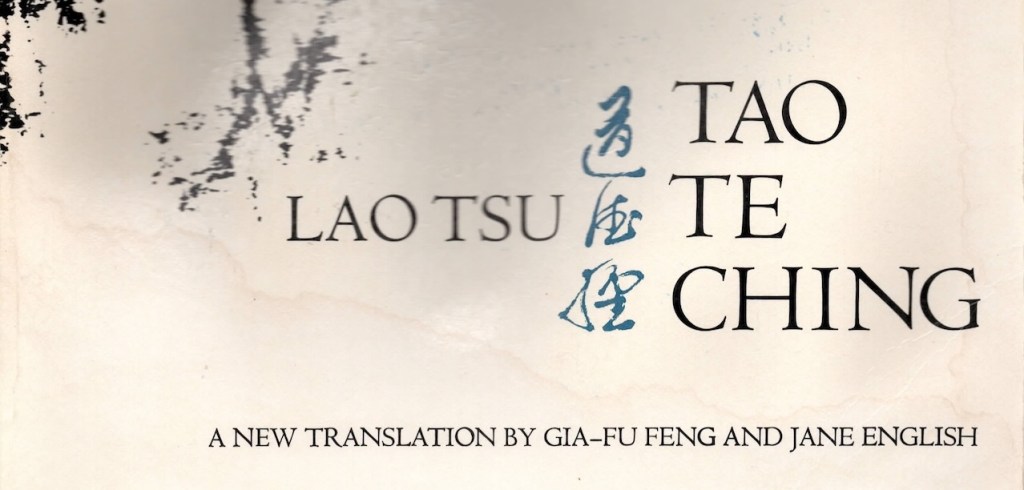

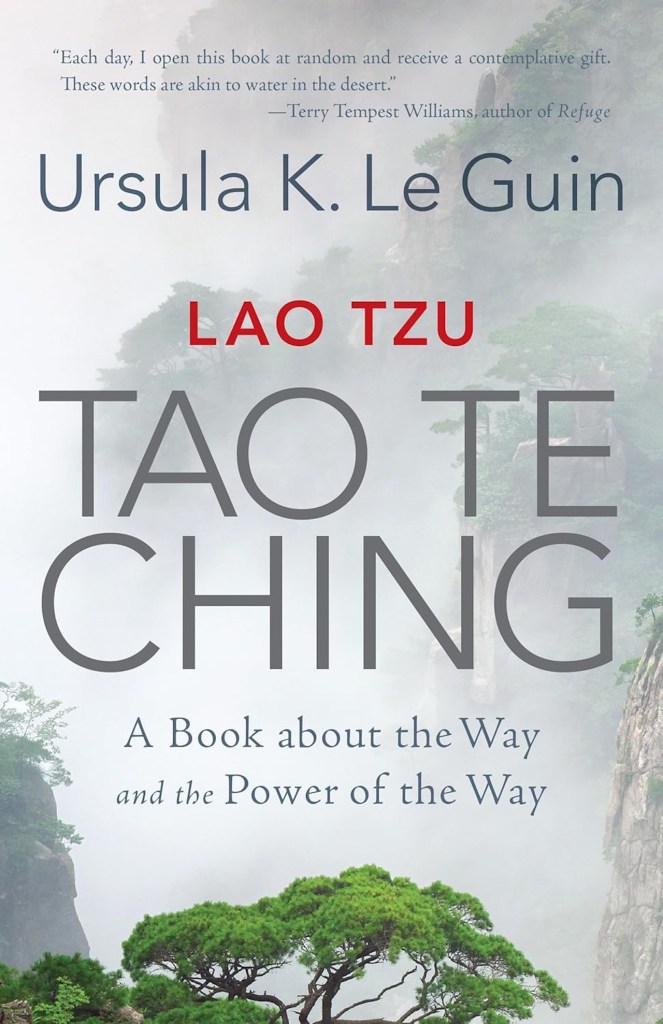

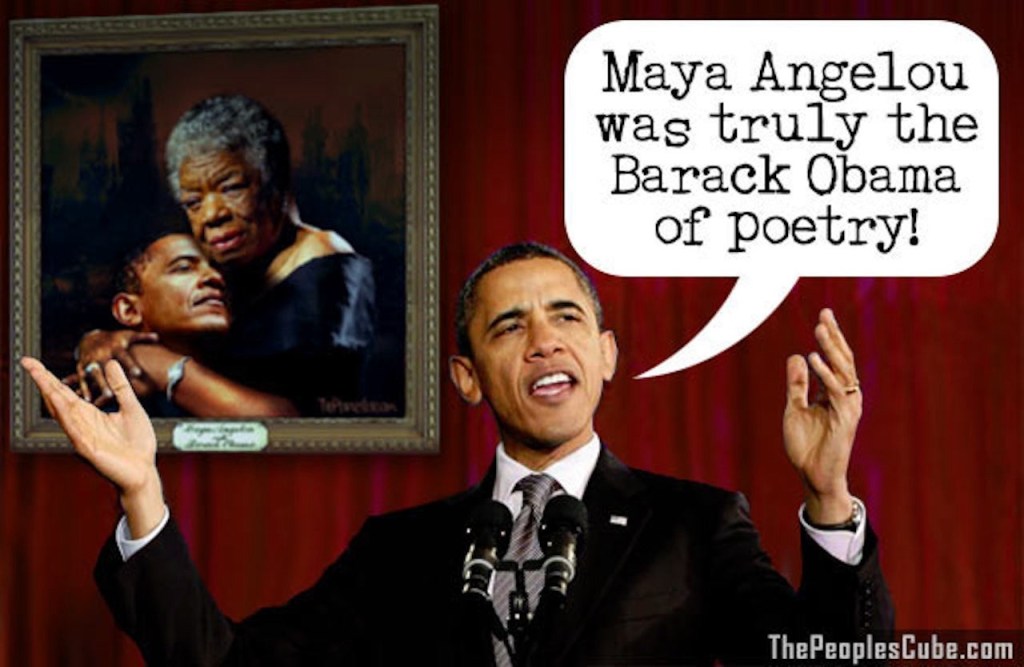

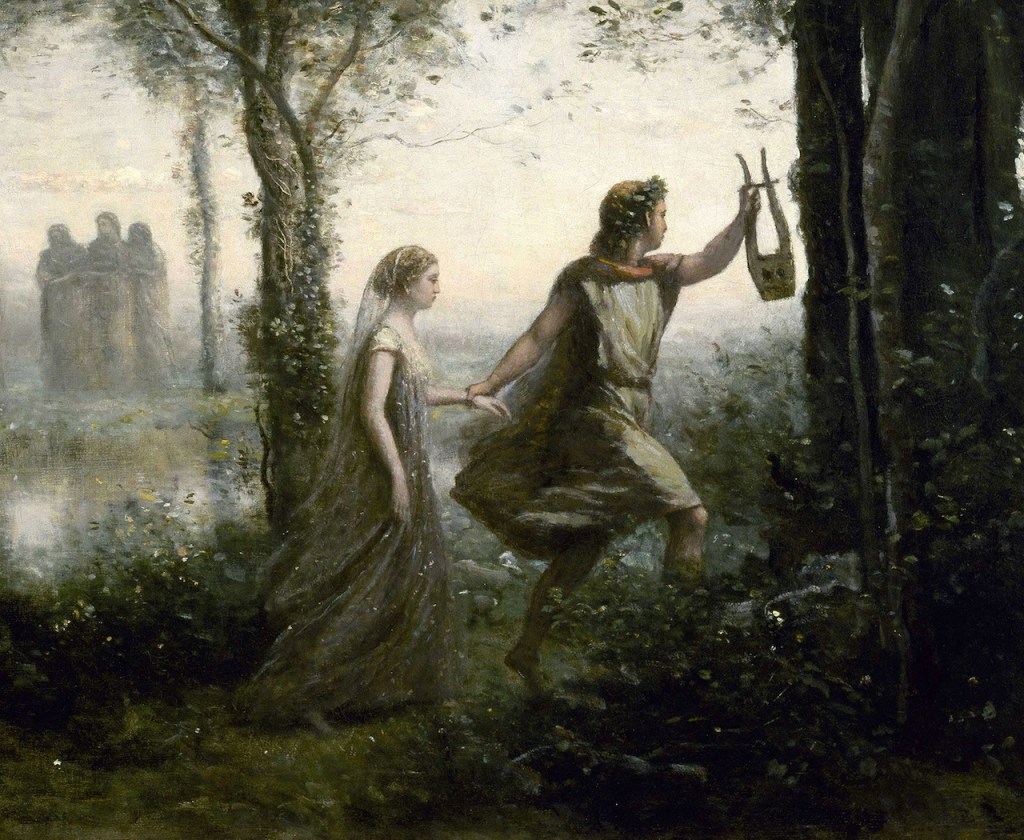
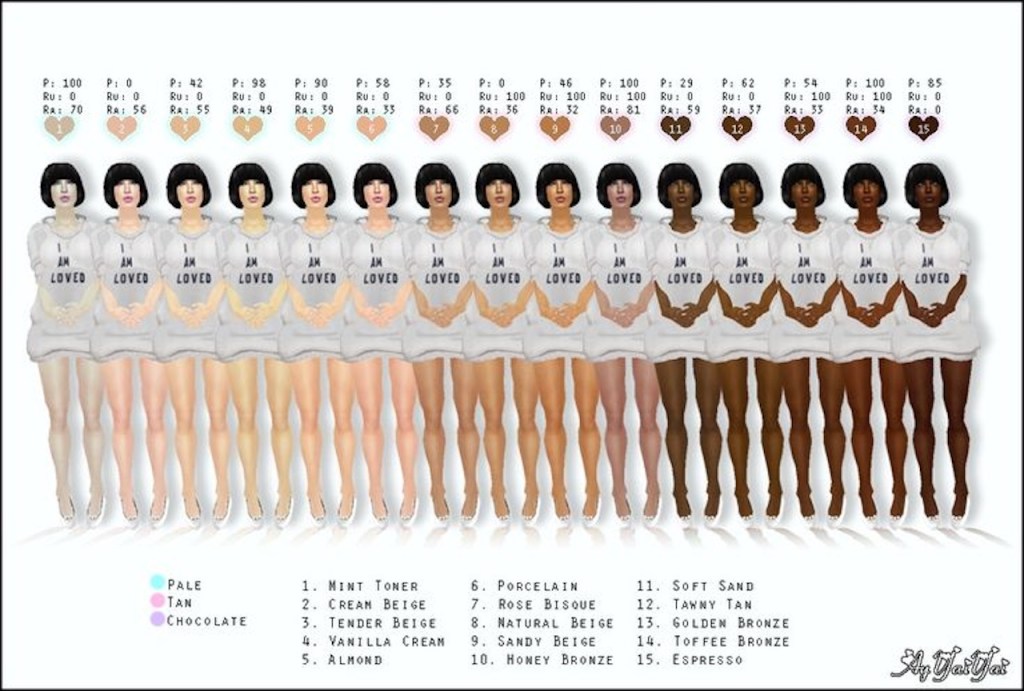

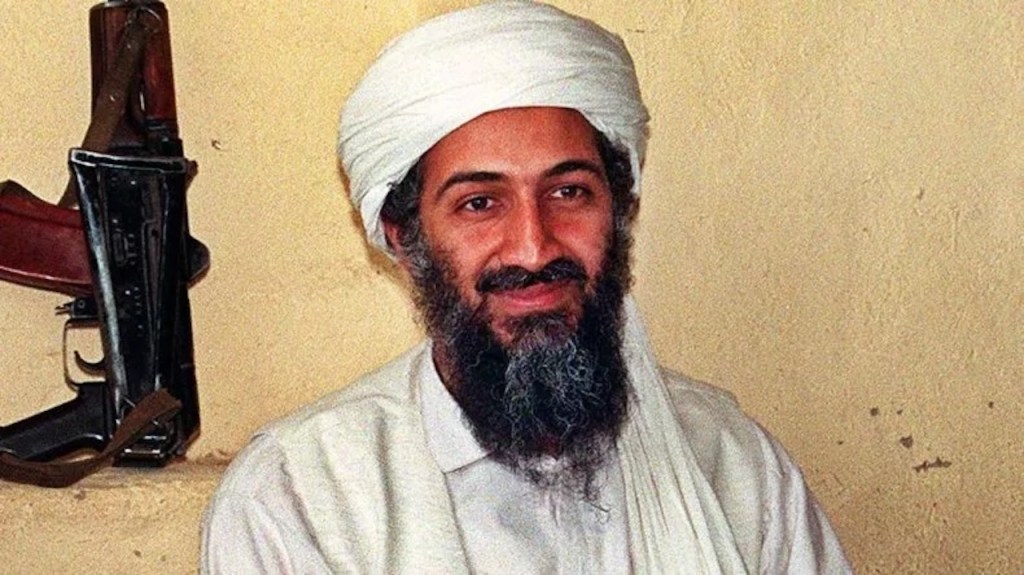



 Linda's Literary Home