Image: Emily Dickinson – Amherst College – Daguerrotype of the poet at age 17, circa 1847 – likely the only authentic, extant likeness of the poet
Emily Dickinson’s “Winter is good – his Hoar Delights”
For Emily Dickinson, the seasons offered ample opportunities for verse creation, and her love for all of the seasons is quite evident in her poems. However, her poetic dramas become especially deep and profound in her winter poems.
First Winter Poem: “Winter is good – his Hoar Delights”
Emily Dickinson creates speakers who are every bit as a tricky as Robert Frost’s tricky speakers. Her two-stanza, eight-line lyric announcing, “Winter is good” attests to the poet’s skill of seemingly praising while showing disdain in the same breath.
The rime scheme of “Winter is good – his Hoar Delights” enforces the slant rime predilection with the ABAB approximation in each stanza. All of the rimes are near or slant in the first stanza, while the second boasts a perfect rime in Rose/goes.
Winter is good – his Hoar Delights
Winter is good – his Hoar Delights Italic flavor yield – To Intellects inebriate With Summer, or the World –
Generic as a Quarry And hearty – as a Rose – Invited with Asperity But welcome when he goes.
Commentary on “Winter is good – his Hoar Delights”
Emily Dickinson loved all of the seasons, and she found them inspiringly colorful in their many differing attributes. These seasonal characteristics gave this observant poet much material for her creative little dramas.
First Stanza: Winter’s Buried Charms
Winter is good – his Hoar Delights Italic flavor yield – To Intellects inebriate With Summer, or the World –
The speaker claims rather blandly that “Winter is good” but quickly adds not so plainly that his frost is delightful. That winter’s frost would delight one, however, depends on the individual’s ability to achieve a level of drunkenness with “Summer” or “the World.”
For those who fancy summer and become “inebriat[ed]” with the warm season’s charms, winter takes some digging to unearth its buried charm. And the speaker knows that most folks will never bother to attempt to find anything charming about the season they least favor.
But those frozen frosts will “yield” their “Italic flavor” to those who are perceptive and desirous enough to pursue any “Delights” that may be held there. The warmth of the Italian climate renders the summer flavors a madness held in check by an other-worldliness provided by the northern climes.
The speaker’s knowledge of the climate of Italy need be only superficial to assist in making the implications this speaker makes. Becoming drunk with winter, therefore, is a very different sport from finding oneself inebriated with summer, which can be, especially with Dickinson, akin to spiritual intoxication.
Second Stanza: Repository of Fine Qualities
Generic as a Quarry And hearty – as a Rose – Invited with Asperity But welcome when he goes.
Nevertheless, the speaker, before her hard-hitting yet softly-applied critique, makes it clear that winter holds much to be honored; after all, the season is “Generic as a Quarry / And hearty – as a Rose.” It generates enough genuine qualities to be considered a repository like a stone quarry that can be mined for all types of valuable rocks, gems, and granite.
The season is “hearty” in the same manner that a lovely flower is “hearty.” The rose, although it can be a fickle and finicky plant to cultivate, provides a strength of beauty that rivals other blossoms. That the freezing season is replete with beauty and its motivating natural elements render it a fertile time for the fertile mind of the poet.
But despite the useful and luxuriant possibilities of winter, even the mind that is perceptive enough to appreciate its magnanimity has to be relieved when that frozen season leaves the premises or as the speaker so refreshingly puts it, he is “welcome when he goes.” The paradox of being “welcome” when “he goes” offers an apt conclusion to this tongue-in-cheek, left-handed praise of the coldest season.
The speaker leaves the reader assured that although she recognizes and even loves winter, she can well do without his more stark realities as she welcomes spring and welcomes saying good-bye to the winter months.
Full Image: Emily Dickinson – Amherst College – Daguerrotype of the poet at age 17, circa 1847 – likely the only authentic, extant likeness of the poet
Some bones stand like corn stalks After late harvest. They bristle in the field. They remain unclean though they look Bleached and scrubbed.
Skeletons may hang in closets But not these bones—the ones That are losing themselves As they scream and pound sand.
Some bones cry for a thinner cloak But unlike some hearts They have never broken themselves Over the pain of this mud ball.
Some bones slash themselves in early spring And cleave to youth too late in summer. A young brain cannot pool its dreams To yield the pith of adult philosophy.
Some bones have no star to guide errant ways. They may stitch themselves by valves But sense no light in the chambers That wobble and bleed ugly passions.
Some bones keep wobbling, sputtering, Spitting in the face of any thought That might hold them to account Lingering in the mud of passing time.
A Prose Commentary on My Original Poem “Some Bones”
In my poem “Some Bones,” I have created a speaker who is musing on fragmentation, arrested development, and the failure of inner cohesion, using the recurring image of bones—stripped, exposed, and stubbornly animate—as a controlling metaphor for the human condition when it is cut off from spiritual integration.
Unlike the quiet endurance of stone, bone suggests a harsher, more restless existence: something once living that refuses, even in its partial ruin, to settle into peace. Such failure epitomizes the blocked condition of generations of unhappy, prideful, and dangerous individuals who have remained strangers to themselves.
The language remains constructively physical—bones, closets, sand, mud, valves—yet it continually gesticulates toward psychological and spiritual disarray. My speaker does not offer consolation; instead, she allows the imagery to confront the reader with a kind of unresolved agitation. Where wisdom might emerge, it does so jarringly, often obstructed by immaturity, illusion, or sheer refusal.
Underlying the poem is my own sense that without a guiding metaphysical orientation—whether one names it divine light, higher consciousness, or moral clarity—the human being risks becoming disjointed, reactive, and perpetually unfinished. Such an orientation of mind has been instilled in my mindset by my blessèd Guru Paramahansa Yogananda.
First Stanza: Residue after Harvest
In the opening stanza, my speaker presents bones as remnants, likened to corn stalks left standing after harvest. This simile is intentional: what remains is not fruitful but residual, something overlooked, perhaps even abandoned. The bones “bristle,” suggesting defensiveness, a kind of posturing that masks emptiness.
Though they appear “bleached and scrubbed,” they remain “unclean.” This contradiction establishes a central tension: outward purification does not equate to inner transformation.
The bones carry a stain that cannot be washed away by exposure or time alone. I wanted the speaker to imply that mere survival or endurance does not guarantee wisdom; one can persist and yet remain fundamentally unresolved.
Second Stanza: Refusal of Containment
Here, my speaker contrasts the familiar idiom of “skeletons in closets” with these bones, which refuse concealment. They are not hidden but actively “losing themselves / As they scream and pound sand.” The image is specifically chaotic and futile—pounding sand accomplishes nothing, yet it expresses frustration and desperation.
These bones are not passive relics but disintegrating agents, unable to maintain coherence. The phrase “losing themselves” suggests a failure of identity, a dissolution rather than a stable essence. The speaker is emphasizing a kind of existential noise: movement without direction, expression without meaning—a condition that will remind my readers of the influence of postmodernism on poetry.
Third Stanza: Avoidance of True Suffering
In this stanza, the bones “cry for a thinner cloak,” desiring relief or escape, yet my speaker contrasts them with hearts that have “broken themselves / Over the pain of this mud ball.” The implication is that these bones have avoided the kind of deep suffering that refines and transforms.
There is, in my view, a necessary breaking that accompanies genuine emotional or spiritual growth. These bones, however, remain intact in a superficial sense precisely because they have not undergone that process.
Their complaint is shallow; they seek comfort without having earned insight. The “mud ball” underscores the earth’s dirty imperfection, a condition that must be confronted rather than evaded.
Fourth Stanza: Temporal Dislocation and Immaturity
The fourth stanza examines the misalignment of time and development. The bones “slash themselves in early spring” and “cleave to youth too late in summer,” suggesting a disordered relationship to life’s natural phases. There is both premature self-harm and delayed attachment to youth.
The concluding line suggests frenetically what the imagery implies: maturity requires synthesis. Dreams alone, without discipline or time, cannot produce wisdom. I wanted the speaker to assert that intellectual and spiritual depth cannot be rushed or improvised; it must be cultivated through experience and reflection.
Fifth Stanza: Absence of Guiding Light
Here, my speaker turns sternly to the absence of direction. The image that “Some bones have no star to guide errant ways” invokes the ancient image of navigation by the heavens. Without such a reference point, these bones attempt a kind of self-repair—“stitch themselves by valves”—but the effort is mechanical and insufficient.
The “chambers” evoke both the heart and the mind, yet they “sense no light.” This lack is crucial: the structure exists, but illumination does not. The result is a system that “wobbles and bleed[s] ugly passions,” governed not by clarity but by disorder. The speaker is averring that without an orienting principle, human faculties become unstable, even grotesque.
Sixth Stanza: Defiance and Stagnation
In the final stanza, the bones persist in their agitation—“wobbling, sputtering”—but now their resistance is directed against accountability itself. They reject introspection or discipline.
The closing image, “Lingering in the mud of passing time,” echoes to the earlier “mud ball,” but now it emphasizes stagnation. Time moves, yet the bones do not progress; they remain mired, neither decaying fully nor transforming.
This eventuality is, perhaps, the most severe judgment in the poem: not suffering, not even failure, but refusal—the unwillingness to engage the very processes that might lead to growth.
An Afterthought
In “Some Bones,” I have attempted to portray a condition of partial existence—one in which the human being retains structure and motion but lacks integration, direction, and illumination. The bones are not dead, but neither are they fully alive in any meaningful sense.
Where my earlier musing on stone suggested endurance and the possibility of quiet wisdom, here I explore a more troubled state: persistence without purpose, animation without coherence.
The poem ultimately argues, though indirectly, that without a willingness to suffer, to mature, and to orient oneself toward a higher principle, one risks becoming like these bones—restless, exposed, and perpetually incomplete.
Elizabeth Barrett Browning’s Sonnet 34 “With the same heart, I said, I’ll answer thee”
Returning to the melancholy character in sonnet 34 “With the same heart, I said, I’ll answer thee,” as she has so often maintained, the speaker contrasts her light-hearted childhood’s response with her serious maturity.
Introduction and Text of Sonnet 34 “With the same heart, I said, I’ll answer thee”
The character speaking in Barrett Browning’s Sonnet 34 “With the same heart, I said, I’ll answer thee” from Sonnets from the Portuguese has returned to her melancholy attitude. Now she is contrasting her happy, carefree childhood years to her very stern and serious life as a mature adult.
The speaker however is addressing her belovèd, imploring him to consider how important he is to her. As earnest, obedient, and steadfast as she was as a child, now her constancy with her belovèd is even more in evidence. The speaker continues to build her case for deserving the love of such an accomplished man, whom she considers to be much above her own station in life.
Sonnet 34 “With the same heart, I said, I’ll answer thee”
With the same heart, I said, I’ll answer thee As those, when thou shalt call me by my name— Lo, the vain promise! is the same, the same, Perplexed and ruffled by life’s strategy? When called before, I told how hastily I dropped my flowers or brake off from a game, To run and answer with the smile that came At play last moment, and went on with me Through my obedience. When I answer now, I drop a grave thought, break from solitude; Yet still my heart goes to thee—ponder how— Not as to a single good, but all my good! Lay thy hand on it, best one, and allow That no child’s foot could run fast as this blood.
Commentary on Sonnet 34 “With the same heart, I said, I’ll answer thee”
Returning to the melancholy character she has so often maintained, the speaker contrasts her light-hearted childhood’s response with her serious maturity.
First Quatrain: The Necessity of Consistency
With the same heart, I said, I’ll answer thee As those, when thou shalt call me by my name— Lo, the vain promise! is the same, the same, Perplexed and ruffled by life’s strategy?
The pensive speaker professes a need to be consistent; thus, she repeats the word “same” three times in three lines. She is of the “same heart” as she was earlier in her lifetime. She is called by “[her] name. But she is unsure about “life’s strategy.” She is even “perplexed and ruffled” by it.
The speaker hopes to convince herself that love has merely continued to flow into around her life. She also demands from her new love relationship a constant heart as she lovingly and gently makes demands on her belovèd.
Second Quatrain: The Obedient One
When called before, I told how hastily I dropped my flowers or brake off from a game, To run and answer with the smile that came At play last moment, and went on with me
Earlier in her lifetime, the melancholy speaker had played the obedient one, coming when called, dropping her “flowers” or leaving off her “game.” She ran to answer and even “with a smile” she appeared. Such behavior continued because of her dedication to obedience.
The speaker needs to be always consistent in her emotional responses. The static melancholy that she has experienced has programmed her to need a steady environment, even if she must create it from fragments of memory and emotional responses from the past.
First Tercet: Adult Life Different Details
Through my obedience. When I answer now, I drop a grave thought, break from solitude; Yet still my heart goes to thee—ponder how—
Now the specific details of life are a bit different. Instead of games and flowers, she answers from the position of having dropped “a grave thought” or a “break from solitude.” But her heart goes now always to the belovèd. She spills out a command before venturing on, telling her beloved to “ponder how . . . .”
Even though the details of her adult life are different, her emotional responses are essentially the same. Her same heart-responses continue to guide her. Her new love relationship has become even more important to her than any relationship before.
Second Tercet: From Childhood to Adulthood
Not as to a single good, but all my good! Lay thy hand on it, best one, and allow That no child’s foot could run fast as this blood.
The speaker then concludes that the good her beloved has done her is not one in one single area but in “all my good!” She asks her beloved to understand that as fleet foot as she was at obedience as child, she is much faster at running to her belovèd than she could have ever been in her earlier life.
The speaker’s blood now runs faster and with more passion than ever her foot did as a child. As important to her as were her earlier loves, her new belovèd has become even more vital to her life.
The speaker’s melancholy seems to be desperate for her lover to grasp his importance to her. Thus, she continues to compare and contrast her life’s environments from childhood to maturity.
Literary studies is the academic discipline devoted to the analysis, interpretation, evaluation, and contextualization of literature; it also includes the generalized act of commentary on literary works.
Literary studies examines written works—from poetry, fiction, and drama to essays and emerging digital forms—not simply as artistic objects but as cultural, historical, philosophical, linguistic, and aesthetic expressions. At its core, literary studies asks:
What do texts mean?
How do they work?
Why do they matter?
The field draws from a range of approaches, including philology, historical scholarship, theory, philosophy, linguistics, theology, and cultural analysis. Each special focus from analysis to commentary engages its own experts who employ each of these fields in unique combinations of endeavor.
For example, the analyst may emphasize historical scholarship in explicating a poem, while the commentarian will dip into any number of those approaches in order to elucidate meaning from informed personal experience.
At the core of the literary field is human experience. From humankind’s first finding itself in world of pairs of opposites that operate sometimes for good and sometimes for ill, the mind of mankind has grappled with the very meaning of existence. Literature provides a written record of that grappling.
That record makes it so that humanity need not learn all over again and again everything required for living a well-seasoned and reasonably comfortable, prosperous life. Human beings can read about many more experiences than they can ever actually experience.
And while personal experience is always central to one’s psyche, it serves as a bedrock for understanding those contemporaries living in the immediate environment and those ancestors who lived in the past.
Literature and literary studies offer a treasure trove of material keeping the mind and heart balanced and harmonious as each human being travels a unique path to spiritual understanding and ultimate awakening to soul-reality—the final stage in understanding and uniting the soul with the Creator of creation (God).
Historical Development
1. Origins in Antiquity
The roots of literary studies reach back to ancient civilizations.
Greece: Thinkers such as Plato and Aristotle explored poetry’s moral and aesthetic value, laying foundational concepts in mimesis, genre, and rhetoric.
Rome: Critics such as Horace, Longinus, and Quintilian systematized literary technique and rhetorical education.
These early traditions treated literature as part of a wider program of moral, civic, and rhetorical training.
2. Medieval and Renaissance Scholarship
During the Middle Ages, literature was primarily studied through the lens of theology and classical rhetoric. With the Renaissance, renewed attention to classical texts and humanism broadened interpretation, emphasizing:
textual editing
authorial biography
moral philosophy
artistic imitation and originality
Figures such as Petrarch, Erasmus, and later Sir Philip Sidney were important for literary criticism as an intellectual discipline.
3. Philology and the Birth of Modern Literary Studies (18th–19th
Centuries)
The modern university model grew out of European philology—systematic study of languages, manuscripts, and textual origins. Key figures included:
Friedrich August Wolf, who formalized classical philology
Wilhelm Dilthey, who argued for the humanities as a distinct form of knowledge
The Grimm brothers, whose linguistic scholarship shaped historical study of culture
In Britain and the United States, literary study emerged gradually as its own discipline, often housed in departments of English language and rhetoric.
4. The Rise of Criticism and Theory (20th Century)
The 20th century saw a dramatic diversification of methodologies, often called literary theory. Important movements and contributors include:
New Criticism (T. S. Eliot, Cleanth Brooks, I. A. Richards): close reading, textual autonomy
Feminist and gender studies (Woolf, Gilbert & Gubar, Butler)
Postcolonial studies (Said, Spivak, Bhabha)
Reader-response theories (Iser, Fish)
This pluralism made literary studies one of the most interdisciplinary fields in the humanities.
5. Literary Studies in the 21st Century
The field continues to evolve with:
digital humanities (text mining, digital archives, computational analysis)
environmental humanities (ecocriticism)
narrative medicine
world literature studies
renewed interest in classical rhetoric and formal aesthetics
Today, literary studies includes both traditional close reading and technologically advanced methodologies.
Internal Tensions and Contemporary Challenges in Literary Studies
Despite its intellectual richness and adaptability, literary studies has faced sustained internal tensions and external pressures, particularly since the late twentieth century. Acknowledging these challenges is essential for an honest account of the discipline’s current condition.
1. Debates over Theory and Method
One of the most persistent internal debates concerns the role and dominance of literary theory. While theory expanded the field’s conceptual reach and interdisciplinary influence, critics have argued that its institutionalization sometimes displaced close reading, historical knowledge, and aesthetic judgment.
This tension has produced ongoing disagreements between theoretically driven approaches and those advocating a return to formal analysis, philology, rhetoric, or historically grounded criticism. The result has been both fragmentation and productive pluralism.
2. Institutional Pressures and Decline
Literary studies has also experienced institutional contraction, particularly in Anglophone universities. Declining enrollments, reduced funding, and departmental closures have forced the field to defend its place within increasingly market-driven educational systems.
These pressures have reshaped curricula, hiring priorities, and research agendas, often privileging demonstrable “impact” over long-term scholarly depth.
3. Economic Justification of the Humanities
A related challenge is the growing demand to justify literary studies in economic or utilitarian terms. Arguments emphasizing transferable skills—critical thinking, communication, adaptability—have helped defend the discipline, but they risk narrowing its intellectual and cultural aims.
Many scholars contend that literature’s value cannot be fully captured by metrics of employability, insisting instead on its role in ethical reflection, cultural memory, and imaginative freedom.
4. Public Relevance and Authority
Literary studies has also confronted questions about its public authority. As cultural commentary has migrated to digital platforms and popular media, academic criticism has sometimes appeared insular or inaccessible.
In response, there has been renewed interest in public humanities, essayistic criticism, and teaching-oriented scholarship that reconnects academic work with broader audiences.
5. Renewal through Self-Critique
These tensions have not merely weakened the discipline; they have also prompted self-examination and renewal. Contemporary literary studies increasingly combines theoretical sophistication with historical depth, formal attentiveness, and ethical seriousness. The field’s willingness to critique its own assumptions remains one of its defining strengths.
By recognizing these internal debates and structural challenges, literary studies presents itself not as a settled or complacent discipline, but as one engaged in ongoing reflection about its methods, purposes, and responsibilities in a changing cultural and institutional landscape.
Purpose of Literary Studies
Interpretation and Meaning
The primary purpose of literary studies is to interpret texts richly and responsibly, explaining how literature creates meaning through form, language, imagery, voice, and structure.
2. Preservation of Cultural Heritage
Through editing, archiving, and historical scholarship, literary studies preserves important works and makes them accessible to future generations.
3. Critical and Ethical Inquiry
Literature is a testing ground for human experience. Studying literature helps individuals:
examine moral and philosophical questions
understand diverse viewpoints
confront social issues
explore the imagination’s power
4. Training in Analytical and Communicative Skills
Literary discipline develops skills essential across professions:
close attention to detail
critical thinking
persuasive writing
interpretive reasoning
cultural literacy
5. Exploration of Aesthetics
Literary studies also seeks to understand the pleasures and structures of artistry—why poetry moves us, how narrative creates suspense, how style functions, and what beauty means in language.
Importance of Literary Studies
Cultural Understanding and Memory
Literature is a record of humanity’s inner life. Studying it helps societies remember, reflect, and interpret their history, values, and aspirations.
2. Empathy and Human Connection
Reading literature strengthens the capacity to imagine the lives of others, fostering empathy and reducing cultural isolation.
3. Intellectual Freedom
Literary analysis encourages questioning, debate, and openness to multiple interpretations—essential qualities for democratic societies.
4. Preservation of Language
Through the study of style, genre, and linguistic change, literary studies enriches and preserves the expressive possibilities of language itself.
5. Influence Across Disciplines
The methods employed in literary studies inform philosophy, history, sociology, psychology, political theory, theology, and even medicine and law.
Place in Society
1. Education
Literary studies is central to curricula from primary schools to graduate programs. It cultivates literacy, imagination, ethical reflection, and intellectual maturity.
2. Cultural Institutions
Libraries, publishing houses, museums, and arts organizations rely on literary scholars for:
editing and curating texts
creating anthologies
interpreting archives
preserving rare works
3. Public Discourse
Literary critics influence cultural conversations through essays, reviews, public scholarship, and commentaries.
4. Media and the Arts
Film, theater, screenwriting, advertising, and media studies use literary analysis to shape storytelling, symbolism, and audience impact.
5. Humanities and Civic Life
As part of the broader humanities, literary studies sustains thoughtful civic engagement by nurturing critical reflection, historical awareness, and nuanced communication.
Cornerstone of the Humanities
Literary studies is a cornerstone of the humanities, offering tools to understand texts not only as artistic creations but as expressions of human thought, feeling, and cultural identity. Its long history—from ancient rhetoric to digital humanities—shows a discipline continuously reinventing itself to meet new forms of storytelling and new intellectual challenges.
By cultivating interpretation, empathy, cultural memory, and critical reasoning, literary studies plays a vital role in shaping educated citizens and sustaining a thoughtful, imaginative, and spiritually enlightened society.
🕉️
My Personal Engagement with Literary Studies
From my earliest love of music to my first unpleasant encounter with literary studies as a high school sophomore, it may seem rather odd that I did ever so engage.
Music: My First Love
It is true that my first love was music. I especially loved piano. As I was but a toddler, I watched and listened with awe as my Aunt Winnie played the piano during visits to my paternal grandparents home in Kentucky. Winnie was in her teens and played beautifully only by ear. So I fell in love with the piano, later thrilling to the TV performances of Liberace.
I also persuaded my parents to let me take piano lessons at our little four-room school house in Abington, Indiana, when I was in about the third grade around age 9. The music teacher, Mrs. Frame, came once a week and gave lessons to students, who were permitted the leave the classroom for about a half hour for the lessons.
Unfortunately, the school board decided after about three years into my lessons to ban Mrs. Frame from using out little school to give her lessons; she then continued them at her home. But we had to then travel to her home, and my dad was often too busy to take me to my lessons.
To relieve my dad of that chore, I stopped the lessons fairly soon after Mrs. Frame’s banishment. I have often wished I could have continued the lessons beyond the three years. But I have continued to keep a piano in my home and to play it from time to time.
Literature in High School
During my sophomore year in high school, Mrs. Edna Pickett was my English teacher. The first semester we studied grammar, and I was a straight A student in grammar.
On the first day’s meeting in Mrs. Pickett’s class, she asked the class to name the 8 parts of speech. No one offered to do it, so I raised my hand a spouted them off for her; she was impressed, and she remained impressed with my ability to handle English grammar.
Then second semester arrived. And instead of my beloved grammar, the focus was on general literature. We would read stories and poems in the literature text book—a big thick thing that I had no love for—and then discuss them.
Oddly, I had no yardstick for measuring the height, depth, and width of those works. It seemed that we were supposed to fathom something in the stories that I could not seem to fathom. The study seemed terribly vague and unwieldy, not like grammar, which had real answers and followed logical patterns.
To make matters worse, Mrs. Pickett required us to write book reports. If we did not write a book report, we could not get a A, regardless of our accumulated number.
I thought that book report requirement was unfair, and I refused to write one. True to her word, Mrs. Pickett marked me down to a B, even though my grad average was in the high 90s as usual, which under normal circumstances would have given me my usual A.
I’m not sure how I managed to get A’s on the literature tests, but somehow I did. And Mrs. Pickett said when she assigned the B that she was sad about it, also. That B really stung, and from then on, I went ahead and read books and reported on them.
After sophomore English came junior English which was focused on American literature, in addition to the grammar, of course. By then I had fallen in love the poetry and began to appreciate literature more. So my American literature focus caused me no real consternation.
However, I did not take British literature with Mrs. Pickett in my senior year; that year a course in creative writing was offered and it fulfilled the requirement for academic curricula specialty, so I enrolled in creative writing instead of senior English. I have often regretted not taking both the Brit lit and the creative writing. I could have done so because I had two study hall periods that year.
Curiously, it is also the oddity that I ended up taking British/Irish literature as the main concentration for my PhD studies, writing my dissertation of William Butler Yeats’ focus on Eastern philosophy and religion.
PhD in British Literature
So the next part of this story ends on a reversal that could not have been predicted. And it has some twists and turns. As I enjoyed grammar in early high school, I also enjoyed and was good at foreign language, beginning with Latin. The study of Latin even enhanced my aptitude for English grammar.
I took Latin my freshman year, then I took Spanish my sophomore year; my junior year I took Latin II and Spanish II and then took French my senior year (Mrs. Pickett taught the French class, and it was the first year French had been offered. She even spent the summer at the Sorbonne in Paris boning up on her French stills.)
So my interest become completely ensconced in foreign language, and I knew that in college I would major in foreign language—likely Spanish. But then my creative writing teacher, Mr. Malcolm Sedam, who was working on a masters degree in history, let me know that he needed to translate some works from German. He was writing his thesis on Johannes Erwin Eugen Rommel, known as The Desert Fox, a German Generalfeldmarschall during World War II.
I had begun to study German, Italian, and Brazilian Portuguese on my own. And I had been apprized of the similarities between German and English, and I decided that in college I would likely major in German.
So I made an attempt to translate some the text that Mr. Sedam needed. Of course, that was a total bust; I had only a smattering of German, not nearly enough to translate such material.
Nevertheless, I went ahead and began my German major at Ball State Teachers College which I entered summer quarter 1964. I had to wait until fall quarter to take my first course in German however.
I thoroughly enjoyed studying German at Ball State, transferred to Miami University after studying four quarters at BSU, graduated with a major in German from Miami in April 1967. I then taught German at Brookville, Indiana, for one year. I earned my MA in German from BSU in 1971 then taught 2 more years of German at Brookville.
By this time, I had discovered that a career teaching German was not for me; to do a truly efficient job of such teaching and engaging such scholarship, I would have to travel and study in Germany probably on a yearly basis—a venture that I did not relish.
Besides, I had begun writing and studying poetry written in English and became convinced that as a native speaker of English and dedicated literary studies enthusiast, a concentration in literature written in English was my best focus.
I began an MA in English at BSU in 1976 but did not finish it. Then with many pages of poems, essays, and other writings, especially songs, in 1983, I began anew with the MA in English at BSU, and by this time I had decided that I would earn my PhD in English at BSU. And that’s what I did—finishing the MA in 1984 and the PhD in November 1987.
From 1983, I taught in the BSU writing program as graduate assistant, (1983-1984), doctoral fellow (1984-1987), and assistant professor (1987-1999.) In the fall of 1987, I accepted an offer of a teaching job at a now-defunct college in Virginia, but the job was so much different from what the administration had described that I left and returned to BSU by winter quarter that same year.
Independent Literary Scholar
After leaving the BSU writing program in 1999, I have become an independent scholar, writing, researching, and posting my works online on various sites that accept such works.
An example of my online writing endeavor is that I spent almost ten years posting on the recently defunct HubPages, accumulating over a thousand essays on poetry commentaries, political and social issues—even a few recipes and songs—along with several of my original poems and short stories.
Currently, I curate my own literary website at Linda’s Literary Site. The site features my writings in poems, songs, essays, short stories, fables, recipes, and commentaries.
The financial gain is close to non-existent, whereas I was able to gain a pittance on HubPages, but the satisfaction is enormous with no editorial noise to interrupt by voice.
Useful or Not?
The twists and turns featured in this overview are offered primarily to give readers the opportunity to decide for themselves whether they find my offerings in literary studies of any value for their own perusal.
As mentioned earlier, where I ended up regarding the study of literature had an inauspicious beginning. But it nevertheless has ended with me dedicating my time and effort to my once adversarial subject of literary studies.
Elizabeth Barrett Browning’s Sonnet 22 “When our two souls stand up erect and strong”
The speaker in Elizabeth Barrett Browning’s sonnet 22 “When our two souls stand up erect and strong” from “Sonnets from the Portuguese” contrasts the heaven created by the soul force of the lovers with the contrary state of worldly existence.
Introduction with Text of Sonnet 22 “When our two souls stand up erect and strong”
The speaker in Elizabeth Barrett Browning’s sonnet 22 “When our two souls stand up erect and strong” from Sonnets from the Portuguese is drawing a contrast between the paradisiacal state effected in the relationship between her beloved and herself and the oppositional state that a worldly existence has erected around them.
In order to ennoble their growing relationship to its highest level, the speaker creates a description of the melding of two souls. Instead of the mere, mundane marriage of minds and physical encasements as most ordinary human beings emphasize, this speaker is concerned with eternal verities. This speaker is engaged in creating a world within a world wherein the spiritual is more real than the material level of existence.
Sonnet 22 “When our two souls stand up erect and strong”
When our two souls stand up erect and strong, Face to face, silent, drawing nigh and nigher, Until the lengthening wings break into fire At either curvèd point,—what bitter wrong Can the earth do to us, that we should not long Be here contented? Think. In mounting higher, The angels would press on us and aspire To drop some golden orb of perfect song Into our deep, dear silence. Let us stay Rather on earth, Belovèd,—where the unfit Contrarious moods of men recoil away And isolate pure spirits, and permit A place to stand and love in for a day, With darkness and the death-hour rounding it.
Commentary on Sonnet 22 “When our two souls stand up erect and strong”
In sonnet 22 “When our two souls stand up erect and strong,” the speaker is waxing ever more fanciful, painting a safe harbor for herself and her beloved as a loving couple whose union is heightened by the power and force of their souls.
First Quatrain: Imagining a Wedding
When our two souls stand up erect and strong, Face to face, silent, drawing nigh and nigher, Until the lengthening wings break into fire At either curvèd point,—what bitter wrong
The speaker dramatizes the couple’s wedding, fancying that their souls are standing and meeting as they draw closer and closer together in the silence facing each other. The couple resembles two angels who will merge into one. But before they merge, she allows the tips of their wings to catch fire as they form a curve in touching.
At first, the speaker’s other-worldly depiction seems to imply that she perceives that their love does not belong to this world, but the reader must remember that this speaker’s exaggeration often lowers expectations as much as it elevates them.
This speaker is convinced that the two lovers are soul-mates; thus, she would stage their marriage first at the soul level, where nothing on earth could ever detract from their union.
Second Quatrain: United by Soul
Can the earth do to us, that we should not long Be here contented? Think. In mounting higher, The angels would press on us and aspire To drop some golden orb of perfect song
The speaker then asks the question, what could anyone or anything earthly do to hamper their happiness? Because they are united through soul force, even on earth they can “be here contented.” Indeed, they could be content anywhere, for as the marriage vow declares, “what God hath joined together, let not man put asunder” (Matthew 19:6).
The speaker commands her belovèd to “think”; she wants him to reflect on the efficacy of remaining earth-bound in their love relationship. If they allow themselves to ascend too high, then heavily beings might interfere with their engaging at the soul level with their beloved state of silence. Silence at the soul level remains the best, most congenial locus for true love.
If an angel-like being intrudes with even some lovely sounding song, that intrusion would be too much for the couple during the sacred moments wherein they are becoming joined as one.
First Tercet: Working out Karma
Into our deep, dear silence. Let us stay Rather on earth, Belovèd,—where the unfit Contrarious moods of men recoil away And isolate pure spirits, and permit A place to stand and love in for a day, With darkness and the death-hour rounding it.
The speaker implies that they are not ready for total perfection; they must remain earthbound and contend with whatever circumstances other individuals might cause. The negative repercussions that society might place upon this couple will have to be strongly rebuked they the couple in the here and how.
So they must remain earthbound and practical in order to put down any such rebellions against them. However, the speaker is certain that the couple will be able to overcome all adversity offered by others, and their love will cause their adversaries to “recoil away.”
Second Tercet: Better Together
And isolate pure spirits, and permit A place to stand and love in for a day, With darkness and the death-hour rounding it.
The speaker’s faith in the united soul force of the two lovers deems them “pure spirits,” and they will endure like a strong, self-sustaining island. Their love will be “a place to stand and love in for a day.” Even though around them the darkness of earthly, worldly existence will trudge on, for them their haven will endure indefinitely.
Elizabeth Barrett Browning’s Sonnet 16 “And yet, because thou overcomest so”
The speaker in Elizabeth Barrett Browning’s sonnet 16 “And yet, because thou overcomest so”finally capitulates to the all consuming love that she has tried to deny herself, allowing herself only a speck of doubt.
Introduction with Text of Sonnet 16 “And yet, because thou overcomest so”
The speaker in Elizabeth Barrett Browning’s sonnet 16 from Sonnets from the Portuguese is dramatizing her nearly concluded acceptance of the love from her “noble” king-like suitor. She establishes a colorful metaphor of royalty to express her new-found emotions.
Sonnet 16 “And yet, because thou overcomest so”
And yet, because thou overcomest so, Because thou art more noble and like a king, Thou canst prevail against my fears and fling Thy purple round me, till my heart shall grow Too close against thine heart henceforth to know How it shook when alone. Why, conquering May prove as lordly and complete a thing In lifting upward, as in crushing low! And as a vanquished soldier yields his sword To one who lifts him from the bloody earth, Even so, Belovèd, I at last record, Here ends my strife. If thou invite me forth, I rise above abasement at the word. Make thy love larger to enlarge my worth.
Commentary on Sonnet 16 “And yet, because thou overcomest so”
The speaker can finally be seen as capitulating to the all consuming love that she has tried to deny herself, allowing herself only a speck of doubt.
First Quatrain: Overcoming Fears and Doubts
And yet, because thou overcomest so, Because thou art more noble and like a king, Thou canst prevail against my fears and fling Thy purple round me, till my heart shall grow
The speaker, picking up from prior adversity, can now give in to her belovèd’s advances because he has, at last, been able to overcome her fears and doubts. She again likens him to royalty. She labels him “noble” and he is able to rule her heart as king would rule his subjects.
Her royal suitor is banishing her fears as he places his protective shield “purple” around her life. All of his noble, royalty-like actions and behaviors all her heart to grow fond of him and life that he has is now so gently guiding.
Her lover has the kingly powers of protecting even a doubtful heart such as her own. He can place his royal purple cape around her shoulders and affect the very beating of her heart.
Second Quatrain: A Fearful Heart
Too close against thine heart henceforth to know How it shook when alone. Why, conquering May prove as lordly and complete a thing In lifting upward, as in crushing low!
As her heart beats close to his, the speaker finds it difficult to grasp that it once felt so afraid of life and living when it found itself solitary and isolated. She has discovered that she can, in fact, imagine herself lifted from her self-imposed prison of melancholy. The speaker can succumb to upward mobility as readily as she did to the downward spiral, “as in crushing low!”
First Tercet: A Bizarre Comparison
And as a vanquished soldier yields his sword To one who lifts him from the bloody earth, Even so, Belovèd, I at last record,
The speaker then dramatically and bizarrely compares her situation metaphorically to a “soldier” who surrenders in battle to “one who lifts him from the bloody earth.” The enemy becomes nurturing once his foe has been vanquished. But for her, the battle was very real, and thus the metaphor remains quite apt. Thus she can finally and completely surrender.
Second Tercet: Reserving a Space to Doubt
Here ends my strife. If thou invite me forth, I rise above abasement at the word. Make thy love larger to enlarge my worth.
The speaker’s handing over of weapons and defensive mechanisms is accompanied by her revelation that her sorrowful struggles are ending. She is on the verge of a major change of attitude from sadness to happiness, if she has the courage of accept that transformation.
True to character, however, she must at least reserve some bit of possible future failure by stating her declaration in a conditional clause, “if thou invite me forth.” She emphasizes “thou,” to make it clear that her belovèd is the only one to whom she could ever say these things.
The speaker has quite likely almost one hundred per cent become convinced that he has invited her, but she still feels that she has to keep any downturn in her sights. But if he does, in fact, keep that invitation open for her, she will be able to transcend her pain and rise above all the sorrow that has kept her abased for so many years.
Once again, the speaker is giving him a great deal of power as she suggests that as her new attitude will “make thy love larger,” it will also “enlarge my worth.” Thus loving him will increase her own value, not in large part because, in her eyes, his value is as large as a king’s worth. His royalty will become hers.
Langston Hughes’ “Theme for English B” dramatizes the brainstorming session of a speaker who is a non-traditional college student. He has been given the assignment to write a paper about himself that is true. He muses on how to go about producing a page that the instructor will understand.
Note on Usage: “Negro,” “Colored,” and “Black”: Before the late 1980s in the United States, the terms “Negro,” “colored,” and “black” were accepted widely in American English parlance. While the term “Negro” had started to lose its popularity in the 1960s, it wasn’t until 1988 that the Reverend Jesse Jackson began insisting that Americans adopt the phrase “African American.” The earlier, more accurate terms were the custom at the time that Langston Hughes was writing.
Introduction with Text of “Theme for English B”
The speaker is a non-traditional, older student in a college English class who has been given the assignment to write a paper that “come[s] out of you.” The instructor has insisted that the paper will be “true” if the student simply writes from his own heart, mind, and experience, but the speaker remains a bit skeptical of that claim, thinking that maybe he is unsure that it is “that simple.
Theme for English B
The instructor said,
Go home and write a page tonight. And let that page come out of you— Then, it will be true.
I wonder if it’s that simple? I am twenty-two, colored, born in Winston-Salem. I went to school there, then Durham, then here to this college on the hill above Harlem. I am the only colored student in my class. The steps from the hill lead down into Harlem, through a park, then I cross St. Nicholas, Eighth Avenue, Seventh, and I come to the Y, the Harlem Branch Y, where I take the elevator up to my room, sit down, and write this page:
It’s not easy to know what is true for you or me at twenty-two, my age. But I guess I’m what I feel and see and hear, Harlem, I hear you: hear you, hear me—we two—you, me, talk on this page. (I hear New York, too.) Me—who? Well, I like to eat, sleep, drink, and be in love. I like to work, read, learn, and understand life. I like a pipe for a Christmas present, or records—Bessie, bop, or Bach. I guess being colored doesn’t make me not like the same things other folks like who are other races. So will my page be colored that I write?
Being me, it will not be white. But it will be a part of you, instructor. You are white— yet a part of me, as I am a part of you. That’s American. Sometimes perhaps you don’t want to be a part of me. Nor do I often want to be a part of you. But we are, that’s true! As I learn from you, I guess you learn from me— although you’re older—and white— and somewhat more free.
This is my page for English B.
Reading of “Theme for English B”
Commentary on “Theme for English B”
In Langston Hughes’ “Theme for English B,” the speaker is musing on how to write a college essay about himself, after receiving the instructor’s assignment in his English class. The issue of race intrudes on the speaker’s thoughts, and he offers his experienced observation about the supposed differences between the races.
First Movement: Not a Simple Assignment
The instructor said,
Go home and write a page tonight. And let that page come out of you— Then, it will be true.
I wonder if it’s that simple? I am twenty-two, colored, born in Winston-Salem. I went to school there, then Durham, then here to this college on the hill above Harlem. I am the only colored student in my class.
The speaker begins his musing by brainstorming, listing the reasons that the assignment may not be so simple as the instructor has made it sound. The student/speaker is only “twenty-two,” but he is older than most of the other students in his class.
He was born in Winston-Salem, North Carolina, where he attended school until he moved to New York. The speaker is now attending college in Harlem. He is the only “colored” student in the class. Despite the fact that the majority of the population of Harlem was African American, it was still a time when few of them attended college.
Second Movement: A Brainstorming Tactic
The steps from the hill lead down into Harlem, through a park, then I cross St. Nicholas, Eighth Avenue, Seventh, and I come to the Y, the Harlem Branch Y, where I take the elevator up to my room, sit down, and write this page:
As the speaker begins to write, he traces the route that he takes from the college to his apartment. This step in his composition process seems to be a delaying tactic—a brainstorming activity just to get started thinking on the issue. He no doubt intuits that during the process of writing one thing leads to another, and he is thereby likely hoping that the trivial will lead to the profound.
Third Movement: Musing on What Is True
It’s not easy to know what is true for you or me at twenty-two, my age. But I guess I’m what I feel and see and hear, Harlem, I hear you: hear you, hear me—we two—you, me, talk on this page. (I hear New York, too.) Me—who?
Well, I like to eat, sleep, drink, and be in love. I like to work, read, learn, and understand life. I like a pipe for a Christmas present, or records—Bessie, bop, or Bach.
The speaker then turns his attention to what might be “true” for himself and what might be “true” for a white instructor. It crosses his mind that the differences between them might be too great for the instructor to understand and appreciate a “colored” student’s experience.
Nevertheless, the speaker begins to examine what he feels is genuine for himself. He then guesses that what he sees helps make him what he is—a brilliant recovery from what might have sounded only like stalling in the brainstorming session that began his composition.
By tracing the route he takes to school, he has opened up the possibilities for what he sees and hears. What he sees and hears is Harlem as he somewhat awkwardly spills out his thinking. He hears himself, he hears his instructor, and now he has to “talk on this page” to this instructor. He hears “New York,” but then he circles back to himself with a question, implying a query into who he actually is.
The answer to his question is important because the assignment, after all, is to produce a piece of writing that tells the instructor who the student is, what he hopes for, and what is in his heart and mind. The instructor has intimated that if the student writer will search his own heart and mind, he will then write what is “true,” that is, what is genuine and accurate without obfuscation and guile. The speaker then moves on to catalogue what he likes: sleeping, eating, drinking, and being in love.
Furthermore, the speaker enjoys such activities as working, reading, learning, and he likes to “understand life”—all fine qualities that would likely impress a university instructor. He also likes to receive “a pipe for a Christmas present.”
Finally, the speaker lists other items that he enjoys getting such as records for Christmas because he enjoys listening to music. His taste in music turns out to be rather eclectic from “Bessie, bop, or Bach.” He must be simply gleeful that his music preferences create an interesting sounding alliterative series of names.
Fourth Movement: Communication between Black and White
I guess being colored doesn’t make me not like the same things other folks like who are other races. So will my page be colored that I write?
The opening two lines of this movement present the observation that this young man has tentatively made in his life, so he frames that observation as a “guess”—he surmises that race does not dictate what an individual “likes.”
Still as a young man, the speaker continues to wonder if how he feels and what he says will register with his white instructor. He, therefore, wonders if what he writes will be “colored.”
The speaker is contemplating what he believes is genuine for himself as the instructor has suggested, but he remains unsure that he can be understood by a white instructor if his words reveal him as “colored.”
Fifth Movement: Racial Boundaries
Being me, it will not be white. But it will be a part of you, instructor. You are white— yet a part of me, as I am a part of you. That’s American. Sometimes perhaps you don’t want to be a part of me. Nor do I often want to be a part of you. But we are, that’s true! As I learn from you, I guess you learn from me— although you’re older—and white— and somewhat more free.
This is my page for English B.
The speaker then insists that what he writes will “not be white.” Yet it must still be part of the instructor. Although he is black and the instructor is white, they are surely still part of each other because “That’s American.”
Yet the speaker does remain aware that often whites do not want to be part of blacks, and he is also aware that the reverse is equally true. Despite those racial boundaries of separation, the speaker believes that they are still part of each other, whether they accept it or not.
Finally, the speaker concludes with a very significant discernment: the black student learns from the white instructor, and the white instructor can also learn from the black student, even if the instructor is older, white, and “somewhat more free” than the black student.
The speaker concludes by offering the explicit statement, “This is my page for English B.” He seems to feel that he has likely exhausted his exploration for the true, genuine, and accurate for this English assignment.
The Speaker of the Poem
Lest readers are tempted to take this poem as autobiography, a perusal of Hughes’ autobiographical work, The Big Sea, should disabuse them of that error. In that first autobiography (his second was I Wonder as I Wander), the poet describes his college days at Lincoln University, located in “the rolling hills of Pennsylvania,” not “on the hill above Harlem.”
Hughes does not broach any subject as mundane as an English class assignment as he describes his rough and tumble days at Lincoln. Also, Hughes was born in Joplin, Missouri, not “Winston-Salem.”
It is useful to remember that poets seldom write autobiographical details; they often create characters, as playwrights do. Hughes does take the opportunity in this piece to make a statement about race relations, a topic that he explored his whole life. But the speaker of a poem and the poet are often not the same, and to understand and appreciate the poem that fact must be kept in mind.
Controversy over the Phrase “African American”
The controversy surrounding the appellation, “African American,” reached an important pinnacle after Teresa Heinz Kerry, Caucasian wife of the 2004 presidential candidate and former senator John Kerry, identified herself as “African American.”
Teresa Heinz was born and raised in Mozambique, which is a country in Africa. Having been a resident of the USA since 1963, she qualifies most assuredly as an “African American.” The fact that she is white demonstrates the inaccuracy that Rev. Jackson foisted upon the black population of the United States of America, as he attempted to euphemize terms that need no euphemism.
Elizabeth Barrett Browning’s Sonnet 8 “What can I give thee back, O liberal”
The speaker continues to deny her good fortune as she reveals her gratitude for the attention of her illustrious suitor; she begins to accept her lot but reluctantly.
Introduction and Text of Sonnet 8 “What can I give thee back, O liberal”
Sonnet 8 from Elizabeth Barrett Browning’s Sonnets from the Portuguese finds the speaker continuing to doubt and deny her great fortune in attracting such an accomplished and generous suitor. However, she is slowly beginning to accept the possibility that this amazing man could have affection for her.
Sonnet 8 “What can I give thee back, O liberal”
What can I give thee back, O liberal And princely giver, who hast brought the gold And purple of thine heart, unstained, untold, And laid them on the outside of the wall For such as I to take or leave withal, In unexpected largesse? am I cold, Ungrateful, that for these most manifold High gifts, I render nothing back at all? Not so; not cold,—but very poor instead. Ask God who knows. For frequent tears have run The colors from my life, and left so dead And pale a stuff, it were not fitly done To give the same as pillow to thy head. Go farther! let it serve to trample on.
Reading
Commentary on Sonnet 8 “What can I give thee back, O liberal”
The speaker continues to deny her good fortune as she reveals her gratitude for the attention of her illustrious suitor; she begins to accept her lot but reluctantly.
First Quatrain: Baffled by Attention
What can I give thee back, O liberal And princely giver, who hast brought the gold And purple of thine heart, unstained, untold, And laid them on the outside of the wall
The speaker once again finds herself baffled by the attention she receives from one who is so much above her station in life. He has given her so much, being a “liberal / And princely giver.” The term “liberal” here means openly generous.
Her suitor has brought his valuable poetry to her along with his own upper-class qualities and manners. She metaphorically assigns all of those gifts to the status of “gold and purple,” the colors of royalty, and she locates them “outside the wall.”
The suitor romances her by serenading her under her window, and she is astonished by the good fortune she is experiencing. She cannot comprehend how one so delicate and lowly positioned as herself can merit the attention she continues to garner from this handsome, accomplished poet.
Second Quatrain: Rejecting or Accepting
For such as I to take or leave withal, In unexpected largesse? am I cold, Ungrateful, that for these most manifold High gifts, I render nothing back at all?
The handsome suitor provides the speaker with the choice of taking his affections and attentions or rejecting them, and she is very grateful for all she receives even as she regrets that she has nothing to offer in return. She declaims: “I render nothing back at all?” She frames her lack into a question that answers itself, implying that even though she may seem “ungrateful,” nothing could be further from the truth.
The rhetorical intensity achieved through dramatizing her feelings in a rhetorical question enhances not only the sonnet’s artistry but also adds dimension to those same feelings. The rhetorical question device magnifies the emotion. Instead of employing overused expressions along the lines of “definitely” or “very,” the speaker uses the rhetorical question to fuse the poetic tools into a dramatic expression that fairly explodes with emotion.
First Tercet: No Lack of Passion
Not so; not cold,—but very poor instead. Ask God who knows. For frequent tears have run The colors from my life, and left so dead
The speaker, however, does not leave the question open to possible misinterpretation; she then quite starkly answers, “No so; not cold.” She does not lack passion about the gifts her suitor bestows upon her; she is merely “very poor instead.”
She insists that it is “God who knows” the extent of her poverty as well as the depth of her gratitude. She then admits that through much shedding of tears, she has caused the details of her life to fade as clothing rinsed many times in water would become “pale a stuff.”
Second Tercet: Low Self Esteem
And pale a stuff, it were not fitly done To give the same as pillow to thy head. Go farther! let it serve to trample on.
The speaker’s lack of a colorful life, her lowly station, her simplicity of expression have all combined to make her denigrate herself before the higher class suitor with whom she feels compelled to contrast herself.
She is still not able to reconcile her lack to his plenty, and again she wants to urge him to go from her because she feels her lack is worth so little that it might “serve to trample on.” Her hopes and dreams she will keep hidden until they can override the reality of her personal lack of experience and life station.
Image: Emily Dickinson – Amherst College – Daguerrotype of the poet at age 17, circa 1847 – likely the only authentic, extant likeness of the poet
The speaker in Emily Dickinson’s “I had a guinea golden” is expressing melancholy at the loss of a friend, whom she describes metaphorically in terms of three dear objects: a guinea, a robin, and a star.
Introduction with Text of “I had a guinea golden”
This fascinating Emily Dickinson poem of loss offers quite a tricky subversion of thought. The first three stanzas seem to explain the loss of three separate loved ones. Then the final stanza packs a wallop unloading on only one “missing friend,” who has caused the speaker to create this “mournful ditty” with tears in her eyes.
This poem demonstrates the depth of Dickinson’s education as she employs metaphors of the British coinage system and allusions to Greek mythology, which has been further employed by the science of astronomy to name stars.
Not only did Dickinson study widely in many subject areas, she possessed the ability to employ her learning in creative ways to fashion those beautiful flowers, allowing them to grow in her garden of verse.
I had a guinea golden
I had a guinea golden – I lost it in the sand – And tho’ the sum was simple And pounds were in the land – Still, had it such a value Unto my frugal eye – That when I could not find it – I sat me down to sigh.
I had a crimson Robin – Who sang full many a day But when the woods were painted, He, too, did fly away – Time brought me other Robins – Their ballads were the same – Still, for my missing Troubador I kept the “house at hame.”
I had a star in heaven – One “Pleiad” was its name – And when I was not heeding, It wandered from the same. And tho’ the skies are crowded – And all the night ashine – I do not care about it – Since none of them are mine.
My story has a moral – I have a missing friend – “Pleiad” its name, and Robin, And guinea in the sand. And when this mournful ditty Accompanied with tear – Shall meet the eye of traitor In country far from here – Grant that repentance solemn May seize upon his mind – And he no consolation Beneath the sun may find.
Reading
Commentary on “I had a guinea golden”
Each stanza builds to a magnificent crescendo of outrage that allows the speaker to lavish affection as well as harsh rebuke to the one leaving her in a state of melancholy.
First Stanza: The Value of Small Things
I had a guinea golden – I lost it in the sand – And tho’ the sum was simple And pounds were in the land – Still, had it such a value Unto my frugal eye – That when I could not find it – I sat me down to sigh.
The speaker begins by referring to the coin “guinea,” which was a British coin manufactured with the gold from the African nation of Guinea. The coin was worth 21 shillings and ceased circulating in 1813. The speaker maintains the British monetary metaphor by referring also to “pounds” in the fourth line of the poem.
Metaphorically, the speaker is calling her lost friend a “golden” coin, which she lost “in the sand.” She then admits that it was a small loss for much more valuable moneys—”pounds”—were all about her. Nevertheless, to her, because of her frugality, the value of the small coin was huge, and because it was lost to her, she just “sat down to sigh.”
Second Stanza: Missing the Music
I had a crimson Robin – Who sang full many a day But when the woods were painted, He, too, did fly away – Time brought me other Robins – Their ballads were the same – Still, for my missing Troubador I kept the “house at hame.”
The speaker then employs the metaphor of “crimson Robin.” This time she is likening her friend to the singing robin who “sang full many a day.” But when the autumn of the year came around, she loses this friend also.
Just as other moneys were abounding after the loss of a simple guinea, other robins presented themselves to the speaker after she lost her robin. But even though they sang the same songs as her lost robin, it just was not the same for the speaker. She continues to mourn the loss of her robin; thus she kept herself harnessed to her house, likely in case her own robin should show up again.
Third Stanza: The Mythology of Science
I had a star in heaven – One “Pleiad” was its name – And when I was not heeding, It wandered from the same. And tho’ the skies are crowded – And all the night ashine – I do not care about it – Since none of them are mine.
The speaker then finds herself once again mourning the loss of a loved one. This one she labels “Pleiad.” Pleiad is an allusion to Greek mythology but also a reference to astronomy.
In Greek mythology, the seven daughters of Atlas went into hiding up in the sky among the stars to escape being pursued by Orion. One the seven seems to disappear perhaps out of shame or grief.
In the science of astronomy, the constellation known as Taurus features a group of seven stars, but oddly enough only six can be seen, resulting in the same “Lost Pleiad” as exists in the Greek myth.
Dickinson, who studied widely the subjects of mythology, history, and science thus alludes to the myth of the “Lost Pleiad” to again elucidate the nature of her third lost beloved. She has now experienced the loss of money, a bird, and now a star–each more precious than the last.
The speaker loses the star as she was being heedless–not paying attention. In her negligent state, her star wanders away from her. Again, although the sky is full of other stars, they just don’t measure up because “none of them are mine.”
Fourth Stanza: Admonishing a Traitor
My story has a moral – I have a missing friend – “Pleiad” its name, and Robin, And guinea in the sand. And when this mournful ditty Accompanied with tear – Shall meet the eye of traitor In country far from here – Grant that repentance solemn May seize upon his mind – And he no consolation Beneath the sun may find.
While wildly famous for her riddles, Dickinson often breaks the riddle’s force by actually naming the object described. In the final stanza, she blatantly confesses that her little story “has a moral.” She then blurts out, “I have a missing friend.”
It is now that the reader understands the loss is not three different loved ones, but only one. She has thus been describing that “missing friend” using three different metaphoric images.
Now, however, she has a message for this friend whose description has revealed multiple times how much she misses the friend and laments the loss. After again rather baldly admitting her sorrow told in “this mournful ditty” and even “[a]ccompanied with tear,” she refers to that missing friend as a “traitor.”
If this friend who has betrayed her happens to see this “mournful ditty,” she hopes that it will grab that individual’s mind so that the person will experience “repentance solemn.” Furthermore, she wishes that the friend be unable to find any solace for the individual’s contrition no matter where that friend goes.
A Few Curiosities Regarding Edward de Vere and the WriterWho Called Himself Shake-speare
by Mark Alexander and Prof. Daniel Wright
Unlike William of Stratford—born to illiterate parents in a virtually bookless market town in provincial Warwickshire—Edward de Vere was born to a mother of prominent literary associations (Margaret Golding) and a father who kept an acting company (the Earl of Oxford’s Men) that his son inherited; Edward de Vere’s father also was one of the early nobleman patrons of the theatre and a patron to John Bale, one of the early writers of the history play, the genre with which the writer known as Shakespeare is widely regarded to have begun his own playwriting career.
The Shakespearean sonnet (also known as the English sonnet) was not original with Shakespeare (merely popularized by him). The Shakespearean sonnet actually was invented by Edward de Vere’s paternal uncle—Henry Howard, the 5th earl of Surrey.
Scholars regard Arthur Golding’s translation of Ovid’s Metamorphoses as a leading influence on Shakespeare, second only to the Bible. Arthur Golding was Edward de Vere’s maternal uncle, and Edward, when a teen, lived with him. Golding, in a dedication of one of his works to the young Edward de Vere, saluted his nephew’s interest in and command of history.
The Geneva Bible, widely recognised by scholars as Shakespeare’s Bible, was the edition of the Scriptures owned by Edward de Vere, and his personal copy (now in the possession of the Folger Shakespeare Library) contains notations and marginalia that bear striking correspondence to passages, themes and image clusters that appear in the works of the writer who called himself Shakespeare. William of Stratford, to the best of our knowledge, not only owned no Protestant Bible but, as many Stratfordian adherents attest, was, in personal conviction, a deeply-committed, radical Roman Catholic who went so far as to purchase the notorious Blackfriars Gatehouse in 1613 – a den of Catholic conspiracy and sedition – a purchase that is utterly unaccountable and laughably ridiculous if the buyer were the demonstrably Anglican playwright, Shakespeare.
Shakespeare’s history plays rewrite the histories of the earls of Oxford—even in incidental ways that are inconsequential to the plays’ substance—in order to bestow a uniformly shining and patriotic legacy on the de Veres.
The writer who called himself Shakespeare was multi-lingual. He had access to a massive, rarefied library, the works of which (many yet untranslated into English in Shakespeare’s era) saturate the poems and plays of Shakespeare. Oxford lived, and was tutored, in Cecil House, the household with not only the best library in England but one of the finest libraries in Europe. There is no evidence, however, that William of Stratford ever owned—let alone read—so much as a single essay or book; indeed, not only do we have no correspondence from William of Stratford to his supposed colleagues—we have no record of any correspondence from him to anyone. No writer of the Elizabethan age ever wrote or even hinted that William of Stratford was a poet or a playwright. No one ever dedicated anything to him. Astonishingly, Phillip Henslowe, the great diarist of the Elizabethan theatre, makes no mention of even knowing the man.
Shakespeare’s intimate knowledge of politics and law has always impressed but bewildered scholars, particularly as Will Shakspere of Stratford is not known ever to have attended so much as a single day of school. Astonishingly, no tutor or pedagogue of the era ever left any record that he taught William of Stratford or recorded that he knew him to be anyone else’s student. Unlike Kit Marlowe, no one offered Will Shakspere any scholarly aid or assistance in furthering his education. Edward de Vere, however, was praised by scholars for the breadth of his learning. He received tutelage from some of the finest minds in Europe—most notably, Sir Thomas Smith; he was awarded degrees from Cambridge and Oxford Universities and enrolled at Gray’s Inn to study law. He served on the Privy Council during the reign of King James. One writer of a book on Renaissance politics has said that Shakespeare is the age’s best tutor on the inside workings of political power. Accordingly, and perhaps unsurprisingly, the man to whom Oxford’s care and education was entrusted was England’s chief politician and statesman, William Cecil, and Oxford, following his father’s death, was raised in Cecil House—arguably the most political house in England. Oxford’s tutors, moreover, were experienced as well as learned men; Smith, for example, was Regius Professor of Civil Law at Cambridge University, twice Ambassador to France, and later, Principal Secretary.
Edward de Vere owned the lease to the Blackfriars’ Theatre, was an acknowledged poet and playwright himself, was a patron to players and was a playhouse producer. He provided dramatic entertainment for the court at Whitehall. According to the writer of The Arte of English Poesie (1589), he was known, however, as a courtier who did not reveal the authorship of the works he wrote.
Scholars regard John Lyly and Anthony Munday as writers who exerted prominent influence on Shakespeare. Both, interestingly enough, were employed by Edward de Vere. Anthony Munday was Oxford’s secretary and an actor in Oxford’s Men; the playwright, John Lyly, was also a private secretary to Oxford, and he and Oxford co-produced plays. No evidence has ever been uncovered to establish that Lyly and Munday even knew Will Shakspere of Stratford-Upon-Avon.
George Baker’s medical book, The Newe Jewell of Health (1576) is widely acknowledged as a book that was a key influence on Shakespeare. George Baker was the household physician of Edward de Vere, and Baker’s medical book that Shakespeare used was dedicated to the Countess of Oxford. Stephen Booth is one prominent orthodox scholar who, in his study of the Sonnets, points to the importance of Baker’s book to Shakespeare, but he excludes any mention of Baker’s connection to Oxford or Baker’s dedication of his book to Oxford’s wife, Anne.
Scholars long have noted that Baldesar Castiglione’s The Courtier was an influence on the writer who created Hamlet. When he was 21, Oxford wrote a Latin preface to Clerke’s translation of The Courtier.
Scholars note that Cardan’s Comforte was an influence on the writer who created Hamlet. The English translation of this book was dedicated to Oxford; Oxford himself commanded that this work be translated and published.
We know from Thomas Nashe’s preface to Greene’s Menaphon that Hamlet was in performance as early as 1589. Some orthodox scholars, however, believe that William of Stratford had barely settled in London by that time. This still does not deter some Stratfordians from arguing that in the space of perhaps less than a year, Stratford Will, after or while working as an ostler, and without any known literary background, education, apprenticeship or theatrical experience, launched his dramatic career by writing and staging what today is broadly regarded as perhaps the greatest play ever written. Other Stratfordians choose to sail past Scylla rather than navigate this Charybdis by imaginatively suggesting that the Hamlet to which Nashe referred must have been—had to have been!—a play called Hamlet that someone else wrote; this Hamlet, they propose, Stratford Will later stole, adapted and made his own.
Many traditional scholars, for almost 100 years, have acknowledged that Polonius (originally named Corambis) from Hamlet is based on Oxford’s guardian and father-in-law—the Queen’s chief minister of State, William Cecil, Lord Burghley—whose family motto, cor unam via una (one heart, one way) is parodied in the earliest version of Hamlet (Corambis effectively means “double-hearted” or “two-faced”). Burghley’s daughter, Anne, the wife of Edward de Vere, they have argued, was the basis for Ophelia, Polonius’s daughter. There is no evidence that the commoner, William of Stratford, even knew Lord Burghley or his daughter, the Countess of Oxford.
Scientists have observed that Shakespeare’s record of astronomical knowledge acquired during the Elizabethan Age (such as the discovery of Mars’ retrograde orbit) and the record of major celestial events (such as the supernova of 1572) cease with the occurrence of astronomical events and discoveries that had been made by mid-1604. William of Stratford, however, lived until 23 April 1616—long enough, if he were Shakespeare, to continue to record in the Shakespeare plays the discovery of sunspots, the invention of the telescope, the discovery of Jupiter’s moons, and other significant celestial phenomena and developments in astronomical science that occurred between 1604 and 1616. But the Shakespeare plays, while abundantly referential to such discoveries prior to 1604, are silent on those astronomical discoveries and celestial phenomena that were made or observed between 1604 and 1616. Edward de Vere died on 24 June 1604.
Shakespeare’s intimate knowledge of Italy has perplexed scholars, especially as William of Stratford never traveled farther from Stratford-Upon-Avon than London. Oxford’s travels, however, took him to practically all of the locations in Shakespeare’s Italian plays, including Milan, Padua, Verona, Venice (where he built a home), Mantua, Sicily and a host of other Italian cities and sites. The orthodox Italian scholar, Professor Ernesto Grillo, accordingly, has declared that Shakespeare’s familiarity with his native land indicates that Shakespeare had to have traveled extensively in Italy; as he writes: “When we consider that in the north of Italy he [Shakespeare] reveals a more profound knowledge of Milan, Bergamo, Verona, Mantua, Padua and Venice, the very limitation of the poet’s notion of geography proves that he derived his information from an actual journey through Italy and not from books.”
When Oxford was in Venice, he borrowed 500 crowns from a man named Baptista Nigrone. When in Padua, he borrowed more money from a man named Pasquino Spinola. In Shakespeare’s Taming of the Shrew, Kate’s father is described as a man “rich in crowns.” Where does this character in Shakespeare’s play live? Padua. What is his name? Baptista Minola—a conflation of Baptista Nigrone and Pasquino Spinola.
In May 1573, in a letter to William Cecil, two of Oxford’s former employees accused three of Oxford’s friends of attacking them on “the highway from Gravesend to Rochester.” In Shakespeare’s 1 Henry IV, Falstaff and three roguish friends of Prince Hal also waylay unwary travelers—on the highway from Gravesend to Rochester.
Such singular events in the plays as the Gad’s Hill robbery in 1 Henry IV, the attack on and release of Hamlet by pirates at sea, and the bed trick of All’s Well That Ends Well—any one of which would constitute a highly unusual event in any man’s experience—are all documented events in Oxford’s life.
The three dedicatees of Shakespeare’s works (the earls of Southampton, Montgomery and Pembroke) were each proposed as husbands for the three daughters of Edward de Vere. (Venus and Adonis and The Rape of Lucrece were dedicated to Southampton and the First Folio of Shakespeare’s plays was dedicated to Montgomery and Pembroke.) Southampton declined the hand of Elizabeth Vere to marry Elizabeth Vernon (Elizabeth Vere later married William Stanley, the 6th earl of Derby, himself a man of the theatre); Montgomery married Oxford’s daughter, Susan, in 1604; and Bridget Vere, proposed by her prospective father-in-law, the earl of Pembroke, as a bride for his son, married Lord Norris after her father’s death. There is no record, anywhere, that any of these powerful aristocrats, exclusively connected with the works of Shakespeare, even knew Will Shakspere. (Needless to say, none of them proposed to or married any of his daughters!)
Following the death of his father, the 18th earl of Oxford, Henry de Vere, participated in the formation of a Protestant resistance to a proposed English alliance with Catholic Spain. Who were Henry de Vere’s leading compatriots in this resistance? The earls of Southampton, Montgomery and Pembroke—the three dedicatees of the poems and plays of Shakespeare.
The writer who called himself Shakespeare possessed the largest published vocabulary of any writer who has ever lived. Like many other orthodox scholars, Edward T. Oakes, in “Shakespeare’s Millennium,” recognizes Shakespeare’s unique achievement as a wordsmith; he notes that “one-twelfth of the words in the Shakespeare canon make their appearance, at least in print, for the first time in English,” and he acknowledges that “most of [these] must have been of his coinage.” Oakes also records that “nearly half of Shakespeare’s words were what scholars call hapax legomena, that is, words that Shakespeare used only once.” Even allowing William of Stratford the benefit of an elementary schooling that there is no evidence he received, Oakes himself declares “[t]he idea that the greatest playwright of the human race could have poured forth such a cornucopia of genius with only the benefit of a grammar school education does seem to stretch stupefaction past the point of credulity.”
Researchers have discovered that words frequently credited by the Oxford English Dictionary and other sources as having had their first usage in Shakespeare actually have shown up earlier in Edward de Vere’s personal letters.
“I am that I am” is peculiar to Shakespeare as an appropriation from Scripture (Exodus 3: 14)—but it shows up, in the same form, in a letter from Edward de Vere to Lord Burghley. (See Sonnet 121 and Hank Whittemore’s Shakepseare Blog)
In 1589, in order to raise much-needed funds, Edward de Vere hurriedly sold his London residence, Fisher’s Folly, to William Cornwallis who, with his young daughter, Anne, took up residence in the earl’s former home. In 1852, Shakespeare biographer J. O. Halliwell-Phillips discovered Anne Cornwallis’s copybook from her days at Fisher’s Folly in which she had transcribed verses from Edward de Vere, presumably from manuscripts left behind when the residence changed hands. Interestingly, however, Halliwell-Phillips observed that Anne’s copybook included not only then-unpublished poetry by Edward de Vere but two unpublished sonnets that later would be attributed to Shakespeare. Anne’s copybook, moreover, included another poem scholars later would attribute to Shakespeare that was printed by William Jaggard in 1599 in his miscellanies of Elizabethan poetry, The Passionate Pilgrim. Halliwell-Phillips estimated that Anne Cornwallis made her transcriptions of these then-unpublished verses in 1590, the year after she and her father took up residence at Fisher’s Folly. Of course, how Anne Cornwallis, in 1590, would have acquired unpublished poems by Shakespeare in the former home of Edward de Vere no one in orthodox circles ever has been able to persuasively explain.
On 22 July 1598, the Stationers’ Register records: “Entred for his copie under the handes of bothe the wardens, a booke of the Merchaunt of Venyce or otherwise called the Iewe of Venice. / Provided that yt bee not printed by the said Iames Robertes [the printer who presented the work for registration]; or anye other whatsoever without lycence first had from the Right honorable the lord Chamberlen.” As (1) no such license was ever extended by the Stationers’ Office to anyone other than an author of a registered work, and as (2) no Lord Chamberlain of the Royal Household ever licensed (or possessed the authority to license) the publication of another’s work, and as (3) numerous examples exist of Oxford and others referencing Oxford as Lord Chamberlain (rather than Lord Great Chamberlain— the title that formally distinguished him from the Lord Chamberlain of the Royal Household), one can reach no other conclusion than that the Stationers’ Register entry of 22 July 1598 indicates Oxford to be the author of The Merchant of Venice and, accordingly, the only person with the legal authority to oversee and authorise its publication. The attendant conclusion, based on all the evidence, is unmistakable: if Oxford is the author of The Merchant of Venice, Oxford is Shakespeare.
Henry Peacham, in The Compleat Gentleman [1622], praised Oxford above all other writers among the Golden Age writers during the reign of Queen Elizabeth — and his list makes no mention of any William Shakespeare.
Oxford received the kinds of literary accolades worthy of (and that one would expect would go to) Shakespeare. William of Stratford, however, never had anything dedicated to him, from anyone, in the whole of his life. Yet, despite the accolades accorded Oxford by his contemporaries, no traditional scholar has yet identified what plays of the era that were so highly praised of Oxford might be Oxford’s; if his works are not those of the great Elizabethan spear-shaker, where are they? Is it credible to assert that every single one of his plays was lost?
Gabriel Harvey saluted (in English translation from the Latin) the 17th Earl of Oxford in Gratulationes Valdinenses, libri quatuor (1578): “English poetical measures have been sung thee long enough. Let that Courtly Epistle—more polished even than the writings of Castiglione himself—witness how greatly thou dost excel in letters. I have seen many Latin verses of thine, yea, even more English verses are extant; thou hast drunk deep draughts not only of the Muses of France and Italy, but hast learned the manners of many men, and the arts of foreign countries . . . . Thine eyes flash fire, thy countenance shakes a spear . . . .”
William Webbe, in A Discourse on English Poetry (1586) wrote: “I may not omit the deserved commendations of many honourable and noble Lords and Gentlemen in Her Majesty’s Court, which, in the rare devices of poetry, have been and yet are most skilful; among whom the right honourable Earl of Oxford may challenge to himself the title of most excellent among the rest.”
George Puttenham, in The Arte of English Poesie (1589) wrote: “And in Her Majesty’s time that now are have sprung up another crew of Courtly makers, Noblemen and Gentlemen of Her Majesty’s own servants, who have written excellently well as it would appear if their doings could be found out and made public with the rest, of which number is first the noble gentleman Edward Earl of Oxford.”
John Marston, in Scourge of Villanie (1598) hailed a great, unacknowledged writer with a “silent name” bounded by “one letter” who one day would achieve the recognition he was due when pretenders to his greatness would be exposed: “Far fly thy fame, / Most, most of me beloved, whose silent name [Edward de Vere?] / One letter [e?] bounds . . . . [T]hy unvalu’d worth / Shall mount fair place when Apes are turned forth.”
Francis Meres, in Palladis Tamia (1598) declared of the era’s playwrights: “The best for comedy amongst us be Edward Earl of Oxford.”
Edmund Spenser, in his dedication to Oxford in Fairie Queene (1590) wrote of Edward de Vere’s favour with the nation’s literary elite: “And also for the love, which thou doest beare / To th’ Heliconian ymps, and they to thee, / They unto thee, and thou to them most deare….”
John Soowthern, in Pandora (1584) wrote: “De Vere, that hath given him in part: / The love, the war, honour and art, / And with them an eternal fame. / Among our well-renowned men, / De Vere merits a silver pen / Eternally to write his honour. / A man so honoured as thee, / And both of the Muses and me.”
In The Revenge of Bussy d’Ambois, George Chapman recalled: “I over-tooke, coming from Italie / a great and famous Earle / Of England . . . / He was beside of spirit passing great, / Valiant, and learn’d, and liberall as the Sunne, / Spoke and writ sweetly, or of learned subjects, / Or of the discipline of publike weals; / And ’twas the Earle of Oxford . . . .”
When Shake-speares Sonnets were published in 1609, the work’s dedication (composed, unlike Shakespear’s earlier dedications, not by the poet but by the poems’ editor, Thomas Thorpe) memorialized the writer as “our ever-living poet”—an acclamation not used for a living person and a clear indication, thereby, that Shakespeare was dead. In 1609, Edward de Vere was dead; Stratford Will lived until 1616.
When Shakespeare “went public” in 1593, he connected his name, irrevocably and exclusively, to Henry Wriothesley, the 3rd earl of Southampton. Southampton, like Oxford, was one of the great peers of England and he, like Oxford, was one of the royal wards who had been raised and educated by Lord Burghley in Cecil House. Southampton also was actively encouraged by Burghley, at age 17, to marry Elizabeth Vere, Oxford’s eldest daughter, and many scholars are convinced that the first 17 “marriage sonnets” of Shakespeare were composed by the great poet in 1590 as an inducement for Southampton to marry Elizabeth Vere. But who is the more likely poet to have undertaken that charge? A yet-unpublished provincial from Warwickshire — or Edward de Vere, the acclaimed poet who himself had married Burghley’s only daughter in 1571?
The Sonnets were not the only works of Shakespeare to appear with an enigmatic prefatory note in 1609. When Troilus and Cressida was published in 1609 (the first publication of a new Shakespeare play since 1604, the year Edward de Vere died), a cryptic preface on the title page of the play (suppressed when Shakespeare’s plays were published in folio in 1623), enigmatically declared that the play was from “A never writer to an ever reader” (an E. Vere writer to an E. Vere reader?). The preface declared, as well, that the manuscript had not come to the printer from the playwright; rather, the unnamed writer of the preface invites the reader of the play to “thanke fortune for the scape it hath made” from a group which the writer of the preface refers to as “the grand possessors.”
As Prince Charles, the Prince of Wales, has expressed his astonishment at Shakespeare’s ability to know the intimate character of royalty: “When I re-read [Henry V] nearly twenty years after performing it at school, I found myself wondering in amazement at Shakespeare’s insight into the mind of someone born into this kind of position.”

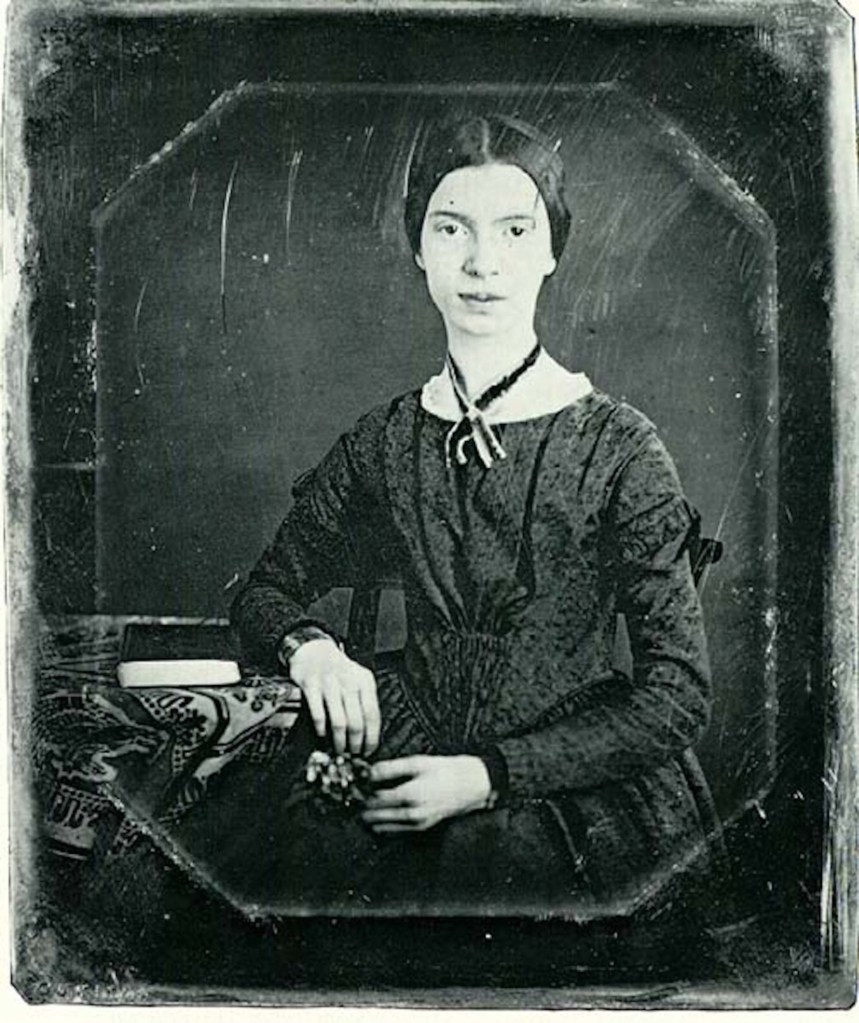

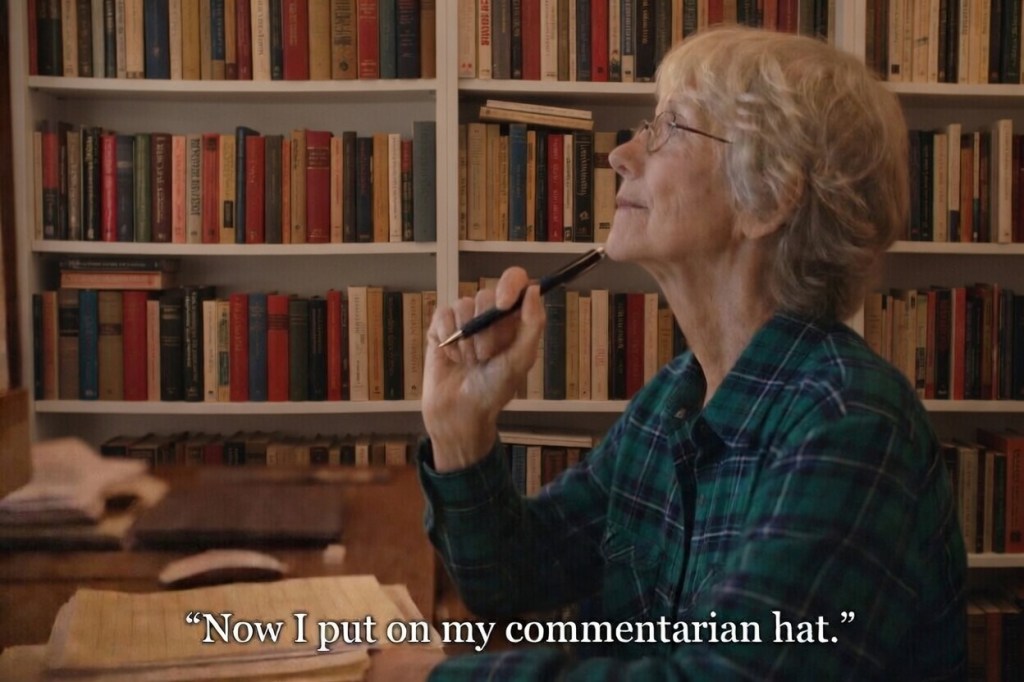
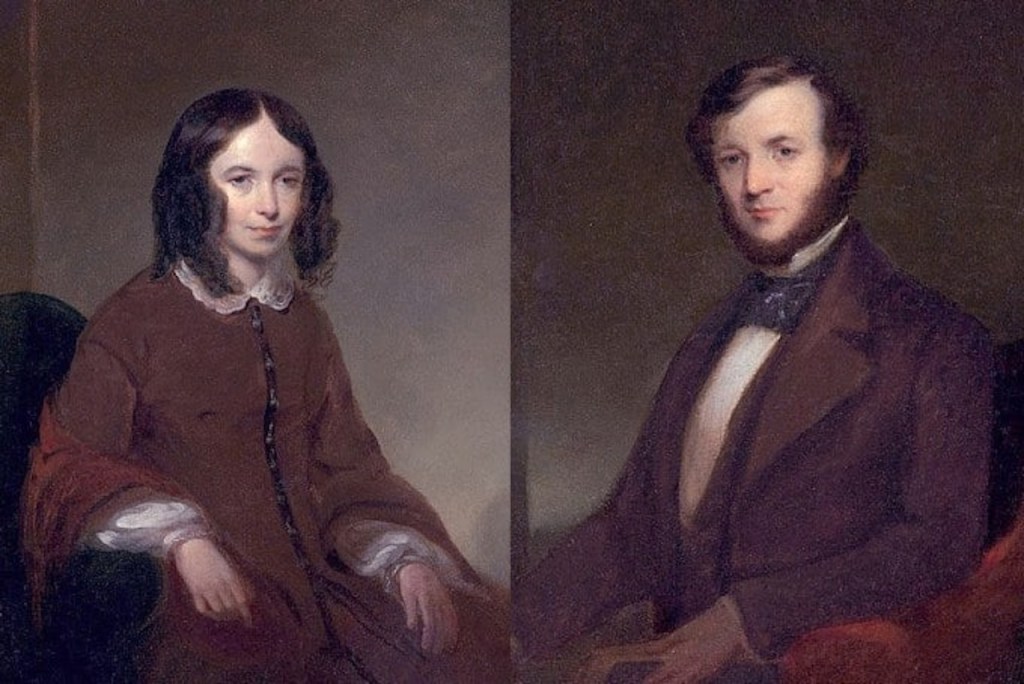



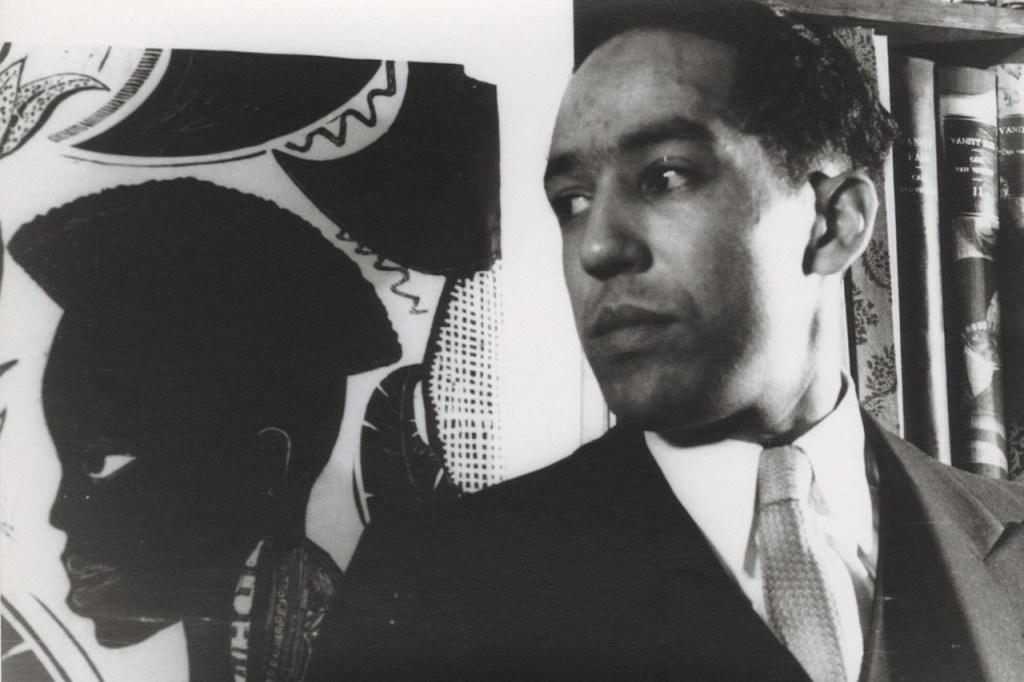

 Linda's Literary Home