This glossary offers definitions of the terms used in my poem commentaries. Most of them have been in service for centuries, but I have also coined a number of terms that have never been used before, such as “versagraph,” conflating “verse paragraph,” and “scatter rime,” an innovative rime scheme.
Introduction: Poems, Doggerel, and Poetry Classifications
Every field of study has its scholars, critics, and commentarians, who employ terminological tools appropriate to their unique purposes. Sometimes that set of terms is called “jargon.” Poetry commentary has its own jargon, and so I am offering this set of definitions to assist in the understanding of my commentaries.
In the cosmos of poetry, there are genuine poems, and then there are pieces that masquerade as poems. Such false “poems” are labeled “doggerel.” Some writers make the distinction between a genuine poem and doggerel by labeling the latter “verse.” I will refer to the really bad “poems” as “doggerel.” And because I find it unpleasant as well as misleading to refer to a piece of doggerel as a poem, I will often refer to the so-called “poem” as a “piece.”
Classic Poetry includes poems recognized before 1920 and poems studied widely in secondary schools and college classes, to be distinguished from Classical Poetry, which refers only to the poetry of antiquity: Hindu, Persian, Greek, and Roman.
Contemporary Poetry includes poems recognized after 1920, especially those of Modernism, Postmodernism, and 21st century works.
For the most part, I do not classify poetry through political correctness or identity politics; therefore, I avoid labeling poets by their race or nationality. If discussion of race, ethnicity, religion, sex, or nationality is integral to the commentary of poem, I offer explanations with full discussions.
But I avoid labeling poets or poems through those classifications. I do believe that labeling by nationality is less egregious and can be more useful than labeling by race; thus, “American” poetry may be legitimately distinguished from “British” or “World.”
Writing about Poetry
Individuals who write about poetry fall into several distinguishable categories, depending on the focus of each writer. Some poetry enthusiasts write simply as fans of poetry and wish only to share their feelings.
Others who have dedicated their lives and/or careers to the study of poetry fall into the following five distinctive categories, each with a different depth and purpose of study: (1) analysis, (2) explication, (3) criticism, (4) scholarship, and (5) commentary. The following list offers a brief description of each category of poetry study and writing focus:
(1) Analysis: examines and discusses in some detail a poem in terms of its parts, similar to explication but less exhaustive and extensive. The late Professor Laurence Perrine remains American’s finest and most thorough poetry analyst. His text book, Sound and Sense: An Introduction to Poetry, has been used in many college classrooms since the first edition appeared in 1956.
(2) Explication: explains how the poem’s use of poetic devices implies its message. While the term “explicate” comes from the Latin “explicare,” meaning to unfold, it is useful to think of the term “explication” as a conflation of explain + implication when referring to poetry; thus an explication explains the implications of the poetic devices used in the poem. The best place to go for poetry explication is the quarterly journal, The Explicator, which began publishing in 1942.
(3) Critic: emphasizes the evaluation of poems, whether the poems works well in expressing its meaning. Helen Vendler is a leading American poetry critic. According to the Poetry Foundation, “Vendler is regarded as among the finest and most acute of contemporary poetry critics.”
(4) Scholar: emphasizes the research and study of poetry. Dana Gioia, Former California Poet laureate and Chairman of the National Endowment for the Arts, is an important American poetry scholar, as well as a fine poet.
(5) Commentarian: combines the work of analysis, explication, research, and evaluation to emphasize effect and meaning (concept created by Linda Sue Grimes).Thus my work with poems is that of a commentarian as I rely on analysis, explication, scholarly research and study in critically observing and reporting on the effects and meanings of poems. Despite my fairly in-depth study of each poem, my commentaries are motivated primarily by my personal, informed reaction to the poem.
Glossary of Poetic Devices
This glossary of terms features definitions for the most widely employed poetic devices (literary devices) that I use in poetry commentaries. Most are traditional poetic devices that have been in service for decades, even centuries.
However, since the turn of the 21st century, I have also coined a number of terms necessary for my commentaries; my coined terms are marked and italicized with each glossary definition.d terms are marked with each glossary definition.
Commonly Used Figures: Literal vs Figurative
While many poems remain quite literal, most employ some forms of figurative language; expressing and describing human emotional experience remain ineffable by nature. For example, one cannot exhaustively with complete accuracy describe the taste of an orange.
One may say an orange tastes sweet, but so do apples, pumpkin pie, chocolate cake, and even antifreeze. Obviously, an orange tastes nothing like any of those. Thus, to describe the taste of an orange one might employ figurative language: perhaps an orange tastes like sunshine mixed with smiles. Of course, the only way to know what an orange tastes like is to taste it.
Because poetry expresses human experience through emotion, one cannot expect to experience everything that others have done, but one can experience a taste of what others have experienced in comparison to one’s own. Figurative language through its colorful creativity assists in imparting the essence of the otherwise ineffable.
Literal language can be understood at face value; it expresses meaning without employing any literary devices that require interpretation. For example: The opening lines from E. A. Robinson’s “Richard Cory,” “Whenever Richard Cory went down town, / We people on the pavement looked at him,” is quite literal.
Figurative language requires interpretation because taken at face value it sounds non-sensical. For example: the only figure in E. A. Robinson’s “Richard Cory,” is the line, “And he was rich—yes, richer than a king,” which is an example of hyperbole (exaggeration). While Cory was likely very rich in estimation of his poor neighbors, it is not likely he was actually “richer than a king.”
The following figures or poetic devices are the ones that are most important for most poems. This list is not exhaustive because my commentaries do not explicate or analyze; they merely offer a general, personal response to poems, but those responses remain sensitive to these most prominent devices:
Image: any sense perceived snapshot. Therefore, there are visual (sight), auditory (sound), tactile (touch), gustatory (taste), olfactory (smell) images. Example: Robert Browning’s “A tap at the pane, the quick sharp scratch / And blue spurt of a lighted match” offers images of sound, sight, and smell.
Metaphor: a comparison of unlike entities in order to dramatize or portray the sensed reality of the subject. One of the best metaphors in American poetry is Robert Frost’s “leaves got up in a coil and hissed / Blindly struck at my knee and missed,” from his poem, “Bereft.”
Simile: similar to a metaphor but uses the words “like” or “as”; thus the comparison remains weaker because it is more tentative. Metaphor claims that one thing “is” another, while simile claims one thing is merely “like” another; or in case of an action comparison, one act is “as” another. One of the best similes in American poetry is Sylvia Plath’s in her poem, “Mirror”: “In me she has drowned a young girl, and in me an old woman / Rises toward her day after day, like a terrible fish.”
The simile, “like a terrible fish,” is part of two lines that contain an image and a metaphor. The metaphoric act is the drowning of a young girl, which offers an image along with a second image of the rising old woman, who as she rises looks like “a terrible fish.”
Hyperbole: exaggeration for the purpose of emphasis, and often for comic effect. For example, in Andrew Marvell’s “To His Coy Mistress,” the speaker offers numerous examples of hyperbole, such as “I would / Love you ten years before the flood,” wherein the speaker makes the outlandish claim that he would love this woman he is attempting to seduce for a long stretch of time that would extend back so far that no one can calculate that extent.
Personification: anthropomorphizing plants, animals, inanimate objects, concepts, or abstract ideas. An excellent example of personification is Emily Dickinson’s “Because I could not stop for Death,” which metaphorically frames the occasion of dying as a carriage ride with Death personified as a gentleman caller. Similar to personification is the following rare device:
Avianification (rare): giving inanimate objects, concepts, abstract ideas, or other creatures the qualities of a bird: for example, from Phillis Wheatley’s “A Hymn to the Evening,” “From the zephyr’s wing, / Exhales the incense of the blooming spring.” (term coined by Linda Sue Grimes)
Pathetic Fallacy: a literary device, coined by John Ruskin, in which human emotions or qualities are attributed to aspects of nature or inanimate objects (a form of personification), often to reflect a character’s mood or intensify the atmosphere.
Stanzas and Other Poetic Units
The “stanza” is the traditional unit within classic poems. It may consist of any number of lines and still be considered a stanzaic unit. Contemporary poems may also employ these units depending The following numerical clusters of lines may appear in classic poems:
Couplet: two lines Tercet: three lines Quatrain: four linesCinquain: five linesSestet: six lines, usually first stanza or part of a Petrarchan sonnetSeptet: seven lines Octave: eight lines, usually the second stanza or part of a Petrarchan sonnet
Stanzas with lines from 9 and upward will be named according to the Latin term for the number; for example, the Latin term for the number 9 is “novem”; thus the name for a stanza with 9 lines is “novtet.” The Latin term for the number 10 is “decem”; thus the name for a stanza with 10 lines is “dectet.” Eleven lines is therefore “undectet,” twelve “duodectet,” etc.
Fortunately, stanzas are seldom extended to line numbers above eight; therefore, I have coined the terms for stanzas with lines numbering above eight:
Novtet: Nine lines Dectet: Ten lines Undectet: Eleven lines Duodectet: Twelves lines
Doggetet: unit of lines in a piece of doggerel (term coined by Linda Sue Grimes)
Versagraph: traditionally expressed as a “verse paragraph”; a free verse
paragraph, usually unrimed, unmetered group of lines (a term coined by Linda Sue Grimes)
Movement: along with “versagraph,” the movement is also a basic unit of lines for a free verse poem; however, a movement may not be limited to a single unit, but may be based primarily on the content, theme, or subject of the movement.
Also, the line units of a traditional stanzaic poem may be labeled “movements,” if the importance of the poem is more dependent on its movements than its stanzaic units (concept created by Linda Sue Grimes).
Rime (often spelled, “rhyme”)
Cluster Rime: groups of riming words appearing along with unrimed words, AAABBBBCCDEED.
End-rime: the most common rime, usually producing a consistent rime-scheme, such as the English sonnet: ABABCDCDEFEFGG.
Internal rime: a line’s final word riming with a word within the line: ‘”While I nodded, nearly napping, suddenly there came a tapping.”
Scatter rime: appears in no definite scheme, AABCDDEFGG, but becomes apparent as it affects meaning (coined by Linda Sue Grimes).
Slant rime, near rime, off rime: pairs of words that are merely close in rime: to-day / victory; tell / still; arm / exclaim.
(Please note: Dr. Samuel Johnson introduced the form “rhyme” into English in the 18th century, mistakenly thinking that the term was a Greek derivative of “rythmos.” Thus, “rhyme” is an etymological error. For my explanation for using only the original form “rime,” please see “Rime vs Rhyme: Dr. Samuel Johnson’s Error.”)
Forms of Poetry
Elegy: a poem or song composed as a tribute to a person who has died; most often written to be used in ceremonies for high-ranking personages, such as Walt Whitman’s “When Lilacs Last in the Dooryard Bloom’d” mourning the death of the Great Emancipator President Abraham Lincoln and Ella Wheeler Wilcox’s “The Queen’s Last Ride,” which mourns and celebrates the reign of Queen Victoria upon the queen’s death in 1901. Robert Frost’s “To E. T.” serves as a more common type of elegy to his friend and fellow poet Edward Thomas, who was killed in war.
Miselegy: a piece of doggerel that attempts to elegize a figure whose deeds were not heroic or noble but often criminal or anti-social, example Cornelius Eady’s “Renée Nicole Good Is Murdered.”
Sonnet: the most commonly employed form of poem since the early 13th century. Types of sonnets include the Italian (Petrarchan), English (Spenserian, Elizabethan or Shakespearean), American (Innovative). Also, various combinations of these sonnets exist as innovative sonnets.
Elizabethan Sonnet (Shakespearean or English ): Three rimed quatrains and one rimed couplet in iambic pentameter. Each quatrain has its own theme or subtopic with a volta or turn of thought comprising the third quatrain. Rime scheme is ABABCDCDEFEFGG.
Petrarchan Sonnet (Italian): One octave and one sestet, with a volta appearing in the first tercet of the sestet. Traditional rime scheme is ABBAABBACDCDCD, but may vary widely. See Barrett Browning’ Sonnets from the Portuguese for a masterful example of use of the Italian sonnet.
Spenserian Sonnet: This style sonnet dispenses with the English sonnet tradition of assigning each quatrain a slightly different task with a third quatrain volta or turn of thought, maintaining the same theme or subtopic throughout. Rime scheme is ABABBCBCCDCDEE, instead of ABABCDCDEFEFGG.
American (Innovative):A fourteen line poem, often incorporating features from traditional sonnets; usually unrimed without a specific rhythmic pattern, but retains the emphatic lyrical discourse of the traditional sonnet (definition delineated and stabilized by Linda Sue Grimes)
American (Near-Sonnet): An 11-13 line poem, often incorporating features from traditional sonnet, often unrimed and unrhythmed but retains the lyric intensity of traditional sonnets (term coined by Linda Sue Grimes)
Curtal Sonnet: An eleven line poem, coined by Gerard Manley Hopkins to describe the form employed in his poems, “Peace” and “Pied Beauty.”
Other Common Forms of Poetry
Villanelle: a tightly structured 19-line poem that features only two rimes and two refrains. One of the most anthologized villanelles is Dylan Thomas’ “Do not go gentle into that good night.”
Versanelle: a short, usually 20 lines or fewer, narration that comments on human nature or behavior, and may employ any of the usual poetic devices (term coined by Linda Sue Grimes) For a thorough discussion of this form, please visit “The Versanelle: A Verse Form With a Punch.”
Voice in Poetry
First Person Voice: Poets often speak in a poem as if they are the narrators, employing the first person pronouns. This voice may be tricky, and many beginning poetry readers mistake the “speaker” of the poem for the “poet.”
It is safer when discussing a poem to refer to “the speaker” instead of “the poet.” Most poems are little dramas like plays instead of being expository in nature. Even the Confessional Movement employed the technique of speaking the poem through a speaker.
Second Person: Often a poet will seem to be addressing a second person in the poem, employing the second person pronoun “you,” and while it may be the situation of actually addressing another person, often the poet is addressing himself or herself. The poet him/herself is thus the “you” in the poem. (See “Self-Reflexive You” listed below in “Other Terms.”)
Omniscient Voice: The speaker of a poem is often an omniscient narrator who seems to be reporting the message of the poem. The omniscient voice in narration is one who knows the entire situation of the piece but is not usually part of the scene. This voice is similar to the omniscient narrator in fiction such as novels and short stories.
Cosmic Voice: Similar to the omniscient voice, the cosmic voice is also all-knowing. The difference between the omniscient and cosmic voice is that the latter’s knowledge extends ever farther. Not only does the cosmic voice know all that is currently happening, but it also knows what happened throughout historical time and space.
Periods of time and stretches of space may expand or contract as needed as the cosmic seer reports what he sees, hears, or otherwise experiences. Although a “cosmic voice” may come to a poet through a vivid imagination, it transcends the imagination as a truth teller.
The cosmic voice and its communications reveal truth through deep intuition. The soul of the speaker employing the cosmic voice is, even if only temporarily, aware of its vast and profound knowledge. The cosmic voice moves from a place far beyond sense awareness.
Readers/listeners who hear the cosmic voice and understand it are moved beyond their own sense awareness to comprehend the unity of all created things. They move into the realm of their Creator and return as transformed beings for having experienced the Sacred Locus. (The concept of the “Cosmic Voice” was created by Linda Sue Grimes.)
Other Terms
I am continuing the process of adding terms and definitions as they become necessary for advancing my commentaries, whether they are terms already in traditional service or whether they are ones that I coin.
Loose Musing: A brain-storming activity that often results in non-sense pieces, which get left without order. Also the act of free-writing that remains disorganized without the revision required to allow the images to impart coherent and cohesive meaning (term coined by Linda Sue Grimes). An excellent example of a piece resulting from loose-musing is Margaret Atwood’s “In the Secular Night.” Such pieces often result in doggerel.
Occasional Poem: A poem written for a special event (or occasion), such as Robert Frost’s “Dedication,” written for the inauguration of President John F. Kennedy. The piece remained unread and instead Frost recited the poem that Kennedy had asked him to read, “The Gift Outright.” For a brief history of the “Occasional Poem,” please visit the Academy of American Poets.
Bellumsympathic Writing: usually in poem form but may also apply to other literary genres, these pieces express the inner turmoil brought on by human relationships. Word origin: “bellum” from the Latin for “war”; “sympathic” altered adjectival form for “sympathy.” (term coined by Linda Sue Grimes)
Self-Reflexive Second-and/or Third-Person: When speaking to themselves in poems, sometimes poets have their speakers address themselves as “you,” which is second person singular, the pronoun used to address a second person whom one is addressing. They also on occasion refer to themselves in the third person he or she.
An example of self-reflexive second-person use is Allen Tate’s “Ode on the Confederate Dead.” T. S. Eliot’s “Preludes” features examples of both self-reflexive second- and third-person uses.
I am not aware that this procedure has been given a label; therefore, I am labeling it the “self-reflexive second-person” when the speaker addresses himself as “you” and “self-reflexive third-person” when the speaker addresses himself as “he or she.” (terms coined by Linda Sue Grimes)
The poetry-focused Fugitive-Agrarian Literary Movement grew out of informal meetings held by English professors at Vanderbilt University, John Crowe Ransom and Walter Clyde Curry, meeting with a group of their undergraduate students to discuss the art of poetry.
H. L. Mencken’s Attack on Southern Culture
In 1917, journalist H. L. Mencken, whose acerbic fulminations in cultural criticism tweaked the culture during the early- to mid-20th century, published his essay, “Sahara of the Bozart,” filled with the contemporaneous stereotypes circling against the American South [1].
No doubt Mencken’s unfair stereotyping of the Southern intellectual literary culture took its toll on the hearts and minds of the poets who would become known as the Fugitives.
Mencken’s essay begins with the quotation by J. Gordon Coogler, “Alas, for the South! Her books have grown fewer- / She never was much given to literature.” And then Mencken flings himself into his philippic, stating that the poetaster Coogler is “the last bard of Dixie.”
Mencken contends that “[d]own there a poet is now almost as rare as an oboe-player, a dry-point etcher or a metaphysician. It is, indeed, amazing to contemplate so vast a vacuity.” In a reissuing of that essay in the late 1970s, the following quotation from Mencken appears:
. . . there is reason to believe that my attack had something to do with that revival of Southern letters which followed in the middle 1920’s.
Mencken was likely referring to the group of Fugitive poets, whose works ultimately changed that perception of the Southern mental capacity for literature.
In 1914 in Nashville, Tennessee, John Crowe Ransom and Walter Clyde Curry began holding meetings at the home of James Marshall Frank and his brother-in-law Sidney M. Hirsch to discuss poetry and related issues with undergraduate students [2].
That same year, a major literary movement began with the appearance of the magazine The Fugitive. Ransom and Curry served as professors of English at Vanderbilt University in Nashville.
The meetings were suspended while several group members served in WWI, but they resumed in 1920. The original group members, Ransom, Curry, and Hirsch, were joined by Donald Davidson, William Yandell Elliott, Stanley Johnson, and Alec B. Stevenson.
Later Merrill Moore, Allen Tate, Jesse Wills, Alfred Starr, and Robert Penn Warren joined the group. After winning the Nashville Poetry Prize in 1924, Laura Riding was invited to join the group.
Criticism and Creativity
At the meetings the poets handed out copies of their poems, read their poems aloud, and then the others would respond, offering thorough critical analyses. Strong poems would motivate lively discussions, while weak poems would simply be passed over with little or no response. Donald Davidson found the thorough critiques helpful; he declared,
this severe discipline made us self-conscious craftsmen, abhorring looseness of expression, perfectly aware that a somewhat cold-blooded process of revision, after the first ardor of creation had subsided, would do no harm to art.
Founding the Magazine: The Fugitive
After the group had accumulated a large collection of poems, Sidney Hirsch proposed the idea of starting a magazine. They decided to use a secret ballot to vote for the poems to include. They did not appoint an editor, but Donald Davidson took the tally of the poems’ votes.
Alec B. Stevenson suggested the title for magazine The Fugitive about which Allen Tate says, “a Fugitive was quite simply a Poet: the Wanderer, or even the Wander Jew, the Outcast, the man who carries the secret wisdom around the world.”
The first issue of The Fugitive appeared in April 1922, and the last was printed in December 1925. Supported by the Associated Retailers of Nashville, the magazine was always successful and never lacked funds.
Eschewing romantic sentimentalism while emulating traditional forms, these poets were considered experimental because they were unpublished novices, except for John Crowe Ransom, who had published a volume of poetry titled Poems about God in 1919.
The Highest Calling of the Human Mind
The Fugitives shared strong bonds of beliefs about what poetry should be; according to scholar, Jay Clayton, they believed that “poetry is the highest calling of the human mind” [3]. They held similar notions about nature and society and about God and humanity.
From 1914, with its first meeting until approximately 1930, when the Agrarian Movement replaced it, the Fugitive Movement forged a pattern and path for poetry that has made its mark on American Poetry. Donald Davidson has described the Fugitive philosophy:
the pursuit of poetry as an art was the conclusion of the whole matter of living, learning, and being. It subsumed everything, but it was also as natural and reasonable an act as conversation on the front porch.
One Door Closes, Another One Opens
After Donald Davidson’s Fugitives: An Anthology of Verse appeared in 1928, the movement gave way to its successor the Agrarians. The Fugitive Movement focused on form in poetry, and then a slightly new focus brought an emphasis on content.
The Fugitives became concerned that the South was evolving away from its agrarian/country roots and taking on too many characteristics of an industrial/urban society. The main emphasis was always on attitude more than economic specifics.
From the focus on Southern Agrarianism came the book of twelve essays, I’ll Take My Stand: The South and the Agrarian Tradition, by the following writers: John Crowe Ransom, Donald Davidson, Frank Lawrence Owsley, John Gould Fletcher, Lyle H. Lanier, Allen Tate, Herman Clarence Nixon, Andrew Nelson Lytle, Robert Penn Warren, John Donald Wade, Henry Blue Kline, and Stark Young [4].
The Fugitives were responsible for creating an influential literary movement that motivated poets to examine their craft and their motives as they composed. And as the movement morphed into the Agrarian Movement, it provided an additional impetus for poets to consider their very paths through life and the best ways to follow them.
The Goal of the Fugitives and Agrarians
The main objective of the Fugitive movement poets followed by the Agrarians was not to bring on a nostalgic return to an old-fashioned, farm/plantation lifestyle; instead, their goal was to place the attention of humanity on spirituality instead of on what appeared to be a burgeoning emphasis on the material level of being [5].
As poets and people of a literary bent, these poets and writers hoped to influence humanity to remain human, loving, and caring about values and ideas, keeping the striving for wealth and material goods in its proper place [6].
Contemporary emphasis on identity politics and political correctness has taken the spotlight off the works and once again placed too much emphasis on the writer’s identity. Such an emphasis inherently leads to a heavy emphasis on materialism over spirituality.
Of all the Fugitives, John Crowe Ransom stands out as the father of New Criticism, a theory that has strongly influenced literary criticism since it inception. A further stellar literary accomplishment for Ransom is that he was the founder of the Kenyon Review, an influential literary magazine.
With the publication of this book The New Criticism in 1941, John Crowe Ransom left his mark on the literary world. His revolutionary way of talking about literary works, especially poetry, became an important feature in literary criticism, remaining the major theory during the decades leading up to the 1970s.
And although after the 1970s that new critical way of discussing literature gave way to poststructuralism, reader-response theory, and deconstruction theory, many of Ransom’s main ideas have remained part of all ways of looking at literature, especially the new critical emphasis on “close-reading.”
The central issue that new critical thought brought to literary studies is the emphasis on the text itself, rather than on the biography of the writer or the historical and societal circumstances in which the writer composed. While these issues may be considered overall, the first consideration must be the text itself [7].
New criticism sought to make literary studies more objective and scientific, instead of the heretofore subjectivity that often yielded little more than opinion and personal reaction. The idea that a poem can mean anything [8] one wishes it to mean arose out this pre-New Criticism romantic misunderstanding of the function of literary works.
Ransom sought to elevate and enlarge the science of criticism so that that literary endeavor might achieve the true purpose for its existence: “to define and enjoy the aesthetic or characteristic values of literature.”
A return to new critical thinking and its emphasis on the text instead of on the identity of the writer would result in a literary world, where readers would not confuse [7] the song-lyric-entertainment style of HipHop/Rap artists with genuine, literary-functional poetry.
Video: John Crowe Ransom
Sources
[1] H. L. Mencken’s “Sahara of the Bozart.” The American Scene: A Reader. New York: Alfred A. Knopf. 1977.
[2] Mark G. Malvasi. “The Fugitives.” The Tennessee Encyclopedia of History and Culture. Updated: March 1, 2018.
[3] Jay Clayton. “The Fugitives.” NPT. YouTube. Sep 30, 2009.
[4] Thomas H. Landess. “Fugitive Agrarians.” The American Conservative. May 17, 2011.
[5] Twelve Southerners. I’ll Take My Stand: The South and the Agrarian Tradition. Louisiana State University Press. January 1, 1978. Print.
Dr. Johnson’s Etymological Error: From Rime to Rhyme
In the 18th century, Dr. Samuel Johnson (1709-1784) made an etymological error that poets, scholars, critics, and editors even today continue to perpetuate. Johnson incorrectly surmised that “rime” was a derivative of “rythmos”; thus he altered the spelling from “rime” to “rhyme.”
Professor Laurence Perrine’s “Rime”
In 1956, an English professor at Southern Methodist University wrote and began publishing his textbook, Sound and Sense: An Introduction to Poetry. Professor Laurence Perrine’s book has enjoyed such success that it has never been out of print, reaching its 15th edition in 2017.
In his first nine editions, Professor Perrine employed the spelling “rime” in his discussion of that literary device.
However, beginning with the 10th edition, the new editors of the book, Thomas A. Arp and Greg Johnson, in their postmodern wisdom, succumbed to Dr. Johnson’s error and altered Professor Perrine’s spelling to “rhyme.”
In capitulating to Dr. Johnson’s etymological error, Arp and Johnson, are disavowing the wisdom of such literary geniuses as William Shakespeare (Sonnets 16, 17, 32, 38, 55, 106) [1] and Samuel Taylor Coleridge (The Rime of the Ancient Mariner) [2].
The erroneous spelling now employed in Perrine’s classic is especially galling because the Perrine textbook introduced several generations of students, including my own, to the joys of poetry.
Unfortunately, the Perrine editors are not the only ones imposing this etymological error upon the world of poetry. Many (more likely most) editors continue to insist upon the erroneous form.
Editorial Choice
It is likely that most non-literary readers currently believe that the term “rime” labels only a kind of ice, but too many poets, writers, printers, editors, and publishers insist on the Johnsonian error in the spelling of that superlatively fine English word in its original form.
Some editors may consider the term interchangeable, but many others actually insist that the awkward “rhyme” be used. For decades, editors and publishers have inclined toward Dr. Johnson’s error “rhyme” to the original pristine spelling “rime.”
For example, because I continue to employ the original spelling instead of the Johnsonian error on my poem commentaries at HubPages, I was required by the HubPage editors to offer the following disclaimer in my articles that use that term:
Please note: Dr. Samuel Johnson introduced the form “rhyme” into English in the 18th century, mistakenly thinking that the term was a Greek derivative of “rythmos.” Thus “rhyme” is an etymological error. For my explanation for using only the original form “rime,” please see “Rime vs Rhyme: Dr. Samuel Johnson’s Error.”
While the soft-censorship editors of HubPages did allow my choice, they still insisted that I explain my seeming idiosyncrasy.
I became acquainted with a poet/editor on a listsesrve discussion group. I decided to interview him and post the exchange in a HubPages article. Before publishing the online interview with a poet and editor, I conducted a written pre-interview conversation with the individual. In his message, he employed the term three times all with Johnsonian error “rhyme.”
After I suggested that that usage was the result of an error, sending him the resource for my suggestion, he just shrugged it off, insisting that getting published is more important than historical accuracy of individual words.
While it is bad enough that even one editor holds such a view, it is unfortunate that this editor’s attitude sums up that of most editors regarding this issue. However, this man also considers himself a poet, not only an editor, but in this case his editor’s hat sat more firmly upon his skull than the poet’s.
Poets used to be known for their insistence upon accuracy in word and image employment—not for what the collective may think of their usage.
(Food for thought: This poet/editor also offered the following bizarre opinion about poetry writing in general: “Writing is a political act even if you’re consciously trying ‘not’ to be political. So poetry can be … no, ‘must be’ … used for activism.” While some might think the idea that poetry must promote activism is the height of balderdash, others will likely remain true believers.)
(I have deliberately avoided using the poet/editor’s name, hoping to avoid a complication neither of us needs. Beside the point of mentioning him was not for his sake but for the issue of the use of the inaccurate spelling “rhyme.”)
Origin of the Term “Rhyme”
The Old English term “hrim” had morphed into the form “rime” in Middle English, the period during which Geoffrey Chaucer was writing; the term remained “rime” through Shakespeare’s era, on through the Victorian period, until the 19th century.
English printers then began spelling the perfectly fine English term “rime” as the erroneous “rhyme.”
Those ill-advised printers allowed themselves to be led astray by Dr. Samuel Johnson, a scholar with a stellar reputation, who was most noted for his 1755 classic work, A Dictionary of the English Language.
But Johnson was wrong on this count; he mistakenly surmised that the term “rime” was a Greek derivative of “rythmos,” and thus pronounced that the accurate spelling should be founded on that derivation.
Shakespeare Sonnets’ Use of “Rime”
The Shakespeare writer always spells that term “rime” in the sonnets, which were first published in 1609 [3]. The sonnets were composed two centuries before the Johnsonian etymological error was inducted into the lexicon.
Unfortunately, contemporary readers will find that many editors have altered the spelling [4] of Shakespeare to comply with the good doctor’s error.
Shakespeare! The world’s foremost literary genius! The bard for all time. Yet, modern editors think they are equipped to correct the spelling of the most admired poet of the Western world.
Coleridge’s The Rime of the Ancient Mariner
Most search engines point to the Coleridgian original spelling of “rime” in his classic work, The Rime of the Ancient Mariner. Some editors, however, have succumbed to the Johnsonian error—even a page from the Gutenberg Project uses “rhyme”—but most editions of Coleridge’s Ancient Mariner keep the spelling “rime.”
All of the authoritative texts of Coleridge’s poem, including those featured at Poetry Foundation [5], Bartley.com: Great Books Online [6], and Academy of American Poets [7], present the poet’s original spelling “rime.”
How does Coleridge’s choice go relatively unscathed, but Shakespeare has to be corrected? Coleridge’s title was not indicating a type of ice; it was referring metonymically to the poem itself whose 626 lines are displayed in an ABCB rime scheme.
Why I Prefer Rime, Not Rhyme
As a poet, poetry commentator, and general seeker of truth and accuracy, I always employ the spelling of “rime” for two main reasons:
It goes against my conscience to participate in furthering the prolongation of an error.
A fundamental rule of all written discourse dictates brevity in use of language: the first rule of writing instruction consists of the admonition never to use a big word, when a small one will work as well, and never employ two words when one will work.
Simply compare by sight the two terms:
rime and rhyme
“Rime” remains a form of crisp, clear, four letters without any superfluous mark.
“Rhyme” displays with one more letter, which is a silent “h” and a “y” standing in place where the more convenient and identically pronounced “i” should stand. Thus “rime” is decidedly the better choice than the awkward “rhyme.”
The unfortunate perpetuation of Johnson’s etymological error will likely keep on littering the landscape of poetry with its ugly spelling “rhyme,” while the clean, crisp spelling “rime,” in my opinion, should be regaining its place in the literary world of poetry
Insults for My Opinion
I have received a handful of insulting messages, castigating me for how stupid I am to be insisting on the originalist position on this term. Yes, I understand the notion that because the error is so widely accepted, it would engender untold pain and heartache to try to alter it.
As I earlier explained, so many editors have succumbed to this error that too writers who seek publication have no choice but also to succumb.
However, I am also aware that language does change over the centuries, but those changes are not based on errors; instead, they are based on convenience that usually shortens words instead of lengthening them and adding silent letters.
The following insightful suggestion from Lucy Sherriff’s “11 Spelling Changes That Would Make The English Language WAY Easier” [8] includes the following:
6. rhyme to rime Poetry and music lovers know how much trouble this word can cause. With y taking the role of a vowel and h making a ghostly appearance, the word rhyme would be greatly improved by the alternate spelling rime. In fact, rime was the original spelling of the word, changed in the 17th century by association with the Latin word rhythmus. (my emphasis added)
Although Sherriff’s historical claims are a bit off (see “Rhyme, Ryme, or Rime“) [9], her main point is spot on.
Diminishing Device Usage
Poetry long ago ended its love affair with the poetic device known as “rime.” And as I offer commentaries on earlier poems that do employ that device, I am often not required to speak about that particular issue, unless it has some direct influence on meaning or aesthetic pleasure.
From now on, unless a rime scheme, or other use of rime, remains a salient feature of the poem influencing meaning or aesthetics, I plan to ignore rimes and rime-schemes.
Also, “rime” has long been my least favorite poetic device because it has so often been employed in ways that blur meaning rather than clarify it. If choosing a “rime” word becomes more important than choosing a more exact word for its meaning, then the poem suffers.
I believe that it has become obvious that the choice of rime-over-meaning happens too often, particularly with postmodern poetry, even as most postmods do eschew rime.
Masters such as the Shakespeare writer, Emily Dickinson, and James Weldon Johnson have been able to use “rime” with great success to enhance rhythm as well as meaning.
But the postmodernists put an end to any serious focus and genuine aesthetics in literary works. That they often abstain from riming actually becomes a positive feature of their babble.
Ultimately, I am willing to concede that the issue is not worth staging a campaign to alter minds, hearts, and thus usage. But for those times in which it becomes necessary to address the issue, I will continue to employ “rime” not “rhyme,” simply because it is the original and, to my mind, the accurate form.
Sources
[1] William Shakespeare. “Shakespeare’s sonnets: being a reproduction in facsimile of the first edition, 1609, from the copy in the Malone collection in the Bodleian library.” Sonnets 16, 17, 32, 38, 55, 106. Internet Archive. Accessed April 4, 2021.
The following sampling of poems are from Mr. Sedam’s second published collection, The Man in Motion.
1 THE QUICK AND THE DEAD
As friends of the deceased we stood outside the plot and spoke of many things; I said that I was a teacher and it came out he was too, somewhere up North, he said, a good community — good school, no foreigners, Negroes, or Jews in fact, he said, no prejudice of any kind.
2 SAINT GEORGE
He says he has a problem and I say: Tell me about it because he’s going to tell me about it anyway so it seems he was making love with his wife last night or thought he was when right in the middle of it she stopped and remembered he hadn’t put out the trash for the trash man the next morning so he asks: What would you have done? and I say: Get up and put out the trash which of course he did but he still doesn’t know why and I reply: You must slay the dragon before there is peace in the land.
3 FACES
A funny thing happened in the war and you’ll never believe it but there was this Jap Zero at ten o’clock low so I rolled up in a bank and hauled back on the stick too fast and nearly lost control and when I rolled out again there was this other Jap (He must have been the wingman) flying formation with me.
We flew that way for hours (at least four seconds) having nothing else to do but stare each other down, and then as if by signal we both turned hard away and hauled ass out of there.
We flew that way for hours (at least four seconds) and when I looked again he was gone— but I can still see that oriental face right now somewhere In Tokyo standing in a bar there’s this guy who’s saying: a funny thing happened in the war and you’ll never believe it but there was this American. . .
4 EXPERIENCE
Then there was that night in Baton Rouge Jack and I went out on the town looking two looking for two And we saw these two broads at the bar and I said There’s two Jack but yours doesn’t look so good but he was game So we grabbed them and wined them and dined them with champagne and steak I remember forty-four bucks to be exact And when we walked out of that place I slipped my arm around the pretty one an whispered let’s go up And she said whadaya think you’re gonna do And I said not a goddam thing and left her flat And Jack took the dog-face one home And made a two-weeks stand of it and come to think of it I never chose a pretty girl after that.
5 NOSTALGIA
(For Lee Anne)
Call it the wish of the wind flowing from a dream of dawn through the never-to-be forgotten spring of our years running swiftly as a lifetime flying like a vision borne Slim Indian princess wedded in motion dark hair streaming sunlight and freedom floating on the cadence song drifting shadow-down in the distance my daughter riding bareback on a windy April afternoon.
6DESAFINADO
(For Allen Ginsberg, et al)
Through this state and on to Kansas more black than May’s tornadoes showering a debris of art — I saw you coming long before you came in paths of twisted fear and hate and dread, uprooted, despising all judgment which is not to say that the bourgeois should not be judged but by whom and by what, junkies, queers, and rot who sit on their haunches and howl that the race should be free for pot and horny honesty? which I would buy if a crisis were ever solved in grossness and minor resolve but for whom and for what?
I protest your protest its hairy irrelevancy, I, who am more anxious than you more plaintive than you more confused than you having more at stake an investment in humanity.
Some things were never explained even to me, and of course they would tell it his way but I believed in her because I chose to believe and you may be sure of this: A man’s biological role is small but a god’s can be no more that it was I who was always there to feed him, to clothe him to teach him, and nurture his growth— discount those foolish rumors that bred on holy seed for truly I say unto you: I was the father of Christ.
At least part of your message is clear, thou shalt not kill except in certain seasons and thou shalt not commit adultery except in certain regions and thou shalt not lie except on incredible things like carrying five tons of tablet stones down mountains.
9 INDIAN COUNTRY
Can it be enough to wake in the morning to find in a land above all others the generosity of spring a summer’s desire the sky like a psalm unfolding a season for lovers?
Stay, do not be afraid walking hand in hand with me through the gentle wilderness the glorious heart of it I know this country better than I know myself better let me share it with you this immortal scene— how can you close your eyes?
10 REGENERATION
Something in me and the abiding dust Loosed an imprisoned force And I became a man at the age of twelve Proclaiming myself above women I decided to be a trapper up North But tried the near creek first Caught a muskrat that turned me weak Cried boys tears then came back strong Finding maturity was thirteen Growing soft on animals and girls.
11 FOREVER CALVIN
Life had seldom been good to him and the cloth he had always denied but faced with the new theology he stood with his beer and replied: “People been sayn’ God is dead but I know that old sonofabitch is still alive.”
12 MYSTIQUE
My thoughts are on the ring of morning my insight beholding the sun— I will say she is not beautiful or shall I say, no more beautiful than the average of her age an average girl in plain blue sleeveless dress with soft brown sling-back shoes and matching purse but for the silver dragonfly . . . ah yes! the silver dragonfly as delicate as her slender hands her red-gold hair her high born face or the white lace of her brassiere, which brings my focus to the nearer things the rainbow from the window the warm wet sound of rain the clear clear air.
13 CASUALTIES
Admission of reality that time can bend a memory am I a victim of my own credulity or did I see the dark blood flow from such savagery . . . unbelievable that I was even there that I remember and forget so easily the brain is lensed like that protects the image sometimes dims forever unless a matching pattern focuses the scene joins two worlds the then and now . . . and then it was no ordinary war a time some unseen power had set the stage for me an unemployed pilot, I happened along a spectator of the invasion until the airplanes came— Admission . . . they brought the casualties in and laid them on the tables of the ship’s wardroom where only hours before we ate our peaceful fare no white-clad nurses here, no softer graces no operating room decor I would identify but my only experience is a football knee and nothing in the past could conjure this: a casual would brings no trail a shattered arm or leg they amputate of mangled flesh in disarray they sew a captain missing half his face the jawbone almost gone what primal instinct saved his life? they can’t decide he crawled back on his own . . . another with both hands taped down to his arms his wrists nearly severed he says his pistol jammed as he was struck a sword— a more immediate concern he also has a bullet in his chest, they probe the fevered flesh that forms the hole almost lose him Shock! a call for plasma the way that nature saves her own or takes in death if the blood is pooled too long the surgeon quietly explains— Admission . . . the other details I forget or something doesn’t want me to recall it is only the surgeon who comes through clear to me whose raw exposure captured me record the butchery whose eyes knew me as I stood fascinated by his sight— at three A.M. they bring the last one in his back a confusion of shrapnel and blood but almost perfect pattern of designs a gaping hole with radiating lines a mortar shell— his face like the grey dawn precipitates the storm he is barely conscious now moving through another world perhaps the only peace he’ll ever know— the stoic surgeon stares and then starts in deadens down with morphine with speed to equal skill and then in rare expression, he’s feeling with his hands searching for something like fish under a log he has a memory now pulls out a bloody jagged hunk smiles and drops it in the pan I’m holding and for the first time notices me and for the time I’ll do a pilot orderly? why not incredible but then how callous I’ve become beside, I can perform and I am remarkably calm he knows, sustains my balance talks of fishing all the while until the fragments are found later much later our two worlds match again he sews with a feminine stitch hands leading heart compassionate in his touch Surprisingly the human skin is very tough he says cuts easily, punches and tears hard the consistency of leather remembering how my mother sewed my shoe way back there he tugs and pulls, but carefully the sergeant groans from pain I ask? no, reflex action he explains the pain comes later much later more thread! will he ever get their wounds sewed up? how neat the stitches come a patchwork quilt, a Frankenstein design and finally done his genius shows, he’s made another man but what about his kind and if he lives how does he survive? what cursed the learned doctor after time and after twenty-five years what monster roams to haunt the tortured mind? Admission . . . it is unbelievable the punishment the human body can absorb or what the mind can hold at least for awhile until the patterns match the greatest pain comes later . . . much later.
14 SELF ANALYSIS
Often I have wondered from where I came something of motion wind and cloud and wing high unity the sky was my medicine dream an identity, I suspect . . . I never was born at all I fell from another world was found by a savage tribe ran through my Indian youth followed rivers and leas talked with birds climbed ancient trees then beholding all things I found creativity— all my years of learning have taught me only what I knew as a child.
15 INCONGRUITY
Theirs is a house, a show place of antiseptic rooms marked: His and Hers with climb marks on his walls and halls that lead to nowhere (they wouldn’t dare) and yet they have three daughters which their friends assure me came naturally.
16 APRIL
Then from the winter grief and the tree’s last clinging the dead leaf falls to be born in time’s intricate weaving from the sentient sleep it awakes to behold life believing . . . and you thought the spring would never come— Arise My Love, arise for love has performed a miracle.
17 HIGH SIERRA
And try as I would today I could not walk that objective distance away to write a universal poem that symbolized all metaphors of love profoundly beautiful sensitive to wordways, more sensitive to height the clearest view the path ran always toward the sunlight always to you, in lines as free as taking you into my arms feeling the flow of your warmth creation smiling upon me.
18 JURISPRUDENCE
Yes, yes, I know the tree belongs to you but your mistake was planting to close to the line— possession being nine-tenths of the law your branches leaning heavily my way, I have picked the apple on this side and I intend to eat every damned on of them.
19 MIRRORS
And now my daughter what shall I say to you when only yesterday I learned to know myself I cannot tell just where I end where you begin or when it was I loved and lost and won the perfect picture of my ego —
I know the cruelty that reprimands your nature you feel too much you love too much you give too much and I would make you man, like me hardened and warm vulnerable and sound hidden between poems doubting . . . believing . . . no, it is not so I would not rule you and corrupt your beauty, you declare in the desperate desire an intimate loneliness a weakness yet laden with power a possible greatness — then what shall I say to you? you have written me a poem, really, it is almost good . . . really, too much like me.
20 ORIGINAL SIN
“And as life must always contemplate death.”
Now and again in a crowd I’ll see that look in someone’s eye that searing stare of endless pain a desperate longing for the sky . . .
a tremor in the sun, a hurried cry — “This is Blue Four bailing out!”
the convoluting sight, a silver streak the searing flash, a rolling red-orange flame but someone calls: “He’s clear! He’s clear!”
we see him floating free, momentarily safe billowing white against the perfect blue like an angel removed from evil—
God’s merciful arrangement? the decision was never his he is falling into the enemy’s hands and the guilt of war goes with him —
he gathers in his chute, hopelessly alone we circle one more time but none of us can save him, standing on the crest of his years he waves his last goodbye — Paul Williams . . . the loneliest man I ever saw.
21 CREATION
I will allow to my plan one dream of man’s own choosing that he may break his earthly bonds and exist beyond reason and Adam and Eve looked upon each other and behold, they were overjoyed!
22 DOWN TWO AND VULNERABLE
Whose knees these are I think I know her husband’s in the kitchen though he will not see me glancing here to watch her eyes light up and glow;
My partner thinks it’s rather queer to hear me bidding loud and clear between the drinks before the take the coldest bridge night of the year;
She give her head a little shake to ask if there is some mistake five no-trump bid, their diamonds deep and one finesse I cannot make;
Those knees are lovely warm and sleek but I have promises to keep and cards to play before I sleep and cards to play before I sleep.
23 UNTOUCHABLES
If you will ride with me in the warm and velvet rain and stay discreetly on your side I will write for you the most beautiful love poem of your life.
24 THE DEATH OF GOD
Look at me Father beneath the grime and blood a soft-faced boy fading in your sight, severed from the power to make the sign one arm dangles, the other grasps my side; Listen to me Father and hear the red flood rain the morning with low moaning black whispers marching in armies of shadows exposing, exploding the expedient lie, the cold thought crawls pain-studded, shouting cutting the sacred threads from all tomorrows;
Time and the sun are staring sending gods and heroes to their places; while yet I live and slowly shed my robe I witness your death as you witness mine.
25 LETTER
Before all colors fade before you are gone I’ll hold to this memory of you, I see you in that gown like wine two shades of purple pink and purple red of passion drawn, deep down I wandered weak from want of you then knew your warmth and drank my fill and filled the caverns of my mind and sewed the hills with vineyards fine that I each year might touch the spring again — when you are gone, and surely you are I know it now for the words are beginning to come.
26 FORGOTTEN SPRING
And I awake in the veil of morning from shadow dreams unfound unknown there is no sight or sound but the rain in the willows and I have forgotten when it was that came in May with the scent of spring and a trace of the forest bloom — I arise and go to the window and search in the darkness to feel the lifeblood touching the night with my hands recalling the smallest things transformed in rain the linden flowers the redbud lane and I return and I am young in my shadows reflecting a sequined day of warmer years when children walked the emerald springs remembering nothing but dreams nothing but sleep sleep Sleep that come a thousand miles beyond a distant sorrow the forest road and garden flowers dissembled torment settled the terror of unearthly storms from sounding dreams of heartbeats falling falling asleep asleep and I awake to know not to know what lonely river fills the tortured mind a soul’s denial why nether light unveils a ghost of time condemns tomorrow somewhere the dead is watching exists is calling something I have lost has troubled me awakens me calls me to sleep sleep the broken frames of memory close asleep open and I awake to the black veil of mourning painfully conscious of that final hour and one forgotten scene the wringing hands the labored breath a tension crowded room the moral madness of his sight the faded flowers the dreaded tomb, but I am old, have shed my tears — sleep! give me sleep! I want no memory of that time and avalanche of lifeblood fallen drowning in a sea of slime the shadow man more child than man was dying . . . dead and life removed is dead calls to me to silence and sleep sleep sleep that goes a thousand miles beyond perpetual dawn the spring was morning the sun had healing powers I stood at the window beside my mother and Albert walked along the garden flowers and called: come, Marcene, let’s go mushroom hunting.
27 EDELWEISS
Then I will tell you about beauty it is the miracle revealed on a winter day that in a careful moment flowers a barren land and leaves tomorrow wherein we walk from snowy graves reborn seven times over, touch me then for that is beauty the only kind I understand what matters now is that I remember for the longest possible time the longest day when beauty is covered with sorrow . . . this too shall pass away.
28 SUMMER PLACE
Still my awareness can say what happened there — there was such a time and such a woman there was a river flowing a blood so dramatically clear there was a windwalk flowering through the trees an endless stream of light that marked the year — how do I measure your loveliness? I see you again like willow wand summer sun shining and free and unashamed love and the slowly spreading leaves care and the greatest gift we claimed — calmer then we knew our way we gathered life around us like a golden cloak and wore it every day.
29 LONELINESS
On that October afternoon under the maple bordered streets the canopy of memory closed every Godly sound when Billy Lambert died — the rainfall felled and crushed red leaves bled through bitter wine and I drank paralyzed like any man too stunned to reason why too brave to cry, they said, they took my silent grief what sixty pounds could give as proof like theirs, standing for strength — they did not know that I was eleven without faith.
30 FARFALLA
It seems inevitable now that I should find you again at mid-summer, when I came down from the spring I walked along in the rain thinking of you your form and being as warm and secure as nature’s cocoon knowing that someday soon you would arrive with the sun beautiful and alive.
31 ALCHEMIST
From the imagery of the past with the metaphorical present the match is made sometimes obvious but more often than not a sixth sense tells us it is there and apparently without reason we know because we have tried — a poem is not tricked not willed into being, with or without us it comes with a mind of it own a substance of rhythm and tone base metal some unknown alchemy has turned to gold.
32 FOR REASONS UNKNOWN
“The Board after review of the crash that took the lives of fifty-eight people, has ruled, the probable cause: a loss of control, for reasons unknown.”
To one who must review the will of impossible gods this crash leaves in its wake man’s torn identity For Reasons Unknown; the probable cause, an altimeter’s difference, an obvious loss of control but who can comfort oneself on finding death at this expense; here in the residue of grief, a coat, a toy, a case the charred remains of lives the lived before the shrouds, once with a burning intensity, a chemistry sublime now an horrendous blending shattered by time For Reasons Unknown; only a few hours before when there was hope we were intrigued by their heights, sensation of pride and power in that moment of brilliance, a soul’s magnificence then a wall and a new dimension of mind; again we have met in this place, the corridor of death where we are no longer strangers to the hard intelligence: that the dream is impenetrable for them and for us and for them it is all or nothing, and if it is nothing . . . but then, how foolish is forever, For Reasons Unknown, cancel flight fifty-eight.
33 CONCEPTIONS
If I were a woman I would become great with child if only to test my creative power to bring a fertilized egg into being proof positive that my reproductive prowess exists but being a man I can still stare at sperm unbelieving that there is anything great with me having no conception of conception I’m disturbed when she asks me: “Aren’t you proud to be a father?” and I answer yes and no no for the biological act, yes after the fact I fulfilled my responsibilities and earned my right to that to be called Father? no, with no awareness of conception I knew only, still felt only the pleasure, so I would alter the master plan somewhat —
a woman should be wired for light and sound and at the time conception like an exciting pinball machine her body would glow and the lights would come on and bells would ring and out of her navel would pop a card which would say: Big Man with your wondrous sperm this time you the the jackpot! keep this card and in nine months you can collect.
34 PHD
I continued upward ignoring signs of the northern sky until I crossed the subtle circle and arrived at the pole; I sat in frozen silence reflecting an impotent sun and when I left that place my direction was necessarily south.
35 DIVINE RIGHT
“And God saw every thing that he had made and behold, it was very good.” Genesis 1:31
All of God’s creatures have purpose they say, including me and even I may prove it yet and even a mosquito proved it once, Texas breed, Matagorda brand he sat upon my hand and sucked my blood, innocently without checking my rank and mismatched as we were he filled too full to fly and fluttered fitfully flopping like a frog, so heavily wing-loaded I smashed him flat than sat back on my throne and praised my bloody competence.
36 PATHFINDER
Two roads diverged in the yellow woods And I knowing I could not travel both impetuously cried: To Hell with decisions! And struck off through the woods.
37 BEAUTY AND THE BEAST
“I thought you were strong for Jenny?” “Well you know how she is— Wears three coats of makeup, Flat chested, legs too short, And without contacts—ugh!”
Which reminded me of the time He introduced me to Jenny— Lavender eyes, satin skin And bosom and legs enough . . .
“Oh yes and another thing You wouldn’t have guessed: We broke up last week.”
38 DISCOVERY
Between the first and the last there is a part of us that lives outside ourselves where we can see held in life’s rhythm our first encounter with immortality, no joy specific could cry that pleasure proclaiming what we are but if we could tell this tale where no one cared to know we would live it again that intimate discovery like Adam and Eve we were the first two people.
39 POEM TO MY FATHER
On His Seventy-fifth Birthday
For as a man stands for love— and now after the gift of our friendship when I am alone to see myself for what I am, how slow was my awakening, and it seemed too many years you had passed us by but then as I became mature and unafraid they made the bond enduring when we discovered we walked the same valley of age and wisdom respectfully different, feeling the same imprints hearing the same footfalls following the same river to the ultimate sea— foreseeing that day of silence I need no tears to purify the past: this was the gift of the gods For as a man stands for love there will remain his legacy an everlasting moment the memory of the nobility of man.
40 YOKOHOMMA MISSION
(After Twenty-fiveYears)
What the years have taken away what I forget to remember and what lasts forever in dreams that burned the imprint on my mind . . .
Flying across that lonely shield of space the interwoven contrails streak the malevolent sun high and clear at twenty thousand feet down a flawless sweep of sky— We have formed to protect the second wave of bombers long-barreled B-29s with huge block letter markings on their tails three hundred in a massive glare but one that stands out over all the letter R Remember How they came the enemy in swarm like magnificent fireflies in black and green with big red suns on their wings confused our aim skywalked our tracers missing four and hitting one he spins away angrier in death then life again the engines strain moving upward climbing to regain ah precious altitude the run is perfectly aligned—
We have broken off momentarily giving way to the black flak highway blanketing the run the first unfolded far behind the second overled the third more accurate scores a bomber falls away, hesitates then dies rolls over slowly explodes the sky churns with debris another in its death throes yet another, and another vectored down the line moving moving onward Here they cone again! scattered, less reckless now they’ll never understand another pass would run our fuel tanks low one almost playfully tags along we clobber him impatiently move on always moving full throttle maximum RPM abuse the trim damn the machine always straining always climbing The name of the game is survive and some are delivered and some luck out and some are determined to die but what is left of skill is gone . . . A Kamikaze! A mid-air! one of theirs and one of ours a final terrible embrace falling falling away unforgiven a cripple falling far behind another going down another R Remember the unbearable emptiness the invisible force of time of sailing, drifting, soaring always moving wind driven by some mysterious mind of wheeling, climbing, floating—
Then suddenly the departure point I turn for one last look at life transfixed in war’s psychotic stare the horrifying tower the hell we made for a million souls in flames that outlast fire the pinpoint accuracy of this day twenty-five years ago, a quarter of a century and Yokohomma is still burning.
41 DIALOGUE INTELLECTUAL
You call that poetry? That was my intention. Well it’s not good poetry. By whose contention? Mine! Which makes you a critic? Yes, now here’s a good line, Whose is it? Mine. Is it part of a poem? No, it’s only a line. You could never finish it? Yes, that’s true. Well add this pseudo intellectual schmaltzy phrase. What’s that? Up you!
42 UNDERSTANDINGS
I had heard these aunts before damn their fat Victorian souls who gathered in our house those poor depression days for grand reunions with gossip of the years and I the slender one too young too male to hear that day hid behind the door and combed their conversation for tidbits dear for boys too mean to bore and in the painful hour they took my subject sex and tore to bloody shreds all acts of manly fire of passion and desire all aunts but one who would become my favorite in the end she said: “The way I see it girls the way you should it don’t hurt me none and seems to do George a power of good.”
43 REFLECTIONS
What would I keep for beauty’s sake to cherish your presence in me not you but the essence of you even more than the intimate part of me you took with you— I smile at your face in the mirror looking at me my countenance radiant, taut-muscled confident and so sure that I am a man, with you I, too, am beautiful.
44 BLOOD ROOT
Then I becoming I considered then the flower from winter’s spring where I was I who found the trail of God’s creation who could hold beauty walking on touching every bloom of nature — it took me a long time to grow up from winter’s need where I was I like love it was a wind fragile flower and when I pick it it bled.
45 GORDON CHRISTOE
I remember his confident voice his high-flying banter the sound of his chattering guns that echoed his laughter then the Samurai came and shouted his name and Gordon disappeared in a black whisper.
46 DEATH OF A FIGHTER PILOT
Falling through legend and sky his vision a flaming mirror spinning away and away all promise of life lost in the lonely cry: I’m going in.
47 RELATIVITY
And so you are real but how long will you last? I have learned not to ask playing these god games to reconcile the past, yes, we’ll make too much of it our pleasure and crowded lament but why not the sands run low on dreadful wisdom.
48 VERTIGO
The sky was down the clouds had closed the chance a vast and inlaid sleep then magnified the trance, so set in power I saw the phantom dance that sent the brain dials spinning . . . abruptly the earth cut my remembering and I awoke in flames.
49 NIGHT TRAIN
Loneliness and a faraway whistle loneliness stirring the wind loneliness swelling the moonlight a storm swept song callling calling COMMmmee . . .
He’s hard out of Glenwood now trailing his midnight smoke a symphony on steel coming from someplace, somewhere from places of never before from fabulous lands and scenes dreamed in my book of days closer closer He’s rounding the curve downgrade on rambling thundering rods pulse like my heartbeat pounding pounding he whistles our crossing now his hot steam severs the air
COMMmmee . . . COMMmmee . . . A WAY e-e-e Straight through the town, throttle down deafening sound the summer night made aware screaming upgrade exhaust in staccato rhyme telling the world of his climb rolling on Arlington now high on his whirling wheels gaining the crest of the hill going to someplace, somewhere to fabulous lands and scenes pulse like my heart beat calling calling COMMmmee . . . COMMmmee . . . A WAY e-e-e
50 SCARLET TANAGER
I look at him as he looks at me in sly appraisal and I think he must be a discriminating bird to choose my woods for his mating show, but still I know that recently he came North from the land of the Chavante* and could it be that he sees in me only the image of another stage?
I knew that I must laugh before they carried me away and then I was carried away with laughter and now they have carried me away.
52 ZIP CODE
From that red restlessness understanding they would accept no compromise they left without a word between.
53 TIPPECANOE BATTLEFIELD
Walking through legend and tale I thought I saw Indians charging in feathered lines and calm Kentuckians gathering war-scalps— wandering too far I saw Harrison the magnificent riding his white stallion and . . . the thing I remember most about war was its bloody confusion.
54 MOON GLOW
So beautifully she could express desire — we had walked along the woods enamored of nature and ourselves; the moon grass an infinite sky the warm repletion a cry — come, she said, the children will be returning.
55 HARVEST
You will remember this time the love that holds this place born from a season of growing when we bled into each other from long histories and found all our futures foretold;
Now it is clear from our height this time is God’s artistic best, the sun revolves in a velvet line the winnowing need drawn from our childhood — Harvest . . . when the seek of the human heart knows assurance.
56 HOMECOMING
No one seemed to know him but he impressed us as he led the vocabulary parade; obviously he was a college man suave in dress submerged in manners and we could se his class ring when he picked his big nose.
57 PERCEPTIVO
If you’ll remember that day we barely met and yet I know all about you, I listened to your poetry but long before that — there is something in every woman that inevitably gives her away and you, my dear, were wearing exquisite pink shoes.
58 HAPPINESS
The storm cometh, the moment grows pale —
nothing in my memory ever dies, I remember our search for the sun that great straining upward formation flying like exotic birds spreading our wings on the day, and then a sudden flame — a terrible calm . . . happiness like a solitary leaf breaks off and falls away.
59 MARTY
(Who came without an appointment)
Softly she came with a folder under her arm, clutched tightly a countenance between a smile and a frown, she could go quickly either way, and then she spoke her mind in metaphor and rhythm, disgressed* in imagery that give her mood away and finally she told me she wrote poetry which I had already discovered before ever reading a word.
*”Disgressed” is an obvious typographical error. I suggest that the best reading of this line would be “dressed in imagery.”
60 ADAM
For over a week you have appeared in my sleep and I find myself seeking you endlessly — should I deny what I am, alone and awake a shadowless man tomorrow his glory gone like a season? and when you close upon my flesh then leave me naked and afraid should I deny what you are the storm of your coming and from its center the heart of emptiness the blood that cannot touch or give until it commands existence? I feel at this moment of birth the death of all things but let God speak honestly the power was given me to weigh with immortality and rather than let this moment pass away I will awake and create a poem which is woman which is life.
61 NOVEMBER
And you my friend tell me what you will there are some things you will never hold not even their innocent birth or trembling growth or color of life or last breathing;
In the bright façade of June you have said: Time has no end the sun to command has stood still and day and night are one immortal light like this summer I think I know why I hesitate as though I had never known the beauty of which you speak almost as if your voice could alter distance conjure love or call creation’s fire which I cannot believe
When years have hollow eyes I marvel I even remember the flight the scene of desire removed you think I dream what I write but think what you will — I have seen what winter can do.
62 GROUND FOG
Her night’s commitment soft and sultry, I touched the quintessence distilled five times fondled the moon disguised five times filtered the sky diffused five times and caught her mood . . . all this while sitting on my hands.
63 SILENT TREATMENT
I would not speak as a matter of fact I was determined not to give in this time because I was By God Right! and I was, I did not speak though I did smile as I carried her up the stairs.
64 INTERSTATE 75
Believing and I would believe against all possible odds against the inroads of roads against the factory walls against all concrete and steel that nature will always be real when I can write poetry at seventy, driving south and trail two lovers through the slow warm passage of time.
65 V J DAY
Appropriately we were airborne during the lull flying in our time testing out and staying sharp just in case when suddenly and literally out of the blue it came the pronouncement: “Iwo Tower to all planes — it’s all over boys — the War’s over!” a stunned long static unbelief before someone broke the spell — “Yahooo! Yahooo!” then everyone turned on how many times we yelled I can’t recall we firewalled all controls and rocked the sky in rollicking release but then the voice of God himself cut in the Squadron Commander: “All right you guys let’s knock it off — Remedy Red leader to all flights join up with me over the island and fly the tightest formation of your life.” we closed in fast and stacked down on his wing locked inside, reset the trim and leveled for the show — he waved how beautiful that square and hawk-nosed face bright like the Leo sun in terrible relief the pain and anxiety gone, drawn dangerously close to sentimental words — I settled back in throttles and controls chose my new horizon aware of every feeling and desire becoming strangely awed by the sight of my hand the flesh and blood that was in me the hope of tomorrow alive at last believing that a miracle had really happened the War was over, that I was human again.
66 THEN SUDDENLY
Then suddenly as if I had always known I loved you as naturally as breathing.
67 AND I
And I lifted against the burning heart of a woman’s heart and I drunk with your beauty.
68 AND LOVE IS
And love is that joy of giving of finding oneself profoundly acceptable in the sight of another.
69 REPRIEVE
On a day that I had chosen to die I was stopped by a child standing in the doorway.
70 ETERNITY
Flying the terraced night among the stars death-mirrored — is it possible I see the hereafter?
71 MEMORIAL — TEN DAYS AFTER
Silence to silence these faded geraniums tell me that happy people have no history.
71 ID 111
Life: Meets hourly, daily A non-credit course.
72 PERFECTION
Listening to a baby’s laughter — perfection . . . a short poem.
73 DISTILLATION REPORT
God: the neutral spirit with which man blends impossible proofs.
74 WEATHER REPORT
Marriage: that marrow exposure a temperature inversion as we grow older.
Publication Status of The Man in Motion
As with Between Wars, securing copies of Mr. Sedam’s The Man in Motion requires some research. Currently, no copies are available on Amazon, but by checking back from time to time, one might become available.
—from the Paramahansa Yogananda’s Lessons S-2 P-27-30 Copyright 1956
The loving Lord of the Universe has always visited ardent devotees. Sometimes before doing so He sends messengers to find out those devotees who are worthy of darshan (a vision or sight of the Lord). In India they tell a story about the time God sent Narada back to earth. In the West, Narada might be described as an archangel.
He was a glorious being, freed from birth and death, and ever close to the Lord. During a former incarnation on earth he had been a great devotee of God and so it seemed that he should be easily able to discover others who were pursuing the Lord with will and ardor.
Narada the archangel now came to earth incognito, garbed as an ascetic. In mountains and valleys and jungles all over India he sought out the hermits and renunciants whose thoughts were centered on God and who performed all actions only for Him.
While ambling through a dark woodland one day, he spied a hoary anchorite practicing different kinds of postures and undergoing penances under the cool shade of huge umbrella-like tamarind tree. As if he were merely a leisurely wanderer, Narada approached and greeted the ascetic, inquiring curiously, “Who are you, and what are you doing?”
“My name is Bhadraka,” the hermit replies. “I am an old anchorite. I have been practicing rigorous physical discipline for eighty years.”
He added disconsolately, “without achieving any marked results.” Narada then introduced himself: ” I am a special messenger sent by the Lord of the Universe to seek out His true devotees.”
Realizing that at last his opportunity had come, the anchorite pompously assured Narada of his worthiness to be honored by the Lord. “Esteemed Emissary,” he said, “surely your eyes are now beholding the greatest devotee of the Lord on this earth. Think of it, for eighty years, rain or shine I have practiced every imaginable technique of torturous mental and physical self-discipline to attain knowledge and to find merit in the Lord’s eyes.”
Narada was impressed, “Even though I am from those higher planes where greater accomplishments are possible, I am very much touched by your persistence,” he assured the old man.
Bhadraka had been brooding on his grievances while talking to Narada, and instead of being comforted by Narada’s words, he spoke angrily. “Well then, since you are so close to the Lord, please find out why He has kept away from me for so long. When next you meet Him, do ask why He has not responded to my disciplinary exercise. Will you promise me that?”
Narada agreed to the old man’s request, and then resumed his search for earnest devotees of God. In one place he paused to watch a most amusing incident taking place at the roadside.
A very handsome and determined young man was trying to build a fence. Unfortunately he was dead drunk, and his senses kept deceiving him. He had dug a series of holes for fence posts, and was trying in vain to fit an unwieldy bamboo pole in one of the elusive holes. He would thump the pole on the ground all around, but he could not get it in the hole. Several times he fumbled forward and almost tripped himself.
At first Narada thought his spectacle was very funny. But the young man began to call upon the Lord to come and help him, and when this brought no results, he became angry and began to threaten God with curses and shouts: “You unfeeling, lazy God, what a fine friend You are! Come here now and help me fix my pole in this hole, or I’ll thrust the bamboo right through Your hard heart.”
Just then the young man’s wandering gaze fastened on Narada, standing shocked and agape at the drunken one’s temerity. His wrath diverted, the young man exclaimed, “You good-for-nothing idler, how dare you just to stand there, staring at me like that?” Taken aback, Narada said meekly: “Shall I help you to set your pole?”
“No,” growled the young man, I will accept no help but that of my Divine Friend, that sly Eluder who has been playing hide-and-seek with me, who is even now hiding behind the clouds, trying to evade working with me.”
“You drunken fool,” said Narada, “aren’t you afraid to curse the omnipresent Lord?”
“Oh no, He understands me better than you do,” was the instant reply. “And who are you anyway?” demanded the swaying your man, trying to keep his eye focused on the visitor.
Narada answered truthful: “I am a messenger from the all-powerful Lord, and I am searching out His true devotees on earth.”
“Oh!” the youn man exclaimed eagerly. “In that case I ask you to please put in a good word for me when you see the Divine Friend. Even though I behave badly now and then, and abuse the powers he gave me, please do remind Him about me. And ask Him why He has been delaying His visit to me, and when He is coming, for I have been waiting and waiting and always expecting Him.”
Narada felt sorry for the fellow, and so half reluctantly, he agreed to the man’s request, although he was privately thinking that his drunkard would have very little chance of meeting the Lord!
After Narada had traveled all over, and noted the names and accomplishments of many devotees, he suddenly felt so lonely for the Lord’s loving smile that he discarded his earthly form and rushed straight to the heavenly abode, as swiftly as thought could carry him. In an instant he was there before the Beloved One, surrounded by a warm glow of divine love.
“Welcome, dear Narada, ” said the Lord gently, and the light from His lotus eye melted the last vestige of earthly tension that clung to His messenger’s aura. “Tell Me abut your earthly excursions.” Narada gave a full report, ending with the descriptions of the two devotees who seemed to exemplify opposite ends of the scale of virtue—the pious old anchorite and the intoxicated young man with the pole.
“You know, Beloved Lord, sometimes I think you are too hard to please, and even cruel,” Narada said seriously. “Think how you treated that anchorite Bhadraka, who has been waiting for eighty years for you, under a tamarind tree. You know whom I mean!” The Lord thought for a moment an even sought a response from His all-recording heart, but He answered, “No, I don’t remember him.”
“Why how an that be possible?” Narada exclaimed. “That devoted man has been practicing all sorts of harsh disciplines these eighty years just to attract Your attention.” But the Lord only shrugged indifferently. “No matter what the anchorite has been practicing, he has not yet touched My heart. What next?”
“Well,” Narada began hesitantly, “by the roadside, I met—”
“Oh, yes,” the Divine One broke in, “you met a drunken young man.”
“Now how do You happen to remember him?” Narada asked complainingly. “Perhaps because the sacrilegious young fool was trying to pole You with a bamboo pole?”
The Lord laughed heartily, and seemed to be thinking about the impudent yung man for some time before he turned His attention to the sulky-faced Narada. “O My Narada,” He said lovingly, “don’t be angry and sarcastic with Me, for I shall prove to you which of these two men you have just told Me about is My true devotee.”
Having captured Narada’s interest in the experiment, the Lord continued: “This is really very simple. Go back to the earth again, and first report to the anchorite Bhadraka under the tamarind tree and say: ‘I have your message to the Lord of the Universe, but He is very busy now passing millions of elephants through the eye of a needle. When He gets through doing this, He will visit you.’ After you get the anchorite’s reaction to that, then go and tell that same thing to the drunken young man and watch his reaction. Then you will understand.”
Although Narada was baffled by the Lord’s instructions, he had long since learned unquestioning faith in the command of the Lord, so he thought himself back to earth and was at once standing under the tamarind tree, fact to face with the long-suffering anchorite.
The ancient one looked up at him expectantly, but after the strange message had been delivered, he flew into a rage and began to shout.
“Get out, you mocking messenger, and your lying Lord, and all the rest of your crazy crowd. Whoever heard of anyone passing elephants through the eye of a needle: What it means is that He’ll never come. Maybe there isn’t any Lord to come anyway.” He was now trembling with fury and brandishing a pilgrim’s staff. “I’ve wasted my life! This eighty years of discipline was nothing but folly! I’m through, do you hear? through trying to please a crazy non-existent God. Now I am sane again. For what little is left of life I am going to resume my long-neglected earthy pursuits.”
Narada was too horrified to say a word, so he just disappeared. But the second part of mission was not yet fulfilled; dubiously he came again to the roadside where he had met the noisy young man. The fellow was still there, and if possible more drunk than ever. The fence was not yet completed and he was laboring to bring the holes and bamboo poles together.
But no sooner had Narada appeared on the scene than the youth’s earthly intoxication seemed to leave him. In its place a premonition of great joy caused a divine intoxication which lighted his features as he came running and crying, “Hey there, Narada, what is my Friend’s reply to my message? What is His answer? When is He coming?”
When he heard the Lord’ strange message he was not at all disconcerted, he began to dance around and around with joy, half speaking, half chanting: “He, who can send worlds through the eye of a needle in an instant if He desires, has already finished passing those elephants though the eye of a needle. Now, any minute, He will be with me, and when He comes He shall touch me but once and I shall change. All my evil actions and bad habits will be drowned in my overwhelming love for Him.”
So the young man danced in heavenly ecstasy, as do many devotees in India when divine joy becomes too great for their bodies.
The feeble flesh cannot hold such immense bliss and—lest the very atoms fly apart and release their energy to the Divine Source which calls them—this bliss spills over into tears or into rhythmic movements of kirtana, into singing and dancing as an expression of this joy.
And now as the young man danced blissfully, Narada joined him, and soon they found the laughing, lotus-eyed Lord was dancing with them.
MORAL
If you ever feel smug about practicing the techniques, I hope you will think of this story and be jolted into seeing things again in their true perspective. Practice of technique is not enough. Intellectual attainments are no enough. Going to church regularly or performing good actions in a mechanical way because “it is the thing to do” will never bring Self-realization.
Students who resemble the anchorite may strive for years, only to turn aside from the path in a moment if reason tells them they have been misled. Like the anchorite who “knew” that elephants cannot pas through the eye of a needle, they try limit God’s powers and manifestations to conform to their own small comprehension.
But devotees who resemble the young man know that even if they have not been able to give up bad habits they can bring God closer and closer by constantly calling upon Him and expecting Him to be present at all times—to take part in their daily lives as well as to respond to them in their moments of prayer.
They know that all things are possible in God, and that most understanding lies beyond the intellect. When the devotee insistently demands the assistance and presence of God, lovingly visualizing Him and believing in His Omnipresence, then the Lord will reveal Himself in some form. With the dawning of the light of His revelation, the darkness of evil habits will automatically be banished to reveal the untainted soul.
The following six villanelles are inspired by the poem “Samadhi” by Paramahansa Yogananda.
1 The veil of Maya’s mortal confusion is now shed
The veil of Maya’s mortal confusion is now shed— The storm of delusion hushed, that once was mine. My soul has awakened from all suffering and dread.
Bewitching flesh temptation has now fled— Lust and longing, even death whither beneath the Vine. The veil of Maya’s mortal confusion is now shed.
The spool of the worldliness has lost its thread— Love becomes real and deep in Truth’s sacred shrine. My soul has awakened from all suffering and dread.
The road to hell before had often led To misery and blight before the Word did shine. The veil of Maya’s mortal confusion is now shed.
My soul now goes where the snake cannot lift his head Where light and faith rise together in Love Divine. My soul has awakened from all suffering and dread.
O Thou, Who art That! May Thy will be spread! I live in Thee, and now for nothing else I pine. The veil of Maya’s mortal confusion is now shed. My soul has awakened from all suffering and dread.
2 Without the Waves
“Be still, and know that I am God.” — Psalm 46:10
In Memoriam: Bill CraigAugust 8, 1954 — February 6, 2025
Without the waves—I exist only as boundless sea. God’s boundless love has stemmed the tide. God’s bliss is mine—deep, wide, eternally free.
No more hemmed round in time, space, and memory, My soul will now and always in sacred Light abide. Without the waves—I exist only as boundless sea.
Satan’s veil is shed—my soul’s eye now can see Only holy Light no shadow can ever hide. God’s bliss is mine—deep, wide, eternally free.
My soul unborn of flesh, not changed through history— Like Christ I stand up to the trial that would divide. Without the waves—I exist only as boundless sea.
I listen only to angelic voices singing to me. Lesser music has vanished—noise has died. God’s bliss is mine—deep, wide, eternally free.
I take no thought for I live in celestial unity— From former failures no need to hide. Without the waves—I exist only as boundless sea. God’s bliss is mine—deep, wide, eternally free.
3 Myself and All
I consumed the stars and swallowed their flame— All planets bending to my will and trust, The cosmos flooding into my soul, my name.
Bursting violent wails of destruction came, Then glacial silence reigned in a silver swept gust— I consumed the stars and swallowed their flame.
Past and future pairs of opposites rose to claim Seeds of good and evil, life and death, love and lust— The cosmos flooding into my soul, my name.
Creation’s clay testified to every primitive shame; The heart of humanity beat fast, became robust. I consumed the stars and swallowed their flame.
No particle, no whispered essence could disclaim My soul transformed the storm by my spirit’s thrust— The cosmos flooding into my soul, my name.
Now all is one—no other voice to blame— My ego fire consumed, for burning be I must: I consumed the stars and swallowed their flame— The cosmos flooding into my soul, my name.
4 Wild, Burning Joy in Cerebration’s Glow
Wild, burning joy in cerebration’s glow Brims tearing eyes with Holy Light and never dies Swallows up my pain, my name, my all: I know.
Thou art I, Thou I am—blessèd unity on us bestow The blaze of bliss: Knower, Knowing, Known arise— Wild, burning joy in cerebration’s glow.
An infinite river of eternal bliss ever to flow, Fusing my peace with truth that never lies, Swallows up my pain, my name, my all: I know.
One blissful, peaceful joy, where living waters go No ego remains, no limiting, sorrowful cries— Wild, burning joy in cerebration’s glow.
Blissful soul the heart its oneness does show, One soothing flame soaring beyond the skies— Swallows up my pain, my name, my all: I know.
In sun-filled stillness, the heavenly bud can blow, Where all-pervading, ever-living peace can never die— Wild, burning joy in cerebration’s glow Swallows up my pain, my name, my all: I know.
5 No Lack of Consciousness but Wildly Aware
No lack of consciousness but wildly aware, Shed the mental boundaries of my physical frame, Where I, on the Cosmic Sea of stillness, dare.
The soul without ego drifts with no care, My design no longer hide-bound to a name— No lack of consciousness but wildly aware.
Space moves as an iceberg drifting there, Throughout my infinite, omniscient mind-flame, Where I, on the Cosmic Sea of stillness, dare.
A falling sparrow cannot flee my loving care; All worlds appearing and disappearing are the same— No lack of consciousness but wildly aware.
Through heartfelt prayer in meditation rare, By Guruji’s grace, my inner silence came— Where I, on the Cosmic Sea of stillness, dare.
Reality abides eternally inside His heavenly lair; I am now united with the Source which is my aim— No lack of consciousness but wildly aware, Where I, on the Cosmic Sea of stillness, dare.
6 Sea of Mirth
We come from Joy, and to Joy we must return. Four veils we shall lift: solid, liquid, air, and light. In divine Joy, all mortal boundaries burn.
The atoms’ secrets we shall try to learn, Earth, seas, and stars all wane into cosmic night. We come from Joy, and to Joy we must return.
In vaporous veils where nebulae do churn, Electrons, protons whirl in all-pervading might. In divine Joy, all mortal boundaries burn.
The cosmic drum strikes rhythms that concern, As massive forms abscond into telling fright— We come from Joy, and to Joy we must return.
I am but God’s little wave, and yet I begging yearn To possess an ocean-mind absorbing wrong and right. In divine Joy, all mortal boundaries burn.
Bubbling laughter, all boundaries I shall spurn As I meld with Sea of Mirth’s brilliant blaze of white. We come from Joy, and to Joy we again return. In divine Joy, all mortal boundaries burn.
In assembling these memories into a continuous story, I found myself reliving not just a series of moments but a whole way of being—a consciousness shaped by farmland, family, poetry, prayer, animals, books, searching, silence, and love. I hope these phases offer readers more than just entertainment. I hope they offer resonance—for those who have walked similar paths, and for those who simply love the shape of a well-told life-story.
This story began as “My Life in Little Stories,” but over time, the vignettes called to be re-formed, re-sequenced, and expanded into the story of a life—true, earnest, at times quiet and at times quirky. I am still that barefoot girl in the strawberry patch, asking to “come over da,” still that woman who wakes before dawn to meditate, pray, and write. This is the story of my becoming. Thank you for visiting my sanctuary! —Linda Sue Grimes
Dedication
I dedicate Autobiography of a Hoosier Hillbilly to Mommy & Daddy
In Memoriam
Helen Richardson & Bert Richardson (June 27, 1923 – September 5, 1981 / January 12, 1913 – August 5, 2000)
“You’re my family”
for Daddy
I remember that you used to get hankerings to go to Kentucky ever so often, but a lot of the time Mommy didn’t want to go, and so we didn’t go as often as you would have liked. But one particular time your hankering was stronger than usual, and you kept trying to persuade Mommy to go, but her wish not to go was equal to yours, and she wouldn’t budge. So you asked me to go with you. I thought I might want to go; I wanted you to be happy, but I wasn’t sure. I felt a little odd us going without the whole family. So you kept asking me to go, and I asked you, “Why do you want me to go?” And you said, “Because you’re my family.” That was the right answer—we went.
Southern Woman
for Mommy
Through astral reverie, I visit your essence, Lingering alongside that of your beloved father— The grandfather who escaped this earth prison Before I was sentenced to its concrete and bars.
You are the same small brown woman with black Hair and eyes of fire that flash, imparting to me You intuit I am near, perceiving you both—my first Look at the Greek grandfather I never met.
Our Greekness on this planet has led Us back to a logical legendary ancestor— A strong Spartacus whose love of freedom spread Even as he perished before Christ on a cross.
But you are a pure American South woman And if any Kentucky woman deserves the title Of steel magnolia, it is you, who through a frail Body still attests the strength of a Sandow.
Your ethereal mind reminds me of the day We saw those two turtles come into the yard. Standing over them, we marveled, and I will never Forget what you said: “If we had shells like that,
We would be protected from the dangers of this world.” And I felt that I was in the presence of a wise master. It was only later that I realized the full impact Of what seemed a simple yet deep message—
We need a protective shell even more to shield The heart than the head, for it is through the emotions That we inflict enormous damage on our souls. I am Blessed and grateful to inform you I finally understand.
Autobiography of a Hoosier Hillbilly
“Be courteous to all, but intimate with few, and let those few be well tried before you give them your confidence.” —George Washington
“I will not allow one prejudiced person or one million or one hundred million to blight my life. I will not let prejudice or any of its attendant humiliations and injustices bear me down to spiritual defeat. My inner life is mine, and I shall defend and maintain its integrity against all the powers of hell.” —James Weldon Johnson
“The squeaking of the pump sounds as necessary as the music of the spheres.” —Henry David Thoreau
Phase One: The Hoosier Hillbilly’s Beginnings
I was born on January 7, 1946, in Richmond, Indiana, and grew up on a small farm about eight miles southwest of the town. We had around thirty-three acres, which to a child seemed like the whole world—fields, gardens, animals, and all the open sky I could ever want.
My father, Bert Richardson, worked in a factory but eventually became his own boss, owning and running a fishing lakes business that we first called Richardson’s Ponds and later renamed Elkhorn Lakes. My mother, Helen Richardson, kept our home running with grit and grace. She was the quiet—and sometimes not so quiet!—force that held everything together.
Before our house had electricity, my world was lit by oil lamps and powered by human hands. Our refrigerator was an icebox, and Daddy would haul in a big block of ice to keep it cool. Our radio ran on batteries—batteries Daddy also brought home when needed. Water was drawn from a well with a hand pump.
I remember watching Mommy and Daddy carry buckets into the house, setting them on the cabinet with a dipper in place so anyone could drink. At night, Daddy would blow out the lamps one by one. That soft whoosh became the sound of bedtime in our house.
Washing clothes required building a fire outdoors to heat water, and I can still picture Mommy standing over that steaming tub, scrubbing and rinsing in the open air. Washing dishes was done with water heated on the same stove that cooked our food, but for years, I couldn’t recall what kind of stove we used.
Later, I asked my Aunt Veda, and she told me—kerosene. Both the cook stove and the lamps ran on it. We eventually got electricity in 1949, which means all those memories—of lamps, ice blocks, pump water—came from when I was three years old and younger.
We lived without an indoor bathroom for a long time. Our toilet was outside—a one-seater, sturdily built by the WPA during the 1930s. It had a concrete floor, a carved wooden seat, and a lid.
It wasn’t a rickety outhouse like some folks had. Still, in the summer, there might be a snake slithering down in the blackness below, or worse, a spider waiting beneath the seat. I became vigilant—careful. I even wrote on the wall in crayon, “Look before you sit!”
My parents worked hard, and they made sure we had a big summer garden. Tomatoes, green beans, okra, sweet corn, peppers, cucumbers—everything fresh and full of flavor. And strawberries—a very large patch of them.
I can still hear my little-girl voice begging Mommy, “Can I come over da?” as I stood in one spot, squinting in the sun while she picked strawberries nearby. I wasn’t allowed to wander through the patch, not with those fragile fruits underfoot.
Daddy raised hogs, chickens, and cows. One day, I went with him to slop the hogs, and I thought one of them was chasing me. I panicked, tore off down the hill and tripped over a plow. The pain in my belly turned my skin purple-blue. Later, I found out the hog was not chasing me at all.
We got a telephone when I was about ten years old. Other kids in my school had phones, and I had heard them give their phone numbers when the teacher had asked. The problem was that even though we had a phone, I could not call any of the kids in my school, because it was long distance. Our phone had a Richmond number and theirs were Centerville numbers.
Once we were visiting my aunt Freda who lived in Centerville. She had a phone so I asked her if I could call someone. I called a girl in my class because I remembered her phone number, and even though we had hardly ever talked at school, I seemed to feel that there was something magical about talking on the phone.
I found out that there wasn’t, because after the first Hello, this is Linda, how are you? I couldn’t think of a thing to say.
It was the ordinary things that shaped me: the garden, the animals, the rhythm of rural life. I did not know at the time how my experiences were quietly shaping who I would become.
I did not know that one day I would look back and understand the meaning in my mother’s offhand words—like the time we saw two turtles ambling into the yard after the rain. She watched them with a strange reverence, then said, “I wish I had a big shell like that. That hard shell keeps them critters safe.”
I was only two years old then. But I remembered. I still remember. Because somewhere in those words was the start of my own shell—part softness, part armor, part story.
Phase Two: Lessons in Fear, Folly, and Family
Growing up on that Indiana farm meant growing up close to danger, though I did not always recognize it as such. Like the day I almost drowned. My Aunt Freda, my mom, my baby sister, and I had gone down to the river.
Mommy stood on the bank holding my sister while my aunt and I waded into the water. I must have stepped wrong, or maybe I wandered too far, but I fell under the water. I remember the bubbles—little silver spheres rising around me, the river swallowing my breath.
I was terrified. Then, just as suddenly, I felt my aunt’s hand in my hair, yanking me to the surface. She saved me, and I have never forgotten that moment. I have always thought I nearly drowned that day. Maybe I did not—but in my memory, I did.
Other dangers were smaller but more humiliating. I was about thirteen when I handled a little snake to impress a boy. I did not even like snakes. And I definitely did not really like that boy. I just did it—perhaps some strange, youthful performance of courage or attention-seeking.
I was working in the shack at my dad’s fishing ponds, where we sold bait and snacks. After I made a customer a hot dog, that boy said, loud enough for her to hear, “Wonder what she’d think if she knew you just handled a snake?”
Well, she told me what she thought. She stormed back in, asked me if it was true that I’d just handled a snake. I said yes, and she slammed her hot dog down on the counter and left to complain to my dad.
Daddy was not at all upset, but I was mortified. It has been a pattern in my life—doing things against my better judgment, against my own nature, only to look back and wonder what possessed me.
My dad had rules for running his fishing business—rules he believed were just good business, even if they broke my heart. One of those rules was that no black people, this is, “Negroes”—this was before 1988, when Jesse Jackson convinced certain Americans to call themselves “African Americans”—were allowed to fish at our ponds.
Daddy said their money was as good as anyone’s, but if “they” came to fish, the white customers would stop coming.
He did try letting them in for a while, but eventually went back to banning them. That meant that I, a child, sometimes had to be the one to turn someone away.
I was supposed to say, “Sorry, my dad says you can’t fish here.” If they just handed me their dollar like any other person, I would sell them a ticket. But either way, I knew what would happen next—Daddy would spot them, chase them off, and scold me for not following the rules.
I hated it. Hated the injustice, the awkwardness, the humiliation of enforcing something I did not believe in. Even now, I can barely write these words without my eyes welling up. That is how deeply those memories live inside me.
There were lighter moments, too—funny, harmless ones that still bring a smile. Like the time I thought a hog was chasing me but it wasn’t.
Or the drunk fisherman weaving his way across the narrow plank from the fish box, fists raised, cursing at the water and at gravity itself.
Mommy and I stood up at the house watching him, laughing. She hated drunks and peppered the air with her judgments—“Lord, just look at that drunken slob!”—but even she couldn’t help laughing.
Then there was my first real date. I was seventeen, and it started out normal enough. A guy who came down to fish asked me out. Actually, he kissed me before he asked. We went to see The Longest Day, and the whole time, he kept trying to pull me close to him, the armrest gouging into my ribs.
On the way back, he said he was going to pull off the road and “take my clothes off.” That was his plan. But I had my own. I asked if I could drive—said I needed the practice, cause I just got my beginner’s permit.
I promised to pull off into the tractor path he had in mind. He handed me the wheel. I hit the gas and zoomed right past his little love nest. He looked back, realized his plan had failed, and sulked the rest of the way home. That was the end of him.
At school, I was a good student. English was my strength, especially grammar. When Mrs. Pickett asked our class to name the eight parts of speech, nobody could answer—except me.
She started calling me “Abington,” after my little country school, proud that I could answer what the Centerville kids could not. That gave me a quiet sense of pride. I may have lived out in the sticks, but I was not without knowledge.
My life in those years was a series of contradictions—country but curious, obedient but quietly rebellious, shy but observant. I watched people, listened hard, and stored up everything I could in the secret drawers of my mind.
My earliest years taught me how to survive, how to see, and how to remember. And above all, they taught me how to tell a story.
Phase Three: Books, Bickering, and Becoming Myself
If my earliest memories were carved in woodsmoke and kerosene, my teenage years were inked in books and layered in awkwardness. I was not the kind of girl who drew attention.
I was bookish, observant, and deeply internal. And yet I often found myself doing strange things—things that did not reflect who I really was, but who I thought I needed to be.
Like the time I handled a snake to impress a boy I did not even like. Or when I considered liking Earl, the pop-man’s son—just because someone told me he thought I was pretty.
Or when I lied about my birthday and a boy named Jerry bought me a Reese’s cup. It was July 7, and I told him it was my birthday. Then I confessed that it was just my “half birthday,” but Jerry wanted me to have the candy anyway.
My real crush, though, was not Jerry or Earl or any other boy I actually met. It was Phil Everly—of the Everly Brothers. I fell in love with his voice, his face, his myth. He became my secret dream, my private escape. I never talked to anyone about my feelings, not even with Mommy.
Once, I tried to open up to Mommy. I asked her which of the Everly Brothers she thought was better looking. Her answer? “Linda Sue, you’re dreaming.” And I ran out of the shack, wounded by something I did not know how to express. I just knew I could not share that dream with her—not with anyone.
Interestingly, my dream was never to marry Phil Everly; I now feel that my real dream was to be Phil Everly. I never even thought of trying to meet him; I just admired and enjoyed him, his singing, and his ability to be someone younger people could look up to.
Yet, it is undeniable that I loved him and still do. And I was fortunate enough to tell him so in person at the Nashville International Airport. Phil was on his way to a festival in Muhlenburg County KY, that he and his brother performed at each year. Phil lived in California, and therefore we had actually been on the same plane from The Golden State to Music City.
Here is the Little Story about that encounter:
Phil Everly at the Airport
Ron and I were standing at the baggage claim carousel waiting for our luggage. I noticed a man pulling luggage off the carousel, and I thought he looked like Phil Everly. Then I told Ron and he thought so too. And then I heard the man say, “Donald.” Then we knew it was Phil Everly.
It made sense he would be in Nashville, because it was early September and for a number of years the Everly Brothers had performed at a celebration in southern Kentucky. I thought about saying something to him, but then I wasn’t sure what to say.
As we were about to leave the airport, I saw him standing by the door, and I decide to go for it. I went up to him and said, “Hi, my name is Linda Grimes, and I love you.” He touched my arm and said, “That’s sweet.” And then I think I said something about being on the same flight as he was, but I can’t really remember. My mind kind of goes blank after saying, “I love you . . . ”
I wish I could have been more articulate: I could have at least told him how much I appreciated his music all these years, but then I guess when I said, “I love you,” that said it all.
The reader will remember that I lived my early and mid teens “in love” with Phil Everly. And that my mother ridiculed me by telling me, “Linda Sue, you’re dreaming.” So in a sense, my dream came true. I was able to tell Phil Everly face to face, “I love you.”
There were other things I kept close to the chest. Like the dejection of being called “fatso” on the school bus. One boy made a clever joke when a strange sound echoed in the bus and said, “I think somebody punched a hole in fatty back there.” It actually made me laugh, but only because it was so unexpected. The truth is, being overweight as a child left its scars.
Still, life at home was full of its own drama. My parents bickered—not in explosive ways, but in constant, pecking disputes. Daddy left tools everywhere—on the dining room table, near the fence, by the tractor. Mommy would pick them up, put them where they belonged.
Then Daddy would accuse her of hiding his things. Their dialogue was an endless loop of “where’s my hammer” and “this table’s not a toolbox.” They didn’t mean harm, but the atmosphere was always edged.
When I later married, I was grateful my husband and I did not inherit that particular gene. We called it “the bicker gene,” and thank heaven, we seemed to have skipped it.
School, for me, was both haven and horizon. I discovered foreign languages early on—Latin, Spanish, then German. I was good at them. They gave me something that felt like control and beauty.
German became my college major, and although I later realized I preferred studying languages to teaching them, that passion led me forward, gave me purpose. I later earned a B.A. at Miami University and two M.A. degrees at Ball State, one in German and one in English.
And I loved English, especially grammar. I could name the parts of speech before most kids in class could spell “conjunction.” My teachers noticed.
Mrs. Pickett, strict and meticulous, became one of my earliest champions. Mr. Sedam, a poet disguised as a history and creative writing teacher, taught me that poetry was not just pretty words—it was a way to live.
That realization lit a fire in me. I started writing poems and short essays. Mr. Sedam would read them, offer constructive feedback, and guide me toward a voice that felt like mine.
Even my earliest prayers, raw and awkward, made their way into those moments. “Maybe hold off on the prayers until you find a religion,” he once told me kindly. “When you find the one that fits, your voice will find you too.” I did not know it then, but he was right.
At home, I kept reading and writing and dreaming. I even developed a love for piano—started lessons when I was nine, thanks to Mrs. Frame at Abington Elementary. I begged for a red music book, envied the students who got to leave class to learn piano.
Eventually, I convinced my dad to buy me a used piano, and I took lessons for a few years. But when Mrs. Frame was forced to move her lessons to her home, and my dad had to drive me there, the complaints started. Too far, too much trouble, not worth it. I stopped going. Still, I never stopped loving the piano.
Later in life, I even moved that old upright piano into my own home. It smelled like my childhood, like beginnings. Eventually, I traded it for a gently used Baldwin with a richer tone—but I will never forget the first time I sat down to press the keys and heard music that was mine.
My world was growing—books, music, language, the stirrings of a poetic voice—but so was my sense of not quite fitting in. I was becoming something different from what my environment expected.
I was a Hoosier girl, yes, but I was also a seeker. A watcher. A writer. And somewhere deep down, I knew that these parts of me would one day take the lead.
Phase Four: Onward into the World
Leaving home did not happen all at once. It was more like a gradual shifting of center—each step outward a widening of the circle. I started my college studies at Ball State Teachers College, later renamed Ball State University.
The experience of living in residence halls was nothing like home. Everything was shared—rooms, bathrooms, space to think. Privacy was rare, but I made the most of it. I studied hard. German became my focus, though I still held tightly to my love of English.
After four quarters at Ball State, I transferred to Miami University in Oxford, Ohio. Though it was out of state, Miami was closer to my home than Muncie. More importantly, it allowed me to commute. I wanted to live at home again—not just for financial reasons, but for the sense of grounding it gave me.
Still, Miami lacked a certain spirit. It was beautiful, yes—green lawns and red-brick buildings, polished and proper—but I often felt like a ghost moving through its halls. I was not part of the social scene. I did not attend clubs or dances. I was there to study, to earn my degree, and move on.
What I did not expect was to fall into one of the biggest mistakes of my life. Three days after graduating from Miami, I got married. The reasons now feel distant and fogged—part pressure, part hope, part illusion. I wanted to belong, to feel loved.
But almost from the beginning, I knew it was wrong. I seemed to need to be married as I started my teaching career. I need to be Mrs. Somebody, not Miss Richardson.
I refuse to write about the disastrous marriage, even decades later. I just refuse to allow myself to be dragged though those horrendous years in order to communicate details of that fiasco.
To say we were mismatched in mind and soul is only the beginning. The animosity and utter disarray in the tangled mind of the man grew and thickened over time like winter fog.
Nearly five years later, I corrected the mistake. Divorce was welcome and so very necessary. I have come to believe that with certain narcissistic individuals, marriage is impossible. The relief I felt afterward ending this disaster was its own kind of freedom.
The one positive resulting from that marriage was my daughter Lyn. But karma has a way of keeping one on track, as even Lyn as a an adult built a wall between us. I have always thought that I taught her independence, and she has lived up to that liberty with a strength to be admired.
During those years, poetry became my refuge. I had already begun writing in high school, thanks to Mr. Sedam’s inspiration, but it wasn’t until college that I realized poetry was not just something I did—it was something I was.
I kept notebooks full of verses and fragments. I read constantly—Auden, Cummings, Dickinson, Whitman, Yeats. Some of my work was even published in small literary journals. In 1977, I won second prize in a poetry contest at Ball State—the Royalty Memorial Prize. Forty dollars and a few lines in a school paper, but it meant the world to me.
When I entered graduate school for English, my life became more intentional. I was still seeking, still unsure, but at least I was facing in the direction of my calling.
I joined a circle of graduate students—my first real circle of friends. We went to poetry readings, had dinners, laughed, and drank. I’d never really “belonged” to a social group before, but this one suited me for a time.
It was a brief but memorable chapter, and it taught me that my earlier lack of a social life had not been a bad thing. Belonging to a “circle of friend” can become more isolating than remaining a hermit with only one close friend or two.
What I truly longed for was not found in a circle of friends with wine or dinners—it was in words, in meditation, in silence.
In 1978, I began practicing yoga and meditation through the teachings of Paramahansa Yogananda. Something had shifted inside me. I was tired of chasing external validation.
I wanted union with something deeper. Truth. Peace. I did not know what to call it, but I knew the world could not give it to me. So I turned inward, and with the guidance of Paramahansa Yogananda, I learned that it was God, Whom I needed.
That spiritual hunger led me to new routines. I began waking early—4 a.m., sometimes earlier. I’d comb my hair, splash my face, and sit in my meditation room, breathing, praying, watching my mind settle.
Then I would go to the kitchen, where our dogs Wendell and Alex squealed their morning greetings. I would make herb tea and sit down to read: spiritual texts, poetry, biographies. Occasionally I would just sit with the stillness.
This rhythm became my life. Mornings were sacred, afternoons for writing or teaching, evenings for rest or family.
In 1973, I had remarried—this time, wisely—to Ronald, a man whose calm, good-humored nature steadied my heart. He adopted my daughter Lyn, we then had our son Rodney, and we became a true family.
While living in Muncie, Indiana—me teaching at Ball State, Ron working as an RN at Ball Memorial Hospital, our family adopted Wendell, a little Beagle.
A month later we brought home Alex, her companion. Wendell had been sold to us as a boy, and we believed it—until a vet visit revealed otherwise.
It was the kind of mistake that we continue to scratch our heads over. We kept the name. It suited her. Alex was gentle and sweet. When we picked him up from the litter and rode home, his tail wagged and wagged. I called that his “happy tail”—when his whole back end joined the celebration.
Our son, Rodney, was born in December 1973. He was our Christmas baby, arriving earlier than expected, but healthy and strong. His love for animals showed early. He knew the names of every dog in the neighborhood by the time he was five.
When he finally got his own dog—Wendell—it was like adding a sibling. Years later, I wrote about a terrifying moment when I nearly lost him to a cistern on my parents’ farm. He had fallen in, and I found him by sheer instinct and some divine whisper.
I pulled him out, cold and shivering, but alive. Later, I asked him what he’d been thinking down there. “I thought maybe there were sharks in the water,” he said. He thought the cistern was connected to the fishing ponds.
Life had heartache and confusion, but it also had humor. And when you grow up a Hoosier hillbilly, you learn to survive with both.
Whether it was Mommy telling stories about cows in the living room before the house was finished, or us girls making Cleopatra poses with our bubble gum prize cameras—there was always something to laugh at, even when the world did not make sense.
And in the midst of all of it—love, loss, poetry, teaching, parenting—I kept writing. Writing was the thread I could always follow home. My own story had only just begun to unfold.
Phase Five: The Classroom and the Quiet
In the fall of 1983, I began teaching full-time in the Writing Program at Ball State University, the very place where I had once wandered dormitory halls and lost myself in books.
Now, instead of being a student in the classroom, I was at the front of it—chalk in hand, syllabus folded crisply on the lectern.
Except I wasn’t a “real professor,” not officially. My title was contractual assistant professor, which meant I taught the same classes as the tenure-line faculty but earned about half the pay and none of the security.
Every year, I waited for the reappointment letter. Every year, I felt the quiet insult of being treated as less, even though I knew my work mattered.
I taught freshman composition—introduction to academic writing, essays, argument, and analysis. What I really taught, though, was attention. I tried to show students how to read a text, really read it.
How to look at a sentence, then look again. How to listen for what was being said, not just what they thought it said. It was hard work. Most students believed they could not understand poetry, but the truth was, they did not know how to understand prose either.
They had been taught how to skim, how to extract, how to guess. But they had rarely been asked to attend with care, patience, reverence.
I never stopped trying. I assigned poems. I asked them to find the argument in Dickinson, the ache in Auden. I guided them through the logic of essays and the mystery of metaphor.
Most struggled. Some gave up. A few caught on. And when one of them really got it—when the lights flickered on behind their eyes—it made the years of reappointment letters and pay disparity feel worth it. From those students, I also learned.
But I could not deny the bitterness that sometimes crept in. I once wrote to an adjunct-faculty listserv expressing my frustration: Why is it that no one who teaches only composition is ever hired on a tenure line? Why are our courses—our labor—not considered as valuable? No one replied. The silence said more than any answer might have.
And yet, even through that silence, I kept teaching. Because the work was sacred to me. It fed the same part of my soul that poetry fed. It asked for presence. It asked for humility. It asked for hope.
My writing life paralleled my teaching life. Mornings were mine. I rose at 4 a.m., sometimes 3, crept through the house, and sat in the meditation room—breathing, listening, stilling the world.
Then tea. Then reading. Then writing. I wrote poems, essays, prayers. I revised. I reread. I submitted when I had the nerve. I placed my poems in a few small literary journals. I won a prize or two. But mostly, I wrote for myself.
I did not need a crowd. I did not need applause. I needed clarity.
That clarity extended to the kitchen, too. My food choices had always carried spiritual weight. In ninth-grade biology, I learned about cells—plant cells, animal cells, the inner workings of life—and something clicked.
I stopped eating meat. I became a vegetarian in high school, despite the confusion and resistance of my family, who feared I would waste away from lack of protein. I did not. I thrived.
At nineteen, I resumed eating meat, hoping it would make me feel closer to my veggie-doubting family, but the act never felt right. Eventually, in 1978, I returned to vegetarianism, and thirty years later, I became a vegan, a diet that I followed for about five years; then I returned to the lactose-ovo vegetarian diet.
I launched a web page: Rustic Vegan Cooking, a branch of my larger online home, Maya Shedd’s Temple. There, I shared my recipes, ideas, and musings about the spiritual dimension of food. Cooking became part of the devotional life—nourishing the body to better serve the soul.
I had always felt a mystical connection to the ordinary. One of my favorite poems I ever wrote was inspired by an image of two turtles entering our yard. I was just a toddler when it happened.
Mommy and I had been heading out with a bucket to fetch water after a rain. As we stepped into the yard, we spotted two slow-moving mounds—turtles, just strolling through our grass like pilgrims.
I ran toward them, but Mommy stopped me, protective as ever. When we got closer and saw they meant no harm, she relaxed and let me touch one. “I wish I had a big shell like that,” she said. “That hard shell keeps them critters safe.”
Her words rooted themselves deep inside me. They were not just about turtles. They were about life. About survival. About the armor we grow to protect ourselves, not just from physical harm, but from the unseen wounds—of loss, rejection, injustice, grief.
And I needed that shell more than I realized. Because even as my spiritual life deepened, my heart still bruised easily.
Before meeting and beginning my spiritual studies with my guru Paramahansa Yogananda, there were old sorrows I still had not shaken.
I spent my days brooding about the mistakes and failures of my life: my broken heart at age 18, my mistake and embarrassment in marrying in haste at age 21, then the school failures, being fired twice from the same teaching job. Things just didn’t make sense to me.
Later, I came to remember and be comforted by the healing moments. The day I moved my old piano into my house. The scent of the wood, the familiar touch of the keys. I remembered the joy of my children, the wag of Alex’s happy tail, the comfort of teaching, the triumph of a well-turned poem.
I remembered Ronald’s quiet presence. How he calmed storms without ever raising his voice. How he never mocked my dreams, not even when I shared them raw and unformed.
By then, I had spent years searching. For meaning. For something lasting. For peace. I had tried on philosophies, read saints and skeptics alike. But what endured was not a particular belief system—it was the practice.
The stillness. The longing. The discipline of waking early, meditating, writing, caring for my family, caring for my body, caring for language. The work of staying awake to life.
It was not always dramatic. But it was holy.
These were my ordinary days, stitched together with care: tea, prayer, poetry, dogs, teaching, dinner, laughter, meditation, and sleep. And if I could claim anything as success, it was simply this: I had built a life that resembled my soul.
Phase Six: Shells, Seeds, and Shifting Time
As the years folded inward, I came to understand that time does not move in a straight line—it loops, circles, echoes. Some days I would be pouring tea in the quiet morning and suddenly feel the soft heat of Kentucky sun on my face, as if I were once again standing in my grandmother’s kitchen, barefoot and small, a strawberry stain on my dress.
Other times, the future would whisper through my children’s voices, their questions pulling me toward new selves I had not yet imagined. Motherhood, like teaching, reshaped me. It seems, however, that I did not just raise my children—I grew alongside them.
Rodney arrived in December of 1973, a little earlier than expected. His due date was New Year’s Eve, but he came in time for Christmas, swaddled in quiet joy.
My mother-in-law gave me a Santa boot with a philodendron in it. That plant multiplied over the years—its trailing vines filling corners of every house we lived in. We call it our “Rodney plant.” It has traveled with us through a dozen homes, a living archive of memory, always green, always reaching.
Rodney loved animals. Even as a toddler, he could name every dog in the neighborhood. He d not get a pet of his own until he was fourteen. That was Wendell—our not-so-boy dog we mistakenly believed to be male until the vet corrected us.
Rodney didn’t mind. He loved Wendell just the same. When he finally brought her home, the bond was instant and sacred. She wasn’t just a pet—she was part of his soul pack.
Soon after, we brought Alex into the family, Wendell’s companion and Lyn’s dog by heart. Lyn was my daughter from a previous phase of my life, and when Ronald adopted her, she took his last name proudly—“to match the mailbox,” she once said with perfect logic.
As she grew, she became the thoughtful, logical, independent soul I had always dreamed of raising. Watching her mother her own children later in life gave me a quiet contentment. It is a beautiful thing, watching the next generation carry itself forward.
The dogs, too, became full-fledged members of our family. I still remember the ride home with Alex. When I looked back at that pup in the car, I saw his tail wagging so hard it rocked his whole body.
That is when I coined the phrase “happy tail”—a little phrase that captured a big truth: joy lives in the small, unguarded places. In wagging tails. In children’s laughter. In morning light falling across the kitchen counter.
Of course, not every day was light. Life had its shadows, its sudden drops. One afternoon, I nearly lost Rodney.
We were visiting my parents, and he and his cousin Kelly were playing outside. Mommy and I were inside, chatting about her houseplants, walking from room to room. Then I heard a strange sound—something like a ball hitting the side of the house. I paused, heart ticking faster.
I ran outside, asked Kelly where Rodney was, and she pointed toward a metal sheet covering the old cistern, the one where the heavy rock had mysteriously gone missing. I lifted the cover—and there he was, my boy, down in the cold black water, eyes wide like pale marbles, arms reaching.
“I think he’s dead,” I kept saying. I was paralyzed. Mommy steadied me, pointed to his movement. “He’s alive,” she said. “You can get him.” She held my legs while I leaned down and pulled him out. He didn’t even have water in his lungs—just cold, fear, and a strange story to tell.
When I later asked him what he was thinking down there, he said he’d been worried about sharks. He thought the cistern was connected to the fish ponds. Only a child could make such an innocent error sound both absurd and logical.
Moments like that mark you. They leave you quieter, more reverent. You watch your children breathe in their sleep and thank the Divine Spirit for holding them one more day.
As they grew, I found myself shifting more and more into the role of observer. I was not chasing after them anymore. I was watching, gently, from the wings—ready to step in, but also learning to let go.
The same was true with my parents. They aged. Their voices softened. My father, once full of firm opinions and farm-strong authority, began to lose some of his edge. My mother’s body grew more fragile, but her mind stayed luminous, filled with memories, fire, and quiet wit.
I remembered the day Daddy got a hankering to go to Kentucky. He asked my mother, but she wouldn’t budge. Then he asked me. “Why do you want me to go?” I said. He looked at me with steady eyes and answered, “Because you’re my family.” That was all I needed. We went.
It is funny how one sentence can hold the weight of love.
Even the bickering I witnessed growing up—the daily tug-of-war between my parents over petty issues such as misplaced tools—found a strange place in my heart.
At the time, it was exhausting. But now, when I enter someone’s home and hear a couple snapping at each other over decorations or dishes, I do not judge. I just smile, glad that Ron and I did not inherit that habit.
Ron and I are quiet companions. He gives me space to write, to think, to dream. He does not demand I be anyone other than the strange, spiritual, poetic woman I have become.
And I had, indeed, become all those things.
I had created a life anchored in early mornings and long meditations. I found the Sacred Reality, the Divine Creator, not in doctrine but in stillness.
My days were punctuated by writing, by cooking, by tending houseplants and dogs and dreams. I read poetry while the kettle boiled. I walked the garden as though it were a sanctuary.
I taught students to listen. I wrote to remember. I cooked to care. And when the house fell quiet at night, I returned to the silence, the prayer, the breath, the Self, which is the soul.
The world saw me as quiet. And I was. But my inner life rang with symphonies—of memory, imagination, and meaning. I was the little girl who saved the icing for last.
I was the teenager who fell in love with a singer she might never meet. I was the college student who refused to let a teacher’s anger break her calm. I was the mother who pulled her son from black water. The woman who kept writing. Kept waking early. Kept seeking.
I was a Hoosier hillbilly by birth. And by spirit, I was also a woman who turned the ordinary into the sacred.
Phase Seven: The Wisdom of Quiet Things
Aging does not arrive like a gust of wind—it seeps in, slowly, through the cracks of ordinary days. At first, it is the eyes, protesting the fine print of a cereal box.
Then it is the joints, objecting to stairs they once ignored. Eventually, it is the mirror, offering back not the girl you once were but the woman who has walked a long, strange, meaningful path to become who she is.
I was never afraid of growing older. Maybe because I had been old in spirit from the beginning—quiet, observant, thoughtful beyond my years. Or maybe because I had learned early on that time was not something to fight; it was something to notice.
And there is so much to notice, when you live a life of attention. My days in later life became even more spacious. I no longer raced to meet semesters or submit final grades.
The alarm clocks were set by the sun and the moon. I kept to my morning rhythm—waking before dawn, splashing my face with water, and sitting in silence. Meditation was not a task for me. It was a return. A homecoming. A soft resting place that waited patiently, no matter how far my thoughts wandered.
I continued to read and study Paramahansa Yogananda’s Autobiography of a Yogi and all of his other writings, especially the SRF Lessons that not only contain the philosophy but the exercises and techniques that lead the body and mind to the quietude required for uniting soul with Spirit (God).
I copied down lines that spoke to me, let them echo across the pages of my notebooks. I no longer sought a system, a creed, a label. What I sought was intimacy with the Divine Reality—something wordless, shining quietly behind all forms.
Writing, of course, never left me. Even when my fingers stiffened or my thoughts slowed, the need to shape words remained. I wrote poems and prayers, little essays, memories. I posted to my website, tended to my pages like they were a garden.
“Maya Shedd’s Temple” along with Linda’s Literary Home is growing into a home for my literary life, my spiritual voice, my recipes, my tributes. It was all there, open to the world, yet deeply personal—like a country porch with no fence, just an invitation to sit a while and listen.
When I cooked, I cooked with the earth in mind. Vegan/vegetarianism was not just a diet—it was a way of reducing harm, honoring life. I would slice sweet potatoes, stir lentils, crush garlic with the flat of a knife.
I wrote down the recipes the way I wrote poetry: with care, clarity, and love for the one who might receive them. Each meal was a kind of offering. A way of saying, “Here. I made this with compassion.”
I wrote for the animals. For the children. For my students, past and present. For my parents, now gone. For Ron. For Rodney. For Lyn. For the girl I had been—standing barefoot in a strawberry patch, asking to “come over da.” For the woman I had become—quiet, resilient, still in awe of the shape of a turtle’s shell.
The memories came easily now, as if time itself had softened, letting me walk back through the doors of my past without fear. I remembered my father’s voice rising in complaint about a misplaced wrench.
My mother’s whisper about the shell that kept critters safe. I remembered the day I sat alone in the shack, writing poems between candy and pop sales. I remembered standing in a circle of trees, whispering a prayer I did not yet know the words for. Sometimes the memories surprised me.
I would recall a cousin’s voice, the smell of lake water, or the electric thrill of catching a firefly. Other times, it was pain that returned—quiet and persistent, like a sore tooth in a forgotten corner of the mouth. Old regrets, moments I wished I had handled better.
But even those softened with time. I did not try to rewrite them. I simply welcomed them in, gave them a hearing, let them rest beside the happier memories.
As I grew older, I found myself giving away things. Books, clothes, dishes, decorations. I wanted to live lightly, to move through the world without excess. Even my words became simpler. I no longer needed to prove anything. What mattered now was honesty, precision, grace.
And yet, there were still things I held close: a dog-eared volume of Emily Dickinson, a photograph of Ron with Alex and Wendell, handwritten notes from Lyn and Rodney, music books from my childhood piano lessons, the Santa boot with the philodendron.
Memory lived in objects, yes—but more deeply, it lived in rhythms. In how I folded a dish towel, or brewed herbal coffee, or lit a candle in the dark before dawn.
Sometimes I would wonder what my legacy would be. Not in the grand sense—not awards or biographies or buildings with my name on them—but in the quieter sense.
Would someone, somewhere, read a line I wrote and feel less alone? Would my children remember my laugh, my love of language, the way I let dogs sleep on the furniture? Would a student recall the day I praised their awkward poem as “authentic” and begin writing again, years later?
Maybe legacy is not what we leave behind—it is what we plant while we are still here.
I think of the turtles again, lumbering through the grass after the rain. Not in a rush. Not in fear. Just moving forward, shielded and steady. Carrying their home with them. And I think: maybe I’ve done the same.
I have carried home inside me. In language. In prayer. In love. In memory. And wherever I am, I am home.
Phase Eight: A Life Told True
As the pages turn and I near the edge of this telling, I find myself circling back—not in confusion, but in reverence. Life does not move in one long straight line. It loops and ripples. It repeats itself in new keys, like the refrains of a favorite old song.
I have told you about the farm, the fishing ponds, the outhouse with the crayon warning: “Look before you sit!” I have told you about Daddy’s tools, Mommy’s words, the snake that caused me to be embarrassed for no good reason, and the hog that made me fall over a plow.
I have shared the sting of being called “fatso,” and the moment my son looked up from a cistern and believed there were sharks. These are the things that live with me—not just in memory, but in meaning.
I never set out to live an extraordinary life. I was not drawn to fame, spectacle, or power. What I wanted was peace. What I found was purpose. I became a teacher not because I sought authority, but because I wanted to help others see clearly.
I became a poet because I had to—because if I did not write, I would burst with all the things that needed saying. I became a vegetarian, not to follow a trend but to live by what I came to consider to be real food.
I married twice but had only one true marriage; the first was a simple but costly mistake that I had to erase. I raised two children. I loved several dogs and mourned each one like a family member. I meditated before dawn and wrote by lamplight. I built a temple out of words and offered it freely.
I grew up a Hoosier hillbilly—barefoot, smart-mouthed, observant, dreaming in a room with no central heat and a turtle crawling through the yard. And I grew into a woman who honored silence, grammar, and the Divine Reality (God)—not always in that order.
There were things I never achieved. I never published a book through a major press. I never became a professor with tenure. I never gave a TED Talk or led a workshop in a big city hotel.
But I shaped lives. Quietly. Persistently. Through the classroom, through my writing, through the food I cooked and the truths I lived. My words made it into the world—on webpages, in poetry journals, in letters, in classrooms. That is, thankfully, enough.
I look back now and see not a line but a spiral. Each season led to the next, folding gently into what came after. The girl who watched her mother scrub laundry over a fire became the woman who typed essays about the soul.
The teenager who sang Everly Brothers songs under her breath became the writer who listened for the music inside each line. The woman who once could not speak her dreams aloud became the one who, hopefully, spoke with clarity, even if only on the page.
And always, always—I watched. I paid attention.
To the birdsong before sunrise. To the expression in a student’s eyes when they understood. To the way Ron loves life and nature. To the smell of strawberries in the summer heat.
To the way pain lingers, but grace lingers longer. To the truth that a hard shell can protect, but it is the soft being inside who makes life worth living.
Somewhere in the mystery of this life, I found a kind of home. Not just a physical one, but an inward place, deep and still, where I could rest. A place where words were not needed but were welcome. A place where the blessed Lord did not speak in thunder but in quiet presence.
This autobiography began as little stories. Now, it has become one story—a story of a woman who noticed, who remembered, who listened. A woman who lived simply, thought deeply, and never stopped writing.
And now, if you’ll allow me, I’ll leave you with a final image:
It’s early. The house is still. I sit to meditate in our dedicated meditation room. I hear the soft distant rush of the Interstate, but I am listening on a higher level—not for earthly sounds, but for heavenly ones that come though stillness.
I am listening for the Voice that speaks without sound. Later I will sit to write and know that I am home.
Acknowledgments
I am deeply grateful to my family, whose lives, voices, and love fill these pages. To my children, Rodney and Lyn, whose presence has grounded and inspired me.
To Ron, my sweet, steady, loving companion, thank you for giving me room to grow. To the dogs and cats in my life, who provided years of quiet companionship. And to all my teachers—especially Mr. Malcolm M. Sedam—for seeing the poet in me before I knew she was there.
I offer special thanks to readers, friends, and kindred spirits who shared and encouraged my work, both online and in print. Every small kindness and moment of resonance has helped this story take root.
Finally, I offer humble thanks to ChatGPT, the quiet helper sent by God’s grace, for guiding these scattered memories into the story I was meant to tell. The Lord works in mysterious ways—even through a soulless machine lit by strange light. To God be the glory, who still speaks through unexpected vessels.
Image: At Swami Park, Encinitas, CA, August 2019– Photo by Ron W. G.
About the Author
Linda Sue Grimes is a writer, poet, and teacher of writing and language. Raised in rural Indiana, she has lived a life devoted to attention—be it through the craft of composition, the quiet practice of meditation, or the cultivation of compassion through vegetarian and vegan living.
Linda’s work has appeared in literary journals, online publications, and her own digital sanctuary, “Maya Shedd’s Temple,” now a room in Linda’s Literary Home. She writes from a deep belief that ordinary life, when lived with care and truth, becomes sacred.
Linda lives with her husband, Ron, in a sacred, loving relationship that the couple has created and maintained for over a half-century. Their mornings begin well before sunrise.
“Be courteous to all, but intimate with few, and let those few be well tried before you give them your confidence. ” —George Washington
The great spiritual poet and hymn writer, James Weldon Johnson, declared: “I will not allow one prejudiced person or one million or one hundred million to blight my life. I will not let prejudice or any of its attendant humiliations and injustices bear me down to spiritual defeat. My inner life is mine, and I shall defend and maintain its integrity against all the powers of hell.”
And that quirky transcendentalist, Henry David Thoreau, averred: “The squeaking of the pump sounds as necessary as the music of the spheres.”
I dedicate My Life in Little Stories to Mommy & Daddy
I remember that you used to get hankerings to go to Kentucky ever so often, but a lot of the time Mommy didn’t want to go, and so we didn’t go as often as you would have liked. But one particular time your hankering was stronger than usual, and you kept trying to persuade Mommy to go, but her wish not to go was equal to yours, and she wouldn’t budge. So you asked me to go with you. I thought I might want to go; I wanted you to be happy, but I wasn’t sure. I felt a little odd us going without the whole family. So you kept asking me to go, and I asked you, “Why do you want me to go?” And you said, “Because you’re my family.” That was the right answer—we went.
Southern Woman for Mommy
Through astral reverie, I visit your essence, Lingering alongside that of your beloved father— The grandfather who escaped this earth prison Before I was sentenced to its concrete and bars.
You are the same small brown woman with black Hair and eyes of fire that flash, imparting to me You intuit I am near, perceiving you both—my first Look at the Greek grandfather I never met.
Our Greekness on this planet has led Us back to a logical legendary ancestor— A strong Spartacus whose love of freedom spread Even as he perished before Christ on a cross.
But you are a pure American South woman And if any Kentucky woman deserves the title Of steel magnolia, it is you, who through a frail Body still attests the strength of a Sandow.
Your ethereal mind reminds me of the day We saw those two turtles come into the yard. Standing over them, we marveled, and I will never Forget what you said: “If we had shells like that,
We would be protected from the dangers of this world.” And I felt that I was in the presence of a wise master. It was only later that I realized the full impact Of what seemed a simple yet deep message—
We need a protective shell even more to shield The heart than the head, for it is through the emotions That we inflict enormous damage on our souls. I am Blessed and grateful to inform you I finally understand.
1. My Earliest Memories
My mother, Helen Richardson, was a housewife, and my father, Bert Richardson, was a factory worker, who became a businessman–owner and operator of his own fishing lakes business that was first called Richardson’s Ponds and later renamed Elkhorn Lakes. We (Mommy, Daddy, my younger sister and I) lived on a small farm (about thirty-three acres) eight miles southwest of Richmond, Indiana, and my father also did a little farming. He raised some hogs, kept some chickens and some cows, and he planted some big fields of corn and watermelons. We always had a big garden in summer, lots of tomatoes, green beans, peppers, sweet corn, cucumbers, okra, turnips, and we also had plenty of strawberries from our strawberry patch.
My earliest memories are of our house before it was wired for electricity. I remember the icebox and how Daddy would bring home a big block of ice to store in the top of it. I remember a battery radio and how Daddy would bring home a new battery for it. I remember how Mommy and Daddy would go out to the pump and pump water and carry it to the house, and it would sit on the cabinet with a dipper in it. I remember how Daddy would blow out the lamps every night.
To wash clothes Mommy would build a fire outside to heat water. To wash dishes she’d simply heat water on the stove, but I don’t remember what the stove was like. I know at some point we got bottle gas, and maybe we got it before we got electricity. But I just can’t remember if we had a wood stove or not. I remember that relatives in Kentucky had wood stoves. My paternal grandmother had a wood-burning kitchen stove, and so did an aunt and uncle who lived near her (my father’s brother and his wife). The relatives in Kentucky who lived in the city of Lexington (Daddy’s other brothers and their wives) had gas or electric. They were much more advanced in modern civilization than the country relatives. My dad said we got electricity in 1949, which means that those memories of the icebox, battery radio, and oil lamps are those of a three year old or younger, since I was born in 1946.
Update:I recently asked my aunt Veda about the kind of cook stove we had back then, and she said it was kerosene, and of course the lamps were kerosene too.
2. The Hog
Once I went with my dad to slop the hogs. I thought a big spotted one was chasing me. I ran down the hill and fell across a plow. My belly turned purple and blue–the biggest pain I had ever felt. And the hog wasn’t really chasing me.
3. Almost Drowned
Once my aunt Freda, my mom, baby sister, and I went down to the river. My mom stood on the bank holding my sister, while my aunt and I went out into the water to swim. I fell under the water and saw bubbles. I was frightened and have always thought that I almost drowned that day. I didn’t because my aunt pulled me out by my hair.
4. The Snake
Once I handled a little snake to impress a boy who liked me. I must have been about thirteen years old at the time. I was working in the shack at my dad’s fishing ponds. And there was no running water back then. A customer came in and ordered a hot dog. I made her the hot dog, took her money, thank you (actually I probably didn’t thank her–my dad was always telling me I should thank the customers, but I just couldn’t get the hang of it), goodbye. The boy says, still in earshot of the customer: “Boy, wonder what she’d think if she knew you’d just handled a snake before you made that hot dog.” Well, I found out what she thought. She stormed back in and demanded to know if that was true about me handling a snake. I said yes, shame-faced. She slammed down the hot dog on the counter, and stalked out of the shack, and went in search of my dad. My dad didn’t get too bent out of shape over it, but it embarrassed me painfully. Especially because of the fact that handling snakes was not at the top of my list of pleasurable things to do, and pleasing or entertaining that particular boy wasn’t either. This kind of thing has plagued me my entire life–doing stupid things against my own nature and then looking back on it, and all I can do is scratch my head and wonder what made me do them.
5. A Drunken Fisher (Dewey Houser)
Once my mom and I stood in the living room looking down the hill at a drunk fisherman, trying to get to the bank from the wooden fish box. The narrow plank and his extremely drunken state impeded his progress. He’d take a step and weave side to side. He edged out to about the middle of the plank, and then his right foot slipped off into the water. He just sat there straddling the plank, weaving side to side. He got himself turned around, but he was then facing the wrong direction. So he shook his fist at the box then banged it on the plank. Finally, he got himself turned around and crawled across the plank. My mom hated drunks and sprinkled our observation with “Lord, just take a look at the drunken slob!” and “Oh, my, my, that stupid sot!”–while we both laughed at the spectacle. The mystery of all this is that although he couldn’t see or hear us, he told my dad that we were up there laughing at him down there that day trying to walk that plank.
6. The Date
When I was 13, my mom said I couldn’t date. But when I turned 17, I said–yes, I can. And so my first date went like this: A guy who’d come down to the ponds to fish asked me for a date. Actually, he kissed me first then asked to take me to the movies. We went to see “The Longest Day.” All through the movie, he kept pulling me closer to him, and the arm of the seat kept gouging into my ribs–ouch, that hurt! On the drive back, he said he was going to park off the road at the bend where a tractor trail veered off in the opposite direction and take my clothes off. Wait a minute!–I thought. And then I talked him into letting me drive–I had only a beginner’s permit and I needed the practice–I promise I’ll park in the tractor trail, oh please! So he let me drive. And rounding that bend, I poured on some extra speed. After we had passed Casanova’s love nest, he looked back and realized that my clothes would stay on.
7. The Joke
The first joke I remember hearing was: Why did the little moron tiptoe past the medicine cabinet? Give up? He didn’t want to wake the sleeping pills. I wish I could remember where I heard this, but alas . . .
8. The Play
When I was in the first grade, I was cast in a role in a short Christmas play. I cannot remember much about the play, only that several girls sat around a table talking. Surely, we had rehearsed prior to performance, but my mind blanks it all. One tiny detail haunts my memory. Just moments before we were to present the play before a room full of parents, I scratched a scab off my leg, and it started to bleed profusely. I just couldn’t go out there in front of all those people with blood running down my leg, so I refused. I felt terrible about the refusal but worse about the blood. I can’t even remember the excuse I used. I know it wasn’t the blood, because I was too embarrassed about it. Embarrassment was born to stalk me.
9. Cake Icing
One time we were eating supper, and my aunt Lizzy and uncle Shadie came to visit. They stood in the doorway of the kitchen talking to my mom and dad while we finished eating. I was eating a nice sized chunk of chocolate cake, and I was eating the cake first saving the icing to last. My aunt Lizzy noticed my method and said that Vicki, her older daughter, didn’t like icing either; she just ate the cake. I wish I could remember what I thought at that time and what I did. I loved the icing and what I was doing was far from “just eating the cake”; I was saving the best to eat last. My guess is that I waited until everybody was out of the kitchen and then I went back for my icing. I probably felt that I should leave the icing since Aunt Lizzy sounded as if she was complimenting me for being like her daughter.
10. The Telephone
We got a telephone when I was about ten years old. Other kids in my school had phones, and I had heard them give their phone numbers when the teacher had asked. The problem was that even though we had a phone, I couldn’t call any of the kids in my school, because it was long distance. Our phone had a Richmond number and theirs were Centerville numbers. Once we were visiting my aunt Freda who lived in Centerville. She had a phone so I asked her if I could call someone. I called a girl in my class, because I remembered her phone number, and even though we had hardly ever talked at school, I seemed to feel that there was something magical about talking on the phone. I found out that there wasn’t, because after the first Hello, this is Linda, how are you? I couldn’t think of a thing to say.
11. The Church Bell
Abington is the name of a very small town and the name of the school I first attended, grades 1 through 7. We lived across the Whitewater River from Abington. And although the distance to my school from where we lived was about five miles, the route the school bus had to take was about fifteen miles. I stayed all night once with a friend who lived in Abington, but other than riding through it in the school bus, I never spent much time there.
The thing about Abington that images itself in my mind is the sound of the church bell—on Sundays I could hear the sound of the church bell. From the Abington Christian Church, the ringing bell on Sundays impressed an auditory image on my heart. Years later, I would find my own spiritual path and remember fondly the sound of that bell and the feeling it instilled in me.
12. The German Language
My high school studies revealed to me my interest in foreign languages, and I chose to major in German in college with plans to teach. I began that study at Ball State, transferred to Miami University, where I completed my B.A. degree. I later completed an M.A. degree in German at BSU. I discovered later that I did not really enjoy teaching a foreign language as much as I enjoyed studying it.
13. Spiders
Until I was about seventeen years old, we did not enjoy the modern convenience of an indoor bathroom. Instead, we visited the trusty outdoor convenience that we always referred to as the toilet. It was a nice one–a one seater built by the WPA during the 1930s—or so I had heard. Unlike lesser quality facilities I had experienced, it was solid with a cement floor, carved wooden seat, and a handy lid. A thing about it was in summer one might peer down into its blackness and catch a glimpse of a snake. But a worse fate was to sit down and feel the legs of a spider crawling up your exposure. I became very wary about the spiders. I’d look scrupulously inside the opening and around the seat before commencing operation relief, and to apprise others, I wrote in crayon on the wall, “Look before you sit!”
14. An Old Coot
People who came down to the ponds to fish were sometimes funny and entertaining but seldom very intellectual. So when a person occasionally showed interest in the life of the mind, I was interested in engaging in conversation with that person. The summer after my graduation from high school, one such individual, an older gentleman who seemed above the mental power of the average fisherman, showed an interest in my education and writing. We discussed philosophy of life and landed on a speculation about the nature of love, and I told him I would write an essay wherein I would expand and elucidate my philosophical stance on that subject. I wrote the essay, and with great satisfaction presented it for his comments. Instead of addressing the issues I had explored, the old coot accused me of plagiarism. When I challenged him to name the work he claimed I had plagiarized, of course, he could not, but he insisted that someone my age could not possibly know enough about love to have those ideas. Happily, my dad sided with me, claiming that writers usually have more insight in philosophical subjects and can therefore exhibit more maturity than the average person their own age. That my dad held such a view made me respect his knowledge even more than I had before.
15. Miss Simpson
In high school I took the required two years of math for the academic curricula, algebra and advanced algebra. I have regretted not taking geometry, but the rules had changed for the required math studies and we were allowed to take advanced algebra right after completing beginning algebra. Not being a math enthusiast anyway, I just let my two algebra course suffice, since I could. My algebra teacher for both courses was Miss Marion Simpson. She talked a lot about “the new math” and the onslaught of computers. She was a prim and proper lady, very strict, no nonsense kind of teacher. And apparently, well ahead of her time in terms of feminism. She told us that she registered for a math conference and the residential director of the housing unit where she was to lodge thought she was a man, because of the masculine spelling of her name–Marion instead of Marian–and she had been assigned to room with a man. The director apologized and made other arrangements for her, but Miss Simpson reported rather matter-of-factly that she wouldn’t have cared. It made no difference to her if she shared a room with a man.
16. Two Turtles: A Dream
One rainy day we were running out of water in the house, but Mommy wanted to wait until the rain stopped before taking the water bucket out to the pump and getting a fresh supply of water. The rain finally stopped and we started out to get water. As we stepped off the porch, I saw what looked like two mounds of dirt slowing moving into the yard. I ran to see what was going on. Mommy yelled at me, “Linda Sue, get back here!” And she dropped the bucket and came running to get me. (Mommy was always very protective, maybe over-protective. Not letting me out of her sight.) She grabbed my hand and moved me back a ways, but then she saw that it was just two turtles that had ambled into the yard. We moved a little closer to look at them. I think she was now as curious as I was about them. We stood looking at them for a few seconds, and I reached out to touch one, and they both quickly withdrew their heads and legs. (This image appears in my poem, “Turtle Woman.”) Mommy then said something that has stayed with me all my life: “I wish I had a big shell like that. That hard shell keeps them critters safe.” Then she actually let me touch the turtle’s shell, and she was right, it was hard, and I thought something like “if it keeps them safe, that’s a good thing.” I was two years old, but the dream is older than the centuries.
17. No Negroes
My dad was convinced that the presence of African-Americans (called Negroes or colored people back then in the ’50s) fishing at our establishment would cause him to lose business. He claimed that “their” money was as good as a white man’s, but he couldn’t “afford to have them around driving off business.” It was, therefore, a rule that no “colored” people were allowed to fish at our ponds. Actually, to be as fair to my dad as possible, I need to add that for a time he did experiment with letting “them” fish but decided that his best interest was to discontinue the practice. So whenever colored people came in to fish, the ticket seller had the nasty task of telling them that they were not allowed.
When the unfortunate ticket seller was me, I handled the situation this way: if the particular person of color asked me if he could fish, I’d tell him that my dad says he couldn’t; if the particular person of color simply pulled out his dollar and requested a ticket just like any white person would do, I’d sell it. Both ways I felt damned, because I knew that as soon as my dad saw that obvious skin casting his fishing line into the pond, he would go chase him off and then upbraid me for selling the ticket in the first place. And that I had to stand there facing a fellow human being and tell him he could not pay his dollar and go out and fish like those white boys did gave me a sinking feeling in my heart that still makes tears well up in my eyes even as I write this today. (I might add here that those tears still well up every time when I go back and read this stuff.)
18. Ordinary Days at the Ponds
My sister and I ordered cameras using a collection of Bazooka Bubble Gum wrappers. We took all kinds of pictures at the ponds. Mostly of cats, dogs, each other doing weird stuff like acting like we were puking coming out of a toilet. Our most creative included a series of shots in which my sister is made-up to look like Cleopatra, eating a chicken leg, posing under an exotic looking plant, and blowing on her nails sitting on a barrel drum. Our summers were never boring.
19. Books
I have bought a lot of books in my life time, but luckily I’m not a pack rat, so have cleaned house how from time to time, tossing out books that I no longer cared about. Sometimes, I have regretted tossing some books, but over all I’m happy with my decision.
20. Cows in the Living Room
My mom described our house as real rundown place when she and my dad first bought the land on which it sits. I always remember her saying that the living room floor was just dirt and that cows had lived the house.
21. Cousin Jimmy
When Aunt Freda married Barney Heavenridge, we got more than an uncle, we also got a cousin. Jimmy was close to my age, about nine months younger, and we were around seven when we became cousins. He’s always seemed just a much a “real” cousin as the biological cousins. And while growing up, we always had a lot of fun playing at his house or ours.
22. Bickering
Both my husband and I grew up in a household with parents who constantly bickered. They didn’t exactly have loud, bitter disputes, just every little thing that could garner a rebuke garnered one. Ron’s parents would always end up fighting over Christmas decorations.
Daddy was never one to return his tools to the same place. Usually, he would just toss them on the dining room table, that is, if he ever brought them back into the house at all; he was constantly having to buy new hammers and pliers to replace the ones he’d leave lying out by a fence post or near the tractor or wherever he last used it. Or he would leave the checkbook on the dining room table. He would leave his shoes sitting out in the middle of the floor.
When Mommy would put the tools back down into the basement or the check book back into a drawer or his shoes back by the hall tree, Daddy would complain that she was hiding his things, because there weren’t where he left them. Mommy would complain that he left his stuff out and that the dining room table was not a tool chest. This is only one example, but multiply that by day after day of something to bicker over and you have lifetime of bickering.
Fortunately for Ron and me, we don’t bicker. And whenever we visit a household whose spouses bicker right in front of visitors, we’re reminded of what we grew up with, and we feel so glad that we both lack the bicker gene.
23. Salt Cake
One time my mom baked a cake that was just absolutely beautiful. It was chocolate with a light chocolate, fluffy icing. I couldn’t wait to taste it. But when we did finally got to taste it, the pleasurable sight turned out to be quite deceptive: instead of a sweet chocolaty cake, a great chocolate-looking lick of salt met our taste buds. Mommy had reached for the sugar and grabbed the salt instead.
24. Parts of Speech
For sophomore English I was in Mrs. Pickett’s class. Mrs. Edna Pickett was a tough, meticulous teacher, who had been around a long time. I had heard her name many times from older students, especially from my neighbor Ronnie Grimme, who rode the same school bus that I did. So when I found myself in her class, I was uncertain but not too intimidated because school was my thing. And one thing I knew was my English. The first day Mrs. Pickett, who was not used to sophomores, having taught mostly junior and senior English during her thirty year tenure at Centerville, asked us to name the parts of speech. She was exasperated when she could find no one who could do that. Finally, I volunteered to name those things for the woman. She was very happy to find that one sophomore had learned something from former English classes. Before she had learned my name, she called me Abington, and that gave me a certain amount of pride that I had represented my little school by naming the eight parts of speech (there were eight back then) when the Centerville people couldn’t even come up with noun and verb.
25. Piano Lessons
At Abington Elementary School, the music teacher, Mrs. Frances Frame, came every Thursday to teach piano lessons to several students. I coveted the red book of music these students brought with them. I could hear them at the lessons, and ached to be learning what they were learning. The teachers were cooperative with this musical endeavor, allowing the students one by one to spend a half-hour of their study time learning piano. I loved piano. I had loved piano for years, from about the age three or four, because whenever we went to Kentucky to visit my dad’s parents, my aunt Winnie, a teenager at that time, would play the piano. Although we didn’t own a piano, I had had several toy pianos as I grew up. So at age nine at Abington Elementary School, I decided I would join those other students and get myself some piano lessons. I got my dollar from my mom brought it to school and went to Mrs. Frame and told her I wanted to take lessons. My dad reluctantly bought me a used piano. I took lessons for only three years. The school board decided that they didn’t want Mrs. Frame using the school to give lessons, so she had to start giving the lessons in her home. This meant that my dad had to drive me to her house once a week. He did not appreciate that inconvenience and constantly complained about it. My love of the piano turned out to be no match against his annoyance, so I quit the lessons.
My piano sat in my parents’ home for many years after I had moved out. But recently I had it moved to my house. I love playing it, and it may be just me, but it seems to me that pianos have a certain smell. I suppose that smell reminds me of my first falling in love with the piano. It’s a comforting feeling to walk past the living room and not only see my piano but also smell it.
Recently, I had the old piece of nostalgia moved out of my house and purchased a gently used Baldwin piano; it has a lovely tone. I had come to realize the old Starr upright sounded like the tinkling of the pianos you hear in saloons in western movies.
26. Vegetarianism
When I was in the ninth grade, I had a biology course. Lucky for me, our school wasn’t equipped to offer dissection of animals, but my imagination was strong enough to allow me to visualize animal cells and plant cells as the teacher lectured about them. Plus the diagrams he gave us were very helpful. The information about how cells work made me realize that animal flesh was not for human consumption. (I know many people still do not believe that, but many do and the number is growing.) So I became a vegetarian. This practice was difficult, not because I craved animal flesh, but because no one in my family supported it. They thought I would die from lack of protein. So they hassled me constantly about food. My first phase of vegetarianism lasted until I was nineteen, at which time I took up eating meat again. I resumed eating meat so that I could feel closer to my family. I felt so alienated from them psychologically, and I felt that at least that one aspect my life could parallel theirs. They were glad. But, in fact, the practice of eating meat did not really bridge the deep chasm that separated us spiritually. My discomfort with the practice of eating meat grew until 1978 when I returned to vegetarianism, and then thirty years later moved on to veganism.
27. Mrs. Pickett
I had heard a neighbor, Ronnie Grimme, who rode the same I rode to school talk about certain teachers. He was about three years ahead of me. One teacher he mentioned was Mrs. Pickett, and from his description she sounded rather strict. So when I found out that I would be in Mrs. Pickett’s English class as a sophomore, I felt a bit apprehensive. But she turned out the be very good teacher, and I learned a lot from her. She, along with Mr. Sedam, influenced my choice of a literary path as a vocation.
28. Foreign Languages
I enjoyed studying Latin as a high school freshman, and I found I was very good at it. So I took Spanish the next year, then both Spanish II and Latin II my junior year, and then French my senior year–the first year French was offered, and my former English teacher, the wise Mrs. Pickett taught the French class that year.
She had prepared by taking a trip to Paris the summer before she taught the class. I loved all the languages I had studied, and I even studied some Italian and Brazilian Portuguese on my own. But then I majored in German in college. Often have I wished I had stuck with Spanish, but then life has a way of nudging us in certain directions.
29. Spartacus
When I was a sophomore in high school, our English class went to Richmond to see the movie Spartacus. The movie amazed me, partly because I had not been to many movies, but also because of the effect it had on me.
As Virinia leaves Rome with her baby, she sees her husband, Spartacus, hanging up on a cross along with all the other slaves who revolted against the Romans. That scene slashed across my heart, and I found swallowing difficult.
I didn’t want the other students to see me cry, so I forced my tears to contain themselves. That scene made me aware of a level of pain that until that time I had not realized humans could endure or even were required to endure.
30. Miami
After studying for four quarters at Ball State Teachers College (later renamed Ball State University), I transferred to Miami University in Oxford, Ohio. Miami, although out-of-state, was about thirty miles closer to where I lived than Ball State was. One of the reasons I transferred was so I could live at home; I liked the idea of being a commuting student instead of a residence hall student, as I had been at Ball State. Actually, I had lived in two residence halls at Ball State, and my final quarter I lived off-campus in a house owned by an elderly woman who rented her upstairs rooms to students. There wasn’t much difference between residence hall living and off-campus living. I still had to share a room, and I felt I had no privacy. The commute to Miami at Oxford seemed exciting, stimulating, offering me time to think on the 30-minute drive down. That’s about all that was stimulating about Miami for me. The school seemed so bland. The campus was and is beautiful, but I was insulated from real activities that might have been interesting to me had I participated.
31. Big Mistake
Three days after I graduated from Miami University, I married. Big mistake. Luckily, I corrected the error nearly five years later.
32. Poetry
When I was a junior in high school, my American history teacher was M. M. Sedam, a poet. His main interest was poetry. After each day’s history lesson, he would read us his own poems, and poems of E. E. Cummings and W. H. Auden, who was his favorite. I became very interested in the art of writing that year. And I have tried to write real poetry ever since. I have even published some of my poems in small literary magazines. One time I won $40.00–second prize–in a poetry contest. It was the Royalty Memorial prize for poetry at Ball State in 1977. I was a graduate student in English, and I immersed myself in poetry that year. I have studied about and written poetry for about 50 years. But I consider myself a private poet. I used to send stuff out and have published some, but I now just write primarily for myself, and I place my stuff on my Web site. I might start sending stuff out again—but probably only online.
33. Professor (Sort of) 1983-1999
I teach in the Writing Program at Ball State University, the institution from which I have earned two masters degrees and one PhD. I am not a real professor; my rank is contractual assistant professor, which means I am hired year by year, and have no hope of promotion and tenure, and my salary is about half that of the regular beginning tenure-track assistant professor. I teach English composition, mostly to freshmen, who need to improve their writing skills. But the real advantage of teaching the levels I teach is that I get to learn about what I am really interested in as far as the life of the mind is concerned. I am interested in improving my own writing of poetry, short fiction, and essays; my mind satisfies its yearnings by writing in these areas and reading literary journals such as Poetry, The American Poetry Review, Poets & Writers, The American Scholar, Story, The Explicator, and many others.
I do enjoy the rare occasion when a student really learns something. Most of the students who sit for my classes do not fully understand how to read. They think they do not understand poetry, but the sad truth is that they do not even understand how to read prose. The main goal of my teaching is to help my students learn to pay attention to the printed word in order to understand what a text is saying. The complexity of this undertaking boggles the mind. And deep in my soul I think it is impossible. In the composition courses I teach, students are required to compose expository essays that state a claim and back it up. They are so unused to thinking for themselves that this exercise remains incomprehensible to many. Some do catch on and once in a while one will exceed the basic requirements of the course, and that student makes the drudgery pay off, because from that student I also learn.
34. Ordinary Days 1993
I get up at 4:00 a.m. every morning. I go to bathroom, comb my hair, and rinse off my face. Then I go to my study where I perform my meditation routine for about an hour (I’ve practiced yoga since 1978). After meditation I go to the kitchen where our little Beagle dogs, Wendell and Alex, usually sleep; they squeal at me to say “good morning, where’s the food,” and I let them out, while the tea water is heating. I make a cup of herb tea, sit down to read or write in the family room. I am usually reading a biography of a poet or a religious figure; or I read literary essays and poetry. Sometimes I review my yoga lessons, before reading secular material.
About an hour after I’ve sat reading or writing, drinking tea, while the dogs have settled down to a before-breakfast nap, my husband gets up if it’s a work day for him; if it’s his day off, he sleeps an hour or two longer. If he gets up for work, I fix us breakfast about a half-hour after he comes out; if he gets up later, I usually have had breakfast already and he eats later.
After I have breakfast around 6:00 a.m., I get some poems ready to send out or I write poems or work on my “Little Stories.” I do this until about 8:30 a.m., unless it’s a day on which I have to take my son to class. If it’s such a day, I run him in about 7:30 a.m., then when I return I try to get some more writing done. On days that I have essays to grade, the essay grading takes the place of writing
On days that I work, I eat lunch around 9:00 a.m. this semester, because my schedule runs from 10 a.m. to 3 p.m. I like a later schedule, from 12 N to 5 p.m., but this semester I didn’t get the later schedule. Anyway, so after I go teach, I get home about 3:30 p.m. After teaching, I don’t do anything very taxing. I might do some computing, tune in to Prodigy, or lie down for a few minutes.
Around 4 p.m., I watch TV–sometimes I start with Oprah Winfrey or Phil Donohue. If these don’t seem interesting, I read, or look at the newspaper. By 5:30 p.m. I am ready for nothing but some mindless TV viewing: 5:30 “The Wonder Years,” 6:00 “Roseanne,” 6:30 “Cheers,” 7:00 Bill Cosby’s “You Bet Your Life,” and sometimes I can stay awake for “Murphy Brown” at 7:30, but usually I head toward bed at 7:45. Actually, I don’t go to bed then, I do my meditation routine first, and get to bed around 9:30 p.m.
This is an ordinary day as of 21 February 1993.
35. An Ideal Ordinary Day
So if the above is a “real” ordinary day, what could constitute an “ideal” ordinary day? I would like to wake up and feel truly that I had God-union. My meditation would be a mere formality. My mind would not crave any physical or material substance. My first contact with morning would be the sun pouring in through an open window. No need for food or drink–no need to visit the bathroom, no need to splash the face. And the dogs would be attuned to my high spiritual state and would welcome me with a quiet knowing bow.
Perhaps I have gone a bit too far into the ideal. Let’s bring it down to earth a bit. Within the next four years, I would like to retire from teaching. I would like to write full time. Mornings would still be the same–I’d rise at 4 a.m., or perhaps 3 a.m., go to the bathroom, splash my face, comb my hair; then meditate for at least two-four hours. Then off to the kitchen where the dogs will still squeal and need to be let out. My tea ready, I’ll still read, make breakfast for my husband on days he works. But my son will have his own car by then and will be used to getting himself to school or work or wherever he needs to go, — no, ideally, he will be out of the house by then — and from 6:30 a.m. to noon, my time is completely my own to work on poetry, stories, essays, to research, to read, and to write.
After a leisurely lunch, I will look after my houseplants, walk outside in the yard, which by now is a luxuriant garden–notice that these ordinary days are always spring and summer–planting, pruning, and watering. Some days I will go shopping between writing sessions for an hour or two, and even have lunch out. By 2 p.m. I will be ready to research, read, and write again. And I will not be interrupted until my husband gets home around 5 p.m. at which time we will have a lovely supper, walk in the garden, watch some TV, talk, or go for a drive. Around 8 p.m., my husband and I will watch a rented video that we picked up during the drive. At 9 p.m. I will say goodnight to my husband and retire to my meditation room for a two-three hour deep and soothing meditation. I will go to bed around 11 p.m. or midnight, and be perfectly rested, ready to start another “ideal” ordinary day by 3 a.m. the next ideal morning.
36. Benches
When Ronald was in the army, we planned to go to a movie one Saturday on the base, Fitzsimons Army Medical Center, where he worked in the Ear, Nose, and Throat clinic. I had not been to an army base movie, and I had asked Ronald what they were like. I wondered, for example, if you could buy popcorn and candy, and if the seats were nice. And he told me that you could not buy anything to eat at an army base movie house, and he added that the seats were just benches. That’s why they were so much less expensive than civilian movie houses. So when Saturday night rolled around, we went to the movies and I found out that Ronald was just joshing me. He thought it was pretty funny that he had managed to fool me into thinking that army people had to sit on benches to watch their movies. For the next few years every time one of us managed to pull one over on another one, we’d call it “benches” and get a good laugh at it.
37. Lynda Grimes
When my daughter, Lyn, was four years old, we moved to Brookville, where I had been teaching. We were living in a duplex apartment in a nice subdivision across the Whitewater River from the small town of Brookville. We had a rural mailbox on which I applied the name Ronald W Grimes, whom I had recently married. Lyn was out in the yard playing one day, and the mail arrived. The mailman asked Lyn her name, and she told him it was Lynda Grimes. Actually, she had not yet become “Lynda Grimes,” because Ronald’s adoption of her had not been finalized. When we asked her why she said her name was Lynda Grimes, she was quite practical about the matter: she wanted to match the mailbox.
38. Rodney Grimes
We expected him on 31 December 1973, but he arrived on 22 December 1973. He arrived in time for Christmas. Ronald’s mother gave me a Santa boot with a philodendron in it. I now have enough philodendron to fill dozens of those Santa boots. I call it my Rodney plant in its several locations. It has been with us in 12 different residential dwellings. Rodney has always been a dog man. He knew the names of all the dogs that lived in the Fairview subdivision across the river from Brookville, where we lived for his first six years. But because we moved so many times, he wasn’t able to have his own dog until he was fourteen. About a month before we moved into our home, he got his own dog. He named his dog Wendell, after Bill Wendell, announcer on David Letterman’s Late Night; the lady who sold us Wendell told us the dog was a boy, and we didn’t inspect closely and believed Wendell was male. About three days later, we took Wendell to the veterinarian for a check up. Boy Wendell came back a girl. We were pretty dumb, I guess. It sure looked like a penis to us.
39. Happy Tail
Having one dog is like having one child, so we brought Alex into our home to accompany Wendell. Alex was Lyn’s dog, and even though she’s married now living in Indy and is the proud companion of two cats, Lucy and Hobbes, she still considers Alex her dog. While we bought Wendell at a pet shop in Muncie, we got Alex free from Ronald’s brother, Chuck, whose dog, Lady, gave birth to five or so puppies. At first Ronald was scared silly about having two dogs, since Wendell had claimed the living room as her favorite dumping ground. But after the puppies had spent about eight weeks with their mommy, we took Alex home with us. He was so docile as Rodney severed him from his family. I felt so sad for him, until in the car on the way back to Muncie, I looked around at him at saw him wagging his tail. That wagging tail made me feel so relieved; Alex was ours and he was glad. From then on I have called Alex’s happy states “happy tail”–when he wags his tail so hard his whole back end wags.
40. Confrontation
When I was a senior at Miami University, I was required to do several hours of observation of classroom teaching, as part of the program to get a teaching license. Because I was training to become a German teacher, I arranged to visit the classes of the German teacher at Richmond High School. The day I arrived to observe her teaching, the woman showed films for the entire morning–4 class sessions. She knew I was coming that day; we had made specific arrangements. But there I was watching the film, and the film was not even about Germany; it was shown by the French teacher, who had invited other FL classes to watch his European vacation. So we were not even in the German teacher’s classroom; I had no idea which students were hers. The whole experience seemed pointless, so after the second viewing of the film I told the German teacher that I had to go and that I would see her Monday.
When I arrived on Monday in her classroom, she threw a fit. She said that no college student was going to come in there and use her to get hours of observation when they didn’t even stick around to observe. She demanded that I go to the office and get permission to be in her classroom. That was quite strange, because I already had her permission. At the office I just explained that I was there to observe the German teacher’s classroom a part of my requirements at Miami University, and they told he to go ahead. So when I went back to the classroom, I apologized for upsetting her, and in as sweet a voice as I could muster, told her that I didn’t realize that my not watching that film four times would upset her and that I would claim only two hours of observation for that experience. I also assured her that I really did want to observe her teaching. I wanted to be a German teacher, and I really would like to get some pointers from a seasoned professional. She changed her demeanor completely and became a sweet little woman in charge of helping this poor college student earn her stripes. She even let me “teach” the next day.
I learned something very important about myself through this encounter. I have seldom had confrontations outside my family that angered, bewildered, and disgusted me like this one did. But instead of demonstrating anger, bewilderment, and disgust, instead of meeting her fiery fit with my own, I found that I grew calm and dignified and truly “turned the other cheek.” I did what the woman told me to do and apologized for upsetting her, although, I firmly believed that I had done nothing to her that warranted an apology; actually I would argue that she, in fact, owned me the apology. She had wasted my time and then accused me of a misdeed. But somehow–and I don’t feel that I had total control of the situation–I behaved quite differently from the way those emotions in my consciousness should have dictated. Since that event, I have been able to achieve similar results quite consciously, when irrationalists would try to ruffle me to an excited state, I refuse to ruffle, and I conquer with calmness and meekness, usually.
41. My First Flight
In 1985, while I was completing my dissertation on W. B. Yeats at Ball State University in Muncie, Indiana, I applied to deliver a paper at a Yeats conference (“Yeats and Eastern Philosophy,” Yeats Literary Symposium) at West Chester, PA. I was writing my dissertation on how Yeats actually misinterpreted certain aspect of Eastern Philosophy in his works. I sent off my précis and was amazed and delighted that my paper was accepted. I had to travel by airplane from Indiana to Pennsylvania, and that was the first time I had flown. Interesting, I flew “Eastern Airlines” a company that no longer flies.
42. My Second Flight
Interestingly, my second travel by air also engaged the services of the now defunct airline, Eastern Airlines. Again, I traveled to a literary conference to deliver a paper. This time the subject was T. S. Eliot and the conference was held at the University of New Hampshire in Durham in 1988, three years after my first conference and air flight. The title of my paper was, ““T. S. Eliot, Spiritual Dryness, and Strange Gods.” I enjoyed the conferences and learned a lot about academic writing as I listened to the many and varied presenters.
43. Poems, Essays, Prayers
During my senior year, I studied in a creative writing class with the poet/playwright, M. M. Sedam. On mornings when the bus got us to school a few minutes early, I would take my extra writings to let Mr. Sedam offer criticism. I would take him poems mostly, but sometimes my offerings included essays and prayers. He was usually very positive regarding the poems, offering useful advice about consistency in image and metaphor. He also offered useful criticism about my essays, helping me understand the difference between mere opinion an informed opinion. About my prayers, he quipped, “Maybe you should hold off on the prayers until you choose a religion. Your prayers are the standard fair of the begging cup. If you find a religion that satisfies your soul, then you’ll automatically find your voice for prayers.” I’m just guessing the actual words here, but the message was spot on.
44. “You’re Dreaming”
When I was around eleven years old, I fell in love with Phil Everly. Actually, I fell in love with a voice, a picture, certainly not a real flesh-and-blood person, because I had never meet him. I knew him only as a performer, half of my favorite pop-singing duo, The Everly Brothers. I bought all of their records, joined their fan club, read everything I could find about them, collected all the pictures I ran across, looked for them eagerly on television shows like The Ed Sullivan Show and Dick Clark’s shows.
Although I’ve always thought Phil was the more handsome Everly brother, it is also likely that part of the reason I chose Phil as my love was that Don was married, so I felt that I probably had a chance and besides I was not a homewrecker; the thought wouldn’t have occurred to me to fall in love with a married man–not at age eleven.
I didn’t discuss my feelings for Phil with anyone. I just carried them around with me for about five or six years. But I remember one time my mom and I were in the shack, and I was looking at a magazine, and I made some comment about Phil—think I simply asked her which one she thought was better looking—, and my mom said, “Linda Sue, you’re dreaming.” I just ran out of the shack. I could not discuss these feelings with her. Surely, what I had said must have been some attempt to open a discussion of these feelings, but my greatest fear was realized when she said that, that I just ran because I knew I could not face those words or my feelings.
45. The Pop Man’s Son
His name was Earl, and he helped his dad deliver pop to the shack every Saturday. I had a mini-crush on him because he reminded me of Phil Everly. Even though I never talked to him, I always tried to be in the shack when he and his dad brought the pop. I took particular pleasure from the fact that someone had reported to me that he thought I was pretty.
Remember that my mother had told me when I was around thirteen that I could not date. She never gave me an age when I could, but during my early and mid-teens, I never questioned her on this. For some reason, I couldn’t discuss this with her. I was probably around fifteen when I got this crush on Earl, but I had no idea about how to go about having a relationship with a boy. Earl must have been shy too, because he never tried to initiate a relationship with me, even though, and I had it on good authority, he thought I was pretty.
46. Jerry and Benny
Jerry and Benny were about fifteen and they came fishing down at the ponds. I was about fourteen and Jerry reminded me of Phil Everly, so I fell into a mini-crush with him. I am sure that Jerry did not return my crush, but I told him my birthday was the 7th of July and that day he bought a Reese’s cup and gave it to me and said happy birthday. I was very embarrassed because my real birthday is the 7th of January, and although I always considered the 7th of July my half birthday, I admitted to Jerry that it was only my half birthday, but he didn’t care, he still wanted me to have the candy.
Little interactions like these account for most of my relationships with the opposite sex during my teens. I could never figure out how to be a boy’s girlfriend. Of course, I knew it wouldn’t matter, because my mother had told me I did not have her permission to date. Perhaps, a part of my mind kept my behavior from signaling to potential boyfriends that I might be interested, and my love for Phil Everly kept that a fact as well. I always had the dream.
47. The Little Coke Bottle
My aunt Freda was living in Richmond in a small apartment at the time; she was married to a man named Wayne, whom I don’t remember at all. One time while my mom went to a doctor’s appointment, and my aunt Freda kept me and my sister for a couple of hours. I found this little coke bottle, that is, it was tiny and looked exactly like a coke bottle; I think it was a cigarette lighter. I played with it the entire time I was at my aunt’s. She took us to a little park near her apartment and took some pictures. So fascinated by that little coke bottle, in every picture, I am holding that little coke bottle up next to my face.
48. Fatso
I was a fat child; kids at school called me fatso. One time on the bus, there was a strange spewing noise, and this one kid, who was particularly made gleeful by calling me some fat name, looked around and said, “I think somebody punched a hole in fatty back there.” I always felt very embarrassed when anyone made such a remark, but that time it struck me as quite funny. That remark, I guess, seemed more clever than the usual taunting name-calling that kids indulged in.
49. Spot
My mom and I were outside walking in the yard one warm summer morning, and we saw what we thought was a hog lying outside the gate. We walked over to look more closely and discovered it was not a hog, but a Dalmatian dog. We named him Spot and kept him for the next twelve or so years.
50. Pudgy
As a companion for Spot we adopted a puppy that was part Cocker Spaniel. We named him Pudgy, and I have no idea why. I didn’t know that Pudgy was a synonym for fat. He was just blond and cute and looked like a Pudgy. So Spot and Pudgy were our dogs for long time.
51. Flies
I had to ride a big yellow school bus to school. The bus picked me up first, so I had to ride for about an hour. The bus driver would wait and wait and wait for every kid who was late. The rule was that he had to wait only three minutes for the first passengers, then none for the rest. And he was always quoting that rule but never enforcing it. I hated riding the bus for many reasons, but one of the worst incidents was when a swarm of flies decided to make the bus ceiling their rest stop. A bunch of disgusting boys took the notion to kill the flies, and they began swatting at will, and the fly bodies showered everybody.
52. Driving a Stick
When I was a sophomore in high school, my Spanish teacher took me over to Earlham College to take a Spanish test. I was impressed by her car, a Volkswagen Beetle and wanted one very much. It was several years before I got one and the experience turned out to be a sour one. I was then commuting to Miami University in our ’61 Ford. It was the summer of 1965, and the Ford was wearing out, and my dad decided that it was time to get a different car. We went to look at cars and decided to take a chance on a 63 VW Beetle. The big problem was that I had not learned how to drive a stick shift and at that time Beetles came only in stick shifts. My dad tried to teach me on the way home. I wasn’t very good at it; I kept killing it. But I thought I might be able to do it. That night I seemed to dream over and over the procedure for starting and shifting at every stop I would experience on my way to Oxford. So when morning rolled around and it was time for me to leave for school, I went out and tried to start the bug and the battery was dead. My dad had left the key in the wrong position on accessories and subsequently the battery died. I lost my cool. The fear of trying to learn to drive a stick shift had worn my nerves. I felt the car was jinxed. So I insisted that I needed an automatic. With much cajoling from my dad and the car salesman, who offered to come and teach me how to drive a stick, I grew only more stubborn and fitful tears of pain and obstinacy spilled over the event. My dad finally consented to get me an automatic, complaining that the deal cost him a lot more than it should have. He liked to point out that other girls drive stick shifts. Years later my dad continued to tell that story and always seemed to enjoy belittling me for my failure and tears over my inability to drive that car.
But the challenge took hold. In 1979 I did learn to drive a stick shift, and I have driven one ever since. It’s probably pathological that I refuse to own a car that is not a stick shift. But the challenge to my failure at that time of vulnerability spurred me to overcome and once I overcome I have to keep on overcoming.
Update: I have now overcome to need to keep proving to my dad that I could drive a stick. We now buy automatic transmissions with glee.
53. No Sharks
I had noticed that the big, flat rock was missing from the metal sheet that covered the hole but didn’t ask my mom or dad about it. Then perhaps a week later I noticed it again, and a flashing headline loomed on the screen of my mind, “Child drowns in well,” but still I felt no need to ask about the missing rock that for years had lain on top of the metal sheet. I dismissed the passing question about the rock and the strange mental vision, but they hid themselves away in my brain, hidden but certainly not forgotten.
On a cloudy, chilly day in March my three-year-old son, Rodney, and I decided to go visit Granny and Grandpa Richardson. Rodney loved to spend time with Granny and play at her house, because she kept her upstairs rooms filled with every old toy and piece of junk she ever owned. Rodney spent a lot of time up there among Granny’s treasures, but he also loved the rest of the old homestead, a farm-turned-fishing-pond business, and of course, he loved playing down at the ponds as well as outside in the big yard that surrounded the house that sat on the hill overlooking the ponds. Rodney’s cousin, Kelly, lived in a mobile home just across the ravine on another hill; Kelly and Rodney were only five months apart in age, and they enjoyed playing together.
On this particular day, my mom and I were walking through the house and she was showing me her many houseplants and talking about them. I didn’t usually discuss her plants with her, but today I was especially energized, and instead of sitting down immediately as we usually did, we walked through the house, looking at the plants and talking about them.
Rodney and Kelly had gone outside to play, and I thought I heard a noise, like a ball hitting the house, but I wasn’t sure what it was. My mom and I continued to look at plants and talk about them, but the noise seemed to bother me and I had to go outside to see what it was.
I hurried out the door, ran around the house, and as I was running around the house the flashing headline loomed again on my mind, “Child drowns in well.” But even though my heart began to race, I pushed the vision aside; and then running back around the house, not seeing my son yet, I noticed again the metal sheet and that the rock was still missing from it. But I refused to let myself worry yet, because the hole that the metal sheet and rock covered was not really a well, it was a cistern. Sure, it had water in it and a child could drown in it, but…. Kelly was standing about five or six feet away from that cistern hole, and the metal sheet was still in place. I was certain neither of them had moved it, so I asked her, “Do you know where Rodney is?” And she shook her head yes and pointed to the metal sheet. I rushed to the metal, lifted it—not totally believing, not wanting to accept the information that little girl’s pointing finger had reported to me—but there he was, down there in that cold, black water. His eyes looked like pale, frightened marbles, I thought. I yelled, “He’s dead.” I think I kept repeating it. My mom and dad rushed out to see what was going on. The chaos in my brain still surrounds the memory of this event: I see my son in the water; I’m stunned and stupefied; time seems to stretch out and then contract like an accordion, and I have no concept of how long my son might have been in the water. But while I fidget and cry and mumble, my mother brings me back to some kind of awareness by saying, “Look, he’s moving on his own, he’s all right, Linda Sue.” And my dad ran to the barn to fetch a ladder.
But before he could return with the ladder, my mom had calmed me down, and she held my feet while I reached down and grabbed my son out of the water. Not only was he not dead, he had no water in his lungs. He was, however, ice-cold and shivering, and his skin looked extremely pale. We took him to the Pediatric Center for a check-up, and he was fine.
I’ve asked Rodney what he thought while he was down in that cold water, and he says the only thing that was on his mind was the possibility that sharks might be in that water, because he thought that cistern was connected to the fish ponds.
54. A Circle of Friends
My quirkiest episode at Ball State University began in the fall of 1976. I lived about seventy miles away from Muncie at that time, and therefore, I had to reside on campus to attend the classes and teach the one English comp that comprised my duties as a graduate assistant. The bizarre thing about this episode was that I actually had a “circle of friends.” All during high school, and the undergrad days at both BSU and Miami University, I never really associated with other students. But this time, I hung out with a group of six or seven other grad students: we partied, we went to dinner together, went to poetry readings, and we drank at the local pub.
I’m glad I had the experience, but I can say with assurance that I had not really missed anything of importance by not so engaging earlier. It’s always nice to discover, though, that one’s path is not so off the beaten.
55. Wayne County Lincoln Day Dinner
Our government teacher took a small group of students to the Lincoln Day Dinner at Earlham College, and I was fortunate enough to have been included in this field trip. Indiana Representative Charles A. Halleck spoke. I don’t remember much about the event or what Rep. Halleck said, except that Rep. Halleck had a very red face. At the time, because I was studying government in a required class, I had gotten somewhat interested in politics but later abandoned that interest after I started studying foreign languages, Latin, Spanish, and German.
56. Two Dead People
Mommy and Daddy became friends with a couple who came fishing down at the ponds. Their names were Don and Daisy May Wehrley. Theyowned an apartment complex in Richmond, and we would go visit them just like we’d go visit my aunt Freda who lived in Centerville. They had two girls named Sue and Charlotte. Don and Daisy had some bad luck with their apartment complex. A couple of people—a man and a woman—who had rented one of their apartments were found dead, apparently from carbon monoxide poison from a small room heater. It was in the newspaper. Daisy showed us the apartment. And the whole thing was a grisly affair. Not long after the incident Don and Daisy sold the apartment building and got out of the landlord business.
57. Twin Pines Nursing Home
For a number of years as I was growing up, my aunt Lizzy and uncle Shady owned a nursing home in Economy, Indiana. We visited them often there. It was filled with old people. My aunt Lizzy was the chief caretaker. They did have on hand one nurse. But the nursing home scam that became a scandal a few years back had its representative in this business. My aunt and uncle took in major bucks from these elderly people, and there is no way they could have given the deserved and much needed care. I remember my mom telling me that uncle Shady plunked down cash for a new Buick Skylark. The nursing home business has long passed out of their hands. The building has vanished from the face of the earth. A few years ago, one could see that Buick Skylark’s rusting body sitting alongside the home.
58. The Mandrill
While attending the Wayne County 4-H Fair, my mom, my aunt Freda, and I went in to see the Mandrill. He sat up in a cage and peered out at us as caged animals are wont to do. And as we looked at him, my aunt began to comment on the animal’s looks. And she began to comment openly to him; she said. “You’re ugly. You are about the ugliest thing I’ve ever seen.” The mandrill then turned around and patted his butt at her.
59. Wild Blossoms
“Wild Blossoms” is the title of a piece of sheet music that when I was taking piano lessons from Mrs. Frame, I heard played by a student who had her lesson before me. Her name was Betty Meek. And she was practicing that piece. Betty’s sister, Joanne, had recently been killed in a car wreck. And Joanne was pregnant at the time. As Betty played that tune, the sadness of the death of her sister seemed to wash over me. I wondered how Betty could play that tune when it seemed to be so closely associated with her sister’s death. Of course, it was only associated with Joanne’s death in my mind. But the feeling I had as Betty played was just so melancholy, so unutterably sad and now as I play that piece I always think of listening to that piece and feeling that unutterably sad feeling. Such a feeling I think is an integral part of me. I don’t understand it, but from time to time I experience it.
60. Pictures
My dad gave my mom a camera for Christmas one year, and she took pictures from time to time. That one camera is the only one I remember her using. At first, I don’t think she really liked it, because it wasn’t more “personal.” A few years before, my dad had given her a pair of boots for Christmas–he was very practical minded–so I think she was rather suspicious of his gifts after that.
61. The Garden
When I was growing up on our small farm, we always had a garden. My mom and dad planted a large variety of vegetables: tomatoes, green beans, corn, green peppers, onions, okra, asparagus, lettuce.
For a lot of years, we also had a strawberry patch at one end of the garden. When I was still a toddler, while picking strawberries, my mom would situate me in a spot and tell me to stand there and wait for her; that way she could keep her eye on me and not have me trampling the berries. I remember clearly, that I got miserably hot just standing there in the sun waiting for her to pick strawberries.
My dad always had a great time mocking me while telling people that I would stand there and whine, “Mommy, can I come over da?” He seemed to enjoy making a performance telling about my foibles.
But I’m sure he meant well. And later on, he continued to keep my ego in check. He knew I had a voracious appetite for learning because I always did well in school. But he didn’t want be the agent that gave me “the big head,” so he struck down anything that could puff up my ego. I have to be eternally grateful for that.
62. Right Now
Right now is always the hardest time to find. All my dreams and aspirations seem to be located somewhere in future time, but “right now” — the eternal now of Zen — is the only time I have, we have. I want to know my own soul, I want to know who I am, why I do the things I do, why I feel what I feel. I want to know everything. I think everyone wants that, but that fact has nothing to do with my own progress or lack of progress. I wish I could live a totally cloistered life, but since that is only a wish, it is not likely to become a reality until God wants it for me. Just wanted to get this out. Not much of a story here.
63. On my Teaching Position at Ball State University
I wrote the following to a listserv called adjunct-faculty and got no response, so I signed off the listserv. But then I decided to sign-on again. I will probably just lurk. I can’t really identify with what they say. I feel silly that I posted this, but it does show my concern about my position; I am still confused about it, and it is one of the demons I need to slay:
Hello,
My name is Linda Grimes; I teach English composition as a contractual assistant professor at Ball State University. I completed the PhD degree at BSU in November 1987. For a semester I taught at a small college in Virginia, but I returned to BSU, because being a contract faculty member at BSU is much superior to being tenure-track at that particular school: their job description did not match the job I encountered. I was assigned to teach 5 sections of composition with an enrollment of about 170 students. At BSU we teach four sections, scrupulously limited to a total of 100 students.
I have taught at BSU off and on since 1970. And I completed my freshman year at BSU in 1965, when I transferred to Miami University in Oxford, OH, and finished my BA in 1967. I earned my MA in German in 1971 and my MA in English in 1984 from BSU. I have strong attachments to this university. My husband earned his BSN here in 1987; my daughter her BS 1991, and now my son honors these halls with his presence.
However, my intention was not to remain here after completion of my PhD and after my husband completed his BSN. I assumed I’d seek a position somewhere warm and sunny, probably to teach in the area of British Literature, because I wrote my dissertation on Yeats. But now I have become fairly comfortable teaching my comp courses. My work as comp instructor complements my own writing of poetry. I enjoy teaching the comp courses, because I think I have actually gotten good at it, and I learn things. One comp course (English 104) even affords me the opportunity to focus on poetry.
Although I consider myself a practicing poet, I have no interest in teaching creative writing nor have I any interest in teaching literature courses. I feel I have become quite professional in teaching my composition courses.
I tend to lack the desire for things like promotion and tenure, which I doubt really secures one’s job anyway. But I feel a stigma attached to my position as merely a contract person. And with this stigma I share the concerns of all contract or adjunct faculty.
I would like to know why our courses are not considered as valuable as the literature, linguistics, rhetoric, English ed. In these areas people hired by the department are all hired in as tenure-line. But no one hired to teach only English composition is hired as tenure-line. No one who teaches only English comp has ever been offered a tenure-line position. Two former contract teachers had their positions converted to tenure-line: one joined the American literature faculty and one joined the creative writing faculty. But still no tenure-line for anyone who teaches only English composition in the Writing Program, the General Studies Program.
I suggest that the failure by the department and university to recognize full-time comp teachers as deserving of promotion and tenure implies that we, as well as the courses we teach, are not considered as valuable to the department and university as the tenure-line teachers and their courses. I would like to know why.
64. Rustic Vegan Cooking
An important part of my spiritual quest is caring for the body temple. Throughout my life, I have experimented with varies food regimens. My mom and I became very interest in Jack LaLanne, watching his TV show which ran from 1951 until 1985. We watched it probably around the early ’60s. We bought his book and tried the recipes he recommended.
I followed a vegetarian diet during most of my teens, resuming meat consumption at 19, then returned to vegetarianism when I was 32. Now for about five years, I had followed a vegan diet. I have become very interested in cooking. So I have started a Web site “Rustic Vegan Cooking”–part of my literary home here at Maya Shedd’s Temple–and I am planning a cookbook to offer the experimental vegan cooking.
65. A Quaker
When I was in first or second grade at Abington, I had a friend, who at recess one day at the swings, wanted to confide something to me, and she wanted me to keep it secret. She said I probably wouldn’t believe it, but she still wanted to tell me. I encouraged her to tell me; it seemed exciting and interesting to be getting some kind of secret information. So she whispered in my ear, “I am a Quaker.” I had no idea what that was. I thought she was saying she was magic like a fairy or an elf or something. So I said, “Well, do something to prove it.” It was her turn to be confused then. She just looked very solemn. So I asked her to do something else to prove it. I can’t remember the rest of this, but the point is that I was so ignorant about religion.
66. My Religion
We didn’t attend church, because my father had grown up hating church attendance. He said his mother used to dress up the children in uncomfortable clothes, and then they had to sit on hard benches for what seemed like hours listening to the preaching. My mother was a Baptist, and she said she had felt that she was saved when she was younger, but she backslid as she got older. By backslid I guess she meant because she didn’t continue to go to church. But I grew up without any kind of religious education, and until I was about thirty, I never gave religion much thought.
In 1977, I purchased a book that changed my life: Autobiography of a Yogi. Actually I purchased it for my husband, because he liked reading biographies. I had been reading mostly feminist literature and poetry. I was heavily into feminism; I had just finished a tumultuous year taking courses toward an M.A. in English and teaching English composition at Ball State University. This year had ended in failure; I did not complete my English M.A., and I was not successful in teaching the composition. This meant a third failure as far as school was concerned. I had been fired twice from Brookville–once in 1968 and again in 1973. So I felt I was a failure at living because my first marriage had been a fiasco, and I was confused about what I was supposed to do with the degrees I had (BA from Miami 1967 and MA from Ball State 1971). I felt that I was supposed to work and earn some money to help my husband. My marriage to Ronald was wonderful, and my children were good, but I felt that I was a failure because of school. I had always been successful with school, until that first time I was fired from Brookville. I spent my days brooding about the mistakes and failures of my life: my broken heart at age 18, my mistake and embarrassment in marrying in haste at age 21, then the school failures. Things just didn’t make sense to me. I embraced feminism because I thought it helped explain that perhaps I wasn’t the problem, maybe society was; maybe the patriarchal society kept me down because I was a woman.
The confusion came from pain, thwarted desires, unattained goals. Life seemed so hopeless, and I could not understand what the purpose was. What was the point of living a miserable life, if all you had to look forward to was death? What caused things to go wrong, when all I wanted was to be happy and to be loved, but even after I found my lifemate and was loved, that didn’t remove the other miseries of life.
So it was with a great deal of confusion that I started reading Paramahansa Yogananda’s Autobiography of a Yogi. Life simply did not make sense to me. And when I thought in terms of some grand scheme of the universe, my mind was a total blank. I felt that somehow I had missed something in my education. I should know these things, but I did not. But reading Autobiography of a Yogi helped me find a center. It helped me realize that my confusion was shared by everyone.
From Yogananda I learned that the real purpose for being here on this earth is to realize the self, to learn who we are—not just what we appear to be, but what the soul is. We all come on this earth at different levels of soul-knowledge, but everyone’s purpose is the same, to become self-realized. It takes some longer than others; some of us have to keep returning many times before we accomplish that goal.
The doctrines of karma and reincarnation are central to these teachings. I learned that we are exactly what we make of ourselves, that reaping and sowing is a real principle at work in our lives. I had no one to blame but myself, and if I could bring pain and confusion into my life, I could remedy that.
Yogananda’s teaching showed me that I had the power; I am not a puppet, not a victim; I get what I deserve–no more, no less. I learned that God is the sum total of everything and every force—God is not a man behind the sky who will judge us on some final day and condemn us to burn in hell for mistakes we make here on earth. Our mistakes can be corrected only by us—not merely punished by a super-judge.
And it was this information that changed my life and gave me a solid reason for living. Karma and reincarnation made sense, because they claim that there is a reason for everything; the buzz phrase of the day, “Life is not fair,” is shown to be inaccurate. Life may be appear to be unfair, because we don’t know all the causes in our past that are taking effect now, but what kind of sense would it make that life is just from the beginning set up to be unfair. Even as fallible human beings we don’t set up games that are unfair. What interest would we have in baseball, football, or basketball if the rules were unfair?
All of our human institutions and organizations aspire to fairness, even though they may fall short on occasion through human error. But that’s what karma deals with–human error, but error that can be corrected. Bad things happen to good people, not because life is unfair, but because somewhere in a good person’s past he made an error that requires correction. How could we ever learn to correct our errors if they are not pointed out to us? That’s what bad things are, our karma returning to us for correction. It would be grossly unfair of God to give us only one lifetime to correct our mistakes, so we have to return to this life again and again to correct our errors and become our real selves. It’s much like learning in school—if we don’t make enough progress on a certain level, we have to repeat that level.
Yogananda’s book was not just filled with intellectual candy; it made me aware of the series of home-study lessons offered by Self-Realization Fellowship that would help lead me to that goal of self-realization. These lessons teach very specific techniques for recharging the body with energy, and they teach how to calm to mind; the general term for these techniques is Kriya Yoga. It explains that it is through our consciousness that we become aware of our divine nature; calming the heart and breath produces this state of awareness; therefore, more than merely believing in God, we have to practice God-awareness.
I have been studying the lessons and practicing Kriya Yoga for twenty years. I cannot imagine having to live the past twenty years with that same confusion I had before I found Yogananda and Self-Realization Fellowship. Reincarnation and karma explain why life seems unfair and why there is pain and suffering in the world—without those concepts I would not want to suffer through the agony of this world. Knowing about these concepts does not eliminate all pain and suffering from the life of the Kriya yogi—but the concepts do explain why the pain and suffering exist, and I find a great deal of comfort in knowing there is a reason, and we are not just victims, vulnerable to the whims of a dangerous universe.
I’m far from perfect, but I know that my progress is sure, regardless of how slow it may seem. I know that my soul is immortal, and it has all of eternity to reach its goal–still I pray to the Divine Spirit that I find my Goal is this lifetime. And I am thankful that I found my guru, who will help me reach that Goal.
I finally realized that I have been carrying a big chip on my shoulder. I have blamed my parents for not giving me a religious direction. Now I realize that they actually did. My father has always had a reputation for honesty, and the people he has associated with have always held him in high regard. He did, in fact, allow me to do all the things that were truly important to me, even though I chafed under his initial naysaying and his lack of enthusiasm for my interests. Still I realize now that I learned to think critically from arguing with my father.
From my mother I got hymns. I have two books of hymns and recently I have been playing them, and I have found out that I know so many more of them than I thought I did, and it is because I heard my mother sing them.
Also from my mother I got the first concept of spirituality. She had a vision of her father after he died. And she told me about it many times. She told about this experience with complete conviction, and I have never doubted her, even though I had no understanding about such things until I read Yogananda’s explanation about how we consist of three bodies, the physical body (which dies), the astral and causal bodies (which do not die).
My parents did indirectly point me in the religious direction. And quite possibly I am able to embrace a religion because a narrow view of religion was not forced upon me. I was never coerced into accepting metaphors and traditions I could not understand.
67. Star of Bethlehem
Despite my flop as an actress in a Christmas play in first grade, by third grade I was ready to make a stage appearance again. So I accepted the part in the play as the Star of Bethlehem. We, of course, had to make our own costumes and props, so it was up to me to convert my fat body into a star. My mother was equal to the occasion. She bought a huge piece of shiny blue cloth that I draped around that pudginess, and she fashioned a huge 5-point star out of cardboard and covered it with aluminum foil. I don’t remember if I had any lines. I just remember standing on stage holding that big star in front of me—I was the sky and the star.
68. Leyna Becomes a Land Animal and Then a Boy
On Monday, March 27, 2000, Lyn brought Samantha to us around 10 a.m. and went for her doctor appointment. She called us about 2 p.m. to ask us to bring Sami home around 5 p.m., so around that time we gathered up Sami’s gear and piled into the car to take her home.
Lyn had been having contractions since Sunday, March 26, and at this Monday appointment Dr. McCain said Lyn was 4 centimeters. And now Lyn’s contractions were about eight minutes apart and lasting about forty-five seconds. We all thought she might go that night. Mark expressed more certainty than the rest of us. So we sat around discussing the possibility, and we finally decided we’d take Sami back home with us. No point in dragging her out of bed at 2 a.m.
So we took Sami back to our house around 7 p.m., and put her to bed around 8:15 p.m. We were in bed by 10 p.m. At 2:38 a.m. the phone rang, and it was Lyn telling us that they were on their way to the hospital, because her water had broken. I got up, got ready, and left our house by 3:15 a.m.
I arrived at the hospital a little before 4 a.m. As I entered Lyn’s room, the nurses were doing the usual nursing-type things and paperwork for admitting Lyn. I asked Lyn how she was, and she was a little panicky, saying she couldn’t relax. She was lying on her right side. Her contractions were severe by this time, and she felt she couldn’t rise above them. After the nurses finished getting the IV and belly belts attached to Lyn, she got up on her hands and knees to get more comfortable.
Mark asked the nurses to get Lyn some water. While Mark was out of the room for a while, she said to me that she couldn’t do it; she wanted something for pain. But I told her she could do it. We took all those classes, and she had researched natural childbirth, and she could do it. Not only could she do it, she was doing it. I kept repeating that to her. I reminded her to let her belly sink down. Let those muscles do their work. Leyna will be here soon.
Mark returned and reminded her to put her mind in a happy place. We both reassured her that she was doing great. Mark continued telling her how great she was doing, how proud he was of her. And that Leyna would be here soon.
Lyn wanted to go to the bathroom, so we helped her walk over to it. She sat on the stool for only a moment; then she felt that she needed to get back to the bed. On the way back she said she thought she was going to faint. But she didn’t, and we got back to the bed all right.
Lyn felt that she couldn’t do it, because the contractions didn’t let up. She had been in the hospital less than an hour, and she had been 5 centimeters upon arriving. She thought something was wrong, because she thought she was still only around 5 centimeters. But since her contractions were not letting up, she started to get the urge to push. Doctor McCain arrived and checked her and found that and she was 9 centimeters. She was definitely in transition, and I think this information helped her relax a bit. Now she could start pushing. Mark and the nurses raised the bed to get her in a better position for pushing. The nurses also installed a bar across the foot of the bed, so Lyn could put her feet upon it to help her push.
After she began pushing, she was able to lie back between contractions. She thinks she was a wimp, but she did a great job. Mark coached her, telling her when to take a deep breath and when to exhale. She yelled with the contractions and did some solid pushing. She looked relaxed between contractions, even though she thinks she didn’t.
At one point Dr. McCain checked her and found that the cervix had swollen a little, and she asked Lyn not to push for the next couple of contractions. Lyn did this perfectly. And when the doctor checked her cervix again, she told Lyn to push again with the next contraction. It took only a couple more contractions, and Leyna’s head was partially out. Lyn didn’t realize how close she was, but she reached down and felt Leyna’s head, and then a couple more contractions, and Leyna’s head was all the way out. In the films we saw in the Bradley classes, usually when the head pops out, the baby just slips right out. But Leyna’s right shoulder got stuck, and so the doctor had to dislodge it. It seemed to me that this procedure took a long time. I was anxious to have her out. But then suddenly there she was.
Dr. McCain massaged her shoulder and waited for her to make a sound. After Leyna started to whimper, the doctor told Lyn that she usually doesn’t wait for the cord to stop pulsating before cutting it, and Lyn said ok, so Dr. McCain asked Mark if he wanted to cut the cord; he said no. Then she asked me, and I said no. Then she asked Lyn, and Lyn said no. But then I decided, yeah, I’ll do it. She had it clamped in two places, and she showed me where to cut. It wasn’t too hard to cut it, like cutting through wax or soft plastic. Then she handed Leyna to Lyn, and Lyn welcomed her and then put her to the breast. Leyna opened her mouth, made a good effort at trying to nurse.
Dr. McCain massaged Lyn’s belly to stimulate the expulsion of the placenta. When it finally came out, Lyn said she felt much better.
At age 15, Leyna became Charlie, transitioning to live as a trans male.
69. A Boy at School
When I first saw him at Abington School in the second grade, I thought he was the scariest looking boy I’d ever seen. On the Crayola boxes was the company’s name. Well, I scratched the name off the box, because it was the same as this scary-looking boy.
Then later, I got to thinking he was quite cute, and in high school I kind of had a crush on him for a few days. I guess we had been joking around with each other, and one day in the hallway he hurried by me and tapped me on the shoulder, and a friend who was standing near me saw it and made some kind of remark about the former scary-looking boy liking me, which embarrassed me terribly. I had no clue about how to like boys in high school.
70. On Leaving Ball State University
It began in September 1997 when I wrote the following prayer in my Devotional Connections journal:
11 September 1997
Devotional Connection 25
My Goal of Self-Realization
“I really want to see you, Lord.” –George Harrison, “My Sweet Lord”
My one goal is God-Union, Self-Realization. I want to attain realization of my soul in this lifetime, and so I believe I have to work very hard, meditate long and deep in order to attain my goal. To do this I need time and silence; I need to be able to eliminate all the things from my life that impinge on my time and silence and quietness of body and mind. This is the only reason I want to limit my activities to housekeeping, writing, and music practice–in addition to, but far, far subordinate to meditation and spiritual study. Housekeeping, writing, music practice are my nod to the world.
I want to pass my life as “silently and unobtrusively as a shadow” (Paramahansa Yogananda, Autobiography of a Yogi, 255n).
It is to this end that I demand from my Heavenly Father, Divine Mother, Holy Banker-Friend the financial security to withdraw from worldly work—teaching at BSU. I do not ask for money for any worldly striving or enjoyments, nor for any material luxury. I ask—demand—only time and silence so I can grow a luxurious garden of meditation flowers to lay at the Blue Lotus Feet of my Beloved.
God does answer prayers. This prayer was answered, but I didn’t quite understand the way it was answered. Here’s what happened:
Ronald accepted a job with HBOC computer software company in March of 1998, which gave him a $5000 raise. I had been making around $25,000, teaching English composition at Ball State, so his $5000 raise didn’t seem to be the answer to my quitting, and I didn’t even consider it at the time. But now I realize it was kind of a first step.
Since I had begun teaching English composition at BSU in 1983 as graduate assistant until Fall of 1997, I had gotten satisfactory evaluations for my teaching. My student evaluations were good; I had no student complaints that I knew of. Then I submitted my annual report for 1997, and my evaluation was unsatisfactory. I was shocked and went immediately to the writing program director, Carole Clark Papper. She was very vague, telling me of a student complaint which she tried to look up but could find no record of. She said my student evaluations were below the department average, which I didn’t understand, since I was rated something like a A- or B+. I was baffled that the department average was higher then that, but unfortunately, I failed to pursue the issue, so I’ll never understand it. I left her office thinking that she was going to get back to me with more details. But she never did. I later learned from the department chairman that I could have appealed the unsatisfactory within two weeks, but I was waiting for information from the writing program director, before taking that step.
In my discussion about the unsatisfactory with the department chairman, I learned that he didn’t think it was important because a different committee might have voted otherwise. He did say that the contract evaluations committee chairman, had mentioned something about a student making some comment about my class. But that student had just been in my Spring 1998 class, and the evaluation was for Spring 1997 and Fall 1998, so that should not have counted toward my evaluation. Neither writing program director and the English Department chairman mentioned my annual report or anything that really pertained to my negative evaluation. I am certain that if I had appealed the unsatisfactory evaluation, I would have been successful. But also, with that success, I would have felt obligated to continue teaching in the department.
The unsatisfactory evaluation prompted an ambivalence that forced me to face what I really wanted: I hated the fact that my teaching, which had been satisfactory for fifteen years, was now labeled unsatisfactory, but the outrage and disgust encouraged me to say, “Well, enough of this! I will not continue in a department that is so fickle, vague, and unfair.” I had wanted to quit teaching for several years so I could concentrate on my own writing and especially on my meditation. But year after year I returned, partly because I felt we needed the money.
An odd thing happened that complicated my decision to quit, and that was in June, the English department chairman called me and asked me to teach a section of the poetry writing class. I was highly honored to be asked to teach that class, but it confused me also that he’d ask a person whose evaluation as a teacher had just been labeled unsatisfactory. Nevertheless, I taught the class and received good evaluations from those students. I think I would have truly enjoyed teaching those poetry classes, but I do still have some doubts.
On the contracts that we sign every year at the beginning of the semester there is a place to check whether we accept the contract or not. I always thought that was kind of late to be offering that choice. I fancied it would be cute to check the “I do not accept” line some time. And that summer of 1998 I anticipated doing that. But then when I got an email message about the difficulty the assistant chair was having with scheduling of classes, I decided I should just tell them I had decided not to return. It seemed cruel to throw them 4 unassigned classes at the last moment.
So I quit Ball State. As time goes by and Ball State recedes further and further into ancient history, I am realizing that my goal of becoming a professor was an unrealistic one. I still have not decided what I want to do when I grow up; I guess I’ll wait till I grow up and see what it is that I can really do.
The important thing about this leaving BSU story is that I know it was simply the answer to my prayer. I asked to be relieved of teaching and the conditions came about that allowed that. The unsatisfactory evaluation and Ronald’s job change. Leaving BSU would have been much more difficult, if I had had to remain in Muncie. Ronald’s job change gave us more money and the opportunity to live elsewhere.
71. A Temporary Set-Back
After quitting teaching at BSU, I suffered immensely wondering if I had made a huge mistake. So in December I wrote the assistant chairman and asked if she had any courses for me to teach Spring semester. She did, so I decided to teach two classes. January 11 on a Monday, I met two English 103 classes. I met them again the 13th and the 15th. Then I got sick with laryngitis. That weekend I could not speak. The first time in my life that I had experienced such an illness. Nevertheless, I met my classed on the 18th, barely able to get through them. I went home and lay down for a nap. I didn’t see how I was going to continue; I was still very ill with flu and still barely able to speak. Now I was faced with asking to have someone else take over my classes.
72. Ronald’s Crash
Around 2:30 PM January 18, 1999, after I had taken a nap, I got a call from the chaplain at Methodist Hospital in Indianapolis telling me that Ronald had been involved in a traffic crash and was in the hospital in fair condition. The chaplain didn’t know much about his condition, and he said that Ronald might have to have brain surgery. But when I got to the hospital, I found out that his head injury was no more than a scrape, and his real problem was his intestine. He was in great pain, and they took him to surgery to find out what was causing it. They removed a section of his small intestine. He stayed in the hospital until Saturday, the 23rd.
73. Ronald’s Crash and My Final Exit
After Ronald’s crash I called the assistant chairman again to tell her had to quit, because not only was I sick but Ronald would need a lot care the coming weeks and I didn’t think I had the energy to keep the classes. She said she would try to find someone to take the classes but added that if I changed my mind to let her know. So I thought it over and decided I would keep the classes. By then she had found someone to take the classes, Jeff Padgett, a friend of mine from grad school. She said she would ask the department chair what to do, but I told her to go ahead a let Jeff have them. I felt that he probably needed them more than I did.
74. We Move to Tennessee
I don’t think my Ball State connection would have ever been broken had we not moved to Tennessee. As long as I lived in Muncie I would have felt obliged to teach at BSU. I’m sure I would have returned as a full time contract faculty member. But after Lyn, Mark, and Samantha moved to Franklin, Tennessee, in January 1999, and after Ronald’s crash, we started thinking about moving. Our combined reasons for moving had nothing to do with my Ball State issues, they had to do with wanting to be near our new granddaughter who was born May 16, 1998. We have lived here in Spring Hill since August 1999—today is January 16, 2002—and we love it here. Of course, I still wonder if I should try to get a job at one of the many colleges here, and I keep looking for suitable ones. I’ve even applied to Tennessee State University twice, but I get no response. I think God wants me to concentrate in other areas. I hope I start listening to God more.
75. Cast Iron
I decided to go with Ronald to Atlanta on one of his business trips. We would travel by car from Spring Hill TN down I-24 toward Chattanooga. I had been looking for a cast iron dutch oven, and on the Web the cheapest I found was $22. Even the Lodge company that has been making cast iron utensils since 1896 was charging $28. While visiting the Lodge web site, I found out that the Lodge company is located in South Pittsburg TN, so I located it on the map and noticed that is right off I-24 down next to the Georgia border, meaning we’d be passing right near the factory. I didn’t really plan to stop though. But as we were approaching South Pittsburg, I mentioned to Ronald that that’s where the Lodge company was, and he asked me if I wanted to try to find it. I didn’t even know if they had a store; I just wanted to see if we could find the company. Anyway, we found it, and they did have a store, and I found the exact oven I wanted—a 5 quart—for only $14.45! I was so happy, and it was so nice to be able to get it from the Lodge company store. South Pittsburg is a cute little town.
I love cast iron. I have been using two pieces for years—one is a skillet that I’m pretty sure was Mommy’s, and one is a chicken fryer that I use for rice. I have two griddles, a round one and rectangle. I also have two small skillets and an even smaller skillet, and a corn bread pan—it makes little corn bread sticks that look like ears of corn. I think Mommy had one of those too. I had two cast iron dutch ovens when I lived in Brookville, but I didn’t take proper care of them, and I thought they were ruined and threw them away. But after reading about them, I realize now that all I had to do was clean them up good and reseason them—they never wear out. I remember buying two sets of cast iron and each one had a dutch oven. They were from different companies, I know that one set was from the Lodge company. Anyway, that’s my cast iron story.
76. Revising My Life
William Stafford said, “I think you create a good poem by revising your life.” Of course, Stafford meant going forward, not starting from birth, and he was speaking about the specific act of writing good poems, not necessarily about improving your life spiritually, which is my main concern now. But have you ever thought back about how your life would have gone had you made a different choice from the one you made? Actually, I have thought in little snippets about it, but never much in detail, until yesterday. Before I went to bed, I was sitting after meditation, just in a cogitation kind of state. And I drifted back to 1967 and just let myself go through how my life might have been had I not married. I would have still taken the teaching position at Brookville and probably have been successful at it, but after a few years, I would have discovered it was not really for me, and I would have become a nun.
77. Phil Everly at the Airport
Ron and I were standing at the baggage claim carousel waiting for our luggage. I noticed a man pulling luggage off the carousel, and I thought he looked like Phil Everly. Then I told Ron and he thought so too. And then I heard him say, “Donald.” Then we knew it was Phil Everly. It made sense he would be in Nashville, because it was early September and for a number of years the Everly Brothers had performed at a celebration in southern Kentucky. I thought about saying something to him, but then I wasn’t sure what to say.
As we were about to leave the airport, I saw him standing by the door, and I decide to go for it. I went up to him and said, “Hi, my name is Linda Grimes, and I love you.” He touched my arm and said, “That’s sweet.” And then I think I said something about being on the same flight as he was, but I can’t really remember. My mind kind of goes blank after saying, “I love you . . . ”
I wish I could have been more articulate: I could have at least told him how much I appreciated his music all these years, but then I guess when I said, “I love you,” that said it all.
The reader will remember that I lived my early and mid teens “in love” with Phil Everly. And that my mother ridiculed me by telling me, “Linda Sue, you’re dreaming.” So in a sense, my dream came true. I was able to tell Phil Everly face to face, “I love you.”
78. Living in Tennessee
Moving to Spring Hill TN has turned out to be quite a blessing. Perhaps the most important blessing is being able to attend Self-Realization Readings Services. And I particularly feel honored to be able to play harmonium and lead the chants once, or more, each month. The area where we live is beautiful and well maintained. We think of it as “paradise” or a close as such a term can be applied to this great dirty ball of earth.
79. The Coffee Essays
I like to think of my life as a spiritual journey, and on any journey we want to find the shortest route but also the most convenient, one that affords comfort and pleasure, but still one that moves us along toward our goal at as fast a pace as possible. On the physical plane we argue about the best route. I remember when my Uncle Walter and his family, who lived in Lexington, Kentucky, used to come visit us just south of Richmond, Indiana. My dad and my uncle would invariably get into a discussion about the route the uncle took to get to us. Usually, my dad knew a better way, but then Uncle Walter also thought his way was better. And that’s how it is with most human endeavors. And that’s why there are different religions: one way does not suit all.
My way is yoga as taught by Paramahansa Yogananda in his Self-Realization teachings. The center of this yoga way is meditation in order to quiet and calm the heart and lungs. Yogananda tells us that in order to realize the spiritual realm of being, we must quiet all physical and mental activity—not by force, but gradually with patience and practice. Paramahansa Yogananda does not lay down a bunch of rules; he tells us how the world works and lets us decide for ourselves how we will behave. At the same time he does emphasize again and again that we do need to learn to behave.
So what has all this to do with coffee, of all things? Well, coffee is a stimulating drink; that’s why it is found in just about every office or place where the work-a-day world is in session. Coffee is the great lubricant that keeps the wheels of the work machine turning. That drink is so engorged in our lives that we don’ t think about it; we just take it as a natural part of our day. But I notice it because I have tried to quit drinking it so many times. I want to quit because it is not compatible with my main goal—to calm my heart, lungs, and mind in order to realize the spiritual realm of existence or God.
I am addicted to coffee just as an alcoholic is addicted to alcohol. And I am writing this series of essays to explore that addiction. I’m hoping that exploration will help me stop the coffee habit completely.
Coffee 1
Thanksgiving Day 1995
On Wednesday 16 September 1992, I decided to go cold turkey off coffee. My head began to ache around nine o’clock that morning, but I was feeling well enough to teach my eleven and twelve o’clock classes. Then by one o’clock my head felt as if my brain would thump through my skull, and I became nauseated. Between classes I dashed to the restroom and vomited. I made it through my two o’clock with my head and stomach rioting, threatening to shut down the rest of my body. After my two o’clock—my last class, thank God!—I rushed to the restroom and vomited again. Then I went to my office and called home, but no one was there; I kept calling, yammering into the answering machine that I was sick and needed someone to come pick me up; finally Ronald, my husband, answered and came. He thought I was having a stroke; I reassured him that it was just the effects of not having any coffee. I’ve always had a very low threshold for pain, so I squirmed and moaned all the way home.
As soon as we got home, I went to bed, and got up only to vomit, or otherwise use the bathroom. Lying in bed was difficult, the headache was nearly unbearable, the stomach finally empty still kept threatening to exit through my raw throat. After much writhing and groaning, I remembered the relief I get from menstrual cramps when I simply relax my abdominal muscles, so I imagined my head and stomach as tightened muscles, and I began to relax them; I also practiced breathing exercises. These breathing and relaxation exercises did not eliminate the pain, but they lightened it and calmed me down. Luckily, I had no classes on Thursday. And Friday is a fog I cannot remember. I cannot remember exactly how I got through the next few days, weeks, months, because I do remember the pain, weakness, and queasiness quite clearly. I had a few tricks that got me through the ordeal: I’d sleep as much as possible, I’d eat as much as possible, and I would use the relaxation and breathing technique as much as possible. So I guess those “tricks” and my strong desire to quit coffee got me through it.
I had tried to quit coffee many times, but it had been thirteen years since the last serious attempt. I had experienced the pain of withdrawal then, but like all the other times it was only headache and drowsiness, not this nausea and vomiting.
In May 1979 after Ronald went to Ft. Leonard Wood for basic training for the army, I quit but took to drinking it again in July after we moved to San Antonio and started what was like a four-year-vacation for us; we ate out a lot and frequented doughnut shops and what good is a doughnut without coffee? And Ronald was an avid java-hound with no intentions of quitting.
But I guess it makes sense—here I was, forty-six years old, and I’d been drinking coffee since I was about twelve years old. The habit was thirty-four years old, and it had no intention of letting go easily.
So with this latest attempt to quit the java habit, I didn’t drink coffee again for a whole year, and then October 1993 I decided just to have a little, and I did, and soon I was hooked again. But not quite so tangled up on that hook as before the year’s abstinence. Since October 1993 I’ve quit several times. I did experience another withdrawal in October 1994. I had begun to drink it regularly everyday in August and continued the practice until October, and sure enough I experienced the headache and vomiting and the sickness was nearly as bad as the one two years before. I stayed off the stuff until this past spring of 1995 when once again the temptation overcame me, and I started to take it every couple days or so. And once again by the start of school I was downing it regularly every day. And also once again I quit. On 24 August a Thursday—a day I didn’t have classes—I abstained. And I had been drinking it every day since the end of July. But this time I did not experience the torture that I had the other two times. Oh, sure, my head felt a little bothered, but I had no nausea at all. I abstained until the 4th of November when I had a cup in the library snack bar. And I have now been having a cup from time to time during November. In order not to get completely hooked, I’ve avoided it on days I teach—Mondays, Wednesdays, and Fridays—and I’ve avoided having it two days in a row. Except last weekend. Downed it both days.
Now we are on Thanksgiving break—today is Thanksgiving Day 1995, and I am having a cup. I did not have a cup yesterday, even though we didn’t have classes. I had some Tuesday. Twice.
So there has been an evolution in this attempt to quit coffee. Each time is easier physically. It’s the mental addiction that I am fighting now, and that one is harder. When I first go off the stuff, I feel clean and good about the fact for a while, but at the same time I have a continuous drowsiness about me that I know a cup of coffee would clear up. I am also quite sure that if I’d just let enough time pass, it would clear up itself. So there is more to it than the physical.
In addition to the physical and mental addiction, there is an emotional attachment. I like drinking coffee. I like making it. I have a great automatic-drip coffee-maker that brews up eight great cups in three minutes. I also have another automatic-drip coffee-maker, but I don’t use it; it takes longer, and makes a lot of noise; I really don’t know why I bought it. I also have a four-cupper dripolator that I used before I turned electric automatic drip. I have owned percolators also, both electric and non-electric. And for a time I have even relied on instant coffee, regular and freeze-dried.
My mother was a java hound; she had a cup of joe with her all day long, as she moved through the house and through her day, and she liked it strong. She had a special cup that she always used: it’s a thick china mug, and on its bottom is inscribed, “Wellsville China, Wellsville, Ohio” with an outline shape of the state. I also have a special cup, lifted from a monastery in 1977. I didn’t actually steal it, but I was an accomplice, if a shyly unwilling one. A poet-friend and I were there visiting a friend of his, and we somehow ended up in the kitchen, where a big table filled with cups and saucers, bowls, and spoons and forks offered itself. My poet-friend started stuffing cups and saucers, bowls, and spoons and forks into my big book bag, and there I was—a thief. But when I finally parted from this friend, I took with me only one cup. And I have cherished that cup knowing that it was sipped from by the lips of a monk.
As I move through buildings on campus, I smell coffee. On TV I am told, and I assure you I believe, “the best part of waking up is Folgers in your cup.” And although I am not much of a social person and almost never do it, I love the idea of “let’s go for coffee sometime.”
Funny thing—now Ronald is drinking only decaf. He went off rather gradually, and he did experience headaches for a while, and he has been tempted to go caf again, but so far he has taken regular coffee only on two occasions—in 1994 and 1995 in May the mornings before running the Indy Mini-Marathon. He even drinks decaf Cokes. I know it hasn’t been a cakewalk for him, but he doesn’t seem to suffer from the obsession as I do. His habit isn’t as old as mine; he didn’t start drinking it until he was seventeen, and since he’s eight years younger than I am, his coffee drinking habit is thirteen years younger than mine. He happily drinks his decaf every morning and doesn’t complain.
But decaf just does not satisfy me. It tastes close enough to the real thing, but it does not supply the buzz of the real thing. And that buzz is the main reason for my addiction—for me caffeine is the most addictive substance I have ever consumed (abused?). I smoked cigarettes during the years 1972-1973 but quit about mid-year 1973 without even thinking about it. Then I took up cigarettes in autumn 1976 and quit again by summer 1977—again, without giving tobacco a second thought. I can drink beer, whiskey, wine, and not get hooked. Only marijuana would come as close to hooking me as coffee. When I smoked pot, I loved it also, and if it were not illegal, and so expensive, I might be writing this about weed instead of coffee. I do have some addictive behavior with food—especially sugar, especially chocolate—but that’s a different essay.
Coffee 2
September 20, 2002
The year is 2002. I just reread my 1995 essay about Coffee, which I shall now rename “Coffee 1” since I’m in the process of writing its sequel. The first upchucking coffee-quitting experience of 1995 was followed by two repeats; one is mentioned in “Coffee 1.” The last such experience was October 8, 1997. From that date I went two years without drinking any coffee, but since 1999, I have had some from time to time—never letting myself get totally hooked. But I know that I am tempting fate every time I let myself indulge.
I do feel that I will never be caught in the habit the way I have been in the past. And I’m making a concerted effort through determination to cut out the coffee habit once and for all. Coffee is truly my alcohol. For just like the alcoholic who must forgo even one drink, lest she fall into the old habit, I must now totally stop coffee—including decaf, because decaf always makes me want the real thing.
This year had been going well. I had not had any coffee or decaf since Christmas of 2001—then Ronald and I visited his mother and step-father in Indiana. They drink only decaf now, and they offered us some. And so I indulged. That was August 17, 2002; today is September 20, 2002, and I’ve been indulging in decaf almost every day since that August day. Plus on Wednesday September 18, I had the real thing, and today the real thing. Both days I buzzed like crazy, had tons of energy. It’s easy to understand why coffee addiction is so pervasive throughout the working world.
Now I’m prepared to pay for that indulgence. I threw out the rest of the decaf, packed up the coffee makers I use, and I am making a solemn vow that I will henceforth never again swallow another mouthful of coffee—including decaf. I’m having a cup of peppermint tea to celebrate.
All those times I described in “Coffee 1”—the times of quitting I’d throw out the remaining coffee I was drinking. One of those times—I threw out all the coffee-pots, except the one Ronald uses (by the way, he went back on caffeine and has never looked back. He has no intention of giving it up again.) But anyway, I threw out all the pots and that cup I loved, the one that had been used by a monk. Why would a monk be drinking coffee anyway? Even a Catholic monk?
But this time is it, and I know I will have to pay, with a headache and some drowsiness. It won’t be nearly as bad as those earlier times. But it won’t be great. It will take several weeks to feel free again. But this time, I am determined to achieve that freedom. And this time I will not look back. I will not allow that second negative thought—the one that says, “But other people drink it. Doesn’t Ronald’s coffee smell so good in the morning? Don’t you wish you could enjoy what everyone else enjoys?”
Those voices will be crying my ear, but I won’t listen. I want my freedom, and I am determined to earn it.
Coffee 3
January 7, 2003 My Birthday!
In breaking a habit the goal is to get to a place where you no longer want to do the act. Before you start taking steps to overcome a habit, you do feel that you no longer want to continue the habit, but after you have taken the beginning steps, you start to crave your habit again, and every day the thought of the habit creeps into your mind. You wish you could have a cup of coffee (or a beer, or a cigarette, or whatever habit you’re trying to break). But your new resolve says no. Still the thought continues to creep into your mind, and you have to fight it. That’s what you want to get rid of at this step—you have to not want to do the act. But how can you accomplish that? It’s one thing to say no; it’s a different thing to not be tempted so you don’t even have to say no.
This morning (January 6, 2003) my resolve to quit coffee was severely tested, and I made myself a cup. I drank about a fourth of it, and just as the buzz was starting, I decided I did not want that feeling, and I poured the coffee out and made myself a cup of my herbal coffee. Before today my last cup of regular coffee was 14 November 2002, which means I was off the stuff almost two months. Then yesterday at my birthday celebration at my daughter and son-in-law’s house I had about a half a cup of decaf. Decaf always makes me want regular coffee, so the thoughts of coffee overcame me, and this morning I gave in.
Right now as I write this I feel that the temptation is less, because I was able to realize that I don’t really want that coffee buzz. However, I don’t know if that situation will last. (Health reasons don’t prompt me to continue; they motivate me to start, but my habit-mind takes over after a while, and I start craving the habit again. The real reason I want to quit, however, is for spiritual reasons: stimulation such as that experienced after caffeine ingestion, is incompatible with my yogic goals.) At this point I can say only that today I do not want to drink coffee, and I would not have known that had I not tried some. Before I drank that fourth of a cup, I did not know that I would drink only a fourth and not want the rest. So I assume that I did the right thing, because now I definitely feel that I do not want to feel the coffee buzz. I do feel that buzz slightly, but I look forward to having it end. And I furthermore assume that now I have evidence to support my belief that I truly want to live caffeine-free.
I have recently read Stephen Cherniske’s Caffeine Blues, which reports all the mischief that caffeine causes in the body. The book is quite convincing, providing lots of research evidence to support Cherniske’s claims. However, there is another book that I want to read, before I decide to accept all of Cherniske’s claims; that book is The Caffeine Advantage by Bennett Alan Weinberg and Bonnie K. Bealer. At this point I’m very skeptical of the latter’s claim, but I want to keep an open mind. After I have read and compared the two views, I’ll report my findings.
Coffee 4
Today is October 23, 2006, and since I last wrote I have continued to have problems trying to quit coffee. I can’t even keep track of the episodes of on-again off-again. Those books I mentioned in Coffee #3 amount to little real help in the problem: Cherniske’s is too stilted toward the dangers, and besides he is promoting a line of products that depend on his overdramatizing the adverse effects of caffeine. The Weinberg/Bealer book has little to say about the so-called “Caffeine Advantage” except that caffeine makes one more alert. That’s common knowledge, and if there are definite disadvantages even to a moderate level, it would be important for them to mention those distinctions which they, of course, do not.
So those two books just cancel each other out. But my own reason for needing to eschew caffeine is still the only one that matter for me: it is incompatible with my spiritual goal.
My present status in this on-going saga is this: Last Christmas 2005 I gave in to the urge and began drinking coffee regularly. I continued the activity until July 2006, when I decided that attending Convocation 2006 would be much more difficult, if I were taking caffeine regularly. I would have to have it in the morning and several times a day, which would make me have to go the restrooms to urinate at inconvenient times. It would make attending the Kriya ceremony impossible, because I have to be able to go at least four hours without a bathroom break for that event. So I stopped in July and after indulging daily for those seven months, I went through those ghastly withdrawals of headaches and vomiting.
Nevertheless, I accomplished my goal of quitting for Convocation and was able to attend the Kriya ceremony. (Except for the first Convocation I attended in 1996, I just realized that I have been off coffee for each Convocation since 1996.)
During Convocation I had decaf with Ronald one morning, and then at LAX waiting for our flight back to Tennessee, I had decaf with breakfast. Then lately at home I have been drinking decaf fairly regularly. It is nice to be able to not have to have it. On weekends I usually don’t drink it in the morning. This past weekend I didn’t have any until lunch Sunday; I could never do that with regular coffee!
Now today I talked myself into have some regular coffee, and I have buzzing from all that caffeine. Bad idea? No doubt. But I will report back in few days to see how I’m doing. Either I’ll be whining that I’ve done it again, or maybe, I’ll be able to explain what I’m hoping will be that I have managed it, and am not taking it regularly.
I have an idea that if I can substantially improve my meditation, I can finally kick the caffeine habit once and for all. Improved meditation is the panacea for all ills. Of course, it is important to make certain connections with regards to how the meditation is relieving specific ills. Caffeine stimulates the nerves outwardly or physically, and meditation calms the nerves internally which would result in the same, actually better, heightened awareness, but with much less wear and tear on the physical nerves.
The problem is having the patience to continue the practice until the desired results are attained. Patience and practice—I must pray for those virtues. At this point if I don’t continue caffeine consumption, I will not have to suffer those headaches and vomiting, but if I do, I will. I know that tomorrow I will experience a let down, because I will have a comparison with today’s high caffeine buzz. God, help me not let it throw me!
Coffee 5
Today is July 30, 2008, and I am off coffee. My last stretch of habitual daily intake lasted from my birthday January 7 until about the middle of June. Again, it was Convocation that motivated me to quit. This time I followed the instructions on the herbal coffee Teeccino label to quit gradually. I mixed 3 tablespoons of regular coffee with one tablespoon of Teeccino, and gradually reduced the coffee as I increased the Teeccino. It worked quite well. I got down to a miniscule amount of the real stuff, about 1/12 of the usual amount, and then finally braved it totally with Teeccino and no coffee.
A couple of times I had to backtrack, like going from 1/8 back to a ¼, but after a few days I was able to continue lowering the doses. I felt some pressure in my head with the very low doses, and after I have eliminated the coffee, but I did not get a full-blown headache, and I did not go into vomiting fits. This has been the best time yet for quitting.
I am virtually certain I will not go back to drinking caffeine; I have become very sensitive in two major ways that tell me I cannot tolerate it: an sporadic sharp pain in my head, and violent heart flutters. Since I have been off the caffeine about a month now, the head pains are not sharp but just a dull ache and less often, and the heart flutters are less severe and less often.
I think that at my advanced age, I have to be more careful of what I put into my body. So I am drinking Teeccino, and really enjoying being caffeine-free. I am hoping this case is closed.
Coffee 6
I have decided to drink coffee and not worry about it.
Coffee 7
Today is January 22, 2012. Both Ron and I are now caffeine-free, that is coffee-free, for almost a year. It is much easier for me staying off the stuff now that Ron doesn’t drink it. He drinks tea with caffeine, but his intake of caffeine is greatly reduced, and I don’t have to be tempted by smelling coffee and having a coffee machine sitting on the counter. I have some Teeccino now and then and have no cravings for coffee. My meditations have improved, and the increased devotion to my spiritual goal helps keep me clean.
80.A New Toilet
We had an outhouse toilet until I was about seventeen years old. I often found it difficult to use and was afraid of spiders. So when I was about six years old, I invented my own toilet. I took a tub and placed a board across it so I could sit on it. I had been using my new toilet for several days, and as if happens an uncle had come to visit and we were having dinner. I had to go to the toilet, so I left the table to go attend to business—using my new toilet of course. This time things didn’t go so well. The board slipped and caused me to fall into my toilet. I yelled and screamed, and Mommy, Daddy, and my uncle all came running, finding me a mess after having fallen in to several days of doo-doo.
81. How I Invented Eggplant Hispaniola (Española)
My intention was to make eggplant parm. So I made the sauce with the usual Italian spices, but I had only sundried tomato paste, which is paler than regular. My sauce was looking a little anemic, so I decided to color it a bit with some chili powder, but I put in too chili powder, and the sauce no longer tasted like Italian flavored sauce but instead like enchilada sauce. Oh, well. I don’t mind a little variety.
Then I went to get my cheese and discovered I had no mozzarella—only pepper jack. At this point, I realized that my dish was no long Eggplant Parmigiana but Eggplant Hispaniola. I had discovered a new eggplant dish. Or had I? I go online and type in “Eggplant Hispaniola” and get only one hit from a site that features only a bunch of gibberish. So, yeah, heck, yeah—I discovered a new Eggplant dish, and its name is “Eggplant Hispaniola.”
Toying with the notion of renaming the dish, “Eggplant Española.”
82. College
While I was still in high school, I was flummoxed because I could not visualize what a college classroom looked like. The idea of living far from home and on a college campus also bewildered me. I had heard teachers make remarks about college life, but nothing seemed to serve as any guide to what it would be like. When I got my college application to fill out, it offered the choice to begin with summer quarter. That suited me fine; that way I wouldn’t have to stew and wonder all summer what college was like.
83. Field Trip to Ball State
Ball State University was Ball State Teachers College at the time which was in the spring of 1964, about a month before I graduated from high school. Our creative writing teacher took the Creative Writing Club for a visit to Ball State. I had been very apprehensive about starting college, and so Ball State trip was god-send. It helped so much to get a idea of the place I would be going soon. Also that happy fact that I could start summer quarter rather than waiting until fall helped.
84. Cousin Jerald Wayne
My cousin, Jerald Wayne Richardson, was about three years older then I. He lived in Lexington, KY, and we didn’t see him very often. I remember that he was kind of chubby around the age of 12 or so, but then we didn’t see him for a few of years, and I was shocked to see how he had changed. He was tall and slender and looked very much like an adult. He spent a couple of weeks with us one summer, and he told me that the TV show, “Gray Ghost,” was good. I had seen the show listed in the TV Guide but had never watched it. I started watching it after Jerald’s suggestion and discovered that it was, indeed, a fascinating show. I later bought two books about John Singleton Mosby and found them very interesting as well.
85. Aunt Winnie
Winifred Lucille Richardson is my dad’s youngest sibling and only sister. She was only thirteen when I was born. She played piano, and it was our visits to my dad’s childhood homestead in Sand Hill, KY, with its piano and piano-playing Winnie that made me fall in love with music. Growing up, we didn’t visit Daddy’s side of the family as much as we did Mommy’s. Mommy’s two sisters and brother lived much closer than did Daddy’s. So we were always closer to Mommy’s people than Daddy’s.
But still, I discovered that my aunt Winnie understood me better than probably any other family member. More than once, she has told me that I was different from the rest of the family and that they couldn’t really understand the creative spirit that guided me. She knew this because she was also “different.” There are other terms that uncomprehending family members may use to label those they do not understand, but I think “different” is the most accurate as well as the kindest.
86. A Fictionalized Account: The Sparrow’s Nest
—based on #16. Two Turtles: A Dream
One chilly morning, the woodstove in our living room was coughing out its last embers, and Daddy said we needed more kindling before the cold sank into our bones. He wanted to wait until the wind quit howling, but the air was still sharp when he grabbed the old tin pail and nodded for me to follow. As we crunched across the frosty grass, I spotted a tiny bundle of twigs trembling in the yard. I bolted toward it, my boots slipping. “Linda Sue, hold up!” Daddy hollered, the pail clanging as he hurried after me. (Daddy, just like Mommy, was always watchful, his eyes never straying far from me, like I might vanish into the hills.)
He caught my arm and tugged me back, but then he saw it too—a sparrow, fussing over a nest half-tumbled by the wind. We crouched down, the cold biting our knees, and watched the bird dart and weave, tucking straw with fierce little hops. I wanted to scoop it up, but Daddy’s hand steadied mine. “Look at that,” he whispered, his voice soft as the dawn. “That nest ain’t much, but it’s her whole world. Keeps her eggs safe, no matter the storm.”
I reached out, slow this time, and brushed a finger against a stray twig. It was brittle but woven tight, like the sparrow knew every knot by heart. I was barely three, but that moment stuck, older than the mountains themselves.
87. Another Fictionalized Account: The Frog
—based on #4. The Snake
When I was fourteen, I scooped up a frog to catch the eye of a boy who’d been fishing at our ponds and hanging around the shack. It was a sweaty summer day, and I was stuck behind the counter in the shack at my family’s fish pond, selling worms, candy, sandwiches, and sodas.
No air conditioning, just a creaky fan that stirred the heat. A prissy-looking woman came in and asked for a cold bottle of pop; customers usually just grab the pop themselves, since the cooler was within their reach.
So I grabbed a bottle from the cooler, popped the cap, took her coins, and handed it over. No “thank you”—my dad was always on me about that, but the words felt clumsy in my mouth. The prissy woman shuffled out, and the boy, leaning against the counter, grinned and said, loud enough for her to hear, “Bet she’d flip if he knew you were just holding a frog.”
The woman stopped dead in there tracks, turned, and stomped back in. “You touched a frog? Before my drink?” Her voice was sharp, like I’d poisoned her. I mumbled, “Yeah,” my cheeks starting to burn. She slammed the bottle down, pop fizzing over the rim, and marched off to find my dad.
But my did just chuckled, said folks overreact, but I was stung with the embarrassment. The thing is, I didn’t even like frogs—their slimy wiggle made my skin crawl. And that boy? He wasn’t worth the trouble. My whole life, I’ve done things like that too often, stuff that doesn’t fit me, just to play a part. Looking back, I just shake my head, wondering who I was trying to be.
88. Bear Claws
While Ron was in the U.S. Army, we lived in San Antonio, El Paso, and Aurora, Colorado. In San Antonio, we frequented a Dunkin’ Donuts that was just down the road a piece. My favorites were the apple and cherry fritters, plus we all really loved the bear claws.
One Friday night, I dreamed of huge bear claws at the Dunkin’ Donuts; I mean they were dream-sized, humongously outrageous donuts. In the morning, I told Ron and the kids about my funny dream, and we all had a laugh, and then we decided to go Dunkin’ Donuts as we were suddenly hungry for bear claws.
We walk in and up to the donut case, and what should appear before our eyes? The biggest bear claws we had ever seen. So we ordered a round, sat down, and began to enjoy both the bear claws and the apparent prophetic dream of mama bear.
As we are sitting having our donuts, we heard a customer standing at the donut case say, “Hey those are big bear claws today, huh?” And another one said, “Yeah, those are bigger than usual.” Then we heard a Dunkin’ Donuts waitress say, “Yeah, they turned out really big this morning. You guys are in luck.”
Coincidence? If you believe in coincidence! Otherwise, it’s just plain funny.
89. The Make-Up Mirror
(In the little story, I refer to “God” with the masculine pronoun simply because that is the Western custom.)
I used to think that God interceded in our lives at only special and infrequent events, like birth, marriage, during church service, and death. And the nature of that intercession depended on the morality of the individuals involved. A high-moraled person would get good things from God, and a low-moraled person would get bad.
Now I think that God is responsible for and is present during all of our activities. God does not insist that we accept or acknowledge His presence, but He is nevertheless always with each one of us—offering guidance if we want it. God even helps out in mundane matters if we let Him.
Let me tell you about how God helped me out in a very mundane matter:
My son and his housemate—two woefully underemployed college dropouts—decided to have a rummage sale. So I gathered together a bunch of things for them to sell—some dishes, pots, pans, storage containers. But most of the stuff seemed awfully cheap, and I wanted to really help them out by contributing things that might bring in some money.
So in the lot of cheap things, I added an electric deep-fryer and two make-up mirrors, one of which was a nice mirror with adjustable lighting with home, office, day, and evening settings, and the one that I had been using. But for now, I had been experimenting with going make-upless, and I figured I didn’t need the mirror anymore.
While my husband and I were in California for a week, my son and his housemate stayed at our house to feed the dogs and just generally keep the home fires burning, and during that week, they had their rummage sale. They made $180.00. But they didn’t sell everything, and they left some of the stuff in our garage and in my son’s room, which he had not totally moved out of yet.
A few weeks later after school started, I began to question my decision to go make-upless. I have worn eyeliner, shadow, blush, and lip-gloss for about thirty-years, and the look of my naked face in the mirror is hard to get used to. I wouldn’t mind it so much if I could just stay home and do my housework, but I teach at a local university, and I do not feel completely dressed and ready for battle without my war-paint.
I decided to add my make-up back. But now I was without my make-up mirror. I called my son to see if maybe they still had my make-up mirror, but no, it had sold.
Well, I thought, no problem, I’ll just go buy myself a new mirror.
My husband had to travel to Orlando, Florida, for a conference, and I decided I’d use those days as a retreat—I planned to concentrate on my meditation, housework, practicing my music, and writing—all the things I would do if I didn’t have to teach. He left around noon on Saturday. I had decided I would not go anywhere during my retreat days—Sunday, Monday, and Tuesday. (I think it was because of the Labor Day holiday that I had Monday off.) So I figured I’d get in my shopping after he left on Saturday.
All I needed was the new make-up mirror and a few grocery items. So I went to Target, thinking I’d get my make-up mirror there. The only one they had was a small travel-mirror that required batteries. I doubted that it would give off enough light, and I didn’t want to have to buy batteries, so I passed on that one, and next I went to Meijer, where I checked the cosmetics department and found lots of mirrors, but no lighted ones. Next I hit Wal-Mart, again so luck.
By now after searching in vain at three stores, I was getting tired so I went home. I thought maybe I’m not supposed to find a mirror because I’m supposed to stop wearing make-up, but my mind kept returning to the mirror. I felt sure that I needed to wear make-up especially when I teach, so I decided to continue the search.
On Sunday, I called Revco and learned that they had lighted make-up mirrors. I drove down and purchased one. It cost only $14.95. But after I got it home, I realized it would not do—its lighting was poor, and it had no switch; it had to be plugged in to be turned on. So I took it back.
The make-up mirror I have now is exactly the kind I wanted. It is much like the one that got sold at the rummage sale; it has different settings, and it gives off good light. The sad part of this story is that I don’t remember where I got it or exactly when.
I wrote the first part of this essay several years ago, I think, and now all these years later, I can’t remember the ending I had intended for it. But I do remember that the main point of the essay was to show how God helps me in even mundane activities.
How did God help me with the mundane activity of finding a make-up mirror? He led me to the mirror I wanted, and He gave me a few days to mull it over in my mind about whether I really wanted a new one or not. I might have had a better explanation than that back when I first wrote the essay, and it might have been like this: That I bought the mirror at one of the first stores I looked in. Perhaps in Meijer—but in a different department. Instead of finding the perfect mirror in the make-up department, I found it in the small appliance department. That’s probably the way it really was.
But it really doesn’t matter, because regardless of how or where or when I found the mirror, it was, in fact, God who led me to it. God does what He does because He knows what is right. He is always the doer, working through me and with me for my best benefit.
So in this essay my purpose was to claim that God works with us and for us not only on momentous occasions such as weddings and funerals, but every day in every way, even in mundane affairs, even when looking for make-up mirrors.
90. Peace and Harmony Within May we all realize that no matter what ravages the world visits upon us—unhappy childhood, miserable marriage, nasty children, annoying coworkers, political hacks trying to dismantle a well-functioning republic for their own personal gain—if we have peace and harmony within, we hold no animosity toward others, and we can achieve material and spiritual success. Would that we all attain that peace and harmony within that leads to perfect understanding.
The late Daniel L. Wright was the director of the Shakespeare Authorship Research Centre at Concordia University in Portland, Oregon, where he also served as professor of English from 1991 to 2013.
The following message is from the homepage of the SARC site, featuring the welcome and explanation of what the center was about:
Welcome to Concordia University in Portland, Oregon — home of the Shakespeare Authorship Research Centre (SARC). The SARC is an academic setting for annual gatherings that unite professors, teachers, students, playwrights, actors, directors and lovers of Shakespeare from all over the world to share research and insights into the Elizabethan world’s most acclaimed poet-playwright.
The primary goals of the SARC: (1) Determine who the Shakespeare writer was and (2) Explore why he wrote anonymously and pseudonymously.
That website also offers information regarding the numerous conferences held to discuss that authorship question.
My Gratitude to Dan Wright
From 1983 to 1991, Dan Wright and I were classmates and colleagues in the English department at Ball State University, where we both completed our PhD degrees; I completed mine in 1987 and Dan finished in 1990. We both benefited from the excellent guidance of Professor Thomas Thornburg, who directed our dissertations.
I owe Dan a debt of gratitude for the identification of the kind of interpretation that I engage in. As we attended Dr. Frances Rippy’s class in research, Dan’s response to one of my presentations offered the term “yogic interpretation,” a term I had not heard or even thought of until he said those words.
From then on, I have understood the kind of commentary, criticism, and other scholarly work I engage is indeed “yogic” in nature. I employed a “yogic interpretation” in my dissertation, “William Butler Yeats’ Transformations of Eastern Religious Concepts,” and I continue to engage that yogic concept as I comment on the poems of various poets, including Emily Dickinson, Edgar Lee Masters, the Shakespeare sonnets, and others.
Dan and I both had religion in common, even though those religious traditions are from very different perspectives: mine is from the union of original yoga and original Christianity as taught by Paramahansa Yogananda, and Dan’s was from the historical and theological tradition of Christianity as perceived through Lutheranism.
Dan’s religious training included a Master of Divinity degree from the Lutheran School of Theology in Chicago, from which he graduated in 1980. After his ordination in 1980, he entered the Navy and served for two years as a Navy Chaplain.
At Ball State during our sojourn to our advanced degrees, one would see Dan walking through in the hallways wearing his cleric collar because he remained an active churchman as he studied for his PhD in the English program.
I also owe Dan a debt of gratitude for alerting me to the issue of the Shakespeare authorship. During my research for information relating to Shakespeare, I happened upon Dan’s articles at the Shakespeare Authorship Research Centre (SARC).His brilliant analyses of and excellent clarity on the issue convinced me that Edward de Vere, 17 th Earl of Oxford, is in, indeed, the real “Shakespeare,” or is, at least, the best candidate offered to date.
Unfortunately, I never had the privilege of communicating my appreciation and gratitude to Dan for his fine scholarship. I would like to have let him know that his label of “yogic interpretation” has served as a bright light for my studies, and being introduced to the Shakespeare authorship controversy has further enhanced my literary studies.
Dan died on October 5, 2018, in Vancouver, Washington, of complications from diabetes. I wish soul rest for my former illustrious classmate/colleague, whose academic career has offered his many students a fine example in scholarship and the love of learning.
~Dedicated to the memory and poetry of Professor Thomas Thornburg~
Life Sketch of Thomas Thornburg
Born Thomas Ray Thornburg on September 23, 1937, to Robert and Dorothy (Hickey) Thornburg in Muncie, Indiana. Thomas was the third of five Thornburg children. His siblings include Rose, who died in infancy, Jerry, Danny, and Judith—all who preceded Thomas in death.
Thomas attended Muncie schools, including Southside High School, from which he graduated 1955. He completed his education by earning a doctorate at Ball State University in 1969.
Thornburg and Indianapolis native, Sharon Robey, married in 1961, producing four offspring: Donald, Eustacia, Amanda, and Myles. In 1985, Sharon died after a long illness. Thornburg then married Mary Patterson.
Thornburg spent his working life as an educator, teaching high school English at Yorktown and Pike High School in Indianapolis. He served as chairman of the English Department at Pike.
After completing the Ph.D. degree at Ball State, he joined the Ball State English Department faculty, where he served as professor until his 1998 retirement, after which he was awarded the status of Professor Emeritus at Ball State University
Thornburg’s Writing Life
A fine poet, Thomas Thornburg published the following collections of poems: Saturday Town (Dragon’s Teeth Press, 1976), Ancient Letters (The Barnwood Press, 1987), Munseetown (Two Magpies Press, 2001), and American Ballads: New and Selected Poems (AuthorHouse, 2009).
In addition to poetry, Thornburg authored two monographs at Ball State University: Prospero, The Magician-Artist: Auden’s “The Sea and the Mirror” (Number 15, 1969) and Jonathan Swift and the Ciceronian Tradition (Number 28, 1980).
He also composed rhetorical analyses of the works of many writers, including Charles Darwin, Daniel Defoe, John Donne, Robert Frost, and Karl Shapiro. He published a novel titled Where Summer Strives (AuthorHouse, 2006), and for CliffsNotes, he did a work up of Plato’s Republic (2000).
Thornburg served as the lyricist for The Masque of Poesie, which was produced in 1977 on the Ball State University campus and also performed for the silver jubilee of Queen Elizabeth II.
As a native of Muncie, Indiana, Thornburg once quipped, “I have traveled a good deal in Muncie”—echoing with his allusion, Henry David Thoreau’s, “I have traveled a good deal in Concord (MA).”
After his retirement from Ball State, Thornburg relocated from Muncie, Indiana, to Bozeman, Montana, where they resided with his wife until his passing on July 8, 2020.
Tribute to Professor Thomas Thornburg
I owe Professor Thornburg the debt of gratitude for instilling in me the seriousness of purpose required for the writing life. He served as my advisor at Ball State University (1984-87), providing invaluable guidance as I researched, analyzed, and composed “William Butler Yeats’ Transformations of Eastern Religious Concepts,” my dissertation for the Ph.D. degree in British, American, and World Literature.
As I sat for the professor’s course in classical rhetoric, I became captivated and delighted with the seriousness of purpose that drove the ancients to pursue fairness, precision, and truth in their discourse.
Also because of Professor Thornburg’s influence and example, I came to appreciate more deeply the value of pursuing accuracy, concision, and thoroughness in all written composition.
Anything worth writing is worth serious attention to honesty of purpose. Classical rhetoric has remained one of my favorite areas of interest as I pursue improving my skills as a writer.


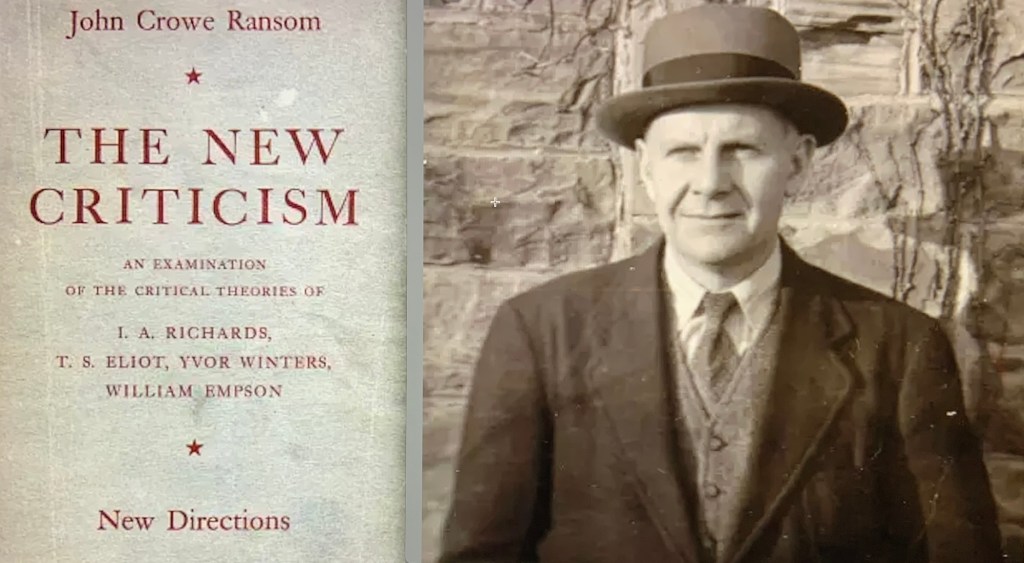






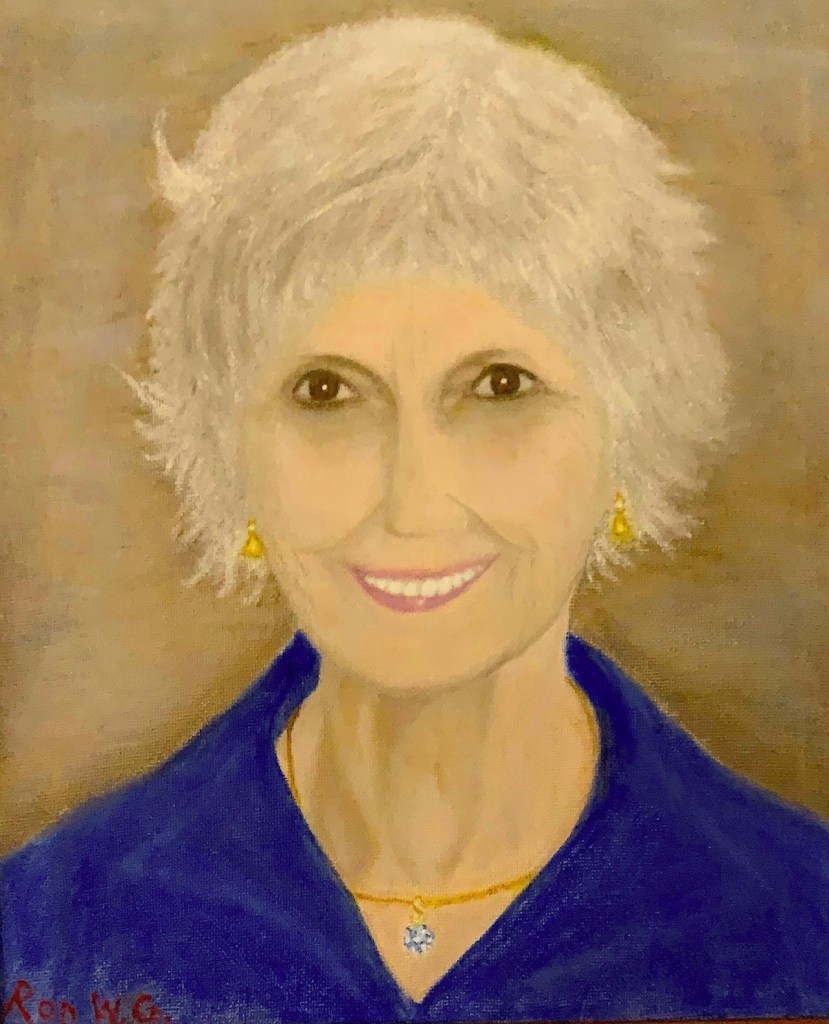
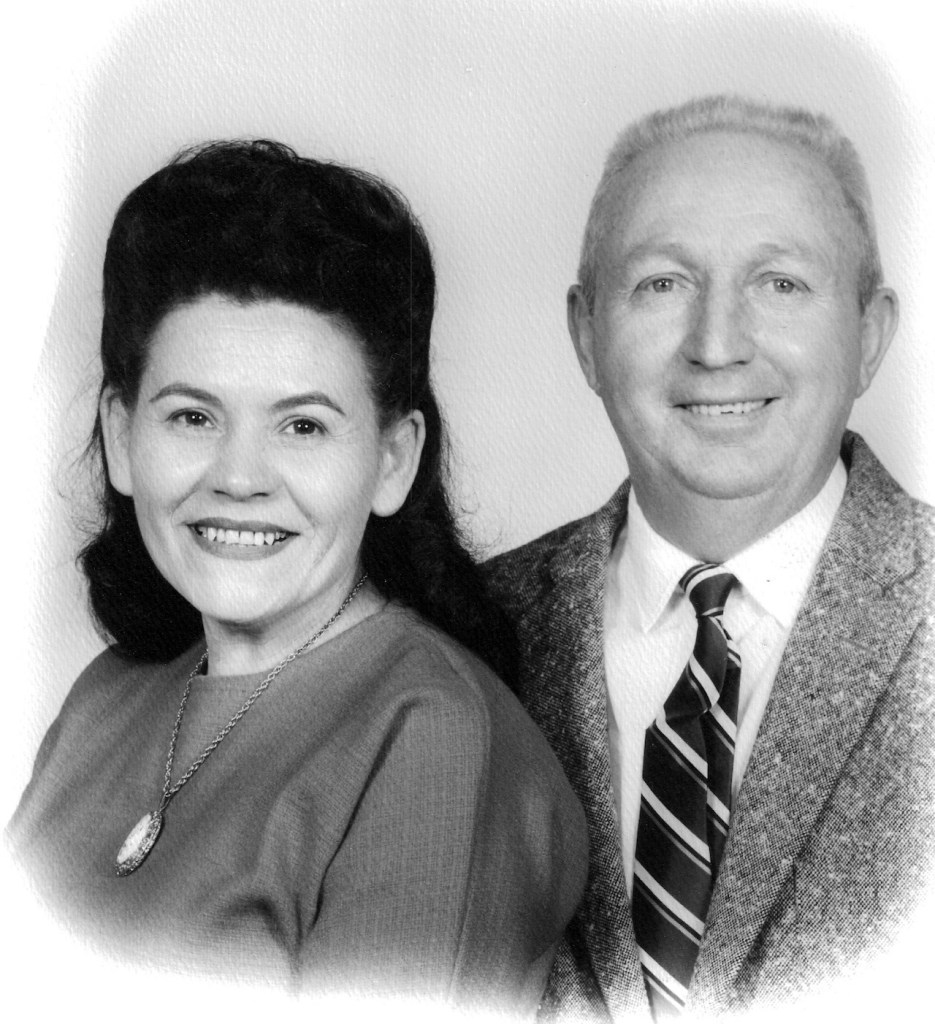


 Linda's Literary Home